1 Samuel 1:9-20 ><)))*> ><)))*> ><)))*> Mark 1:21-28
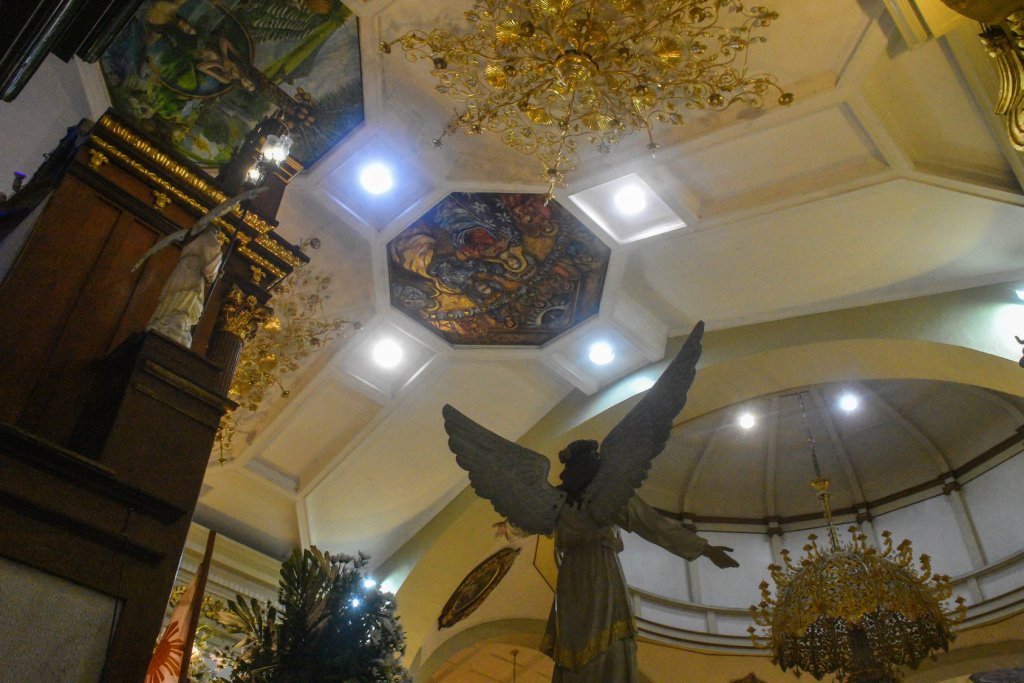
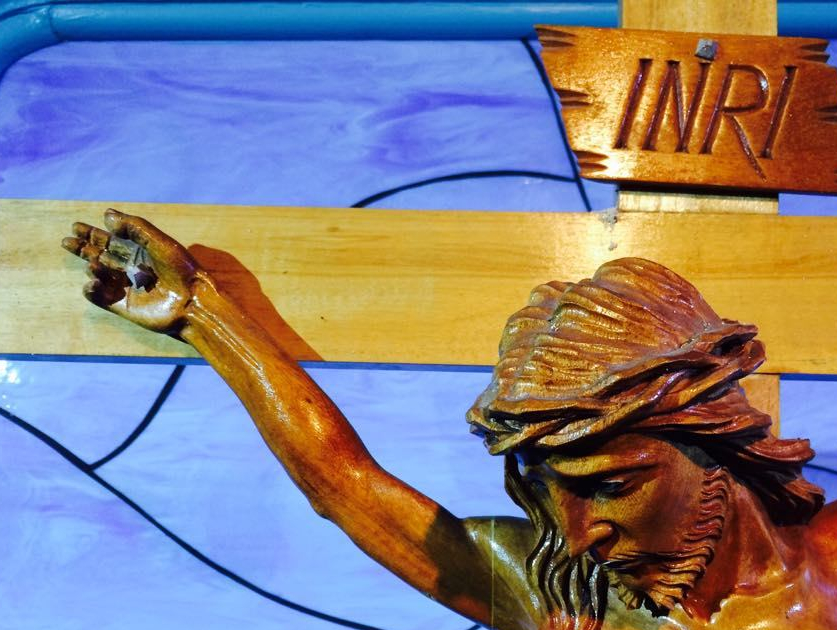
Inside our church from the altar table. Photo by author, November 2019.
Hanna replied to Eli, “Think kindly of your maidservant,” and she left..
1 Samuel 1:18
While praying over your words, O Lord, of that scene at the temple when Eli mistook Hannah to being drunk while praying intensely to you for a child, it reminded me of Taal Volcano’s restive behavior, of her spewing ashes and causing tremors.
But despite all these, Taal remains lovely and magnificent.
Sometimes, Lord, that is what exactly we need in life: to think kindly of others always.
The people were astonished at his teaching, for he taught them as one having authority and not as the scribes. All were amazed and asked one another, “What is this? A new teaching with authority. He commands even the unclean spirits and they obey him.”
Mark 1:22, 27
Purify our thoughts, Lord, to always think kindly of others.
To always have that disposition for silence and being non-judgmental with others to always listen to them and be open to their thoughts and feelings as well.
Like you, Lord Jesus Christ, enable us to share in the power of your words, to speak with authority by entering into that daily union with you in silence and prayers.
May we learn also from the gentle Taal: to be still and silent, to speak only when necessary so that everyone listens intently to her inner rumblings when she finally “speaks”.
We continue to pray for those severely affected by Taal’s eruptions, most especially that they may remain kind with people and nature alike in this trying moments of a major calamity.
We pray for businessmen to have a heart, to think kindly of those affected by Taal’s eruptions and stop jacking up prices of much needed goods. Amen.
Quiet Storm by Fr. Nick F. Lalog II, 13 January 2020
Photo by my high school seminary friend, Mr. Chester Ocampo, taken at the UST Senior High where he teaches art (2019).
Life goes on, long after the thrill of living is gone..
John Mellencamp, “Jack & Diane” (1982)
Maybe this is part of getting old, of maturing. Of learning to grapple with life’s mortal realities and still be excited with living. It is a grace that is both fulfilling but also deeply moving and often, chilling.
An uncle and a friend have commented to me in our recent chats how 2020 had come in hard and difficult with so many sickness and deaths in the family.
Some relatives have to fly to Singapore on New Year’s Day to support a cousin whose husband had an office accident that left him in comatose for five days following a brain surgery. He eventually died and had to be cremated a few days later.
December 11 I had to drive to Manila to visit and anoint the father of my best friend from high school seminary who arrived December 2 from the States, fell ill December 4, and had to spen Christmas and New year in the hospital.
Less than 24 hours after being discharged January 3, he died the following morning after talking with my friend based in Chicago, three days short before eldest daughter arrived to accompany him and wife back to New Jersey this week.
Meanwhile last January 2, I had to rush again this time to Quezon City for the wake of our high school seminary classmate Rommel who had died of multiple complications morning of December 31.
He is the third to “rest in peace” in our batch of 18 men who graduated the minor seminary in 1982. We last saw him in our reunion, September 9, 1990 (9-9-90).
Suddenly, I felt myself in some kind of a time warp when everything seemed to be not too long ago, as if we have just graduated recently, or that my dad and their dads have just passed away one after the other these past months.
Death can sometimes be magical when life is lived in love
I realized that when we have so much love for everyone like relatives and friends, including parishioners in the last eight years, time stands still after their deaths. You do not count the days and weeks and months and years you were together and when they have all gone.
They all seem to be still present because you are focused on how those departed have enriched your very life, your very person no matter how fleeting or long ago you were together.
Death can sometimes be magical, most of all grace-filled, when our lives are lived in love.
Life goes on, long after the thrill of living is gone…
John Mellencamp, “Jack & Diane” (1982)
Photo by author, our sacristy 2019.
Memories and knowledge fade, but love remains
Finally I had the chance to visit my mom – for Christmas! – evening of January 6. It was so good that just before leaving, a cousin arrived with his family to visit also my mother who is the younger sister of his mother, my Tita Celia.
It was only at that evening we have finally confirmed that Tita Celia has Alzheimer’s, the reason why her ways and attitudes have been noticeably erratic in 2019 as she was slowly losing grip of her senses.
And now, it is almost all gone according to my cousin whose sadness I strongly felt as he narrated to me the deterioration of his mother, of forgetting and losing so many things, of not recognizing familiar people like relatives and friends.
That same night, we also learned from him how our moms’ younger brother seem to be having signs of the onset of Alzheimer’s disease that are very similar with Tita Celia.
Again, I found myself in a “time warp” while they were happily conversing I was silently trying to recall the last time I have seen my mother’s siblings now afflicted with Alzheimer’s disease, wondering if they will still recognize me if I visit them later.
Moreover, I also realized how afraid I am with the prospects of getting sick in old age than of dying, sooner or later!
In fact, I was so scared that I had a nightmare that same night: in my dream I found myself lost, apparently with Alzheimer’s as I was searching for my parish rectory, looking for my bedroom, asking people about my parish staff, crying like a child.
What a relief when I woke up Tuesday morning that it was just a dream, that I was in fact in my bed, inside my room, in my parish rectory, so alive and still whole!
It seems it is easier to think and accept of one’s death than of getting sick and incapacitated later in old age. It is something we have to slowly come to terms with while still younger and stronger, and perhaps wiser.
How?
As I recalled our conversations with my cousin Louie that Monday night at home, I was amazed at his great love for his mother, Tita Celia. I remembered how he would always have pasalubong for his mother even upon coming home from school!
Maybe that is why even she had forgotten most of us her relatives, she always remembers Louie her son because he is the one who has truly loved her next to the late Tito Memo, her husband. The same is true with others taking care of their old parents afflicted with Alzheimer’s: they are recognized and remembered because they love.
Our memories and knowledge may be erased but the love we have in our hearts, the love we have experienced always remain even if everything has failed in life. That is why St. Paul declared that “love is the greatest of all gifts of God”.
Life goes on, long after the thrill of living is gone…
John Mellencamp, “Jack & Diane” (1982)
With my former students at the Cubao Cathedral after the wedding of their classmate. I felt so proud, and old, that afternoon seeing them all with their career and family, of how they have maintained their friendships all these years like brothers, of they love one another. Photo by Peter dela Cruz, one in blue.
To live is to love
December 2019 and January 2020 are perhaps my most “marrying months” in my 21 years of priesthood.
Aside from the weddings of friends and students I have officiated these past two months, three more are coming next month of February.
Again, as I saw friends and especially former students getting married, I could not believe at how fast time had passed.
Should I really be surprised when I find out my former students already in their early 30’s, some with families of their own and children whom they instruct to kiss my hand, calling me Lolo Fr. Nick?
It was a very “existential” experience that they are already old, and most of all, I am really that old after all!
Maybe that is what my married friends are telling me of the joy of fatherhood, of having your kids getting married, of having grandchildren, of the inner satisfaction that you have brought life to fruition.
That you have truly loved and now being loved.
It is perhaps the joy of getting old, of maturing, of dying or even forgetting everything when afflicted later with Alzheimer’s that you start to fade from the scene and hand over the stage to the next generation, thinking that life will still go on after us because you have loved much.
What really matters in the end is how we have lived and loved the people around us, of how we have enriched each other’s lives so that as the young ones discover life’s meaning in love, we who are older find life’s fulfillment still in the love from the relationships we keep.
Here’s a hill-billy rock music about love to drive your Monday’s blues away.
1 John 5:5-13 ><)))*> ><)))*> ><)))*> Luke 5:12-16
Flowers at our Altar, Epiphany Sunday 2020. Photo by author.
Dearest Jesus Christ:
Today we pray for those losing hope in life, for those about to give up living because they are saddled with so many problems and sufferings.
And most especially with sins and guilt feelings as carryover of the troublesome 2019.
We pray for those who cannot move on with their lives due to so many heartaches and losses and wrongs last year that they see themselves so dirty like the leper in the gospel today, refusing to aspire to become better, refusing to dream again of good things in you.
It happened that there was a man full of leprosy in one of the towns where Jesus was; and when he saw Jesus, he fell prostrate, pleaded with him, and said, “Lord, if you wish, you can make me clean.”
Luke 5:12
“Lord, if you wish, you can make me clean…
Forgive us Lord when sometimes we seem so hopeless.
“Kung ibig ninyo… kung ano po ang gusto ninyo… bahala na po kayo.”
Flowers at our Altar, Epiphany 2020. Photo by author.
Help us remember St. John’s reminder in the first reading that you, O sweet Jesus, is our life because you are the only one to whom “there are three who testify, the Spirit, the water, and the Blood”(1 Jn. 5:7-8) that refer respectively to your divine nature, human nature, and death on the cross.
You are the only one, Lord Jesus, who has overcome death because you are indeed Life itself!
Thank you very much for always willing the best for us and may we reclaim your wonderful gift of life to us daily. Amen.
Quiet Storm by Fr. Nicanor F. Lalog II, 30 December 2019
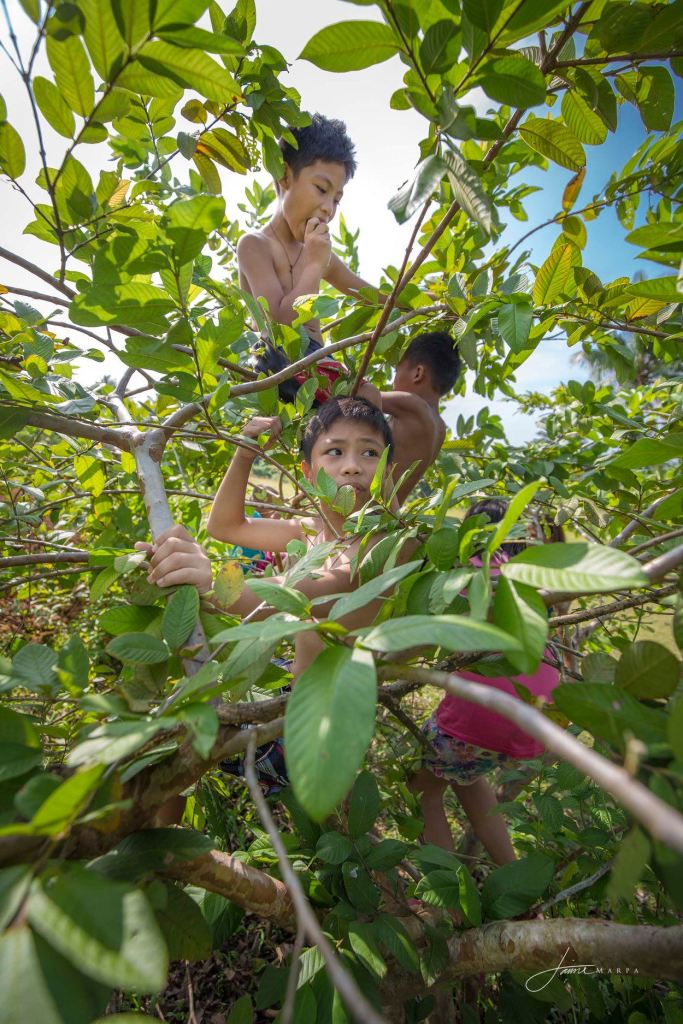
Photo by Mr. Jim Marpa, Carigara, September 2019.
Today we conclude our series on the best Christmas gifts we have received following Christ’s coming more than 2000 years ago: the gift of childhood, of being child-like.
What a joy to keep in mind how God the Almighty chose to become human like us to show us that the path to true greatness and power is in becoming small like an infant, being like a child.
How foolish that we always “play” God to be great and powerful!
The central mystery of Christianity is our transformation from world-wise, self-sufficient “adults” into abiding children of the Father of Jesus by the grace of the Holy Spirit. All else in the Gospel, from the Incarnation of the Lord to his hidden and public lives, his miracles and preaching, his Passion, Death and Resurrection has been for this, of becoming like a child.
The late Cardinal Hans Urs von Balthasar, “Unless You Become Like this Child” (1991, Ignatius Press)
The child-like attitude of Jesus Christ
The best gift we can have this Christmas is to be child-like, to regain and reclaim our sense of childhood, of attending to that “inner child” within us when we trust more, believe more!
Photo by Mr. Jim Marpa, Carigara, September 2019.
See how Jesus Christ entrusts himself not only to his Father but most of all to us!
That is the touching message of the Nativity scene, of how our Lord and God, the King of kings through whom everything was created giving himself to us like a baby, asking us to love him, to take care of him, to be gentle with him, to protect and keep him safe from all harm.
And the key to claiming this great gift of being like a child is for us to learn again how to trust more and fear less like Jesus who showed us by example, not only with words his being child-like.
His constant acknowledgement of God his Father always speaking and doing his will tells us how Jesus from childhood into is adulthood remained like a child by entrusting his total self to God, reaching its highest point on the Cross when he cried out, “Father, into your hands I commend my spirit” (Lk.23:46).
Trust more, fear less
To be like a child according to the example of Jesus Christ is to always trust God and others, and fear less.
Like us, Jesus experienced fears, getting afraid of death but unlike us, he courageously faced death by trusting the Father by “resolutely” going to Jerusalem to be crucified!
When the days for his being taken up were fulfilled, Jesus resolutely determined to journey to Jerusalem.
Luke 9:51
It is normal to have fears, to be afraid.
Fear is not totally negative; it has its good effects that have actually led mankind to every great progress in life like the discovery of new lands and territories, new medicines, new inventions and other things.
Fear becomes a liability when it prevents us to trust more like little children.
Photo by Mr. Jim Marpa, 2018.
Kids and young people are often “positively” fearless because they trust so much nobody would hurt them or no one would forsake them.
As we age, our fears increase because our trust decreases: we fear so many things because we are afraid of losing the little we have, we are afraid of getting hurt, we are afraid of starting all over again.
We are afraid of getting old, of getting sick, and of dying.
What an irony how we started in life fearing almost nothing as babies and kids that we grew up so fast but as we aged and matured, we fear so many things that we have stopped growing and stopped living even long before we actually die.
The other day, December 28, we celebrated “Niños Innocentes” or “Holy Innocents” to remember those male children below two years old ordered killed by King Herod for fears of the “newborn king of Israel.”
Herod lived in constant fears of being deposed in power that he ordered the killing of his three sons and ten wives after suspecting them of trying to overthrow him.
We may not be like Herod with the way we react with our many fears but like him, we end up with same effects like death of friendships, death of love, death of everything, the end of life and adventure.
Maybe that explains why somehow as we get older, we “mellow” and become like children again, realizing we cannot control everything in life, that it is always best to act than to react in every situation.
Do not miss out this great gift of Christmas of becoming like a child.
Trust Jesus Christ who called on us not to be afraid for he is with us always!
The Lord Is My Chef Simbang Gabi Recipe, 24 December 2019
2 Samuel 7:1-5, 8-12, 14, 16 ><)))*> <*(((>< Luke 1:67-79
Marker on the Church where St. John the Baptist is believed to have been born in Ein Karem, Jerusalem. Photo by author, May 2019.
At last!
These are most likely the two words we must be saying today on this ninth day of our Simbang Gabi.
Finally, we have completed the nine day novena to the birth of our Savior Jesus Christ for tonight will be Christmas.
But, more than being the last day of our novena, today is also the beginning of better days ahead for us all starting with Christmas!
From this day on, let us imitate Zechariah in his new found faith, hope and love in God expressed in his song of praise and thanksgiving after recovering his sense of hearing and speaking after nine months of forced silence.
“Blessed be the Lord, the God of Israel, for he has come to his people and set them free. He has raised up for us a mighty Savior, born of the house of his servant David.”
Luke 1:68-69
Sunrise at the Lake of Galilee, the Holy Land. Photo by author, May 2019.
Three canticles of praise, three prayers of faith
Popularly known as the Benedictus from its Latin opening verse “Blessed be God”, this is the second of the three canticles St. Luke tells us Zechariah had sang after naming his son “John”.
The other two songs are the Magnificat by Mary during her Visitation of Elizabeth and the third is the Nunc Dimittis by Simeon upon seeing the child Jesus during his presentation at the Temple of Jerusalem.
These canticles or songs make up the beautiful Christmas story by St. Luke who put them onto the mouths of Mary, Zechariah, and Simeon to signify their being filled with the Holy Spirit in experiencing the coming of Jesus Christ: Mary sang “my soul proclaims the greatness of the Lord” during the Visitation in response to the praises by Elizabeth (Lk.1:46-55) while Simeon the prophet prayed to God to “let him go in peace” – to die – after seeing the coming of the Savior (Lk.2:29-32).
These eventually became part of the prayers of the Church (Liturgy of the Hours) we priests and religious are obliged to pray day in, day out:
Benedictus in the morning to show how willing are we to face the new day by making our Savior Jesus Christ present in our lives like St. John the Baptizer, his precursor;
Magnificat in the evening to praise and thank God in working his salvation in us through Jesus Christ;
Nunc Dimittis at night before bedtime to signify our readiness to die and finally be one with God in Jesus Christ.
They are our “spiritual vitamins” that fill us with the Holy Spirit to strengthen and deepen our relationship with the Father in Jesus Christ which every Christian may pray too to experience and be one with God daily.
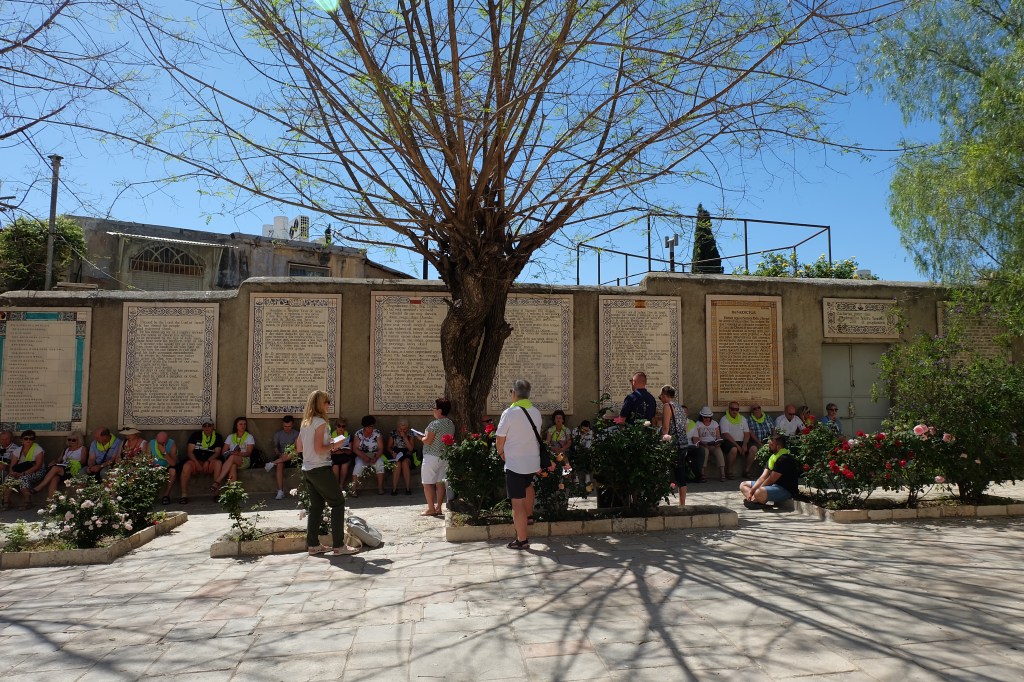
Pilgrims waiting outside the Church of St. John the Baptist in Ein Karem, Jerusalem. On the walls are the translation into different languages of the world, including Filipino, of Zechariah’s Benedictus. Photo by author, May 2019.
Why God is blessed according to Zechariah
The Benedictus signifies Zechariah’s coming to full circle after nine months of forced silence after doubting the angel’s message that he and Elizabeth would finally have a son.
Our sacristy, Advent 2019.
In singing the Benedictus, Zechariah did not only recover his power of speech but most of all showed the fruits of his nine months of silence and prayer preparing for the birth of his son John as well as, ultimately, for Christ’s coming (his song indicates it).
Finally, Zechariah has been healed of his pains and hurts that prevented him in experiencing God, in believing in his powers again, giving him more reasons to hope and be joyful.
This is the reason we also have the Advent Season when we try to dispose ourselves more to Christ’s coming to us not only at Christmas but everyday in our lives.
Zechariah mentions three powerful verbs why he praised God: for he has come to his people, set them free, and has raised up a mighty Savior.
God has come to us
Zechariah first experienced God coming to him when the angel announced to him John’s birth while incensing at the temple during the Day of Atonement. Unfortunately, he was “absent” at God’s “presence” that he questioned how Elizabeth would bear a child.
Everything now changes not only because he had seen his own son but he himself experienced God’s coming in his life.
Sometimes, our pains and hurts, frustrations and disappointments, defeats and failures blind us, numb us that we cannot see, we cannot experience God coming to us in every brand new day he gives us, through the people we meet with their smiles and greetings, with our family and friends who have have stayed with us in good times and bad.
Every morning we wake up to reminds us God has come to us. Rise and meet him in joy, entrust the new day to him, and ask for the grace to remain in him!
God has set us free
Every time God comes, there is always freedom – freedom from evil and sin, freedom from the past and all its pains and hurts, freedom from guilt feelings, freedom everything that prevents us from being truly free to be our own, good sel, to be free and faithful to love and forgive others too.
Carmelite Monastery, Guiguinto, Bulacan. Photo by author, November 2019.
Literally speaking, Zechariah felt free again to speak and express himself fully. But more than that is the experience to go and live fully in God.
We can never experience Christmas if we cannot assert this freedom Christ had won for us when he died on the Cross. Forget all those “hugot” lines and move forward with life.
The name of God is “I AM” because he is always in the PRESENT, never in the past nor in the future.
That is why each new day is a gift, a present from God who as set us free from yesterday’s mistakes and failures and sins.
Go and be free for God!
God has raised up for us a mighty Savior
Christmas is not a date but an event, a person we experience in Jesus Christ who is a dialogue himself according to Pope Emeritus Benedict XVI. Jesus is always communing with us, inviting us to be one in him in his love.
In his Benedictus, Zechariah is also professing the saving work of God in Jesus Christ who became human like us in everything except sin. God is so blessed because of his great love for us, he chose to enter, or intervene into human history to bring us into eternal life by faith in Christ Jesus.
To raise up is a strong term also indicating the Paschal mystery Christ will go through, the ultimate communion of God into our own lowliness of suffering and death to bring us into the glorious victory of his resurrection.
Every morning, every day we are reminded by Zechariah of the words of the angel Gabriel to Mary regarding the birth of John: nothing is impossible with God.
And Zechariah had experienced this first hand when his barren and old wife Elizabeth conceived their child John.
May we have a renewed faith, hope and love in God at the closing of our Simbang Gabi this year. Like David in the first reading, rest be assured of God’s plan for each of us. Let us be patient to wait and prepare always for his coming like Zechariah even in his old age. Amen.
Birthplace of St. John the Baptist at Ein Karen, Jerusalem. Photo by author, May 2019.
Monday, Solemnity of the Immaculate Conception, 09 December 2019
Genesis 3:9-15, 20 ><}}}*> Ephesians 1:3-6, 11-12 ><}}}*> Luke 1:26-38
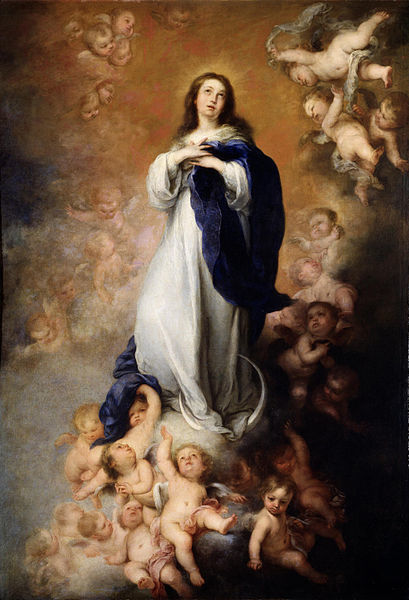
Every year, O Lord Jesus Christ, we celebrate on your birth month the Solemnity of the Immaculate Conception of your Most Blessed Mother Mary who was conceived without the stain of original sin.
Until now, many are still confused with this feast especially when our Gospel speaks about the annunciation of your birth, dear Jesus.
Nonetheless, it is the single most important part of your lives both that truly give us a valuable lesson about Mary’s blessedness – later to be expressed by Elizabeth at the visitation, “Blessed is she who believed that the words spoken to hear will be fulfilled”.
Her Immaculate Conception teaches us the importance of faith especially at this time when we face a great crisis in faith in the Church.
And so, we pray to you O Lord for the gift of faith like that of your Mother Mary, a faith that is deeply personal yet communal.
The first is subjective and the second is objective.
Mary said, “Behold, I am the handmaid of the Lord. May it be done to me according to your word.” Then the angel departed from her.
Luke 1:38
Malolos Cathedral, June 2019.
Unlike Eve in the first reading, Mary had always believed in God.
Her faith is a total entrusting of herself to God on a person-to-person relationship. It is subjective faith where emphasis is on believing itself than on what is believed.
However, Mary did not believe in a purely subjective manner as if God is a personal God detached from others and exclusively revealing only himself to her in secret.
Mary’s faith is also objective because when the angel explained everything to her, she believed the good news proclaimed to her is part of the bigger whole, of the coming new covenant, of the fulfillment of the promise of God made to Abraham and the fathers of Israel as she would later express in her Magnificat.
It is only in believing like Mary can we truly give ourselves to you, Jesus, to the Church so that what we believe may truly be fulfilled in us like Mary. Amen.
Isaiah 26:1-6 ><)))*> ><)))*> ><)))*> Matthew 7:21, 24-27
Chandelier of the Malolos Cathedral, 04 December 2019.
Let me stay in your “house”, O Lord, and help me keep your house rules, too. I am sorry when most of the time I simply want to rest and drop by your “house” with no plans of really living there, of listening to your words and doing your will.
Jesus said to his disciples: “Not everyone who says to me, ‘Lord, Lord,’ will enter the Kingdom of heaven, but only the one who does the will of my Father in heaven.”
Matthew 7:21
Forgive me Lord when I have become so complacent as your disciple, as a Christian, relying solely on my name and affiliation with you without working so hard to be like you.
Help me to be holy like God our Father, listening to your words intently and faithfully acting on it at all time so that I may be wise and most of all, be filled with your peace:
A nation of firm purpose you keep in peace; in peace, for its trust in you. Trust in the Lord forever! For the Lord is an eternal Rock!
Isaiah 26:3-4
So many times, Lord Jesus, we take you for granted… just like the people in our own homes. But when things go wrong, they are the only people we can count on to receive us, to love us, and to forgive us. Very much like you, Jesus.
May this Season of Advent make us more open to you not only to receive you but also to keep you. Amen.
Isaiah 25:6-10 ><)))*> ><)))*> ><)))*> Matthew 15:29-37
The Manor House, Camp John Hay, Baguio City, 2017.
Praise and glory to you, O Lord Jesus Christ for coming to us, in fulfilling our lives, in making our joy complete. Unfortunately, no one seem to be waiting for you or worst, we live as if you have not come at all.
How sad, O Lord, that often even if we are so excited with Christmas, it does not necessarily mean we are excited of you as a person coming to us. Even if we love to sing and hear that carol “Joy to the World”, we are not really joyful because our hearts are far from you.
Forgive us, Jesus, in being focused with time and dates, than with your person and with your coming.
The more we get focused with dates and gifts and carols and other trimmings of Christmas, the less we think of you and of others too.
Open our hearts to receive you in us.
On that day it will be said: “Behold our God, to whom we looked to save us! This is the Lord for whom we looked; let us rejoice and be glad that he has saved us!” For the hand of the Lord will rest on this mountain.
Isaiah 25:9-10
Open our hearts to you, Jesus, that you are more than enough than anything we could wish for.
Make us desire more of you than of things so we may always have an abundance of you as our “bread” or everything in this life. Amen.
Thursday, Memorial of the Presentation of Mary to the Temple, 21 November 2019
Zechariah 2:14-17 ><)))*> <*(((>< Matthew 12:46-50
Feast of the Presentation of Mary at the Temple originated from the Eastern Church where it is known as “The Introduction of the Theotokos (Mother of God) to the Temple”. Photo from Google.
Dearest Lord Jesus Christ:
As we celebrate the memorial of your Mother Mary’s presentation at the Temple, I am deeply struck by the gospel scene for this feast.
Someone told Jesus, “Your mother and your brothers are standing outside, asking to speak with you.” But he said in reply to the one who told him, “Who is my mother? Who are my brothers?” And stretching out his hand toward his disciples, he said, “Here are my mother and my brothers. For whoever does the will of my heavenly Father is my brother, and sister, and mother.”
Matthew 12:47-50
This is so striking to me, Lord because here you are asserting your authority outside your family circle. Here you are telling us of the need to eventually leave our family and friends in order to join you in your mission and journey.
It is very true that we find our first sense of belonging in our family and circle of friends but as we get older like you in Nazareth, our larger sense of belonging to God our Father can only happen when we break free from our family and friends.
Not because we do not love them but primarily because each of us has a calling and mission from you that must be followed and fulfilled. And to do so, we have to leave our family and friends in order to heed and follow your call, O Lord.
In this age of social media, there are some family and friends who get the wrong notion that belonging and possessing or ownership go together, that parents own their children, and friends own each other.
I pray for all parents to imitate St. Joachim and St. Anne who clearly knew they did not own Mary their daughter, that she is God’s that they have to offer her to him at the temple.
May we all grow into maturity that there comes a time when we have to leave our family and friends, even say “no” to them to be like you to freely say “yes” to the Father. Amen.
2 Maccabees 7:1, 20-31 ><)))*> <*(((>< Luke 19:11-28
Candle and ordo in our sacristy, 17 November 2019.
Today’s first reading is very interesting, Lord, especially that part describing the disposition of the mother of the seven Maccabean brothers facing execution:
Filled with a noble spirit that stirred her womanly heart with manly courage, she exhorted each of them in the language of their forefathers…
2 Maccabees 7:21
I really wonder the meaning of “womanly heart with manly courage” but something tells me it is exactly what we need these days.
A womanly heart is a faithful heart, like a mother who would never forsake her child (Is. 49:15). It is a heart willing to bear all pains in life, suffering in silence, totally empty for the beloved and filled with God.
In this age of “instants” where lines are always moved to accommodate our whims and selfish desires, we need a womanly heart that is rooted and inclined to you O God.
Like the mother of the Maccabean brothers, she freely gave up her sons and exhorted them to look more intently to you, God, than to her herself, insisting that in the end, we are all answerable to you alone, O Lord.
Our sacristy table, 17 November 2019.
Manly courage, on the other hand, Lord is perhaps our ability to muster our strength to be truthful about our very selves.
It is something that still pertains to the heart because the word “courage” is from “cor” or heart.
A manly heart is a sincere heart that gallantly accepts one’s limitations than pretend to be somebody else.
In our suffocating world of social media where everybody is blowing out of proportion everything including one’s self, it is very ironic that while everybody claims to be the best, the more our lives are in a mess.
Like those servants in your parable, O Lord, grant us a manly heart so we may graciously accept our role and mission in this life to please you than pretend to be somebody else who really has nothing at all. Amen.