Quiet Storm by Fr. Nicanor F. Lalog II, 28 December 2019
Italian artist Giorgione’s “Adoration of the Shepherds” (1510) showing an intimate scene set up against a distant landscape. The shepherds’ gently kneeling and bowing their heads down show their humility and fascination with the Infant Jesus while the long road behind them shows the long and tiring journey they have taken before reaching their destination.
We continue with our enumeration of the best gifts of Christmas which is above all the coming of our Lord Jesus Christ. And because of his coming as human like us, we have come to share in his dignity and glory, thus, making us also the best gifts to share and receive every Christmas!
We await Christmas every year because we await Jesus Christ, the most beloved person of all we can know and have as friend.
We wait only for persons, not things.
Waiting is beautiful because we never wait alone. There is always another person waiting with us, waiting for us. And when we finally come and meet with the other person also awaiting us, then we become present, a gift for one another.
In our presence with each other comes the wonderful gift of intimacy.
“God became a human being so that in one person you could both have something to see and something to believe.”
St. Augustine, Sermon 126, 5
The spot where Jesus Christ is believed to have been born now covered and protected by this hole under the main altar of the Church of the Nativity of the Lord in Bethlehem. May 2019
Christmas is a story about persons called by God to bring us his Son Jesus Christ. It is a living story that continues to our own time. Here are some of the best gifts of Christmas coming from the gift of our personhood.
The gift of family. Christmas happens in a family of husband and wife and children. Very much like Joseph, Mary, and Jesus. Remove one and the Nativity scene becomes incomplete. Let us be thankful for our family, let us pray for the unity of our family. When Jesus was lost at the age of 12, Joseph and Mary decided to return to Jerusalem – symbolizing God – and eventually found him there in the temple. Let us always turn to God, ask for his guidance and protection of every family, for the healing of our family, for the mending of our broken relationships. Let us pray for all broken families whose members from the husband and wife to their children are all aching deep inside for the pains of separation.
The gift of women and of motherhood. When God created man, he found “it is not good for man to be alone” that is why he created the woman as man’s “suitable partner” (Gen.2:18). What a beautiful term for woman, part-ner, a part of man who is never complete by himself alone. How sad that until now, it is right inside the home where every woman first experience physical, verbal and emotional pains. Women are the best signs of fidelity and faith: Elizabeth called Mary “blessed” because she believed the words spoken to her by the angel from God will be fulfilled. Let us pray for the women in our lives especially own own mother and sisters, lola and aunties, cousins and nieces. Remember, the way we relate with women reflect to a great extent the way we relate with God. Love and bless the women!
The gift of men and fatherhood. When Jesus taught us how to pray, he taught us that God is like a “Father” whom we shall call “Our Father”. There is a crisis in fatherhood and manhood these days because many men have forgotten to be truly man enough like God our Father: a giver of life and protector of life as well. Most of all, when children lose this gift of life, it is the father who restores the life lost like the merciful father of the prodigal son in Luke’s gospel chapter 15.
Aleteia, December 2019.
This Christmas break, spend time with your family, hug your mommy and your daddy tightly and feel their presence again.
Thank your family, your mom and dad.
Pray for your departed loved ones, visit the cemetery and say a prayer for them, talk to them. Most of all, listen to them and feel them again.
Quiet Storm by Fr. Nicanor F. Lalog II, 27 December 2019
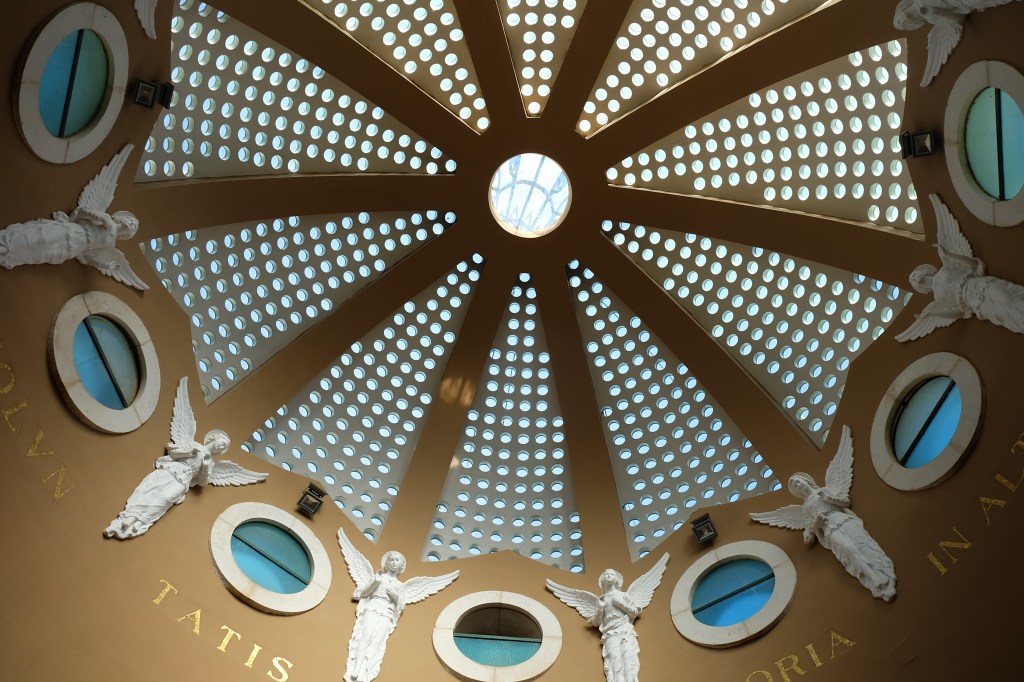
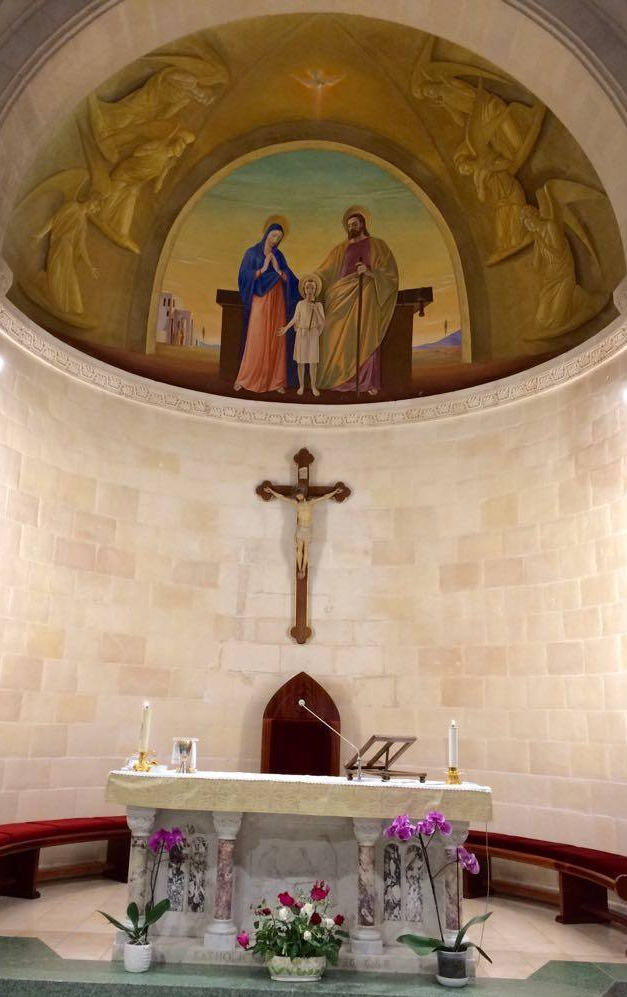
Dome of the chapel at Shepherd’s Field near Bethlehem where the angels appeared to some shepherds to announce the birth of Jesus Christ more than 2000 years ago.
By this time, many of you must have opened the gifts you have received this Christmas. Some are happy, some are not – even disappointed – while there are others who simply do not care at all with the gifts they have received.
But gifts are not everything. What really matters most are the persons and the love and thoughts that come with every gift we have received this blessed season.
Below are some spiritual gifts I feel we need to be thankful too!
The “little door” that leads into the Church of Nativity in Bethlehem that has come to mean the need to bow low and be humble in order to meet Jesus Christ not only inside but also in our daily life. Photo by author, May 2019.
The gift of hope. Hope is not thinking positively that things can get better like the weather. Hope is having a firm belief that even if things get worst, there is God who always loves us, who takes care of us. People with hope always look forward in the future whether here or in eternal life. They are also the most loving people around, the most understanding and most forgiving. They always strive, work hard to make things better for them and for others. Those without hope are the most evil: they will kill and destroy everything and everyone because they have nothing to look forward to in this life or hereafter. The kind of life we live always indicates the kind of hope we have. Or do not have.
The gift of desert. Sometimes, life becomes a desert for us, when we are desolate and so barren with everything dry and even lifeless. But it is during our desert moments in life when we not only meet our true selves but most of all, that is when we meet God. It is in this meeting with God in our desert we experience healing from all our hurts and disappointments in life. We need to withdraw once in a while to our desert to silently pray in order to hear God’s voice anew in our inner selves. In our mass mediated world today when we are bombarded with wants and needs to be rich and famous, the more we end up empty and lost. But when we dare stay in our desert and try to listen in silence, the more we are attuned with life’s realities, the more we are enriched and deepened in our lives.
The gift of intimacy. From our desert experiences of barrenness and desolation, of silence and prayer, and a lot of reflections and introspections come the great gift of intimacy with God and with others. We come to realize who our true friends are when our chips are down, when we are alone and badly bruised and beaten in life. How ironic that when we are so filled with material things, that is when life for us becomes superficial and shallow. But whenever we go through many desert storms, that is when we come to realize the most important in life – the persons who have touched us for better or for worse, the persons who make us experience to be loved and to love.
An oasis at the Dead Sea desert. Photo by author, May 2017.
We shall continue with our other lists of spiritual gifts this Christmas tomorrow.
How about you, what are the spiritual gifts you wish to share with us that may also help us deepen our Christmas celebrations this 2019?
Thursday, Feast of St. Stephen, First Martyr, 26 December 2019
Acts 6:8-10, 7:54-59 ><)))*> ><)))*> ><)))*> Matthew 10:17-22
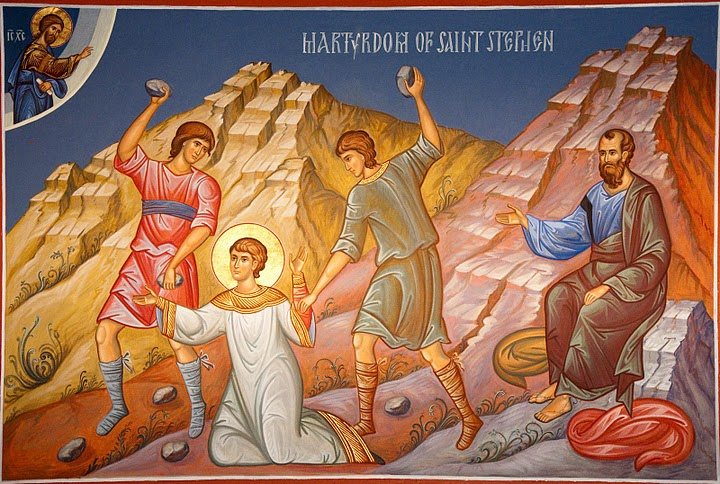
From The Holy Orders of St. Stephen. Seated in blue is Saul who would alter become known as Paul; at the upper right corner is Jesus Christ appearing to our first martyr of the Church.
How blessed indeed is your birth and coming to us, Lord Jesus Christ! You became like us human so we can become like you, divine!
And now, a day after we celebrated your birthday with joy, you have deepened this joy in us by being one in you, one with you in your humility and love to offer one’s self totally like our first martyr in the Church, St. Stephen.
As they were stoning Stephen, he called out, “Lord Jesus, receive my spirit.”
Acts 7:59
You give us the spirit of love and courage, the spirit of truth and justice, the spirit of mercy and forgiveness, the spirit of self-surrender to be one with you, sweet Jesus.
Teach us to be like St. Stephen to be able to give back to you this same spirit from you as we continue to follow you amid so many forms of persecutions. Amen.
The Lord Is My Chef Recipe for the Soul, Christmas 2019
“The Adoration of the Shepherds”, a painting of the Nativity scene by Italian artist Giorgione before his death at a very young age of 30 in 1510.
A blessed Christmas to you and your loved ones! As we celebrate this single event that has made the most impact on mankind in our entire history, I share with you my thoughts and reflections in a Christmas prayer based on our midnight Mass gospel:
In those days a decree went out from Caesar Augustus that the whole world should be enrolled. This was the first enrollment, wen Quirinius was governor of Syria. So all went to be enrolled, each to his own town. And Joseph too went up from Galilee from the town of Nazareth to Judea, to the city of David that is called Bethlehem, because he was of the house and family of David, to be enrolled with Mary, his betrothed, who was with child. While they were there, the time came for her to have her child, and she gave birth to her firstborn son. She wrapped him in a manger, because there was no room for them in the inn.
Luke 2:1-7
Jesus, both the giver and the gift
A most blessed happy birthday to you dear, Lord Jesus Christ!
How funny that you are the one celebrating birthday but we are the ones expecting and receiving gifts on this day. And that is why we all celebrate your birthday – it is a living story that continues to this day when you gave us yourself as a gift to each of us!
Thank you very much for being both the gift and the giver.
Thank you for coming to us, for being like us in everything except sin to accompany us in our lives, to help us carry our cross and lighten our many burdens.
In becoming human like us, you have taught us and made us experience true humility so we can also be like you, holy and divine. Indeed, the words of St. Augustine are so true when he preached in one of his Christmas sermons:
“God became a human being so that in one person you could have both something to see and something to believe.”
St. Augustine, Sermon 126, 5
Thank you for coming to us, being born like us that we have found meaning in our lives, in our struggles, in our pains and hurts.
Because of your coming to us, we have come to believe in better future, we have come to hope and most of all, we have experienced tremendous joy in living.
Your great servant St. John Paul II perfectly said of every human person that
“Every birthday is a small Christmas because with the birth of every person comes Jesus Christ.”
Evangelium Vitae
Help us to find something good always in us and something to believe in us because you are dwelling in us!
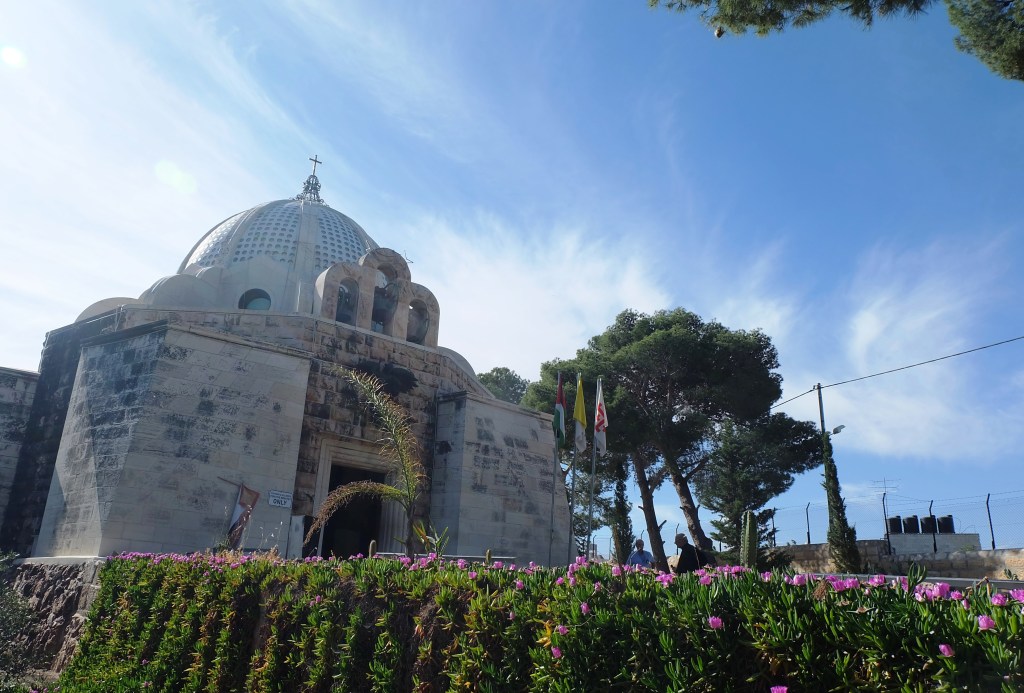
Chapel at the Shepherds’ Field in Bethlehem where the angels announced the birth of Jesus to the the shepherds tending their sheep under the darkness of that night. Photo by author, May 2019.
Life is what we make on earth, you planned in heaven
I love that opening phrase by your evangelist St. Luke, O Lord: “In those days” which in some versions has a more literal translation from the original Greek that says, “It came about in those days”.
As a child starting to learn how to read, I quickly memorized the letters and words of every storybook’s opening line, “Once upon a time”. Then, I got fed up with the expression as I grew up and matured because I have realized they are not true at all.
In these past 21 years being your priest, Jesus, eight years here in my first parish assignment of about 12,000 souls, you have taught me with something to see and something to believe in myself “In those days”.
In those days when I feel so insignificant, when I feel so little with my shortcomings and failures and sins, when I doubt my gifts and talents, when everything seems so wrong, that is also when I feel so close with you, when you console me too.
Like you being born during the time of the great Roman emperor Augustus, the more you came closer to us, the time you were born amid the many hardships of your Mother Mary. Even if there was no room in the inn, there was the lowly manger that welcomed you.
Yes, my sweet Jesus, life is what we make of here on earth, so difficult, so trying, sometimes frustrating but you are always there making us look up above to the Father that we just hang on with life for you have planned everything for our good in heaven.
Do not allow us to be troubled and disturbed by the mundane things of the world that are all passing.
Do not let us to be robbed of your glory and joy by being overtaken by pains and anger, hardships and struggles for you know very well what we are going through in life, of how tired we are in keeping up with our duties and responsibilities, of how hard we have tried to follow you like Joseph and Mary.
How lovely, dear Jesus, to imagine you were born in the darkness and stillness of the night of the shortest day of the year to remind us of the coming light, of the lengthening of days after.
It is in that same dark night when we see and experience our littleness and insignificance in this vast, wide world when you also make us feel our worth and value being cupped in your mighty hands, assuring us of your protection and love.
Help us to let go of our grudges and vengeance against those people who have hurt us, duped us, insulted us and be rather filled with your peace and goodwill as the angels proclaim your glory in the darkness of the night.
Atop Mt. Sinai in Egypt at midnight. Photo by Atty. Grace Polaris Rivas-Beron, May 2019.
Are we not?
Thank you Jesus for the gift of a beautiful poem I have read from a fellow blogger tonight after hearing confessions of my parishioners.
This Christmas, dear Lord Jesus, let me hug you in my brothers and sisters who have made me see something good, something beautiful, something joyful amidst the many evil, ugly, and sad events of life.
It is Christmas, in those days so ordinary when you came to bless us, to make us a part of your story so beautiful, so lovely. Let me believe more in you so I can see you more, love you more, and follow you more! Amen
The Lord Is My Chef Simbang Gabi Recipe, 24 December 2019
2 Samuel 7:1-5, 8-12, 14, 16 ><)))*> <*(((>< Luke 1:67-79
Marker on the Church where St. John the Baptist is believed to have been born in Ein Karem, Jerusalem. Photo by author, May 2019.
At last!
These are most likely the two words we must be saying today on this ninth day of our Simbang Gabi.
Finally, we have completed the nine day novena to the birth of our Savior Jesus Christ for tonight will be Christmas.
But, more than being the last day of our novena, today is also the beginning of better days ahead for us all starting with Christmas!
From this day on, let us imitate Zechariah in his new found faith, hope and love in God expressed in his song of praise and thanksgiving after recovering his sense of hearing and speaking after nine months of forced silence.
“Blessed be the Lord, the God of Israel, for he has come to his people and set them free. He has raised up for us a mighty Savior, born of the house of his servant David.”
Luke 1:68-69
Sunrise at the Lake of Galilee, the Holy Land. Photo by author, May 2019.
Three canticles of praise, three prayers of faith
Popularly known as the Benedictus from its Latin opening verse “Blessed be God”, this is the second of the three canticles St. Luke tells us Zechariah had sang after naming his son “John”.
The other two songs are the Magnificat by Mary during her Visitation of Elizabeth and the third is the Nunc Dimittis by Simeon upon seeing the child Jesus during his presentation at the Temple of Jerusalem.
These canticles or songs make up the beautiful Christmas story by St. Luke who put them onto the mouths of Mary, Zechariah, and Simeon to signify their being filled with the Holy Spirit in experiencing the coming of Jesus Christ: Mary sang “my soul proclaims the greatness of the Lord” during the Visitation in response to the praises by Elizabeth (Lk.1:46-55) while Simeon the prophet prayed to God to “let him go in peace” – to die – after seeing the coming of the Savior (Lk.2:29-32).
These eventually became part of the prayers of the Church (Liturgy of the Hours) we priests and religious are obliged to pray day in, day out:
Benedictus in the morning to show how willing are we to face the new day by making our Savior Jesus Christ present in our lives like St. John the Baptizer, his precursor;
Magnificat in the evening to praise and thank God in working his salvation in us through Jesus Christ;
Nunc Dimittis at night before bedtime to signify our readiness to die and finally be one with God in Jesus Christ.
They are our “spiritual vitamins” that fill us with the Holy Spirit to strengthen and deepen our relationship with the Father in Jesus Christ which every Christian may pray too to experience and be one with God daily.
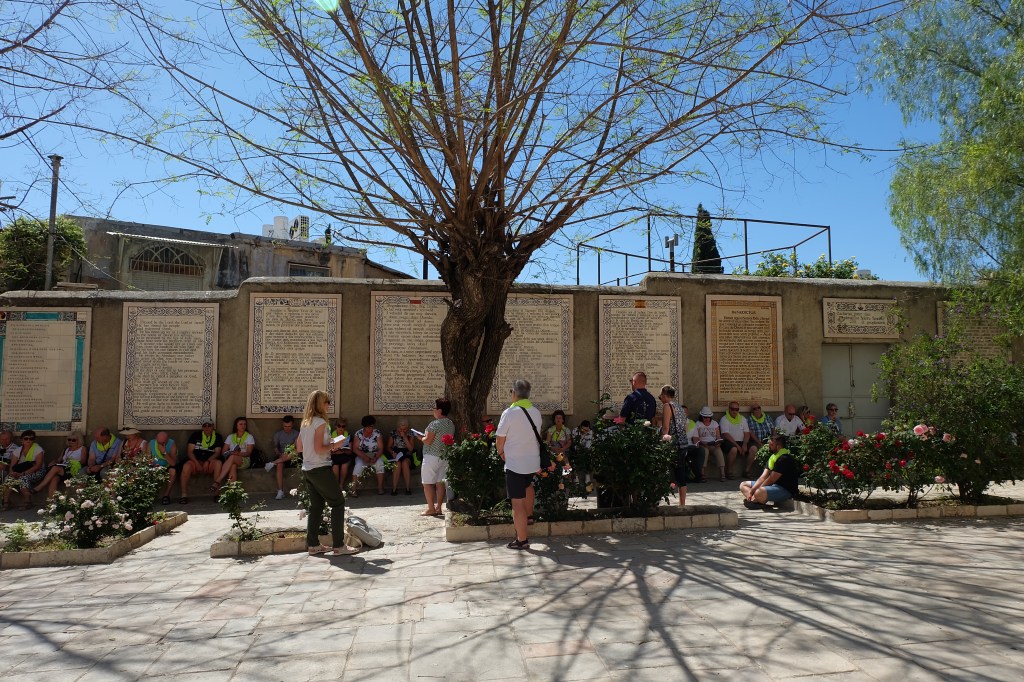
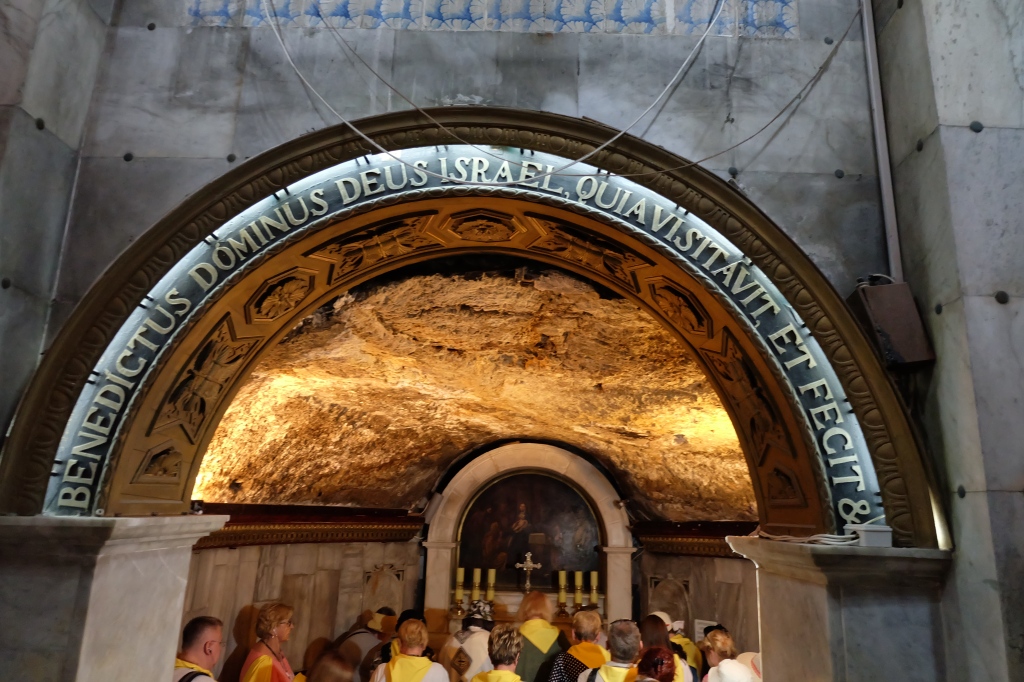
Pilgrims waiting outside the Church of St. John the Baptist in Ein Karem, Jerusalem. On the walls are the translation into different languages of the world, including Filipino, of Zechariah’s Benedictus. Photo by author, May 2019.
Why God is blessed according to Zechariah
The Benedictus signifies Zechariah’s coming to full circle after nine months of forced silence after doubting the angel’s message that he and Elizabeth would finally have a son.
Our sacristy, Advent 2019.
In singing the Benedictus, Zechariah did not only recover his power of speech but most of all showed the fruits of his nine months of silence and prayer preparing for the birth of his son John as well as, ultimately, for Christ’s coming (his song indicates it).
Finally, Zechariah has been healed of his pains and hurts that prevented him in experiencing God, in believing in his powers again, giving him more reasons to hope and be joyful.
This is the reason we also have the Advent Season when we try to dispose ourselves more to Christ’s coming to us not only at Christmas but everyday in our lives.
Zechariah mentions three powerful verbs why he praised God: for he has come to his people, set them free, and has raised up a mighty Savior.
God has come to us
Zechariah first experienced God coming to him when the angel announced to him John’s birth while incensing at the temple during the Day of Atonement. Unfortunately, he was “absent” at God’s “presence” that he questioned how Elizabeth would bear a child.
Everything now changes not only because he had seen his own son but he himself experienced God’s coming in his life.
Sometimes, our pains and hurts, frustrations and disappointments, defeats and failures blind us, numb us that we cannot see, we cannot experience God coming to us in every brand new day he gives us, through the people we meet with their smiles and greetings, with our family and friends who have have stayed with us in good times and bad.
Every morning we wake up to reminds us God has come to us. Rise and meet him in joy, entrust the new day to him, and ask for the grace to remain in him!
God has set us free
Every time God comes, there is always freedom – freedom from evil and sin, freedom from the past and all its pains and hurts, freedom from guilt feelings, freedom everything that prevents us from being truly free to be our own, good sel, to be free and faithful to love and forgive others too.
Carmelite Monastery, Guiguinto, Bulacan. Photo by author, November 2019.
Literally speaking, Zechariah felt free again to speak and express himself fully. But more than that is the experience to go and live fully in God.
We can never experience Christmas if we cannot assert this freedom Christ had won for us when he died on the Cross. Forget all those “hugot” lines and move forward with life.
The name of God is “I AM” because he is always in the PRESENT, never in the past nor in the future.
That is why each new day is a gift, a present from God who as set us free from yesterday’s mistakes and failures and sins.
Go and be free for God!
God has raised up for us a mighty Savior
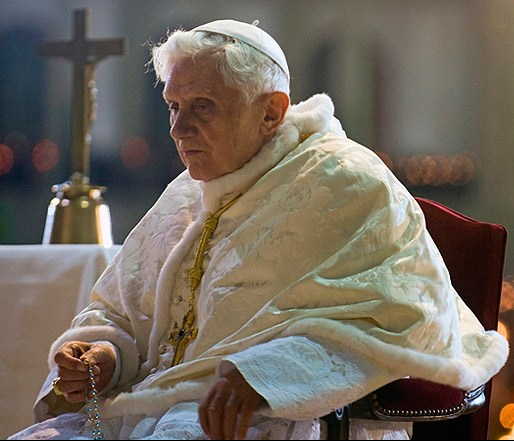
Christmas is not a date but an event, a person we experience in Jesus Christ who is a dialogue himself according to Pope Emeritus Benedict XVI. Jesus is always communing with us, inviting us to be one in him in his love.
In his Benedictus, Zechariah is also professing the saving work of God in Jesus Christ who became human like us in everything except sin. God is so blessed because of his great love for us, he chose to enter, or intervene into human history to bring us into eternal life by faith in Christ Jesus.
To raise up is a strong term also indicating the Paschal mystery Christ will go through, the ultimate communion of God into our own lowliness of suffering and death to bring us into the glorious victory of his resurrection.
Every morning, every day we are reminded by Zechariah of the words of the angel Gabriel to Mary regarding the birth of John: nothing is impossible with God.
And Zechariah had experienced this first hand when his barren and old wife Elizabeth conceived their child John.
May we have a renewed faith, hope and love in God at the closing of our Simbang Gabi this year. Like David in the first reading, rest be assured of God’s plan for each of us. Let us be patient to wait and prepare always for his coming like Zechariah even in his old age. Amen.
Birthplace of St. John the Baptist at Ein Karen, Jerusalem. Photo by author, May 2019.
Quiet Storm by Fr. Nicanor F. Lalog II, 23 December 2019
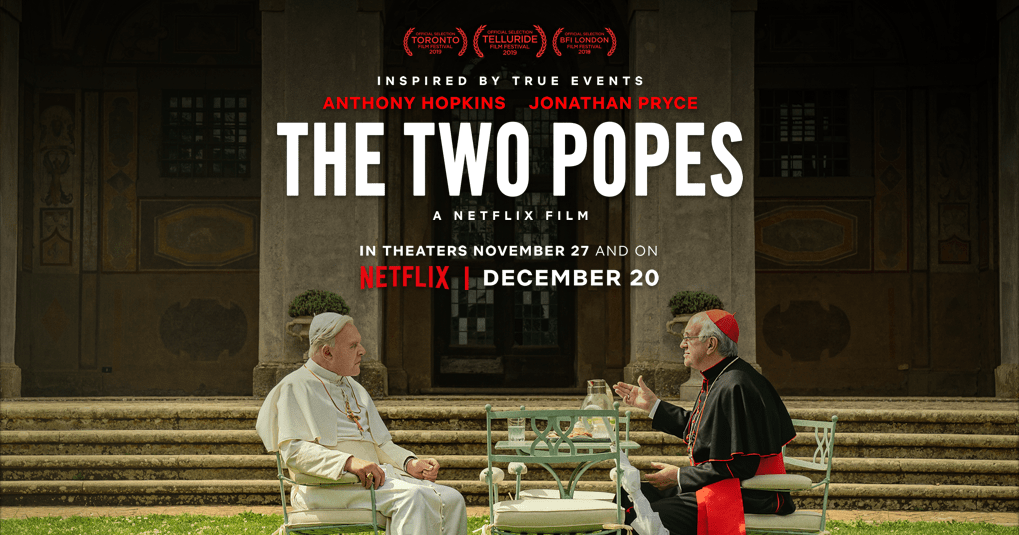
From Netflix.
As early as Friday night after my second Simbang Gabi Mass at 8:30, I have been wanting to react on social media against Netflix’s “The Two Popes”.
But I tried to control my self because I have only seen its first 30 minutes – and besides, it is a fiction story. So, in the spirit of fairness, I tried to finish the movie in three installments until Saturday afternoon before making any comments.
And I felt sad in having seen it at all.
“The Two Popes” is not entertaining. It is misleading without any strong elements to build on our faith and appreciate our religion. At its worst, despite its claim of being inspired by true events, the movie is unCatholic and unChristian.
From Google.
UnCatholic and UnChristian
Movies about religions and religious figures and personalities are always controversial by nature. But for as long as they follow the paths of honesty, sincerity, and truth, these movies eventually emerge as true expressions of art that can truly deepen one’s faith.
But “The Two Popes” at its opening scene is already disturbing and objectionable when it portrayed the Cardinals at the 2005 conclave as having animosity and rivalry among themselves in electing Pope Emeritus Benedict XVI.
Yes, we priests including bishops and Cardinals are all humans like anybody else but no one among us would ever dare to aspire for the papacy. While it is true there are some priests who are into “careerism” in the diocesan level, everything changes starting with the episcopacy or the office of the bishop.
In fact, part of the problem why we have so many vacant dioceses in the country and the whole world is that many priests refuse to accept their appointment as bishops because of many fears that are so real that come with the immense responsibilities of the position. According to the Vatican, three out of every ten priests offered to become bishops decline the offer personally made by the Pope through his Papal Nuncio in every country.
How much more with the Papacy?!
In the movie, Pope Benedict toured Cardinal Bergoglio inside the Sistine Chapel and showed him the “crying room” where the newly elected Pope may stay and cry – yes – before finally accepting his election as Pope.
That alone is true but not the movie portrayal during the conclave that claim Cardinals aspiring to become the Pope. It is something preposterous and totally untrue.
Catholic World Report
What is very disturbing in “The Two Popes” is how it presented Cardinal Ratzinger and Cardinal Bergoglio like “lowlife” lawmakers of congress gunning for the top post for prestige and power with their respective bloc members going around in hushed conversations with matching dagger looks at each other.
This is the movie’s weakest point: rather than being seen as something about deepening our faith in God and the institutional Church or any established religion for that matter, it played on “politics” in the guise of showing the flaws and frailties of two popes competing for position and fame.
You might say “it is just a movie” but, not everyone can rightly see whatever good intentions – if it really has – that the movie is trying to present.
Instead of enlightening the viewers in their faith to the Church in general, there was something sinister in the way it presented almost everyone except Cardinal Bergoglio.
Behind the movie’s beautiful cinematography and studio sets are “subliminal messages” as if inciting viewers to dismiss the Catholic Church and other religions because they are all the same – run by egoistic, power hungry people enjoying so many luxuries in life that the common masses could not even imagine to exist.
We priests are sinners and though there are some of us who have sold Jesus like Judas Iscariot for the price of wealth and fame, there are much too many who still work in silence and hiddenness and holiness bringing Christ to the people.
The Catholic Church has continued to exist since Christ’s ascension because the good shepherds like Jesus have always far outnumbered the rotten ones. Hence, those scenes repeated twice or thrice of Pope Benedict worried with his “popularity” are outrageously absurd!
The Catholiy abc Sun.
Bias against Pope Emeritus Benedict XVI
The movie is supposed to show us how two great men of God, of divergent backgrounds and worlds apart, resolved their many conflicts within themselves and with others regarding their faith and ministry and mission in leading the Catholic Church.
Both actors, especially Anthony Hopkins did superb jobs in playing their roles.
The movie tried to show the triumph of the Divine in mysterious ways we can never explain nor understand using men of limitations and weaknesses.
What makes “The Two Popes” so unkind and unchristian is the fact that it is more about Pope Francis as the vida and Pope Emeritus Benedict XVI as contravida. It could have been better if the producers just centered on the present Holy Father as basis of their film and called it “The Pope”. Period.
How can it be a film about faith and religion when the plot itself is unfair and grossly biased against the supposed co-star who is also a Pope?
The movie is also unfair to Pope Francis who would surely never allow himself to be praised and exalted at the expense of the Pope Emeritus or any other person, whether in real life or fiction.
This for me is the most unkindest cut of all in this Netflix movie that fans the many wrong impressions fed on by media against Cardinal Josef Ratzinger since his being the Prefect of Sacred Congregation of Doctrine and Faith during the time of St. John Paul II.
Throughout the film, it is very evident at how the Pope Emeritus is put on the bad light as if he never cared at all about actual situations in the Church and in the world, from the sex scandals to issues on celibacy among other things because he is so absorbed in his intellectual pursuits in the world of books and the academe.
We are of Christ
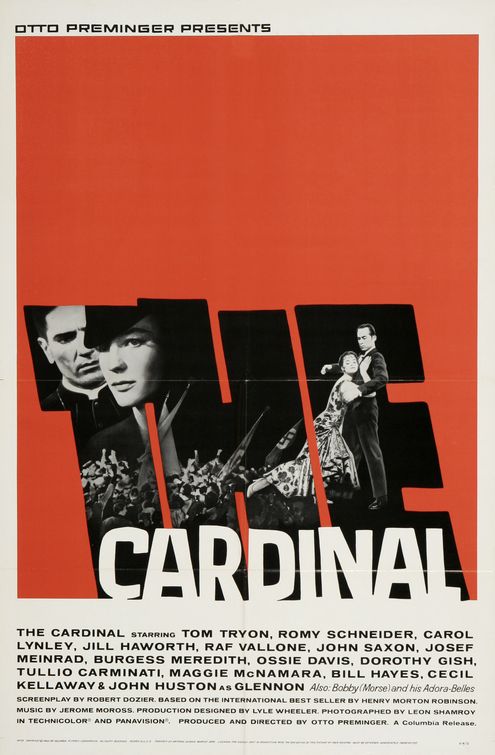
In 1963, the American film “The Cardinal” was released, earning six Academy Awards and very positive reviews for excellently portraying Catholic religion amid issues of interfaith marriage, sex outside marriage, abortion, racism, and dictatorships set during the Second World War.
It was also inspired by true events based on the life of the late Cardinal Francis Spellman of New York.
Its music theme has become a classic piece too that we have all learned by heart while still in high school seminary.
I can still remember the film that showed in a very positive light the main character with all his flaws and shortcomings as a person, as a priest. No need to put other characters down just to underscore his goodness.
The film had a Vatican liaison officer in the person of the young German priest Fr. Dr. Josef Ratzinger who, after that movie, would be attending Vatican II as a periter or consultant to join the efforts in reforming the Church and make it more responsive to modern time.
Yes, the very same Pope Emeritus Benedict XVI portrayed in the Netflix movie as “ignorant” of the Beatles and of tango and of many other things of the modern world.
Netflix
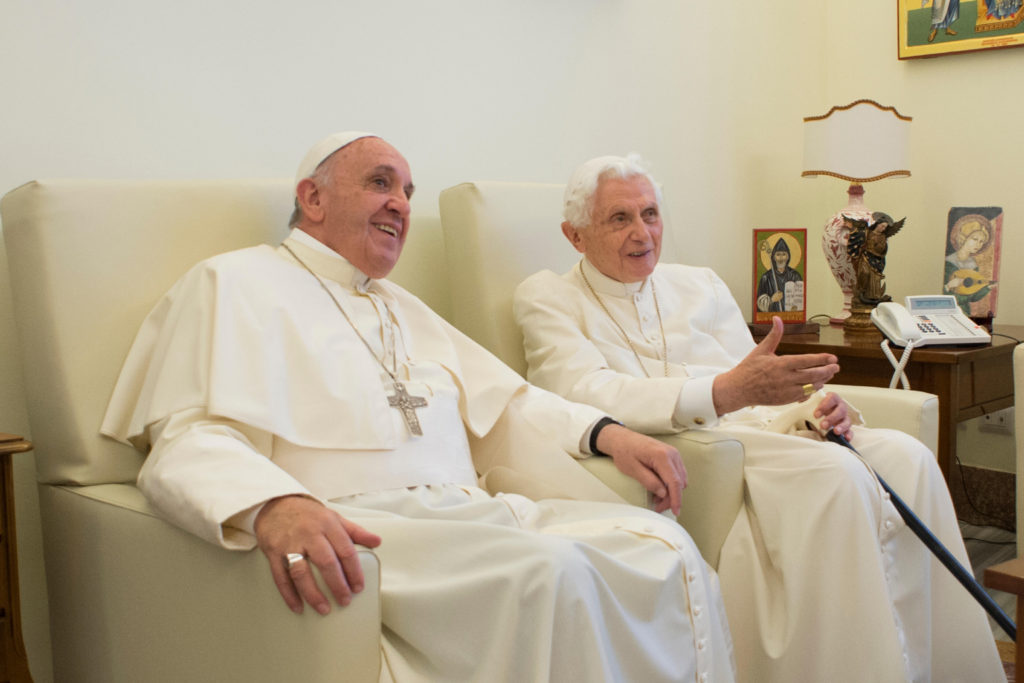
“The Two Popes” ended positively with the “unlikely friendships” of Pope Benedict and Cardinal Bergoglio but still with its askewed presentation of the two holy men, of the people in Vatican, and of the Church’s members and leaders.
So unlike the classic “The Cardinal”, “The Two Popes” missed the essence of the papacy and of the Church as an institution and a body of believers – that Christianity is not about categories or labels as conservatives, progressives, or liberals: it is about our being of Jesus Christ alone.
It is deceivingly appealing to the senses but nothing really so profound about faith and Jesus Christ and his Church. With hindsight, though, after seeing the movie, the more I have come to love and admire Pope Emeritus Benedict XVI for his love and faith in Jesus and the Church.
And Jesus told his disciples… “Blessed are you when they insult you and persecute you and utter every kind of evil against you falsely because of me” (Mt.5:11).
The Lord Is My Chef Simbang Gabi Recipe, 23 December 2019
Malachi 3:1-4, 23-24 ><)))*> ><)))*> ><)))*> Luke 1:57-66
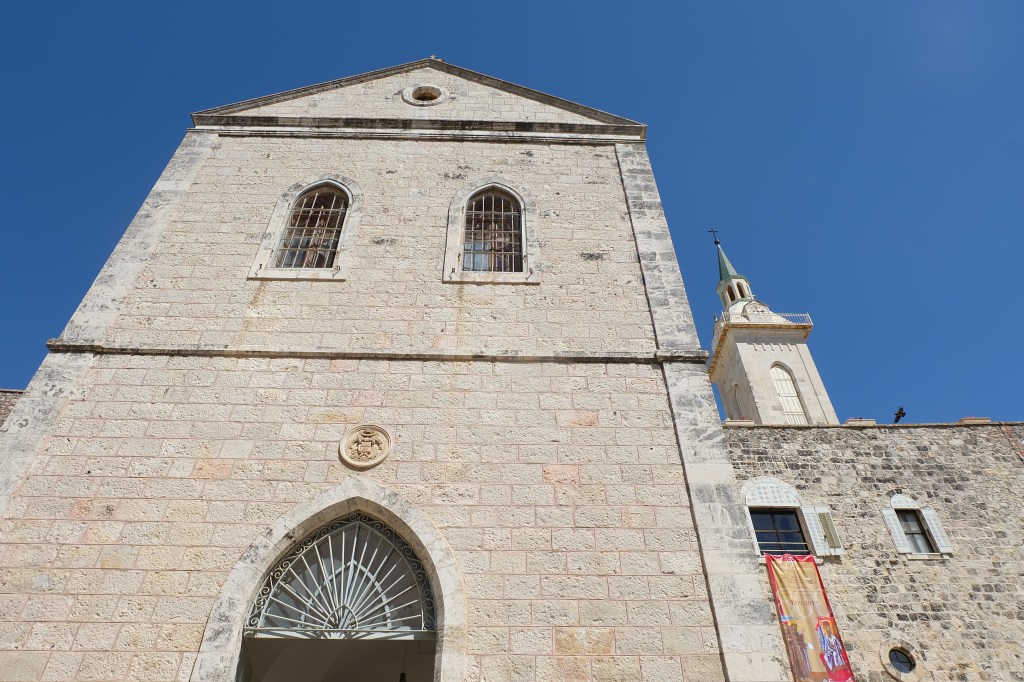
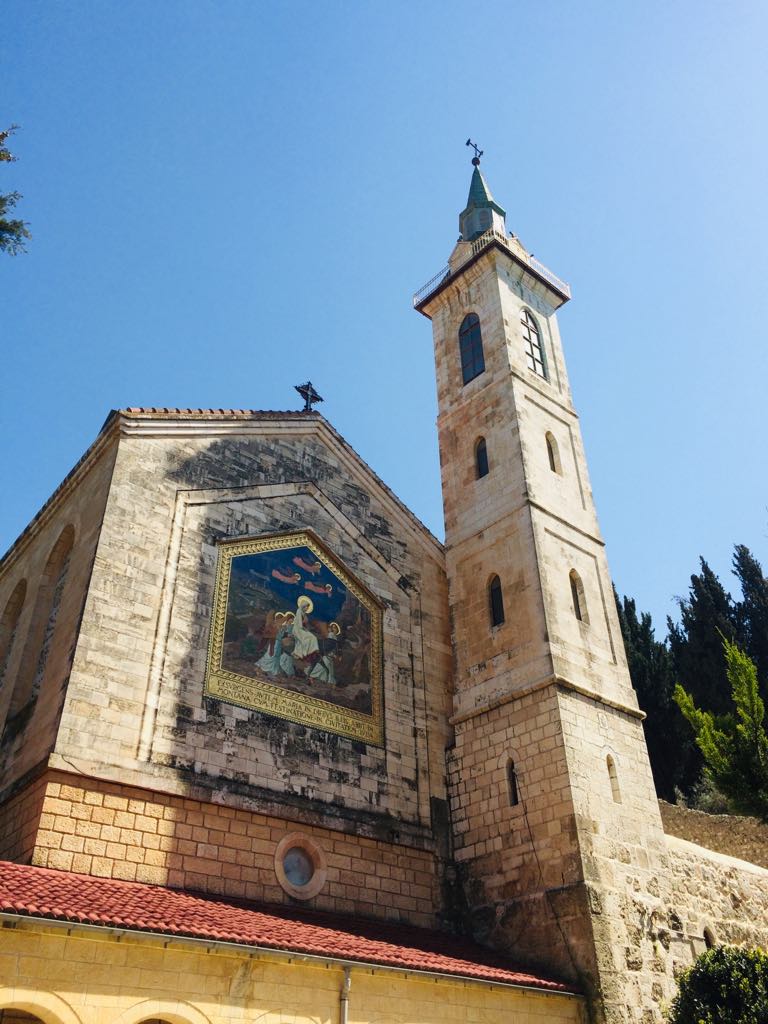
Facade of the Church of St. John the Baptist in Eim Karen where the precursor of the Lord was born. Not to be confused with Church of the Visitation at its other side in the same town. Photo by author, May 2019
Two days before Christmas, St. Luke brings us back to the continuation of his first story about Christmas: the birth of John the Baptizer.
When the time arrived for Elizabeth to have her child she gave birth to a son. Her neighbors and relatives heard that the Lord had shown his great mercy toward her, and they rejoiced with her. When they came on the eighth day to circumcise the child, they were going to call him Zechariah after his father, but his mother said in reply, “No. He will be called John.” But they answered her, “There is no one among your relatives who has this name.” So they made signs, asking his father what he wished him to be called. He asked for a tablet and wrote, “John is his name,” and all were amazed. Immediately his mouth was opened, his tongue freed, and he spoke blessing God.
Luke 1:57-64
Site where St. John the Baptist is believed to have been born. Photo by author, May 2019.
Where is God leading me?
Christmas is almost here. And it is not yet too late in these last two days of Advent that we try some “last ditch efforts” to spiritually prepare ourselves for this joyous season by asking just one question following the story of John’s birth:
“Where is God leading me?”
See the artistry of St. Luke, at how he began his Christmas story with the annunciation of the birth of John to his father Zechariah while incensing the Holy of Holies of the Temple in Jerusalem.
He doubted the good news and he was silenced by the angel until John was born.
Today, after three days, or nine months to be exact, St. Luke brings him back into the scene set free from his punishment. Zechariah was able to speak again when he concurred with his wife’s desire to name their child John by writing it on a tablet.
The name John in Hebrew is Jehohan which means “God is gracious” or “graciousness of God”.
Advent and Christmas are a story of how each one of us is a John, a graciousness of God, of us people so blessed by God to fulfill his promise of salvation in Jesus Christ.
But do we realize the many blessings we have from God?
The other night I saw an interesting post on Facebook from one of my former students in high school. It was from a woman sharing her experience while waiting in line at an ATM that has now gone viral.
She claimed that at first, she felt so bad at what was taking three people so long at the ATM to withdraw their cash. But when she got nearer, she overheard their conversations.
It turned out the three were given a bonus of Php 2000.00 each by their boss.
And they were extremely happy, so thankful, telling each other how they would prepare spaghetti and fruit salad on Christmas eve!
And the woman who posted the photo realized how those simple folks were so thankful for Php 2000.00 bonus when she and others like her who get more than that amount still complain?!
Very nice reflection!
Advent gives us four weeks to remember God’s graciousness to us this past year. The bountiful blessings we have had which we take for granted. Worst, we even complain with!
Altar of the Church of St. John the Baptist, Israel. When we came there last May, it was being closed for major restorations expected to last for years.
Whenever we see and count our blessings, do we ever thank God and ask him too where he is leading us to?
Zechariah was already old, had a great chance of incensing the Holy of Holies at their most important feast, doubted God’s grace but eventually still received it after nine months of silence.
By his action, Zechariah had shown how he had grown in faith during those nine months of “forced silence”, of how he had start to believe again in God, hope again, and practically live life anew!
Tremendous graces in just nine months being silent. Imagine that.
And we can have more grace today until tomorrow being silent, reflecting, praying as we count one by one the many blessings we have received this year.
Call it ageing gracefully, a grace in itself wherein as we grow old, we continue to find direction in life, we continue to find God leading us to him, for a specific mission to fulfill.
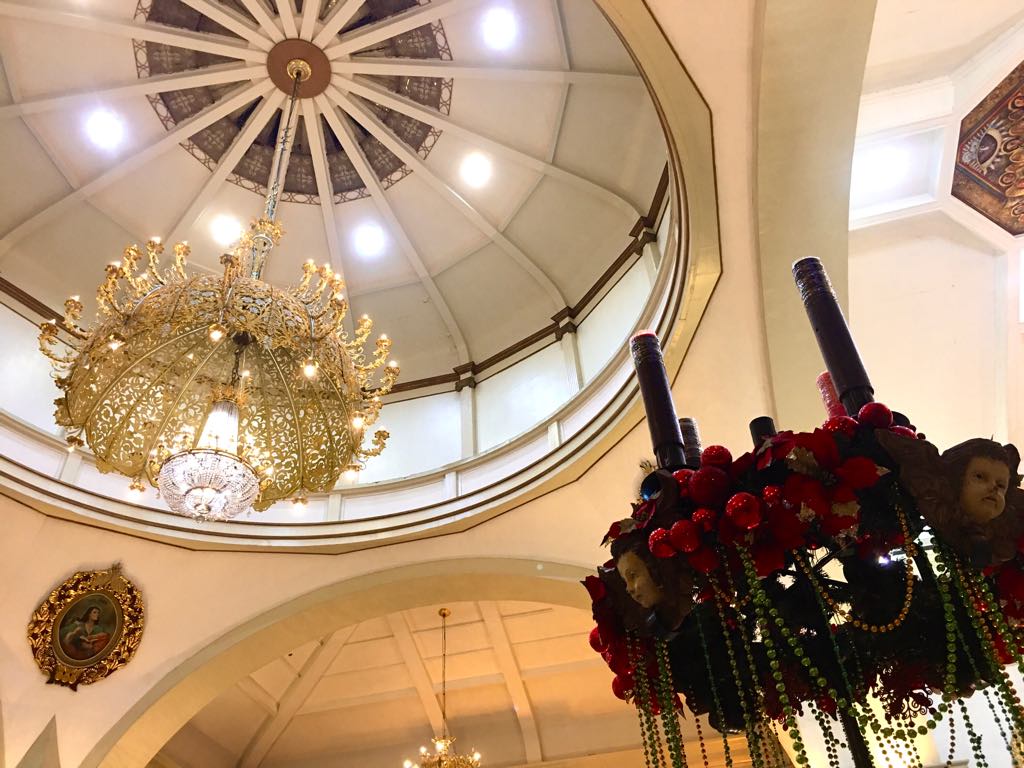
Dome of the Church of St. John the Baptist in Israel. Photo by author, May 2019.
Yesterday we have reflected that we are like St. Joseph entrusted with a special mission from God. That God “needs” us to bring Jesus, to care and protect Jesus here in the world. Each of us has a special part or role to play in God’s Divine plan in Jesus Christ.
Never lose hope in life. No matter what is our situation in life, God continues to work in us, working for us, inviting us to work with him.
It is interesting to know that the name Zechariah means “God remembers” while Elizabeth means “God has promised or vowed”.
If their names are brought together, we can see the complete picture why St. Luke started his Christmas story with Zechariah, Elizabeth, and John and not with Jospeh or Mary right away: they all mean “God is gracious because he remembers his promise always”!
May we always trust God and ask him where he is leading each of us this Christmas no matter what is our status in life. Amen.
The Lord Is My Chef Sunday Recipe, Advent IV-A, 22 December 2019
Isaiah 7:10-14 ><}}}*> Romans 1:1-7 ><}}}*> Matthew 1:18-24
Dome of the Malolos Cathedral Basilica, Advent 2019. Photo by author.
We are now at the Fourth Sunday of Advent, the final week of preparations for Christmas happening in about three days. And we go back to the gospel of Matthew to reflect anew on the annunciation of Christ’s birth to Joseph.
This is how the birth of Jesus Christ came about. When his mother Mary was betrothed to Joseph, but before they lived together, she was found with child through the Holy Spirit. Joseph her husband, since he was a righteous man, yet unwilling to expose her to shame, decided to divorce her quietly. Such was his intention when, behold, the angel of the Lord appeared to him in a dream and said, “Joseph, son of David, do not be afraid to take Mary your wife into your home. For it is through the Holy Spirit that this child has been conceived in her. She will bear a son and you are name him Jesus, because he will save his people from their sins.” When Joseph awoke, he did as the angel of the Lord had commanded him and took his wife into his home.
Matthew 1:18-21,24
As we look toward the coming Christmas Day, the story of the annunciation to Joseph invites us to examine ourselves, to look inside and look back through the years what have we done to bring Jesus Christ into the world like him.
Though Advent celebrates God’s fidelity and constancy in fulfilling his plan of salvation for us through Jesus Christ, this coming involves a human setting among us in the present time to realize its fulfillment.
Dream of St. Joseph (oil on canvas) by Spanish painter Francisco Goya via Google.
St. Joseph’s mission, our mission too
When the angel appeared to Joseph in his dream, it was not so much to explain to him about Mary’s virginal conception but to reveal to him his mission. Very clearly, Mary’s conception of Jesus is absolutely extraordinary, a mystery directly from God himself.
And that is how it is with life: there are certain things we simply have to let ourselves be wrapped by mystery than to unravel or explain it.
Like the Blessed Virgin Mary whom he loves so much, Joseph believed in God, agreeing to what was asked of him that upon waking up, he obediently did everything the angel had instructed him.
Joseph’s acceptance of Mary and of his role in giving name to Jesus brings to an end the genealogy of “Jesus Christ, son of David, son of Abraham” because in the Jewish society, it is the father who bears much weight in recognizing one’s child.
Here we find the crucial and critical importance of Joseph’s mission in giving name to Jesus, in taking Mary as wife: it is through his “fatherhood” that Christ comes into the world as a person, and most of all, as fulfillment of God’s promise made to Abraham and David.
Last Tuesday we have reflected how through Jesus Christ’s coming we now trace our genealogy and roots with God in faith. As children of our loving Father, we too are now entrusted with the same mission like Joseph to bring Jesus Christ into the world in our own time and history.
Altar of the Chapel of St. Joseph beside the Basilica of the Annunciation in Nazareth. Below the chapel are the ancient ruins of the home and shop of St. Joseph where he took care of Mary and Jesus. Photo by author May 2017.
Called to obedient faith
Salvation history continues and it is our duty to find our proper place in God’s plan like Joseph. The story of Christmas continues to our time that is why we have this Advent Season of preparation.
God has not diminished that great honor and privilege given to Joseph then and to us now of having an irreplaceable role in bringing Jesus into the world but this time, not through dream or voice of an angel. God continues to call us like Joseph to bring his plan of salvation in Jesus into fulfillment through our obedient faith through the Sacred Scriptures, the Church in her teachings and most of all, through the many situations and people we encounter in life.
We have to believe and accept this reality that “God needs us”, that the “baby Jesus” wants us to care for him, to give him a name so that “his glory would be eventually revealed for mankind to see the saving power of God” (communion antiphon of Christmas Eve).
St. Paul beautifully tells us in the second reading a very basic profession of faith affirming Jesus Christ as the Son of God descended from David through Joseph according to the flesh (Rom.1:1-4).
Through Jesus, we are called to “bring about obedience of faith” to spread this “good news to all Gentiles” or peoples of the world that they may honor and worship the Lord.
And the good news is this: despite or many flaws and weaknesses, all he needs is our complete faith and surrender to him like St. Joseph. It is Jesus Christ who shall provide us with the strength to fulfill this mission just like what he did to St. Joseph.
From Aleteia, 18 December 2019.
Hail to the fathers and men too
Last December 17 as the whole Church was proclaiming the gospel from Matthew on the genealogy of Jesus Christ, Pope Francis celebrated his 83rd birthday when he was presented with a unique Nativity scene called “Let Mum Rest” with St. Joseph taking care of the infant Jesus while Mary slept.
It went viral, and again, another unique imagery of the beloved St. Joseph courtesy of Pope Francis, a devotee of the Lord’s foster father. When he came to visit the Philippines in 2015, he narrated how he would pray to the sleeping St. Joseph and it became viral in the country.
And now this new image of St. Jospeh babysitting.
It is a very timely image at this time when there is a crisis in fatherhood, when many fathers have to make the difficult choice of leaving their families behind to work in distant places, often foreign countries just to earn decent living.
A crisis when fathers forget caring and loving their families because of the many demands of a high cost of living that along the way, they fall into many traps that sometimes make them forget their vows of marriage.
We need to pray hard for fathers and men. They too are blessed by God like St. Joseph.
We need to pray hard for fathers and men to help them remain upright like St. Joseph.
When Jesus began his ministry, he taught us the “Our Father” to show us that God is like a father because life comes from him. It is from the father that we receive the seeds of life with that genetic code called “DNA”. This is the reason why it is the father who gives name to the child at baptism like St. Joseph to Jesus.
Secondly, Jesus called God “our Father” because he is the one who protects and keeps life from dangers. He must have experienced this from St. Joseph who brought them to Egypt when Herod ordered the massacre of Holy Innocents after the visit by the Magi in Bethlehem. Fathers are often strict with children because he wants to ensure their safety.
Most of all, Jesus called God “our Father” because he is the one who brings back life to those who have lost it like the merciful father to his prodigal son (Lk.15).
How many times did our father saved us from scolding and punishment by our mother, from the simple misdemeanors to grave offenses like going wayward in life? It is often the father, ironically, despite his being strict and disciplinarian, who also has the softest heart for the prodigal child.
May St. Joseph help us men to be man enough to be faithful to God and loved ones to make everyone feel the love and mercy of the Father in heaven as revealed to us by Jesus Christ. Amen.
The Lord Is My Chef Simbang Gabi Recipe, 21 December 2019
Zephaniah 3:14-18 ><)))*> ><)))*> ><)))*> Luke 1:39-45
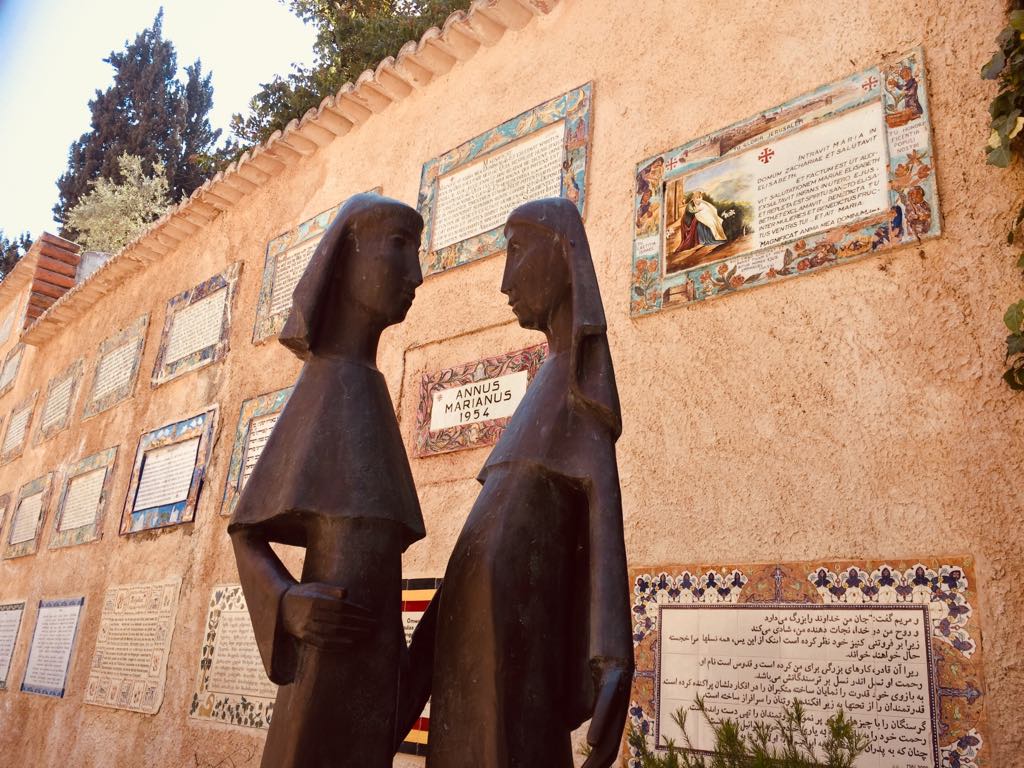
Bronze statues of Mary and Elizabeth fronting the Church of the Visitation in Judah; inscriptions on the wall are Mary’s “Magnificat” in different languages including Filipino. Photo by author May 2017.
For most Filipinos, being “blessed” (mapalad) and “lucky” (suwerte) are often used interchangeably because they both mean the same which is being fortunate. And most of the time, we mean blessedness as being endowed with wealth and material things.
Anyone with a stable job or a flourishing career or a growing business with at least a car and a house and lot is always considered as blessed. If you go big time or have made it to the top, then you are most blessed!
Parents who have put all their children through college, especially in expensive and exclusive Catholic schools and universities are also considered blessed in our culture that puts a high premium on education.
For most of us Filipinos, being blessed means to be financially stable and secured with some degrees of fame and accomplishments.
But our gospel today says nothing about these things as being blessed. Fact is, nowhere do we find in the Bible, especially in the gospel accounts where Jesus tells us that financial viability is a blessing. On the contrary, his teachings teem with a lot of moral aspersions against reliance and worship of money and material wealth.
True blessedness is having faith in God, believing that his words would be fulfilled!
Church of the Visitation, the Holy Land. Photo by author May 2017.
Mary set out in those days and traveled to the hill country in haste to a town of Judah, where she entered the house of Zechariah and greeted Elizabeth. When Elizabeth heard Mary’s greeting, the infant leaped in her womb, and Elizabeth, filled with the Holy Spirit, cried out in a loud voice and said, “Most blessed are you among women, and blessed is the fruit of your womb. And how does this happen to me, that the mother of my Lord should come to me? Blessed are you who believed that what was spoken to you by the Lord would be fulfilled.”
Luke 1:39-43, 45
Conversations between women
The Bible rarely records conversations exclusively between women. And even less frequent in the Bible is a conversation between two pregnant women that makes St. Luke’s account of the Visitation unique in itself.
For St. Luke, this encounter and exchange is significant because here are two women who bore a child in the most miraculous manner. Observe that St. Luke never used the word “pregnant” to describe the two women but simply told us that it is obviously the situation of both Elizabeth and Mary.
Exegetes explain St. Luke may have never used the term “pregnant” to emphasize to his readers God’s powerful grace on the two women in bearing a child: Elizabeth in her old age and barrenness and Mary in her youth and virginity.
What is most remarkable here is the way the two women were so “absorbed” in their conversation that one can imagine the “holy ground” they were standing so filled with Divine presence with the Holy Spirit hovering above them as two great souls met to honor God!
Even now if you go on a pilgrimage to the Church of the Visitation in Ein Karem, you can still experience that serenity and joy both women must have experienced on that hallowed ground.
Left painting on the dome is the Visitation while the other at the right is a depiction of how the angel saved St. John the Baptizer with St. Elizabeth from the murder of Holy Innocents ordered by Herod after learning the birth of Jesus Christ. Photo by author, May 2017.
True Blessedness
St. Luke tells us a lot of stories about “blessings” in his gospel account like here at the Visitation.
The most significant of these story of blessings is found in Luke 11:27-28 when Jesus was preaching, “a woman from the crowd called out and said to him, ‘Blessed is the womb that carried you and the breasts at which you nursed.’ He replied, ‘Rather, blessed are those who hear the word of God and observe it.'”
And that “blessed one who hears the word of God and observes it” is none other than his own Mother, the Blessed Virgin Mary, the first and par excellence “Doer-of-the-Word” for St. Luke!
Here at the Visitation, Elizabeth became the first human person, a woman, to call Mary “blessed” – the first of many disciples from future generations who will address the Blessed Mother in this manner as proclaimed by Mary herself in her Magnificat, “from now on will all ages call me blessed” (Lk.1:48).
Mary blessedness is primarily due to her faith and trust in God’s word spoken to her by the angel Gabriel. Unlike Zechariah, Mary right away submitted herself to the will of God by asking “how can this be”, indicating her deep faith.
Mary’s faith makes her a model disciple whom we must all imitate in following and believing Jesus Christ our Savior.
Likewise, Elizabeth can also be considered as a model disciple to us all because she believed and recognized the coming of the Christ by calling Mary “the mother of my Lord” (Lk.1:43). And again, holds the distinction as the first person and woman in St. Luke’s gospel to call Jesus “Lord”.
Here we find again the story of the Visitation that true blessedness and holiness is to be filled with God like St. Joseph the other day.
The Immaculate Conception at the Cathedral Basilica in Malolos City. Photo by author, December 2019.
In praise of the women of the world, man’s part-ner
Another beautiful trait of St. Luke’s gospel account is it emphasis on the important roles of women not only in the spread of the Gospel but most especially in the world. He is the first champion of women’s rights, next only to Jesus Christ.
In narrating to us this brief story of the Visitation, we rediscover the beauty and blessedness of womanhood – and that is the celebration of Messianic age. Mary and Elizabeth are great women because of their faith, we now celebrate Advent and Christmas.
They both brought Jesus Christ into the world, something that women always do until now, especially mothers who faithfully teach and form their children to become good and faithful Christians.
Both women are a testament to Isaiah’s portrayal of God as a woman who is like faithful mother:
“Can a mother forget her infant, be without tenderness for the child of her womb? Even should she forget, I will never forget you.”
Isaiah 49:15
Christmas is a beautiful reminder to us all of the very noble and important role of women in the world that unfortunately many of us, especially men, have continually refused to accept or ignored since the Fall of Adam and Eve.
In Genesis, we find God declaring “let us make man a suitable partner.”
And he created the woman, a part-ner of man, taken from one of his ribs because she is equal in dignity with him, created in the image and likeness of God. In fact, she is the most beautiful of his creation, being the last and most perfect!
During his recent concert in the country, U2’s Bono praised the women and human rights activists in the country, dedicating to them their song “Beautiful Day”.
“Human rights drown out human wrongs, that’s a beautiful day. When sisters around the world go to school with their brothers, that’s a beautiful day. When journalists don’t have to worry about what they write, that’s a beautiful day. When women of the world unite to rewrite history as herstory, that is a beautiful day.”
Bono from news reports
Because of Mary and Elizabeth, we now have that beautiful day of the year, Christmas that led to the most beautiful day of all, Easter.
In a fitting rejoinder to our gospel today, another woman the other day gave us a beautiful day to celebrate justice and democracy in the country when Quezon City RTC Judge Jocelyn Solis-Reyes convicted Datu Andal Ampatuan Jr. and other members of his influential clan for the murder of 57 people in the Maguindanao massacre that happened ten years ago.
Throughout history, we have seen that it has always been the women who make it happen for us all to have a beautiful day because they are the ones who bring life, who nurture life, who deepen life.
Let us make each day more beautiful by loving and caring always especially for those special women in our lives who have shown us the beauty and meaning of life, beginning with our own mother. Amen.
The Lord Is My Chef Simbang Gabi Recipe, 20 December 2019
Isaiah 7:10-14 ><)))*> ><)))*> ><)))*> Luke 1:26-38
Manor House, Camp John Hay, December 2017. Photo by author.
One reason Christmas is the most favorite time of the year is its colors. From houses to malls and almost every building, one can find a spectacular display of different colors and lights that brighten everyone.
But everything changes when one enters the church.
Advent is so different. Color is violet near the deep blue shade to signify the importance of conversion and penance that lead into transformation while the colors of the world found in malls are about money and material things.
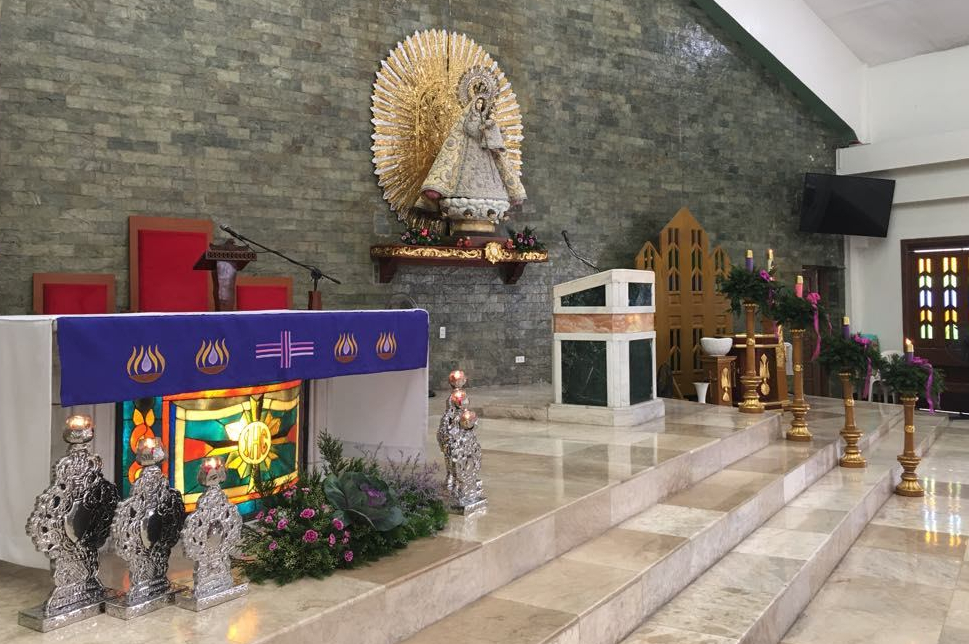
Our parish sanctuary area, Advent 2019.
God takes initiative
We have seen yesterday in St. Luke’s first Christmas story how God entered through human activities and history for the coming of Jesus Christ by first announcing the birth of his precursor, St. John the Baptizer.
But today, in his second Christmas story which is the Annunciation of the birth of Jesus to the Blessed Virgin Mary, St. Lukes shows us how God is now acting on his own. Of course, God always takes the initiatives in life being the “prime mover”.
But in announcing the birth of Jesus, God went “out of his way” so to speak to bring us this tremendous grace of Christmas as he would always do in many instances in our lives.
In the sixth month, the angel Gabriel was sent from God to a town of Galilee called Nazareth, to a virgin betrothed to man named Joseph, of the house of David, and the virgin’s name was Mary. And coming to her, he said, “Hail, full of grace! The Lord is with yo.” But she was greatly troubled at what was said and pondered what sort of greeting this might be. Then the angel said to her, “Do not be afraid, Mary, for you have found favor with God. Behold, you will conceive in your womb and and bear a son, and you shall name him Jesus .”
Luke 1:26-31
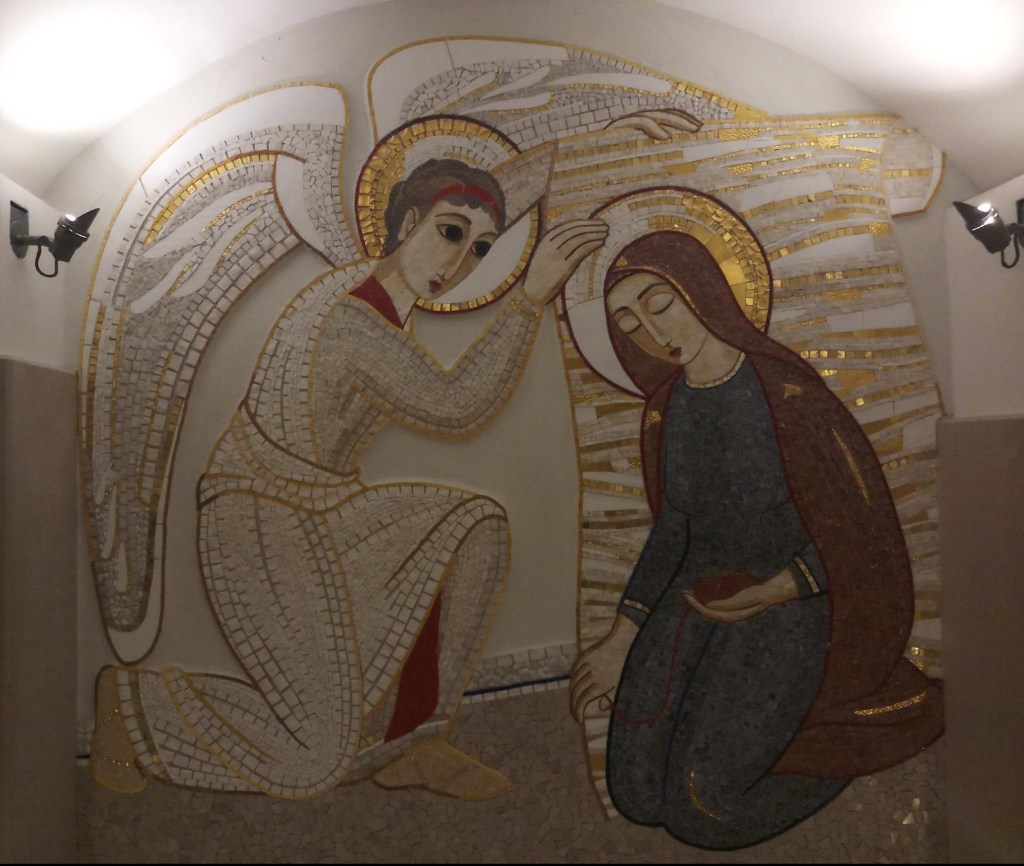
Mosaic of the Annunciation to Mary at the Shrine of St. Padre Pio at Rotondo, Italy. Photo by Arch. Philip Santiago, 2018.
So different from yesterday’s story of the annunciation of the birth of John the Baptizer to Zechariah, let us see how God took the initiative in the annunciation in the birth of Jesus to Mary.
Zechariah was a priest while Mary was a commoner. It was natural for God to work through his ministers but in choosing Mary an ordinary woman was something else not because of any special quality she had but simply because God is good. The angel clearly told this to Mary, “you have found favor with God”. God does not call the qualified but he qualifies the call!
God used the setting of the Temple of Jerusalem in yesterday’s account because that is where he is supposed to dwell but today, everything happened in a very simple house in Nazareth, the only place of significance and importance in the New Testament never mentioned in the Old Testament. It was a place looked down upon by many like St. Bartholomew asking Philip, “can anyone good come from Nazareth?”
There was a major feast going on, the Yom Kippur, with a lot of people present when Zechariah was informed of the birth of John; Mary was alone in her house when the angel came to announce to her the birth of Jesus on the six months after going to Zechariah.
Intense Presence of God and of Mary
Usually, as we have seen yesterday in the annunciation of the birth of John, God always acted in silence and hiddenness. He blends and flows with world history as well as with our own personal histories.
But, there are times even in our own experiences when God really pulls something extraordinary, a miracle to bless us, to save us.
That was the case in the Annunciation to Mary. God “freely acted on his own” for the good news to happen, regardless of whoever was the king of Judea or emperor of Rome. He set the stage and everything for the fulfillment of his plan of salvation for us.
And the very good thing here is we find a perfect congruence or an equilibrium wherein, God was intensely present and so was Mary.
In the annunciation of John’s birth, God was very much present answering the prayers of his parents but Zechariah was miserably absent, doubting the good news!
Mary said, “Behold, I am the handmaid of the Lord. May it be done to me according to your word.” Then the angel departed from her.
Luke 1:38
God is always coming to us in many instances and persons who come to our lives. Are we present to him?
Notice how she entered into a dialogue with the angel Gabriel in explaining how things would happen. She was so open and so absorbed too as if the Holy Spirit must have had a perfect landing on her that she became pregnant with Jesus!
It sounds funny but that was how it happened because tomorrow, we would hear St. Luke telling us how Mary hurriedly went off to see her cousin Elizabeth, meaning there was a transforming change that occurred in Mary right away!
And that is how God truly works – if we can be truly open like Mary with God’s intense presence, we can experience overnight conversion and transformation that we have heard experienced by many unbelievers, sinners, addicts of all kinds. All they could say was there was a very brief moment when they felt God so intensely present and boom! everything changed for the best.
Mary believed
Mary was not only open to God but most of all, she has always believed in him. See how St. Luke tells us after the Annunciation, “then the angel departed from her”, never to come again to inform her of special messages from God unlike St. Joseph.
After the Annunciation, Mary was left on her own in the sense that all she had was her firm faith in God through Jesus Christ her Son.
Mary believed in everything that was spoken to her! It was all she had up to the foot of the Cross when Christ died, when she waited with the apostles in Jerusalem for the Pentecost and in all her other apparitions later. She has always believed in Jesus her Son.
Today, we complain a lot of people no longer believing in God, leaving the Church, refusing to pray and celebrate the sacraments.
Perhaps it is about time for us to ask our very selves too, especially us your priests and pastors as well as the parents: do we truly believe what we are doing, what we are practicing as Catholics?
It is always easy to say we believe in God like King Ahaz in the first reading who refused to ask God for signs that Israel would be delivered from the advancing Babylonians.
It was merely a “show” because Ahaz had already entered into alliance with small kingdoms to fight the Babylonian invaders. He had never believed God or his Prophet Isaiah; hence, Israel was conquered and crushed as a nation, thrown into exile in Babylon for a long time.
A Filipino painting of the Annunciation to Mary on a wall facing the Basilica of the Annunciation in Nazareth. Photo by author May 2017.
God’s power and his intense presence can only work in proportion with the faith we have. This is what Jesus had told the apostles when they asked him to “increase their faith”: “If you have the faith the size of a mustard seed, you would say to the mulberry tree, ‘Be uprooted and panted in the sea,’ and it would obey you” (Lk.17:5-6).
In another instance, the apostles failed to cast away the demon possessing the son of a certain man. After Jesus had driven away the evil spirit, his apostles came to him in private to ask, “Why could we not cast it out? And Jesus said to them, ‘Because of your little faith'” (Mt.17:19).
Like Mary, let us believe wholly to God by giving our whole selves to him. Let us create a room in ourselves for God so he can be present in us and transform us like Mary. Amen.