Holy presence in hiddenness

The Lord Is My Chef Simbang Gabi Recipe, 19 December 2019

Judges 13:2-7, 24-25 ><)))*> ><)))*> ><)))*> Luke 1:15-25

The Walls of Jerusalem, May 2019. Photo by the author.

From St. Matthew, we now move to the Christmas story by St. Luke that starts in the temple of Jerusalem. And surprisingly, not precisely with Jesus or his parents.

In the days of Herod, King of Judea, there was a priest named Zechariah of the priestly division of Abijah; his wife was from the daughters of Aaron, and her name was Elizabeth. Both were righteous in the eyes of God, observing all the commandments and ordinances of the Lord blamelessly. But they had no child, because Elizabeth was barren and both were advanced in years. Once when he was serving as priest in his division’s turn before God, according to the practice of the priestly service, he was chosen by lot to enter the sanctuary of the Lord to burn incense. Then, when the whole assembly of the people was praying outside at the hour of the incense offering, the angel of the Lord appeared to him, standing at the right of the altar of incense.

Luke 1:5-11

We know what happened, of how Zechariah doubted the good news announced to him about the birth of his son John the Baptizer.

Many times in our lives, especially in this age of too much communications in the social media where everything is exposed, we hardly notice the best and nicest things in life happening in silence, mostly in hiddenness.

And the saddest part of this present reality is that it is God whom we miss in this “overexposures” we have in social media because he always comes to us hidden in the most ordinary and simple things in life.

Yesterday St. Joseph taught us the need to value silence and stillness in the Lord as an important lesson in facing life’s many adversarial situations.

Today we hear Zechariah forcibly silenced to experience the Lord’s power and grace, his very presence in fact.

An inside section of the remaining Walls of Jerusalem. Photo by author, May 2019.

God’s presence hidden in our time and space

Advent is the season that reminds us that God comes to us always hidden in our very time and space. Unless we know how to be silent and simple, we shall never experience the Divine presence that has covered the whole world ever since.

Of the four evangelists, St. Luke is the only one who claims to have “investigated everything accurately” about the life and teachings of Jesus Christ (Lk.1:3). That is why he has the most stories and details about Christmas.

For St. Luke, Christmas begins with the coming of St. John the Baptizer, Jesus Christ’s precursor. In a very unique manner, he tells us how God’s presence came through a husband and wife yearning so much to have a child of their own, Zechariah and Elizabeth, both belonging to the upper crust of the Jewish society having descended from the priestly families.

In fact, Zechariah was a priest who was so blessed that Day of Atonement known as the Yom Kippur of the Jews that happens around September 18-24. (That is how we come to celebrate Christmas on December 25: Elizabeth conceived John in September, giving birth to him in June 24; tomorrow, we shall hear in the Annunciation to Mary that Elizabeth was six months pregnant which falls on March 24. Simple math, we arrive at December 25 as Christ’s birthdate.)
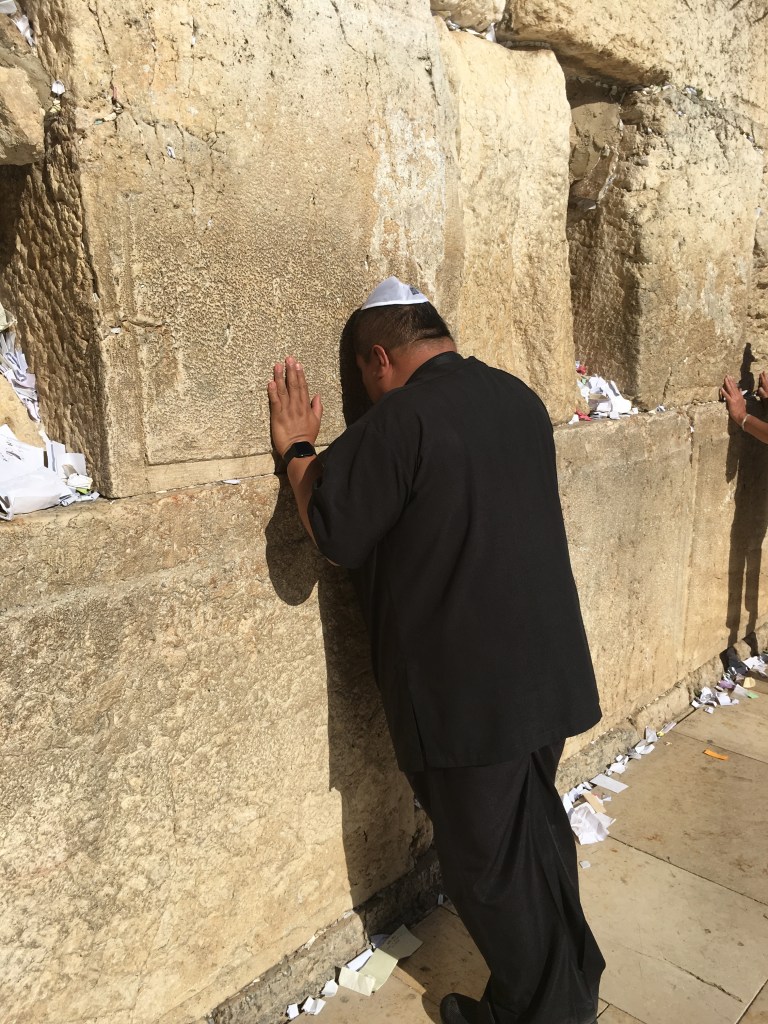
Praying at the Wall, May 2019.

During the Yom Kippur, priests drew lots on who would incense the Holy of Holies where the “Ark of the Covenant” was kept containing the stone tablets of God’s commandments given to Moses. It was the closest thing they have as signs of God’s presence among them. Hence, until now they venerate and pray at the “wailing Wall” of Jerusalem because that is supposed to be the only remaining structure of their temple destroyed in 70 AD closest to that part of the Holy of Holies.

It was so rare at that time to be assigned to incense the Holy of Holies because there were so many priests drawing lots and only one would be chosen for the rite that happens about twice daily for the whole week. It was a tremendous blessing indeed to be chosen to incense the Holy of Holies.

Here we find St. Luke setting the stage of his Christmas story to remind us all that God comes right into our time and space, in our history, in our here and now.

See his descriptions:

  1. It happened in a specific time during during “the days of Herod, King of Judea”, when Zechariah was “chosen by lot to enter the sanctuary of the Lord to burn incense” while people were outside praying and waiting.
  2. It happened in a specific place, the temple of Jerusalem.
  3. Most of all, it happened to real people, “Zechariah of the priestly division of Abijah; his wife Elizabeth was from the daughters of Aaron.”
A view from the Walls of Jerusalem of the Jewish section; dome is the Moslem section, Mount of Olives at the background. Photo by author, May 2017.

The Presence of God, the Absence of Man

When we are deeply hurt and disappointed, we are usually less rational. Worst, although we try to keep our faith alive, that is also when we doubt God, refusing to recognize his presence among us, and even right in us.

In this story of the annunciation of the birth of John the Baptizer, we find God giving Zechariah the tremendous grace to approach his Divine presence by having the rare opportunity to incense the Holy of Holies.

Most of all, at their most important feast when priests gather in the temple to pray for the people and for their personal intentions, God sent Zechariah the angel Gabriel to personally tell him his and Elizabeth’s prayers have been heard and granted!

But what happened? Zechariah doubted, even questioned God!

“How shall I know this? For I am an old man, and my wife is advanced in years.”

Luke 1:18

That’s the problem with us: God is always present but we are always absent that we never meet him. And every time he comes to visit us, we are so busy with so many other things.

If we cannot see and experience God in the most ordinary things and events in our lives, nothing would be enough to convince us of his love and mercy, of his presence and power.

That is why Zechariah was silenced by the angel, who, by the way, is already the presence of God yet Zechariah doubted.

This remaining week before Christmas, let us try to have some silence, or better, let us create a space for silence and solitude to experience God’s loving presence among us, in us.

It is only in silence where we can truly learn how to trust and be intimate with God and with our loved ones because it is only in silence where we can dare to open our selves to God and to others.

Let “the spirit of the Lord stir” you like Samson in the first reading (Jgs.13:25) this Christmas by creating silent moments with Jesus. Amen.

IQ, EQ, and AQ

The Lord Is My Chef Simbang Gabi Recipe, 18 December 2019

Jeremiah 23:5-8 ><)))*> ><)))*> ><)))*> Matthew 1:18-24

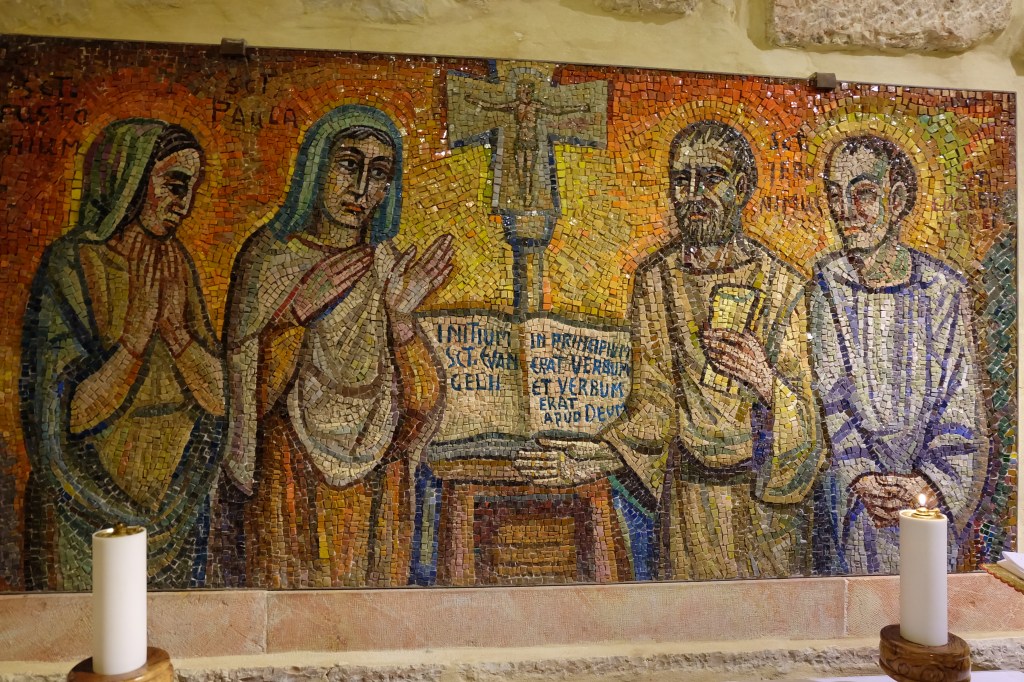
Mosaic at the Chapel of St. Jerome, underneath the Basilica of the Nativity in Bethlehem where St. Jerome lived while studying and translating the Bible into Latin. It is believed to be the place where St. Joseph received in a dream the message of the angel for him to take Mary as his wife. Photo by the author, May 2017.

First, we were told for a very long time the importance of IQ or “Intelligence Quotient” for anyone’s success in life.

Then came the EQ or “Emotional Quotient” this past decade that experts claim has more impact in determining one’s success in life than the IQ.

Now, scientists are claiming that more important than the IQ and the EQ is “AQ” or “Adversarial Quotient”, our ability to respond to various adversarial situations in life.

According to the proponents of AQ, the better we are able to deal with life’s troublesome situations like handling crises involving our many forms of relationships, the better we are equipped in having a more fuller life.

Dream of St. Joseph (Oil on canvas) by Francisco Goya. From Google.

Today we hear the story of St. Joseph facing an extremely adversarial situation when Mary who was betrothed to him was found pregnant with a baby not his!

This is how the birth of Jesus Christ came about. When his mother Mary was betrothed to Joseph, but before they lived together, she was found with child through the Holy Spirit. Joseph her husband, since he was a righteous man, yet unwilling to expose her to shame, decided to divorce her quietly. Such was his intention when, behold, the angel of the Lord appeared to him in a dream and said, “Joseph, son of David, do not be afraid to take Mary your wife into your home. For it is through the Holy Spirit that this child has been conceived in her.”

Matthew 1:18-20

IQ + EQ + AQ = HQ

St. Matthew describes St. Joseph a “righteous man” or, in Jewish thought, a holy man, a saint who lives his life according to the word of God. Also known as a zaddik in Hebrew, a righteous man delights in the Torah (Law), entrusting everything to God.

According to the Book of Psalms’ first chapter, a righteous man or a zaddik is like a tree planted near a river bank that symbolizes God’s words, growing into maturity with good fruits because he is filled with God, putting into practice the Sacred Scriptures and the Laws.

That is precisely what holiness is all about: being filled with God, not being sinless!

Though holiness means being perfect and whole as its Greek origin tells us, holiness as preached by Jesus Christ is an ongoing process when he commanded us to “be perfect as your heavenly Father is perfect” (Mt.5:48).

Holiness does not happen overnight; it takes time and a lot of cultivation on our part.

(One rule of thumb, though, that we must keep in mind: if you think or feel you are holy, definitely you are not. Saints do not know they are saints.)

IQ, EQ, and now AQ are in a sense, scientific expressions of holiness, of being filled with God to become better persons.

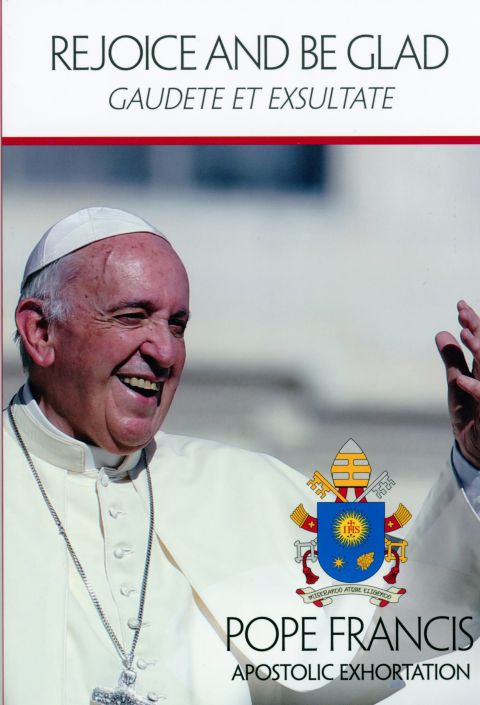
During the Solemnity of St. Joseph last year, Pope Francis issued “Gaudete et Exsultate” to reiterate Vatican II’s universal call to holiness by proposing practical ways in our modern time on how to be holy based on the beatitudes of Jesus Christ.

The Lord asks everything of us, and in return he offers us true life, the happiness for which we were created. He wants us to be saints and not to settle for a bland and mediocre existence. The call to holiness is present in various ways from the very first pages of the Bible. We see it expressed in the Lord’s words to Abraham: “Walk before me, and be blameless” (Gen 17:1).

Gaudete et Exsultate, 1

Very interesting in our Simbang Gabi is how the Pope mentions Abraham, the very beginning of Jesus Christ’s genealogy, as a model of holiness now being expressed in our gospel by the last person in that genealogy, St. Joseph!

St. Joseph bridged faith and practice

St. Joseph is exactly that kind of Jewish zaddik who lived in constant dialogue with God in praying the Scriptures, concretely living it minus the legalisms of the Pharisees and scribes of his time.

For him, the Torah was a good news meant to make life better, not bitter by applying it to daily living which is to love by preserving life.

In dealing with his extremely adversarial situation, St. Joseph did the most important step we have totally disregarded these days: silently pray to God for guidance and grace.

As a man, one can just imagine the many thoughts running through St. Joseph’s mind and heart when the woman he loves so much is found with a baby not his.

Sunrise at Atok, Benguet. Photo by Ms. Jo Villafuerte, September 2019.

His decision to silently leave Mary was due to his great love for her, not in disregarding the letters of the Law that declares that any woman betrothed to a man who bears a child not his must be stoned to death.

Read again St. Matthew’s account we have quoted above and you will feel the solemnity of the scene, of “how the birth of Jesus Christ came about” according to St. Matthew.

There was no sense of agitation or any other negative vibes, purely positive.

Very clear, St. Joseph’s holiness was not merely due to his bloodline or genealogy but his decision to bridge his faith and religion with his life and daily practice.

St. Joseph must be so purely absorbed in prayer that even at his sleep, there was his continuing communing with God that when he woke up, “he did as the angel of the Lord had commanded him and took his wife into his home. He had no relations with her until she bore a son, and he named him Jesus” (Mt.1:24-25).

Finding holiness in adversarial situations

Almost every month we find in social media so many videos and reports of road rage and people freaking out everywhere.

Sometimes I think that with the presence of too many CCTV’s and prevalence of smart phones around, people should be more well behaved, more kind. But the exact opposite is happening!

Life has become one big, giant TV show with everybody grandstanding, artificially creating their own limelight of fame that usually turns into five minutes of shame and notoriety.

Everybody wants to be on TV or Youtube but unknown to many, television screens tend to bring out the worst in us.

Whenever I would see people with their smartphones taking pictures, “talking alone” and doing all those crazy scenes, I fear how most of us have drifted away from our real gounding in life, God.

The story of St. Joseph reminds us of the need to resolve every issues in our lives by going back to our roots and grounding, God. And this happens by being deeply in touch with life and its realities! He was truly grounded and knew what could happen to Mary.

The more we experience life in each other, the more we experience God.

And the more we look at God, the more we see others.

Such was the holiness of St. Joseph that in bridging his faith with his daily life, the deeper his love for God and Mary grew! In looking up to God, the more he saw Mary and so Jesus Christ came too!

Photo from Forbes.com via FB, June 2019.

This is the problem of our time: we keep on looking outside, somewhere else to find meaning and life, answers to our many questions.

We just have to look inside our hearts where God truly dwells like St. Joseph.

His being “whole” as a righteous man is the reason why he could sleep soundly in the midst of many crises in life as he completely trusted God. Indeed, St. Joseph’s silence is his most remarkable sign of holiness that even in his sleep, he is filled with God.

There are four instances in the gospel of St. Matthew when the angel spoke to St. Joseph to deliver messages from God. He can sleep soundly because he never dilly-dallied with important decisions in life like secretly divorcing Mary.

We cannot sleep not because we have big problems but because we refuse to make decisions about them.

The word crisis is from the Greek krisis that means “requiring decision”; hence, critical situations require decisions.

St. Joseph was decisive because he was always grounded in God, discerning always his holy will.

Photo by GMA News editor Ms. JJ Jimeno of a man losing his head in prayer at the UP Diliman Parish, June 2019.

In the first reading we heard the prophecy of the coming Christ who shall be called “the Lord our justice” (Jer.22:6). Again, in Jewish thought, justice is not merely giving what is due but also means holiness.

The coming Christ is the Holy One of God, one who would completely entrust himself to the Father on the Cross. Very much like his foster father, St. Joseph who trusted God completely.

Sleeping and dying are essentially the same in the closing of our eyes when we entrust ourselves to God completely without knowing what will happen next, if we would still wake up or, in the case of death, really rise again.

Christmas happens, Jesus comes to us when like St. Joseph we abandon everything to God, especially our “adversarial situations” and go to sleep to be ready and prepared for new, unexpected, and even incredible things in this life. Sleep tight, and be surprised by the Lord! Amen.

Pope Francis, Gaudete et Exsultate, paragraph 32.

What is in a name?

The Lord Is My Chef Simbang Gabi Recipe, 17 December 2019

Genesis 49:2.8-10 ><)))*> ><)))*> ><)))*> Matthew 1:1-17

Parokya ng Banal na Mag-Anak, Violeta Village, Guiguinto, Bulacan. Photo by Arch. Philip Santiago.

Today we shift our focus in our Advent preparations to the first coming of Jesus Christ when he was born in Bethlehem more than 2000 years ago. Strictly speaking, the Christmas countdown officially starts only today especially with our very long but beautiful gospel from Matthew.

Maybe you are wondering what’s good with our gospel today when it is all about names that mostly sound very funny.

Importance of names: origin and mission

In ancient time, giving name to children was a very serious matter among peoples, especially the Jews.

For them, a name indicates two very important things about a person: one’s origin and mission in life, something parents of today have entirely forgotten, even ignorant because they are more concerned with fad and being unique in naming their children that always end up as a joke as it is always bizarre and weird.

And their poor kid suffers for the rest of his/her life like that man named “Fantastic”. All his life he felt so sad being called Fantastic that he told his wife when he dies, never put his name on his tombstone.

Eventually Mr. Fantastic died and the wife kept her promise not to put his name on his marker. But she felt the need to honor her beloved husband who was so good and honest that in lieu of his name, she asked a tribute written to honor him.

It said, “Here lies a very gentle and loving husband and father who never looked at other women except his wife.”

Every time passersby see and read that tribute, they would always exclaim “Fantastic!”

From Google.

Going back to the importance of giving names….

Corporations are more serious than parents in choosing names and trademarks to their products and services. Every trademark and brand always evokes deeper meanings than just being a product or entity that some of them have entered the vocabulary of many languages like Google, Xerox, and Frigidaire.

And the sad thing about this is how many babies are now being named to follow things and products than the other way around, giving more value to things than human beings!

The book of the genealogy of Jesus Christ, the son of David, the son of Abraham. Abraham became the father of Isaac, Isaac the father of Jacob, Jacob the father of Judah and his brothers.

Matthew 1:1-2
Detail of the ceiling of Parokya ng Banal na Mag-anak after the front or main door: the genealogy of Jesus Christ that starts with Abraham. Great concept by the Parish Priest, Fr. Ed Rodriguez. Photo by Arch. Philip Santiago.

Genealogy of Jesus as direction of Matthew’s Gospel

St. Matthew opens his gospel account with the genealogy of Jesus to settle right at the very start the question about the origin and mission of Jesus Christ.

Here we find the artistry and genius of St. Matthew, some 2000 years ahead of the late Stephen Covey’s third habit of highly effective people: “begin with an end in mind.”

By starting his genealogy with Abraham and David, St. Matthew gives us the whole gospel message in a glance because they are the two key figures in the beginning and realization of God’s promise to send Jesus Christ who would save us all.

Let us just focus on Abraham which means “he who is the father of many.”

It was to him that the story of God’s promise began after the dispersal of mankind following the collapse of the Tower of Babel.

From then on, Abraham points to what is ahead in God’s divine plan, not only for himself but also for the whole mankind for it is through him that blessings come to all. His journey from his birthplace of Ur into Canaan is symbolic of his journey from the present into the future, walking in faith following the Lord’s path and divine plan.

In Abraham we find God starting anew the history of mankind after the Fall that leads up to Jesus Christ who came to lead us all back into the Father.

With Abraham as the main header of Christ’s genealogy, we find not only the beginning but also the end of St. Matthew’s gospel which is the universality of God’s plan of salvation with Jesus telling his disciples to make disciples of all nations (Mt.28:19).

Detail of the ceiling near the sanctuary of Parokya ng Banal na Mag-Anak, the culmination of the genealogy of Jesus. Photo by Arch. Philip Santiago.

Imitating Abraham into our time

Last December 10 was a very important date for me and my parish: it was the ordination date of our first priest.

While waiting for the start of the Mass at the front door (which is actually the back of the Cathedral or any church), I just prayed in silence thinking about my role in the ordination of Fr. RA Valmadrid.

While I marveled at the beautiful renovations of our Cathedral, my sight was slowly moved towards the altar.

It was like an “Abraham experience” in Matthew’s genealogy for me: a wayfarer on a journey into the future, towards God, walking in faith.

In a quick glance, I kind of saw the future glory of every faithful coming to the altar to receive Jesus Christ in the sacraments especially the Holy Eucharist.

I just felt the beauty of entering the Cathedral, or any church which is more than stepping into a building but more of entering God himself, our point of origin and final destination.

Do we realize this tremendous blessing and grace of being baptized, of being a child of God, not only given with a name but most of all, of being counted into the family of God our Father?

In the first reading we have heard Jacob calling his 12 sons. What is so striking here is the blessing Jacob had bestowed upon Judah, instead of Joseph who was the best of all his sons, the holiest and most intelligent.

Like Abraham and Judah, or anyone in the genealogy of Jesus Christ, we can find our own selves too not as the vida or contravida but simply being called to be God’s instrument in fulfilling his plan in sending his Son Jesus Christ.

Truth is, God always comes in the most unexpected situations and peoples most of the time.

In Christ Jesus through our Baptism and faith, we find our genealogy – our origin and mission – as children of God.

If you want to get a feel of this reality, try reading aloud, very slowly, the genealogy of Jesus Christ. At the end, include your self, mention your name, your mother and father. Then close your eyes and let your life flash back in silence.

In the silence of your heart, do you find God coming more to you than you to God?

So amazing, is it not? We are all part of Christ’s genealogy. Let’s bring him forth into the world in our life of faithful witnessing like Abraham. Amen.

Malolos Cathedral. Photo by author.

Inclusive Christmas

The Lord Is My Chef Simbang Gabi Recipe, 16 December 2019

Isaiah 56:1-3. 6-8 ><)))*> ><)))*> ><)))*> John 5:33-36

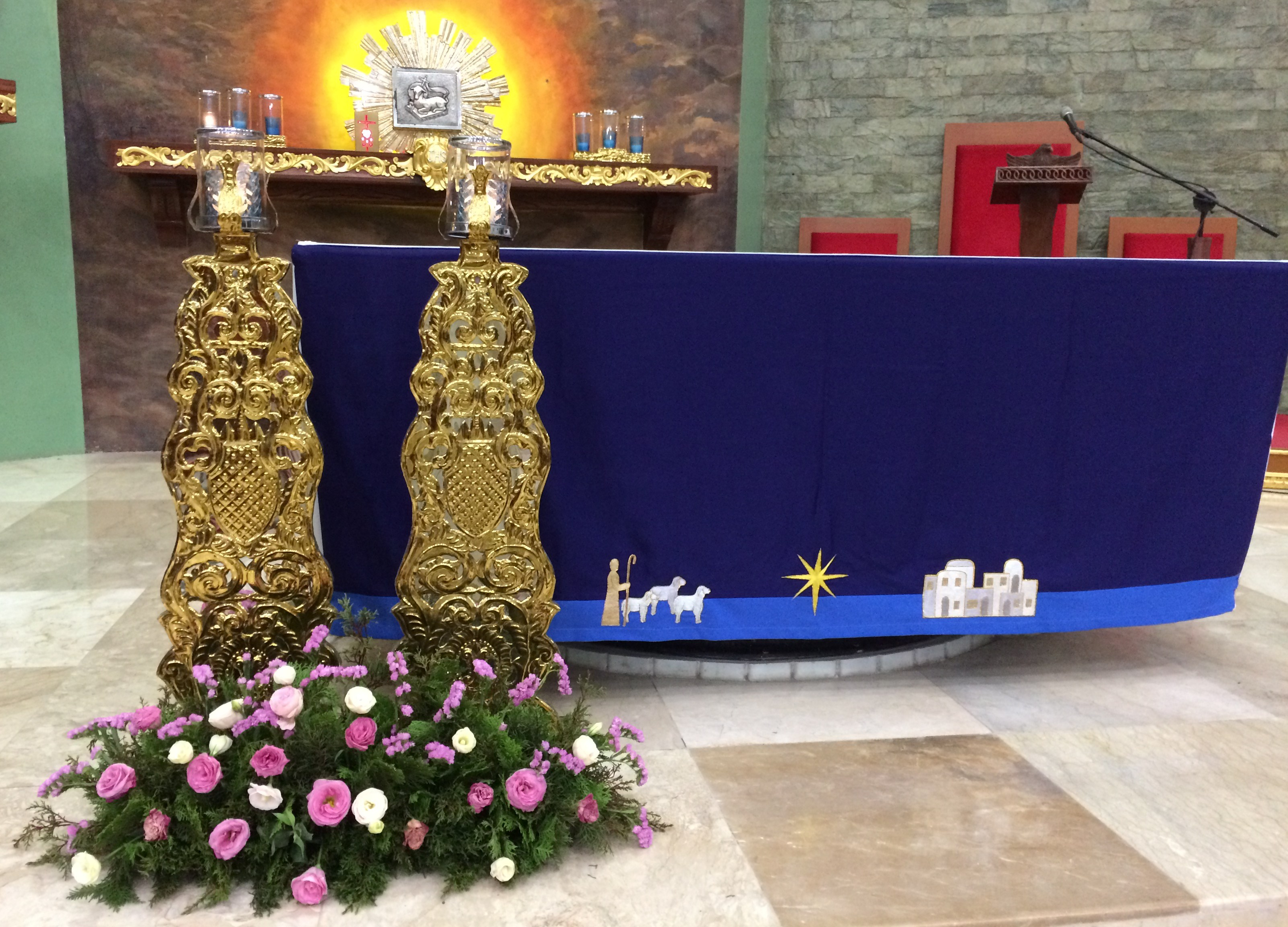
Our Parish Altar, Simbang Gabi 2018. Photo by author.

When we were still seminarians, our spiritual director became a victim of “hold-up” while walking home from an evening mass nearby. He is now a Trappist monk at Guimaras, a very kind and gentle priest we fondly call “Fr. Esteng”.

According to Fr. Esteng, everything happened so fast. But, after taking all his money, the suspect demanded Fr. Esteng’s big bag too, his “mass kit”. This time, Fr. Esteng refused to give into the demand of the hold-up man, insisting there’s nothing of value inside because they are things for celebrating the Mass of which no one would really buy.

To convince the hold-up man, Fr. Esteng got the “brilliant idea” of inviting the suspect to come with him to the seminary to get some food so he would no longer need more money.

Good that the hold up man did not accept the “invitation” of our good priest who got some “scolding” the following morning from his brother priests the following day after learning his brilliant idea, telling him to never to invite thieves into the seminary again!

“For my house shall be called a house of prayer for all peoples. Thus says the Lord God, who gathers the dispersed of Israel: Others will I gather to him besides those already gathered.”

Isaiah 56:7b-8

Inclusive God, exclusive people.

Praying at the Wall of Jerusalem Temple, 2017.

Welcome everyone!

It’s the start of our Simbang Gabi, our nine-day novena before the Lord’s birthday on Christmas.

God tells us in the first reading how he welcomes everyone into his house without any exceptions. That is how good and loving our God who is not contented in calling us all into his house but even sent us his only Son Jesus Christ to gather and lead us back to him.

Our God is very inclusive, always including everyone especially those rejected, those in the margins.

So unlike us people who are very exclusive and judgmental of others too.

We want everything exclusively ours. Just us. And when we meet strangers, those who do not look like us or do not speak and dress like us, we feel uncomfortable.

Worst is when we meet people of different faith and beliefs that we feel uneasy and even threatened simply because they are not like us!

It is good that for this final year before we celebrate our 500 years of Christianization, our bishops have dedicated 2020 to be the “Year of Ecumenism, Interreligious Dialogue, and Indigenous Peoples”.

This is to “celebrate human fraternity by promoting the culture of dialogue as a path of peace.” The Church wants to “work for unity and harmony while respecting diversity and to recognize peoples’ identities, spiritualities and ancestral domain.”

Logo for the Year of Ecumenism, Interreligious Dialogue, and Indigenous Peoples.

Jesus told the crowd, “But I have testimony greater than John’s. The works that the Father gave me to accomplish, these works that I perform testify on my behalf that the Father has sent me.”

John 5:36

See everyone and everything in Christ.

In our gospel today, Jesus was questioned by the Jews for healing a man sick for 38 years on a sabbath day at Bethesda.

Jesus was so different from them who have fallen into rituals and replaced God himself with their laws and traditions. They wanted Jesus stopped and even put to death simply because he did things so differently when, in fact, he was trying to bring back what was lost like the precedence of God and human life over laws and rituals.

Pope Francis reminds us that the Church exists to remind us that God loves and welcomes everyone. He is absolutely right that so often it happens right in our churches, in our celebrations we go on our own exclusivistic ways forgetting we are supposed to be a community.

On this first day of our Simbang Gabi, let us focus more on Jesus so we may find him among other people easily because when we are focused with our “work” and ministry, the more we see ourselves and forget Christ among the poor and marginalized.

Do we find Jesus when we serve and celebrate the liturgy or do we simply have ourselves?

Is it Jesus Christ whom we share with others in our dealings and service in the Church or our proud self?

Where is Jesus really in our lives today that we simply do things for the sake of doing it, because it is a tradition and not because of a personal conviction and relationship with him?

A blessed Monday to you!

Our sacristy, Advent 2018. Photo by author.

Advent is joyful, patient waiting

The Lord Is My Chef Sunday Recipe for the Soul

Third Sunday of Advent or Gaudete Sunday, 15 December 2019

Isaiah 35:1-6, 10 ><}}}*> James 5:7-10 ><}}}*> Matthew 11:2-11

Malolos Cathedral, 10 December 2019. Photo by author.

For most people, our title is something odd and weird, perhaps even an oxymoron, for how can waiting be joyful and patient?

Many people hate to wait. Waiting for them is a waste of time because they believe it is an activity that is empty, full of risks of leading to nothing and disappointments. That is why they make all kinds of excuses in having all the devices and gadgets they need to busy themselves with while they are – after all – still “waiting”!

This Season of Advent is the most opportune time to rediscover the beauty and joy of patient waiting, especially this Third Sunday known as “Gaudete Sunday” from the Latin gaudere, to rejoice.

Advent teaches us that waiting is both joyful and patient; that it is more than an activity but a being that is always indicative of having something leading to fullness!

Our Parish altar, Gaudete 2019.

Patience is waiting that leads to fulfillment.

Pink is our motif this Third Sunday of Advent to signify joy in waiting for the Lord’s Second Coming. Waiting is an experience in itself filled with joy – if we really know how to wait patiently.

Patience is from the Latin word patior, to suffer. Its Greek origin is hupomone that suggests continuance and submission that literally means “submissive waiting”.

Both in its Latin and Greek origins, patience is a condition or a being of willing to wait because it knows there is something coming. It is never empty: you patiently wait because you already have something, you are holding onto something already. We wait in line whether in the grocery or at the doctor’s clinic because we know we would be attended to later. We wait precisely because we have something – almost – but not yet.

In this sense, patient waiting is more than an activity but more of a being and a condition that leads us to trust and faith, then into hope, and eventually into fullness.

Impatient people cannot wait because they do not see beyond the present condition. Their perceptions are very limited that they have to satisfy their wants immediately, just like our culture of instants these days or the so-called IGG for “Instant Gratification Generation”.

The desert and the parched land will exult; the steppe will rejoice and bloom. They will bloom with abundant flowers, and rejoice with joyful song. Strengthen the hands that are feeble, make firm the knees that are weak, say to those whose hearts are frightened: Be strong, fear not! Here is your God, he comes with vindication; with divine recompense he comes to save you. Then will the eyes of the blind will be opened, the ears of the deaf be cleared; then will the lame leap like a stag, then the tongue of the dumb will sing

Isaiah 35:1-2, 3-6
An oasis in the Dead Sea desert, May 2017. Photo by author.

Intimacy: the joy of patient waiting

There are three key personalities in Advent: Isaiah, John the Baptist, and the Blessed Virgin Mary. Isaiah saw the coming of the Christ from a very distant past while John pointed everyone that the awaited one has already come. Mary, on the other hand, celebrated Advent because she brought forth Jesus in her womb.

Today we are joined by Isaiah and John the Baptist to complete our joy of patient waiting that Christ in fact is already with us though not yet…

In our first reading we have seen the imagery of the desert like last Sunday in John’s preaching. The desert evokes the feeling of nothingness and emptiness like waiting itself as most people think.

But, in the bible since the time of Abraham, the desert is the favorite place where God would always meet with people. It was always in the desert where the prophets and the people waited and experienced God.

Wild flowers in the desert of Jordan, May 2019.

So you see, my dear reader and follower, the desert is more than a place but also the intimacy of God with his people and later with his Son Jesus Christ who would always go to the desert or deserted place to pray like in the Transfiguration, or when he prayed and fasted for 40 days and nights before being tempted by the devil after his baptism by John at Jordan. It was also in the desert where Jesus did many of his memorable conversations that led to conversions like at Jacob’s well where he met a Samaritan woman one hot afternoon.

Examine your lives, dear reader and follower: it is always in the desert of our lives, in its bareness and desolation, when we are empty and thirsty when we truly experienced God closest.

Isaiah spoke of this prophecy when the Israelites were at their lowest point of misery and defeat as exiles in a pagan country with no freedom, no temple, even no God.

When we are full of material things, full of ourselves, when everything is going so perfectly well in life, that is when we are ironically shallow and superficial. What really deepened us in life are those desert moments of tribulations and trials because that is when we have found and rediscovered true intimacy – with God and with our loved ones!

Patient waiting is a desert full of joy because that is where we experience intimacy and fullness, the tension of the already here but not yet, not only with God but also with one another.

Here we find St. James imagery of the farmer as finest example of patient waiting, of trusting in God that what we have sown would grow and be fruitful. Despite our culture of instants, there are so many things that cannot be rushed, when we have to patiently wait in time like intimacy.

How do we recognize our true friends? They are the ones who always stand by our side especially when we our down and out, the ones who accompany us in our patient waiting when we are in the middle of a storm, or in the desert, desolate.

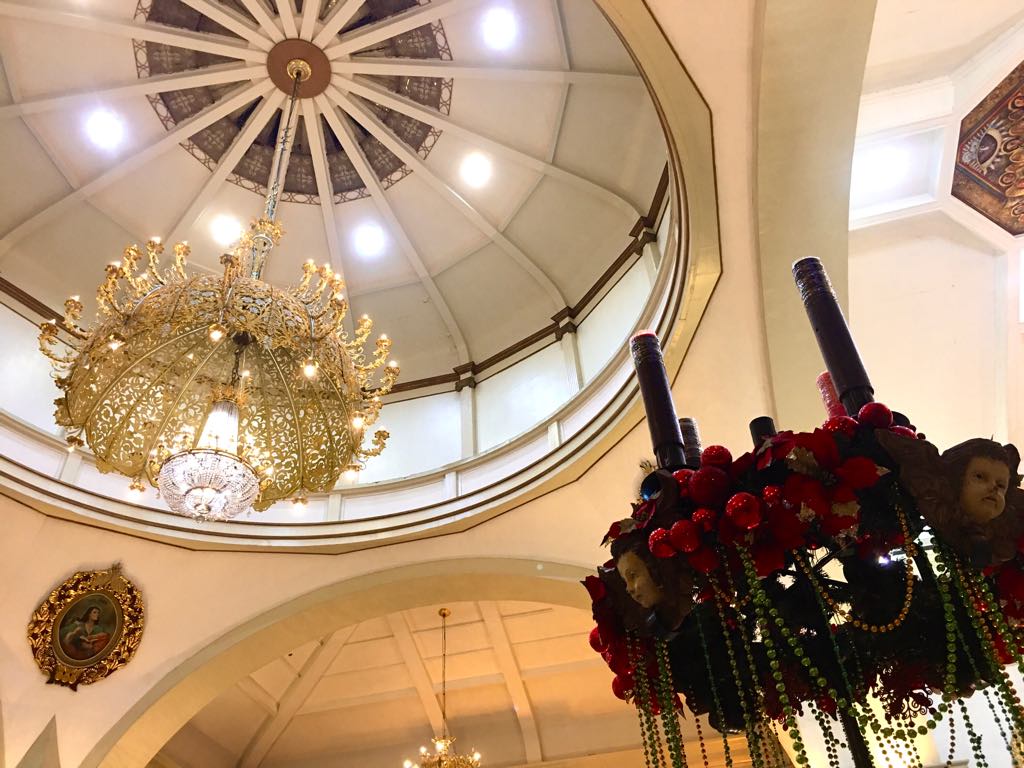
Malolos Cathedral Dome, December 2019. Photo by author.

Proceeding in joy in the presence of the Lord

One problem with waiting is when we are superseded by our so many expectations that may also be unrealistic. We hate waiting, we stop hoping because we feel disappointed and frustrated because we do not get what we really expect from our waiting.

The problem is with us, not with waiting itself. So often we await things instead of persons. To wait in joy with patience demands openness for the one who is coming not on what is coming.

True waiting is always about persons, not things. Waiting is beautiful and joyful because you are not alone in waiting, there is always another person waiting for you, waiting with you. And when we finally meet with the one we are waiting, then we have presence!

This is why the synonym for gift is also present, from presence.

Every waiting is directed to another person who also awaits the other person. When we focus our waiting on things than persons, then we miss everything in our waiting which is the presence of the other person.

This is the meaning of the response of Jesus to the emissaries of John.

Camp John Hay “Belen”, December 2017.

When John the Baptist heard in prison of the works of the Christ, he sent his disciples to Jesus with this question, “Are you the one who is to come, or should we look for another?” Jesus said to them in reply, “Go and tell John what you hear and see: the blind regain their sight, the lame walk, lepers are cleansed, the deaf hear, the dead are raised, and the poor have good news proclaimed to them.”

Matthew 11:2-5

Jesus was telling the emissaries of John that the one they have been waiting had come, already present among the people especially the sick and the poor. God had come in the midst of his people, healing them, consoling them, uplifting them.

This Third Sunday of Advent, Jesus is asking us like the crowds: what are we looking for, what are we waiting for? Set aside or totally forget all your expectations, open yourself, open your heart, open your eyes to see and experience the presence of the Christ who had come, who will come again, and always comes among us.

Indeed, we are so blessed because despite our being sinful, of being the least in the kingdom of heaven, we have Jesus coming to us day in, day out. Share his coming, share his healing, share his joy! Amen.

The priest is always a radical

Quiet Storm by Fr. Nicanor F. Lalog II, 10 December 2019

Homily for the First Mass of Rev. Fr. Roel Aldwin C. Valmadrid, First Priest from our Parish of St. John Evangelist, Bagbaguin, Santa Maria, Bulacan

In my 21 years of priesthood, I have found so many descriptions and interpretations of being a priest. But there is only one priesthood we all share — the Priesthood of Jesus Christ.

And that is why, every priest has to be a radical like Jesus.

From the Latin word radix which means “roots”, a radical is someone who is always rooted, grounded in being as we say in philosophy.

A priest is a radical because he always has to be rooted in Jesus Christ, our Eternal Priest. He alone is our model and everything in our lives and ministry. Everything and everyone must be seen in relation with Jesus Christ.

I am the true vine… I am the vine, you are the branches.

John 15:1, 5

It is the Caller, Not the Call

Since last year when I was invited to be a guest spiritual director of our School of Theology, I have realized how seminarians and eventually priests give more importance to the vocation or call to the priesthood than to Jesus Christ himself, the Caller.

When we priests and seminarians are focused on the call, we get so many excuses in life: we have every justification for everything like in acquiring material goods and gadgets, indulging in so many luxuries and lifestyles for the rich and famous simply because we are priests.

See how some seminarians and priests alike, despite the many immoralities in life, they cling to the vocation but never to Jesus.

Worst, when we are more focused with our call than with Jesus the Caller, that is when we see more of ourselves that soon enough we play gods and we start making our vocation an excuse for everything, even flaunting them in social media.

Call it triumphalism, exaggeration of devotions when in fact it is the start of a cult around the person of the priest. That is when we start having our own interpretations of everything, starting from Jesus Christ, on the liturgy, morality, scriptures and everything!

Sad and tragic. Most of all, a grave scandal of our time.

When we focus more on our Caller Jesus Christ, then we start praying and discerning.

That’s when everything gets clearer because when we examine things in the light of Christ, we become sensitive of others and sensible as well.

When we see Jesus more than our priesthood, that is when we see more of Christ among others, especially the poor and marginalized.

Yes, when we priests look at Jesus more, the better we see him in others that we get inspired to do more, to serve more with love and kindness.

“I Am”

We have learned in our studies of the scriptures that Jesus Christ’s declarations of “I AM” in all gospel accounts mean a lot, especially in the fourth gospel by our beloved Patron, Saint John the Evangelist. It is indicative in itself of Jesus being the Christ, the awaited Messiah.

Keep that in mind, keep that in your heart, Fr. RA: that “I AM” is Jesus Christ, not you.

A priest is always a radical because every day we have to go back to this very root of our being, Jesus. Without him our Caller, there is no call. No Jesus Christ, no priesthood.

Twice did Jesus declare this I AM: at the opening verse where he used the adjective I AM the true vine then at the fifth verse when he said I am the vine, you are the branches.

Most important part here is the I AM to show how Jesus has let himself planted on earth, never to be uprooted like that story of the vine producing sour grapes in the Book of Isaiah.

His I AM here is the very mystery of his incarnation mentioned by our Patron Saint, John the Evangelist at his prologue to his gospel account. Like what St. Paul had written to the Romans we always read in the Evening Prayer I of each week, “God’s gift and call are permanent and irrevocable.”

Jesus called us to the priesthood, he will never recall that. That is why we are celebrating tonight despite your many sins and heavy warnings in the seminary. He called you Fr. RA and he kept that.

Chapel of the Holy Family, Jesuit Novitiate and Retreat House, Novaliches, 2017.

Now you are priest, Fr. RA, let Jesus dwell in you as you keep grounded in him too.

Have an altar in your room, Father. Keep the TV set outside your bedroom. Upon waking up even if your bladder is full, kneel before your altar, say the Morning Offering, be with Jesus, hear him tell you every morning “I AM the true vine, you are the branches.”

People always ask me what is the most difficult in being a priest?

It is not really being celibate. In fact later in life, ask your married friends, it is a great blessing to be celibate!

Since my first year in the priesthood, I have always been telling people since then until now that the most difficult in being a priest is we have to pray every day. I mean, real prayer where we strip ourselves naked before Jesus. No ifs, no buts. Just our plain, ugly self before him.

It is difficult to pray every day because it means being true to one’s self that requires a lot of discipline and courage.

Bp. Dennis Villarojo ordaining Fr. RA, 10 December 2019, Malolos Cathedral.

Most of all, it is difficult to pray because that is surrendering one’s self to God. It is like being ordained every day when we keep on saying, “yes, Lord…yes Lord.”

Whatever is the fruit of our prayer, that is what we share in our homilies and talks to people.

That is when we come into the most difficult part of our prayer life as priests: when we preach, then people measure us, even judge us. They ask if we “walk our talk”.

When a priest does not preach anymore, when a priest avoids celebrating Mass, pray for that priest. Most likely he is no longer praying. He is already separating himself from the vine, forgetting the Caller.

Remember St. Augustine who told his deacon in De Catechizandis de Rudibus, “the catechist is the lesson himself”. In the same manner, the priest is the homily himself.

It is prayer where we grow deeper in our faith as priests. And people would right away notice this if we believe in God, if we believe in the Mother Church, if we believe in the sacraments we celebrate.

When we experience Jesus our true vine, it is always Jesus whom people would see and feel in us his priests.

“Remain in Me so you will bear fruit”

Our prayer life as priests keeps us one with Jesus our Caller and our true vine. In our gospel today, Jesus repeated the word “remain” about nine times, the most of any word in our gospel this evening.

Remaining in Jesus as a priest is imitating our Patron Saint John the Beloved, the only one who remained and stayed by our Lord’s side at his crucifixion.

To remain in Jesus is stay with him at the Cross.

Notice how Jesus reminded us that as branches, the Father has to prune us always. Pruning means sufferings. Pruning means carrying the cross daily.

Ten years ago I was invited to give a recollection to our students at the Theology Deaprtment with the topic, “The Cross as the Cost of Discipleship”.

People praying for Fr. RA after Holy Communion, 10 December 2019. Chinggoy Futol Photography.

I accepted the invitation to correct their topic because it is absolutely wrong: the Cross is not and should never be considered as a cost of discipleship. When you talk about costs, then you think of rewards and profits. Then it becomes a business. No longer a vocation.

The Cross is the life of a priest because that is the life of our Caller, Jesus Christ!

Remain in Jesus, bear all pains and hurts. Kneel always before his Cross and look at him to realize that before our sufferings came, Jesus was there first to suffer and die for you, Father!

Part of that Cross comes from those nearest to us priests, our family and brother priests!

Every day, especially Sunday, you celebrate life and death, health and sickness with people you hardly know, some of them even hurt you and malign you when you can not even be with your parents, sisters and nieces and nephews.

Worst, there are times it is your brother priests are the ones who would hurt you too!

Rejoice when you are being pruned, when you suffer, Father. Remember the beatitudes, “Blessed are you when people persecute you and malign you.”

Photo by Chinggoy Futol.


Be good and kind to your brother priests, Father RA.

Do not fight back if they hurt you.

Love your parish priest. Help him always in his Masses. Volunteer to him especially when you see the slightest of him catching colds!

When a priest is kind to his brother priest, that priest is surely a good priest, a kind priest.

By being good to fellow priests, you keep them remain in Jesus our true vine too.

And you become fruitful.

Being fruitful is different from being successful.

Sometimes, our failures are the very joys of our Lord Jesus Christ because that is when we are nearest to him.

To be fruitful is to rely more in the powers of God. Relying more on our powers is success.

And there is only one fruit Jesus wants from us: love.

Photo by Neil Jumaquio Adriano.

See how after Jesus declared himself as the vine and we are his branches, that is when he would speak eloquently about love, his commandment.

“I have told you this so that my joy might be in you and your joy might be complete. ?This is my commandment: love one another as I love you. No one has greater love than this, to lay one’s life for one’s friends.”

John 15:11-13
The new priest with his family. Chinggoy Futol Photography.

Love like Jesus Christ, Father RA.

Be a radical priest, not as a subversive but always go back to our very root, Jesus Christ.

Better, restore Jesus Christ.

Next year, I will be moving to another parish, Father RA.

When you are broken, when somebody maligns you again, you are most welcomed wherever I may be transferred and together, with our aching gouts, we shall kneel to before Jesus our vine, our root, our Caller. Amen.

Advent is seeking, seeing Jesus

The Lord Is My Chef Breakfast Recipe for the Soul

Friday, Advent Week-II, Memorial of St. Lucy, 13 December 2019

Isaiah 48:17-19 ><)))*> ><)))*> ><)))*> Matthew 11:16-19

The eagle symbolizing our Parish Patron St. John Evangelist, Advent 2018.

Thank you very much Lord Jesus Christ for never giving up on us. You sound so exasperated in our gospel today at how so “slow” we have become in recognizing and believing you but you never lost your cool.

Please continue to open our minds and our hearts to realize you have come, you are coming and you are always with us.

Forgive us Lord when we are so concerned with the mundane things, the shallow concerns we are so preoccupied with forgetting the more crucial of recognizing your presence and your works among us.

Jesus said to the crowds: “To what shall I compare this generation? It is like children who sit in marketplaces and call to one another, ‘We played the flute for you, but you did not dance, we sang a dirge but you did not mourn.’ For John came neither eating nor drinking, and they said, ‘He is possessed by a demon.’ The Son of Man came eating and drinking and they said, ‘Look, he is a glutton and drunkard, a friend of tax collectors and sinners.’ But wisdom is vindicated by her works.

Matthew 11:16-19

Grant us Lord Jesus Christ the gifts of silence and wisdom, of “masticating” always your words so we can be properly guided in answering your call and mission.

Give us the grace to see things as they are, to set aside our many biases and visions of things to come so we can be contented with what we are having, of what God has provided us with.

Let us heed your words and work faithfully for their fulfillment in us and through us.

Thus says the Lord, your redeemer, the Holy One of Israel: I, the Lord, your God, teach you what is for your good, and lead you on the way you should go. If you hearken my to my commandments, your prosperity will be like a river, and your vindication like waves of the sea; your descendants would be like the sand, and those born of your stock like its grains, their name never cut off or blotted out from my presence.

Isaiah 48:17-19

Give us O Lord, the courage to be different, to make a difference for Jesus Christ by opening our eyes of faith so we may always seek you, see you, and follow you.

Saint Lucy, patroness of diseases of the eyes, heal our many blindness to be focused in Jesus alone. Amen.

Photo by Noelle Otto on Pexels.com

Advent calls us to believe again

The Lord Is My Chef Breakfast Recipe for the Soul

Thursday, Feast of Our Lady of Guadalupe, 12 December 2019

Zechariah 2:14-17 ><)))*> ><)))*> ><)))*> Luke 1:39-47

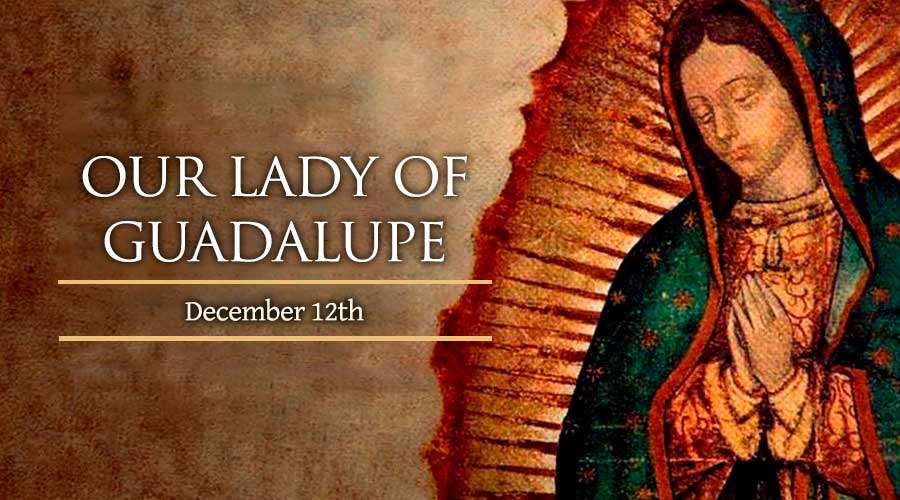
From Catholic News Agency

Praise and glory to you, O God our loving Father in heaven who has given us along with your Son Jesus Christ our Savior his beloved Mother the Blessed Virgin Mary.

Thank you in giving us Mother Mary as our guide in this Season of Advent, along with the Prophet Isaiah and St. John the Baptist.

And the most wonderful thing about Mary as our guide in Advent is the fact she lived Advent because she was the first to truly believe in Jesus!

Renew our faith in you, O God especially in this age when we tend to believe more to our selves, to science and technology.

Strengthen our faith also so that like Mary, we may be blessed as we believe your words O God will be fulfilled in us.

Detail of painting at the Basilica of St. Juan Diego receiving roses from the Blessed Virgin Mary.

“Blessed are you who believed that what was spoken to you by the Lord would be fulfilled.”

Luke 1:45

Let us firmly believe like Mary, your Mother, Lord Jesus!

Let us give you our daily “Amen” like Mary who gave her total self to your service, Lord.

Fill us with the Holy Spirit, Father, like Mary who has continued to share your Son Jesus Christ with others, not only to Elizabeth at that time but also to St. Juan Diego at Guadalupe, St. Bernadette at Lourdes, and to the children at Fatima. Amen.

The assurance of Advent

The Lord Is My Chef Breakfast Recipe for the Soul

Wednesday, Advent Week-II, 11 December 2019

Isaiah 40:25-31 ><)))*> ><)))*> ><)))*> Matthew 11:28-30

Eagle, the symbol of our Patron Saint, John the Evangelist, Advent 2018.

What makes Advent so wonderful, Lord, is the fervent hope your words instill in us to persevere in believing and serving you.

Though young men faint and grow weary, and youths stagger and fall, they that hope in the Lord will renew their strength, they will soar as with eagles’ wings; they will run and not grow weary, walk and not grow faint.

Isaiah 40:30-31

Teach us to trust you more, to always walk in firm faith in you because you always keep your promise.

Enlighten us, Lord, that you never promised to take away our cross; let us realize the great comfort you offer us in helping us carry our cross.

Enough to comfort us and assure us is your gentle mastery, Lord Jesus Christ.

“Come to me, all you who labor and are burdened, and I will give you rest. Take my yoke upon you and learn from me, for I am meek and humble of heart; and you will find rest yourselves. For my yoke is easy and my burden light.”

Matthew 11:28-30

Thank you, dear Jesus, for these kind words today, enough for us to forge on in life’s many trials.

We pray for those having some form of crisis in life today, enlighten their minds and their hearts in making the right choices in life. We pray for those who are very sick and those taking care of them in this most trying time of their life. We also pray especially those who lost a loved one, feeling guilty in the process. Please assure them Lord of your gentle presence, that they are cared for, and most of all, loved. Amen.

Advent 2019 in our Parish.

A prayer for the ordination of the first priest of our Parish

The Lord Is My Chef Breakfast Recipe for the Soul

Tuesday, Feast of Our Lady of Loreto, 10 December 2019

Isaiah 40:1-11 ><)))*> ><)))*> ><)))*> Matthew 18:12-14

Pope Francis prays at the Holy House of Loreto during his pilgrimage on 25 March 2019. Photo from Vatican News.

How comforting are your words, O Lord, and the celebrations we are having today: the Feast of the Our Lady of Loreto and the ordination to the priesthood of our three deacons in the diocese.

It is a very special day for us parishioners of your “beloved disciple”, Lord, because one of the ordinandi is our first priest, Rev. Fr. Roel Aldwin C. Valmadrid.

Comfort, give comfort to my people, says your God.

Isaiah 40:1

To comfort, Lord, is not only to relax and soothe but most of all, to strengthen, cum fortis.

Thank you for comforting us, our loving God with the gift of the first priest of the parish. Despite our many sins and shortcomings as a parish community, you blessed us with a priest, with another coming next year!

Thank you also Lord for comforting our three new priests. Finally, after more than a year of darkness, we see light today with their ordination.

May our new priests give comfort to your people, Lord, for many of them are lost, tired, and confused, “like sheep without a shepherd”.

Most of all, comfort my former seminarian, my parishioner and now a priest, Fr. Roel Aldwin.

You know very well the many trials Fr. Roel Aldwin had faced before this day came: of how his future looked so dark and uncertain with the death of Bishop Jose last year, and after being ordained deacon last June, some wayward souls have tried to destroy his reputation with lies and false accusations.

Comfort, Fr. Roel, Lord, comfort him and teach him to forgive whoever those people have maligned him. Make him realize that trials and tribulations, pains and sufferings are the stuff you allow to come our way as priests in preparing us for bigger and greater mission.

And where else, dearest Jesus, can we truly find more comfort but in the warmth and assuring love of your holy home in Nazareth with St. Joseph and Mother Mary that was miraculously transported to Loreto, Italy in 1260!

It is so difficult to understand, even believe, how your holy house in Nazareth would be carried by angels across the seas into Loreto; yet, it is very comforting and reassuring to hear stories by pilgrims there, including Pope Francis who all claimed to have felt, to have been “comforted” in visiting your holy earthly dwelling place.

Yes, dear Jesus, it is very comforting to realize how you would do everything like a shepherd leaving behind 99 sheep in the hills to look for the lone stray one.

Fill Fr. Roel Aldwin, Fr. Laurence and Fr. Howard with your strength and love so they can comfort many people and lead them back to you, Lord Jesus as your priests. Amen.

Diaconal Ordination of Rev. Howard, Fr. Roel Aldwin, and Rev. Laurence at the Malolos Cathedral, 12 June 2019.