“Pick Up the Pieces” by Average White Band (1974)

Lord My Chef Sunday Music by Fr. Nicanor F. Lalog II, 20 April 2025
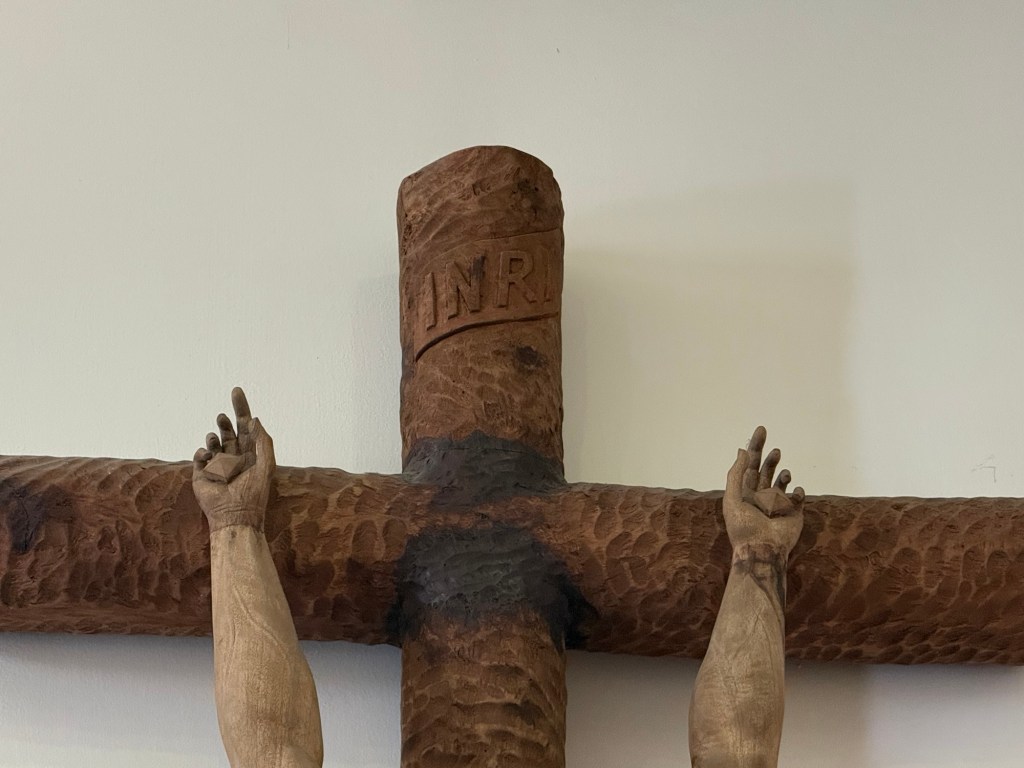
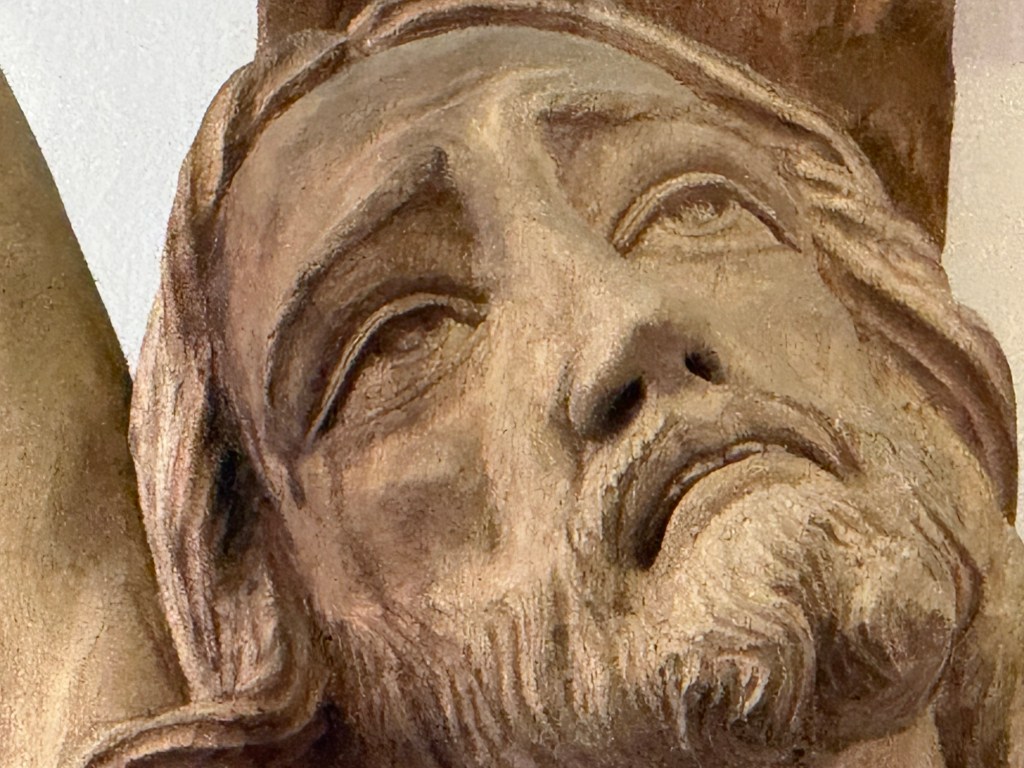
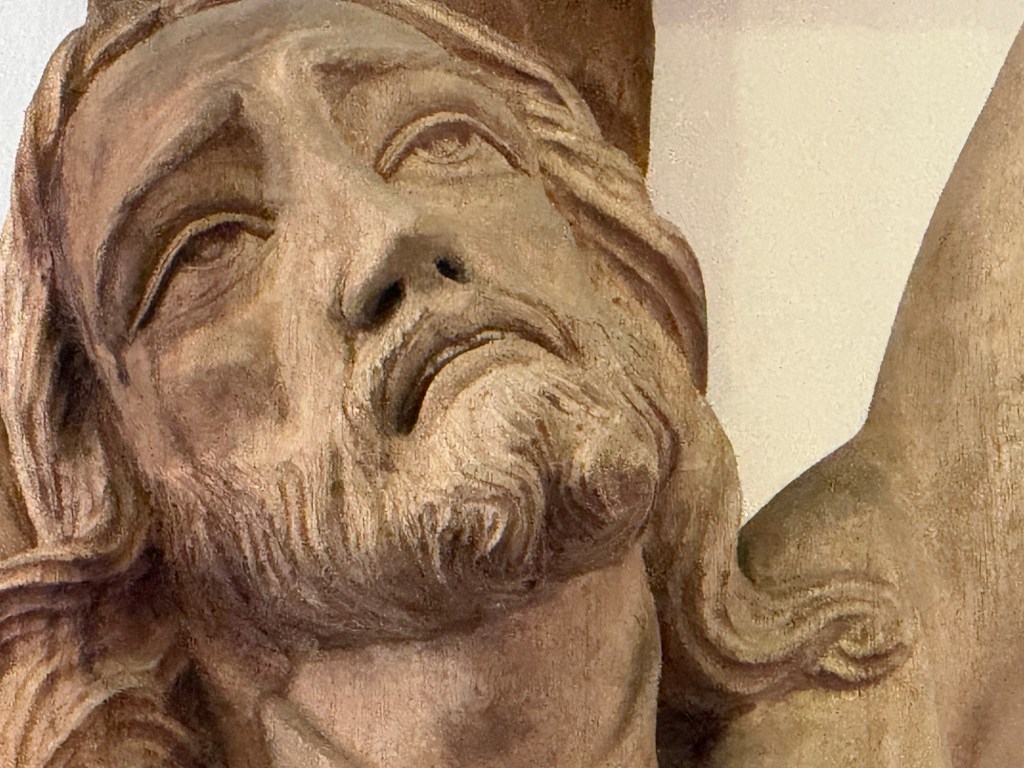
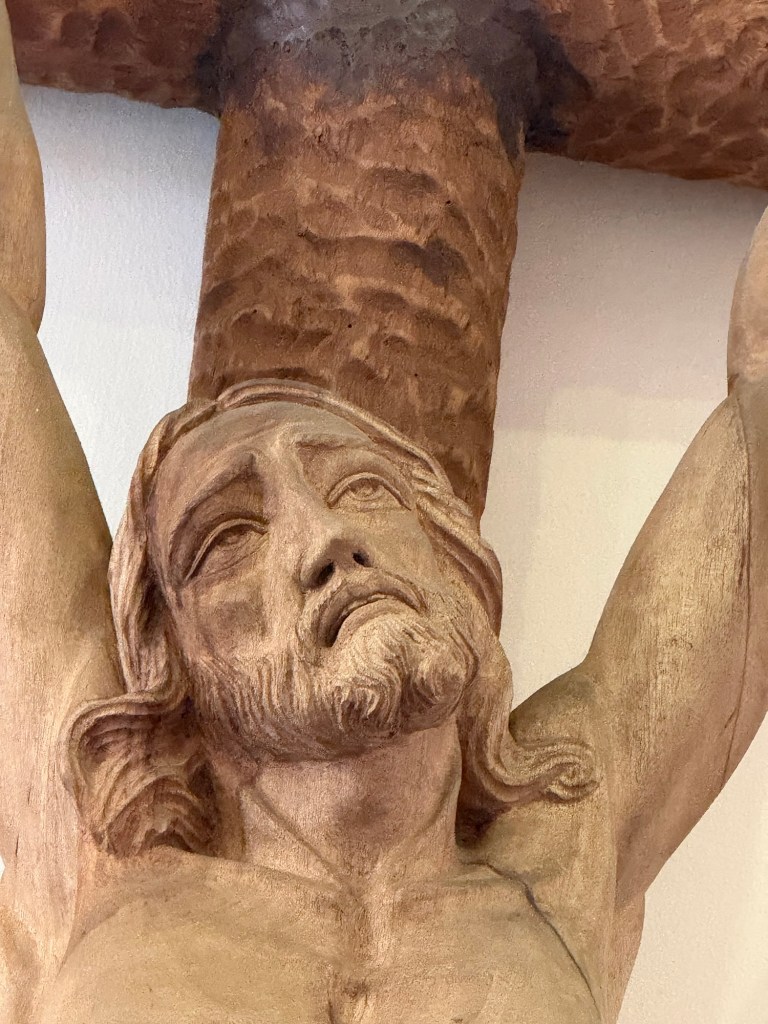
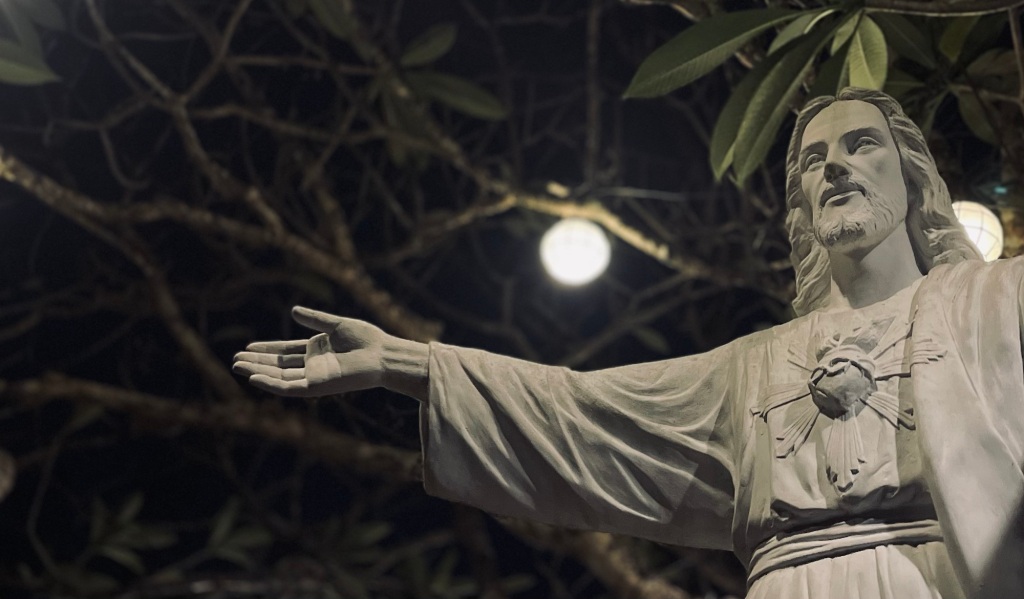
Photo by author, Atok, Benguet 27 December 2024.

Blessed happy Easter everyone!

We have long been planning to have this instrumental piece in our featured music every Sunday but it was only now we have realized this is most perfect during Easter when Jesus Christ in his Resurrection is telling us to “pick up the pieces” of life amid its many darkness and emptiness.

That is the grace and surprise of Easter: in Christ’s dying and rising to life, death has become a blessing to us all as we have come to share in his glorious resurrection too.

Despite that feeling of emptiness within and in our homes, of the irrevocable reality they are gone forever never to join us in our meals and bonding like Christmas, of never hearing their voices again nor be able to hug and embrace them can be shattering, the angel’s reminder to Mary Magdalene and companion women at the empty tomb echoes in our hearts too: “Why do you seek the living one among the dead? He is not here, but he has been raised. Remember what he said to you while he was still in Galilee, that the Son of Man must be handed over to sinners and be crucified, and rise on the third day.” And they remembered his words (Luke 24:5-8). https://lordmychef.com/2025/04/20/easter-is-god-surprising-us/

Released in 1974 in the UK by a group of Scotsmen musicians who called themselves as Average White Band or AWB, “Pick Up the Pieces” did not perform well in the charts until it was released later in October that same year in the US where it stayed on the top singles in February 1975. According to the late Molly Duncan who was the band’s saxophonist, he had disagreed in releasing the song that had no lyrics only other than the shout “pick up the pieces.”

Moreover, the title spoke so well of their situation at that time when they were hardly noticed in the music scene, not making any money at all until it was released in the US where radio stations took notice of its funky beat’s good vibes. The single eventually became AWB’s turning point that is why the more we find it so appropriately Easter in nature.

We have been aware of the music itself in the 1970’s but it was only in 2010 when we found out its artists –AWB – after Daryl Hall guested AWB bassist-guitarist and co-founder Alan Gorrie in his internet show Live From Daryl’s House. It was a superb performance as usual by Daryl Hall and his musicians but of course, we always prefer the original. Here is AWB with their classic “Pick Up the Pieces” which we believe Jesus would also approve as part of his Easter soundtrack. Amen.
From YouTube.com.

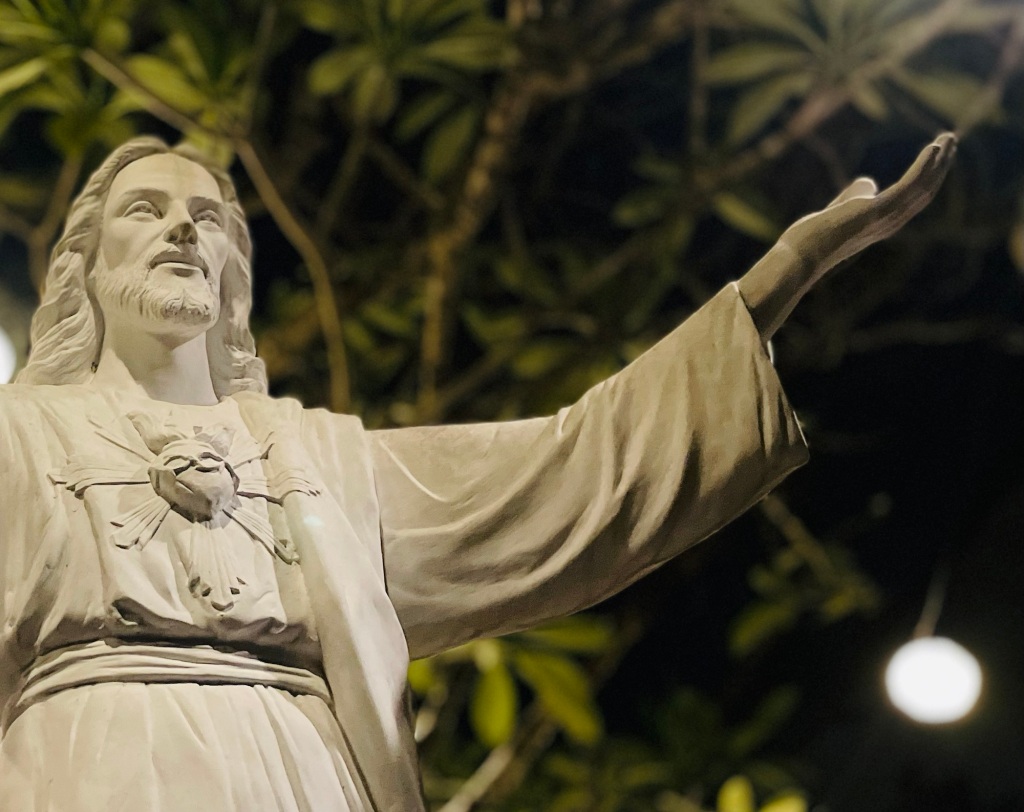
Magnanimous Jesus

The Lord Is My Chef Sunday Recipe for the Soul by Fr. Nicanor F. Lalog II
Sixth Sunday in Ordinary Time, Cycle C, 16 February 2025
Jeremiah 17:5-8 ><}}}}*> 1 Corinthians 15:12, 16-20 ><}}}}* Luke 6:17, 20-26
Photo by Haley Black on Pexels.com

After the call of his first disciples last Sunday, Jesus went on to preach in Galilee as great crowds followed him with some of them becoming his disciples too. From among these many disciples, Jesus chose twelve to be his Apostles after praying one night on a mountain (Lk. 6:12-16).

As they went down from the mountain, Jesus taught the Twelve along with his other disciples and crowd of people who have gathered to listen to him in what came to be known as his Sermon on the Plain.

Luke patterned his Sermon on the Plain on earlier account of Matthew’s Sermon on the Mount that portrayed Jesus like the new Moses and moreover, the new Law himself. Matthew’s Sermon on the Mount has a smaller audience that was limited to just the Twelve while Luke’s Sermon on the Plain had a wider audience of not just the Apostles but also the other disciples and the crowd of people who have been following him.

But, more than their differences in their setting and audience, the two sermons differ greatly in the message itself. Both Luke and Matthew begin with four beatitudes, but Matthew concludes with additional beatitudes while Luke matched the four beatitudes with four woes that frankly speaking, are very disturbing.

“But woe to you who are rich, for you have received your consolation. Woe to you who are filled now, for you will be hungry. Woe to you who laugh now, for you will grieve and weep. Woe to you when all speak well of you, for their ancestors treated the false prophets in this way” (Luke 6:24-26).

Again, Luke is telling us something deeper about Jesus in his version of the Sermon on the Plain that actually echoes the Blessed Virgin Mary’s Magnificat found only in his gospel too.

Recall in the Magnificat how Mary spoke of God sending the rich “away empty” (Lk.1:53) as he blessed the poor and the hungry. And here now is Jesus Christ fulfilling those words of his Mother.

The gospels and the whole Bible itself teem with many pronouncements against the rich and those in similar good fortune in life. Is God against the rich, those happy and those of good reputation? What’s wrong with being rich or well-off, of having our fill of food and laughter, and being spoken well of by others?

Photo by author, November 2024.

Nothing really.

Jesus is not against anyone for he loves everyone as he preached extensively on the need to love one another as we love God. If Jesus preached only love, he would have not been crucified, and most definitely would have not made so much enemies. But, the kind of love Jesus preached was so radical that shook not only the ways of the old but also of modern time because it is a kind of love that pulls down the mighty and favors the poor and those suffering. His Sermon on the Plain rings louder than ever today as we have not seemed learned from the lessons of the past. And believe it or not, the four woes declared by Jesus in his Sermon on the Plain are actually expressions of his magnanimous love, contrary to what others claim.

The four woes that are antitheses of the four blessings are not actually maledictions as most interpretations have expressed. A malediction is like a curse, an expression of one’s desire for someone’s harm like in calling down God’s wrath. The four woes of Jesus in his Sermon on the Plain is far from that reality nor a condemnation against anyone.

Photo by author, Church of the Beatitudes, the Holy Land, May 2017.

In calling the rich “woeful” along with those who are filled and those who laugh “now” as well as those of whom “all speak well”, Jesus is neither condemning them nor declaring them as evil-doers; in calling them “woeful”, Jesus reminds them and us today of being on the wrong and bad path in life that can lead to a fatal outcome or end.

Like in the parable of the rich man and Lazarus that only Luke has an account in his gospel, Jesus Christ’s “woes” are warnings – “red flags” – everyone must consider who might be in the wrong direction and wrong choices in “enjoying” life “now” without any concern for those who are suffering like the poor and the hungry, those who grieve and those maligned and hated.

Photo by Mr. Jay Javier, Quiapo, 09 January 2020.

The poor, the hungry, the weeping and the hated are blessed not simply because of their state in life but more of their willingness to forego so many worldly things “now” for they trust in God who shall deliver them to salvation and justice.

They are blessed because they have realized that things of the world are passing, something that the worldly could not accept. How sad that many today have lost sight of eternity and even of God, living only for the “now”.

Jesus is not asking us to be “masochists” or at the other end of the extreme, to be complacent in the face of widespread suffering and pains. Remember how in the synagogue at Nazareth one sabbath when Jesus launched his ministry by proclaiming from the Prophet Isaiah how the Spirit of God rested on him to bring glad tidings to the poor, liberty to captives, healing to the sick (3rd Sunday, Jan. 26).

By calling the poor and the suffering as “blessed”, Jesus assures them that God is with them and that justice shall be reestablished on “that day” when they enter the kingdom that has been prepared for them in eternal life. He called us “woe” to warn us while there is still enough time to change our course in life to be blessed not only now but in all eternity too!

Photo from forbes.com.

See how our readings this Sunday are actually about our making of wise choices in life: in the first reading, Jeremiah warns us of the consequences of trusting God or trusting humans while the psalms show us the ways of the just and the ways of the wicked; Paul in the second reading presents to us the grace of believing in Christ’s Resurrection and the folly of denying it while in the gospel, Jesus offers us blessing or woe in living.

These readings show us there is no middle ground in following Jesus nor grey areas in God. Our decisions in life define the course of our lives like what the Pepsi Cola ad used to say in the 1990’s, “we are made (or unmade) by the decision we make.”

Moreover, in giving us those four woes, Luke reminds us that in making our decisions, we must consider more than the moral but the Christological perspective of life to be like Jesus Christ – who is himself the “blessed” because he is the poor one, the hungry, the weeping and the hated.

Should we make the wrong decisions in life, Jesus remains magnanimous, remaining in us, telling us those woes over and over so we would still make the right choices in life. Don’t take it personally; Jesus cares for you.

In three weeks we shall be entering the Season of Lent. Incidentally, the last time we celebrated Sixth Sunday of Ordinary Time in Cycle C was in 2010, the Seventh Sunday in 2007, and the Eighth Sunday in 2001!

Our gospel readings in the coming two more Sundays before Ash Wednesday would still be taken from Jesus Christ’s Sermon on the Plain to emphasize the closeness of God with those who are poor and suffering.

As we approach the holy Season of Lent that calls us to more prayers, fasting and almsgiving, we can already start this Sixth Sunday examining our lives to see if we are aligned with the blessed ones of God or are we the woeful ones. The choice is ours. Let us pray for the grace to choose Jesus, only Jesus, always Jesus. Amen. A blessed week ahead to everyone!
When is life empty?

The Lord Is My Chef Daily Recipe for the Soul by Fr. Nicanor F. Lalog II
Friday, Memorial of St. Andrew Kim Tae-gon & Companion Martyrs, 20 September 2024
1 Corinthians 15:12-20 <8{{{{>< + ><}}}}8> Luke 8:1-3
Photo by author in Bolinao, Pangasinan, 2022.

"And if Christ 
has not been raised,
then empty too is our preaching;
empty, too, your faith"....

and empty too is our life!
St. Paul's words 
to the Corinthians
echo so well in our own time
when many of us believers
live as though there will be no
resurrection of the dead;
so many of us believers today
see life limited only to this
temporal world
that we indulge in everything
that is material and pleasing,
avoiding all pains and sufferings,
simply subscribing to that dictum
to drink and be merry
for tomorrow
we shall die.
Forgive us,
Jesus, when we see
life's fullness is found only
in things and pleasures
of the world that we forget
the truth that life is empty
without your Cross
because it leads us to
Resurrection each day
like the sunrise;
life is empty when we have
more of the world
and less of God
whose ultimate reality
is in the resurrection
and life everlasting.
Grant us the grace
of those holy women
who followed you in your
ministry, giving up everything
they have especially their
sinful past because in you
they found and experienced
resurrection; most of all,
like the more than 100 martyrs
of Korea whom we remember today,
let us bear our cross of witnessing
to you and your gospel,
Jesus, so that people may
realize that truly,
life is most meaningful
most fulfilled
only in you.
Amen.
St. Andrew Kim Taegon, first Korean priest with his lay associate St. Paul Chong Hasan with 113 other Koreans died as martyrs between 1839 and 1867.

Easter is getting real, not “ghosting”

The Lord Is My Chef Easter Recipe for the Soul by Fr. Nicanor F. Lalog II
Third Sunday in Easter-B, 14 April 2024
Acts 3:13-15, 17-19 ><}}}}*> 1 John 2:1-5 ><}}}}*> Luke 24:35-48
Photo by Dra. Mylene A. Santos, MD, 27 March 2024 at Katmon Nature Sanctuary & Beach Resort, Infanta, Quezon.

More than ten years ago, there used to be a billboard at the C3-Banaue area in Quezon City that said, “True love is like ghosts, which everybody talks about and only a few have seen.”

I googled the saying and found it was from French moralist Francoise de la Rochefoucauld (1613-1680). Nonetheless, we remembered that billboard because in our gospel today, we have heard how the Apostles thought upon seeing the Risen Lord that He was a ghost!

While they were still speaking about this, he stood in their midst and said to them, “Peace be with you.” But they were startled and terrified and thought that they were seeing a ghost. Then he said to them, “Why are you troubled? And why do questions arise in your hearts? Look at my hands and my feet, that it is I myself. Touch me and see, because a ghost does not have flesh and bones and you can see I have.”

Luke 24:36-39
“The Road to Emmaus” painting by American Daniel Bonnell from fineartamerica.com.

This is the last Sunday we shall hear a story of the Risen Lord’s appearance to His disciples; beginning next Sunday, our gospels will be the accounts of Jesus Christ’s discourses at their Last Supper.

It is not really important to count how many times the Risen Lord had appeared to His disciples who in the first place never bothered themselves with it. John explained it last Sunday why only a few of these were written so that we may believe and have life in Him (Jn.20:31). There are two things we find always in these few Resurrection stories that convince us the Lord is risen.

First, there is always the intensity we feel in the Resurrection stories we have. Even though there is no account of how it happened, we could feel in the whole New Testament that it actually happened. It is historical but beyond the physical and ordinary. So real yet surreal. That is why initially, there is the incredulity not only among the disciples but even among us at this time. As we say in Filipino, “hindi makapaniwala” as opposed to “hindi maniwala” because Jesus Christ’s Resurrection opened new possibilities in our human existence that only faith in Him can explain though not fully. It is when all we can say in Filipino is “a…basta!”

From this intensity of His Resurrection, there is always that movement to gather together as a community of the risen Lord’s disciples. Easter is always in the context and setting of a community. See how Jesus would always tell or lead His disciples to gather together as a community, always appearing to them when there are at least two of them gathered like Clopas and companion on the way to Emmaus on the evening of Easter. And we see its effect – once they recognized Jesus at His breaking of bread, they both hurried back to Jerusalem to join the other disciples to share the good news!

That’s the beauty and mystery of Easter. It is so intense, so true we can feel and experience, always leading us to gather together as a community, as a family. It is never selfish nor personal. Do we have the same intensity today as individuals and as a community especially in our Sunday Masses?

From Facebook, 04 April 2021: “There is an urgency to announce the Joy, the joy of the Risen Lord.”

Today’s gospel scene is the continuation of that Emmaus story. While Clopas and companion were telling the disciples their experience, Jesus suddenly came into their room and again, they were startled and terrified.

But Luke added that one word “ghost” that was used twice in this scene: first in v.37, “But they were starteld and terrified and thought that they were seeing a ghost” and in v. 39 when Jesus read His disciples’ minds, telling them to “Look at my hands and my feet, that it is I myself. Touch me and see, because a ghost does not have flesh and bones as you can see I have.”

Sorry for the long introduction as I wish to direct our attention to that word ghost.

When we were growing up, there was a cartoon show on TV called “Casper the friendly ghost.” In Filipino, we always refer to ghost as multo, something scary because like the aswang, they look terrible and would always harm people. That is why the Church later on changed the name Holy Ghost to Holy Spirit because of the very negative connotation of the word ghost.

These days, the young people are using again the word ghost, turning it into a verb form that means so negative: ghosting as in “iniwan sa ere”. At first, I thought to be ghosted is the equivalent of what we used to say “na-Indian” when a date or someone stood you up in a meeting or coming together.

But ghosting is more than just not appearing nor coming to a meeting or get together. It is almost like betrayal or infidelity. Precisely what the youth say, to be left hanging on air not knowing at all what is next. Very disappointing. Most of all, painful as it hurts us deeply when ghosted. The Filipino expression says it all completely, iniwan sa ere which is worst than the English expression “dropped like a hot potato”. To be ghosted is to be betrayed, to be taken for granted, to be discarded like a thing. It is utter lack of respect to another person. Worst, it is lack of life fulln of pessimism and indifference to life itself.

Photo by author, Sacred Heart Novitiate, 18 March 2024.

Jesus Christ is not a ghost. Had never and would never ever ghost us because He is faithful, truly alive and truly present with us especially in our darkest and emptiest moments in life. Many times, we do not see nor recognize Him because we are so focused at how we were ghosted especially by loved ones.

In the first reading, we heard Peter’s second discourse on Pentecost Sunday about the Resurrection of Jesus as the summit of everything that was written in the Old Testament, the fulfillment of salvation history. But at the same time, he was telling the people of how they have ghosted the Lord “whom you handed over and denied in Pilate’s presence, when he decided to release him” (Acts 3:13).

Peter was not accusing the people then or anyone today for being accomplices in Jesus Christ’s death because he himself denied the Lord thrice, remember? Peter ghosted Jesus too but repented. And that was his point to everyone including us today of how may times we too have ghosted Jesus when we sin against each other, when we betray our loved ones, when we are remiss in our duties and responsibilities, when we are unfaithful that people fail to experience the Risen Lord coming to them.

Peter is asking us this Sunday to look into ourselves at how we continue to ghost each other that we contribute to the vicious circle of violence happening in the world that often starts right in our family and community, even in the Church.

That is why the beloved disciple asks us in the second reading “to keep his commandments so that we may not commit sin” by rejecting the lusts of the flesh not only in the sexual sense but in all of our selfish interests. Most of all, to imitate Jesus Christ by living like Him full of love and kindness, always understanding and forgiving and caring especially of the weak and marginalized.

Photo by author, 09 April 2024.

The Resurrection remains a mystery. It is a call for us to be real with flesh and bones not like a ghost. Easter is an invitation to live our lives as Easter people, full of joy and hope in Christ even when the chips are down.

Being real as opposed to ghosting means proclaiming Jesus Christ with our very own witnessing of His loving presence and service to others with our very lives.

Being real as opposed to ghosting is avoiding “back burning” those dearest to us.

Being real as opposed to ghosting is not “bread crumbing”, of being mediocre that we do only the bare minimum.

Easter is Jesus faithfully present with us especially in the most trying and difficult moments of our lives because He assures us nothing can keep us nor hostage us in whatever darkness or emptiness we are in.

Not being able to see someone does not mean that someone does not exist. Many times in life, it is after our loved ones are gone – permanently or temporarily – when we actually experience them closest. That’s because of the Resurrection of Jesus!

Let’s get real by praying:

Lord Jesus Christ,
open my mind and my heart
to Your words;
let me develop that prayer life
You have always been inviting me
to get into a relationship with You;
let me find You in my wounds
so I may find Your glory too;
let me find You in my many hurts
and scars in my heart so I may
find and share Your healing and
comfort with those still in the
darkness of Good Friday
or silence of Holy Saturday;
dearest Jesus,
fill me with life and joy
so that people may see You
in me alive
and not like a ghost.
Amen.

“Love Will Come Someday” by David Sanborn (1982)

The Lord Is My Chef Sunday Music by Fr. Nicanor F. Lalog II, 07 April 2024
Photo by author at the refectory of Sacred Heart Novitiate, Novaliches, QC, 18 March 2024.

We turn to jazz this Second Sunday in Easter in order to express the meaning of Jesus Christ’s Resurrection that is simply too deep for words because of its intense nature. Unlike Christmas that lights up our minds with so many images, Easter is different in the sense that it is something we have to feel and dig deep down inside us to really appreciate. Like jazz music that stirs our souls with its unique sounds that enable us to touch our very being.

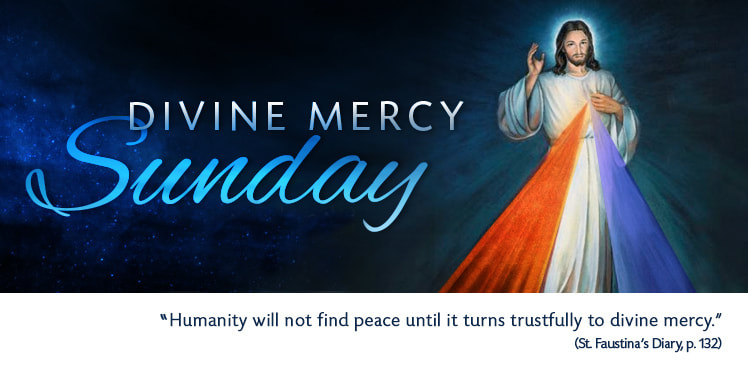
For this Sunday we have chosen David Sanborn’s Love Will Come Someday from his 1982 album As We Speak because it captures the spirit of this Easter Octave also known as Divine Mercy Sunday when Jesus appeared to His disciples inside a locked room for fears from the Jews on the very night of His Resurrection. We reflected in our previous blog that the Resurrection of Jesus opened a new dimension in human existence when we could no longer be held hostage or captive by even the most difficult plight in life with Jesus opening many possibilities for us even while in this life (https://lordmychef.com/2024/04/06/easter-is-new-existence-in-christ/).

Sanborn’s almost two minutes of sax introduction to his Love Will Come Someday gives us the feel of the prevailing setting of Easter and life wherein there is the constant presence of darkness and emptiness where we also find Christ’s light and fullness. Sanborn has been a session musician collaborating with almost every big name in the music scene across all genres. His sax is so soothing yet penetrating that brings out even those things we have been hiding deep inside us resulting in a sort of catharsis which is very Easter too!

Written by Michael Sembello and David Batteau with the latter doing the vocals, Love Will Come Someday is a poignant song of the ups and downs not only of love but of life itself. Very often, like the darkness and emptiness we find in the Easter stories since last week, we find our lives in the same setting too when we could not figure out exactly or right away at why or how certain things happen in our lives despite our best efforts.

Funny how the legends die
When heroes never come alive in the day time
Funny we can be sad
It doesn’t have be so bad in the night time

You want know where they
The songs all go in your life time
One of these we’ll go
And find out where they stay

Once upon a lovers song
There was a boy who sang along in the night time
Once upon a lovers dream
There was a tale of broken wings in the day time

But, there are times when suddenly, Jesus comes to us amid all locked doors, appearing to us, extricating us from difficult situations that amid great joy, we could not believe it happening at all that we doubt like Thomas simply because they are so surreal!

And there lies the mystery of life and love, of Easter: visions and images are not so important because it is the intensity within us which makes Jesus and those we love so present that we respond with more love and adoration.

Catch a piece falling star
Try to keep in a jar till the morning
Catch a summer firefly
Willing it’ll stay alive till the morning

You want to know where did the songs all go
In your life time
One of these days we’ll go and find out
Where they stay

Love will come someday
Love will find a way
Love will come someday
Love will find a way

The songs that I sing, the songs that I bring
The songs that I sing, the songs that I bring, yeah, yeah

As we mature and journey in this life, the more we find God and our very selves and those we know more real, more loved and lovable. In the end, love always finds a way someday. Like Thomas, we just have to believe in order to see. Here is David Sanborn and to those belonging to my generation, cheers to the music we grew up with, hoping the younger ones find these treasures too.

From YouTube.com

Easter is new existence in Christ

The Lord Is My Chef Easter Recipe by Fr. Nicanor F. Lalog II
Second Sunday in Easter, Divine Mercy Sunday, 07 April 2024
Acts 4:32-35 ><))))*> 1 John 5:1-6 ><))))*> John 20:19-31
Photo by author, Mirador Jesuit Retreat House, Baguio City, 2018.

We celebrate today the Octave – eighth day – of Easter which coincides with the Feast of Divine Mercy. Both Christmas and Easter observe an octave signifying eternity because when you count from Easter Sunday to this Sunday, there are actually eight, not seven days. That is why there is no such thing as weekend for us Christians because the week never ends but continues on and on every Sunday.

And that is also the mystery, beauty and reality of Jesus Christ’s Resurrection that according to Pope Benedict XVI, “a life that opens up a new dimension of human existence” (Jesus of Nazareth, Part Two, p. 244).

Photo by author, view the refectory, Sacred Heart Novitiate, Novaliches, QC, 18 March 2024.

From now on, nothing can hold us nor keep us locked in sadness and grief, suffering and misery as well as sin and death because in rising from the dead, Jesus had opened up for us new possibilities in the future not only in eternal life but right here on earth.

Like the apostles on that same evening of Easter, we also find it so difficult to grasp and understand, even believe and explain right away though we could feel and experience deep down within us that Jesus is risen.
On the evening of that first day of the week, when the doors were locked, where the disciples were, for fear of the Jews, Jesus came and stood in their midst and said to them, “Peace be with you.” When he had said this, he showed them his hands and his side. The disciples rejoiced when they saw the Lord. Jesus said to them again, “Peace be with you. As the Father has sent me, so I send you.” And when he had said this, he breathed on them and said to them, “Receive the Holy Spirit.”

John 20:19-22
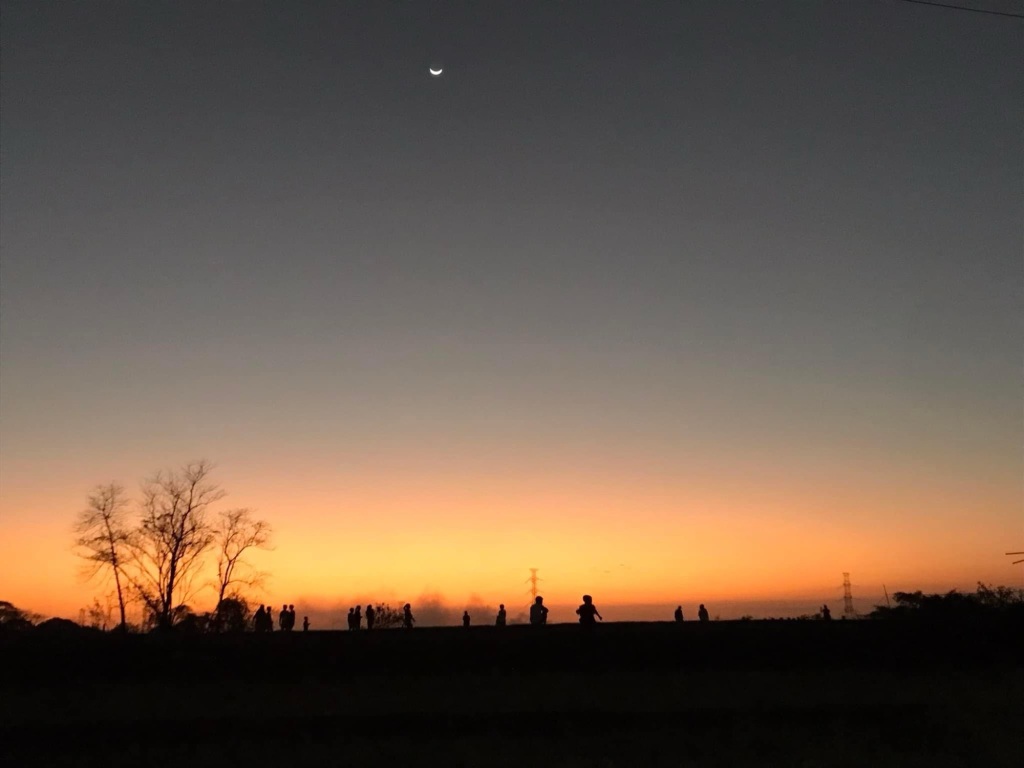
Photo by author, dusk at Sacred Heart Novitiate, 20 March 2024.

Since Sunday we have the prevalence of darkness and emptiness in our Easter stories, reminding us how often that it is in the darkness of our lives when we find light, when in the midst of emptiness when there is fullness.

This Sunday we find the presence of Jesus but still in an unusual manner. There was still darkness for it was night but more than that was the darkness within each disciple who locked themselves inside the Upper Room for fears from Jewish officials who might arrest and put them to death like Jesus.

Many times in life we feel locked in, imprisoned in some situations, feeling resigned as there is no way out from our troubles and miseries but through faith in Jesus, out of nowhere and without any explanation at all, we find ourselves extricated from our inescapable situations.

When my youngest sister was diagnosed with cancer the other year, she told me how she prayed on the eve of her surgery asking God to simply give her the grace to accept whatever the results of her tests would be. But after her surgery, it turned out her cancer was at its earliest stage that required no treatment at all except constant medical checkups! Last February on her major checkup again, doctors found no traces of cancer in her while her surgery had healed so well.

Hope is not positive thinking that things could get better; in fact, to hope is even to expect things to get worst like when the disciples were hiding in fear, expecting to be arrested too. Or my sister resigning to God her fate, just asking for the grace to accept she had cancer.

But it was in that darkness when Christ came and brought light to His disciples and my sister and our family. Strangely enough, it was after seeing the wounds of Jesus when they rejoiced because that proved that the Lord had risen. It was in my sister’s cancer we found ourselves together more in love and care for each other.
In life, our wounds will remain with us but most important of all for Easter to lead us into new existence in Christ, we must first remain in Him and with one another amid our wounds and darkness around us. And for us to remain or stay in Jesus with each other, we must first come.

Now a week later his disciples were again inside and Thomas was with them. Jesus came, although the doors were locked, and stood in their midst… Then he said to Thomas, “Put your finger here and see my hands”… Thomas answered and said to him, “My Lord and my God!” Jesus said to him, “Have you come to believe because you have seen me?”

John 20:26, 27, 28-29
Caravaggio’s painting “The Incredulity of St. Thomas” (1602) from en.wikipedia.org.

My dear friends, while praying over the gospel this week, this line by the Lord kept on echoing within me. And every time it would echo, the Lord shortened the sentence like these:

“Have you come to believe because you have seen me?”

“Have you come to believe because…?”

“Have you come to believe…?”

“Have you come…?”

Before we can stay and remain in the Lord, we must first come. Like Thomas.

What he had asked as proofs to believe in the Lord’s Resurrection were not really doubts to be taken negatively. John referred to him being known as Didymus for Twin. We were the ones who gave him that nickname Doubting Thomas. Like us, there are times we feel at a loss like Thomas with our faith and with ourselves when extraordinary things happen to us. It was not that he did not believe but in fact, he wanted to believe more. That is why he came the following Sunday.

Though I have always loved Caravaggio’s paintings, I don’t think Thomas ever touched the Lord’s wounds. Thomas must have been overwhelmed with the presence of Jesus that all he could say was “my Lord and my God” which we repeat during consecration of the bread and wine into Christ’s Body and Blood.

Photo by Ka Ruben, Easter Vigil 2024, National Shrine of Our Lady of Fatima, Valenzuela City.

Easter leads us into community life centered in the Eucharist. See how since Sunday when Jesus appeared to Mary Magdalene, He instructed her to tell Simon Peter and others of His Resurrection; after appearing to Cleopas and companion on the road to Emmaus, they hurried back to Jerusalem to proclaim the good news of seeing the risen Lord at the breaking of bread; and while they were together which would be the gospel next Sunday, Jesus appeared to them again as a community.

In His rising to life, Jesus brought us together, fellow wounded healers to heal each other, to remain with each other amid our poverty and sufferings because together in Christ, that is when we open new dimensions in existence, in living as a community. We grow into an I-Thou person from the selfish ego. That is what the first reading is telling us in how “the community of believers was of one heart and mind, and no one claimed that any of his possession was his own, but they had everything in common” (Acts 4:32).

It is the risen Lord who comes and stays among us in darkness and woundedness whenever we come and reach out to others like Thomas in the gospel. Even in our doubts, Jesus comes for us to believe more in Him. That is when great things start to happen, many so unbelievable and too deep for words. Basta.

That is why St. John Paul II rightly made the eighth day in Easter as the feast of Divine Mercy too because it is the love of God poured out to us in Jesus Christ’s suffering and death on the Cross when Blood and Water flowed out from His heart as an ocean of mercy for us. This is the love of God John was reflecting in the second reading that was too deep for words to explain except that it is the power that also “conquers the world” (1 Jn.5:3-4). Like St. Faustina in her Diary number 163, let us also pray:

"Help me, 
O Lord,
that my heart may be merciful"
by being more loving,
by coming
and remaining in Jesus
among our brothers and sisters
in their many darkness
and emptiness
and wounds in life.
Like You,
Lord Jesus,
let me come
to reach out
to those in doubts
to be Your very proof
of Your having risen
from the dead.
Amen.

Easter is the Lord, Jesus Christ!

The Lord Is My Chef Easter Recipe by Fr. Nicanor F. Lalog II
Friday in the Octave of Easter, 05 April 2023
Acts 4:1-12 <*{{{{>< + ><}}}}*> John 21:1-14
Photo by author, Easter Sunday 2020.
You are Easter,
Lord Jesus Christ
and nobody else,
nothing else.
Period.
Until now,
I exclaim in joy
like the beloved disciple
whenever I realize
it is You, Jesus,
making wondrous things
for me even from afar;
it is You, Jesus,
whom I find as the
sole reason
and meaning
for every blessing
and good thing that
comes my way
in life;
when I look back in life,
especially on those days
like this scene today
when I have tried
to forget You, Jesus,
that is when You come,
when You appear,
when You tell me to
cast the net anew
to catch some fish.

So he said to them, “Cast the net over the right side of the boat and you will find something.” So they cast it, and were not able to pull it in because of the number of fish. So the disciples whom Jesus loved told Peter, “It is the Lord.” When Simon Peter heard that it was the Lord, he tucked in his garment, for he was lightly clad, and jumped into the sea.

John 21:6-7
Photo by author, Sacred Heart Novitiate, Novaliches, QC, 18 March 2024.
Forgive me, Jesus,
when I act like the elders
and priests of Jerusalem,
always wondering
and doubting
on Your powers
and grace
to heal,
to restore life,
and
to forgive sins;
forgive me,
Jesus,
for the times I have rejected
You like the stone rejected
by builders
who have become
the cornerstone.
Amen.

Easter is touching Jesus

The Lord Is My Chef Easter Recipe by Fr. Nicanor F. Lalog II
Thursday in the Octave of Easter, 04 April 2024
Acts 3:11-26 <*((((>< + ><))))*> Luke 24:35-48
Photo by author, Sacred Heart Novitiate, Novaliches, QC, 18 March 2024.
Thank you,
Lord Jesus,
for always touching me,
making me experience
You truly alive in prayers
and Sacraments
but most especially
in the people You send
to touch me
and be touched by me
for You.

Then he said to them, “Why are you troubled? And why do questions arise in your hearts? Look at my hands and my feet, that it is I myself. Touch me and see, because a ghost does not have flesh and bones as you can see I have.”

Luke 24:38-39
Photo by author, Sacred Heart Novitiate, Novaliches, QC, 18 March 2024.
How amazing,
O Lord,
in Your rising from
the dead,
You still have those
wounds You bore for us
there on the Cross
but all healed
to remind us that
all wounds we have
can be healed in You!

Most of all,
though our hands
and words wound
so many others,
it is also our same
wounded hands
and hearts You use
to heal others
wounded.
Most loving Jesus,
"open our minds to understand
the Scriptures" (Lk.24:45),
help us to touch base
with our very selves,
with our past,
with our sins
and mistakes we refuse
to admit
or did not know at all
like when Simon Peter
reminded the people
of Jerusalem
so that
we remain in touch
with You,
with others,
and with our
true selves.
Amen.

*Sharing with you one of my favorite prayer-music by Fr. Manoling Francisco, SJ; speaks so well of Fr. Henri Nouwen’s reflection on our being a “wounded healer” as well as the amazing power of human touch.

From Youtube.com

Troubles on the road to Easter

40 Shades of Lent by Fr. Nicanor F. Lalog II
Sunday Recipe for the Soul, Lent II-B, 25 February 2024
Genesis 22:1-2, 9, 10-13, 15-18 ><}}}}*> Romans 8:31-34 ><}}}}*> Mark 9:2-10
Photo by Ms. Analyn Dela Torre, 12 February 2024 in Bgy. Caypombo, Santa Maria, Bulacan.

While praying our gospel this Second Sunday in Lent, the song Yesterday by the Beatles kept playing at the back of my mind, especially the first two stanzas that say:

Yesterday all my troubles seemed so far away.
Now it looks as though they're here to stay.
Oh, I believe in yesterday.

Suddenly, I'm not half the man I used to be.
There's a shadow hanging over me.
Oh, yesterday came suddenly.

Written by Paul McCartney and recorded by the Beatles in 1965, Yesterday is a sad love song about break up that greatly changed the lost lover who was “Suddenly, I’m not half the man I used to be.”

Beautiful music, beautiful lyrics on this beautiful Sunday with another beautiful gospel as Mark leads us from the wilderness last week to Mount Tabor with Jesus Christ and his three disciples whose experiences were like the Beatles in Yesterday.

Jesus took Peter, James, and John and led them up a high mountain apart by themselves. And he was transfigured before them, and his clothes became dazzling white, such as no fuller on earth could bleach them.

Mark 9:2-3
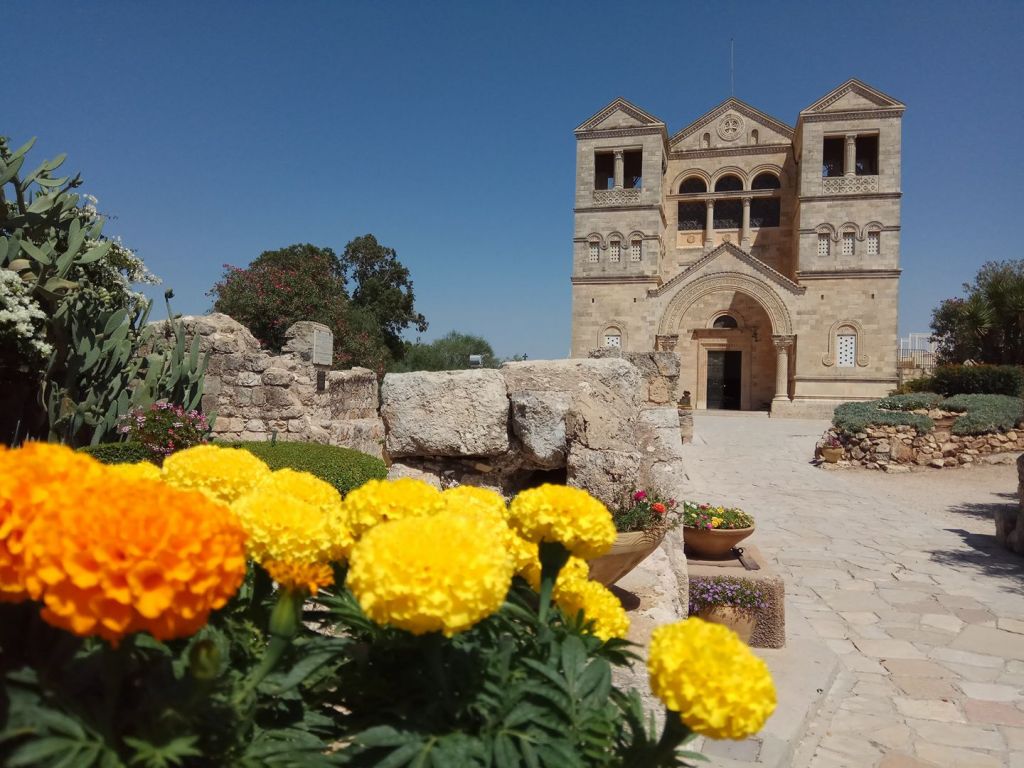
Basilica of the Transfiguration on Mt. Tabor, Israel from custodia.org.

See how the three apostles were overjoyed with the sight of Jesus transfigured, conversing with Moses and Elijah with Peter feeling so “high” that he offered to make three tents for them to remain there. It was the same experience of joy in the Beatles’ Yesterday when McCartney had that great feeling of being loved he thought would last forever.

But, both moments of joy were so brief with the transfiguration cut off immediately after Peter had spoken while McCartney felt his troubles came “suddenly”.

Like his account of Christ’s temptation last Sunday, Mark’s version of the transfiguration is so short unlike those by Matthew and Luke; however, Mark never lost attention to important details that showed the solemnity of the scene from start to finish despite a sudden shift in the mood as they went down the mountain.

As they were coming down from the mountain, he charged them not to relate what they had seen to anyone, except when the Son of Man had risen from the dead. So they kept the matter to themselves, questioning what rising from the dead meant.

Mark 9:9-10

For Mark, the transfiguration of Jesus led the disciples to deepen their faith in Jesus amid his growing mystery especially in the light of his oft-repeated Passion, Death and Resurrection, as if telling us of the many troubles ahead on the road to Easter.

Hence, it is no coincidence that like the transfiguration, Mark ended abruptly his gospel account when Mary Magdalene, Mary the mother of James and Salome saw an angel who spoke to them inside the empty tomb of Jesus very early on Easter: Then they went out and fled from the tomb, seized with trembling and bewilderment. They said nothing to anyone, for they were afraid (Mk. 16:8). Both in the transfiguration and in the Resurrection, the disciples were dared to reflect deeply on those events that later enabled them to make a firm response in their faith in Christ.

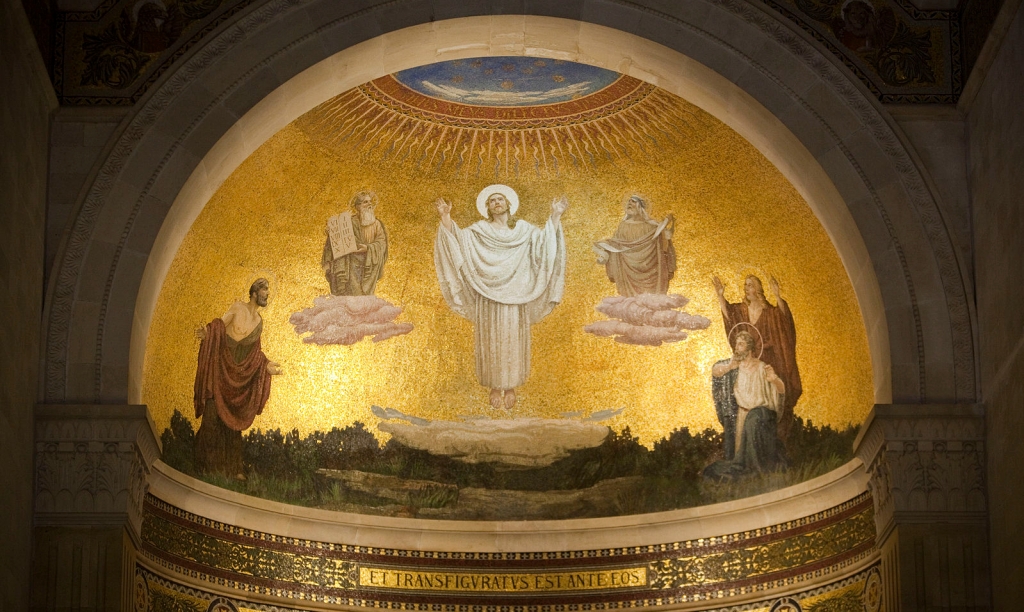
Mosaic inside the Basilica of the Transfiguration on Mt. Tabor, Israel from commons.wikimedia.org..

The same thing applies to us today. Many troubles lie ahead our lives, inviting us to follow Jesus more closely in prayers and reflections to find the meanings and lessons of life’s light and darkness, joy and sadness, triumph and defeat, even of death that keep on hovering above us, even enveloping us at times. We need to deepen our faith in God who had sent us his Son Jesus never stops doing to be our companion in this journey of life especially when we are passing through mountains and valleys, rivers and seas. In the song Yesterday, McCartney sang of our most common experience of having loved and lost yet taught us so much lessons in life. And music.

One thing was clear with the Apostles – and McCartney too – that even though troubles and problems were always with them along the way, they just lived through it and made the most out of them like the Church, including a classic love song!

How about us today, what is our faith response to the many darkness and light we have gone through in life’s journey?

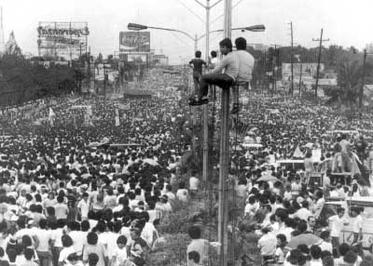
Photo by Roger Buendia/Presidential Museum and Library via esquiremag.ph.

It is always easy to blame others for our many woes in life as we fail to see our own moments of transfiguration. Jesus gifts us with a personal transfiguration event to make us better to be like him but, do we welcome or, run away from them?

Today is the 38th anniversary of the EDSA People Power Revolution when we must ask ourselves how we have personally responded to that great moment of grace from God, a transfiguration in itself, a pasch like the Lord’s. Have we truly valued EDSA 1986, until now?

How unfortunate that EDSA now stands for everything that is wrong with us, especially our wrong choices and wrong decisions in the past 38 years. EDSA invites us to examine our very selves as a Filipino and as a Christian, a disciple of Christ.

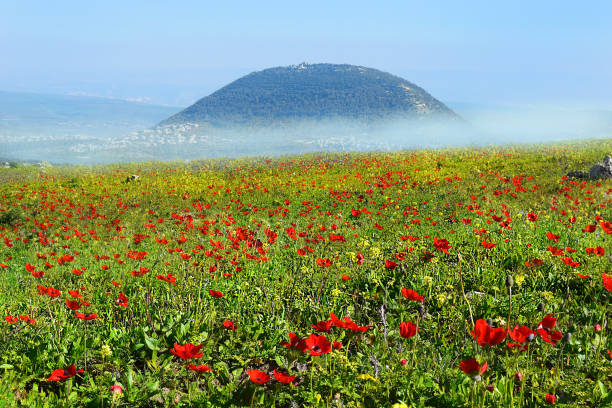
Photo from iStockphoto.com of Mount Tabor in Israel where Jesus is believed to have transfigured.

At his transfiguration, Jesus showed the inseparability of the mystery of the Cross and of his glory on Easter, the closeness of Mount Tabor with Golgotha. The mountain in the bible is always a coming to God, a communion in him.

Every nature lover knows very well the mountain is life itself, difficult to climb, easy to descend. Here now is the beautiful part of the gospel. And song Yesterday. Mountains surely change us but the choice is ours if we want to become better or bitter.

Set on what is believed to be Mount Tabor, the transfiguration was a passage, a foretaste of Christ’s pasch that not only brought him to his glory but transformed too the whole human race and the world itself. In the same manner, McCartney expressed poetically in Yesterday his transformation when “Suddenly, I’m not half the man I used to be.”

From en.wikipedia.org.

This is the good news of this Sunday: every mountain in life is a grace of transfiguration, of being better persons than before. We never come out – or down – the same persons every time we enter through whatever passages or climb any mountain in life. We are always changed, we always emerge different than who we were before after each passages we came through in life.

God gives us the grace and power to choose to be better and stronger, wiser and holier than bitter or resentful with every trials we hurdle in life. This was the experience of Abraham in the first reading when he completely trusted God who asked him to offer his son Isaac on a mountain. It was a very tough test for Abraham who waited in his old age to have a son only to be sacrificed later? But Abraham never doubted God that he still went up the mountain, and as he was about to sacrifice Isaac, an angel stopped him, telling him how God was so delighted with his faith and obedience that he was eventually blessed abundantly after.

Each of us is passing through different trials at this very moment. Many times we feel we suffer more than others, that our tests are tougher than the rest. It is useless and a waste of time to compare ourselves with others. One thing is clear: God does not stop doing something good for us in Jesus, ensuring we get better each day than yesterday. Let the words of St. Paul today assure us that “If God is for us, who can be against us? He who did not spare his own Son but handed him over for us all, how will he not give us everything else along with him? (Rom. 8:31-32)” Have a blessed week ahead, fellow traveler in Christ! Let us pray:

God our loving Father,
thank you for the gift of
this Season of Lent so we may
experience more your Son
Jesus Christ's coming to us
in this journey of life,
our companion amid the
darkness and light
and many troubles
including the little deaths
we experience in life;
give us the faith and trust
of Abraham to offer you those
dearest to us because
if ever you ask something from us,
it is to make more room in ourselves
for your abounding grace
and gifts of transformation
in Christ Jesus with Mary,
our Lady of Fatima.
Amen.
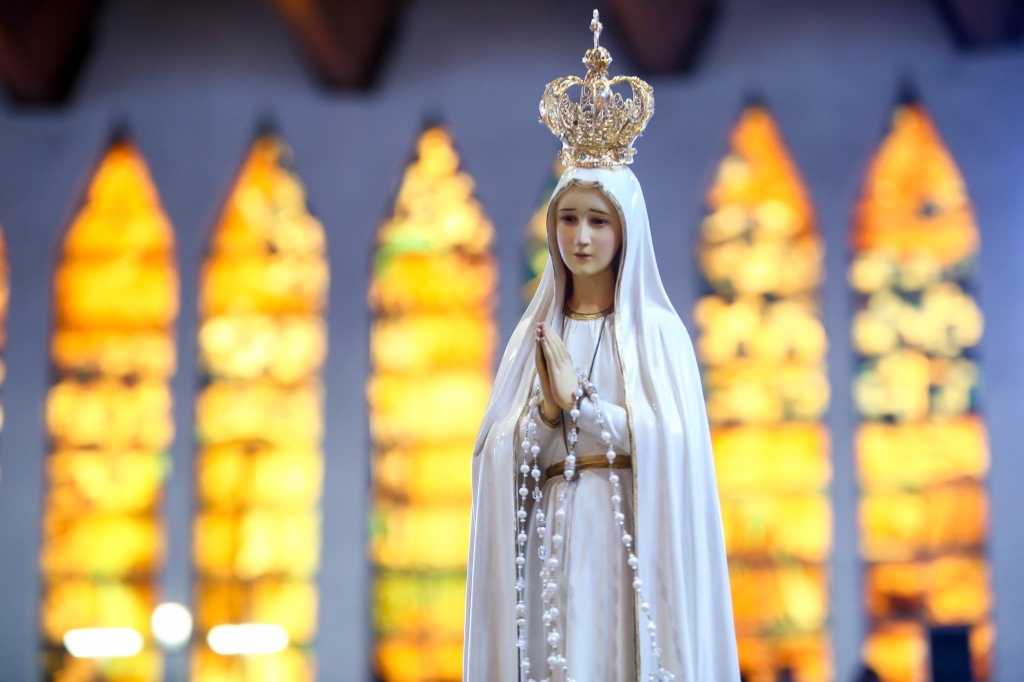
This Sunday, 25 February 2024, is also the Canonical Coronation of the National Pilgrim Image of Fatima here in Valenzuela City, the very image raised at EDSA in 1986. Photo from cbcp.net.

Every here & now always the right place & right time in God

The Lord Is My Chef Daily Recipe for the Soul by Fr. Nicanor F. Lalog II
Monday in the Twenty-third Week of Ordinary Time, Year I, 11 September 2023
Colossians 1:24-2:3   ><]]]]'> + ><]]]]'> + ><]]]]'>   Luke 6:6-11
Photo by author, Sacred Heart Novitiate, Novaliches, QC, 2017.
Dearest Father in heaven:
Is there really being at the
wrong place at a wrong time?
It has been 22 years since 9/11
when so many lives were lost,
many families and relationships
were broken by those terrorist attacks;
recently, over 2000 people perished 
in a massive earthquake in Morocco;
everywhere, bad things happen to
many people because they were
at the wrong place at the wrong time,
Father?

I know, dear God,
life is not that simple
or simplistic, of being at the
wrong place at the wrong time;
if you are everywhere, Father,
how could there be 
a wrong place and
a wrong time?

Brothers and sisters: I rejoice in my sufferings for your sake, and in my flesh I am filling up what is lacking in the afflictions of Christ on behalf of his Body, which is the Church…

Colossians 1:24
NEW YORK – SEPTEMBER 11, 2001: (SEPTEMBER 11 RETROSPECTIVE) Smoke pours from the twin towers of the World Trade Center after they were hit by two hijacked airliners in a terrorist attack September 11, 2001 in New York City. (Photo by Robert Giroux/Getty Images)
But as I prayed with St. Paul,
I realize something more deep,
more profound, even mysterious,
than our common excuse of 
being at the wrong place at the
wrong time:  every here and now
is always a right place and 
right time in you, O God our
loving Father!

St. Paul was at the right place and 
right time on that day on his way
to Damascus to persecute
the Christians to meet Jesus Christ;
all throughout his life, as he 
completely surrendered to Jesus,
St. Paul found everything falling
into its right place in you, O God.
Many times, 
people and nature
may seem to put us 
at the wrong place 
and the wrong time, 
but you always ensure, O God,
in Christ Jesus that everything
will work out in our favor 
like that man with a withered hand
planted by the scribes and
Pharisees at the synagogue 
on a sabbath to see if Jesus
would heal him.

But he realized their intentions and said to the man with the withered hand, “Come up and stand before us.” And he rose and stood there. Then Jesus said to them, “I ask you, is it lawful to do good on the sabbath rather than do evil, to save life rather than destroy it?” Looking around at them all, he then said to him, “Stretch out your hand.” He did so and his hand was restored.

Luke 6:8-10
There are many ways of looking
at every situation in life,
either as a blessing
or a curse or a bad luck
as some would usually say;
but with you, dear Jesus
who had come to bring God
closest to us, 
every time,
every place 
is always the right one, 
a blessed one.

Open our hearts
to your loving presence,
Father, in Jesus Christ
who suffered and died
to rise again for us
to experience life 
amid death,
joy amid sufferings,
and light in darkness.
Amen.
Photo by author, Katmon Nature Sanctuary & Beach Resort, Infant, Quezon, 04 March 2023.