Our imperfect love: a Maundy Thursday reflection

Quiet Storm by Fr. Nicanor F. Lalog II, 17 April 2025
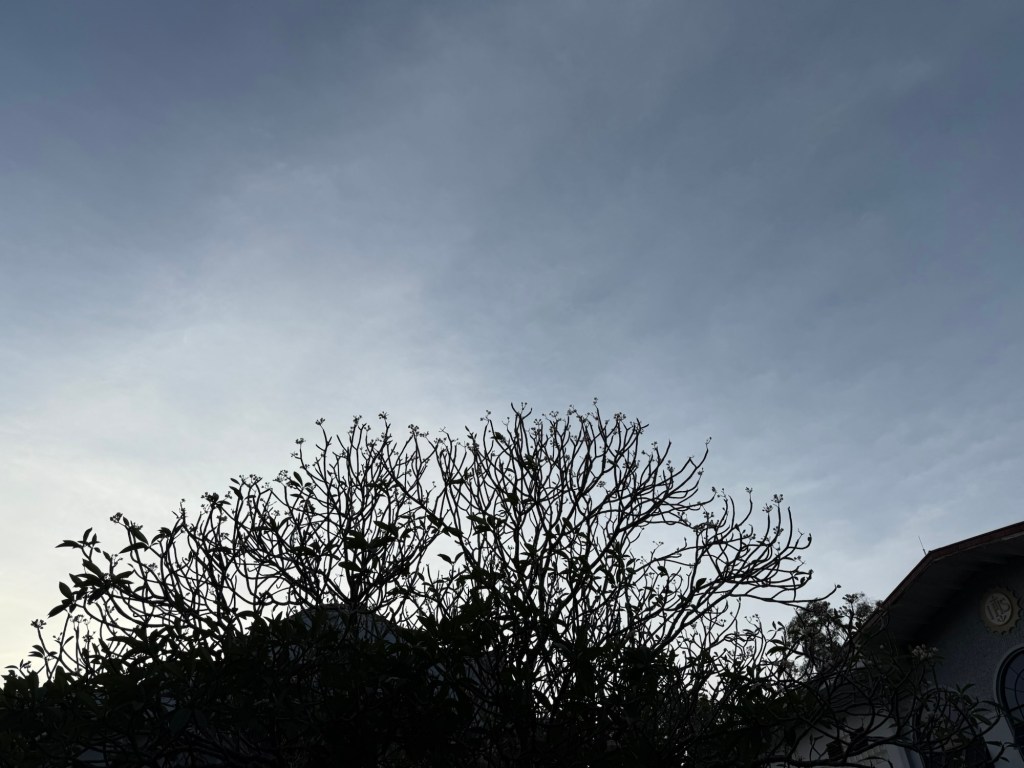
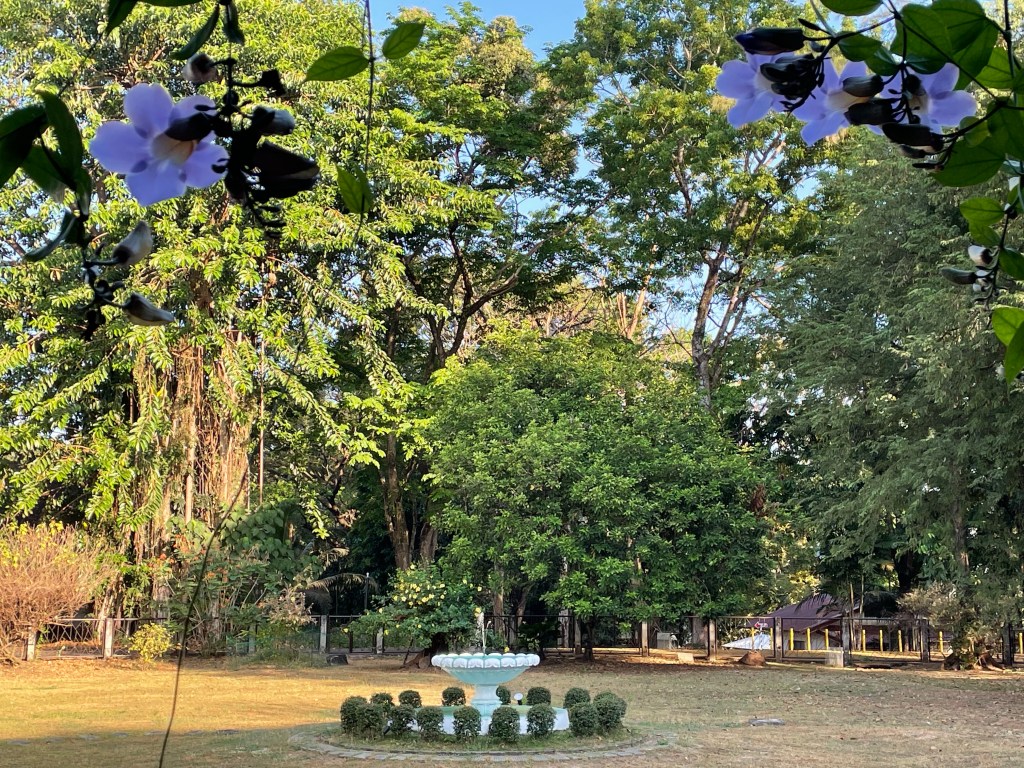
Photo by author, Sacred heart Novitiate, Novaliches, QC, 17 March 2025.

I have always loved Thursday since my first job in 1986 at GMA-7 News and Public Affairs. It was the day-off given to me by our office because I have to write news for our radio stations DZBB-AM and DWLS-FM even on Saturdays and cover news for television on Sundays.

After resigning from my job to enter the seminary in 1991 and got ordained as priest in 1998, I still chose Thursday as my day off from the ministry.

The reason for this is from a news I have found from the wires of United Press International during my GMA days that reported the findings by researchers in a US university that people are more kind on Thursday. According to the report which I used in our two radio stations, people are normally grouchy on Monday because of hangover from the weekend. They only start working on Tuesday, getting so tired on Wednesday, the two most toxic days in the week. Friday is TGIF when employees shelve their work in preparation for the weekend.

It is only on Thursday when people are most human and kind as they wanted to get everything done before TGIF. Hence, it is also the best day in the week to ask for a raise or to ask for favors from anyone. It is also on Thursdays when traffic is lighter because people are more relaxed, not so stressed out than the other days of weekday.

Photo from wikipediacommons.org of Christ’s washing of feet of Apostles at Monreale Cathedral in Palermo, Italy.

Perhaps it is no coincidence at all, in fact truly a part of the mystery of Jesus Christ’s Incarnation, i.e., his becoming human like us in everything except sin that he gave us his new commandment during their last supper also on a Thursday.

“I give you a new commandment: love one another. As I have loved you, so you also should love one another. This is how all will know that you are my disciples, if you have love for one another” (John 13:34-35).

This is the reason Holy Thursday is called Maundy Thursday from the Latin word mandatum or commandment when Jesus gave us his commandment of love.

Love is the only thing we all have to do in life. This love is expressed in our love for God through one another. That is why Jesus clarified that during his ministry: love of God is always expressed in our love for one another. Love as a commandment is like a face with two cheeks always together. Isang mukha, dalawang pisngi.

Every time we sin, it is not only a breaking of a law of God or human but most of all a refusal to love, a refusal to obey Christ’s commandment to love. Our Tagalog word for sin says it all: kasalanan from the root word sala which is “to miss” or “to fail”. Every sin – a kasalanan – is a failure, a missing (sala) of our one task which is to love. Every time we sin, we become less of a loving person.

It is indeed a very tall order from the Lord, to love like the way he loves us.

So when he had washed their feet and put his garments back on and reclined at table again, he said to them, “Do you realize what I have done for you? You call me ‘teacher’ and ‘master’, and rightly so, for indeed I am. If I, therefore, the master ands teacher, have washed your feet, you ought to wash one another’s feet. I have given you a model to follow, so that as I have done for you, you shouild also do” (John 13:12-15).

From gettyimages.com.

However, Jesus is not the stiff nor strict at all in demanding that we totally be like him right away in our love for one another. All he asks us is to try, to persevere in his love. He knows very well that our love is imperfect, that only him can love us perfectly.

Many times we complain (rightly so!) as we get hurt emotionally, physically and even spiritually from people we look up to like priests and teachers and to those supposed to love us most like parents and siblings and friends.

It is part of the mystery of life and of love specifically that the ones we love most are the ones we hurt most too and vice versa. That pain is from that love that ironically fails always. And that is because we are not God. Our love is always imperfect. We need to have some room within us for others’ sins and failures.

Photo by author, last supper scene of our youth’s senakulo, 15 April 2025.

We are all imperfect that is why our love is also imperfect. There are times we think the love we share or give is the very best but to our beloved, it could be misconstrued as not love at all like parents being too strict with their children. There are times when we think our beloved would love our gifts as expression of our love but unknown to us they were expecting something else.

Only God can love us perfectly. That is the love of Jesus Christ for us on the Cross so vividly portrayed in his last supper on Holy Thursday evening when he washed the feet of his disciples.

Jesus washed the disciples’ feet because he knew they would get dirty again. And that would need constant washing by those he would leave behind, including us. To wash another’s feet is the highest or deepest form and expression of love because it is an imitation of Jesus Christ.

Imagine how Jesus bowed down to each of the Twelve that Holy Thursday evening. Every day, Jesus does that to us too!

Normally, we look up to God in the heavens to pray, to beg his mercy, to ask for his favors, to praise and thank him. Jesus reversed this at his last supper: with him washing our feet, Jesus is the one looking up to us mere mortals and sinners?!

That is the love of Christ for us he proved the following Good Friday when he plunged himself to the lowest point of life, of dying on the Cross because of his immense love for each of us that led to his Resurrection at Easter.
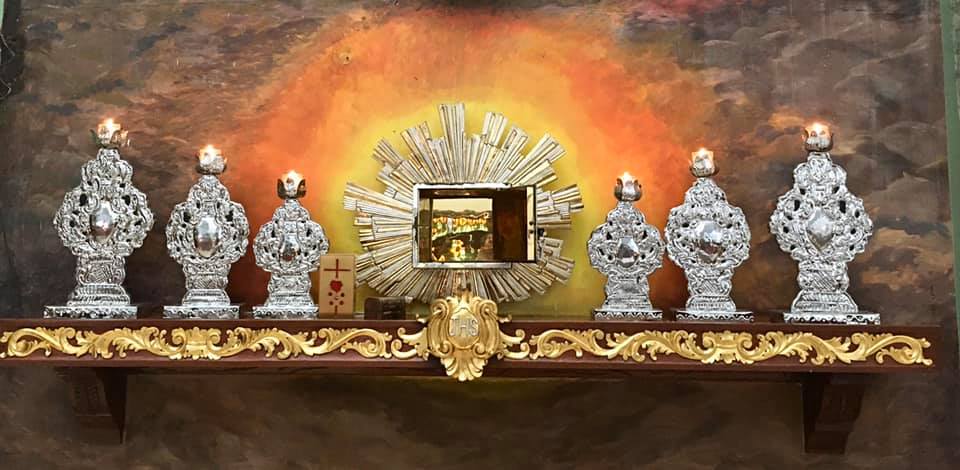
Photo by author, Holy Thursday 2020.

At the start of the Mass of the Lord’s Supper this afternoon before sundown, the rubrics instructs that “the tabernacle should be entirely empty, but a sufficient amount of bread should be consecrated in this Mass for the Communion of the Clergy and the people on this and the following day.”

This is a beautiful reminder too for us as we come for the celebration of Jesus Christ’s supper and sacrifice, we too must empty ourselves of our pride, to accept our own imperfections in order to have some room for others also imperfect just like us. Let us empty ourselves of our sins for us to be filled with Christ’s love and mercy, kindness and forgiveness.

This Maundy Thursday, let us reflect on how deep is our love for Christ and for one another. Look at your feet and admit how difficult it is to even wash our own feet. Whose feet do not get dirty in this life’s journey? Everyone does. Let’s admit that and start helping each other in washing our feet. That is love. We do not stop loving because that is all we have to do in life and afterlife. Amen.


From fear of the Lord to love of God and neighbors

The Lord Is My Chef Sunday Recipe for the Soul by Fr. Nicanor F. Lalog II
Thirty-first Sunday in Ordinary Time, Cycle B, 03 November 2024
Deuteronomy 6:2-6 ><}}}}*> Hebrews 7:23-28 ><}}}}*> Mark 12:28-34
Photo by author, river at the back of Nagsasa Cove, San Antonio, Zambales, 19 October 2024.

Jesus finally entered Jerusalem to fulfill His mission as we also enter the last four Sundays of our liturgical year before entering the season of Advent in preparation for Christmas.

Two Sundays ago we reflected the atmosphere of fear among the Apostles and the crowd following Jesus to Jerusalem after He had made known to them for the third time His coming Passion, Death, and Resurrection. This Sunday our readings invite us to look into that feeling of fear we often experience.

Fear can be negative in nature when we experience a threat to our safety whether there is a clear and present danger from a person or animal hurting us, or when our imagination runs wild with ghosts or a snake underneath the bed at night.

Positive fear is actually the reverence we experience due to a sense of awe often associated with our relationships like with our parents and relatives, teachers and superiors, or any person who seem to amaze us. We fear them not because they threatened us but actually inspired us with their presence, dignity and grace, intelligence and kindness among other things. This kind of fear we experienced in childhood then slowly matured and blended with trust, translated into adoration of the persons so unforgettable to us, influencing us in many ways that we have come to love them eventually, especially God. This is what the Bible and catechism books refer to as “fear of the Lord”.

Photo by author, Mount Sinai, Egypt, May 2019.

Moses spoke to the people, saying: “Fear the Lord, your God, and keep, throughout the days of your lives, all his statutes and commandments which I enjoin on you, and thus have long life. Hear, O Israel! The Lord is our God, the Lord alone! Therefore, you shall love the Lord, your God, with all your heart, and with all your soul, and with all your strength. Take to heart these words which I enjoin on you today” (Deuteronomy 6:2, 4-6).

This “fear of the Lord” that Moses and later the prophets instilled among the Israelites was expressed in faithfulness and obedience to the Laws so that for them, being holy or upright was obedience to the Laws.

This “fear of the Lord” is not about God overpowering man to keep him in bondage. In giving the Ten Commandments, God first entered into a relationship or covenant with the chosen people based on friendship, trust, and love. See here that positive aspect of fear, of reverence like our fear of parents and elders as well as those seemed larger than us including our crushes and first love when we revered them by showing them love and respect.

This “fear of the Lord” then becomes a passing from fear to love that leads us to maturity as persons. And believers. Then lovers and followers not only of those significant people in our lives but most especially of God!

One of the scribes came to Jesus and asked him, “Which is the first of all the commandments?” Jesus replied, “The first is this: Hear, O Israel! The Lord your God is Lord alone! You shall love the Lord your God with all your heart, with all your soul, with all your mind, and with all your strength. The second is this: You shall love your neighbor as yourself. There is no other commandment greater than these” (Mark 12:28-31).

Photo of author, Mount Sinai, Egypt, May 2019.

Unlike the tricky questions posed by His enemies, this one from a scribe was so unique with his calm attitude that invites everyone including us to join in the discussion. One can feel his sincerity in seeking out the truth he felt (rightly so!) only Jesus can answer.

Many times, we feel the same way like that scribe so convinced in asking Jesus, ready to follow Him only if we are clarified which is the first to follow in life in order to mature from fear to love.


"Which is the first of all the commandments?"

Like that scribe, many times we feel confused in our lives, in our faith with the many laws and traditions we were told since childhood to follow; hence, we ask “which is the first of the commandments” that really matter most in life.

Such moments in our life is a grace from the Holy Spirit because in asking “the first of the commandments” is not to determine a hierarchy nor a list of which ones to be prioritized and dismissed; the “first” commandment means the absolutely capital that is always binding on all. The “first” commandment is the one to which all others are subjected without being cancelled or considered least nor optional. The “first” commandment is the very essence of all commandments present in each commandment. It is actually a search for the First Principle who is God Himself!

That is why Jesus quoted verbatim Deuteronomy 6:4-5, the opening words of their best known prayer Shema every pious Jew knows by heart, “Hear, O Israel! The Lord is our God, the Lord alone! Therefore, you shall love the Lord, your God, with all your heart, and with all your soul, and with all your strength.”

Similar to His manner of answering the question about divorce last month, Jesus did not answer the scribe’s question by making reference to a code of laws but instead recited the Shema that encapsulates maturity and deepening of faith in God who is One, with no other except Him. The Shema also shows how our personal God relates with us His people, bonding in a covenant like husband and wife that is reciprocal, exclusive, and total love “with all your heart, with all your soul, with all your mind, with all your strength.”

This “first” commandment is also a relationship that flows to our relationships with one another we rightly call as neighbors. See how Jesus added a “second” commandment not as in a hierarchy making it less important but as an expression of the essential “first” commandment of all the scribe understood well when he affirmed, “Well said teacher… and to love your neighbor as yourself is worth more than all burnt offerings and sacrifices” (Mk.12:32, 33).

For the Jews, their neighbors were their fellow Jews and those aliens residing in their land as found in the Book of Leviticus; but, in this scene, we find Jesus bringing that whole notion of neighbors for everyone, regardless of color and status in life, or of gender, or beliefs.

Jesus makes known to us this Sunday His mission of salvation is for all, for everyone. Most of all, Jesus tells us this Sunday that He is the fulfillment of the Law that many during His time and sadly until now have misread as mere letters to be followed, failing to find the face of God in every law inscribed on every person.

Photo by author, view from Jerusalem Temple, May 2019.

How interesting that each face has two cheeks, both essential, both as the first commandment: love of God is love of neighbor. To profess and practice this faith in God that started in fear and matured into love finding Him in everyone as our neighbor is to be “not far from the kingdom of God” (Mk.12:34).

Friends, let us not fear asking Jesus which is the “first” of the commandments like that scribe.

Keep asking Him until we find Jesus “first” in our trials and tribulations, darkness and confusions, failures and emptiness.

Keep asking Him until we find Jesus “first” on those people who burden us, those who hurt us, those who judge us, those who refuse to listen to us, those who dictate on us.

Keep asking Him until we find Jesus even in programs and plans we could not understand or that are downright crazy.

That is what to truly love God and to love everyone. It is difficult but we have Jesus as our high-priest “who has passed through the heavens” leading us closer to the kingdom of God. Amen. Have a lovely November!

Photo by author, Pundaquit Mountains, San Antonio, Zambales off Nagsasa Cove, 19 October 2024.

Independence Day prayer

The Lord Is My Chef Daily Recipe for the Soul by Fr. Nicanor F. Lalog II
Wednesday in the Tenth Week of Ordinary Time, Year II, 12 June 2024
1 Kings 18:20-39 <*{{{{>< + ><}}}}*> Matthew 5:17-19
Photo from Colombo Plan Staff College, cpstech.org, 12 June 2020.
Praise and glory
to You, God our loving Father
for the gift of Independence,
for the gift of a country
and a nation, of culture
and identity until now many
of us continue to debate;
forgive us, Father,
for being like your people
during the time of Elijah
when we could not make up
our minds on whether to follow
and obey You or follow other
pagan gods that still about these days.
How sad, dear Father,
when many of our supposed
learned men and women are
ashamed of our being the remaining
nation faithful to You,
making divorce illegal;
doubly sad, O God,
when some of our own countrymen
laugh and insult the Spaniards
who conquered our land to
bring Christianity here.

Ahab sent to all the children of Israel and had the prophets assemble on Mount Carmel. Elijah appealed to all the people and said, “How long will you straddle the issue? If the Lord is God, follow him; if Baal, follow him.” The people, however, did not answer him.

Like the psalmist today,
I pray that You "keep me, O God,
for in you I take refuge,
show me the path to life,
fullness of joys in your presence,
the delights at your right hand forever"
(Psalm 16:1, 11);
teach me the way to true
freedom and independence
of lovingly serving the weakest among us
by protecting life in all its stages
especially its basic unit, the family.
May we take into hearts
Jesus Christ's words to bring into
fulfillment the words of your laws
into our own laws like the 1987 Constitution
that had enshrined marriage as
an "inviolable social institution"
in Article XV; let us stop
all these fantasies of legalizing divorce,
of separating from
your divine order of things
that only enslave us to sin and evil.
Amen.

Love in every turn

The Lord Is My Chef Easter Recipe by Fr. Nicanor F. Lalog II
Sixth Sunday in the Easter Season, Cycle B, 05 May 2024
Acts 10:25-26, 34-35, 44-48 ><}}}*> 1 John 4:7-10 ><}}}*> John 15:9-17
Photo by author, Sacred Heart Novitiate, Novaliches, QC, 22 March 2023.

Imagine that beautiful imagery of Jesus last Sunday, of Him saying “I am the true vine… you are the branches” calling us to remain in Him to be fruitful (Jn.15:1, 5, 8). What a lovely sight to behold are the vines, climbing and winding up or creeping on the ground with its vast network of leaves and stems, tiny tendrils and shoots, flowers and fruits.

Jesus identified Himself with the vine to show us the immensity and profundity of His love for us as this plant species sprawls widely with its strong roots and stem system extending to its branches that reach out to its flowers and clusters of fruits like grapes. It is as if in every turn of the vine, there is so much life, full of love like God who is both Life and Love Himself.

Photo by Dra. Carol Reyes-Santos, MD at Napa Valley in California, September 2023.

And that is the essence of Jesus as He had explained during their Last Supper, showing its meaning on Good Friday when He died on the Cross, summarizing everything on Easter when He rose again and appeared later to His disciples.

It is love, love, and still, love in every turn just like the vine.

In being the true vine, we find God’s immense love for us expressed in His Son Jesus Christ who now tells us clearly to love one another shortly before He showed and proved that love for us on Good Friday at the Cross.

Jesus said to his disciples: “As the Father loves me, so I also love you. Remain in my love. This is my commandment: love one another as I love you. This I command you: love one another.”

John 15:9, 12, 17

See how Jesus speaks of and lives in love in every turn in this gospel scene this Sunday which is a continuation of His discourse last week during their Last Supper. Nine times Jesus used the word “love” in nine verses.

He began his discourse by laying down the foundation of this love which is the Father’s love in verse 9: it is in “remaining” in His love that we truly have joy which is more than happiness but firm assurance that no matter what happens to us even in the worst situations including death as Jesus went through, there is always God loving us to the end and beyond.

After that, Jesus twice mentioned love as His commandment to us. Actually, Christ’s command to love one another seems pretty simple, and easy if you say so; but, what He added makes it so difficult – “love one another as I love you.”

That part “as I love you” is the challenge of Jesus to each one of us every day because He loved even unto death, literally and figuratively speaking. We do not need to die literally as martyrs but even dying figuratively speaking is already so difficult when we have to make many sacrifices, when we have to love somebody else more than our very selves!

Loving one another like Christ is more than to “feeling good” because…

  • To love like Jesus is to forget ourselves, to think less of our own good and comfort like a mother despite her being sick would still rise early to prepare her family to school and work or a dad going abroad in order to have food, clothing and shelter for his family.
  • Loving like Christ is giving up our wants and needs, including our dreams sometimes like the many Ate and Kuya who remain single in order to send their younger siblings to school until they graduate and be able to stand on their own.
  • To love like Jesus is to die in our own POV (point-of-view) and other long held beliefs in order to find Christ in everyone especially those different from us or from those who hurt us.

Loving one another like Jesus Christ is choosing the Father above all every day.

Admittedly, to love like Jesus is very difficult indeed but, the good news this Sunday is that it is doable as the beloved disciple explains in the second reading, “In this is love: not that we have loved God, but that he loved us and sent his Son as expiation for our sins” (1Jn.4:10).

And the best part of this Sunday’s gospel is when Jesus declared twice He loves us, “As the Father loves me, so I also love you… This is my commandment: love one another as I love you” (Jn. 15:9,12).

Wow! Everyone knows so well the deep joy one feels in hearing someone say “I love you”. For as long as it is the true kind of love, these words of “I love you” are not only transformative but also performative because they are powerful, filled with the powers of God that can change us, heal us and inspire us.

The words “I love you” are the nicest and most life-changing things one can always hear but unfortunately we rarely say these words to others because we are afraid of running out of love. The truth is, the more love we give, the more we share love in words and in deeds like Jesus, the more we are filled with His love but by those around us too!

Never say nor claim we cannot love like Christ because we are humans like that cheesy Filipino love song of yore, sapagkat ako’y tao lamang. That ability to love like Jesus is already here in our hearts, in our being, in us because He had lavishly loved us first so that we too can love. Every day Jesus repeats those words of the Last Supper whenever we wake up, telling us, “I love you”.

It was the same experience Peter and later the household of Cornelius have experienced in our first reading when the Holy Spirit came down upon them to fill them with the love of God that prompted Peter to realize earlier how “In truth, I see that God shows no partiality” (Acts 10:34), meaning, God loves everyone lavishly regardless of color, gender, and creed. The problem is with us when we love only those “like us”; hence, the need to remain in Christ to be able to find Him in everyone.

Let us immerse ourselves into that amazing reality that we are personally loved by Jesus as we pray:

Dearest Jesus:
let me remain in Your love
so I may learn to forget myself,
set aside my plans and agenda
so that I may love like You
by keeping Your commandments,
laying down my life for others,
echoing Your very words of
"I love you"
to those who hardly know You
because they have
never felt being loved
as they suffer alone in
diseases, poverty, and injustice;
let me bask in Your love, Lord
to lead others back to You
in my loving service and kindness
especially those who have lost faith
in You and humanity.
Amen.
Photo by Natalie Bond on Pexels.com

Lent is acceptance

40 Shades of Lent by Fr. Nicanor F. Lalog II
Friday, Memorial of St. John of God, Religious, 08 March 2024
Hosea 14:2-10 ><]]]]]'> + ><]]]]]'> + ><]]]]]'> Mark 12:28-34
Photo of convolvulus sabatius from frustratedgardener.com
Your words today,
dear Father,
led me back to the
Monday reflection of another
blogger about the word
"acceptance":

“Acceptance” can be seen as a passive word suggesting that we just put up with something we cannot change.

On the other hand, it can be a positive condition in our spirituality by which we prepare ourselves to hospitably receive that which we had not expected. Such positive acceptance suggests a non-judgmental, wise, and discerning heart. 

Sr. Renee Yann, RSM, https://lavishmercy.com/2024/03/03/accepted/
Why are we so fond,
O God, of doing anything
except precisely what you want
us to do?
Why can't we just accept
your words,
your plans,
or your instructions
we always disregard,
"hoping" there could be
something better?

Forgive us, Father,
when even in the
quagmire of sin and evil,
we keep resisting you,
refusing to accept
your suggestions;
let us learn
beginning this Lent
when to just stop
and simply accept
you and your words.
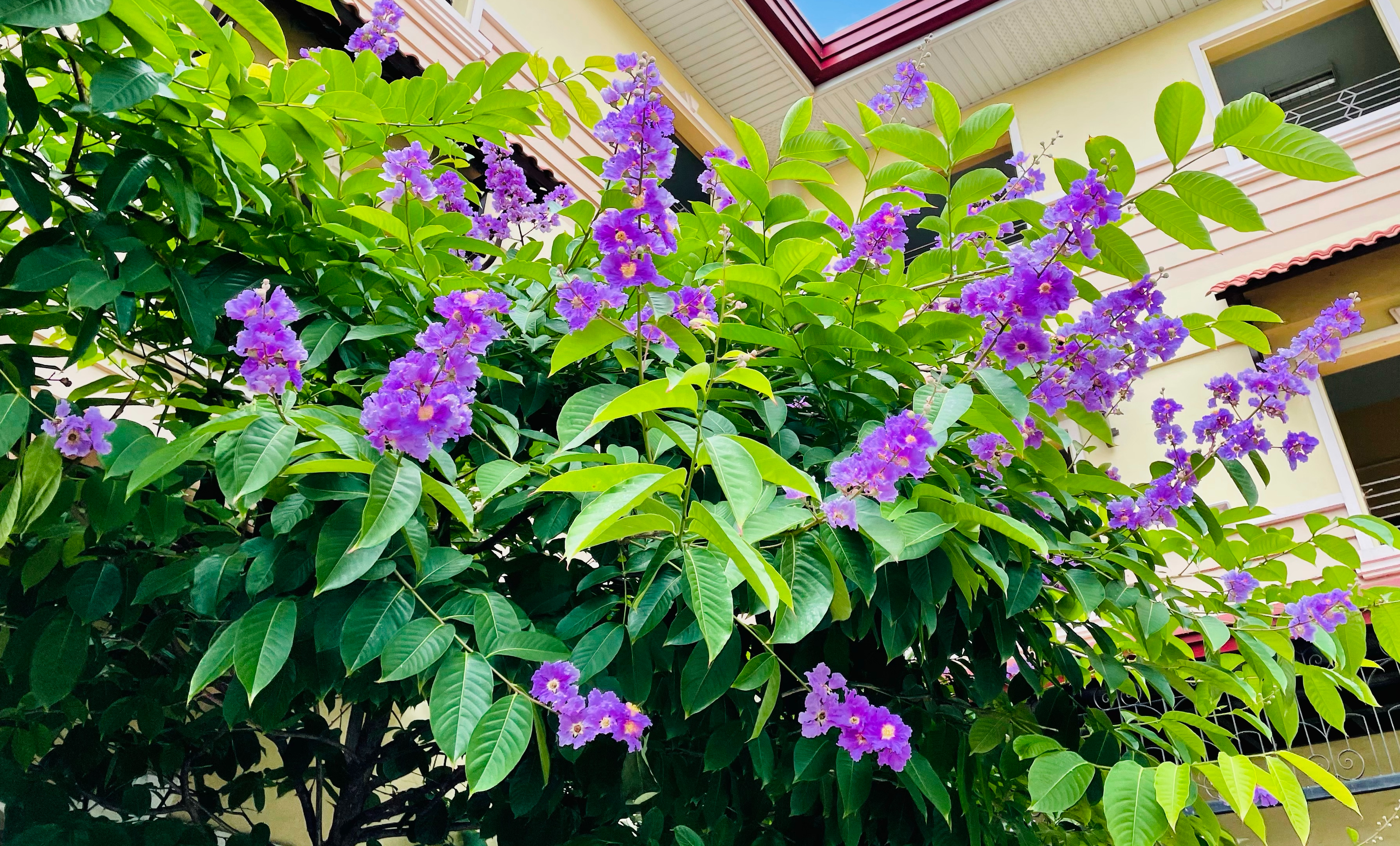
Photo by author, Banaba Tree, 2020.

Thus says the Lord: Return, O Israel, to the Lord, your God; you have collapsed through your guilt. Take with you words, and return to the Lord; say to him, “Forgive all iniquity, and receive what is good, that we may render as offerings the bullocks from our stalls.”

Hosea 14:2-3
Draw us closer to you,
Lord Jesus Christ and your
kingdom by accepting
the basic truth of our faith
that the love of God is
always the love of others;
help us realize
life is more than searching
for what is the best
possible condition
or situation we can have
but to accept our whereabouts
where we can give our best selves
to you through others
to make this world a
better one.
'
Everything, O Lord,
begins in finding you
within each of us
so we may find you in others
especially the sick and
the weakest like St. John of God
who simply accepted
everything that came to his life
as coming from you;
it is in our acceptance
of you, O Lord,
that we begin to lovingly serve
you in others because that is
also when we are able to relate
our lives
with your Church,
with the world,
with our callings;
it is in accepting these
that we become
"not far
from the Kingdom
of God."
Amen.
Photo of a convolvulus tricolor from BBC Gardeners World Magazine.

Lent is remembering

40 Shades of Lent by Fr. Nicanor F. Lalog II
Wednesday in the Third Week of Lent, 06 March 2024
Deuteronomy 4:1, 5-9 ><}}}}*> + <*{{{{>< Matthew 5:17-19
Photo by Pixabay on Pexels.com
Lent is remembering
especially because we are
beings of forgetfulness;
but, teach us Father,
that to remember you
is not like in remembering
an equation or a formula
as a task of the mind
or intellect;
to remember you, O God,
in the spirit of Lent is
to surrender ourselves to
you whom we do not see
but present among our
brothers and sisters;
to remember you, dear God,
is to surrender ourselves
to your Holy Will
that are not mere laws
and decrees
but the very person
of your Son Jesus Christ.

Jesus said to his disciples: “Do not think that I have come to abolish the law or the prophets. I have come not to abolish but to fulfill. Amen, I say to yo, until heaven and earth pass away, not the smallest letter or the smallest part of a letter will pass from the law, until all things have taken place.”

Matthew 5:17-18
To remember and keep your laws,
dear God is to remember and keep you
found in our brothers and sisters
through your Son Jesus Christ;
indeed, the greatness of any
nation is measured to a large part
in its legal system, in how it is justly
implemented and observed:

Moses spoke to the people and said: “Observe them carefully for thus will you give evidence to your wisdom and intelligence to the nations, who will hear of all these statutes and say, ‘This great nation is truly wise and intelligent people.’ For what great nation is there that has gods so close to it as the Lord, our God, is to us whenever we call upon him? Or what great nation has statutes and decrees that are just as this whole law which I am setting before you today?'”

Deuteronomy 4:1, 6-8
Father, in this season of Lent,
may we recover and put into practice,
not just remember that your laws
are fulfilled in Christ when we love;
how sad that love of God
and love of neighbors
is your law we often forget,
and find hard to remember
because we keep it in our minds
than in our hearts where you dwell.

Most of all, to remember
means to make one a member
of the present moment again:
help us remember in making
you present always in our love
and good works.
Amen.

Becoming the good soil

The Lord Is My Chef Daily Recipe for the Soul by Fr. Nicanor F. Lalog II
Friday in the Sixteenth Week of Ordinary Time, Year I, 28 July 2023
Exodus 20:1-27   ><]]]]'> + ><]]]]'> + ><]]]]'>   Matthew 13:18-23
Photo by Ms. Nikki Vergara in Victoria, Laguna, July 2020.
God our loving Father,
make me a good soil,
a real "good earth" who
welcomes your word
to penetrate my heart.
Let me be a
good soil, O Lord,
by allowing myself
to be absorbed 
by your word, 
your seed.
Let your word,
O God, grow
and bear fruit 
in my heart!
Forgive us
that until now
from Mount Sinai
where you gave us
your Ten Commandments
to the shores of Galilee
where Jesus spoke to us
in parables of your kingdom
up to now in the comforts
of our homes and 
parish church amid
the squalor of our many
brothers and sisters
without decent home,
your words seem to have
fallen on deaf ears.
O how you amaze me
so greatly, loving God
for your patience in 
continuing to speak to us,
inviting us to enter into a 
dialogue and relationship
with you; and yet, here we 
are, not listening,
still stubborn;
teach me to give myself
to you completely so
you would absorb me
and fill me with your life
and energy.
Amen.

Love is perfection of life

40 Shades of Lent by Fr. Nicanor F. Lalog II
Wednesday in the Third Week of Lent, 15 March 2023
Deuteronomy 4:1, 5-9   >> + <<   Matthew 5:17-19
Photo by author, La Mesa Eco-Park from Our Lady of Fatima University-QC, February 2023.
Thank you very much, O God
our loving Father for being
so close with us in a very personal manner, 
giving us laws meant to lead us closer 
to living with one another in peace
and harmony, and eventually
discover the beauty of love.

Jesus said to his disciples: “Do not think that I have come to abolish the law or the prophets. I have come not to abolish but to fulfill.”

Matthew 5:17
This season of Lent,
help us realize and discover
that the laws as expressions of justice
are the minimum requirements of love;
the fulfillment of laws is love
which is more than a special way of living
but itself the perfection of life
because when we truly love,
we go beyond the letters of the laws
and do more than what is required
that slowly we become a new person
in Jesus Christ.
Enable us, O Lord, 
in fulfilling the laws
into love where we become more alive,
more real,
more personal
more perfect
like you.
Amen.