Christmas is being grateful

The Lord Is My Chef Simbang Gabi Recipe for the Soul by Fr. Nicanor F. Lalog II
Thursday in the Fourth Week of Advent, Seventh Day of Christmas Novena, 22 December 2022
1 Samuel 1:24-28     ><000'> + ><000'> + ><000'>     Luke 1:46-56

Christmas is a call for us to be grateful. Only a grateful heart can truly be emptied and be filled with Jesus Christ. A heart that truly praises God is first of all a grateful heart. Mary’s song, the Magnificat is a both a song of thanksgiving and gratitude to God for all his wondrous blessings to her and to mankind in general.

Yesterday we heard how Mary hastily went to visit her cousin Elizabeth in Judea to share with her the Good News she had received, our Lord Jesus Christ Himself. After being praised by Elizabeth, Mary responded today not by praising her cousin as we would always do; she instead praised and thanked God.

Again, we hear today wonderful stories of women – not just two like yesterday but three! – who were so blessed by God, thanking and praising God for blessing them with sons: Hannah in the first reading for her son Samuel who became one of Israel’s greatest prophet, Mary pregnant with Jesus Christ while visiting her cousin Elizabeth who was sixth month pregnant with John.

See how Hannah as a sign of her gratitude to God through the priest Eli who promised to pray for her to conceive a son gave Samuel at a very young age to serve in the Lord’s altar. The same is true with Mary in singing the Magnificat when she reaffirmed her fiat to God, of being his ever-faithful handmaid doing his will always.

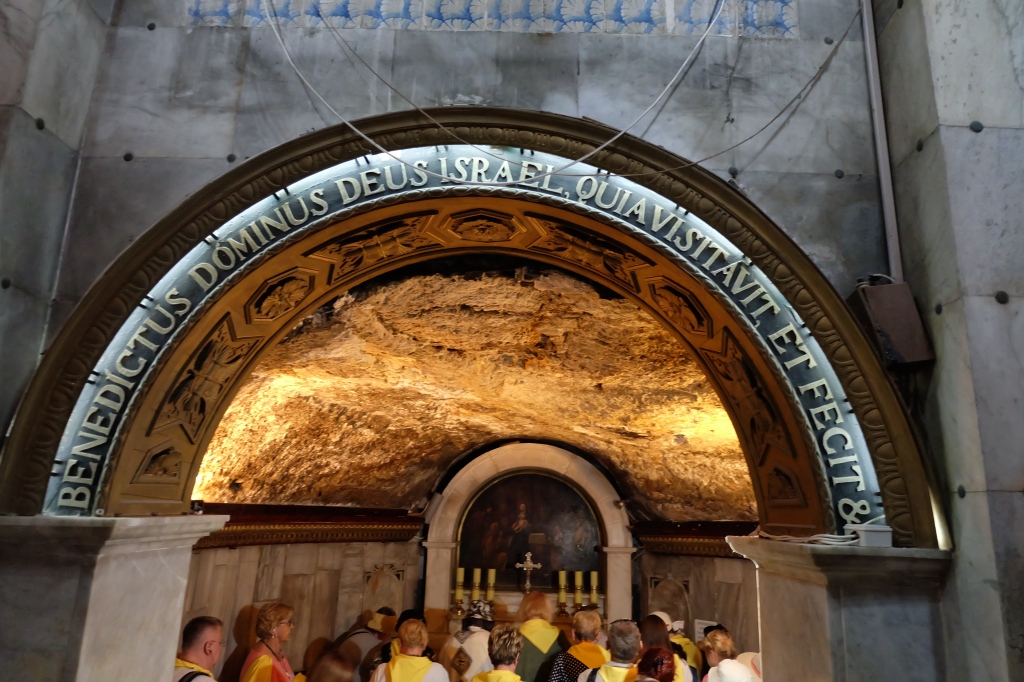
“My soul proclaims the greatness of the Lord; my spirit rejoices in God my savior. For he has looked upon his lowly servant. From this day all generations will call me blessed: the Almighty has done great things for me, and holy is his Name.”

Luke 1:46-49
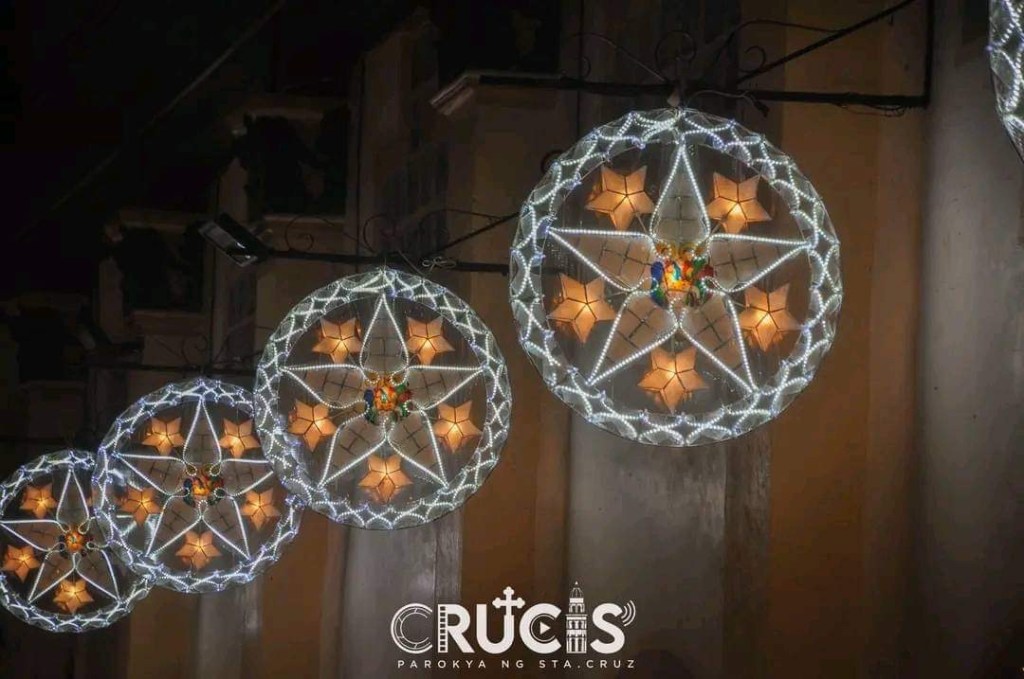
Photo by Mr. John Ryan Jacob, 20 December 2022, Paco, Obando, Bulacan.

Gratitude is a virtue that works great wonders for everyone because it makes us live in the present moment. A grateful person is one who lives in the here and now, not in the past nor in the future. Look at the structure of Mary’s Magnificat that is in the present tense.

When our heart is filled with gratitude, we have no time to complain and nurse old wounds and pains in the past but simply learn from them and move on with life. Living in the present moment means making things happen, working hard on our dreams and aspirations to become a reality, exactly what the Magnificat is telling us! How are we going to continue God’s wondrous works like Mary? By remaining faithful to Jesus Christ all the way to his Cross on Good Friday.

People who refuse to be grateful in life are busy wishful thinking of how things should be or would be, always looking at the future as a fantasy that would just pop out of nowhere instead of working for it in the present moment.

Unknown to many, gratitude is the fount of all good vibes in life, enabling us to be more positive than negative. It helps us accept the reality we are into – whether it is good or bad.

And that is when we start growing and maturing as persons when we learn to accept our present realities.

Most of all, gratitude disposes us to more blessings and grace from God because a thankful heart is always the one that seeks relationships, with God and with others. See that Mary did not sing her Magnificat while with the angel Gabriel after announcing the birth of Christ nor after he had left, right in the comforts of her home. Mary went in haste to Judea to celebrate and thank God’s gifts with her cousin Elizabeth.


People who go out of their way to say thank you, 
to express gratitude are person-oriented. 
They see more the persons 
not just the kind deeds done to them 
and beautiful gifts given them. 

Very often, people thank us priests especially for praying for them, enlightening and guiding them. That is why people lavish us with all kinds of gifts. Every time people thank me, I tell them, “kami po ang dapat magpasalamat sa inyo kasi lumalago kami kay Kristo!” In my 24 years as a priest, I have realized that the more faithful we are in serving God through his people, the more we are blessed and hence, the more we must be grateful!

People who go out of their way to say thank you, to express gratitude are person-oriented. They see more the persons not just the kind deeds done to them and beautiful gifts given them. When we say thank you, when we let others know of how grateful we are, we recognize their personhood that is why we reach out to them, trying to connect with them and befriend them. Or, to keep our ties alive and strong. As the old song says, “People who need people are the luckiest people in the world.”

Remember the ten lepers healed by Jesus Christ on his way to Jerusalem?

Only one returned – a Samaritan – to thank Jesus. He was the only one who was “saved” when Jesus told him, “Stand up and go; your faith has saved you” (Lk.17:19).

Photo by Mr. John Ryan Jacob, 20 December 2022 in Paco, Obando, Bulacan.

Gratitude is a very practical virtue, “the parent of all virtues” according to the Roman scholar and statesman Cicero. It is the one virtue we need to recapture and reacquire in this time to make through the many challenges and trials this pandemic has brought us. Instead of complaining and being so sorry with the plight we are into due to COVID-19, let us start counting our many blessings in life to see the vast opportunities and lessons this crisis has given us. In fact, the more this pandemic has persisted, the more blessings we can find that we must be thankful too.

Because of the pandemic, we have learned to cherish more one another as we come to value persons and life again more than things. There are so many things we have to be grateful in life during this time of the pandemic, perhaps even more than the sufferings and trials we have gone through as it opened to us new views and perceptions about life itself.

Most of all, it had brought us back to the grounding of our being, to God who is life himself, the source of all good things we have long forgotten and now remember. And rightly praise and thank. That is why I keep on telling everyone, God willed Christmas 2022 falls on a Sunday so we may personally, face-to-face celebrate together. And thank him through the people he has given us! Let us pray:

My soul also proclaims 
your greatness, O Lord Jesus Christ
like Mary your Mother!
Thank you for the gift of life
with all of its pains and hurts
that have strengthened me,
for all the joys that have enriched me.
Most of all, for the call to serve you.
Who am I, O Lord, to be called
and visited by you?
Many times I have failed you
yet you keep on coming, still calling me,
still believing in me, still trusting me.
What else can I say except 
thank you from the bottom of my heart.
As your birthday approaches,
as my gift to you dearest Jesus,
enable me to remain faithful to you
like Mary your Mother and our Mother too
even up to your Cross.  
Here am I, Lord, send me.
Amen.
Photo by Mr. John Ryan Jacob, 19 December 2022 in Paco, Obando, Bulacan.

More than a visit, Christmas is a visitation!

The Lord Is My Chef Simbang Gabi Recipe by Fr. Nicanor F. Lalog II
Wednesday in the Fourth Week of Advent, Sixth Day of Christmas Novena, 21 December 2022
Song of Song 2:8-14     ><))))*> + ><))))*> + ><))))*>     Luke 1:39-45
Photo by Mr. John Ryan Jacob, 20 December 2022.

Did you know that there is a funny story behind that lovely entrance hymn in all our Masses we have been singing since the start of the Advent Season rightly called Halina Jesus, Halina?

According to the story, when Jesus turned seven years old – that’s the seventh Christmas of the world! – the Blessed Mother decided to bake him a beautiful birthday cake. The child Jesus was busy playing with his cousins when his Mother asked him to buy some flour, eggs, butter, and sugar. Of course, the young Messiah obeyed her and went to the store to buy the ingredients for his birthday cake. But, as the Catholic Catechism of the Church attests that Jesus is truly human like us, he suddenly forgot the most important ingredient needed in his cake, the flour. He rushed back home and asked Mama Mary again what was he supposed to buy. This happened thrice that for the third time, Mary was exasperated, wrote it on a piece of paper, telling the child Jesus, “Harina, Jesus, harina!”

For our non-Filipino followers, harina is flour, very close to halina which is come as the song tells us.

Christmas is a story of people, real persons like you and me meeting, encountering God. So far since Sunday we have heard stories of encounters by Joseph, Zechariah and Mary with an angel.  Today, we hear the beautiful encounter between two women so blessed by God, two mothers whose sons would usher in a new beginning of life on earth. 

Mary set out in those days and travelled to the hill country in haste to a town of Judah, where she entered the house of Zechariah and greeted Elizabeth.  When Elizabeth heard Mary’s greeting, the infant leaped in her womb, and Elizabeth, filled with the Holy Spirit, cried out in a loud voice and said, “Most blessed are you among women, and blessed is the fruit of your womb.  And how does this happen to me that the mother of my Lord should come to me?”

Luke 1:39-43

The Visitation of the Blessed Virgin Mary to her cousin Elizabeth is in itself a proclamation of the Good News of Jesus Christ that presents us with the beautiful personages of two women who are “beloved ones of God” as well as “lovers of God.” 

Both of them “believed” in the promised salvation from God through their mysterious maternity, Mary being a virgin while Elizabeth in her being old and barren. 

They both love God so much that they were gifted with exceptional vocations, Elizabeth bore the Precursor of the Lord Himself born by Mary. 

Most of all, both women waited patiently for the coming of the promised salvation in Christ Jesus.

Visit and visitation may seem to be one and the same in the sense that both have a common Latin root word, the verb to see or vidi, videre from which came the word video.  But, a visit is more casual and informal without intimacy because it is just “a passing by” or merely to see.  It is more concerned with the place or the location and site and not the person to be visited.   We say it clearly in Filipino as in “napadaan lang” when it just so happened you were passing by a place and even without any intentions, you tried seeing someone there. 

On the other hand, visitation is more commonly used in church language like when a bishop or priests come to see the parishioners in remote places.  This is the reason a chapel is more known as a visita in our country because that is where priests visit and check on the well-being of people living in areas very far from the parish usually at the town proper.  Aside from being the venue for the celebration of Masses, the visita serves as classroom for catechism classes and other religious even social gatherings in a particular place. 

Thus, visitation connotes a deeper sense in meaning because there is an expression of care and concern among people, a kind of love shared by the visitator/visitor and the one visited like Mary and Elizabeth. 

Visitation is more of entering into someone’s life or personhood as reported by Luke on Mary’s visitation to Elizabeth where Mary “entered the house of Zechariah and greeted Elizabeth” (Lk.1:40), implying communion or the sharing of a common experience.  In this case, the two women shared the great experience of being blessed with the presence of God in their wombs! 

Visitation, therefore, is a sharing or oneness in the joys and pains of those dear to us.  The word becomes more meaningful when we try to examine its Filipino equivalent which is “pagdalaw” from the root word “dala” that can be something you bring or a verb to bring.  When we come for a visitation, we dala or bring something like food or any gift.  But most of all we bring our very selves like a gift of presence wherein we share our total selves with our time and talents, joys and sadness, and everything to those being visited.  And that is what Mary did exactly in her visitation of Elizabeth where she brought with her the Lord Jesus Christ in her womb, becoming the first monstrance of the Lord as well as His first tabernacle. 

Today we are invited to become like Mary in the visitation of others to bring Christmas and Jesus Himself to others by allowing our very selves, our body, to be the “bringer” or taga-dala of Christ.  The Lord Himself is the highest good we can bring as pasalubong in every visitation we make.  And if we can only be like Mary in our visitations and dealings with one another sharing Jesus Christ, then we also bring with us God’s tenderness and sweetness to others. 

That is why we have to rush, we have to go in haste like Mary for we have the best good of all – Jesus Christ – to share for everyone!

Come, Lord Jesus Christ!
Come in haste like your Mother Mary
so we may also have a visitation of
persons we have forgotten,
we have taken for granted
all these years!
Come into my heart, Jesus,
and let me see my connections
and links with everyone in you!
We do not need so many presents to give,
just our presence is more than enough
for others to experience your coming
especially on this Christmas.
Amen.

Christmas, an overshadowing by God

The Lord Is My Chef Simbang Gabi Recipe for the Soul by Fr. Nicanor F. Lalog II
Tuesday in the Fourth Week of Advent, Fifth Day of Christmas Novena, 20 December 2022
Isaiah 7:10-14     ><]]]]'> + ><]]]]'> + ><]]]]'>     Luke 1:26-38
Photo by Mr. John Ryan Jacob, 19 December 2022.

I have stopped listening to Christmas carols and music long before the COVID-19 pandemic came. During that time, especially with the sudden spread of Christmas countdowns and early playing of Christmas music, I felt it as the high point of commercialization and trivialization of this blessed celebration.

But when the pandemic came in 2020, I began appreciating Christmas carols again as I longed for something to cheer me up on those days of lockdown. Unfortunately, I never had the time to make a Christmas playlist that as I drive to my Simbang Gabi Masses since last week, I have never sang nor hummed Christmas carols. All I have in my car stereo are my secular music playlist that surprisingly conveyed the Christmas messages of love and faith, family and friends, life and death.

That is the power of music which transcends seasons and celebrations like this old favorite by Don McLean, the Birthday Song which is about his intense experience of love with a lost loved one.

You see I love the way you love me
I love the way you smile at me
I love the way we live this life we're in...
I don't believe in magic but I do believe in you
And when you say you believe in me
There's so much magic I can do

Okay. Call me cheesy. And old.

But what McLean sings is very true. It is like Christmas with its “magical” powers and beauty! What I mean here in the word “magical” to describe Christmas is the sense that it is indeed an event, a reality that happened and continues to happen among us only if we allow the Divine power of God to overshadow us.

If you try to listen to this song, it speaks of an intense love relationship that not even death could separate. McLean claims in his song that his experience was too deep for words. Difficult to express.

Like in the experience of Mary, the Blessed Virgin Mother.

But Mary said to the angel, “How can this be, since I have no relations with a man?” And the angel said to her in reply, “The Holy Spirit will come upon you, and the power of the Most High will overshadow you. Therefore the child to be born will be called holy, the Son of God.”

Luke 1:34-35
Photo by author, Nazareth, Israel, 2019.

Luke’s choice of the word “overshadowing” evokes a strong sense of power from God, of his personal intervention into humanity. The eternal God entering the temporal. It is something so powerful to show that contrary to usual human thought that God remains in the spiritual realm, here Luke shows us that God is God indeed – omnipotent, all powerful!

The Protestant theologian Karl Barth (1886-1968) said there are two moments in the life of Jesus that God intervenes directly in the material world: his virginal birth and his resurrection in which Jesus saw no corruption at all. These are totally unacceptable to modern minds because they believe God is concerned only with spiritual things, that God acts only in the spiritual world, not in the material world.

Such kind of thinking is so prevalent among many people these days, and, unfortunately, even among those who profess to believe in God!

When the angel told Mary that the Holy Spirit will come upon her, and the power of the Most High will overshadow her, it meant God personally acting in her, coming to her which she totally welcomed with her fiat.

Photo by author, Nazareth, Israel, 2019.

To be overshadowed by God the Most High means a deep intense presence of the Holy One which is a favorite theme of Luke especially in the Book of the Acts of the Apostles. It is the power of Jesus in the Holy Spirit acting and moving through the apostles that made Jesus so present even if he had ascended into heaven.

Moreover, to overshadowed by God is also deep and transforming divine presence in Mary wherein in her cooperation, the entire human history was radically altered which until now is felt worldwide with our celebration of Christmas itself which the world unfortunately tries to relegate to mere holiday by removing Christ himself.

Unlike in the case of the annunciation of John’s birth to Zechariah yesterday, Mary is here presented as totally absorbed with the event, with her conversation with the angel, God’s messenger. She was totally aware of everything, very present before God, sincere and true. Recall that Zechariah angered the angel yesterday because he challenged God – who else could convince him of the good news if he still refused to believe God had answered their prayers with the angel already in front of him?

Worst was King Ahaz in the first reading who entered into alliance with neighboring kingdoms of Israel while at the same time signing a secret pact with their common enemy, Assyria just to be sure they would not be invaded and conquered. That angered God and eventually led to Israel’s downfall.

But that did not stop God in involving himself with us and human history with Isaiah’s prophecy of the coming Messiah or Emmanuel, Jesus Christ who is the God-with-us.

When Isaiah prophesied to King Ahaz about “the child to be born by a virgin”, it was not just meant for the people of Israel at that time about 700 years before Christ’s coming but also for all of us in this time. Isaiah’s prophecy was for all of us to realize that indeed, God had already come, the Virgin had given birth to the Messiah that began the personal entry of God into us, his direct involvement in our lives so that it would finally lead us to fulfillment in him.

This prophecy that had been fulfilled in Jesus through Mary should convince us once and for all that God is true and truly among us.

Like Mary, are we personally engaging with God in Jesus, through Jesus?

If we can just create that sacred space within us to allow Jesus be born right in our hearts, to speak his words of love and belief in us, we could do so many great things like Mary in this world. Or, like Don McLean in his song. Let us pray:

Lord Jesus Christ,
let me feel your presence in me
like Mary your Mother;
let me believe in your presence,
let me listen to your voice,
to your affirmations
so that I may start living in you,
in your presence,
in your love,
in your kindness.
May I be a sign of your
intense presence in this world
that have relegated you in the clouds
and world of ideas and spirits;
let me be a sign of your transforming presence
in this world that badly needs
healing and mercy,
forgiveness and kindness,
comfort and consolation
amid the many confusions
that keep us all apart from one another
and from you, our Lord and God,
our grounding and destiny.
Amen.
Photo by author, 07 December 2022.

When nothingness is fullness: creating a space for God

The Lord Is My Chef Simbang Gabi Recipe by Fr. Nicanor F. Lalog II
Monday in the Fourth Week of Advent, Day 4 of Christmas Novena, 19 December 2022
Judges 13:2-7, 24-25     ><}}}}*> + ><}}}}*> + ><}}}}*>    Luke 1:5-25

As we get closer to Christmas Day, there is this post going around social media that I think is worth sharing this blessed season of getting together like parties and reunions especially after two years of lockdown and isolation in this pandemic.

I totally agree with this list and in fact, still thinking of adding some more to finally end our penchant for insulting others.

A very classic case of being “mema”memasabi lang without thinking and caring for the well-being of other people as well as without realizing how stupid they are whenever they say these “eight things we should stop saying at family reunions for good.”

Notice how most of these are addressed to women.

First to single ladies in the family or circle of friends with the very common query “Kailan ka mag-aasawa/magpapakasal?” to the downright insensitive, “Ang tanda mo na. Bakit single ka pa rin hanggang ngayon?”.

Here we find the wrong notion of everyone that getting married is the most important thing in this life, no matter what!

It is a very rude and senseless comment to any woman, especially a family member or relative. Most guilty of this are moms and aunts.

Can a woman just get married with any man?

Of course, she has to be choosy, she has to think very, very hard about it because marriage is a lifelong commitment.

Married life is a call from God, not a cajole from relatives and crowd. Please, shut up and stop making these comments.

Next on the list are still women which shows how some of our family members and relatives -ironically also women – would not really stop in their insulting spree.

They wrongly believe that relatives and friends have no privacy at all!

Next to single ladies, the married women are the favorite target of these insensitive relatives and colleagues with their question, “Kailan mo balak magka-anak?”

Whoa! For me this is a mortal sin. Something we should not let pass our lips because we will never know how difficult and trying it must be to some couples in working and praying for a child.

Life is a gift from God and only him can truly bless every couple with a baby. It is not magic or power given to humans.

Every couple wants to have a child, a baby, but, of course, like marriage, they have to prepare for it. They need to plan. And save and work to ensure their kids would get good education and comfortable life.

It is a struggle among many couples. Again, shut up and just pray for them to have their own “little bundle of joy”.

Now, we come to the third thing we must stop saying at all.

It is a comment directed to us who comprise more than half of the world population. Imagine if all of us fat people would unite, people would never dare speak these words….

Many times I just keep silent at people who say this.

If ever you tell them you have lost 20 or 30 kilos, the more they will insult you with “pumayat ka pa niyan?”.

See what I mean. They are the worst kind of insensitive people on earth without any knowledge at all about biology and medicine, imbeciles with little brains, asking “malakas ka bang kumain?” Of course! Would you get fat by just deep breathing?

It is the fourth day of our Christmas novena and why do I tell you these, or entertain you with these?

Our readings today show us how two great prophets were conceived and born in miraculous manner. In the first reading we have the story of the conception of Samson in the Old Testament. His mother was barren. Perhaps, she was also a subject of many insults and jokes, of nasty talks and insensitive comments like what most women experience today.

Then we have the story of the annunciation of the birth of John the Baptist to his father Zechariah, himself already old unable to make a baby while his wife Elizabeth was barren. Despite their stature in the society with a pedigree equal to many of the gentry, they never have a child who would continue their lineage.

But here we find God finally answering their prayers in the midst of their nothingness.

Here are couples who have been praying all their lives for a child when God finally answered them.

Sadly, Zechariah doubted it that he was silenced by the angel, indicating the need for us to be silent always, to be empty to let God fill us with his work and grace.

Many times in life, nothingness is actually fullness.

See when a guy texts a lady, saying “hi” just because or “wala lang” or “nothing”.

But, that is something! When we tell people “wala lang”, it is “meron.”

The same in life. In fact, we have to be empty in order to be filled up by God. Zechariah was silenced while Elizabeth on her own decided to “quarantine” herself by going into “seclusion for five months, saying, ‘So has the Lord done for me at a time when has seen fit to take away my disgrace before others'” (Lk.1:24-25).

Many times in life we get impatient. We doubt and sometimes easily give up.

Like St. Joseph yesterday, we just have to accept that we have to set aside our own plans to follow God’s better plans for us. We have to accept everyone because Christ comes in everyone. We have to accept in order to understand life better.

I know it is easier said than done, especially for all single ladies, childless couples and fat people like me praying to God, asking what is most dearest to us like the vocation in life or the right man, a baby, and a good health; God hears and answers all prayers.

Just be patient. In our emptiness and nothingness, God comes. Just be sure to have that space for God always, unlike Zechariah who doubted the power of God.

Sometimes, we hurry God to answer our prayers especially when the insults and comments from others become unbearable. That is fine. God listens and understands it so well. That is why today, we pray for those with urgent prayers before God:

God our loving Father,
we praise and thank you in sending
us Jesus Christ your Son,
our Lord and Savior,
the one whom you raised from 
the root of Jesse;
come now, do not delay any longer!
Come and deliver us, O Lord,
remember your promise to us,
and keep us open always like
Elizabeth to find you still in our
barrenness and nothingness;
help us create and preserve
that sacred space for you within
us always so that even in life's
emptiness, we are fulfilled in you.
Amen.

Christmas is about accepting

The Lord Is My Chef Simbang Gabi Recipe for the Soul by Fr. Nicanor F. Lalog II
Fourth Sunday in Advent, Third Simbang Gabi, 18 December 2022
Isaiah 7:10-14 ><]]]]'> Romans 1:1-7 ><]]]]'> Matthew 1:18-24
Photo from vaticannews.va, 14 December 2020.

We are now at the final stretch of our Advent Season, getting closer to Christmas Day with our gospel today directly telling us how it all happened. And it was not very easy – in fact so difficult – just like with most of us in our many experiences in life when everything did not go so well as planned.

It would not be surprising at all that so many times, many of us would have also thought of giving up, of letting go everything like St. Joseph!

Now this is how the birth of Jesus Christ came about. When his mother Mary was betrothed to Joseph, but before they lived together, she was found with child through the holy Spirit. Joseph her husband, since he was a righteous man, yet unwilling to expose her to shame, decided to divorce her quietly.

Matthew 1:18-19

Christmas is a story of accepting difficulties in life especially persons dearest to us suddenly thrown into challenging situations. Exactly what happened to St. Joseph and Mama Mary.

Many times in life, we advise people going through problems to just simply accept how things are –“tanggapin na lang” – with some sense of resignation as if there is nothing we can do.

Sometimes it is true but many times, not at all true like with St. Joseph’s predicament. He accepted first Mary and then Jesus on a totally different manner worthy of our emulation. It was not out of resignation to the situation but was first of all focused in accepting and valuing persons.

St. Joseph decided to silently leave Mary because of his great love for her. He did not want to expose her to shame and public humiliation that would surely result in being pregnant with a child not his. He did not merely accept the situation as if it were his lot to be “scooped” out by somebody else faster than him with Mary. Keep in mind how the evangelist described St. Joseph as a righteous man, a holy man that despite Mary’s pregnancy, he loved and valued her so much, totally as a person. His leaving her silently was a testimony to his great love and respect for her!


We demand "understanding" in order to "accept" 
without realizing that it is different 
with persons and with life in general 
when we must first "accept" in order to "understand"!

Unlike with us these days when everything has to be explained and spelled out in details before anything or anyone may be accepted. In this age of instants, we want instant explanations too on everything before making any decision, demanding many information to understand anything.

And everyone.

We demand “understanding” in order to “accept” without realizing that it is different with persons and with life in general when we must first “accept” in order to “understand”!

That was exactly the accepting attitude of St. Joseph. He might have not totally understood everything when explained to him by the angel in a dream. Imagine how very difficult it must have been to listen to instructions and explanations in a dream that are already difficult to grasp when done in normal circumstances while awake. But that shows the great maturity and deep spirituality of St. Joseph, of how he accepted everything told to him by the angel in a dream that upon waking up, he absolutely obeyed God’s instruction by taking Mary as his wife.

Photo by Arch. Philip Santiago, Basilica of San Padre Pio, Italy, 2017.

One of my favorite singers is the late Marvin Gaye whose 1971 hit What’s Going On I have used extensively in lessons and recollections to young people. Its lyrics are so poetic yet so deep, with its first two stanzas calling for “loving” before it could lead to “understanding” at the third stanza after the chorus. It calls for acceptance first of everyone, of respect so we could love and understand more.

Picket lines and picket signs
Don’t punish me with brutality
Talk to me
So you can see
Oh, what’s going on (What’s going on)
What’s going on (What’s going on)

People can never be understood really. There are some people who are truly difficult to understand or as we say, “mahirap ispellengin”. Many times in life I have learned that we simply just have to accept everyone as unique, that God comes through everyone in each one’s uniqueness and peculiarities.

Situations become more difficult to accept unless we accept first the persons involved.

That begins with our very selves when we have to set aside our pride, our own good, even our own plans and agendas like St. Joseph in order to let God lead us truly to fulfillment.

Very often this is the problem with us when we insist on ourselves, on our own ideas and own plans. We get blinded with what we know and even with what we believe in like King Ahaz in the first reading.

Photo from Aleteia.org, “Let Mum Rest”, 2019

St. Joseph as an accepting person was also a very welcoming man like St. Paul in the second reading who took pride in being called and sent by God to proclaim the good news of Jesus Christ. A truly accepting person is always a welcoming one, full of warmth and joy because he/she has Jesus!

See the beauty of St. Joseph’s acceptance of God’s plan: when he accepted Mary, that is when Jesus came.

Thus, we must first accept God.

If we truly accept God, we must accept others as his gifts to us. No matter what.

It is in accepting others with all their differences when Jesus Christ truly comes.

When we learn to accept and welcome people, that is when Christmas truly happens. Not only in December but all year through! Let us pray:

Lord Jesus Christ,
thank you for coming to us daily
not only in our very selves and the many
events that happen to us but most especially
among people you send us;
there are times they are good and so faithful
like St. Joseph who are easy to accept;
but there are also times, they are very
difficult to accept or even understand
especially when they happen to be those
closes to us whom we also love.
Teach us to appreciate the value of silence
like St. Joseph so we may be accepting like him
because it is in our accepting of people and difficult
situations in life when you often come.
Amen.

Advent is for soul-searching

The Lord Is My Chef Daily Recipe for the Soul by Fr. Nicanor F. Lalog II
Thursday in the Third Week of Advent, 15 December 2022
Isaiah 54:1-10     ><}}}*> + ><}}}*> + ><}}}*>     Luke 7:24-30
Your questions today, O Lord Jesus,
are so disturbing, touching us to our very core:
"What did you go out to the desert to see ---
a reed swayed by the wind?
Then what did you go out to see?
Someone dressed in fine garments?
Then what did you go out to see?
A prophet?" (Luke 7:24, 25, 26)
What do we want to see this Christmas?
What are we expecting?
What aspect of life are we more
concerned with, the material or the spiritual?
Maybe, it is also about time
to examine ourselves and ask,
what do people see in us?
What do they expect from us,
especially us who are supposed to be
prayerful and religious?
I wonder, O Lord, when people see us,
will they rejoice like what Isaiah spoke of
in the first reading?
Do I reflect your presence,
your healing,
your salvation?
Lord Jesus,
empty me of my sins and pride,
fill me with your humility,
justice and love.
Amen.

Rejoicing amid disappointments

The Lord Is My Chef Sunday Recipe for the Soul by Fr. Nicanor F. Lalog II
Third Sunday in Advent-A, Gaudete Sunday, 11 December 2022
Isaiah 35:1-6, 10 ><}}}*> James 5:7-10 ><}}}*> Matthew 11:2-11

Photo by author, 2019.

Today our altar bursts in lovely shades of pink in celebration of the third Sunday of Advent also known as Gaudete Sunday from the Latin gaudere that means “to rejoice”. We rejoice this third Sunday because the Lord’s Second Coming is getting nearer each day and so is our awaited celebration of Christmas with the start of Simabang Gabi.

There are still many reasons for us to rejoice but when we reflect deeper in life, our rejoicing in itself is a paradox.

Because rejoicing is more joyful when seen amid darkness and uncertainties, disappointments and failures.

Because joy is more than feeling happy but that certainty within us that no matter what happens in this life, even if things get worst, everything ends according to God’s plans.

Because God loves us so much!

That is why we rejoice this Sunday – and everyday in our lives – that no matter what happens to us, God is with us in Jesus Christ, loving us, saving us.

When John the Baptist heard in prison of the works of the Christ, he sent his disciples to Jesus with this question, “Are you the one who is to come, or should we look for another?” Jesus said to them in reply, “Go and tell John what you hear and see: the blind regain their sight, the lame walk, lepers are cleansed, the deaf hear, the dead are raised, and the poor have the good news proclaimed to them. And blessed is the one who takes no offense at me.”

Matthew 11:2-6
Photo by author, 2021.

How fast things happen and change in life, especially when there is a sudden change or reversal, from good to bad, from top of the world to bottom into the unknown like John the Baptist.

Last week, John was on top of the world as people were coming to him for baptism, listening and believing his preaching; today, we heard him in prison!

Herod Antipas, the son of King Herod when Christ was born, had him imprisoned after John told him that it was wrong for him to take as wife his brother Philip’s former wife, Herodias. Eventually, John was beheaded in prison upon Herod’s order after making a promise to grant whatever request the daughter of Herodias would ask him after entertaining guests in his birthday party; the daughter asked for John’s head on a platter and immediately, Herod dispatched his executioner.

Now at his lowest point in life awaiting certain death, John was “disappointed” with what he had been hearing about the works and preaching of Jesus Christ whom he had baptized at Jordan. Recall how John preached a message of “fire and brimstone” as he expected the Christ would bring punishment and destruction to those doing evil, warning them that the “ax lies at the root of the trees…ready to cut down those not bearing fruits” while his “winnowing fan in his hand is gathering his wheat into his barn, but the chaff he will burn with unquenchable fire” (Mt. 3:10, 12).

John was expecting the Christ would immediately make sweeping changes in the world, punishing the evil doers but what he heard and perhaps may have witnessed too was the gentleness of Jesus, always ready to forgive the sinful, heal the sick, and most of all, keeping company with the most sinful people of that time like the tax collectors and the prostitutes!

Many times in life we find ourselves very much in John’s situation – so disappointed with God because what happens in reality are exactly the opposite of what we expected based on what we are taught or what we have read in the Bible! That is why John sought clarification from Jesus himself. We too, when disappointments happen in life along with other pains and sufferings especially after trying our very best to serve God through others, must always have that disposition of humility to seek clarifications from God. As disciples of Jesus Christ, we must be open like John in welcoming the Lord in the way he wishes to reveal himself.

Photo by author, November 2022.

How ironic that John who stood preaching the coming of Christ Jesus, of demanding justice and kindness from the people was imprisoned, himself a victim of injustice! Sometimes in life, it is so easy to preach Jesus Christ and his values not until we find ourselves on the distaff side like getting sick or being unjustly accused of something we did not commit. Like John, when we become the very people suffering those things we preach, our expectations even of God may blind us and fail us to see Christ’s coming, becoming so difficult to see God’s mercy and healing acting in other people’s lives but not in our own lives like John who was imprisoned unjustly for telling the truth.

The Season of Advent, especially this third Sunday we call “Rejoice” or “Gaudete” Sunday invites us to examine our own expectations and knowledge of God that may sometimes blind us to his actions and presence in our world.

The key is to have that humility to just let God be God!

Let God do his work and just chill.

Let us allow ourselves to be surprised by God always! It is from those surprises by God when joys burst in our lives even in the most difficult or simplest situations in life.

Photo by author, 2018.

One of my favorite subjects in photography are mosses – lumot – those green clumps or mats found thriving in damp, shady spots and locations. I am no green thumb but I love mosses and ferns because they are very refreshing to the eyes. They evoke hopes and surprises that despite the little sunlight and care they get, they live and thrive so well, teaching us a lot of valuable lessons about darkness and failures in life.

That is what Isaiah and St. James were reminding us in the first two readings, of the need for us to be patient like the farmers in awaiting the sprouting and blooming of crops and plants in the fields, of strengthening each other because the hard times are sure to end. Most of all, the Lord is faithful, always working silently when we are in the most dead situations in life, preparing great surprises for us.

Let us set aside our expectations, even our goals and agenda in life to let God do his work in us, to surprise us with his more wondrous plans because he knows what is best for us.

There are times in life when we are disappointed even frustrated at how things are not going according to our plans even if God had confirmed it in our prayers and in many instances in life – that feeling of suddenly being abandoned by God?

There are times we complain and feel undeserving of the many failures and pains that come our way because we have been so faithful to God, even prayerful that we cry to him, asking him like John for clarifications of whether he is with us or should we still wait more.

Most often in life, we get blinded even by our noble intentions and goodness, of our image and expectations of God that in the process, we are hurt, leaving us with scars and empty spaces within…

Be patient, my friend. Trust God.

The same empty spaces and holes in life would soon be filled with blessings so unimaginable because, remember, God is “greater than our hearts and knows everything” (1 Jn. 3:20). It is only when we are hurt and bruised and emptied, even dried and dead when life and joy burst forth because that is when God can freely work in us in Christ Jesus. Amen.

Have a joyful week ahead!

Photo by Ms. Jo Villafuerte, September 2019.

Advent is God’s consolation

The Lord Is My Chef Daily Recipe for the Soul by Fr. Nicanor F. Lalog II
Wednesday in the Second Week of Advent, Memorial of St. Ambrose, 07 December 2022
Isaiah 40:25-31   ><]]]]'> +><]]]]'> + ><]]]]'>   Matthew 11:28-30
Photo by author, 02 December 2022.
How wonderful are your words
this second week of Advent,
God our loving Father:
Monday you reminded us to
strengthen each other,
Tuesday you asked us to comfort
one another,
today, you console us
with this part of Isaiah's 
"Book of Consolation":

Why, O Jacob, do you say, and declare, O Israel, “My way is hidden from the Lord, and my right is disregarded by my God?” Do you not know or have you not heard? The Lord is the eternal God, creator of the ends of the earth. He does not faint nor grow weary, and his knowledge is beyond scrutiny. He gives strength to the fainting; for the weak he makes vigor abound.

Isaiah 40:27-29
Forgive me, loving Father,
in those times I doubted you,
when I complained to you as if 
I am entitled; looking back to those
trying times when I felt alone and
abandoned, struggling and fighting
by myself, silently crying unknown to
anyone, there was YOU always with me,
standing by my side, defending me,
fighting my battles,
even carrying me when I am lost
and defeated.
Indeed, you never left me,
I was never alone for you have 
always been with me - con solare -
one with me in my pains and sorrows,
trials and sickness; in Christ Jesus,
you chose to suffer and die to be one with me
- con solare - by helping us carry our yoke,
giving us rest in you you, 
making it lighter and 
easier to carry.
Like St. Ambrose,
teach us to speak your words
of wisdom to those in darkness,
to appreciate also your silence
so we may be instruments of your
consolation to those feeling alone
to assure them you are one with us
when darkness surrounds us.
Amen.
Photo by author, 02 December 2022.

Advent is for strengthening others

The Lord Is My Chef Daily Recipe for the Soul by Fr. Nicanor F. Lalog II
Monday in the Second Week of Advent, 06 December 2022
Isaiah 35:1-10     ><]]]]'> + ><]]]]'> + ><]]]]'>     Luke 5:17-26
Photo by author, 2019.
As we move forward
in this Season of Advent,
getting closer each day to the
Second Coming of Jesus Christ
who comes in every here and now too,
grant us, O God, the grace to lead
others closer to you.
Like those men who carried
the paralyzed man closer to Jesus
by going through the roof to lower him,
enlighten us Lord in finding ways to
reach out to those who have left our fold,
those who have been disillusioned with
the human elements of the Church,
and those who find it to difficult, even scary or
discomforting to move on in life;
we are weak and limited,
ourselves also disillusioned
at times.

Strengthen the hands that are feeble, make firm the knees that are weak, say to those who hearts are frightened: Be strong, fear not! Here is your God; he comes with vindication; with divine recompense he comes save you. Then will the eyes of the blind be opened, the ears of the deaf be cleared; then will the lame leap like a stag, then the tongue of the dumb will sing.

Isaiah 35:3-6
Strengthen our hands first 
for we are the ones also feeble;
make firm our knees 
for we are also weak;
most of all, embolden our hearts 
for we are fearful too in doing
what is good,
in doing your will.
Thank you, dear God our Father,
despite our weaknesses and sins,
you still call us to do your work
in Christ Jesus.
Amen.

Finding Jesus, showing Jesus

The Lord Is My Chef Sunday Recipe for the Soul by Fr. Nicanor F. Lalog II
Second Sunday in Advent, Cycle A, 04 December 2022
Isaiah 11:1-10 ><}}}*> Romans 15:4-9 ><}}}*> Matthew 3:1-12
Photo by Ezra Acayan/Getty Images, 09 February 2020, Baclaran Church.

Many years from now, future generations will surely discuss these years of our COVID-19 pandemic, with everyone talking about the face masks we wore. Imagine your great grandchildren repeatedly asking their parents why we were covering our faces during this time.

But, these face masks were also the signs of blessing during this pandemic, teaching us to look onto the face of one another, to recognize each one as brother and sister in Christ. I believe these face masks are reminders from God of how we have forgotten to look and value each one as persons to be loved and cared for, respected and protected.

What a beautiful sight when people meet, exchanging glances, adjusting their glasses and face masks to recognize each one again!

In the Book of Genesis, we are told how God created us in his image and likeness that remind us of his “face” even if we know God is spirit. Face means more than the physical face of the person. It reveals in the most undeniable manner one’s state or condition, of what is in him/her. When a person is filled with goodness and love, joy and contentment or, bitterness and hate, evil and sin, we say it is “written all over his/her face”.

Remember Mang Dodong of Caloocan City who was detained for almost a month in Navotas for not having proper ID’s during the lockdown of March 2020 after he tried to buy fish in order to sell in their neighborhood? At the same time when it happened, there was the shameless news of police throwing a birthday bash to their chief in total disregard of the protocols? The injustice against the poor prevailing then and now was all written in Mang Dodong’s face in the news.

Mang Dodong of Caloocan City, photo by Mr. Vincent Go, May 2020.

Here lies the challenge of Advent 2022, the first face-to-face Christmas we shall have in two years since the pandemic when we have to cover our faces with face masks: have I shown God with others on my face? Or maybe, the better question should be, do I see the face of God in the people I meet?

This Second Sunday of Advent, the gospel invites us if like John the Baptist, do we see Jesus Christ coming among us? Do we see him in ourselves and in others?

John the Baptist appeared, preaching in the desert of Judea and saying, “Repent for the kingdom of heaven is at hand!” It was of him that the prophet Isaiah had spoken when he said: A voice of one crying out in the desert, Prepare the way of the Lord, make straight his paths.

Matthew 3:1-3
“St. John the Baptist Preaching in the Wilderness” by German painter Anton Raphael Mengs (1728-1779) from commons.wikimedia.org.

John is our second guide during Advent next to the Prophet Isaiah. John did not only see the coming of Christ but he also showed the Christ had come.

Why did people come to listen to him and be baptized from all over Israel at that time?

His preaching must be so powerful and convincing because people must have also seen in him Christ’s coming. In fact, people of his time thought he was already the Messiah everyone was awaiting. But John was very clear in his preaching that he was not the One.

Such was the power of John’s preaching. Everyone believed him because he did not merely point to the coming of Christ but showed them too Christ already present in him. No wonder, he would be the first to die for Jesus and like Jesus by standing for what is true and good.

How was John able to do this?

Aside from the power of the Holy Spirit that came upon him while still in his mother’s womb during Mary’s visitation, John went to a sort of quarantine too – an Advent – when he left the comforts of his affluent family to live a simple life in the desert.

John wore clothing made of camel’s hair and had a leather belt around his waist. His food was locusts and wild honey.

Matthew 3:4

Last Sunday, we have reflected that Advent is a Sabbath when we rest to be breathed on by God, to be filled with God and his Spirit by first emptying ourselves of our sins and pride. Most of all, in coming to the wilderness empty and simple, John showed the importance of prayer, of relying solely to God. It was prayer that sustained John in the desert and it is prayer that would sustain us during this Advent. In fact, we need to handle life with prayer in order to see Christ coming and most of all, to show Christ to others.

In calling for conversion, John challenged the people of his time too to bear fruits in their efforts of seeing the coming Messiah. All these emptying and sacrifices and being breathed on by God must always be evident not only for everyone to see but for each one to truly experience Christ’s coming.

A painting based on Is.11:1-10 called “Peaceable Kingdom” by American Edward Hicks, a Quaker pastor (1780-1849).

In the first reading, Isaiah reminds us that Advent is a time also of healing when we learn to be small again, even to die in our selves to give way for the coming of the Lord.

On that day, a shoot shall sprout from the stump of Jesse, and from his roots a bud shall blossom. The spirit of the Lord shall rest upon him… Not by appearance shall he judge, nor by hearsay shall he decide, but he shall judge the poor with justice, and decide aright for the land’s afflicted… Justice shall be the band around his waist, and faithfulness a belt upon his hips. Then the wolf shall be a guest of the lamb, and the leopard shall lie down with the kid; the calf and young lion shall browse together, with a little child to guide them. The cow and the bear shall be neighbors, together their young shall rest; the lion shall eat hay like ox. The baby shall play by the cobra’s den, and the child lay his hand on the adder’s lair. There shall be no harm or ruin on my holy mountain; for the earth shall be filled with knowledge of the Lord, as water covers the sea.

Isaiah 11:1-2, 3, 4, 5-9

This for me is one of the loveliest scenes in the Old Testament: aside from the poetry of Isaiah, imagine how God envisions for us a “peaceable kingdom” where humans and animals live together in harmony, when there would be no more harm or ruin on everyone!

So beautiful!

And so possible if we can be like John the Baptist with our eyes seeing more beyond the physical realities of this world by being small again like the shoot, even of dying to one’s self like a stump.

It is only in our littleness, in our barrenness and death can we truly see and find Jesus. But, the moment we see Christ in us, it is no longer difficult to recognize him on others as well as find him in all creation. If we could fine tune our eyes to Jesus and live in one accord with God and everyone as St. Paul calls us in the second reading, then Christ becomes present among us in the world with his peace.

Let us pray on this Second Sunday of Advent that we not only see Jesus coming but also show him present in us and among us so that when we go to our places of work, we do not just “earn a living” but also work on building the kingdom of God here on earth.

Let us pray that beginning this second Sunday of Advent that we not only see Jesus but also show him present in us and among us so that whenever we post on social media, we also build relationships in Christ.

Have a blessed week everyone!

Let us pray on this Second Sunday of Advent that the next time we give donations and help to people in need, it is Jesus whom we find in them so that we go the extra mile in our efforts to uplift them and truly make a “shoot sprout forth from the stump” of this dying earth so that the bud of God’s kingdom may finally blossom in us. Amen.