Love in every turn

The Lord Is My Chef Easter Recipe by Fr. Nicanor F. Lalog II
Sixth Sunday in the Easter Season, Cycle B, 05 May 2024
Acts 10:25-26, 34-35, 44-48 ><}}}*> 1 John 4:7-10 ><}}}*> John 15:9-17
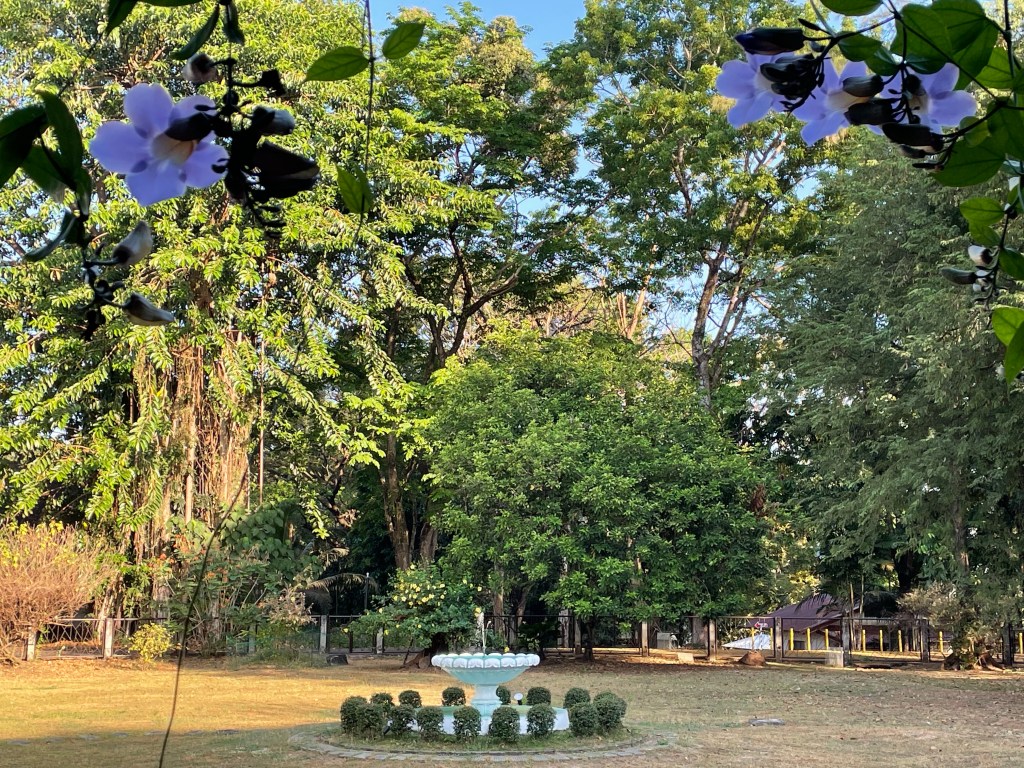
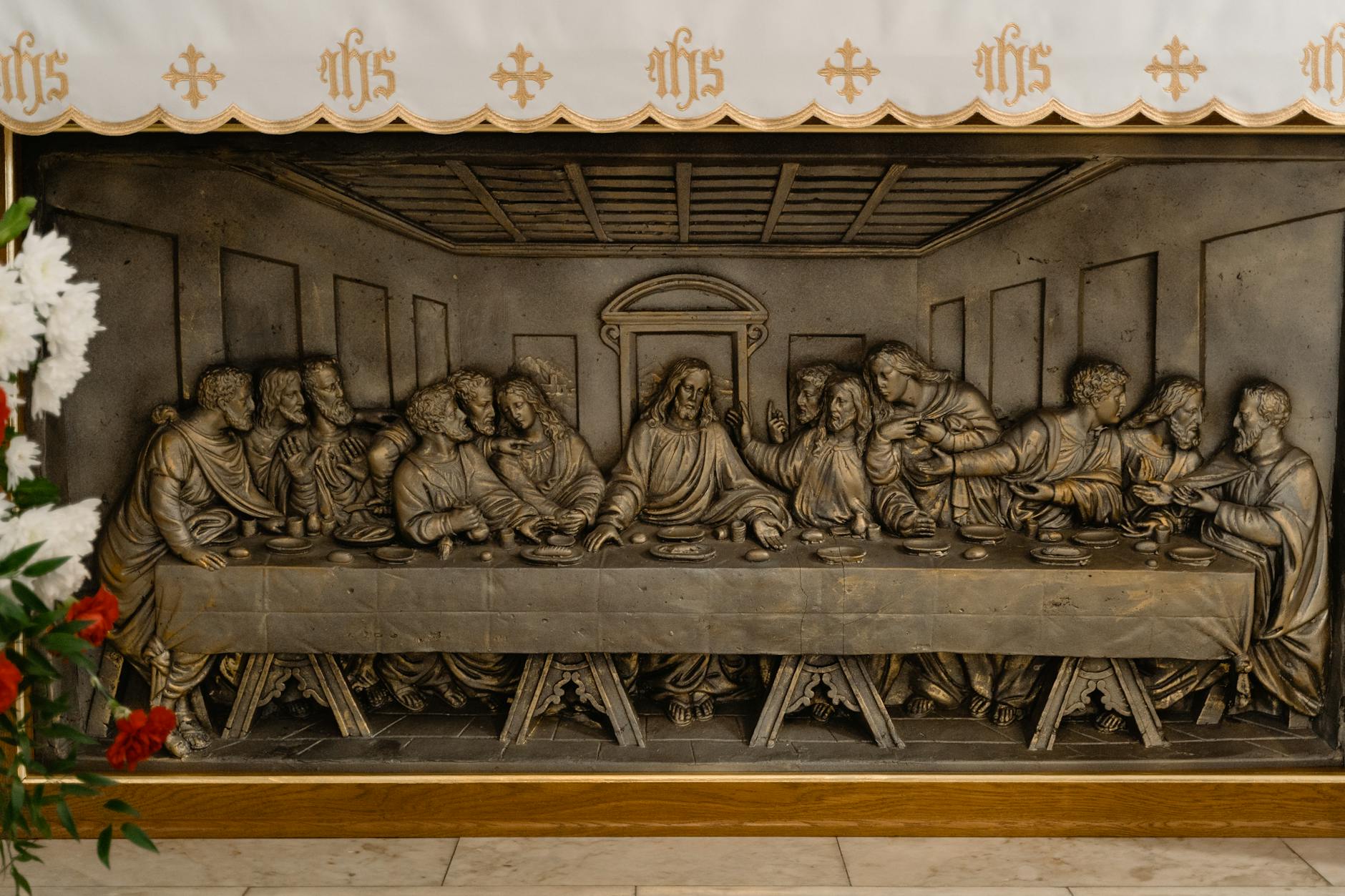
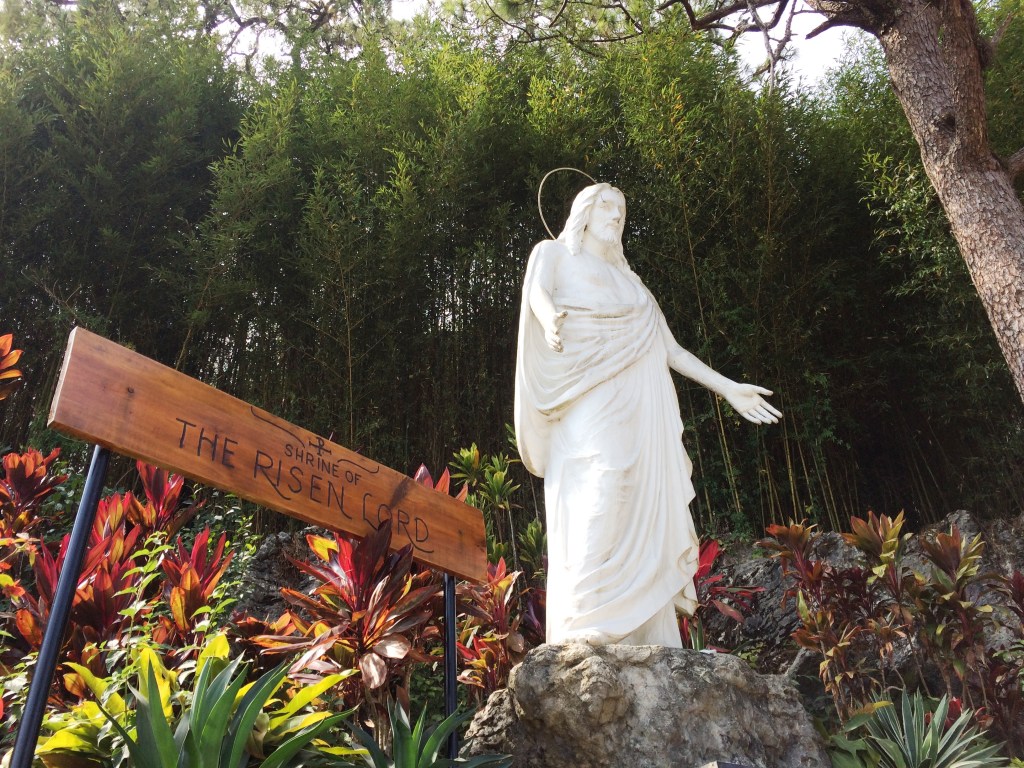
Photo by author, Sacred Heart Novitiate, Novaliches, QC, 22 March 2023.

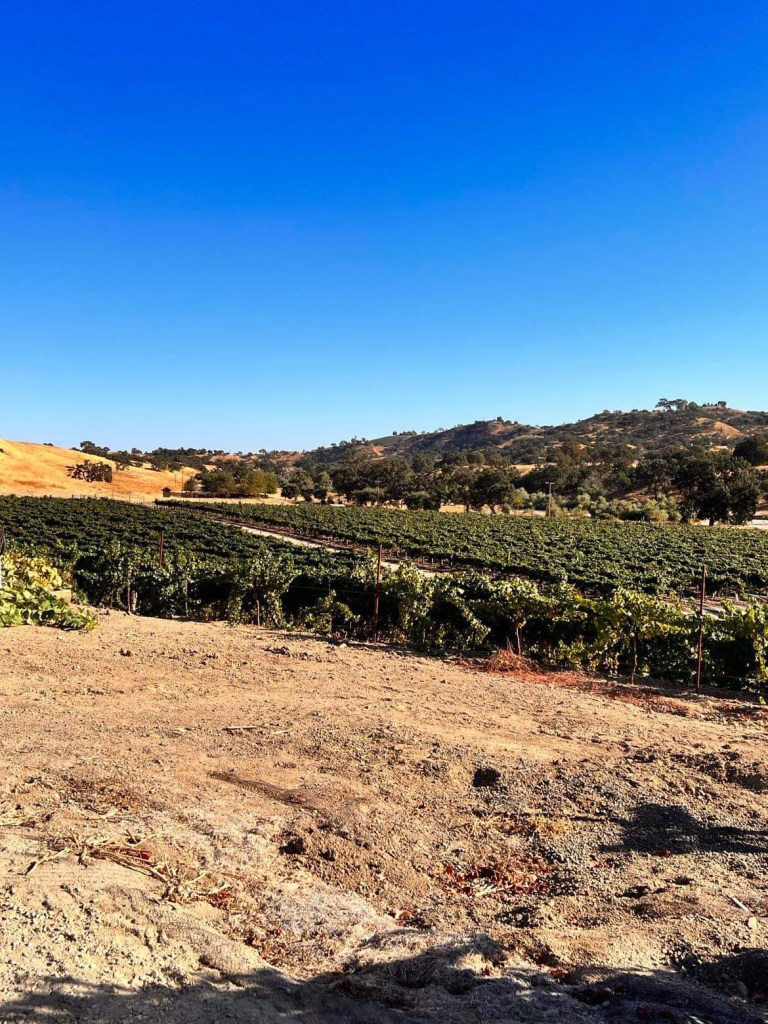
Imagine that beautiful imagery of Jesus last Sunday, of Him saying “I am the true vine… you are the branches” calling us to remain in Him to be fruitful (Jn.15:1, 5, 8). What a lovely sight to behold are the vines, climbing and winding up or creeping on the ground with its vast network of leaves and stems, tiny tendrils and shoots, flowers and fruits.

Jesus identified Himself with the vine to show us the immensity and profundity of His love for us as this plant species sprawls widely with its strong roots and stem system extending to its branches that reach out to its flowers and clusters of fruits like grapes. It is as if in every turn of the vine, there is so much life, full of love like God who is both Life and Love Himself.

Photo by Dra. Carol Reyes-Santos, MD at Napa Valley in California, September 2023.

And that is the essence of Jesus as He had explained during their Last Supper, showing its meaning on Good Friday when He died on the Cross, summarizing everything on Easter when He rose again and appeared later to His disciples.

It is love, love, and still, love in every turn just like the vine.

In being the true vine, we find God’s immense love for us expressed in His Son Jesus Christ who now tells us clearly to love one another shortly before He showed and proved that love for us on Good Friday at the Cross.

Jesus said to his disciples: “As the Father loves me, so I also love you. Remain in my love. This is my commandment: love one another as I love you. This I command you: love one another.”

John 15:9, 12, 17
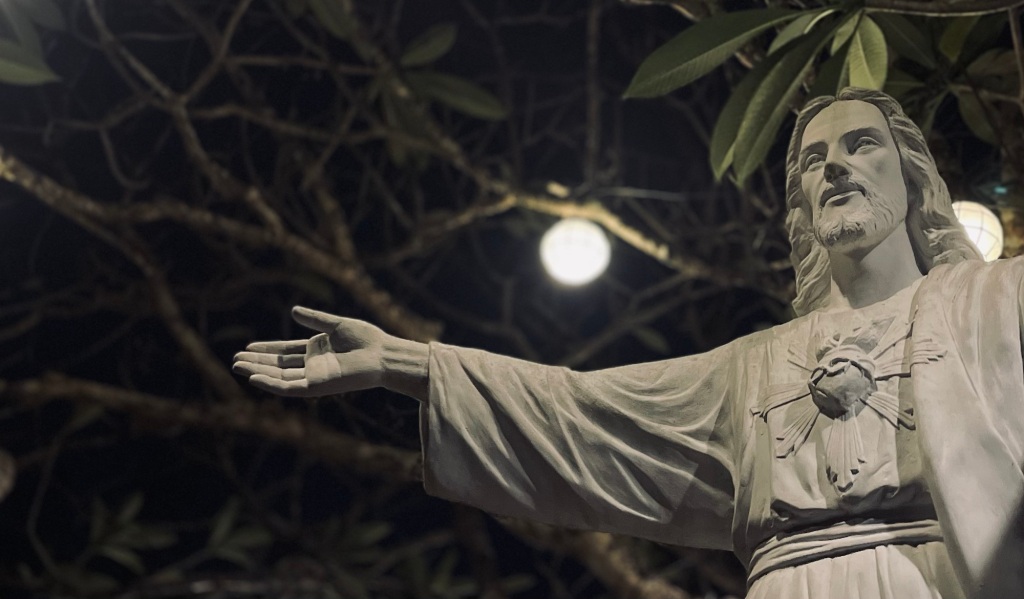
See how Jesus speaks of and lives in love in every turn in this gospel scene this Sunday which is a continuation of His discourse last week during their Last Supper. Nine times Jesus used the word “love” in nine verses.

He began his discourse by laying down the foundation of this love which is the Father’s love in verse 9: it is in “remaining” in His love that we truly have joy which is more than happiness but firm assurance that no matter what happens to us even in the worst situations including death as Jesus went through, there is always God loving us to the end and beyond.

After that, Jesus twice mentioned love as His commandment to us. Actually, Christ’s command to love one another seems pretty simple, and easy if you say so; but, what He added makes it so difficult – “love one another as I love you.”

That part “as I love you” is the challenge of Jesus to each one of us every day because He loved even unto death, literally and figuratively speaking. We do not need to die literally as martyrs but even dying figuratively speaking is already so difficult when we have to make many sacrifices, when we have to love somebody else more than our very selves!

Loving one another like Christ is more than to “feeling good” because…

  • To love like Jesus is to forget ourselves, to think less of our own good and comfort like a mother despite her being sick would still rise early to prepare her family to school and work or a dad going abroad in order to have food, clothing and shelter for his family.
  • Loving like Christ is giving up our wants and needs, including our dreams sometimes like the many Ate and Kuya who remain single in order to send their younger siblings to school until they graduate and be able to stand on their own.
  • To love like Jesus is to die in our own POV (point-of-view) and other long held beliefs in order to find Christ in everyone especially those different from us or from those who hurt us.

Loving one another like Jesus Christ is choosing the Father above all every day.
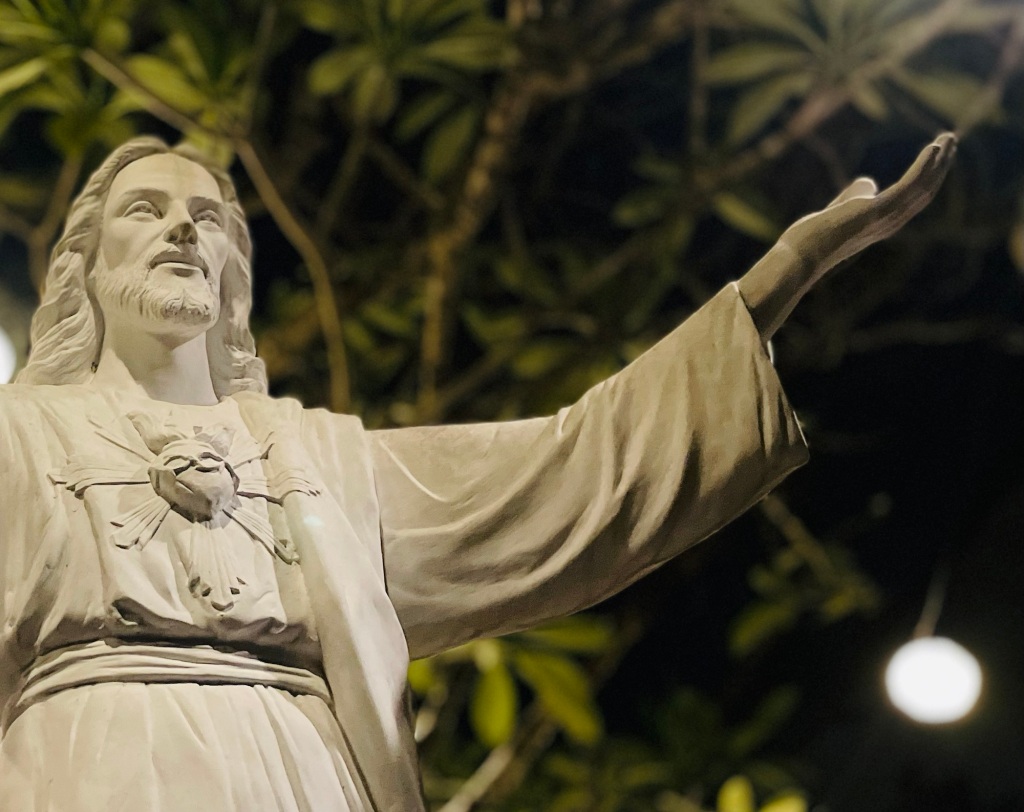
Admittedly, to love like Jesus is very difficult indeed but, the good news this Sunday is that it is doable as the beloved disciple explains in the second reading, “In this is love: not that we have loved God, but that he loved us and sent his Son as expiation for our sins” (1Jn.4:10).

And the best part of this Sunday’s gospel is when Jesus declared twice He loves us, “As the Father loves me, so I also love you… This is my commandment: love one another as I love you” (Jn. 15:9,12).

Wow! Everyone knows so well the deep joy one feels in hearing someone say “I love you”. For as long as it is the true kind of love, these words of “I love you” are not only transformative but also performative because they are powerful, filled with the powers of God that can change us, heal us and inspire us.

The words “I love you” are the nicest and most life-changing things one can always hear but unfortunately we rarely say these words to others because we are afraid of running out of love. The truth is, the more love we give, the more we share love in words and in deeds like Jesus, the more we are filled with His love but by those around us too!

Never say nor claim we cannot love like Christ because we are humans like that cheesy Filipino love song of yore, sapagkat ako’y tao lamang. That ability to love like Jesus is already here in our hearts, in our being, in us because He had lavishly loved us first so that we too can love. Every day Jesus repeats those words of the Last Supper whenever we wake up, telling us, “I love you”.

It was the same experience Peter and later the household of Cornelius have experienced in our first reading when the Holy Spirit came down upon them to fill them with the love of God that prompted Peter to realize earlier how “In truth, I see that God shows no partiality” (Acts 10:34), meaning, God loves everyone lavishly regardless of color, gender, and creed. The problem is with us when we love only those “like us”; hence, the need to remain in Christ to be able to find Him in everyone.

Let us immerse ourselves into that amazing reality that we are personally loved by Jesus as we pray:

Dearest Jesus:
let me remain in Your love
so I may learn to forget myself,
set aside my plans and agenda
so that I may love like You
by keeping Your commandments,
laying down my life for others,
echoing Your very words of
"I love you"
to those who hardly know You
because they have
never felt being loved
as they suffer alone in
diseases, poverty, and injustice;
let me bask in Your love, Lord
to lead others back to You
in my loving service and kindness
especially those who have lost faith
in You and humanity.
Amen.
Photo by Natalie Bond on Pexels.com

Remaining in Christ

The Lord Is My Chef Easter Recipe for the Soul by Fr. Nicanor F. Lalog II
Fifth Sunday in the Easter Season, Cycle B, 28 April 2024
Acts 9:26-31 ><}}}}*> 1 John 3:18-24 ><}}}}*> John 15:1-8
Photo by picjumbo.com on Pexels.com

From the Good Shepherd last Sunday, Jesus today declares himself as the “true vine”. Notice that qualifier true vine similar with last Sunday’s good shepherd because Jesus “lays down his life for the sheep” (Jn. 10:11, 17, 18); so we ask, was there an untrue vine?

Yes. Jesus was referring to Israel, God’s vineyard lavished with all his care but produced wild grapes as portrayed in Isaiah’s “Vineyard Song” that he vowed to take it away and plant a new vine fulfilled in Christ (Is. 5:1-7). Jesus as the true vine is an expression of his Incarnation, of how God in Jesus Christ became human like us in everything except sin so that we in turn would become like him, holy and divine. This can only be when keep that union intact by remaining in Christ.

Jesus said to his disciples: “I am the true vine, and my Father is the vine grower. He takes away every branch in me that does not bear fruit, and every one that does he prunes so that it bears more fruit. You are already pruned because of the word that I spoke to you. Remain in me, as I remain in you. Just as a branch cannot bear fruit on its own unless it remains on the vine, so neither can you unless you remain in me.

John 15:1-4
Photo by MART PRODUCTION on Pexels.com

Our scene is now at the Last Supper, after the washing of the feet of the disciples. Judas had already left and Jesus began his series of discourses capped with his high priestly prayer after which they proceeded to Gethsemane for his betrayal and arrest.

Imagine the solemnity of the scene, of how Jesus had shown the Twelve the meaning of his being the good shepherd laying down his life by taking the bread and wine as his Body and Blood given to everyone. All these will have its fullness on Good Friday at the Cross while it would take some time after Easter and Pentecost when the disciples will finally grasp and understand its meanings.

We are not just going back to a past event, to what Jesus had done. In declaring himself as the true vine, Jesus reveals to us himself truly God and Risen from the dead, telling us how we can share in the joy and mystery of his Resurrection. And that is by remaining in Jesus first above all, “Remain in me, as I remain in you. Just as a branch cannot bear fruit on its own unless it remains on the vine, so neither can you unless you remain in me.”

Photo by Dra. Carol Reyes-Santos, MD at Napa Valley, California, 2023.

See how in eight verses, Jesus used the word “remain” eight times because it is not enough Jesus is the true vine in whom we are blessed and become fruitful; we must remain in him too.

There is no doubt of Jesus remaining in us which is what his being a true vine is all about; unlike Israel in the Old Testament that produced wild grapes, Jesus can no longer be uprooted because he is God himself who had become one in us. But, are we one in him and with him?

To remain is more than physical like to stay. A branch remaining, staying intact with the vine but had turned yellow and dried up is clearly not one with the vine. We can be inside the church but be detached with everyone and the celebration. We may be staying or residing in the same address and home but our heart and very self may be so far away from our siblings or parents, or from your wife or husband.

Remaining implies something more than physical presence. To remain is to have a relationship, a bonding that is deep and intimate. To remain is to be of one heart as GMA7 claims to be a kapuso which is more important than being a kapamilya or a kapatid. There is no sense of being a family (kapamilya) when there is no love in the family or at the other hand, a sibling (kapatid) is nothing if the brother or sister is your enemy. We remain with God and everyone when our hearts are attuned or inclined to God and with others in love which is the fruit of the vine, Jesus Christ.

We can only bear much fruit, be more loving, if we remain in Jesus Christ. It is an imperative, therefore in this life that we remain in Christ for without him, separated him, we can do nothing. Fruit and love are always together as shown in the institution narrative and on Good Friday.

Being fruitful is more than being successful that is often seen and measured in material things. Being fruitful, being more loving is spiritual in nature, can never be measured with what we have but what have we given. Most of all, being fruitful is depending, relying more in Jesus Christ than in one’s self. That is why remaining in Christ is a prerequisite to be fruitful.

We remain in Jesus in prayer when he said, “If you remain in me and my words remain in you, ask for whatever you want and it will be done for you” (Jn. 15:7). But, prayer here as in most parts of the gospel does not mean asking God for anything; to remain in Jesus in prayer is to ask for God himself. It is only in having God we can truly love and experience joy and peace within despite the many trials and pains we go through in life.

In the first reading we have heard how Paul, still known as Saul arrived in Jerusalem and “tried to join the disciples, but they were all afraid of him, not believing that he was a disciple” (Acts 9:26). It must have been so difficult for Saul as well as for the early Christians too to welcome him! Saul must have a hard time convincing them he had really changed, that he had been converted in Christ while he must also understand the feelings of the Christians whom he persecuted before.

Photo by Dra. Carol Reyes-Santos,MD, at Napa Valley, California, 2023.

Let us keep in mind too that Saul’s conversion did not necessarily mean an end of their persecution; in fact, persecutions would turn more fierce later but it was during that time when the church grew so fast and wide too! That was because they remained in Christ who caused their efforts to bear much fruits no one expected.

Look back into our lives and see how when we remained in Christ and problems never stopped but that is when we are more fruitful, more fulfilled in life. Like our responsorial psalm this Sunday, “we praise the Lord in the midst of the assembly” to thank God from our hearts for all the blessings he bestows us like inner growth and maturity, feeling fruitful not just successful. Indeed, as the beloved disciple rightly noted in our second reading today, “God is greater than our hearts and knows everything” (1 Jn. 3:20).

This Sunday, Jesus is telling us “I am the true vine” to show us how God’s life is now in us through Christ and how our life is in God still through Christ. Let us remain in Jesus as he continues to reveal to us who he really is, our Lord and God, so we can share in the many joys and mysteries of his Resurrection. Let us pray:

Lord Jesus Christ,
let me remain in You;
let me stay in You
when things are so difficult
and let me still remain in You
when life is so beautiful;
let me be near and close
to You as You are in me,
speaking Your words,
doing Your will;
in my remaining in You,
may I be fruitful by bringing
others closer to You so that
in the end, we all remain
one in You.
Amen.

Jesus our Good Shepherd, the Gift & the Giver Himself

The Lord Is My Chef Easter Recipe for the Soul by Fr. Nicanor F. Lalog II
Fourth Sunday in the Easter Season, Cycle B, 21 April 2024
Acts 4:8-12 ><}}}}*> 1 John 3:1-2 ><}}}}*> John 10:1-10
Photo by author, dusk at Anvaya Cove in Bataan, 15 April 2024.

My kinakapatid is turning 60 this week with a dinner to be prepared by an Italian chef. His sister texted me for my main course and I chose lamb chops. And immediately she replied, “Pareho tayo. Mary’s little pet… the one who takes away the sins of the world.” Her wit floored me that I had to agree with a text, “Right. The most biblical and holiest food.”

Sorry for some little bragging as we celebrate this fourth Sunday in Easter as “Good Shepherd Sunday”…

We Filipinos have a hard time getting the “feel” of the shepherd because we have never had that image in our culture. Hence, it is a most welcomed development that there is now a growing popularity in tending sheep in the country while the Filipino palate had finally discovered a taste for lamb.

Come to think of this: the sheep exists only for two reasons, for food and clothing. They are meant to be slaughtered unlike dogs or cats or birds kept as pets. Another notable thing with sheep is the fact it is the only land animal that go against the flow when crossing a river like the salmon!

Photo by Dra. Mylene A. Santos, MD, at Katmon Nature Sanctuary & Beach Resort in Infanta, Quezon, 03 April 2024.

I love those characteristics of the sheep, for slaughtering which is almost like offering and always going against the tide. Exactly just like our Lord Jesus Christ who identified Himself as the good shepherd.

Jesus said: “I am the good shepherd. A good shepherd lays down his life for the sheep… This is why the Father loves me, because I lay down my life in order to take it up again. No one takes it from me, but I lay it down on my own. I have power to lay it down, and power to raise it up again. This command I have received from my Father (John 10:11, 17-18).

See the flow of the Lord’s statements.

First we notice here His use of the “I AM” which for the Jews refers to God when He told Moses “I AM WHO AM.” Clearly, Jesus was declaring to the people at that time that He is the Son of God, the awaited Messiah or Christ.

This scene was shortly before the feast of the dedication of the Jews after Jesus had healed a man born blind, a miracle never heard of at that time. It was a big issue then as authorities refused to accept that Jesus did indeed healed the man born blind.

Secondly, Jesus mentioned four times in just three verses the act of “laying down his life for the sheep” (vv. 11, 17, and 18). It sounded so good to hear how Jesus loves us so much that He would lay down His life for us his sheep; but, those were not just mere words Jesus expressed but a reality that happened at the Cross on Good Friday that He actually explained after this discourse at their Last Supper!

Keep in mind that we are now going back to the earlier discourses and teachings of Jesus that only became clear to the disciples including us today after Easter. We shall be having a lot of these “flashbacks” to understand and love Jesus more and His teachings.

Photo from https://aleteia.org/2019/05/12/three-of-the-oldest-images-of-jesus-portrays-him-as-the-good-shepherd/.

According to Pope Benedict XVI in his first book of the Jesus of Nazareth series, “The Cross is at the center of the shepherd discourse” (page 280). When Jesus said “This is my Body… This is my Blood”, He meant really Himself being given for us; Jesus did not merely give something for us but His very self as seen on the Cross on Good Friday.

That is how Jesus gives life – by giving up His life for us so that when He arose, we then share in His being a good shepherd through our little dying to ourselves because of love, giving life to those around us.

As the good shepherd, Jesus was the first to enter death, to be slaughtered but this time minus the violence and gore of the Cross that was the worst punishment of all time when He said “I lay down my life in order to take it up again”. No one takes it from me, but I lay it down on my own.”

Photo by Pixabay on Pexels.com

Yes, there was victimhood but more than that was His being an offering never forced nor imposed by anyone or by circumstances. Jesus did it all for love!

Though He was handed over (paradidomi) and betrayed by Judas, Jesus was totally free, actively passive went to his Passion and Death because He was very certain of His Resurrection.

We experience the same thing many times in life when we have to make great sacrifices like when we have to allow a loved one to die after a long illness. Death is a grace and a blessing when freely given too by those around the dying, freeing the dying person of any guilt when he/she finally goes.

The same thing is true when friends and lovers separate either because they have found other loves to pursue or worst, have fallen out of love with us despite all our love for them. It is the most unkindest cut of all breakups and separations, excruciatingly painful as we blindly give up our relationships ironically for love. More than the persons and circumstances involved, we freely choose to let go – magparaya in Filipino – because deep in our wounded and hollowed heart is the hope they may grow in their new love.

Here we are like Jesus the Good Shepherd because even in the death of our relationships is still found our love. Like Jesus Christ, we do not simply give something but our very selves. The Jesuit theologian Karl Rahner beautifully expressed this when he described Jesus is both “the Gift and the Giver.”

Photo by Dra. Mylene A. Santos, MD of the sheep’s wool, 03 April 2024.

Love is better shown than said. Love cannot be defined but only be described for it is so wide and vast in its nature and scope. Love simply shows itself. That is why when we speak of love, we use comparisons and analogies and yet, they are not enough. How much more when we speak of the love of God?!

This Sunday, Jesus spoke of His love like every human being using the language of parable and allegories. But truly Divine, we find so much more when He claimed “I AM the good shepherd.” It is His total person and self, His being both the Gift and the Giver.

The good news is, because of His giving of self, we too have become like Him able to give ourselves wholly in love. Like Peter in the first reading, we experienced great powers within us not innately ours but God working in us, enabling us to empower others by healing them not literally but figuratively speaking.

When Jesus declared “I AM the good shepherd”, He reminds us of being the children of God, His indwelling, our being an “I AM” of God Himself. Like Him, we are good shepherds able to love in Christ to the point of being foolish as St. Paul experienced.

Like the sheep, let us continue to forge on with life’s many difficulties, even if many times we have to go against the flow of the world that is always selfish and misleading. Let us pray:

Dearest Jesus,
help me to give more of myself
not just of something from me;
help me to lay down my life
for my friends even if it means
not just losing myself but
losing them in order to gain You;
help me to remain in You,
my Good Shepherd,
to never go astray
because life and love
are found only in You,
the Gift and Giver.
Amen.
Have a blessed week ahead!

“Ghost in You” by Psychedelic Furs (1984)

The Lord Is My Chef Sunday Music by Fr. Nicanor F. Lalog II, 14 April 2024
Photo by author, Sacred Heart Novitiate, Novaliches, QC, 20 March 2024.

We go punk this Sunday with the 1984 hit Ghost in You by the British band Psychedelic Furs more known to our generation with the song Pretty in Pink that was eventually made into a movie though not necessarily an interpretation of the music itself.

Ghost in You was written by the Psychedelic Furs’ lead vocalist Richard Butler, their second single from their fourth studio album Mirror Moves released in 1984. It is another poignant love song about someone most probably gone yet still so loved. The music and lyrics are very mysterious that we feel it perfectly captures our reflection this third Sunday Easter on the meaning of Christ’s Resurrection which is getting real as opposed with how young people today use the word “ghost” and “ghosting” which is to leave behind or drop like a hot potato. Our Filipino expression say it so well: to be ghosted is “iwanan sa ere” or to be left hanging.

In our gospel this Sunday, Luke tells us how the disciple thought Jesus was a ghost when He appeared to them anew after Easter; Jesus read their minds and clarified He was not a ghost but truly alive with flesh and bones.

The Filipino expression says it all completely, iniwan sa ere which is worst than the English expression “dropped like a hot potato”. To be ghosted is to be betrayed, to be taken for granted, to be discarded like a thing. It is utter lack of respect to another person. Worst, it is lack of life full of pessimism and indifference to life itself.

https://lordmychef.com/2024/04/13/easter-is-getting-real-not-ghosting/

In Ghost in You, Butler tells us how he seemed to have been ghosted by his beloved for reasons not so clear. And we go with him, in his pains and deep longing to be loved in return by his beloved.

A man in my shoes runs a light
And all the papers lied tonight
But falling over you
Is the news of the day
Angels fall like rain
And love is all of heaven away
Inside you the time moves

And she don’t fade
The ghost in you
She don’t fade
Inside you the time moves
And she don’t fade

Notice how the lover declares his deep love that is so pure, “all of heaven away” that remains within him through time like a ghost “And she don’t fade/ The ghost in you/ She don’t fade”.

About ten years ago, we used to pass by a billboard somewhere in the Banaue-C3 area in Quezon City that says “True love is like ghosts, which everybody talks about and only a few have seen.” It is quote from French moralist Francoise de la Rochefoucauld (163-1680).

Very true!

Like our reflection this Sunday, Easter calls us to be real, not like ghosts. The Psychedelic Furs’ Ghost in You is great music because we all go through it some times even many times. Easter tells us to get real and move on with life.

Jesus Christ is not a ghost. Had never and would never ever ghost us because He is faithful, truly alive and truly present with us especially in our darkest and emptiest moments in life. Many times, we do not see nor recognize Him because we are so focused at how we were ghosted especially by loved ones.

https://lordmychef.com/2024/04/13/easter-is-getting-real-not-ghosting/

Here’s one of our favorite music in the 1980’s worth listening to today to see how far we have gone real, especially in our love. Or, have we remained ghosted?

From YouTube.com.

Easter is getting real, not “ghosting”

The Lord Is My Chef Easter Recipe for the Soul by Fr. Nicanor F. Lalog II
Third Sunday in Easter-B, 14 April 2024
Acts 3:13-15, 17-19 ><}}}}*> 1 John 2:1-5 ><}}}}*> Luke 24:35-48
Photo by Dra. Mylene A. Santos, MD, 27 March 2024 at Katmon Nature Sanctuary & Beach Resort, Infanta, Quezon.

More than ten years ago, there used to be a billboard at the C3-Banaue area in Quezon City that said, “True love is like ghosts, which everybody talks about and only a few have seen.”

I googled the saying and found it was from French moralist Francoise de la Rochefoucauld (1613-1680). Nonetheless, we remembered that billboard because in our gospel today, we have heard how the Apostles thought upon seeing the Risen Lord that He was a ghost!

While they were still speaking about this, he stood in their midst and said to them, “Peace be with you.” But they were startled and terrified and thought that they were seeing a ghost. Then he said to them, “Why are you troubled? And why do questions arise in your hearts? Look at my hands and my feet, that it is I myself. Touch me and see, because a ghost does not have flesh and bones and you can see I have.”

Luke 24:36-39
“The Road to Emmaus” painting by American Daniel Bonnell from fineartamerica.com.

This is the last Sunday we shall hear a story of the Risen Lord’s appearance to His disciples; beginning next Sunday, our gospels will be the accounts of Jesus Christ’s discourses at their Last Supper.

It is not really important to count how many times the Risen Lord had appeared to His disciples who in the first place never bothered themselves with it. John explained it last Sunday why only a few of these were written so that we may believe and have life in Him (Jn.20:31). There are two things we find always in these few Resurrection stories that convince us the Lord is risen.

First, there is always the intensity we feel in the Resurrection stories we have. Even though there is no account of how it happened, we could feel in the whole New Testament that it actually happened. It is historical but beyond the physical and ordinary. So real yet surreal. That is why initially, there is the incredulity not only among the disciples but even among us at this time. As we say in Filipino, “hindi makapaniwala” as opposed to “hindi maniwala” because Jesus Christ’s Resurrection opened new possibilities in our human existence that only faith in Him can explain though not fully. It is when all we can say in Filipino is “a…basta!”

From this intensity of His Resurrection, there is always that movement to gather together as a community of the risen Lord’s disciples. Easter is always in the context and setting of a community. See how Jesus would always tell or lead His disciples to gather together as a community, always appearing to them when there are at least two of them gathered like Clopas and companion on the way to Emmaus on the evening of Easter. And we see its effect – once they recognized Jesus at His breaking of bread, they both hurried back to Jerusalem to join the other disciples to share the good news!

That’s the beauty and mystery of Easter. It is so intense, so true we can feel and experience, always leading us to gather together as a community, as a family. It is never selfish nor personal. Do we have the same intensity today as individuals and as a community especially in our Sunday Masses?

From Facebook, 04 April 2021: “There is an urgency to announce the Joy, the joy of the Risen Lord.”

Today’s gospel scene is the continuation of that Emmaus story. While Clopas and companion were telling the disciples their experience, Jesus suddenly came into their room and again, they were startled and terrified.

But Luke added that one word “ghost” that was used twice in this scene: first in v.37, “But they were starteld and terrified and thought that they were seeing a ghost” and in v. 39 when Jesus read His disciples’ minds, telling them to “Look at my hands and my feet, that it is I myself. Touch me and see, because a ghost does not have flesh and bones as you can see I have.”

Sorry for the long introduction as I wish to direct our attention to that word ghost.

When we were growing up, there was a cartoon show on TV called “Casper the friendly ghost.” In Filipino, we always refer to ghost as multo, something scary because like the aswang, they look terrible and would always harm people. That is why the Church later on changed the name Holy Ghost to Holy Spirit because of the very negative connotation of the word ghost.

These days, the young people are using again the word ghost, turning it into a verb form that means so negative: ghosting as in “iniwan sa ere”. At first, I thought to be ghosted is the equivalent of what we used to say “na-Indian” when a date or someone stood you up in a meeting or coming together.

But ghosting is more than just not appearing nor coming to a meeting or get together. It is almost like betrayal or infidelity. Precisely what the youth say, to be left hanging on air not knowing at all what is next. Very disappointing. Most of all, painful as it hurts us deeply when ghosted. The Filipino expression says it all completely, iniwan sa ere which is worst than the English expression “dropped like a hot potato”. To be ghosted is to be betrayed, to be taken for granted, to be discarded like a thing. It is utter lack of respect to another person. Worst, it is lack of life fulln of pessimism and indifference to life itself.

Photo by author, Sacred Heart Novitiate, 18 March 2024.

Jesus Christ is not a ghost. Had never and would never ever ghost us because He is faithful, truly alive and truly present with us especially in our darkest and emptiest moments in life. Many times, we do not see nor recognize Him because we are so focused at how we were ghosted especially by loved ones.

In the first reading, we heard Peter’s second discourse on Pentecost Sunday about the Resurrection of Jesus as the summit of everything that was written in the Old Testament, the fulfillment of salvation history. But at the same time, he was telling the people of how they have ghosted the Lord “whom you handed over and denied in Pilate’s presence, when he decided to release him” (Acts 3:13).

Peter was not accusing the people then or anyone today for being accomplices in Jesus Christ’s death because he himself denied the Lord thrice, remember? Peter ghosted Jesus too but repented. And that was his point to everyone including us today of how may times we too have ghosted Jesus when we sin against each other, when we betray our loved ones, when we are remiss in our duties and responsibilities, when we are unfaithful that people fail to experience the Risen Lord coming to them.

Peter is asking us this Sunday to look into ourselves at how we continue to ghost each other that we contribute to the vicious circle of violence happening in the world that often starts right in our family and community, even in the Church.

That is why the beloved disciple asks us in the second reading “to keep his commandments so that we may not commit sin” by rejecting the lusts of the flesh not only in the sexual sense but in all of our selfish interests. Most of all, to imitate Jesus Christ by living like Him full of love and kindness, always understanding and forgiving and caring especially of the weak and marginalized.

Photo by author, 09 April 2024.

The Resurrection remains a mystery. It is a call for us to be real with flesh and bones not like a ghost. Easter is an invitation to live our lives as Easter people, full of joy and hope in Christ even when the chips are down.

Being real as opposed to ghosting means proclaiming Jesus Christ with our very own witnessing of His loving presence and service to others with our very lives.

Being real as opposed to ghosting is avoiding “back burning” those dearest to us.

Being real as opposed to ghosting is not “bread crumbing”, of being mediocre that we do only the bare minimum.

Easter is Jesus faithfully present with us especially in the most trying and difficult moments of our lives because He assures us nothing can keep us nor hostage us in whatever darkness or emptiness we are in.

Not being able to see someone does not mean that someone does not exist. Many times in life, it is after our loved ones are gone – permanently or temporarily – when we actually experience them closest. That’s because of the Resurrection of Jesus!

Let’s get real by praying:

Lord Jesus Christ,
open my mind and my heart
to Your words;
let me develop that prayer life
You have always been inviting me
to get into a relationship with You;
let me find You in my wounds
so I may find Your glory too;
let me find You in my many hurts
and scars in my heart so I may
find and share Your healing and
comfort with those still in the
darkness of Good Friday
or silence of Holy Saturday;
dearest Jesus,
fill me with life and joy
so that people may see You
in me alive
and not like a ghost.
Amen.

“Love Will Come Someday” by David Sanborn (1982)

The Lord Is My Chef Sunday Music by Fr. Nicanor F. Lalog II, 07 April 2024
Photo by author at the refectory of Sacred Heart Novitiate, Novaliches, QC, 18 March 2024.

We turn to jazz this Second Sunday in Easter in order to express the meaning of Jesus Christ’s Resurrection that is simply too deep for words because of its intense nature. Unlike Christmas that lights up our minds with so many images, Easter is different in the sense that it is something we have to feel and dig deep down inside us to really appreciate. Like jazz music that stirs our souls with its unique sounds that enable us to touch our very being.

For this Sunday we have chosen David Sanborn’s Love Will Come Someday from his 1982 album As We Speak because it captures the spirit of this Easter Octave also known as Divine Mercy Sunday when Jesus appeared to His disciples inside a locked room for fears from the Jews on the very night of His Resurrection. We reflected in our previous blog that the Resurrection of Jesus opened a new dimension in human existence when we could no longer be held hostage or captive by even the most difficult plight in life with Jesus opening many possibilities for us even while in this life (https://lordmychef.com/2024/04/06/easter-is-new-existence-in-christ/).

Sanborn’s almost two minutes of sax introduction to his Love Will Come Someday gives us the feel of the prevailing setting of Easter and life wherein there is the constant presence of darkness and emptiness where we also find Christ’s light and fullness. Sanborn has been a session musician collaborating with almost every big name in the music scene across all genres. His sax is so soothing yet penetrating that brings out even those things we have been hiding deep inside us resulting in a sort of catharsis which is very Easter too!

Written by Michael Sembello and David Batteau with the latter doing the vocals, Love Will Come Someday is a poignant song of the ups and downs not only of love but of life itself. Very often, like the darkness and emptiness we find in the Easter stories since last week, we find our lives in the same setting too when we could not figure out exactly or right away at why or how certain things happen in our lives despite our best efforts.

Funny how the legends die
When heroes never come alive in the day time
Funny we can be sad
It doesn’t have be so bad in the night time

You want know where they
The songs all go in your life time
One of these we’ll go
And find out where they stay

Once upon a lovers song
There was a boy who sang along in the night time
Once upon a lovers dream
There was a tale of broken wings in the day time

But, there are times when suddenly, Jesus comes to us amid all locked doors, appearing to us, extricating us from difficult situations that amid great joy, we could not believe it happening at all that we doubt like Thomas simply because they are so surreal!

And there lies the mystery of life and love, of Easter: visions and images are not so important because it is the intensity within us which makes Jesus and those we love so present that we respond with more love and adoration.

Catch a piece falling star
Try to keep in a jar till the morning
Catch a summer firefly
Willing it’ll stay alive till the morning

You want to know where did the songs all go
In your life time
One of these days we’ll go and find out
Where they stay

Love will come someday
Love will find a way
Love will come someday
Love will find a way

The songs that I sing, the songs that I bring
The songs that I sing, the songs that I bring, yeah, yeah

As we mature and journey in this life, the more we find God and our very selves and those we know more real, more loved and lovable. In the end, love always finds a way someday. Like Thomas, we just have to believe in order to see. Here is David Sanborn and to those belonging to my generation, cheers to the music we grew up with, hoping the younger ones find these treasures too.

From YouTube.com

Easter is new existence in Christ

The Lord Is My Chef Easter Recipe by Fr. Nicanor F. Lalog II
Second Sunday in Easter, Divine Mercy Sunday, 07 April 2024
Acts 4:32-35 ><))))*> 1 John 5:1-6 ><))))*> John 20:19-31
Photo by author, Mirador Jesuit Retreat House, Baguio City, 2018.

We celebrate today the Octave – eighth day – of Easter which coincides with the Feast of Divine Mercy. Both Christmas and Easter observe an octave signifying eternity because when you count from Easter Sunday to this Sunday, there are actually eight, not seven days. That is why there is no such thing as weekend for us Christians because the week never ends but continues on and on every Sunday.

And that is also the mystery, beauty and reality of Jesus Christ’s Resurrection that according to Pope Benedict XVI, “a life that opens up a new dimension of human existence” (Jesus of Nazareth, Part Two, p. 244).

Photo by author, view the refectory, Sacred Heart Novitiate, Novaliches, QC, 18 March 2024.

From now on, nothing can hold us nor keep us locked in sadness and grief, suffering and misery as well as sin and death because in rising from the dead, Jesus had opened up for us new possibilities in the future not only in eternal life but right here on earth.

Like the apostles on that same evening of Easter, we also find it so difficult to grasp and understand, even believe and explain right away though we could feel and experience deep down within us that Jesus is risen.

On the evening of that first day of the week, when the doors were locked, where the disciples were, for fear of the Jews, Jesus came and stood in their midst and said to them, “Peace be with you.” When he had said this, he showed them his hands and his side. The disciples rejoiced when they saw the Lord. Jesus said to them again, “Peace be with you. As the Father has sent me, so I send you.” And when he had said this, he breathed on them and said to them, “Receive the Holy Spirit.”

John 20:19-22
Photo by author, dusk at Sacred Heart Novitiate, 20 March 2024.

Since Sunday we have the prevalence of darkness and emptiness in our Easter stories, reminding us how often that it is in the darkness of our lives when we find light, when in the midst of emptiness when there is fullness.

This Sunday we find the presence of Jesus but still in an unusual manner. There was still darkness for it was night but more than that was the darkness within each disciple who locked themselves inside the Upper Room for fears from Jewish officials who might arrest and put them to death like Jesus.

Many times in life we feel locked in, imprisoned in some situations, feeling resigned as there is no way out from our troubles and miseries but through faith in Jesus, out of nowhere and without any explanation at all, we find ourselves extricated from our inescapable situations.

When my youngest sister was diagnosed with cancer the other year, she told me how she prayed on the eve of her surgery asking God to simply give her the grace to accept whatever the results of her tests would be. But after her surgery, it turned out her cancer was at its earliest stage that required no treatment at all except constant medical checkups! Last February on her major checkup again, doctors found no traces of cancer in her while her surgery had healed so well.

Hope is not positive thinking that things could get better; in fact, to hope is even to expect things to get worst like when the disciples were hiding in fear, expecting to be arrested too. Or my sister resigning to God her fate, just asking for the grace to accept she had cancer.

But it was in that darkness when Christ came and brought light to His disciples and my sister and our family. Strangely enough, it was after seeing the wounds of Jesus when they rejoiced because that proved that the Lord had risen. It was in my sister’s cancer we found ourselves together more in love and care for each other.

In life, our wounds will remain with us but most important of all for Easter to lead us into new existence in Christ, we must first remain in Him and with one another amid our wounds and darkness around us. And for us to remain or stay in Jesus with each other, we must first come.

Now a week later his disciples were again inside and Thomas was with them. Jesus came, although the doors were locked, and stood in their midst… Then he said to Thomas, “Put your finger here and see my hands”… Thomas answered and said to him, “My Lord and my God!” Jesus said to him, “Have you come to believe because you have seen me?”

John 20:26, 27, 28-29
Caravaggio’s painting “The Incredulity of St. Thomas” (1602) from en.wikipedia.org.

My dear friends, while praying over the gospel this week, this line by the Lord kept on echoing within me. And every time it would echo, the Lord shortened the sentence like these:

“Have you come to believe because you have seen me?”

“Have you come to believe because…?”

“Have you come to believe…?”

“Have you come…?”

Before we can stay and remain in the Lord, we must first come. Like Thomas.

What he had asked as proofs to believe in the Lord’s Resurrection were not really doubts to be taken negatively. John referred to him being known as Didymus for Twin. We were the ones who gave him that nickname Doubting Thomas. Like us, there are times we feel at a loss like Thomas with our faith and with ourselves when extraordinary things happen to us. It was not that he did not believe but in fact, he wanted to believe more. That is why he came the following Sunday.

Though I have always loved Caravaggio’s paintings, I don’t think Thomas ever touched the Lord’s wounds. Thomas must have been overwhelmed with the presence of Jesus that all he could say was “my Lord and my God” which we repeat during consecration of the bread and wine into Christ’s Body and Blood.

Photo by Ka Ruben, Easter Vigil 2024, National Shrine of Our Lady of Fatima, Valenzuela City.

Easter leads us into community life centered in the Eucharist. See how since Sunday when Jesus appeared to Mary Magdalene, He instructed her to tell Simon Peter and others of His Resurrection; after appearing to Cleopas and companion on the road to Emmaus, they hurried back to Jerusalem to proclaim the good news of seeing the risen Lord at the breaking of bread; and while they were together which would be the gospel next Sunday, Jesus appeared to them again as a community.

In His rising to life, Jesus brought us together, fellow wounded healers to heal each other, to remain with each other amid our poverty and sufferings because together in Christ, that is when we open new dimensions in existence, in living as a community. We grow into an I-Thou person from the selfish ego. That is what the first reading is telling us in how “the community of believers was of one heart and mind, and no one claimed that any of his possession was his own, but they had everything in common” (Acts 4:32).

It is the risen Lord who comes and stays among us in darkness and woundedness whenever we come and reach out to others like Thomas in the gospel. Even in our doubts, Jesus comes for us to believe more in Him. That is when great things start to happen, many so unbelievable and too deep for words. Basta.

That is why St. John Paul II rightly made the eighth day in Easter as the feast of Divine Mercy too because it is the love of God poured out to us in Jesus Christ’s suffering and death on the Cross when Blood and Water flowed out from His heart as an ocean of mercy for us. This is the love of God John was reflecting in the second reading that was too deep for words to explain except that it is the power that also “conquers the world” (1 Jn.5:3-4). Like St. Faustina in her Diary number 163, let us also pray:

"Help me, 
O Lord,
that my heart may be merciful"
by being more loving,
by coming
and remaining in Jesus
among our brothers and sisters
in their many darkness
and emptiness
and wounds in life.
Like You,
Lord Jesus,
let me come
to reach out
to those in doubts
to be Your very proof
of Your having risen
from the dead.
Amen.

Easter is signs & Scripture together. Always.

The Lord Is My Chef Sunday Recipe for the Soul by Fr. Nicanor F. Lalog II
Easter Sunday of the Lord's Resurrection, 31 March 2024
Acts 10:34, 37-43 ><}}}}*> Colossians 3:1-4 ><}}}}*> John 20:1-9

A blessed happy Easter to everyone! The Lord is risen. Let us rejoice amid all the darkness and sufferings still hovering over our lives at this time as Easter gives meaning to these all, enabling us to experience God closest with us in Jesus Christ.

Let Christ’s assurance of deliverance, of salvation burst forth from your heart, from the depths of your soul that amid all these sufferings, we have already won in Jesus. It is in those darkness and emptiness where Jesus is found as the first disciples realized that first Easter morning.

On the first day of the week, Mary of Magdala came to the tomb early in the morning, while it was still dark, and saw the stone removed from the tomb. So she ran and went to Simon Peter and to the other disciple whom Jesus loved… When Simon Peter arrived after him, he went into the tomb and saw the burial cloths there… Then the other disciple also went in, the one who had arrived at the tomb first, and he saw and believed. For they did not yet understand the Scripture that he had to rise from the dead.

John 20:1-2, 6, 8-9
Jesus Christ resurrection. Christian Easter concept. Empty tomb of Jesus with light. Born to Die, Born to Rise. “He is not here he is risen”. Photo from iStock/GettyImages.
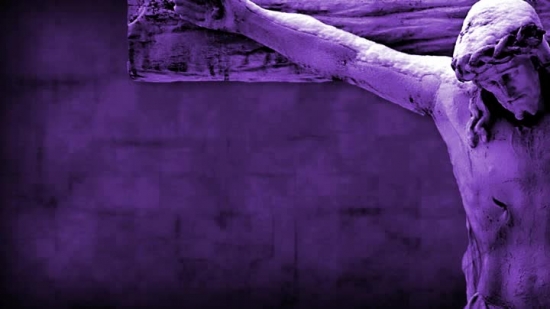
We can never experience the joy of Easter if we skip going through or deny the agonies and pains of Good Friday. See how in the glory of Christ’s Resurrection is found the empty tomb set in the darkness of dawn, evoking in us the realities of life.

The problem in our time is when people see life only as Easter without Good Friday like those who want to get rich by gambling without working hard or students who want to pass exams without studying. At the other extreme are those who see life only as all Good Friday without Easter, becoming indifferent to joy and life itself.

Absence of sufferings can happen only in heaven after we have died. In rising from the dead, Jesus enables us today to taste heaven, to have a glimpse of eternal bliss which Easter makes a reality within us. That is why all the 50 days of Easter beginning today until Pentecost Sunday are actually counted as one big day because we can never grasp the fullness of Christ’s Resurrection in just one day or one month. As we have reflected last Sunday, life is like the Palm Sunday in the Lord’s Passion, a daily movement from the Lord’s Passion, Death, and Resurrection.

Actually, every celebration we have in the Church, from Christmas to feasts of Mary and the saints are images of Easter, of Jesus Christ’s Resurrection, of His triumph and glory. This we find in that last line of our gospel account today:

Then the other disciple also went in, the one who had arrived at the tomb first, and he saw and believed. For they did not yet understand the Scripture that he had to rise from the dead.

John 20:8-9
Crucifixion and Resurrection. He is Risen. Empty tomb of Jesus with crosses in the background and cinematic lighting. From IStock/GettyImages.

Many times our life is an empty tomb with nothing inside except signs of Jesus. John used the word sign to refer to the Lord’s miracles, words and actions that point to Him as the Christ, the awaited Messiah. Hence, his gospel is also known as “the book of signs” with seven miracles and teachings by Jesus that signify Him as the Son of God.

Here at the last two chapters of his gospel we find John’s wisdom in using both explicitly and implicitly the word and concept of sign to point at Jesus as the Christ. The empty tomb itself is the sign pointing to Jesus who had risen; since He was not there, He must be somewhere alive! How do we prove it? Again with another signs, the burial cloths neatly folded inside the empty tomb that showed the body of Jesus was not stolen.

From wikipedia.commons, healing of a leper,

John have used this formula repeatedly in his gospel, slowly building up to prepare his readers for the great signs of Easter like the changing of water into wine at Cana, the many cures, the feeding of more than 5000 in the wilderness, the thrusting of lance into the Lord’s side while on the Cross from which flowed blood and water. All of these he consistently claimed as signs that he as “the other disciple” had seen or witnessed.

Whenever we prayerfully read and reflect John’s gospel, we too see and hear Jesus is the Christ in the signs he presents us until finally, we find Jesus present in the many experiences of our lives! John wants us to understand the interaction between signs and Scripture which Luke explained beautifully in the story of the road to Emmaus which is the gospel proclaimed on the evening of Easter Sunday.

For John and the evangelists which Vatican II stressed in Dei Verbum, the Scripture allows us to understand the signs that also lead to understanding the Scripture. If the Apostles have not learned from the Scriptures that Jesus must rise from the dead, the empty tomb would have remained a puzzle to them. Likewise, it was the sign of the empty tomb that led them to understanding fully the Scripture. And that has always been the case in our lives until now that is why it is so essential we cultivate a prayer life which is a relationship with God in Jesus not just a recitation of prayers or celebration of the Mass.

Easter invites us to enter into a relationship with God in Jesus, through Jesus and with Jesus through the many signs He joined us through our trials and tribulations in life so we can be one with Him in His Resurrection.

Detail of the Anastasis (Resurrection) fresco in the Church of the Holy Saviour in Chora, in Istanbul, Turkey. It depicts Jesus’ descent into limbo to liberate Adam and Eve and all the righteous who have been waiting for him there. Photo and caption from Salt and Light Catholic Media Foundation (slmedia.org).

How sad in this age when many people have stopped joining church celebrations and communal prayers when they choose to go on vacation during Christmas and Easter, totally unmindful of Jesus Christ’s outpouring of love for us.

How sad when many of us practically live in the media, so concerned with the palabas (the outside peripherals) than the inside, the more essential even in our spiritual celebrations.

How sad when people preferred to video the procession of the Blessed Sacrament on Holy Thursday than to kneel and pray in recognition of Christ’s real presence.

From shutterstock.com

How sad for those who skip Masses on Sundays but would devoutly join the Good Friday processions that have become more of fashion show and picnic when people are busy talking, texting, taking videos or pictures, eating and drinking than praying and meditating the various scenes of the Lord’s Passion and Death.

How sad for those who have made their carrozas a pompous spectacle and display of family wealth than catechism and devotion. One would seriously wonder where is the dolor of Viernes Dolores or the grief and sadness for the Lord’s passion, death and burial depicted by the Holy Week processions. Not to mention the kabaduyan and ka-ek-ekan by priests at the repositories of Holy Thursday that after Visita Iglesia you hardly hear people talking how they were edified at the solemnity of the church they visited; people now talk more after Visita Iglesia of how they were awed by the decors and effects of repositories, not of Christ’s real presence.

Worst, the most crazy and foolish of all is how most Catholics end their devotions at Good Friday without realizing the most important of all celebrations is Easter which is the Mother of all feasts in our Church, the very heart of our faith.

This Easter, let us salvage the remaining gifts and grace God pours upon us in Jesus through this Season by opening our hearts, our minds, our total selves to the Risen Lord we encounter in the Scripture and many signs in our lives. Amen. Have a blessed Easter!

Our hands & the hands of God

40 Shades of Lent by Fr. Nicanor F. Lalog II
Solemnity of the Palm Sunday of the Lord's Passion-B, 24 March 2024
Isaiah 50:4-7 ]]+[[ Philippians 2:6-11 ]]+[[ Mark 15:1-39
From influencemagazine.com

As you all know by now, I turned 59 years old last Friday, March 22. For the second consecutive year, I have moved my personal annual retreat to my birthday so I can pray more, thank God more for his gift of life to me. This is one of my realizations in turning 59 years old:

"The more we enter the heart of Jesus
where we find peace and fulfillment,
joy and security,
the more we also discover
the dark and ugly sides of life. 
Darkness, pains, sickness, failures,
and other forms of sufferings
come to the fore when we are
in God’s loving presence,
and vice versa."

The more we see and experience God’s beauty, we also see and experience Christ’s agony and passion within our very selves and among our brothers and sisters. These two faces of life ever present in our earthly journey are perfectly shown to us by today’s celebration called “the Solemnity of the Palm Sunday of the Lord’s Passion.”

What we have this Sunday is actually a twin-celebration.

Palm Sunday came from the liturgy of the early Christians living in Jerusalem in the fourth century who started the Holy Week tradition with a procession of palm branches that later spread to France and Germany where the blessing of palms was introduced. Later in Rome in the 12th century, the Pope began the tradition of commemorating the Lord’s Passion on this Sunday with a proclamation of that long gospel narrating Christ’s entry into Jerusalem leading to His Last Supper until His Crucifixion and Death. It was only in 1965 during Vatican II when these two celebrations were combined into what we now have as the Solemnity of the Palm Sunday of the Lord’s Passion. 

The merging of these two celebrations sums up the mystery we celebrate during Holy Week as well as the mystery of our everyday life wherein we have the glory of Palm Sunday in one hand and at the other hand, the darkness of our own passion as a sharing in the Pasch of the Lord. 

Photo by author, Chapel of St. Francis Xavier, Sacred Heart Novitiate, Novaliches, 20 March 2024.

I have intended a play in the word “hand” there as I prayed over our gospel this Sunday during my recent retreat. As directed by my Jesuit guide, I reflected on the four gospel accounts of the Lord’s Passion where I found the word “hand over” used so many times.

“To hand over” is the more literal translation of the Greek word paradidomi used by the evangelists in the “betrayal”of Jesus by Judas Iscariot. In Filipino, it is ipasa and ibigay that are more picturesque than ipagkanulo which is our equivalent of “to betray”.

Now, look at how our Filipino word ipasa takes on a deeper meaning when we reflect on how Jesus was “handed over” first by Judas Iscariot to the chief priests who then “handed him over” to Pilate who eventually “handed him over” into death by crucifixion. Pinagpasa-pasahan nila si Jesus! And that is how evil we are humans with God and with one another, using our very own hands, handing them over by manipulating them for our own selfish ends.

Then Judas Iscariot, one of the Twelve, went off to the chief priests to hand him over to them. When they heard him they were pleased and promised to pay him money. Then he looked for an opportunity to hand him over… He (Judas Iscariot) came and immediately went over to him and said, “Rabbi.” And he kissed him. At this they laid hands on him and arrested him.

Mark 14:10-11, 45-46

As soon as morning came, the chief priests with the elders and the scribes, that is, the whole Sanhedrin, held a council. They bound Jesus, led him away, and handed him over to Pilate… So Pilate, wishing to satisfy the crowd, released Barabbas to them, and after he had Jesus scourged, handed him over to be crucified.

Mark 15:1, 15
Photo by author, Chapel of St. Francis Xavier, Sacred Heart Novitiate, Novaliches, 20 March 2024.

This handing over of Jesus – pinagpasa-pasahan si Jesus in Filipino took its lowest point in Matthew’s account when Pilate “took water and washed his hands in the sight of the crowd” (Mt. 27:24) to claim innocence in the Lord’s death. That’s how dirty our hands as humans have become! How ironic and tragic that the more we wash our hands in repeatedly handing over our family and friends, colleagues and even country, the more our hands have become dirty.

This Sunday, Jesus is inviting us to examine our hands, to clean our hands so that they become His hands of loving service, mercy and forgiveness, kindness and understanding and care for each other and nature. Let us remember the lessons of COVID-19 four years ago today when we constantly washed and disinfected our hands to be more responsible with each other, with nature and with life. Our problems are often the results of things getting off hand, out of control or too much control as we manipulate everything even God, persons and nations through elections as well as habits and patterns for economic and social reasons

“Ecce Homo” painting by Vicente Juan Masip (1507-1579) from masterapollon.com

It is so different with the hands of God expressed so beautifully in our first reading from the Prophet Isaiah’s Song of the Suffering Servant who was fulfilled in Jesus Christ our Lord and Savior.

The Lord God has given me a well trained-tongue, that I might know how to speak to the weary a word that will rouse them… and I have not rebelled, have not turned back.

Isaiah 50:4, 5

Here is a beautiful picture of God in Jesus Christ whose hands we have tied so many times as we insisted on our own ways, in seeking instant gratifications, in manifesting power through sheer strength. Here lies the beauty of God’s hands in Jesus Christ so opposite with our manipulating and controlling hands because His is of submission. Or passion.

The word “passion” is from the Latin patior that means to suffer or to undergo. It is related with the words passivity and patience – exactly like patients who just lie and wait on their beds, waiting for the doctors and nurses, for them to be healed and get better.

Passion here connotes passivity in the positive sense when we strip ourselves naked before God in order to be open to new possibilities like Jesus Christ eloquently expressed by St. Paul in the second reading when He “emptied and humbled himself, becoming obedient to the point of death, even death on a cross” (Phil.2:7, 8). 

Photo by author, Chapel of the Holy Family, Sacred Heart Novitiate, Novaliches, June 2016.

In his Passion, Jesus taught us that true power is in weakness like him dying on the Cross. Now here we find something so interesting with the synoptics account of Christ’s death when “he breathed his last” (Mk. 15:37) leading to the faith of a Roman soldier, a pagan.

When the centurion who stood facing him saw how he breathed his last he said, “Truly this man was the Son of God!”

Mark 15:39

What was in Christ’s final breath that convinced the Roman centurion that Jesus was indeed the Son of God? The fourth gospel gives us the answer: When Jesus has taken the wine, he said, “It is finished.” And bowing his head, he handed over the spirit (Jn. 19:30).

Here again we find the words “handing over” but this time in the positive sense. Jesus never betrayed the Father nor anyone; he instead handed over Himself to God and to us. That is passion when we suffer passively in the positive sense because we love, we care, we understand.

For us to enter into the heart of Jesus this Holy Week, we have to enter into His passion too. That is to submit, to surrender all our powers to God through our parents and superiors by emptying ourselves of our pride to be filled with Christ’s humility, justice and love. Amen. A blessed Holy Week to everyone!

Photo by author, Chapel of the Holy Family, Sacred Heart Novitiate, Novaliches, June 2016.

Lent is believing to see Jesus

40 Shades of Lent by Fr. Nicanor F. Lalog II
Fifth Sunday in Lent-B, 17 March 2024
Jeremiah 31:31-34 + Hebrews 5:7-9 + John 12:20-33
From Google.com.

We now come to the penultimate Sunday of Lent before entering the Holy Week on Palm Sunday as we listened to the final installment of John’s narration of Jesus Christ’s final six days in Jerusalem before his Passion, Death, and Resurrection.

Our gospel today is actually set on Palm Sunday when Jesus triumphantly entered Jerusalem.

Some Greeks who had come up to worship at the Passover Feast came to Philip, who was from Bethsaida in Galilee, and asked him, “Sir, we would like to see Jesus.” Philip went and told Andrew; then Andrew and Philip went and told Jesus. Jesus answered them, “The hour has come for the Son of Man to be glorified. Amen, amen, I say to you, unless a grain of wheat falls to the ground and dies, it remains just a grain of wheat; but if it dies, it produces much fruit. Whoever loves his life loses it, and whoever hates his life in this world will preserve it for eternal life. Whoever serves me must follow me, and where I am, there also will my servant be. The Father will honor whoever serves me.

John 12:20-26
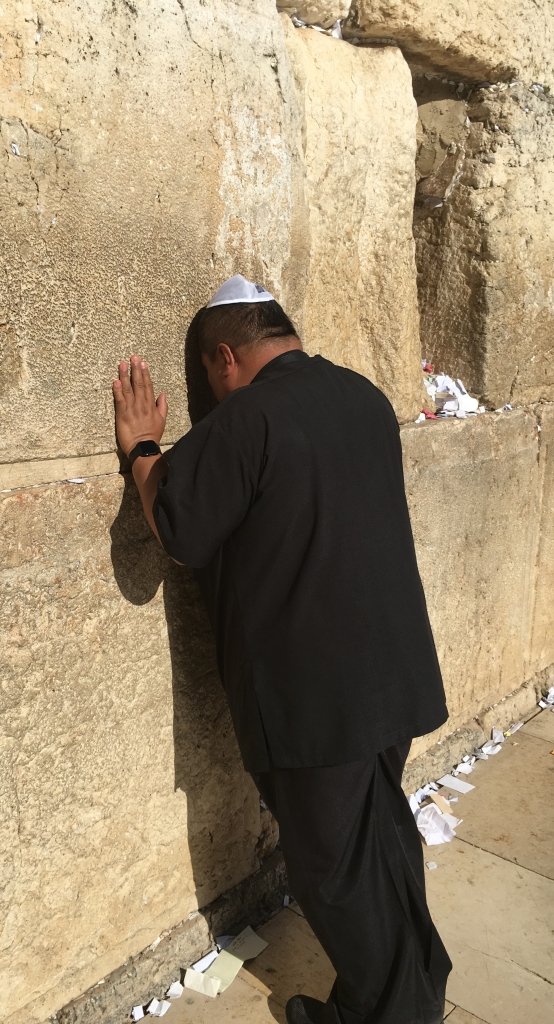
Praying at the wailing wall of Jerusalem, May 2019.

As we have been telling you, John’s gospel teems with many symbolisms and hidden meanings in the way he narrated events and scenes like when those Greeks asked Philip and Andrew to see Jesus.

If they simply wanted to catch a glimpse of Jesus, they could have easily satisfied themselves because Jesus never hid at that time. He had just entered Jerusalem, so warmly welcomed by the people, even by those Greeks perhaps. Most likely, they must have heard many things about Jesus that they wanted to go farther in requesting to see him. Hence, it was more than a request to have an audience with Jesus but something about their faith in him as they were pagans converted to Judaism.

We have to remember here that John used the verb “to see” to also mean “to believe” in his gospel account like when he narrated on Easter morning how Peter and the “other disciple” ran to the empty tomb “and he saw and believed” (Jn.20:8).

Keeping that detail on Easter morning at the empty tomb, we now understand why John never told us if Jesus met at all the Greeks requesting to see him because to see and believe Jesus is to accept and embrace wholly his Passion and Death on the Cross. This is why John jumped into Christ’s monologue upon being told by Philip and Andrew on the Greeks’ request.

Photo by author, 2018.

What a beauty we have here because we are those Greek converts too, constantly searching, seeking to go farther in our faith in Jesus despite our sins. As we get older and mature, we realize how our days are numbered, that we will definitely die someday and meet God.

Lately I have been thinking why do we really have to be happy on our birthday – much less why greet celebrators a happy birthday when in fact every birthday is a step closer to death, is it not? I am not being morbid but it is the truest matter of fact in life. Life is a lifelong process of preparation for death. What comes next when we age? Death.

However, our faith in Jesus tells us it is not simply death as an end but a blessed death that leads to fullness in life, literally and figuratively speaking.

That is where the beauty of Christ’s parable of the grain of wheat lies, “Amen, amen, I say to you, unless a grain of wheat falls to the ground and dies, it remains just a grain of wheat; but if it dies, it produces much fruit.”

We do not simply die in the end or even in the in-betweens of life through those failures and losses, defeats and wrong moves. We get better in life as we forge on.

It is the undeniable truth written in our hearts as God told Jeremiah in the first reading, that we are God’s, we solely belong to him no matter how hard we try to flee from him and disobey him in our sins, he would always find us even if we get lost. St. Augustine said it so well, “You have made us for yourself, O Lord, and our heart is restless until it rests in you.”

There is always that inner longing for God our Creator and End. That is why God sent us Jesus his Son as the author of the Letter to the Hebrews explained in the second reading so that through all our darkness and confusions, sufferings and trials, especially in those daily deaths that weaken us in our desire to search and follow him we may still find to have the strength and courage to forge on in wanting to see him by being with him where he is always – at the Cross.

Photo by author, 2018.

This is the grace of this fifth Sunday in Lent: we believe so we may see, we die in order to live. Both believing and dying in order to see and to live are grace from God freely given to us even if we are not worthy at all.

The world tells us always that to see is to believe but Christ tells us that first we must believe so that we would see; it is the same thing with living – die to one’s self in order to live fully because “whoever loves his life loses it.”

When we read or watch the news, many times we feel so exasperated and hopeless with the world. Imagine a resort right in a natural wonder there in the Chocolate Hills of Bohol? Or, land developers covering swamps without any considerations for others and the environment? Or, the mess and wastage happening in our offices, schools and homes? Do not forget us your priests living far from witnessing Christ in charity and service?

It’s a crazy world! And in all these abuses, the more we have become empty and lost that is why in the process, more and more of us never stop to believe and see, to hope and pray like those Greek converts seeking Jesus, for only in him we find rest and peace. Let us pray:

Lord Jesus Christ,
many times I really do not know
where I am going;
I cannot see
the road ahead of me
while many times
I wonder if I am really
following you and doing your will;
but at least, Jesus,
I am sure it is still you
whom I wish to see,
it is you I always desire
even if many times
it does not show
because this time
I am sure
you alone
is my God,
my life,
my fulfillment.
Therefore, like the psalmist,
"Create a clean heart for me,
O God, and a steadfast spirit
renew within me.
Cast me not out
from your presence,
and your Holy Spirit
take not from me"
(Psalm 51:12-13).
Amen.

Have a blessed week ahead, everyone!

From Google.com.