The Lord Is My Chef Sunday Music by Fr. Nick F. Lalog II, 12 September 2021
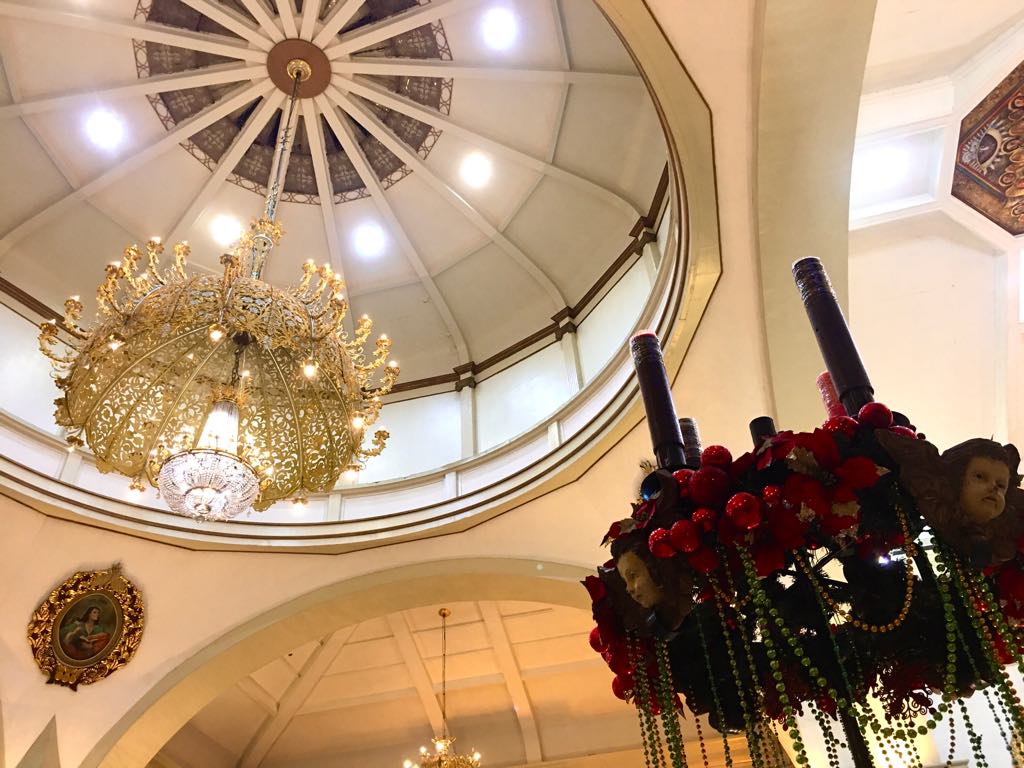
Photo by author, 2019.
It is very “bed weather” this Sunday in Metro Manila with the rains hopefully putting a stop to us all from going out unnecessarily to help lower the cases of COVID-19 that have set a new record in the country yesterday with over 26,000 infections.
Reflecting on the gospel this Sunday, right away we have thought of going instrumental with David Benoit’s 1982 title track for his album with the same title Stages from which came too his more popular songs Take A Look Inside My Heart and Promise Me A Carousel.
Benoit is an American jazz pianist, composer, and producer who has charted over 25 albums since 1980 and nominated for three Grammy Awards. A frequent visitor to Manila for concerts since the 1980’s, Benoit is best remembered as performer and music director of later adaptations of the Peanuts comic strip like The Peanuts Movie (2015).
Born in 1953, Benoit studied piano at age 13 and had himself immersed with great musicians and artists of his home state of California, particularly at Los Angeles where he is now based.
His music sounds sophisticated, very appealing as it incorporates classical beat into modern tunes that soothe the soul, giving you the right chill to meditate and free your mind and soul of negativities and many other things needed to be discarded so that you may be empty and be ready to be filled with fresher and better thoughts and ideas.
This we find perfect for us to answer Jesus Christ’s question to his disciples at Caesarea Philippi, “But who do you say that I am?” (Mk.8:29).
We can never grow deep in our knowledge of Jesus and faith in him unless we are able to say with personal conviction and commitment who he is. It is a lifelong process we go through “stages” (hence, Benoit’s music) that Jesus himself assured would be difficult and painful but fulfilling (https://lordmychef.com/2021/09/11/knowing-jesus-with-conviction/).
Stay home, stay safe, and let David Benoit’s music help you in your reflections.
Have a blessed week ahead!
*We have no intentions of infringing into the copyrights of this music and its uploader except to share its beauty and listening pleasure.
The Lord Is My Chef Sunday Recipe for the Soul by Fr. Nicanor F. Lalog II
Sunday XXIV-B in Ordinary Time, 12 September 2021
Isaiah 50:5-9 ><]]]]'> James 2:14-18 ><]]]]'> Mark 8:27-35
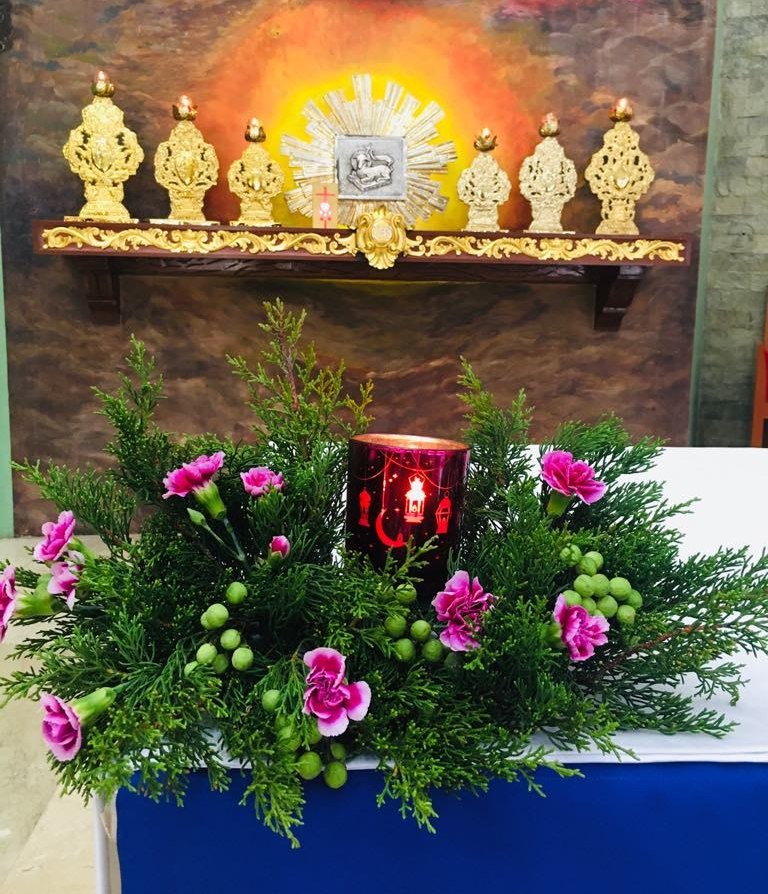
Photo by author, Parish of St. Joseph, Baras, Rizal (January 2021).
Last Wednesday as we celebrated the Birth of the Blessed Virgin Mary, a friend told me how on the eve of that feast her eldest son Andrei expressed to her his wish to gift Mama Mary with a cake but did not know how to get to heaven. “Bibili ko sana siya ng cake, mommy, pero paano ako mapupunta sa langit?”
My friend simply told her son how difficult it is to get into heaven because he has to get so many ladders to get there and see Mama Mary and Jesus.
What a beautiful question from a child filled with innocence, “how do we get into heaven?”
Ironically, it is a question we all know the answer but do not care nor take seriously for many reasons, primarily because of fear until this pandemic hit us, forcing us into facing again this reality of death – of going into heaven.
In today’s gospel, Jesus teaches us how we can get into heaven by knowing him truly with conviction, not just according to our own or somebody else’s thinking and ideas of him as the Christ.
Jesus and his disciples set out for the villages of Caesarea Philippi. Along the way he asked his disciples, “Who do people say that I am?” They said in reply, “John the Baptist, others Elijah, still others one of the prophets.” And he asked them, “But who do you say that I am?” Peter said to him in reply, “You are the Christ.” Then he warned them not to tell anyone about him. He began to teach them that the Son of Man must suffer greatly and be rejected by the elders, the chief priests, and the scribes, and be killed, and rise after three days.
Mark 8:27-31
Other’s opinion vs. my conviction
When we look at the gospel of Mark as a whole, we find it is a step-by-step revelation of who is Jesus Christ, following certain stages in his stories. Notice since the beginning Mark has been telling us how the people including the Twelve were asking among themselves who was Jesus for he spoke with authority that even the sea and the wind obeyed him while demons cried when exorcised by him. People were so amazed at his great powers, both in words and in deeds that everybody was getting near him to know him.
Photo by author, St. Catherine Monastery at Sinai, Egypt (May 2019)
It is at Caesarea Philippi where Mark’s gospel reaches the middle section, a turning point when Jesus reveals himself in stages.
From here on, Mark will take a faster pace in his narration and revelation of who is Jesus now making a U-turn from Caesarea Philippi to head towards Jerusalem to face his death. We too are expected to make a U-turn in our knowledge of Jesus, from mere opinions of others to a personal conviction of who Jesus is.
Observe the step-by-step manner by Jesus in revealing himself to his disciples at Caesarea Philippi.
First, Jesus surveyed the Twelve, asking them “Who do people say that I am?”.
Feel the uncertainty among them while telling Jesus what they have heard the people saying: John the Baptist? Elijah? One of the prophets?
We find a tinge of being unsure even in themselves in what to tell the Lord because they have also heard the questions and accusations by the scribes and Pharisees against their young teacher. “Kabado sila” as we say in Filipino.
But to their surprise, Jesus came up with a second question directly to each one of them at point blank, requiring a deep, personal conviction and commitment: “But who do you say that I am?”.
Like at Capernaum after the bread of life discourse when everybody left Jesus led by his disciples, here he is asking the Twelve -including us – again for a faith decision, to say what we really feel and think about him, without repeating what we have heard from others or read from any book.
Peter said to him in reply, “You are the Christ.” See in this statement by Peter the clear difference from the people’s opinions of Jesus. Feel the conviction of Peter in declaring “you are the Christ.” There must have been something he had experienced deep within that he felt Jesus so real, so new, so alive – not just any prophet from old who had come back but in fact the very one referred to by the prophets before!
Jesus is clearly distinct and different from what we have heard and read, so personal and so true. As we would usually tell others of how convinced we are of someone or something, “ah, basta!” which is akin to Archimedes’ “eureka” experience.
Like at Caesarea Philippi, our lives get on a turning point significantly once we have had that kind of experience of who Jesus Christ is. We can never grow deep in our faith in him and experience him personally without that Caesarea Philippi experience.
However, it is not everything. Even Peter would falter immediately after this turning point.
He spoke this openly. Then Peter took him aside and began to rebuke him. At this he turned around and, looking at his disciples, rebuked Peter and said, “Get behind me, Satan. You are thinking not as God does, but as human beings do.”
Mark 8:32-33
Photo by Mr. Jay Javier, Quiapo, January 2020.
Christ’s pedagogy of the Cross
It is not enough that we set aside sometimes what others say or write about Jesus; we also have to discard and forget whatever we have entertained in our minds and hearts on who Jesus could be. In telling Peter to “Get behind me, Satan. You are thinking not as God does, but as human beings do”, Jesus is telling us too that it is still a long way to go for us to truly know him.
Remember that in Jewish thought, to know someone is to have a relationship, an intimacy with the other person. Although the disciples have already taken a great step in knowing Jesus as the Christ following Peter’s confession that is so distinct from what others say, such knowledge leads us to the hardest and most difficult stage of knowing Jesus through his Cross.
It is can also be the most painful stage in truly knowing Jesus that is why he warned them not to tell anyone about him like what Peter realized that he reacted that way. Of course, we also know how Peter got to know Jesus more in the most painful way when he denied knowing the Lord thrice on the night he was arrested leading to Good Friday.
Remember, the more we get to know Jesus, the more we experience him so real in our lives, the more we follow him, the more the devil confuses us, the more the devil feeds us with so many thoughts or sends us with people like those in this Administration and politicians now campaigning with grand designs, with great intentions for Jesus and for the poor when in fact detract us from the path of the Cross.
Notice how Jesus insisted in his first prediction of his Passion, Death and Resurrection at Caesarea Philippi that “the Son of Man must suffer greatly and be rejected by the elders, the chief priests, and the scribes, and be killed, and rise after three days.” There is always that qualifier “must”in suffering and pain with Jesus for there is no shortcut nor easy way to get to heaven, to be holy, to be fulfilled in this life which is so unlike the promises of the devil acting in our selfish thoughts or among our politicians and government officials.
Jesus himself had shown us in his Passion, Death, and Resurrection the key to truly knowing him is to have a complete trust in the Father like him as the Servant referred to in the first reading from Isaiah who bore all insults and beatings but never felt disgraced because “the Lord God is my help.”
For so long in our country, many have been duped by politicians who have promised the people of a wonderful life minus sufferings by just electing them into office. All these miseries and misfortunes we are into show us clearly that hardly do we really know who is Jesus Christ as we keep on putting into office people we hardly know as demons in many disguises.
During this pandemic when we have so much time to reflect and pray, let us empty our hearts and minds, exorcise them of many evil thoughts to be penetrated by the divine thoughts found in the scriptures so we may know Jesus clearly, love him dearly, and follow him closely with our lives of faith expressed in works of charity as James exhorts us in the second reading.
It is the clearest sign that we truly know Jesus when our faith in him bears much fruits in works of charity and mercy. Amen.
Have a blessed week ahead!
Photo by author, close-up shot of the Seventh Station of the Cross at St. Ildephonsus Parish, Tanay, Rizal (January 2021). Notice one of the men wearing shades believed to be Caiaphas, the chief priest during the time of Jesus; we have to remove our shades to truly know Jesus especially when there are trials and sufferings in life. See our article, https://lordmychef.com/2021/02/04/road-trip-in-time-of-covid-19-the-company-we-keep-in-lifes-journey/
The Lord Is My Chef Sunday Music by Fr. Nick F. Lalog II, 05 September 2021
Photo by author, 2020.
The “ber” months are finally with us and despite the daily five-digit number of COVID-19 infections, so many of us seem to be so “out-of-touch” with so many who do not seem to care at all for their loved ones nor for the country like our corrupt officials. Or to God at all.
That is why we have picked Daryl Hall and John Oates’ 1984 hit Out of Touch from their album Big Bam Boom. It was the heydays of Hall and Oates who were then called the “dynamic duo” of the music world with so many hits before and after this song.
We were in college when Out of Touch came with a lot of extended and remixed versions due to its great sound that everybody loved this song.
But, behind that danceable groove and beat, Out of Touch lyrics are so in-touch with realities in life that unlike their other compositions, Hall and Oates sounded a bit philosophical here that we find it perfectly attuned with our Sunday gospel where Jesus touched the ears and tongue of a deaf to heal him of his sickness (https://lordmychef.com/2021/09/04/opening-our-ears-and-heart/).
Shake it up is all that we know Using the bodies up as we go I’m waking up to fantasy The shades all around aren’t the colors we used to see Broken ice still melts in the sun And times that are broken can often be one again We’re soul alone And soul really matters to me Take a look around
You’re out of touch I’m out of time But I’m out of my head when you’re not around
You’re out of touch I’m out of time (time) But I’m out of my head when you’re not around
Oh oh oh oh oh oh
Reaching out for something to hold Looking for a love where the climate is cold Manic moves and drowsy dreams Or living in the middle between the two extremes Smoking guns hot to the touch Would cool down if we didn’t use them so much, yeah We’re soul alone And soul really matters to me Too much
Aside from their usual poetry, Hall and Oates say something so deep using many metaphors in narrating how a wonderful romantic relationship had suddenly turned bad because the lovers had been out of touch with each other like with these lines:
I’m waking up to fantasy The shades all around aren’t the colors we used to see Broken ice still melts in the sun And times that are broken can often be one again We’re soul alone
Notice how in both stanzas they both mentioned the importance of the soul, of the heart and inner self. Or of spirituality, if you may:
Manic moves and drowsy dreams Or living in the middle between the two extremes Smoking guns hot to the touch Would cool down if we didn’t use them so much, yeah We’re soul alone
We said in our homily today that opening to God involves our whole person, our whole being. Not just our eyes and ears, but most of all our heart. And the first step for us is to take a break from our ordinary life, from our daily routines that have numbed us that we have lost our consciousness of the present moment, even of our very selves. To a certain sense, this is the grace of the pandemic – an opportunity for us all to spend more time with Jesus in prayers at home or in the church and to bond and fix those broken ties in our family. Before the pandemic, couples and children rarely have the chance to be together even at meals due to each one’s busy schedule; but, with COVID-19’s new mode of work and learning “from home”, many were thrown off balance because some have long lost their sense of being with family members.
Beginning this Sunday, let us get in touch with our true selves, with others and with God to pull through this pandemic before it gets us and tell us how out of touch we have been.
*We have no intentions of infringing on the copyrights of this music except to share its beauty and listening pleasure.
The Lord Is My Chef Sunday Recipe for the Soul by Fr. Nicanor F. Lalog II
Sunday XXIII-B in Ordinary Time, 05 September 2021
Isaiah 35:4-7 ><}}}'> James 2:1-5 ><}}}'> Mark 7:31-37
Photo by Ms. Mira MandalSibal, 08 August 2021.
Since the start of our Enhanced Community Quarantine (ECQ) last month, I have always admired the faithful people who continue to celebrate Mass with us outside our church as well as those in other places like Quiapo.
I have nothing against ECQ but I have always questioned the government decision in prioritizing churches in every lockdown when we have always been very strict in our protocols unlike malls and groceries. Most of all, it is during this time of crisis when we must give people the chance to express their faith in going to houses of worship to pray in silence and celebrate with the community while observing protocols.
It is very touching and inspiring to see people – young and old alike, healthy and sickly going to churches every Sunday, catching up with our Lord Jesus Christ even outside, rain or shine.
And that is why our gospel this Sunday is again very timely at this time we have reached the two-million mark in less than a year in the number of those infected with COVID-19 while those in government corruption are also breaking the billion peso mark in anomalous transactions! That is how evil those people are that while many are suffering in the pandemic, there those in government with gall to steal big time.
Has God forsaken us his people, especially at this time we are celebrating our 500th year of Christianization? Of course not!
Jesus Christ continues to come to us everyday not only to cleanse by washing our hearts of evil and sin as we have seen last Sunday in the gospel; today, Mark tells us how Jesus comes also to open our ears in order to hear and listen to his words that eventually open our hearts to freedom and salvation.
Again Jesus left the district of Tyre and went by way of Sidon to the Sea of Galilee, into the district of the Decapolis. And people brought to him a deaf man who had a speech impediment and begged him to lay his hand on him. He took him off by himself away from the crowd. He put his finger into the man’s ears, and spitting, touched his tongue; then he looked up to heaven and groaned, and said to him, “Ephphatha!” that is, “Be opened!”
Mark 7:31-34
“Jesus went by way of Sidon to the Sea of Galilee, into Decapolis“
Of the four evangelists, Mark is the only one who portrays Jesus as always on the go without even telling us details of his itinerary nor of the places he visited and people he had met. As the first gospel account written, Mark wrote in straight news style as he felt the urgency of proclaiming the gospel of Jesus.
However, when Mark gives even the slightest details of the places and people in the journeys of the Lord, it always means something else. Like in our gospel today.
Photo by author, Sea (Lake) of Galilee, 2017.
Again Jesus left the district of Tyre and went by way of Sidon to the Sea of Galilee, into the district of the Decapolis.
Mark 7:31
You will recall that in July when Jesus sent his disciples to their first missionary journey, they were told to seek the “lost sheep of Israel”, to not go to pagan and Samaritan lands.
Today, it is the Lord himself who left Tyre and Sidon in northern Israel to go into the pagan territories of Decapolis that literally means “ten cities”.
Here we find the universality of Christ’s mission, not just for his fellow Jews. His love is so encompassing covering all the peoples of all time, then and now.
Jesus seeks us out who are in totally alien territory in life like this pandemic because he loves us.
When we look back and reflect in our lives, we find so many instances in the past how it was in the most foreign and lost situations when we have actually found God, is it not?
Reflecting further in this scene in the Decapolis, Mark is reminding us how we could also be those people who have brought the deaf-mute to Jesus, begging him to heal the man.
And people brought to him a deaf man who had a speech impediment and begged him to lay his hand on him.
Mark 7:32
Those people who have begged Jesus to heal the deaf-mute are the same people who went out of their ways since the start of the pandemic helping others in their many needs and sufferings, those people who sacrificed time, talent and treasures for the less fortunate like the community pantry.
They were also those elder brothers and sisters who have helped their younger siblings to learn and thrive in the new mode of learning online that began last year.
Those people who begged Jesus to heal the deaf-mute were also the same medical health frontliners who have died or still continue to serve us despite our callous government officials led by the health secretary.
Though there were so many abusive people last year -mostly civil servants and police officials who have notoriously made headlines – there were still more generous and kind people who made Jesus present to someone in need during this pandemic.
How wonderful it is to realize – and relish this Sunday as we find ourselves in this unusual and surreal situation of the COVID-19 pandemic that Christ is also with us, staying with us, speaking to us.
But, are we listening to him? Are we not also the same deaf-mute who needs Christ’s healing?
Photo by author, Caeasaria in northern Israel, 2017.
“Ephphata” – Be opened!
Notice another significant detail that Mark has mentioned in this gospel scene. Aside from identifying the Lord’s coming to the pagan territory of Decapolis, Mark surprisingly tells us in details the unique and unusual manner of healing by Jesus there.
There must be something very important in this unique healing by Jesus whereas before, he would just lay his hands on the sick or most usually, he would merely speak. Remember that we could also be this deaf needing Christ’s healing.
He took him off by himself away from the crowd. He put his finger into the man’s ears, and spitting, touched his tongue; then he looked up to heaven and groaned, and said to him, “Ephphatha!” that is, “Be opened!” And immediately the man’s ears were opened, his speech impediment was removed, and he spoke plainly.
Mark 7:33-35
Opening to God involves our whole person, our whole being. Not just our eyes and ears, but most of all our heart. And the first step for us is to take a break from our ordinary life, from our daily routines that have numbed us that we have lost our consciousness of the present moment, even of our very selves.
This is why Jesus “took him off by himself from the crowd.”
Photo by Ms. Mira MandalSibal, 08 August 2021.
To a certain sense, this is the grace of the pandemic – an opportunity for us all to spend more time with Jesus in prayers at home or in the church and to bond and fix those broken ties in our family. Before the pandemic, couples and children rarely have the chance to be together even at meals due to each one’s busy schedule; but, with COVID-19’s new mode of work and learning “from home”, many were thrown off balance because some have long lost their sense of being with family members.
Prayer in fact is an awareness of our presence that leads us to God’s presence. Unless we learn to separate from others and the usual ordinariness of our lives characterized by madness and toxicity in everything, we can never experience the presence of God in Jesus Christ in us and among us as well as in the sacraments and prayers.
That putting of Jesus of his finger into the man’s ears and touching his tongue with a spit indicate the personal encounter of the Lord with each of us, of how he would reach out to us daily to feel and experience his presence but we are always “out-of-touch”.
It is said that our heart is the shape of two ears put together.
I believe so. Opening to God is opening our ears to Jesus speaking to us daily. He has been trying so hard to converse with us but we hardly notice him around us because of those ubiquitous ear pods and headphones always stuck into our ears. We shut ourselves from the world to be into our own world, separated from everyone including God. We would rather listen to influencers and personal playlists that confirm things we believe as true, no more room for others especially the poor and marginalized as James noted in his Letter we have heard proclaimed in the second reading.
Beginning this Sunday, let us set ourselves apart from the rest to open ourselves to Jesus to see his light and hear his words so we can walk his path of joy and peace because he is “the Way” (Jn.16:6).
Let our hearts be strong, not to fear this crisis because God has fulfilled his promise prophesied by Isaiah in the first reading on Christ’s coming with “vindication and divine recompense to save us” (Is.35:4).
It is the last Sunday of August, the month we celebrate our National Language as we offer an Original Pilipino Music (OPM) that perfectly fits our gospel today about sincerity of our heart against all forms of hypocrisy, Yano’s“Banal na Aso, Santong Kabayo” (Holy Dog, Saintly Horse).
Released in 1994, Banal na Aso, Santong Kabayo is a cut from the band’s first album simply titled “Yano”. The band is composed of Dong Abay on vocals and Eric Gancio in guitar.
Many think Yano is from the word “Probinsiyano” or one coming from the province (probinsiya) or rural area; but, according to the band’s founder Abay in one account, yano means “simple” in their old Tagalog spoken in Quezon province.
Yano’s music is a fusion of western and ethnic Filipino but what set them apart from the other bands of the 90’s was their deep social and political themes. Unlike some bands who were just cute, Yano had depth and meaning in their songs that were poetic and even eclectic expressed in casual Filipino. One can notice right away the conviction when Abay sings even if the melody may sound light and easy like Kumusta Na, even playful (Esem)or sometimes mischievous (Tsinelas and Senti).
Banal na Aso, Santong Kabayo is “spiritual” in a sense; it opens with a man laughing sarcastically with “Hihihihihi…” to introduce some vignettes of daily hypocrisies among us:
Kaharap ko sa jeep ang isang ale
Nagrorosaryo, mata n'ya'y nakapikit
Pumara sa may kumbento
"Sa babaan lang po", sabi ng tsuper, "kase may nanghuhuli"
Mura pa rin nang mura ang ale
Banal na aso, santong kabayo
Natatawa ako, hi-hi-hi-hi
Banal na aso, santong kabayo
Natatawa ako, hi-hi-hi-hi
Sa 'yo
Like today’s gospel, Banal na Aso, Santong Kabayo is timely during this pandemic when even if we have all the soaps and alcohol to wash our hands and all the prayers to recite to stop COVID-19, the virus will persist for as long as we have no regard for the dignity of every person. Washing of hands means washing of one’s heart, of cleansing ourselves of our sins and self-centeredness and other impurities (https://lordmychef.com/2021/08/28/two-hands-and-a-heart-in-between/).
May the music of Yano help you in examining your heart today.
Have blessed week ahead!
*We have no intentions of infringing on the copyrights of this music except to share its beauty and listening pleasure.
The Lord Is My Chef Sunday Recipe for the Soul by Fr. Nicanor F. Lalog II
Sunday XXII-B in Ordinary Time, 29 August 2021
Deuteronomy 4:1-2, 6-8 >+< James 1:17-18, 21-22, 27 >+< Mark 7:1-8, 14-15, 21-23
Photo by the author, the Holy Land, 2017.
After an interruption of five weeks, we go back to Mark’s Gospel this Sunday that shall guide us until the end of our liturgical calendar with the Solemnity of Christ the King in November. See the beauty of the Sacred Scriptures that those five weeks from John chapter six did not break the flow of narration that is so seamless!
Returning to Mark’s account today after the feeding of five thousand and the bread of life discourse at Capernaum from John, Jesus crossed the lake and proceeded with the Twelve to Gennesaret where he preached and healed until some of his enemies arrived and found an issue to raise against him.
When the Pharisees with some scribes who had come from Jerusalem gathered around Jesus, they observed that some of his disciples ate their meals with unclean, that is, unwashed hands. For the Pharisees and, in fact, all Jews, do not eat without carefully washing their hands, keeping the tradition of the elders. So the Pharisees and scribes questioned him, “Why do your disciples not follow the tradition of the elders but instead eat a meal with unclean hands?” He responded, “Well did Isaiah prophesy about you hypocrites… You disregard God’s commandment but cling to human tradition.”
Mark 7:1-3, 5-8
The Israelites have taken pride in their laws given by Moses from God at Mt. Sinai. Simply referred to as the Law or Torah, it had united them as God’s “chosen people”, making it the very center of their lives that they enlarged its meaning and scope that soon consisted of more than 600 other precepts and practices to observe and keep.
Obeying the laws and traditions became their standard for holiness so that instead of becoming a means to bring them closer to God and others, these became an end in itself that they have forgotten God and others in the process.
Photo by author, Sacred Heart Spirituality Center, Novaliches, QC, 2016.
Into our hearts and the heart of Jesus
Once again, our gospel is so timely and relevant to our situation right now we are in the midst of a pandemic when we are told to always wash our hands. And if Jesus were with us in person today, he would surely speak the same things about the hypocrisy we have in our washing of hands!
First of all, let us clarify that Jesus is not against the washing of hands before eating nor of any of their other traditions and laws; what he criticized was the greater importance given by his enemies with the outward signs of their laws and traditions, forgetting its inner dynamics and meaning. Thus, he never failed to clarify with the people that he had “not come to abolish the Law or the Prophets but to fulfill them” (Mt.5:17).
Here we find the same problem with the people at Capernaum and in our own time when people fail and refuse to look beyond material things to find the meaning of what is going on around us, of what we believe in and what we practice.
Then and now – right in the midst of this pandemic – Jesus is inviting us to deeper perspectives about our concepts and ways of doing and seeing things, of what is clean and not clean, of what is tradition and modern, of what is good and evil.
Jesus wants us to constantly examine our lives for our need of conversion of our hearts to him. He is inviting us to probe our hearts and see who or what dwells inside us because from the heart, everything flows outside not only to our mouth (cf. Lk.6:45, “out of the abundance of the heart the mouth speaks”) but also to our hands.
That is why I love that imagery of the heart between two arms and hands: the heart at the center of our being and consciousness that whatever comes out of the heart naturally flows to our arms and hands, even to our entire body. If there is something wrong in the heart, so with the messages it sends out.
He summoned the crowd again and said to them, “Hear me, all of you, and understand. Nothing that enters one from outside can defile that person; but the things that come out from within are what defile.” “From within people, from their hearts, come evil thoughts, unchastity, theft, murder, adultery, greed, malice, deceit, licentiousness, envy, blasphemy, arrogance, folly. All these evils from within and they defile.”
Mark 7:14-15, 21-23
Here we find the essential question we must ask ourselves always: Do I find Jesus Christ in my heart as the sole basis and foundation of what I believe which I also say and do?
If we cannot find Jesus at the center of the things we do and believe, most likely we do not find others in the picture too! In that case, most likely, it is all about me, mine, my, and I! Like the Pharisees and scribes of his time, washing of hands and other traditions were more of a show than something more essential which is to serve God through one another.
Jesus is now leading us to a sincere examination of our hearts,
of our interior and spiritual motivations,
of why we are doing the things we are doing,
of what we really believe in;
because, too often, many of the things we do and believe
are not really rooted in our hearts nor with God.
There are so many times in our lives
that we simply do things out of habit
and conventions without really understanding why.
Jesus is now leading us to a sincere examination of our hearts, of our interior and spiritual motivations, of why we are doing the things we are doing, of what we really believe in; because, too often, many of the things we do and believe are not really rooted in our hearts nor with God. There are so many times in our lives that we simply do things out of habit and conventions without really understanding why.
Simon Sinek said it so well in his bestselling book “Start with Why” – people buy products, patronize services, or are moved when they see the why you do things; they are willing to pay more not because of fad or prestige but more of the conviction in a belief espoused by a brand or company or by an individual.
Photo by Ezra Acayan/Getty Images in Paranaque City, 09 February 2020.
Washing of hands and eating, our hidden hypocrisies
One of the most frequently asked question by people to me as a priest these days is why despite all our prayers, God has seemed become deaf to our pleas for him to end this pandemic? The answer is simple: unless we see and accept the spiritual realities of this COVID-19 pandemic, it would linger with us longer than projected, even not be solved at all as it gets worst with new variants that have thrown back even some of the most vaccinated nations lately.
We can have all the soaps and alcohol to wash our hands during this pandemic but COVID-19 will persist for as long as we have no regard for the dignity of every person. See all the abuses and corruption going on that is more sickening than the virus itself!
That washing of hands is an imagery full of meanings we have lost since the time of Jesus. Inwardly, the washing of hands means washing of one’s heart, of cleansing ourselves of our sins and self-centeredness and other impurities.
So many times we have become like Pontius Pilate who washed his hands to free himself from any guilt in sentencing Christ to death without realizing the more he had implicated himself to the injustice by refusing to make a stand for what is true and just. Like us today, we keep on washing our hands in the hope that our conscience would be at peace or be not bothered with our indifference for what is true and good.
Photo by Mr. Red Santiago of his son, 2019.
Washing of hands has always been closely related with eating which is an act of “appropriating something we cannot fully have” like when Adam and Eve ate the forbidden fruit. They took something they cannot wholly take or “swallow” that is why all they could do was just take a “bite” that opened their eyes to something they could not fully realize and appreciate. There are so many realities in this life we just cannot fully grasp right away, requiring us to have more faith, more patience in trusting God and those above us.
But, like Adam and Eve, we keep on taking a bite, of eating whatever our limited minds and reason find as “good” to have. And we wash our hands in clear hypocrisies like the Pharisees and scribes in worship and prayer when we lead double lives, when we laugh and cheer at all kinds of lies and filth, when we silently approve attacks against human life like tokhang and abortion.
Every day we wash our hands and keep them clean to avoid contaminating our food and body in hypocrisy as we agree and support in the name of “modernism” these trends of same sex relationships, promiscuity, and divorce. Or of graft and corruption we have resigned to accept as a fact of daily life.
To wash our hands is to wash our hearts clean of all kinds of evil, of mediocrity and indifference, of taking a stand to “pass over” from sin into grace by witnessing God’s goodness in our lives as Moses reminded Israel in the first reading.
The hands and the heart always go together as expressed in the Jewish thought of “mercy of the heart” and “mercy of the hand” when God’s mercy is more than a feeling but an act of righteousness, of justice and love.
Let us heed the reminder of the Apostle in the second reading to be truly clean in our hands and in our hearts: “Be doers of the word and not hearers only, deluding yourselves. Religion that is pure and undefiled before God and the Father is this: to care for orphans and widows in their affliction and to keep oneself unstained by the world” (James 1:22, 27).
Stay safe everyone. Have a blessed week ahead! Amen.
The Lord Is My Chef Sunday Music by Fr. Nick F. Lalog II, 22 August
Photo by author, 2019.
A blessed Sunday everyone!
We continue with our Original Pilipino Music (OPM) this Sunday amid another surge in COVID-19 cases this week with numbers going into five-digits as we ironically downgrade into lower level in quarantine controls in the metropolis.
So as not to burden you with more worries, we have chosen something light and easy, refreshingly old from 1976 as our featured music courtesy of Mr. Bong Penera called “Samba Song” with English vocals by Ms. Norma Ramirez.
More than 20 years before the country was hooked with bossa nova in the early 2000, we have all been so delighted with many great Pinoy jazz artists in the mid-70’s to 80’s, thanks to WK-FM which is now back in the internet through the efforts of the original good guys of Brother Wayne and company.
We find Penera’s Samba Song related with this Sunday’s gospel which concludes Jesus Christ’s bread of life discourse wherein the people led by his own disciples left him to return to their old ways of life when they found his teachings so difficult to accept.
Life is like a dance, a samba of Brazil or any dance. You always need a partner to truly feel its music. We need somebody in life, someone we believe in, someone we love to join us in our dance, in our journey in life especially when things are not clear at all or when we are saddled with many problems and trials.
Kung gusto kong kumanta
At gusto ko ring sumayaw
Ako'y sumisipol saka malalaman
ako pala'y payasong walang kasayaw
Bakit tayo ganito
Mga puso nati'y mailap
Lumapit ka giliw at tayo'y magsamba
Kahit minsan man lamang.
One thing I like with OPM during the 70’s is its use of Taglish or Tagalog-English that had maintained a sense of elegance, whether the English lyrics were inserted as mere lines or as stanzas like in Penera’s Samba Song.
The first two stanzas were in Tagalog sang by Penera as an exposition of his feelings, of his longing for a partner, for his beloved to come and dance with him and live with him. Then comes the response by Ramirez expressing her same feelings in English.
And this is the time for that dance
I don't feel alone because
I know that you'll stay with me
to samba through life with me.
And there you have it! A great samba tune and meaning of life, of being together, of believing and loving like in the gospel when Simon Peter answered Jesus, “Lord, to whom shall we go? You have the words of eternal life. We have come to believe and are convinced that you are the Holy One of God” (Jn.6:68-69)
Let us try “to feel at home” in Peter’s company during this pandemic to be led to a similar faith insight and commitment in Jesus no matter how difficult it may be.
Faith is like love: we believe and love not because we are sure of ourselves but because we are sure of the one we believe and love. That is why we commit our lives to our beloved. It is not primarily because of us at the center but of the other. Like Jesus. Or a loved one.
The Lord Is My Chef Sunday Recipe for the Soul by Fr. Nicanor F. Lalog II
Sunday XXI-B in Ordinary Time, 22 August 2021
Joshua 24:1-2, 15-17, 18 ><}}}'> Ephesians 5:21-32 ><}}}'> John 6:60-69
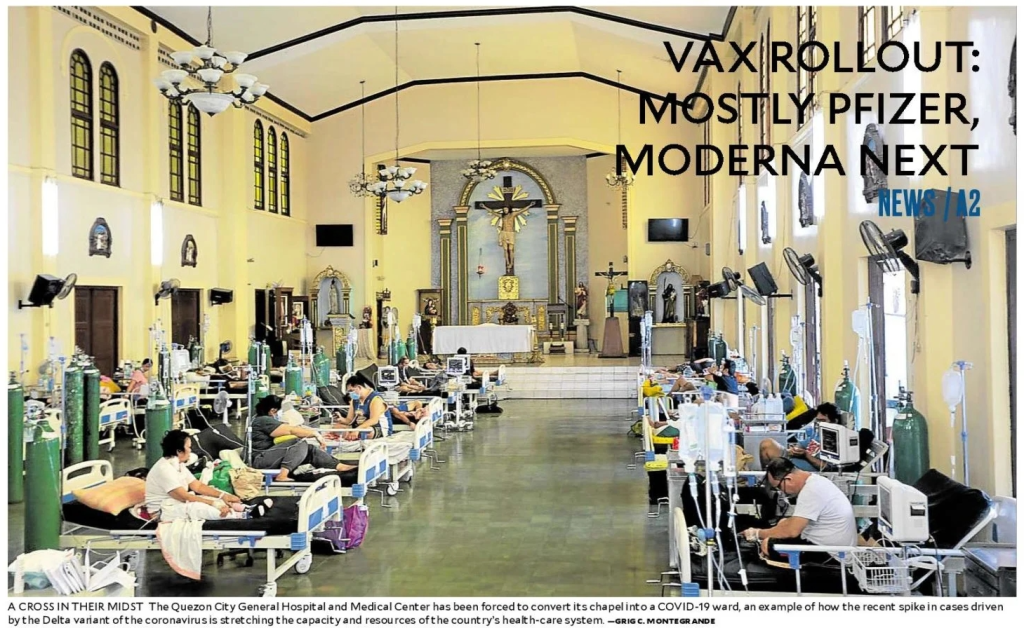
Inquirer’s Friday front page tells us in essence the message of this Sunday’s Gospel – “Lord, to whom shall we go?” in this time of crisis. Photo from inquirer.net.
We conclude our series on the Lord’s discourse on bread of life with the same question he had posed to his disciples more than 2000 years ago at Capernaum, repeatedly asking us the same question daily, especially on Sundays: “Do you also want to leave?” (Jn. 6:67).
This is the first time in John’s gospel that the people have rejected Jesus Christ whom they have always admired and followed to listen to his teachings and most of all, to be healed of their sickness. When they were fed to their satisfaction at the wilderness, they wanted to take Jesus and make him their king but he evaded them, going to Capernaum where he was found the following day. All this time, religious leaders were the only ones against Jesus, challenging his authority especially when he cleansed the temple and healed on a sabbath day.
But today, in a sudden twist, people rejected and abandoned Jesus because they could not accept him as the Bread of Life who came down from heaven who would give his flesh as food and blood as drink for eternal life. Worse, this was led by those supposed to be close to him, his disciples.
Often used as a generic term for a follower or a believer, the word “disciple” is from the Greek word discipulos that literally means “one who comes after or follows the master” (also the root of discipline). In the gospels, disciples were the common followers of Jesus, distinct from the apostles often referred to as “the Twelve”. From another Greek word apostolein meaning “one who is sent forth ahead of a master”, an apostle is one who is close to Jesus, who personally knows him and have also seen him. That is why Paul insisted his being an apostle too.
This distinction between a disciple and an apostle is found in all four gospel accounts. It is important to know this especially in our gospel today which is the first time John had introduced to us the presence of disciples among the crowd with Jesus at Capernaum. They have all been silently listening to his discourse until Jesus said, “Whoever eats my flesh and drink my blood has eternal life, and I will raise him on the last day. For my flesh is true food, and my blood is true drink. Whoever eats my flesh and drinks my blood remains in me and I in him” (Jn.6:54-56).
It was from here where our gospel this Sunday picks up the story:
Many of Jesus’ disciples who were listening said, “This saying is hard; who can accept it?” Since Jesus knew that his disciples were murmuring about this, he said to them, “Does this shock you? What if you were to see the Son of Man ascending to where he was before? As a result of this, many of his disciples returned to their former way of life and no longer accompanied him. Jesus then said to the Twelve, “Do you also want to leave?”
John 6:60-62, 66-67
Photo by Fr. Howard John Tarrayo, National Shrine of Our Lady of Fatima on the eve of the ECQ, 05 August 2021.
Aversion vs. Conversion
Here we find a painful truth we all experience when following Jesus as our Lord and Master. Sometimes it can happen that those closest to us are the ones who cannot accept and understand us like those disciples of Jesus who have left home and family to listen to his teachings after witnessing many of his healings. Then all of a sudden, they abandoned him because he had said it is his flesh he shall give as food to eat and his blood as drink for eternal life.
They were thinking in the literal sense, more preoccupied with what they knew, with what they have in their minds, without any room for Jesus nor for others. They would rather stick with what they have heard and learned from the Old Testament, of Moses and the manna from heaven.
Refusing Jesus is always a refusal
to grow and mature not only in faith
but most of all in life and in our relationships.
It is pride and self-centeredness,
a form of self worship and idolatry
when one believes more to one's self
than with God through others.
Refusing Jesus is always a refusal to grow and mature not only in faith but most of all in life and in our relationships. It is pride and self-centeredness, a form of self worship and idolatry when one believes more to one’s self than with God through others.
Jesus came to deepen our faith by experiencing himself, inviting us all to be converted back to God. But instead of conversion or turning back to God in the light of Jesus, we choose aversion, that is, turning away from God, returning to blindness and darkness like those disciples: “As a result of this, many of his disciples returned to their former way of life and no longer accompanied him” (Jn.6:66).
They cannot accept and take Jesus personally and wholly as his very words implied the Eucharist where we receive Jesus, Body and Blood under “the perceptible signs of bread and wine” as explained by Vatican II’s Sacrosantum Concilium #7.
Every Sunday when we gather as the Body of Christ in the celebration of the Holy Eucharist prefigured in the time of Moses in the wilderness until their entry into the Promised Land under Joshua’s leadership, we likewise reaffirm and renew our commitment to love and “serve the Lord, for he alone is our God” (Jos. 24:18).
Photo by Ms. Ria De Vera, March 2020.
Yes, “this saying and teaching of the Lord is hard to accept” (Jn. 6:60) especially in this time of the pandemic when many among us have lost family and friends including sources of income and savings while things are expected to worsen before getting any better at all.
Then there is also the familiarity with the Holy Mass breeding contempt among us these days when all we have are virtual Masses.
It is very sad that many of us these days have “returned to our former way of life and no longer accompanied Jesus” like those disciples at Capernaum; there are some who have stopped believing in Jesus due to the many pains and sufferings of this prolonged pandemic!
We are in a time of severe crisis not only in faith but also in every aspect of life due to the worsening COVID-19 pandemic. As we moved Saturday to lower level of quarantine controls, new records were set in new infections and deaths while ICU’s and hospitals are almost if not at full capacity already.
Lest we forget, there is the severe stress on our medical frontliners and their families too, with some literally passing out of exhaustion.
Some major decisions really have to be made not only by leaders but by everyone. That is the literal meaning of the word “crisis” which is from the Greek krisis that means time for decision-making to prevent (more) disasters from happening.
Disasters are due to poor or wrongful decisions.
One of that is removing God from every equation in life, including in our political and social life, giving rise to a culture of impunity where corruption has become a way of life.
Despite our being a Christian nation, we have chosen to remain in our morally bankrupt style of politics based on popularity, compadrazgo system, and vote selling. No wonder that even while we are in a pandemic with thousands getting sick or dying and millions are suffering, public officials continue to plunder our nation’s coffers blatantly while candidates shamelessly campaign early with their giant tarpaulins and television ads to ensure they all remain in power.
To whom shall we go? With the corrupt officials and trapos who do not care at all for us?
The good news today is that even if we have abandoned Jesus many times in our lives and in our nation’s history, he remains with us, still asking us like the Twelve, “Do you also want to leave?” (Jn.6:67).
Let us tell Jesus like Peter, “Master, to whom shall we go? You have the words of eternal life. We have come to believe and are convinced that you are the Holy One of God” (Jn.6:68-69)?
Remaining in Jesus like Peter
Last Friday, the Inquirer eloquently showed on its front page the sad plight of our nation with a banner story on corruption at the DOH following the recent reports by Commission on Audit as well the arrogant display of powers-that-be in Cebu.
Then, a breath of fresh hopes with this photo by Grig C. Montegrande on how the QC General Hospital had converted its chapel into a COVID-19 ward to accommodate the growing number of patients. The photo summarizes our Sunday readings, that we are in a critical moment not only in our history but also in our lives, calling us to conversion or turning to God instead of aversion which is turning away from God.
From inquirer.net.
Remember the “I AM” declaration by Jesus first used in this bread of life discourse two weeks ago when he said “I am the bread that came down from heaven” (Jn.6:41)?
That must have lingered in Peter. His faith did not deepen right away but it had surely grown and matured while listening to Christ’s discourse on the bread of life which became clearer to him after Easter.
Let us try “to feel at home” in Peter’s company during this pandemic to be led to a similar faith insight and commitment in Jesus no matter how difficult it may be.
Faith is like love: we believe and love not because we are sure of ourselves but because we are sure of the one we believe and love. That is why we commit our lives to our beloved. It is not primarily because of us at the center but of the other. Like Jesus. Or a loved one.
This is Paul’s reminder to us in the second reading of having Jesus as the basis of our relationships: Brothers and sisters: Be subordinate to one another out of reverence for Christ (Eph. 5:21).
It is not a call to dominance over one another but mutual-subordination in Christ by imitating his self-sacrificing love for everyone in the giving of his total self, Body and Blood. This we can do these days by observing health protocols like social distancing, wearing masks, and washing hands frequently. Best is to stay home as much as possible by giving ourselves more to our family and loved ones. Amen.
The Lord Is My Chef Sunday Music by Fr. Nick F. Lalog II, 15 August 2021
Photo by Mr. Vigie Ongleo, 05 August 2021, Singapore.
We continue this Sunday our Original Pilipino Music (OPM) featuring the genius and warmth of the late Bodjie Dasig in his playful yet meaningful early hit from the 1980’s called “Ale, Nasa Langit Na Ba Ako?” (Ma’am, Am I In Heaven?).
We find it perfectly matched with our celebration today of the Solemnity of the Assumption of the Blessed Virgin Mary that teaches us at the close of her life here on earth, Mary was taken body and soul to the glory of heaven (https://lordmychef.com/2021/08/14/mary-mirror-of-gods-greatness/). The same glory awaits us all in the end of time if we try to imitate the Blessed Virgin Mary in her faith, charity and unity with Christ Jesus her Son.
It is a very timely celebration giving us hope and inspiration in persevering in faith and charity as we enter our second week of lockdown with COVID-19 infections reaching record levels since the start of this pandemic last year.
And that is why we find Ale, Nasa Langit Na Ba Ako? so perfect on this cloudy and gloomy Sunday to uplift our sagging spirits, reminding us how after all the pains and darkness of life, there awaits us the glory of heaven which starts here on earth.
We were in college in the early 80’s when this song was first played on the airwaves in some select radio stations only.
Written by the late Bodjie Dasig (+2018) who also wrote the popular Sana Dalawa ang Puso Ko (I Wish I Have Two Hearts), Ale narrates the experience of a man who saw a pretty woman while driving in Cubao, causing him to get into an accident that he ended in a hospital. Upon waking up, he saw his nurse so lovely that he thought he was already in heaven!
When he was discharged from the hospital, he asked the nurse to marry him but unfortunately, she turned out to be happily married. The man was so dismayed that he did not notice the flight of stairs and fell, banging his head on the floor that he ended up being confined in the hospital again.
When he woke up in his new hospital room, he saw another lovely nurse but this time before asking if he was in heaven, he first asked if the nurse is married.
We do not know whatever happened to the man in the song but Ale tells us the common notion how a beautiful woman can always signify heaven and bliss in life. Of course, such beauty refers to more than the physical features of a woman for true beauty lies deep within the heart, mind and soul of anyone.
In her life of faith, charity, and communion in her Son Jesus Christ, the Blessed Virgin Mary is undoubtedly a woman of great beauty mirroring the greatness and goodness of God that she became the first to be assumed into heaven body and soul among humankind.
May we continue to persevere in life’s challenges to share God’s loving presence in this world filled with pains and sufferings, trials and difficulties.
We hope this song brings you some smiles and good vibes!
*We have no intentions of infringing on the copyrights of this song except to share its beauty and joy with others.
The Lord Is My Chef Sunday Recipe for the Soul by Fr. Nicanor F. Lalog II
Solemnity of the Assumption of the Blessed Virgin Mary, 15 August 2021
Revelation 11:19-12:1-6,10 ><}}}*> 1 Corinthians 15:20-27 ><}}}*> Luke 1:39-56
Photo by author, December 2020.
We take a break this Sunday from our readings in the bread of life discourse in John’s gospel to celebrate on this date the Solemnity of the Assumption of the Blessed Virgin Mary following Pope Pius XII’s dogma in 1950 that at the close of her earthly life, Mary was taken up body and soul into the glory of heaven.
Without telling the manner or the circumstances of time and place of the Assumption, its dogma forms part of the deposit of our faith received from the Apostles as attested by its long line of traditions since the Pentecost. It is so important that its celebration supersedes the liturgy of any Sunday because it invites us all to see in Mary raised to heaven the image of the Church and of all the faithful on our way to eternal glory with God.
It is a very timely celebration while we are in the midst of another lockdown due to a surge in COVID-19 cases, giving us hope and inspiration to persevere in all these difficulties and trials to become better disciples of Jesus like his beloved Mother.
Photo by author at the Assumption Sabbath, Baguio City, 2019.
Mary, a type of the Church
Our first reading today presents us with two images of a woman that seem to contradict each other with scenes that anti-climactic, flowing in the reverse mode. It could have been better as in most cases that the first scene depicting the woman in all glory should have been last instead of the woman in childbirth pains and dangers that comes in second. Is it not the sorrowful always comes first leading to glory?
A great sign appeared in the sky, a woman clothed with the sun, with the moon under her feet, and on her head a crown of twelve stars. She was with child and wailed aloud in pain as she labored to give birth. Then another sign appeared in the sky; it was a huge red dragon, with seven heads and ten horns, and on its heads were seven diadems.
Revelation 12:1-3
It is easy to see the Blessed Virgin Mary in that woman depicted in John’s vision especially if we continue reading on to find the title and authority attributed to her child as our Savior Jesus Christ. But modern biblical studies go deeper than that simplistic view: the scenes speak more of the birth of Christ among us his disciples. It is “painful” because it takes place amid many evil and sins like persecutions and temptations symbolized by the red dragon; but, amid all these, Jesus remains among us, leading us, protecting us, and blessing us. Hence, the woman in this passage becomes a symbol of the Church in the glory of God following Christ’s Resurrection while at the same time in the midst of many earthly battles.
Of course, no other woman can best fit that image than Mary who gave birth to Jesus, who has always been in the most intimate relationship with her son as disciple among all humankind. And because of her role in relationship to her Son, to us his disciples also his Body as community, Mary is the image or type of the Church still giving painful birth to believers like in this time of the pandemic while we are already assured of glory in heaven as children of God. Vatican II perfectly expressed it in declaring:
“By reason of the gift and role of divine maternity, by which she is united with her Son, the Redeemer, and with His singular graces and functions, the Blessed Virgin is also intimately united with the Church. As St. Ambrose taught, the Mother of God is a type of the Church in the order of faith, charity and perfect union with Christ.”
Lumen Gentium #63
With that, Mary has also become the mirror of God’s greatness in all time, the very reason we venerate her as first among the saints and angels because it is also the same call of holiness to us all as children of the Father and disciples of Christ. It is in this framework that we celebrate her Assumption, especially when we profess every Sunday: “I believe in the Holy Spirit, the holy Catholic Church, the communion of saints, the forgiveness of sins, the resurrection of body and life everlasting. Amen.”
Photo by author, Nazareth, 2019.
Greatness of God, lowliness of Mary
As we have mentioned at the start, the dogma of the Assumption of Mary does not go into details how it took place. What matters most is the fact of the Assumption of Mary, body and soul. Like with her Immaculate Conception, there are no direct nor explicit biblical references to her Assumption; however, from the collective meditations and contemplations in the Church, we find vast and rich sources in reflecting the beauty and wonder of the Blessed Mother’s unique place in our salvation history.
For the Mass of the day of the Solemnity, we contemplate on Mary’s canticle called Magnificat which she sang after being praised by her cousin Elizabeth during the Visitation.
And Mary said:
"My soul proclaims
the greatness of the Lord;
my spirit rejoices in God my savior.
For he has looked upon his lowly servant.
From this day all generation will call me
blessed: the Almighty has done
great things for me, and holy is his Name."
(Luke 1:46-49)
It was the first proclamation of the gospel of salvation in Jesus Christ whom Mary first received and shared first with her cousin Elizabeth in a town in Judah. See how in the Visitation Elizabeth praised and admired Mary, becoming the first to call her “blessed among women” because “she believed the word spoken to her by the Lord would be fulfilled” (Lk.1:45). Instead of giving back her praise and admiration to Elizabeth who was pregnant with John the Baptist at that time despite her old age and being barren, Mary sang praises to God like the other great women in the Old Testament after experiencing God’s extraordinary acts in their personal lives and in Israel’s history.
Though we may never have the same personal experiences of the Blessed Virgin Mary, as members of the Church she represents, we can always look through her Magnificat the extent we have also become the mirror of the greatness of God especially at this time when everybody seems to doubt his loving presence in this time of the pandemic.
It is the reason why we also sing the Magnificat
during our evening prayers in the Church because
before we can ever praise God for his kindness and majesty,
we must first allow him to work in us by being lowly before him like Mary.
See how the Magnificat sings of the depths of Mary’s soul and her faith, of her perfect obedience to the word of God and the mission entrusted to her. Very clear in its lyrical expression, the focus and center is God, not Mary. It is the reason why we also sing the Magnificat during our evening prayers in the Church because before we can ever praise God for his kindness and majesty, we must first allow him to work in us by being lowly before him like Mary.
Have we truly been God’s lowly servant like Mary, allowing God to work his great wonders through us?
Three things I wish to share with you on Mary’s lowliness that enabled God to work his wonders through her:
First is her openness to the word of God like in the Annunciation of the birth of Jesus. Mary had a prayer life, a discipline of making time with God, setting her self aside for the Lord. Prayer is always the start of every relationship with God. That is when we truly become humble to lose control of ourselves, to forget our selves and let God in the Holy Spirit dwell into us. Even in the darkest moments of our lives, there will always be that glimmer of hope because the Holy Spirit enlightens us in our paths.
Second is Mary’s saying “YES” to God. She does not merely listen to God; she says “be it done unto me according to your word.” From the very start, Mary never doubted God in his wisdom and plans that she always said yes. One most beautiful expression by the evangelists of Mary saying yes to God is whenever Mary would “treasure in her heart” words of Jesus and of others.
But Mary’s greatest yes happened at the Cross, in her sharing in the Paschal Mystery of her Son Jesus Christ, being the only other disciple who remained with the Lord until his death. No wonder, it was to her based on tradition that the Risen Lord first appeared on Easter.
Third is Mary’s fidelity to God, her yes was not just a one-shot deal but an everyday yes to Jesus even after he had ascended into heaven. The Acts of the Apostles tells us explicitly how Mary was among the disciples present inside the upper room at Jerusalem when the Holy Spirit came on the day of Pentecost. Throughout the ages in her numerous apparitions, Mary said yes to God delivering Jesus Christ’s call for us to penance and conversion, to prayers and the Holy Eucharist especially at Fatima in Portugal.
“The Assumption of the Virgin” by Italian Renaissance painter Titian completed in 1518 for the main altar of Frari church in Venice. Photo from wikidata.org.
Mary went through many hardships and difficulties in her life and in the history of Israel, coming from an obscure town that was a butt of jokes of their time like when Nathanael asked Philip who claimed to have found Jesus Christ, “Can there any good thing come out of Nazareth? (Jn.1:45)”.
In this time of the pandemic, the vision of John in the first reading becomes more real when people refuse to recognize the spiritual dimension of COVID-19, of the need to be converted and to again nurture that relationship with God following decades of affluence and materialism. Like Mary, let us be humble to accept we are not the masters of this world nor of our own life but God almighty.
We are called to persevere with Mary, to be strong in our faith and charity that God will never forsake us so we can be present among the poor and marginalized including those spirits weakened by the prolonged quarantines.
With Mary, let us believe the words of St. Paul how all will come to life again – body and soul like Mary – in the final end of time that begins right now, right here in the midst of all these trials and sufferings. Amen.