Advent is allowing God to overshadow us like Mary

Lord My Chef Simbang Gabi Recipe for the Soul by Fr. Nicanor F. Lalog II
Saturday, Simbang Gabi-V, 20 December 2025
Isaiah 7:10-14 <*((((>< + ><))))*> Luke 1:26-38

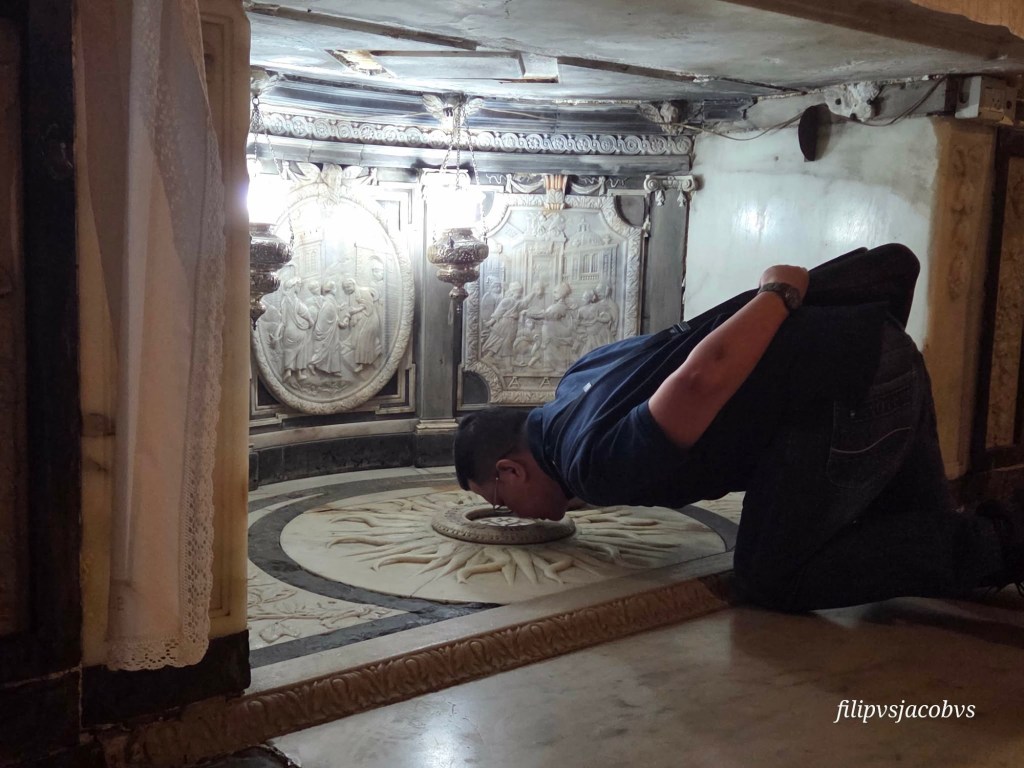
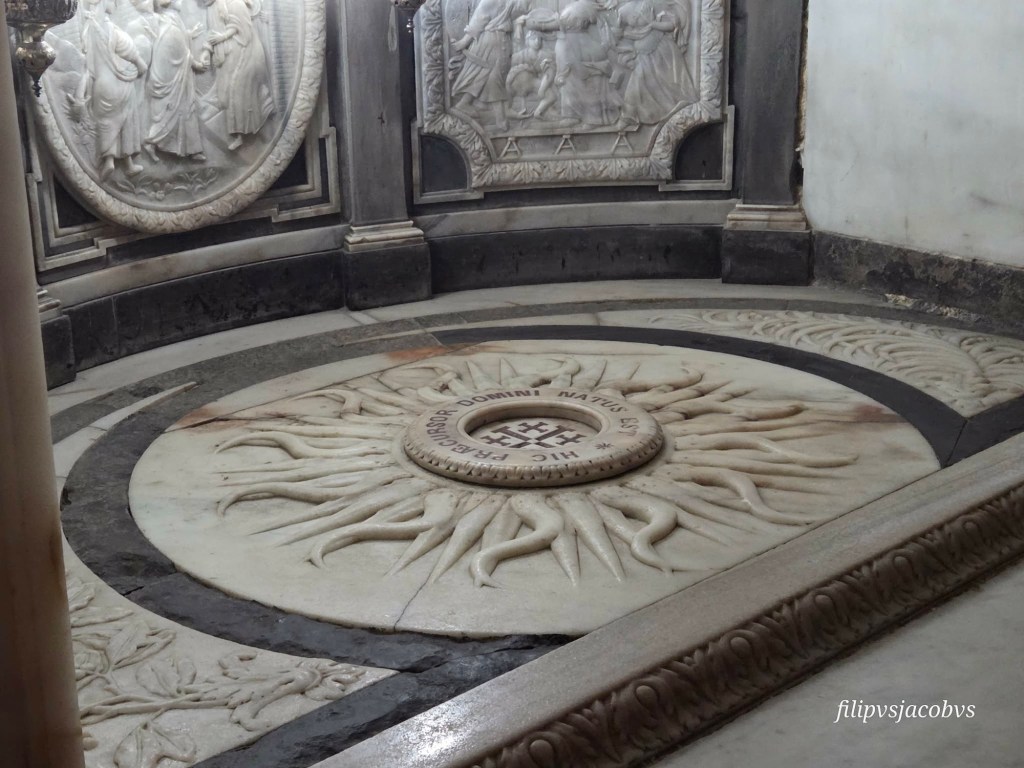
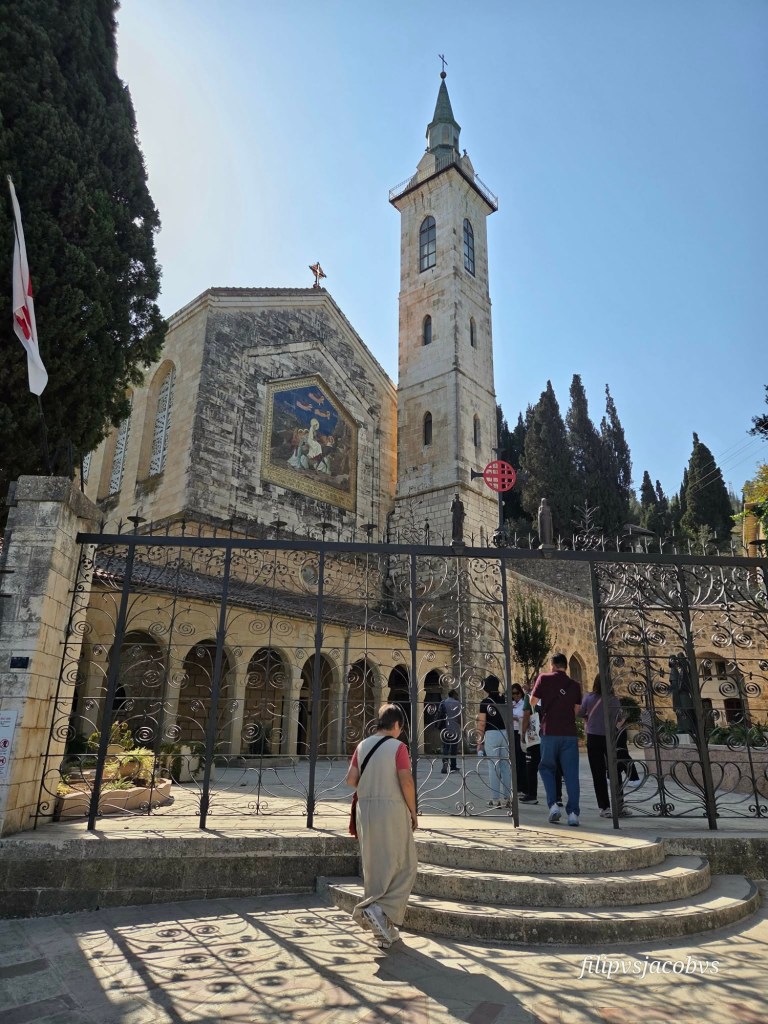
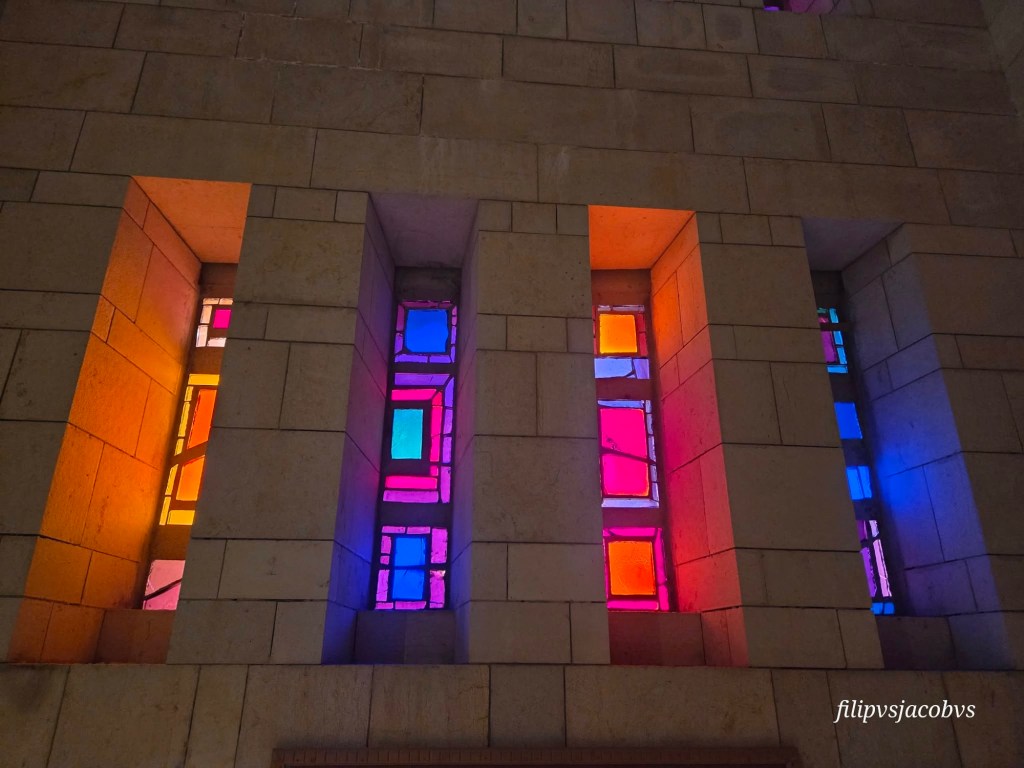
Basilica of the Annunciation in Nazareth, Israel; photo by Ar. Philip Santiago, October 2025.

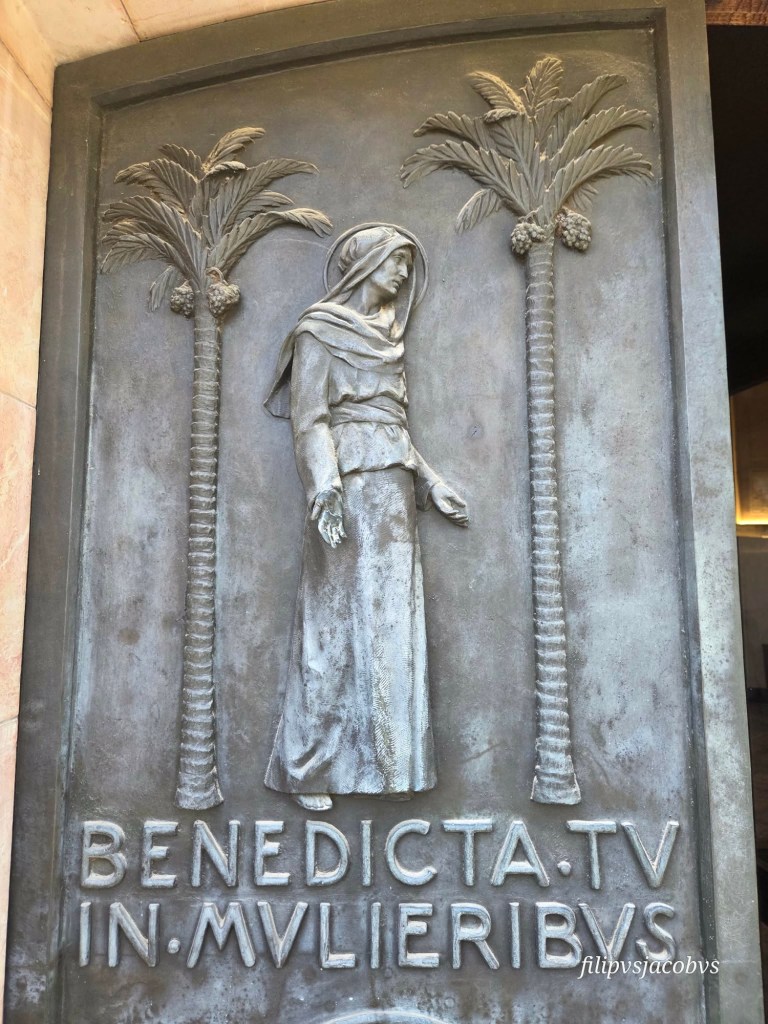
On this fifth day of our Simbang Gabi we hear the second Christmas story by Luke, telling us how six months after announcing to Zechariah the coming of their son John, the angel Gabriel went to Nazareth to announce the birth of our Savior Jesus Christ to the Blessed Virgin Mary who was betrothed to St. Joseph.  Unlike Zechariah who doubted the angel’s message, Mary was more open with her response by asking how it would all take place.  

And the angel said to her in reply, “The Holy Spirit will come upon you, and the power of the Most High will overshadow you.  Therefore the child to be born will be called holy, the Son of God” (Luke 1:35).

We reflected the other day how Matthew ended his story of the genealogy of Jesus Christ with Mary to show her as the new beginning of everything in the world. Through Mary’s giving birth to Jesus, we now share with Him one common origin in faith who is God as our Father so that despite our many sins and failures, we are given with a fresh start, new opportunities in life daily. Luke bolsters this today with his account of the annunciation of the birth of Jesus to Mary. 

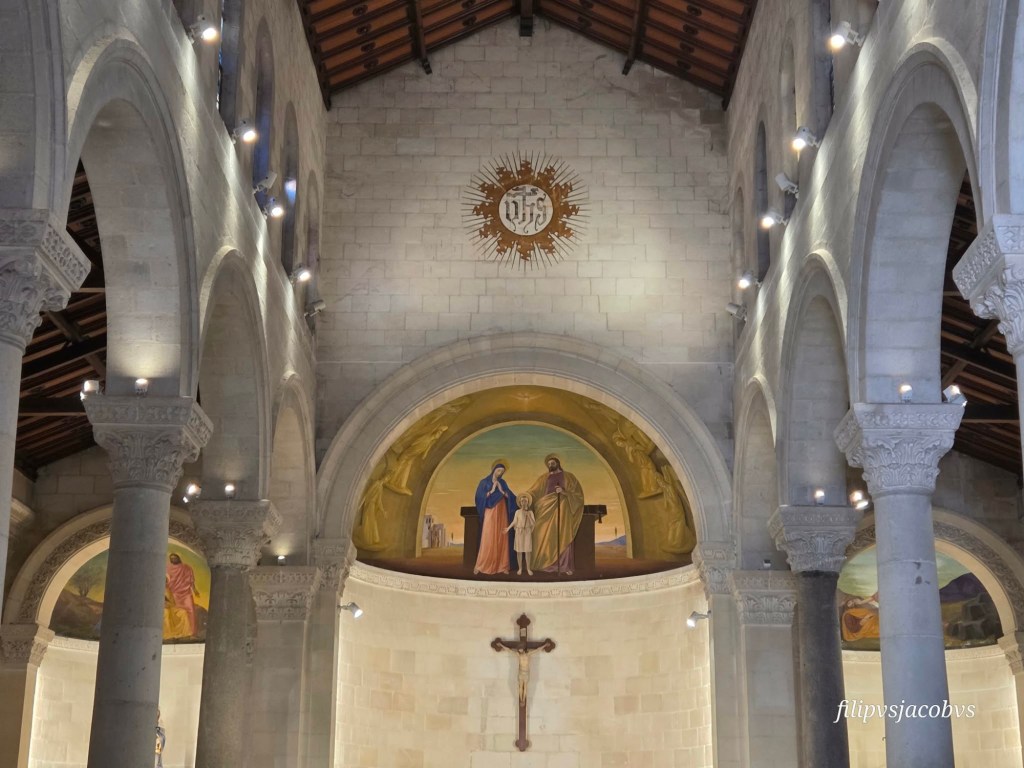
Photo by Ar. Philip Santiago, Annunciation Basilica in Nazareth, October 2025.

As a Jew, Mary must be totally aware of the words of the angel about herself being “overshadowed by the Most High” like in the Old Testament stories of God’s presence in the cloud during their journey in the wilderness after their exodus from Egypt.  Even Moses could not enter the tent when “the cloud covered it and the glory of the Lord filled the tabernacle” (Ex.40:34-38). 

To be filled and overshadowed by the presence of God is to be to be possessed by God and eventually to be transformed by God. 

Remember how in the movie “The Ten Commandments” when the face of Moses was transformed after meeting God. In the New Testament, the three synoptic gospels record a similar incident of God’s presence in a cloud hovering with Jesus during His transfiguration at Mount Tabor witnessed by Peter, James and John. The two great prophets of Israel were there, Elijah and Moses conversing with Jesus when a cloud overshadowed them with a voice declaring “this is my beloved Son, listen to Him.” Matthew, Mark and Luke tell us how the apostles were all terrified at the sight of the Transfiguration. 

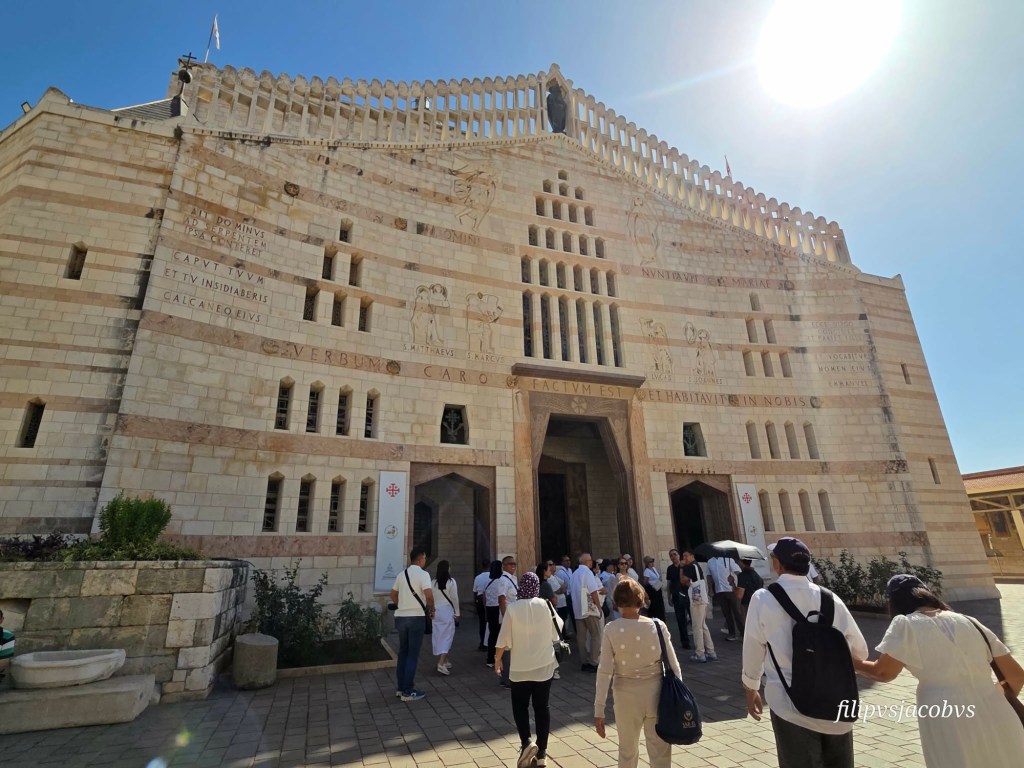
And we can also surmise how terrifying it must be to experience God’s presence, to be filled with God.  But that is how grace works! 

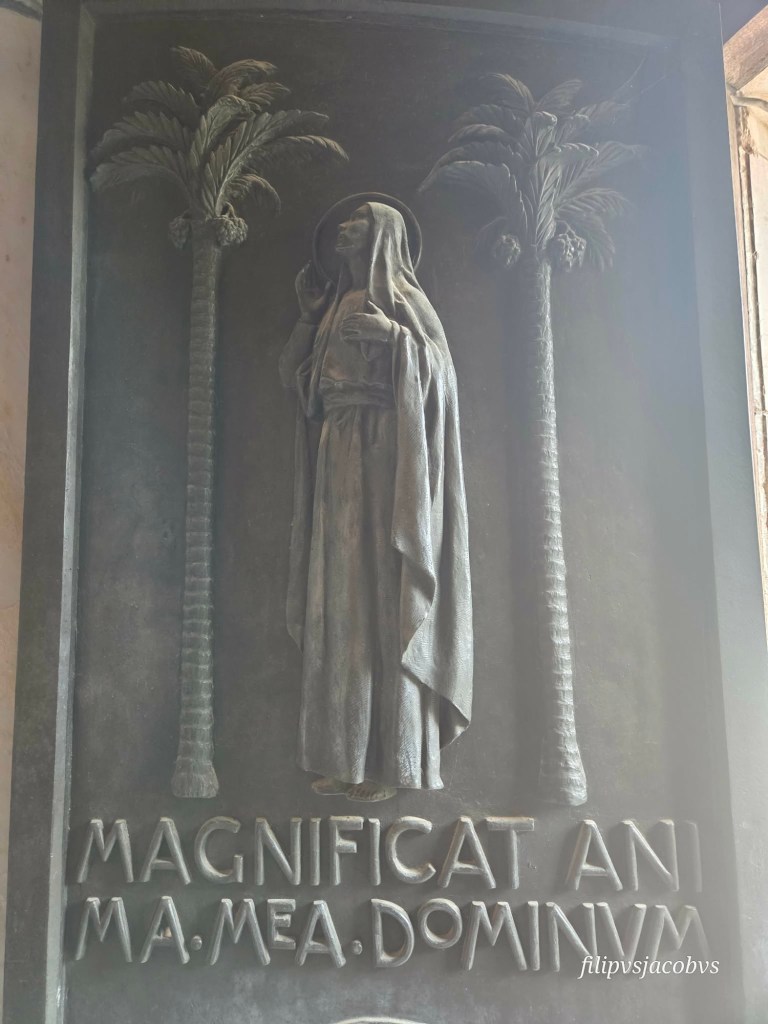
Photo by Ar. Philip Santiago, Annunciation Basilica in Nazareth, October 2025.

At the start of our Simbang Gabi we have reflected how under the light of Christ we are able to see our sinfulness and weaknesses that sometimes we feel so sorry for ourselves but that is actually when grace works in us – the moment we change our sinful ways, then we grow!

When we see our limitations as humans yet still forge on in life to achieve greater things, to become better persons, that is God working in us. That is why Luke tells us today how the angel greeted Mary during the annunciation using the Greek words “kaire” which is to rejoice and “charis” or “karis” for grace:  “Hail (or rejoice), full of grace!  The Lord is with you” (Lk.1:28). 

This is actually unusual because Jews greet each other with “shalom” for peace; why did Luke use kaire? Because wherever and whenever there is grace, surely there is rejoicing like in our Third Sunday of Advent called Gaudete Sunday: we rejoice because the Lord who is pure grace is near!

The late American spiritual writer and monk Thomas Merton rightly said, “We live in a time of no room, which is the time of the end.  The time when everyone is obsessed with lack of time, lack of space, with saving time, conquering space… The primordial blessing, ‘increase and multiply’ has suddenly become a hemorrhage of terror… In the time of the end there is no longer room for the desire to go on living.  Why?  Because they are part of a proliferation of life that is not fully alive, it is programmed for death” (Raids on the Unspeakable, pp. 70-72).

Photo by Ar. Philip Santiago, Annunciation Basilica in Nazareth, October 2025.

Advent is the time to get real, to stop pretending. Advent is the time for us to finally admit our own limitations, to create a space in our hearts and in our lives to let God fill us, to let God possess us. 

Can we, like Mary allow God’s power “hover over us” to renew our lives in welcoming Jesus Christ? This was the problem of Isaiah with King Ahaz in the first reading who pretended to refusing God giving signs of his presence when actually he had already entered into alliances with other pagan kings in the region as the Babylonians were closing in them; that is why Isaiah uttered the prophecy to insist that God is our protector: “Listen, O house of David! Is it not enough for you to weary men, must you also weary my God? Therefore the Lord himself will give you this sign: the virgin shall be with child, and bear a son, and shall name him Emmanuel” (Is.7:13-14).

Let me end this reflection by inviting you dear friends to pray for Fr. Flavie Villanueva, an SVD priest so active in caring for the poor especially the orphans left by victims of tokhang. He was recently awarded the Ramon Magsaysay Award considered as Asia’s equivalent of Nobel Peace Prize for his works for the poor.

Yes, he had a very dark past, being a former drug dependent but God used that chapter in his life to make him turn around and become a missionary priest. Fr. Flavie had never hidden nor sanitized his dark past because it was during those years when he also found the light and grace of God’s love and mercy for him. Perhaps, he is most effective in his works among the poor and the addicts precisely because he used to be one of them! He is now under attack for his works by the dark elements of the past administration, the most decadent in our history.

From Facebook via Political Insight Today, 18 December 2025.

Fr. Flavie is no Virgin Mary but like her, he opened his heart to God who eventually overshadowed him with His powers to do all these great things for the poor who now feel Christ’s presence.

Recall now the many instances in our lives where we have learned our most important lessons in life and most surely, these were also the moments we have faced many hardships and sufferings but, instead of being down, these have inspired us and transformed us into better persons.

Let us imitate Mary in saying yes to God – “Behold I am the handmaid of the Lord.  May it be done to me according to your word!”  Let us open our hearts to God so the Holy Spirit may hover on us to fill us with Jesus Christ we can share with others broken like us. Amen. A blessed weekend everyone! 

Christ comes in the Mass

Lord My Chef Simbang Gabi Recipe for the Soul by Fr. Nicanor F. Lalog II
Friday, Simbang Gabi-IV, 19 December 2025
Judges 13:2-7, 24-25 <*((((>< + ><))))*> Luke 1:5-25
View of a decorated Christmas tree and tower of the Franciscan Monastery of St Saviour locally also known as San Salvador monastery in the Christian Quarter Old city East Jerusalem

From Matthew, we now shift to Luke’s account of the story of Christmas which is the most complete and detailed of all gospel accounts. In fact, most artistic renditions of Christmas were inspired by Luke’s gospel.

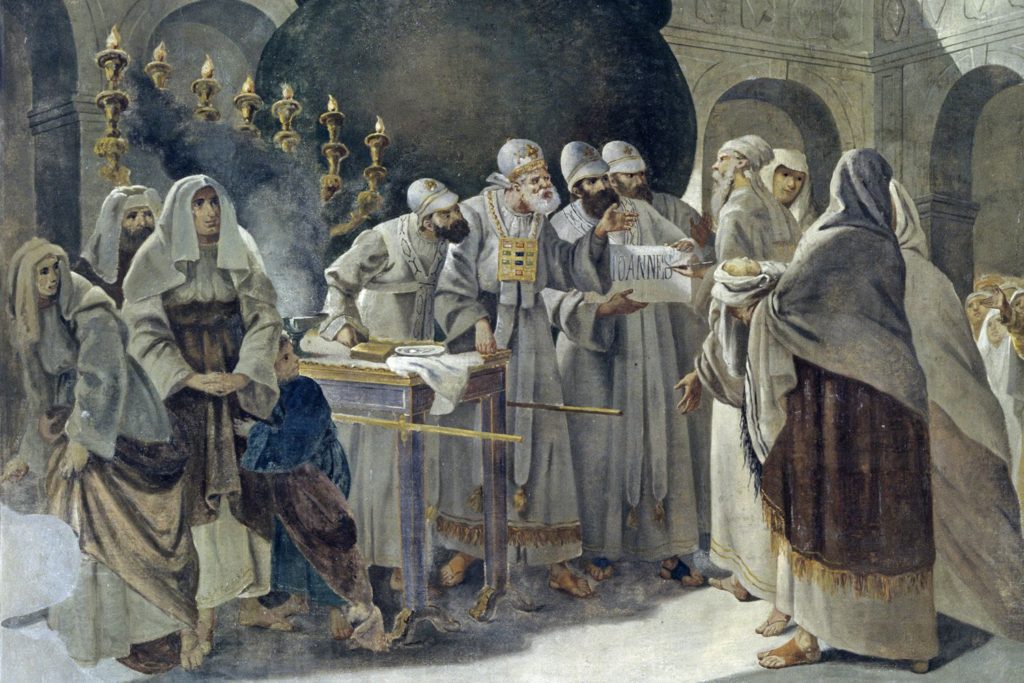
Very surprising in his Christmas story, Luke started it with the annunciation of the birth of John the Baptist to his father Zechariah who was then serving at the temple of the Lord in Jerusalem, a beautiful reminder to us all these days that Christ comes in our Holy Mass.

And I wonder – what if I imitate Zechariah in the gospel on this Simbang Gabi: come out late in the altar… totally silent, unable to speak?

Meanwhile the people were waiting for Zechariah and were amazed that he stayed so long in the sanctuary. But when he came out, he was unable to speak to them, and they realized that he had seen a vision in the sanctuary. He was gesturing to them but remained mute. Then, when his days of ministry were completed, he went home (Luke 1:21-23).

Photo by author, December 2023.

A priest recently posted on Facebook an appeal to us all priests to truly pray and reflect to have a good homily this Simbang Gabi and Christmas Season because the people deserve more than jokes, hugot lines and gimicks during these ten days of celebrating the Mass.

And we totally agree with him!

Let us accept the fact that majority of Catholics in the world – not only in the Philippines – celebrate Mass only on Christmas. At least in our country, there is the Simbang Gabi when many Catholics try to complete its nine-days of Masses plus the Christmas Day itself and, that’s it for them – ten consecutive days in December and absent every Sunday from January to November with a few who would return to Mass on Palm Sunday, fiestas and birthdays. Especially these days, most people have no qualms at all of skipping Sunday Masses while there are still some who wrongly believe the online Mass suffices.

The challenge and call for us priests this season is indeed very true when we are able to pray and prepare well our homilies to catechize the once-a-year-Catholics so that they may experience the love and mercy of God in Jesus Christ who had come and continues to come during our celebrations of the Mass and other sacraments.

Problem is, very often we priests are indeed so much like Zechariah on that day when he doubted the good news of John’s birth announced by an Angel. Not only are many priests notoriously late in their Mass schedule, worst of all as the people complain, either they have nothing or too much to say during their homily!

Photo by Ar. Philip Santiago, Jerusalem, October 2025.

Like the people awaiting Zechariah during that important feast, people are amazed today why some priests could not say anything substantial at all except to continuously ask people to clap their hands and praise God with such cues as “God is good…” and “all the time…” and soon enough what’s next, collection, then after communion special collection!

On the other hand, like the people awaiting Zechariah during that feast, people are also amazed when their priests speak a lot without any sense at all. Worst, many times, the priests are like Jollibee – puro pabida either by converting the altar into a stage for his stand-up jokes and entertainment or turn the sanctuary into a videoke bar because Father is so bilib in his voice.

Sorry, my brother priests. Let’s listen to what people are saying. Let’s listen especially to God when he speaks to us. Or, do we have time to listen to him in prayers?

One truth we priests could not admit or refuse to admit despite its glaring realities is that many of us have become just like politicians – so corrupted that we simply entertain people, keep them ignorant of the more essential things in life and about God because many of us do not pray or are not even interested of going to heaven at all.

Maybe like Zechariah, many priests have been burned out not only of the tasks and living in near isolation but also due to the long wait for answers to our prayers coupled with the many pains and hurts that came along with the ministry that has become more of duties than relationship with the Caller, Jesus Christ.

Photo by Lara Jameson on Pexels.com

In telling us this story of the annunciation to Zechariah, Luke had touched on something very timely and sensitive among us priests including the faithful in this age of social media: we have been so detached from God and the divine, many times so impersonal with one another, and, worst of all, so attached with material and worldly things.

As a result, many people have stopped looking up to some priests as models and inspiration for upright living because we have become so much like them in almost every aspect from clothing to speaking and even thinking!

“Pari pala yun!” is what some people often remark these days when they find priests making tambay dis oras ng gabi in almost every cafe or worst, in places we should not even go like casinos and bars, whether with GRO’s or macho dancers.

A growing concern among us these days is the complaint of lay faithful who feel lost and could not guidance like find definitive answers from their pastors about moral issues so blurred by the modern technologies and Western thoughts like wokism. Imagine a Catholic school allowing gay pride festivities? Or relativistic priests to issues of abortion and contraceptives, sex change and gender manipulations, even cases of pornography and other modern addictions. A growing number of laypeople openly express their disappointment at how lately priests have become so lenient with sins that they are already confused on what to confess!

Photo by author, March 2024.

Zechariah and us priests today face the same problem before God: we talk too much and pray so little that perhaps, we need to be silenced too in order to pray more, to listen more to God, his words, his plans and his people as envisioned by synodality now in oblivion.

Imagine all his life as a priest, Zechariah had been praying for a son but when it was finally answered by God, he refused to believe it. Suddenly, he was so lost at what he was supposed to be an expert like spirituality and prayer, most of all, of God’s goodness.

What happened to Zechariah?

And that is what our gospel is asking us priests today, what happened Father?

In the first reading we have heard of the wife of Manoah who felt “a man of God” approached and told her of the good news of the birth of a son (Samson); how lovely if people could feel the same way like in the old days of their priests as “man of God”!

It is very sad when laypeople complain their priests have become so “ordinary” without any sense of holiness or at least of the holy, from simplest wearing of clerical shirt and proper Mass vestments to good grooming and tidiness.

Maybe because we priests have been so concerned so much with palabas than of paloob, when like the social influencers, many among us are so carried away by media chasing content than substance, especially theology.

Photo by author, Jerusalem, May 2017.

One of the most painful cuts in the ministry today that hurts so bad is when priests striving to be holy, speaking and doing what is right and proper would then be called as pharisaical. This is very evident in the celebration of the Mass as some priests would belittle even insult those who follow rubrics as well put on proper vestments.

Luke invites us today, both ordained priests and laypeople who share in the priestly office of Jesus in their baptism, that we look into ourselves, into our hearts amid our worship of God like Zechariah in the very presence of God in the Holy of holies: are we present in the Lord?

Do others feel Christ’s coming in our presence especially in the word and later in our life of witnessing and loving service to them?

Let us strive to have meaningful celebrations of the Mass and other communal worship not only this Advent and Christmas because people await from us ministers of the altar like Zechariah of old the good news of the coming of Christ in every Mass we celebrate with them. Help us your priests, our dear lay faithful by giving us the chance to pray more and serve more instead of inviting us in your activities and other affairs we are not needed. Amen. Have a blessed Friday!

Bloodlines do not bring Christmas

Lord My Chef Simbang Gabi Recipe for the Soul by Fr. Nicanor F. Lalog II
Thursday, Simbang Gabi-III, 18 December 2025
Jeremiah 23:5-8 ><}}}}*> + ><}}}}*> + ><}}}}*> Matthew 1:18-25
Photo of St. Joseph with Child Jesus from vaticannews.va.

After presenting to us the genealogy of Jesus, Matthew now gives us the very essence of Christ’s origin who is God himself making him truly Divine but at the same time coming from the lineage of Abraham and David, truly human like us in everything except sin.

But, in the light of the corruption so rampant in our country, I find Matthew’s genealogy so timely as it also shows us so clearly the need to break away from the much vaunted and abused powers of bloodlines and kinship so common in most nations and societies where key positions and status are considered as hereditary.

Sociologists call it “familism” which is too much emphasis on one’s family line that leads to abuses like nepotism in offices, dynasty in politics and even caste systems that all degrade of the value of every human person. We reflected yesterday how in the genealogy of Jesus, we are all beloved children of God; when some people cling to power and positions as if they are the only ones capable of doing things even in bringing Christmas, they are totally wrong.

See how in our country politicians shamelessly abuse their power in a family dynasty occupying all elective positions aside from controlling major businesses in their town or city, region or province. A classic example of kawalan ng kahihiyan. And thank God Jesus was not born in the Philippines!

Sorry for the rant but let us recall Matthew’s shift yesterday in the flow of Christ’s genealogy at the end: “Eliud the father of Eleazar. Eleazar became the father of Matthan, Matthan the father of Jacob, Jacob the father of Joseph, the husband of Mary, of her was born Jesus who is called the Christ” (Mt.1:15-16). See the break from the rhythmic cadence of “is the father of, is the father of” to stress that Jesus is from God, not from any man like St. Joseph, biologically speaking. This, I think, is crucial for Matthew so that no one can ever claim an exclusive family tie or bloodline in Jesus nor brag being a “relative” or even the “son” of God like that pastor now in jail in Manila.

Francisco Goya’s painting, “Dream of St. Joseph” (El Sueno de San Jose) done in 1772; from en.wikimedia.org.

With the birth of Jesus by Mary, all mankind by faith in Christ can now trace our origin in God – thanks to both St. Joseph and Blessed Virgin Mary! They showed us that Christmas did not happen by mere bloodlines but through active cooperation in the work of God.

This is how the birth of Jesus Christ came about. When his mother Mary was betrothed to Joseph, but before they lived together, she was found with child through the Holy Spirit. Joseph her husband, since he was a righteous man, yet unwilling to expose her to shame, decided to divorce her quietly. Such was his intention when, behold, the angel of the Lord appeared to him in a dream and said, “Joseph, son of David, do not be afraid to take Mary your wife into your home. For it is through the Holy Spirit that this child has been conceived in her (Matthew 1:18-20).

Photo by Deesha Chandra on Pexels.com

Men are seldom described by their relationship to a woman as it is more often the other way around like in the tradition of wives assuming their husband’s surnames.

Most notable exception anywhere in history is St. Joseph who is known more because of his connection to Mother Mary; however, it is in this unique aspect that we also find his greatness, his holiness.

Like in any patriarchal society, it is always the father who gives the identity to the child especially among the Jews. Every pilgrim who had gone to the Holy Land knows this so well when you look at the ID of tour guides and bus drivers that always include the lines that says “bar” followed by one’s father’s name as “son of so and so.” Unlike men, women easily claim motherhood for a child as part of her nature; a man would never give his name to any child not his.

But not Joseph who was really an exception for being “righteous” according to Matthew.

Photo from vaticannews.va, 2020.

Righteousness among the Jews is also holiness which is to keep and abide by the laws of God.

Here we find Matthew as a Jew writing to his fellow Jewish converts to Christianity that holiness is more than obedience to the Ten Commandments and its over 600 precepts every pious Jew must first follow.

For Matthew, righteousness or holiness is always complementary to justice which is more than legal fairness but having the character of God who is fair and merciful, compassionate and kind especially with the weak. In the first reading, we hear Jeremiah speaking about the coming Messiah to be called “the Lord is justice” who shall restore what’s broken, primarily his people.

Actually we got this thought on the complementarity of justice and righteousness from one of our favorite bloggers at WordPress, Sr. Renee Yann who in her “Lavish Mercy” issue in March 19, 2019 cited a Protestant exegete about the matter:

“Justice in the Old Testament concerns distribution in order to make sure that all members of the community have access to resources and goods for the sake of a viable life of dignity…. Righteousness concerns active intervention in social affairs, taking an initiative to intervene effectively in order to rehabilitate society, to respond to social grievance, and to correct every humanity-diminishing activity” (Walter Brueggemann, Journey to the Common Good).

That complementarity of justice and righteousness in St. Joseph is best expressed by Matthew when he said that “When Joseph awoke, he did as the angel of the Lord had commanded him and took his wife into his home.”

When Mary was found pregnant with a child not his, St. Joseph already displayed his righteousness when he took the concrete and painful step of quietly leaving her to spare her of all the shame and even punishment their laws imposed on such cases. And after the angel had explained to him everything about the pregnancy of Mary, St. Joseph all the more showed the depth and reality of his holiness or righteousness that was willing to forget his total self for the greater good of Mary and everyone!

Photo by author, “St. Joseph Protector of the Child Jesus”, 2024.

As a sign of his righteousness in accordance with his deep sense of justice, St. Joseph showed in his very life that true relationship with God is expressed in our love for others which would become later a major teaching by Jesus Christ.

Moreover, it was in accepting Mary as his wife that Jesus finally came into the world as our Savior. Today, St. Joseph is teaching us that Christmas happens whenever we respect and accept each other because that is when Christ comes in our midst like in their eventual marriage.

It was not the first time that St. Joseph displayed his kind of righteousness complemented by the virtue of justice. After the Nativity, St. Joseph took the difficult and perilous task of fleeing to Egypt to protect and save Mother Mary and the Infant Jesus from the murderous wrath of King Herod.

Twice St. Joseph acted as a righteous man in the temple: first at the presentation of Jesus when he allowed Simeon and Anna to take the Holy Infant into their arms and praised him; and second in the finding of Jesus in the temple when St. Joseph chose to step into the background to let the Child Jesus assume his teaching vocation among the learned men there, an apparent anticipation of the ministry of Jesus later. (Recall in that scene that St. Joseph was totally silent while it was the Blessed Mother who did all the talking by speaking to Jesus how worried they have been looking for him.)

Based on these few instances found in the gospel wherein the Holy Family were presented together, St. Joseph remained righteous and just during their hidden years in Nazareth as he worked hard to provide for Mary and Jesus, actively doing good for his family and community while silently fostering, forming the personality and ministry of Jesus Christ.

Let us imitate St. Joseph working hard in silence amid the great temptations of glamor in this social media age, always rooted in Christ, our only Savior and Mediator. True holiness is purely grace and part of that is our hard work in actively bringing Jesus into this world so sick, so dark with evil and sin. Amen. Have a blessed Thursday!

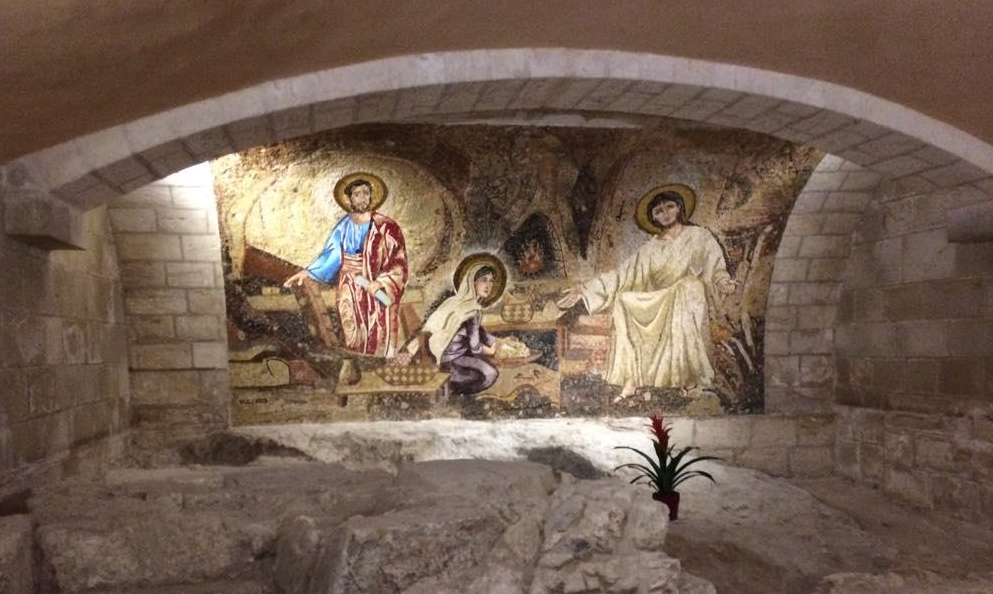
Photo by author, site of the Nazareth of the Holy Family underneath the Church of St. Joseph in Nazareth, Israel.

Our living family tree

Lord My Chef Simbang Gabi Recipe for the Soul by Fr. Nicanor F. Lalog II
Wednesday, Simbang Gabi-II, 17 December 2025
Genesis 49:2, 8-10 <*[[[[>< + ><]]]]*> Matthew 1:1-17
Photo by author, December 2023.

Next to the Belen and the Parol, the Christmas Tree stands out as the third leading sign of Christmas especially in our country. Though it was first introduced by the German Lutherans in the 16th century, we Catholics have adopted it too with the Vatican having a giant Christmas Tree every year lighted at St. Peter’s Square in Rome.

The Christmas Tree invites us to remember Jesus who was born in Bethlehem is the true Tree of Life, as it “depicted the tree of paradise and the Christmas light or candle which symbolized Christ, the Light of the world” (Book of Blessings, page 443). Remember also that since ancient time especially among the Anglo-Saxons, trees symbolize our relationships as family and kin that is why we have “family trees” that trace our roots.

And that is what a genealogy is all about.

Photo by author, December 2022.

Matthew along with John opened his gospel account with the origin of Jesus; both felt the need to present right away to their specific audience where the Christ came from. John traced it to eternity as the Word (Logos) while Matthew whose followers were mostly Jewish converts to Christianity presented Jesus as the fulfillment of God’s promise in the Old Testament through their two main personalities, Abraham and David.

The book of the genealogy of Jesus Christ, the son of David, the son of Abraham. Abraham became the father of Isaac, Isaac the father of Jacob, Jacob the father of Judah and his brothers. Judah became the father of Perez and Zerah, whose mother was Tamar (Matthew 1:1-3).

Every year we hear this gospel proclaimed on December 17 which is also the start of the second and final phase of Advent when all our readings and prayers direct our attention to the first Christmas that happened more than 2000 years ago.

For Matthew, it all started with God’s promises to Abraham, the father of all nations and to David, the greatest King of Israel whose royal lineage made the Christ a King, in fact the King of Kings. What is most interesting in Matthew’s genealogy is the fact that with each of those names that sound so funny for many of us today was a true person just like us – so human and so imperfect, even sinful except the Blessed Virgin Mary. Matthew did not sanitize nor photoshop the personalities in the Lord’s genealogy because that is the Good News: it is good to be human that is why the Son of God became one of us in everything as a human being except sin.

This year, I wish to reflect on just one person, Judah.

Jacob called his sons and said to them: “Assemble and listen, sons of Jacob, listen to Israel, your father. You, Judah, shall your brothers praise – your hand on the neck of your enemies; the sons of your father shall bow down to you. Judah, like a lion’s whelp, you have grown up on prey, my son… The scepter shall never depart from Judah, or the maqce from between his legs, while tribute is brought to him, and he receives the people’s homage” (Genesis 49:2, 8-9, 10).

This is the second Christmas me and my siblings are celebrating without both our parents. Our mother died May 2024. Though it was so heavy and difficult for us, everything moved so fast that year. So unlike this 2025.

Photo by author, December 2020.

We never get used to deaths in the family; the pain becomes most painful as we move through the years especially during Christmas as if our Belen would never be complete without a St. Joseph and a Mama Mary. Of course, Christmas and life itself is all about Jesus Christ but it is a different reality and story celebrating this most joyful season without parents. Especially for a priest like me. (No drama intended.)

That is why I felt so drawn in my prayers to Judah in Matthew’s genealogy as one of the great, great, great grandfather of Jesus Christ.

In the first reading, we have Jacob nearing death while they were all in Egypt courtesy of his eleventh son Joseph who rose to power after being sold there by his brothers. Though my mother never gave such speeches when she was nearing death, all her life she used to tell us similar things when we were growing up, of how after she and dad would be gone that I must look after my two sisters and only brother, that we would not quarrel and be loving one another always. I think such habilin as we say in Filipino is common among us Pinoys along with the usual passing on or entrusting of family and properties to the eldet, either the kuya or ate.

But that’s not the case in our first reading because Judah was not the eldest of Jacob’s children with her first wife Leah. Judah was their fourth son with three elder brothers – Reuben, Simeon and Levi with a sister named Dinah. Judah also had six half-brothers from their father’s concubines or later wives: Dan, Napthali, Gad, Asher, Joseph, and Benjamin.

Rembrandt’s 1660 painting of “Judah and Tamar” via en.wikimedia.org

Why was Judah the one anointed by Jacob to lead his family and not the elder sons as it is the norm among Jewish and even Filipino families?

This is where the story gets most interesting: Judah’s Kuya Reuben fell from grace because he had sex with their father’s concubine Bilha whose sons were Dan and Napthali while his Diko Simeon and Sangko Levi were disqualified from leading the family after their bloody revenge for the rape of their sister Dinah.

However, that does not mean Judah was clean and honorable at all!

Matthew told us in his genealogy of Jesus that Judah’s sons Perez and Zerah (twins) were born through Tamar who was actually the wife of Judah’s eldest son Er who died without having any son. As per Jewish tradition, Judah’s second son Onan married Tamar but refused to have a son with her that he “spilled his seed” to the ground – that is, he masturbated! It angered God that he took Onan (that is why masturbation is sinful and also known as “onanism” from Onan).

After losing his two sons because of Tamar, Judah refused to give his third and youngest son Shelah to marry her. So, Tamar devised the plan of pretending a prostitute, luring Judah into bed and have her pregnant with the twins Perez and Zerah. Read Genesis 38 for the full story!

Of Jacob’s sons, Joseph was the most eligible to lead and continue Jacob’s family lineage and not Judah had no credentials at all to speak of as a great man leading his brothers, eventually becoming the father of the Jewish nation from whose name came the word “Judaism”.

“Patriarch Judah”, a Russian Orthodox painting in 1654 from en.wikipedia.org.

Remember too that Judah was totally silent and timid unlike Reuben when his elder brothers planned of killing Joseph because of jealousy; it was him, however, who thought of selling Joseph into slavery to Egypt to make some money.

Judah’s only saving grace came after more than twenty years when Joseph was already a powerful man in Egypt demanded to have Jacob’s youngest son Benjamin as his slave in exchange for them to purchase foodstuff during the famine (Gen. 42). Judah pleaded for Benjamin’s life that Joseph finally revealed himself as their lost brother after he could no longer contain his tears and joy in being reunited with his brothers anew.

Despite all these shady past of Judah, God chose him to continue the family lineage of his father Jacob from whom the Messiah, Jesus came.

Like Judah, we are not the perfect son or daughter, brother or sister in the family.

Like Judah, we are not most qualified for being the favored one or anointed one in the family or in the organization. There is always somebody better than us.

But God’s works in mysterious ways, in ways so different from our own ways. As the saying goes, God does not call the qualified but qualifies his calls. Likewise, God writes straight in crooked lines.

The Simbang Gabi invites us not only to look forward to the birth of the Messiah; in these nine days of prayers and reflections, we also look back to our past to face and embrace, admit and own those shades of darkness in our lives.

Matthew’s genealogy reminds us today that this family tree of faith in Jesus extends down the generations and includes us today. Feel and experience, most of all, celebrate that joy of belonging to God’s living family tree where every branch, every member is loved and cared for. God believes in us that he entrusted to us his Son Jesus Christ. That’s Christmas – God becoming human, infant and weak like us, entrusting himself to our care and love and protection.

This Simbang Gabi, let us remember our family members and other persons who made us feel belonging in this living family tree of Jesus. Let us also pray for those lost family members and friends that Jesus wants us to draw near to his living family tree with our friendship and warmth, forgiveness and acceptance. As you light your Christmas tree tonight, do not forget to share the light and warmth of Jesus Christ, our Tree of Life. Amen. Have a blessed Wednesday!

From Facebook, December 2023.

Be the light of Christ

Lord My Chef Simbang Gabi Recipe by Fr. Nicanor F. Lalog II
Simbang Gabi-1, 16 December 2025
Isaiah 56:1-3, 6-8 <*((((>< + ><))))*> John 5:33-36
From Facebook post, 14 December 2023.

2025 is a very difficult year for us Filipinos. It is mixture of many bad news with some good news coming out from them like the deeply entrenched problem of corruption in government. Actually, we knew it already long before but the recent uncovering and revelations from the ghost project scam not only confirmed our suspicions but disturbed us so much of its extent and astronomical proportions.

Napaka-sama at napaka-walang-hiya nilang lahat na natiis maghirap tayong lahat habang sila ay nagpasasa sa kayamanang nakaw. A friend told me one morning she felt not like going to work anymore, kasi siya daw magpapagod sa pagtatrabaho habang yung nasa gobyerno magnanakaw lang tapos mas mayaman pa?!

True. And that is what I am worried at this time: when many of us start losing the zest and drive to work harder for a better tomorrow in our pitiable country. Almost everybody feels like moving out of our country to work somewhere else to find more meaning in their lives.

This Simbang Gabi, let us offer prayers for each of one to never lose that spark, of being a light leading others to Christ our true Light especially those who have lost light or about to give up and simply resigned to the widespread darkness enveloping our nation at this time.

Jesus told the crowd, “He (John) was a burning and shining lamp, and for a while you were content to rejoice in his light. But I have testimony greater than John’s. The works that the Father gave me to accomplish, these works that I perform testify on my behalf that the Father has sent me” (John 5:35-36).

Photo by author, December 2021.

Next to the Nativity scene or Belen, Christmas in our country is often symbolized by the parol or lantern. From our churches to our homes, to malls and highways, the parol delights and reminds us of Jesus Christ, our true Light and only Star to follow in life.

More than to symbolize the Star of Bethlehem that guided the Magis to the newborn Christ, the parol literally used to guide early Filipinos on their way to the church for their Simbang Gabi during the Spanish period.

The parol is not the light itself itself but simply the carrier of that light which comes from a lamp inside. That is what Jesus is telling us today: John was like a parol who illumined the path of many people of his time to prepare them to meet him, the Christ, the Light himself.

The problem with us Filipinos is our ningas cogon mentality which had Jesus hinting too when he spoke of the light of John: like the cogon grass, we are easily ignited and drawn to various efforts but immediately die down without pursuing and sustaining the more essential things like reforming our lives by finding and following Jesus Christ our true Light.

Photo by author, November 2021.

Notice that Jesus was born at this time considered when the darkest nights happen. Science explains it according to the tilting position of earth but spiritually, Christmas reminds us of God’s immense love and care for each of us that he sent us his Son Jesus as our Savior in our darkest moments in life.

Finding and following Jesus Christ our Light is a long and tiring journey often in the darkness of our sins and failures, weaknesses and hurts, doubts and fears. The more we use light and follow the Light of Christ, the more we see and realize our unworthiness and sinfulness that often lead us to stop following Jesus. But that is the way in having the light of Christ – the more we see things clearer, the more we become better because we learn more of the things we must work on and change in ourselves as God told Isaiah in the first reading today.

Thus says the Lord: Observe what is right, do what is just; for my salvation is about to come, my justice, about to be revealed. Happy is the man who does this, the son of man who holds to it; who keeps the sabbath free from profanation, and his nhand from evildoing (Isaiah 56:1-2).

Photo by author, November 2022.

Two weeks ago, an English lay preacher and blogger I follow published anew one of her old reflections about their porch light.

Their two daughters have gone to party in the city with some friends. She and her husband thought their daughters would either stay overnight in the city or take the late bus trip that night. With that in mind, her husband thought it best to leave their light on at their porch but she felt otherwise and turned the light off just before bedtime. It surprised her husband – and herself too that the following morning during prayer she wrote:

Jesus reminded me that we (His followers) are the light of the world.

We carry the light of Christ.

Jesus left a light on when He went back to His Father God in Heaven – He left us.

Jesus hasn’t switched that light off yet.

I will leave a light on.

We shine as lights in the darkness of this world and point the way home to God through faith in Jesus the Son.

One day though the reality is that my earthly light will be switched off. I won’t be here anymore to shine the light for others.

I need to shine whilst I can.

Whilst I still have the time.

I hope I can leave a legacy of light behind me.

You may be the only light in your family, your friends, your colleagues, your neighbourhood, your community – the place where the Lord has put you.

Your light is really important so be encouraged and “let your light shine before men so that they may see your good works and glorify your Father in heaven.” Matthew 5:16

I really think there is someone who needs to hear this today.

Don’t give up but let your light shine – It will lead someone home to God.

Leave a light on and it will lead that person home – they may be in a dark place at moment, have wandered far from truth, be in a very very dark place but the Lord is saying:

I will leave a light on” – that light is you.

Don’t let the light go out – it will lead them home.

On this first day of our Christmas Novena, let us not forget the essence of our Simbang Gabi which is to find and follow Jesus Christ, the Light of the world. More than leaving our light on to lead others to Jesus, we also need to see ourselves and our history in the light of Christ.

Photo by author, December 2019.

Examine the light others may be sharing us that do not lead us to Christ but to their selfish motives. Be critical in reading and listening to various posts that may be feeding us with fake news that actually confuse us with truth and realities. It is only in the light of Christ when things that are dull and drab become clear, enabling us to take the right and proper decisions that can truly move us toward change and development as an individual, as a Christian and as a nation. Let us be a light leading others to the True Light Jesus Christ for he alone can lead us back home to God, to our true selves, and to our loving relationships. Amen. have a blessed and enlightening Tuesday.

Advent is freedom from enemies

The Lord Is My Chef Daily Recipe for the Soul by Fr. Nicanor F. Lalog II
Simbang Gabi-9 Homily, 24 December 2024
2 Samuel 7:1-5, 8-12, 14, 16 <*((((>< + ><))))*> Luke 1:67-79

Photo by author, Advent 2022.

Finally! This may be the word and expression today, the 24th of December. Finally, a lot of you would be bragging about having completed the nine-day novena to Christmas. Finally, it would be Christmas day. And finally, we could sleep longer.

But then, finally what?

When Zechariah’s tongue was loosened after naming his son John in fulfillment of the angel’s instruction to him, it was not the word “finally” that came from his mouth but “Blessed be the Lord, the God of Israel!”(Lk.1:68). After being mute for nine months, Zechariah’s silence became praise with gratitude and wonder giving him the voice to speak again.

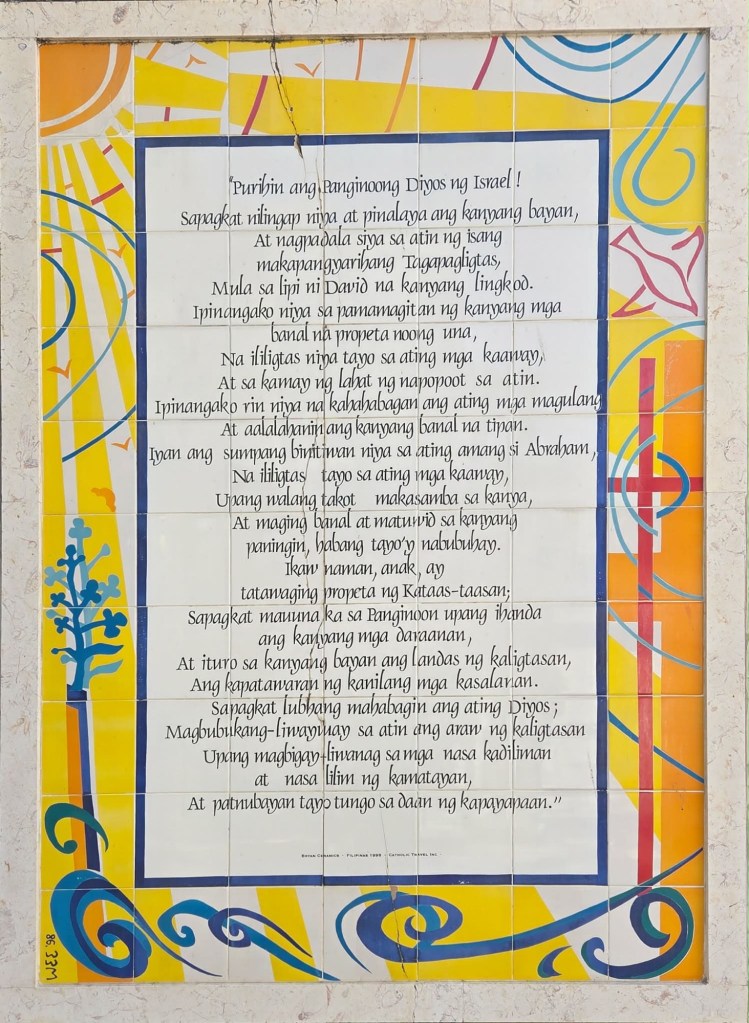
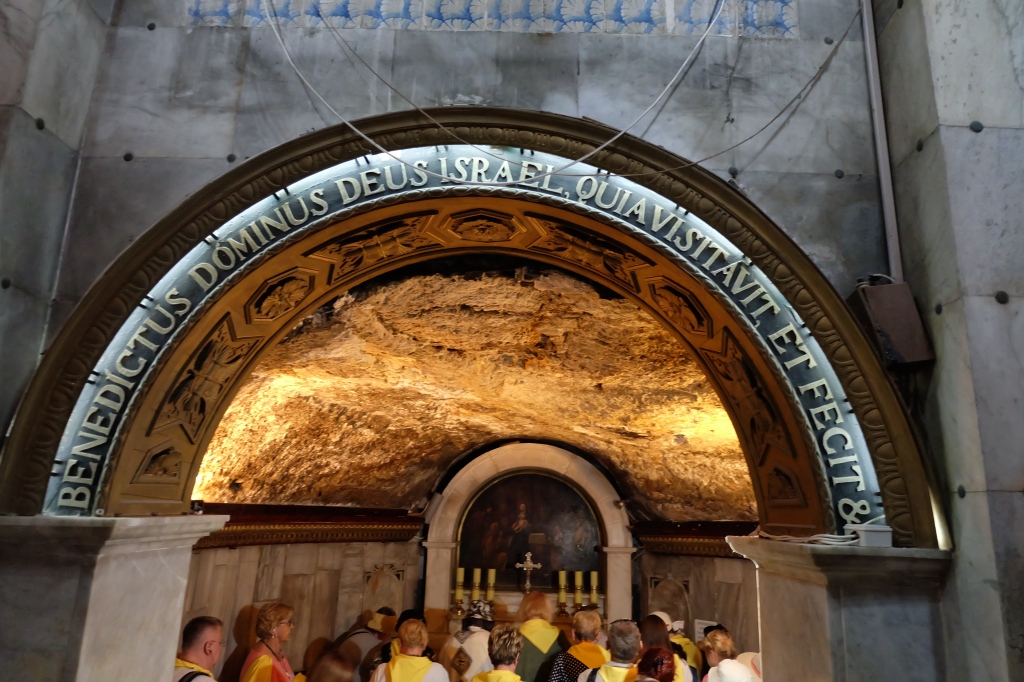
Zechariah his father, filled with the Holy Spirit, prophesied, saying: “Blessed be the Lord, the God of Israel, for he has come to his people and set them free. He has raised up for us a mighty Savior, born of the house of his servant David. Through his prophets he promised of old that he would save us from our enemies, from the hand of all who hate us, He promised to show mercy to our fathers and to remember his holy covenant. This was the oath he swore to our father Abraham: to set us free from the hand of enemies, free to worship him without fear (Luke 1:67-74).

Photo by author, birthplace of St. John the Baptist underneath the church dedicated to him in Judah.

We have reflected last Thursday that Advent and Christmas is a journey that begin in the church, in the celebration of the Mass as Luke opened his Christmas story with the annunciation of John’s birth to Zechariah during their Yom Kippur at the Jerusalem Temple.

Luke’s artistry and mastery in weaving stories brought us right into every scene leading into Christmas – from Jerusalem to Nazareth then to the hill country of Judah in the home of Zechariah until John’s birth where our scene remains today. Tonight and tomorrow, he will be leading us along with Matthew and John to Bethlehem for the birth of the Lord.

But this journeys Luke recounted to us were not only about places but most of all an inner journey into our hearts. As we all know, the destination does not really matter but the journey, the trip. It is most true with our Simbang Gabi too – it is not about completing the nine-day novena that matters most but what have we become!

After tonight and tomorrow’s Masses, our churches would be empty again, only to be filled up on Ash Wednesday, and then Palm Sunday and Holy Thursday. How tragic that on Easter which is “the Mother of all feasts in the Church”, people are miserably absent because they are out in the beach and resort enjoying summer. In fact, more people come to Christmas (Pasko ng Pagsilang) than with Easter (Pasko ng Pagkabuhay) when it is actually the very foundation of our faith.

With our students after Simbang Tanghali last year at the Medicine Lobby of Our Lady of Fatima University, Valenzuela City.

So, what have we become after these nine days of waking up early or staying up late at night, praying, listening and reflecting on the word of God, sharing our material blessings in the collections and gift-giving if we stop going to Mass the whole coming new year?

American Trappist monk Thomas Merton wrote that seeking God is not like searching for a “thing” or a lost object because God is more than an intellectual pursuit or a contemplative illumination of the mind. Merton explained that God reveals Himself to us in our hearts through our communion and fellowships in the Church. 
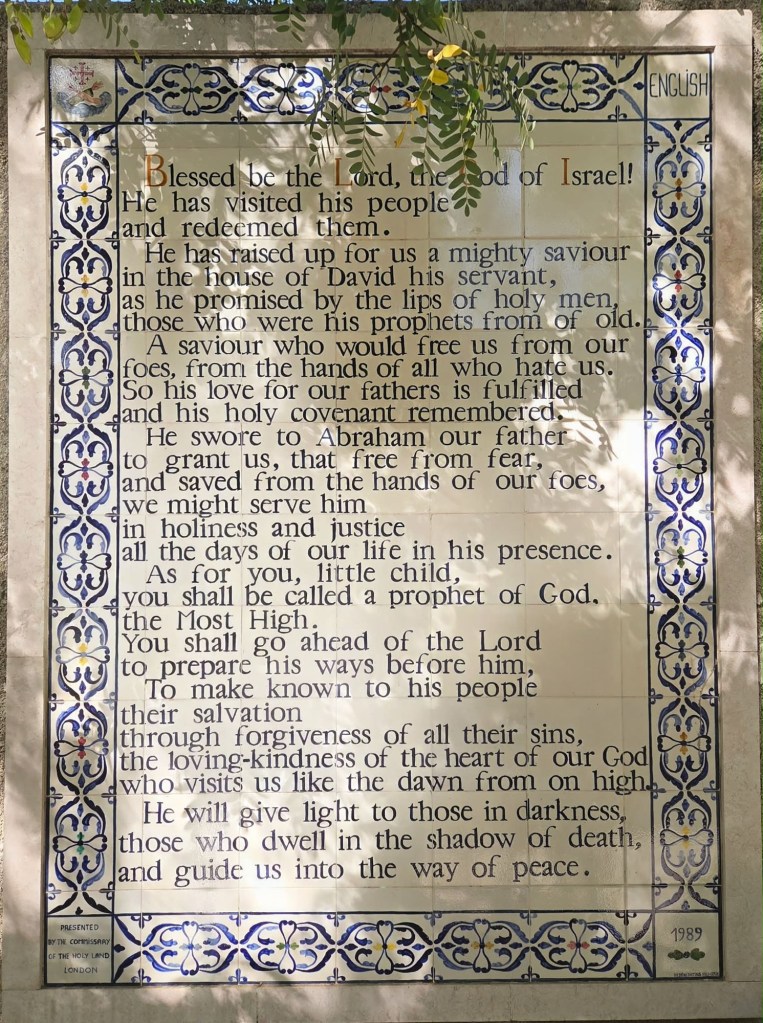
We come to church to celebrate the Mass and pray with the whole community to express our communion with one another in Jesus Christ. It is in this communal aspect of prayer we become holy, when we are transformed and as Zechariah prophesied, we are “set free” by Jesus Christ who is the main focus of his Benedictus.

Who are those enemies Zechariah mentioned twice in his Benedictus? Who are those enemies we have to be set free for God and free to love?

Photo by author, Church of St. John the Baptist, Israel, May 2019.

Again, look at this minute detail Luke used in composing Zechariah’s Benedictus when he spoke twice of the word “enemies”: first of “saving us from our enemies, from the hand of all who hate us” (Lk.1:71) and then, the fulfillment of God’s promise to Abraham “to set us free from the hand of enemies, free to worship him without fear” (Lk.1:74).

Surely, those “enemies” were not just the Romans and other pagans around Israel at that time nor the Pharisees and scribes, the priests and Sadducees of the temple who had hands in Christ’s death for they are now gone. The gospel accounts were written in the past but remain true and relevant at all time in history, especially now more than ever in our own time.

Are we the “enemies” within who think only of our selves even in our religious and spirituality, manipulating God, controlling God?

A friend asked me last week if their priest was right in saying that the Simbang Gabi is the most effective means to obtain special favors from God. I emphatically told her “no”, adding that their priest’s claim is misleading. We cannot dictate God. God blesses everyone, including sinners who do not even go to Mass. We do not need to multiply our prayers as Jesus warned us because God know’s very well our needs before we pray. Then, why pray at all?

We pray and most especially celebrate the Mass especially on Sundays to know what God wants from us because we love God. Period. And that love for God must flow in our loving service and kindness with others. If gaining favors is the main reason we go to Mass or even pray, then, we are the “enemies” who prevent ourselves to freely worship God!

Mr. Paterno Esmaquel of Rappler rightly said it in his Sunday column:

“We are a society obsessed with achievement and success, command and control… Even we who try to complete the Simbang Gabi can plead guilty. During the Simbang Gabi, for example, we are tempted to focus on achieving all the nine days and succeeding for another year. By fulfilling this tradition, we can then ask God (or “command” God, like a genie) to grant our wishes. We can therefore wield greater control over life that is otherwise unpredictable (https://www.rappler.com/voices/thought-leaders/the-wide-shot-missed-simbang-gabi-found-christmas-grace/).

And who are feeding all these misleading and erroneous thoughts on the people? We your priests and bishops!

How sad as we have mentioned last week when many priests have totally lost any sense at all of the sacred in the celebration of the Mass. Some of them not only come unprepared for the celebration without any homily, even so untidy and shabbily dressed and worst of all, make fun of almost everything and everyone that the Mass has become a cheap variety show. Online Masses continue not for evangelization for “shameful profits” in the Sacrament through “likes” and “followers” that some priests are now more concerned in finding ways to be trending and viral instead of how to effectively evangelize the people with our good liturgical celebrations flowing into our witnessing of life.

Yes, we priests and bishops are the enemies right here in the church when we align more with the rich and powerful, when we have no qualms asking/receiving gifts and favors from politicians and still, would want to collect more money and donations from people with our endless envelops that have totally alienated the poor from the church. The poor are the ones who suffer most, paying for the corruption of the politicians who help the clergy in their projects for the poor. Poor Jesus Christ!

Perhaps, on this last day of our novena to Christmas, let us all force ourselves – especially us priests and bishops – to go into silence to identify, to weed out those enemies within and outside us that prevent us from welcoming Jesus Christ in our hearts.

Let us pray to God that He may set us free from these enemies within us, around us so we can be like John the Baptist who will “go before the Lord to prepare his ways, to give his people knowledge of salvation.” Amen. See you tonight or tomorrow, Christmas in the Holy Mass!

Photo by author, Dumaguete City Cathedral, November 2024.

Advent is fulfillment

The Lord Is My Chef Daily Recipe for the Soul by Fr. Nicanor F. Lalog II
Simbang Gabi-8 Homily, 23 December 2024
Malachi 3:1-4, 23-24 <'[[[[>< + ><]]]]'> Luke 1:57-66
Photo by author, Church of St. John the Baptist, the Holy Land, May 2019.

We are now in our penultimate day of our Simbang Gabi. I love that word “penultimate” so often found in the sports page that means second to the last of the series.

From the Latin prefix pen- meaning “almost” + ultimatum for “last”, penultimate literally means “almost last” which gives a sense of fulfillment and of completion – exactly how we feel this eighth day of Simbang Gabi that is almost over with everything already fulfilled in our readings and prayers for Christmas.

When the time arrived for Elizabeth to have her child she gave birth to a son. Her neighbors and relatives heard that the Lord had shown his great mercy toward her, and they rejoiced with her. When they came on the eighth day to circumcise the child, they were going to call him Zechariah after his father, but his mother said in reply, “No. He will be called John.” But they answered her, “There is no one among your relatives who has this name.” So they made signs, asking his father… He asked for a tablet and wrote, “John is his name.” Immediately, his mouth was opened, his tongue freed, and he spoke blessing God. All who heard these things took them to heart, saying, “What, then, will this child be?” For surely the hand of the Lord was with him (Luke 1:57-62, 63-64, 66).

Painting of “Saint Luke Drawing the Virgin” by Flemish painter Roger van der Weyden (1400-1464); photo from en.wikipedia.org.  

See again the artistry and advocacy of Luke as an evangelist and a journalist. We can imagine the scene, experience the joy and excitement of the event in the tight-knit community with all the wonderful elements of a drama in real life.

Leading the scene is Elizabeth, the priest’s wife barren for years and beyond hope now gives birth to a son, creating excitement and gossip among the many Marites. Then Zechariah the priest who was silenced for nine months due to his doubts with the good news announced to him by the angel finally spoke praising God, filled with gratitude and wonder. And of course, the uzis (usiseros), the neighbors who shared in the joy and for a good reason and intentions wanted the baby named after his father.

That’s when Luke showed his skillful mastery of weaving together a wonderful piece of tapestry clearly designed by God that surprised everyone, including us today. “When they came on the eighth day to circumcise the child, they were going to call him Zechariah after his father, but his mother said in reply, “No. He will be called John.” But they answered her, “There is no one among your relatives who has this name.” So they made signs, asking his father… He asked for a tablet and wrote, “John is his name.” Immediately, his mouth was opened, his tongue freed, and he spoke blessing God.

Again, notice another minute detail mentioned by Luke when he called Elizabeth “his mother”.

Photo by author, Church of St. John the Baptist, the Holy Land, May 2019.

Of the four evangelists, Luke is the one who gave a lot of emphasis on the role of women in the society, especially the ancient Jewish one that was strongly patriarchal.

In the Visitation story yesterday, it was only Luke who had written a scene in the whole Bible with two women together conversing and in very positive mood. Women were so rarely put together in one scene especially in the Old Testament, a sort of what we may call as “gender bias” because women were always at odds with each other, even quarreling. Except for the Book of Ruth where we find two women not only in a single scene but a whole book and yet very pronounced there how it was Naomi the mother-in-law always portrayed in control or leading, always speaking while Ruth was silent, giving an impression of being so lovely yet very soft even submissive to elders and men.

Luke wrote the Visitation scene to clarify all these gender bias of their world then that persists even to our own time. Luke made a loud and clear statement in putting together Elizabeth and Mary in this one scene, an old, barren woman and a virgin, unmarried maiden both so blessed by God with infants in their wombs. Not only men are called by God to a special mission but most especially women who give birth. Elizabeth and Mary represent all the women of the world to remind everyone for all time that they are created in the image and likeness of God, with same dignity as men who must be respected at all times as indwelling of the Holy Spirit.

Photo by Pixabay on Pexels.com

Notice how throughout the scene from the annunciation to Zechariah and the Visitation, the wife of Zechariah was referred to by her name Elizabeth but, when controversy arose about the name to give her son, Luke emphatically wrote “his mother” to show that she has every right over her son, reaching its climax when Zechariah affirmed the mother as he wrote “John is his name.”

Think of those moments in your life when there are reversal of roles and suddenly God threw you – catapulted you – to a major role in life you only entertained in your wishful thinking and daydreaming because you have given them up, you have surrendered it due to a very long time of being disappointed like Elizabeth or Zechariah?

Think of those times when you realized, when you felt being at the center of attention for a good reason because you are good, you are so blessed, you did the right thing? How do you feel of the grace of God?

Think of those times when you did something so good that prompted others to “prepare the way of the Lord” like John the Baptist, when people around you were wondering what else you would achieve because clearly, God is with you?

On this penultimate day to Christmas, take time to speak God from your heart as you prepare for the fulfillment of His promise to you. I tell you, claim it now whatever you are asking God for Christmas. Remember what the angel told Mary at the annunciation, “nothing will be impossible for God.” Dare to open yourself to God, create a space within you for Him alone and let Him lead you like Zechariah whose name means “God remembers”, Elizabeth which means “God has promised” and John, “God is gracious.”

On this penultimate day to Christmas, we are assured God is gracious because God remembers His promise always. Amen. Have a blessed week ahead.

Photo by author, birthplace of St. John the Baptist underneath the Church of St. John the Baptist, the Holy Land, May 2019.

Advent is God’s tenderness & sweetness

The Lord Is My Chef Sunday Recipe for the Soul by Fr. Nicanor F. Lalog II
Fourth Sunday in Advent-C, Simbang Gabi-7, 22 December 2024
Micah 5:1-4 ><}}}}*> Hebrews 10:5-10 ><}}}}*> Luke 1:39-45
Photo by author, Baguio City, March 2020.

Christmas is a story of love, about the meeting of lovers with God as the Great Lover who gave us His only Son because of His immense love for us. But, this love is not the kind of love conveyed by the cheesy Christmas tunes “Pasko na Sinta Ko” and “Last Christmas”.

The word “lovers” may be too serious as a term for us to relate this with today’s gospel of the Visitation of Mary to her cousin Elizabeth though both women were so in love with God who clearly loved them so much with children in their womb bound to change the course of human history forever. They were also filled with love for each other as expression of their love for God. And when there is love, there is always tenderness and sweetness that all happen in the context of a visitation that we must first clarify.

Photo by author, Church of Visitation, Israel, May 2017.

Visit and visitation may seem to be one and the same as both share the Latin root vidi, videre which is the verb “to see” as in video and visual. But, a visit is more casual and informal without intimacy because it is just “a passing by” or merely to see. It is more concerned with the place or the location and site and not the person to be visited. We say it clearly in Filipino as in “napadaan lang” when it just so happened you were passing by a place and even without any intentions, you tried seeing someone there. 

On the other hand, visitation is more commonly used in church language like when a bishop or priests come to see the parishioners in remote places; hence, a chapel is always called a visita where priests “visit” to celebrate Mass and check on the well-being of people living in areas far from the parish. Aside from being the venue for the celebration of Masses, the visita serves as classroom for catechism classes and other religious even social gatherings in remote barrios. Now as a chaplain in a University with a hospital, I do sick visitations every Sunday after our Mass to anoint and bring communion to our patients.

Thus, visitation connotes a deeper sense in meaning because there is an expression care and concern among people, a kind of love shared by the visitator/visitor and the one visited like Mary and Elizabeth. Visitation is more of entering into someone’s life or personhood as reported by Luke on Mary’s visitation to Elizabeth where Mary “entered the house of Zechariah and greeted Elizabeth” (Lk.1:40), implying communion or the sharing of a common experience.  In this case, the two women shared the great experience of being blessed with the presence of God in their wombs! 

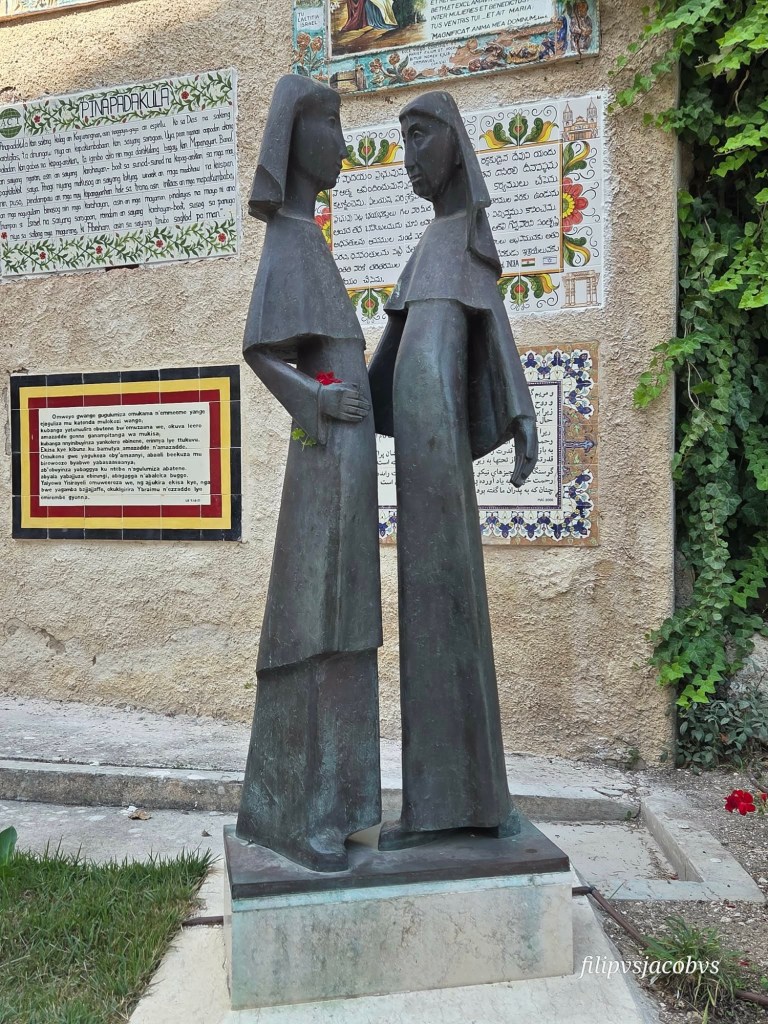
Photo by author, bronze statues of Mary and Elizabeth at the patio of the Church of Visitation, Israel, May 2017.

Visitation is a sharing or oneness in the joys and pains of those dear to us.  The word becomes more meaningful when we try to examine its Filipino equivalent –“pagdalaw” from the root word “dala” that can be something you bring or a verb to bring. 

When we come for a visitation, we dala or bring something like food or any gift. But most of all we bring our very selves like a gift of presence wherein we share our total selves with our time and talents, joys and sadness, and everything to those being visited that Mary did exactly in her visitation of Elizabeth where she brought with her the Lord Jesus Christ in her womb.

This fourth Sunday of Advent, we are invited to become like Mary in the visitation of others to bring Christmas and Jesus Himself to others by allowing our very body to be the “bringer” or taga-dala of Christ, the highest good we can bring as pasalubong in every visitation we make. Here again is another beautiful Filipino word, pasalubong that is literally the gift you bring when you visit somebody. It has a verb equivalent that is salubong or meeting/encounter. To salubong or meet another person, one has to leave one’s place, one has to leave behind one’s biases and mistrust to be empty to meet the other person.

How lovely and sweet if we can leave our negativities behind this Advent and Christmas so we can dala (bring) Jesus to family and friends and strangers to therefore salubong (meet) to experience God’s tenderness and sweetness in Jesus Christ.

Photo by author, Fourth Sunday of Advent 2022, Chapel of Basic Education, Our Lady of Fatima University, Valenzuela City.

Tenderness and sweetness in Filipino are often translated in just one word which is “malambing” from “lambing” that has no direct English translation except that it connotes a loving affection; however, both terms are more than just affections but stirrings from the heart that move us into action. 

Tenderness is very much like gentleness; the former is more focused while the latter is very general attitude. Tenderness is more than being soft and gentle but an awareness of the other person’s weaknesses, needs and vulnerabilities. A tender person is one who tries not to add more insult to one’s injuries or rub salt onto one’s wounds so to speak. A tender person is one who tries to soothe and calm a hurting person, trying to heal his/her wounds like God often portrayed in many instances in the bible in lovingly dealing with sinners filled with mercy. 

Like God, a person filled with tenderness is one who comes to comfort and heal the sick and those taking on a lot of beatings in life. When Jesus Christ came, He also personified this tenderness of God like when He was moved with pity and compassion for the sick, the widows, the women and the children and the voiceless in the society. Tenderness is coming to heal the wounds of those wounded and hurt, trying to “lullaby” the restless and sleepless. Mary visited Elizabeth because she also knew the many wounds of her cousin who for a long time bore no child, living in “disgrace before others” as she had claimed (Lk.1:25).

Photo from The Valenzuela Times, 02 July 2024.

Sweetness always goes with tenderness. It is the essence of God who is love. Anyone who loves is always sweet, something that comes naturally from within, bringing out good vibes.  It is never artificial like Splenda, always flowing freely and naturally that leaves a good taste and feeling to anyone. In the Hail Holy Queen, Mary is portrayed as “O clement, O loving, O sweet Virgin Mary” to show her sweetness as a mother. There are no pretensions and pompousness in being sweet, never needs much effort to exert in showing it for it comes out naturally and instantly.

Tenderness and sweetness are the most God-like qualities we all have but have buried deep into our innermost selves, refusing them to come out because of our refusal to love for fears of getting hurt and left behind or, even lost. When Mary heard Elizabeth’s condition, she simply followed her human and motherly instincts that are in fact so Godly – she went in haste to visit her. Tenderness and sweetness are the twin gifts of Christmas to humanity when God almighty became little and vulnerable like us so we can be great and powerful like Him in being able to love. 

Photo by author, Archdiocesan Shrine of Nuestra Señora De Guia, Ermita, Manila, 28 November 2024.

It is the final Sunday of Advent. In a few days it will be Christmas day and we still have enough time to empty our hearts of sins and bitterness to be filled with God’s love, sweetness and tenderness in Christ.

Let me leave you with my favorite quote from the novel “The Plague” by Albert Camus, “A loveless world is a dead world, and always there comes an hour when one is weary of prisons, of one’s work, and of devotion to duty, and all one craves for is a loved face, the warmth and wonder of a loving heart.” 

Let that love in you come out this Christmas and hereafter; simply be like the child Jesus and be surprised with His tremendous power to transform the world.  Amen. Have a blessed, sweet and tender Christ-filled week ahead!

Advent & Christmas are a love story

The Lord Is My Chef Daily Recipe for the Soul by Fr. Nicanor F. Lalog II
Simbang Gabi-6 Homily, 21 December 2024
Zephaniah 3:14-18 ><}}}*> + ><}}}*> + ><}}}*> Luke 1:39-45
From Clergy Coaching Network, posted on Facebook 13 December 2023.

Advent and Christmas are a story of love of God’s love for us all that “He gave us His only Son.”  No wonder, it is on this blessed Season when we share gifts, and most of all, our gift of self to others. 
My youngest sister Bing works as an area manager of a Jollibee franchise in Bulacan.  A few years ago before Christmas during our family conversations over dinner, she told us of a story shared by the Jollibee manager at NLEX.  According to her story, two nuns entered their store there with some Dumagats with their driver.  Right away, the store manager noticed how the two nuns were busy “calculating” the meal they have to take until settling for the cheapest, a rice meal of shanghai rolls.  Obviously, the religious sisters have limited budget which did not escape the intuition of the lady manager who offered to treat them to a ChickenJoy meal for free.  But the nuns felt shy and refused the manager’s offer, asking her not to be bothered at all until another woman with two kids in tow interrupted them, giving them ChickenJoy buckets with extra rice enough for the religious sisters and their companions!  The woman refused to be identified and simply said that she too had noticed the nuns trying to budget their limited money that she ordered right away the food.  For her part, the kind manager treated them instead for desserts to complete their meal. 

That’s when my sister said “talagang Pasko na nga” (it’s really Christmas).

From Facebook, 10 December 2024.

Since the start of Advent, we have been advocating that we also remember on those not feeling merry and bright this Christmas for various reasons like having family problems, financial woes, grieving for loved ones, dealing with mental issues or serious sickness of a loved one (see https://lordmychef.com/2024/12/13/advent-is-journeying-like-joseph-mary-to-bring-jesus-in-darkness/).

Yesterday in our reflection on the annunciation of the birth of Christ, we said of the need for us to enter in a dialogue with others to let Christmas happen. Dialogue is not just about improving relationships with others by thinking through issues and problems but more of a way of being with others, of being present with others to experience and feel their situations, exactly what Jesus did in being human like us in everything except sin.

At the annunciation of the Lord’s birth, Mary dialogued with Gabriel unlike Zechariah who was eventually silenced in order to be open to God. True dialogue as an incarnation like Jesus with God and with others can only happen when we are convinced of God’s love for us. Mary went in haste to visit Elizabeth because she felt God’s love in her that she wanted to share it with her cousin right away.

Mary set out in those days and travelled to the hill country in haste to a town of Judah, where she entered the house of Zechariah and greeted Elizabeth (Luke 1:39).

Photo by author, Church of the Visitation, the Holy Land, May 2017.

Try imagining that scene of Mary’s Visitation of Elizabeth. What did you feel? Did you feel some sense of tenderness, of being loved, of being touched by God?

While praying over this scene as I recalled my second pilgrimage to the Holy Land when we went to the Church of Visitation, I remembered my early years in the ministry when I always felt ashamed accepting invitations for dinners because I could not bring a gift.

Maybe part of our upbringing, I have always felt inadequate coming to another home bringing nothing. That is why I keep cards and stampitas in my desk along with some chocolates so that when I visit families, I could bring a little something for them. 

It was only in 2011 after being assigned to a parish of my own when I was able to let go of this feeling of inadequacy after a parishioner told me how they deeply appreciated priests visiting them at home, sharing in their meal because they felt so blessed. That is why most of us priests are fat – we always get invited to meals and gatherings that sometimes I wonder if people really love me when they “force” me to eat more of their cholesterol-laden food and sugary desserts they serve! 

It was during these home visitations especially of the sick and for simple meals I felt “rootedness” or oneness with people, of being “a member of each family yet belonging to none” as the famous French Dominican Fr. Lacordaire said a hundred years ago about priesthood.  The more I visit families, bidden or unbidden, the more I feel the joy of my priesthood because of the family and community that I belong to. That is when I realized too that celibacy is lived in a community both of priests and laity.

For 26 years in schools and the parish and now the hospital, the more I felt Jesus present in me as a priest as I live among brother priests and lay people. Tenderness and intimacy take on a new dimension that is spiritual in nature because I don’t just touch people but am also being touched by them.  Every time they thank me, I also thank them for blessing me with their warm welcome. It is like Mary and Elizabeth during the Visitation blessed abundantly by God and still sharing that same blessing with each other. 

Photo by author, bronze statues of Mary and Elizabeth at the patio of the Church of Visitation, May 2017.

That is the meaning and significance of the Visitation: inasmuch as Christ comes to us individually, He behooves us to share Him also with others to form a community. 

Mary visited Elizabeth not merely to help her out in her pregnancy nor to confirm what Gabriel had told her but simply because she was so convinced of God’s love that she wanted to share it with her cousin. 

Mary visited Elizabeth because she felt touched by God in the Annunciation and wanted so much her cousin to be touched also by the Lord!  And indeed when Luke wrote that “When Elizabeth heard Mary’s greeting, the infant leaped in her womb, and Elizabeth, filled with the Holy Spirit, cried out in a loud voice and said, ‘Most blessed are you among women, and blessed is the fruit of your womb'” (Lk.1:41-42).

Faith in Christ leads to love that moves us to bond with one another to form Christ’s body, a community of believers, a community of beloved, a community of lovers. 

After receiving Jesus, like Mary, we have to move to the Visitation and share Him with others.  To be able to do this, we must first be convinced that God loves us so much like what the Prophet Zephaniah said in the first reading and what Elizabeth told Mary in the Visitation, “Blessed are you who believed that what was spoken to you by the Lord would be fulfilled” (Lk.1:45).

There’s a saying, “If you have love in your heart, you have been blessed by God; if you have been loved, you have been touched by God.”

Let God touch somebody today with your visitation… believe and feel the love of Jesus! Amen.

Advent as a dialogue leading to Christmas, the presence of God

The Lord Is My Chef Daily Recipe for the Soul by Fr. Nicanor F. Lalog II
Simbang Gabi-5 Homily, 20 December 2024
Isaiah 7:10-14 <*((((>< + ><))))*> Luke 1:26-38
Photo by Mr. Boy Cabrido, National Shrine of Our Lady of Mt. Carmel, QC, 16 December 2024.

Last Monday at the start of Simbang Gabi, one of our priests became viral when at the recessional of their Mass while the choir was joyfully singing “Pasko na! Pasko na!”, he sarcastically sang “Hindi pa! Hindi pa!”

Many people laughed at the viral video with some commenting that Father was right because it wasn’t Christmas yet while a liturgist advised choirs to check the many choices of Advent songs now available online. But, sad to say, the people missed the whole point of the incident.

What our brother-priest did was not funny at all in putting to shame his own choir members and most of all, in destroying the solemnity of the Mass.

And the problem was not really the choir at all but the priest himself. What the priest did at the end of the Mass was a self-indictment of his lack of formation for his choir members and of any dialogue at all.

Photo by author, Advent in previous parish, 2018.

Advent is a dialogue between God and humans that led to the presence of God among us in Jesus Christ on Christmas. It is a process that continues in our own time as we are all called to be open to God and with others for dialogue like Mary in the annunciation of Christ’s birth by Archangel Gabriel.

Dialogue is more than conversing to improve relationships among people in a community or organization but a way of being with others as opposed to a way of thinking through issues and problems only. Dialogue is being present with others, of giving one’s self to feel and listen and experience the other person.

Luke shows us in his second Christmas story today how this true meaning of dialogue between God and Mary happened.

In the sixth month, the angel Gabriel was sent from God to a town of Galilee called Nazareth, to a virgin betrothed to a man named Joseph, of the house of David, and the virgin’s name was Mary. And coming of her, he said, “Hail, full of grace! Then Lord is with you.” But she was greatloy troubled at what was said and pondered what sort of greeting this might be. Then the angel said to her, “Do not be afraid, Mary, for you have found favor with God… But Mary said to the angel, “How can this be, since I have no relations with a man?” And the angel said to her in reply, “The Holy spirit will come upon you, and the power of the Most High will overshadow you. Therefore the child to be born will be called holy, the Son of God. And behold, Elizabeth, your relative, has also conceived a son in her old age, and this is the sixth month for her who was called barren; for nothing will be impossible for God” (Luke 1:26-30, 34-37).

“Cestello Annunciation” by Botticelli painted in 1490; from en.wikipedia.org.

See the artistry and genius of Luke as a storyteller. Yesterday he presented to us the annunciation of the birth of John the Baptist to his father Zechariah while incensing the Holy of Holies in the temple of Jerusalem.

Notice the great differences in the flow of conversations and dialogue in the two annunciations narrated by Luke. Both Zechariah and Mary were troubled at the coming of the angel. And who would not be in a such unprecedented event? However, there is one minute detail we find in Luke’s narration of the two annunciations that reveal something so big and deep in meaning.

According to Luke, “Zechariah was troubled by what he saw, and fear came upon him” (Lk. 1:12) while Mary “was greatly troubled at what was said and pondered what sort of greeting this might be” (Lk. 1:29). Both were troubled which is normal but their reactions differed so great with Zechariah becoming proud while Mary was humbled.

I believe that it was more than their age and differences in social status that Zechariah was simply “troubled” while Mary was “greatly troubled” but it was largely due to their dispositions and openness to God.

Zechariah was proud of his stature and of his intelligence, trying to take hold and control of everything that is why he was seized with fear. When he told the angel, “How shall I know this? For I am an old man, and my wife is advanced in years” (Lk.1:18), Zechariah was troubled and fearful because he felt challenged as a priest much respected in the community, choosing to stand proud of his position and intelligence as if having a child is all an effort of man and woman alone! There was no dialogue as Zechariah was proud that is why he was made mute by the angel. He had forgotten all about God!

Photo by author, Basilica of the Annunciation, Nazareth, Israel, May 2019.

Compare Mary’s reaction to the annunciation, “But she was greatly troubled at what was said and pondered what sort of greeting this might be.”

Luke always portrayed Mary as the listener and doer of the word, the one who ponders at the words spoken to her not only by the angel here but later at the birth of Jesus those spoken by the shepherds, then by Simeon at the Presentation and by Jesus Himself at the wedding in Cana. Mary has always been open to dialogue, to feeling the other person conversing with her. She was not concerned only with the news and information but with the persons involved.

In that sense, there is her remarkable humility and great courage at the same time. True humility is not really about being submissive but most of all being filled with courage, not with fear. Mary as the very young virgin from a poor family in a town nobody gave importance stood fearless before the angel as she took hold of herself to ponder on the words spoken to her. Despite the very unprecedented moment with an angel, Mary had that inner engagement with the words she had just heard without any violent reactions.

Photo by author, December 2018.

Unlike Zechariah, Mary was the one actually in control of herself and of her emotions. The Jedi Master Yoda of Star Wars said it so well, “fear leads to anger, anger leads to destruction”. Zechariah was afraid of losing power and control but Mary was not bothered at all. In fact, she faced the challenge head on, reflecting deep in her what is this going on? Am I awake, is this a dream would most likely be the words playing in her mind and heart. Mary had presence as she tried to feel the angel and later God that no wonder, Jesus came to her womb and we have Christmas!

The humility and courage of Mary became more evident when she said to the angel, “How can this be, since I have no relations with a man?”

She was not afraid at all to be become the Mother of God! There was already her willingness to submit, as if telling the angel, “OK let’s do it but tell me how?” whereas Zechariah was argumentative, trying to escape responsibilities? Such was the attitude too of Ahaz in the first reading, denying he won’t test God when in fact he had already aligned with other kings in the region as he feared the invading enemies near his borders.
It was at this moment when the good news became most closest to us through Mary when the angel explained of the coming of the Holy Spirit, of how the power of God would overshadow her, assuring her that nothing is impossible with God.

How wonderful is this scene for us to emulate Mary so that we experience Christmas daily in our lives, not only of God coming but being present in us and among us. Can we dare to be open before God like Mary? Have a blessed Friday!

Photo by author, Fatima Avenue, Valenzuela City, December 2024.