Lent is seeing God in others

The Lord Is My Chef Daily Recipe for the Soul by Fr. Nicanor F. Lalog II
Monday in the First Week of Lent, 19 February 2024
Leviticus 19:1-2, 11-18 ><))))*> + + + <*((((>< Matthew 25:31-46
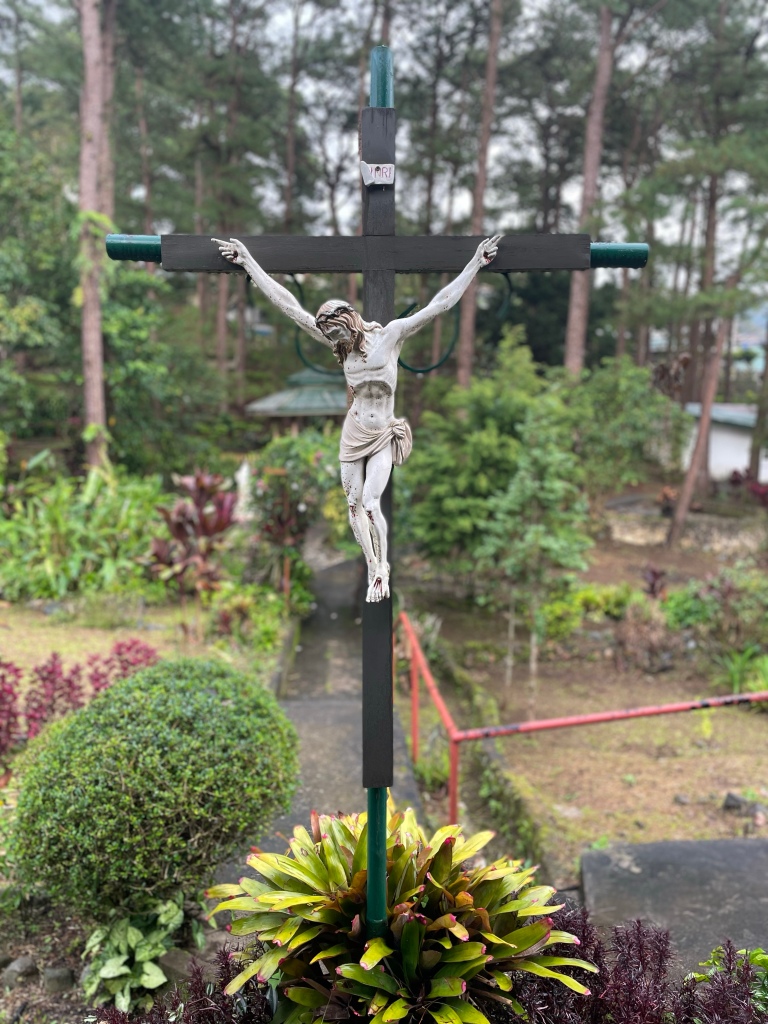
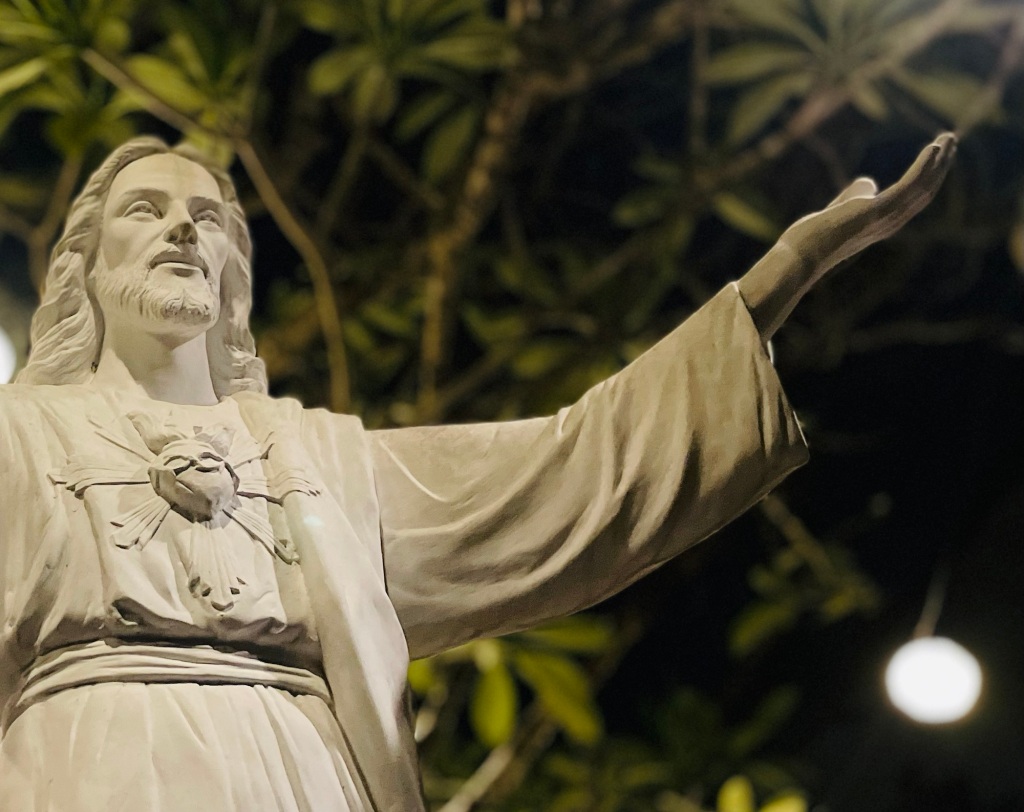
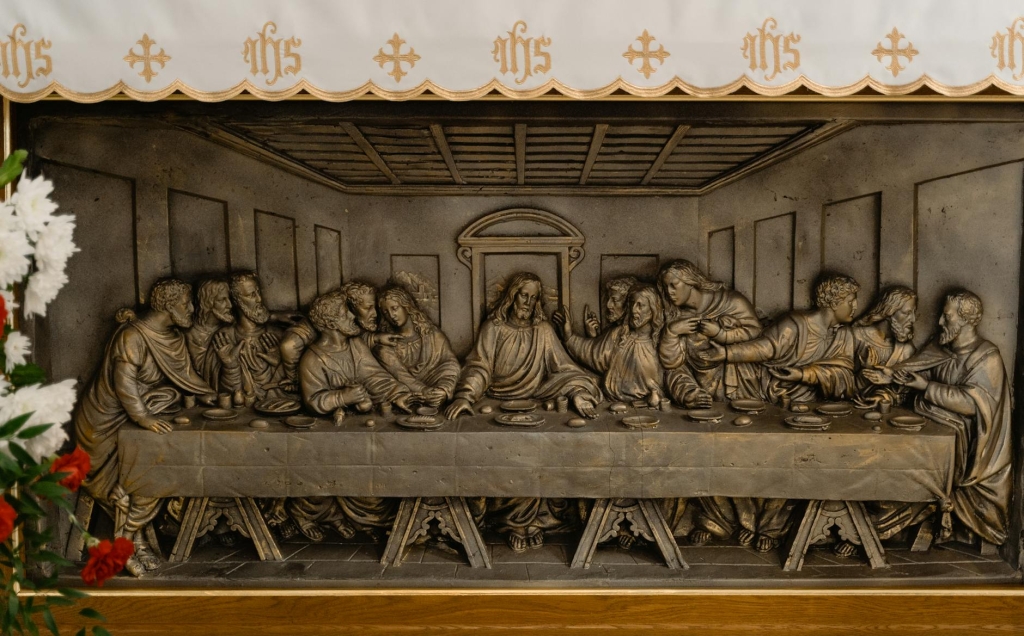
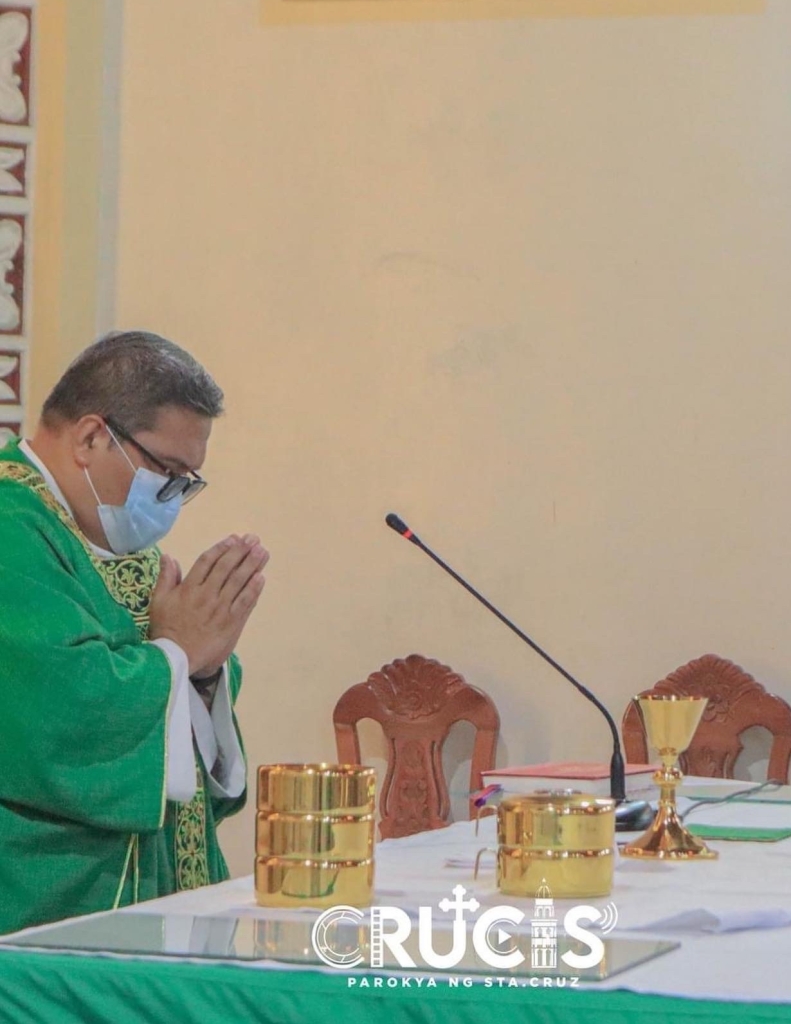
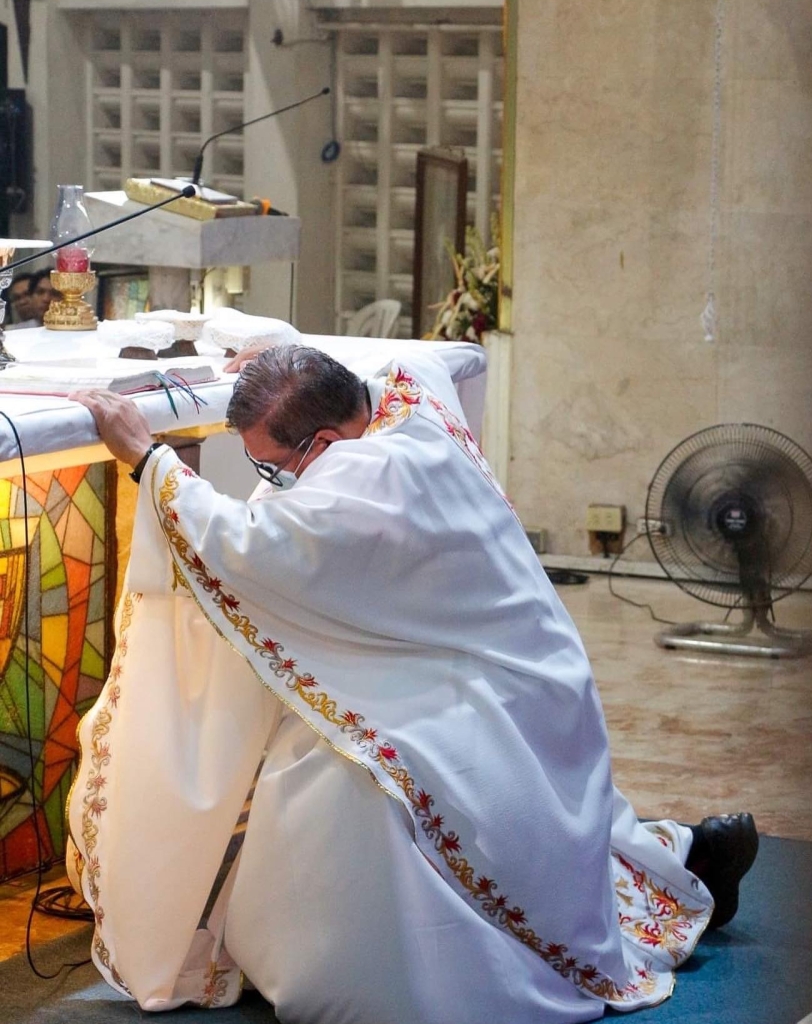
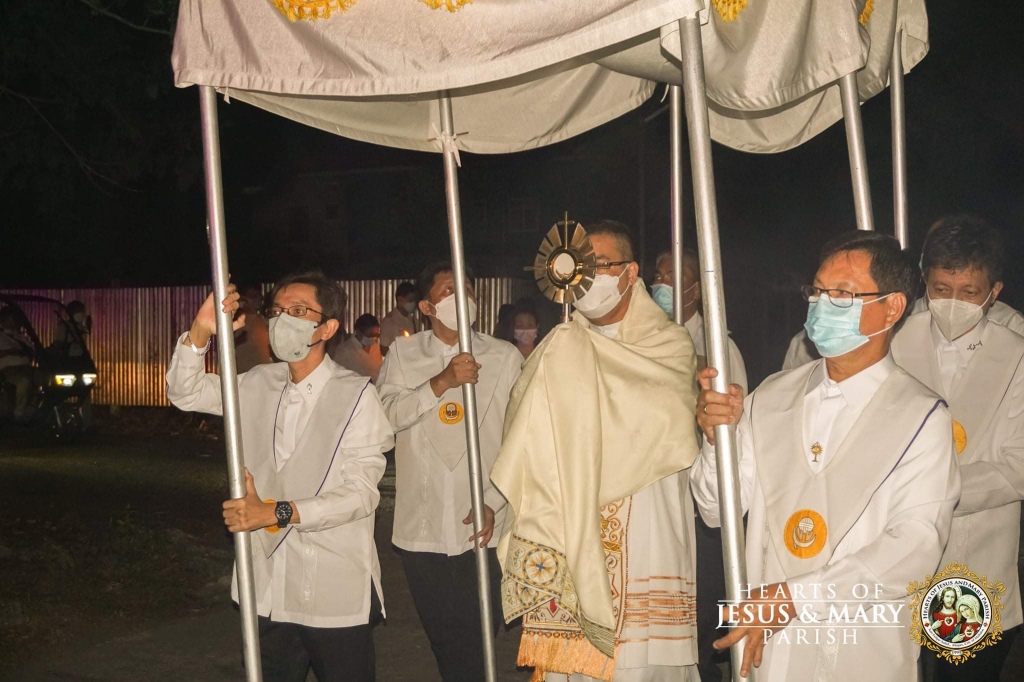
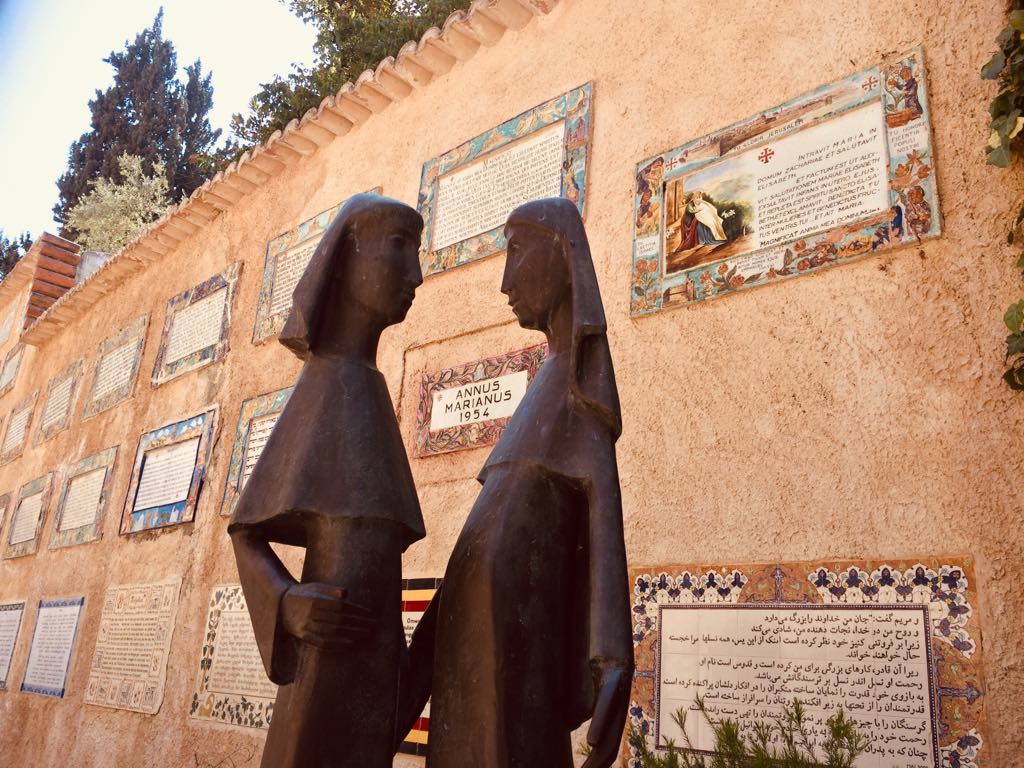
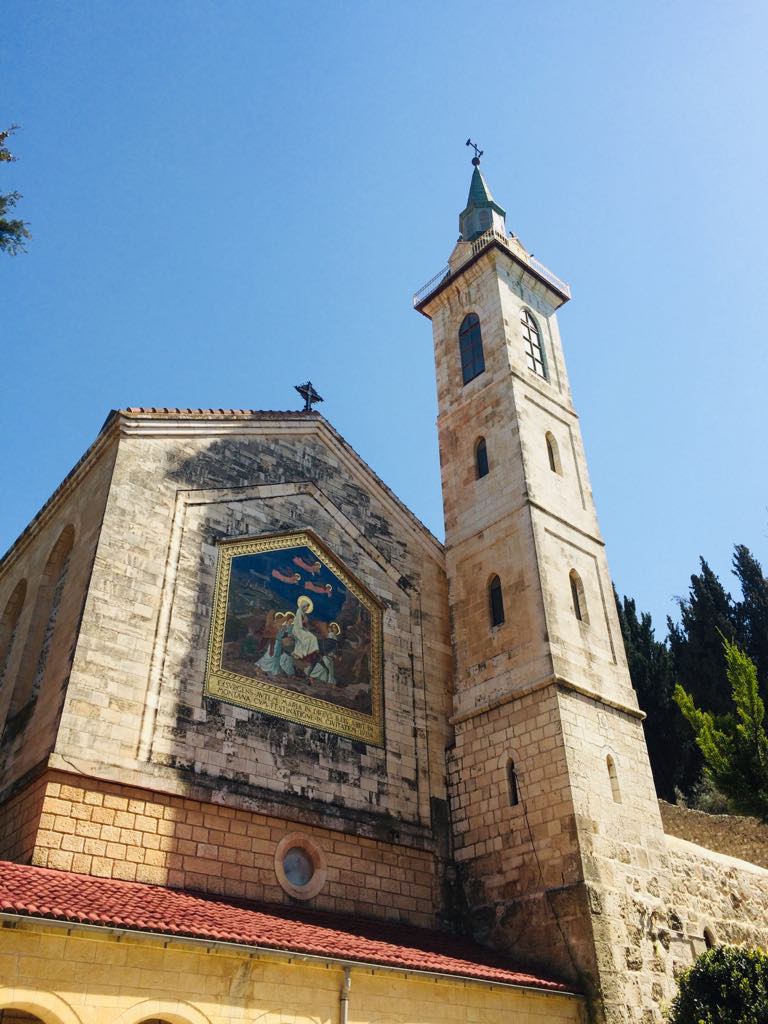
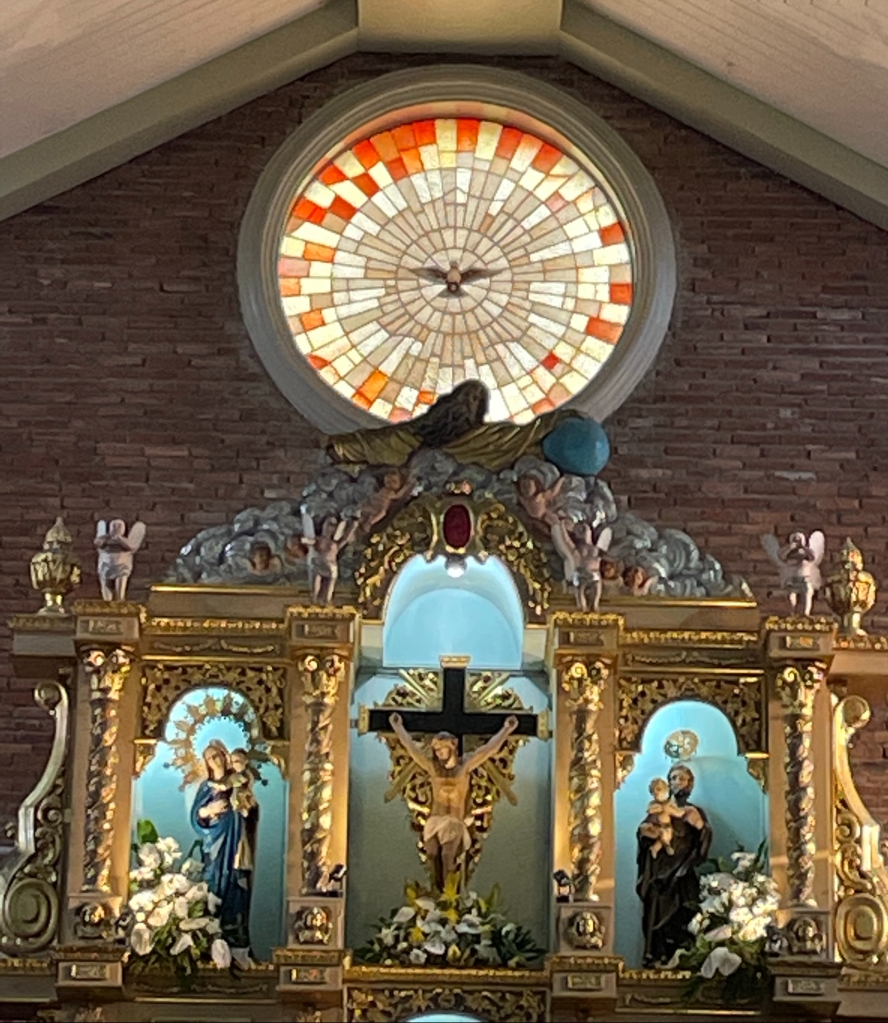
Photo by Mr. Jay Javier in Quiapo, Manila, 09 January 2024.
Today I pray dear God
to your directive since the
Old Testament until the coming
of your Son Jesus Christ:
"Be holy , for I, the Lord your God,
am holy" (Leviticus 19:2).
But, what is really to be holy,
what is to be like you,
God?
Perfect.
Loving.
Kind.
Good.
Merciful.
Forgiving.
Caring.
Understanding.
Warm.
Open.
There are so many other
traits and characteristics I can think
of you as being holy,
O God,
that we have to imitate
to be like
you
that makes holiness
so difficult,
elusive,
and impossible!

Who can really be like you
when we are so different from you?
But, thank you in sending us
Jesus who not only made it
possible for us to be holy
like you, God,
but also made it
simpler:

“Amen, I say to you, whatever you did for one of these least brothers of mine, you did for me… Amen, I say to you, what you did not do for one of these least one, you did not do for me.”

Matthew 25:40, 45
On this blessed season
of Lent,
teach us to fast
and be empty of ourselves,
of our pride,
and of our sins
so we may be filled with YOU;
holiness is first of all
being filled
with you, O God,
that we feel,
we see,
we think
of others like you,
that is, of seeing you
in each one of us.
When we begin to
realize and experience
that you fill us, O God,
then we learn to be
generous in sharing
more of ourselves,
of our time,
of our talent,
of our treasure,
and most of all,
of you dear God
dwelling in us
with others;
we can only be holy
not when we try being
like you but more of finding
you first in us
in order to find you
in others too!

Then,
maybe we stop
fighting,
committing every sin
against each other
if only we can see you
dwelling,
filling
each one of us.
Amen.

True love leads to freedom: Ash Wednesday on Valentine’s Day

Forty Days of Lent by Fr. Nicanor F. Lalog II
Ash Wednesday, 14 February 2024
Joel 2:12-18 + 2 Corinthians 5:20-6:2 + Matthew 6:1-6, 16-18
Illustration from Archdiocese of Galveston-Houston, 14 February 2018.

This is not the first time that Valentine’s Day falls on Ash Wednesday, the start of the holy season of Lent of 40 days before Holy Week in preparation for Easter. The last time they coincided was in February 14, 2018. 

Actually, there is no problem at all with both happening together on the same date. Both celebrations have the heart as its focus, inviting us to examine how much love we have in our hearts, because, ultimately when we die and face God our Creator, He will judge us on how truly we have loved while here on earth. 

And because they both speak of love, Ash Wednesday and Valentine’s Day confront the reality of death.

Ash Wednesday reminds us that we all die which is the meaning of the imposition of the ash on our foreheads while the priest says, “Remember that you are dust, and to dust you shall return.”  But, we do not merely die and end life on earth. Notice how the ashes imposed on us are shaped as cross because Ash Wednesday assures us that we die in the love of Jesus Christ our Savior who leads us into eternal life. 

Meanwhile, Valentine’s reminds us of our undying love for those bonds of love we make throughout our lives as lovers, friends, and admirers.  Lovers and couples pledge – with or without God – their love for each other “til death do us part.” Anyone who truly loves and had truly loved knows that death is love’s final test. And the whole world is filled with so many beautiful stories and magnificent buildings and structures that remind of us one’s undying love like the Taj Mahal in India.

Therefore, today is a wonderful celebration, an amazing juxtaposition of the sacred Ash Wednesday and the secular Valentine’s Day on this February 14 so that we may purify the love in our hearts, that our love is not merely expressed in words but most especially in deeds.

From Sisters of Providence of Saint-Mary-of-the-Woods.

For his Lenten Message this year, the Holy Father had chosen the theme of freedom in his reflection by going back to the Exodus experience of the Israelites. Indeed, love and freedom go together. Always.

Lent is the season of grace in which the desert can become once more – in the words of the prophet Hosea – the place of our first love (cf. Hos 2:16-17). God shapes his people, he enables us to leave our slavery behind and experience a Passover from death to life. Like a bridegroom, the Lord draws us once more to himself, whispering words of love to our hearts.

Pope Francis, “Through the Desert God Leads Us to Freedom” (Lent 2024)

Love is most true when there is freedom. We cannot truly love if we are not free. And the more we love, the more we are free, that is, free to love, free to be caring, free to be kind, free to be honest and true, free to be sincere.

From simchafisher.com.

Remember your first crush or your first love. Amid all the exciting feelings and “kilig moments” we have had every time our eyes met those of our crush or when our skin touched each other, one thing we always made sure was to keep it a secret. 

During our time, it was imperative that we boys and men keep our feelings to our selves about our crush and love interests because, the moment our love, our feelings are made known, problems happen. Everyone in the class or barkada starts teasing, making us unnatural in our words and actions as they dictate us on what to do and what to say. Our crush or beloved then gets irritated and uncomfortable with all the attention she gets not really from us but from every Maritess and Marisol around! 

I have realized later in life that when something so deep is so true, most often we treasure it in our hearts, keeping it in secret not for anything else but to make it grow and mature. In this case, into selfless love. People who brag their love or crush or just everything in life are often the most untrue and unfree. Everything is just a show or palabas for them, a front that is not real which is what we see on social media. Jesus tells us true love that is free is something more of the inside than of the outside appearances: 

Jesus said to his disciples: ”Take care not to perform righteous deeds in order that people may see them; otherwise you will have no recompense from your heavenly Father. When you give alms, do not blow a trumpet before you… When you pray do not be like the hypocrites, who love to stand and pray in the synagogue and on street corners so that others may see them… When you fast, do not look gloomy like the hypocrites… your Father who sees what is hidden will repay you.”

Matthew 6:1-2, 5, 16, 18
Photo by author, Our Lady of Fatima University-Laguna, 19 January 2024.

Love and freedom go together. Love grows and deepens only when there is freedom because love is a grace from God that naturally flows out from us, from our being. There is no need to make noise about it or be dramatic for everyone to see. Just let your love flow as the song from the 1970’s said.

When we “manipulate” our love, we become self-conscious instead of being mutual. Love is always other centered as the late American Trappist monk Thomas Merton said, “the sign that we truly love is when we love somebody more than ourselves.” When we have so much of ourselves, when we are selfish, that is when we reject God and eventually others.  That is why every sin is essentially a refusal to love which bothers us inside as we feel guilty and become unfree to be who we are, beloved and loving. 

Lent invites us to love and be free through conversion, a turning of our hearts away from the wrong loves we have pursued and led us to loneliness, emptiness, and sadness within. Love and freedom come from within our hearts where God dwells; hence, the call of the Prophet Joel to turn our hearts back to God: 

Photo by author, Lent 2019.

“Even now, says the Lord, return to me with your whole heart, with fasting, and weeping, and mourning; rend your hearts, not your garments, and return to the Lord, your God.”

Joel 2:12-13

To speak of the heart is to speak of the whole person whose only fulfillment is found in God.  A heart that is far from God is a person separated not only from God but also from others, even from himself.  Only a heart that is inclined to God is able to truly love and be truly free. A heart without God is a heart without love, a heart that is not free because it had gone cold and dead.

Conversion then leads us to reconciliation, to being one again in God in Jesus Christ as St. Paul admonished in the second reading, “We implore you on behalf of Christ, be reconciled to God” (2 Cor. 5:20). To be reconciled with God is to be one with Him in our hearts through prayer, almsgiving, and fasting that are the hallmarks of the Season of Lent that lead us to true freedom that deepens our love for God and others.

Prayer enables us to pause and regain our freedom to examine our real selves, of how truly free are we especially in this world when there are so many voices dictating us on everything that have left us alienated, lost, and confused within.

Almsgiving sets us free from greed and helps us regard our neighbors as brothers and sisters. It deepens our love for God because our daily encounters with those who beg for our help point us to God Himself who provides us with everything we need. 

Fasting on the other hand weakens our tendency to be self-centered, “disarming” us of our false selves, removing the masks we put to impress others so that we can grow and mature as it makes us more attentive to God and others.

As we begin our 40 days of Lent today, let us journey into our hearts and into the heart of God so we can truly be free to love like Jesus Christ His Son who died on the Cross on Good Friday.  

Ash Wednesday on a Valentine’s Day is the perfect reminder to us all that the Cross is the best expression of love symbolized by the heart that is free and willing to suffer and die for a beloved. May we “not receive the grace of God in vain” (2 cor. 6:1). Amen. Have a blessed week ahead.
“What Might Have Been” by Lou Pardini (1996)

The Lord Is My Chef Sunday Music by Fr. Nicanor F. Lalog II, 11 February 2024
Photo by Mr. Vigie Ongleo in Virginia, 02 February 2024.

It’s the final Sunday in Ordinary Time before we begin our 40-day journey of Lent this Ash Wednesday which falls on February 14th, Valentine’s Day. That is why we have chosen a music that is light and easy and romantic, though poignant about those big what ifs in life, What Might Have Been by Grammy-nominated Lou Pardini.

Co-written with jazz vocalist Ms. Kevyn Lettau, What Might Have Been is Pardini’s most popular song especially here in the Philippines and Asia that was included in his first solo album Live and Let Live released in 1996. Unknown to many, Pardini’s first composition ever recorded was also Smokey Robinson’s most popular song, Just To See Her released in 1987. It earned Robinson a Grammy while Pardini was nominated to a Grammy too for the composition. From 2009-2022, Pardini was the lead vocalist and keyboardist of Rock and Roll Hall of Fame band Chicago. He had collaborated too with almost major bands and vocalists in his career with some stints in Hollywood providing music in some movies and TV shows.

What Might Have Been tells us the story of a love lost and the resulting regrets by the singer. Most of all, it touches one of everyone’s favorite subject and theme or question in life: ”what might have been” our lives be had we made the right choices or have been better or wiser, perhaps more faithful or understanding?

Somewhere lost in the wind
I’m watching you
Sunlight touching your hair
And I remember
Somehow
We said that we would never stray
But somehow we lost our way
Promises to often spoken
Are easily broken apart
I’m ready this time
I know that I’m
No longer undecided
Don’t want to be a fool wondering…
… What might have been
Trace of forever lingering
Drawing me closer to you
A new beginning
Now I know
There is no doubt
I understand
Just how fragile love can be
I can’t forget
Your memory found me
Now I know where I belong…
I’m ready this time
I know that I’m
No longer undecided
Don’t want to be a fool wondering…
… What might have been

I love that last stanza saying, “I’m ready this time/I know that I’m/No longer undecided/Don’t want to be a fool wondering…/What might have been/.” We find this stanza so appropriate and close with the lessons of this Sunday’s gospel when a leper approached Jesus, knelt before him and begged, “If you wish, you can make me clean.” Moved with pity, Jesus stretched out his hand, touched him, and said to him, “I do will it. Be made clean” (Mk. 1:40-41). 

Many times in life, we are afraid of approaching the love of our life, even God, for so many reasons but later we find them not important at all. Worst, there were times the other person was just waiting for us to make the move or to approach her/him or them.

Jesus is passing by everyday in our lives, welcoming us even in our worst selves or situations like that leper (https://lordmychef.com/2024/02/10/approaching-jesus-approachable-like-jesus/). Let us approach him, go to him and express what’s deepest in our hearts no matter what these may be. Jesus loves us so much. He wants us to come to him and join him in his journey. Let us leave our comfort zones like our past with all of its mistakes and failures, pains and hurts to start anew in him again. It is Christ’s will too that we be better.

Like in that beautiful lines by Pardini, let us be ready this time, decide once and for all to come to Jesus and follow him instead of wondering what might have been. Don’t let this chance to pass again. Jesus is waiting for us. Have a lovely Sunday, friends!

From YouTube.com

Approaching Jesus, approachable like Jesus

The Lord Is My Chef Sunday Recipe for the Soul by Fr. Nicanor F. Lalog II
Sixth Sunday in Ordinary Time, Cycle B, 11 February 2024
Leviticus 13:1-2, 44-46 ><}}}}*> 1 Corinthian 10:31-11:1 ><}}}}*> Mark 1:40-45
Photo by Ms. Analyn Dela Torre in Caypombo, Santa Maria, Bulacan, 04 February 2024.

We have seen these past two Sundays Jesus Christ’s personal manner of relating with everyone. It had always been Jesus coming, touching, and speaking directly to the man possessed with unclean spirit at the synagogue in Capernaum on a sabbath and later the sick mother-in-law of Simon Peter at home.

Jesus has always been coming to everyone – to us – in the most personal manner. And he would always ensure all “barriers are down” around him so that we too can approach him like in our gospel this Sunday when a leper came to him for healing.

A leper came to Jesus and kneeling down begged him and said, “If you wish, you can make me clean.” Moved with pity, he stretched out his hand, touched him, and said to him, “I do will it. Be made clean.” The leprosy left him immediately, and he was made clean.

Mark 1:40-42
From vaticannews.va

For the third consecutive Sunday, Mark tells us another healing by Jesus at the start of his ministry in Galilee. This is the last in the series but this is so unique because it was the sick who approached Jesus. 

Most of all, that sick was afflicted with leprosy, the worst disease considered at that time when people believed (until now) that any sickness and handicap was a punishment from God for sins committed. Leprosy was the worst because it reminded them of the boils God inflicted on the Egyptians when the pharaoh refused to let them go home to their Promised Land with Moses as leader.

More than the ugly sight of the disease, leprosy became the perfect metaphor for sin and punishment. That is why God himself in the first reading personally issued the health guidelines for anyone with leprosy and similar diseases of the skin. Though God’s prescriptions were more of hygienic purposes, these took on a deeper spiritual meaning for the Israelites especially when lepers have to be separated from the community that it seemed for them, it was indeed a punishment for a grave sin.

Jesus radically changed that perception in this healing of the leper who had approached him.


A leper came to Jesus...
From wikipedia.commons.

Inasmuch as Jesus comes to us everyday as we have seen these past two Sundays, Jesus assures us today that we can always come to him like that leper.

See how this scene was unimaginable because lepers were given strict orders at that time to never approach anyone while people were supposed to drive them away. Where were the four disciples supposed to be following Jesus? And, wasn’t anyone there to restrain that leper from getting close to Jesus?

It seemed Jesus was by himself when the leper approached him as Mark never bothered to tell us of any witnesses at all nor the exact time and location of this incident because this scene happens everyday in our lives. The fact that the leper was able to get near Jesus who welcomed him warmly that day is actually the good news today - Jesus wants us to leave our comfort zones to join him in the middle of the street of his journeys! 

Jesus comes to us in the most personal way everyday. And the good news is, nothing can keep us away from Jesus, even our sins which leprosy signified in this story. All barriers are down when Jesus comes and calls us to approach him. No restrictions nor appointments needed to see Jesus who simply wants us to get closest with him like when he “indignantly” told the disciples to let the children come to him (Feast of Sto. Niño, Jan. 21, 2024, Mk. 10:14). 

What prevents you or keeps you away from approaching Jesus who passes by everyday?

"I do will it. Be made clean."
Painting by James Tissot (1836-1902) of “Healing of Lepers of Capernaum” from catholic-resources.org.

In his healings these past two Sundays, recall how Mark presented them to us who seemed detached or far from Jesus like spectators watching, astonished and amazed with his authority as the Son of God, all-powerful and beyond us.

This Sunday, Mark shatters all those feelings within us, telling us to dismiss all those thoughts of Jesus being hard to reach when a leper came to Jesus and kneeling down begged him and said, “If you wish, you can make me clean.” Moved with pity, he stretched out his hand, touched him, and said to him, “I do will it. Be made clean.”

Imagine Jesus and you as the leper in this beautiful scene, experiencing the power of his words and hands together!

The words, “I do will it. Be made clean” shows us again the authority of Jesus in his words being sufficient to effect healing like when the Roman centurion declared to him, “only say the word and my servant will be healed” (Mt. 8:8/Lk. 7:7) or when he told the unclean spirit in the man in a synagogue, “Quiet! Come out of him!” (Mk. 1:25).

What is most unique in this Sunday healing is how Jesus felt deep inside that strong love for the leper -for each of us today – that he was filled with compassion to be “Moved with pity”. It was more than an emotion or a feeling within. To be moved with pity is to have one’s heart stirred or disturbed – the literal meaning of the Latin misericordia or mercy. See now the progression from the heart of Jesus, in his compassion and mercy, he stretched out his hand, touched him, and said to him, “I do will it. Be made clean.”

So beautiful! And that happens everyday if we approach Jesus no matter how dark our sins are, no matter how sad we may be or even devastated. Come to your worst like that leper and Jesus will gladly welcome you, heal you, forgive you because he loves you so much!

Photo by Ms. Analyn Dela Torre in Caypombo, Santa Maria, Bulacan, 04 February 2024.
"Be imitators of me, as I am of Christ."
(1 Corinthians 11:1)

Oh, how easy it is to approach Jesus for sinners and weak people like us but is there anyone like Jesus who puts all barriers down to be approachable through our parents and siblings, teachers and friends, and priests to express what’s deepest in our hearts?

Is there still a St. Paul among us who can humbly declare, “Be imitators of me, as I am an imitator of Christ” who welcomes modern lepers getting near for love and affection, even company?

St. Paul may seem to be boasting to us modern people these days but if we try to understand the context of our second reading, we realize the great apostle was simply being humbly honest and true. The Christians at Corinth never saw Jesus like St. Paul. They needed a model to imitate Christ which St. Paul ably provided them with. After all, St. Paul had truly conformed himself to the crucified Christ (Gal. 2:19) as attested by the early Christians.

And while it is true we are all called to imitate Jesus, we priests are expected to be more like the Crucified Christ – approachable especially by the sick and the poor. How sad when we priests are more seen with the rich and powerful, in all their lavish parties but never or rarely with the poor. The same is true with church workers and volunteers when those at the margins find them difficult to approach. Something is gravely wrong with us if people find us priests and lay Christians difficult to approach because, clearly, we are not imitators of Christ. Have a blessed week ahead as we approach Jesus this Ash Wednesday for the 40-day journey towards Easter. Amen.
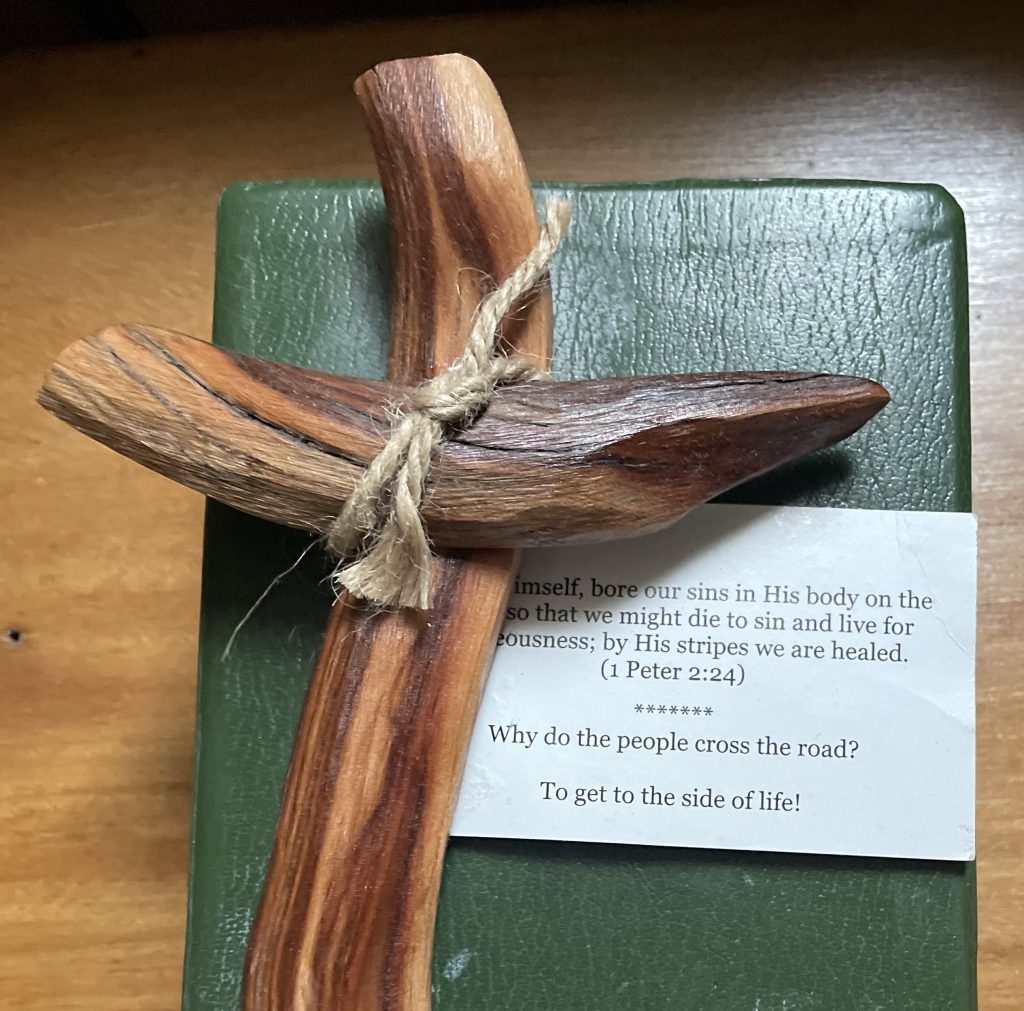
“Touch & Go” by Rupert Holmes (1976)

The Lord Is My Chef Sunday Music by Fr. Nicanor F. Lalog II, 04 February 2024
Photo by author, Our Lady of Fatima University-Laguna Campus in Sta. Rosa, 19 February 2024.

Our gospel this Sunday speaks a lot about the importance of person-to-person communication, of the healing wonders of the sense of touch and its deeper implications in our relationships when Jesus healed the mother-in-law of Simon Peter.

On leaving the synagogue Jesus entered the house of Simon and Andrew with James and John. Simon’s mother-in-law lay sick with a fever. They immediately told him about her. He approached, grasped her hand, and helped her up. Then the fever left her and she waited on them.

Mark 1:29-31

See how the evangelist narrated in details the healing by Jesus who “approached, grasped her hand, and helped her up.” More than the actual touching and face-to-face or actual encounter, the scene speaks so well of deep personal relationships among us. That is why we have chosen Rupert Holmes’ 1976 single Touch and Go.

Nobody said that
Life is always fair
Sometimes it clips your wings
While you’re in mid-air
But there’s a thread
Between your life and mine
And when you’re losin’ hope
This rope won’t unwind

REFRAIN:
Hold on tight
‘Cause life is touch and go
It’s sink and swim
But never doubt
If you’re out on a limb
I’ll get the call
To break your fall
I’ll never leave you
Even when life
Is touch and go
Or hit and run
We’ll never break
If we take it as one
I’m here to stay,
I pray you know
I’ll never touch
I’ll never touch and go

Someday you’ll find
There’s nothin’ in the night
That wasn’t there before
You turned out the light
Straight from your mind
The monster ‘neath your bed
The voices in the hall
They’re all in your head

A gifted musician with a knack in story-telling, Holmes’ songs are always imbued with his deep insights about life he had gathered from ordinary experiences like his earlier hit Terminal (1974) and his two hit singles Escape (The Piña Colada Song) in 1979 and Him in 1980. These three are all dashed with humor that can tickle our bones but disturb our conscience too.

In Touch and Go, Holmes goes philosophical, sounding a bit like Job in today’s first reading of how life can sometimes be unfair that “Sometimes it clips your wings while you’re on mid-air” while assuring his beloved of his deep love and dedication that no matter what happens, he would always be there by her side to save her.

That is exactly what Jesus tells us in the gospel this Sunday, of how he would always approach us, grasp our hand and help us up when we are down. The question is, are we in touch with Jesus too? Or, we always go and leave him especially when things are doing great in our lives?

If us humans like Holmes can boldly assure our beloved of always being there, of being in touch and connected especially in times of trials and sufferings, all the more is Jesus Christ who had come to empower us by connecting us with God and one another always in loving service (https://lordmychef.com/2024/02/03/real-power-empowers/).

It is a Sunday. Don’t forget to celebrate Mass or go to your places of worship to get in touch with God and with others in your community. Here is Rupert Holmes to help you chill more on this cool February Sunday amidst life’s many “touch and go, sink and swim” situations.

From Youtube.com.

Real power empowers

The Lord Is My Chef Sunday Recipe for the Soul by Fr. Nicanor F. Lalog II
Fifth Sunday in Ordinary Time, Cycle B, 04 February 2024
Job 7:1-4, 6-7 ><}}}}*> 1 Corinthians 9:16-19, 22-23 ><}}}}*> Mark 1:29-39
Photo by The Good Brigade/Digital Vision/Getty Images via cnn.com.

There’s another “war” happening that had actually started a long time ago but only now recognized by the powerful US Senate in Washington DC when they summoned last week the owners of big tech companies to a hearing on the harmful effects of social media.

It is a war that at first seemed to have been neglected or even unrecognized when parents and experts have long been complaining about the ill effects of social media. Finally, authorities are doing something about it. 

“Great power comes with great responsibilities.”- Spiderman. Photo from peakpx.com.

Though the issues at hand are very contentious because of the many benefits too of social media, the US Senate hearings are a big step in demanding more social responsibilities from tech owners who have become so powerful with their products’ wide reach and influence.

Of course, much responsibilities are also in the hands of parents and users of social media but one thing has always been clear these past 20 years when experts and ordinary folks have been raising the red flag on social media being so impersonal in nature where persons are often considered as objects than subjects to be loved and respected.

Our ability to communicate is a sharing in the power of God, a sharing in his authority meant to foster union among peoples as persons. Despite the efficiency of social media, it cannot and must not replace the human person in every communication. This we have seen last Sunday when people were “astonished” and “amazed” one sabbath as Jesus spoke with authority in their synagogue in Capernaum. From there, Jesus moved into the home of Simon Peter, staying for a while in Capernaum before moving on to other locations to continue his ministry of teaching and healing.

On leaving the synagogue Jesus entered the house of Simon and Andrew with James and John. Simon’s mother-in-law lay sick with a fever. They immediately told him about her. He approached, grasped her hand, and helped her up. Then the fever left her and she waited on them.

Mark 1:29-31
Photo by author, ruins of the neighborhood around the synagogue of Capernaum where Jesus used to preach; underneath the Church are believed to be the ruins of the home of Simon Peter where Jesus healed his mother-in-law.

It was still the day of sabbath and we could feel the great joy and pride of the four disciples with Jesus that they “immediately told him” about Simon’s mother-in-law who “lay sick with a fever.”

Notice Mark’s detailed report on the healing of Simon’s mother-in-law by Jesus: He approached, grasped her hand, and helped her up. Then the fever left her and she waited on them. In this continuation of a slice in the life of Jesus last Sunday, Mark is presenting us again another important aspect of Christ’s authority and power that is personal which empowers others. 

To empower means to raise up a person from one’s lowliness in order to restore his/her well-being. To empower means to make a person whole again as he/she discovers and experiences anew his/her giftedness in God and as a person. 

Photo from kimaldrich.com

Now, imagine this in the light of the powers of social media made possible by the internet through various devices: Jesus could have healed anybody who was sick within a 100 or 200 meter radius from the synagogue of Capernaum with his great powers being the Son of God. He could have just sent off signals like a router to heal more sick people instead of making them flock to the home of Simon Peter. Even today, perhaps, we could just come to the church, stay in a specific spot like the confessional to get connected to Jesus and voila – get healed!

But, Jesus never did that kind of healing and would never do it. Recall how Jesus would always approach and touch, speak and meet the sick before healing them. When a woman was healed of her hemorrhages after touching his clothes while they were in a crowd, Jesus stopped and searched for her to have a personal relationship. Unlike the internet, Jesus came in order to personally connect with us and connect us with the Father in the most personal manner.

In every healing by Jesus, there is always something deeper than restoration of one’s health which is salvation, a personal encounter with the Christ who leads us to fulfillment as persons. In every healing of body, there is the forgiveness of sins in one’s soul and being. Healing is more wholistic in nature than being being relieved of headache or any discomfort. Many times, our sickness can leave us deformed, disabled and even invalid without any cure at all yet deep inside us we still experience freedom and joy. That is healing because we are assured of being loved and cared for by another person and most of all by Jesus, personally.

So unlike the powers of any human or professional nor even by the social media so much around us that may be indeed so strong and efficient with its great speed but could never uplift us or restore our well-being. For sometime, they can offer us with relief but the deep longings and emptiness within us lingers on. Why? St. Augustine expressed it perfectly when he wrote in his Confessions, “You have made us for yourself, O Lord, and our hearts are restless until they rest in you.”

From Pinterest.com

This Sunday, Mark is telling us that Jesus comes to us daily right in our hearts where our home is, always “approaching us, grasping our hands, helping us up” from all our burdens and pains, sufferings and miseries. Are we present to meet Jesus? Do we “immediately” tell him our problems like Simon Peter when his mother-in-law had fever?

The only essential and vital connection we must keep and maintain in this life is our personal connection with God in Jesus Christ who exemplified this well at the end of this Sunday’s gospel when “Rising very early before dawn, he left and went off to a deserted place, where he prayed” (Mk. 1:35).

Last Friday we celebrated the Feast of the Presentation where Simeon and Anna showed us too how they remained personally connected with God in their daily prayers and fasting at the temple so that when Joseph and Mary came with the Child Jesus, both were led by the Holy Spirit to meet them. Imagine the crowd at the temple at that time plus Simeon and Anna being both old with the usual woes but were both never distracted in their focus on God and his promise of salvation in Christ before dying.

Photo by Vigie Ongleo in Virginia, USA, 02 February 2024.

There will always be suffering in life as the first reading reminds us. Like Job, we go through many setbacks in life, making us wonder all the more at the mystery – and scandal – of human sufferings, of how it could befall us if we have a powerful and loving God. St. Paul meanwhile tells us in the second reading how imperfect our world is when we sometimes have to make sacrifices to keep the unity of our family and community.

Both Job and St. Paul in their sufferings and sacrifices remained connected with God, bore everything in silence to become “all things to all men” (omnia omnibus) by sharing God’s power and authority in their weaknesses even in death that have empowered countless men and women through the ages including us in our own time.

Let us pray:

Lord Jesus Christ,
our true healer of all sickness
in body, heart, mind and soul:
keep us connected in you
especially in moments of trials
and difficulties so that we may
be filled with your personal powers
as we too empower others
when they are weakest.
Amen.
A blessed weekend to everyone!

Tending the garden of the Lord

The Lord Is My Chef Daily Recipe for the Soul by Fr. Nicanor F. Lalog II
Friday, Memorial of Sts. Timothy & Titus, Bishops, 26 January 2024
Titus 1:1-8 <*(((>< + ><)))*> + <*(((>< + ><)))*>  Luke 10:1-9
Photo by Ms. Jo Villafuerte in Atok, Benguet 2022.
How lovely to celebrate
a day after the Feast of the
Conversion of St. Paul the Memorial
of his two co-workers in you, O Lord
Jesus Christ: St. Timothy
and St. Titus.
First of all, a reminder to us all
that your work, Lord,
never stops after us;
it is our responsibility to ensure
those after us shall continue your work
of witnessing the Gospel,
making you present in the world,
and tending your beautiful
garden of the faithful.
After all, we are like St. Titus,
"a child in common faith" of
our parents,
teachers and catechists,
pastors,
brothers and sisters,
friends
and everyone who made you Jesus
known to us in word and in deed.

For this reason I left you in Crete so that you might set right what remains to be done and appoint presbyters in every town, as I directed you.

Titus 1:5
We praise and thank you,
dear Jesus for the trust
in calling us to be your co-workers;
remind us always to never forget
the vineyard.
the garden,
the flock,
the Church
is not ours but yours;
we are mere stewards
like St. Paul and his co-workers
St. Titus and St. Timothy.
Inspire us dear Jesus
to imitate St. Titus who worked
to reconcile the people of Crete
with their founder St. Paul;
let us be bridges of peoples,
promoting peace and unity,
not creating cults around us
consciously or unconsciously
like many of your pastors
these days.
Let us keep in mind
like St. Titus and St. Timothy
that we we simply do your work
in the way you want it be done.
Amen.
St. Timothy
and St. Titus,
pray for us!

Sowing the seeds of love

The Lord Is My Chef Daily Recipe for the Soul by Fr. Nicanor F. Lalog II
Wednesday, Memorial, St. Francis Sales, Bishop & Doctor of the Church, 24 January 2024
2 Samuel 7:4-17  <*((((>< + ><))))*>  Mark 4:1-20
“The Sower at Sunset” by Vincent Van Gogh, oil on canvas painted in June 1888 from wikimedia commons.
Lord Jesus Christ,
as you narrated to us today
the parable of the sower,
I wonder what were the other
seeds you have sowed
aside from your word?

On another occasion, Jesus began to teach by the sea. A very large crowd gathered around him so that he got into a boat on the sea and sat down. And the whole crowd was beside the sea on land. And he taught them at length in parables, and in the course of his instruction he said to them, “Hear this! A sower went out to sow.”

Mark 4:1-3
Photo by Onnye on Pexels.com
We are not just the different
kinds of soil where your seeds
fell, Lord Jesus;
like you, may we also be
sowers of your word and teachings,
sowers of your love and mercy,
sowers of compassion and kindness,
sowers of your light and life,
sowers of your hope and healing,
sowers of your very presence.

When God told David not to build
him a temple as he promised to raise
a house for him from whom
shall come the Christ,
that was when the Father also
sowed the seeds of redemption
and fulfillment in you,
Lord Jesus!
On this feast of St. Francis Sales,
patron of Catholic journalists and
media practitioners,
we pray for all communicators
to sow unity and peace,
not division
nor misunderstanding,
nor animosities;
we pray for all journalists
of different platforms
to sow understanding
and clarity,
to sow justice and equality
among peoples,
and to sow respect for life
at all times because every
communication must promote
first of all the dignity
of every person.
Amen.

Being “in”, being “out”


The Lord Is My Chef Daily Recipe for the Soul by Fr. Nicanor F. Lalog II
Tuesday in the Third Week of Ordinary Time, Year II, 23 January 2024
2 Samuel 6:12-15, 17-19  <'[[[[>< + ><]]]]'>  Mark 3:31-35
Photo by Mr. Jim Marpa, 15 January 2024 in Davao.
How timely are your
words today, O God,
for us always checking
on what is trending
and viral,
on who's in,
and who's out:

The mother of Jesus and his brothers arrived at the house. Standing outside they sent word to Jesus and called him. A crowd seated around him told him, “Your mother and your brothers and your sisters are outside asking for you.” And looking around at those seated in the circle he said, “Here are my mother and my brothers. For whoever does the will of God is my brother and sister and mother.”

Mark 3:31-32, 34-35
Remind us,
dear Jesus that being in
and being out with you
is not physical nor spatial
but spiritual in nature;
even with one another!
How sad
many of us these days
are preoccupied in being in,
being hip,
being included
and accepted
for the sake of status
and fame;
being in
being out
is being close,
being far
from the beloved's heart.
Help us,
dear God to imitate
King David
though he was inside
the circle of those
carrying your ark
to Jerusalem,
his heart, his mind,
his very self was in you
totally!
Amen.

God’s Kingdom is for children

The Lord Is My Chef Sunday Recipe for the Soul by Fr. Nicanor F. Lalog II
Feast of the Sto. Niño, Cycle B, 21 January 2024
Isaiah 9:1-6 ><}}}*> Ephesians 1:3-6, 15-18 ><}}}*> Mark 10:13-16
Photo by Ms. Anne Ramos, 22 March 2020 in Bagbaguin, Sta. Maria,Bulacan during our “libot” of the Blessed Sacrament at the start of the COVID-19 lockdown.

Our Lord Jesus Christ’s attitude to children is perfectly clear in our gospel this Sunday, “Let the children come to me; do not prevent them, for the kingdom of God belongs to such as these. Amen, I say to you, whoever does not accept the kingdom of God like a child will not enter it” (Mk 10:15).

Being like a child is actually the main teaching of Jesus Christ who came to us precisely as one. Right at his infancy like most babies these days, Jesus faced a lot of great risks of being harmed or even getting killed.

See how Jesus insisted in all his teachings on this need to become like a child, to go back to one’s beginnings in order to get into God’s kingdom which is actually him, his very person. Keep in mind that the kingdom of God is not a territorial domain but the very person of Jesus Christ himself. It is from this fact we realize that being a child as taught by Jesus is a mystery that can never be explained nor solved in our minds and mental faculties. This we find in that occasion when Nicodemus, a Pharisee, came to Jesus hiding in the darkness of the night to discuss the kingdom of God. When Jesus told him of the need to be born from above (or, be born again in earlier translations) which is to become like a child, he thought it to be in the literal manner.

Jesus chided Nicodemus by saying, “You are the teacher of Israel and you do not understand this?” (Jn. 3:9-10). It was not sarcasm nor an insult by Jesus but a clarification to everyone including us today that being a child to enter the kingdom of God is a mystery we have to embrace and experience and feel in the heart not deduced in the mind.

And this is exactly what the Feast of the Sto. Niño is all about that we celebrate every third Sunday in January.

The Vatican has given us this special celebration as an extension of the Christmas season in recognition of the great role played by the image of Sto. Niño Magellan gifted Queen Juana of Cebu in 1521.

After leaving our shores after Magellan was killed in Mactan, the Spaniards returned in 1565 under Miguel Lopez de Legazpi to claim our islands for the King of Spain. Upon their arrival in Cebu, they found the Sto. Niño enshrined in a house of worship prominently displayed as the main God of the natives along with their other idols and gods. Historians say the people of Cebu during those years between 1521 to 1565 have found the Sto. Niño as the most powerful and effective in granting their prayers for children (fertility), rains and bountiful harvests that rightly it was the Sto. Niño who actually conquered the Philippines that we have become the only Christian nation in this part of the world. In those 44 years after Magellan and his men left the Philippines, the Sto. Niño had remained and stayed with the natives keeping them safe and secured all those years until the Spaniards returned to be colonized through Legazpi.

What a beautiful imagery of the Sto. Niño staying behind with our forefathers conquering them not with swords nor force but with love and mercy, and youthfulness of the Child Jesus! 

Photo from https://santoninodecebubasilica.org/chronicles/viva-pit-senor-viva-senor-santo-nino/

Recall how last Sunday we have reflected the words stay and remain when Andrew asked Jesus where he was staying: to stay, to dwell mean more than its spatial nature as a place or location but also in a deeper sense, a communion. It is in dwelling in Jesus who is the kingdom of God that we belong, we become a part of that kingdom.

When Jesus spoke of “being born from above” to Nicodemus, he was not only referring to the Sacrament of Baptism but to the very fact how he as the Christ from the very start has always dwelled and remained in the Father. 

Three days after being found in the temple in Jerusalem when Jesus was 12 years old, he told Mary his Mother, “Why were you looking for me? Did you not know that I must be in my Father’s house?”(Lk.2:49). What a beautiful expression of that union in “being in my Father’s house” to show us this mystery of Jesus being like a child, the Son of God who has remained the Father’s beloved One into his adulthood because he had always been in union with the Father. Jesus is inseparable from the Father because he himself takes abode and dwelling in God.

“The Finding of the Savior at the Temple” painting by William Holman Hunt (1860) from en.wikipedia.org.

When Jesus was approaching his Passion and Death, he repeatedly told everyone how everything he had said and done were not his but his Father’s to indicate his communion and union in him. Ultimately there on the Cross, his final words expressed the same truth that he is the Son of God obedient unto death especially when he called out, “Father, into your hands I commend my spirit” (Lk.23:46).

Therefore, to accept and welcome a child in Jesus’ name is not just an act of charity nor of a simple finding of Jesus among children. It is ultimately being one, of remaining in the Father because Jesus also said “whoever welcomes such a child in my name, welcomes me” (Mt 18:5).

Photo by author, 2022.

That is why the kingdom of God is for those who are like children always one with God like Jesus.

To be a child is to remain in God, to always love expressed in kindness and care for others especially the weak, being forgiving and merciful and compassionate with those lost like the Father.

To be like a child is being a light who brightens the life of others just like a babies whose very sight and smiles can ease our pains and sorrows, giving us the much needed boost to forge on in life. We are filled with hope whenever we encounter or see infants because they remind us too of God dwelling in them, of a God who assures and ensures us with s bright future.

This the reason we have in our first reading that part of the Book of Isaiah we heard proclaimed on Christmas day to remind us that Jesus is the light born on the darkest night of the year to illumine our lives and the world darkened by sins and evil like wars, poverty, and diseases. We see light in being like a child because that is when we are one in the Father too in being like a child.

Let me cite again that beautiful movie Firefly where the main character, the child named Tonton loved his mother so much that he totally believed her stories that sent him into a journey to search for the magical island filled with fireflies. Tonton dwelled in his mother’s love that he eventually found the magical island with the many fireflies that in the process also brought light into the darkness within the three adults he befriended in the bus going to Bicol.

Many times in my ministry as chaplain in our hospital, I have seen the great powers within every child – of how a sick baby, a sick child could send his/her parents to summon all their faith in God to heal them, to save them. 

Listen to the stories of those who join the Traslacion every year in Quiapo: most of them had their panata borne out of answered prayers for their sick children. Every parent knows it so well how they have moved mountains and did the most extraordinary for the sake of their infants and children.

That is the mystery of the kingdom of God belonging to children when God gives us every spiritual blessing we need to achieve the impossible (second reading) to become like children by remaining in God as the only power and salvation in this life.

Be with a child, stay with a child and you shall find God’s kingdom.

Be like a child and you shall experience the kingdom of God! Amen. Have a blessed week ahead!

Photo by Mr. Jim Marpa, 2018.