Pride of Place

Lord My Chef Sunday Recipe for the Soul, 26 October 2025
Thirtieth Sunday in Ordinary Time, Cycle C
Sirach 35:12-14, 16-18 ><}}}}*> 2 Timothy 4:6-8, 16-18 ><}}}}*> Luke 18:9-14
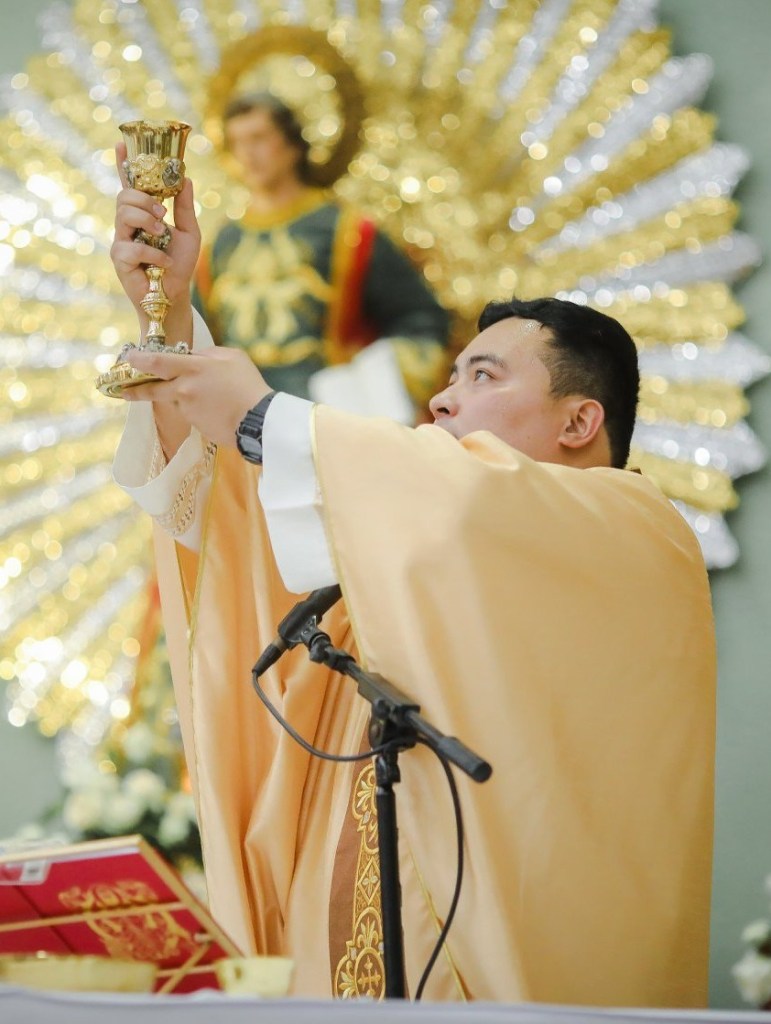
Photo by author, Alberione Center, Araneta Ave., QC, 11 September 2025.

We got our inspiration anew for this Sunday’s reflection from the blog of Sr. Renee Yann, RSM whom we follow at WordPress (https://lavishmercy.com/2025/10/18/pride-of-place-2/). Her blogs are so wonderfully written with reflections so deep, inspiring and uplifting.

In her recent blog, Sr. Renee tells of their parishioner they fondly called “Mamie” who sat on the same seat in their church they called “Pride of Place” for forty years until her death. And for a good reason. Despite her many trials and sufferings in life, Mamie never failed in helping those in need in their community.

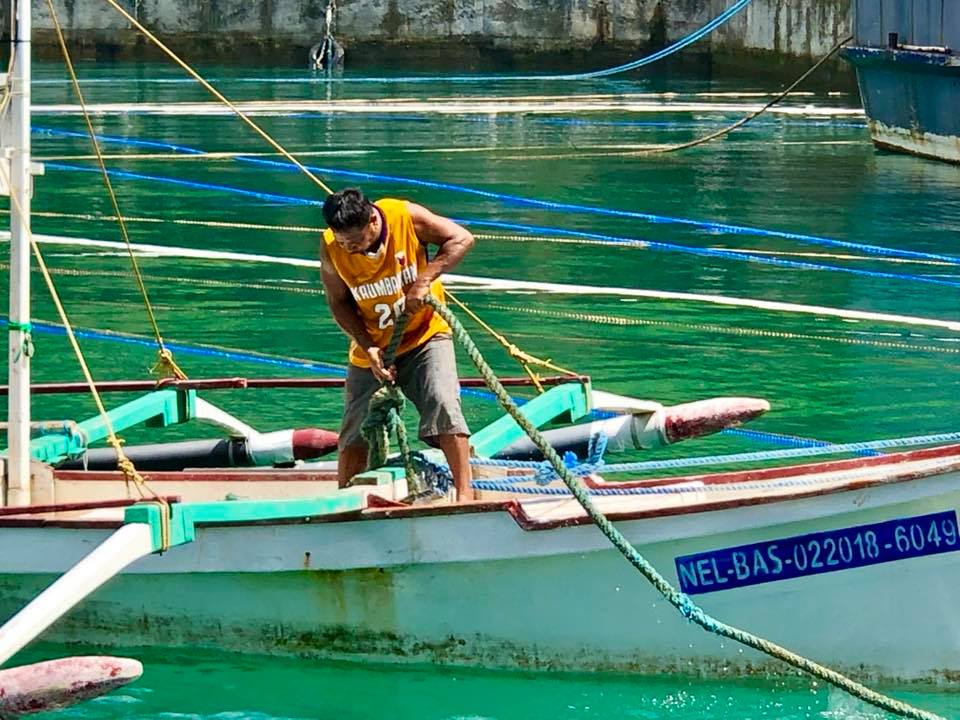
Photo by author, Carmel of the Holy Family Monastery, Guiguinto, Bulacan, 25 September 2025.

As told by Sr. Renee’s dad, Mamie had always sat in the same pew through the Depression as she struggled to keep her grocery opened; after the death of her husband in an accident, Mamie never missed their Sunday Masses seated at the same spot – in fact, she was at the same pew on a Sunday Mass when her son was killed at Pearl Harbor. It was actually their community who “proudly awarded” the seat as a “pride of place” to Mamie following her life of Christian witnessing.

“Pride of Place” isn’t always something physical like a pew in church. More often it’s a moral or spiritual position that’s granted to us by others after we pay moral dues. These dues include trustworthiness, sacrifice, contribution, and wisdom…“Pride of Place” doesn’t come automatically with power or position.  It comes with respect. Unfortunately, not every parent, boss, teacher, pastor, elder, president, or champion deserves it.  It must be earned and kept as a trust. (https://lavishmercy.com/2025/10/18/pride-of-place-2/).

The story reminded me of our own “pride of place” in the church, of people always occupying the same pew or spot during the Mass that they are amazed how we priests get to know them simply with their “seating arrangement” like their coming late or being absent!

Photo by author, Carmel of the Holy Family Monastery, Guiguinto, Bulacan, 25 September 2025.

But, what struck me most with Sr. Renee’s piece is the spiritual meaning of “pride of place” which refers actually not to where we sit but where we stand. That standing is more than physical but spiritual and moral in nature. Where we stand is about our stance or conviction not only on issues but about our faith and relationship with God expressed in our dealings with others exactly what our gospel tells us this Sunday.

“Two people went to the temple area to pray; one was a Pharisee and the other was a tax collector. The Pharisee took up his position and spoke this prayer to himself, ‘O God, I thank you that I am not like the rest of humanity — greedy, dishonest, adulterous —- or even like this tax collector. I fast twice a week, and I pay tithes on my whole income.’ But the tax collector stood off at a distance and would not even raise his eyes to heaven but beat his breast and prayed, ‘O God, be merciful to me a sinner.’ I tell you, the latter went home justified, not the former; for whomever exalts himself will be humbled, and the one who humbles himself will be exalted” (Luke 18:10-14).

Painting by French artist James Tissot, “The Pharisee and the Tax Collector” (1886-1894) from commons.wikimedia.org.

For the second straight Sunday, we hear another teaching of Jesus about faith expressed in prayers in another parable only Luke has.

Last Sunday we reflected that to persist in prayer is not about wearing God down but of allowing our hearts to clarify our desires until we silently surrender to what God knows is best for us which is salvation or “justification”. See how we find that word again – justified – as the key to this parable at its end when Jesus declared that it was the prayer of the publican that was heard for “he went home justified”.

The object of every prayer is God because prayer is a relationship, not just a ritual. To be filled with God is what holiness is, not being sinless. In fact, holiness is finding our sinfulness before God. And that is the essence of our parable this Sunday.

That is why Jesus directs our attention in the “where” when we pray – not just the location when we pray but our “place” in that relationship with God who is our very foundation. When all we see is our self in prayer like in any relationship, it means it is a monologue, a one-way street. Worst, it is an indication of the absence of God, even of others because the pray-er is so preoccupied with his or her very self!

Photo by the author at the Wall of Jerusalem, May 2017.

The Pharisee was clearly not in God even if he were in front of the temple. His very self was very far from God and all he had was his bloated ego. He may be a very pious person but not really good at all for he has no space for God and for others. He is a very closed man without any room for others. Remember, Luke said that “Jesus addressed this parable to those who were convinced of their own righteousness and despised everyone else” (Lk.18:9).

The tax collector, on the other hand, may be physically far outside the temple but was the one actually nearest to God with his self-acceptance and admission of sins, of his need for God. He was closest to God because he was more open with God and with others by admitting his true self.

Prayer is more than entering a church or a prayer room, or finding our most suitable spot or space to pray. Prayer is being one with God, one in God. Prayer is losing our very self in God. The question now is, “where are we when we pray?

I have always loved this photo by friend from GMANews, Ms. JJ Jimeno who took this while she was praying inside the UP-Diliman Adoration Chapel in May 2019; she aptly captioned it as “losing one’s head in prayer.” True!

First, we become one with God in prayer when we admit our sinfulness, when we confess our sins to him, and own them without any “ifs” and “buts”. God always comes to those who truly open themselves to him by emptying themselves of their sins and inadequacies.

The tax collector was justified in his prayer more than the Pharisee because in confessing his sins, he admitted his need for God. He knew very well his place, so unlike the Pharisee who felt God owes him so much!

Second, we are in God in prayer when we are humble and have the conviction to leave everything behind and go down with God into the lowest point because one is so confident of the efficacy of prayer like what Ben Sirach tells us in the first reading.

The one who serves God willingly is heard; his petition reaches the heaven. The prayer of the lowly pierces the clouds; it does not rest till it reaches its goal (Sirach 35:16-17).

Most often in life, friendships and relationships are kept when we are willing to take the lower stance, not necessarily admitting fault or guilt in any misunderstanding because being lowly indicates the person’s need for the other person and of one’s love to work on that relationship despite its fragility. I tell couples that when they quarrel, the first who must first make the move to greet the other person is not the guilty one but the one with most love and self to give.

Third, we are in God in prayer when there is an offering daily of one’s self to God. It is not enough to be lowly and sorry for our sins in prayer. It has to be sustained because prayer is a discipline like any sport as St. Paul tells us in the second reading, calling us to persevere and endure until the end for Jesus Christ “who shall award us with the crown of righteousness in heaven.”

We are all sinners forgiven and beloved by God. When we find our right place in God in prayer, then we also find him. And meet him. Amen. Have a blessed week ahead into November! Fr. Nicanor F. Lalog II, Our Lady of Fatima University, Valenzuela City (lordmychef@gmail.com)

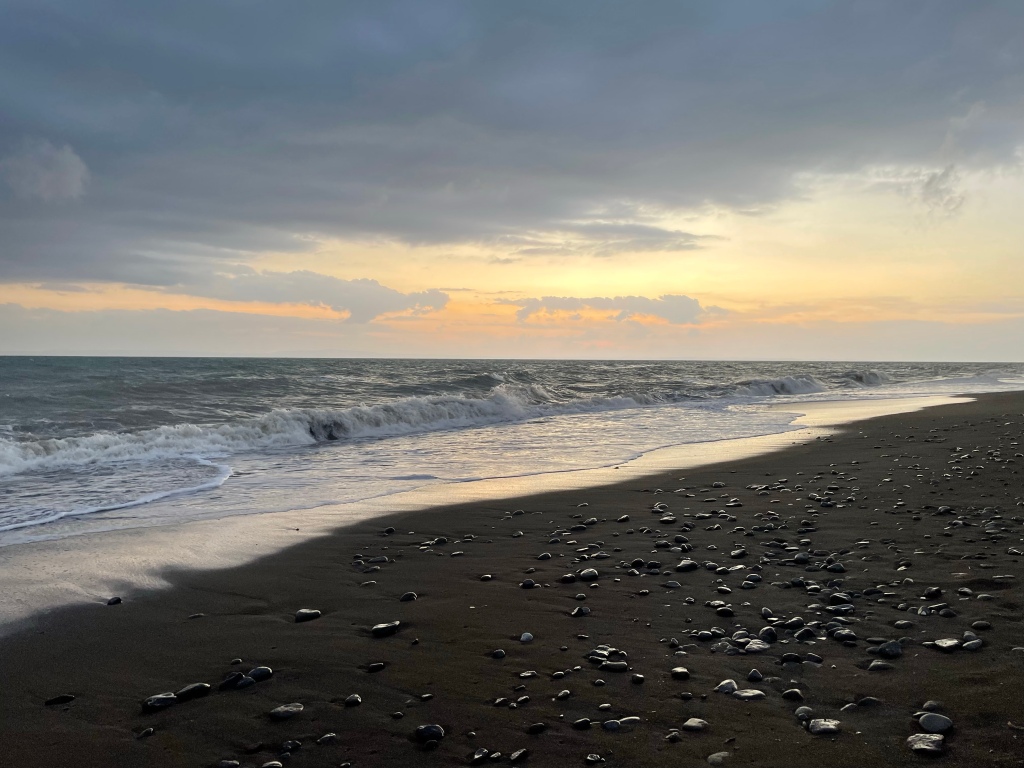
Photo by author, Carmel of the Holy Family Monastery, Guiguinto, Bulacan, 25 September 2025.

Lent is being shamefaced

40 Shades of Lent by Fr. Nicanor F. Lalog II
Monday in the Second Week of Lent, 06 March 2023
Daniel 9:4-10   >< +++ >< +++ ><   Luke 6:36-38
Photo by author, sunrise at Katmon Nature Sanctuary & Beach Resort, Infanta, Quezon, 04 March 2023.
O God, on this first
working day in the second week
of Lent, I imitate Daniel's prayer
and confession of sins in the first 
reading:

“We have sinned, been wicked and done evil; we have rebelled and departed from your commandments and your laws. We have not obeyed your servants… we are shamefaced even to this day.”

Daniel 9:5-6, 7
It has been a long time,
dear Father, when I have been
bold and true enough to admit,
to confess before you that indeed,
I have SINNED, been WICKED...
I have REBELLED and DEPARTED
from your commandments...
I have NOT OBEYED...
and now SHAMEFACED.
Dear God,
for so long, I have followed
the trend of this world,
of this life,
of "diluting" my sinfulness and
culpability, of always looking for
somebody else or something to blame
for my sins and evil deed, of moving
the lines of morality so as to feel 
less guilty, less sinful, not really bad
when in fact, it is when we are most evil,
when I am so far from you
and shamefaced.
God, help me recover
this being shamefaced;
help us all for we have no more
shame at all that we cover up
our sins and evil; worst, O Lord,
our lack of shame for our sins
prevent us to a large degree
in being merciful like you
and tragically pushes us to
being so judgmental of others
sinfulness.
This Lent, O God,
let us recover our sense
of shame; let us be shamefaced
in Jesus Christ your Son.
Amen.

Lent is believing in others

40 Shades of Lent by Fr. Nicanor F. Lalog II
Wednesday, First Week of Lent, 09 March 2022
Jonah 3:1-10   <*{{{>< + ><}}}*>   Luke 11:29-32  
Photo by author, April 2021.
God our Father,
so often we are like Jonah
 who doubt and mistrust people 
of the good they could do;
like Jonah, we refuse to follow 
your instructions because we see
others as good for nothing,
hopeless to change and become better.  
Sadly, the very people we doubt of 
their own abilities and goodness 
are the ones closest to us like husband or wife, 
children, brother or sister, and friends! 
How sad in our modern time,
despite our many "achievements",
we continue to refuse in appreciating
our worth as your beloved children 
that we also fail to value others around us,
especially those who truly care and 
love us like family and friends.
Help us see, dear God,
this spirit and challenge of Lent
for us to be trusting first of ourselves,
of our worth, of our identity as your 
beloved children to believe in  others too.
May the words of your Son Jesus awaken 
us to how "This generation 
is an evil generation; it seeks a sign, 
but no sign will be given it, 
except the sign of Jonah" (Luke 11:29). 
Yes, Lord, we keep looking for signs 
from you and others so that we could 
believe in ourselves forgetting that 
we are already your sign of presence
in Jesus Christ who offered us his life
on the Cross to be whole again in you. 
On this season of Lent,
give us dear Jesus,
the grace to rediscover and 
return to the sacrament of reconciliation
to confess our sins, experience your
forgiveness through your priests;
let us return with our whole heart
for you are gracious and merciful,
O God; take away those silent burdens of
guilt feelings that nag and disturb 
our conscience which prevent us from
seeing your light in us and in others.
Amen. 

A shamefaced prayer

40 Shades of Lent by Fr. Nicanor F. Lalog II
Monday, Second Week of Lent, 01 March 2021
Daniel 9:4-10     ><}}}*>  +  <*{{{><     Luke 6:36-38
Photo by Mr. Jay Javier, Quiapo, January 2020.

On this first day of March in the second week of Lent, we borrow, dear God our Father this wonderful prayer by the Prophet Daniel. It is so sincere, filled with contrition because of admission of sin and guilt:

“Lord, great and awesome God… We have sinned, been wicked and done evil; we have rebelled and departed from your commandments and your laws. Justice, O Lord, is on your side. We are shamefaced even to this day: we, the men of Judah, the residents of Jerusalem, and all Israel, near and far, in all the countries to which you have scattered them because of their treachery toward you. O Lord, we are shamefaced, like our kings, our princes, and our fathers, for having sinned against you.”

Daniel 9:4, 5, 7-8

What a beautiful prayer for us especially this Lent, a prayer to be shamefaced which we need at this time when we have lost our sense of sinfulness, when more often we think of our many alibis and arguments in committing sins but never admitting nor owning them.

Detail of the Seventh Station of the Cross at the Parish of St. Ildephonse in Tanay, Rizal with the high priest Caiaphas wearing dark glasses. Photo by author, January 2021.

Forgive us, Lord, for our shamelessness in sins and evil when we should have long been shamefaced like the people of Judah during their Babylonian captivity.

Forgive us, Lord, most especially when instead of being shamefaced with our sins, we even defend and take pride in the evil we have done, filled with arrogance, lacking in any compunction at all.

It is this lack of being shamefaced with our sins that leads us too to being judgmental of others’ misgivings and evil. As a result, many of our relationships fall out because as we refuse to admit our sinfulness, we stop being generous in our love and mercy, kindness and goodwill.

This Lent, give us some sense of shame again, Lord. Mahiya naman kami maski sa aming sarili, Panginoon. Amen.

Priest as reminder of life’s temporary pains and of God’s permanent love and mercy

The Lord Is My Chef Breakfast Recipe for the Soul by Fr. Nicanor F. Lalog II
Tuesday, Feast of St. John Baptiste Marie Vianney, Priest, 04 August 2020
Jeremiah 30:1-2, 12-15, 18-22 >><)))*> || + || <*(((><< Matthew 15:1-2, 10-14
Photo by author, pandemic lockdown, March 2020.

Dearest Lord Jesus Christ:

Praise and glory to you, O Lord, and thank you very much for the gift of vocation to the priesthood.

Thank you very much for a wonderful patron Saint for us all whose feast we are celebrating today, St. John Baptiste Marie Vianney, the Curé of Ars in France.

How wonderful that we celebrate his feast this year on the first day of our return to Modified Enhanced Community Quarantine (MECQ) when public Masses are suspended in our province and other places due to the alarming spread of COVID-19 virus.

Yes, it is wonderful. Beautiful.

At first during last summer’s lockdown when we celebrated Mass without people, I felt sad; but today, I feel happy because I am totally yours, Lord Jesus. Somehow, this pandemic is teaching us priests most specially that life is a constant return to quarantine, to be alone with you always, dear Jesus!

Most specially, to remind us priests that the Holy Mass is never a show, never about us but always YOU, Jesus.

Like the prophet Jeremiah in the first reading, every priest like St. John Vianney is a reminder to the people that in life, there are always pains and sufferings. And most of the time, it is because of our sins and wrong choices in life, of turning away from God.

However, these sufferings like our pandemic and St. John’s French Revolution are all temporary.

Like Jeremiah, we priests are most of all reminders of God’s permanent love and mercy to everyone as exemplified by St. John in his life and ministry of hearing confessions for long hours each day!

Thus says the Lord: See! I will restore the tents of Jacob, his dwellings I will pity; city shall be rebuilt upon the hill, and palace restored as it was. From them will resound songs of praise, the laughter of happy men. I will make them not few, but many; they will not be tiny, for I will glorify them.

Jeremiah 30:18-19

As I reviewed anew the life of your humble and holy pastor St. John Vianney, I realized how our present situation is similar with his time: a period of sufferings after the French Revolution when priests were looked down upon, even maligned and hunted.

Yet, St. John persevered in his vocation, reminding us “The priesthood is the love of the heart of Jesus.”

May we your priests be reminders of your love and mercy, courage and faith in the face of adversaries like when you boldly spoke against the Pharisees and scribes, reminding your disciples…

Let them alone; they are blind guides of the blind. If a blind man leads a blind man, both will fall into the pit.

Matthew 15:14

St. John Baptiste Marie Vianney, pray for us your brother priests! Amen.

Photo from Primera Missa Solemne by Fr. RA Valmadrid, December 2019.

Lent is believing in one’s self

40 Shades of Lent, Wednesday, Week I, 04 March 2020

Jonas 3:1-10 +++ 0 +++ Luke 11:29-32

Photo by Mr. Raffy Tima of GMA-7 News, Batanes, 2018.

Our dearest Father in heaven:

On this first week of Lent, we pray for the grace that we become more trusting of ourselves, of our worth, of our identity as your beloved children.

Until now, we can hear your Son Jesus our Lord lamenting that “This generation is an evil generation; it seeks a sign, but no sign will be given it, except the sign of Jonah (Lk.11:29)”  because we keep on looking for signs from you and from others before we can believe in ourselves.

Remind us, O God, that we are already a sign of your presence in Christ Jesus, our Emmanuel or “God-is-with-us”.

Like Jonah in the first reading, we keep on running away from you, from disobeying your will.

Worst of all, like Jonah, we cannot trust you and others because we always doubt and mistrust the people around us of something good they could do. 

From Google.

And sad to say, the very people we doubt much about their own abilities and goodness are the ones closest to us like husband or wife, children, brother or sister, and friends! 

What a tragedy indeed that we always refuse to appreciate our worth as your beloved children that lead us to see also the value of others around us, especially those who truly care and love us like our family and friends.

May we have the grace and courage to finally be reconciled with you in the Sacrament of Confession in one of these 40 days of Lent, that we may return to you in Jesus Christ with our “whole hearts, for you are gracious and merciful.”

Most of all, may we believe more in you, O God, so we also begin to believe in our selves, in our goodness and ability to change for the best. Amen.