From fear of the Lord to love of God and neighbors

The Lord Is My Chef Sunday Recipe for the Soul by Fr. Nicanor F. Lalog II
Thirty-first Sunday in Ordinary Time, Cycle B, 03 November 2024
Deuteronomy 6:2-6 ><}}}}*> Hebrews 7:23-28 ><}}}}*> Mark 12:28-34
Photo by author, river at the back of Nagsasa Cove, San Antonio, Zambales, 19 October 2024.

Jesus finally entered Jerusalem to fulfill His mission as we also enter the last four Sundays of our liturgical year before entering the season of Advent in preparation for Christmas.

Two Sundays ago we reflected the atmosphere of fear among the Apostles and the crowd following Jesus to Jerusalem after He had made known to them for the third time His coming Passion, Death, and Resurrection. This Sunday our readings invite us to look into that feeling of fear we often experience.

Fear can be negative in nature when we experience a threat to our safety whether there is a clear and present danger from a person or animal hurting us, or when our imagination runs wild with ghosts or a snake underneath the bed at night.

Positive fear is actually the reverence we experience due to a sense of awe often associated with our relationships like with our parents and relatives, teachers and superiors, or any person who seem to amaze us. We fear them not because they threatened us but actually inspired us with their presence, dignity and grace, intelligence and kindness among other things. This kind of fear we experienced in childhood then slowly matured and blended with trust, translated into adoration of the persons so unforgettable to us, influencing us in many ways that we have come to love them eventually, especially God. This is what the Bible and catechism books refer to as “fear of the Lord”.

Photo by author, Mount Sinai, Egypt, May 2019.

Moses spoke to the people, saying: “Fear the Lord, your God, and keep, throughout the days of your lives, all his statutes and commandments which I enjoin on you, and thus have long life. Hear, O Israel! The Lord is our God, the Lord alone! Therefore, you shall love the Lord, your God, with all your heart, and with all your soul, and with all your strength. Take to heart these words which I enjoin on you today” (Deuteronomy 6:2, 4-6).

This “fear of the Lord” that Moses and later the prophets instilled among the Israelites was expressed in faithfulness and obedience to the Laws so that for them, being holy or upright was obedience to the Laws.

This “fear of the Lord” is not about God overpowering man to keep him in bondage. In giving the Ten Commandments, God first entered into a relationship or covenant with the chosen people based on friendship, trust, and love. See here that positive aspect of fear, of reverence like our fear of parents and elders as well as those seemed larger than us including our crushes and first love when we revered them by showing them love and respect.

This “fear of the Lord” then becomes a passing from fear to love that leads us to maturity as persons. And believers. Then lovers and followers not only of those significant people in our lives but most especially of God!

One of the scribes came to Jesus and asked him, “Which is the first of all the commandments?” Jesus replied, “The first is this: Hear, O Israel! The Lord your God is Lord alone! You shall love the Lord your God with all your heart, with all your soul, with all your mind, and with all your strength. The second is this: You shall love your neighbor as yourself. There is no other commandment greater than these” (Mark 12:28-31).

Photo of author, Mount Sinai, Egypt, May 2019.

Unlike the tricky questions posed by His enemies, this one from a scribe was so unique with his calm attitude that invites everyone including us to join in the discussion. One can feel his sincerity in seeking out the truth he felt (rightly so!) only Jesus can answer.

Many times, we feel the same way like that scribe so convinced in asking Jesus, ready to follow Him only if we are clarified which is the first to follow in life in order to mature from fear to love.


"Which is the first of all the commandments?"

Like that scribe, many times we feel confused in our lives, in our faith with the many laws and traditions we were told since childhood to follow; hence, we ask “which is the first of the commandments” that really matter most in life.

Such moments in our life is a grace from the Holy Spirit because in asking “the first of the commandments” is not to determine a hierarchy nor a list of which ones to be prioritized and dismissed; the “first” commandment means the absolutely capital that is always binding on all. The “first” commandment is the one to which all others are subjected without being cancelled or considered least nor optional. The “first” commandment is the very essence of all commandments present in each commandment. It is actually a search for the First Principle who is God Himself!

That is why Jesus quoted verbatim Deuteronomy 6:4-5, the opening words of their best known prayer Shema every pious Jew knows by heart, “Hear, O Israel! The Lord is our God, the Lord alone! Therefore, you shall love the Lord, your God, with all your heart, and with all your soul, and with all your strength.”

Similar to His manner of answering the question about divorce last month, Jesus did not answer the scribe’s question by making reference to a code of laws but instead recited the Shema that encapsulates maturity and deepening of faith in God who is One, with no other except Him. The Shema also shows how our personal God relates with us His people, bonding in a covenant like husband and wife that is reciprocal, exclusive, and total love “with all your heart, with all your soul, with all your mind, with all your strength.”

This “first” commandment is also a relationship that flows to our relationships with one another we rightly call as neighbors. See how Jesus added a “second” commandment not as in a hierarchy making it less important but as an expression of the essential “first” commandment of all the scribe understood well when he affirmed, “Well said teacher… and to love your neighbor as yourself is worth more than all burnt offerings and sacrifices” (Mk.12:32, 33).

For the Jews, their neighbors were their fellow Jews and those aliens residing in their land as found in the Book of Leviticus; but, in this scene, we find Jesus bringing that whole notion of neighbors for everyone, regardless of color and status in life, or of gender, or beliefs.

Jesus makes known to us this Sunday His mission of salvation is for all, for everyone. Most of all, Jesus tells us this Sunday that He is the fulfillment of the Law that many during His time and sadly until now have misread as mere letters to be followed, failing to find the face of God in every law inscribed on every person.

Photo by author, view from Jerusalem Temple, May 2019.

How interesting that each face has two cheeks, both essential, both as the first commandment: love of God is love of neighbor. To profess and practice this faith in God that started in fear and matured into love finding Him in everyone as our neighbor is to be “not far from the kingdom of God” (Mk.12:34).

Friends, let us not fear asking Jesus which is the “first” of the commandments like that scribe.

Keep asking Him until we find Jesus “first” in our trials and tribulations, darkness and confusions, failures and emptiness.

Keep asking Him until we find Jesus “first” on those people who burden us, those who hurt us, those who judge us, those who refuse to listen to us, those who dictate on us.

Keep asking Him until we find Jesus even in programs and plans we could not understand or that are downright crazy.

That is what to truly love God and to love everyone. It is difficult but we have Jesus as our high-priest “who has passed through the heavens” leading us closer to the kingdom of God. Amen. Have a lovely November!

Photo by author, Pundaquit Mountains, San Antonio, Zambales off Nagsasa Cove, 19 October 2024.

When we “miss communication”

The Lord Is My Chef Easter Recipe for the Soul by Fr. Nicanor F. Lalog II
Wednesday in the Sixth Week of Easter, 08 May 2024
Acts 17:15, 22-18:1 <*((((>< + ><))))*> John 16:12-15
Photo by Ekaterina Belinskaya on Pexels.com
Your words today,
Lord Jesus remind us
in the most amusing way
our state of miscommunication:

When they heard about resurrection of the dead, some began to scoff, but others said, “We should like to hear you on this some other time.” And so Paul left them.

Acts 17:32-33
Many times in life
we are like the Athenians of old,
so proud of what
we know,
of what we believe,
of what we
hold on as true
without having them tested;
we refuse to open
our minds and our hearts
to truly listen
to the other person,
especially to You,
dear Jesus;
help us realize
that we cannot know
the whole truth
and everything in this life
and world
in an instant;
help us realize
how truth unfolds
in time
in persons;
most of all,
help us realize
we do not know
that much.

Jesus said to his disciples: “I have much more to tell you, but you cannot bear it now. But when he comes, the Spirit of truth, he will guide you to all truth. He will not speak on his own, but he will speak what he hears, and will declare to you the things that are coming.

John 16:12-13
Teach us to be patient
and humble, Jesus,
to listen with our hearts,
to reach out and wait
for the other person;
teach us to have that
sense of wonder like a child,
eager to learn,
always asking questions
without getting right away
the answers to them
because many times in life,
the answers
we seek are found right within
our questions,
right in our hearts
where You dwell.
Amen.

Jesus appeared

The Lord Is My Chef Easter Recipe for the Soul by Fr. Nicanor F. Lalog II
Friday, Feast of Sts. Philip & James, Apostles, 03 May 2024
1 Corinthians 15:1-8 ><}}}}*> Psalms 19:2-3, 4-5 ><}}}}*> John 14:6-14
Photo by author, Sacred Heart Novitiate, Novaliches, QC, 20 March 2024.
Thank You, dear Jesus
in coming to us,
most especially calling us
to know You
and be close with You
like Your Apostles
Philip and James the Less
whose feast we celebrate
today.

that he appeared to Cephas, then to the Twelve. After that he appeared to more than five hundred brothers and sisters at once, most of whom are still living, though some have fallen asleep. After that he appeared to James, then to all the Apostles. Last of all, as to one born abnormally, he appeared to me.

1 Corinthians 15: 5-8
Like Philip and James the Less,
we are Your apostles too:
we may not have met You
personally in that particular time,
but we have seen You so many times
when You appeared to us on many
occasions in our lives;
You appeared as people we love,
as people who love us,
as strangers with good hearts
who live in You
and Your words;
You appeared to us
in many circumstances
both good and bad,
most especially in dismal ones;
You appear to us always when
we are near You in prayers,
in good works,
in state of grace;
You appear to us
when we are not distant from You
due to sins.
Like Philip and James the Less,
let us grow in intimacy with You,
dear Jesus in prayers
and good works;
like Philip,
let us keep on asking You
questions, let us keep on
searching for You and the Father;
like James,
let us be silent
to listen to other voices
to hear You speaking
to us always
like in the Council of Jerusalem;
let us be like James Your cousin
as reconcilers of people
in You,
not dividers
for it is when we are
in communion,
when we are one as
disciples when You truly
appear to us.
Amen.
Jesus teaching his Twelve Apostles painting by Frenchman James Tissot (1836-1902), from GettyImages.

Our questions, our epiphanies

The Lord Is My Chef Sunday Recipe for the Soul by Fr. Nicanor F. Lalog II
Solemnity of the Epiphany of the Lord, 07 January 2024
Isaiah 60:1-6 ><}}}}*> Ephesians 3:2-3,5-6 ><}}}}*> Matthew 2:1-12

I have been thinking these past days after Christmas at how ironic when we rejoiced on the Lord’s birthday, we also unconsciously left him behind our celebrations. It seemed that the more we celebrated Christmas, the more we think of our very selves, the more we forget Jesus found in other people, especially the little ones. 

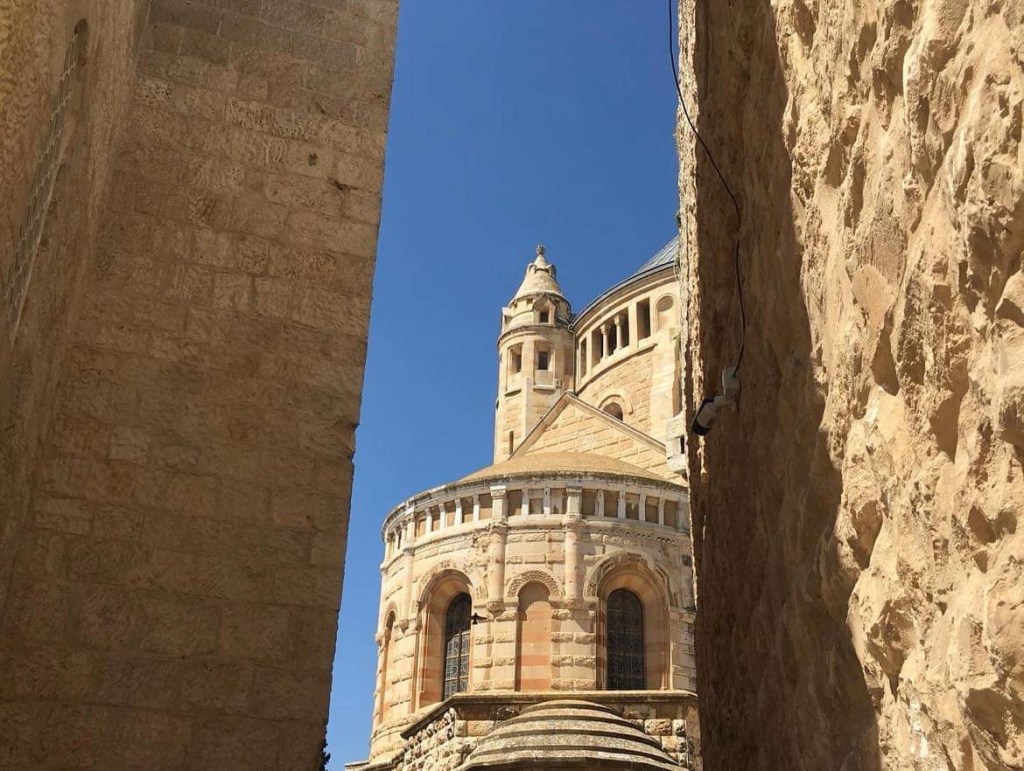
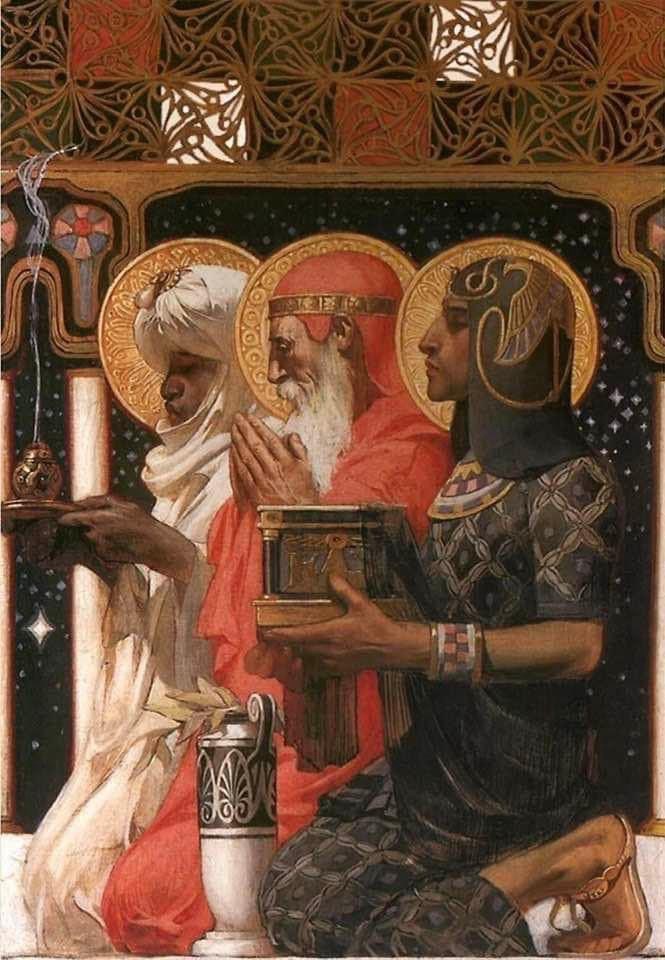
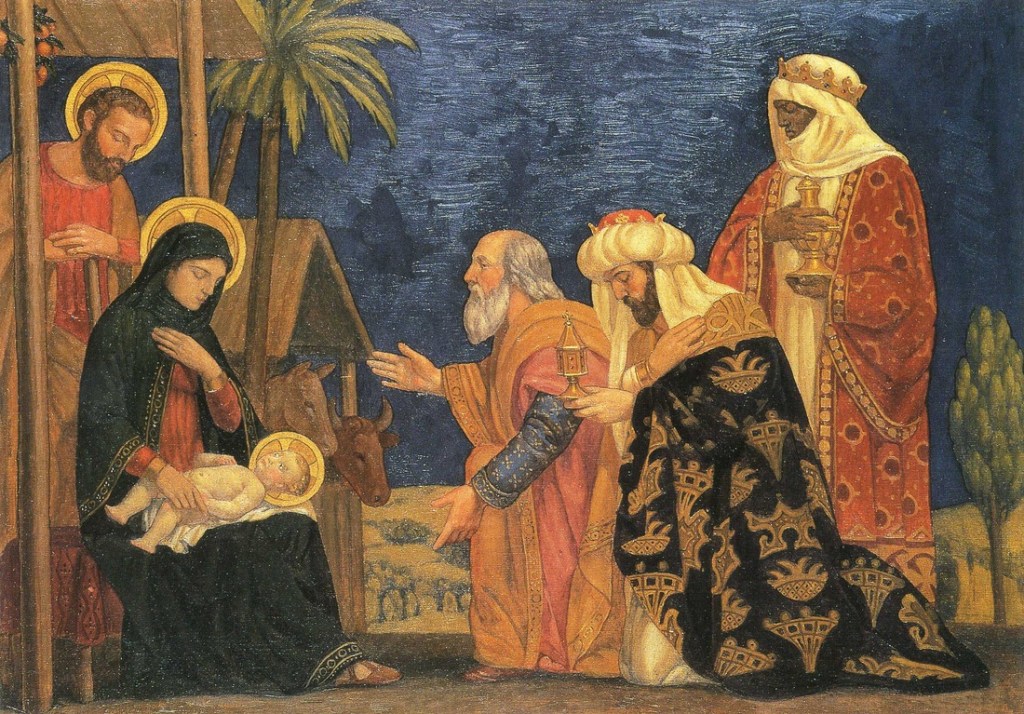
This is perhaps the problem with our prolonged Christmas season in the country that as we try so hard to be “in” beginning September, the more we actually push Jesus “out” of Christmas! We are so concerned with everything new and beautiful – from our clothes to our gifts and decorations, food and parties when Jesus actually came for what is old and worn out like the sinful, the outcasts, and the marginalized. Christmas is being “out” with Christ when we think less of ourselves within like the magi from the East who went out of their ways, of their comfort zones and even ivory towers to find Jesus in Bethlehem.

This is what Epiphany or Manifestation of the Lord to the Nations of the world is showing us today in this last major celebration in the Christmas season before we shift into Ordinary Time on Tuesday after the Feast of the Lord’s Baptism tomorrow.

Yes, Jesus is out there, manifesting himself daily in so many ways but we could not recognize him because we are locked inside our own beliefs of the Christ, held captive by our many fears like King Herod and the people of Jerusalem.

When Jesus was born in Bethlehem of Judea, in the days of King Herod, behold, magi from the east arrived in Jerusalem, saying, “Where is the newborn king of the Jews?  We saw his star at its rising and have come to do him homage.”  When King Herod heard this, he was greatly troubled, and all Jerusalem with him. Assembling all the chief priests and the scribes of the people, he inquired of them where the Christ was to be born.

Matthew 2:1-4
Photo by author, Jerusalem, May 2017.

If somebody today would come inquiring where is the newborn king or lord and master of Christians, how would we feel?  Would we feel “greatly troubled” like King Herod and the rest of Jerusalem? 

Don’t you find it odd that when the magi asked about the newborn king of the Jews, Herod and the people were troubled instead of at least first asking for clarifications on who was the king they were looking for? The least they could have done was looked up to see the star that brought the magi there in the first place so that instead of being troubled, they could have felt perplexed or baffled, with the familiar reactions of “what?” or “duh…” or “huh” or as we would always say, “ha, ano daw iyon?”

This is what I meant of Christmas as a celebration of going out to check on others like the magi and their star: Herod and the people of Jerusalem went inside themselves and got locked in their beliefs and presuppositions as well as fears! They were troubled because they felt the status quo would be disturbed that could throw them off their comfort zones. And the biggest irony is that they who have the answers in the scriptures remained locked inside their own selfish worlds, refusing to get out and meet the newborn king!

But there is another side to this reality of our refusal to go out, to meet and recognize Christ in his manifestations. This is a more dangerous expression of being locked inside ourselves when our motivation in asking questions is dubious. Why do we ask and inquire on someone or anything? Is it because we want to learn and know better or is it because we want our beliefs validated and affirmed?

The magi were clearly searching for the truth, for an answer to their queries. They wanted to know because they knew very well that they knew nothing or so little about the newborn king of the Jews that is why they asked questions in Jerusalem. See their sincerity and humility in finding the truth that they they went out of themselves. And they were not disappointed for eventually, they were filled and fulfilled with Jesus.

King Herod on the other hand inquired about the birth of the Messiah because of his sinister plans against him. He was filled with pride and conceit, locked inside himself without any intentions of truly learning and knowing, of relating with Jesus nor with anybody else. He felt he knew everything so well without realizing he knew nothing at all. Herod and the rest of Jerusalem were troubled precisely because they were not interested with Jesus Christ. 

It is said that a person is known by the questions he/she asks. Very often, our questions are a manifestation too of who we are. 

Let us not be complacent that this happened only to King Herod and the people of Jerusalem more than 2000 years ago for it continues to happen to this day in many instances in our lives, in our families, and in our parishes and the Church when we no longer search for Christ Jesus as we are busy pursuing many other things for personal fame and glory.

How often does it happen with us in our parish, in our Church, in our families that we are so stuck into our old beliefs even traditions that we refuse to go out and meet Jesus Christ Who have come to set us free from all forms of slavery caused by sins? 

Jesus fulfills the longings of the people since the Old Testament time as heralded by Isaiah’s prophecy in the first reading which St. Paul beautifully explains in the second reading as “the mystery made known by God to him.”  Mystery in this sense is not something hidden but revealed so that in Christ Jesus, the mystery of God, His plan for us is revealed or made known for everyone not only the Jews but for all peoples of the world represented by the magi. 

Are we willing to be like the magi who dared to leave everything behind, unmindful of the long and perilous journey to make in order to meet Jesus Christ?  In meeting the Lord like the magi, are we willing to give up everything we have especially the most precious ones and offer these to Him?  Most of all, upon finding God, are we willing to go back home by “another way” like the magi as instructed in a dream never to return to Herod?  The Lord continues to manifest Himself to us in so many ways every day, often in the simplest occasions and things.  May we have the courage to meet Jesus Christ so that we may see the light and beauty of this New Year He has for us. Have a blessed week ahead!

“Lord Jesus Christ, 
give us the courage
to leave our baggages of 2023: 
the pains and hurts, the sins,
the failures and disappointments
so that we may meet You this New Year 2024. 
Teach us to give up our worldly treasures
so that we could truly ask honest
and sincere questions to know You,
to love You, and to follow You
in Your many epiphanies
of truth and realities,
of love and kindness,
of mercy and forgiveness
through the people we meet. 
Amen.” 

What God wants from us

The Lord Is My Chef Daily Recipe for the Soul by Fr. Nicanor F. Lalog II
Monday, Memorial of St. Maximilian Kolbe, Priest and Martyr, 14 August 2023
Deuteronomy 10:12-22   ><]]]]'> + ><]]]]'> + ><]]]]'>   Matthew 17:22-27
Photo by author, Bolinao, Pangasinan, April 2022.

Glory and praise to you,
God our loving Father,
for speaking to us again today
through Moses in the first
reading; for the first time,
he finally gave us the important
question we never ask,
we always avoid,
and take for granted:

"And now, Israel, 
what does the Lord,
your God, ask of you?"
(Deuteronomy 10:12).
Forgive us, dear Father,
for never asking this important
question of "What do you ask of us?"
because very often we are so
occupied with our selves, with all
of our pursuits for fame and power,
wealth and security;
we rarely ask this question because
we are afraid of commitments,
we are afraid of sharing,
we are afraid of serving,
we are afraid of being true
and just, fair and honest,
most of all, of finding you
in our neighbors!
Forgive us, Lord our God,
for playing god like you,
lording it over your whole creation
destroying earth as we exploit
its resources for more power
to dominate others and worst,
in deciding who must live,
 who must die;
teach us to be like
St. Maximilian Kolbe,
the Patron Saint of Our Difficult Century
who gave his entire life serving
you through modern means of
communications to spread your truth
and good news that is why he was 
imprisoned by the Nazis in Auschwitz
where he eventually gave up his life
for another man about to be executed.
Help us O Lord to always
keep in mind you alone is our God
whom we must serve in those in need,
for those neglected,
the poor and the sick;
like St. Maximilian Kolbe,
may we ask always
what you want from us
and strive by your grace,
to fulfill your will.
Amen.
St. Maximilian Kolbe,
Pray for us!

“(They Long to Be) Close to You” by Gwen Guthrie (1986)

Birds
LordMyChef Sunday Music//Week XXXI-B//04 November 2018
Asking Jesus

            We are known by the questions we ask, not by the answers we give that are often wrong or far from truth and reality.  Asking the right question leads us to the right answer and solution to our problems.  Even if we cannot find any ready answer to our questions but for as long as we are asking the right ones, we find clues for their answers as we move on with our lives.  The questions we ask often reveal who we really are, indicating our focus or distractions in life.

           Been thinking of a song about questions but this piece popularized by the Carpenters in 1970 composed by Burt Bacharach and Hal David kept on playing in my mind with the opening lines “Why do birds suddenly appear, Every time you are near?  Just like me, they long to be close to you.”   Well, the song is about getting closer to a beloved, exactly the meaning of the question asked by the scribe to Jesus in our gospel this Sunday, “Which is the first of all the commandments?” (Mk.12:28).   We can easily identify with that scribe with his honest question because it is more than the most important commandment to follow but about God Himself!  It is a deep longing and desire to rise above, to be closer to God, to find God amidst all the many laws and requirements being asked of us most of the time, just like the song (They Long To Be)Close To You.

           For our LordMyChef Sunday Music today, we have chosen the more jazzy cover by the late Gwen Guthrie released about this time in 1986.  Enjoy the beat, feel the music, and keep asking questions, keep searching.  We may not have all the answers right away but we have a loving and merciful God who knows all the answers to our questions, who listens and answers them always in His own time.

Photo by the author at Malagos Bird Sanctuary, Davao City, August 2018.

Asking Jesus

45333784_1945748215727504_3541947692357779456_nThe Lord Is My Chef Sunday Recipe, Week XXXI-B, 04 November 2018
Deuteronomy 6:2-6///Hebrews 7:23-28///Mark 12:28-34 
                          

            We have seen these past two weeks Jesus in His journey back to Jerusalem asking us – through James and John, and the blind Bartimaeus – the quintessential question, “What do you want me to do for you?”  But this Sunday, we find a reversal of roles when, One of the scribes came to Jesus and asked him, “Which is the first of all the commandments?” (Mk.12:28)

             What question would you ask Jesus if given that chance?

             Jesus had finally reached Jerusalem, frequenting the Temple area which He had cleansed upon His arrival on Palm Sunday.  Mark tells us the building up of antagonism against Him by His enemies asking Him with many questions.  First were the chief priests, scribes and elders who asked about His authority in cleansing the Temple and then the Pharisees who teamed up with the Herodians to ensnare Him with the question about the paying of taxes to the emperor.  Last to test Jesus were the Sadducees who asked about the resurrection by presenting to Him the case of a woman who had married seven brothers after dying one after the other.  Mark tells us how Jesus satisfactorily answered all their questions that people were so amazed with Him.  It was at this time when a scribe who had heard them disputing and saw how well Jesus had answered them came forward with the question we also ask up to this time, “Which is the first of all the commandments?”

             Like that man who asked Jesus what must he do to inherit eternal life (Mk.10:17), we can also identify with this scribe whose question is without guile.  Like him, we find ourselves in many occasions asking the same question due to confusions from the so many things to be followed and fulfilled to be a good person and enter heaven.  We know deep in our hearts like him how humans have stretched God’s commandments that have now exceeded more than ten that many could not even recite in order.  Like this scribe, we have seen how faith and religion have ceased to be a way of life but more of casuistry, of obeying and keeping rules that made God look like a cop watching over us, ready to apprehend us for any violations instead of being a loving Father living with us.  Like that scribe, deep in us is a longing for something higher, of something really akin with God than with our present situation when everything seems to be relative and on ground level.

             We are known by the questions we ask, not by the answers we give that are often wrong or far from truth and reality.  Asking the right question leads us to the right answer and solution to our problems.  Even if we cannot find any ready answer to our questions but for as long as we are asking the right ones, we find clues for their answers as we move on with our lives.  Here in our gospel today we find how our questions reveal who we really are, indicating our focus and distractions in life.  In preparation for His coming pasch in Jerusalem, Jesus would reveal to us today and next Sunday the more essential things with God regarding our obedience to His laws and our attitude on giving.  So, let us reflect on the reply of Jesus to the question of the scribe which is based on the “Shema Israel” prayer that every pious Jew must know by heart:  “The first is this:  ‘Hear O Israel!  The Lord our God is Lord alone!  You shall love the Lord your God with all your heart, with all your soul, with all your soul, and with all your strength.’  The second is this:  ‘You shall love your neighbor as yourself.’  There is no other commandment greater than these.” (Mk.12:29-31) 

           Shema Israel is a verbatim quote from Deuteronomy 6:4-5.  It is a prayer that evolved from the Jews’ experience and reflection of the Ten Commandments as a love involving their relationship with God and with others.  More than a list of laws to be followed, the Decalogue became the sign of God’s covenant with Israel, a relationship to be kept with God at its center whose face is found among everyone as brothers and sisters.  Hence, when the scribe asked Jesus which is the first of all the commandments, it was a desire to find God Himself.  And when Jesus saw how the scribe had understood His answer, He told him “You are not far from the kingdom of God.” (Mk.12:34) 

           Observe that child-like attitude of the scribe with his question.  He was looking up to Jesus, looking for God in Him.  When we ask Jesus any question, that is the only attitude required of us.  Recall the different questions asked to Jesus in the daily readings last month like those concerning inheritance or how many would be saved (Lk.12:13, 23), or if His teachings are meant for us or for everyone (Lk.12:41).  See how Jesus ignored the questions because they were the least of His concerns.  Instead, He proceeded with His teachings to emphasize the importance of storing riches in heaven, passing through the narrow gate and being a wise and faithful steward.  When a teacher of the law asked Jesus who is my neighbor, the Lord replied with the parable of the Good Samaritan so that he would realize in himself that we are all neighbors who must show love and concern for one another.  When Pilate asked Jesus during His trial, the Lord clarified his questions so as to remind him that He is more than of this world.  And speaking of the fourth gospel, it is only John who had recorded Jesus repeatedly saying His being lifted up in glory, that is, His crucifixion when He would draw everyone to Himself (Jn.12: 32).  Here we find my dear readers how that every time we ask Jesus a question, the answer would always be found on His Cross because we can only look upward to Christ crucified.  It is only on the Cross can we be led to higher things like God Himself!  Ask Jesus any question like:

        Do you love me, Lord?
        Why all the sufferings in the world?
        Where are we going?

          Try asking Jesus like a child, like that scribe and most likely, when we see His pains and sufferings on His outstretched arms and folded legs, head crowned with thorns with expressive eyes and lips filled with love, we find His answers on the Cross.  This is why Jesus is “able to save e to save those who approach God through Him (Heb.7:24-26)” because He is our High Priest who literally hanged high up on the Cross for us.  May you be blessed to find God in your questions to Jesus!  AMEN. Fr. Nicanor F. Lalog II, Parokya ni San Juan Apostol at Ebanghelista, Gov. F. Halili Ave., Bagbaguin, Sta. Maria, Bulacan 3022.  Email: lordmychef@gmail.com

*Photo by Richard Val Candelaria.  Used with permission.