“Coronation of Mary as Queen of Heaven” mosaic on the apse of St. Mary Major Basilica in Rome.
Lord Jesus Christ, thank you very much in sharing with us, in giving us your Mother, the Blessed Virgin Mary. Thank you very much for being our King of Kings that we now have also a Blessed Queen.
Remind us always O Lord that her queenship is because of your Kingship!
We always forget that fact that have led us to almost worshipping her, even “crowning” her – episcopally or canonically?!
Then the angel said to her, “Do not be afraid, Mary, for you have found favor with God. Behold, you will conceive in your womb and bear a son, and you shall name him Jesus. He will be great and will be called Son of the Most High, and the Lord God will give him the throne of David his father, and he will rule over the house of Jacob forever, and his kingdom there will be no end.”
Luke 1:30-33
Did the Father truly crowned Mary like our earthly queens?
Or, are you Jesus her crown that she has become your channel of grace?
Teach us to be like her always open to you, to always respond to your calls, and most of all, to act on your words.
Reign in our hearts and in our lives, Lord Jesus Christ so Mary your Mother may truly be our Queen of heaven and earth when you are our only crown of glory. Amen.
Installation of the Fifth Bishop of Malolos, 21 August 2019
Judges 9:6-15 ><)))*> ><)))*> ><)))*> Matthew 20:1-16
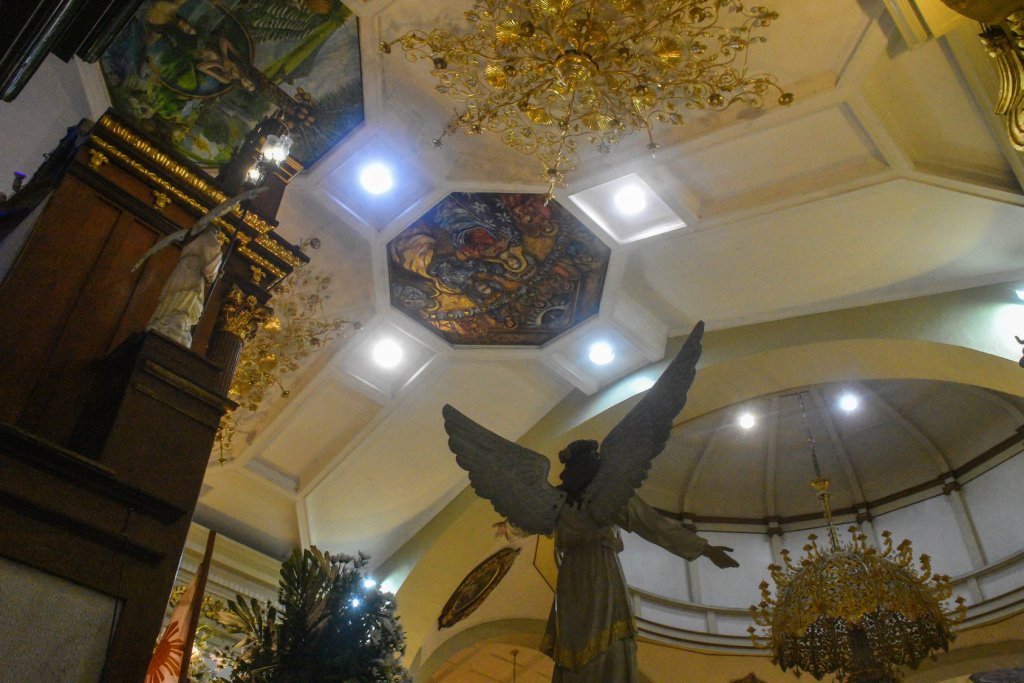
Main Altar, Cathedral Basilica of the Immaculate Conception, Malolos City. Photo by Lorenzo Atienza, June 2019.
On this joyous occasion of the installation of our fifth Bishop, the Most Rev. Dennis C. Villarojo, we praise and thank you O God for this wonderful gift of finally having a local Ordinary to lead us.
Thank you in hearing and granting our prayers for a new Bishop. And surely, you will be hearing and granting us all our prayers for him too!
But, lest we forget, I pray also to you, O God our Father, the prophetic request of a lay-woman you sent us during our clergy recollection last June: “Let us not corrupt our new bishop.”
It was the most shaking voice we have heard from you for a long time, Lord.
We were shocked, even jarred to our very core because it is so true.
It is a truth you have been telling us for so long not only in the Church but even in the society in general.
So often, we pin too much hopes and expectations, even demanding a lot from our leaders everywhere but we alway forget our important role of helping them fulfill their mission.
May we take into our hearts the parable of the trees by Gideon’s youngest son Jotham when your people were so eager of having their own king because the problem, O God, with corruption anywhere is not in the sinful ways being done by the corrupt but lies more on the corruptors who feel entitled that they must be given with special treatment by every leader they try to manipulate for their selfish ends.
Let us not be corruptors of any one like those in the gospel parable today of the first group of workers who looked so highly of themselves, expecting higher wages than the others and what was agreed upon, forgetting they are not the owner of the vineyard.
Bless our new Bishop and keep him strong in resisting the temptations and lure of fame and power and wealth in this so blessed vineyard of yours. Amen.
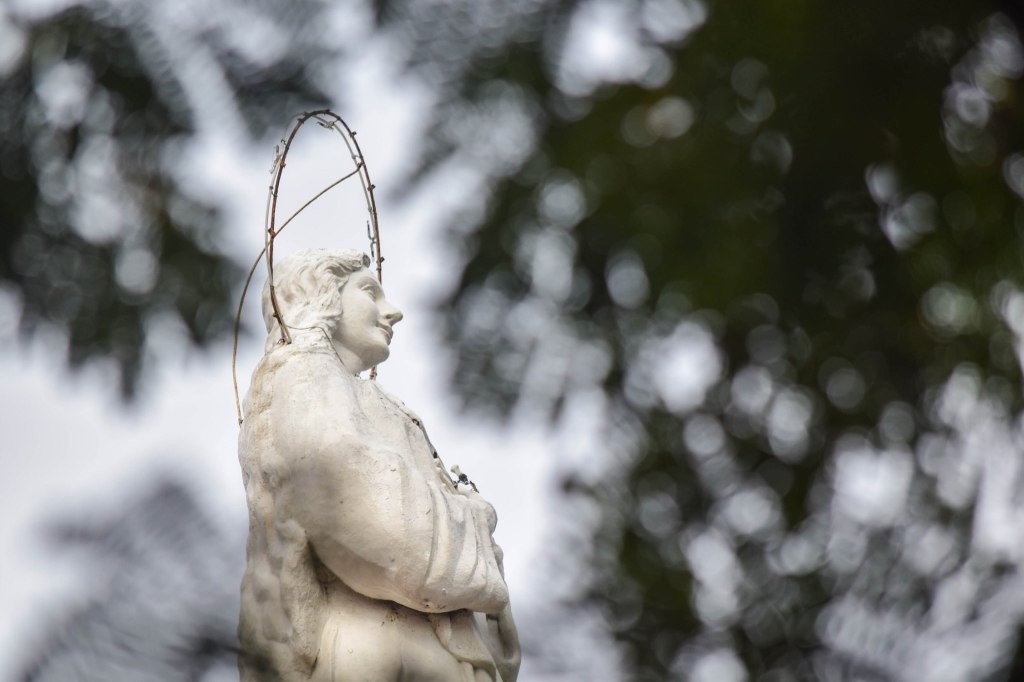
The Immaculate Conception, Patroness of our Diocese atop the Cathedral Bell Tower. Photo by Lorenzo Atienza, June 2019.
Judges 6:11-24 ><)))*> ><)))*> ><)))*> Matthew 19:23-30
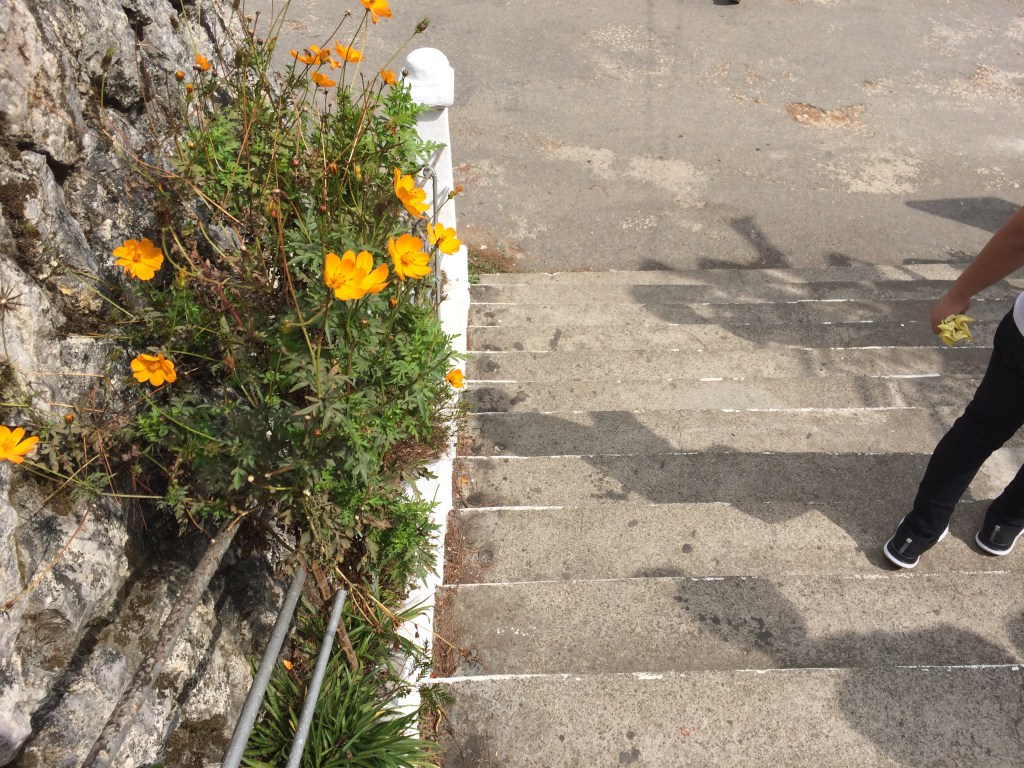
Tam-Awan Village, Baguio City, February 2019.
The Lord answered Gideon, “Be calm, do not fear. You shall not die.” So Gideon built there an altar to the Lord and called it Yahweh-shalom.
Judges 6:23-24
In our beautiful story today on how you have called Gideon as a judge of your people, O Lord, you have also taught us a very important lesson about discipleship – our first task is to love you!
So many times in my life, Lord, I remember how I would always refuse to follow you because of the fact that I am not really afraid of the task ahead but more of my fear for myself: of how people would measure me, of how they would laugh at me, or how I might not be able to deliver results.
Like in the story of your call to Gideon, I often look at myself rather than see you as the Almighty God, calling me, trusting me, sending me.
How funny it seems that when you send us to a mission, O Lord, it is not because of our limitations but because of our excesses: of our too much pride, too much knowledge, too much comfort, and too much self hiding in false humility.
Just when we think we have given up so much for you, God, that’s when we find it difficult to give up the little things we enjoy like recognition, “likes”, applauds, or even simple pleasures like food and drinks.
Teach us to be like your servant St. Bernard of Clairvaux who despite his wealth and greatness chose to exhaust himself in praising you in his many works of charity and praises to you and the Blessed Mother (The Memorare) in the liturgy.
Like Gideon and St. Bernard, keep us calm, always trusting you, loving you in words and in deeds.
Judges 2:11-19 ><)))*> ><)))*> ><)))*> Matthew 19:16-22
Grotto at Baguio (Mirador Hill), February 2019.
Whenever the Lord raised up judges for them, he would be with the judge and save them from the power of their enemies as long as the judge lived; it was thus the Lord took pity on their distressful cries of affliction under their oppressors. But when the judge died, they would relapse and do worse than their ancestors, following other gods in service and worship, relinquishing none of their evil practices or stubborn conduct.
Judges 2:11-19
Sometimes I wonder why, O God, you did not just fix our hearts on you so we would remain in you?
Like the experiences of your people during the time of judges in Israel, our lives have become like one big vicious circle too difficult to break but so easy to predict: we turn away from you, our lives go wayward, we repent, you forgive us, then we go back to you, we are blessed and then, after some period of peace and prosperity, we again turn away from you, our lives go wayward and the cycle continues.
What a foolish heart we have, O Lord.
But, you are so filled with love and mercy for us, believing in us always for the ability to change and remain in you despite our weaknesses.
Thank you for never completely abandoning us, for always having that gaze filled with love like Jesus looking onto that young man in the gospel who walked away sad because he could not completely commit himself to serving you and loving you with all his heart.
Keep us faithful to you, enlighten our minds and our hearts to trust only in you even if the journey is full of dangers and difficulties.
We pray in a special way for our brothers and sisters suffering with various forms of cancer. May the prayers of St. Ezequiel Moreno grant them healing. Amen.
Sacred Heart Spirituality Center, Novaliches, QC, June 2016.
We go alternative rock today as our gospel continues with its “shock preaching” for the third consecutive Sunday.
Jesus said to his disciples: “I have come to set the earth on fire, and how I wish it were already blazing! There is a baptism with which I must be baptised, and how great is my anguish until it is accomplished! Do you think that I have come to establish peace on the earth? No, I tell you, but rather division.”
Luke 12:49-51
And so, what is the good news in these pronouncements by the Prince of Peace, Jesus Christ?
Interestingly like our intriguing gospel today is our featured music “Heaven Knows I’m Miserable Now” by The Smiths released as a single in May 1984. And like the gospel today, we might ask, what is so good with this song that has become an anthem for our generation when heaven knows I’m miserable now?
Like our shocking and controversial gospel that sounds so negative on the surface, Heaven Knows I’m Miserable Now is a good news in itself worth sharing with others.
It is a very defining song of the time that is why it is listed as one of “Rock and Roll Hall of Fame’s 500 Songs that Shaped Rock and Roll”. Its music has remained fresh and crisp, a melody that is definitively rock with a hint of lullaby perfectly given justice by the so British accent and voice of Morissey.
From Google.
And most of all, deep in all those icings, is the perfect cake: the lyrics that is intelligently straightforward and witty laced with deep meanings only a person who truly loves can identify with.
Although its title was inspired by Sandie Shaw’s 1969 single “Heaven Knows I’m Missing Him Now”, Heaven Knows I’m Miserable Now is a tribute to those who choose to be good, who choose to stand with what is true and beautiful even to the point of being deserted by others like Jesus Christ, the prophets, the saints, as well as Lucy and Snoopy!
From Google.
It is definitely an intelligent music that has remained relevant up to this time making it truly a good news.
In this age when reason is being disregarded with emphasis given more on popularity, on what is trending and viral, on what has the most “likes” and who has the most “followers”, The Smiths’ Heaven Knows I’m Miserable Now shows us how it can sometimes be dangerous being right, being true, being just.
The next time you feel hurt and aching inside, when you feel going through pains for being true and good among those people so ugly inside and outside, who are fake and untrue, pray and fix your sights on Jesus Christ on the Cross because “Heaven Knows I’m Miserable Now”.
And, never lose your wit and humor!
What she asked of me at the end of the day Caligula would have blushed “Oh, you’ve been in the house too long” she said And I naturally fled In my life Why do I smile At people who I’d much rather kick in the eye?
The Lord Is My Chef Sunday Recipe, Week XX-C, 18 August 2019
Jeremiah 38:4-6. 8-10 ><)))*> Hebrews 12:1-4 ><)))*> Luke 12:49-53
Batanes sunset after a storm, 2018. Photo by Mr. Raffy Tima of GMA-7 News.
Jesus continues with his “shock preaching” for the third consecutive Sunday today as “he resolutely determined to journey to Jerusalem” and face his death there.
And his preaching is getting more shocking.
Unlike the previous two Sundays, it was easier to see why Jesus had to shake us with his teachings as he wants us to seriously consider the reality of death that comes “like a thief at night” (Lk. 12:39, Aug. 11). Far from being morbid, Jesus is inviting us to be more concerned with things that last even after death because “life does not consist of possessions” (Lk. 12:15, Aug. 04).
This Sunday, Jesus gets bolder with his teaching of three provocative statements that challenge and motivate us in being like him who is “resolutely determined” in facing his passion and death by setting the world on fire, eagerly awaiting another baptism, and the most controversial, bringing division – not peace – among us his followers.
Jesus said to his disciples: “I have come to set the earth on fire, and how I wish it were already blazing! There is a baptism with which I must be baptised, and how great is my anguish until it is accomplished!”
Luke 12:49-50
Sunset in Athens, Greece by Dra. Mai B. Dela Pena, 2016.
These first two pronouncements by Jesus go together like our expression “baptism of fire” to mean an initiation into something very new and life-changing or, as we say these days, a “game changer”.
In St. Luke’s second book, the Acts of the Apostles, we find the Holy Spirit coming down as “tongues of fire” upon the Apostles and the Blessed Virgin Mary on Pentecost, filling them with wisdom and courage to proclaim the Good News of salvation by Jesus Christ. For St. Luke, this imagery of the Holy Spirit like fire is very important.
Fire gives heat, symbolising life itself. Without heat, we become cold and die.
Fire also means energy that can move and propel anything including people, covering great distances.
Most of all, fire purifies, removing impurities in so many things including persons.
Since June 30, we have been following Jesus as “he resolutely determined to journey to Jerusalem” (Lk. 9:51). This is the baptism Jesus is so eager, his Passion and Death on the Cross that leads to Easter. It is a path characterized by fire that emboldens us, purifies us, and most of all, illumines us of the more essential things in life!
From Google.
When we recall those trying moments in our lives, those many “baptisms of fire” we have gone through, there is always that sense of inner joy and gratitude in “passing over” through our little deaths that have made us stronger today. Whether we have triumphed or failed in those many baptisms of fire, what matters most is we went through it, deepening our faith that made us more determined in life.
And one very difficult lesson we have also learned in our little deaths is the painful reality of divisions among us.
“Do you think that I have come to establish peace on the earth? No, I tell you, but rather division.”
Luke 12:51
In this age when sound reasoning is being pushed aside in making decisions on many issues and conflicts confronting us by following what is merely popular as “trending” and “viral” measured in the most number of “likes” or “followers”, we find ourselves plunging into more darkness than ever. What used to be not normal has become normal today like obscenity and profanity. Life is reduced to mere lifestyle with everybody insisting on one’s rights in total disregard of one’s responsibilities that anyone may use whichever toilet is preferred. Death in its many masks has become a solution to many problems that has spawned more serious problems. And worst, in the midst of these discussions that disregard morality, proponents of the Godless ways are the ones invoking the name of God!
Jesus tells us in the fourth gospel that “the peace I give you is not like the peace the world gives” (Jn.14:27) which is often more of appeasing one another, of compromises that eventually fails. Peace is more than the absence of war but is appropriately called the effect of righteousness, of love and justice (Vatican II, Gaudium et Spes, #78). And always, that path to peace is the Cross of Christ.
Jesus wants us his disciples going through our little passion and deaths to illumine the world with the Holy Spirit as it is slowly being engulfed in the darkness of sin and evil. And he knows it is not an easy task. Like him, we have to grow in faith completely relying on the Father who vindicated him as he died on the Cross.
Brothers and sisters: Let us rid ourselves of every burden and sin that clings to us and persevere in running the race that lies before us while keeping our eyes fixed on Jesus, the leader and perfecter of faith. In you struggle against sin you have not yet resisted to the point of shedding blood.
Hebrews 12:1-2, 4
In 1945, the late Fr. Hans Urs Von Balthasar titled a chapter of his book “God is dangerous”, writing that
“He presents his victory over death as an example to be imitated, he draws us beyond our limits, into his adventure, which is inevitable fatal.”
“Heart of the World” (Ignatius Press, 1980)
Yes, God is dangerous — too hot to handle and too difficult to resist. We have all felt like Jeremiah bearing all the pains and sufferings because we have allowed ourselves to be “seduced and duped by God’s irresistible charm” (Jer. 20:7). And despite this harsh reality, we choose to remain standing at the foot of our Master’s Cross because it is there we can see everything more clearly, where we experience real peace.
Would you rather be in grave danger with God on your side or be safe for now with no one and nothing to hold on in the end?
Thank you very much, dear God, for this weekend rest.
And as we rest from work or studies, let us also pray for the gift of remembering.
Like in the first reading when Joshua asked the Israelites to always remember the many wondrous things you have done to them so they may remain faithful to you, make us remember too that there is no other God except you who personally relates with us, blessing us with everything that we need even without our asking.
You have created us to always remember but we are also “beings of forgetfulness” who always forget everything and everyone, especially you and those dearest to us. We are easily distracted with so many other things and people that we always forget those who are truly good to us.
When life becomes nice and easy for us, when we have everything we need, that is when we forget. And sadly, when we forget, when we do not remember, that is when we also break away, we go apart.
Because, to “remember” literally means to make a member or part again, “re” + “member”.
When we remember you, O God, we affirm your presence in us and among us.
When we remember our loved ones, whether away or gone forever, we make them a part again of our lives here and now, the present moment. The same thing is true with events in the past, whether good or bad.
Thank you so much O God for this gift of remembering!
Make us like the children in today’s gospel who came to you, wanting to be one with you, wanting to be your member and part too! Amen.
Do we really have a choice with you? Of course, you are not forcing us to choose you because you gave us freedom, your most wonderful gift expressing your love for us. You never impose yourself on us and, we are always free to choose you or not!
But, how can we not choose you, O God? You are the only good, the ultimate good. And you never fail to give us the best, nothing less.
Joshua addressed all the people: “Thus says the Lord, the God of Israel: I gave you a land which you had not tilled and cities which you had not built, to dwell in; you have eaten of vineyards and olive groves which you did not plant.”
Joshua 24:2, 13
Problem with us, Lord, is our failure to accept and own your gifts. We keep on looking for something else when you are giving us the very best. We always insist on what we want, on our choices we think to be good but not really good. But, because we are free, you allow us to disregard your gifts and choose something else – and still bless us!
And so we pray today that you teach us to both accept and own your gifts to us, Lord.
It is not enough that we accept gifts but we must also own them to be truly a blessing that can be shared and given to others.
Material and spiritual blessings, life lessons and life-blows, and all the other good gifts from you Lord are easy to accept but unless we own them too as ours, they get wasted.
Anything received but not owned becomes useless because it does not prosper nor grow nor mature and bear fruits. Be it our very selves, our country, our jobs, our family and friends. Everything, especially you, Lord, whom we always receive but never shared because we never truly have you in us. Let us own you, Lord! Amen.
“Assumption of the Virgin” by Domenico Piola (1627-1703) at the Church of St. John the Baptist, Chiavari, Genoa, Italy. Photo from Google.
“My soul proclaims the greatness of the Lord; my spirit rejoices in God my Savior. For he has looked with favor on his lowly servant. From this day all generations will call me blessed; the Almighty has done great things for me, and holy is his name.”
Luke 1:46-49
Glory and praise to you, O God our loving Father in giving us Jesus Christ through Mary – for without the Mother, there can be no Son.
On this Solemnity of her glorious Assumption into heaven body and soul, you remind us also of our blessedness like her, of her being your Divine Presence that she was able to sing the Magnificat.
Fill us with your Holy Spirit, Father. Let your Son Jesus reign in our hearts so we can boldly proclaim “My soul proclaims the greatness of the Lord”!
Let our lives proclaim your greatness, O God!
We were wrong, O Lord, we were so wrong when we thought that without you life could be greater and better for us. We were wrong when we thought in this age that disregarding you, O Lord, and your precepts like morality life can be better for us.
We were wrong, O Lord, to think, to believe, and to assert that we are the master of our own fate and destiny when we set you aside, assuming you are dead.
Why, despite all the affluence and comforts of modern world and all those liberal ideas that have swamped us, we are still lost and empty?
Because our body and soul are nothing without you!
On this Solemnity of her Assumption, teach us to empty ourselves of our pride and bloated ego, let us be humble before you and welcome you anew into our hearts, into our very selves.
Let us sing anew your greatness, O God with our body and soul in loving service with one another.
We pray also in a special way for our brothers and sisters who are sick, the elderly, and those with disabilities that they may realise their worth is not in being strong or complete or young, but in being alive, in being persons created in the image and likeness of God. May they persevere in their sufferings with eyes focused on that great gift that await us all like the Blessed Mother at the end of time with the “resurrection of body and life everlasting.” Amen.
Wednesday, Memorial of St. Maximilian Kolbe, 14 August 2019
Deuteronomy 34:1-12 >< )))*> >< )))*> Matthew 18:15-20
From Google.
My dear Lord Jesus,
Is it part of your grand design that this August which the pagans consider as “ghost month” is when we also celebrate the feasts of two great saints martyred at Auschwitz?
At a time when people thought you where absent, Lord, there was St. Benedicta Teresa dela Cruz (Edith Stein) witnessing to your presence in her works and courage when she offered her life to the gas chambers on August 09, 1942.
Today we remember the Polish Catholic priest St. Maximilian Kolbe who also died at Auschwitz a year earlier than her in 1941 when he volunteered to replace a married man who was rounded up for execution following the escape of a prisoner.
Like Moses in the first reading, you filled St. Maximilian with your radiance that prisoners and guards alike were stunned when he offered himself for the painful punishment.
His great love for you Jesus and deep devotion to your Blessed Mother kept him busy praying and comforting his fellow prisoners despite his frail health proving your words that “where two or three are gathered together in my name, there I am in the midst of them” (Mt.18:20).
After surviving two weeks of starvation and hard labor, St. Maximilian cheerfully offered the executioner his arm for the lethal injection of carbolic acid and died instantly in your bountiful grace, O Lord.
Your servant St. John Paul II declared in his 1982 canonization that St. Maximilian Kolbe as the Patron Saint of our “difficult century” where a culture of death continues to prevail in the name of economic progress and a wrong understanding of freedom.
Give us the courage and enthusiasm of St. Maximilian Kolbe to uphold the value of every person and to fight erroneous beliefs that disregard and remove God and morality from life.
We also pray on this day of his feast for the drug addicts and political prisoners who, because of their situation and beliefs, are taken for granted as lesser beings by some may still accorded with equal respect and dignity. Amen.
From Google.
A painting of St. Maximilian Kolbe with his prison jacket number “16670”, holding two crowns with the prison jacket of Francis Gajowniczek, the married man he volunteered to replace after being rounded up for execution following the escape of another prisoner.
In a vision when he was 13 years old, the Blessed Mother appeared to St. Maximilian asking him to choose a crown. He chose both, white and red crowns as he promised to enter the seminary to become a priest. Unknown to him, the crowns would symbolise later his martyrdom.
A day after his execution his body was cremated on 15 August 1941, a date that would later be declared as the Solemnity of the Assumption of the Blessed Virgin Mary whom St. Maximilian loved so dearly. Likewise, it fulfilled his desire to immolate himself completely when he wrote, “I would like to use myself completely up in the service of the Immaculate, and to disappear without leaving a trace, as the winds carry my ashes to the far corners of the world.”