The Lord Is My Chef Sunday Music by Fr. Nick F. Lalog II, 14 November 2021
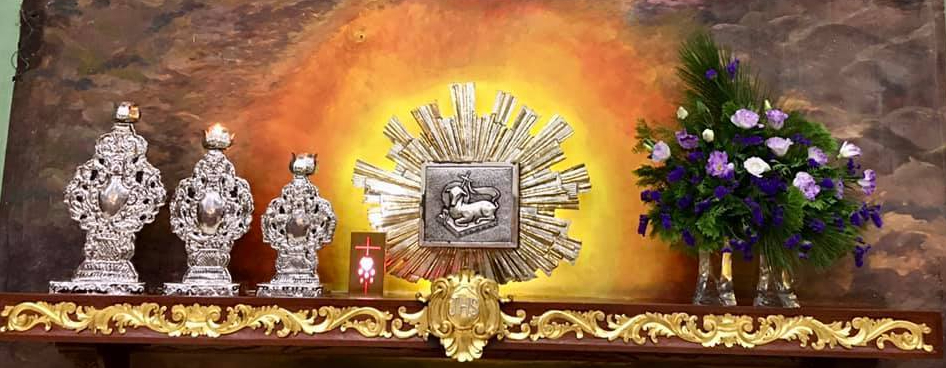
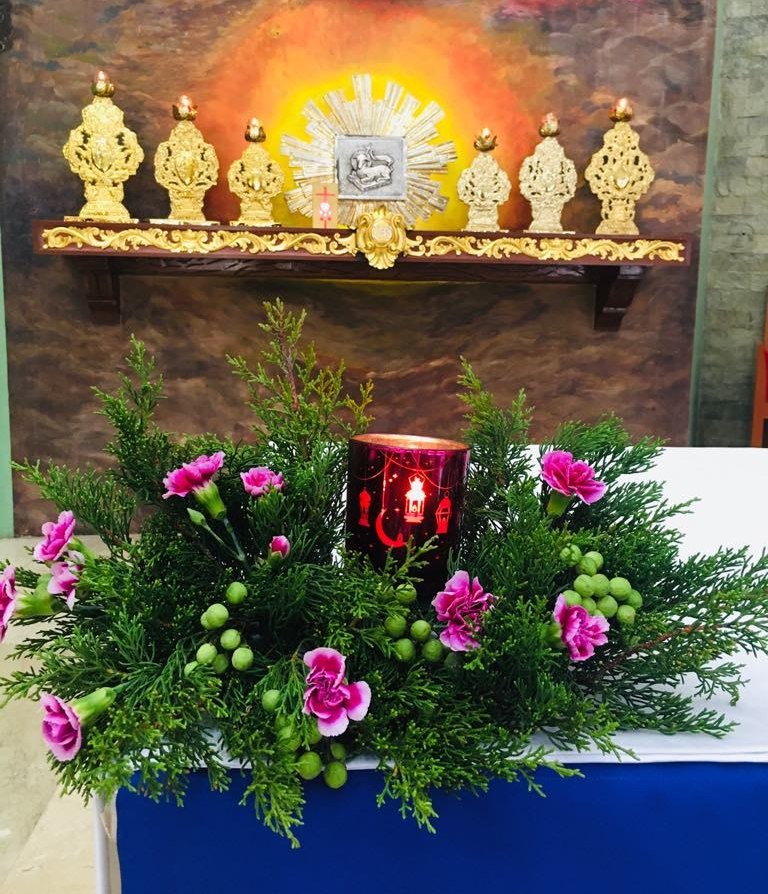
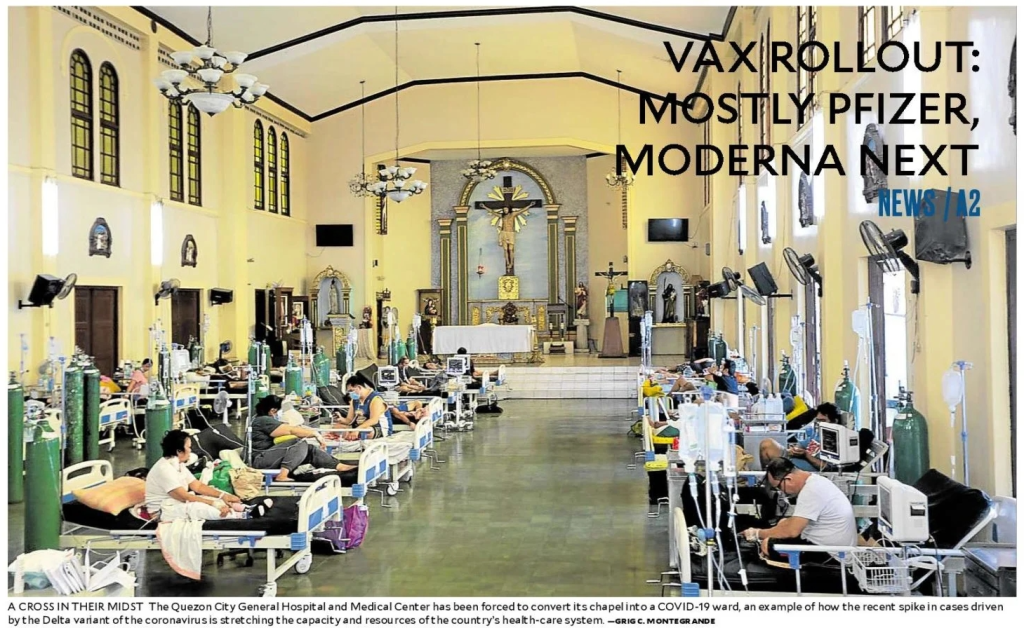
Photo by Ms. Nikki A. Vergara, 2020 at Victoria, Laguna.
We go OPM (Original Pilipino Music) this Sunday with Color It Red’s 1994 single Paglisan from their Hand-Painted Sky album released that same year. Twice did we hear it played this week on two occasions as if accompanying us in our life journey: first was last Tuesday after a friend reminded me of our dinner the following day with her husband before they migrate to Canada and second at the funeral of a former classmate’s husband who suddenly died of a heart attack.
Paglisan perfectly matches our Sunday readings in preparation for the closing of our liturgical calendar two weeks from now. In the gospel we hear Jesus speaking of the coming tribulations and cosmic signs to signal the end of the world for his Second Coming when everything is finally made new in him, vanishing evil and sins on the face of earth. But it is not all destruction and end – it is actually a prelude to new beginnings in life in God.
Ms. Cookie Chua lends the most perfect voice and attitude to the song Paglisan that speaks about the death of a beloved or maybe a break up. So peaceful and serene with some birds chirping signaling the start of a new day, the song speaks of how everything must come to an end like a journey. And in every leaving and ending, there is always the love that remains and keeps us one with those who have left us.
Kung ang buhay ay isang umagang nakangiti At ikaw ay ang lupang sinusuyo ng bituin
‘Di mo man silip ang langit ‘Di mo man silip, ito’y nandirito pa rin
Kung ang lahat ay may katapusan Itong paglalakbay ay makakarating din sa paroroonan At sa iyong paglisan, ang tanging pabaon ko Ay pag-ibig
Sa pagbuhos ng ulan, sa haplos ng hangin Alaala mo ay nakaukit sa pisngi ng langit
‘Di man umihip ang hangin (ah) ‘Di man umihip, ika’y nandirito pa rin
Kung ang lahat ay may katapusan Itong paglalakbay ay makakarating din sa paroroonan At sa iyong paglisan, ang tanging pabaon ko Ay pag-ibig Ay pag-ibig Ay pag-ibig
The year is about to end. Let us be thankful for the people and experiences we have had this 2021 despite the pandemic. May we continue to do our part in working for a better future.
Have a blessed week ahead!
*We have no intentions of infringing into the copyrights of this music and its uploader except to share its beauty and listening pleasure.
The Lord Is My Chef Sunday Recipe for the Soul by Fr. Nicanor F. Lalog II
Sunday XXXIII-B in Ordinary Time, 14 November 2021
Daniel 12:1-3 ><]]]]'> Hebrews 10:11-14, 18 ><]]]]'> Mark 13:24-32
Photo by author, lantern store in San Fernando, Pampanga, 11 November 2021.
With nowhere else to go last Thursday during my day off, I headed north to the Christmas capital of the Philippines to check on the colorful lanterns or parol sold along the highway in San Fernando, Pampanga.
What a sight to behold, a refreshing break from two years of quarantine and a better alternative to the malls! Like the stars above they represent, these colorful lanterns are best seen at night, when darkness is all around us like when Jesus was born on first Christmas – the darkest night of the year – to be our light in the world. And that is his message on this penultimate Sunday in our Church calendar when we hear him teaching us about the end of time.
Jesus said to his disciples: “In those days after that tribulation the sun will be darkened, and the moon will not give its light, and the stars will be falling from the sky, and the powers in the heavens will be shaken. And then they will see ‘the Son of Man coming in the clouds’ with great power and glory, and then he will send out the angels and gather his elect from the four winds, from the end of the earth to the end of the sky.”
Mark 13:24-27
With or without God, the “end of the world” has always been one of mankind’s preoccupation. We Christians are the most eager, having put on so much thoughts and efforts and concerns about the end of the world because it was spoken by Jesus Christ himself. However, it is not just an end of the world as portrayed in many Hollywood films that evoke fear with all the deaths and destructions happening.
When Jesus spoke of the tribulations and the darkening of the sun and the moon with stars falling, he was speaking in symbolic languages common at that time. It is a part of theology called escathology that deals with everything about the last things but, it is not all destruction. The end that Jesus spoke of to his disciples follows a certain direction towards the final end which is the eternal glory of God.
Hence, our faith about the end of the world at the Second Coming of Christ should not evoke fear in us because it will be the final fulfillment God’s plan that we shall all be with him in all eternity. On the contrary, Jesus speaking of the end of time should bring us hope and joy for better tomorrow. If it were so bad that everything would be destroyed and gone, how could he “come in the clouds with great power and glory”? Jesus was clearly speaking of good things than bad things here, of the passing of old to be replaced with new and better ones.
Photo by author, view of Jerusalem Temple from the Mount of Olives, 2019.
In fact, Jesus was encouraging the Twelve in this scene when they were by themselves on the Mount of Olives across the Temple. It was a very private moment when Jesus spoke of these things to the Twelve after Peter had inquired about the coming destruction of the Temple the Lord had told them after a disciple marveled at its magnificent stones.
Of course, we know nothing is permanent in this world, no matter how beautiful and sound it may be.
One thing we notice at the very start of Mark’s gospel is the presence of tribulations both in the time of Jesus and early Christians. Remember that in Mark’s account, the beginning of the “good news” of Jesus Christ is the story of the arrest of John the Baptist, a very bad news at that time (Mk.1:14). It was the “ending” of the preaching by John the Baptist but the beginning of the ministry of Jesus Christ.
When Mark wrote his gospel, the early Christians have already experienced persecutions and many sufferings like when Nero blamed them for the great fire that burned Rome in year 68. Although the Temple was still intact when Mark wrote his gospel account, there were already persistent rumors of the coming attack in Jerusalem by the Roman army which took place in year 70.
These teachings of the end of the world and Second Coming were meant by Jesus to strengthen and assure his disciples that include us in this time not to panic nor be shaken by trials and tribulations. So often in life, it is when we are sick or defeated, when we are down when we actually see the light clearer, when God begins to work his wonders in us and for us.
This Sunday, our first reading and gospel both tell us to never lose heart in the face of darkness and sufferings, encouraging us to remain faithful to God because he is coming, he has come and he is come inaugurating his kingdom right here in our hearts, among us (Lk.17:21).
Endings are new beginnings. Welcome every ending or closing in life. Most of all, be ready for no one knows the exact day nor time when it would come and happen.
“Learn a lesson from the fig tree. When its branch becomes tender and sprouts leaves, you know that summer is near. In the same way, when you see these things happening, know that he is near, at the gates. Amen, I say to you, this generation will not pass away until all these things have taken place. heaven and earth will pass away, but my words will not pass away. But of that day or hour, no one knows, neither the angels in heave, nor the Son, but only the Father.”
Mark 13:28-32
Photo by author, Camp John Hay, Baguio City, 2018.
It is useless and impractical to know the date and time when all these things will happen because salvation and any other change will never be realized when they are determined. Instead of waiting for the date, do everything in every here and now so that we become more prepared how to act properly when faced with the Lord’s Second Coming and whatever emergencies in life. This is the meaning of the parable of the fig tree when we learn to read the signs of the times and other events in our lives in the spiritual sense and not just in human terms like this pandemic.
It is our task as a believer and as a community to decipher and discern their spiritual meanings because these are grace-filled moments for growth and maturity in the Lord. Jesus assures us that he is definitely coming. He is the God of history. This is the gist of the first reading where Daniel had seen in a vision mankind’s moving forward in history with all the ups and downs with just one assurance: “the wise shall shine brightly like the splendor of the firmament, and those who lead the many to justice shall be like the stars forever” (Dan.12:3). This was eventually fulfilled in Jesus.
Every time we see and hear or even experience disasters and famines, pandemics and wars, coming of false prophets and despots, elections and other upheavals, they are harbingers of the coming of Jesus Christ. The more darkness and sufferings come, the more everything seemed to be ending or even lost, that is when surely the Lord is coming.
The second reading from the Letter to the Hebrews tells us how Jesus seated at the right hand of God in heaven awaits until all things on earth come to completion as planned while we stand vigilant, faithfully awaiting also that day when we shall be with him in all his glory. Let us do our part specially in this time of the pandemic which is a wake up call than a punishment for our sins because God does not punish at all.
This darkness above us calls us to deepen our faith, hope and love in God through one another that we become Christ’s loving presence. Jesus is definitely coming. Are we ready?
Have a blessed week ahead! Amen.
Photo by author, lantern store in San Fernando, Pampanga that shows us how in the darkness of this pandemic, slowly we can now see the beauty and light of God’s love and mercy (11 November 2021).
It is a very lovely first Sunday of November with so many good things happening around us with the decreasing number of COVID-19 patients and lowering of our alert level. Enjoy and appreciate life but keep your guard, stay safe, practice health protocols, and thank God, remember God for his blessings!
This Sunday Jesus is inviting us to level up, to make a shift in our perspectives and points of view (POV) on wealth and poverty, sharing and grandstanding, on our life in relation with one another, and most especially with God our Father (https://lordmychef.com/2021/11/06/life-is-more-than-pov/).
And that is why we have chosen the cool and soothing jazz piece by American musician and artist Jeff Klemmer called “Lifesong” released in 1980 from his album Midnight Madness.
In this piece with vocals by Danny O’Keefe, Klemmer gives tribute to his beloved wherein he expressed how his entire music has been his expression of great love for her, of how he had let himself be absorbed in her that he gave his very self to her and his music. The song could also be referring to Klemmer’s music which he loves so much.
The lyrics are simple and noble, sincere and honest that perfectly match the melody and relaxing beat of the music interspersed with Klemmer’s saxophone.
I’ve been living all my life Living just to play for you Playing all the words I could never say
But the music says it all And you know that it’s true, yes you do That I have to play the words That I can’t say to you
It’s a life heard through a horn It all comes from the heart, you see All the ways you stay Together & a part of me
All my life I’ve played for keeps What else could I do I’ve played it all for love When I played it all for you
In essence, both Klemmer and Jesus are telling us that the key to fulfillment in life is when we are able to give our total selves to the one we love, when we are able to love someone more than our self for that is when life becomes truly rewarding.
Many times, we cannot let go of our self and personal interests that actually hold us back from growing and maturing. Life is about giving up, of total giving of self.
Have a blessed week ahead!
*We have no intentions of infringing into the copyrights of this music and its uploader except to share its beauty and listening pleasure.
The Lord Is My Chef Sunday Recipe for the Soul by Fr. Nicanor F. Lalog II
Sunday XXXII-B in Ordinary Time, 07 November 2021
1 Kings 17:10-16 ><]]]]'> Hebrews 9:24-28 ><]]]]'> Mark 12:38-44
Perspectives and points of view play important roles in our lives, affecting our judgements and conduct; however, we also know by experience that perspectives and points of view are not enough, cannot be entirely reliable that lead us into stereotyping of people.
I just learned recently from the teenaged daughters of a friend that the #POV for “point of view” may be used in two ways: first, to express “this is my personal point of view” to which everyone is entitled that should not be contradicted because “it is how I see things”; the second is to present a “first person point of view”, that is, through the eyes of the one who uploads a video to show exactly how things are like the first steps of a baby.
This Sunday, Jesus is challenging our perspectives, our #POV on wealth and poverty, sharing and grandstanding, on our selves before God and other people.
Since last month we have seen how Jesus refused to get into debates with people on persistent issues humans have always been discussing like divorce (Oct.3), power and positions (Oct. 17), and the most important laws to follow (Oct. 31) because Jesus came to reveal to us the will of the Father so we may level up in our perceptions about self, others, and life itself.
Jesus was still in the temple area; he had silenced his enemies from asking him further with other questions to test him. After going on the offensive attacking the scribes’ hypocrisies, Jesus sat to observe the people dropped their donations into the temple treasury.
He sat down opposite the treasury and observed how the crowd put money into the the treasury. Many rich people put in large sums. A poor widow also came and put in two small coins worth a few cents. Calling his disciples to himself, he said to them, “Amen, I say to you, this poor widow put in more than all the other contributors to the treasury. For they have all contributed from their surplus wealth, but she, from her poverty, has contributed all she had, her whole livelihood.”
Mark 12:41-44
Photo by author, Jerusalem, 2017.
A Tale of Two Widows
Before going into that story of the widow praised by Jesus, let us consider first the story of another widow mentioned earlier in our first reading, the widow of Zarephath, a region governed by Queen Jezebel’s father. Queen Jezebel was the pagan wife of Israel’s King Ahab who had ordered troops to kill Elijah after putting to shame the priests of her pagan god “baal”.
After 40 days of hiding in the mountain fed by birds with a stream providing him fresh water, God instructed Elijah to proceed to Zarephath to meet the widow who would take care of him during the drought that would come as a punishment to Israel.
More than the miracle of living through the year of drought that hit the region at that time, it is a marvelous story of the faith of both Elijah and the pagan widow. We can understand the deep faith and total obedience of Elijah to God who had told him everything that would happen while hiding in enemy territory.
Things were greatly different with the widow of Zarephath who was first of all a pagan, in fact, a worshipper of the false god baal Elijah had openly bashed in every occasion everywhere. Her faith is so admirable that she risked her own life including her son in welcoming into her home an enemy of their king. Most of all, she put her complete faith in the words of God spoken through Elijah whom she hardly knew.
She left and did as Elijah had said. She was able to eat for a year, and he and her son as well; the jar of flour did not go empty, nor the jug of oil run dry, as the Lord had foretold through Elijah.
1 Kings 17:15-16
In a very similar manner, it was the very nature of faith of the simple and poor widow at the temple treasury that earned praises from Jesus. Keep in mind that money was meant for the upkeep of the Temple, not for the poor; therefore, the very act of donating money into the treasury was in fact an act of faith by the poor widow on God. She was convinced that her offering goes directly to God himself!
It is in this aspect that we must see the whole point of the story which is not about big money and small coins but our personal attitude and faith in giving that is ultimately linked with God. Every amount we offer to church and charities indicates the kind of relationship we have with God.
Jesus had nothing against giving “large sums” of money to the temple collection box; it was not the amount of donation he was raising issue with as he contrasted how the rich “have all contributed from their surplus wealth, but she, from her poverty, has contributed all she had, her whole livelihood.”
It is always easy to honor God – even self – with one’s huge donations while still relying on our false securities of money and wealth unlike the poor widow who offered her very self to God. In a sense, Jesus had seen in the poor widow’s offering his coming total gift of self on the Cross soon to happen at Jerusalem!
The beauty of both women, widow and poor having lived in totally different times – one in Zarephath, a pagan and another in Jerusalem, so pious and religious – is in their total entrusting of themselves to God, forgetting their very selves in the process, unmindful of the dangers and uncertainties ahead in life except that firm faith in a loving and merciful God.
From Facebook, 24 March 2020.
Our many concerns in life
I was recently interviewed for a special program that focuses on our lives as priests. At the end of the interview, I was asked by the hosts: “what legacy do I wish to leave after my term of office in my present assignment”? It was not really a difficult question at all but I was surprised because that such was the frame of mind of my interviewers. Their perspective and POV, so to speak.
After a few seconds, I politely told them that I no longer think such things as legacies to leave behind even in this life, explaining that priesthood is a journey wherein we come and leave to different assignments and tasks with just one purpose which is to make Jesus Christ known and experienced by the people we serve. After every assignment, I tell people to forget me and that is why I never come to visit my previous assignments. For me, it is only Jesus, always Jesus whom people must remember and keep. No one else, nothing else.
That I think is discipleship: a shift in our perspectives and points of view into God’s very own perspectives and POV wherein we present ourselves before God and not before humans.
Discipleship in Christ does not mean doing great things nor achieving heroic feats in life; God knows our limits, our weaknesses. We are all small and poor before him like those two widows in Zarephath and Jerusalem; but, if we can be like them completely trusting and faithful to God, giving our very selves to him, then, the little amount we offer can eventually accomplish the love and mercy God expects from us.
See the many concerns we have in life. The more we address them, the less we actually have in life like those abusive scribes Jesus mentioned: they have everything like status and fame, clothes and money but have lost God and the people while the poor may have nothing material but have everything in Jesus Christ.
That is what the author of the Letter to the Hebrews is telling us in the second reading: in the Priesthood of Christ, he had accomplished everything for us by offering himself on the Cross, forgiving us our sins to lead us to eternal life. Like Jesus, are we willing to give our very selves to him through others so we may gain him and everything?
The Lord Is My Chef Sunday Recipe for the Soul by Fr. Nicanor F. Lalog II
Sunday XXXI-B in Ordinary Time, 31 October 2021
Deuteronomy 6:2-6 ><]]]]*> Hebrews 7:23-28 ><]]]]*> Mark12:28-34
Since the start of this pandemic last year, I have always have that strange feeling of COVID-19 chasing me like a mad dog that would not stop until I am dead. Even after I have had the jabs, practicing all health protocols and best efforts of being “positive” to be negative of the virus, that morbid feeling keeps on creeping.
It is depressing but, it is not that bad as the pandemic has slowly become a grace-filled moment for me like to many of you (I hope so) to discover anew and realize that GOD is absolutely the one thing most important in this life, that GOD is not just the first among all things in life but essentially the very reason of everything in life!
One of the scribes came to Jesus and asked him, “Which is the first of all the commandments?” Jesus replied, “The first is this: Hear, O Israel! The Lord our God is Lord alone! You shall love the Lord your God with all your heart, with all your soul, with all your mind, and with all your strength.”
Mark 12:28-30
Maturing and growing from fear to love.
From Jericho last Sunday, Jesus had finally reached Jerusalem, teaching in the temple area of the many valuable lessons on growing and maturing in our faith, in nurturing a personal relationship with God through him by moving from fear to love, from knowing to experiencing persons.
Like us in this time of the pandemic thrown into confusion, the scribe approached Jesus to be clarified with the many laws and precepts they were tasked to follow to lead a holy life and enter eternity. Like Bartimaeus last week, the scribe sincerely asked Jesus for enlightenment from the many darkness and blindness afflicting him.
And he was not disappointed when Jesus answered his question so differently by quoting verbatim from the most ancient prayer known by every devout Jew called the Shema Israel which we heard proclaimed at the first reading. By directly quoting Deuteronomy 6:4-5, Jesus showed that more than the question of being the “first commandment” in the list of things to follow that is always binding on all, loving God with one’s total person is actually the source of all other commandments – even of those not listed!
In his answer to the scribe’s question, Jesus perfectly showed what holiness is all about – an integration (wholeness) of one’s faith and prayer and life from which flows the very essential fact of our lives that there is no other God than our God who alone is the One.
And the good news is that this great and powerful God had chosen to be one with us in the most personal manner by residing in our hearts!
We have a beautiful expression in Tagalog, “nakialam ang Diyos” – God “intervened” in our very lives by sending us his own Son Jesus Christ, unmindful of our nothingness, because he chose to love us, to be with us, to redeem us. What an amazing and loving God is he indeed who is perfect and most holy seeking an intimate and personal relationship with the broken and imperfect, sinful humans through our Lord Jesus Christ who embraced everything in us except sin.
Photo by Ms. Mira Mandal Sibal.
In this scene, Jesus is inviting us to move away from our usual “impersonal” relationship with God that is based on laws to follow, resulting in fears to the punishments due when failed to obey them. It is not even a relationship to speak of but more like a deal or transaction wherein we look at him as God our Lord and Master who takes care of our needs as his subjects and servants. Very feudal, so far from God’s will.
Making matters worst is our Filipino psyche of “sapagkat ako ay tao lamang” where we capitalize on our being weak as humans, therefore lowly but not necessarily humble using it as an excuse for failing to “love” him accordingly, and thus, an expression of our pride and insubordination to God.
Like Bartimaeus before his healing, we prefer to stay at the roadside than join Jesus on the way, avoiding relationships that call for a commitment to love.
Jesus wants us to be involved with God through him personally for it is only through him and in him can we experience God’s immense love and mercy by letting go our selfish selves. And the more we let go our selves in love, experiencing pains and sufferings like Jesus, the more we mature and grow better as persons, realizing the need to nurture this wonderful relationship with God who is love, who is the very core of our being.
That is when we move closer to the kingdom of God which is the very person of Jesus Christ found in everyone!
“The second is this: You shall love your neighbor as yourself. There is no other commandment greater than these.” The scribe said to him, “Well said, teacher. You are right in saying, ‘He is One and there is no other than he.’ And ‘to love him with all your heart, with all your understanding, with all your strength, and to love your neighbor as yourself’ is worth more than all the burn offerings and sacrifices.”
Mark 12:31-33
Maturing and growing, loving personally
Jesus continued his answer to the scribe by explaining the evolution of commandments from God as its very source, telling us that as we appreciate his majesty and grandeur, we naturally and progressively flow to our discovery and loving too of the other persons around us.
Christ reminds us that whenever we find there is no other God than our God, we likewise discover that everyone is our neighbor, not just those like us in belief and color. The more God reveals himself to us in his grandeur and majesty, the more he also reveals himself to us in every person. Thus, it was in this moment in that encounter with the scribe that Jesus reintroduced his teaching on the universality of salvation, not just for Jews but for everyone!
In a similar manner when Bartimaeus was healed of his blindness last Sunday, today’s gospel is a wonderful story of enlightenment of the scribe who also regained his sight and vision in realizing that the love of God is also the love of one another! That is why he too cannot deny in himself the very truth that the highest form of worship, of “burnt offering and sacrifices” at the temple is personally loving God through everyone around us.
This is one of the important lessons this COVID-19 pandemic has taught us: it is always easy to say or even assume most of the time that we love, that we are loved, taking for granted the expression of our love and concern for others. We now feel so sorry how we have let days and weeks, months and years to have passed without seeing or calling family and friends or at least saying “hi” in whatever platform of social media until COVID-19 came.
Photo from inquirer.net.
While this pandemic has taught us the value of many ordinary things we have taken for granted like simple washing of hands and basic practices of cleanliness that matter so much to remain virus free and healthy, it has painfully taught us too the value of every person dear to us when one by one they were getting infected with COVID-19, some never recovered from the dreaded disease and now gone forever.
So many deaths have occurred in our circles of family and friends since last year in this pandemic; and, the saddest part is how swiftly they have left without any warning at all, denying us the chance of even a few seconds to see them and tell them how much we loved and cared for them.
It is always easy to know and say there is only One God, that he loves us so much, and that we also love him in turn. But, to move from fear to real loving, from formal knowledge to personal relationship, it is different. How true is that saying of us seeing the forest but missing the trees!
This Sunday, Jesus tells us to grow and mature in our relationships with him in prayer that must flow progressively and naturally to the people around us. It is only in finding this close link of loving God and loving neighbors that we get nearer to Jesus, who is the kingdom of God.
Tomorrow we celebrate All Saints Day in honor of all the departed already in heaven and on November 2, the All Souls Day for those awaiting in purgatory. Two great feasts that coincide with our Sunday gospel preparing us for the final destination, of being in the kingdom of God fully which is heaven.
While still here on earth not from the kingdom of God, Jesus is giving us the grace to experience heaven in our personal love in him to the Father through each other. Amen.
The Lord Is My Chef Sunday Music by Fr. Nick F. Lalog II, 24 October 2021
Photo by author, ancient city of Jericho in Israel, May 2019.
It’s a dark and gloomy Sunday with some rains across Metro Manila and like our gospel filled with joy and inspiration in Jesus Christ’s healing of the blind man named Bartimaeus, we bring you Joe Jackson’s 1984 hit single You Can’t Get What You Want (Till You Know What You Want) from his album Body and Soul.
We find Jackson’s song perfectly matched the story of the blind Bartimaeus who got what he wanted from Jesus when he passed by Jericho because he has always been focused on what he really wanted in life which is to be able to see (https://lordmychef.com/2021/10/23/seeing-jesus-walking-with-jesus/).
Many times in life, we are easily distracted from our goals and aspirations by many other things that “blind” us and thus divert us from our aims in life. Exactly what Englishman Jackson says in this great musical piece of sophistication – from lyrics to melody and instrumentations!
Sometimes you start feelin’ so lost and lonely Then you’ll find it’s all been in your mind Sometimes you think someone is the one and only Can’t you see, it could be you and me? But if there’s any doubt Then I think I’ll leave it out
Cause I’ll tell you one thing You can’t get what you want Till you know what you want Said you can’t get what you want Till you know what you want
Sometimes you keep busy reaching out for something You don’t care, there’s always something there Sometimes you can’t see that all you need is one thing If it’s right, you could sleep at night But it can take some time But at least I’m here in line
Cause I’ll tell you one thing You can’t get what you want Till you know what you want Said you can’t get what you want Till you know what you want
We’re sure that you too would be giving a great AMEN! after listening to Joe Jackson’s “explosive” live performance of You Can’t Get What You Want (Till You Know What You Want).
*We have no intentions of infringing into the copyrights of this music and its uploader except to share its beauty and listening pleasure.
The Lord Is My Chef Sunday Recipe for the Soul by Fr. Nicanor F. Lalog II
Sunday Week XXX-B in Ordinary Time, 24 October 2021
Jeremiah 31:7-9 ><]]]]'> Hebrews 5:1-6 ><]]]]'> Mark 10:46-52
Photo by Mr. Jay Javier, Quiapo, January 2020.
We are about to end our liturgical calendar in five Sundays from now and Jesus is fast approaching Jerusalem, his final destination in fulfilling his mission to redeem us from our sins. Along this path, we are reminded of the many blindness within us that prevent us from meeting Jesus who is passing by.
Recall how last week we reflected on the “blindness” of the brothers James and John to their ambitions, wishing to Jesus that once he becomes king, they would be seated at his right and at his left, forgetting the Lord’s teaching that he is a “suffering Messiah”, far from their expectations of a triumphant victor or liberator.
Today, we heard the story of a blind man named Bartimaeus who kept shouting, pleading to Jesus’ attention who was passing by the city of Jericho on his way to Jerusalem.
The story reminds us of the need for us to be aware of our many blindness in life, of things that keep us from seeing Jesus, others and our very selves. Here is a man very realistic, aware of his blindness, focused on his need and goal to be able to see, most specially Jesus.
As Jesus was leaving Jericho with his disciples and a sizable crowd, Bartimaeus, a blind man, the son of Timaeus, sat by the roadside begging. On hearing that it was Jesus of Nazareth, he began to cry out and say, “Jesus, Son of David, have pity on me.” And many rebuked him, telling him to be silent. But he kept calling out all the more, “Son of David, have pity on me.” Jesus stopped and said, “Call him.” So they called the blind man, saying to him, “Take courage; get up, Jesus is calling you.”
Mark 10:46-49
So often, we get blinded by even the most obvious things in life like our present condition that needs to be improved or even saved. In the Book of the Acts of the Apostles is a story of that crippled beggar at the Beautiful Gate of the temple whom Peter and John healed one afternoon after the Pentecost. According to Acts 3:1-9, when the beggar who was crippled from birth saw Peter and John approaching him, he thought they would give him alms; but much to his surprise and of everybody, Peter made him walk in the name of “Jesus Christ the Nazorean”!
Imagine how the crippled beggar so used to his condition, so comfortable to some extent that he was preoccupied to just begging for alms, forgetting or abandoning all hopes to be able to walk like most people.
There are times we really do not know what we need and want in life that we are easily distracted and defocused from having the essential things in life like seeing our true selves, those around us and even our need for God who has been loving us, showering us with his many blessings and grace we hardly notice because we are busy complaining for so much wants not important.
Here, Bartimaeus was so sure of what he wanted: to recover his sight.
And the most wonderful thing is how he completely had faith in Jesus as the only one who can restore his sight, calling him “Son of David” which is the title of the coming Messiah or Christ. He must have heard a lot about his healings and preaching, realizing Isaiah’s prophecy of how the Messiah would restore sight to the blind. Jesus himself had confirmed this at the inauguration of his ministry at Nazareth when he proclaimed that part of the Book of Isaiah in the synagogue (Lk.4:18).
That is how realistic and grounded was Bartimaeus to the realities of himself that he shouted to beg Jesus to have pity on him. His faith in Jesus was so firm that when people tried to silence him, the more he persisted and shouted aloud so Jesus would hear him!
How well do we know the many blindness we have in ourselves that we would exert such effort like Bartimaeus in asking Jesus for light, to restore our sight so we would see and know him clearly, love him dearly and follow him closely?
He threw aside his cloak, sprang up, and came to Jesus. Jesus said to him in reply, “What do you want me to do for you?” The blind man replied to him, “Master, I want to see.” Jesus told him, “Go your way; your faith has saved you.” Immediately he received his sight and followed him on the way.
Mark 10:50-52
Moreover, it is not enough to be healed of our blindness in faith;
the truest sign of having our sights back,
of being healed from blindness is to leave
the roadside to follow Jesus "on the way".
“Jesus healing the Blind Man” painted by Brian Jekel (born 1951) in 2008, oil on canvas. From http://www.Christian.Art.com.
What a wonderful story of healing and faith, of seeing and following Jesus! “Immediately he received his sight and followed him on the way.” Today the gospel reminds us to take a critical look at ourselves to root out whatever it is that keeps us from seeing who Jesus is like self-centeredness and pride, preoccupation with fame and wealth, or our toxic relationships and painful past we could not let go.
See how Bartimaeus “threw aside his cloak, sprang up, and came to Jesus” upon being called from the roadside. That is the key to any real prayer, of encountering and meeting Jesus when we are willing to let go of whatever we have, of letting ourselves be stripped naked before God without any ifs and buts, offering him our very selves.
Moreover, it is not enough to be healed of our blindness in faith; the truest sign of having our sights back, of being healed from blindness is to leave the roadside to follow Jesus “on the way”.
Again, we hear from St. Mark using that word “way”: last month Jesus asked his disciples what were they arguing along the way and no one could answer him because they were discussing who was the greatest among them. In the healing of Bartimaeus, there is that beautiful imagery of Jesus our way, truth and life; of Jesus passing by, calling everyone to come to him, to leave the roadside and walk with him on the way to Jerusalem like Bartimaeus.
In this critical period of our history when we are celebrating the 500 years of the coming of Christianity while we are in the midst of a crucial election campaign period on the second year of a crippling pandemic, we are all called by Jesus to leave the roadside like Bartimaeus to join him on the main road, to journey with him, and most of all, to carry our cross with him.
Joining Jesus on the main road with his Cross means becoming his very presence among other people too. Discipleship is more than seeing and following Jesus – it means setting aside our false securities and “springing up” from our comfort zones in order to give ourselves to others too.
Discipleship is walking with God, walking with his people, bringing them joy and hope while in the midst of sufferings like the prophecy of Jeremiah in the first reading: “Behold, I will bring them back from the land of the north; I will gather them from the ends of the world, with the blind and the lame in their midst, the mothers and those with child; they shall return as an immense throng” (Jer.31:8).
Yes, this has been fulfilled by Jesus in his coming but the journey continues to this day with his faithful disciples who guard against all kinds of blindness within, leaving the roadside of comforts to meet and share Jesus on the dusty road of life.
Many times, Jesus is passing by the road invisible to many, unnoticed by many due to various kinds of blindness. Jesus wants us all to be with him, to join in his journey to light, to freedom, to peace and to joy. Everybody is invited to leave the roadside and hit the main road with Jesus.
Let us be open to listen to his coming, to his calls.
Most of all, let us beg him for mercy to open our eyes, to heal us from the many blindness we have so we may see and meet him, love and follow him always. Amen.
Finally, I have found an opportunity this Sunday to feature one of our most favorite bands in the 1980’s with its superb music and mysterious – and controversial lyrics – R.E.M. with their first hit song in 1987 The One I Love that has often been misinterpreted by many people as a straightforward love song when in fact it is the opposite.
According to lead vocal Michael Stipe, he was hesitant at first in recording this song because it is about people using people repeatedly for selfish gains, describing it as so “brutal” with a line that says “A simple prop to occupy my time” – of how a man uses the one he “loves” like a thing!
This one goes out to the one I love This one goes out to the one I've left behind A simple prop to occupy my time This one goes out to the one I love
Fire Fire
This one goes out to the one I love This one goes out to the one I've left behind A simple prop to occupy my time This one goes out to the one I love
Stipe explained that the song never referred to any actual person nor event except that the band simply played up its lyrics while on tour with just one word at its chorus which is “Fire”.
One can readily find that it is not a love song at all by watching its music video that is generally dark except for some scenes of blue skies with white clouds that featured empty apartments and sad-looking couples.
But such is the genius of these four men who got together to form R.E.M. while students at the University of Georgia in 1980 as one of the earliest alternative rock bands who’s other major hit is called “Losing My Religion” – another song that one must not take literally as anti religion. But, that is another story we are reserving in the future.
We chose R.E.M.’s The One I Love because of its direct relationship with our Sunday gospel, especially at that part in the end when Jesus summoned the Twelve to himself to explain to them the basis of their relationships after the ten became indignant with the brothers James and John’s request from him to be seated at his right and his left when he assumes his kingship as the Messiah or Christ.
“You know that those who are recognized as rulers over the Gentiles lord it over them, and their great ones make their authority over them felt. But it shall not be so among you. Rather, whoever wishes to be great among you will be your servant; whoever wishes to be first among you will be the slave of all. For the Son of Man did not come to be served but to serve and to give his life as a ransom for many.”
Mark 10:42-45
Here we find Jesus clearly telling us how our relationships must be based on love and respect, serving the lowest and weakest among us unlike the way of the world that is based on power and dominance where everyone tries to escape sufferings and persecutions (https://lordmychef.com/2021/10/16/the-things-we-wish-vs-things-we-pray-to-jesus/).
Love always calls for giving up of self, thinking always the good of the other person. Not using them as props.
*We have no intentions of infringing into the copyrights of this music and its uploader except to share its beauty and listening pleasure.
The Lord Is My Chef Sunday Recipe for the Soul by Fr. Nicanor F. Lalog II
Sunday XXIX-B in Ordinary Time, 17 October 2021
Isaiah 53:10-11 ><}}}*> Hebrews 4:14-16 ><}}}*> Mark 10:35-45
Photo by author, 10 October 2021, Paco, Obando, Bulacan.
Five minutes before our Mass last Sunday afternoon at the Holy Cross Parish in Paco, Obando, two rainbows appeared in the sky, freezing me for a while to cherish the moment as I felt God smiling at me, promising me a better week ahead.
It was only after a brief pause savoring the moment when I had the chance to take a shot of the lovely sight before getting inside the church at exactly 530 PM for the Mass. The following Monday, I had the photo posted on “my day” with everybody asking what was my wish upon seeing the double rainbows
When I told them I did not make any wish at all, they said it was “sayang” (what a waste!), that if I had made a wish, it could have been granted or fulfilled.
But, looking back, I did not make any wish at all because at that very moment I felt I had Jesus in my heart, that God had me on his palms, assuring me of his loving presence.
Why make any wish at all when you already have God? Besides, I felt too old for those wishing upon a rainbow or a falling star thing!
My dear friends and relatives, this Sunday, Jesus asks his disciples, brothers James and John “What do you wish me to do for you?” (Mk.10:36); next Sunday, the Lord will ask a blind man “What do you want me to do for you?” (Mk.10:51).
It is very interesting to note that Jesus outrightly explained to James and John he could not fulfill their wishes while next Sunday, he would restore the sight of the blind man named Bartimaeus who pleaded to him as he passed Jericho. It seems that there is more than meets the eye between a wish and a prayer!
James and John, the sons of Zebedee, came to Jesus and said to him, “Teacher, we want you to do for us whatever we ask of you.” He replied, “What do you wish me to do for you?” They answered him, “Grant that in your glory we may sit one at your right and the other at your left.” Jesus said to them, “You do not know what you are asking.”
Mark 10:35-38
Photo by Ms. Anne Ramos when a rainbow appeared as we went around around my former parish assignment bringing the Blessed Sacrament to bless then people on the first Sunday of our quarantine lockdown, 22 March 2020.
Wishes are only granted in fairy tales…
Jesus is now nearing Jerusalem where he would suffer and die but on the third day rise again. He had just repeated for the third and last time to his disciples of his coming pasch but, sadly, they still could not comprehend it fully.
The other Sunday, they could not answer Jesus when he asked them what were they arguing about while along the way to Capernaum because they were discussing among themselves who among them was the greatest.
They could not understand how their Lord and Master, the Messiah of Israel will have to suffer and die; it was beyond their grasp. Nonetheless, amid their lack of understanding and fears of its true meaning, they still followed Jesus, believing he would eventually triumph as a King.
And that is what the brothers James and John were thinking, the two closest to the Lord along with Peter who was earlier rebuked by Jesus at Caesarea Philippi for going against his pasch: they thought of Jesus as a “political leader”, a “game changer” who could surely change their lot for the best, assuring them and their future generations with the good life.
When Jesus asked the brothers James and John, he knew the two were just “fancying” on something not so true. That is what a “wish” is all about: something so fancy, almost untrue like coming from fairy tales that could come true with so slim a probability like hitting a jackpot in lottery or meeting a superstar. We make wishes to fairies often represented by celebrities who try to bring some joy to children suffering from cancer. Or, politicians who for a day would give some voters with huge amounts of money without any conviction at all to fulfill their promises.
As we say in Filipino, “suntok sa buwan” that literally means “punching the moon”.
But again like last Sunday when Jesus looked with love to the man asking him how to gain eternal life, Jesus respected the brothers James and John by entertaining their “wish”, asking them questions until he flatly told them “to sit at my right or at my left is not mine to give but is for those for whom it has been prepared” (Mk.10:40).
When the ten heard this, they became indignant at James and John. Jesus summoned them and said to them, “You know that those who are recognized as rulers over the Gentiles lord it over them, and their great ones make their authority over them felt. But it shall not be so among you. Rather, whoever wishes to be great among you will be your servant: whoever wishes to be first among you will be the slave of all. For the Son of Man did not come to be served but to serve and to give his life as a ransom for many.”
Mark 10:41-45
Photo by author, Chapel of the Holy Family, Sacred Heart Spirituality Center, Novaliches, 2016.
Prayer changes the person, not the situation.
Recall how Jesus assured his disciples and us last Sunday of great rewards awaiting those who have left everything to follow him; but, along these come persecutions because following Jesus means standing for what is true and good that invite enemies and detractors.
There will always be persecutions coming in our life – even if we do not follow Jesus along the way because that is a fact of life. Jesus came not to remove but join us, accompany us, be one with us in our sufferings and trials.
Today, Jesus opens our eyes to the realities, beauty and nobility of discipleship that is unfortunately becoming rare even among us in the clergy. True discipleship in Christ is first of all sharing in his passion and death in order to have a part in his glorious resurrection.
Once again, we feel the Lord’s recurring teaching these past weeks of us entrusting everything to the Father’s hands like children filled with confidence on God’s promises. This is the meaning of Isaiah’s prophecy in the first reading that spoke of the “Suffering Servant of God” who “through his suffering shall justify (save) many” (Is.53:11).
See the gentle humility of Jesus in explaining things to his disciples. There was no hint at all of anger nor exasperation but pure love and understanding, patience and perseverance hoping someday the Twelve would realize in the most personal manner his kind of kingship, the true meaning of being the Messiah.
Photo by author, Garden of Gethsemane, the Holy Land, 2017.
Here Jesus exemplifies so well in his very self the kind of relationships his followers must have based on love and respect, serving the weakest and lowliest, so unlike the way of the world that is based on relations of power and dominance. This we continue to experience when we pray fervently especially before the Blessed Sacrament and most of all when we celebrate the Sunday Eucharist which is the summit of our Christian life.
In the Holy Mass, Jesus the Son of God leads us to the Father in signs perceptible to human senses, exactly what the author of the Letter to the Hebrews speaks of in the second reading, “So let us confidently approach the throne of grace to receive mercy and to find grace for timely help” (Heb.4:16).
So, instead of wishing upon rainbows or shooting stars, better pray!
Lord Jesus Christ,
thank you for understanding
our lack of understanding
and appreciation to your coming
to us daily in the many sufferings and
pains we go through in life; help us
to be more realistic, to stop all
wishful thinking of living happily
ever after and instead become
more loving and kind, finding you
with everyone we meet.
Amen.
The Lord Is My Chef Sunday Music by Fr. Nick F. Lalog II, 10 October 2021
Photo by Dr. Mylene A. Santos, MD, 2020.
I used to tell my students before that a person is known more with the questions he/she asks than with the answers he/she gives. Too often, our answers are wrong or not certain but if we ask the right questions, even if we do not have the answers immediately, we shall get the right answer at the right time as we mature in life.
What matters most is we ask the right question always.
And that is why we have chosen “Question Me An Answer” from the 1973 movie of the 1933 novel The Lost Lost Horizon for our Sunday music this week. Written by Burt Bacharach and sang by the late Bobby Van in the movie, Question Me An Answer may sound very American and colonial but still, the message is never lost, especially if you listen well to Van’s introduction to his students at Shangri-La.
In this Sunday’s gospel, we find Jesus being asked by a man and then by Peter with questions we ourselves also ask sometimes because deep inside us, we are worried that no one can seem to provide us with the right answer.
As Jesus was setting out on a journey, a man ran up, knelt down before him, and asked him, “Good teacher, what must I do to inherit eternal life?”
Mark 10:17
According to Mark, the man’s “face fell and went away for he had many possessions” after Jesus had answered fully his question which in turn bothered Peter who began to express to Jesus his worry over his answer to the man who had left.
Peter began to say to him, “We have given up everything and followed you.”
Mark 10:28
One of the beauties of seeking and following Jesus are the endless questions that come along our journey with him. That is why we need to pray always and ask for the gift of wisdom so we may be guided in this life that becomes more wonderful with the questions we ask, not with the answers we give, or even get (https://lordmychef.com/2021/10/09/our-secret-worries-in-life/).
And the good news is, next to Jesus to accompany us in this journey in life is we also have great music keeping us company.
*We have no intentions of infringing into the copyrights of this music and its uploader except to share its beauty and listening pleasure.