Christmas: A call to openness and sincerity

The Lord Is My Chef Sunday Recipe for the Soul
Solemnity of the Epiphany of the Lord, 03 January 2021
Isaiah 60:1-6  >><)))*>  Ephesians 3:2-3, 5-6  >><)))*>  Matthew 2:1-12

Christmas is the greatest exchange gift of all when God became human like us so that we in turn can become holy like Him. For some, it is something so unthinkable even impossible but history proves Jesus Christ did come while our faith continues to affirm this reality daily when we continue to tell and relive the story of Christmas through every new year.

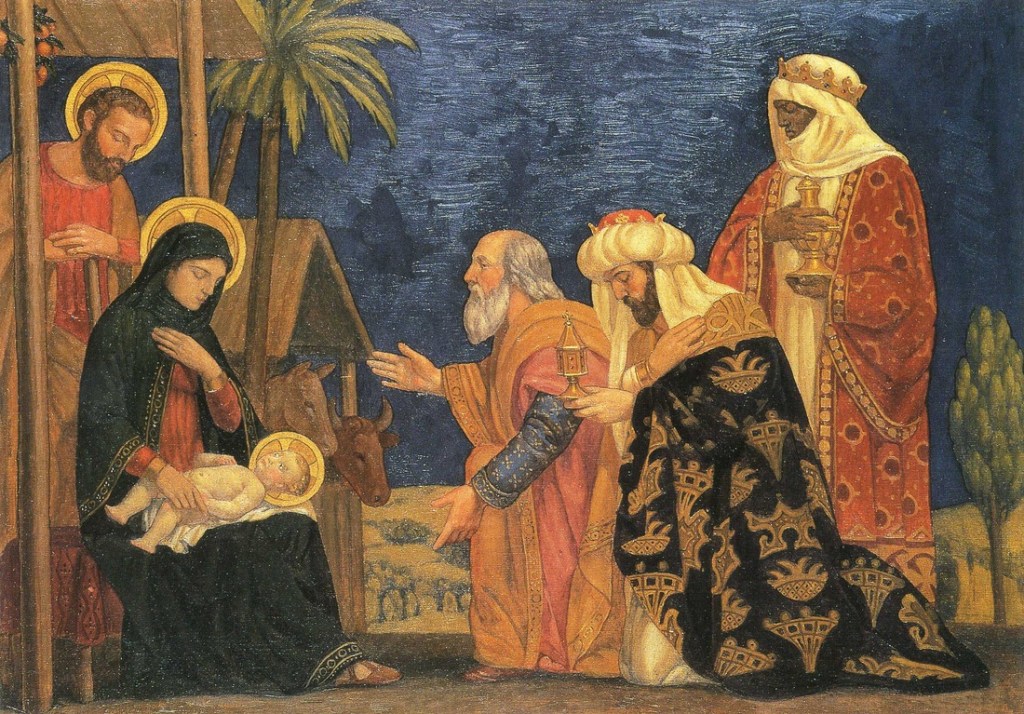
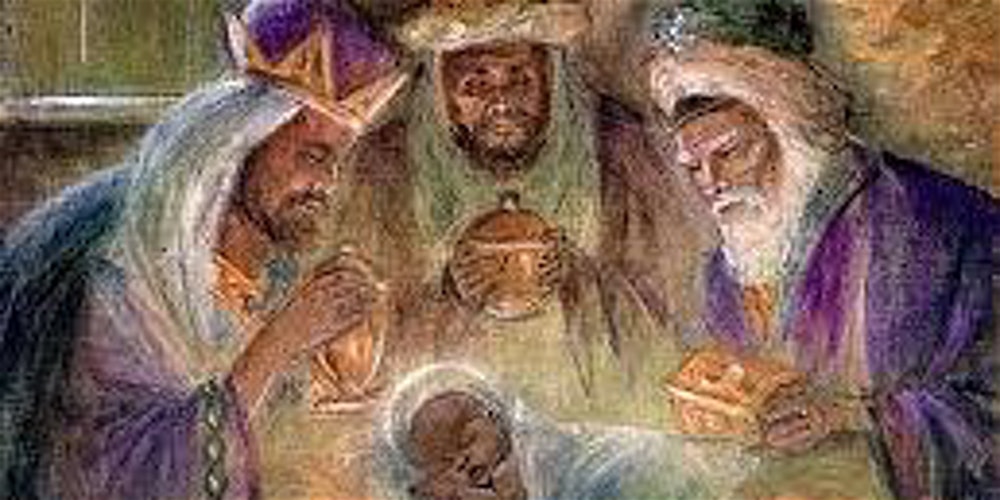
And this we can only do if we become open and sincere to God who revealed Himself to us in His Son Jesus Christ. No need to hide things from Him. He knows everything but He does not force us to come to Him. He merely invites us. Just like the three wise men from the East or Magi who came to pay homage to Him in Bethlehem.

When Jesus was born in Bethlehem in Judea, in the days of King Herod, behold, magi from the east arrived in Jerusalem, saying, “Where is the newborn king of the Jews? We saw his star at its rising and have come to do him homage.”

Matthew 2:1-2

The meaning of magi and star.

After the Nativity of the Lord and the solemnity of Mary, Mother of God we celebrate this Sunday the third major feast of the Christmas Season called the Epiphany from the Greek term that means manifestation or appearance of Jesus to pagan wise men symbolizing the peoples of the world.

So much attention has always been given on the magi and the star that we sometimes forget that the stories in the Bible are not pure accounts in history that are factual to satisfy our curiosities; it is not that they did not happen at all but the most important thing is the meaning they impart to those reading the Sacred Scriptures.

As we have noted during our Simbang Gabi, Matthew has the most unique in beginning his gospel account with “the genealogy of Jesus Christ, the son of David, the son of Abraham” (Mt.1:1) to show right away to his readers that Jesus is the fulfillment of the promise of God in the Old Testament. Recall how behind every name in the genealogy of Jesus is a story and history full of meaning and significance.

Matthew continues this in his story of the epiphany to show us again that Jesus is the fulfillment of God’s promises since Abraham by using the story of Moses as his framework.

See how the story of Jesus resembled that of Moses, the greatest figure of the Old Testament: the flight to Egypt, the threat of murdering all infants in the time of the Pharaoh and then of King Herod, and the saving act of God in the exodus which is fulfilled in Jesus Christ’s Passion, Death and Resurrection.

See my dear Reader that in the story of the epiphany of Jesus is also found glimpses of His crucifixion and death: at His birth, the magi were the first to recognize Jesus as the new King of the Jews while at His death, there hung above Him the sign “Jesus of Nazareth, king of the Jews” with a Roman centurion, another pagan like the magi who would declare to himself, “Truly, this was the Son of God” (Mt.27:54).

Here we find Matthew’s infancy narratives of Jesus are not only appealing to our sentiments and emotion but on a deeper level, these stories reflect how we Christians have always believed based in our experiences and faith that indeed Jesus is the Emmanuel of God, His presence among us who truly walked this planet and continues to guide us in the power of the Holy Spirit after His Ascencion into heaven, making Him truly a star above us guiding us in this life’s journey.

Unfortunately, for some people, it is something unthinkable and even impossible, choosing to live in their own follies and blindness like King Herod and yes, some Christians who claim to believe and know God.

When King Herod heard this, he was greatly troubled, and all Jerusalem with him. Assembling all the chief priests and scribes of the people, he inquired of them where the Christ was to be born. They said to him, “In Bethlehem of Judea, for thus it has been written through the prophet… Then Herod called the magi secretly and ascertained from the time of the star’s appearance. He sent them to Bethlehem and said, “Go and search diligently for the child. When you have found him, bring me word, that I too may go and do him homage.”

Matthew 2:3-5, 7-8

Jesus calling us to our "epiphany".

I like that part when Matthew tells us how “Herod called the magi secretly” to inquire further to them about their knowledge about Jesus and the star. How ironic and tragic that they in Jerusalem were the ones who did not even notice the unusual star above them and worst of all, with the information and knowledge they have, not to have known the birth of Jesus Christ!

How sad that so many times, we keep on looking so far without even noticing those nearest to us!

Most of all, of our blindness and refusal to accept what is obvious, what is so clear like the love and mercy Jesus pours on upon us despite our sinfulness.

See at how some government officials are making a mockery of our laws and of their very selves, trying to cover up their wrongdoings, trying to defend their mistakes and sins not knowing the more they sink in their follies with all their lies and secrecies.

Keeping secrets can sometimes be needed for a good reason; but most often, to act in secret is often indicative of something sinister like in our story today, of Herod calling the magi secretly to snoop around and eventually launch his evil plot.

What a shame that Jesus, Mary and Joseph were never in hiding yet here were people secretly plotting something against them — just like inn our own lives, in ur own time when we try to deceive even those dearest to us, hiding in our so many secrets and lies that eventually come out in the open.

How sad that while Jesus keeps on revealing Himself to us but we still hide many secrets from Him as if he would not know!

This Epiphany Sunday while Jesus appears to us in His words and in the Eucharist, He invites us to open up to Him, to be sincere and have our own epiphany too. May this prayer help you in discarding your many secrets that are after all, very known to Jesus who merely waits for us to come to Him in our openness and sincerity.

Lord Jesus Christ,
in so many instances this past year 2020
You have continued to reveal Your presence among us,
in my own life, in keeping me safe from so many harm,
in healing my sickness, in providing for my needs,
in obviously being my Lord and my God;
You know everything in me, my many secrets
that I continue to hide from You.
Forgive me Jesus in hiding from you 
even if I know you know better than I am.
I have no gold, frankincense nor myrrh
but this Christmas help me offer to you
my many "secrets" I hide  from you and others
so I may fully experience your love and mercy poured out
since that first Christmas when you first came to us.
AMEN.

Celebrating family in COVID-19

Quiet Storm by Fr. Nicanor F. Lalog II, 30 December 2020
The Holy Family of Jesus, Mary and Joseph.

Trying to relax a day after Christmas, I felt so good watching the limited BBC series at Netflix called “JAPAN with Sue Perkins”. It is so unique that it presents the Land of the Rising Sun in a different perspective by this spunky and bubbly British journalist not afraid to admit her prejudices then be rectified in this short documentary.

At the same time, Ms. Perkins presents us with the latest trends in Japan, others are good while others are not so good especially its aging population with falling birth rates and many Japanese men delaying or not getting married at all.

One solution the ingenious Japanese have found are “wives for hire” – a growing business that offers women who act as wives to unmarried men who present to their aged parents as their “wives”. One man explained to Ms. Perkins how his elderly mother enjoys more in spending time together with a “family member” like a “daughter-in-law” than just with a care-giver. They tend to converse more freely and joyfully about so many things as a “family” — at least for a day.

That is how important a family is! That is why it is called the basic unit of the society from which springs forth life itself – biologically, emotionally, and spiritually.

That is why Vatican II rightly inserted in the Christmas Season the Feast of the Holy Family to remind us of the deep character of the mystery of the Incarnation that the Son of God came into the world to save us through the family, through the husband and wife of Joseph and Mary.

It is a great reminder to us in this time when family is quickly disintegrating and maybe in a funny twist, we have in the COVID-19 pandemic a great opportunity for us to go back to our family.

Photo by author, entrance to the Flight to Egypt Cavern Church in Cairo, 2019.

Human family a creation by God, a call from God

Since the very beginning, men and women have always banded together not only as a family we know of today, a nuclear unit of father, mother, and children. It was really more of an extended family like a clan or a kin who lived together as siblings and cousins, uncles and aunts along with neighbors who all would have been in and out of the house.

Some peoples like the Hebrews do not really have the term cousins where everyone is a brother or a sister, a kin; hence, we find in the gospels Jesus being told of having brothers and sisters.

To understand this is to think of our own concepts and terms in our extended Filipino family. Like the word pinsan for cousin. When I was in kindergarten until elementary, every summer some cousins would come home to the province for vacation. We would all sleep together on the sahig (floor) with banig (local mat) like puppies or kittens together — that is, magkakapisan usually in the old house or bahay na matanda of our grandparents.

My nieces, 2017.

On the other hand, uncles and aunties refer to their nephews and nieces in Filipino as pamangkin, from the expression “para namang akin” that literally means “just like my own child”.

Both pinsan or cousin and pamangkin or nephew/niece express togetherness, of being one as a family.

But in the Bible, we find something deeper in this banding together of peoples as families sharing joys and sorrows, work and play but also coming together as a creation by God as well as a call from Him.

See how in the Ten Commandments that only the fourth commandment carries a promise from God to underscore the importance of family life and of our parents: “Honor your father and your mother, that you may have a long life in the land which the Lord, your God, is giving you” (Ex.20:12).

In the assigned first reading for the Feast of the Holy Family from the Book of Sirach we find the author elaborating and reflecting further on this beautiful nature of the human family that is divine in origin and orientation. We find at its first part the emphasis on children honoring and obeying their parents, the father and mother. This instruction is then capped by a touching reflection on the solemn duty of taking care for an aging parent with all the respect and patience due him/her. Likewise, we find at its conclusion something that echoes God’s covenant, of the need to be kind and merciful to everyone especially those in need.

Kindness to a father will not be forgotten, firmly planted against the debt of your sins — a house raised in justice to you.

Sirach 3:14

In the second reading, we find several challenges to every family to be kind, merciful, forgiving and peaceful because we are “God’s chosen ones, holy and beloved” (Col.3:12). That is our identity as children of God our Father, making us members of His one, big family.

This is something many families have seemed to have forgotten due to so many concerns in life like the need to earn money, pursue one’s career that is interspersed with breaks that sometimes costly to family members like separation or migration, by choice or by circumstances.

This is one value that we hope to recover at this time of the pandemic when most parents and children are all working and studying from home. May families take this opportunities to renew their ties with one another, to pray anew together and renew or adjust their visions and dreams where they may all grow to maturity in Christ.

Photo of my mom with my two nieces, 2017.

Purifying our family in Christ

One beautiful thing that is so outstanding with the Holy Family is the fidelity of Joseph and Mary to God through temple worship, of how they sincerely and dutifully strive to fulfill all obligations stipulated by the Laws that we find reflective of Jesus in his adult life when He would come to attend synagogue worship.

When the days were completed for their purification according to the law of Moses, they took him up to Jerusalem to present him to the Lord, just as it is written in the law of the Lord… and to offer sacrifice of a pair of turtledoves or two young pigeons, in accordance wit the dictate of the law of the Lord. Now there was a man in Jerusalem whose name was Simeon… and Simeon blessed them and said to Mary is mother, “Behold, this child is destined for the fall and rise of many in Israel, and to be a sign that will be contradicted — and you yourself a sword will pierce — so that the thoughts of many hearts may be revealed.”

Luke 2:22-25, 34-35

Part of the good news of this feast is for us to realize too that the Holy Family was not spared of problems and trials just like us. In our gospel today, Simeon assured Mary of her heart being pierced with a sword, of facing trials and conflicts to happen like when Jesus was lost only to be found a day later in the temple when he was 12 years old. It must have caused too much stress and worries to Mary and Joseph.

Or when Jesus finally left home to begin His public ministry when people, including relatives thought he had lost his mind in His preaching!

And finally, when He was crucified. It must have been a terrible experience for the Blessed Virgin Mother.

No family is so perfect to escape trials and conflicts but the Holy Family teaches us something so perfectly valuable that can help us resolve our many imperfections in our family — of remaining in God, of being rooted in Him who is our identity as family, as a person.

The Presentation of Jesus by Mantegna from wikipediacommons.org.

It is in the family where we first encounter and experience God, both His presence and His “absence” if we may call that.

There are times when we feel so close, so near with God especially when everything is going so well with our lives when we have everything; but when the going gets rough and tough, sometimes that is when we feel too far from God or He is totally nowhere around us.

What a paradox that it is both in the family where we first experience love and care but at the same time where we also first taste our pains and hurts, and disappointments.

But between those two extreme realities of life, that is also when we find the conviction that God is real, Who is one with us in our joys and sufferings, never leaving us.

It is during those moments when the sword pierces our hearts when we discover who is inside us really, the ones most valuable to us, the ones we look up to, the treasures we have always kept and cared.

Sometimes, it is only when the heart is pierced by the sword do we find the treasures we keep inside.

This Christmas amid a pandemic, may we find anew the more important we need in our hearts — not things but persons we care most, who remind us of our identity as blessed and beloved. This pandemic period is the most opportune time for families to resolve conflicts, face trials in the light of Jesus Christ through prayers and openness to one another. Let us not take it for granted. See it as a blessing in disguise when we are finally able to heal all those festering wounds in us that have eaten us up as persons, families and Christians.

How sad that families often compete for material things that can always be easily superseded; but if we compete for kindness, for understanding, for love, for forgiveness, then nobody loses, everybody wins.

Sometimes, true peace in the family happens when we are willing to disarm ourselves of our natural defenses so we can carry or hold Jesus into our arms like Simeon, or like Mary when our heart is pierced with the Word to expose Jesus within who is love and mercy. Amen.

Photo from Aleteia.com.

Welcoming Jesus

Quiet Storm by Fr. Nicanor F. Lalog II, 28 December 2020
Photo by author, 28 December 2020.

“Welcoming Jesus”.

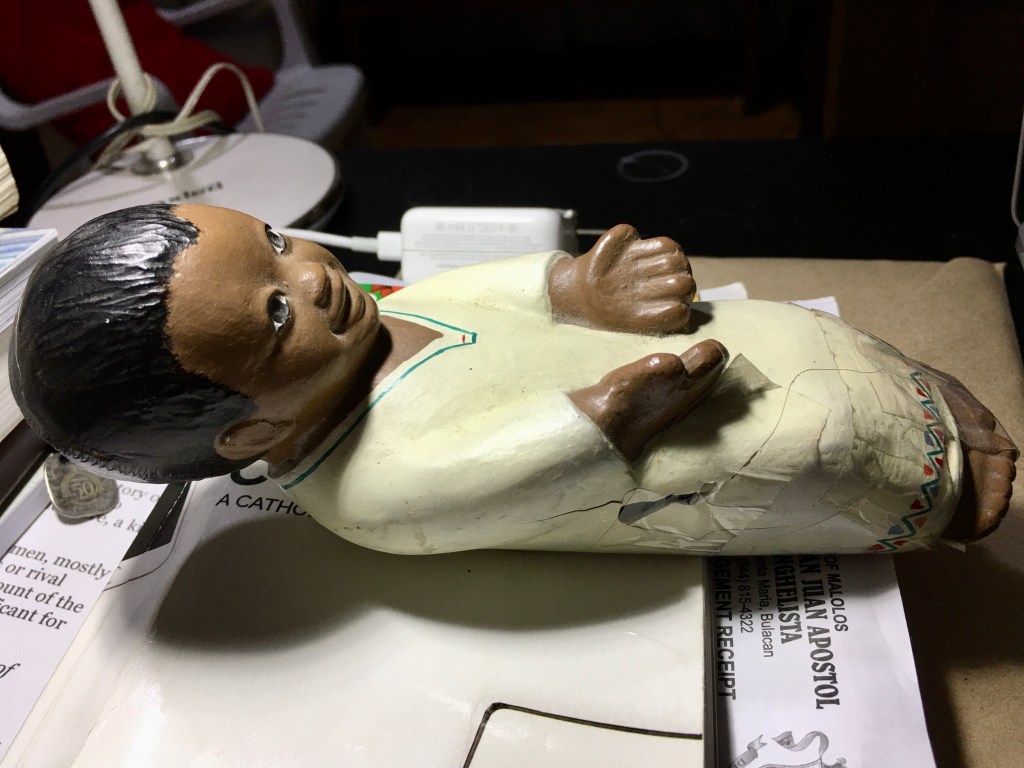
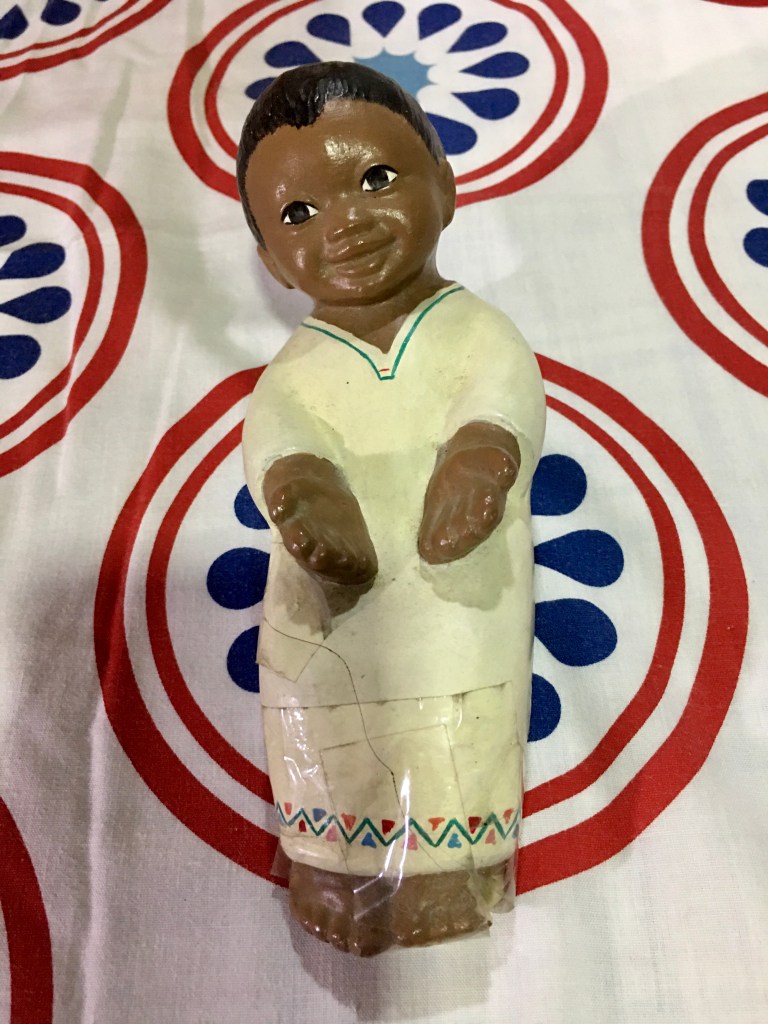
It is not really the title of this piece but the name of this image of the baby Jesus above.

See His smiles and open hands with eyes exuding with warmth and joy to anyone who sees Him. Even with the dusts and cracks held intact by scotch tapes, it is one of my most loved and cherished possessions I would never trade for anything.

Given to me by a brother priest in Christmas 2017, Welcoming Jesus measures about eight inches and seems to be Mexican or African inspired with his dark skin and lively colorful design of baby dress. I have always loved this Baby Jesus who seems so alive that I have kept Him on my desk, giving me so many inspirations and “kicks” in my studies in the past three years.

Small and handy, and so fragile, I have always imagined Him to be just like the infant Jesus when He was born in Bethlehem more than 2000 years ago.

As I turned off my lamp last night before retiring, I saw Him, smiling and yes, “welcoming” to remind me of a story I have read ten years ago about St. Mother Teresa of Calcutta, India when one of their patients threw to her a crucifix in a fit of tantrum. After pacifying the patient, St. Mother Teresa picked the crucifix and pieced together with a scotch tape an arm of Jesus that was broken. She then gave it to one of her nuns with instructions to hang it again on their wall with a note that says, “Let me heal your broken arm”.

In the same manner, as I looked onto my little image of “Welcoming Jesus”, I felt it my Christmas message for 2020 as we celebrate Holy Innocents’ Day: “Let me show you tenderness, Baby Jesus.”

If there is one thing we all need at this time of the pandemic, this Christmas 2020, it must be tenderness. Like the tender compassion of God, His mercy.

Tenderness is being merciful, being soft in the heart in a very positive sense. Some people think that being tender, being merciful and forgiving is a sign of weakness; on the contrary, it is pure power and strength.

The former US President Theodore Roosevelt who was a military officer before getting into politics used to tell that in any argument or discussion, the first to use one’s fist is always the one with less intelligence, less power who resort to force because they have ran out of reasons to argue.

Very true! Exactly with that off-duty cop who brutally shot and killed mother and son in Paniqui, Tarlac whose tiny brain could not control his humongous body much less understand everything that was going then.

Mercy and tenderness, like courage, are movements within the heart. The Latin word for mercy perfectly captures its meaning: misericordia or a stirring of the heart, a moving of the heart. More than a feeling, it is taking concrete actions to bow down and be one with those suffering.

That is why the Son of God became human, chose to be born as an infant like everybody else, to be one with us, to suffer with us, that is, compassion from cum and passio, to suffer with.

The eminent theologian Fr. Hans urs Von Balthasar, a good friend of Pope Emeritus Benedict XVI, wrote before he died that “the central mystery of Christianity is our transformation from a world-wise, self-sufficient ‘adults’ into abiding children of the Father of Jesus by the grace of the Holy Spirit. All else in the Gospel – the Lord’s Incarnation, his hidden and public lives, his miracles and preaching, his Passion, Cross, and resurrection – has been for this” (Unless You Become Like This Child).

A baby is always welcoming to almost everyone, and vice versa, anyone even the most hardened criminal would always welcome and be moved by the sight of a baby or a child.

How sad that until now, there are still King Herods among us who are insecured with children and infants. Worst are those who abuse and molest children, the single most damning crime by some in the clergy this century because it is directly opposite the central theme of Christ’s teachings and warning – “See that you do not despise one of these little ones, for I say to you that their angels in heaven always look upon the face of my heavenly Father” (Matt.18:10).

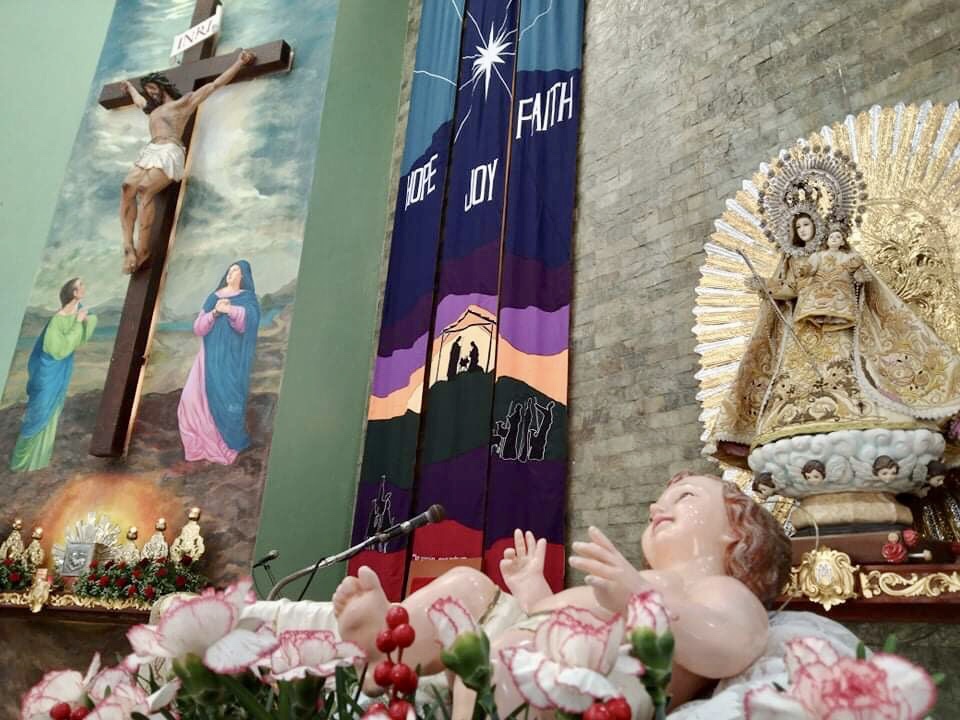
Photo by Mr. Marc Angelo Nicolas Carpio, Baby Jesus in our Parish, Christmas 2020.

Due to COVID-19 pandemic, for the first time in our churches, the traditional kissing (pahalik) of the image of the Baby Jesus is scrapped. Perhaps it is a good reminder to us all to meditate more in our hearts the meaning of Jesus being born an infant – so weak, so dependent to adults like us.

It is a call for us too to do something concrete about the many sufferings children have to go through in this time, on one end those denied of basic goods and services while on the other extreme are the children with all the material needs except the warmth and love of their parents.

One saint I have discovered before our ordination more than 20 years ago is St. Charles de Foucauld, a French priest who lived among the Tuaregs of the Sahara desert in the early 20th century. In his room, he always had a baby Jesus and an altar for the Blessed Sacrament to adore daily.

His core value is founded on “littleness” – of finding Jesus among the little ones, of being little before the Lord.

Have that tender care that expresses itself in the little things that are like a balm for the heart… With our neighbours go into the smallest details, whether it is a question of health, of consolation, of prayerfulness, or of need. Console and ease the pain of others through the tiniest of attentions. Be as tender and attentive towards those whom God puts on our path, as a brother towards brother or as a mother for her child. As much as possible be an element of consolation for those around us, as soothing balm, as our Lord was towards all those who drew near to him.

St. Chrales de Foucauld

What a beautiful reminder of the Child Jesus this Christmas and hereafter. If we can be tender with one another in the most minute detail like Jesus, then we can truly experience His coming to us, fulfilling us with His presence and love which is the spirit of Christmas. Amen.

The problem with beginning

The Lord Is My Chef Simbang Gabi Recipe-2 for the Soul 
by Fr. Nicanor F. Lalog II
Thursday, Advent Week III, 17 December 2020
Genesis 49:2, 8-10     >><)))*> + >><)))*> + >><)))*>     Matthew 1:1-17
Photo by author of sun beginning to shine over the mountain ranges Sinai Desert in Egypt, May 2019.

Yesterday we started our reflection with an old Christmas song, Do You Hear What I Hear? by Bing Crosby; today, it is Andy Williams turn to serenade us with the opening lines to the theme of the 1970 film Love Story:

Where do I begin 
To tell the story of how great a love can be 
The sweet love story that is older than the sea 
The simple truth about the love she brings to me 
Where do I start

No. I did not see that movie now a classic but I was old enough to remember its theme that became popular even for some more years during the 70’s that made Andy Williams so well-known when we were in elementary school. His song came to my mind as I grappled – which usually happened – on how to begin this reflection.

Where do I begin or how shall I begin? is one of our most common question in almost anything we start doing or telling because beginning any undertaking is always difficult. Experts have tackled it like Stephen Covey telling us to “begin with the end in sight” while Simon Sinek insists we always “start with why”.

Every beginning – like a homily or a speech, a business venture, or even an exercise program – means so much as it gives us a gist of where it is leading to, of what is going to happen.

The evangelists also wrestled with the same issue and they all have their own style in starting their gospel account but nothing beats Matthew in his most unique manner by beginning with a series of names in the genealogy of Jesus Christ. According to the late American biblical scholar Fr. Raymond Brown, he was willing to bet that if anyone is asked to tell the story of Jesus to a non-believer, no one will ever imitate Matthew by starting with Abraham begetting Isaac, Isaac is the father of…

The book of the genealogy of Jesus Christ, the son of David, the son of Abraham. Abraham became the father of Isaac, Isaac the father of Jacob, Jacob the father of Judah and his brothers. Judah became the father of Perez and Zerah, whose mother was Tamar…

Matthew 1:1-3
Photo by author of an oasis in the Dead Sea region of Israel, May 2017.

God the Prime Mover, the Beginning of everything

Today we shift our focus in our Advent preparations to the first coming of Jesus Christ when he was born in Bethlehem more than 2000 years ago. Strictly speaking, the Church’s official countdown to Christmas begins only today when all our weekday readings from December 17-24 are focused on how the birth of Jesus happened.

And what a way to start this series with the gospel by Matthew that begins with “The book of the genealogy of Jesus Christ, the son of David, the son of Abraham”! The Greek is more literal in stating it as “The book of the genesis of Jesus Christ, the son of David, the son of Abraham.”

That makes Matthew’s gospel so unique by starting it with names that all sound so weird to us today.
So, what’s with the names? Of course, a name is everything!

Companies and organizations pay huge amounts of money for their trademarks and logos like Coca-Cola, IBM, and Apple. Some corporate or product names have in fact entered our vocabulary like Xerox for copiers, Colgate for toothpaste and Frigidaire for refrigerators.

Every name carries a story, a meaning, a mission, even a destiny. How sad that we Filipinos rarely take this seriously especially in giving names to children that often becomes a joke or a disaster, or both. But to foreigners especially the Jewish people, a name is more than an identification but also one’s mission.

When we examine each name in Matthew’s genealogy of Jesus, we discover it is just like our own family trees with some men and women not really that exceptional, even a shame and an embarrassment to the family. Behind each name we have heard is an imperfect person -except for Joseph and Mary – with so many sins and mistakes.

And that is the good news of today: God does not call the qualified but qualifies His call.

Everything begins with God – our lives and coming into being. In all eternity, God perfectly knows everything that will happen to us and yet He chose to believe in us, despite our imperfections and being prone to sin that He sent us to this world with a mission to make His Son our Lord Jesus come into the world through us, just like his ancestors.

Photo by author, Mt. St. Paul Spirituality Center, La Trinidad, Benguet, January 2020.

From the imperfect “house of King David” to Jesus Christ’s eternal kingdom

Let us take the first name mentioned by Matthew in starting his gospel, David who makes this genealogy so interesting. In fact, it was on him the whole genealogy is structured by Matthew. And we all know how imperfect was David, of how he had sinned when he took Bathsheba the wife of army officer Uriah whom he ordered placed in a position that got him killed in a battle.

But that is how God works – so unlike us! God is a God of surprises who works so unpredictably unlike us humans. Imagine after all the sex scandals with Bathsheba, God still promised an eternal kingdom coming from the house of David, that of Jesus Christ: “Your house and your kingdom shall endure forever before me; your throne shall stand firm forever” (2 Sam.7:16, first reading on Sunday and morning of Thursday).

At the end of his genealogy of Jesus, Matthew added this interesting note:

Thus the total number of of generations from Abraham to David is fourteen generations; from David to the Babylonian exile, fourteen generations; from the Babylonian exile to the Christ, fourteen generations.

Matthew 1:17

Matthew is up to something here! Why build around the history of Israel and genealogy of Jesus Christ around a person who had gravely sinned against God and others?

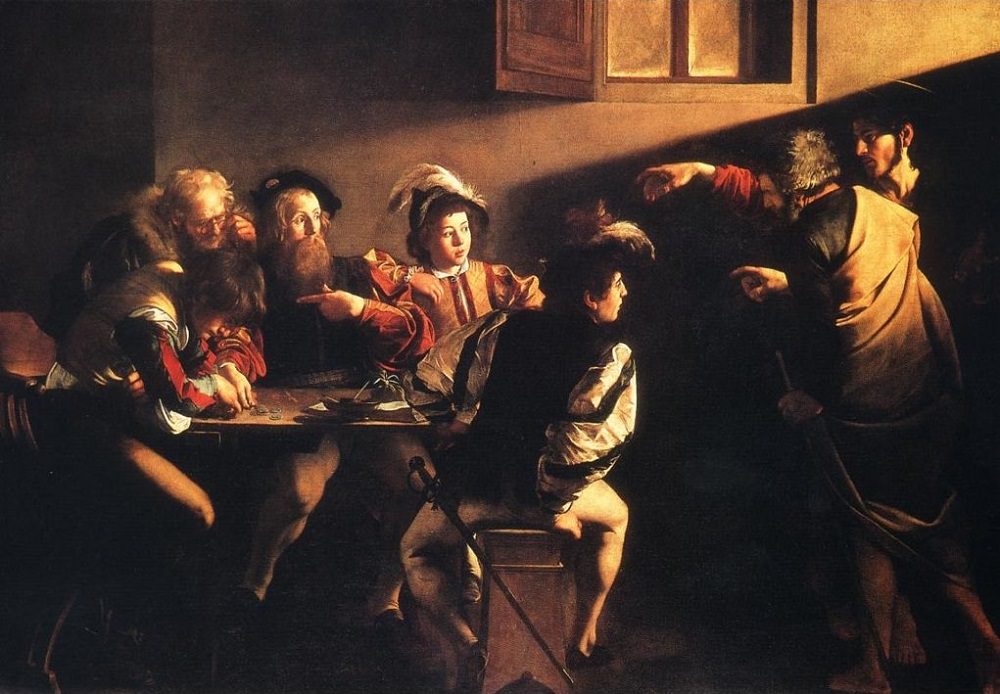
Most likely. Remember how Matthew experienced God’s mercy and forgiveness when Jesus came to call him while at his tax collection booth and he immediately stood and left everything behind to follow the Lord. Matthew knew well that God is not like humans who box people and label them like things.

Caravaggio’s famous painting of the call of Matthew by Jesus from wikicommons.org.

In assembling to us three sets of fourteen generations that traced the coming of Jesus Christ from Abraham structured around David, Matthew shows us how God worked through this sinful man a series of new “beginnings” in life, both in grace and in sin. See the genealogy rising from Abraham to David, then its decline and descent from Solomon to the Babylonian Exile, and then rising again to the advent of Jesus.

Now try to imagine how great and loving is our God and Father who chose to believe in David, a person just like us with many imperfections and prone to sins! See His power and holiness in setting any sinful situation for new beginnings of grace and blessings.


Sometimes,
God uses our occasions of sins
as new beginnings 
of His grace and blessings.

One thing I have realized in life is that our most unforgettable moments happen either when we are nearest, or farthest away from God.

This is very amazing. Consider when are we closest to God? Most often that is when we were high and good, feeling blessed and loved, when healthy and successful that were ironically the times we rarely thought of God. We only remember those moments as our closest with God after being away in fact from Him!

And when are we farthest from God? Quickly we say when we were deep in sin, when lost, or when unloved and misunderstood.

Between these two moments, it is most often when we are farthest from God that is always most unforgettable, the ones we remember always, the ones that have left the deepest cut in us because those times in turn have become occasions for us to begin anew in God!

Like David. Or Matthew known before as Levi the tax collector.

Photo by author of the Lake of Galilee shortly after sunrise, May 2019.

That is how God sometimes would make it for us to begin anew in Him! See how at the first set of fourteen generations from Abraham to David, we find the whole history of Israel so close with God punctuated by Egypt and Exodus when their sins “turned” into their favor. In the second set of fourteen generations from Solomon to the Babylonian exile, the Israelites sank into their lowest point in history when led by their kings they turned away from God, worshipping idols. But, God did not abandon them as we see in the third set of fourteen generations when things got better as the Israelites returned to God and to their Promised Land reaching its high point in Jesus Christ’s birth.

God is the beginning of everything and even if we try to “end” with our many sins what He had began, He always finds ways to begin anew even when we are so far away from Him.

This is also the meaning of the Jacob’s choice for Judah over his other sons in being the tribe to continue his family line leading to the fulfillment of the Davidic lineage in Jesus Christ. It was from Judah came the name of their religion “Judaism” even if Judah was not the best and holiest of Jacob’s sons. Joseph the Dreamer must have been the wisest choice as more suitable to have been blessed by their father or by God himself but, that is not the way of God.

By starting his gospel with the line “The book of the genealogy of Jesus Christ, the son of David, the son of Abraham”, Matthew shows us God’s total power and goodness as source and beginning of all good things who also has the last and final say in everything.

In the genealogy of Jesus, we are reminded that every day is a new beginning in God, right in our darkness and sin, in our sickness and pandemic. David like Judah may have sinned so great before God but His mercy and love proved greater than their sins that they were able to rise again to become better and holier in His grace.

That’s one great beginning we can start right here, right now in our Simbang Gabi! A blessed Thursday to you! Amen.

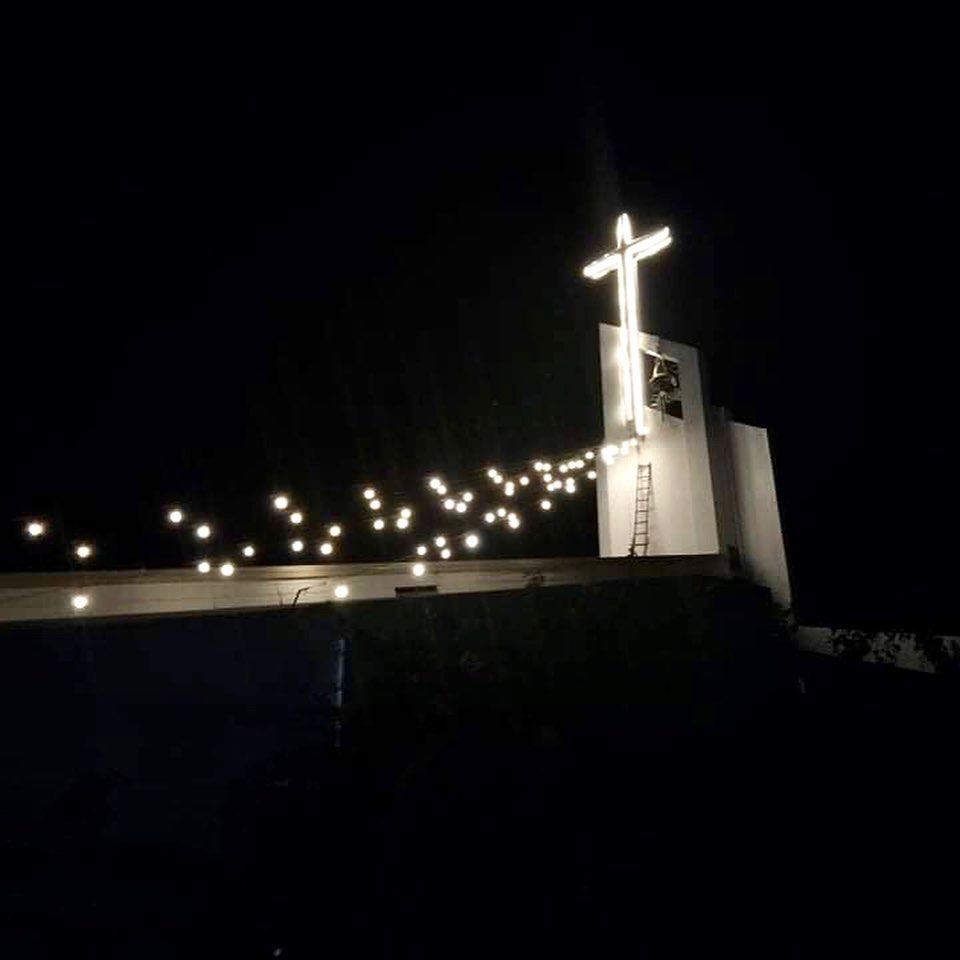
Photo by Marc Angelo Nicolas Carpio, our Parish at night, 29 November 2020.

Priesthood is loving Jesus first

Quiet Storm by Fr. Nicanor F. Lalog II on the occasion of 
the First Year Anniversary of Ordination 
to the Priesthood of Rev. Fr. Howard Tarrayo
Cathedral-Basilica of the Immaculate Conception
Malolos City, 10 December 2020
Photo by author of Lake Tiberias (Galilee) at sunrise, May 2019.

This preaching should have been last year.

Fr. Howard was the very first person to have invited me to be his predicador at his Primera Missa Solemne while still a seminarian — and that is why I think he was delayed for almost two years before getting ordained exactly a year ago today!

That gospel scene you have chosen for this occasion at the shores of Lake Tiberias is something that happens everyday in our lives as priests, from day one of ordination way into our old age in with Jesus asking us, like, “Simon, son of Jonah, do you love Me?” (Jn.21:17)

Priesthood is essentially loving Jesus Christ first of all. That is why Jesus had to ask Simon Peter thrice with the same question, “Do you love me?” because we have to love him first before we can truly follow him.

When the priesthood or the Call becomes the very core and center of our lives and not Jesus our Caller, sooner or later, we replace Christ that we become the Lord and Master in our parish, in our ministry.

Today, we are celebrating Fr. Howard your remaining in love with Jesus, of loving Him first, a year after your ordination and we pray that every year, it will always be the very reason you celebrate your ordination anniversary.


When they had finished breakfast,
Jesus said to Simon Peter, 
"Simon, son of John, do you love me
more than these?"
He said to him, "Yes, Lord, you know 
that I love you." 
He said to him, "Feed my lambs."
(John 21:15)

Loving Jesus first is growing deeper in our prayer life in him. People who love are always together; they have a ritual or a schedule that like the fox telling the Little Prince, an hour before their appointed meeting, his heart is already beating for him, excited with his presence that he is coming.

Photo by author, parish sacristy, 05 December 2020.

It is my hope that during this pandemic we priests have rediscovered the value and beauty of having that seminary schedule during our formation years that must have ingrained in us discipline. Like schedules, prayer is a discipline. Love goes through a process, it matures, becomes more disciplined. That is why a disciple is not only a follower but also a disciplined one, a true lover!

It is good to bond with brother priests and friends and family once in a while but not every night or every other night that we have practically made every Starbucks outlet a parish or even a diocese where 1/3 of the clergy get together religiously (pun intended)! Any loving husband would always be home at night to be with his wife. The same is true with every priest — be home at night in your parish to be with Jesus at prayer. He awaits you, He misses you!

Whenever people ask me what is the most difficult part of priesthood, I always tell them it is praying every day. And I mean real prayer when we have to strip ourselves naked before God in our truest selves. Kaya sabihin man nila walanghiya o salvahe ang sino mang pari, pero kung araw-araw lalo na sa gabi siya ay nananalangin, mabuting pari pa rin siya kasi maski minsan, nagiging totoo siya sa sarili at sa Diyos. And masama kapag hindi na siya nagdarasal nang tunay, iyon ang simula ng pagkaligaw ng sino mang pari.

Whatever is the fruit of our prayer, that is our homily and that is when all tests happen: the moment we deliver a homily, people measure us if we “walk our talk”. The priest is the homily himself. When a priest stops celebrating Mass, most especially refuses to give homilies, maybe Father is no longer praying. Baka may iba na siyang mahal kesa kay Jesus.

Remaining in love with Jesus is being a man of prayer.


He then said to him a second time,
"Simon, son of John, do you love me?"
He said to him, 
"Yes, Lord, you know that I love you."
He said to him, "Tend my sheep."
(John 21:16)

Loving Jesus first means keeping in mind that everything is a gift from Jesus, that whatever we have, whatever we share, whether material or spiritual things, is always from Christ. We have nothing except Him. Even if sometimes we feel bad in our ministry like going on a sick call when we are so tired or blessing a dead cat or hearing confessions of a parishioner who have maligned you, just do it! Whatever you give them, it is not yours but Jesus’!

Photo by author, parish sacristy, 05 December 2020.

Huwag maging maramot, Father. Maging mapagmahal, matulunging, maunawain, mapagpasensiya, mapagbigay, mapagpatawad — kasi ano mang pagmamahal, tulong, pang-unawa, pagpapasensiya, kapatawaran o ano mang ating maibibigay kanino man ay hindi naman talagang atin kungdi kay Kristo at Kristo pa rin!

Here lies the danger when we are so focused with our call or vocation when we feel the one who must be understood and cared for — we turn the ones being served instead of the one serving! Kasi feeling natin magaling tayo kaya tayo naging pari! Para tayong artista at politiko na “FGLG”: feeling guapo, looking gago. Parang lahat may utang na loob sa atin. Kaya kung magmayabang tayo: ako nagpagawa niyan, ako nakaisip niyan, ako, ako, ako…. Nasaan si Jesus? Nandun sa tabernakulo, nabuburo.

I wish to share with you a prayer I have written during our retreat with a Cenacle sister at the Theologate when we were in third year: “Lord Jesus Christ, you have given me with so much and I have given so little; teach me to give more of my self and more of You to others. Amen.”


He said to him a third time, 
"Simon, son of John, do you love me?"
Peter was distressed that he had said to him
a third time, "Do you love me?" and he said to him,
"Lord, you know everything; you know that I love you."
Jesus said to him, "Feed my sheep."
And when he had said this, he said to him,
"Follow me."
(John 21:17, 19)

Father Howard, we have learned in Holy Matrimony that a man and a woman marries not only each other but also their families; the same is very true in priesthood. Loving Jesus first means the priest’s family must love Jesus more than their priest son and Kuya Pari or Tito Pari.

Profession of faith by Rev. Fr. Howard with his mother and sister before Bishop Dennis, 10 December 2019.

Nanay Nelia and Mary Grace… kung mahal ninyo si Father Howard, mas mahalin ninyo si Jesus. Ang pagmamahal ng pamilya sa kanilang anak o kapatid na pari ay naroon din sa kanilang higit na pagmamahal kay Jesus. Kapag si Jesus ang minahal ninyo una at higit sa lahat katulad naming mga pari, manalig kayo lalong mamahalin ni Jesus si Father. Hindi siya pababayaan.

We are told that after this third question by Jesus “Do you love me?”, Simon Peter was distressed because he remembered how he had denied the Lord three times after His arrest on Holy Thursday evening.

What can be more distressing especially at this time of the pandemic for us priests than be caught between our family and ministry?

You were still preparing for your Diaconal ordination last year, Father Howard when your mother had a stroke, then followed by the death of your father. It must have been so difficult, so painful. But looking back, did God ever forget you, Father?

Ate Nelia and Mary Grace, give Father Howard to Jesus. Huwag ninyo siyang hahanapan. Magkusa na kayo sa inyong sarili kasi iba piniling buhay ni Father. And I address this to every parent, brother and sister, relatives and friends of Fr. Howard and every priest. Huwag ninyo siyang hanapan. Kung mayroon man kayong hahanapin palagi kay Father Howard, iyon si Jesus. Always Jesus, only Jesus.

There is still something more “distressing” for us priests with our family that I wish to share with you, Father Howard. When Jesus told us to leave our father and mother, brothers and sisters behind to follow Him, he never meant to turn our backs from them. We still have to love them but more on a different level as silent witnesses of Christ.

The most difficult part of our ministry is ministering to our own family with all our biases and past histories before us. We are so familiar with each other that inevitably, these would surely show on many occasions when least expected. Be on guard, for the pendulum swings to extremes when we sometimes become so lax or so harsh with them.

Most “distressing” is when Jesus asks us “Do you love me?” while we continue to hold on to the pains and hurts, frustrations and disappointments our families have inflicted on us.

It is in our own families when we are asked to be more like St. Francis of Assisi, of preaching the gospel, speaking only when necessary.

Father Howard, be the first to understand and to embrace the strains and the past in your family; Jesus called you despite your imperfect family to make you perfect and eventually, through your life of total love for Him, perfect your family too.

It is very difficult to love, most especially our Lord Jesus, Father Howard. How I wished you have never asked me to do this because so many times I have failed Jesus. And continues to fail Him, not loving him that much.

But that is exactly what happened at the shores of Tiberias that morning after breakfast when Jesus asked Simon Peter three times, “Do you love me?”

Don’t worry, Father. Jesus knows everything how much we love Him. You are never alone with Jesus and us. Let us keep saying “yes, Jesus, I love you” with our brother priests every day, specially during anniversaries like this. Amen.

God bless you more, Father Howard!

Grace in every space

Quiet Storm by Fr. Nicanor F. Lalog II, 09 December 2020
Photo by author, 09 December 2020.
As I closed my prayers today
got my stares fixed on empty space
that stirred me into a daze;
And I was amazed at how we are in a place
so vast we cannot keep pace
yet we say in everyone's face
we need a space, we have no space!
If we can appreciate
the shape in every space
our heart will ablaze
with so much praise
for in between is grace
of a sacred space 
to raise
our living
and relating
in sharing God
dwelling
in every being
loving 
and caring.
What is a space?
A place or a dimension
 a creation for correlations
to locate persons and things
and every entity
yet always considered as empty
only a reality in relativity;
but, as far as
every soul can desire
every mind can imagine
space is there to see
like the deep, blue sea
an infinity and mystery
our entry into divinity!

Why are violets blue?

Quiet Storm by Fr. Nicanor F. Lalog II, 30 November 2020
When we were growing up
discovering the power of love,
these nursery rhymes
were so sublime
we used to find
  every Valentine's
without knowing why
"Roses are red,
Violets are blue,
Sugar is sweet.
So are you.
And I love you!"
Red means love
but what about blue
that has become violet too?
It is funny, though
now that I have become 
a priest and pastor
that I have come to know
why violets are blue:
According to one review,
violets mean
fidelity, humility,
modesty and simplicity
that to give
a violet is to reply
"I love you too!"
Like the season of Lent
when everything is violet,
Advent's shade is in blue
to keep things subdued
as we try to imbue 
value of patience and vigilance too. 
During Advent, violets are blue
the hue of God's mercy, that is so true.
In these four Sundays before Christmas
hear my prayer to you, dear Jesus
as I borrow the rhyme from "Mother Goose":
"Roses are red,
violets are blue;
let your Advent come true
because I love you too!" 

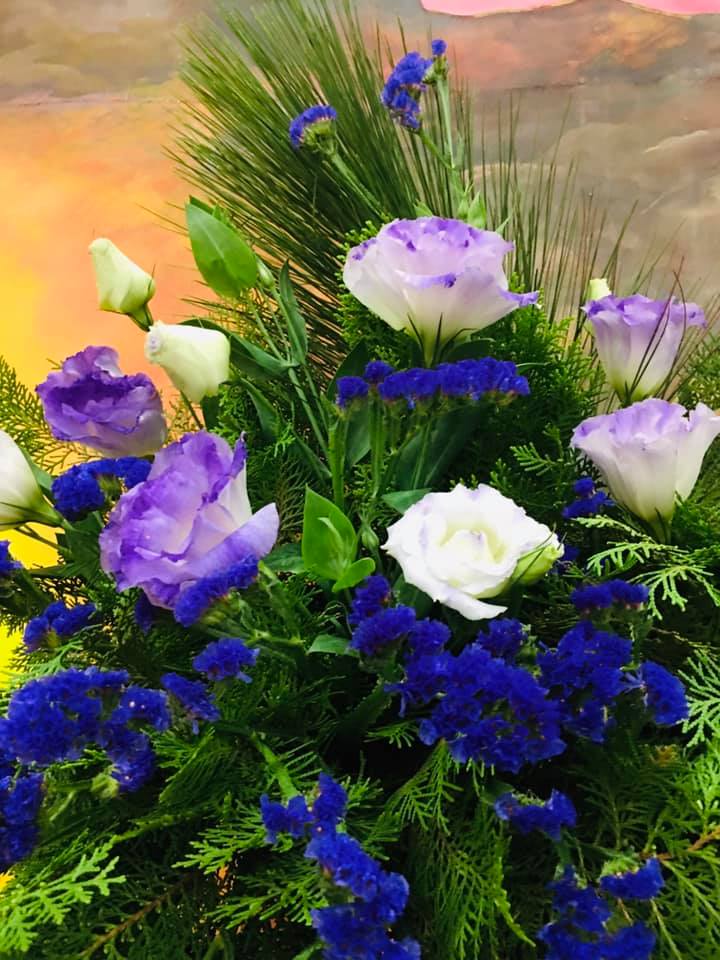
*All photos by author from our Advent celebrations in the parish this year 2020 (topmost collage) and last year 2019 (collage above). Flower arrangements by our liturgy commission head Ms. Imelda Santiago and Ms. Lucila Verana; am so thankful to their dedication and creativity in the past eight years, learning everything by experience, nurtured by prayer.

Welcoming Jesus who knocks at our door

The Lord Is My Chef Breakfast Recipe for the Soul by Fr. Nicanor F. Lalog II
Tuesday, Week XXXIII, Year II in Ordinary Time, 17 November 2020
Revelation 3:1-6, 14-22     >><)))*>  +  <*(((><<     Luke 19:1-10
Photo by author, May 2019 Holy Land Pilgrimage.

Your words today, O Lord, are so comforting — after some reprimanding for our sins and misgivings!

And that is how you display your love and mercy and forgiveness that sometimes we fail to see and even recognize.

Despite our being “alive but dead” like the church in Sardis (Rev. 3:1) when we backslide to our old ways of sinfulness as well as our being “neither cold nor hot” like those in Laodicea when we refuse to make a stand for what is true and just, you still come to us, seeking us, trying to bring us back to your fold.

Behold, I stand at the door and knock. If anyone hears my voice and opens the door, then I will enter his house and dine with him, and he with me.

Revelation 3:20

Keep us humble, Lord Jesus, like Zacchaeus who openly admitted his “being short in stature” (Lk.19:3-4) that he had to climb a sycamore tree to see you passing by. And when you finally met him and told him of your coming into his home, he welcomed you right into his heart by being sorry for his sins, promising to repay or recompense those he had extorted money from.

A sycamore tree at the world’s oldest city of Jericho in Israel, 2019.

Like the blind man you have healed yesterday and now Zacchaeus, keep us following you Jesus on the middle of the road, leaving our comfort zones, to dirty our hands and garments in doing your works among the poor and needy specially in this time of calamity.

Open our ears to listen to your voice, to be on guard waiting for your coming, to your knocking at our door to welcome you back into our lives.

May we grab every opportunity to welcome you into our lives, Lord Jesus, by turning away from sins and heeding your voice of love and compassion among the poor and suffering. Amen.

Leave the sidewalk, join Jesus on the street to see more

The Lord Is My Chef Breakfast Recipe for the Soul by Fr. Nicanor F. Lalog II
Monday, Week XXXIII, Year II in Ordinary Time, 16 November 2020
Revelation 1:1-4; 2:1-5     >><)))*>  +  <*(((><<     Luke 18:35-43
From Facebook, nuns bringing relief goods during the COVID lockdown last summer.

God our Father… I cannot find the words to tell you what is in my heart as I saw the images of devastations and sufferings of your people these past days. Part of me feels thankful for my lesser worries like not having running water and other things but my heart goes out to those people still trapped in floods with little or no food and water at all.

Sufferings are all around us, dear Father. Hear our pleas, especially the cries of children, of mothers, and of elderlies.

It is true that we are partly to be blamed for these sufferings as we have refused to alter our lifestyles that destroy the environment. Worst of all, of our refusal to take an active part in choosing and electing credible leaders in government.

Like the people of Ephesus, we are good at speaking out against wickedness but have merely remained at the sides, preferring to stay in our comfort zones.

Yet I hold this against you: you have lost the love you had at first. Realize how far you have fallen. Repent, and do the works you did at first. Otherwise, I will come to you and remove your lampstand from its place, unless you repent.

Revelation 2:4-5

Fill us with your Holy Spirit, Father, to courageously follow your Son Jesus Christ on the street as he passes by like that blind man sitting by the roadside begging; but, upon hearing Jesus was passing by, he left the roadside to come to Jesus on the street.

Like him, we pray, “Lord, please let me see” (Lk.18:41). Amen.

Image from pinterest.com.

Befriending the Cross of Christ

The Lord Is My Chef Breakfast Recipe for the Soul by Fr. Nicanor F. Lalog II
First Friday, Week XXXI, Year II in Ordinary Time, 06 November 2020
Philippians 3:17-4:1     >><)))*>  +  <*(((><<     Luke 16:1-8
Photo by Ms. Ria De Vera, August 2020.

Sometimes I wonder if we are still in a pandemic, God. It seems we have slowly gone back to our old ways or, even worst as we seem to have totally forgotten you. We have become so used with the new situations we prefer to call as “new normal” as if the norms or standards of what is just and moral, right and true change at all.

Have we become an enemy of your Son’s Cross?

Join with others in being imitators of me, brothers and sisters, and observe those who thus conduct themselves according to the model you have in us. For many, as I have often told you and now tell you even in tears, conduct themselves as enemies of the cross of Christ. Their end is destruction. Their God is their stomach; their glory is in their “shame”. Their minds are occupied with earthly things. But our citizenship is in heaven, and from it we also await a savior, the Lord Jesus Christ.

Philippians 3:17-20

Our loving Father, I am not asking for a return to our situation during the lockdowns of summer with growing number of COVID infections; I am not praying for more crosses to bear as if the ones we now have are not enough. Just help us befriend your Son’s Cross again, to forget ourselves and follow him instead of following more the social media that has become our new god.

How prophetic were the words of St. Paul to the Philippians, Lord! They are all happening especially in social media that has become everyone’s new religion that seemingly binds but actually divides us as a nation, as your children.

From The Facebook Facade – owning30.com

Everybody wants to be in social media, doing all the crazy stuff to be popular by being viral and trending with many followers to boast without realizing what St. Paul referred to as “their glory is their ‘shame'” when we are filled with our ego – or selfies -that we forget you in others.

Many are beginning to accept the lies being peddled in social media like abortion and euthanasia, genetic engineering, same sex marriage or unions, and homosexual relationships that end in destruction.

Facebook and Instagram have become the altars of those who have made their “stomach as their God” flaunting their food in social media, insensitive to the plight of many going hungry these days.

Wake us up to the reality in Jesus of how our “minds are occupied with earthly things” these days that even you our God we have made into a commodity whom we can have when we want like any product or the Netflix when celebrating online Masses.

Help us realize like the steward in the parable that life is about the giving of self in love for others like Jesus – of befriending your Cross – not wealth nor fame. Amen.

Photo by Mr. Marc Angelo Nicolas Carpio, January 2020.