40 Shades of Lent by Fr. Nicanor F. Lalog II
Wednesday, Second Week in Lent, 04 March 2026
Jeremiah 18:18-20     + + +     Matthew 20:17-28
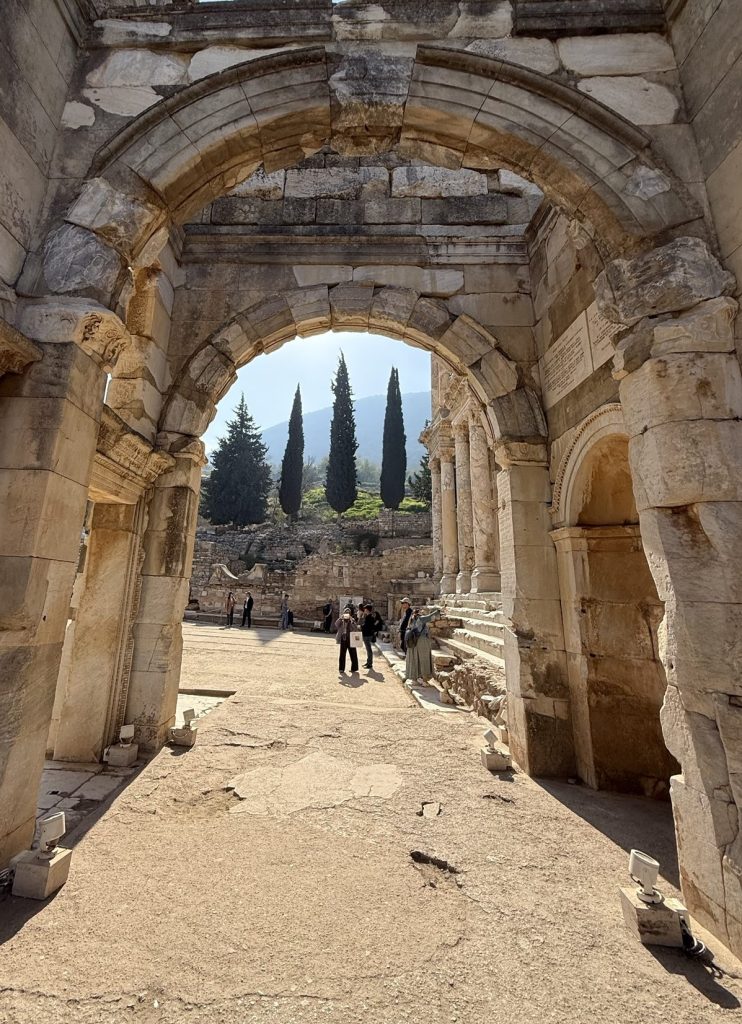
Photo by author, Ephesus, Turkiye, November 2025.
How lovely is our scene
today, Lord Jesus,
of you walking towards Jerusalem:
it must have been so dusty
and dirty at that time;
I won't be surprised at all
at how everybody must be
thinking of reaching home,
finding a place for comfort
and ease but here you are,
Lord, reminding the Twelve
and us today of your coming
passion, death and resurrection.
How amazing, Jesus
that as we follow you,
walking with you in this
journey and mission,
you remind us of our own
sufferings but unfortunately,
thoughts of glory seep into our
minds like that day when
the mother of James and John
made that request of honor and
prestige by your side;
the same thing is very true
during the time of Jeremiah
the Prophet: he was there in the
heat and dirt of the city of
Jerusalem, proclaiming God's
words of conversion and there,
just like today, are the voices
and thoughts of us thinking of doing
away with pain and suffering,
of insisting on our own thoughts
and desires for fame and glory
without realizing the more
essential realities in life.
O dear Jesus,
let me continue to walk
your path of the Cross,
let me remain in your journey
of Lent,
of life
by your side,
forgetting my self,
taking my cross,
and following you alone.
You have given me
with so much, Jesus
and I have given so little;
take whatever I still keep
to myself when I thought I
have surrendered completely
to you; let me see what you see,
love whom you love,
care for those you care
as we continue together
in this road to Jerusalem.
Amen.
Photo by Ar. Philip Santiago, Jerusalem, October 2025.
40 Shades of Lent by Fr. Nicanor F. Lalog II
Tuesday, Second Week in Lent, 03 March 2026
Isaiah 1:10, 16-20     + + +     Matthew 23:1-12
Photo by author, Ephesus, Turkiye, November 2025.
Praise and glory
to you, O Lord,
God our Father!
You are most gracious
and kind despite our sins
you still call us to come to
you.
Come now, let us set things right, says the Lord: Though your sins be like scarlet, they may become white as snow; though they be crimson red, they may become white as wool (Isaiah 1:18).
You are indeed
a loving God,
dear Father,
inviting us your sinful
children to "come now",
inviting us to a conversation,
always believing change is
possible even if most often
we are not willing to come
to you; give us the humility
and firm resolve to accept
finally your invitation
to come and set things right
so that we may become
a people of justice;
let us come to you,
Lord to be reconciled,
to wash myself clean,
to start anew in you again.
O dear Jesus,
you have been inviting me
for so long to come to you,
to return to you
but I still refuse to believe,
refusing to accept and welcome
you because I feel
I am doomed and hopeless;
open my heart to you,
Jesus, make me "willing
and obedient"
to set things right.
Amen.
Photo by Ms. Kei Abad, Kawaguchiko Lake (Fujisan), 23 November 2025.
Your words today,
O Lord Jesus
are short but give
much to reflect on:
"Be merciful...
stop judging...
stop condemning...
Forgive...
Give."
Jesus,
teach me to be
"shamefaced"
like Daniel in the first
reading: it is not enough
that I realize my sinfulness,
of my wickedness in refusing
to love, in turning away from you,
in disregarding your words
over and over and still -
be forgiven and loved.
Jesus said to his disciples: “Be merciful, just as your Father is merciful” (Luke 6:36).
So often in life,
I forget the Father's
mercy that I have totally
been oblivious to being
merciful; thank you Jesus
in giving this comparison today,
of being merciful as the Father
is merciful.
What a shame
of how often I look up
to myself as so good,
so righteous
against others
that I judge
and condemn them;
teach me to be like
you, Lord: merciful,
non-judgmental,
forgiving;
most of all,
teach me to give
freely like you, Lord;
remind me always
to remember your
mercy on me
to realize that
more than an ideal,
mercy is about
how it feels
in my own life.
Lord Jesus Christ,
you have given me with
so much love and mercy,
kindness and forgiveness
of sins but I have refused
to be merciful with others;
have mercy on me, Lord
and let me be merciful
like the Father.
Amen.
40 Shades of Lent by Fr. Nicanor F. Lalog II
Second Sunday in Lent, Cycle A, 01 March 2026
Genesis 12:1-4 +++ 2 Timothy 1:8-10  +++ Matthew 17:1-9
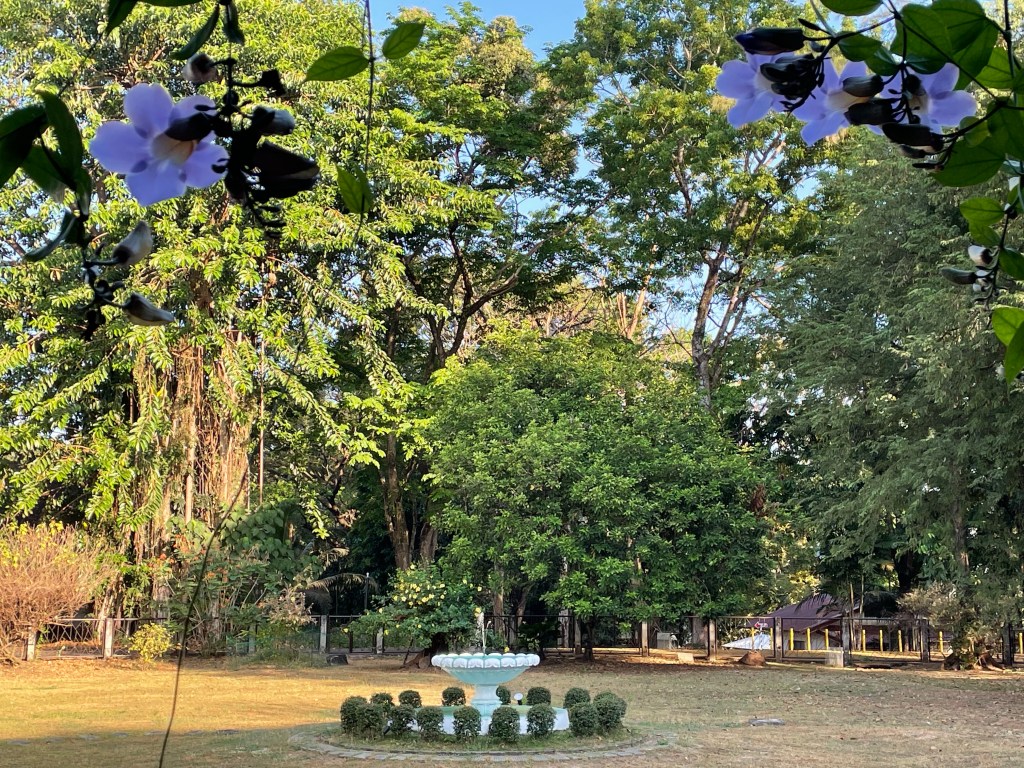
Photo by author, Sacred Heart Novitiate, Novaliches, QC, March 2023.
Despite the sweltering heat of summer, I have always loved the season of Lent when everything is subdued in liturgy – no Gloria nor Alleluia with the altar bare without flowers. It is during this season when we listen to a rich selection of readings from the Sacred Scriptures with music so solemn to guide us in our reflections and prayers to be converted and reconciled with God through one another especially those we have hurt or offended us.
That is why Lent is so beautiful because it is a call for transformation and transfiguration in Jesus Christ, when we are renewed as beloved children of God our Father. As we have reflected on Ash Wednesday, Lent is a coming home to God.
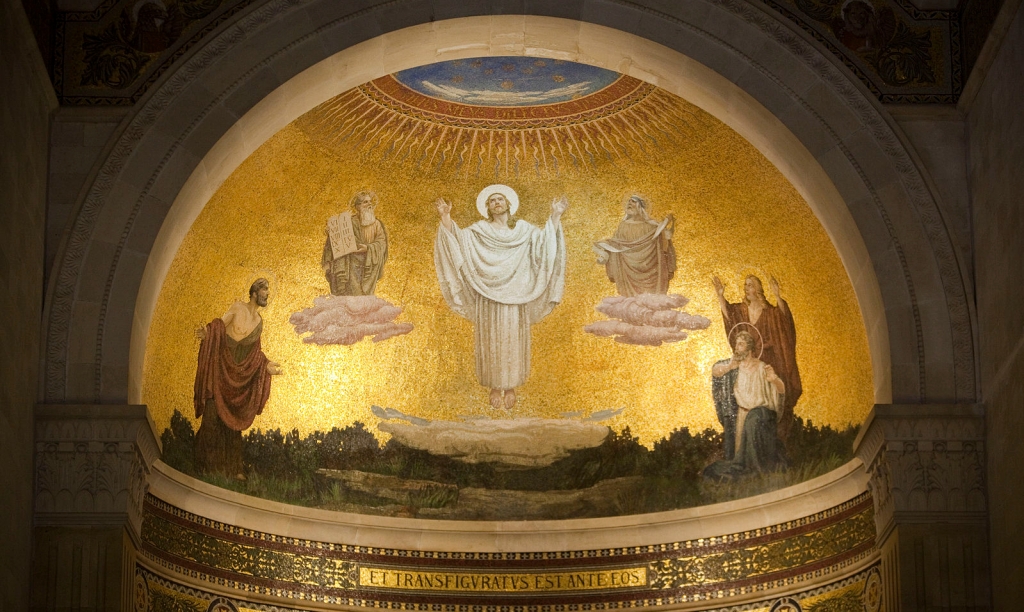
After six days Jesus took Peter, James, and John his brother, and led them up a high mountain by themselves. And he was transfigured before them; his face shone like the sun and his clothes became white as light. And behold, Moses and Elijah appeared to them, conversing with him. Then Peter said to Jesus in reply, “Lord, it is good that we are here. If you wish, I will make three tents here, one for you, one for Moses, and one for Elijah” (Matthew 17:1-4).
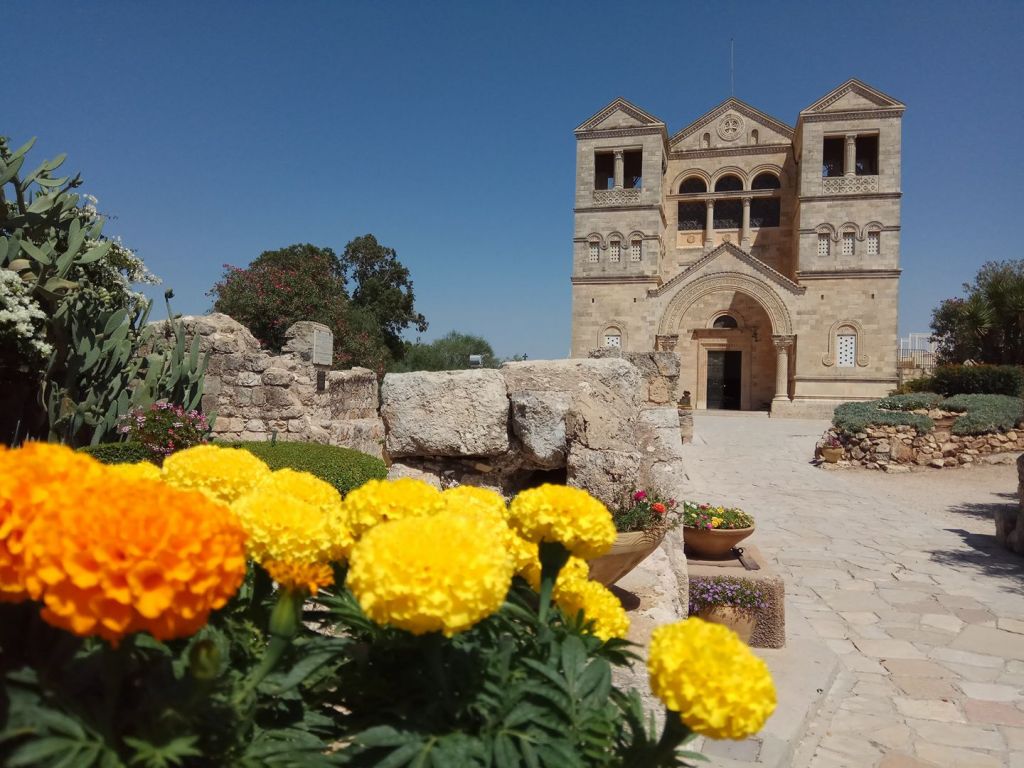
Church of the Transfiguration, Mount Tabor in Israel; photo from wikimedia.org.
Every second Sunday in Lent, we listen to the gospel account of Jesus Christ’s transfiguration at Mount Tabor that shows us the inseparability of the Cross and of the Resurrection, the tragedy of Good Friday and the glory of Easter Sunday.
Matthew, Mark and Luke shared the same event with minor variations in their respective account, agreeing on the basic details of the scene that happened on a high mountain six days after Jesus identified himself at Caesarea Philippi as the Christ or Messiah who shall suffer and die but rise again on the third day.
What I like most of the common details mentioned by the three evangelists in their accounts of the transfiguration were the words spoken by Peter to Jesus, “Lord, it is good that we are here.” So lovely.
Photo by author, Sacred Heart Novitiate, Novaliches, QC, March 2024.
Many times we are like Peter who tell Jesus the same words “Lord, it is good that we are here” without really knowing what we are saying. And surprisingly, we often speak these words to Jesus during those moments when we feel him most incomprehensible – hindi maintindihan just like during that scene at the transfiguration.
We have been saying since Ash Wednesday that “life is Lent” – a daily journey to God’s loving presence within us and among us. Life is a daily ascent, of coming close to God that is never easy.
We all struggle in our prayer life because prayer is stripping ourselves naked before God, confronting our true selves. That’s difficult but transformative, making us grow to become better persons.
So many of us could not even keep up with the Sunday Mass, God’s third commandment, “Remember to keep holy the Sabbath day.”
But, thanks be to God that there are moments of prayers and during the celebration of sacraments when we feel so high in the Lord’s presence we could not understand nor explain yet, feel so good to be there.
There were times when we truly heard Jesus telling us, teaching us how to overcome great temptations and trials in life that after being spared from all the troubles and sins, we felt so good to be there with the Lord.
Or, how can we forget those times we faced the most severe difficulties we have had in life when we have lost a loved one, or we have experienced defeat and failure, painful sufferings like sickness or betrayal when we felt so down, so empty and depleted but also felt the gentle touch of Jesus through the kindness of some strangers or faithful friends, inspiring us to rise and be not afraid to start anew in life, convinced that it is good to be there in the Lord.
Recall those times when it was the face of Jesus we saw on those familiar people or even strangers who shared with us the warmth of being welcomed, of being loved, of being forgiven that made us feel so good to be with the Lord.
Our most difficult moments, our most trying times are when we get better, when we mature and grow, when we are transformed in Jesus Christ. Many times, we hardly understand what is going on except that we believe and hold on to Jesus our Lord despite the many temptations that come our way to follow the ways of the world. But, experience have shown us that doing that is not good at all.
Photo by author, Lent 2021.
As we have reflected last Sunday, life is a Lent, a wilderness with so many voices competing for our attention. Many times we listen more to the voice of the devil that lure us into taking shortcuts and instant routes than follow the word of God that tells us to wait and persevere.
This Sunday, Matthew intensifies that call to us to listen to God’s call and voice when during the transfiguration a voice was heard saying, “This is my beloved Son, with whom I am well pleased; listen to him” (17:5).
After the transfiguration of Jesus, everything he shall be telling us is to forget ourselves, take up our cross and follow him.
St. Paul insists this to Timothy in our second reading today, to “bear our share of hardship for the gospel with the strength that comes from God” (2Tim.1:8). Likewise, the story of the call of Abram in the first reading reminds us of our same call from the same God to leave our comfort zones to a life of blessedness, of holiness.
It is always good to be with the Lord; and wherever he is, there we must always be (Jn.12:26). Jesus is always where there is love and kindness, mercy and justice, poverty and emptiness. Even death and darkness for that is when and where we are transformed and transfigured in Christ. That is why it is good that we are with him always. Let us pray:
Lord Jesus, there are so many things I do not understand in this life, especially when I have to be silent to be with you in prayer, to forget myself and carry my cross and follow you in the path of simplicity, kindness and service; but, one thing though is clear: it is when I am with you, even when I could not see clearly everything, that is when I feel peace and fulfillment within, when I feel so good to be here with you. Let me ramain in you, Jesus. Amen.
Church of the Transfiguration, Mount Tabor, Holy Land; from custodia.org.
40 Shades of Lent by Fr. Nicanor F. Lalog II
Friday in the First Week of Lent, 27 February 2026
Ezekiel 18:21-28     + + +     Matthew 5:20-26
Photo by Dra. Mylene A. Abad Santos, MD, February 2021.
Thank you,
dear Father for the
first week of Lent about
to end; much is still to be
desired to be closer to you,
to be faithful to you,
to be one in you;
teach me in your Son Jesus
to go beyond the letters of
your laws,
to go beyond the minimum
requirements,
to go beyond of what is asked
of us in order to be more
loving to others in you:
Jesus said to his disciples: “I tell you, unless your righteousness surpasses that of the scribes and Pharisees, you will not enter into the Kingdom of heaven” (Matthew 5:20).
Photo by Dra. Mylene A. Abad Santos, MD, February 2021.
Teach us to be holy
or righteous
like you;
make us whole,
to be different
and be radical by
going back to you
our very roots of being
and existence;
instead taking the path
of supremacy especially
when we are angry
that we are unafraid of
breaking away from others,
insisting on what is right
than on what is good,
let us be reconciled
with you in others
and in our very selves
where peace remains
the best to have.
To go beyond
than what is required
is to be humble and gentle
like you, dear Jesus,
caring more for people
and relationships
than on being right
which often is not the case;
holiness
or righteousness
is confronting and accepting
our limitations
so that your infinite power
of love and mercy
may work in us
and through us,
Lord Jesus.
Photo by Dra. Mylene A. Abad Santos, MD, February 2021.
Lent is going beyond
the ordinary
because it is about
choosing you, Lord
above all else always:
you never condemn us
letting go and forgetting
of our past sins when we
choose to finally live in
your presence doing your will;
however,
let us not be complacent
in your presence, Lord
for our good record
can be undone completely
when we refuse to love
you in others.
O Lord Jesus,
you have given me
with so much chances
to become better;
help me to remain in you
so I can also give more
chances
more mercy
and more love
to others lost and trying
to find you.
Amen.
Quiet Storm by Fr. Nicanor F. Lalog II, 25 February 2026
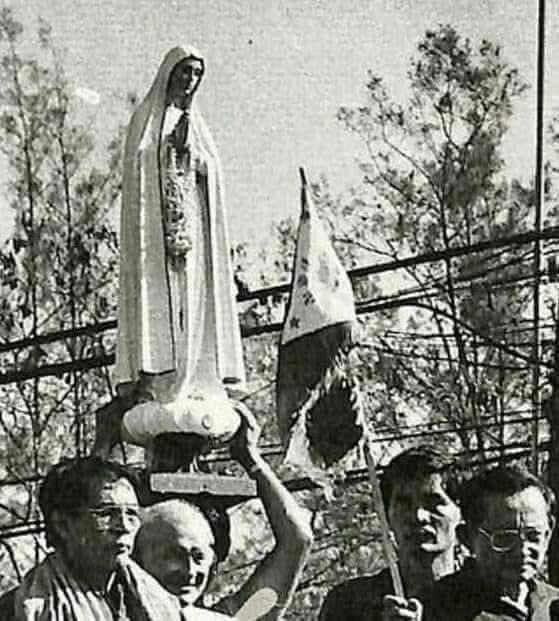
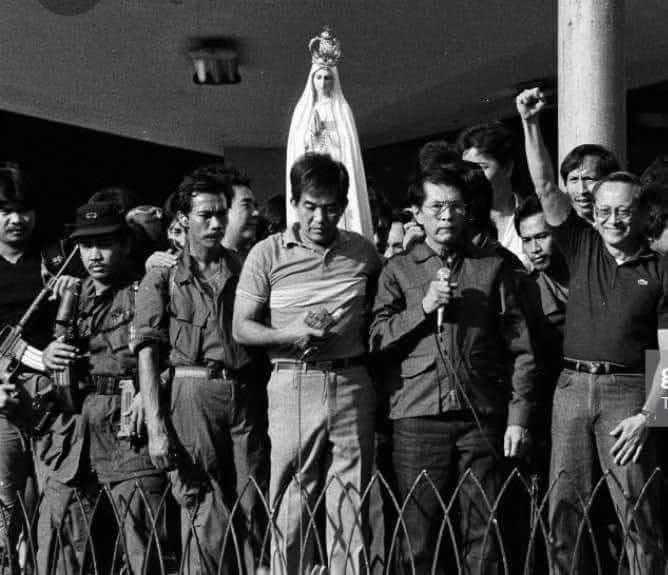
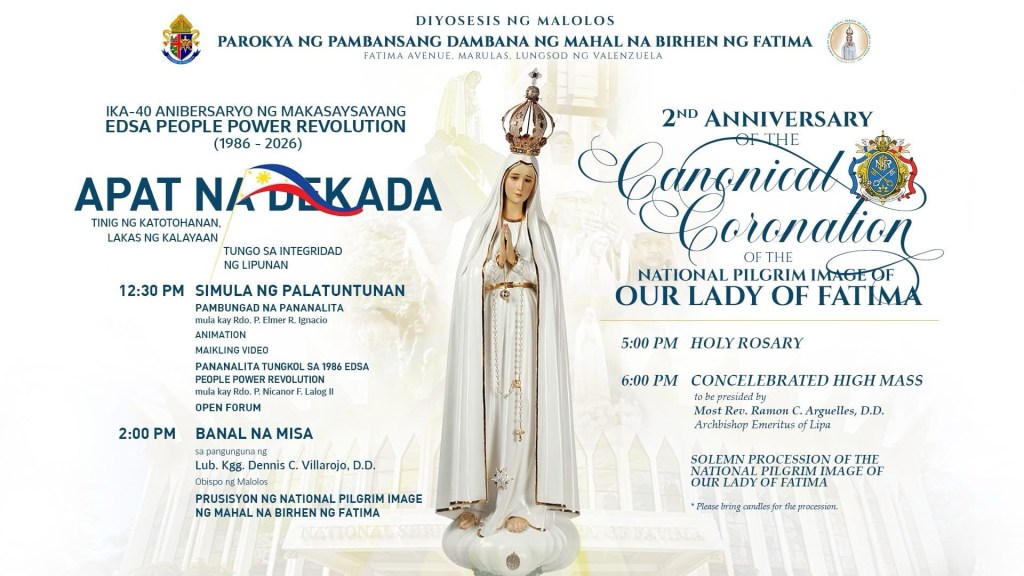
Today we celebrate the 40th anniversary of the EDSA People Power Revolution. For four days and four nights, from February 22-25, 1986, what was supposed to be impossible became a reality – a miracle for many of us when we finally deposed Marcos after 20 years of dictatorship through a peaceful, bloodless coup and transition of power into democracy.
Four decades since then, EDSA 1986 continues to reveal so many valuable lessons that perhaps many of us have forgotten, even disregarded as we were overtaken by its euphoria that eventually waned these last ten years especially in the 2016 election of the most decadent president of the republic only to be capped by the 2022 elections that brought back into Malacanang the deposed dictator’s son and namesake.
One key lesson many of us have forgotten and still disregard these days is the very nature of EDSA People Power Revolution of 1986: it was spiritual in nature, it was God intervening in our history in modern time. Since then, the late Cardinal Sin who was truly a prophet among us in those dark years of the dictatorship has been insisting on this truth: it was the work of God. And it shall continue to be the work of God who continues to call us to join in this journey of EDSA ’86. That is why I find its 40th anniversary slogan so perfect, “Tayo ang EDSA” – we the people of God He calls to be transformed first.
Photo by author, National Shrine of Our Lady of Fatima, Valenzuela City, 25 February 2026.
I must confess that it is only now on its 40th year that I realized deeply the spiritual nature of EDSA ’86. February 25 always happens within the season of Lent, the 40 day journey in preparation for Easter.
More than that journey in time of 40 days, Lent is actually an internal journey within ourselves, into our hearts to be purified from its sins and evil inclinations to be one with God again. Today’s psalm said it so well, “A clean heart create for me, O God, and steadfast spirit renew within me” (Ps. 51:12).
The number “40” in the Bible is very significant, a perfect number closely linked with God and his works like the great flood of Noah that washed and cleansed earth for 40 days and 40 nights; the Israelites wandering in the desert for 40 years before entering the Promised Land; and every prophet fasting and praying for 40 days in the wilderness including our Lord Jesus Christ as we have heard in last Sunday’s gospel.
And that is EDSA@40 – an invitation to return to its very roots, God in Jesus Christ who delivered us led by his own Mother, the Blessed Virgin Mary.
EDSA’86 is our daily Lenten journey of purification and cleansing as individuals and as a nation before we can enter into our “Promised Land” of a prosperous Philippines where justice and the rule of law prevail, where people have more equal opportunities in various aspects of life without the need to work abroad as servants while leaving their loved ones behind. Of course, heaven is the ultimate Promised Land but it is what the Vatican II had always hoped that we could help build a more just and humane society, especially in our country that is overwhelmingly Christian and Catholic in this world.
We ushered in the season of Lent last February 18 with Ash Wednesday and this early in our lenten journey just before our EDSA celebration is God reminding us of his loving presence among us, of his gift in EDSA: the pre-trial confirmation of charges against Duterte’s crimes against humanity started two days ago, exactly within the crucial dates of EDSA People Power. Another dictator, another time. Same benevolence of God to us his people.
Yes, a Marcos had gone back as President and even if I did not vote for him, we are impressed with his character and statesmanship especially with his recent trip to Naga City to meet with his presidential opponent, Mayor Leni Robredo. See how at the many occasions BBM never went down to the level of his detractors even by his sister, in the ways he had handled the many crises that have come his way. He was the one who dared to shake hard the legislative and executive branches about the rampant and shameless flood control scam.
These may be too small to recognize in the face of our gargantuan problems as a nation but these are nuggets of gold worth recognizing, reminding us of God working among us, in people we doubt and even take for granted.
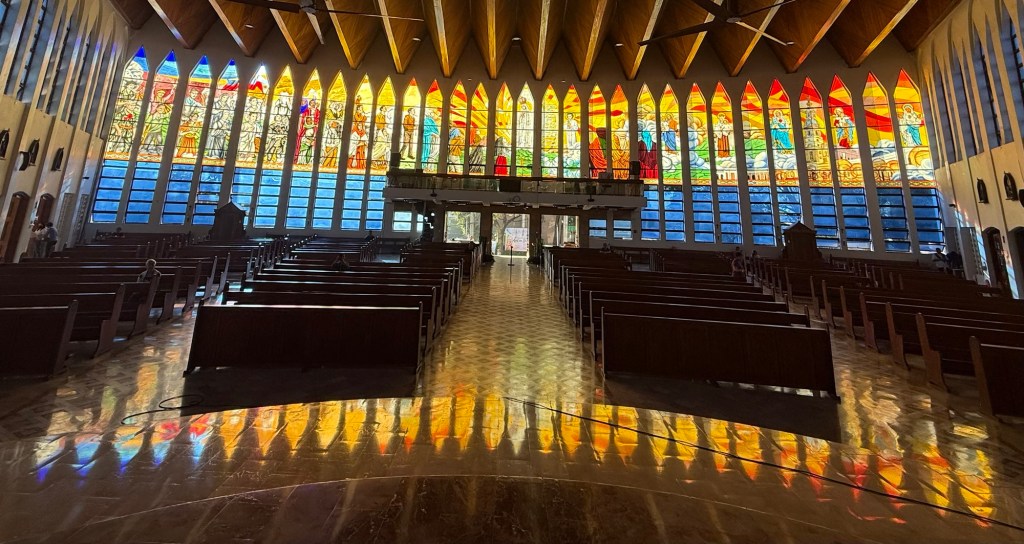
Photo by Mr. Lorenzo Atienza, detail of the left panel of the new stained glass of the National Shrine of Fatima in Valenzuela City depicting the role of the National Pilgrim Image of Fatima in the EDSA People Power Revolution of 1986.
EDSA ’86 is still ongoing, unfolding. Forty years of wandering in the wilderness of political and national ups and downs have clearly been signs from God to remember Him, to return to Him but we have ignored.
I dare say that EDSA waned because we have forgotten God. And every time we forget God, it follows that we also forget others. That is why Duterte rose to power with his supporters relishing his jokes and speeches that smack human dignity especially of women. Even God he had cursed and the Pope, the Vicar of Christ. And the tragedy was how his supporters rejoiced in his insults and harsh words against God and people.
Sad to say too, many of us in the Church were intoxicated with the euphoria of EDSA ’86. Many priests and bishops have since then been identified closely even as enablers of the rich and powerful people of the country primarily the politicians who mostly exploited our people. How we sorely missed Cardinal Sin these last ten years who never turned his back from every attack in the dignity and value of human life and of the family.
EDSA@40 is a call to return to the journey in the wilderness, a call to sacrifice anew, to pray and get closer to God who is the true Spirit of EDSA. And here lies also the most beautiful aspect of EDSA ’86: the presence of the Blessed Virgin Mary as our guide and companion in the wilderness.
Unlike the Israelites who were led by the Ark of the Covenant that contained the two tablets of stones where God inscribed the Ten Commandments, in EDSA 1986 we have the “new Ark of the Covenant” as we pray in the Litany of the Rosary – Mary the Blessed Virgin.
Mary is the “Ark of the Covenant” because she carried in her womb our Savior Jesus Christ. More than the stone tablets of the Ten Commandments in the Old Testament, Mary is the new Ark of the Covenant because she brought forth into the world the Son of God Jesus Christ.
That was exactly what Mary did at EDSA’86 and continues up to now!
Photo by Mr. Lorenzo Atienza, 25 February 2025.
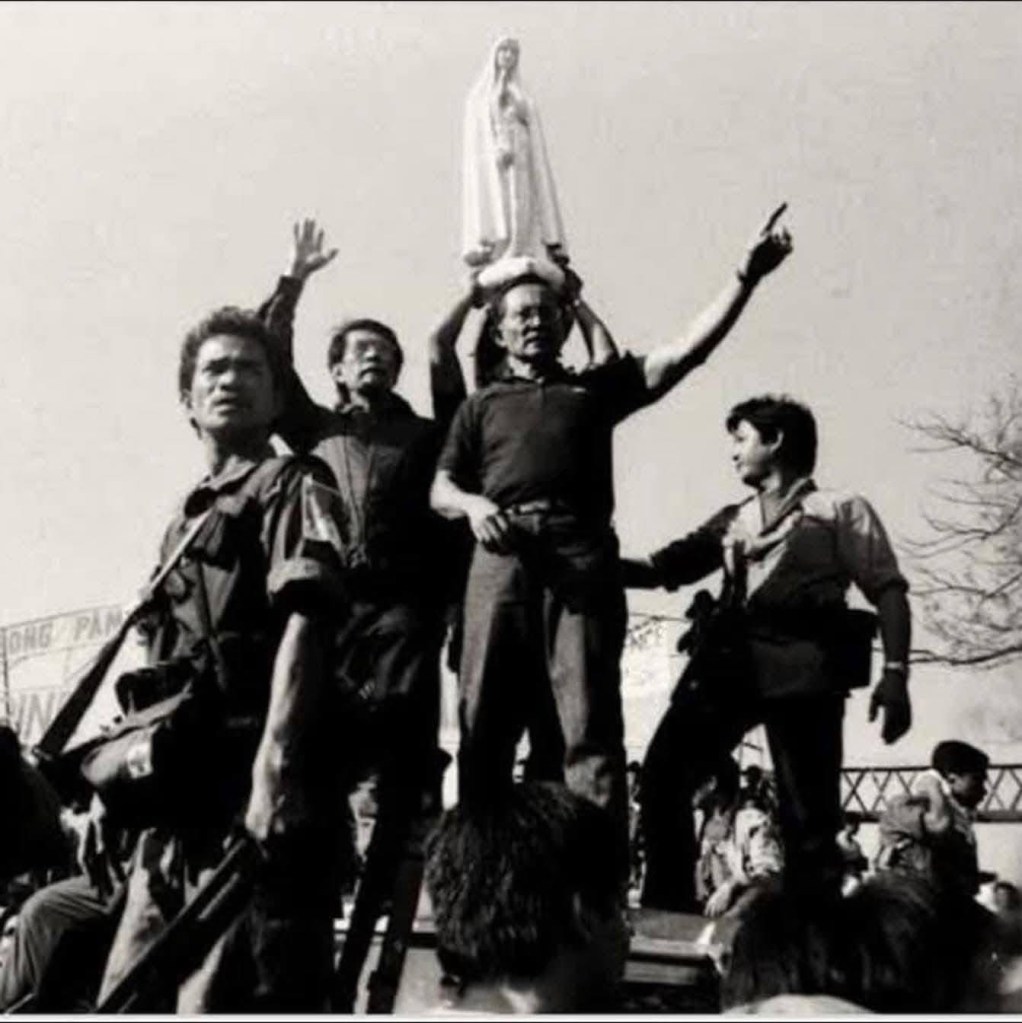
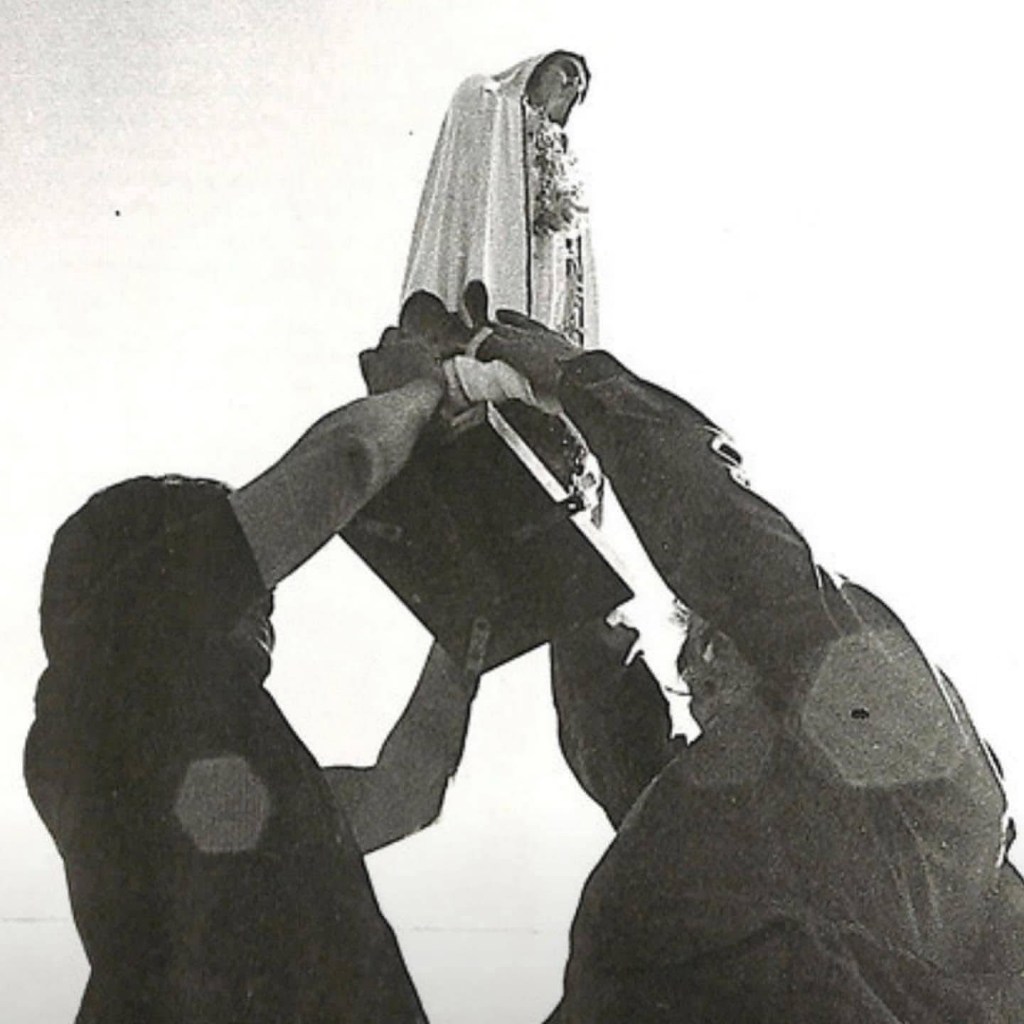
Consider again the work of the hand of God in our history, in EDSA 1986: In 1967, St. Pope Paul VI blessed 50 statues of Our lady of Fatima for distribution around the world. For strange reasons, the one destined for the Philippines ended up in a parish in New Jersey that was kept in one of its rooms until 1984 when it was finally given to Cardinal Sin who brought it into the country to be crowned as the National Pilgrim Image of Fatima (NPI) during the launching of the National Marian Year on December 8, 1984. From then on, the image was brought to various cities in the country for the Marian Year and eventually for the spread of devotion to Our Lady of Fatima.
When Cardinal Sin called on the people to fill EDSA in the evening of February 22, 1986 to protect Enrile and Ramos from the loyalist forces of Marcos out to neutralize them, the very same image was brought to Camp Crame and the rest was history.
What a beautiful image of the Filipino people so loved by God led by the Mother of His Son, the new Ark of the Covenant in those four days of People Power Revolution. Tanks and guns were silenced, soldiers’ hearts melted in love and compassion for the people armed only with flowers and Rosary beads.
A lot of things have happened these past 40 years since EDSA People Power Revolution. For those feeling low, disheartened, disillusioned… come to the National Shrine of Our Lady of Fatima and experience up close and personal the very image we have in EDSA ’86 who led us to victory. She is always here, always in our hearts, leading us closer to Jesus Christ her Son and our Lord especially when this journey in the wilderness of our nation’s history becomes so tiring and exhausting.
More miracles can still happen when we believe and live the Spirit of EDSA ’86 who is God himself in Jesus Christ. With His Mother and our Mother too! Viva La Virgen de Fatima! Long live EDSA People Power Revolution!
40 Shades of Lent by Fr. Nicanor F. Lalog II
Wednesday in the First Week of Lent, 25 February 2026
Jonah 3:1-10     + + +     Luke 11:29-32
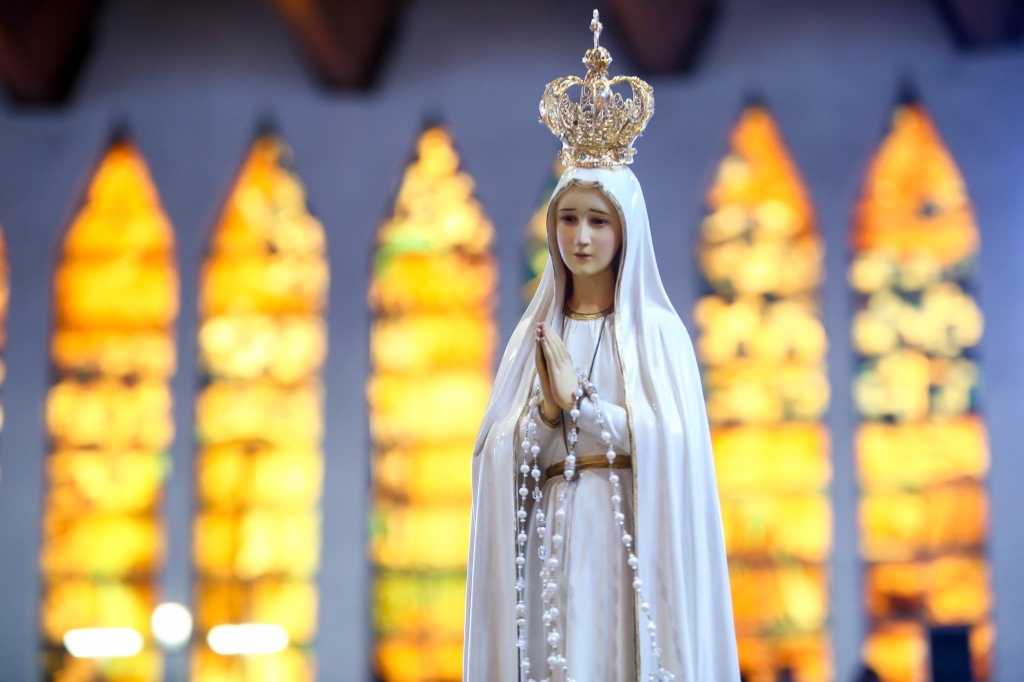
From cbcpnews.net, 13 May 2022, at the Parish of the National Shrine of Our Lady of Fatima, Valenzuela City; this is National Pilgrim Image of Fatima that was raised by the late Gen. Fidel Ramos at EDSA 1986 People Power Revolution.
Praise and glory
to you, O God,
our loving Father
for the gift of EDSA 1986:
what a wonderful reminder
to us of your loving presence
among us,
of your work,
and of your call to us all
to be one,
to journey closer to you
in Jesus Christ in peace
with Mary His Mother;
how wonderful to remember
that EDSA 1986
happened in the season of Lent
reminding us of the 40 years
of the Israelites in the wilderness;
so are we now still journeying
in the wilderness of independence,
of democracy;
many times we have stumbled
and fall, but we shall rise
to continue this journey of
purification as a nation,
as a people you have called
and chosen.
On this 40th anniversary
of People Power Revolution
that happened in EDSA,
I pray only for one thing like
the psalmist this day:
“A clean heart create for me, O God, and put a steadfast spirit renew within me. Cast me not out from your presence, and your Holy Spirit take not from me” (Psalm 51:12-13).
EDSA 1986 photo by Mr. Linglong Ortiz.
Create a clean heart
in me, O God;
let me return to you,
O God:
EDSA was primarily
a call to return to you
but many of us were blinded
by its many joys of changes
like freedom and democracy
we have abused
these past 40 years;
have mercy on us,
Lord, let us return to you,
create a clean heart in us
that we may finally admit
our own faults in tarnishing,
blurring the glow of EDSA 1986
through these past four decades.
Indeed,
many of us in EDSA 1986
have left the journey to follow
the path of the devil in the
wilderness,
pursuing fame and wealth
and of course, power;
create a clean heart in us,
Lord Jesus, so we may
return to you like Jonah
the reluctant prophet,
to simply be your one sign
of a prophet continuing
the journey towards you.
O God,
you have given us with so much
in EDSA 1986 but we have given
so little; like those four days of
February 1986,
let us forget ourselves always
to give more of our selves
and most of all,
more of you in Jesus
with Mary our Mother.
Amen.
Photo by Mr. Lorenzo Atienza, 25 February 2025 procession of first anniversary of the Canonical Coronation of the National Pilgrim Image of Fatime kept at the National Shrine of Fatima in Valenzuela City.
40 Shades of Lent by Fr. Nicanor F. Lalog II
Tuesday in the First Week of Lent, 24 February 2026
Isaiah 55:10-11     + + +     Matthew 6:7-15
Photo by author, somewhere in the SCTEx, November 2018.
Today I borrow
the words of your servant,
Lord Jesus Christ,
the late Fr. John Main, OSB
who wrote that
"The meaning of life
is the mystery of Love.
Just as the roots of trees
hold firm in the soil,
so it is the roots of love
that hold the ground
of our being together."
Keep me rooted in you,
God our Father;
keep me rooted in your love
in Jesus Christ your Son;
water and nourish me
with your words of life
so I may grow tall,
spread my branches,
bloom and bear fruit
to share your love and
kindness and mercy
with others;
keep me rooted in you,
Lord,
strong and firm
to weather the harshest
storms and summer
in life, still full of sap,
still full of life.
Lord Jesus,
you have given me with so much
and I have given so little;
teach me to give more
of myself to you
so I can give more of you
and of your love
to others.
Amen.
40 Shades of Lent by Fr. Nicanor F. Lalog II
First Sunday in Lent-A, 22 February 2026
Genesis 2:7-9, 3:1-7   +   Romans 5:12-19   +   Matthew 4:1-11
Photo from earth.com.
We now live in a world so noisy with many voices competing for our attention. Everybody is talking including cars and elevators, phones and gadgets and apps with names Siri and Alexa. So often, it is from these competing voices come our temptations in life, too.
In his first Lenten Message, Pope Leo XIV invites us to listen more to the word of God in order to be converted anew to Him. He said it so well that “The willingness to listen is the first way we demonstrate our desire to enter into a relationship with someone.”
Very true! And the question this first Sunday in Lent asks us is, whose voice do I follow? Because the voice we listen most is likely the one we prefer or love most – in fact, it could be the voice of the one we keep a relationship with!
That is the tragic truth of the story of the fall of Adam and Eve in the first reading today – they listened more to the voice of the devil signified by the serpent than to God who warned them not to eat the forbidden fruit.
And that continues to happen every day in our lives! That is why to sin is not merely to turn away from God but actually a refusal to love because sin is rejecting a relationship with God to whom we must listen to. This we see today in Matthew’s version of the temptations of Christ in the desert.
At that time Jesus was led by the Spirit into the desert to be tempted by the devil. He fasted for forty days and forty nights, and afterwards he was hungry. The tempter approached and said to him, “If you are the Son of God, command that these stones become loaves of bread.” He said in reply, “It is written: One does not live by bread alone, but by every word that comes forth from the mouth of God” (Matthew 4:1-4).
Detail of “The Temptation of Jesus According to St. Matthew” on the wall of St. Mark’s Cathedral in Venice, Italy. Photo from psephizo.com.
Right at the start, Jesus made it clear by quoting the Sacred Scriptures, the word of God, that “One does not live by bread alone, but by every word that comes forth from the mouth of God.”
Jesus, the Word who became flesh to live among us tells us clearly today that same truth. God’s word is life when He created everything by just speaking. Any voice that leads to destruction is from the devil, the father of fake news. And the devil’s biggest lie we must always avoid is making and having things easily. See how until now every fake news is always about “instants” like instant food and health, instant solution to everything without realizing its sinful effects as well as side effects that may actually harm us more.
Listening is an art because it teaches us to be patient, to wait and most of all, to persevere which leads us to perfection and excellence. Haste always makes waste. When we listen, we become patient, choosing to wait than take shortcuts or get instants that avoid difficulties and hardships like gambling to be wealthy without working, or cheating to pass exams without learning as well as freedom without responsibilities.
Then the devil took him to the holy city, and made him stand on then parapet of the temple, and said to him, “If you are the Son of God, throw yourself down. For it is written: ‘He will command is angels concerning you’ and ‘with their hands they will support you, lest you dash your foot against a stone.'” Jesus answered him, “Again, it is written, You shall not put the Lord your God to the test” (Matthew 4:5-7).
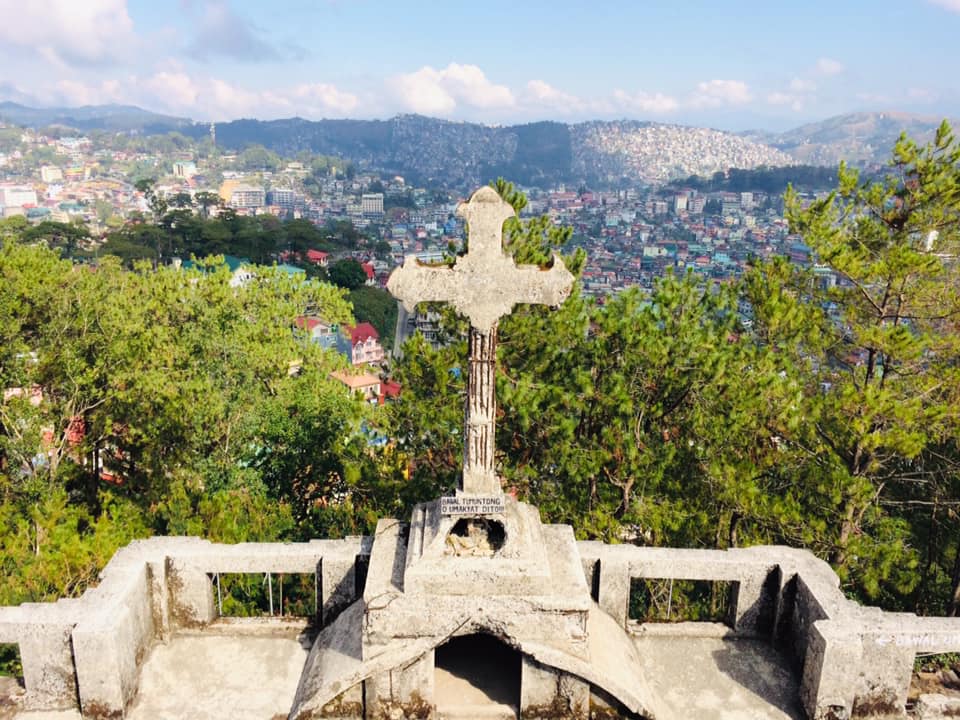
Photo by author, Domiican Hills, Baguio City, January 2019.
More than an art, listening is a virtue because it demands silence which is a fullness wherein we are able to listen and distinguish every voice and sound so that we may choose which to listen to and follow.
The word “listen” is the palindrome of “silent” – we listen best in silence to hear God, others and our very selves.
When we learn to be silent, we also become more trusting because when we trust, we speak less and listen more. The most silent people are the also the most trusting. When we trust, we wait and avoid shortcuts and instants.
The voice of God stirs our inner self, not just our senses because His voice leads us to deeper realities and meanings in life. Remember that Jesus eventually fed more than five thousand people from just five loaves of bread and two pieces of fish when He saw them already prepared inside their hearts and soul; when Jesus felt them more open to God than to the world, then He gave them bread and fish for their stomach.
Notice how the devil’s temptation to Jesus continues among us with those voices calling us to overly assert ourselves, to be influencers and clout chasers or content creators to be praised and followed by everyone when actually is all about wealth and money, and of course, power. It is the voice of control and manipulation. How sad that many of us gobble their lies completely, consuming everything, filling ourselves even with trash.
The voice of God calls us to sacrifice, to bear pains and sufferings not to be overburdened in life but for us to see God especially among those mostly in need like the poor and marginalized. Often, the voice of God is the softest and tiniest in our hearts calling us to simply trust Him by doing the simplest things like smiling to strangers, easing the pain of those lonely and sad, giving bread to the poor and hungry. Listening to the silence of God enables us to trust Him more that we learn to share and forget ourselves. Then, we grow and mature truly as persons.
Then the devil took him up to a very high mountain, and showed him all the kingdoms of the world in their magnificence, and he said to him, “All these I shall give you, if you will prostrate yourself and worship me.” At this, Jesus said to him, “Get away, Satan! It is written: The Lord, your God, shall you worship and him alone shall you serve.” Then the devil left him and, behold, angels came and ministered to him (Matthew 4:8-11).
Again, we go back to Pope Leo XIV’s Lenten Message about listening as “the first way we demonstrate our desire to enter into a relationship with someone.”
Don’t you feel sad at the sight of today’s everyday life where everyone has something in their ears, whether the tiny earpods or the headset/headphone?
What used to be insane like talking by one’s self has now become a status symbol as everyone looks crazy speaking by themselves through modern devices amid a crowd while walking or seated anywhere conversing to somebody at the other end of their lines unmindful, oblivious of the persons around them. May sariling mundo.
Many these days have created their own worlds and universe with them at its center through our new Baal, the cellphone – the very first thing everyone is looking for after waking up and the last thing in everyone’s hand before sleeping. How sad many among us today practically live in social media. What is most tragic is that all these modern means of communications were invented to bring us closer together when in fact, the more we have grown apart from each others! We are not only polarized as people but even separated from God.
The third temptation of the devil to Jesus continues with us today with all those voices telling us to forget God and morality and truth so that we become popular by being viral and trending. It is the biggest scam and fake news of all by the devil – of us being the “master” to rule and have world with all of its luxuries and power. The voice seems harmless, as if asserting our true selves but actually destroys our being and relationships with God, with others and eventually with our very selves.
Lent is an inside journey into our hearts, of finding Jesus anew inside our hearts where He dwells. St. Paul tells us in the second reading how Jesus brought us back to God, to grace and salvation.
Lord Jesus Christ, help us not to harden our hearts today so that we may listen anew to Your voice within us to find our way back to God, to peace and to fulfillment in ourselves and in one another.Amen. Have a blessed week ahead!
Photo by author, Carmel of the Holy Family Monastery, Guiguinto, Bulacan, 22 January 2026.
40 Shades of Lent by Fr. Nicanor F. Lalog II
Friday After Ash Wednesday, 20 February 2026
Isaiah 58:1-9     +++     Matthew 9:14-15
Photo by author, Sacred Heart Novitiate, Novaliches, QC, March 2024.
God our loving Father,
thank you for this
blessed season in Lent;
grant me the true spirit
of fasting,
of emptying my self
of my pride and sins
to be filled with your Spirit,
with your word,
with your love and justice;
in my fasting
and self-emptying,
help me create a space within
that shall restore
my broken relationships
with you,
with others,
and even with my true self.
This, rather, is the fasting that I wish: Releasing those bound unjustly, untying the thongs of the yoke; setting free the appressed, breaking every yoke… Then your light shall break forth like the dawn, and your wound shall quickly be healed; your vindication shall go before you, and the glory of the Lord shall be your rear guard. Then you shall call, and the Lord will answer, you shall cry for help, and he will say: Here I am! (Isaiah 58:6, 8-9)
Show me, Lord Jesus
those "bonds of injustice"
and "thongs of the yoke"
you are calling me
to undo;
it is so easy to identify
the many injustices
and oppression
happening in the society
that are indications
of the very inequalities
I do against my family members,
to those in my close circle of friends
and those around me.
Let me fast,
Lord,
according to your
desire and design
that is to make you present
among us so that
whenever anyone would
cry to you for help,
they may hear through me
your voice and presence,
"Here I am!"
Lord Jesus Christ,
you have given me
with so much
and I have given you
with so little;
teach me
to give more of myself,
more of my time,
most especially,
more of you
in me.
Amen.
Photo by author, Sacred Heart Novitiate, Novaliches, QC, March 2024.



















 lordmychef.com