Lord My Chef Sunday Music by Fr. Nicanor F. Lalog II, 14 June 2026
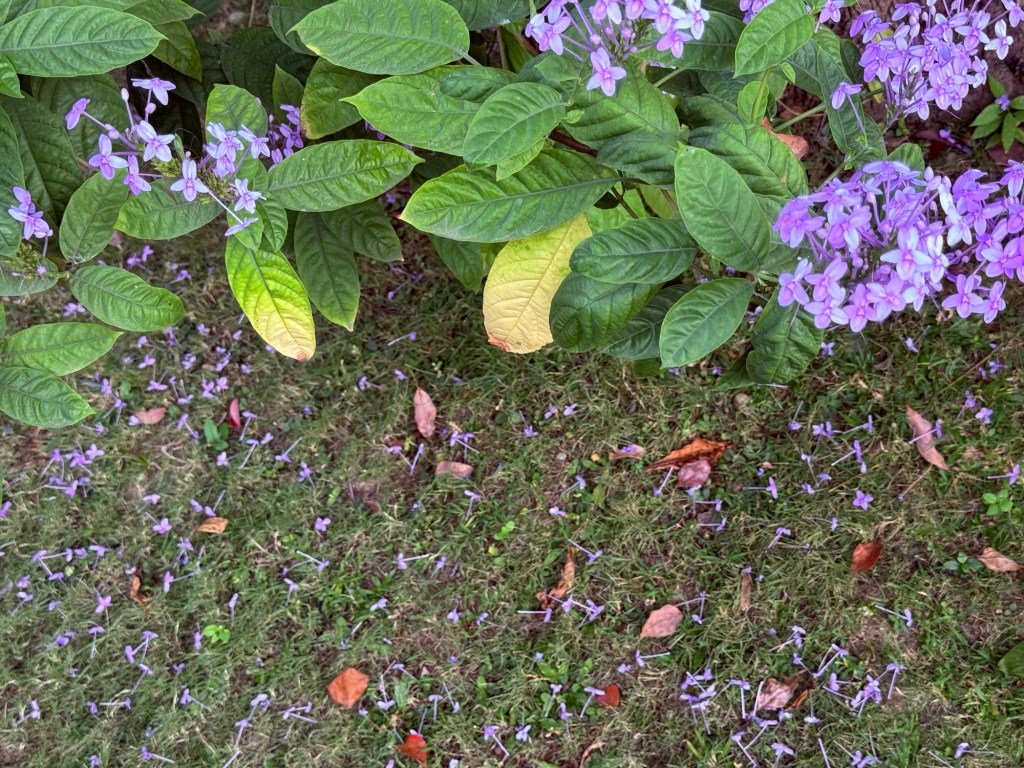
Photo by author, Atok, Benguet, 27 December 2024.
We just felt ourself in the ’80s with two of Depeche Mode’s 1984 hits, “Somebody” and “People Are People” while preparing our homily last week based on this Sunday’s gospel where Jesus was “was moved with pity” upon seeing the crowd “troubled and abandoned like a sheep without a shepherd”, telling his disciples that “The harvest is abundant but the laborers are few; so ask the master of the harvest to send our laborers for his harvest” (Matthew 9:36-38).
My dear friends, we are both the “abundant harvest” and the “laborers” referred by Christ: what we need in this world are people who care and understand others, people who are kind and understanding, most of all loving like him our Good Shepherd. See how Jesus asked us to pray for more laborers, not for more money or food or medicines. Not even gadgets and material things. What we need are persons willing to journey with us in this life, to accompany us especially when days are dark and stormy (https://lordmychef.com/2026/06/13/we-are-the-lords-harvest-and-laborers-too/).
First we remembered was Depeche Mode’s “Somebody” with its unique intro where you hear something that sounds like a heartbeat amid some noise of people or crowd until the vocals come in with that pulsating sound going on until the end. The mood is very intense and deeply intimate, composed and recorded by Martin Gore said to have gone naked in the studio recording of the song “to achieve a more intimate ambience.”
[Verse 1]
I want somebody to share, share the rest of my life
Share my innermost thoughts, know my intimate details
Someone who'll stand by my side and give me support
And in return, she'll get my support
She will listen to me when I want to speak
About the world we live in and life in general
Though my views may be wrong, they may even be perverted
She'll hear me out and won't easily be converted
To my way of thinking, in fact, she'll often disagree
But at the end of it all, she will understand me
Setting aside its romantic meaning, we find “Somebody” speaking to us the very thoughts of Jesus in praying for “laborers” not things to address the needs of people feeling troubled and abandoned. When people are down and lost in life, feeling troubled and abandoned, where do we focus more, to their woes and problems or their very person?
Try thinking of the people you consider as “heaven sent” who helped you in your darkest moments: they are that “somebody” like you who shared your brokenness and most of all brought out your giftedness as a person. Think of that “somebody” who have seen your being an “abundant harvest”, affirming your uniqueness and sharing in your imperfections.
From YouTube.com
As we tried to feel this lovely ballad, we could also feel inside the intensity of Depeche Mode’s other 1984 hit released from the same album with “Somebody” called “People Are People”.
Also written by Gore, “People Are People” is Depeche Mode’s greatest hit showcasing their genre as electronic synth-pop band.
Typical of most British bands of the 1980’s, Depeche Mode shared in this song their call for equality among peoples, directly opposing racism and discrimination, war and violence. Its music video features scenes from a battleship firing its cannons indicating their opposition to war and violence.
People are people, so why should it be?
You and I should get along so awfully
People are people, so why should it be?
You and I should get along so awfully

So, we're different colors and we're different creeds
And different people have different needs
It's obvious you hate me, though, I've done nothing wrong
I've never even met you, so what could I have done?

I can't understand
What makes a man
Hate another man
Help me understand
Both songs by Depeche Mode, “Somebody” and “People Are People” remind us of the value of every person as God’s abundant harvest, each one of us a gift to be cherished and valued always. Likewise, both songs imply our being brothers and sisters entrusted to each one for God’s greater glory, not ours. Amen. Happy listening.
Lord My Chef Daily Recipe for the Soul by Fr. Nicanor F. Lalog II
Friday, Solemnity of the Sacred Heart of Jesus, 12 June 2026
Deuteronomy 7:6-11 ><}}}*> 1 John 4:7-16 ><}}}*> Matthew 11:25-30
Photo by author, Sacred Heart Novitiate, Novaliches, QC, March 2026.
You read it right. The title of our reflection on this Solemnity of the Sacred Heart of Jesus is the same title of The Smiths’ 1984 classic Heaven Knows I’m Miserable Now.
It is one of my all-time favorite songs, my theme song after graduating in 1986, landing on my first and only job as it captured my exact situation of the period:
I was happy in the haze of a drunken hour
But Heaven knows, I'm miserable now
I was looking for a job, and then I found a job
And Heaven knows I'm miserable now
Since then, the song has remained relevant with me especially after learning how the young generation appreciate a lot The Smiths that I have used their other music in my spiritual conferences and recollections as a university chaplain. That’s why during our Sacred Heart Novena in our university chapel, the same song kept playing at the back of my mind especially while meditating on the second reading on this feast of the Sacred Heart.
Beloved, let us love one another, because love is of God; everyone who loves is begotten by God and knows God. Whoever is without love does not know God, for God is love. In this is love: not that we have loved God, but that he loved us and sent his Son as expiation for our sins (1 John 4:7-8, 10).
How lovely and simple is our second reading from the letter of the beloved disciple, John who gives us the deepest theological grounding of the Sacred Heart of Jesus: “God is love.”
Pope Benedict XVI used to say Christianity is the only religion is the world with that kind of declaration about God; it is not merely that God loves but that love is God’s very nature!
And what does it mean to us? The older I get, the more I realize and experience that I live because of God’s love: it is the reason I wake up and sleep; why I strive to be my best in everything despite my weaknesses and limitations; why I still love even if I am not loved or misunderstood and even maligned; why I still go in living even if I am sure one day I shall die.
We live because we are loved by God.
Simply loved because he is love himself.
Not because we are good or does something important or fulfills his divine will.
God loves because it is his very essence as Moses reminds us in the first reading, “It was not because you are the largest of all nations that the Lord set his heart on you and chose you, for you are really the smallest of all nations. It was because the Lord loved you” (Dt.7:7-8).
Hence, John insists that in this is love – not that we loved God but that God loved us first. Our love for God and for one another is a response to his very love.
Would there be any difference at all to begin with God’s initiative rather than our own love?
Surely a lot. Even unthinkable to just rely on our own love and initiative because it is never enough for we humans are imperfect.
Human love is imperfect; only God can love us perfectly. That is why love is always initiated by God. We can’t love on our own. No matter how good and holy we may be. Mayroon palaging maisusumbat ating minamahal sa ating pagmamahal. Sa Diyos wala.
That is why I love the song Heaven Knows I’m Miserable Now.
We humans are so miserable in loving but because of our loving God who is love himself, we are able to love, to keep on loving despite and in spite of everything because to live is to love. Jesus came so that we can continue to love, to keep loving even if the world tells us it is foolish. Even if people don’t care at all for us and do not love us as Morrissey sang it so well in the chorus of Heaven Knows I’m Miserable Now:
In my life, why do I give valuable time
To people who don't care if I live or die?
Very true – fascinatingly – is Morrissey’s third chorus line because he openly brings out the usual thoughts we hide in dealing with people we hate or do not like:
In my life, why do I smile
At people who I'd much rather kick in the eye?
Funny is it not? But very true! And that’s because of God’s love in us, of his grace that despite the many people who hurt us and do not love us, we still choose to be loving and kind, at least smile at them than stoop down to their low levels.
Photo by author, Sacred Heart of Jesus Novitiate, Novaliches, QC, 20 March 2024.
The feast of the Sacred Heart is an invitation to look at the heart of God – at what God most desires for us and for our world. It is not a sentimental image but a radical one: a love that goes all the way to the Cross.
God knows how miserable we are these days when things like positions and power, fame and wealth have become more important than persons to be loved and cared for. Despite the many technological advances we have achieved that promised to make life easier, the opposite proved to be more true. Life has been reduced to mere lifestyle, persons have become objects to be possessed by companies and brands, even by schools!
Today’s celebration of the Sacred Heart feast invites us to go back to Jesus who knows fully well our miseries; songs like Heaven Knows I’m Miserable Now can identify and express them to offer respite for a while but only Jesus can uplift and change us for he alone truly loves us because he is love himself.
“Come to me, all you who labor and are burdened, and I will give you rest. Take my yoke upon you and learn from me, for I am meek and humble of heart; and you will find rest for your selves. For my yoke is easy, and my burden light” (Matthew 11:28-30).
Amid the many miseries we are all going through these days, let us take time today to respond to the love of Jesus Christ in the most honest and true ways that will make others experience his love. Many times, it is the simplest gesture of just being gentle with others in words and in deeds, of not adding to their many burdens in life. Jesus, meek and humble of heart, make our hearts like yours! Amen.
Lord My Chef Sunday Music by Fr. Nicanor F. Lalog II, 10 May 2026
Photo by author, 07 February 2026.
Jesus wrapped up this Sunday his teachings about relationships with the commandment to love one another. Five times he repeated the word “love” in our short gospel this Sunday to highlight its centrality in every relationship.
Without love, no relationship will ever mature and grow.
More than a feeling, love is a decision, a choice we make, day in, day out. As such, it cannot be defined but simply described.
And being a Mothers’ Day this Sunday, we find Christ’s description of keeping his commandment to love is exactly the kind of love every mom exemplifies to us captured by the 1986 song Coming Around Again by one of our favorites, Ms. Carly Simon.
Baby sneezes
Mommy pleases
Daddy breezes in
So good on paper
So romantic
But so bewildering

I know nothing stays the same
But if you're willing to play the game
It's coming around again
So don't mind if I fall apart
There's more room in a broken heart (broken heart)

You pay the grocer
You fix the toaster
You kiss the host goodbye
Then you break a window
Burn the soufflé
Scream a lullaby

I know nothing stays the same
But if you're willing to play the game
It's coming around again
So don't mind if I fall apart
There's more room in a broken heart

And I believe in love
But what else can I do
I'm so in love with you
Photo by author, August 2024.
Written by Ms. Simon in 1986 as soundtrack for the dramatic comedy film “Heartburn” starring Meryl Streep and Jack Nicholson, the song captures the very essence of its writer Nora Ephron’s fictionalized account of her tumultuous marriage and divorce with her first husband Carl Bernstein, the famous reporter who unearthed the Watergate scandal with fellow Washington Post journalist Bob Woodward. It is a very touching movie with great performances by Streep and Nicholson perfect for this Mothers’ Day too.
Mothers are the best examples of the love Jesus is speaking of in the gospel today that Simon portrayed in her song Coming Around Again.
It is the love that mothers affirm over and over again despite the pains and hurts inflicted by their husband and children; it is the faithful love of every mom even if others are unfaithful; most of all, it is the love that remembers and never forgets, always forgiving, kind and understanding expecting nothing in return.
Yes, it sounds like in a movie like “Heartburn” but it is still so true as we have experienced with our own mother!
That is why I like that part when Simon declared:
I know nothing stays the same
But if you're willing to play the game
It's coming around again
So don't mind if I fall apart
There's more room in a broken heart (broken heart)
The love Jesus is commanding us is the very same love mothers exemplify: they are so aware “nothing stays the same” with unfaithful husband, ungrateful children yet, they keep on loving because it is “coming around again”. Most of all, because they “believe in love”.
And I believe in love
But what else can I do
I'm so in love with you
Without love, humanity will go extinct.
Because of love, as proven by mothers, we have learned that every tragedy, every suffering and problem we go through leads to happy ending primarily because we discover something in ourselves and in someone beyond far more important than any situation or plight we may be into.
In that song and movie, you will find how love is the source of constant deep joy when we are suffering especially in silence. It is here we find the coming around in fullness of love in Jesus: his promised revelation of himself to those who keep on loving despite and in spite of everything. (See also our homily this Sunday, https://lordmychef.com/2026/05/09/easter-is-making-jesus-present-in-our-love/)
Here now is Ms. Carly Simon with Coming Around Again that was included in her 1987 album of the same title. Don’t forget to hug your mom today, to thank her and greet her with a happy mother’s day!
Lord My Chef Sunday Music by Fr. Nicanor F. Lalog II, 04 May 2026
Photo by author, Sacred Heart Novitiate, 20 March 2026, Novaliches, QC.
We’re back with our Sunday music blog with a Hall & Oates original we hope will soothe our searing weather and wipe too our troubles in Jesus’ name. But before we go into their lovely music, let us try to recall first this Sunday’s gospel that brings us back to the Last Supper scene just before the betrayal and arrest of Jesus.
Imagine the silent stillness of the room heavy with emotion, with lamps flickering in the evening light.
Feel the ebb and flow of intimacy and uncertainty in the impending separation of the Lord from his disciples.
Then, amid the gloom, feel the comforting assurance of Jesus telling his disciples that include us today to “Do not let your hearts be troubled. You have faith in God; have faith also in me”(Jn.14:1)
What’s troubling you lately?
Many times, what really troubles us most is the fear of being left out, of being alone.
Money, sickness, and ultimately death trouble us a lot because of our fears of having nobody by our side not only to defend and comfort us but simply be with us. That is why we are troubled when people we love cheat on us, betray us or simply threaten us of walking away from us to be on their own.
Every time a beloved leaves us by choice or by circumstances, whenever we feel “apart” from others and separated, we feel losing a part of very selves because each one is also our part.
This we hear perfectly expressed by Daryl Hall and John Oates in 1980:
And everytime you go away
You take a piece of me with you
And everytime you go away
You take a piece of me with you, you
Everytime You Go Away is from the 1980 “Voices” album of Hall & Oates from which also came their highly popular version of You’ve Lost that Lovin’ Feeling, followed by the smash hits Kiss On My List and You Make My Dreams.
Hall & Oates did not release a single version of Everytime You Go Away that was later covered by Paul Young in 1985 when it became number one for several weeks both in the UK and US Billboard charts. Hall admitted in an interview that Paul’s cover of Everytime You Go Away is his most favorite.
But of course, as a Hall & Oates fan, we prefer their own rendition of Everytime You Go Away that is truly more soulful with the long organ introduction that make it sound so gospel and churchy too. Try listening to Hall’s later versions and be awed with his powerful voice that had aged like an expensive wine. How sad that Hall and Oates have parted ways recently after more three decades of partnership that earned them the title of being music’s dynamic duo.
Since becoming a priest in 1998, we have been mentioning this song, sometimes “singing” it in our homily and spiritual talks because of its gospel values about honesty and sincerity, especially fidelity in our relationships (https://lordmychef.com/2026/05/02/easter-is-jesus-our-home-our-cornerstone/).
Being left out, being alone is the deepest pain one could ever have. And that is why Jesus came, suffered and died for us on the Cross so that in his Resurrection, we would never be apart from him and everyone anymore, here on earth and hereafter. Have a blessed week ahead!
Lord My Chef Sunday Music by Fr. Nicanor F. Lalog II, 29 March 2026
Photo by author, St. Ildephonse Parish, Tanay, Rizal, January 2021.
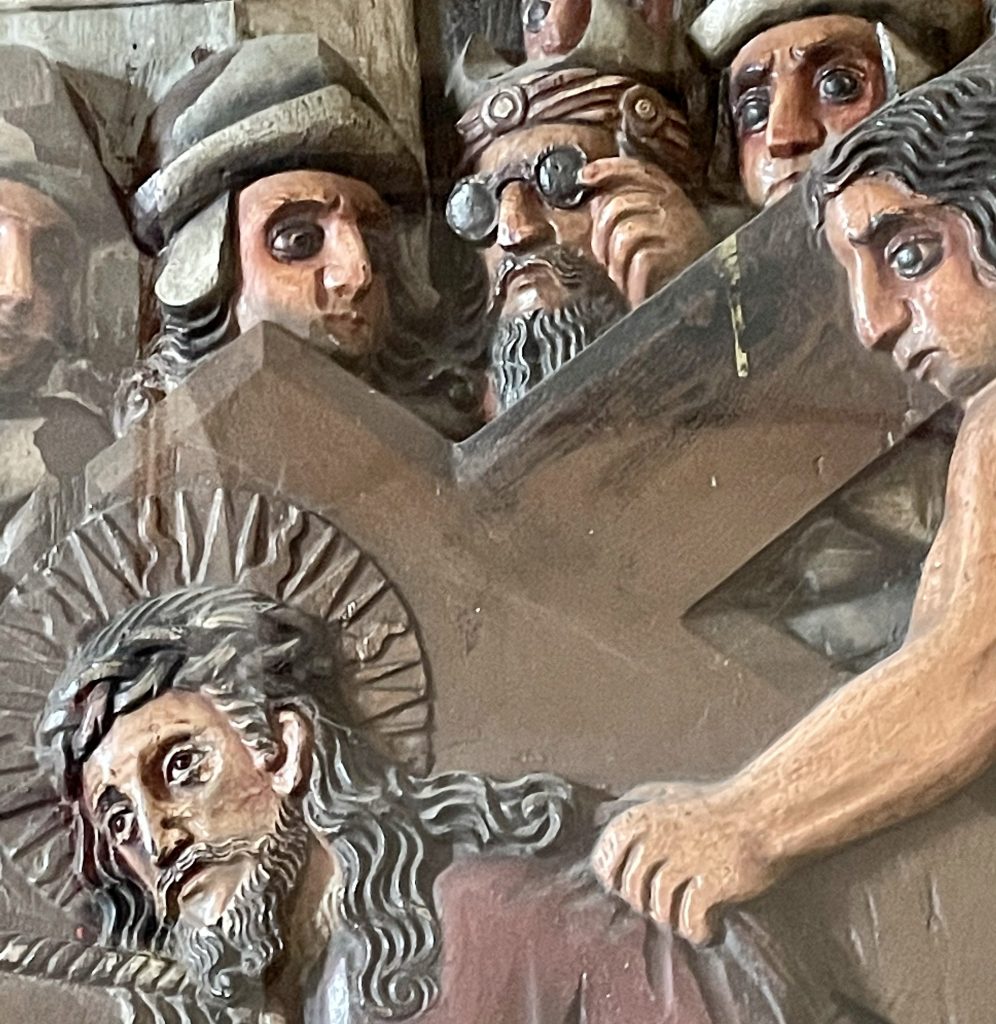
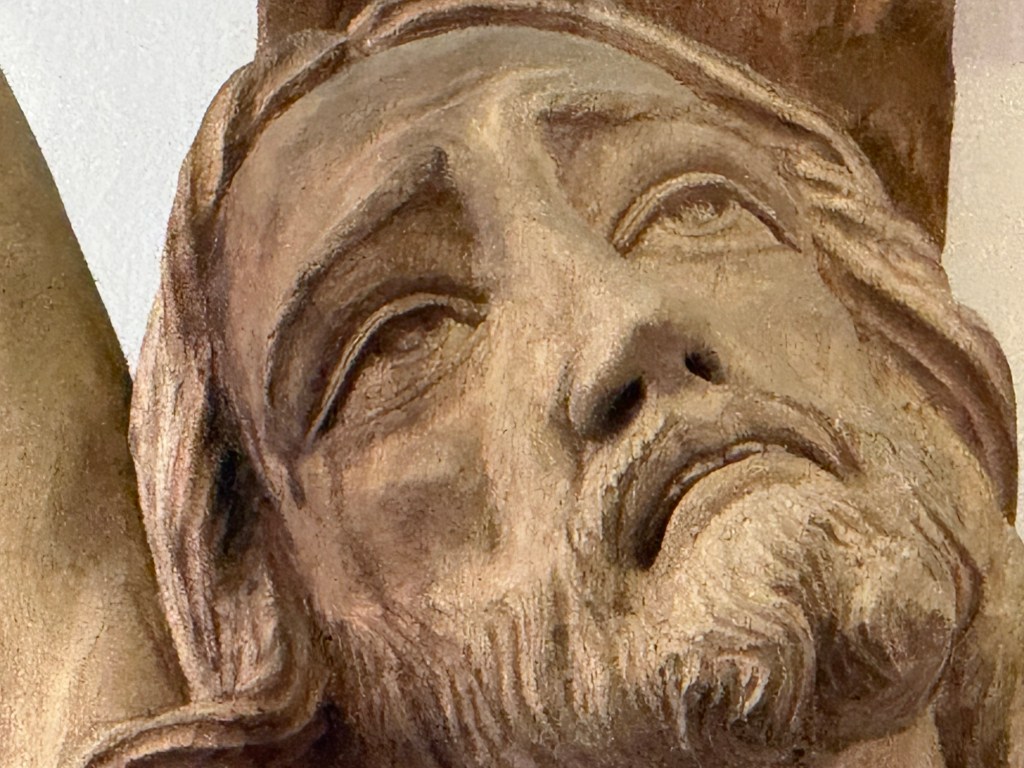
If you have a lot of cash to spend for a unique Holy Week just outside Metro Manila, I suggest you visit St. Ildephonse Parish in Tanay, Rizal and look for the Seventh Station of the Cross when Jesus fell for the second time on his way to the Calvary.
You won’t miss it as you enter the main door immediately to your left. Done by local artisans in 1785, these huge woodcarvings depict one of the most unique Stations of the Cross in the world where soldiers and characters including Jesus Christ have Malay features of brown complexion, large and round eyes, and “squared” body features. Everything was given a local taste to make the Station so Filipino like the soldier leading them blowing a carabao horn for a tambuli while another carried a bolo instead of a sword.
But, the most astonishing of all is a man so prominently portrayed at the middle wearing sunglasses, looking far outside. Yes, the dude wore shades!
Photo by author, St. Ildephonse Parish, Tanay, Rizal, January 2021.
Historians we consulted told us smoked glasses have been available in the Philippines during that time courtesy of Chinese traders. According to the catechists and volunteers we talked to while at the parish, they were told by their elders that man with sunglasses is the high priest Caiaphas who led the Sanhedrin trial of Jesus who declared him guilty of blasphemy in claiming himself to be the Christ, the Son of God.
But, why wear shades? Was it because he refused to see and accept the truth that Jesus indeed is the Christ, the Son of God just like us today who wear all kinds of colored glasses presenting our own image God too far from who he really is. Or, as my kinakapatid Dindo Alberto (+) who was my roadtrip companion at that time said it shows that rock and roll had long been in existence since the time of Jesus Christ, the real Superstar.
I believe Kuya Dindo that is why I prepared two rock and rollin’ music this Holy Week for you to listen and reflect while driving on your way to a visita iglesia to pray and be with family and friends.
I have always loved The Smiths since college especially when NU107 came out at the other end of the FM band in the late 80’s. Heaven Knows I’m Miserable Now remains one of my personal anthems since it first came out in 1984.
When I was assigned as chaplain here at the Our Lady of Fatima University in Valenzuela in 2021, I was surprised to hear some of our college students singing and posting on their socmed There Is A Light that Never Goes Out – kids so young almost like my own pamangkins! And that’s one thing I like most with the Gen Zs and Millennials who also love and embrace our music and artists because they are simply the best. Period.
A week after Ash Wednesday last February 24, I used There Is A Light That Never Goes Out by The Smiths in my monthly spiritual talk to our employees at the University and the Fatima University Medical Center as a fitting music and guide in our 40-day journey of Lent which is more of an inner journey into our hearts to find Jesus Christ, the Light who never goes out amid life’s many darkness. Moreover, Jesus is the Light who never goes out as he restores our sight from the blindness we go through like in the healing of the man born blind that was the gospel last March 15, fourth Sunday in Lent. See how its lyrics also apply either to Jesus speaking to us or to anyone seeking Jesus.
Take me out tonight
Where there's music and there's people
And they're young and alive
Driving in your car
I never, never want to go home
Because I haven't got one
Anymore

Take me out tonight
Because I want to see people
And I want to see life
Driving in your car
Oh please, don't drop me home
Because it's not my home, it's their home
And I'm welcome no more
Of course, composer Johnny Marr and lyricist-vocalist Morissey may have other meanings behind this song considered as their finest but still, it speaks about finding hope that leads us to believe in ourselves, in others and in God. In this mass-mediated world that declares to see is to believe, Jesus tells us the other way around, believe that you may see!
When we believe, then we truly “see” and that is when we love, love, and still love until it hurts even unto death because that is when we find meaning in life and everything. And everyone.
And if a double-decker bus
Crashes into us
To die by your side
Is such a heavenly way to die
And if a ten tonne truck
Kills the both of us
To die by your side
Well, the pleasure,
the privilege is mine
Jesus Christ did just that that is why we have Good Friday; he rose from the dead at Easter and since then, has remained the Light who never goes out, lighting our paths in this time of many darkness in life.
Photo by author, Sacred Heart Novitiate, Novaliches, QC, 20 March 2026.
Sometimes, sunglasses help us see clearly as they filter distracting lights and contrasts that blur our vision with the naked eyes. And so, here is our second rock n’ roll song for Holy Week, Bruno Mars and Lady Gaga’s Die With A Smile which we used also in our employees’ Lenten recollection at the University and Hospital last February 24.
Aside from the striking contrast of The Smiths’ There Is A Light That Never Goes Out that represented the punk, alternative, dark side in me, Die With A Smile represented the 1970’s funky groove I grew up with. And that is why I love and follow Bruno Mars: aside from having a Filipino blood in his Pinay mother, his experiments with music strongly rooted in the 1970’s make us from the older generation feel so welcomed and relate so well with him and his message of faithful love until the end of time.
Along with its lyrics that speak from the heart, the melody and great combination of the voices and talents of Bruno and Lady Gaga make Die With A Smile so lovingly touching, even mesmerizing that make you think of the only one you truly love most that you want to spend the rest of your life with until the end of the world – to die with a smile.
Ooh
I, I just woke up from a dream
Where you and I had to say goodbye
And I don't know what it all means
But since I survived, I realized

Wherever you go, that's where I'll follow
Nobody's promised tomorrow
So I'ma love you every night like it's the last night
Like it's the last night

If the world was ending, I'd wanna be next to you
If the party was over and our time on Earth was through
I'd wanna hold you just for a while and die with a smile
If the world was ending, I'd wanna be next to you
Holy Week remind us of our only one true and first love of all – God. We call this the Holy Week in Filipino as mga Mahal na Araw from the word mahal that means mahalaga or important and essential. That is why another word for love in Filipino is pagmamahal, literally to give importance. Not just pag-ibig which is more about liking as ibig means.
In these days of rising costs of fuels and commodities, anything expensive is described too as mahal in Filipino because they are so important and essential. Like the ones we love. Holy Week is mga Mahal na Araw, the holiest days when Jesus Christ expressed his deepest love – pagmamahal – for each of one of us by dying on the Cross because everyone is loved so immensely by God.
Again, Jesus was the first to have “died with a smile” because he offered his very self completely and freely, willingly for us because he loves us. And he had promised that he shall come again at the end of time. Are we willing to wait for him by loving truly those persons he had entrusted to us in this life?
Until our next music, have a blessed Holy Week and most blessed Easter everyone!
Lord My Chef Daily Recipe for the Soul by Fr. Nicanor F. Lalog II
Friday, Third Week in Ordinary Time, Year II, 30 January 2026
2 Samuel 11:1-4, 5-10, 13-17     <*((((>< + ><))))*>     Mark 4:26-34
Photo by author, Museo Valenzuela & the National Shrine of Our Lady of Fatima, Valenzuela City, 21 January 2026.
Thank you Lord Jesus
for the Friday break,
the penultimate day of this month
of January 2026;
it was a heavy week
and a very long month
for most of us we thought
would never end.
We are thankful Lord
today because we are still
with you with many of us
struggling in our prayer lives,
persevering in being good
and everything like being king
and understanding and forgiving;
indeed, like your parable today,
everything good begins so small
like the seed scattered in the field
that sprout and grow while the farmer
sleeps and rises night and day
without really knowing how;
but that is how it is also with
sin and evil that always begins
so small, so subtle
like in the experience of
David in the first reading:
he had been complacent
in his life falling into temptations
of lust that led into murder.
Dear Jesus,
remind us always
to never take little things
for granted -
whether small deeds that
lead to holiness or small
sins that may leave us stuck in
a moment we can't get out of
according to Bono of U2:
You've got to get yourself together
You've got stuck in a moment
And now you can't get out of it
Don't say that later will be better
Now you're stuck in a moment
And you can't get out of it
We pray, Lord Jesus
for those feeling stuck in
a moment or a sin or a vice
or a relationship that they can't
get out of;
give them the courage to quit
and return to you,
even little by little.
Amen.
*I know what you are thinking but this is a good piece from U2's 2000 album "All That You Can't Leave Behind"... it might help you pray better.
Lord My Chef Simbang Gabi Recipe for the Soul by Fr. Nicanor F. Lalog II
Monday, Simbang Gabi-VII, 22 December 2025
1 Samuel 1:24-28     <*((((><  +  ><))))*>     Luke 1:46-56
Photo by author, Church of Visitation, Ein-Karem, Israel, 2017.
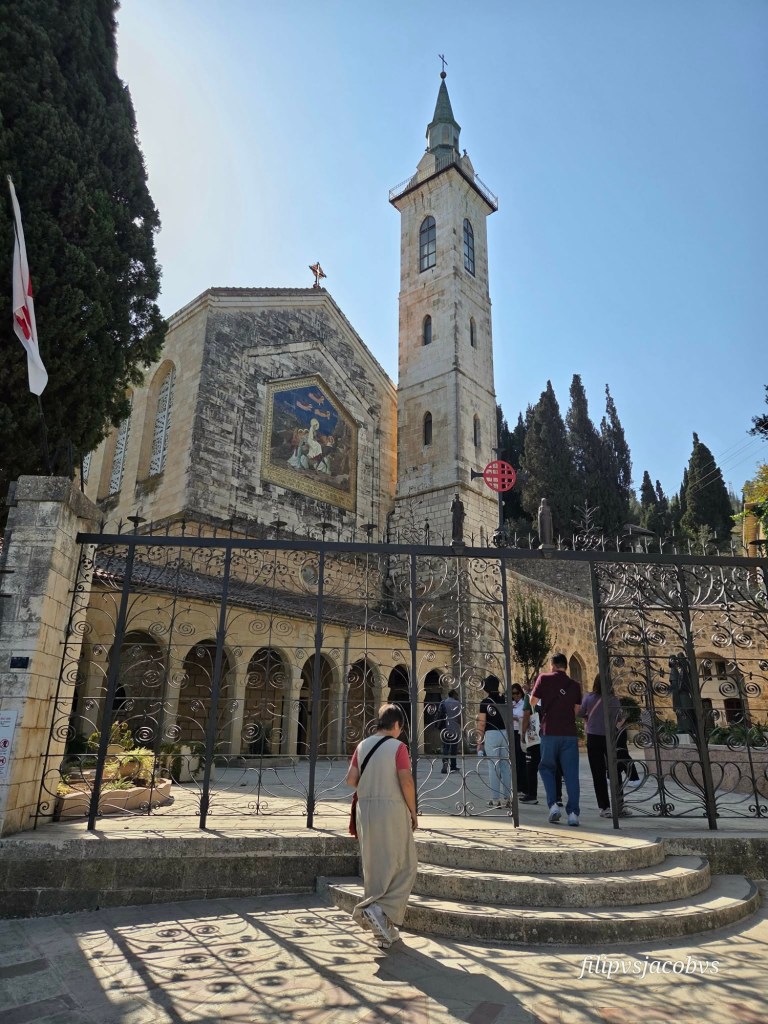
One of the most beautiful and touching sites in the Holy Land I have always loved is the Church of the Visitation at Ein-Karem outside Jerusalem where Mary visited her cousin Elizabeth.
It sits atop of a hill and there’s no other way to get there except by foot due to the narrow road but, it is worth all the effort for anyone going up there with the beautiful scenes all the way with cool breeze soothing your face and lovely flowers delighting your eyes and senses. It somehow gives every pilgrim a taste of the great love and joy of Mary pregnant with out Lord Jesus Christ visiting her cousin Elizabeth on the sixth month of her pregnancy with John the Baptist.
Photo by Ar. Philip Santiago, Church of Visitation, the Holy Land, October 2025.
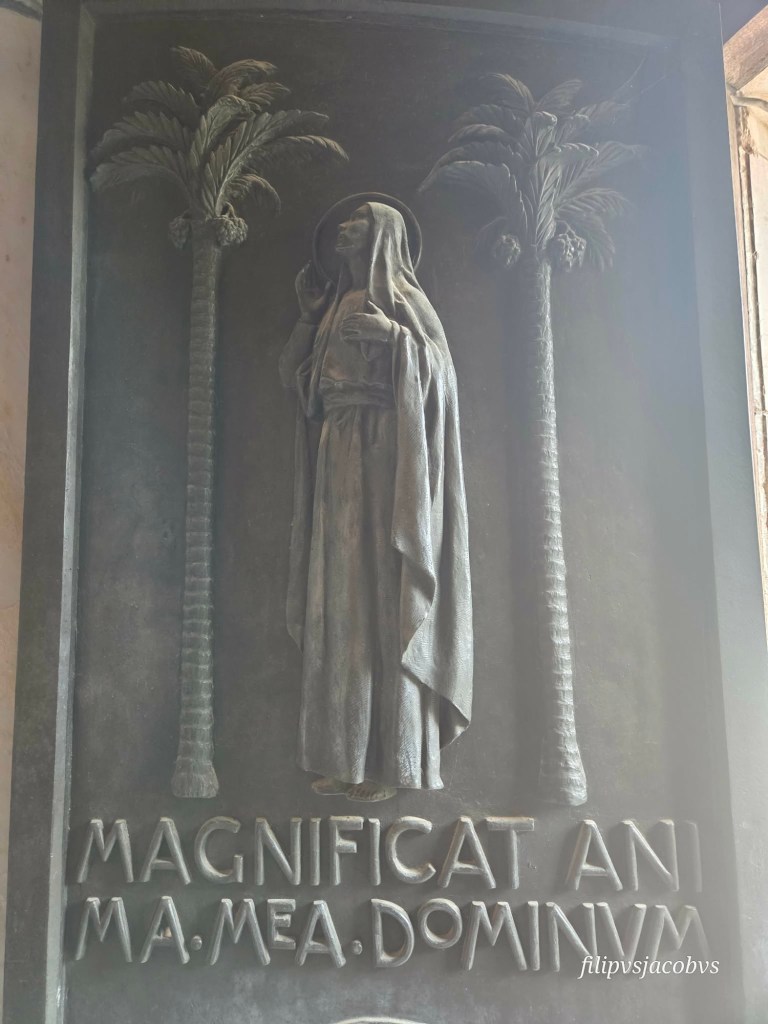
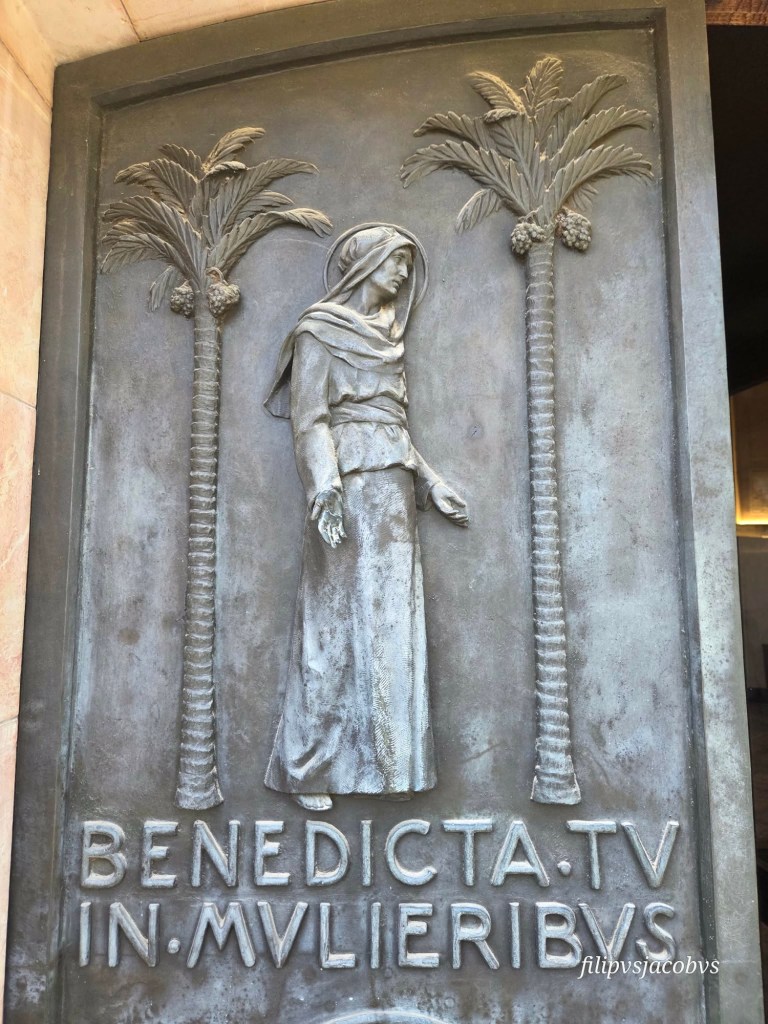
Perhaps we could say the Visitation was the first Christmas party in history as Luke tells us today how Mary rejoiced in God singing the Magnificat after Elizabeth praised her:
“My soul proclaims the greatness of the Lord, my spirit rejoices in God my savior. For he has looked upon his lowly servant. From this day, all generations will call me blessed: the Almighty has done great things for me, and holy is his Name. He has mercy on those who fear him in every generation. He has shown the strength of his arm, and has scattered the proud in their conceit. He has cast down the mighty from their thrones and has lifted up the lowly. He has filled the hungry with good things, and the rich he has sent away empty. He has come to the help of servant Israel, for he has remembered his promise of mercy, the promise he made to our fathers, to Abraham and to his children forever” (Luke 1:46-55).
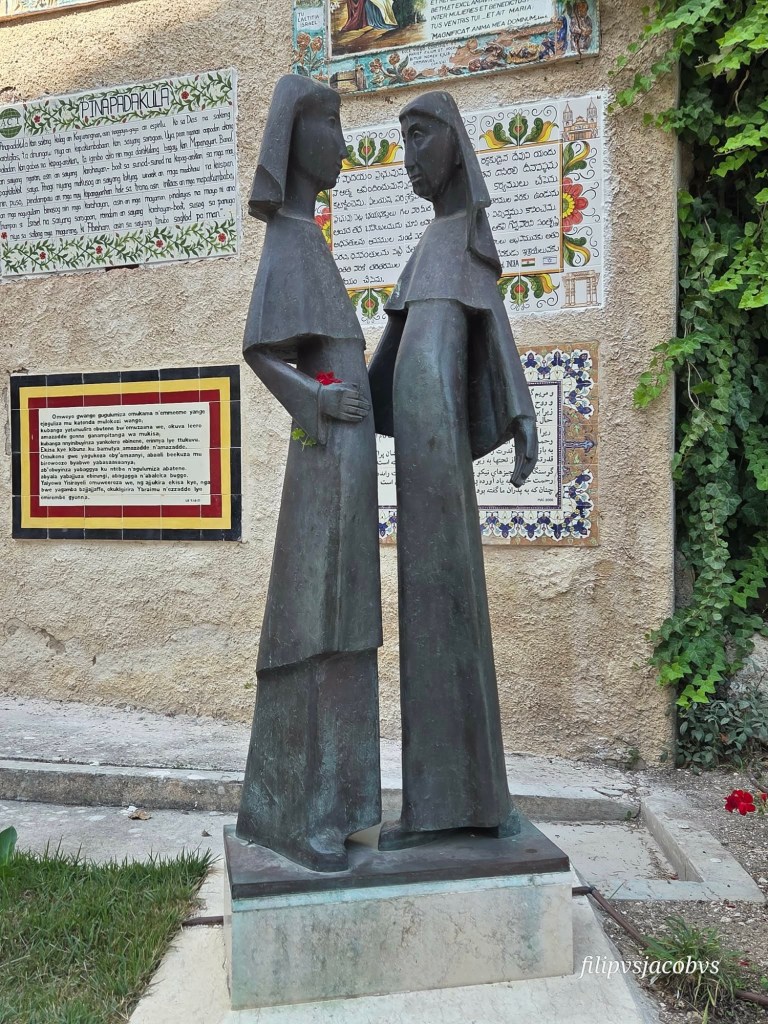
Aside from this beautiful bronze statues of Mary and Elizabeth at the patio of the Church of the Visitation are the translations of the Magnificat in different languages, including in our very own Filipino which is one of the most popular songs we often sing in our Masses.
Photo by Ar. Philip Santiago, Church of Visitation, the Holy Land, October 2025.
But, do we really realize the meaning of this song of Mary?
Actually, the Magnificat was composed by Luke that he placed on the lips of Mama Mary. It is part of his artistry, of putting songs on the lips of some of his Christmas characters like Zechariah after John’s circumcision (the Benedictus) and later on Simeon (Nunc Dimittis) at the Presentation of Jesus in the temple.
Why? Because singing, like dancing, is the highest expression of our feelings to the one we love. Mothers sing lullabies to their infants, suitors compose and sing songs to their beloved, and we Filipinos sing and dance in whatever mood we are wherever we may be! There is always music in us from the simple gesture of washing the dishes, ironing of clothes to driving and taking a shower. When we sing and dance, we not only show what’s inside us but most of all who we are!
Photo by Ar. Philip Santiago, Church of Visitation, the Holy Land, October 2025.
In singing the Magnificat which St. Luke patterned after a similar song by Hannah at the birth of her son the Prophet Samuel who’s story we heard in the first reading, Mother Mary expressed her joy and gratitude in the nearness of God among us not only with the coming birth of her Son Jesus Christ but also through her!
The late Fr. Raymond Brown, one of the great biblical scholars of our time noted in his classic “Birth of the Messiah” that Mary as the first Christian is teaching us in her Magnificat the essential task of every disciple of the Lord which is, after hearing the word of God and accepting it, we must share it with others, not by simply repeating it but by interpreting it so that people can see it truly as the good news.
Here we wish to mention something we have read recently about singing and dancing that the best singer or best dancer is one who can listen or hear – and fill the silent gaps in every piece of music. That’s amazing because singing and dancing are not about having super beautiful voice or precise steps. Singing and dancing are more of attitude, of claiming and owning a piece of music as yours. That’s why it is called an interpretation or as young people these days refer to as “cover”.
As we have mentioned earlier, one of the most popular Mass songs in the country is Mary’s Magnificat called Ang Puso Ko’y Nagpupuri but does it reflect our spirituality as a Christian nation?
Photo by Ar. Philip Santiago, Church of Visitation, the Holy Land, October 2025.
Have you noticed how this 2025 that we heard so little of Mr. Jose Mari Chan his Christmas in Our Hearts?
I feel sorry for Mr. Chan when suddenly this 2025 he is more heard and seen in the McDonald’s commercial shouting “George!” to a fellow senior citizen. We as a nation momentarily forgot about Mr. Chan’s classic line “whenever I see girls and boys selling lanterns” because we as a nation is so disgusted with the ghost project scams of flood controls. We could not even emphatize with the family of the former Undesecretary of DPWH who had died of an apparent suicide because of the “breadth and depth and height” of their corruption running into trillions of pesos. They have cheated on us big time and we really wonder why the big “congtractors” and senators are not yet in jail?
But God has been so good to us this Christmas that we can all sing with conviction the Magnificat for indeed, “the Almighty has done great things for us” like putting into jail in a far away land the former president who called God as stupid not once nor twice but multiple times on television. That is aside from ordering the bloodiest anti-drug campaign he shamelessly likened to Hitler’s Holocaust of Jews in World War II.
The Lord invites us to make this 2025 as the last Christmas we allow corrupt and inept people get elected, that we finally put an end to political dynasty, and stop the stupidity and callousness of people in government who set a budget of 500pesos for people to enjoy noche buena.
Photo by Ar. Philip Santiago, Church of Visitation, the Holy Land, October 2025.
This Christmas let us sing like Mary, as faithful disciple of Christ, sharing Jesus, always Jesus and only Jesus in singing the Magnificat in our daily witnessing to the Gospel, making Jesus come in our life of loving service to everyone especially those in need. Let us actively cooperate with Jesus like Mary his Mother to make these lines a living reality in our midst – “he has mercy on those who fear him in every generation, showing the strength of his arm by scattering the proud in their conceit, casting down the mighty from their thrones, lifting up the lowly, filling the hungry with good things, sending the rich away empty, coming to the help of Israel, for he has remembered his promise of mercy”.
More than a song and hymn, the Magnificat reveals us as the signs of the Christ, the Emmanuel, God-is-with-us! Amen. A blessed week ahead of everyone!
Lawiswis ng Salita ni P. Nicanor F. Lalog II, Ika-02 ng Disyembre 2025
Larawan kuha ng may-akda sa San Fernando, Pampanga, Nobyembre 2021.
Napansin ko lang
kakaiba itong kapaskuhang
darating: tahimik si Jose Mari Chan
at inagawan ng eksena ng mga
mandarambong sa pamahalaan
at kongreso na hanggang ngayon
nagtuturuan,
nagtatakipan
habang pinagpipilitan
ng isang ginang
kakasya raw ang limang-daang piso
upang makapag-diwang
ng noche buena sa
bisperas ng Pasko
ang pamilyang Pilipino.
Kaya sumagi sa aking alaala
pamaskong awiting aking kinalakhan:
Kay sigla ng gabi, ang lahat ay kay saya
Nagluto ang ate ng manok na tinola
Sa bahay ng kuya ay mayroong litsonan pa
Ang bawat tahanan, may handang iba't-iba

Tayo na, giliw, magsalo na tayo
Mayroon na tayong tinapay at keso
'Di ba Noche Buena sa gabing ito?
At bukas ay araw ng Pasko
Mga ginigiliw,
atin nang mapagtatanto
sa awiting ito diwa ng Pasko:
ating pagsasalu-salo ng mga kaloob
na biyaya at pagpapala
na sinasagisag ng noche buena
ng pagkakatawang-tao ni
Jesu-Kristo noong Pasko;
ngunit, paano nga
kung sa halip na
tulungan lalo mga maliliit
tugon ng pamahalaan
ay bigyan ng presyo
natatanging pagsasalo-salo
ng Pilipino tuwing Pasko?
Narito naman makabagong awiting pamasko
naghahayag na walang tatalo sa Pasko sa Pilipinas:
May tatalo pa ba sa Pasko ng 'Pinas?
Ang kaligayahan nati'y walang kupas
'Di alintana kung walang pera
Basta't tayo'y magkakasama
Ibang-iba talaga ang Pasko sa 'Pinas

May simpleng regalo na si Ninong at si Ninang
Para sa inaanak na nag-aabang
Ang buong pamilya ay magkakasama sa paggawa ng Christmas tree
Ayan na ang barkada, ikaw ay niyayaya para magsimbang gabi
Muli mga ginigiliw
sa saliw ng awiting ito
madarama natin diwa at
tuwa ng Pasko:
wala naman sa handang
noche buena ito kungdi sa
samahan at pagbubuklod
ng pamilya at magkakaibigan
katulad ng pagkakatawang-tao
ni Jesu-Kristo na pumarito
upang tubusin tayo
sa ating mga kasalanan
at mapunan ating kakulangan
ng kanyang kaganapan
sa pagmamahalan.
Subalit kay hirap
maramdaman pagmamahal
ni malasakit nino man
tulad ng mga nasa kapangyarihan
animo mga maligno at impakto
ng mga ghost project
kaya Biyernes Santo hindi Pasko
pakiramdam ngayon
ng maraming Pilipino:
wala ang mga ginigiliw
na ate at kuya may handang iba't-iba
dahil sila ay mga nagsipag-OFW na
habang ang mga buwitre at buwaya
sa Kongreso nagpapasasa
sa kaban ng bayan mula sa dugo at
pawis ng mga mamamayan na
pinagtitiis sa limang-daang pisong
noche buena na kahuluga'y
"mabuting gabi" nang pahalagahan
ng Diyos ang tao
sa pagsusugo niya ng Kristo
na patuloy sumisilang
sa puso ng bawat nilalang
tuwing nagmamahalan
at nagbabahaginan
na pinapaging-ganap
sa hapag ng pakikinabang
ng Banal na Misa
hanggang sa mesa
ng bawat pamilya.
Ngunit papaano na kung
pera hindi kakasya
sa noche buena?
Iyan ang masaklap at nakasusuklam
ng limang-daang pisong noche buena:
hindi ang halaga ng pera
kungdi kawalan ng pagpapahalaga
nitong nasa pamahalaan
sa dangal ng bawat isa
lalo ng mga maliliit at aba
na sa halip tulungan maka-ahon
o maibsan kanilang hirap at gutom
sila pa nga ay ibinaon
sa presyo na pang galunggong
hindi hamon!
Kaya nakakamiss
sa gitna ng nakakainis
na mga balita si Jose Mari Chan
sa kanyang awiting pamasko
na maalala nating palagi
Sanggol na sumilang sa Bethlehem
sa tuwing masilayan mukha
ng bawat kapwa nang walang pasubali
hindi sa halaga ng salapi!
Whenever I see girls and boys
Selling lanterns on the streets
I remember the Child
In the manger, as he sleeps
Wherever there are people
Giving gifts, exchanging cards
I believe that Christmas
Is truly in their hearts

Let's light our Christmas trees
For a bright tomorrow
Where nations are at peace
And all are one in God

Let's sing Merry Christmas
And a happy holiday
This season may we never forget
The love we have for Jesus
Let Him be the one to guide us
As another new year starts
And may the spirit of Christmas
Be always in our hearts
Ngayong Pasko
marami ang wala maski
limang daang piso at marahil
itutulog na lang ang noche buena;
tayo nawa maging dahilan ng
"mabuting gabi" nila upang tunay nilang maranasan
pagsilang ng Kristo sa kumakalam
nilang tiyan at sikmura.
Larawan kuha ng may-akda sa Dau, Mabalacat, Pampanga, Nobyembre 2022.
Lawiswis Ng Salita ni P. Nicanor F. Lalog II, Ika-03 ng Hunyo 2025
Marahil inyo nang napakinggan ang nakakaaliw na rap music na Eba’t Adan. Kahit saan maging sa simbahan lalo na sa social media pinaguusapan, pinakikinggan, binabanggit ang hiphop na ito.
Eba't Adan
Eeba't Adan
Eba't Adan
Eeba't Adan
Alam mo ba (Alam mo ba)
Mahal mo na (Mahal mo ba)
Wala tayong magagawa
Mahal mo na
Eba't Adan
Eeba't Adan...
Nakakaaliw ang saliw ng tugtugin at mga titik na paulit-ulit lang naman. Sa aking pagsasaliksik, mayroong iba’t ibang version ang naturang rap music ngunit iisa lang ang sinasaad nitong lahat kaya marahil naging trending at viral – ang kapangyarihan ng pag-ibig. Wika nga ni Francisco Balagtas, “O pag-ibig kapag pumasok sa puso ninoman, ang lahat ay hahamakin masunod ka lamang”.
At iyon nga kasi itinakda noon pa man kina Eba at Adan. Kaya daw wala ka nang magagawa sabi ng rap.
Pero, teka… talaga bang wala nang magagawa kapag ikaw ay tuluyang nahulog na sa pag-ibig gaya ng sinasaad ng hiphop na Eba’t Adan?
Larawan kuha ng may-akda sa Nagsasa Cove, San Antonio, Zambales, Oktubre 2024.
Sa isang version na aking pinakinggan, binabanggit doon hindi lamang pag-ibig ng lalake sa isang babae kungdi pati pag-ibig ng lalake sa kapwa lalake at ng babae sa kapwa babae.
Ganun din ba ang ating tugon kung ikaw ay umibig sa iyong pinsan o kamag-anak? Paano kung ang iyong iniibig ay mayroon nang asawa o pareho kayong may asawa? Eba’t Adan, E-Eba’t Adan wala ka nang magagawa?
Dito makikita natin na hindi ganoon kasimple ang pag-ibig. Hindi lahat ng pag-ibig ay tama tulad nang sa mga kapwa lalake at kapwa babae, sa mga may asawa na at maging sa mga pari at relihiyoso. Mayroong disordered love na kung tawagin sa Inggles. Ito yung maling pagmamahal hindi lamang sa kapwa tao kungdi maging sa mga hayop at gamit na labis nating pinahahalagahan kesa sa Diyos.
Maliwanag ang turo ni Jesus: ang pag-ibig na tunay ay palaging naka-ugat at may kaisahan sa Diyos na siyang pag-ibig mismo! Kasabay nito, naroon ang napakagandang pagninilay at paglalahad ni San Pablo ukol sa pag-ibig na matatagpuan sa Unang Sulat sa mga Taga-Corinto, kapitulo trese.
Alalahanin din na hindi lamang damdamin ang pag-ibig kungdi isang desisyon o pagpapasya kasi, feelings are sometimes high, sometimes low. Hindi weather weather lang ang pag-ibig. Ito ay desisyon gaya ng inawit nina Ben&Ben:
Mahiwaga
Pipiliin ka sa araw-araw
Mahiwaga
Ang nadarama sa'yo'y malinaw.
Bagaman nagsisimula sa damdamin bilang attraction ang pag-ibig, kailangan itong lumago at lumalim. Kailangan mag-mature ang pag-ibig kaya ito ay nililinang sa pananalangin at wastong pag-iisip.
Mahiwaga ang pag-ibig ngunit hindi naman wala kang magagawa. Bagkus, malaki nga ang ating magagawa para sa pag-ibig ay yumabong at mamunga ayon sa turo ni Jesus tulad ng paglimot sa sarili. Ang pag-ibig ay palaging papalabas at hindi pakabig, hindi makasarili. Ang totoong sukatan ng tunay na nagmamahal ay kapag kaya mo nang ibigin ng higit sa iyong sarili ang ibang tao.
Kay sarap ugatin na ang isa pang kataga na gamit natin sa pag-ibig ay pagmamahal na mas ibig kong ginagamit lalo na sa pagkakasal. Iyon kasing pagmamahal ay paglevel up ng pag-ibig na kadalasan ay mababaw pa ang kahulugan tulad ng kapag sinabig “ano ibig mong sabihin o kainin?”
Ang pagmamahal ay nagsasaad ng pagpapahalaga kaya mahal ang presyo ng isang bilihin dahil ito ay mahalaga. Ang pag-ibig na tunay gaya ng pagmamahal ay pagpapahalaga sa minamahal na handang limutin ang sarili hanggang kamatayan.
Larawan mula sa The Valenzuela Times, 02 July 2024.
Ang taong nagmamahal ay palaging nagpapahalaga. Iyon ang masaklap at masakit na nangyari noon kina Eba’t Adan nang sila ay magkasala dahil tumanggi silang pahalagahan ang Diyos higit sa lahat.
Kaya naman sa madaling salita, ang kasalanan ay isang pagtanggi na magmahal kasi mas pinahahalagahan ng nagkakasala ang kanyang sarili kesa ibang tao lalo na ang Diyos. Iyon ang kapalaluan o kayabangan na sa Inggles ay pride.
Itinuturing na pride ang naging kasalanan nina Eba’t Adan dahil hinangad nilang maging Diyos, hindi lang makatulad ang Diyos. Ayon kay Sir Cecil B. De Mille, and direktor ng pelikulang The Ten Commandments noong 1956, ang palaging nilalabag na utos ng Diyos ng mga tao ay ang unang utos na huwag magkakaroon ng ibang Diyos maliban sa Kanya. Paliwanag ng batikang direktor, tuwing tayo ay nagkakasala, mayroon tayong ibang Diyos na sinusunod.
Kaya nakapagtataka rin naman itong mga LGBTQ na ipinagmamalaki pa ang kanilang pagdiriwang na Gay Pride ngayong buwan ng Hunyo. Bakit kailangang ipagmalaki ang “pride” gayong masama kadalasan ang kahulugan niyon?
Dalawang bagay ang sinasaad ng pride, maari itong positive na mabuti at banal o negative kaya ito ay mali at kasalanan. Yung positive pride kung tutuusin ay kapakumbabaan na kung saan kinikilala natin ng may karangalan at pagmamalaki sa tamang paraan ang ating katayuan na nilalang ng Diyos bilang lalake o babae. Ito yung wastong pride na sumasalungat sa linya at excuse parati na “ako’y tao lamang na mahina at makasalanan.” Bagaman hindi tayo perpekto, tayo ay bukod tanging pinagpala ng Diyos ng mga katangian at kakayahan upang lubos na makibahagi ng buhay ng Diyos.
Subalit hindi iyong ikalawang uri ng pride na mali at dapat iwasan dahil sa bahid at dungis ng kapalaluan at kayabangan. Ito ang dahilan kaya pride ang una sa lahat ng pitong capital sins. Ito yung pride na ipinagpipilitan ang sariling kagustuhan kahit na ito ay hindi ayon sa katotohanan, sumasalungat maski sa Diyos at lahat maipilit lamang ang sarili. Ito yung pride na kasalanan nina Eba’t Adan dahil ipinagpilitan nila kanilang sarili na maging Diyos din gayong hindi naman maaring mangyari.
Mula sa Facebook ng Ateneo De Manila University, 02 Hunyo 2025.
Kaya mahirap maunawaan at tanggapin itong laganap tuwing buwan ng Hunyo bilang Pride Month ng mga kasapi sa LGBTQ. Kailangan bang ipagmalaki at ipangalandakan kanilang sariling kagustuhan?
Hindi lamang binabago kanilang kasarian kungdi pati balarila sa wikang Inggles, mga gawi at mga pananaw sa mundo. Hindi po kasalanan maging bakla o tomboy. Nangyayari ito bunsod ng maraming kadahilanan ngunit sa kahuli-hulihan, isa ring itong pagpapasya o pagpili – choice – na ginagawa ng may katawan. Lalake pa rin o babae na mayroong homosexual tendency ayon sa Katesismo. Ang maliwanag na masama mula sa Banal na Kasulatan ay ang pagtatalik ng kapwa lalake at kapwa babae. Iyan, noong pang panahon nina Eba’t Adan ay masama at ipinagbabawal na.
Hindi mababago ang pagkatao kung papalitan ang ari at iba pang bahagi ng katawan ng tao dahil ang kasarian ay kabuuan ng pagkatao. Hindi mababago ang kabuuan kung babaguhin lang ang isang bahagi. Hindi naman gamit ang tao na maaring palitan ang piyesa tulad ng mga sasakyan at iba pang kasangkapan.
Ang maling pag-ibig kailanman ay hindi maghahatid ng kaganapan kanino man dahil malinaw na ito ay makasarili – selfish – isang pagpapahayag ng pride o kapalaluan na masama at kasalanan.
Ito ba ang ibig mangyari ng mga LGBTQ? Batay sa marami nang pag-aaral wala din namang mga nagpabago ng ari o nagpasame sex marriage ang tunay na nakatamo ng kaganapan at katuwaan sa buhay. Marami sa kanila ang malungkot at bigo batay sa mga pag-aaral.
Larawan mula sa sunstar.com.ph kung saan nag-viral noong isang taon ang pagpapatayo sa isang waiter upang turuan ng gender sensitivity matapos tawaging “Sir” ang isang celebrity na LGBTQ sa mall.
Pero mayroong magagawa. Kaya sinugo ng Diyos ang Kanyang Bugtong na Anak na si Jesus, ang Kristo. Ipanakita at ibinigay niya sa atin ang mga kinakailangang biyaya at grasya upang tayo man ay makapagmahal nang tunay katulad niya.
Nasa atin ang biyaya na magmahal ng tunay kung saan ay ating makakayang limutin ang sarili para sa mas mahalagang layunin, ang kaisahan sa Diyos (communion) na siyang paraan upang matamo natin ang kaganapan o fulfillment na higit pa sa kasiyahan at tagumpay sa buhay.
Ang pagmamahal gaya ng ating nasabi na ay hindi pakabig kungdi palaging papalabas ang tungo, mapagbigay at mapagparaya.
Mahirap talagang magmahal ng tunay ngunit hindi maaring sabihing wala tayong magagawa. Diyos na ang gumawa ng lahat upang tayo ay makapagmahal ng tunay. Makikibahagi at makikiisa o cooperate lamang tayo sa Kanyang biyaya.
Una ay tanggapin ang katayuan natin sa buhay bilang lalake o babae o bakla o tomboy; may-asawa o hiwalay; may sinumpaang pangako na hindi mag-aasawa tulad ng mga pari at madre at relihiyoso.
Huwag ipilit ang hindi naayon sa nature natin bilang tao. Marami nang mga bakla lalo sa showbiz ang nagsabing hindi kinakailangan ang mga gay pride na ito dahil tanggap nila katauhan nila. Ano mang hindi natural at tunay ay hindi makapaghahatid sa atin sa kaganapan at kagalakang tunay.
Isang biyaya na nakakaligtaan sa panahong ito na tila lahat na lang ibig ang relasyon kahit sa murang edad ay ang dalisay na pagkakaibigan o true friendship na nagpapahiwatig ng ibang mukha ng pagmamahal na nakapagpapaging-ganap at kasiya-siya ding tulad ng pag-aasawa. Ibang antas ito ng pagmamahal at ugnayan na biyaya din ng Diyos kung bukas sana ang ating puso at kalooban sa kanya at di lamang sa ating sariling kagustuhan.
Bilang pangwakas, ibig kong iwanan ang isang katotohanan hindi pansin ng karamihan ngayong panahon ng social media: mabuti pa sina Eba’t Adan nang magkasala, sila’y nahiya at nagtago sa Diyos. Bakit ang mga tao ngayon bukod sa hindi na nahihiya sa kasalanan at kasamaan, ipinagmamalaki pa lalo na sa social media? Sabi nga ng matatanda, ang mahiya pa lamang ay pagpapakatao na. Ano kaya tingin sa atin ngayon nina Eba’t Adan? Siguro, hiyang hiya na sila sa atin.
Lord My Chef Sunday Music by Fr. Nicanor F. Lalog II, 25 May 2025
Photo by author, Angels’ Hills Retreat and Spirituality Center, Tagaytay City, 18 April 2025.
We shift this Sunday into jazz with Earl Klugh’s sophisticated Living Inside Your Love to slow cool down our simmering summer and to feel more the meaning of the Mass readings today as we enter the penultimate week of Easter.
We were already in our early teens when we discovered Earl Klugh along with other jazz greats with the opening of the country’s first and only jazz radio station 101.9 WK-FM in the late 70’s. Maybe it was part of growing up when we experimented on a lot of things for more adventures that I found myself venturing into jazz from rock and pop music, switching from RJ to RT and then WK.
For me, Earl Klugh was the jazz version of rock’s Eric Clapton or Carlos Santana. Klugh has that certain touch or pluck in his guitar that can make you be in love, not necessarily be in love with anyone. It is a nakaka-in love ma-in love na feeling! That is why we remembered his Living Inside Your Love piece from his second studio album released in 1976 by the legendary Blue Note Records and Liberty Records produced by another jazz great, Dave Grusin.
Actually, we just realized today Living Inside sounds like a prelude to the turn of the century’s new age music where Klugh’s masterful playing of the guitar taking the centerstage of a great symphony backed up with cool vocals repeating just a few lines and stanzas of simple verses over and over that is similar with the vision of John in this Sunday’s second reading from the Book of Revelation when he saw and experienced the “new heaven, new earth” in the great luminous light of God who is himself the temple in the city (https://lordmychef.com/2025/05/24/easter-is-god-dwelling-in-us/). See how Klugh inserted the vocals into his great guitar music enhanced by a symphony like John’s vision of heaven:
Can't get over the feeling
Living inside your love
I never want to lose the feeling
Living inside your love

Baby, you made my life so free
Living inside your love
You're just where I want to be
Living inside your love

Baby, you made my life so free
Living inside your love
You're just where I want to be
Living inside your love
Very interesting with his wonderful guitar music, Klugh’s lyrics – though sparse and repetitive – were loaded in meaning. Consider the line “living inside your love” which is exactly what Jesus said at the Last Supper, “Whoever loves me will keep my word, and my Father will love him, and we will come to him and make our dwelling with him” (John 14:23).
“Living inside one’s love” is what we call as “Divine indwelling”, that is, our home is in God – and with any one we love!
Moreover, consider also Klugh’s first line in his next stanza, “Baby, you made my life so free/ Living inside your love/ You’re where I want to be/ Living inside your love.”
When we love, we enter a relationship that becomes our dwelling, our home where we become free – free to love more, free to be faithful. When we truly love like Christ, the more we find ourselves more free to love, more free in everything because being free is choosing always what is good. We believe that more than a stroke of genius, it was also a kind of divine inspiration about true love that made Klugh at put at the end of this 1976 classic the longer stanza that actually repeated inn order to stress the truth of his first two stanzas.
Can't get over the feeling
Living inside your love
I never want to lose the feeling
Living inside your love
Can't get over the feeling
Living inside your love
I never want to lose the feeling
Living inside your love
I can't get over the feeling
Living inside your love
I never want to lose the feeling
Living inside your love
I can't get over the feeling
Living inside your love
Here is Earl Klugh’s lovely Living Inside Your Love. Have a lovely Sunday and week ahead.