The Lord Is My Chef Breakfast Recipe for the Soul by Fr. Nicanor F. Lalog II
Tuesday in the Fifth Week of Easter, 04 May 2021
Acts 14:19-28   ><)))'> + ><)))'> + ><)))'>   John 14:27-31
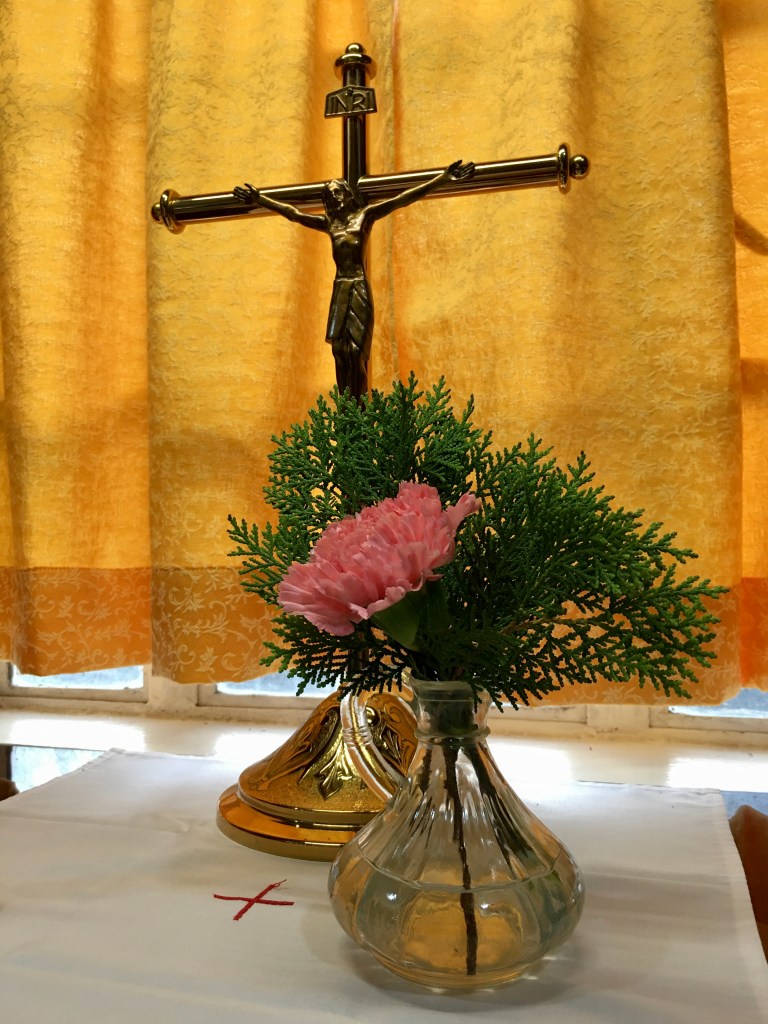
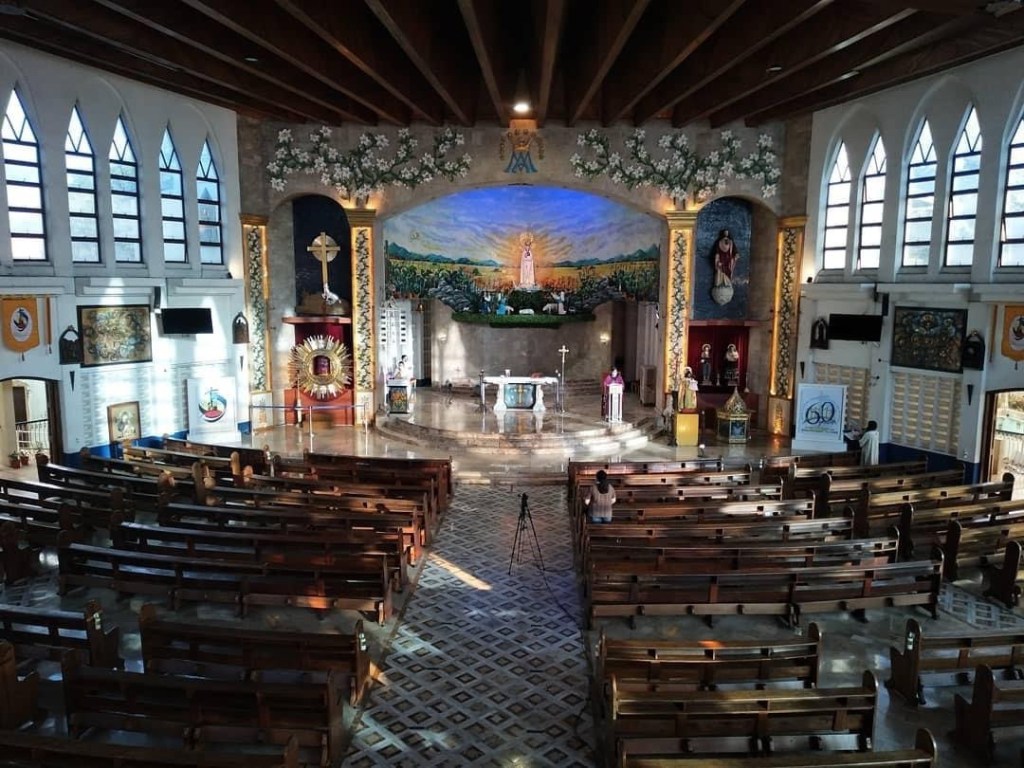
Photo by Ms. Ria De Vera, Christ the King, 2020.
Jesus said to his disciples:
"but the world must know that
I love the Father and that I do
just as the Father has commanded me."
(John 14:31)
Your words today, dear Jesus are so striking. It was your “last supper” with your disciples before you were betrayed and then crucified. You were reassuring your disciples, telling them – and us – not to let our hearts be troubled or afraid as you give as your peace (Jn.14:27).
Those last words you have said struck me deep inside as a person and as your disciple. It is a wonderful feeling to be in a loving relationship with God our Father through you, in you, and with you. But, it made me feel so ashamed too at the same time of how I take for granted this relationship with the Father.
Am I also proud like you, dear Jesus, in making “the world must know that I love the Father”?
To make the world know that I love the Father like you Jesus is to be willing to carry my cross and be crucified for what is true and just, for what is faithful and loving.
To make the world know that I love the Father like you Jesus is to keep on praying even if nothing good seems to be happening in our lives.
To make the world know that I love the Father like you Jesus is to let me surrender myself to your will and power, to let go and let God by setting aside my own plans and agenda in life so that his will is done not mine.
Making the world know that I love the Father like you Jesus is letting myself decrease so that you may increase in me!
Grant me, O Lord, the zeal and courage of St. Paul in the first reading who continued preaching your good news despite his being stoned and rejected by the people in the cities they have visited. How amazing of all that after being driven out from the city, St. Paul even came back to preach your gospel of peace and mercy!
 They strengthened the spirits of the disciples
and exhorted them to persevere in faith, saying,
"It is necessary for us to undergo many hardships
to enter the kingdom of God."
(Acts 14:22)
Shame on me, O Lord! Please forgive me for never thinking like you that “the world must know that I love the Father” through my life of witnessing, of sacrifices, and of loving service to others.
Forgive me, sweet Jesus, in backing out from the mission and work you have entrusted me when I face some discomforts and pains, when rejected and unaccepted or even disliked by people I try serving.
Grant me the gift of perseverance like St. Paul and St. Barnabas in proclaiming your good news in words and in deeds, in season and out of season. Make me proud of you and the Father always, dear Jesus, by being more loving and humble with others. Amen.
The Lord Is My Chef Sunday Music by Fr. Nick F. Lalog II, 18 April 2021
Photo by author, 2020.
Don't want to open your heart
You're afraid from the start
That a new love's gonna let you down
There is something you should know
Before you give up and go
I don't believe in the run around
I just want to define myself
And show you how I feel
Yes! We’re feeling so romantic this Sunday because of this great love we’re feeling deep inside.
Like you, we have fallen in love, we have been hurt and disappointed, even felt betrayed and forgotten by a beloved that too often, we have closed our doors to new love, new relationships out of fear of being hurt again.
But, as Daryl Hall and John Oates sang in 1997 from their Marigold Sky album we thought would be their last (thankfully not!)….
If a promise ain't enough
Then a touch says everything
Got to hold you in my arms
Till you feel what I mean
Know that my heart just tells me what to say
But words can only prove so much
If a promise ain't enough
Hold onto my love
No… we’re not talking of a special relationship with anyone.
We’re feeling so good today because it is our 23rd year of Ordination to the priesthood – a love relationship like those of between a husband and wife that demands fidelity and trust, respect and kindness, mercy and forgiveness.
And a lot of prayers!
Human love is imperfect; only God can love us perfectly.
Too often in life, we we get hurt in so many ways, some so severe, others may be dismissed but still, every pain always leaves a mark in us that sometimes prevents us from loving again.
The disciples of Jesus felt the same: they thought he was gone after seeing his Crucifixion on Good Friday that when he suddenly appeared to them, they were so amazed and could not believe it so true that the Lord had risen (https://lordmychef.com/2021/04/17/jesus-in-our-midst/).
The same feeling we have when we love again.
When we forgive, when we move on, when we let go and let God.
Whenever we go back to our “Jerusalem” – to our crucifixion and sufferings, we are purified by Jesus, opening our minds and our hearts of how despite all the pains, the gains still outweigh the past that we can look forward to better days ahead as we share in his new life now.
So many times in our lives, in our relationships with one another, Jesus comes as the invisible guest, always appearing, speaking, and sharing meal with us. And after sometime, as we look back to our past, we feel deep inside how our hearts burned during those times we were not aware of Christ’s presence.
It is true, we humans make so many promises to be broken but only Jesus is keeping them.
Welcome him especially amid the many pains and darkness, let his love be perfected in your perseverance and you shall see…
It took a lifetime to find what I want
I won't let it get away
If a promise ain't enough
Then a touch says everything
Got to hold you in my arms
Till you feel what I mean
Know that my heart just tells me what to say
But words can only prove so much
If a promise ain't enough
Hold onto my love
If a promise ain't enough
Hold on
If a promise ain't enough
Hold onto my love
This is one of Hall and Oates’ most loved love songs that tells us the basic truth about love: it is best expressed in actions than in words.
Photo by Dr. Mylene A. Santos, MD, at Rhode Island, 10 April 2021.
It was the best of times, it was the worst of times,
it was the age of wisdom, it was the age of foolishness,
it was the epoch of belief, it was the epoch of incredulity,
it was the season of Light, it was the season of Darkness,
it was the spring of hope, it was the winter of despair,
we had everything before us, we had nothing before us,
we were all going direct to Heaven, we were all going direct the other way
 – in short, the period was so far like the present period,
that some of its noisiest authorities insisted
on its being received, for good or for evil,
in the superlative degree of comparison only.
(Charles Dickens, "A Tale of Two Cities")
I know this blog is supposed to be music but Charles Dickens’ famous lines opening his novel “A Tale of Two Cities” are in fact very lyrical and musical. And with our Dickensian situation especially in the way this government has mishandled the pandemic since the very start, we have chosen for our music this Sunday of Divine Mercy something so lively and upbeat, so intense like our Risen Lord who broke free from death and sin, able to enter any locked door and person.
It is a song “resurrected” in 2014 with Justin Timberlake after Michael Jackson suddenly died in 2009, earning so much popularity and acclaim as if MJ were back in life again with this posthumously released hit, Love Never Felt So Good.
Originally written and recorded in a demo track in 1980 with Paul Anka, Love Never Felt So Good was the first single released from Jackson’s second posthumous album, Xscape.
The song is the second collaboration between Jackson and Anka to be released since Jackson’s death in 2009 with This Is It being the first. (Interesting trivia: Anka rearranged the song in 1984 for Jackson’s longtime friend Johnny Matthis who recorded it in his 1984 album A Special Part of Me.)
We chose Love Never Felt So Good primarily for its feel good, positive vibes so infectious which we all need this Easter 2021 with all the deaths and sickness happening due to the pandemic.
There is also the semblance with Easter in a sense with MJ being “resurrected” with the reworked version of the song with Timberlake, another intense artist who can surely drive away the blues today.
Most of all, we find the lyrics very apt with our gospel story of St. Thomas who doubted Christ’s appearance to his fellow apostles (not his Resurrection).
Let us not take doubt as lack of faith; in fact, doubts lead us to deeper and stronger faith like with what happened to Thomas. What matters is we remain in the Lord, keeping ourselves open to his coming like St. Thomas (https://lordmychef.com/2021/04/10/easter-the-intensity-of-jesus/).
In Love Never Felt So Good, Jackson mentions his doubts many times if he is also loved by the woman he desires; but in spite of those doubts, he believed deep in his heart that love never felt so good if they would be together.
The same thing is true with us: amid our doubts are also the strong conviction something good can still happen with the grace of God. What matters is that we learn to balance the many twins in our lives like Thomas: the joys and sorrows we experience, the light and darkness that come our way, the triumph and defeats we face, and lately, the births and healing and deaths we experience in this pandemic.
Trust in Jesus always who promised us his Divine Mercy overflowing despite our sins and sufferings.
The Lord Is My Chef Good Friday Recipe by Fr. Nicanor F. Lalog II, 02 April 2021
Isaiah 52:13-53:12  +  Hebrews 4:14-16; 5:7-9  +  John 18:1-19:42
Photo by Marc Angelo Nicolas, January 2020.
"Biyernes Santong Biyernes Santo."
(A popular expression among us Filipinos.)
Perhaps, today we can truly feel the meaning and gravity of our favorite expression when somebody looks so sad and gloomy, when somebody seems to have been totally lost: “Biyernes Santong Biyernes Santo”.
That is how we are today – stuck in our homes, others in hospitals while others almost about to give up as this new wave of COVID-19 gets stronger with about 15000 infections today!
As I have been saying since Palm Sunday, this could be our holiest Holy Week in our lives in this most unholy time of our history when we are given the opportunity to be holy, to be good and kind, to be forgiving and caring with others. Side by side every post in Facebook we find prayer requests for sick family and friends, help for those trying to find a hospital that would admit their sick, or buy much needed medicines and equipment like oxygen.
For the second straight year, churches are empty and everyone is home due to COVID-19 pandemic. Perfect example of “Biyernes Santong Biyernes Santo”… so bad… so negative.
That is often how we think of Good Friday – so negative in the sense it is so sad and gloomy, so painful and too difficult.
Ultimately, Good Friday is so negative for us because it means death. Even of the Son of God, Jesus Christ. Nothing would be more sad than that.
Photo by author, Chapel of the Holy Family, Sacred Heart Spirituality Center, Novaliches, QC, 2015.
Lately due to this COVID-19 pandemic we have been living inversely or “baligtad” as we say.
We would always pray at every swab test for the virus that we be “negative”.
Never has been thinking negative has become so positive, so good, in fact!
And it all began more than 2000 years ago at the calvary when Jesus offered himself for us on the cross.
That is why Good Friday is called “Good”: the cross of Jesus Christ is a sign not of death but of the good news or gospel of life, hope, and eternal life. The cross of Jesus Christ is not a negative sign (-) but a positive sign, a plus sign (+).
We celebrate in the most solemn and unique way because the cross is no longer a sign of condemnation but honor. Before, it was a symbol of death but now a means of salvation. The cross of Christ has been the source of countless blessings for us, illuminating our path with light when our lives are so dark with sins and mistakes, sickness and disappointments. Most of all, the cross of Christ has brought us closer to God again and with one another despite our sins and past, promising us a bright a joyful Easter.
Yes, for some the cross of Christ is so negative: why display the body of the Lord everywhere in our churches and homes, bloodied and defeated, lifeless and dead?
See, my servant shall prosper, he shall be raised high and greatly exalted. Even as many were amazed at him – so marred was his look beyond human semblance and his appearance beyond that of the sons of man – so shall he startle many nations, because of him kings shall stand speechless; for those who have not been told shall see, those who have not heard shall ponder it.
Isaiah 52:13-15
Many times in life, and we have proven this, God uses of many of “negative” experiences lead us to more positive outcome and results.
Yes, we may be Biyernes Santong Biyernes Santo in sadness and fear, even anxieties.
But, we continue to pray and forge on with life’s trials and difficulties because we see the cross of Jesus Christ leading us to the light and life, joy and celebration of his Resurrection at Easter.
A very good Good Friday to you. Amen.
Photo by author, Chapel of the Holy Family, Sacred Heart Spirituality Center, Novaliches, QC, 2015.
The Lord Is My Chef Easter Triduum Recipe by Fr. Nicanor F. Lalog II
Maundy Thursday, 01 April 2021
Exodus 12:1-8, 11-14 ><)))*> 1Corinthians 11:23-26 ><)))*> John 13:1-25
"A journey of a thousand miles
begins with a single step."
- Lao Tzu
We often hear and use this wise saying that is also most applicable to our celebration of the Holy Triduum of the Lord’s Passion, Death and Resurrection also known as the “Sacred Paschal Triduum”.
From the Hebrew word pesach, a pasch is a passing over. It is a journey which is a long trip taken over long period of time to different places. A journey does not necessarily involve physical distance as it can be something within one’s self like an inner journey to God dwelling within us. Hence, a journey is also a process that leads us to growth and maturity from the many difficulties and trials we experience as we travel, entailing a lot of sacrifices from us.
And whatever journey we take outside or within our selves, we always need a companion to travel with. From the Latin words cum panis that literally mean “someone you break bread with”, a companion is someone who helps us in our journey, a friend who shares life with us, guiding us, protecting us. Like the bread we break and share, a companion sustains and nourishes us in our journey.
Let us keep these three words of journey, companion, and bread in reflecting our celebration tonight of the Lord’s Supper that begins the Sacred Triduum.
We are all pilgrims on a journey to heaven
More than 40 days ago on Ash Wednesday, we said Lent is a daily journey to Easter where we find our very selves, others, and God who is our ultimate origin and end. It is a journey that reaches its summit in the Holy Eucharist where we make present the pasch or passover of Jesus Christ
Every Mass is a journey into heaven, a dress rehearsal of our entrance into heaven when we have a foretaste of eternal life we all hope for until Christ comes again. It is the Passover of the New Testament, a perfection of the Jewish Passover when God’s chosen people led by Moses went into exodus from Egypt into the Promised Land.
This “heavenly” journey had its ancient roots among nomadic Semites who used to celebrate a feast on the first full moon of spring as they prepared to lead their flocks to summer pastures. They ate a roasted lamb from the flock with unleavened bread and bitter herbs. It was an important event of migration filled with many dangers for those nomads who marked their tent-pegs with the blood of the lamb to keep their journey safe.
Eventually this found place in the Jewish Passover which we heard in our first reading when God told his chosen people to begin their journey of exodus from Egypt “on the tenth of their first month” that happens on the second full moon of the spring equinox.
Notice that it happens at night that is coincidentally the usual start of every journey we usually make!
Before their Exodus, each family was told to roast an unblemished lamb to be eaten with unleavened bread and bitter herbs “with your loins girt, sandals on your feet and your staff in hand, you shall eat like those who are in flight. It is the passover of the Lord” (Ex.12:11). It has to be done in a hurry, as in a flight, a journey.
And to keep them safe in their journey, God instructed them to paint their door posts with the blood of the slaughtered lamb so that when his angel comes at night to strike death of every first born male child and animal, their homes would be “passed over” and be saved from death that night.
We are all travelers and journeyers on earth;
our true home is in heaven with God our Father.
We are merely "passing over" this planet temporarily.
Photo by author, Egypt, 2019.
Jesus our companion and family in the journey
The Jewish Passover or Exodus became the actual event of God’s covenant with Israel as his people on a journey to their Promised Land. Unfortunately, they would break this covenant with God so many times that it would take them 40 years of wandering in the desert before finally got into the Promised Land.
And their stubbornness continued when they would always turn away from God with sins that led to the division of their nation until its conquest by foreign powers that led them anew into another exile. God would restore them as a nation but, again, they would turn away from him until the Romans ruled over them when Jesus came to perfect God’s covenant.
In perfecting and fulfilling the Jewish Passover, Jesus became the new and everlasting Lamb, perfect without any blemish, offering himself to God for the forgiveness of our sins and our liberation from all forms of evil especially sickness and death. It is no longer the blood of the lamb that we now offer but Jesus Christ’s Body and Blood which he established in the Sacrament of the Eucharist “on the night before he was betrayed” on Holy Thursday.
By celebrating the Lord’s Supper that Thursday evening with his disciples who represented all peoples of all time, Jesus established for us the everlasting memorial of his loving presence as our companion and our very Bread and Wine in the journey back to the Father always filled with darkness and sufferings.
What he did that Thursday evening foreshadowed what he would do on Good Friday when he did his greatest act of love for us by dying on the Cross at about 3PM, the same time when the lambs were being slaughtered in the temple for the coming passover feast.
Brothers and sisters: I received from the Lord what I also handed on to you, that the Lord Jesus, on the night he was handed over, took bread, and, after he had given thanks, broke it and said, “This is my body that is for you. Do this in remembrance of me.” In the same way also the cup, after supper, saying, “This cup is the new covenant in my blood. ?Do this in remembrance of me.”
1 Corinthians 11:23-25
Here we find again the darkness of the night as the beginning of our journey back to God perfected by Jesus Christ as our companion and very bread of life to sustain and nourish us.
What is most beautiful meaning we can find here is the importance of communion, of oneness as a community, as a family.
In the Old Testament, God instructed his people to take the passover meal together as a family; at the Lord’s supper, Jesus celebrated it with his “friends”, the Twelve Apostles. Even Judas Iscariot was present at the start but had to leave in the “darkness of the night” when he broke off from the unity of Jesus.
Perhaps, one reason why we are again together this Holy Thursday not in churches but in our homes, with our family so we may be one again in Jesus Christ in prayers and celebrating Mass on-line.
Therefore, do not be a Judas Iscariot! Go back to your family, to your loved ones – your most faithful and truest companions in this journey of life. You’ll never get to heaven, as Dionne Warwick sang, if you break somebody’s heart, when you refuse to love by turning your back from those who love you.
Holy Thursday reminds us in the Eucharist that no one is saved alone. Every journey becomes wonderfulwhen done in the context of a community, with true companions beginning in our very family.
Photo from wikipediacommons.org of Christ’s washing of feet of Apostles at Montreale Cathedral in Palermo, Italy
The commandment of love
Completing the picture of our celebration tonight with the key concepts of journey, companion and bread is LOVE, the very essence of everything in this life, the reason why we are in a journey in the first place since the Exodus up to this time.
At the very core of every companionship, of every community is LOVE.
To become bread for someone in a journey is to become LOVE.
Jesus Christ as the bread broken, as the cup of wine shared is essentially LOVE.
Love can never be defined but merely described.
And on the night before he was betrayed, Jesus described to us in his actions a very beautiful expression of his love we all must imitate:
So, during supper, fully aware that the Father had put everything into his power and that he had come from God and was returning to God, he rose from supper and took off his outer garments. He took a towel and tied it around his waist. Then he poured water into a basin and began to wash the disciples’ feet and dry them with the towel around his waist.
John 13:3-5
When Jesus washed his disciples’ feet, he showed us one beautiful aspect of LOVE which is tenderness.
Yes, I have been speaking about tenderness lately as something we badly need these days of the pandemic. Tenderness is an expression of love when we realize amid our own suffering the sufferings of others too. To be tender and loving amidst many sufferings is to offer rest to fellow journeyers like what Jesus did on that Holy Thursday evening.
Again, we find here something prevalent during that time which is the concept of “restaurants” where travelers used to stop during their journey not only to eat but to rest that meant soaking their feet on a basin of water. It was therapeutic that gave travelers enough strength to travel far again.
Remember there were no other modes of transportation at that time and not everybody could afford an animal to ride on. Any hiker and mountaineer can attest that after so much trekking, one thing you would always hope for is a stream or tiny brook with cool, crisp, running water to dip your feet and rest!
Photo by Mr. Raffy Tima of GMA-7 News, April 2020.
Everybody is tired of this journey in the pandemic, almost exhausted.
What a shame especially when local officials like that one who refused food delivery because she considered the lowly lugaw as non essential. Lest we forget, Jesus chose one of the most lowly food, the unleavened bread, as the sign of his loving presence among us until the end of time when he comes again.
Indeed, this could be the holiest Holy Week of our lives in this most unholy time of history as it gives us great opportunities to love.
Just be tender with those around you!
Never get tired of loving, of understanding, of caring as everyone is already tired with this journey of ours in the pandemic that seems to be still far from over.
“Do you realize what I have done for you? You call me ‘teacher’ and ‘master’, and rightly so, for indeed I am. If I, therefore, the master and teacher, have washed your feet, you ought to wash one another’s feet. I have given you a model to follow, so that as I have done for you, you should also do.”
John 13:12-15
One of the most moving images of the pandemic for me lately is the one taken by our parishioner on the first day of the ECQ last March 22 when our Parochial Vicar, Fr. Howard John celebrated Mass without a congregation. He said, “the table of the Lord is full, but the pews are empty.”
And that is what we will continue to do in this pandemic. Even without the people, we shall continue to journey in Christ by still celebrating the Mass to give us all nourishment and sustenance and rest in this prolonged journey in the pandemic.
May we never get tired walking in love as a companion and bread to one another in Christ and like Christ by giving rest to others already tired and about to give up. Let us all be together in welcoming Easter! Amen.
El anda que en amor ni cansa ni se cansa.
(The soul that walks in love neither tires others nor grows tired.)
Saint John of the Cross
Photo by Ms. Kysia Cruz, National Shrine of Our Lady of Fatima, Valenzuela City.
40 Shades of Lent by Fr. Nicanor F. Lalog II
Palm Sunday of the Passion of the Lord, 28 March 2021
Isaiah 50:4-7  +  Philippians 2:6-11  +  Mark 14:1-15:47
Photo by Mr. John Karol Limjuco, Parish of the National Shrine of Our Lady of Fatima, Valenzuela City, 26 March 2021.
For the second straight year, we are again celebrating our holiest week in the most unholy time of our lives in this COVID-19 pandemic. The timing could not escape everybody’s suspicion of something so sinister, if not diabolic, that religious gatherings are again limited.
But on a closer look and deeper reflection, we find what is happening right now is something similar with what Jesus went through that made these days so holy.
Notice that the official designation of our celebration today is “Palm Sunday of the Lord’s Passion” when Vatican II fused the two earliest preparations by the Church for Easter: the palm procession by Christians at Jerusalem in the fourth century and the proclamation of the long gospel of the Passion of the Lord in Rome by the Pope in the fifth century.
Both ancient celebrations set our sights to the Paschal Mystery of Jesus beginning this Sunday stretching it through this whole week to remind us of the triumph and tragedy, of darkness and light, of death and life. These contrasts shall be most pronounced when we enter the Triduum of the Lord’s Passion, Death, and Resurrection on Holy Thursday evening, Good Friday, and Easter Vigil.
Then everything becomes light and pure joy in Easter!
And the key to understanding, appreciating, and deeply imbibing the meaning of all these confluences of mixed emotions and feelings, colors and hues like our situation while under this time of the corona is to have the same attitude of Jesus Christ expressed so beautifully by St. Paul in our second reading:
Have among yourselves the same attitude (mind) that is also yours in Christ Jesus, though he was in the form of God, he did not regard equality with God something to be grasped. Rather, he emptied himself, taking the form of a slave, coming in human likeness; and found human in appearance, he humbled himself, becoming obedient to death, even death on a cross.
Having the mind and heart of Jesus Christ is opening ourselves to the Father by trying to see everything in his light as we go through life especially during this pandemic. It is what Jesus has always reminded us of “reading the signs of the times”.
God is telling us something in this pandemic but we are not listening to him as we continue to see it as a medical and social issue, refusing to recognize its spiritual and moral implications. In a lot of senses, this pandemic and quarantine we are undergoing is similar with situation when Jesus entered Jerusalem more than 2000 years ago when Israel under Roman rule and life was so difficult but nobody recognized him as the Christ and Savior!
In his entire life here on earth, Jesus always saw everything in the light of his Father in heaven. He never got involved into politics and other temporal concerns or subject but throughout the course of history since then until now, his teachings remain relevant in addressing our social issues and problems.
Seeing things and events in our lives and history in the light of God demands that we have the same attitude of Jesus of opening ourselves to be empty of our pride, of our plans and agenda, of our self-interests as well as of our illusions and insecurities in life.
We will never see God nor find him when we are filled with our selves, especially with our bloated egos when we think we know everything, when we presume we are always right, when we play gods.
Like the people who welcomed Jesus entered Jerusalem holding palms, singing “Hosanna in the highest!”, soon we would also be shouting “Crucify him!” unless we get emptied of ourselves and be filled with God.
St. Paul could eloquently present the mind and heart of Jesus in this beautiful hymn because he himself went through a process of kenosis, of self emptying. He had experienced in himself how when Jesus emptied himself and went down to his lowest point obediently accepting death on the cross, that is also when he was at his closest union with the Father who raised him to his highest glory at Easter.
That is why St. Paul called it the “scandal of the cross” for when we empty ourselves and offered everything to God out of love for him and for others that we are willing to go down to our lowest point in life, that is when God raises us up to “meet” him, to be one in him that miracles begin to happen, when things change for the best not only for us but also for others and those around us.
Hence, while we are in the most unholy period of our history, the Lord is giving us every chance to have the holiest Holy Week of our lives by examining our very selves in this time of quarantine to cleanse and empty ourselves of sins and evil to be filled with God of his holiness and grace through Christ’s cross.
Photo by author, St. Joseph Parish, Baras, Rizal, 15 January 2021.
The logic of the Cross
As we go to another Enhanced Community Quarantine (ECQ) or lockdown like last year, I am convinced that while we are sad at how things are going on, it is actually God who is most “sad” of all as we go through all these pains and difficulties due to the COVID-19 pandemic.
God cannot suffer because he is perfect; but, he can suffer with us that is why he sent his Son Jesus to become human like us to join us in all our sufferings including death and thus, “console” us in Christ.
“To console” is from the Latin terms “con” (with) + “solatio” (solace/comfort) that means not only to comfort or delight those in suffering but to also “strengthen” or make strong those weakened by trials and difficulties which is the literal meaning of cum fortis, with strength.
And here lies the “logic” of Christ’s Cross: Jesus died by the hatred of others so that we may live again by his love. Only God can give us the evidences of his love to render us capable through Jesus Christ to forge on amid our pains and sufferings, hoping against all hope that love is always stronger than suffering, death, and sin.
When we persevere in our sufferings, especially in silence for the sake of others out of love, imitating the self-emptying of Jesus, that is when God showers us with more of his love and mercy, strength and vigor to overcome everything in Christ.
This he had promised and fulfilled in Christ who is the “Suffering Servant” we heard in the first reading from the Prophet Isaiah:
The Lord God has given me a well-trained tongue, that I might know how to speak to the weary a word that will rouse them. Morning after morning he opens my ear that I may hear; and I have not rebelled, have not turned back. I gave my back to those who beat me, my cheeks to those who plucked my beard; my face I did not shield from buffets and spitting. The Lord God is my help therefore I am not disgraced; I have set my face like flint, knowing that I shall not be put to shame.
Isaiah 50:4-7
See how everything Isaiah had written was fulfilled in Jesus as we heard in the gospel today when at the praetorium “They clothed him in purple and, weaving a crown of thorns, placed it on him. They began to salute him with, ‘Hail, King of the Jews!’ and kept striking his head with a reed and spitting upon him. They knelt before him in homage” (Mk.15:17-19). It went on up to the calvary when “They gave him wine drugged with myrrh, but he did not take it. Then they crucified him…” (Mk.15:23-24).
In my reflections this Lent, I have been dwelling lately on tenderness and compassion as mercy of God in action, as mercy of his hands. To be tender and compassionate is to be one with the suffering even if you are suffering too – just like our medical frontliners who risk not only their very lives but even their families.
Last Friday I was asked to give a talk via webinar about development of compassionate teachers and staff at Our Lady of Fatima University where I serve as chaplain. A doctor asked if there is such a thing as “over compassion” wherein she can already feel chest pains in seeing and hearing all the sufferings of their patients in this time of the pandemic.
I was so touched by her question because I felt it too; I told her she is not alone feeling that way when I also feel overwhelmed with the sufferings of the people but cannot do so much. I told her it is a grace to feel that way, that she had to find ways how her mercy in the heart can flow to mercy of the hands while ensuring safety protocols as a doctor.
But that is where the grace of God works fullest, when we believe and trust more in Jesus Christ when the chips are already down, when we feel defeat is inevitable that we just surrender everything to Divine grace and intervention.
“Ecce Homo” by Murillo from wikipediacommons.org.
That is the meaning of Palm Sunday of the Lord’s Passion when we see life in its total weakness and even wreak, whether in our selves or among others, and yet we continue to persevere, to hope against hope because deep in us we know God is with us, God is working in us, and God will save us.
French poet Charles Péguy wrote in one of his great poems at the turn of the century that hope is God’s favorite virtue because “hope surprises him”.
Péguy described hope like the end of a play or a movie in our time; we know the show had ended but we stay on refusing to leave the theater because we believe that something is still coming up like a preview or a surprise scene!
See how St. Mark tells us at the end of his Passion Story when everything was so dark after Jesus had died when “he breathed his last” that the centurion standing there believed that “Truly this man is the Son of God!” (Mk.15:39)
Sometimes in life, God becomes clearest and most truest when we have lost everything, including what is most precious and dearest to us.
Have a heart with a lot of faith, hope and love that this may be the holiest Holy Week in our lives because it is the most unholy period in our history like when Jesus entered Jerusalem more than 2000 years ago. Amen.
Keep safe, be blessed, and be a blessing to others!
The Lord Is My Chef Sunday Music by Fr. Nick F. Lalog II, 21 March 2021
Photo from GMA Network of a scene from Ben&Ben’s music video “Pagtingin” with Gabbi Garcia and Khalil Ramos, 25 February 2021.
We go OPM this final Sunday in Lent to ease everyone with the alarming surge of COVID-19 infections happening in our country especially at the National Capital Region. Stay home, be safe, pray and listen to some good music from our homegrown local band Ben&Ben as we try to link the Sunday gospel to their recent hit “Pagtingin”.
I know… Ben&Ben is not my generation but that is the wonder and joy of music as food of the soul: it always strikes a chord in anyone’s heart that reaches to the soul, enabling us to see more beyond the material and natural realities.
Like with their 2019 hit called “Pagtingin” which means in English as “feelings, a sort of crush and attraction to a woman or a man.” Its Filipino root is “tingin” or “see” in English. Remember when we were growing up, feeling drawn to someone so special that we would look at her or steal glances just to see the woman we adore? And the kilig moments when your sights meet?
But of course, the moment you reveal those secret feelings, that is also when you begin to see the bigger picture: your object of pagtingin will either accept or reject you. There is always that risk because sometimes in life, what we see is not what we truly get.
Dami pang gustong sabihin Ngunit ‘wag na lang muna Hintayin na lang ang hanging Tangayin ang salita
‘Wag mo akong sisihin Mahirap ang tumaya Dagat ay sisisirin Kahit walang mapala’
Pag nilahad ang damdamin Sana ‘di magbago ang pagtingin Aminin ang mga lihim Sana ‘di magbago ang pagtingin
Bakit laging ganito? Kailangang magka-ilangan Ako ay nalilito, ooh-ooh-ooh Ooh-ooh-ooh, ooh
Seeing in the bible means believing. There are times when we see, we believe; but, ultimately, it is in believing first that we are able to see the whole picture in life especially Jesus in the light of his dying on the Cross. And this is what the song Pagtingin is hoping in the end that amid the pains and hurts with some prayers, the man with special feelings will finally see closely with him the woman he sees from afar.
Pahiwatig Sana ‘di magbago ang pagtingin Pahiwatig Sana ‘di magbago ang pagtingin
Iibig lang kapag handa na Hindi na lang kung trip-trip lang naman Iibig lang kapag handa na Hindi na lang kung trip-trip lang naman
‘Pag nilahad ang damdamin Sana ‘di magbago ang pagtingin Aminin ang mga lihim Sana ‘di magbago ang pagtingin
Subukan ang manalangin Sana ‘di magbago ang pagtingin Baka bukas, ika’y akin Sana ‘di magbago ang pagtingin
A blessed week ahead of everyone. Stay safe always. Amen.
40 Shades of Lent by Fr. Nicanor F. Lalog II
Friday, Solemnity of St. Joseph, Spouse of the Blessed Virgin Mary
2 Samuel 7:4-5, 12-14, 16  +  Romans 4:13, 16-18, 22  +  Matthew 1:16, 18-21, 24
Photo by author of the site believed to be the workshop of St. Joseph in Nazareth, 2017.
Today’s celebration of the Solemnity of St. Joseph as most chaste spouse of the Blessed Virgin Mary is a very special one being in the “Year of Saint Joseph” that began last December 8, 2020 until December 8, 2021 in commemoration of the 150th year anniversary of Pope Pius IX’s declaration of the beloved saint as Patron of the Universal Church.
In launching this Year of Saint Jospeh last year, Pope Francis wrote in his Apostolic Letter “Patris Corde” (With a Father’s Heart) how the COVID-19 pandemic has helped us see more clearly the importance of “ordinary” people who, though far from the limelight, exercise patience and offer hope every day.
The Holy Father explained that the “ordinary” people like those who kept our lives going especially during the lockdowns resemble Saint Joseph, “the man who goes unnoticed, a daily, discreet and hidden presence,” who nonetheless played “an incomparable role in the history of salvation” (Vatican News, 12 December 2020).
I really hope you can have time to read today this very short letter by Pope Francis who is a known devotee of Saint Joseph having popularized among us during his 2015 Papal Visit the image of “Sleeping Saint Joseph”.
In Patris Corde, Pope Francis gives us some helpful points on how we can love with the heart of God our Father like Saint Joseph during this time of the COVID-19 pandemic. One of these traits the Pope invites us to imitate from Saint Joseph is his “creative courage” in loving God and loving others.
If the first stage of all interior healing is to accept our personal history and embrace even the things in life we did not choose, we must now add another important element: creative courage. This emerges especially in the way we deal with difficulties. In the face of difficulty, we can either give up and walk away, or somehow engage with it. At times, difficulties bring out resources we did not even think we had.
Pope Francis, Patris Corde #5
A creative person is always someone who is deeply in love with another person or with one’s craft, art, career or whatever passion.
The most loving person is always the most creative like Saint Joseph who sought ways expressing his love for Mary and her child by deciding to silently divorce her as the gospel tells us.
This is how the birth of Jesus Christ came about. When his mother Mary was betrothed to Jospeh, but before they lived together, she was found with child through the Holy Spirit. Joseph her husband, since he was a righteous man, yet unwilling to expose her to shame, decided to divorce her quietly.
Matthew 1:18-19
Photo by Arch. Philip Santiago of a mosaic at the San Padre Pio Shrine at Rotondo, Italy of the angel appearing to Saint Joseph in his dream.
Holiness is having creative courage like Saint Joseph.
Notice how the Pope’s description of Saint Joseph is not far from St. Matthew’s calling him a “righteous man” – a holy man – who obeys the Laws of God handed down to them by Moses, including their other traditions meant to keep them clean and pure before God.
Problem during that time is how people have lost sight of God and of others that they were so focused on the letters of the law than its spirit, becoming impersonal in the process as we have seen in instances when they would ask Jesus why he healed the sick even on sabbath day. Worst is when people brought to Jesus a woman caught committing adultery, reminding him of Moses’ instruction to stone her in public.
Such was the dilemma faced by Saint Joseph with Mary being pregnant with a child definitely not his!
In deciding to silently leave Mary, Saint Joseph expressed his righteousness or holiness wherein he showed the true interpretation of their Laws by upholding the dignity of every person, respecting life above all. Like Jesus Christ, Saint Joseph showed that real holiness is authentic love that is willing to sacrifice for the beloved by having the courage to be in pain in giving up or losing a beloved.
Here we find Saint Joseph was not only courageous in facing the painful truth about Mary having a baby not his but also very creative in the sense that because of his great love for the Blessed Virgin, he did not want her exposed to shame and public humiliation in allegedly breaking the seal of their betrothal.
Having courage is more than being able to do death-defying acts that is more on physical strength; courage is a spiritual virtue, a spiritual strength when we do extraordinary things because of higher ideals and values like the love of Jesus who offered us his life on the Cross.
Courage is from the Latin word “cor” for heart which is the seat of our being. And to have courage is to be true and loving that we have such expressions to speak from the heart, to listen to our heart, and to act from our heart when we dare to lose ourselves because of love.
Photo from Aleteia.org of “Let Mum Rest” image St. Joseph nursing the Infant Jesus while Mary sleeps, 2019.
A person who truly loves is always creative,
finding ways in expressing one's love even sometimes
it may be painful and difficult.
A “creatively courageous” person like Saint Joseph is someone so deeply in love with Mary and with God: after learning the circumstances surrounding Mary’s pregnancy, St. Matthew tells us “When Joseph awoke, he did as the angel of the Lord had commanded him and took his wife into his home” (Mt.1:24).
Saint Joseph’s love for Mary found ways to spare her all the pains and hurts that may result if found with a baby not his; but after learning the truth, the more we find him creatively courageous when he sought many ways to save Mother and Child from all harm and even death like bringing them to Egypt in the time of Herod.
See that when Saint Joseph accepted Mary, Jesus came forth to us while at the same time, when Saint Joseph accepted God through the angel as expression of his deep faith and love, he took Mary as wife.
And this is what Pope Francis further explains in Patris Corde that at the end of every account in which Saint Joseph plays a role, the Gospel tells us that he gets up and takes Jesus and Mary who are the most precious treasure of our faith.
Taking Jesus and Mary like Saint Joseph as creative courage calls us Christians to always love the Church and in loving the Church, we love the poor for whom Jesus came and Mary identified herself with in her Magnificat which she sang after accepting the Annunciation by the Angel of Christ’s birth which we celebrate next week on March 25.
In this time of the pandemic, we are called to be creatively courageous in finding Jesus among those people too familiar with us as well as with those so different from us. Don’t you find it so funny that the people we always take for granted are those either so close to us like family or completely strangers?
Being creatively courageous in this time of the pandemic means being more sensitive with others especially in our words and actions like Saint Joseph.
I was wondering during prayers why did he not ask Mary about the truth of her pregnancy so that he would have been spared with all the thinking and praying? That is when I realized the value of Saint Joseph’s silence: he did not speak at all to Mary as a sign of his love and oneness with her who must have been into some difficulties too with the situation of being the Mother of Christ. sympathy.
In his silence, Saint Joseph expressed his complete trust in Mary and in God. And in his being silent, Saint Joseph was creatively courageous expressing aloud his tenderness and care for Mary and her Child, something we need so much in this time of the pandemic.
Let us pray to Saint Joseph in this time of social distancing that like him, we may have the creative courage in touching others with the love of God, especially those who are sick and suffering, those in difficult situations, and those forgotten by their families and friends and even by the society. Have a blessed Friday, everyone!
Saint Joseph, Patron of the Universal Church, pray for us!
Photo from Vatican News, St. Joseph and the Child Jesus, 14 December 2020.
40 Shades of Lent by Fr. Nicanor F. Lalog II
Homily, Wednesday in Lent Week IV, 17 March 2021
Isaiah 49:8-15     + ++     John 5:17-30
Photo by Mr. Jim Marpa, 2019.
Today we resumed the community Masses on a limited basis at the Our Lady of Fatima University (OLFU) and Fatima University Medical Center (FUMC) in Valenzuela where I am now serving as their chaplain.
Our aim is very simple: to share Jesus with everyone in our Fatima community including their families and friends.
Sharing Jesus means being tender and caring with one another like God our Father in heaven who gave us the loveliest description of these attributes in the first reading today by being like a mother.
Thus says the Lord: “Can a mother forget her infant, be without tenderness for the child of her womb? Even should she forget, I will never forget you.”
isaiah 49:15
If there is one thing missing in our country
 in this one year old pandemic and lockdown,
it must be tenderness.
In the gospel of St. Luke, we find Zechariah singing praises to God at the birth of his son John the Baptist:
“In the tender compassion of our God the dawn from on high shall break upon us, to shine on those who dwell in darkness and the shadow of death, to guide our feet into the path of peace.”
Luke 1:78-79
St. Luke used the Greek word “splaghna” to designate tenderness as “tender mercy of God”.
Mercy, or “misericordia” which is also our University motto is from the Latin “misereor” that means to stir, to move. More than a feeling, mercy is compassion in action wherein one is moved or stirred in the heart to go down, reach out and be one with the suffering like Jesus Christ. And that is when we are filled with tenderness of God. Then we become caring.
Tenderness of God as tender compassion is misericordia that is “tagos sa buto” as in “sagad-sagad” that even if we feel tired and hungry, or afraid and anxious, we still go out to help, to uplift, to keep company and inspire those in pain and suffering, those about to give up in life, those who are lost because of sickness, poverty, and other difficulties.
This we find and do in Jesus, through Jesus, with Jesus who said in our gospel today, “My Father is at work until now, so I am at work” (Jn.5:17).
Remember that scene of the feeding of five thousand in the wilderness when Jesus and the Twelve crossed the lake to the other side to rest but a vast crowd followed them and even got ahead of them to the site. When Jesus saw them, he was moved with pity because they were like “sheep without shepherd” that despite his being hungry and tired, he taught them many things, healed their sick, exorcised the possessed and later, fed and satisfied them all from just five loaves of bread and three pieces of fish.
Tenderness is when we are moved to help those in need while we ourselves are also suffering. Hence, it is not surprising at all to find that the most tender and caring people are also the ones who suffer most. Like moms and these days, the medical front liners who continue to serve us amid the risks they face!
Being tender and caring
are essentially the works of God
made known to us in Jesus Christ.
It has been a year since we had the longest lockdown in the world. It is fitting that as we recall those days even if dark clouds still loom above us these days that we remember the people who have cared for us and made life bearable: all those working in the hospitals supporting our doctors and nurses; the market vendors who ensured we have food on the table; the staff members of the botica we usually visited to get our medicines; the panadero who prepared our daily bread; our teachers who braved the digital world so we may continue with our schooling and learning process, and many more.
It is a tremendous grace from God to be able to be tender with someone because that means we care like Jesus Christ.
Photo from GMA-7 News of Mang Dodong.
Today, God reminds us that amid this great darkness still looming above us in this time of the pandemic, He cares for us very much and wants us to care for one another too, especially for those going through many trials and difficulties in life.
Let us give Jesus our hands and our hearts to be vessels of his divine Tender Loving Care. Amen.
40 Shades of Lent by Fr. Nicanor F. Lalog II
Wednesday, Fourth Week in Lent, 17 March 2021 (St. Patrick's Day)
Isaiah 49:8-15     <*{{{><  +  ><}}}*>     John 5:17-30
Photo by author, December 2020.
"Can a mother forget her infant,
be without tenderness for the child of her womb?
Even should she forget,
I will never forget you."
(Isaiah 49:15)
If there is one thing we terribly miss these days a year since the start of this pandemic is tenderness, your kind of Tender Loving Care (TLC) only you, God our Father, can give like a mother to her child.
How sad that in this time of difficulties when there are so many sufferings and darkness around us, there are also much arrogance and apathy afflicting many of us.
More sad is how everybody is solely focused in finding a cure to control spread of COVID-19, often in drastic measures that only worsen the plight of the weak and marginalized, many have forgotten the need for more care for everyone, not only for those sick but also for our front liners who have lost so many of their family and friends in this time of the corona.
In this continuing darkness of our lives despite the sparkle from vaccines that are still unavailable to many of us, we know you continue to work to save us in Jesus Christ your Son who assured us, “My Father is at work until now, so I am at work” (Jn.5:17).
Let us do your work, Lord, especially today as we celebrate the feast of St. Patrick. Use our hands and our hearts to tenderly serve others especially those deep in darkness with sins and sufferings.
Teach us not only to be compassionate willing to suffer with others but most of all, fill us with the Father’s tenderness to care like you so that we are moved to reach out, going down to the level of those crying, of those so tired and about to give up in life.
Soften our hearts that have been hardened with negativities and cynicisms of time.
Stir our hearts, O Lord, that like you even in our hunger and pain, we may realize there are others more hungry and more in pain than us, hoping for some comfort and care, healing and encouragement, or simply company and inspiration and reason to live.
Let our hands and our hearts, our whole selves be an extension of your tender mercy and care so that “the dawn from on high shall break upon us, to shine on those who dwell in darkness and the shadow of death, and to guide our feet into the path of peace” (Lk.1:78-79). Amen.