Our inner unity in Christ the Good Shepherd

The Lord Is My Chef Sunday Recipe, Easter Week IV, 12 May 2019
Acts 9:1-20///Revelations 7:9, 14-17///John 10:27-30
From Google.

There is something very unique among us that binds us Filipinos as one whenever we go abroad aside from being “maganda” as the people of Jordan, Israel and Egypt described us in a recent pilgrimage. Whenever we are in a foreign country, we Filipinos have that inner recognition that we are kababayan, something like what Jesus tells us in the gospel today.

“My sheep hear my voice; I know them, and they follow me. I give them eternal life, and they shall never perish. No one can take them out of my hand.”

John 10:27-28

This Sunday, we start a shift in our gospel readings: there would be no more stories of the appearances of Jesus after Easter until his Ascension with passages taken from St. John to deepen in us the meaning of Christ’s Resurrection.

Observe, my dear readers, the four verbs we have in our very short gospel today: hear my voice, know them, follow me, and give them eternal life. Right away we notice the inner recognition of Jesus Christ and his followers us, his sheep. See the flow of the first three verbs in our Lord’s declaration: my sheep hear my voice, I know them, and they follow me. It is quite odd in the sense that the sheep follow the voice because the shepherd knows them when it should be the other way around: my sheep know me, they hear my voice and they follow me.

Remember the inner recognition we talked about the other Sunday, that feeling of “a basta!” when deep inside us we are so certain of somebody or something? This is an example of that experience we have going abroad when we meet a kababayan: by just looking at each other, we already know we are Filipinos as if they first knew us, then we hear them, and follow them. It is something we also have deep within us with Jesus our Lord and God.
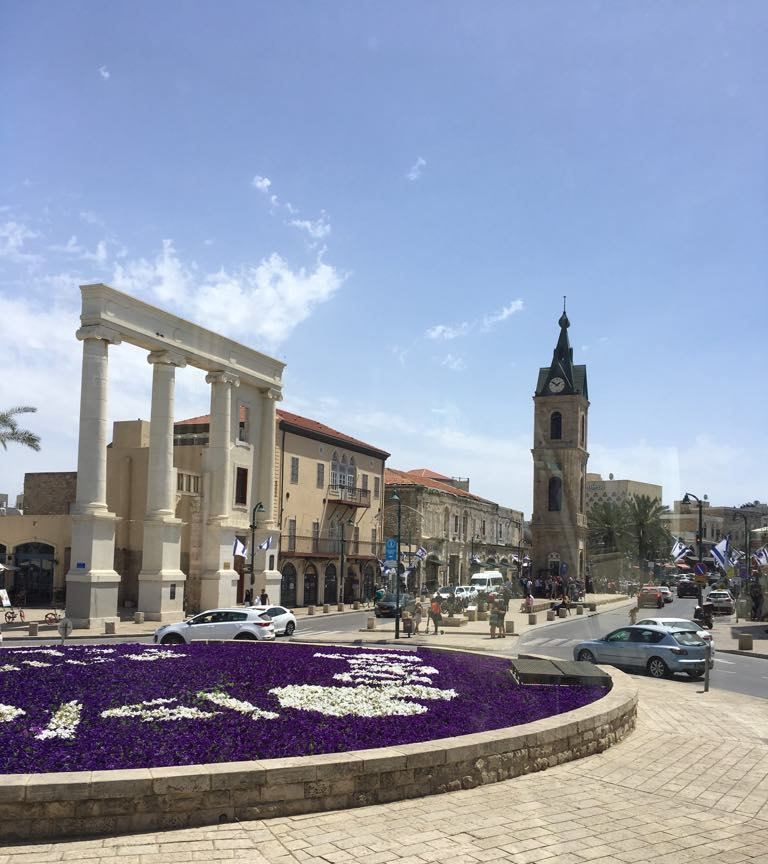
The lovely district of Jaffa Tel Aviv where you meet many Filipinos too. Photo by author, 03 May 2019.

These four verbs of hearing, knowing, following, and giving express relationship and ties that bind us together as a people and nation. To hear and to follow imply communion; anyone who hears and follows somebody recognizes the speaker’s authority and voice, entrusting one’s self to his or her guidance like in the family where we hear and follow our parents as we celebrate Mothers’ day today. Hearing and following lead to a kind of attachment as children to the parents or a disciple to a master. The parents, especially the mother knows her children very well that she always thinks the best for them, doing her best to give them a better and secured future. On our return flight yesterday from Bahrain, we chanced upon many Filipina OFW mothers returning home with their children – some are still infants, others are little children or young kids. They are the mothers who sacrifice so much so their children and family can have a better future.

Going back to Jesus Christ our Good Shepherd, we level up the meaning and application of those four verbs, especially the knowing and giving that pertain to Jesus Christ.

More than our communion and unity in Christ as his disciples, we ought to hear and follow him because only Jesus knows us so well. Only Jesus knows our deepest pains and hurts, our deepest longings and desires. Most of all, only Jesus loves us so much despite of his knowing of how sinful we are that he calls by name like Mary Magdalene on that Easter morning or Simon Peter at the shore of Lake Tiberias after asking him thrice if he loves him to assure his forgiveness of denying him thrice on Holy Thursday.

Most of all, we ought to hear and follow Jesus because only he can give us eternal life for he is life himself (Jn.11:25)! It was only Jesus who had walked with us in every valley of darkness, never abandoning us, and most of all, passed over through every pain and suffering, even death so that we may share in the glory of his new life. Only Jesus can bring back our shattered lives when we squander this gift of life like the prodigal son. It is only Jesus who would never judge us or put us into shame in our sinfulness to give us a chance to sin no more like the woman caught committing adultery. Only Jesus can promise us heaven because it is only him who had joined us in our sinfulness without committing sin by dying on the cross like Dimas the repentant thief.

These, my friends, are the inner unity that bind us together in Christ Jesus our Good Shepherd of which John the beloved was given a glimpse in the second reading. This also shows us how salvation for everyone, not only for Jews or any particular group, has always been in God’s plan from the beginning that he sent us his only Son Jesus Christ. May we all hear and follow his voice always, especially through our dear mothers. Amen.
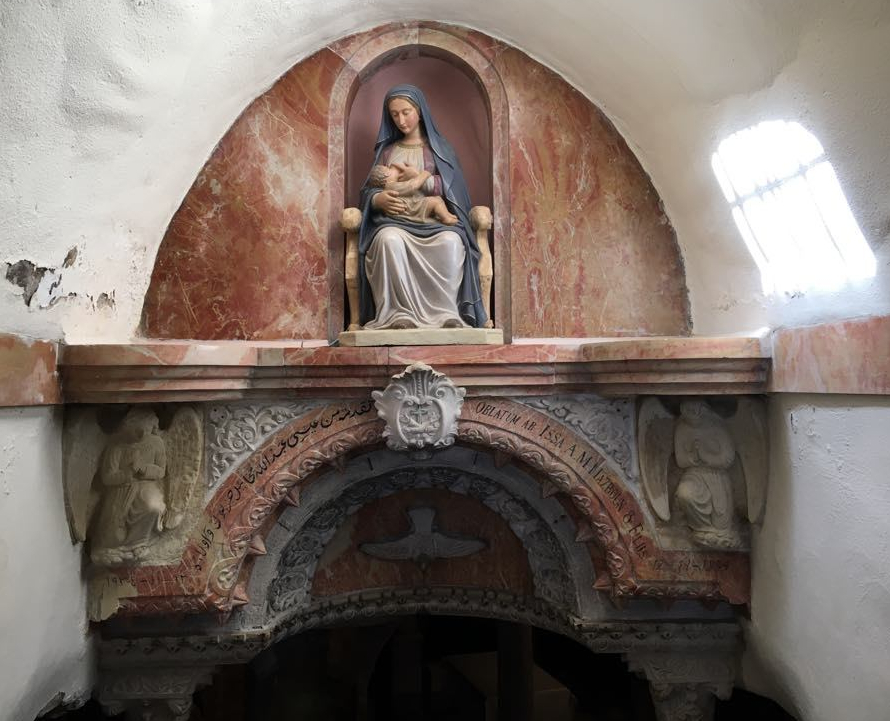
Entrance to the miraculous “Milk Grotto” chapel of the Franciscans beside the Church of the Nativity in Bethlehem. Photo by the author, 05 May 2019.

It is the Lord!

The Lord Is My Chef Sunday Recipe, Easter Week III-C, 05 May 2019

Of all the great things one can truly experience in a Holy Land pilgrimage, it is the gift of “internal recognition” of the Risen Jesus Christ that must be most touching, most wonderful because it always brings peace and joy within.

Like the beloved disciple in our gospel this Sunday, it is when we recognize Jesus internally that we “softly exclaim” deep within “It is the Lord!” (Jn.21:7).

It is the ordinary moment that happens so sudden during prayer, in the Mass, or simply being at a holy site or seeing a beautiful sight when tears suddenly roll in our eyes, something cold or warm envelops you, or your hair rising because you remember and feel the Lord coming to you. According to our guide here, the 153 large fish caught by the apostles in that third appearance of the Risen Lord at Tiberias is significant: 153 in the Hebrew alphabet means “I Am GOD.”

And that’s what we feel not only in a pilgrimage but in ordinary life when we remember God filling you like a net with large fish like in Tiberias. In an instant even very fleeting, we realize we have been so blessed even if we have sinned and failed to recognize Jesus by the shore.

Here at the Holy Land, whether it is your first or second or third pilgrimage, there is always something new to discover, to realize, to experience, and to see. It is like that experience at the shore of Tiberias when Jesus appeared for the third time to his apostles after Easter where he awaits you for breakfast, with “a charcoal fire with fish on it and bread” (Jn.21:9). Here it is beyond doubt our God is a God of surprises.

Yesterday we had our Mass at the Chapel of Flagellation at 130pm at the Via Dolorosa. Immediately after that, we had via crucis or station of the cross. By 330pm we were already inside the Holy Sepulchre Church climbing towards Golgotha, the Crucifixion site. Exactly while lining up, the church was closed and we were told there would be no veneration because the Patriarch was coming for incensing the whole church.

Everything stopped and I felt a bit sad for my group. But lo and behold! What a beautiful experience not only to witness an Orthodox ceremony! While resting outside the only Roman Catholic chapel, I asked the Franciscan if we can pray inside. He asked me to wait and after 20 minutes, he let us in. I celebrated Mass there in 2005 with 14 other priests and two bishops from the Philippines. I could not recall the name of the chapel so I asked the Franciscan. He told me it is the chapel of the Easter meeting of Jesus and his Mother – the Salubong or Encounter we celebrate early morning of Easter Sunday. It was a new discovery for me!

In the gospels, Jesus first met Mary Magdalene but according to St. Ignatius of Loyola in his Spiritual Exercises, it was Mary his mother whom the Risen Lord first met because she was the first to try believe Jesus is the Christ! Most of all, Mary is the first to truly love Jesus most. And that is why we have the Salubong.

Today in the gospel Jesus asked Simon thrice, “do you love me more than this?”

It is the same question Jesus is asking us this Sunday. We have to first love him in order to follow him. We have to first love him in order to meet and see him, even with our imperfect love like Simon Peter.

You are loved and you are prayed for always. Have a blessed Sunday and week ahead! Amen.

Easter: Faith from “a basta!” experience

The Lord Is My Chef Sunday Recipe for the Soul
Easter Week II, Year C, 28 April 2019
Acts 5:12-16///Revelation 1:9-11, 12-13, 17-19///John 20:19-31
From Google.

We Filipinos have an expression that best captures the faith of Easter experience, something very close with the universal expression “aha!”. It is what I call as the “a basta!” experience.

From the Spanish word “basta” which means “enough” like what St. Teresa of Avila said in her poem, “Solo Dios basta” (Only God is enough/suffices), our “a basta!” expression is often used to insist on something to be accepted as true. Its closest English equivalent is “that’s it” to show that the issue at hand is settled because I have confessed it so.

On this octave of Easter which means eternity (because there are only seven days in a week but if you count the days since Easter, this Sunday is the eighth, an octave), the beloved disciple reminds us that Jesus said other things not recorded in his book; and most likely, he had had other appearances too not recorded simply because they are impossible to do. According to John, these were all written so we may all believe Jesus is the Christ and have eternal life in him. Moreover, there is no need for him to go into so many details about the appearances of Jesus after his Resurrection because what really matters most is the intensity of his presence. It is from that intensity of his presence we derive that “a basta!” experience of him. To be open to accept such intense moments of Christ’s presence leads us to deeper faith in him and eventually, to a relationship with him and in a community.

Thomas meets the Risen Jesus. From Google.

Now a week later his disciples were again inside and Thomas was with them. Jesus came, although the doors were locked, and stood in their midst and said, “Peace be with you.” Then he said to Thomas, “Put your finger here and see my hands, and bring your hand and put it into my side, and do not be unbelieving, but believe.” Thomas answered and said to him, “My Lord and my God!”

John 20:26-

“Do not be unbelieving, but believe.”

Last Sunday we have reflected how the Easter stories are always set in darkness like in the early morning, at sunset, and in the evening: the joy of Easter always comes bursting in the darkness of our lives, when we are down and suffering, sick or feeling lost, and fearful. It is during those dark moments of our lives when Jesus silently comes to us even in locked doors and windows. Problem is the moment Jesus comes to us, that is when we doubt him like Thomas! We could not believe Jesus is really alive though deep inside us, we do believe if only there could be be something within us that could give that final big push for us to say “a basta!”.

A week after his first appearance to his disciples at night, Jesus appeared anew today despite locked doors, darkness, and shadows of doubts within Thomas. When Jesus told him to “do not be unbelieving, but believe” , the Lord was not reproaching him but actually exhorting him to believe. And that is likewise addressed to us today: believe!

To believe is first to accept the gift of faith from God who opens himself to us, inviting us to a relationship with him. To believe in God is to meet him who always comes to meet us, to be with us. To believe in God is most of all to enter into a relationship with him so that that more we believe, the more we “see” him, the more we experience him. Most of the time we learn and get so many proofs of the existence of Jesus Christ in our prayers, studies, and experiences. Through time, we also grow in our personal conviction and acknowledgment of the Risen Lord, surpassing all proofs and logic until eventually even if we can enumerate our many reasons for believing, in the end, we admit that not even one of them is the very reason for our faith in Jesus Christ. And that is when we give that burst of “a basta!” – – – Jesus is alive! Then we learn to confess like Thomas, “My Lord and my God.”

From Google.

The Resurrection of Jesus is both historical and beyond history that made so much impact in human life, affecting us in the most personal manner. Sometimes we really wonder like the Apostle Jude Thaddeus who asked the Lord during the Last Supper why he would only manifest to them and not to everyone (Jn.14:22) so as to cast out all doubts and set the record straight that there is God indeed. When we examine our life journey, we find there is really no need for Jesus to appear at all for everyone to believe his existence, that he had risen from the dead, that there is God.

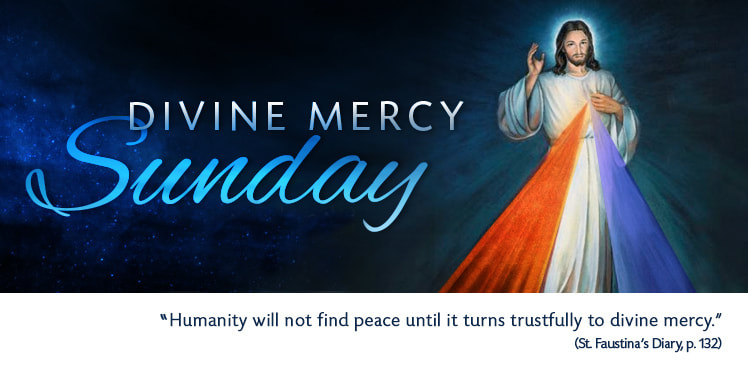
The Easter stories show us how God works silently in our midst, always slowly and surely, gradually through history and in our personal life. It is not really his appearances that matter but the intensity of his presence felt only in silence when we learn to trust more and believe more. How wonderful that on this eight day of Easter we also celebrate Divine Mercy Sunday that invites us to trust more than ever Jesus Christ our salvation. May we entrust ourselves to Jesus anew like Thomas, touching his wounds, confessing “My Lord and my God” or “Jesus, King of Mercy, I trust in You.” Amen.

From Google.

When darkness becomes light

The Lord Is My Chef Easter Sunday Recipe, 21 April 2019
Photo from Google.

During our morning prayer (lauds) at the parish today, I invited my parishioners to “internalize” the meaning of Jesus being buried, being “dead” this Saturday. I love the word “internalize” that evokes the imagery of Jesus “descending into the dead” while we his disciples go inside our very selves, probing deeper our heart and soul to examine our faith in the Risen Jesus Christ.

Internalize. I think this is the keyword this Easter Sunday. To internalize means to go into the dark, to befriend darkness. Unless we have gone through the darkness of Good Friday, we shall never fully appreciate the brightness of Easter Sunday. How sad that so many of us went through all liturgical celebrations and other devotional practices of Palm Sunday into Holy Thursday and Good Friday only to be absent this Easter Sunday which is the most important celebration of our faith, the very foundation of our being Christians. All those five weeks of Lent plus the Holy Week are preparations for Easter which covers more than 50 days beginning today until Pentecost. And those 50 days are counted as one big day because Easter is the Mother of all feasts in the Church!

And if Christ has not been raised, then empty too is our preaching; empty, too, your faith.

1 Corinthians 15:14

Recent events demand that we as a Church, the Body of the Risen Lord, internalize our being Christians. You must have seen that viral photo of Antipolo pilgrims who have turned the Cathedral into a huge trash bin during Holy Thursday’s visita iglesia. It was the same sight in many churches and pilgrimage sites last week that make us wonder if Jesus is really alive in us? Or, Jesus has risen but we have remained dead in our sins and indifference, in our own “do-it-yourself” kind of religion or cafeteria Catholicism when we choose to believe only in certain teachings and beliefs that suit our tastes and well-being.

Photo by Kae Rivera via GMA News.

Problem is not only with the faithful but also with us priests when we have forgotten or even disregarded Jesus our Lord and Master, giving more emphasis on our own beliefs and concepts of what is true, good and beautiful that our celebrations and practices have become more of a show than expressions of faith. See how repositories on Holy Thursday have become more like a stage for “Asia’s Got Talent” or any variety show that have robbed Christ of the dignity and honor because people have become more focused with the glitz and glamour of the stage design and production. Sorry to say, it has become more of a show than a devotion as people leave talking about the spectacle than Jesus being present. And the sad part is how we priests have misled the people away from Christ but consciously or unconsciously, closer to us.

Now see my dear readers how in our gospel accounts this Easter Sunday that the prevailing mood and scenery are of darkness.

At daybreak on the first day of the week… On the first day of the week, Mary of Magdala came to the tomb early in the morning, while it was still dark… That very day, the first day of the week, two of Jesus’ disciples were going to a village seven miles from Jerusalem called Emmaus…As they approached the village to which they were going, they urged Jesus, “Stay with, for it is nearly evening and the day is almost over.”

Luke 24:1… John 20:1…Luke 24:13, 28-29
From Google.

Jesus rose in the dead of the night to bring light and life. Recall how the evangelists unanimously tell us that when Jesus died, there was widespread darkness to remind us that our darkest moments in life are our finest ones when we are with him. His first appearances were all in the darkness of dawn, dusk, and evening. There is something in darkness that Jesus invites us to come to him and meet him. It is only in the dark when we truly enter into a new and deeper level of friendship and relationship, of intimacy with him or with anyone else like married couples because it is in darkness when we truly trust and believe the other person. In the darkness of the night we muster all our faith and trust, strength and courage to await the breaking of a new day filled with hope and joy.

In this age of social media when everybody has the whole world as a stage, we always live in the brightness of so many artificial lights, stage lights for performances or palabas as we call them. We no longer have what Paul Simon sings “Hello darkness my old friend, I’ve come to talk with you again…” Jesus conquered darkness so we can befriend it to find our selves and others better. Darkness is the light that leads us to Easter! Life need not be always bright because the sun does not shine on all days.

The tragedy of forgetting darkness, of always living in artificial lights is that the more we fail to see ourselves, others, God, and the world around us. The more we fail, the more we are sad, the more we are unfulfilled. Worst, the more we do not see despite all the lights! Don’t you find that ironic, even absurd? And that explains why we have so many undeserving elected leaders today. This Easter, let the darkness of the dawn, of the empty tomb be our light in following Jesus. Be not afraid to walk in the dark like the two disciples going to Emmaus because Jesus always walks with us, listens to us, shares with us in the darkness of our lives. Jesus is alive and he loves you very much! Amen.

“Road to Emmaus” painting from Google.

Praying And Dying with Jesus

The Lord Is My Chef Good Friday Recipe, 19 April 2019
Isaiah 52:13-53:12//Hebrews 4:14-16;5:7-9//John 18:1-19:42
Crucifix at the Fatima Square in Portugal. Photo by Arch. Philip Santiago, October 2018.

The Evangelists tell us that Jesus died on the Cross on a Friday at about 3:00 PM. And they tell us too that our Lord died praying, exactly what most of the Seven Last Words have expressed.  But from the gospel we have heard this afternoon written by the beloved disciple John, we discover something very beautiful: Jesus was very calm and peaceful in his prayer unto death.

After this, aware that everything was now finished, in order that the Scripture might be fulfilled, Jesus said, “I thirst.”  There was a vessel filled with common wine.  So they put a sponge soaked in wine on a sprig of hyssop and put it up to his mouth.  When Jesus had taken the wine, he said, “It is finished.”  And bowing his head, he handed over the spirit.

John 19:28-30

When we are deep in suffering, in severe pain like Jesus on the cross, what do we usually pray? 

Most often, we pray that the terrible ordeal we are going through would finally end or be finished.  And sometimes, due to desperation, we even pray for death, of how we wish God would finally end our life to be free from all the problems and pains we are going through. And we feel death is the solution.

One of the things I have realized about death came from the 1990’s movie “House of Spirits” when the mother played by Meryl Streep told her daughter played by Winona Ryder that “you do not pray for death because death surely comes.” I always tell that to patients I visit who are in deep pain and suffering. I know it is easier than done. But when we reflect on the Crucifixion of Jesus Christ, we discover how he had made death an offering, a gift of self in love. Clearly we find here that his darkest hour is also his finest hour because of love.

Chapel of the Holy Family, Sacred Heart Novitiate, Novaliches. Photo by author, 2016.

In the original Greek text of St. John, the word used to express Jesus Christ’s final prayer “It is finished” is “tetelestai” from the root word “telos” meaning the final end and direction.  It is not just an ending but a direction too. At the start of this year’s Lenten season, we have reflected that life is more about direction than destination. Direction leads to growth and maturity because it is about persons. Destination is just about place and location. 

From the very start, Jesus was clear with His mission, of how it would be accomplished.  He has always been sure of himself, of who he is.  Notice how St. John repeated many times in his account of the Last Supper how Jesus was “fully aware” of everything that was going to happen: he was so composed and serene that he even gave bread to his betrayer Judas Iscariot during their supper.  Last night we heard how Jesus knew everything was coming to end that he washed the feet of his disciples.

When his “hour” had come, Jesus was “fully aware of everything” that he was never left to the whims and powers of his enemies when he went through his Passion, calmly and courageously facing his death on the Cross. He always had the upper hand that he was able to pray “It is finished” because he was so sure of his Resurrection on Easter. In praying “It is finished,” Jesus consecrated not only himself but also all humanity to the Father so that we are able to bear and face death squarely like him.   

Mt. St. Paul Retreat House, Baguio. Photo by author, June 2017.

In the Mass after the consecration of the bread and wine into Christ’s Body and Blood, we proclaim “Christ has died; Christ is risen; Christ will come again.” We call it as “the mystery of our faith” because when we say “Christ has died,” we admit that truly, the Son of God went through all kinds of sufferings in life we all go through like betrayal, rejection, loneliness, sickness, hunger, thirst, and yes, even death.  And His sufferings continue as we suffer more in this world marred by evil and sins, making us cry, asking when would these end and be finished. And there lies the mystery of our faith on the Cross that led to Easter: when we look at Jesus Christ on His Cross, we see our own pains and agony as God’s pains and agony too.  Jesus joined us in our anguish and death so that we could experience all the more his immense love for us.  Without Jesus and his Cross, we would never be able to bear or even face the many deaths we go through daily.  May we recognize God’s immense love for us again this afternoon when we venerate the cross and see it as the merging point of human and Divine suffering.  Keep praying with Jesus who has the final say with death at Easter. Amen.

*This is an updated version of my Good Friday reflection last year.

Our life of leaving and loving

The Lord Is My Chef Recipe, Holy Thursday of the Lord’s Passion, 18 April 2019
Exodus 12:1-8, 11-14///1 Corinthians 11:23-26///John 13:1-15
Altar at the Carmelite Monastery in Israel with a unique Crucifix. Photo by Dra. Mai B. Dela Pena, 2011.

Today I am celebrating my 21st year in the priesthood. This is the first time our ordination anniversary falls on a Holy Thursday when we celebrate the institution of the two Sacraments most closely linked with us priests and the Church, Holy Eucharist and Holy Orders.

When we were ordained by Archbishop Rolando J. Tria-Tirona 21 years ago at the Malolos Cathedral, there were so many things going on in my mind and in my heart. But there was one thing that had remained very clear with me since that day: I am being ordained priest at the age of 33, the very same age Jesus was crucified on the Cross. From then on until now, I have kept in my heart that priesthood is suffering and dying on the Cross in Jesus and with Jesus centered on the Holy Sacrifice of the Mass.

Before the feast of Passover, Jesus knew that his hour had come to pass from this world to the Father. He loved his own in the world and he loved them to the end.

John 13:1

Of the four evangelists, it is only St. John who repeatedly mentions the expression “hour of Jesus” in his gospel account. For him, the very life of Jesus is a journey and preparation to his “hour” which is his crucifixion and death. The hour of Jesus is his passion. The word passion is from the Latin verb patior that means to undergo, to pass through, evoking some form of suffering and pain.

The hour of Jesus started in his Last Supper. It was a very long hour so to speak. And very dark. However, it was also the finest hour of Jesus when he poured out his immense love and mercy for us. Beginning at his supper when he washed the feet of the Apostles to his agony in the garden when he perspired with blood to his arrest reaching it darkest point in his crucifixion and death, the darkest hour of Jesus is also his finest hour when he was able to bear all sufferings and insults, including death because of love. Jesus showed us that in fact, love is the very process of passing over, of going beyond our means and capacity in order to transform and become better persons. That is why our darkest hour is also our finest hour when we are transformed in Jesus because precisely that is when we truly love. It is also for this reason that the Eucharist is called an agape which is the Greek word for the highest form of love that does not expect anything in return. That is the love of Jesus Christ. And supposed to be the love of us priests.

Jesus knew that his hour had come to pass from this world to the father. He loved his own in the world and he loved them to the end.

Jesus washes feet of Apostles. From Google.

Msgr. Epitacio Castro, one of our retired priests, has a favorite expression with his being a priest: “pinag-uubra lang ako ng Diyos”. True. God is just making do of us as priests because nobody is worthy of being one. We are the worst men around! We are also sinners like you, even more sinful than most of you. In the Eucharist, we priests experience that great love of Jesus Christ when he tries to make us fit as his priests, transforming us into men like him. It happens every time we are one with him in his hour of suffering and death. Priesthood is a life of leaving and loving, of passing over and transformation. The day we were ordained, our Last Supper began, our passion began because that is also our hour in Jesus Christ. Every time we celebrate the Holy Mass, we priests are reminded that our hour had come to pass, challenging us to love more. Pray for priests who no longer love the Eucharist; something is terribly wrong with them.

I am a sinner. But it is a tremendous grace of God through the Eucharist that I continue to leave and pass over, from sin to holiness and grace, from darkness to light, from selfishness to selflessness, from desperation to hope, from grief to joy. And all because of the power of love of God overflowing in the Eucharist. How can I resist to love and to forgive, to let go and move on, to be patient and to persevere when right in the Eucharist I could feel Jesus truly present, entrusting himself to me who is so untidy with sins and weaknesses? How could I not believe in him when Jesus is the first to believe in me despite my many self doubts? Every celebration of the Eucharist is an imitation of Christ when we priests go down to wash and kiss the feet of the people we serve whom we also hurt and hurt us too!

They say the darkest nights are the longest nights. Very true especially for us priests. Be patient with us when we forget so many things, when we change so often in our plans because every time there are celebrations, our hour goes over time too. Bear with us, pray for us when we sometimes become irritable even grouchy because aside from your many problems and burdens we help you carry, we have our own struggles and problems too. That hour of Jesus remains with us even after every Mass when you all go home to your own family while we priests are left alone in our parish thinking about the next celebrations. The hours are long and the nights are so dark and all we have is that flickering light of faith, hope, and love in Jesus in our hearts.

But, though the darkest nights are the longest nights, they also say that only the brave who dare walk the darkness can see the brightness of the stars above. Courage does not mean having no fear but the ability to face our fears. And, oh! We priests have many fears too, including the fears of rejection, of being misunderstood, of being boxed, and most of all, of failing. We are what you call as “warrior is a child” — “They don’t know that I come running home when I fall down. They don’t know who picks me up when no one is around. I drop my sword and cry for just a while, ‘Coz deep inside this armor, The warrior is a child.

In the Eucharist, we priests truly share in the priesthood of Jesus Christ because that is also when we feel transformed in his love, when we pass over with so much pains from the many experiences we have in our very selves and with others. Indeed, without the Eucharist, we are not priests! Every time I raise Christ’s Body and Blood, I pray that Jesus may make me whole in body, mind and heart, that he may wash me of all my sins, doubts and fears. Nobody else in the Mass perhaps, except us priests who truly feel the meaning of praying these words before receiving communion, “Lord I am not worthy that you should enter under my roof, but only say the word and my shall be healed.”

Maybe you have all seen the photos after the fire that razed the Notre Dame Cathedral in Paris this Holy Tuesday. Intact were the altar table with the huge cross beaming with light. What a beautiful reminder to us all, especially us priests, that in this life, our darkest hours are also our finest hours when we are one with Jesus Christ. No fire nor anything can ever destroy us because Jesus had overcome every evil even death for us. Every destruction and darkness are a prelude to the light and new creation of Easter Sunday that begins right here in the hour of the Eucharist of Jesus. Let us remain in Christ in love in passing over, in leaving behind the pains and hurts of the past with much love in our hearts to move on in this life. Amen.

Photo from Yahoo.news.

Knowing is Intimacy

The Lord Is My Chef Sunday Recipe, Palm Sunday of the Lord’s Passion, Year C, 14 April 2019
Isaiah 50:4-7///Philippians 2:6-11///Luke 22:1-49
Photo from Bing.com.

Today we begin the Holy Week with two celebrations merged into one, Palm Sunday of the Lord’s Passion. The Palm Sunday is a tradition started by the early Christians in Jerusalem in the fourth century while in Rome during the 12th century, the Pope proclaimed the long gospel account of the Lord’s Passion on this Sunday to signal the start of Holy Week. Almost 2000 years later in reforming the liturgy, Vatican II merged these two traditions into one to usher in our holiest days of the year.

Like in the four Sundays of Lent except last week, St. Luke guides us today in reflecting the Lord’s Passion with emphasis on the Cross with its call to conversion. For St. Luke, the cross is the object of discipleship in Christ. Join me in reflecting on the last three words our evangelist had recorded when Jesus was crucified.

First word:

When they came to the place called the Skull, they crucified him and the criminals there, one on his right, the other to his left. Then Jesus said, “Father, forgive them, they know not what they do.”

Luke 23:33-34
Mosaic of the Crucifixion at the crypt of the Manila Cathedral. Photo by Arch. Philip Santiago, October of the Jubilee of Mercy 2016.

This is very striking. Immediately upon his crucifixion, Jesus prayed for the forgiveness of his enemies! It is a total adherence to his preaching during his sermon on the plain, “love your enemies, do good to those who hate you, bless those who curse you, pray for those who mistreat you” (Lk. 6:27-28, Seventh Week Ordinary Time, 24 February 2019). Here we find the immense love and mercy of Jesus — no hatred, no calls for revenge or threats like “karma” against those who crucified him. He simply begged for their forgiveness because “they know not what they do.”

In Jewish thought, to know means more than an intellectual knowledge for it implies relationship. Knowing somebody for them is more than knowing one’s name but having ties with the person. And to know something is always to see things in this perspective, always in relation with a person. Had they known Jesus is the Christ, they would have not crucified him! Exactly the preaching of St. Peter at the healing of a lame man after Pentecost at the temple when he told them they have “acted in ignorance” in “killing the Author of life whom God raised from the dead” (Acts 3:15). St. Luke also notes in his Acts of the Apostles how the crowd upon hearing St. Peter’s preaching were moved or “cut to the heart” (2:37) that many were baptized on that day. Recall also how at the arrival of the wise men from the East searching for the child Jesus: the scholars of Jerusalem “knew” from the books how the Christ would be born in Behtlehem yet he was found by the pagan magis! Even the most learned man in the New Testament, St. Paul admits how ignorant he had been in persecuting and blaspheming Jesus before (1Tim.1:13) experiencing God’s loving mercy.

In the bible we always see this combination of knowing and ignorance at the same time to indicate that more than factual and cerebral knowledge, there is that deeper knowing of relating and of loving. If we really know somebody, the more we love, the lesser we sin. St. Thomas Aquinas used to say that the more we know and become intelligent, the more we realize the truth, the more we must become good and holy. That is why saints are the most intelligent people that they were able to do what is good and what is right.

In this age of Google and Wikipedia , Jesus is challenging us that if we truly know so much that we have become smart and more intelligent, then, how much do we really love and care for others?

Photo from Google.

Second word:

Then he said, “Jesus, remember me when you come into your kingdom.” He replied to him, “Amen, I say to you, today you shall be with me in Paradise.”

Luke 23:42-43

The Venerable Archbishop Fulton Sheen used to claim that Dimas was indeed a great thief who was able to steal or snatch Paradise from Jesus just before dying on the Cross. It may be funny but very true. But more than “stealing” his salvation from the Lord, Dimas had displayed on the cross what we have discussed earlier about the combination of knowing and ignorance. I would say Dimas is perhaps the “most learned thief” of all time who truly knew what is most essential in life which is to know Jesus. The moment he called out to him “Jesus”, Dimas expressed his knowing Jesus, of belonging to Jesus. As we have reflected earlier, to know is to relate. Anyone who truly relates must first believe in order to love dearly. Dimas believed in Jesus that he called out to him while hanging on the Cross.

Today, Jesus is reminding us that the door to Paradise is him alone. And we begin to enter Paradise the moment we entrust our total self to Jesus like Dimas who came to know Christ at the Cross, and then believed him and loved him. If we really know, do we believe?

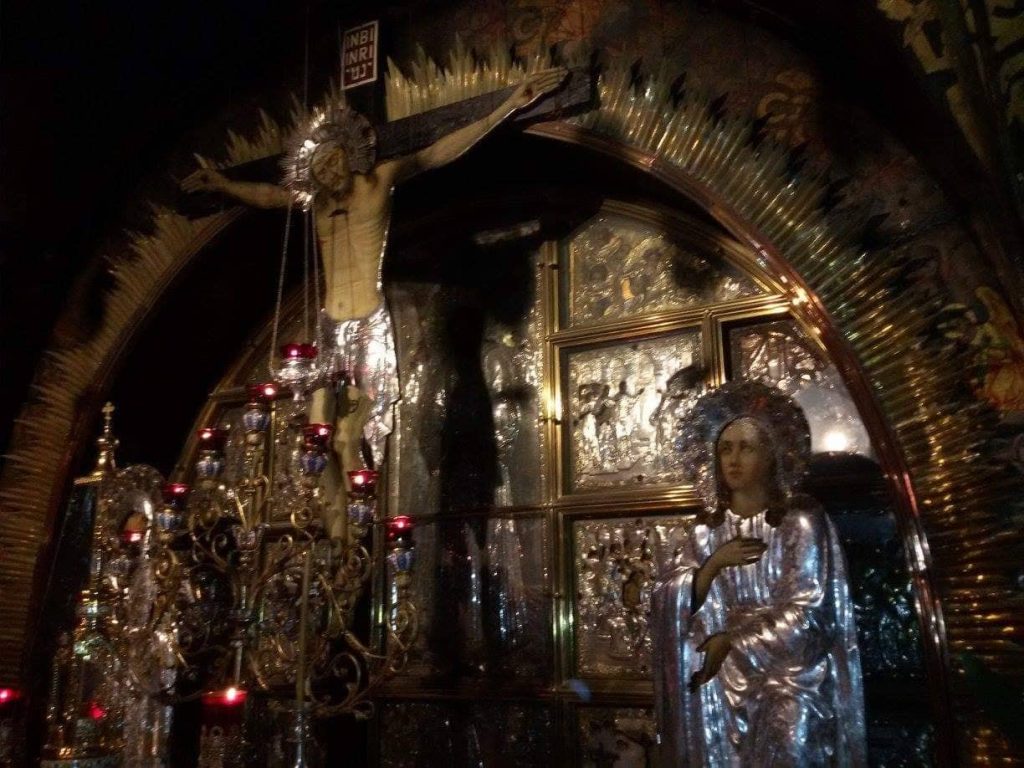
Altar of the Church of the Holy Sepulchre over the exact site where Jesus was crucified outside Jerusalem. Photo by Arch. Philip Santiago, October 2017.

Third word:

Jesus cried out in a loud voice, “Father, into your hands I commend my spirit,” and when he had said this he breathed his last.

Luke 23:46

One of St. Luke’s unique feature is always presenting to us Jesus at prayer. Especially here at his crucifixion. See how his first words were prayer of forgiveness for his persecutors. Now at his death, St. Luke presents Jesus again at prayer, reciting Psalm 31:5, “Father, into your hands I commend my spirit.”

Here we find the whole picture of Jesus Christ’s life which is a prayer and his prayer is his very life. From the very start, Jesus has always been one with the Father which is the essence of every prayer called communion. And that is the important aspect of his being our Savior: everything he said and did was everything the Father had told and asked him. There is that perfect communion of the Father and the Son in the Holy Spirit so that in his death, Jesus offered his total self with us to God. Everyone and everything is thus sanctified anew in Christ. This became possible only with his kenosis, his self-emptying eloquently expressed to the Philippians by St. Paul in our second reading.

On the Cross, everything in the life of Jesus Christ came to a full circle, God’s whole picture emerged. Now more than ever, we have become closest to God in love. In his dying on the Cross, Jesus made known to us God, brought him closest to us so we can relate and be intimate with him more than ever. In his becoming human like us by bearing all the pains and sufferings expressed in the first reading from Isaiah, God proved to us his love in Jesus. Most of all, he enabled us too to be capable of knowing and loving like Jesus Christ by being intimate with him always. This is why these days are called Holy Week when we are filled with God so we experience him anew and have him more than ever in our hearts, in our very selves. Amen.

Lent and the Contemplative Spirit

40 Shades of Lent, 5th Sunday-C, 07 April 2019
Isaiah 43:16-21///Philippians 3:8-14///John 8:1-11 
From Google.
Sunrise at Lake of Galilee. Photo by author April 2017.

Today is the last Sunday of Lent. It is hoped that by this time since Ash Wednesday, we have slowly acquired or even regained our contemplative spirit of prayerful silence. It is something very essential not only during these 40 days and in the coming Holy Week. It is only in silent prayers can we truly find balance in life as we discover what is valuable and what is worthless, things that last and things that pass. Prayerful silence teaches us to slow down, to be more discerning, and more trusting. The contemplative spirit thus leads us to grow deeper in our faith, hope and love in God. It is in the contemplative spirit where God works best in us.

We find this invitation to a contemplative spirit in our beautiful gospel today of a woman caught committing adultery whom Jesus refused to condemn. Unlike the previous four weeks when we heard all gospels taken from Luke, this Sunday’s story is from John that perfectly fits last week’s parable of the prodigal son to show us God’s immense love and mercy for us sinners. Every conversion, every contrition of sins presupposes silence. Recall how the lost son last Sunday realized his sinfulness while silently tending swine in a far away land.

From Google.

Jesus went to the Mount of Olives. But early in the morning he arrived again in the temple area, and all the people started coming to him, and he sat down and taught them. Then the scribes and the Pharisees brought a woman who had been caught in adultery and made her stand in the middle. They said to him, “Teacher, this woman was caught in the very act of committing adultery. Now in the law, Moses commanded us to stone such women. So what do you say?” They said this to test him, so that they could have some charge to bring against him. Jesus bent down and began to write on the ground with his finger.

John 8:1-6

From Google.

We have seen how Jesus foiled other insidious plots against him through tricky questions but this one involving a woman caught committing adultery shows us a fine image of him as the Christ. His silence, his bending down and his writing on the ground are moving moments that touch our hearts and make us wonder all the more, who is this man?

More than addressing a question that concerns the many dilemmas we face in life, this episode shows us that it is something that directly concerns Jesus Christ himself, his being our Savior. Notice at the start of the story where Jesus is presented always going to the Mount of Olives to pray, to be one with the Father. This episode happened after he had entered Jerusalem on Palm Sunday, showing us how Jesus became more intense in praying, in being one with the Father when his final days were approaching. That is the contemplative spirit.

Now feel the atmosphere of those tense moments when people brought the woman caught committing adultery to Jesus: everybody was saying something, emotions were running high, just like us in our own time with social media around us. We live in so much noises where everybody and everything is talking that we fail to listen to our very selves, to others and most especially to God always silent. See how Jesus was so cool – or “chillax” as young people would say. It was an astonishing reaction to the situation. Only a person with deep contemplative spirit like Jesus can be so composed and silent in a tense situation like that. It is always easier to react and say something than be silent to weigh everything. Too often in the world today, words are so empty that they have to be shouted all around and repeated so often in the hope they become true, exactly what every election candidate is doing!

From Bing.com.

Jesus chose to be silent so we may realize that issues of sin and evil are best resolved in a contemplative spirit where we find the value of every person that we condemn the sin not the sinner. History has shown time and again how wars and violence or any other harsh methods like death penalty have proven ineffective in correcting any injustice or wrongdoing and preventing crimes. Where there is severity in measures against evil, we find only more deaths and burials happening but never peace and justice.

Now more than ever in Jesus Christ, we have found and experienced God’s mercy so abounding and closest to us sinners if we are truly sorry and ready to change. Like the woman caught committing adultery or the prodigal son last Sunday, we have to reach out to Christ to be forgiven from our sins. He assures us of never being condemned, of deleting our past sins and assuring us with a bright future to receive his promises if we “go and sin no more.”

We have to stress that Jesus does not approve sins. Never. He recognized the sinfulness of the woman when he told her “go and sin no more.” Likewise, Jesus never asked us to stop fighting sins. When he dared the people of whoever has no sin be the first to cast the stone, Jesus never meant us to be silent with the evil and wrongdoings happening around us. This encounter between Jesus and the woman committing adultery invites us to examine first, our own attitudes toward others guilty of serious sins. And secondly, to examine our own reactions when our misery meets with God’s mercy especially in the sacrament of penance or reconciliation.

Do we choose to be harsh like the crowd or be gentle like Christ?

How sad that even with our very selves we are so unforgiving, so severe that we hardly move on in life. Only in a contemplative spirit can we truly experience God’s liberating mercy and forgiveness within us and with others. The contemplative spirit enables us to trust God that no matter how sinful we are, his love and mercy are more powerful, able to transform us all into better persons, even saints! This is the promise of God in the first reading that he would do something greater than what he had done in liberating his people from Egypt – that he would send our Savior not only to forgive our many sins but even to share in his glory as saints.

Assumption Sabbath Baguio, January 2019.

St. Paul in the second reading could speak of “considering everything as a loss in knowing Christ Jesus” because of the contemplative spirit he acquired after his conversion. His letters all reveal to us St. Paul’s contemplative spirit and intimacy with Jesus Christ that flowed out into his daily life, reaching its summit in his martyrdom.

As the season of Lent comes to a close on this fifth Sunday, we are reminded of the path of conversion we have followed these past four weeks under St. Luke’s guidance. Conversion leads to contemplation, a daily communion with God in prayerful silence and allow him to suffuse us with his love. Its fruits are seen in our daily lives. It is the work of God, not us. It is God who renews us in silence into a new creation. We simply have to remain in Christ and strive always “to go and sin no more”. Amen.

Lent is understanding Sin

40 Shades of Lent, Sunday Week IV-C, 31 March 2019
Joshua 5:9,10-12///2Corinthians 5:17-21///Luke 15:1-3,11-32

Sin can be mysterious at times because it can also be a religious experience that leads us back to God and holiness. We have a saying that “every saint has a sinful past and every sinner can have a saintly future.” So many men and women who were so notorious in their lives have proven this so true like St. Paul and St. Augustine.

After reflecting on the call for conversion last Sunday, our gospel today tells us a lot about the nature of sin. Unless we understand what is sin and why we sin, then we get imprisoned by sin as we keep on committing it no matter how hard we try to be better persons. But once we understand even a little bit of it, its hows and whys, then we sin less often as we slowly break free from its bondage.

“A man had two sons, and the younger son said to his father, ‘Father, give me the share of your estate that should come to me.’ So the father divided the property between them.”

Luke 15:11-12

Sin is when we separate from the Father like the younger son when we ask for our “share of your estate that should come to me” referring to that part of this whole life only God can have in its fullness. We always have the idea that it must be so vast and huge that even just a part of it would be more than enough for us. We want to be on our own that we break away from Him, thinking wrongly that the share we have is more than enough for us without truly realizing how great and so vast is the Father’s estate which is life itself!

And so it happens, we break away from God and live on our own that sooner or later, our share dissipates until we lose everything.

This estate, this very life of God will never be gone like Him, will never diminish nor dissipate. We shall always have it, enjoy it for as long as we are with Him, our loving Father! This is also the point of the Father to the elder son when he refused to join their celebration when his younger brother returned. Life, love, kindness, family, everything that is good dissipates when held individually away from God. But when we share it with the Father through Christ, it is like the river that never runs dry.

When he had freely spent everything, a severe famine struck that country, and he found himself in dire need… And he longed to eat his fill of the pods on which the swine fed, but nobody gave him any.

Luke 15:14,16

Sin always gives us the sense of “freedom” like the young son who “freely spent everything”. There is always that wrong understanding of freedom as the ability to do everything and anything, feeling that everything in this life is ours alone. Freedom is first of all choosing what is truly good. To be free is to be loving, being a part of the whole and never separated from the whole. To be truly free is always to be one. This explains why when we are deep into sin and all alone, separated from others, we suddenly long to be one with others. The sense of belonging suddenly pops up within us because we find ourselves incomplete when in sin.


“My son, you are here with me always; everything I have is yours.”

Luke 15:31

Here lies the problem also with the elder son who has always been present with their father but had never been one with him, never belonging to him. He is guilty of “sin of omission” when he felt nothing seems to be wrong with him as he breaks no rules of their father – except their relationship and ties. The apostle James wrote in his letter that “a person is tempted when he is lured and enticed by own desire” (Jas.1:14). Sin is always the desire to be sufficiently alone, to be powerful, to be God! See how since the beginning, we have never outgrown that sin of Adam and Eve of becoming like God, of playing god.

My dear sisters and brothers, like Paul in our second reading today, let us be reconciled to God in Christ. To be reconciled is to be one, to belong, to become a part again of God. In the dryness and desolation of sin like the desert in the experience of Joshua and the Hebrew people, God continues to bless us with so many gifts, so many blessings. The two brothers in the parable are both sinners but loved by their father. And so are we.

More than avoiding sins, our gospel parable this Sunday invites us to love God more by seeking His will always. Yes, we have all been hurt by someone else’s sins and we have also caused pain on others with our sins. Let us focus more on this vast gift of life and love expressed in God’s mercy and forgiveness that no sin could ever diminish. And the good news is that it is all free and totally being given to us by Jesus Christ especially in our Sunday Eucharist. A blessed week to you!

*All images from Google.

A Lenten Christmas?

40 Shades of Lent, Solemnity of the Annunciation, 25 March 2019
Isaiah 7:10-14; 8:10///Hebrews 10:4-10///Luke 1:26-38

The Solemnity of the Annunciation of the Lord is a Christmas celebration outside the Christmas cycle. Since the middle of the sixth century, it has always been celebrated on March 25 that falls within Lent except when Ash Wednesday comes early February like in recent years that it occurs within the Easter season.

What is very interesting with this Solemnity of the Lord is how its gospel from Luke is proclaimed in Advent and Lent, two major seasons that are similar in varying degrees with its violet motif and with its penitential character that is a call to conversion. Both Advent and Lent invite us to create a space within us so we may receive Jesus Christ in us like the Blessed Virgin Mary. Angel Gabriel continues to come to us, bringing Jesus Christ. But, does anybody willing to listen to the angel to receive the Son of God like Mary?

“Do not be afraid, Mary, for you have found favor with God. Behold, you will conceive in your womb and bear a son, and you shall name him Jesus. The Holy Spirit will come upon you, and the power of the Most High will overshadow you. Therefore, the child to be born will be called holy, the Son of God.”

Luke 1:30-31, 35

Yesterday in our third Sunday of Lent, we reflected the Lord’s call to conversion by repenting our sins and changing our life directions in Him. Conversion is finding Jesus in our very self so we may also find Him in other persons and in the events of our lives. This can only happen when there is a room for Jesus in us like Mary. We simply have to create that space in us by emptying our hearts of our pride and other sins so the Holy Spirit may overshadow us to make us God’s presence. It requires a lot of trust on our part in God and His power. How sad that in this age of great technological marvels, we continue to be like Ahaz in the first reading who entered into secret alliances with Israel’s pagan neighbors trusting in their military might than with God. Like Ahaz, we often pretend not to be tempting or testing God with signs from Him yet, the fact is our hearts are so far from Him. Conversion is taking two or three steps backward so that we can allow God to do His works in us. Problem is we have never truly allowed the Holy Spirit to overshadow us with God’s power to be His presence in the world. We are always afraid even ashamed at what others would say. Or sometimes, we are always in great hurry that we cannot wait for God to accomplish His work in us.

A very dear friend last week texted me with a prayer request for her surgery today. She specifically asked me to pray for her doctors that the Holy Spirit may guide their hands in removing cysts in her pancreas. What I liked most in her request is the fact that she herself is an accomplished doctor under the care of perhaps the best doctors in the country in one of the leading hospitals in the city. Imagine her deep faith and complete trust in God! Here is a lady doctor, a woman of science so busy with her profession and family yet always making – not finding – time for God in her prayers especially the Sunday Mass.

I am always amazed by people like her who always have that glow in their face exuding with deep joy and peace within borne out of their deep spirituality. One can always feel in them the transforming power of the Holy Spirit that despite their weaknesses and shortcomings, Christ is seen and experienced among them.

Jesus did not merely come on the first Christmas over 2000 years ago. Most of all, Jesus does not come only every December 25. Jesus comes to us every day throughout the whole day which is the reason we pray the Angelus in the morning, at noon and in the early evening. The author of the Letter to the Hebrews reminds us of this reality of Christ’s coming by offering Himself as our perfect sacrifice to the Father. He is real and truly transforms us into better persons if we are willing to cooperate with the Holy Spirit’s work like Mary. Today’s solemnity of the Annunciation falling on the driest and most humid season of the year during Lent reminds us of how God continues to stir us into opening to Him, creating a space for Him to let His Spirit overshadow us not only to change us but also the world around us.

In what instances of your life do you feel God stirring you to do something for Him but you feel afraid or inadequate like Mary at the beginning of her conversation with the angel? Listen first to God or His angel by emptying yourself, creating a space for Jesus Christ. Then imitate Mary in her fiat or expression of faith by praying, “I am the servant of the Lord. Be it done unto me according to your word.” Amen.

A Filipino painting on the perimeter wall facing the front of the Basilica of the Annunciation at Nazareth, the Holy Land. Photo by the author, April 2017.