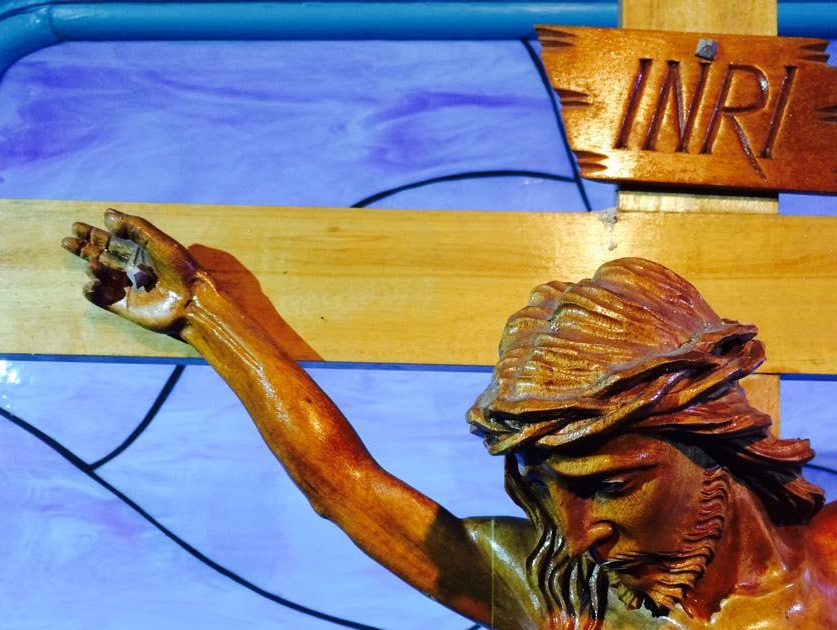
Knowing is Intimacy

The Lord Is My Chef Sunday Recipe, Palm Sunday of the Lord’s Passion, Year C, 14 April 2019
Isaiah 50:4-7///Philippians 2:6-11///Luke 22:1-49
Photo from Bing.com.

Today we begin the Holy Week with two celebrations merged into one, Palm Sunday of the Lord’s Passion. The Palm Sunday is a tradition started by the early Christians in Jerusalem in the fourth century while in Rome during the 12th century, the Pope proclaimed the long gospel account of the Lord’s Passion on this Sunday to signal the start of Holy Week. Almost 2000 years later in reforming the liturgy, Vatican II merged these two traditions into one to usher in our holiest days of the year.

Like in the four Sundays of Lent except last week, St. Luke guides us today in reflecting the Lord’s Passion with emphasis on the Cross with its call to conversion. For St. Luke, the cross is the object of discipleship in Christ. Join me in reflecting on the last three words our evangelist had recorded when Jesus was crucified.

First word:

When they came to the place called the Skull, they crucified him and the criminals there, one on his right, the other to his left. Then Jesus said, “Father, forgive them, they know not what they do.”

Luke 23:33-34
Mosaic of the Crucifixion at the crypt of the Manila Cathedral. Photo by Arch. Philip Santiago, October of the Jubilee of Mercy 2016.

This is very striking. Immediately upon his crucifixion, Jesus prayed for the forgiveness of his enemies! It is a total adherence to his preaching during his sermon on the plain, “love your enemies, do good to those who hate you, bless those who curse you, pray for those who mistreat you” (Lk. 6:27-28, Seventh Week Ordinary Time, 24 February 2019). Here we find the immense love and mercy of Jesus — no hatred, no calls for revenge or threats like “karma” against those who crucified him. He simply begged for their forgiveness because “they know not what they do.”

In Jewish thought, to know means more than an intellectual knowledge for it implies relationship. Knowing somebody for them is more than knowing one’s name but having ties with the person. And to know something is always to see things in this perspective, always in relation with a person. Had they known Jesus is the Christ, they would have not crucified him! Exactly the preaching of St. Peter at the healing of a lame man after Pentecost at the temple when he told them they have “acted in ignorance” in “killing the Author of life whom God raised from the dead” (Acts 3:15). St. Luke also notes in his Acts of the Apostles how the crowd upon hearing St. Peter’s preaching were moved or “cut to the heart” (2:37) that many were baptized on that day. Recall also how at the arrival of the wise men from the East searching for the child Jesus: the scholars of Jerusalem “knew” from the books how the Christ would be born in Behtlehem yet he was found by the pagan magis! Even the most learned man in the New Testament, St. Paul admits how ignorant he had been in persecuting and blaspheming Jesus before (1Tim.1:13) experiencing God’s loving mercy.

In the bible we always see this combination of knowing and ignorance at the same time to indicate that more than factual and cerebral knowledge, there is that deeper knowing of relating and of loving. If we really know somebody, the more we love, the lesser we sin. St. Thomas Aquinas used to say that the more we know and become intelligent, the more we realize the truth, the more we must become good and holy. That is why saints are the most intelligent people that they were able to do what is good and what is right.

In this age of Google and Wikipedia , Jesus is challenging us that if we truly know so much that we have become smart and more intelligent, then, how much do we really love and care for others?

Photo from Google.

Second word:

Then he said, “Jesus, remember me when you come into your kingdom.” He replied to him, “Amen, I say to you, today you shall be with me in Paradise.”

Luke 23:42-43

The Venerable Archbishop Fulton Sheen used to claim that Dimas was indeed a great thief who was able to steal or snatch Paradise from Jesus just before dying on the Cross. It may be funny but very true. But more than “stealing” his salvation from the Lord, Dimas had displayed on the cross what we have discussed earlier about the combination of knowing and ignorance. I would say Dimas is perhaps the “most learned thief” of all time who truly knew what is most essential in life which is to know Jesus. The moment he called out to him “Jesus”, Dimas expressed his knowing Jesus, of belonging to Jesus. As we have reflected earlier, to know is to relate. Anyone who truly relates must first believe in order to love dearly. Dimas believed in Jesus that he called out to him while hanging on the Cross.

Today, Jesus is reminding us that the door to Paradise is him alone. And we begin to enter Paradise the moment we entrust our total self to Jesus like Dimas who came to know Christ at the Cross, and then believed him and loved him. If we really know, do we believe?

Altar of the Church of the Holy Sepulchre over the exact site where Jesus was crucified outside Jerusalem. Photo by Arch. Philip Santiago, October 2017.

Third word:

Jesus cried out in a loud voice, “Father, into your hands I commend my spirit,” and when he had said this he breathed his last.

Luke 23:46

One of St. Luke’s unique feature is always presenting to us Jesus at prayer. Especially here at his crucifixion. See how his first words were prayer of forgiveness for his persecutors. Now at his death, St. Luke presents Jesus again at prayer, reciting Psalm 31:5, “Father, into your hands I commend my spirit.”

Here we find the whole picture of Jesus Christ’s life which is a prayer and his prayer is his very life. From the very start, Jesus has always been one with the Father which is the essence of every prayer called communion. And that is the important aspect of his being our Savior: everything he said and did was everything the Father had told and asked him. There is that perfect communion of the Father and the Son in the Holy Spirit so that in his death, Jesus offered his total self with us to God. Everyone and everything is thus sanctified anew in Christ. This became possible only with his kenosis, his self-emptying eloquently expressed to the Philippians by St. Paul in our second reading.

On the Cross, everything in the life of Jesus Christ came to a full circle, God’s whole picture emerged. Now more than ever, we have become closest to God in love. In his dying on the Cross, Jesus made known to us God, brought him closest to us so we can relate and be intimate with him more than ever. In his becoming human like us by bearing all the pains and sufferings expressed in the first reading from Isaiah, God proved to us his love in Jesus. Most of all, he enabled us too to be capable of knowing and loving like Jesus Christ by being intimate with him always. This is why these days are called Holy Week when we are filled with God so we experience him anew and have him more than ever in our hearts, in our very selves. Amen.
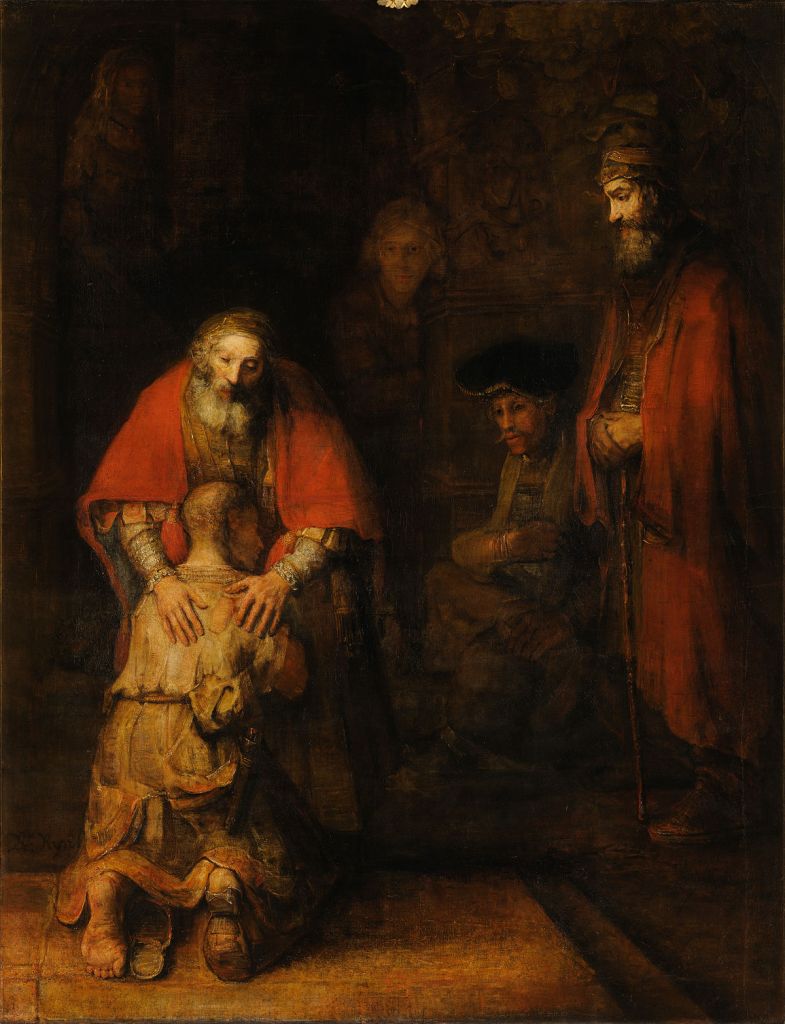
Lent and the Contemplative Spirit

40 Shades of Lent, 5th Sunday-C, 07 April 2019
Isaiah 43:16-21///Philippians 3:8-14///John 8:1-11 
From Google.
Sunrise at Lake of Galilee. Photo by author April 2017.

Today is the last Sunday of Lent. It is hoped that by this time since Ash Wednesday, we have slowly acquired or even regained our contemplative spirit of prayerful silence. It is something very essential not only during these 40 days and in the coming Holy Week. It is only in silent prayers can we truly find balance in life as we discover what is valuable and what is worthless, things that last and things that pass. Prayerful silence teaches us to slow down, to be more discerning, and more trusting. The contemplative spirit thus leads us to grow deeper in our faith, hope and love in God. It is in the contemplative spirit where God works best in us.

We find this invitation to a contemplative spirit in our beautiful gospel today of a woman caught committing adultery whom Jesus refused to condemn. Unlike the previous four weeks when we heard all gospels taken from Luke, this Sunday’s story is from John that perfectly fits last week’s parable of the prodigal son to show us God’s immense love and mercy for us sinners. Every conversion, every contrition of sins presupposes silence. Recall how the lost son last Sunday realized his sinfulness while silently tending swine in a far away land.

From Google.

Jesus went to the Mount of Olives. But early in the morning he arrived again in the temple area, and all the people started coming to him, and he sat down and taught them. Then the scribes and the Pharisees brought a woman who had been caught in adultery and made her stand in the middle. They said to him, “Teacher, this woman was caught in the very act of committing adultery. Now in the law, Moses commanded us to stone such women. So what do you say?” They said this to test him, so that they could have some charge to bring against him. Jesus bent down and began to write on the ground with his finger.

John 8:1-6

From Google.

We have seen how Jesus foiled other insidious plots against him through tricky questions but this one involving a woman caught committing adultery shows us a fine image of him as the Christ. His silence, his bending down and his writing on the ground are moving moments that touch our hearts and make us wonder all the more, who is this man?

More than addressing a question that concerns the many dilemmas we face in life, this episode shows us that it is something that directly concerns Jesus Christ himself, his being our Savior. Notice at the start of the story where Jesus is presented always going to the Mount of Olives to pray, to be one with the Father. This episode happened after he had entered Jerusalem on Palm Sunday, showing us how Jesus became more intense in praying, in being one with the Father when his final days were approaching. That is the contemplative spirit.

Now feel the atmosphere of those tense moments when people brought the woman caught committing adultery to Jesus: everybody was saying something, emotions were running high, just like us in our own time with social media around us. We live in so much noises where everybody and everything is talking that we fail to listen to our very selves, to others and most especially to God always silent. See how Jesus was so cool – or “chillax” as young people would say. It was an astonishing reaction to the situation. Only a person with deep contemplative spirit like Jesus can be so composed and silent in a tense situation like that. It is always easier to react and say something than be silent to weigh everything. Too often in the world today, words are so empty that they have to be shouted all around and repeated so often in the hope they become true, exactly what every election candidate is doing!

From Bing.com.

Jesus chose to be silent so we may realize that issues of sin and evil are best resolved in a contemplative spirit where we find the value of every person that we condemn the sin not the sinner. History has shown time and again how wars and violence or any other harsh methods like death penalty have proven ineffective in correcting any injustice or wrongdoing and preventing crimes. Where there is severity in measures against evil, we find only more deaths and burials happening but never peace and justice.

Now more than ever in Jesus Christ, we have found and experienced God’s mercy so abounding and closest to us sinners if we are truly sorry and ready to change. Like the woman caught committing adultery or the prodigal son last Sunday, we have to reach out to Christ to be forgiven from our sins. He assures us of never being condemned, of deleting our past sins and assuring us with a bright future to receive his promises if we “go and sin no more.”

We have to stress that Jesus does not approve sins. Never. He recognized the sinfulness of the woman when he told her “go and sin no more.” Likewise, Jesus never asked us to stop fighting sins. When he dared the people of whoever has no sin be the first to cast the stone, Jesus never meant us to be silent with the evil and wrongdoings happening around us. This encounter between Jesus and the woman committing adultery invites us to examine first, our own attitudes toward others guilty of serious sins. And secondly, to examine our own reactions when our misery meets with God’s mercy especially in the sacrament of penance or reconciliation.

Do we choose to be harsh like the crowd or be gentle like Christ?

How sad that even with our very selves we are so unforgiving, so severe that we hardly move on in life. Only in a contemplative spirit can we truly experience God’s liberating mercy and forgiveness within us and with others. The contemplative spirit enables us to trust God that no matter how sinful we are, his love and mercy are more powerful, able to transform us all into better persons, even saints! This is the promise of God in the first reading that he would do something greater than what he had done in liberating his people from Egypt – that he would send our Savior not only to forgive our many sins but even to share in his glory as saints.

Assumption Sabbath Baguio, January 2019.

St. Paul in the second reading could speak of “considering everything as a loss in knowing Christ Jesus” because of the contemplative spirit he acquired after his conversion. His letters all reveal to us St. Paul’s contemplative spirit and intimacy with Jesus Christ that flowed out into his daily life, reaching its summit in his martyrdom.

As the season of Lent comes to a close on this fifth Sunday, we are reminded of the path of conversion we have followed these past four weeks under St. Luke’s guidance. Conversion leads to contemplation, a daily communion with God in prayerful silence and allow him to suffuse us with his love. Its fruits are seen in our daily lives. It is the work of God, not us. It is God who renews us in silence into a new creation. We simply have to remain in Christ and strive always “to go and sin no more”. Amen.
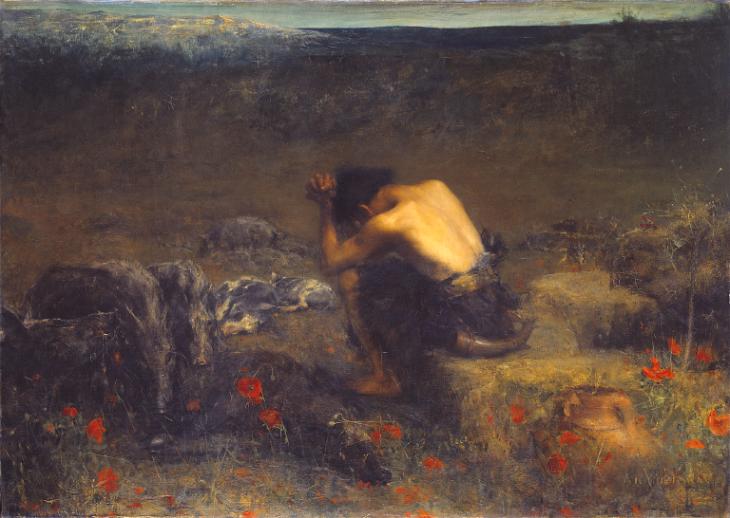
Lent is understanding Sin

40 Shades of Lent, Sunday Week IV-C, 31 March 2019
Joshua 5:9,10-12///2Corinthians 5:17-21///Luke 15:1-3,11-32

Sin can be mysterious at times because it can also be a religious experience that leads us back to God and holiness. We have a saying that “every saint has a sinful past and every sinner can have a saintly future.” So many men and women who were so notorious in their lives have proven this so true like St. Paul and St. Augustine.

After reflecting on the call for conversion last Sunday, our gospel today tells us a lot about the nature of sin. Unless we understand what is sin and why we sin, then we get imprisoned by sin as we keep on committing it no matter how hard we try to be better persons. But once we understand even a little bit of it, its hows and whys, then we sin less often as we slowly break free from its bondage.

“A man had two sons, and the younger son said to his father, ‘Father, give me the share of your estate that should come to me.’ So the father divided the property between them.”

Luke 15:11-12

Sin is when we separate from the Father like the younger son when we ask for our “share of your estate that should come to me” referring to that part of this whole life only God can have in its fullness. We always have the idea that it must be so vast and huge that even just a part of it would be more than enough for us. We want to be on our own that we break away from Him, thinking wrongly that the share we have is more than enough for us without truly realizing how great and so vast is the Father’s estate which is life itself!

And so it happens, we break away from God and live on our own that sooner or later, our share dissipates until we lose everything.

This estate, this very life of God will never be gone like Him, will never diminish nor dissipate. We shall always have it, enjoy it for as long as we are with Him, our loving Father! This is also the point of the Father to the elder son when he refused to join their celebration when his younger brother returned. Life, love, kindness, family, everything that is good dissipates when held individually away from God. But when we share it with the Father through Christ, it is like the river that never runs dry.

When he had freely spent everything, a severe famine struck that country, and he found himself in dire need… And he longed to eat his fill of the pods on which the swine fed, but nobody gave him any.

Luke 15:14,16

Sin always gives us the sense of “freedom” like the young son who “freely spent everything”. There is always that wrong understanding of freedom as the ability to do everything and anything, feeling that everything in this life is ours alone. Freedom is first of all choosing what is truly good. To be free is to be loving, being a part of the whole and never separated from the whole. To be truly free is always to be one. This explains why when we are deep into sin and all alone, separated from others, we suddenly long to be one with others. The sense of belonging suddenly pops up within us because we find ourselves incomplete when in sin.


“My son, you are here with me always; everything I have is yours.”

Luke 15:31

Here lies the problem also with the elder son who has always been present with their father but had never been one with him, never belonging to him. He is guilty of “sin of omission” when he felt nothing seems to be wrong with him as he breaks no rules of their father – except their relationship and ties. The apostle James wrote in his letter that “a person is tempted when he is lured and enticed by own desire” (Jas.1:14). Sin is always the desire to be sufficiently alone, to be powerful, to be God! See how since the beginning, we have never outgrown that sin of Adam and Eve of becoming like God, of playing god.

My dear sisters and brothers, like Paul in our second reading today, let us be reconciled to God in Christ. To be reconciled is to be one, to belong, to become a part again of God. In the dryness and desolation of sin like the desert in the experience of Joshua and the Hebrew people, God continues to bless us with so many gifts, so many blessings. The two brothers in the parable are both sinners but loved by their father. And so are we.

More than avoiding sins, our gospel parable this Sunday invites us to love God more by seeking His will always. Yes, we have all been hurt by someone else’s sins and we have also caused pain on others with our sins. Let us focus more on this vast gift of life and love expressed in God’s mercy and forgiveness that no sin could ever diminish. And the good news is that it is all free and totally being given to us by Jesus Christ especially in our Sunday Eucharist. A blessed week to you!

*All images from Google.

A Lenten Christmas?

40 Shades of Lent, Solemnity of the Annunciation, 25 March 2019
Isaiah 7:10-14; 8:10///Hebrews 10:4-10///Luke 1:26-38

The Solemnity of the Annunciation of the Lord is a Christmas celebration outside the Christmas cycle. Since the middle of the sixth century, it has always been celebrated on March 25 that falls within Lent except when Ash Wednesday comes early February like in recent years that it occurs within the Easter season.

What is very interesting with this Solemnity of the Lord is how its gospel from Luke is proclaimed in Advent and Lent, two major seasons that are similar in varying degrees with its violet motif and with its penitential character that is a call to conversion. Both Advent and Lent invite us to create a space within us so we may receive Jesus Christ in us like the Blessed Virgin Mary. Angel Gabriel continues to come to us, bringing Jesus Christ. But, does anybody willing to listen to the angel to receive the Son of God like Mary?

“Do not be afraid, Mary, for you have found favor with God. Behold, you will conceive in your womb and bear a son, and you shall name him Jesus. The Holy Spirit will come upon you, and the power of the Most High will overshadow you. Therefore, the child to be born will be called holy, the Son of God.”

Luke 1:30-31, 35

Yesterday in our third Sunday of Lent, we reflected the Lord’s call to conversion by repenting our sins and changing our life directions in Him. Conversion is finding Jesus in our very self so we may also find Him in other persons and in the events of our lives. This can only happen when there is a room for Jesus in us like Mary. We simply have to create that space in us by emptying our hearts of our pride and other sins so the Holy Spirit may overshadow us to make us God’s presence. It requires a lot of trust on our part in God and His power. How sad that in this age of great technological marvels, we continue to be like Ahaz in the first reading who entered into secret alliances with Israel’s pagan neighbors trusting in their military might than with God. Like Ahaz, we often pretend not to be tempting or testing God with signs from Him yet, the fact is our hearts are so far from Him. Conversion is taking two or three steps backward so that we can allow God to do His works in us. Problem is we have never truly allowed the Holy Spirit to overshadow us with God’s power to be His presence in the world. We are always afraid even ashamed at what others would say. Or sometimes, we are always in great hurry that we cannot wait for God to accomplish His work in us.

A very dear friend last week texted me with a prayer request for her surgery today. She specifically asked me to pray for her doctors that the Holy Spirit may guide their hands in removing cysts in her pancreas. What I liked most in her request is the fact that she herself is an accomplished doctor under the care of perhaps the best doctors in the country in one of the leading hospitals in the city. Imagine her deep faith and complete trust in God! Here is a lady doctor, a woman of science so busy with her profession and family yet always making – not finding – time for God in her prayers especially the Sunday Mass.

I am always amazed by people like her who always have that glow in their face exuding with deep joy and peace within borne out of their deep spirituality. One can always feel in them the transforming power of the Holy Spirit that despite their weaknesses and shortcomings, Christ is seen and experienced among them.

Jesus did not merely come on the first Christmas over 2000 years ago. Most of all, Jesus does not come only every December 25. Jesus comes to us every day throughout the whole day which is the reason we pray the Angelus in the morning, at noon and in the early evening. The author of the Letter to the Hebrews reminds us of this reality of Christ’s coming by offering Himself as our perfect sacrifice to the Father. He is real and truly transforms us into better persons if we are willing to cooperate with the Holy Spirit’s work like Mary. Today’s solemnity of the Annunciation falling on the driest and most humid season of the year during Lent reminds us of how God continues to stir us into opening to Him, creating a space for Him to let His Spirit overshadow us not only to change us but also the world around us.

In what instances of your life do you feel God stirring you to do something for Him but you feel afraid or inadequate like Mary at the beginning of her conversation with the angel? Listen first to God or His angel by emptying yourself, creating a space for Jesus Christ. Then imitate Mary in her fiat or expression of faith by praying, “I am the servant of the Lord. Be it done unto me according to your word.” Amen.

A Filipino painting on the perimeter wall facing the front of the Basilica of the Annunciation at Nazareth, the Holy Land. Photo by the author, April 2017.

Lent is Conversion

40 Shades of Lent, Week III, Year C, 24 March 2019
Exodus 3:1-8, 13-15///1Corinthians 10:1-4, 10-12///Luke 13:1-9

From the desert of temptation to the mountain of transfiguration, the gospel on this third Sunday of Lent dives directly into its central message of conversion by bringing us closer to realities of life that are as timely as the news headlines.

Some people told Jesus about the Galileans whose blood Pilate had mingled with the blood of their sacrifices. Jesus said to them in reply, “Do you think that because these Galileans suffered in this way they were greater sinners than all other Galileans? By no means! But I tell you, if you do not repent, you will all perish as they did! Or those eighteen people who were killed when the tower at Siloam fell on them – do you think they were more guilty than everyone else who lived in Jerusalem? By no means! But I tell you, if you do not repent, you will all perish as they did!”

Luke 13:1-5

Conversion is confronting our true selves by admitting and owning our many sins that may have contributed to the worsening crises we are facing in our personal lives, in our family as well as in the church and in the society. It is doing away with our favorite past time, the blaming game. Since the fall of Adam and Eve, we have always been blaming somebody else including God for every bad thing that happens to us and in the world. We tend to forget or even refuse to accept that every misery in our lives and on earth are the direct or indirect results of our sins like sickness and diseases, wars and terrorism, famines as well as economic and environmental disasters. Everything is by our own doing when our sins mar the human face including Mother Earth.

Jesus Christ in today’s gospel is not offering us with a simplistic view on the many sufferings and problems we have for that would also be getting into our own blaming game. He has no intentions of getting involved with our political and economic discussions to solve our many problems. What Jesus is telling us with His strong words only Luke had recorded is for us to read everything from the spiritual point of view by finding God in our human and personal history. And that is conversion, finding God first in our hearts to find Him in our history and in our world.

In the first reading, we are reminded how the whole earth is a sacred ground, the abode of God who told Moses to remove his sandals as he approached the burning bush in the desert. Moreover, God introduced Himself to Moses in the burning bush as the perfect presence, the “I AM WHO AM” who is all encompassing directing our history into His divine will and plan. With Jesus Christ’s coming as the Emmanuel or “God-is-with-us”, God has become more present among us not only on earth but right in every person.

And that is conversion, having Jesus in our hearts in order to find Him among others. Conversion does not mean we change into another person but more of reorienting our life directions in Christ by allowing Jesus to dwell in our hearts. How sad that so often, we would look into others to blame and to change when we forget the fact that the only heart we can convert is ours. It is said that anyone wishing to change the world must first change one’s self. And that is what Jesus is telling us today.

Jesus came to the world so we may experience the Father’s gentle mercy, kindness and forgiveness. By following His direction in our conversion, it is hoped that we find better ways in solving our many social and personal problems. The recent terrorist attacks in New Zealand that killed almost 50 people, the gruesome rape and murder of that young lady in Cebu, the worsening problems on drugs and crimes as well as traffic and the environment invite us all to a conversion of our hearts in Christ to experience His humility and tender, loving care for the lost, the sick and the suffering. See how our arrogance and harshness have only worsened the many social ills throughout history, not to mention man’s continued alienation from self and from one another.

Throughout history, God has always revealed Himself to us in so many ways through Jesus Christ to show us that the only way to salvation in all forms of human life is the way of conversion, to always find Him in the many events happening around us, in the world, and most especially in our hearts. Let us heed Paul’s warning that “whoever thinks he is standing secure should take care not to fall” (1Cor.10:12) by learning from the lessons of powerful men and women in the past now gone and forgotten. As we walk in history, God walks with us too, listening to us, sharing with us Himself. Sometimes, changes do not happen right away or as we want it to be but in His time, God’s plans always prevail. In the mean time, He patiently awaits our conversion in Him.

All images from Google.

Lent and our dreams that link us with God and one another

40 Shades of Lent, Tuesday, 19 March 2019
Solemnity of St. Joseph, Spouse of Mary
2 Samuel 7:4-5, 12-14, 16//Romans 4:13, 16-18, 22//Matthew 1:16, 18-24
The original site of the workplace of St. Joseph found at the basement of the church in his honor in Nazareth. Photo by the author, April 2017.

How was your sleep last night? And what did you dream about?

Too often, our dreams make our sleep more wonderful and meaningful no matter what we have dreamt. Our dreams are the means in uncovering the impulses and feelings suppressed in our waking state that reveal our unconscious state. And the kind of dreams we experience depend on the kind of waking stage we have. Some say that disturbing, recurring dreams reveal some problems within while wholesome dreams generally indicate everything is most likely going fine with your life. This we find very true in our celebration of the Solemnity of St. Joseph, Husband of Mary.

St. Joseph is the most silent person in the bible without any words uttered ascribed to him. In his silence, he was so filled with God and that is why he is considered holy or “just” and “righteous” according to Matthew. Most of all, St. Joseph has the most enviable distinction of always sleeping soundly while in the midst of serious problems with great dreams where angels delivered him with messages from God – not once or twice but thrice!

Contrary to common beliefs, St. Joseph was able to sleep soundly in the midst of great problem after learning Mary was pregnant with a child because right away, he faced and confronted it with a decision. Being a just or holy man, he had decided to silently divorce Mary so as not to subject her to public humiliation. It must have been a very difficult choice for St. Joseph to make because he loved Mary so much which was also an expression of his great love for God. The love of God was the sole basis of his decision that put him into peaceful sleep.

Such was his intention when, behold, the angel of the Lord appeared to him in a dream and said, “Joseph, son of David, do not be afraid to take Mary your wife into your home. For it is through the Holy Spirit that this child has been conceived in her. She will bear a son and you are to name him Jesus, because he will save his people from their sins.” When Joseph awoke, he did as the angel of the Lord had commanded him and took his wife into his home.

Matthew 1:20-21, 24

For St. Joseph to dream of receiving messages from God like in our gospel today shows his deep and profound disposition for God and His will. He made the right decision of silently leaving Mary behind to go on with her pregnancy because he loved her so much. When the angel revealed to him the reason behind Mary’s virginal conception through the Holy Spirit, his decision was perfected as he found himself an essential link, a connector, in the the plan of God! Being from the lineage of King David, he saw the important connection with him to marry the Blessed Virgin Mary so that her Son Jesus Christ would thus become the fulfillment of God’s promise through the Prophet Nathan.

“When your time comes and you rest with your ancestors, I will raise up your heir after you, sprung from your loins, and I will make his kingdom firm… Your house and your kingdom shall endure forever before me; your throne shall stand firm forever.”

2 Samuel 7:12, 16

So often, the very reason why we cannot sleep when we are beset with a problem is our failure or refusal to make a decision. It is not the problem that keeps us awake but our inaction and indecision. St. Joseph shows us the healthy link and connection of one’s self with God and with reality, with the present and the future. Just like the other great patriarchs in the Old Testament that included Abraham (second reading) and Jacob, they all received messages from God in a dream along with Peter in the Acts of the Apostles where they saw the interconnection of everything and especially of one’s self in God. Break away from this connection, sin and disorder happen.

Likewise, we also see how in the development of devotions to St. Joseph through history where he has always been linked or connected with the Blessed Virgin Mary. Compared with Marian devotions and other saints, veneration of St. Joseph started very late in the Church. One is the obvious reason that Mary is the Mother of God. The earliest record celebrating this March 19 feast of St. Joseph as Husband of Mary dates back to the year 800 that also indicates how devotion to him has always been linked with the veneration of the the Blessed Virgin. Devotions to St. Joseph spread later in the 12th century when the crusaders built a church in his honor in Nazareth when the Christians soon realized the many links and connections in our lives that our Lord’s foster father pointed us to. In 1621, Pope Gregory XV made this feast an obligatory and 270 years later, Pope Pius IX named St. Joseph patron of the Universal Church. Devotion to St. Joseph gained a big push in 1962 when Pope St. John XXIII introduced his name into the Roman canon which Pope Francis emulated, making it to be officially followed in every Mass after he assumed the papacy in March 13, 2013.

This unique role of St. Joseph being the link with Christ’s Davidic ancestry as well as direct correlation and connection of his love for God and for Mary and eventually, for us all in naming her Son Jesus that means “God saves”, perfectly jibe with the motif of Lent we celebrate this month of March: our interconnectedness with God and with one another in Jesus Christ our Savior. St. Joseph teaches us the basic truth about holiness which literally means being “whole” where there is a direct link or connection with our waking stage and inner self expressed in our dreams during deep sleep.

Main altar of the Church of St. Joseph in Nazareth originally built by the Crusaders in the 12th century above the site believed to be the home of the Holy Family. Photo by the author, April 2017.

Lastly, St. Joseph teaches us today in his dreams and decisions, in his life of silence and holiness what most people say about two kinds of dreamers: those who dream with eyes shut and those who dream with eyes wide opened. Those who dream with closed eyes are those who merely daydream and live in fantasies; those who dream with eyes wide opened are the visionaries, those who work to fulfill their dreams to make it a reality. St. Joseph belonged to that kind of dreamer, a visionary of God who strove hard with patience, protecting Mary and the child Jesus so that God’s plan of salvation is fulfilled. Amen.

Seeing and Hearing Jesus

40 Shades of Lent, Sunday Week-2, Year C, 17 March 2019
Genesis 15:5-12, 17-18//Philippians 3:17-4:1//Luke 9:28-36

From the mountain of temptation, we now join Jesus in His mountain of Transfiguration this Second Sunday of Lent. It does not matter on which mountain Jesus transfigured because Lent as a journey is not about destination but direction that begins right in our hearts when we examine and purify, renew and vivify our faith in the resurrection of Christ. At the very core of this Lenten journey is the glory of Jesus seen in the light of His Cross.

Jesus took Peter, John, and James and went up the mountain to pray. While he was praying his face changed in appearance and his clothing became dazzling white. And behold, two men were conversing with him, Moses and Elijah, who appeared in glory and spoke of his exodus that he was going to accomplish in Jerusalem… Then from the cloud came a voice that said, “This is my chosen Son; listen to him.” After the voice had spoken, Jesus was found alone. They fell silent and did not at that time tell anyone what they had seen.

Luke 9:28-31,35-36

Of the three evangelists who reported the Transfiguration, only Luke tells us its context, prayer: “Jesus took Peter, John, and James and went up the mountain to pray” (Lk. 9:28). It is very clear with Luke that the Transfiguration is a “prayer event” to show us what happens when Jesus talks with His Father. It is reminiscent of the experience of Moses when his face became radiant after talking with God at Sinai but far more deeper in meaning and reality. According to Pope Emeritus Benedict XVI, the Transfiguration is the “interpenetration” of Christ with His Father, becoming “light from light” for He Himself is the light. The face of Moses shone by receiving light from God after meeting Him on Mt. Sinai while the Transfiguration affirmed the divinity of Jesus as the Son of God whose light came from within Him.

What a wondrous sight to behold seeing Jesus in all His glory that prompted Peter to ask Jesus that they remain there as he offered to build them with a tent each! Luke tells us a similar story on the evening of Easter when two disciples going home to Emmaus met Jesus along the way, asking Him to stay with them for the night. In both stories, the sight of Jesus in His glory vanished immediately after He was recognized by the disciples. The same thing happens with us when we go through the same experiences of seeing the glory of Jesus in our lives, of how we wanted to preserve it, wishing Christ would remain to stay with us so we can keep those feelings of joy and peace within. Like Peter, the experience is too deep for words that we find ourselves not knowing what to say; and, like the two disciples at Emmaus we feel our hearts burning within because we have seen and heard the Lord!

Seeing and hearing are God’s greatest gifts. We find in the gospels how people were amazed whenever Jesus would restore sight of the blind and enable the mute to speak by opening their ears. Jesus Himself tells the disciples that include us today of how “Blessed are your eyes because they see, your ears because they hear! Amen, I say to you, many prophets and righteous people longed to see what you see but did not see it, and to hear what you hear but did not hear it”(Mt. 13:16-17).

Seeing and hearing Jesus happen whenever we pray, the starting point of every Transfiguration. This is the reason why we have to pray always, not only during Lent. Prayer is communion with God, being one with God. The beloved disciple tells us that “No one has ever seen God. Yet, if we love one another, God remains in us, and his love is brought to perfection in us” (1Jn.4:12). God’s love is perfected in us whenever we join Jesus in His exodus or pasch, His passing over Passion, Death, and Resurrection. This is why the voice heard during His Transfiguration said “This is my chosen Son; listen to him.” After His Transfiguration, Jesus would always speak about His coming Passion, Death and Resurrection, calling us all to follow Him always.

And that is Transfiguration: the light of Christ’s Passion and Death burn us within to be transformed into His glorious Resurrection.  Any experience of God is always a transfiguration and transformation into His image and likeness which sin had destroyed and disfigured in us. The surest sign that we have seen and heard God is when we die in our sins, being transformed into new persons in Christ when we forget one’s self, carry our cross daily and follow Jesus. See again the centrality of the Cross in the Lord’s teachings and events. We can never have a complete and correct picture of Jesus Christ without the Cross. And there can be no real change in us without sufferings and pains with Christ leading the way.

In the first reading, Abraham saw and heard God at night in the desert like in the Transfiguration. God sealed His promise to him to be the father of all nations by taking the initiative to burn by “passing over” the animals he had sacrificed. Abraham held on to that promise through many tests and trials from God, thus becoming the father of all nations recognized by Jews, Christians and Moslems alike.

Yes, our life and times could even get worse with all the killings and problems going on in many parts of the world, even in our own lives, family and friends. Things may even get worst than better but the story of the Transfiguration this Sunday assures us of our future glory in Christ amidst all the crosses in our lives. Let us “stand firm in the Lord” as Paul tells us in the second reading by reviewing the many decisions and choices we have made in the past to go back to Christ’s direction to His Cross. Like Abraham and the apostles, let us be faithful to Jesus our Savior “who will change our lowly body to conform with his glorified body by the power that enables him also to bring all things into subjection to himself” (Phil. 3:21-4:1). A blessed week to you in Christ Jesus!

Painting of the glorious crucified Christ called “Luwalhati” by Bulakenyo artist Aris Bagtas, acrylic on old wood 18×24, 2019. Used with permission.

Lent is docility to the Holy Spirit

40 Shades of Lent
Week I, Year C, 10 March 2019
Deuteronomy 26:4-10//Romans 10:8-13//Luke 4:1-11

Our gospel story on this first Sunday of Lent about the tempting of Jesus at the desert sets the prevailing mood and disposition we must have on this holy season: docility to the Holy Spirit.

Docility is obedience. A docile person is an obedient one who is also attentive which is the literal translation of the Latin root docilitas. On the other hand, “obedience” is also from two Latin words “ob audire” that literally mean to listen intently. Here we find that Lent is a season that invites us to be attentive God and with others. Most of all, Lent is the season that calls us to recover this beautiful trait of docility and obedience by submitting and surrendering our selves to God and those above us like our parents.

How ironic and unfortunate that in our highly advanced world, we have become inattentive with persons and more attentive with things and gadgets. We have not only become less obedient but even less caring and kind with others because we no longer care at all with persons next to us. We cannot listen intently to parents and teachers, friends and almost everybody because our ears are always plugged with earphones while our eyes are fixed on screens! And maybe that explains why we always find ourselves into so many disastrous situations in our lives that could have been prevented had we been more attentive with our selves, with others and with God. According to a study in 2015, the average attention span of audience is 8.25 seconds while a goldfish has 9 seconds. This maybe the reason why looking at fish in an aquarium can be therapeutic… at least a goldfish can spare you with more attention than anyone!

Going back to our gospel this Sunday, we sense this spirit of docility of Jesus in the introduction and conclusion of Luke’s version of the temptation in the desert that follows right after His baptism at Jordan.

Filled with the Holy Spirit, Jesus returned from the Jordan and was led by the Spirit into the desert for forty days, to be tempted by the devil. He ate nothing during those days, and when they were over he was hungry.

Luke 4:1-2

“Filled with the Holy Spirit.” What a beautiful expression to describe Jesus after His baptism at Jordan and in going to the wilderness to pray and fast, later to be tempted by the devil!

Docility in the Spirit is being filled with the Holy Spirit we first received in our Baptism, in Confirmation, in the Holy Communion and the sacraments. Every day like Jesus during His baptism at Jordan, we are filled with the Holy Spirit upon waking up because we are all beloved children of the Father. We have to claim the Holy Spirit who fills us, comes to us day in and day out. Docility in the Spirit is being attuned with God like a radio or any communication device that must be “connected” to a power or signal source. This is the reason we have to fast and do some sacrifices as well as pray during Lent so that we may be empty of our selves to be filled with the Holy Spirit and be docile to God. Without the Holy Spirit, there can be no docility.

Docility in the Spirit is entrance into the very person of Jesus Christ who is the beloved Son of God. The five Sundays of Lent are like doors that lead us closer into the innermost room of God. It is a journey that begins in our hearts. It is a journey we said last Ash Wednesday that is more about direction than destination. We enter the person of Jesus Christ, just like when He entered the synagogue at Nazareth to proclaim the reading from Isaiah that said “The Spirit of the Lord is upon me…” (Lk.4:14-21). The people were amazed at Jesus because He was so filled with the Holy Spirit that they really felt the part of the scripture fulfilled in His proclamation. Recall also the gospel last Sunday when Jesus said “from the fullness of the heart the mouth speaks” (Lk.6:45) to remind us that whatever good or evil comes from us comes from what is in our hearts, from the kind of spirit that fills us.

Jesus was consistently filled with the Holy Spirit up to the end, was consistently docile to the Father that reached its summit at the Cross because he was also continuously tempted on many occasions by the devil up to His crucifixion. That final temptation at His crucifixion was first heard in the wilderness when the devil said “if you are the Son of God” very similar with the words of the bystanders at the foot of the Cross. Most of all, that final temptation at the crucifixion was foreshadowed in the desert when the devil led Jesus to parapet of the temple in Jerusalem, teasing Him to throw Himself down for the angels would surely support Him.

Every time the devil tempts us to sin, his intention is not only for us to sin but for our lives to be destroyed by making us turn away from God signified by jumping from the top of the temple in Jerusalem. Jesus knew this so well that is why from the desert to the Cross, Jesus remained docile to the Father, remained filled with the Holy Spirit by relying on the powers of God than of Himself or of anyone else. And that is always the temptation we also encounter daily: to abandon God, to rely on ourselves and various forms of human powers. Every temptation faced by Jesus was always a temptation to abandon God’s plans, to be ordinary, to remain stuck in the level of the of the world.

The good news is not only that Jesus had overcome every temptation from the devil but most of all, enables us to do so by filling us with the Holy Spirit. Like Moses in the first reading, remember how God saved us in the past. He will never forsake us for as St. Paul reminds us today, “everyone who calls on the name of the Lord will be saved” (Rom.10:13). May we be attentive to the Holy Spirit always. Amen.

The imagery of the wilderness every Lent invites us to be docile, i.e., literally attentive in Latin, to the Holy Spirit, to the things of God and of the more sublime than merely human and material. Photo by author, Holy Land, April 2017.

Education of the Heart

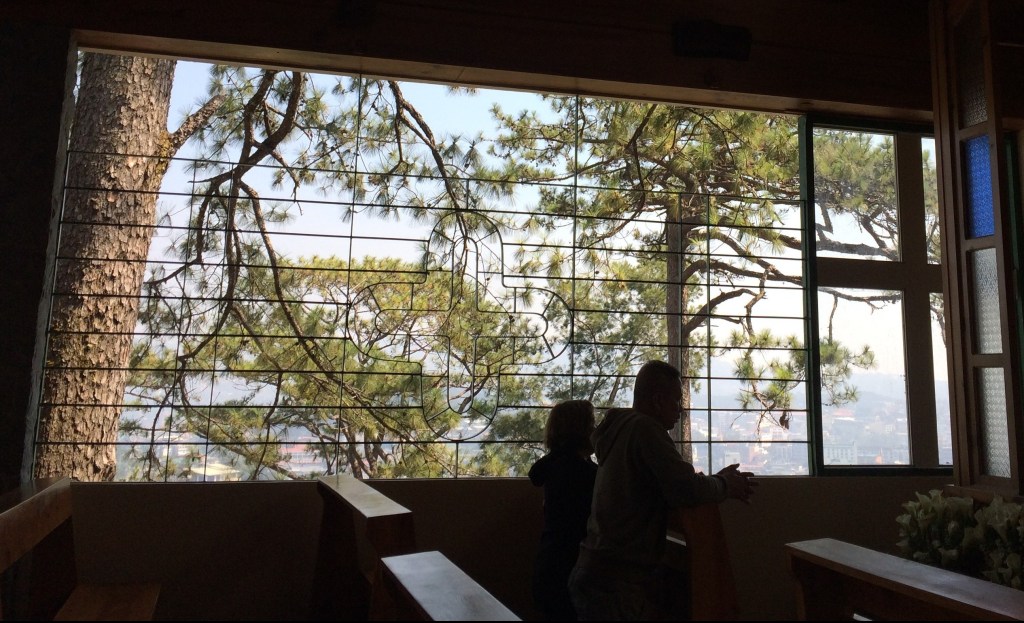
A view from the inside of the Church of the Beatitudes overlooking the Lake of Galilee in the Holy Land. Photo by the author, April 2017.

The Lord Is My Chef Sunday Recipe, 03 March 2019, Week VIII, Year-C 1Samuel 26:2, 7-9, 12-13, 22-23///1Corinthians 15:45-49///Luke 6:27-38

For the past two Sundays we have been listening to some of Christ’s most sublime teachings filled with paradoxes that may sound like a folly for us humans because they all run contrary to the ways of the world.  Beginning with His Beatitudes, Jesus taught that true blessedness comes from being poor and hungry, when we are weeping and being maligned.  More difficult yet most sublime of all were His teachings last Sunday when He told us to love our enemies and do good to those who hate us, bless those who curse us, and pray for those who mistreat us.

They are very, very difficult but doable in Christ Jesus who have taken all these lessons directly from life.  He knows very well how capable is our hearts in truly loving like Him. 

And so today, Jesus turns His attention to us His disciples who shall act as guides in putting into practice all His teachings through the education of our hearts.  It is in our hearts where all the good and evils around us originate from.  All the problems and sufferings we have in the world today like wars and various forms of violence, hunger and sexual exploitation, human trafficking and all kinds of injustice first happen right in our hearts.  Not in Syria or Jolo or the slums of Tondo or any other city in the world.  Jesus perfectly hit it right when He said, “A good person out of the store of goodness in his heart produces good, but an evil person out of a store of evil produces evil; for from the fullness of the heart the mouth speaks” (Lk.6:45).

In the first reading we find the same line of thinking during the Old Testament when Ben Sirach wrote, “When a sieve is shaken, the husks appear; so do one’s faults when he speaks.  As the test of what the potter molds is in the furnace, so in tribulation is the test of the just.  The fruit of a tree shows the care it has had; so too does one’s speech disclose the bent of one’s mind.  Praise no one before he speaks, for it is then that people are tested” (Sir.27:4-7).  Remember that in the Bible, speech and being always go together like when God created everything by simply speaking. 

And that is the whole point of Ben Sirach:  people reveal who they really are in the manner they speak as well as in the words they use to express their thoughts and feelings that all come from the heart.  Of all the creation by God, it is only the human person whom He had gifted with the ability to communicate intelligibly with speech.  Our ability to speak is in fact a sharing in the power of God who created everything by simply speaking.  But how do we use this great power of speech and communication?  Are we like the Spiderman convinced in our hearts that with great power comes great responsibility?

It is elections again in the country and sadly, it is more like a circus than a democratic process.  And the great tragedy we keep on repeating again and again is how most people put into office candidates without any qualifications at all and worst, deeply mired in every form of immorality and scandals.  Where is our heart that we allow blind people to lead us?  Or, have we become heartless that we have no regard anymore for our country, for our future and the next generation? 

Jesus is challenging us today to educate our hearts, to learn from Him, to come to Him and be like Him to have our hearts transformed like unto Him.  Though we are all weak and have all the defects as a person, our readings today lead us to the Christ who revealed to us that ultimately, “communication is more than the expression of one’s thoughts and feelings but at its most profound level is the giving of self in love” (Communio et Progression, 11).  It is the Lord Jesus Christ who had revealed in His very person and life of self-giving the paradoxical joy of discipleship, the transforming power of love gained in His own pasch that removed the sting of sin and of death in our weak humanity.  May we persevere in our education of our hearts in Jesus, “firm, steadfast, always fully devoted to the work of the Lord, knowing that in Him our labor is not in vain” (1Cor.15:58).  Amen.  Have a blessed week!

Fr. Nicanor F. Lalog II, Parokya ng San Juan Apostol at Ebanghelista, Gov. F. Halili Ave., Bagbaguin, Sta. Maria, Bulacan.

Here is the link to one of my favorite songs, “One More Gift” by Jesuit Fr. Manoling Francisco that speaks eloquently of the need to educate our hearts. Sing it prayerfully.

Christ’s “Win-Win” Solution for Humanity

DSCF1159
The beautiful Church of the Beatitudes in the Holy Land.  Photo by the author, April 2017.

The Lord Is My Chef Sunday Recipe
23 February 2019, Week VII, Year C
1Samuel 26:2, 7-9, 12-13, 22-23///1Corinthians 15:45-49///Luke 6:27-38
Life, sometimes, is a series of “good news-bad news” situation like the Beatitudes preached by Jesus during His sermon on the plain last week:  the blessings are the good news while the woes are the bad news.
 
But, wait…!  Such a view is the way of the world, not of Christ’s disciples!  
 
As we have reflected last Sunday, the Beatitudes are the paradoxical happiness of the disciples of Christ because they all run directly against the ways of the world.  Today we hear more paradoxical teachings from Jesus that are actually His “win-win” solution for our many problems like wars and other forms of enmities.  Unfortunately, we have never given them a try because we always complain the ways of the Lord as being far from realities of life, impossible to imitate because He is God and we are not.
Today let us set aside all these reservations and arguments to reflect on this new set of paradoxical teachings by the Lord:  Jesus said to his disciples:  “To you who hear I say, love your enemies.od to those who hate you, bless those who curse, pray for those who mistreat you… But rather, love your enemies and do good to them.  Be merciful, just as your Father is merciful.  For the measure with which you measure will in turn be measured out to you” (Lk.6:27-28, 35, 36, 38).  
It is very striking that Jesus repeated twice His call to “love your enemies”.
Does He not care about us who have to bear with the sins of evil people?  What a good news to those who hate us, curse us, and mistreat us!  Suwerte sila!   We would surely say they must be so lucky, even blessed with us who strive to heed the calls of Jesus to love them our enemies.
But, on deeper reflections, we are actually more blessed when we try to love our enemies because that is when we elevate – or “level up” as kids would say – our hearts to be merciful like God.  Experts claim that the best way to exact revenge against people who have hurt us is to shower them with good deeds and kindness from us they have offended.  According to these experts in counselling and psychology, evil people get disappointed and angrier with themselves when their evil plots fail especially when their targets do not react negatively.  They sound understandable because evil people derive joy in making people miserable.  So, why be miserable?
 
 
Far from being their “punching bag”, the Lord simply wants us to teach our enemies to respect us, to be kind to us by not being like themselves.  In loving our enemies, we teach evil people that more powerful than sin is the power of love.  Sin and evil consume a person while love and kindness make a person grow and mature and bloom to fullness. 
Far from being passive, to love our enemies by returning evil with good is always the most active method in fighting sins.  When Jesus asked us to offer the other side of our cheeks to those who slap our face or when we give them our tunic when they demand our cloak, we are showing these evil people that love is never exhausted unlike evil.  Love is boundless and the more we love, the more we have it, the more we keep on doing it.  Evil, on the other hand, reaches a saturation point that we get fed up with it, then we we stop doing it because it is exhausting and worst, consumes us within that in the
process destroys us.  Think of the most evil person you have known and surely, you find that person so ugly, so zapped of life and energy, eaten up from within by a festering wound.  Evil people will never have peace and joy within, glow on their face and skin because they are rotting inside like zombies.
In the first reading we heard how David as a type of Christ foregoing vengeance by holding on to God, trusting Him completely that he chose not to strike King Saul who was then trying to kill him out of jealousy.  As disciples of the Lord, we have to trust in the Word of God that can transform our hearts of stone into natural hearts filled with love and mercy like Him.  This is the point being explained by St. Paul in the second reading wherein Christ as the “second Adam from heaven” had made us bear the “heavenly image”despite our “earthly image” that is weak and sinful having come from the “first Adam from earth”.  Through Baptism, we have been endowed with all the necessary grace from God, transforming us into better persons of heaven.


One of my favorite sayings came from the desk of a friend of mine I used to visit in their office that says “If you have love in your heart, you have been blessed by God; if you have been loved, you have been touched by God.” 

See how God has loved us so immensely without measure!  Remember that scene two Sundays ago when Jesus borrowed the boat of Simon as He would do with our voice, with our hands, with our total selves?  Who are we or what do we really have and own that the almighty God would borrow from us?  Nothing!  Yet, Jesus comes to us daily with all His love without measure to bless us with everything we need.  So, who are we now to love by measuring everything, loving only those who love us, lending only to those who could repay us? 

Imagine how astonishingly disproportionate is the love of God with our kind of love.  It is in this light must we see the meaning of Christ’s final lesson this Sunday: “For the measure with which you measure will in turn be measured out to you.”   So paradoxical and provocative yet so true!  This Sunday, may we share God’s love in our hearts with others, especially with our enemies so they may also experience the loving and merciful touch of God.  Then we begin to realize too the “win-win” solution of Christ to humanity. Amen.  Have a blessed week! Fr. Nicanor F. Lalog II, Parokya ng San Juan Apostol at Ebanghelista, Gov. F. Halili Ave., Bagbaguin, Sta. Maria, Bulacan.

DSCF1160
Side garden of the Church of the Beatitudes with the Lake of Galilee at the background.  Photo by the author, April 2017.