The Lord Is My Chef Breakfast Receipe for the Soul, Tuesday Easter Wk. III, 07 May
The crowd said to Jesus: “What sign can you do, that we may see and believe in you? What can you do?” (Jn.6:30)
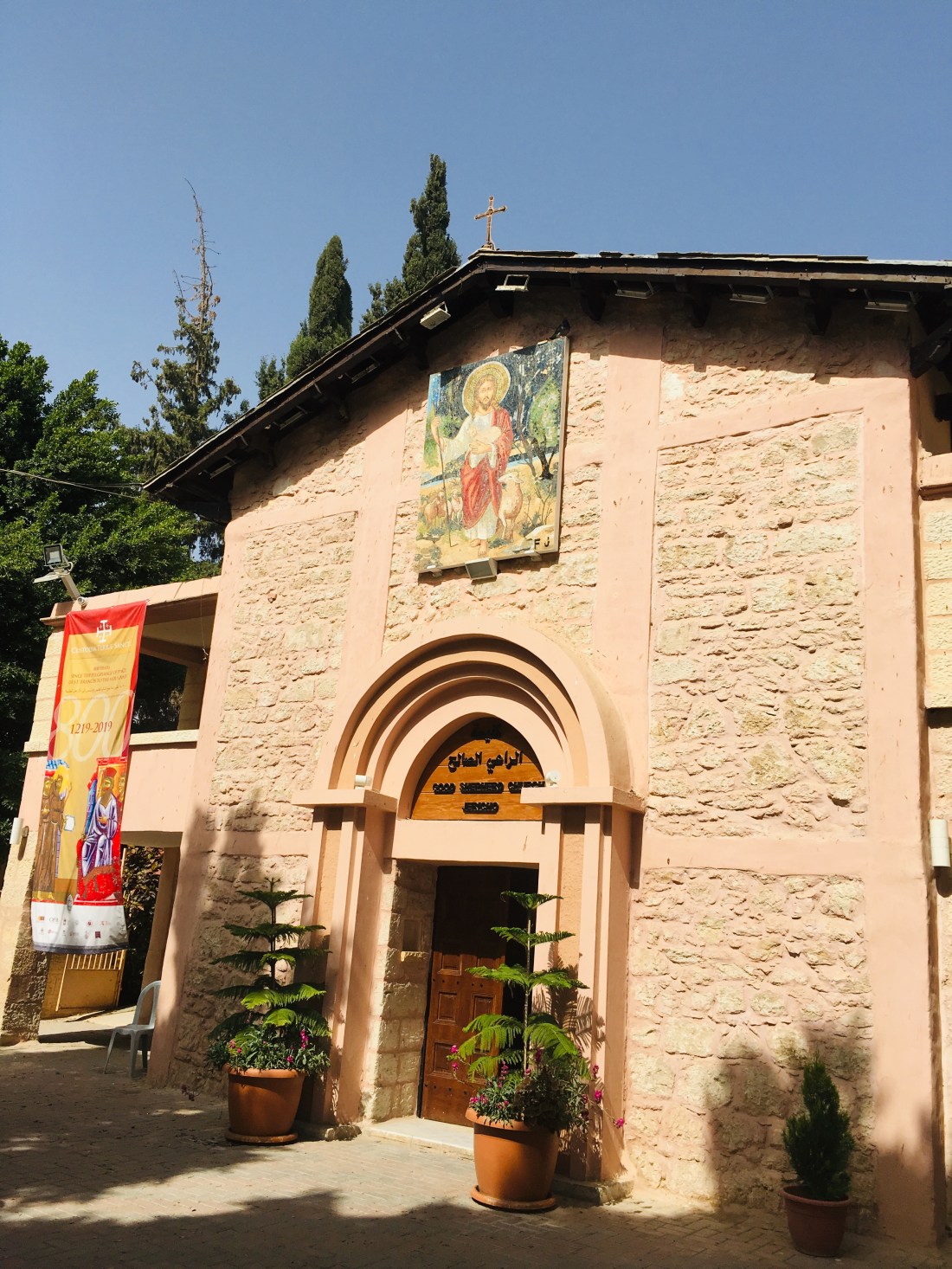
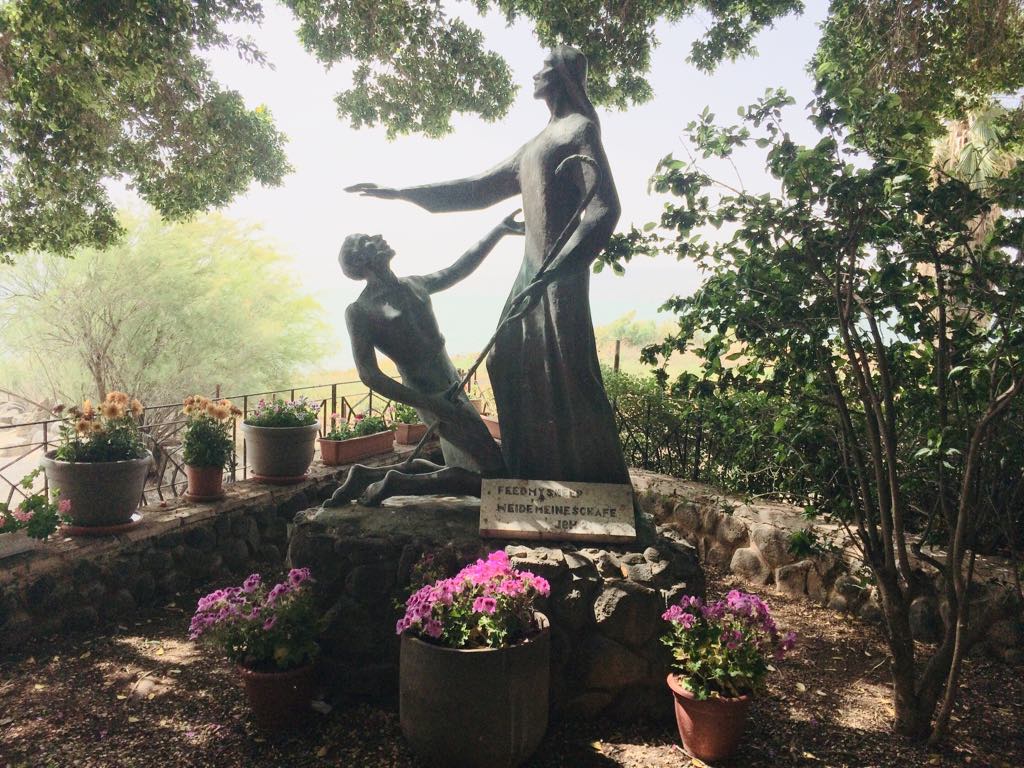
Thank you Lord Jesus in bringing us here to your Holy Land, for seeing the places you have visited to preach and to heal. Most of all in being one of us to bring the Father closest to us.
Long before we have come – and douted God – you have been here. Everything was created in you, with you.
When I look at the barren desert and wilderness with old cities and oases still there, the more I see your signs of presence.
You are life, Lord.
Problem is when we destroy nature rather than enhance it like the farmlands here in the Dead Sea area.
Worst of all Lord when we hide you from the people because of the elaborate designs of our churches that have become so kitschy or baduy.
Teach us to appreciate your noble simplicity and beauty like the many churches here in the Holy Land.
Teach us priests especially to keep in mind your church is your house of prayer and encounter, not of show and comfort.
Lawiswis ng Salita ni P. Nicanor F. Lalog II, Ika-20 ng Abril 2019
Larawan mula sa Google.
Ano nga ba ang kabuluhan
Nitong mga panata na sinasakatuparan
Kung wala namang kahulugan
Maliban sa ito'y nakagisnan?
Inyong pagmasdan itong ating mga nakagawian
Na pawang puro kaluhuan
Puro palabas wala na sa kalooban
Kaya nawala na sa atin ang kahulugan.
Pagkakataon sana upang ating masalamin
At mapaglalim mga minanang kaugalian natin
Ngunit nagiging isang malagim na tanawin
Karima-rimarim na pag-uugali ng marami sa atin.
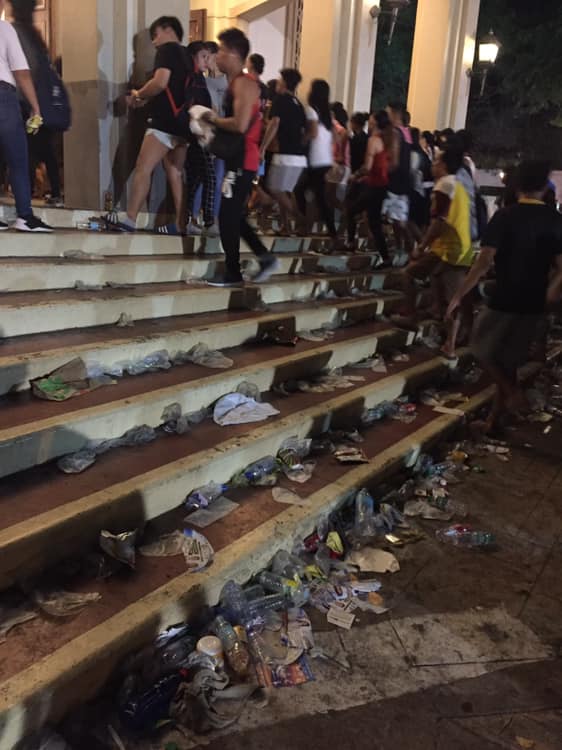
Larawan mula sa GMA News.
Isang kabataan nadismaya sa nakita
Nang gawing malaking basurahan simbahan nila
Ng mga nag-visita iglesia na walang pakundangan
Nilapastangan at sinalaula tahanan ng Diyos.
Hindi lamang iyan sa Antipolo
Kungdi maging mula Aparrri hanggang Jolo
Eksenang ganyang kagulo
Ng mga Katolikong sira ang ulo.
Larawan mula sa Google.
Anong uri nga ba ng pananampalatay mayroon tayo
Mga Filipino diumano Katoliko sarado
Hindi mababago anila pagiging Kristiyano
O sarado isip at puso sa katotohanan ni Kristo?
Ngayong "nakahimlay" Panginoon natin
Suriin mga pagkukulang natin
Kung bakit mga pagdiriwang at gawain
Sa simbahan nawalan ng taginting.
Mga simbahan ba natin maituturing na bahay dalanginan pa rin
Kung punung-puno ng mga palamuti, walang katapusang mga pagawain?
Puro flat screen at tarpaulin mga dingding
Lahat na lamang naka-recording, ang Diyos wala nang dating.
Nasaan na ang marubdob na pakiramdam
Kung ang simbahan mistulang tindahan
At ang masaklap na katotohanan minsan o palagian
Kay Father walang maramdamang kabanalan.
Madalas nating mapakinggan itong kasabihan
Kung ano ang gobyerno, ganoon din ang mga tao;
Huwag nating kalilimutan ang katotohanang iyan
Sa simbahan ma'y matatagpuan una doon sa mga kaparian.
Altar at the Carmelite Monastery in Israel with a unique Crucifix. Photo by Dra. Mai B. Dela Pena, 2011.
Today I am celebrating my 21st year in the priesthood. This is the first time our ordination anniversary falls on a Holy Thursday when we celebrate the institution of the two Sacraments most closely linked with us priests and the Church, Holy Eucharist and Holy Orders.
When we were ordained by Archbishop Rolando J. Tria-Tirona 21 years ago at the Malolos Cathedral, there were so many things going on in my mind and in my heart. But there was one thing that had remained very clear with me since that day: I am being ordained priest at the age of 33, the very same age Jesus was crucified on the Cross. From then on until now, I have kept in my heart that priesthood is suffering and dying on the Cross in Jesus and with Jesus centered on the Holy Sacrifice of the Mass.
Before the feast of Passover, Jesus knew that his hour had come to pass from this world to the Father. He loved his own in the world and he loved them to the end.
John 13:1
Of the four evangelists, it is only St. John who repeatedly mentions the expression “hour of Jesus” in his gospel account. For him, the very life of Jesus is a journey and preparation to his “hour” which is his crucifixion and death. The hour of Jesus is his passion. The word passion is from the Latin verb patior that means to undergo, to pass through, evoking some form of suffering and pain.
The hour of Jesus started in his Last Supper. It was a very long hour so to speak. And very dark. However, it was also the finest hour of Jesus when he poured out his immense love and mercy for us. Beginning at his supper when he washed the feet of the Apostles to his agony in the garden when he perspired with blood to his arrest reaching it darkest point in his crucifixion and death, the darkest hour of Jesus is also his finest hour when he was able to bear all sufferings and insults, including death because of love. Jesus showed us that in fact, love is the very process of passing over, of going beyond our means and capacity in order to transform and become better persons. That is why our darkest hour is also our finest hour when we are transformed in Jesus because precisely that is when we truly love. It is also for this reason that the Eucharist is called an agape which is the Greek word for the highest form of love that does not expect anything in return. That is the love of Jesus Christ. And supposed to be the love of us priests.
Jesus knew that his hour had come to pass from this world to the father. He loved his own in the world and he loved them to the end.
Jesus washes feet of Apostles. From Google.
Msgr. Epitacio Castro, one of our retired priests, has a favorite expression with his being a priest: “pinag-uubra lang ako ng Diyos”. True. God is just making do of us as priests because nobody is worthy of being one. We are the worst men around! We are also sinners like you, even more sinful than most of you. In the Eucharist, we priests experience that great love of Jesus Christ when he tries to make us fit as his priests, transforming us into men like him. It happens every time we are one with him in his hour of suffering and death. Priesthood is a life of leaving and loving, of passing over and transformation. The day we were ordained, our Last Supper began, our passion began because that is also our hour in Jesus Christ. Every time we celebrate the Holy Mass, we priests are reminded that our hour had come to pass, challenging us to love more. Pray for priests who no longer love the Eucharist; something is terribly wrong with them.
I am a sinner. But it is a tremendous grace of God through the Eucharist that I continue to leave and pass over, from sin to holiness and grace, from darkness to light, from selfishness to selflessness, from desperation to hope, from grief to joy. And all because of the power of love of God overflowing in the Eucharist. How can I resist to love and to forgive, to let go and move on, to be patient and to persevere when right in the Eucharist I could feel Jesus truly present, entrusting himself to me who is so untidy with sins and weaknesses? How could I not believe in him when Jesus is the first to believe in me despite my many self doubts? Every celebration of the Eucharist is an imitation of Christ when we priests go down to wash and kiss the feet of the people we serve whom we also hurt and hurt us too!
They say the darkest nights are the longest nights. Very true especially for us priests. Be patient with us when we forget so many things, when we change so often in our plans because every time there are celebrations, our hour goes over time too. Bear with us, pray for us when we sometimes become irritable even grouchy because aside from your many problems and burdens we help you carry, we have our own struggles and problems too. That hour of Jesus remains with us even after every Mass when you all go home to your own family while we priests are left alone in our parish thinking about the next celebrations. The hours are long and the nights are so dark and all we have is that flickering light of faith, hope, and love in Jesus in our hearts.
But, though the darkest nights are the longest nights, they also say that only the brave who dare walk the darkness can see the brightness of the stars above. Courage does not mean having no fear but the ability to face our fears. And, oh! We priests have many fears too, including the fears of rejection, of being misunderstood, of being boxed, and most of all, of failing. We are what you call as “warrior is a child” — “They don’t know that I come running home when I fall down. They don’t know who picks me up when no one is around. I drop my sword and cry for just a while, ‘Coz deep inside this armor, The warrior is a child.
In the Eucharist, we priests truly share in the priesthood of Jesus Christ because that is also when we feel transformed in his love, when we pass over with so much pains from the many experiences we have in our very selves and with others. Indeed, without the Eucharist, we are not priests! Every time I raise Christ’s Body and Blood, I pray that Jesus may make me whole in body, mind and heart, that he may wash me of all my sins, doubts and fears. Nobody else in the Mass perhaps, except us priests who truly feel the meaning of praying these words before receiving communion, “Lord I am not worthy that you should enter under my roof, but only say the word and my shall be healed.”
Maybe you have all seen the photos after the fire that razed the Notre Dame Cathedral in Paris this Holy Tuesday. Intact were the altar table with the huge cross beaming with light. What a beautiful reminder to us all, especially us priests, that in this life, our darkest hours are also our finest hours when we are one with Jesus Christ. No fire nor anything can ever destroy us because Jesus had overcome every evil even death for us. Every destruction and darkness are a prelude to the light and new creation of Easter Sunday that begins right here in the hour of the Eucharist of Jesus. Let us remain in Christ in love in passing over, in leaving behind the pains and hurts of the past with much love in our hearts to move on in this life. Amen.
Quiet Storm by Fr. Nicanor F. Lalog II, 03 April 2019
From Google.
A follower is protesting the title of my Lenten blogs called “40 Shades of Lent”. She, or he, wrote us that “Our Roman Catholic Church is pure and sacred to be associated with a title of a pornographic movie.” Our follower also suggested to us to “Please inform your Bishop and Priests before posting these titles on social media.”
Our follower is absolutely right that the title of my lenten reflections is indeed from E.L. James’ novel published in 2011 and later adapted into a movie in 2015. I have never read it nor seen any of its movie adaptations that were both a hit and a trending topic in 2016. At that time, I thought of having a series of reflections for Lent distinct from my regular Sunday homilies I have called “The Lord Is My Chef Sunday Recipe” since 2006. I thought that if everybody was talking about “50 Shades of Grey”, why not ride on the strong recall of the brand by having my “40 Shades of Lent” where people can find the many colors and meanings of our sacred season?! After all, Lent’s motif of the color violet comes in many shades and hues, too!
That’s it, pancit! In no way does the title “40 Shades of Lent” becomes erotic or, as our follower described, pornographic simply because of its similarity with the book or movie title “50 Shades of Grey”. But her, or his, contention has opened for us a springboard for discussion regarding the way we deal with modern media if you can bear with me.
From Google.
We live in a “mass-mediated culture” where every baby is now born with a mouse. If Jesus were with us today, maybe He would have directed us priests to “feed my geeks” instead of telling us to “feed my sheep”. Since the time of the great St. John Paul II to Pope Francis today, the Holy Fathers have all recognized this reality, asking us to find ways in proclaiming the Gospel among the young people without losing our Christian identity.
“The question confronting the Church today is not any longer whether the man in the street can grasp a religious message, but how to employ the communications media so as to let him have the full impact of the gospel message.”
St. Pope John Paul II , “Religion in the Mass Media” (Message, 1989 World Communication Day
The need for an equilibrium in our approach with media.
The two most media savvy Popes, St. John Paul II and Pope Francis have both noted in their speeches that young people today practically live in the world of media; hence, the need to reach out to them. Problem with us in the Church, both among the clergy and the laity, is when we respond in both extremes when some end up succumbing to the world of media while there are those at the other end rejecting it altogether or in some forms. What we need is some degree of equilibrium wherein we try to keep technology and media in their proper places. See the many instances when priests embrace media and technology so much that churches lose the sense of sacred with giant video screens all over with a barrage of tarpaulins in all sizes that make one wonder if it is a house of worship or videoke bar. On the other hand, there are those who reject media and technology, stepping back in history like in a parish in Poland recently where priests and the faithful burned some books including the Harry Potter series they deemed as sacrilegious and have evil forces.
It is difficult to achieve such equilibrium or balance in our dealing and use of modern media in the ministry for as long as we remain in our Pharisaical stage, of associating almost everything in the world and of the world as evil and sinful especially books and music. The gospel accounts teem with many instances when the Pharisees and scribes questioned Jesus eating and drinking with tax collectors and known sinners of His time. How sad that until now we still don’t get what He had said during that time.
Nothing that enters one from outside can defile that person; but the things that come out from within are what defile.
Mark 7:15
From Google.
Equilibrium is first achieved in the constant examination of our hearts so we can respond properly to the spirit of modernity not easily reconcilable with the demands of the Gospel of Jesus Christ. Attaining that equilibrium calls for a return to the contemplative spirit where we try to maintain our spirit of silence and prayer amid the constant changes in thoughts and beliefs including values often due to the growing efficiency of technology. Let me share with you the very words of a communication expert to conclude this piece that I hope may enlighten us to see the various shades of colors, including shadows and lights that surround us in this modern world today.
The contemplative spirit is not easily acquired, but without it people find it hard to discern the valuable from the worthless, or the enduring from the transitory. Contemplation puts us in touch with reality in a world in which a host of communication technologies work to sustain a multitude of illusions and images: a media world. The contemplative spirit helps us to see and hear beyond and through the sights and sounds we take for granted. The contemplative spirit is an attitude of mind and heart that enables us to focus on the essential, important things. It refuses to be hurried into premature rejection or acceptance of technology. If we Christians allow it to inform our use of communication technologies we shall learn to be realistic, but always hopeful, able to love and reverence our culture even as we strive, with God’s help, to transform it.
James McDonnell, “Communicating the Gospel in a Technological Age: Rediscovering the Contemplative Spirit”.
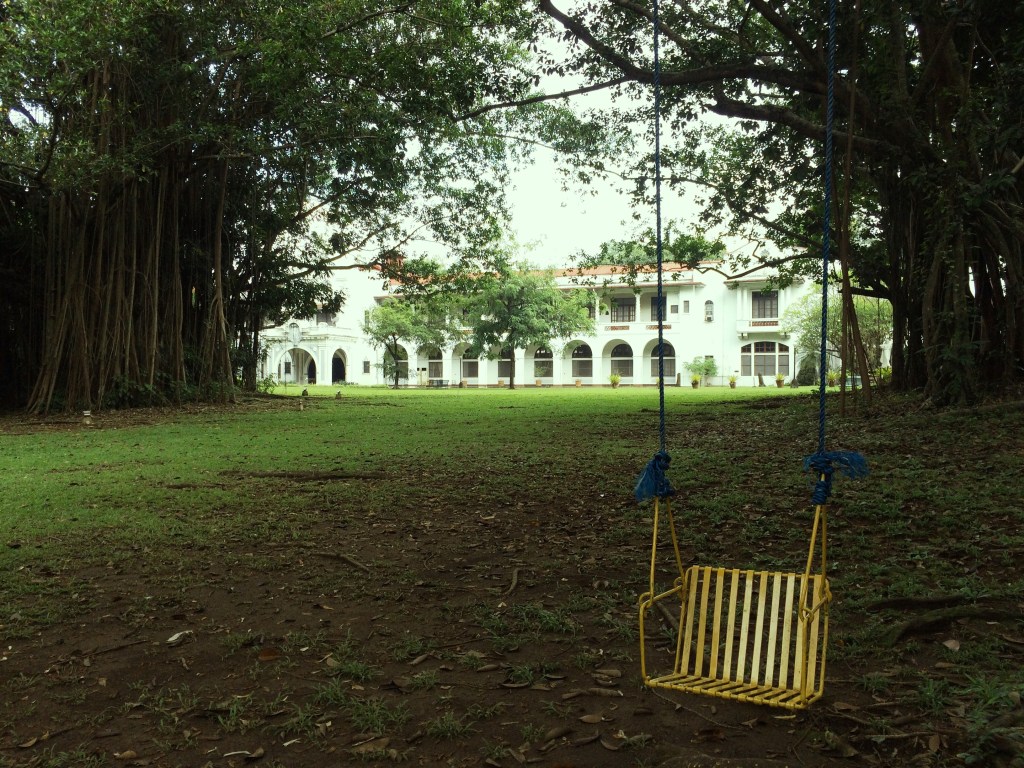
Sacred Heart Novitiate, Novaliches. Photo by author, July 2018.
Your Mass readings today complement the disturbing and shocking news headlines of sex abuse in the Church festering for the last 30 years or so.
What is so shameful and disgusting with this news is the fact you have never failed in warning us against hurting the little children including women and the poor who have nothing in life except you.
Those sins are so grave that moved you to harshly declare that “Whoever causes one of these little ones who believe in me to sin, it would be better for him if a great millstone were put around his neck and he were thrown into the sea” (Mk.9:42).
We make no excuses O Lord for these grave sins against children. No words, no programs and no compensation could ever bring back their lost innocence and dignity from the hands of your priests and servants. It is a betrayal of the highest degree like what Judas Iscariot did to you.
We are angered by their sins, Lord; but, worst of all, we are deeply angered by our inaction that allowed them to continue with their evil deeds in the guise of mercy and compassion.
But, Lord, there is also something sickening than this news when our brother priests are falsely accused of sexual misconduct. We pray you keep and protect them. We pray for faithful priests to be spared of these false accusations.
You know very well O Lord you have more faithful and celibate priests working in silence and hiddenness than the unfaithful ones. Yet, we still pray that you continue to help us heed your words of wisdom through Ben Sirach (Sir. 5:1-10):
“Let us stop relying on our wealth, power, and strength in following the desires of our hearts.
Let us stop being so sure that no one could prevail against us or subdue us for God will surely exact punishment against us.
Most of all, let us not delay our conversion and stop being overconfident with your forgiveness, adding sin upon sin, for your wrath alights with the wicked.”
Have mercy on us all your priests, dear Jesus, keep us faithful to you our Lord and our God. Amen.
Fr. Nicanor F. Lalog II, Parokya ng San Juan Apostol at Ebanghelista, Gov. F. Halili Ave., Bagbaguin, Sta. Maria, Bulacan.
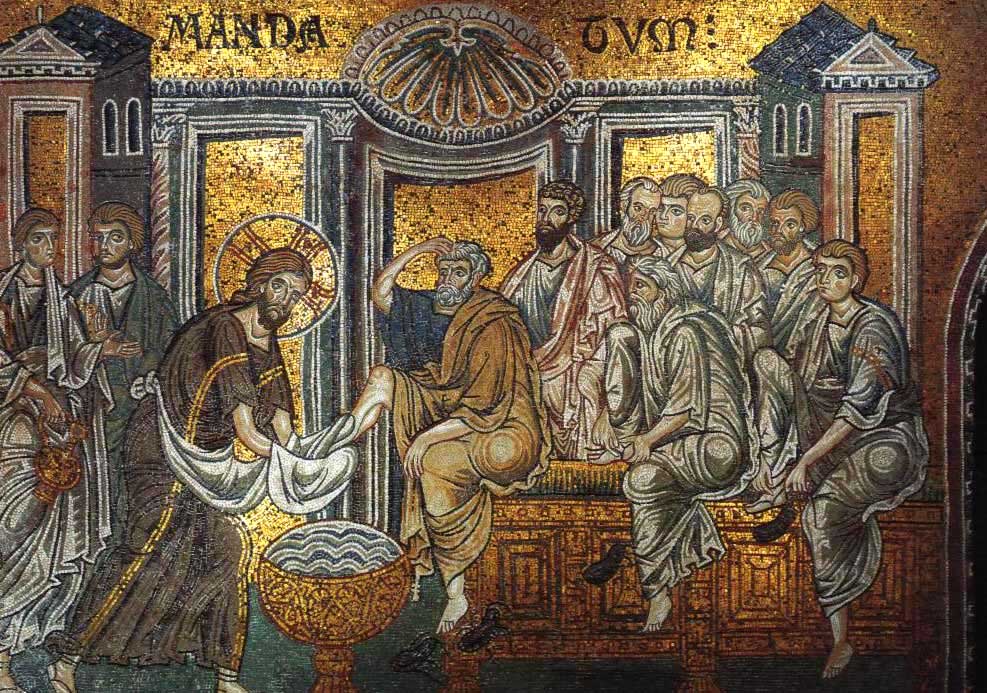
During His Last Supper, Jesus rose from His seat to wash the feet of His apostles to show them what position is all about: loving service to one another. See in this icon from Google there are only 11 apostles present; Judas left the Last Supper to “unseat” the Lord. Above is the word “mandatum”, Latin for “command”, Christ’s command for us to love by leaving our seats of power and comfort to stand with Him at His Cross.
Quiet Storm by Fr. Nicanor F. Lalog II, 22 February 2019
If you are a Catholic and a regular Mass-goer, most likely you always follow the “Roman seating position” – that is, you always sit at the back, avoiding the front seats even in other gatherings outside the church.
According to Msgr. Gerry Santos who used to give us retreats and recollections while we were seminarians, the “Roman seating position” is a carry-over from the martyrdom of the early Christians who were always seated at the front rows of the Colosseum in Rome who were forcibly pushed to be devoured by hungry lions and beasts below.
Of course it is a joke but it holds so much grain of truth because we often refuse to take the front row seats for fears of being put on the spot, of making a stand. How ironic that in this age when seating positions matter so much for us, we have forgotten that more important than the position and prestige that come with the seats we occupy – literally and figuratively speaking – is the stand we take in every issue we face. Protocols dictate in so many occasions how seats indicate power and authority; the throne is always reserved to the highest in rank like kings and presidents. And the closer one is seated to the one in command, the wider is one’s sphere of power and influence too. Unfortunately, this is not everything because every seat of power and authority is always a call to serve, to make a stand for what is true and what is good.
Jesus Christ showed us the true meaning of our seating positions during the Last Supper on Holy Thursday evening when He rose to remove His outer garments to wash the feet of His apostles (Jn.13:1-15). It was a task left for slaves only but Jesus used it as a gospel parable in action to show us that what matters most in life is not where we are seated with Him but where we stand with Him. It was exactly what He meant when He said that anyone who wishes to be the greatest must be the least and the servant of all.
Recall my dear readers how during that evening of the Holy Thursday when John the beloved disciple sat not only beside Jesus but even rested his head on His chest to signify their intimacy as friends (Jn. 13:23). That touching gesture of friendship and love took its summit the following Good Friday when John the beloved was the only one of the Twelve who remained standing with the Lord at the foot of His Cross with the Blessed Mother Mary. In that scene we see how John literally stood his ground as the beloved disciple by remaining faithful and loving with the Lord from His Last Supper to His Crucifixion. Peter, the prince of the Apostles, was nowhere to be found on Good Friday after denying Jesus thrice during His trial before the Sanhedrin the night of His arrest. Very interesting was Judas Iscariot who committed suicide after realizing his grave sin in betraying the Lord. See how he had left the Lord’s Supper to deal with His enemies for His arrest. What an image of the traitor who could not stay on his seat during the Lord’s Supper was the same one who could not stand to face Him again at the foot of the Cross. See how those people who refuse to sit with us are also the ones who never stand with us, stand for us like Judas, a traitor!
I tell you these things even if Holy Week is still more than six weeks from now but in the light of the Feast of the Chair of St. Peter which is about the Primacy of Rome or the Pope as Vicar of Christ and successor of St. Peter. We celebrate this Feast to remember St. Peter and his successors love and service to the Church as examples we must all emulate. In 110 AD, St. Ignatius of Antioch wrote the Christians in Rome to describe to them the Church of Rome as the “primacy of love” and the “primacy of faith”. Every power and every authority signified by the chair or cathedra in the Church as well as in the world when we speak of “seat of power” must always be seen in the light of Jesus Christ’s example of loving service at His Last Supper. This is especially true for us priests who are united in Christ and with Christ in the Eucharist.
This festering problem of sexual abuse in the Church is largely due to our deviation from this primacy in love for Jesus as priests. We have been so focused with our seats – positions and titles – that we have forgotten to stand with Christ at the foot of His cross, standing for what is good and true, just and right. We have been so focused with the “party” of the Supper of the Lord and have forgotten Jesus Himself. Seminarians have been so focused with the vocation and the call, with ordination, forgetting the more essential, the Caller Jesus Himself! And that explains why some in the clergy and those in the hierarchy come up with so many excuses and alibis for the many things we do in our ministry, in our churches, in our parishes, and in our lives because we are only concerned with our office and position but never the Master.
When we love Jesus or any other person, we do not have to justify our actions. Love that is true and pure does not need justifications. But the moment we start making justifications, something is wrong like when we justify our special relationships, no matter how deep or shallow it may be for clearly, there is no primacy in love for Jesus and the Church.
When we justify our vices, our lifestyles, our business endeavors that Canon Law prohibits, clearly there is no primacy in love for we cannot be poor for Christ.
There is no problem with having advocacies as priests but when we are aligned with ideologies contrary to Christ, or when we play in partisan politics, there is neither primacy of faith nor primacy of love. It is the Lord who changes the world, not us, not our programs, not our ideas.
It is our duty as priests to love like Christ but to adopt children and raise them as our own children using our names, there is no celibacy, only stupidity.
Like Jesus, we need money to get our programs going but when we lack transparency and accountability, that is stealing and banditry.
When all we have is the ministry, the priesthood without prayer periods, without the Eucharist, we only have the call but not the Caller Jesus Christ Himself.
More than ever, today Jesus Christ is asking us all His priests to make a stand for Him, to stand with Him, to suffer with Him and to die with Him by leaving our seats of comfort and seats of power.
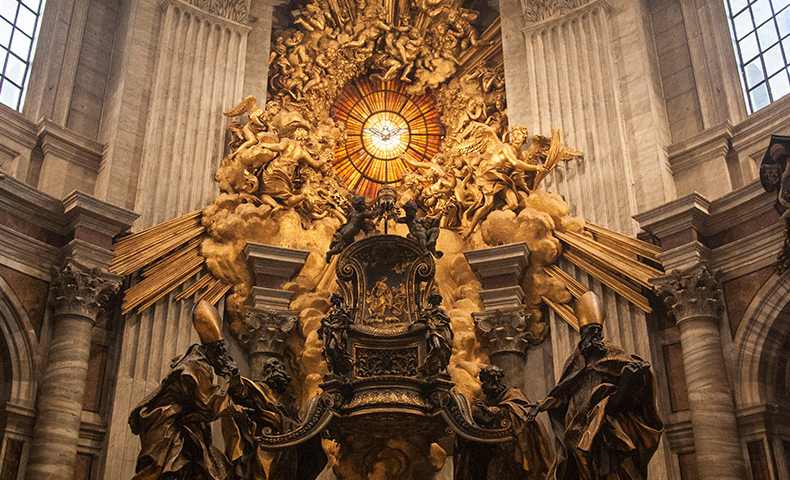
The Chair of St. Peter at the high altar of the Basilica of St. Peter at the Vatican flanked below by the two teachers of the East, St. John Chrysostom and St. Athanasius with the two Latin Fathers of the Church St. Ambrose and St. Augustine. All four saints showed us how love stands on faith; that, without both love and faith, everything falls apart in the Church. Photo from Bing.
The Lord Is My Chef Breakfast Recipe for the Soul
Friday, Feast of the Chair of St. Peter, 22 February 2019
1Peter 5:1-4///Matthew 16:13-19
Glory and praise to you, O Lord Jesus Christ as we celebrate today a most unique feast, the Chair of St. Peter!
It is so unique O Lord especially in this age when the world is so concerned with seating arrangement whether at home, in school, in offices, in buses… everywhere seats matter these days because every seat is about position, rank, power and convenience.
And we have forgotten that more important than our seating position is where we stand.
On this Feast of the Chair of St. Peter, remind us Lord especially your priests of that beautiful example you have shown at the Last Supper when you left your seat to wash the feet of the Apostles.
How sad and shameful, O Lord, when we your priests fail to realize that the throne of the Eucharist is not a seat of power or prestige but a seat of loving service to everyone.
So true were the words of St. Ignatius of Antioch in his Letter to the Romans in the year 110 that the Primacy of Rome is the Primacy of Love because primacy in faith is always primacy in love, two things we can never separate.
May we your priests heed the call of St. Peter, the designated “owner” of that Chair, that we “Tend the flock of God in your midst, overseeing not by constraint but willingly, as God would have it, not for shameful profit but eagerly. Do not lord it over those assigned to you, but be examples to the flock” (1Pt.5:2-3). Amen. Fr. Nicanor F. Lalog II, Parokya ng San Juan Apostol at Ebanghelista, Gov. F. Halili Ave., Bagbaguin, Sta. Maria, Bulacan.
For the past three weeks we have seen how Luke had been true to his intent of writing in an “orderly sequence” the events in the life of Jesus Christ so we may realize the “certainty of the teachings” handed down to us by the apostles (Lk.1:3-4, Jan. 28). Taking off from the scene at the Nazareth synagogue, Luke showed us how Jesus is the “word who became flesh” when He told the people, “Today this Scripture passage is fulfilled in your hearing” (Lk.4:21). And like those people in the synagogue, we too are so amazed with the words of Jesus but likewise disturbed, even mad when He hits a soft spot within us. That is how Jesus does His mission, always inviting us to listen and act on His word that is fulfilled in the “today” like in the calling of the first four apostles, the brothers Simon and Andrew, James and John. After driving Him out of their synagogue, Jesus went to preach to the crowd who followed Him along the shores of Gennesaret.
While the crowd was pressing in on Jesus and listening to the word of God, he was standing by the Lake of Gennesaret. He saw two boats there alongside the lake; the fishermen had disembarked and were washing their nets. Getting into one of the boats, the one belonging to Simon, he asked him to put out a short distance from the shore. Then he sat down and taught the crowds from the boat (Lk.5:1-3).
What a lovely sight to behold, my dear readers, of Jesus Christ borrowing the boat of Simon to preach to the people. Imagine the Son of God, through whom everything was created, borrowing the boat of Peter? Imagine how that boat of Simon must have looked like. It must be so ordinary and most likely, even with some holes with nothing so outstanding – just like us! Yet, here is the King of kings borrowing that boat from Simon. Luke is showing us here a “parable in action” of how the Gospel is to be preached to all people with no exception. It is a beautiful imagery of the Church gathered around our Lord and Master with Simon – like us – in supporting role. Today, it is the boat of Simon being borrowed but later on, it would be his voice, his total self that Jesus would borrow, very similar with us too.
After he had finished speaking, he said to Simon, “Put out into deep water and lower your nets for a catch.” Simon said in reply, “Master, we have worked hard all night and have caught nothing, but at your command I will lower the nets.” When they had done this, they caught a great number of fish and their nets were tearing. When Simon Peter saw this, he fell at the knees of Jesus and said, “Depart from me, Lord, for I am a sinful man.” Jesus said to Simon, “Do not be afraid; from now on you will be catching men.” When they brought their boats to the shore, they left everything and followed him (Lk.5:4-6,8,10-11).
This is the climax not only of our gospel scene today but also of the whole series these three Sundays that started on a day of rest inside the synagogue of Nazareth when Jesus came to proclaim the word of God. The actualizing power of the word of Jesus Christ fulfilled in every “today” when proclaimed and heard and accepted. See how Simon was filled with fear that he fell into his knees after seeing the bountiful catch after obeying the words of Jesus, “Master, we have worked hard all night and have caught nothing, but at your command I will lower the nets.” Of course, the fish is always in the sea; the key to their great catch was the presence of Jesus Christ. It is the same with our own lives when we work so hard in our jobs or career and in our studies and other pursuits but we are still left empty. But after finding Jesus, we are so overwhelmed with so much blessings not really in material form but something more deeper and lasting. The word of God is His very presence and its effect is always in the here and now, not later. Like the other Sunday, we said it is not enough to enter the church but we enter the person of Jesus Christ. And the moment we enter Jesus, we then become like Simon, filled with His presence that we no longer address Christ as Master or Teacher but also Lord. Like Simon, we also experience a deepening in our recognition and relationship with Jesus: at first, we relate to Him more as a Master and Teacher but later, we realize that He alone is our Lord.
See how by placing the miraculous catch, the call of Simon and his companions, and their response at the beginning, Luke is teaching us the spirit that must guide us in proclaiming and listening to the Gospel Jesus Christ. In these three Sundays, we have seen Jesus Christ as the central figure for He alone is our Master and Lord. He alone is the one calling us all to be fishers of men and to follow Him means to leave everything behind like Simon and company.
Here lies our problem today when we forget Jesus our Master and Lord. So many times we in the Church, especially us priests and those in the hierarchy as well as some laypeople forget Jesus, usurping His Lordship that we speak and act like God. Luke reminds us in this scene at the Gennesaret that we do not replace Christ! In the first place, remember that people come for Jesus in the first place and only Him, always Him whom we must share to everyone. How sad that so often, consciously or unconsciously, some priests create cults around their very selves, we become the standard of everything, we claim everything that people look up to us more than to Christ. Like Simon who would be called as Peter later, our job is to lend our boat and our voice to Jesus and not to replace Him. Like the prophet Isaiah, we are being sent forth by the Lord to bring Him among people, to make Him present among them. As Paul explained also these past three weeks in his first letter to the Corinthians, the Church is the living body of Christ that we all build together. There is the diversity of graces, gifts, and ministries that come from the Holy Spirit to complement each other. Most of all, in proclaiming and listening to the word of God, there must always be love for without it, nothing would have value at all. And that alone proves to us the centrality of Jesus Christ who alone is our Master and Lord, who calls us despite our many defects like Simon. Jesus alone is the one we must love and serve, His very person and not only His call and teachings. A blessed week to you! Amen. Fr. Nicanor F. Lalog II, Parokya ng San Juan Apostol at Ebanghelista, Gov. F. Halili Ave., Bagbaguin, Sta. Maria, Bulacan.
The Cross of Christ atop the church of our Lady of Lourdes in France. Photo by my former student Philip Santiago during his pilgrimage, September 2018.
We had a rare weekend yesterday in the Feast of the Presentation of the Lord that wonderfully complemented our gospel on this Fourth Sunday in Ordinary Time. Recall that last Sunday we were told how Jesus went home to Nazareth, entering the synagogue on a day of rest. Everybody was amazed with His “gracious words” in proclaiming the word of God that we ended the gospel with a very positive note when Jesus declared “Today this Scripture passage is fulfilled in your hearing” (Lk.4:22). Our gospel today repeated this line as its take off point to continue the story of Jesus at the synagogue but, this time Luke tells us of a twist from the very positive “all spoke highly of him” to their skeptical “Isn’t this the son of Joseph?” (Lk.4:22). The mood deteriorated further after Jesus had spoken so that “the people at the synagogue were filled with fury. They rose up, drove him out of the town, and led him to the brow of the hill on which their town had been built, to hurl him down headlong” (Lk.4:28-29)!
What and how did this sudden turn of events happen? Here we find the complementing Feast of the Presentation yesterday based on the infancy narratives of Christmas by St. Luke when Simeon told Mary the mother of Jesus, “Behold, this child is destined for the fall and rise of many in Israel, and to be a sign that will be contradicted – and you yourself a sword will pierce you – so that the thoughts of many hearts may be revealed” (Lk.2:34-35). See how Jesus at the inauguration of His ministry at their Nazareth synagogue last week proclaiming the word of God would now start to be seen as a sign of contradiction among His people as prophesied by Simeon to His mother yesterday. That would reach its highest point 33 years later in Jerusalem where He was presented to the Temple 40 days after Epiphany after resolutely going there to offer or present Himself to the Father on the Cross. This explains why Jesus merely “passed through the midst of them and went away” when the people at the synagogue tried to hurl Him down headlong because His time of final offering had not yet come. But very clearly here at the synagogue of Nazareth, Christ is indeed the sign of contradiction not only to His people but also to us in this generation when we would also speak highly of Jesus, shouting Amen with clapping of hands and suddenly hit people near us with harsh and nasty words or even brutal force. Most of all, like the Lord, we too have experienced being a sign of contradiction when people would speak highly of us then suddenly or over time, turn against us and speak ill of us, betraying us like what Judas did to Jesus on Holy Thursday.
My dear friends in Christ, it is our calling and our life too in living out the word of God through our life of witnessing His immense love in service and mercy for those in the margins. Every time we gather for the Sunday Mass like when Jesus entered the synagogue of Nazareth on a day of rest, He invites us to follow Him to be a prophet by entering Him more than merely the church building. Being a sign of contradiction like Jesus is our prophetic mission in Him. So unlike what most people think, a prophet is not a fortune teller or a seer of the future. As the spokesperson of God, a prophet is one who makes God’s word happen or fulfilled in every here and now. Keep in mind that one feature of Luke’s gospel is the pre-eminence of “listening and doing” the word of God like when he reported how Jesus declared Isaiah’s prophecy fulfilled in their hearing that led into the sharp and sudden shifting in the reaction of people against the Lord, from approval to rejection.
First of all, those reactions were most evidently from His claiming to be the Messiah referred to in Isaiah’s prophecy on whom the “Spirit of the Lord rests upon.” He was the one who proclaimed the word and if we have truly immersed ourselves into this beautiful scene in the synagogue on that Sabbath day, we would really feel Jesus is in fact the one Isaiah is speaking of as being “anointed to bring glad tidings to the poor, liberty to captives, sight to the blind, freedom to those oppressed, and to usher in a year acceptable to the Lord” (Lk.4: 18-19). Salvation decisively begins in Christ and through Christ whenever we enter Him in His words. That “today” in Nazareth synagogue is also the today of our own time that continues to provoke astonishment among others when we try to be Christ’s witnesses of authentic love for others. That is perhaps the sad reality of these days when it becomes big news when people do something genuinely good and beautiful like the woman who impulsively rented 20 hotel rooms in Chicago so the homeless could escape the deep freeze this week in the US Midwest; her deed snowballed into other strangers doing the same! That is essentially the meaning of Paul’s lofty words on love being the greatest of all gifts because it makes God most present in our midst. To truly love like Christ is essentially being a sign of contradiction in this world where the norm is selfishness and self-centeredness often masked in different in lofty terms and ideals bereft of any love at all.
Along this line of self-centeredness we find Luke reminding us in this scene at the Nazareth synagogue of the persisting problem self-entitlement among people then and now when we prophetically live out our mission of making Christ present. People always look down and frown upon those who try to be good and holy by striving to do what is right and just while the holier-than-thou sanctimoniously feel they are the only ones anointed to do such things because they are entitled. They are the modern Gnostics according to Pope Francis in his latest encyclical about holiness in our modern time (Gaudete et Exsulatate)” who feel as the only ones gifted in knowing what is right or wrong, true and good as if they are God. Like those people at the synagogue in Nazareth, they refused to accept Jesus of being more knowledgeable because He is the son of Joseph who was a carpenter. Jesus would strike at the very core of their self- entitlement when He told them “Amen, I say to you, no prophet is accepted in his native place” (Lk.4:24), citing how Elijah and Elisha of the Old Testament days were both sent by God to help pagan peoples and not the Jews who have turned away from Him exactly like them. That filled them with fury against Jesus, wanting to hurl Him down the hill headlong. It is the same feeling those people around us experience like our relatives and friends who could not accept we are better than them that they start spreading all kinds of lies and nasty talks against us as they see their self-entitlement slowly eroding. Such is our life as a prophet like Jeremiah, always going against the flow of the people, choosing Christ to be a sign of contradiction and give way to the fulfilment of God’s word among us. Amen.Fr. Nicanor F. Lalog II, Parokya ng San Juan Apostol at Ebanghelista, Gov. F. Halili Ave., Bagbaguin, Sta. Maria, Bulacan.
Quiet Storm by Fr. Nicanor F. Lalog II, 24 January 2019
Vacation and vocation are two important realities for us priests. In fact, the two are closely related because both are rooted in God. Problems happen when we priests totally forget God both in our vacation and in our vocation. And this has always been our problem because we have refused to go back, get closer and enter God Himself.
Both vacation and vocation came from Latin: the former is from the word “vacare” that means to be emptied or vacant while the latter has its roots in “vocare” which is to be called. Every vacation is a sabbath, a resting in God who calls us to this priestly vocation. This concept is beautifully expressed in our Filipino word “magpahinga” that literally means to be breathed on by God. When we priests go on vacation, the more we are able to serve people better with joy because that is when we are filled with God. Every vacation is a path leading us closer to God that is why priests are encouraged to go on sabbatical leaves, whether the usual weekly breaks or the yearly longer vacations. This past week we have heard from the gospels in our daily Masses how the enemies of Jesus missed this important aspect of sabbath when they would always question His healings on days of rest, prompting Him to ask them, “Is it lawful to do good on the Sabbath rather than to do evil, to save life rather than destroy it?” (Mk.3:4). God is always bigger than Sabbath because “Sabbath was made for man, not man for the Sabbath. That is why the Son of Man is lord even of the Sabbath” (Mk.2:27-28). Even laypeople have fallen into this trap of emphasizing sabbath more than God Himself that we make many excuses of not going to Sunday Masses because bonding with family and friends is more important. Every year, less and less people are going to Church celebrations of the Holy Week and Easter because they would rather take the opportunity to go on vacation as they try hard to convince themselves that God would perfectly understand them anyway.
This problem with vacation takes on its most unfortunate turn when we priests deal with our vocation. In my 20 years in the priesthood with the last seven years spent in direct interactions with seminarians as teacher and spiritual director, I have found something so wrong now becoming a trend that is probably one of the reasons why we are plagued with all kinds of problematic priests in the Church. It is a new kind of idolatry when we have come to worship and adore more our vocation and priesthood than God Himself. We have forgotten the great distinction between the call and the Caller. When the one being called, whether a priest or a seminarian, gets so focused with the call forgetting the Caller, problems arise and not too far from the scene are evil and sin.
“Brothers and sisters: Every high priest is taken from among men and made their representative before God, to offer gifts and sacrifices for sins. No one takes this honor upon himself but only when called by God, just as Aaron was. In the same way, it was not Christ who glorified himself in becoming high priest, but rather the one who said to him: You are my son; this day I have begotten you” (Heb.5:1,4-5).
Priestly vocation is always a gift and a call from God to be closer and be one in Him and with Him in Christ. Vocation is the call of God but not God. The Caller is always above and distinct from the call. The one being called is meant to end with the Caller and not with the call. It is a terrible problem when a seminarian insists on being ordained as if it is a right simply because he is called even if the seminary fathers do not see him responding properly to his priestly calling. It becomes a tragedy when priests insist with their own beliefs and perceptions of things as part of their responding to their vocation, forgetting or even totally disregarding Christ as well as the norms and teachings of the Church, His visible presence (sacrament) on earth. The sex scandals that continue to rock and deeply hurt the Church stem from this erroneous perception by some priests who cling to their vocation, unmindful of the Caller we all need to imitate in holiness so we can also embrace children and uplift women like Him in love and respect. See how some of our churches have become like birthday cakes, malls and even dance halls when pastors pretend to be bringing the people closer to God with all their pomp and pageantry when in fact are just massaging unconsciously their bloated egos. When priests get busy more with church constructions, fund raising and other social events without any time for prayer to be with God and His flock, they worship the call, not the Caller. The height of this idolatrous worship of the vocation by priests is when we make up so many alibis and excuses to justify our various preoccupations like luxurious living, vanities that include too much sports and body-building, vices in all forms like addiction with telenovelas, engaging in businesses, frequent travels that Pope Francis had branded as “scandal of the airports”and yes, even adopting children!
I wrote this not to put down my brother priests and students in the seminary but to contribute in whatever way that we can grow closer with Jesus Christ who calls us to be one in Him. I am also a sinner, “a worthless servant of the Lord who tries to do my duty” as His priest (Lk.17:10). Lately in our daily Masses as well as this coming Sunday we shall hear in the gospel of how Jesus would enter their synagogue in Capernaum on a sabbath. It is a very simple scene but filled with meanings, asking me whether I simply enter the church or do I enter God? How sad that until now there are people like the Magi from the East asking “where is the newborn king of Israel?” while inside our churches that have merely become a building but never the Body of Christ because what we only have is the call, or maybe just the echo of that call without the Caller.
*Photo by the author, chapel of Holy Family, Sacred Heart Novitiate and Retreat House, Novaliches, Quezon City, June 2015.