Our “Bestest” Gift of Christmas

Quiet Storm by Fr. Nicanor F. Lalog II, 30 December 2019

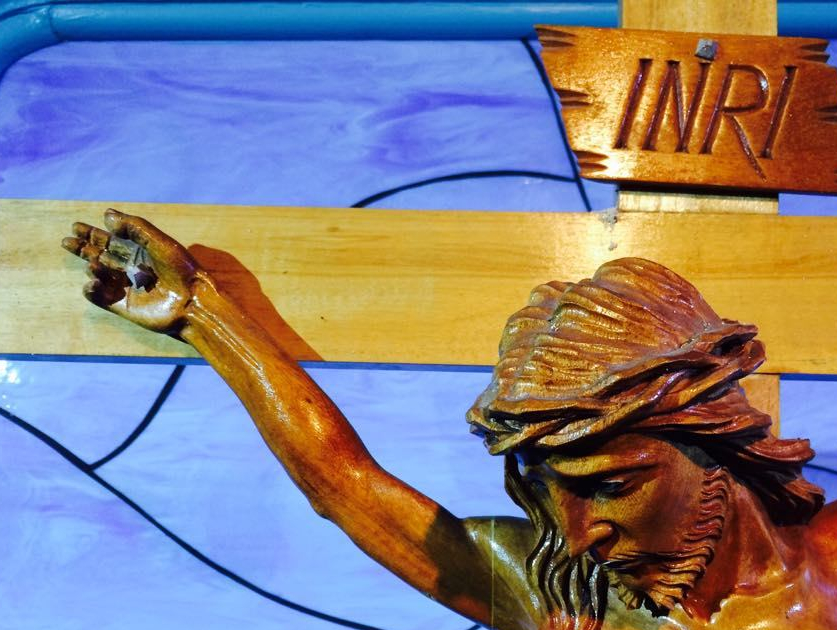
Photo by Mr. Jim Marpa, Carigara, September 2019.

Today we conclude our series on the best Christmas gifts we have received following Christ’s coming more than 2000 years ago: the gift of childhood, of being child-like.

What a joy to keep in mind how God the Almighty chose to become human like us to show us that the path to true greatness and power is in becoming small like an infant, being like a child.

How foolish that we always “play” God to be great and powerful!

The central mystery of Christianity is our transformation from world-wise, self-sufficient “adults” into abiding children of the Father of Jesus by the grace of the Holy Spirit. All else in the Gospel, from the Incarnation of the Lord to his hidden and public lives, his miracles and preaching, his Passion, Death and Resurrection has been for this, of becoming like a child.

The late Cardinal Hans Urs von Balthasar, “Unless You Become Like this Child” (1991, Ignatius Press)

The child-like attitude of Jesus Christ

The best gift we can have this Christmas is to be child-like, to regain and reclaim our sense of childhood, of attending to that “inner child” within us when we trust more, believe more!

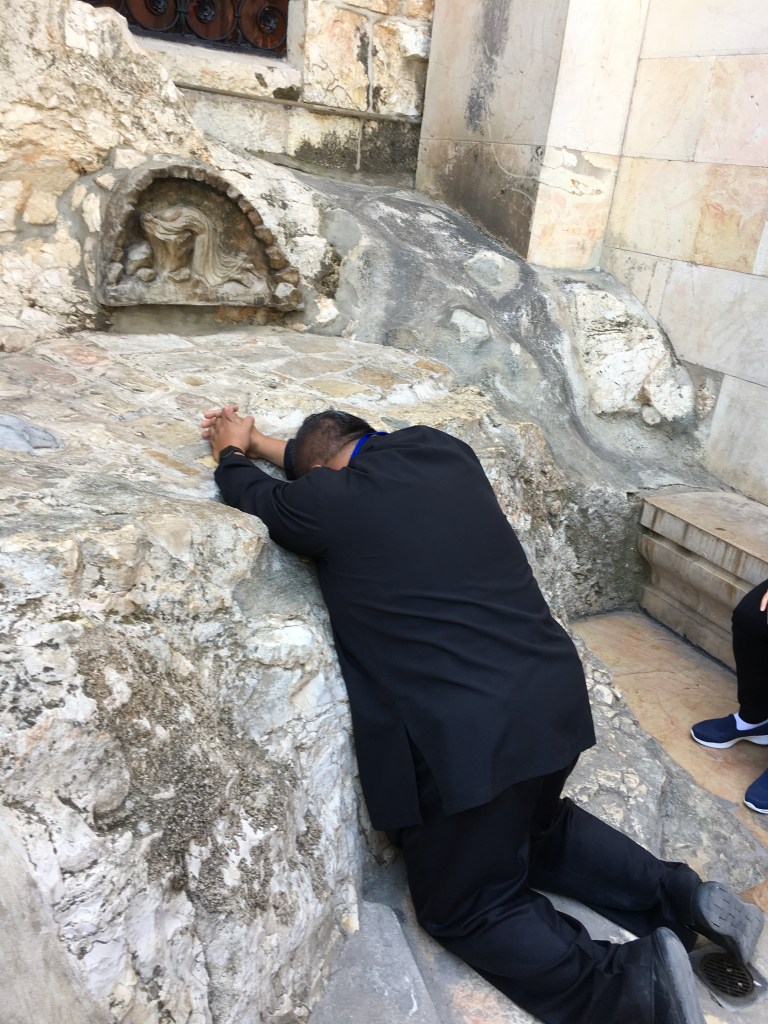
Photo by Mr. Jim Marpa, Carigara, September 2019.

See how Jesus Christ entrusts himself not only to his Father but most of all to us!

That is the touching message of the Nativity scene, of how our Lord and God, the King of kings through whom everything was created giving himself to us like a baby, asking us to love him, to take care of him, to be gentle with him, to protect and keep him safe from all harm.

And the key to claiming this great gift of being like a child is for us to learn again how to trust more and fear less like Jesus who showed us by example, not only with words his being child-like.

His constant acknowledgement of God his Father always speaking and doing his will tells us how Jesus from childhood into is adulthood remained like a child by entrusting his total self to God, reaching its highest point on the Cross when he cried out, “Father, into your hands I commend my spirit” (Lk.23:46).

Trust more, fear less

To be like a child according to the example of Jesus Christ is to always trust God and others, and fear less.

Like us, Jesus experienced fears, getting afraid of death but unlike us, he courageously faced death by trusting the Father by “resolutely” going to Jerusalem to be crucified!

When the days for his being taken up were fulfilled, Jesus resolutely determined to journey to Jerusalem.

Luke 9:51

It is normal to have fears, to be afraid.

Fear is not totally negative; it has its good effects that have actually led mankind to every great progress in life like the discovery of new lands and territories, new medicines, new inventions and other things. 

Fear becomes a liability when it prevents us to trust more like little children. 

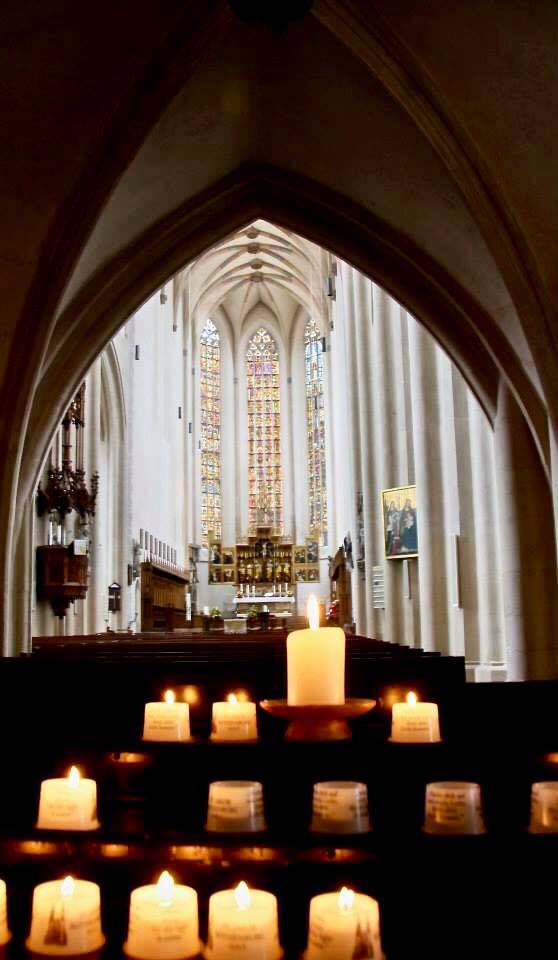
Photo by Mr. Jim Marpa, 2018.

Kids and young people are often “positively” fearless because they trust so much nobody would hurt them or no one would forsake them. 

As we age, our fears increase because our trust decreases:  we fear so many things because we are afraid of losing the little we have, we are afraid of getting hurt, we are afraid of starting all over again.

We are afraid of getting old, of getting sick, and of dying. 

What an irony how we started in life fearing almost nothing as babies and kids that we grew up so fast but as we aged and matured, we fear so many things that we have stopped growing and stopped living even long before we actually die.

The other day, December 28, we celebrated “Niños Innocentes” or “Holy Innocents” to remember those male children below two years old ordered killed by King Herod for fears of the “newborn king of Israel.” 

Herod lived in constant fears of being deposed in power that he ordered the killing of his three sons and ten wives after suspecting them of trying to overthrow him.

We may not be like Herod with the way we react with our many fears but like him, we end up with same effects like death of friendships, death of love, death of everything, the end of life and adventure.

Maybe that explains why somehow as we get older, we “mellow” and become like children again, realizing we cannot control everything in life, that it is always best to act than to react in every situation.

Do not miss out this great gift of Christmas of becoming like a child.

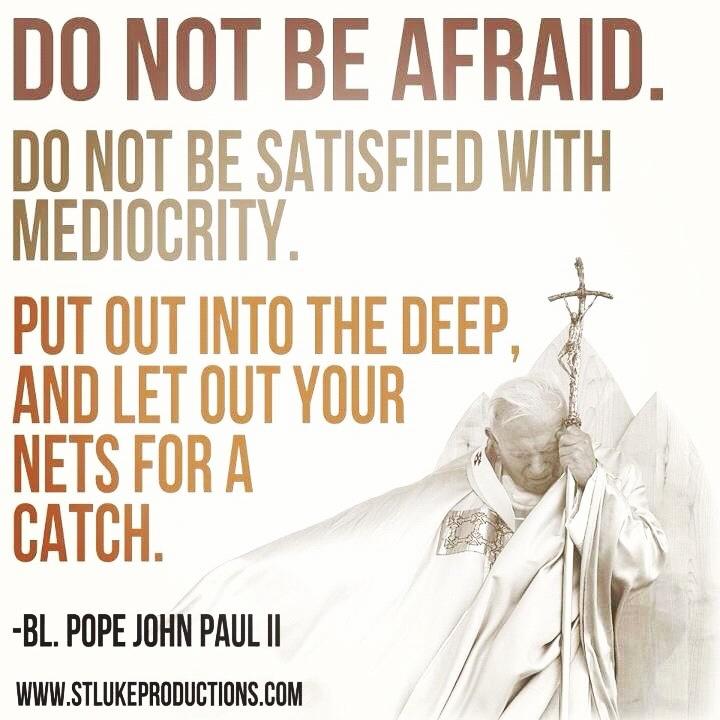
Trust Jesus Christ who called on us not to be afraid for he is with us always!
Blessed be God forever!

The Lord Is My Chef Simbang Gabi Recipe, 24 December 2019

2 Samuel 7:1-5, 8-12, 14, 16 ><)))*> <*(((>< Luke 1:67-79

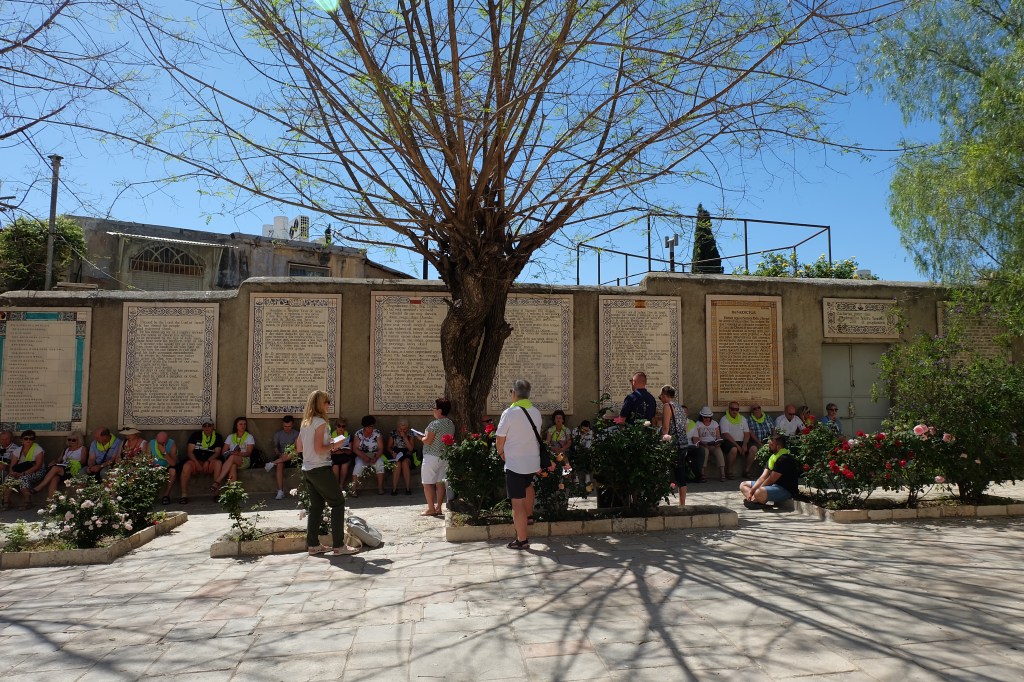
Marker on the Church where St. John the Baptist is believed to have been born in Ein Karem, Jerusalem. Photo by author, May 2019.

At last!

These are most likely the two words we must be saying today on this ninth day of our Simbang Gabi.

Finally, we have completed the nine day novena to the birth of our Savior Jesus Christ for tonight will be Christmas.

But, more than being the last day of our novena, today is also the beginning of better days ahead for us all starting with Christmas!

From this day on, let us imitate Zechariah in his new found faith, hope and love in God expressed in his song of praise and thanksgiving after recovering his sense of hearing and speaking after nine months of forced silence.

“Blessed be the Lord, the God of Israel, for he has come to his people and set them free. He has raised up for us a mighty Savior, born of the house of his servant David.”

Luke 1:68-69
Sunrise at the Lake of Galilee, the Holy Land. Photo by author, May 2019.

Three canticles of praise, three prayers of faith

Popularly known as the Benedictus from its Latin opening verse “Blessed be God”, this is the second of the three canticles St. Luke tells us Zechariah had sang after naming his son “John”.

The other two songs are the Magnificat by Mary during her Visitation of Elizabeth and the third is the Nunc Dimittis by Simeon upon seeing the child Jesus during his presentation at the Temple of Jerusalem.

These canticles or songs make up the beautiful Christmas story by St. Luke who put them onto the mouths of Mary, Zechariah, and Simeon to signify their being filled with the Holy Spirit in experiencing the coming of Jesus Christ: Mary sang “my soul proclaims the greatness of the Lord” during the Visitation in response to the praises by Elizabeth (Lk.1:46-55) while Simeon the prophet prayed to God to “let him go in peace” – to die – after seeing the coming of the Savior (Lk.2:29-32).

These eventually became part of the prayers of the Church (Liturgy of the Hours) we priests and religious are obliged to pray day in, day out:

  1. Benedictus in the morning to show how willing are we to face the new day by making our Savior Jesus Christ present in our lives like St. John the Baptizer, his precursor;
  2. Magnificat in the evening to praise and thank God in working his salvation in us through Jesus Christ;
  3. Nunc Dimittis at night before bedtime to signify our readiness to die and finally be one with God in Jesus Christ.

They are our “spiritual vitamins” that fill us with the Holy Spirit to strengthen and deepen our relationship with the Father in Jesus Christ which every Christian may pray too to experience and be one with God daily.

Pilgrims waiting outside the Church of St. John the Baptist in Ein Karem, Jerusalem. On the walls are the translation into different languages of the world, including Filipino, of Zechariah’s Benedictus. Photo by author, May 2019.

Why God is blessed according to Zechariah

The Benedictus signifies Zechariah’s coming to full circle after nine months of forced silence after doubting the angel’s message that he and Elizabeth would finally have a son.

Our sacristy, Advent 2019.

In singing the Benedictus, Zechariah did not only recover his power of speech but most of all showed the fruits of his nine months of silence and prayer preparing for the birth of his son John as well as, ultimately, for Christ’s coming (his song indicates it).

Finally, Zechariah has been healed of his pains and hurts that prevented him in experiencing God, in believing in his powers again, giving him more reasons to hope and be joyful.

This is the reason we also have the Advent Season when we try to dispose ourselves more to Christ’s coming to us not only at Christmas but everyday in our lives.

Zechariah mentions three powerful verbs why he praised God: for he has come to his people, set them free, and has raised up a mighty Savior.

God has come to us

Zechariah first experienced God coming to him when the angel announced to him John’s birth while incensing at the temple during the Day of Atonement. Unfortunately, he was “absent” at God’s “presence” that he questioned how Elizabeth would bear a child.

Everything now changes not only because he had seen his own son but he himself experienced God’s coming in his life.

Sometimes, our pains and hurts, frustrations and disappointments, defeats and failures blind us, numb us that we cannot see, we cannot experience God coming to us in every brand new day he gives us, through the people we meet with their smiles and greetings, with our family and friends who have have stayed with us in good times and bad.

Every morning we wake up to reminds us God has come to us. Rise and meet him in joy, entrust the new day to him, and ask for the grace to remain in him!

God has set us free

Every time God comes, there is always freedom – freedom from evil and sin, freedom from the past and all its pains and hurts, freedom from guilt feelings, freedom everything that prevents us from being truly free to be our own, good sel, to be free and faithful to love and forgive others too.

Carmelite Monastery, Guiguinto, Bulacan. Photo by author, November 2019.

Literally speaking, Zechariah felt free again to speak and express himself fully. But more than that is the experience to go and live fully in God.

We can never experience Christmas if we cannot assert this freedom Christ had won for us when he died on the Cross. Forget all those “hugot” lines and move forward with life.

The name of God is “I AM” because he is always in the PRESENT, never in the past nor in the future.

That is why each new day is a gift, a present from God who as set us free from yesterday’s mistakes and failures and sins.

Go and be free for God!

God has raised up for us a mighty Savior

Christmas is not a date but an event, a person we experience in Jesus Christ who is a dialogue himself according to Pope Emeritus Benedict XVI. Jesus is always communing with us, inviting us to be one in him in his love.

In his Benedictus, Zechariah is also professing the saving work of God in Jesus Christ who became human like us in everything except sin. God is so blessed because of his great love for us, he chose to enter, or intervene into human history to bring us into eternal life by faith in Christ Jesus.

To raise up is a strong term also indicating the Paschal mystery Christ will go through, the ultimate communion of God into our own lowliness of suffering and death to bring us into the glorious victory of his resurrection.

Every morning, every day we are reminded by Zechariah of the words of the angel Gabriel to Mary regarding the birth of John: nothing is impossible with God.

And Zechariah had experienced this first hand when his barren and old wife Elizabeth conceived their child John.

May we have a renewed faith, hope and love in God at the closing of our Simbang Gabi this year. Like David in the first reading, rest be assured of God’s plan for each of us. Let us be patient to wait and prepare always for his coming like Zechariah even in his old age. Amen.

Birthplace of St. John the Baptist at Ein Karen, Jerusalem. Photo by author, May 2019.

Believing like Mary

The Lord Is My Chef Breakfast Recipe for the Soul

Monday, Solemnity of the Immaculate Conception, 09 December 2019

Genesis 3:9-15, 20 ><}}}*> Ephesians 1:3-6, 11-12 ><}}}*> Luke 1:26-38

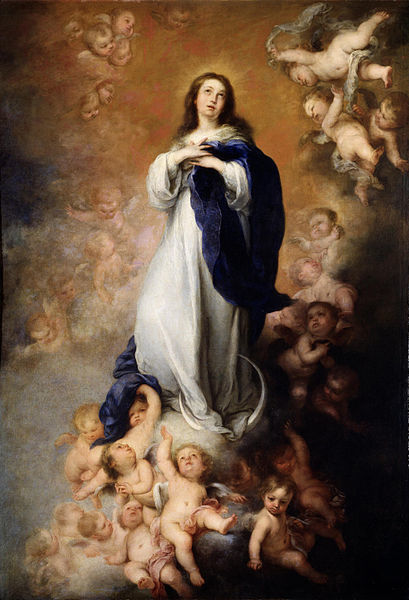
Every year, O Lord Jesus Christ, we celebrate on your birth month the Solemnity of the Immaculate Conception of your Most Blessed Mother Mary who was conceived without the stain of original sin.

Until now, many are still confused with this feast especially when our Gospel speaks about the annunciation of your birth, dear Jesus.

Nonetheless, it is the single most important part of your lives both that truly give us a valuable lesson about Mary’s blessedness – later to be expressed by Elizabeth at the visitation, “Blessed is she who believed that the words spoken to hear will be fulfilled”.

Her Immaculate Conception teaches us the importance of faith especially at this time when we face a great crisis in faith in the Church.

And so, we pray to you O Lord for the gift of faith like that of your Mother Mary, a faith that is deeply personal yet communal.

The first is subjective and the second is objective.

Mary said, “Behold, I am the handmaid of the Lord. May it be done to me according to your word.” Then the angel departed from her.

Luke 1:38
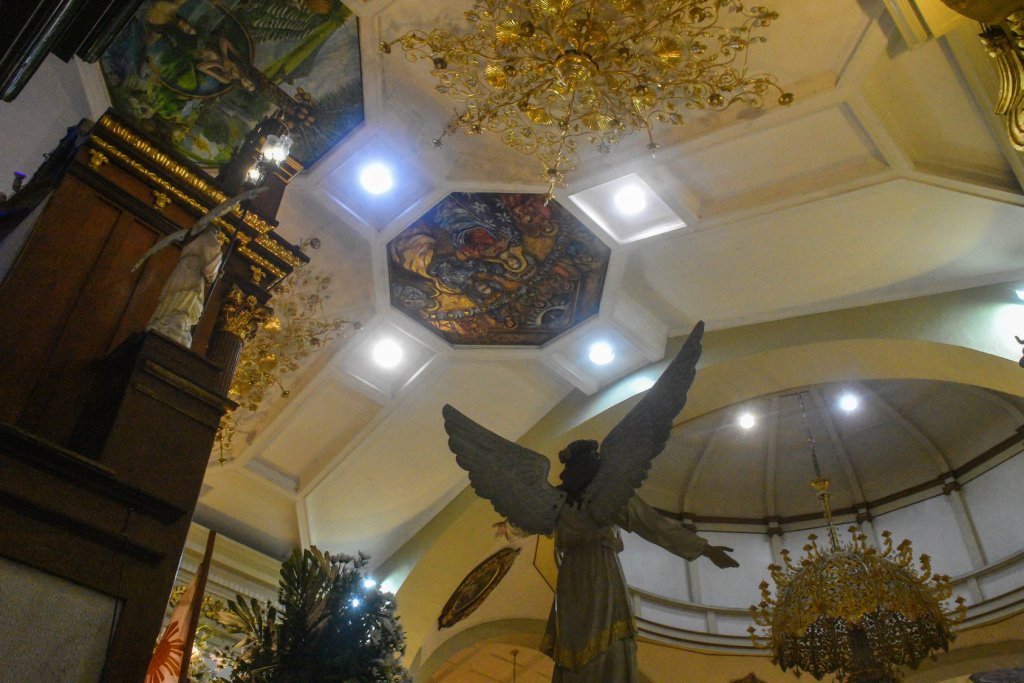
Malolos Cathedral, June 2019.

Unlike Eve in the first reading, Mary had always believed in God.

Her faith is a total entrusting of herself to God on a person-to-person relationship. It is subjective faith where emphasis is on believing itself than on what is believed.

However, Mary did not believe in a purely subjective manner as if God is a personal God detached from others and exclusively revealing only himself to her in secret.

Mary’s faith is also objective because when the angel explained everything to her, she believed the good news proclaimed to her is part of the bigger whole, of the coming new covenant, of the fulfillment of the promise of God made to Abraham and the fathers of Israel as she would later express in her Magnificat.

It is only in believing like Mary can we truly give ourselves to you, Jesus, to the Church so that what we believe may truly be fulfilled in us like Mary. Amen.

Malolos Cathedral, June 2019.

Staying in the house of the Lord

The Lord Is My Chef Breakfast Recipe for the Soul

Thursday, Advent Week-I, 05 December 2019

Isaiah 26:1-6 ><)))*> ><)))*> ><)))*> Matthew 7:21, 24-27

Chandelier of the Malolos Cathedral, 04 December 2019.

Let me stay in your “house”, O Lord, and help me keep your house rules, too. I am sorry when most of the time I simply want to rest and drop by your “house” with no plans of really living there, of listening to your words and doing your will.

Jesus said to his disciples: “Not everyone who says to me, ‘Lord, Lord,’ will enter the Kingdom of heaven, but only the one who does the will of my Father in heaven.”

Matthew 7:21

Forgive me Lord when I have become so complacent as your disciple, as a Christian, relying solely on my name and affiliation with you without working so hard to be like you.

Help me to be holy like God our Father, listening to your words intently and faithfully acting on it at all time so that I may be wise and most of all, be filled with your peace:

A nation of firm purpose you keep in peace; in peace, for its trust in you. Trust in the Lord forever! For the Lord is an eternal Rock!

Isaiah 26:3-4

So many times, Lord Jesus, we take you for granted… just like the people in our own homes. But when things go wrong, they are the only people we can count on to receive us, to love us, and to forgive us. Very much like you, Jesus.

May this Season of Advent make us more open to you not only to receive you but also to keep you. Amen.

Petra in Jordan, May 2019.

Joy to the world

The Lord Is My Chef Breakfast Recipe for the Soul

Wednesday, Advent Week I, 04 December 2019

Isaiah 25:6-10 ><)))*> ><)))*> ><)))*> Matthew 15:29-37

The Manor House, Camp John Hay, Baguio City, 2017.

Praise and glory to you, O Lord Jesus Christ for coming to us, in fulfilling our lives, in making our joy complete. Unfortunately, no one seem to be waiting for you or worst, we live as if you have not come at all.

How sad, O Lord, that often even if we are so excited with Christmas, it does not necessarily mean we are excited of you as a person coming to us. Even if we love to sing and hear that carol “Joy to the World”, we are not really joyful because our hearts are far from you.

Forgive us, Jesus, in being focused with time and dates, than with your person and with your coming.

The more we get focused with dates and gifts and carols and other trimmings of Christmas, the less we think of you and of others too.

Open our hearts to receive you in us.

On that day it will be said: “Behold our God, to whom we looked to save us! This is the Lord for whom we looked; let us rejoice and be glad that he has saved us!” For the hand of the Lord will rest on this mountain.

Isaiah 25:9-10

Open our hearts to you, Jesus, that you are more than enough than anything we could wish for.

Make us desire more of you than of things so we may always have an abundance of you as our “bread” or everything in this life. Amen.

Going out of our families and friends

The Lord Is My Chef Breakfast Recipe for the Soul

Thursday, Memorial of the Presentation of Mary to the Temple, 21 November 2019

Zechariah 2:14-17 ><)))*> <*(((>< Matthew 12:46-50

Feast of the Presentation of Mary at the Temple originated from the Eastern Church where it is known as “The Introduction of the Theotokos (Mother of God) to the Temple”. Photo from Google.

Dearest Lord Jesus Christ:

As we celebrate the memorial of your Mother Mary’s presentation at the Temple, I am deeply struck by the gospel scene for this feast.

Someone told Jesus, “Your mother and your brothers are standing outside, asking to speak with you.” But he said in reply to the one who told him, “Who is my mother? Who are my brothers?” And stretching out his hand toward his disciples, he said, “Here are my mother and my brothers. For whoever does the will of my heavenly Father is my brother, and sister, and mother.”

Matthew 12:47-50

This is so striking to me, Lord because here you are asserting your authority outside your family circle. Here you are telling us of the need to eventually leave our family and friends in order to join you in your mission and journey.

It is very true that we find our first sense of belonging in our family and circle of friends but as we get older like you in Nazareth, our larger sense of belonging to God our Father can only happen when we break free from our family and friends.

Not because we do not love them but primarily because each of us has a calling and mission from you that must be followed and fulfilled. And to do so, we have to leave our family and friends in order to heed and follow your call, O Lord.

In this age of social media, there are some family and friends who get the wrong notion that belonging and possessing or ownership go together, that parents own their children, and friends own each other.

I pray for all parents to imitate St. Joachim and St. Anne who clearly knew they did not own Mary their daughter, that she is God’s that they have to offer her to him at the temple.

May we all grow into maturity that there comes a time when we have to leave our family and friends, even say “no” to them to be like you to freely say “yes” to the Father. Amen.

Betania Tagaytay, 2017.

Womanly heart, Manly courage

The Lord Is My Chef Breakfast Recipe for the Soul

Wednesday, Week XXXIII, Year I, 20 November 2019

2 Maccabees 7:1, 20-31 ><)))*> <*(((>< Luke 19:11-28

Candle and ordo in our sacristy, 17 November 2019.

Today’s first reading is very interesting, Lord, especially that part describing the disposition of the mother of the seven Maccabean brothers facing execution:

Filled with a noble spirit that stirred her womanly heart with manly courage, she exhorted each of them in the language of their forefathers…

2 Maccabees 7:21

I really wonder the meaning of “womanly heart with manly courage” but something tells me it is exactly what we need these days.

A womanly heart is a faithful heart, like a mother who would never forsake her child (Is. 49:15). It is a heart willing to bear all pains in life, suffering in silence, totally empty for the beloved and filled with God.

In this age of “instants” where lines are always moved to accommodate our whims and selfish desires, we need a womanly heart that is rooted and inclined to you O God.

Like the mother of the Maccabean brothers, she freely gave up her sons and exhorted them to look more intently to you, God, than to her herself, insisting that in the end, we are all answerable to you alone, O Lord.

Our sacristy table, 17 November 2019.

Manly courage, on the other hand, Lord is perhaps our ability to muster our strength to be truthful about our very selves.

It is something that still pertains to the heart because the word “courage” is from “cor” or heart.

A manly heart is a sincere heart that gallantly accepts one’s limitations than pretend to be somebody else.

In our suffocating world of social media where everybody is blowing out of proportion everything including one’s self, it is very ironic that while everybody claims to be the best, the more our lives are in a mess.

Like those servants in your parable, O Lord, grant us a manly heart so we may graciously accept our role and mission in this life to please you than pretend to be somebody else who really has nothing at all. Amen.

The problem with “pretending”

The Lord Is My Chef Breakfast Recipe for the Soul

Tuesday, Week XXXIII, Year I, 19 November 2019

2 Maccabees 6:18-31 ><)))*> ><)))*> ><)))*> Luke 19:1-10

Sunrise at Camp John Hay, Baguio City, November 2018.

While praying over today’s first reading, Lord, I wondered what if you were just pretending to be good? What if everything going on in our lives is a big act of pretending so as not to destroy the flow of life or throw everything off balance?

No, it cannot be, dear loving Father!

We are so sure you are real! And this life, our very selves are real.

The problem is with us when we always pretend, when we are afraid to show what is true, what is real, what we believe and what we feel.

So often we pretend you are not real, that you do not exist even if we are convinced of your love and presence.

The problem with pretending is that it is not true, it is a lie.

The problem with pretending is we never realize our true value.

Unfortunately, we still keep on pretending that pretending can work, that pretending is good.

Let us stop pretending, Lord, because we can never escape you, the Ultimate Truth.

Eleazar said: “Should I thus pretend for the sake of a brief moment of life, they would be led astray by me, while I would bring shame and dishonor on my old age. Even if, for the time being, I avoid the punishment of men, I shall never, whether alive or dead, escape the hands of the Almighty.”

2 Maccabees 6:25-26

Give us the courage to be truthful like the 90 year-old Eleazar and chief tax collector Zacchaeus of Jericho who never pretended about who they really were, of the truth about you, O God, that eventually they experienced your saving power in Christ. Amen.

Meeting Jesus our Saviour

The Lord Is My Chef Sunday Recipe, Week XXXI-C, 03 November 2019

Wisdom 11:22-12:2 ><}}}*> 2 Thessalonians 1:11-2:2 ><}}}*> Luke 19:1-10

A giant sycamore tree at the center of Jericho, the world’s oldest city. Photo by author, May 2019.

Jesus is now on the final leg of his “resolute journey to Jerusalem” as he passed by the world’s oldest city of Jericho. Next week, he would be teaching at the Temple area in Jerusalem where his enemies would gang up against him, eventually sending him to death as we shall hear on the 24th of this month, the Solemnity of Christ the King.

Today we find a very interesting story that is in stark contrast with last Sunday’s parable of the Pharisee and tax collector praying at the Temple.

And this time, our story is not a fiction but an event found only in St. Luke’s gospel about a real tax collector named Zacchaeus, a very wealthy man indeed.

The fictional Pharisee Jesus narrated in his parable last week was a very proud one, of high stature literally and figuratively speaking that he would always stand and pray inside the Temple to be seen by everyone.

He was a self-righteous man who despised everyone else, especially tax collectors.

But, according to Jesus, the Pharisee’s prayer was not heard by God because he was not really seeking God but seeking adulation for himself!

Treetop of a sycamore tree in Jericho today.

Contrast that Pharisee with the chief tax collector in Jericho named Zacchaeus: he was of small stature, literally and figuratively speaking, that he had to climb a sycamore tree in order to see “who Jesus was” (Lk.19:3).

We can safely surmise that from St. Luke’s narration, nobody loved Zacchaeus in Jericho: he must be really so small in their eyes that he is hardly noticed maybe except when people paid taxes.

And that is why when he learned Jesus of Nazareth was passing by their city, he went to climb a sycamore tree to have a glimpse of the man he must have heard so often performing miracles and doing all good things for sinners like him.

Then, a strange thing happened…

When he reached the place, Jesus looked up and said, “Zacchaeus, come down quickly, for today I must stay at your house.” And he came down quickly and received him with joy. When they all saw this, they began to grumble, saying, “He has gone to stay at the house of a sinner.” But Zacchaeus stood there and said to the Lord, “Behold, half of my possessions, Lord, I shall give to the poor, and if I have extorted anything from anyone I shall repay it four times over.” And Jesus said to him, “Today salvation has come to this house because this man too is a descendant of Abraham. For the Son of Man has come to seek and to save what was lost.”

Luke 19:5-10

Was it serendipity or divine destiny?

Jesus was just passing through Jericho while Zacchaeus was merely interested in seeing the Lord. Never in his wildest dream, so to speak, did he intend to meet him personally.

From Google.

But, as we all believe and have realised, there are no coincidences or accidents in life.

Everything that happens in our lives has a purpose, a meaning that may either make us or unmake us.

It all depends on us whether we make the right decision in making the most out of whatever life offers us, of what comes to us. Either we become better or bitter – so choose wisely.

More so with salvation from God who never stops coming to us everywhere, anytime like with Zacchaeus when Jesus suddenly came to meet him.

The Catholic Parish Church in Jericho run by the Franciscans, May 2019.

Here we find again a story about faith that leads to conversion and salvation or justification.

It does not really matter how little faith we have like when the Apostles asked Jesus on the first Sunday of October, “Lord, increase our faith in God” (Lk. 17:5,Wk. 27). What matters is that we always have that option for God, a desire for God.

This is specially true as St. Paul assures us in the second reading that Christ will come again at the end of time. Nobody knows when or how he will come again but like Zacchaeus, we must have that desire for Jesus who first comes into our hearts before entering into our homes or churches, no matter how grandiose they may be.

Every desire for God in itself is an expression of faith in him. And God comes to those who truly seek him because that is how great God is: not in his power to do everything but to be small and forgiving!

Before the Lord, the whole universe is as a grain from a balance, or a drop of morning dew come down upon the earth. But you have mercy on all, because you can do all things; and you overlook people’s sins that they may repent. But you spare all things, because they are yours, O Lord and lover of souls.

Wisdom 11:22-23, 26
Inside the Catholic Parish of the Good Shepherd in Jericho, May 2019.

Like in the parable of the persevering widow and judge as well as that of the Pharisee and tax collector praying at the temple last Sunday, today’s story of Zacchaeus meeting Jesus shows us how God never abandons us his children, always ready to grant our desires and wishes even beyond what we are asking for — if we have faith in him.

Our salvation depends solely in our faith to God in Christ Jesus, like Abraham in the Old Testament that we can now rightly be called as his children like Zacchaeus.

No one is excluded from this tremendous grace of God brought to us through Jesus Christ who had come to seek those who are lost.

Like Zacchaeus upon receiving salvation from the Lord on that simple day, may we joyfully turn away from sins and most of all, cheerfully rid ourselves of so many other things that hamper us from following Jesus resolutely to Jerusalem. Amen.

“Where” we pray

The Lord Is My Chef Sunday Recipe for the Soul, Wk. XXX-C, 27 October 2019

Sirach 35:12-14. 16-18 ><}}}*> 2 Timothy 4:6-8. 16-18 ><}}}*> Luke 18:9-14

Photo by the author. Baguio City Cathedral, January 2019.

We have reflected last Sunday that prayer is an expression of our faith.

Where there is faith and prayer, there is always love.

And when we have prayer, faith and love, we have a relationship and community of two or three and more persons together as one, rooted in God.

Today we hear another parable by Jesus only St. Luke has, that of the Pharisee and the tax collector to show us another dimension of faith expressed in prayer.

Photo by the author at the Wall of Jerusalem, May 2017.

Like last week, St. Luke tells us anew the Lord’s purpose in narrating this parable:

Jesus addressed this parable to those who were convinced of their own righteousness and despised everyone else.

Luke 18:9

Were you moved or affected in any way upon hearing our parable today?

Did you feel a silent but swift, sharp thud inside your heart while your mind tried to reason out that the parable is not meant for you?

Listen again and pause, let the Lord’s words sink deeper into your heart:

“Two people went to the temple area to pray; one was a Pharisee and the other was a tax collector. The Pharisee took up his position and spoke this prayer to himself, ‘O God, I thank you that I am not like the rest of humanity — greedy, dishonest, adulterous —- or even like this tax collector. I fast twice a week, and I pay tithes on my whole income.’ But the tax collector stood off at a distance and would not even raise his eyes to heaven but beat his breast and prayed, ‘O God, be merciful to me a sinner.’

Luke 18:10-13

If prayer creates a relationship, Jesus is teaching us today the right attitude we must have to keep this communion we have in faith and love. Any relationship is bound to fail, or would not even exist at all despite the formalities of having ties and links like what we see or even have in our various social circles where roles are just acted out.

We call it “plastic” or fake. Untrue!

Praying at the Garden of Gethsemane, May 2019.

Prayer to be efficacious like any relationship must always be true.

Here Jesus directs our attention in the “where” when we pray – not just the location or locus of our prayer but our “place” in that relationship first with God who is our very foundation.

When all we see is our self in prayer like in any relationship, there is always a problem. It is clearly a one way street, a monologue.

Worst of all, it is an indication of the absence of God or even others because the pray-er is so preoccupied with his or her very self!

The Pharisee was clearly not in God even if he were in front of the temple. His very self was very far from God and all he had was his bloated ego. He may be a very pious person but not really good at all for he has no space for God and for others. He is a very closed man without any room for others.

The tax collector, on the other hand, may be physically far outside the temple but was the one actually nearest to God with his self-acceptance and ownership of his sinfulness, of his need for God. He was closest to God because he was more open with God and with others by admitting his own sinfulness.

Again we find the key to tis Sunday’s parable towards the end:

(Jesus said) ‘I tell you, the latter (tax collector) went home justified, not the former; for whoever exalts himself will be humbled, and the one who humbles himself will be exalted.'”

Luke 18:14
Photo by Dra. Mai B. Dela Pena, Germany, 2016.

Prayer is more than entering a church or a prayer room, or finding our most suitable spot or space to pray.

Prayer is being one with God, of being suffused in God.

“Where” are we when we pray?

First, we become one with God, one in him in prayer when we first admit our sinfulness, when we confess our sins to him, and own them without any “ifs” and “buts”.

God always comes to those who truly open themselves to him by emptying themselves of their sins and inadequacies.

The tax collector was justified in his prayer more than the Pharisee because in confessing his sins, he admitted his need for God. He knew very well his place, so unlike the Pharisee who felt God owes him so much!

When Pope Francis granted his first media interview (to their Jesuit Magazine!), the first question asked of him was, “who is Jose Mario Bergoglio?”

The Holy Father quickly answered, “I am a sinner.”

No wonder when he was elected Pope on March 13, 2013 at the Vatican, he first asked for prayers from the huge crowd gathered before he bestowed his apostolic blessing to them. It clearly showed that despite his holding the highest post in the Church, he considers himself a sinner, so weak needing prayers from the people.

I always tell couples during weddings that when they have a quarrel, the first one to speak and make the move for reconciliation is the one with most love, the one who is most willing to bow to start anew.

Most often in life, friendships and relationships are kept when we are willing to take the lower stance, not necessarily admitting fault or guilt in any misunderstanding because being lowly indicates the person’s need for the other person and of one’s love to work on that relationship despite its fragility.

Ordination of deacons, Malolos Cathedral, 12 June 2019.

Second, we are in God and with God in prayer when we have that attitude and inner disposition of being poor and lowly. Being lowly or poor means having the conviction to leave everything behind and go down with God into the lowest point because one is so confident of the efficacy of prayer like what Ben Sirach tells us in the first reading.

Most of all, like Mary the Mother of Jesus during the Annunciation of the Christ’s birth.

The one who serves God willingly is heard; his petition reaches the heaven. The prayer of the lowly pierces the clouds; it does not rest till it reaches its goal.

And thirdly, we are in God in prayer when there is an offering daily of one’s self to God.

It is not enough to be lowly and sorry for our sins in prayer. It has to be sustained because prayer is also a discipline like any sport. In the second reading, St. Paul calls us to persevere and endure until the end for Jesus Christ.

We need to be passionate with our prayer life, willing to go to all extent to offer everything for the Lord, to fulfill his will “who shall award us with the crown of righteousness in heaven.”

We are all sinners forgiven and beloved by God.

May we find ourselves in God and with God always both in our sinfulness and lowliness. Amen.