The Lord Is My Chef Breakfast Recipe for the Soul by Fr. Nicanor F. Lalog II
Thursday, Week XXIII, Year I in Ordinary Time, 09 September 2021
Colossians 3:12-17  ><]]]]*> + ><]]]]*> + ><]]]]*>   Luke 6:27-38
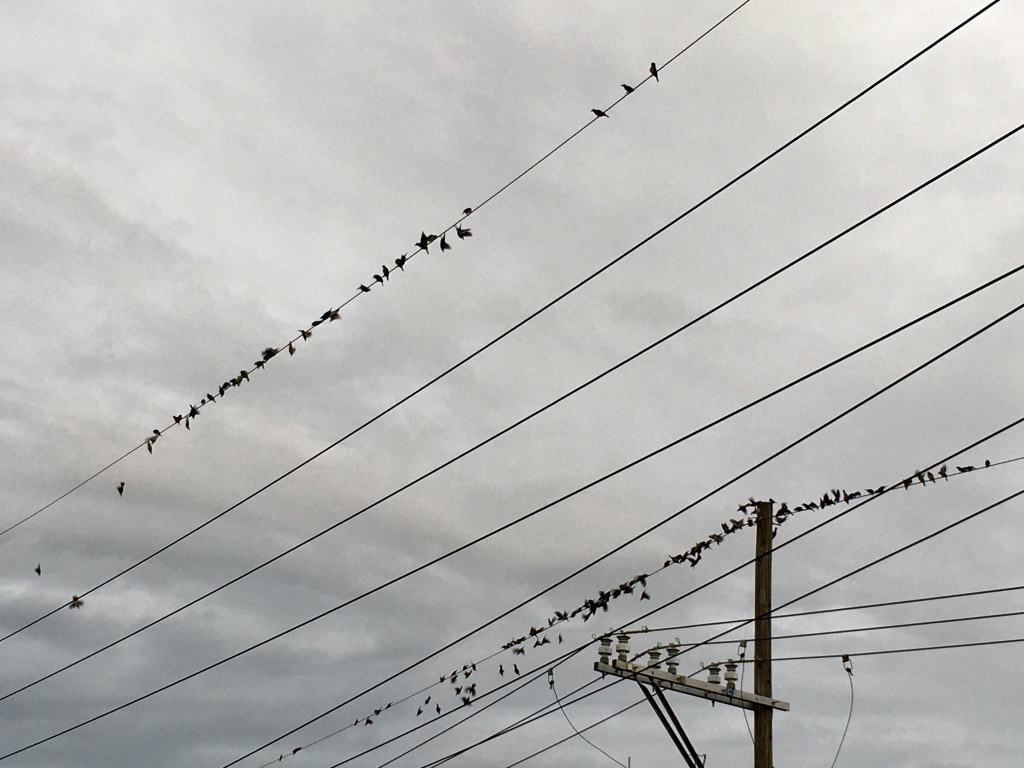
Photo by author, 07 September 2021.
Never has it been, merciful Father
have we realized in our lives except
lately that waking up every day,
that being alive is indeed a great gift
from you; with all the deaths now
happening, with those closest to us
getting infected with COVID-19,
what an honor and joy to keep in
our minds and hearts that we are
your chosen ones (Col.3:12).
If we can appreciate this gift you
bestowed on us through Jesus Christ,
then we learn that your call for us
to lead moral lives is not just a list of
"do's" and "dont's" but an outflow
from inner motivation of our being
renewed in Christ.
Brothers and sisters: put on, as God’s chosen ones, holy and beloved, heartfelt compassion, kindness, humility, gentleness, and patience… And over all these put on love, that is, the bond of perfection. And let the peace of Christ control your hearts, the peace into which you were called in one Body. And be thankful.
Colossians 3:12, 14-15
Let us praise you, O God, with our very lives
with our "being" and not with our "doing"
that is an outpouring,
a fruit of our status as your chosen ones.
It is always easier to just do things,
obey laws and precepts,
observe your teachings
for as long as they do not
affect our being;
we can just do what is good
even without any meaning at all
like towing the line.
Everything changes, dear God
when it is our person that is hurt,
that is violated and transgressed,
 when every good deed is reduced
to a mere act and social contract
because there is no love
that made peace elusive:
we have forgotten who we are,
that we are your children,
your chosen people in Christ won
over by his blood.
Jesus said to his disciples, “To you who hear I say, love your enemies, do good to those who hate you, bless those who curse you, pray for those who mistreat you. For if you love those who love you, what credit is that to you? Even sinners do the same. But rather, love your enemies and do good to them… Be merciful, just as also your Father is merciful.
Luke 6:27-28, 32, 35, 36
Remind us, dear Father
that we are brothers and sisters
in Jesus Christ who have all come
from you as your beloved children,
forgiven and blessed.
Amen.
The Lord Is My Chef Sunday Music by Fr. Nick F. Lalog II, 05 September 2021
Photo by author, 2020.
The “ber” months are finally with us and despite the daily five-digit number of COVID-19 infections, so many of us seem to be so “out-of-touch” with so many who do not seem to care at all for their loved ones nor for the country like our corrupt officials. Or to God at all.
That is why we have picked Daryl Hall and John Oates’ 1984 hit Out of Touch from their album Big Bam Boom. It was the heydays of Hall and Oates who were then called the “dynamic duo” of the music world with so many hits before and after this song.
We were in college when Out of Touch came with a lot of extended and remixed versions due to its great sound that everybody loved this song.
But, behind that danceable groove and beat, Out of Touch lyrics are so in-touch with realities in life that unlike their other compositions, Hall and Oates sounded a bit philosophical here that we find it perfectly attuned with our Sunday gospel where Jesus touched the ears and tongue of a deaf to heal him of his sickness (https://lordmychef.com/2021/09/04/opening-our-ears-and-heart/).
Shake it up is all that we know Using the bodies up as we go I’m waking up to fantasy The shades all around aren’t the colors we used to see Broken ice still melts in the sun And times that are broken can often be one again We’re soul alone And soul really matters to me Take a look around
You’re out of touch I’m out of time But I’m out of my head when you’re not around
You’re out of touch I’m out of time (time) But I’m out of my head when you’re not around
Oh oh oh oh oh oh
Reaching out for something to hold Looking for a love where the climate is cold Manic moves and drowsy dreams Or living in the middle between the two extremes Smoking guns hot to the touch Would cool down if we didn’t use them so much, yeah We’re soul alone And soul really matters to me Too much
Aside from their usual poetry, Hall and Oates say something so deep using many metaphors in narrating how a wonderful romantic relationship had suddenly turned bad because the lovers had been out of touch with each other like with these lines:
I’m waking up to fantasy The shades all around aren’t the colors we used to see Broken ice still melts in the sun And times that are broken can often be one again We’re soul alone
Notice how in both stanzas they both mentioned the importance of the soul, of the heart and inner self. Or of spirituality, if you may:
Manic moves and drowsy dreams Or living in the middle between the two extremes Smoking guns hot to the touch Would cool down if we didn’t use them so much, yeah We’re soul alone
We said in our homily today that opening to God involves our whole person, our whole being. Not just our eyes and ears, but most of all our heart. And the first step for us is to take a break from our ordinary life, from our daily routines that have numbed us that we have lost our consciousness of the present moment, even of our very selves. To a certain sense, this is the grace of the pandemic – an opportunity for us all to spend more time with Jesus in prayers at home or in the church and to bond and fix those broken ties in our family. Before the pandemic, couples and children rarely have the chance to be together even at meals due to each one’s busy schedule; but, with COVID-19’s new mode of work and learning “from home”, many were thrown off balance because some have long lost their sense of being with family members.
Beginning this Sunday, let us get in touch with our true selves, with others and with God to pull through this pandemic before it gets us and tell us how out of touch we have been.
*We have no intentions of infringing on the copyrights of this music except to share its beauty and listening pleasure.
Quiet Storm by Fr. Nicanor F. Lalog II, 02 September 2021
Image from Pinterest.
Romantic movies are what I have always avoided since I was a teenager and now that I am a priest: it is so nakaka-iinggit (so tempting)! Mahirap na. That is why I have always gone for action and comedy films and series, as well as documentaries.
But sometimes, the soft side in me prevails that I give into some love story flicks especially in Netflix since this surge in COVID-19 cases.
Two movies I highly recommend catching while still in Netflix are The Upside and The Last Letter From Your Lover; the former is an old remake based on a true story made to look modern while the latter is a modern one set in the past.
What I like most with these two movies is the strong emphasis on the value of respect, something that has become rare these days.
The word respect is from two Latin words “re” (again) and “specere” (to look/see) that literally mean “to look again” or “see again”. From specere came the words spectacular and spectacles or glasses to see and read. When we look at another person again and again especially when we are not actually together, that is when we not only respect them but also become faithful and loving with them because that is when we recognize their dignity as persons. That is one good thing with our wearing of face masks this pandemic when we rediscover the value of looking again closely at the face of the other person we meet – hopefully, not only to recognize who is he/she but to respect most of all!
Going back to The Upside and The Last Letter From Your Lover ….
The Upside is about an ex-con being chosen by a paralyzed billionaire and best-selling author to be his personal nurse despite the long list of better qualified applicants.
It is a third remake of a French movie said to be based on a true story. Though many critics find it short of making a better version than the previous ones, we find it very good.
Because it teems with a lot of respect!
The ex-con turned caregiver is played by Kevin Hart as Deli while Bryan Cranston plays the quadriplegic billionaire Philip Lacasse. It opens with Deli driving Philip around New York City in his Ferrari when they were stopped by cops. They duped the cops into believing they were on a medical emergency but after being escorted to the nearest ER, they sped away and the film switches to the past previous weeks.
Photo from en.wikipedia.org
Philip had lost his wife in a hang gliding accident in the mountains of New York that left him paralyzed. He had wanted so much to be dead after losing his wife that he kept on reminding his secretary Yvonne played by Nicole Kidman to “don’t resuscitate” him in case of another accident.
Then came Deli who was recently granted with a parole from jail and the exact opposite of Philip: he was desperately trying to pick up his life by reconnecting with his wife and son as he tried his best to find a job to no avail until he tried his luck to apply as Philip’s caregiver after seeing the long queue of people leading to his penthouse in an exclusive section of the Big Apple. He was the exact opposite of Philip but they clicked – because they had respect for each other.
It was their mutual respect for each other as seen in the various scenes in the movie that they both found their self-worth as persons.
Deli found direction in his life after Philip taught him to “just do what you like best” which he did by doing a painting which Philip was able to sell for 50 grand which he gave Deli as his “seed money” for whatever undertaking he was planning. First thing Deli did was find a better apartment for his wife and son with the remaining money he invested in a business manufacturing motorized wheelchairs.
The most beautiful part is how Philip regained his self-worth and confidence – and new love – with a lot of respect given him by Deli, from smoking weeds to going on a date again and returning to the site where he and his wife last went on a vacation.
This is when the movie switched back to the present when they were escorted by the police to a New York City ER but Deli sped away and drove Philip to the mountains to enjoy hang gliding again. They later checked into the same hotel where he and wife last spent their vacation and the following morning at breakfast, Deli led Philip to a table to meet his new love, his “boo”.
The last scene is very short but got a very strong impact, even romantic. Very simple yet lovely. And filled with respect. Find out who that woman is!
Truly a British movie released to Netflix this year, we find most striking with The Last Letter from Your Lover is its use of elegant English language that actually features the love stories of two journalists more than 50 years apart.
It opens with lead star Felicity Jones as Ellie Haworth waking up late in bed with her ex as she rushed to her newspaper office to write a feature article about a deceased editor. After having a hard time in getting access to their archives due to the very formal Roryplayed by Nabhaan Rizwan, Ellie found a mysterious love letter to someone identified as “J” from somebody named “Boot”.
Photo from en.wikipedia.org
She became friend eventually with Rory who helped her find more love letters between “J” and “Boot” that she soon followed up to become the main story of the film set in 1965 about the socialite Jennifer Stirling as “J” married to a stern industrialist interviewed by business writer Anthony O’Hare who called himself “Boot” or “B” while at the French Riviera. Jennifer’s husband had to hurriedly leave for business that became the occasion for her to get closer with Boot who had recently divorced from his wife.
Though one can readily see the sparks and intense feelings between them in their many informal meetings while awaiting the return of J’s husband at the French Riviera, Boot was very respectful to her. His respect would be put to test when one night J tried to kiss him but he declines – out of respect for her which he explained in one of his letters.
It was upon their return to London that they began writing each other and after some trysts in London, Boot finally asked J to join him to New York where he was being assigned as correspondent. On her way to the train station for their flight to New York, J met an accident and had a partial lost of memory while Boot thought his proposal was rejected.
It was during her hospitalization when J’s husband learned of her affair after discovering a letter from Boot. Meanwhile, Ellie and Rory discovered more love letters between the two lovers of the past while at the same time, they have started to fall for each other too. So funny is how the film writer Jojo Moyes had seamlessly weaved together the two love stories in the past and present, coinciding with each one’s peculiar twists and turns.
Eventually, Rory found out J and Boot were still alive and most of all, very eligible to finally reunite. She convinced Boot to write another letter to J for them to meet anew at their favorite meeting place as lovers. Boot wrote one last letter, meeting up with J finally after more than 50 years. Watching them not far were Ellie and Rory embracing each others also filled with love – and respect – who were instrumental in bringing the two lovers again. The scene is so “kilig” with both couples unknowingly being instrumental in making their loves bloom with a lot of respect.
Jesus told his disciples: “This is my commandment: love one another as I love you… You are my friends if you do what I command you. I have called you friends, because I have told you everything I have heard from my Father.”
John 15:12, 14, 15
Whenever I officiate weddings especially of friends who have turned into lovers, I always choose this beautiful Last Supper scene of Jesus with his apostles discussing his commandment of love.
I tell the couple that one very important letter in the word F-R-I-E-N-D is the letter “R” which when removed changes the word into F-I-E-N-D or “enemy”.
That letter “R” stands for RESPECT. When there is no respect in any relationship especially among friends and lovers, love dies and ties are damaged or even lost.
Both movies teem with many instances of respect for the other person that in the end, love triumphed.
The Lord Is My Chef Breakfast Recipe for the Soul by Fr. Nicanor F. Lalog II
Thursday, Week XXII, Year I in Ordinary Time, 02 September 2021
Colossians 1:9-14   ><}}}*> ><}}}*> ><}}}*>   Luke 5:1-11
Photo by author of the statues of Simon Peter kneeling before Jesus after the miraculous catch of fish at the lake, 2017.
As the pandemic rages with its
more devastating surge affecting
whole families, we pray dear Father
not only for healing of those afflicted
with COVID-19 but also for the opening
of our minds and hearts to find the
deeper realities of life instead of still
being preoccupied with mundane and
selfish desires we have taken as our
false securities.  Let us remove all these
blindness in us to see and embrace
the truth of your Son Jesus Christ, the
only one who can lead us out of this
darkness that is also of our own making.
Let the prayer of St. Paul for the Colossians
be our prayer today, Father:  "that we may walk
in a manner worthy of the Lord so as to be fully
pleasing in every good work, bearing fruit
and growing in the knowledge of God" so that
"we may be fit to share in the inheritance
of the holy ones in light" (Colossians 1:10,12).
Dear Father, help us realize the need for us
to seek fulfillment only you in Christ Jesus
"in whom we have redemption, the forgiveness
of sins" (Colossians 1:14).
Open our eyes to see the deeper story behind
the news happening around us today:
of what sense is our pursuit for fame,
wealth and power when we can easily die with
COVID-19 or when our country is overrun
by rebels like Afghanistan?
Fulfillment in life can only be found
in Jesus Christ your Son who had come
to enable us "catch abundant fish" when
all our toils and efforts yielded nothing;
teach us to trust in you more, to dare
cast the net into the deep and most of all,
to leave our "boat" of comfort and ease
to walk with Jesus, following him as
"fishers of men" sharing his loving service
and presence, mercy and kindness with everyone.
Amen.
The Lord Is My Chef Breakfast Recipe for the Soul by Fr. Nicanor F. Lalog II
Wednesday, Week XXII, Year I in Ordinary Time, 01 September 2021
Colossians 1:9-14   ><]]]]'> + ><]]]]'> + ><]]]]'>   Luke 4:38-44
Photo by author, November 2018.
Praise and glory to you,
God our loving Father,
for the gift of life that we have
reached the first day of the "ber"
months leading to Christmas.
Since last year we have been
amusing ourselves with the
awaited playing of Christmas
carols in September to feel good.
But today, we also feel blessed
for being alive, in keeping the faith
in you.
Brothers and sisters: from the day we heard about you, we do not cease praying for you and asking that you may be filled with knowledge of God’s will through all spiritual wisdom and understanding; to walk in a manner worthy of the Lord so as to be fully pleasing in every good work, bearing fruit and growing in the knowledge of God.
Colossians 1:9-10
While we are all praying
 for more faith and good health
 in this time of another surge,
we continue to pray for the
healing of all those afflicted
with COVID-19, begging you like
Simon Peter for his mother-in-law;
We pray for the healing of the sick
not only in body but also in mind,
heart and soul.
Help us realize that like faith,
good health builds community;
that good health concerns all
because everyone's well-being
depends also with everyone's health.
After Jesus left the synagogue, he entered the house of Simon. Simon’s mother-in-law was afflicted with a severe fever, and they interceded with him about her. He stood over her, rebuked the fever, and it left her. She got up immediately and waited on them.
Luke 4:38-39
Teach us, O God,
to be like Simon Peter's mother-in-law
to realize that most especially
in our good health we can help build
our community and family
by serving in the name of Jesus
for other's good health
and wellness.
Amen.
The Lord Is My Chef Breakfast Recipe for the Soul by Fr. Nicanor F. Lalog II
Tuesday, Week XXII, Year I in Ordinary Time, 31 August 2021
1 Thessalonians 5:1-6, 9-11   ><)))*> ><]]]]'> ><)))*>   Luke 4:31-37
Photo by author, ruins at the ancient town of Capernaum beside a modern church, May 2017.
God our Father,
thank you for being on our side:

"For God did not
desire us for wrath, but to gain
salvation through our Lord Jesus
Christ, who died for us, so that
whether we are awake or asleep
we may live together with him.
Therefore, encourage one another
and build one another up,
as indeed you do."
(1 Thessalonians 5:9-10)
May we always seek and respond
to your call to us, O God,
in every person and in every
experience we go through daily
so that we are not caught by surprise
in your Son Jesus Christ's coming.
May we learn to understand
and appreciate the true meaning
of "authority" like that of Jesus Christ:
an authority to serve
and not of domination.
Jesus went down to Capernaum, a town of Galilee. He taught them on the sabbath, and they were astonished at his teaching because he spoke with authority. They were all amazed and said to one another, “What is there about his word? For with authority and power he commands the unclean spirits, and they come out.” And news of him spread everywhere in the surrounding region.
Luke 4:31-32, 36-37
Remind us, almighty Father,
of your gift of authority
to each one of us -
in our family,
in our community,
 and in our jobs
or profession -
so that like Jesus,
 we may use our authority
to enhance, not to diminish,
the abilities of others.
Amen.
Quiet Storm by Fr. Nicanor F. Lalog II, 30 August 2021
Photo by Fr. John Howard Tarrayo, National Shrine and Parish of Fatima, Valenzuela City, 06 August 2021.
Like the months of November and January, August now suffers the same fate of being more known with pagan rituals and beliefs despite its rich liturgical celebrations and feasts we celebrate – ironically – as the only Christian nation in this part of the world.
Spurred mainly by the social media, more and more Filipinos now believe that August is a “ghost month” with almost everybody even not a Chinoy are posting those “Do’s” and “Don’ts” on Facebook to cast away or avoid the evil spell by ghosts that August is supposed to bring.
What a sad reality in our Catholic Christian country.
Forty or 30 years ago, all we have was “pangangaluluwa” when some people would sing in front of our homes for some donations like in caroling during Christmas season. With the advent of social media and our penchant for anything American, we now have every November those grossly erroneous and pagan Halloween practices of costume party and “trick or treat”. Not far from that is our January tradition borrowed also from pagans of literally welcoming every New Year with a lot of “bang”, wasting precious money that also cost some lives and injuries to so many due to fireworks and firecrackers.
Here we find the kind of religiosity that binds most of us, more on rites and rituals but lacking in roots and spirituality, centered on ourselves to be assured of every kind of blessings, forgetting all about the very object of faith who is God expressed in our concern for one another.
August is not a ghost month nor any other month of the year.
Like the days of the week, every month is a blessed one.
No day nor date nor time ismalas because
when God became human like us in the coming of Jesus Christ,
life has become holy, filled with God,
debunking those ancient beliefs of the Divine being seen in various cosmic forces.
August is not a ghost month nor any other month of the year.
Like the days of the week, every month is a blessed one.
No day nor date nor time is malas because
when God became human like us in the coming of Jesus Christ,
life has become holy, filled with God,
debunking those ancient beliefs of the Divine being seen in various cosmic forces.
In this regard a text by Saint Gregory Nazianzen is enlightening. He says that at the very moment when the Magi, guided by the star, adored Christ the new king, astrology came to an end, because the stars were now moving in the orbit determined by Christ[2]. This scene, in fact, overturns the world-view of that time, which in a different way has become fashionable once again today. It is not the elemental spirits of the universe, the laws of matter, which ultimately govern the world and mankind, but a personal God governs the stars, that is, the universe; it is not the laws of matter and of evolution that have the final say, but reason, will, love—a Person. And if we know this Person and he knows us, then truly the inexorable power of material elements no longer has the last word; we are not slaves of the universe and of its laws, we are free. In ancient times, honest enquiring minds were aware of this. Heaven is not empty. Life is not a simple product of laws and the randomness of matter, but within everything and at the same time above everything, there is a personal will, there is a Spirit who in Jesus has revealed himself as Love[3].
#5 of Spe Salvi (Saved in Hope) by Pope Emeritus Benedict XVI, 30 November 2007
From catholicapostolatecenter.org.
Consider the name of this month August which was borrowed from the Roman Caesar Augustus that signifies reverence or to hold someone in high regard. As an adjective, august means “respected and impressive” like when we say “in this august hall of men and women of science”.
Most of all, consider the great feasts that fall on this month of August: the Transfiguration of the Lord Jesus Christ on August 6 and the Assumption of the Blessed Virgin Mary into Heaven on August 15. Both feasts remind us of the promise of glory in heaven as we strive and persevere to lead holy lives in this world filled with pain and sufferings.
There are also so many saints we celebrate on this month of August like our patron saint as priests, St. John Vianney (August 4); St. Dominic who died 800 years ago on August 8 after serving not only the Church but also the whole world in general when he founded the Order of Preachers (O.P.) also known as the “Dominicans”; St. Clare of Assisi (August 11), a contemporary and friend of St. Francis; St. Bernard of Clairvaux (August 20) who wrote so many beautiful homilies, hymns and prayers like the Memorare; St. Rose of Lima (August 23) who was the first saint from the New World; and of course not to forget the greatest mother and son tandem next maybe to Mary and Jesus, St. Monica (August 27) and St. Augustine (August 28).
August is also the month of two great followers of Jesus, St. Bartholomew the Apostle (August 24) and two former Pharisees who buried our Lord, St. Joseph of Arimathea and St. Nicodemus (August 31). Likewise, it is on August 29 when we celebrate the martyrdom of the Lord’s precursor, St. John the Baptist who was beheaded during the birthday party of Herod who was so afraid to take back his oath to give whatever Salome would ask him after delighting his guests with a dance number.
There are two special saints we celebrate this holy month that according to St. John Paul II are both saints of our modern time, St. Teresa Benedicta of the Cross (August 09) and St. Maximilian Kolbe (August 14). Both saints were martyred in the gas chambers of Auschwitz during the Holocaust.
St. Teresa Benedicta is the same German philosopher Edith Stein, a former Jew who had become an atheist in her younger years in the university but upon further studies and prayer, converted into Catholicism, becoming a Carmelite nun where she adopted her new name. She wrote in one of her writings that “Those who seek truth seek God, whether they realize it or not“.
Though she had become Catholic, she did not abandon her Judaic roots, even writing the Pope at that time to ask him to speak strongly against the Nazi Germans’ extermination of Jews. Her death on August 9, 1942 at Auschwitz with her younger sister who had become a Catholic too was a fitting testimony to her faith, honoring her Jewish roots by dying among them as a martyr of Christ and one who had “learned to live in God’s hands” according to Sr. Josephine Koeppel, OCD, a translator of much of her works.
Dying ahead of her in Auschwitz on August 14, 1941 was St. Maximilian Kolbe, a Franciscan priest who was arrested for his writings against the evil Nazis. It was actually his second time to be arrested.
When a prisoner had escaped from the camp, authorities rounded up ten men to die in exchange of the lone escapee. Fr. Kolbe volunteered to take the place of a married man with children. They were all tortured and starved in order to die slowly in pain. A devotee of the Blessed Virgin Mary, St. Maximilian was injected with carbolic acid on the eve of the Assumption after guards found him along with three other prisoners still alive, without any signs of fear like screaming but silently praying.
Photo of Auschwitz from Google.
We no longer have gas chambers but atrocities against human life continue in our time, hiding in the pretext of science and laws. Until now, men and women, young and old alike including those not yet born in their mother’s womb are hunted and killed to correct what many perceived as excesses and wrongs in the society. Just like what Hitler and his men have thought of the Jews at that time.
The Nazi officers and soldiers of Auschwitz remind us the true “ghosts” or evil spirits of our time sowing hatred and deaths are people who may be well-dressed, even educated in the best schools, and come from devout or “normal” families. They sow evil every day without choosing any particular month, blindly following orders without much thinking and reflections or introspection.
By the lives of the many great saints of August, or of any other month for that matter, we are reminded especially in this time of the pandemic that holiness is not being sinless but simply being filled with God, allowing that holiness to spill over and flow onto others with our lives of authenticity to the truth of God among us in Christ expressed in charity and mercy, kindness and justice, humility and openness with one another.
It is very sad and depressing to watch in the news and social media feeds how some among us continue to display their lack of any concern at all with the suffering people with their lavish lifestyles and display of expensive clothes and food. And worst of all are those men and women, in power or hungry for power, in their excessive display of brute force against the weak and the poor.
Let us make every month holy and blessed with our good deeds to make everyone aware of Christ’s presence among us.
The Lord Is My Chef Sunday Recipe for the Soul by Fr. Nicanor F. Lalog II
Sunday XXII-B in Ordinary Time, 29 August 2021
Deuteronomy 4:1-2, 6-8 >+< James 1:17-18, 21-22, 27 >+< Mark 7:1-8, 14-15, 21-23
Photo by the author, the Holy Land, 2017.
After an interruption of five weeks, we go back to Mark’s Gospel this Sunday that shall guide us until the end of our liturgical calendar with the Solemnity of Christ the King in November. See the beauty of the Sacred Scriptures that those five weeks from John chapter six did not break the flow of narration that is so seamless!
Returning to Mark’s account today after the feeding of five thousand and the bread of life discourse at Capernaum from John, Jesus crossed the lake and proceeded with the Twelve to Gennesaret where he preached and healed until some of his enemies arrived and found an issue to raise against him.
When the Pharisees with some scribes who had come from Jerusalem gathered around Jesus, they observed that some of his disciples ate their meals with unclean, that is, unwashed hands. For the Pharisees and, in fact, all Jews, do not eat without carefully washing their hands, keeping the tradition of the elders. So the Pharisees and scribes questioned him, “Why do your disciples not follow the tradition of the elders but instead eat a meal with unclean hands?” He responded, “Well did Isaiah prophesy about you hypocrites… You disregard God’s commandment but cling to human tradition.”
Mark 7:1-3, 5-8
The Israelites have taken pride in their laws given by Moses from God at Mt. Sinai. Simply referred to as the Law or Torah, it had united them as God’s “chosen people”, making it the very center of their lives that they enlarged its meaning and scope that soon consisted of more than 600 other precepts and practices to observe and keep.
Obeying the laws and traditions became their standard for holiness so that instead of becoming a means to bring them closer to God and others, these became an end in itself that they have forgotten God and others in the process.
Photo by author, Sacred Heart Spirituality Center, Novaliches, QC, 2016.
Into our hearts and the heart of Jesus
Once again, our gospel is so timely and relevant to our situation right now we are in the midst of a pandemic when we are told to always wash our hands. And if Jesus were with us in person today, he would surely speak the same things about the hypocrisy we have in our washing of hands!
First of all, let us clarify that Jesus is not against the washing of hands before eating nor of any of their other traditions and laws; what he criticized was the greater importance given by his enemies with the outward signs of their laws and traditions, forgetting its inner dynamics and meaning. Thus, he never failed to clarify with the people that he had “not come to abolish the Law or the Prophets but to fulfill them” (Mt.5:17).
Here we find the same problem with the people at Capernaum and in our own time when people fail and refuse to look beyond material things to find the meaning of what is going on around us, of what we believe in and what we practice.
Then and now – right in the midst of this pandemic – Jesus is inviting us to deeper perspectives about our concepts and ways of doing and seeing things, of what is clean and not clean, of what is tradition and modern, of what is good and evil.
Jesus wants us to constantly examine our lives for our need of conversion of our hearts to him. He is inviting us to probe our hearts and see who or what dwells inside us because from the heart, everything flows outside not only to our mouth (cf. Lk.6:45, “out of the abundance of the heart the mouth speaks”) but also to our hands.
That is why I love that imagery of the heart between two arms and hands: the heart at the center of our being and consciousness that whatever comes out of the heart naturally flows to our arms and hands, even to our entire body. If there is something wrong in the heart, so with the messages it sends out.
He summoned the crowd again and said to them, “Hear me, all of you, and understand. Nothing that enters one from outside can defile that person; but the things that come out from within are what defile.” “From within people, from their hearts, come evil thoughts, unchastity, theft, murder, adultery, greed, malice, deceit, licentiousness, envy, blasphemy, arrogance, folly. All these evils from within and they defile.”
Mark 7:14-15, 21-23
Here we find the essential question we must ask ourselves always: Do I find Jesus Christ in my heart as the sole basis and foundation of what I believe which I also say and do?
If we cannot find Jesus at the center of the things we do and believe, most likely we do not find others in the picture too! In that case, most likely, it is all about me, mine, my, and I! Like the Pharisees and scribes of his time, washing of hands and other traditions were more of a show than something more essential which is to serve God through one another.
Jesus is now leading us to a sincere examination of our hearts,
of our interior and spiritual motivations,
of why we are doing the things we are doing,
of what we really believe in;
because, too often, many of the things we do and believe
are not really rooted in our hearts nor with God.
There are so many times in our lives
that we simply do things out of habit
and conventions without really understanding why.
Jesus is now leading us to a sincere examination of our hearts, of our interior and spiritual motivations, of why we are doing the things we are doing, of what we really believe in; because, too often, many of the things we do and believe are not really rooted in our hearts nor with God. There are so many times in our lives that we simply do things out of habit and conventions without really understanding why.
Simon Sinek said it so well in his bestselling book “Start with Why” – people buy products, patronize services, or are moved when they see the why you do things; they are willing to pay more not because of fad or prestige but more of the conviction in a belief espoused by a brand or company or by an individual.
Photo by Ezra Acayan/Getty Images in Paranaque City, 09 February 2020.
Washing of hands and eating, our hidden hypocrisies
One of the most frequently asked question by people to me as a priest these days is why despite all our prayers, God has seemed become deaf to our pleas for him to end this pandemic? The answer is simple: unless we see and accept the spiritual realities of this COVID-19 pandemic, it would linger with us longer than projected, even not be solved at all as it gets worst with new variants that have thrown back even some of the most vaccinated nations lately.
We can have all the soaps and alcohol to wash our hands during this pandemic but COVID-19 will persist for as long as we have no regard for the dignity of every person. See all the abuses and corruption going on that is more sickening than the virus itself!
That washing of hands is an imagery full of meanings we have lost since the time of Jesus. Inwardly, the washing of hands means washing of one’s heart, of cleansing ourselves of our sins and self-centeredness and other impurities.
So many times we have become like Pontius Pilate who washed his hands to free himself from any guilt in sentencing Christ to death without realizing the more he had implicated himself to the injustice by refusing to make a stand for what is true and just. Like us today, we keep on washing our hands in the hope that our conscience would be at peace or be not bothered with our indifference for what is true and good.
Photo by Mr. Red Santiago of his son, 2019.
Washing of hands has always been closely related with eating which is an act of “appropriating something we cannot fully have” like when Adam and Eve ate the forbidden fruit. They took something they cannot wholly take or “swallow” that is why all they could do was just take a “bite” that opened their eyes to something they could not fully realize and appreciate. There are so many realities in this life we just cannot fully grasp right away, requiring us to have more faith, more patience in trusting God and those above us.
But, like Adam and Eve, we keep on taking a bite, of eating whatever our limited minds and reason find as “good” to have. And we wash our hands in clear hypocrisies like the Pharisees and scribes in worship and prayer when we lead double lives, when we laugh and cheer at all kinds of lies and filth, when we silently approve attacks against human life like tokhang and abortion.
Every day we wash our hands and keep them clean to avoid contaminating our food and body in hypocrisy as we agree and support in the name of “modernism” these trends of same sex relationships, promiscuity, and divorce. Or of graft and corruption we have resigned to accept as a fact of daily life.
To wash our hands is to wash our hearts clean of all kinds of evil, of mediocrity and indifference, of taking a stand to “pass over” from sin into grace by witnessing God’s goodness in our lives as Moses reminded Israel in the first reading.
The hands and the heart always go together as expressed in the Jewish thought of “mercy of the heart” and “mercy of the hand” when God’s mercy is more than a feeling but an act of righteousness, of justice and love.
Let us heed the reminder of the Apostle in the second reading to be truly clean in our hands and in our hearts: “Be doers of the word and not hearers only, deluding yourselves. Religion that is pure and undefiled before God and the Father is this: to care for orphans and widows in their affliction and to keep oneself unstained by the world” (James 1:22, 27).
Stay safe everyone. Have a blessed week ahead! Amen.
The Lord Is My Chef Breakfast Recipe for the Soul by Fr. Nicanor F. Lalog II
Friday, Memorial of St. Monica, Holy Woman, 27 August 2021
1 Thessalonians 4:1-8   ><]]]]*> + <*[[[[><   Matthew 25:1-13
Image from National Catholic Register (ncregister.com).
Today dear Father,
we pray for all mothers in a very
special way as we celebrate the
Memorial of St. Monica, mother
of your beloved servant St. Augustine.
We pray with St. Monica for all mothers
that they may truly be like the five wise
virgins in today's gospel who brought
extra oil for their lamps:  a lot of good works
and a lot, lot more of prayers when loved ones have
fallen away from faith in you.
We pray for mothers like St. Monica
for the grace of holiness expressed
tremendously in the virtues of patience,
charity, and humility.
St. Monica with her son St. Augustine. From en.wikipedia.org
Like St. Monica, may mothers win
over their wayward husbands,
teaching them how to "disarm" and "tame"
their abusive and temperamental spouses,
remaining sweet and loving
yet firm even under pressures
 and sometimes duress,
in imitating Jesus Christ in humility
and patience.
Most of all, dear God, we pray
for mothers to be persevering and wise
in dealing with their problematic children
who have succumbed to the evils of the world;
You know very well, God, how so many
mothers cry and suffer in silence today
for their sons and daughters who have
fallen to atheism and modern paganism and
pseudo-spiritualities, consumerism and materialism,
promiscuity, early pregnancies, separation
and same-sex relationships;
substance abuse and alcoholism
and other Godless ways of living.
We pray for mothers who are sick,
those taking care of a sick loved one,
mothers forgotten by children left to
spend old age in foster homes;
and mothers suffering with
anxieties and depression
or themselves have lost faith in you.
God our Father,
so many mothers have already
suffered so much; please ease
their pains and loneliness.
Through the intercession of
St. Monica, grant their prayers
and wishes before they meet you
in eternal life.  Amen.
The Lord Is My Chef Breakfast Recipe for the Soul by Fr. Nicanor F. Lalog II
Tuesday, Feast of St. Bartholomew, Apostle, 24 August 2021
Revelations 21:9-14     ><}}}'>  +  <'{{{><     John 1:45-51
Photo by author, 2018.
Once again on this feast of another saint,
the Apostle Bartholomew, you teach us O God
how you work in mysterious ways; for, indeed,
how "can anything good come from Nazareth?"
like Jesus Christ when in fact he was from
Bethlehem and ultimately from you, Father in heaven!
But the most wonderful mystery of all
is when your Son Jesus affirmed
Nathanael-Bartholomew's perception
and still accepted him!
Jesus saw Nathanael coming toward him and said of him, “Here is a true child of Israel. There is duplicity in him.” Nathanael said to him, “How did you know me?” Jesus answered and said to him, “Before Philip called you, I saw you under the fig tree.”
John 1:47-48
What did your Son see about Nathanael
doing under the fig tree is also a mystery
but it was more than enough to feel
the love and acceptance
by Jesus despite his not so kind
words about Nazareth,
enabling him to trust him in return
committing himself as an Apostle
after realizing it did not matter to Jesus
his background nor his previous life.
Nathanael answered him, “Rabbi, you are the Son of God; you are the King of Israel.”
John 1:49
Give us the grace, O God,
not only to be contented with your words
but most of all to go out of our way
like Nathanael in "coming and seeing"
to meet Jesus and experience
his unique love and mercy,
and be surprised with his presence
that welcomes everyone.
Amen.