40 Shades of Lent by Fr. Nicanor F. Lalog II
Thursday, Fourth Week in Lent, 18 March 2021 (St. Cyril of Jerusalem)
Exodus 32:7-14     ><}}}*>  +  <*{{{><     John 5:31-47
Illustration from chabad.org.
God our Father in heaven, forgive us for being constantly in the same situation like your people at the wilderness when Moses was up conversing with you on Mount Sinai. So many times we are like them, creating our own golden calves, turning away from you our true God.
So many times in life, we simply want to be in total control of everything that we doubt you, even grow impatient with you because we have other agendas in life like being god like you! And so, we make golden calves of everything we like to believe in, including in our selves.
Jesus said to the Jews: “You search the Scriptures, because you think you have eternal life through them; even they testify on my behalf. But you do not want to come to me to have life. I do not accept human praise; moreover, I know that you do not have the love of God in you. I came in the name of my Father, but you do not accept me; yet if another comes in his own name, you will accept him.”
John 5:39-43
You said it perfectly right, Lord Jesus: “I know that you do not have the love of God in you. I came in the name of my Father, but you do not accept me; yet if another comes in his own name, you will accept him.”
As we turn to idolatrous worship of our selves, then we stop loving you in others both in our hearts and in our hands. When we begin manipulating everything and everyone even our very own belief system, especially your gift of faith in each of us, that is when we become gods.
When we stop believing in you, then we stop loving, we stop relating, we stop authentic living as we forget others.
Forgive us, Lord, and look kindly upon us like at Sinai, reminding us always of the many blessings the Father showers us despite our sinfulness. Teach us to be grateful always so we may learn humility and embrace our humanity to start believing in you and love again by turning away from sins.
Once again, let your tender compassion, Lord, break upon us this Lent so we may begin to love and care, be tender with those who suffer amid our own pains and trials in life. Teach us to believe in you again to realize that wherever there is loving service, tenderness, and care for the weak and lowly, there you are too! Amen.
40 Shades of Lent by Fr. Nicanor F. Lalog II
Homily, Wednesday in Lent Week IV, 17 March 2021
Isaiah 49:8-15     + ++     John 5:17-30
Photo by Mr. Jim Marpa, 2019.
Today we resumed the community Masses on a limited basis at the Our Lady of Fatima University (OLFU) and Fatima University Medical Center (FUMC) in Valenzuela where I am now serving as their chaplain.
Our aim is very simple: to share Jesus with everyone in our Fatima community including their families and friends.
Sharing Jesus means being tender and caring with one another like God our Father in heaven who gave us the loveliest description of these attributes in the first reading today by being like a mother.
Thus says the Lord: “Can a mother forget her infant, be without tenderness for the child of her womb? Even should she forget, I will never forget you.”
isaiah 49:15
If there is one thing missing in our country
 in this one year old pandemic and lockdown,
it must be tenderness.
In the gospel of St. Luke, we find Zechariah singing praises to God at the birth of his son John the Baptist:
“In the tender compassion of our God the dawn from on high shall break upon us, to shine on those who dwell in darkness and the shadow of death, to guide our feet into the path of peace.”
Luke 1:78-79
St. Luke used the Greek word “splaghna” to designate tenderness as “tender mercy of God”.
Mercy, or “misericordia” which is also our University motto is from the Latin “misereor” that means to stir, to move. More than a feeling, mercy is compassion in action wherein one is moved or stirred in the heart to go down, reach out and be one with the suffering like Jesus Christ. And that is when we are filled with tenderness of God. Then we become caring.
Tenderness of God as tender compassion is misericordia that is “tagos sa buto” as in “sagad-sagad” that even if we feel tired and hungry, or afraid and anxious, we still go out to help, to uplift, to keep company and inspire those in pain and suffering, those about to give up in life, those who are lost because of sickness, poverty, and other difficulties.
This we find and do in Jesus, through Jesus, with Jesus who said in our gospel today, “My Father is at work until now, so I am at work” (Jn.5:17).
Remember that scene of the feeding of five thousand in the wilderness when Jesus and the Twelve crossed the lake to the other side to rest but a vast crowd followed them and even got ahead of them to the site. When Jesus saw them, he was moved with pity because they were like “sheep without shepherd” that despite his being hungry and tired, he taught them many things, healed their sick, exorcised the possessed and later, fed and satisfied them all from just five loaves of bread and three pieces of fish.
Tenderness is when we are moved to help those in need while we ourselves are also suffering. Hence, it is not surprising at all to find that the most tender and caring people are also the ones who suffer most. Like moms and these days, the medical front liners who continue to serve us amid the risks they face!
Being tender and caring
are essentially the works of God
made known to us in Jesus Christ.
It has been a year since we had the longest lockdown in the world. It is fitting that as we recall those days even if dark clouds still loom above us these days that we remember the people who have cared for us and made life bearable: all those working in the hospitals supporting our doctors and nurses; the market vendors who ensured we have food on the table; the staff members of the botica we usually visited to get our medicines; the panadero who prepared our daily bread; our teachers who braved the digital world so we may continue with our schooling and learning process, and many more.
It is a tremendous grace from God to be able to be tender with someone because that means we care like Jesus Christ.
Photo from GMA-7 News of Mang Dodong.
Today, God reminds us that amid this great darkness still looming above us in this time of the pandemic, He cares for us very much and wants us to care for one another too, especially for those going through many trials and difficulties in life.
Let us give Jesus our hands and our hearts to be vessels of his divine Tender Loving Care. Amen.
40 Shades of Lent by Fr. Nicanor F. Lalog II
Wednesday, Fourth Week in Lent, 17 March 2021 (St. Patrick's Day)
Isaiah 49:8-15     <*{{{><  +  ><}}}*>     John 5:17-30
Photo by author, December 2020.
"Can a mother forget her infant,
be without tenderness for the child of her womb?
Even should she forget,
I will never forget you."
(Isaiah 49:15)
If there is one thing we terribly miss these days a year since the start of this pandemic is tenderness, your kind of Tender Loving Care (TLC) only you, God our Father, can give like a mother to her child.
How sad that in this time of difficulties when there are so many sufferings and darkness around us, there are also much arrogance and apathy afflicting many of us.
More sad is how everybody is solely focused in finding a cure to control spread of COVID-19, often in drastic measures that only worsen the plight of the weak and marginalized, many have forgotten the need for more care for everyone, not only for those sick but also for our front liners who have lost so many of their family and friends in this time of the corona.
In this continuing darkness of our lives despite the sparkle from vaccines that are still unavailable to many of us, we know you continue to work to save us in Jesus Christ your Son who assured us, “My Father is at work until now, so I am at work” (Jn.5:17).
Let us do your work, Lord, especially today as we celebrate the feast of St. Patrick. Use our hands and our hearts to tenderly serve others especially those deep in darkness with sins and sufferings.
Teach us not only to be compassionate willing to suffer with others but most of all, fill us with the Father’s tenderness to care like you so that we are moved to reach out, going down to the level of those crying, of those so tired and about to give up in life.
Soften our hearts that have been hardened with negativities and cynicisms of time.
Stir our hearts, O Lord, that like you even in our hunger and pain, we may realize there are others more hungry and more in pain than us, hoping for some comfort and care, healing and encouragement, or simply company and inspiration and reason to live.
Let our hands and our hearts, our whole selves be an extension of your tender mercy and care so that “the dawn from on high shall break upon us, to shine on those who dwell in darkness and the shadow of death, and to guide our feet into the path of peace” (Lk.1:78-79). Amen.
Quiet Storm by Fr. Nicanor F. Lalog II, 05 March 2021
*Homily as Chaplain of Our Lady of Fatima University (OLFU) and Fatima University Medical Center (FUMC) in Valenzuela.
Photo by Dr. Mylene A. Santos, MD, February 2021.
Contrary to a common belief by many, Lent is a season of joy because it is a preparation for Easter, the “mother of all feasts” in our Church. Although this season calls for intense prayers, contrition of sin, fasting and abstinence, and alms-giving, Lent does not have to be sober nor somber.
Jesus said to his disciples, “When you fast, do not look gloomy like the hypocrites. They neglect their appearance, so that they may appear to others to be fasting. But when you fast, anoint your head and wash your face…”
Matthew 6:16, 17
At the start of this season during Ash Wednesday, I have told you that life is a daily lent, a daily exodus from darkness into light, from sickness into health, from sin into grace and new life.
During Lent, we are filled with joy as we await our little Easter celebrations in life when we finish all our papers or pass our exams, or achieve whatever goals we have set even in the midst of this pandemic. Lent is a joyful season because it is a celebration of our rising to new life in Jesus Christ. It is therefore a time for us to dream again, to aspire for the best, to “Rise to the Top” as our motto says at Our Lady of Fatima University and Medical Center.
In our readings today are two great dreamers, Joseph the son of Jacob (aka, Israel) called “the Dreamer” and our Lord Jesus Christ, the one referred to as son of the vineyard owner in our gospel’s parable of the wicked tenants.
How sad that in our time of social media that have saturated us with too much showbiz and entertainment, many people no longer dream big except to be rich and famous with a lot of money and many “followers”.
Photo by Dr. Mylene A. Santos, MD, February 2021.
Importance of dreaming to become better persons
Lent invites us to dream big again, dream things that really matter in life like being good and holy, being a better person or “Improving Man as Man” minus all the arte and kikay things and porma we are so used to these days.
Yesterday I went to the mall to get my pair of glasses. I was so surprised to see great crowds seated in about six rows of chairs at the hall with a another row snaking through Watson’s while a guard directed the flow of human traffic with his megaphone. When I inquired at my optical shop about the crowd, I was shocked to learn that it was all due to a sale of cosmmetics!
I am not judging nor demeaning those people lining up for a sale of cosmetics but, should we not examine our priorities again in this time of pandemic?
When I was still assigned in our diocesan school in Malolos, I used to require my students at elementary to start dreaming what they would want to be when they grow up even while still in grade one. I tell them to start dreaming while young. No wonder there are so many young people about to enter college still not certain what course to take or even what to do with his/her life.
Do not be afraid to dream like Joseph and Jesus or Dr. Martin Luther King Jr with his famous “I have a dream” speech.
Photo by author, 2020.
Dream big, it is free! Do not be affected by those without dreams and plans in life. Watch out for them who may be even those closest to you like family and friends like the brothers of Joseph who “hated him so much that they would not even greet him” (Gen.37:4) he spoke to them of his many dreams in life.
Danger of not having a dream
People without dreams are people without vision, people who cannot see beyond the present moment and the physical realities.
Helen Keller said “The only thing worse than being blind is having sight but no vision” like the brothers of Joseph as well as the wicked tenants in the Lord’s parable who have no vision of things beyond this life. That is why they did not mind killing their own brother Joseph who was eventually sold or murdering the only son sent by the vineyard owner to collect his share of harvest.
Here lies the evil of people without dreams in life: they lack any concern at all to the value of person and of human life.
People without vision, without plans in life, without dreams have no regard at all with others. A dreamer is always one who thinks not only of the betterment of his life but also of others. Dreamers are those who perfect themselves, who seek fulfillment in life, not just material things. They think of how they can help others in need for they always seek the higher and deeper truths in life. No wonder, dreamers are also merciful as we shall see how Joseph forgave his brothers for their grave sin against him.
Recently we have started our limited face-to-face classes in our College of Medicine because we are not contented waiting for things to happen, because we dream of something better even in the midst of a pandemic. Dreamers make things happen, even against all odds like Joseph who never stopped dreaming in God after being sold to Egypt by his brothers. The Dreamer eventually became the interpreter of the dream of the Pharaoh that led Egypt to adequately prepare itself for the great famine Joseph had predicted. It led to his rise to power and fame in Egypt that later became the fulfillment of his dream as a teenager when his brothers and father came to him to apologize and buy grains.
On Sunday, our graduates are taking the Physician Licensure Exam. Let us pray for them to have the chance to fulfill their dreams of serving the people as doctors especially in this pandemic. May they all pass the medical board exam with flying colors.
It is not enough that we dream big for ourselves but we also share in others’ dreams because ultimately in the end, all our dreams lead us to God our fulfillment in life. Amen.
The Lord Is My Chef Breakfast Recipe for the Soul
Saturday, Feast of the Black Nazarene of Quiapo, 09 January 2021
1 John 5:14-21     >><)))*>   +   <*(((><<     John 3:22-30
Photo by Mr. Jay Javier, Quiapo, 09 January 2020.
For the first time in so many years, there will be no Traslacion today of the Black Nazarene of Quiapo due to the COVID-19 pandemic but devotees are still celebrating its feast via online Masses and by visiting other churches with revered images of Nuestro Padre Señor Jesus de Nazareno first brought in the country by Augustinian Recollects in the early 1600’s.
Like in our celebrations last year of Lent and Easter and recently of Christmas, COVID-19 pandemic has given us much needed time to reflect, meditate, and review our faith in general that has been shaped for better and, for worst, by our many rites and rituals that have turned us blind to its deeper realities of finding Jesus among the poor and suffering.
It is a great marvel for our eyes to see this unique and intense expression of faith of great crowds gathering every year to fulfill their panata or vow to the Black Nazarene. People from all walks of life, children, men and women, young and old flock to Quiapo on this day as part of their panata for a prayer and wish granted them by the Señor Nazareno.
Photo by Mr. Jay Javier, Quiapo, 09 January 2020.
Beloved: We have this confidence in him that if we ask anything according to his will, he hears us. And if we know that he hears us in regard to whatever we ask, we know that what we have asked him for is ours. Children, be on your guard against idols.
1 John 5:14-15, 21
So often people wonder do we really have to go through all these because of a prayer granted like healing or having a child or getting a job or passing a board exam?
The beloved disciple reminds us today during this time of the pandemic that somehow we have to restore some sense of order especially in the Traslacion.
There is no doubt about the faith of everyone — but it is not everything. Faith is directed to God, a Person, not to a ritual or rite nor to an image. In this time of COVID-19, Jesus reiterates to us His love for us, of how like yesterday in the gospel He always wishes the best for us.
Let it be clear we are not passing judgment on the devotees of the Black Nazarene and of other popular devotions anywhere else in the world. In the letter of St. John we heard today, we find that we do not need to go through so much hardships like some people would do in their panata because prayer is not primarily for having things but for deepening relationship with God. We pray because we relate, we want to be one with God. Asking for things or blessings is secondary. Prayers and sacrifices do not necessarily change situations in one’s life; prayers and sacrifices change the person. In fact, when we pray for something, deep within us we already knew if it is meant for us or not; that is why, I always tell people to “claim” from Jesus whatever he/she may be praying for because if it is for you, the Lord will surely give it to you.
It will almost be a year since we have this pandemic but until now, see in most churches how people continue to disregard our health protocols not to touch and kiss images. In less than a month, we shall start the Season of Lent when images are covered so we go deeper into the person of God and not merely to His images and other visuals that unfortunately for some have become their gods. And that is why despite our deep religiosity, we cannot experience real change in our society because we are still individualistic than communal. Values are misplaced or even disregarded when we think more of the favors to be had than the relationships to be kept, the person to be respected and life to be valued. No wonder, so many Catholics ironically and sadly support corrupt politicians and leaders who lie and disregard life despite their being “prayerful”.
From Google.
John said: “He (Jesus) must increase, I must decrease.”
John 3:30
Señor Nazareno reminds us how in this life we imitate John the Baptist remaining humble before Jesus, entrusting everything to Him. Most especially, working hard to ensure that Jesus and His gospel of salvation is made known to everyone.
See how in our gospel today when the disciples of John the Baptist reported to him Christ’s ministries in Judea, seeking clarifications on how to deal with the situation as more and more people were coming to Jesus. The scene reveals to us the deep spirituality of John, telling his disciples how Jesus must increase and he must decrease which is essentially Christ’s teaching on discipleship, that who ever wants to follow Him must first deny himself and take up his cross with Him.
That is the central message of the Black Nazarene: of how we are also willing to forget our very selves, take up our cross and follow Jesus in the path of self-sacrifice. It is finding Jesus among the poor and suffering that made the Quiapo devotion so appealing to every generation, but — we also wonder why our nation remains poor with so many sufferings! There must be something wrong.
This is something that only the pandemic can offer us: to search our souls, sincerely asking our selves if we still find Jesus in the center of all these devotions. How sad that every year, we hear reports of how some devotees getting unruly, insisting on what they believe, on what they want, including the route of the Traslacion.
Amid all these celebrations, do we hear John’s declaration “Jesus must increase and I must decrease”?
That is spirituality which is more about relationship with God than just fulfillment and celebration of rites and rituals that we call religiosity.
The Black Nazarene statue sits at the stage of the Quirino Grandstand in Manila on January 8, 2013, one day before its feast day when it will be paraded around the streets of Manila to the greeting of thousands of devotees. (Photo by LJ Pasion)
Usually, when you ask anyone for the meaning of “Jesus Nazareno”, easily they would say it refers to the Lord’s origins, the town of Nazareth where He grew up after returning from Egypt to escape Herod’s murderous plot against all infants when He was born.
It is true but on deeper reflection, we have to remember that Nazareth is the only place in the New Testament never mentioned in the Old Testament. Besides, Jesus Christ is actually from Bethlehem, the town of David and Joseph His father where He was born in fulfillment of the prophecies.
According to Pope Emeritus Benedict XVI, the words Nazoraios and Nazarenos used to designate Jesus in the gospels came from the Hebrew root “nezer” for root. Remember in the Simbang Gabi the prophecy by Isaiah that “There shall comne forth a shoot (nezer) from the stump of Jesse” (Is.11:1)?
Pope Benedict explains that Matthew must have detected in the name Nazareth a prophetic reference to the “shoot” as a sign of fulfillment of God’s promise to draw new life from the dead stump of Jesse:
If we add that in the inscription above the Cross, Jesus is called ho Nazoraios (cf. Jn.19:19), then the title acquires its full resonance: what is at first sight refers simply to his origin, actually points to his essence: he is the “shoot,” he is the one completely consecrated to God, from his mother’s womb to the day of his death.
Benedict XVI, Jesus of Nazareth: The Infancy Narratives (pp.117-118)
What a beautiful reminder to us all today in this time of COVID-19 in celebration of the feast of the Black Nazarene, reminding us that in this time when everything seems to be “dead” like a “stump” of the tree, God is working something marvelous, something great among us through His Son Jesus Christ.
Jesus is coming, Jesus has come and remains with us despite this pandemic.
But, are we willing to die to ourselves to see Him, to experience Him, and most of all, share Him?
The Lord Is My Chef Sunday Recipe for the Soul
Solemnity of the Epiphany of the Lord, 03 January 2021
Isaiah 60:1-6  >><)))*>  Ephesians 3:2-3, 5-6  >><)))*>  Matthew 2:1-12
Christmas is the greatest exchange gift of all when God became human like us so that we in turn can become holy like Him. For some, it is something so unthinkable even impossible but history proves Jesus Christ did come while our faith continues to affirm this reality daily when we continue to tell and relive the story of Christmas through every new year.
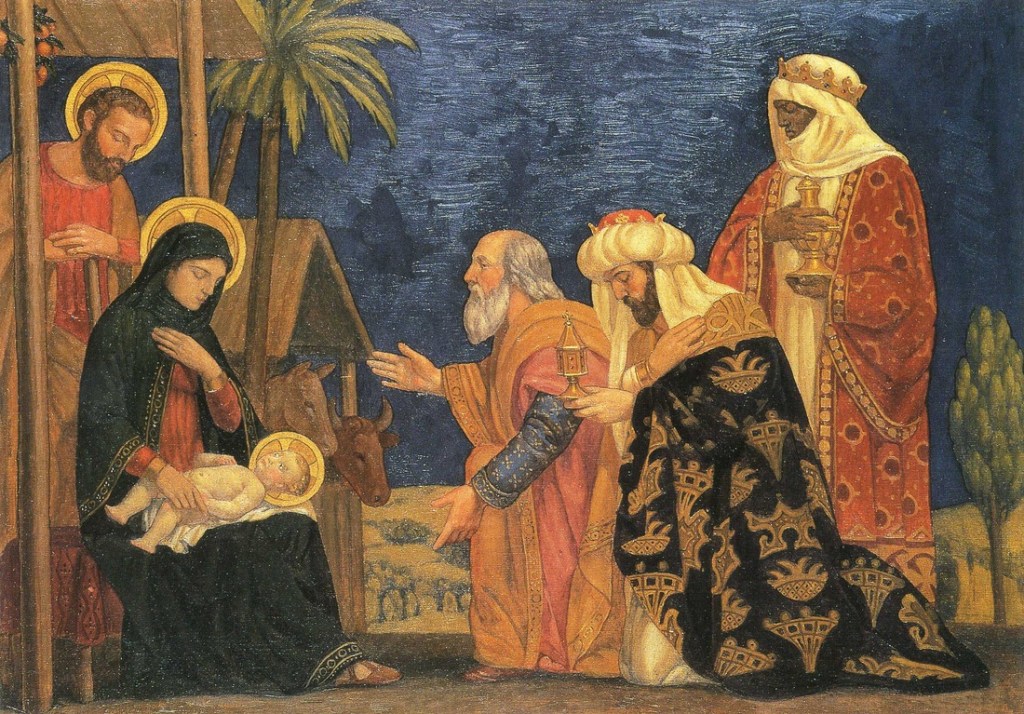
And this we can only do if we become open and sincere to God who revealed Himself to us in His Son Jesus Christ. No need to hide things from Him. He knows everything but He does not force us to come to Him. He merely invites us. Just like the three wise men from the East or Magi who came to pay homage to Him in Bethlehem.
When Jesus was born in Bethlehem in Judea, in the days of King Herod, behold, magi from the east arrived in Jerusalem, saying, “Where is the newborn king of the Jews? We saw his star at its rising and have come to do him homage.”
Matthew 2:1-2
The meaning of magi and star.
After the Nativity of the Lord and the solemnity of Mary, Mother of God we celebrate this Sunday the third major feast of the Christmas Season called the Epiphany from the Greek term that means manifestation or appearance of Jesus to pagan wise men symbolizing the peoples of the world.
So much attention has always been given on the magi and the star that we sometimes forget that the stories in the Bible are not pure accounts in history that are factual to satisfy our curiosities; it is not that they did not happen at all but the most important thing is the meaning they impart to those reading the Sacred Scriptures.
As we have noted during our Simbang Gabi, Matthew has the most unique in beginning his gospel account with “the genealogy of Jesus Christ, the son of David, the son of Abraham” (Mt.1:1) to show right away to his readers that Jesus is the fulfillment of the promise of God in the Old Testament. Recall how behind every name in the genealogy of Jesus is a story and history full of meaning and significance.
Matthew continues this in his story of the epiphany to show us again that Jesus is the fulfillment of God’s promises since Abraham by using the story of Moses as his framework.
See how the story of Jesus resembled that of Moses, the greatest figure of the Old Testament: the flight to Egypt, the threat of murdering all infants in the time of the Pharaoh and then of King Herod, and the saving act of God in the exodus which is fulfilled in Jesus Christ’s Passion, Death and Resurrection.
See my dear Reader that in the story of the epiphany of Jesus is also found glimpses of His crucifixion and death: at His birth, the magi were the first to recognize Jesus as the new King of the Jews while at His death, there hung above Him the sign “Jesus of Nazareth, king of the Jews” with a Roman centurion, another pagan like the magi who would declare to himself, “Truly, this was the Son of God” (Mt.27:54).
Here we find Matthew’s infancy narratives of Jesus are not only appealing to our sentiments and emotion but on a deeper level, these stories reflect how we Christians have always believed based in our experiences and faith that indeed Jesus is the Emmanuel of God, His presence among us who truly walked this planet and continues to guide us in the power of the Holy Spirit after His Ascencion into heaven, making Him truly a star above us guiding us in this life’s journey.
Unfortunately, for some people, it is something unthinkable and even impossible, choosing to live in their own follies and blindness like King Herod and yes, some Christians who claim to believe and know God.
When King Herod heard this, he was greatly troubled, and all Jerusalem with him. Assembling all the chief priests and scribes of the people, he inquired of them where the Christ was to be born. They said to him, “In Bethlehem of Judea, for thus it has been written through the prophet… Then Herod called the magi secretly and ascertained from the time of the star’s appearance. He sent them to Bethlehem and said, “Go and search diligently for the child. When you have found him, bring me word, that I too may go and do him homage.”
Matthew 2:3-5, 7-8
Jesus calling us to our "epiphany".
I like that part when Matthew tells us how “Herod called the magi secretly” to inquire further to them about their knowledge about Jesus and the star. How ironic and tragic that they in Jerusalem were the ones who did not even notice the unusual star above them and worst of all, with the information and knowledge they have, not to have known the birth of Jesus Christ!
How sad that so many times, we keep on looking so far without even noticing those nearest to us!
Most of all, of our blindness and refusal to accept what is obvious, what is so clear like the love and mercy Jesus pours on upon us despite our sinfulness.
See at how some government officials are making a mockery of our laws and of their very selves, trying to cover up their wrongdoings, trying to defend their mistakes and sins not knowing the more they sink in their follies with all their lies and secrecies.
Keeping secrets can sometimes be needed for a good reason; but most often, to act in secret is often indicative of something sinister like in our story today, of Herod calling the magi secretly to snoop around and eventually launch his evil plot.
What a shame that Jesus, Mary and Joseph were never in hiding yet here were people secretly plotting something against them — just like inn our own lives, in ur own time when we try to deceive even those dearest to us, hiding in our so many secrets and lies that eventually come out in the open.
How sad that while Jesus keeps on revealing Himself to us but we still hide many secrets from Him as if he would not know!
This Epiphany Sunday while Jesus appears to us in His words and in the Eucharist, He invites us to open up to Him, to be sincere and have our own epiphany too. May this prayer help you in discarding your many secrets that are after all, very known to Jesus who merely waits for us to come to Him in our openness and sincerity.
Lord Jesus Christ,
in so many instances this past year 2020
You have continued to reveal Your presence among us,
in my own life, in keeping me safe from so many harm,
in healing my sickness, in providing for my needs,
in obviously being my Lord and my God;
You know everything in me, my many secrets
that I continue to hide from You.
Forgive me Jesus in hiding from you
even if I know you know better than I am.
I have no gold, frankincense nor myrrh
but this Christmas help me offer to you
my many "secrets" I hide  from you and others
so I may fully experience your love and mercy poured out
since that first Christmas when you first came to us.
AMEN.
The Lord Is My Chef Breakfast Recipe for the Soul
Monday, Feast of the Holy Innocents, 28 December 2020
1 John 1:5-2:2   >><)))*> + >><)))*> + >><)))*>     Matthew 2:13-18
Photo by Ms. Janine G. Lloren, metal engraving of the flight to Egypt by the Holy Family on one of the doors of a church in Florence, Italy taken in 2015.
In this time of COVID-19 pandemic with news of a new and more vicious strain possibly now spreading, I have come to realize this Christmas how you also went through worst scenarios during your birth and infancy.
From the moment of your birth, Lord, you have experienced so much dangers and uncertainties just like us today with many women giving birth in harsh and hostile situations like in the middle of an armed conflict or in a refugee camp, or maybe while being held hostage in human trafficking.
When I imagine how difficult it must have been during your time when you fled to Egypt because of Herod’s murderous ways, I feel so sad at how things have not really changed yet, of how such things continue to happen daily in so many parts of the world.
But with your coming, Lord Jesus, though there are still those dark clouds looming above us as Pope Francis had noted in his latest encyclical, hope and joy abound.
Beloved: This is the message that we have heard from Jesus Christ and proclaim to you: God is light, and in him there is no darkness at all.
1 John 1:5
So consoling are the words of your beloved disciple, Lord! Let your light shine on us! May our love and kindness to one another dispel the many darkness around us specially this year. And yes, forgive us too, Lord Jesus, at how we have been “treating” and calling this year 2020 with so many taunts and ridicules.
If there is one thing we have always been good at, it is the blaming game – we keep on blaming others except ourselves. Like Herod. At such great costs.
As we near the closing of this year, help us to remember how with your coming you have sanctified and made us all holy like you. Each year is always a blessed and good year from you. It is us who make it so bad, so defiled. We caused this pandemic. Long before it came, we have been distant from one another, have always washed hands, refusing to take a stand for what is true and just. Most of all, we have stopped looking at each other’s face to see you again.
May this pandemic be an “Egypt” for us all —- a time to pray and reflect about your light and coming, Lord Jesus. Amen.
The Lord Is My Chef Simbang Gabi Recipe for the Soul-9
by Fr. Nicanor F. Lalog II
Thursday, Advent Week IV, 24 December 2020
2 Samuel 7:1-5, 8-12, 14, 16     >><)))*>  +  <*(((><<     Luke 1:67-79
Photo by author, altar at our sacristy, 19 December 2020.
One thing that have really made this pandemic so bad and so sad is the lack of tenderness of our many officials to the people they are supposed to serve. Consider all these pains and inconveniences they have caused us the public from the fatal shooting of that Marawi veteran in Quezon City to the detention of Mang Dodong at the height of the lockdown to the closure of the largest network in the country mid-year then on to stupidities of first the motorcycle barrier, then the closure of U-turn slots at EDSA capped by the insane RFID at NLEX and now the inhuman shooting of mother and son by an off-duty policeman.
As one of my friends wrote on his FB page last April, “bakit kung kailan panahon ng pandemya na dapat magtulungan at magmahalan saka puro karahasan?” (why all the the violence happening during pandemic when we are supposed to be helping and more loving to one another?).
What a year indeed of natural calamities worsened by some public officials so detached from the sufferings of the people.
And that, my friends, is why we have to celebrate all the more – meaningfully – Christmas.
God is perfect and cannot suffer; hence, He sent us His only Son Jesus Christ to be one with us in our sufferings and miseries, to suffer with us – cum passio – express His compassion.
On this last day of our novena to Christmas, we see how Zechariah comes into full circle singing praises to God (called Benedictus in Latin) after being forced by the angel into full silence becoming speechless when he doubted God’s gift of a child to him and his wife Elizabeth.
Zechariah his father, filled with the Holy Spirit, prophesied, saying: “Blessed be the Lord, the God of Israel; for he has come to his people and set them free. He has raised for us a mighty Savior, born of the house of his servant David.”
Luke 1:67-69
Photo by author, Advent Week IV, 20 December 2020.
Jesus already present among us in the coming of John
During the Visitation of the Blessed Virgin Mary, Luke never mentioned Zechariah around the house so that Elizabeth and her baby in her womb were the only ones were filled with the Holy Spirit upon hearing Mary’s greeting.
Now, after naming his son “John”, Luke tells us how Zechariah was filled with the Holy Spirit too that he prophesied the meaning of the coming of his son as “prophet of the Most High” in 1:76.
See the three verbs he used after blessing God in his canticle called Benedictus: “Blessed be the Lord… he has come to his people and set them free. He has raised for us a mighty Savior, born of the house of his servant David.” The verbs are all in the past tense when in fact, what he was saying was supposed to be of what would happen after the birth of John, the coming of Jesus Christ.
Here we find the complete faith and trust of Zechariah to the plan of God like Mary in her Magnificat. Zechariah had seen something so big, something momentous taking place while still in the midst of darkness of his time and world just like us in this pandemic and calamities, callous officials in government and police.
Dear friends: Jesus has come, had set us free (saved us), and had risen to work all His wonders! Let us keep our faith and hope like Zechariah that God has already started working in our favor to turn the tide and soon, things will surely get better if we remain consistent to our response to His calls, standing for life and dignity of every person through whom Jesus comes, for what is true and just.
Photo by author, Church of St. John the Baptist at Ein-Karen, Israel (2019).
From the hand of God into the heart of God
Yesterday we reflected on how we have to allow ourselves to be “the hand of God”, to let Him do His work among us through our hands. Today in Zechariah’s Benedictus we find a movement from the hand of God to His very heart in Jesus Christ our Savior.
“In the tender compassion of our God the dawn from on high shall break upon us, to shine on those who dwell in darkness and the shadow of death, to guide our feet into the path of peace.”
Luke 1:78-79
After seeing the coming of the Christ in the birth of his son John, Zechariah now summarizes to us the very essence of Jesus our Savior, of God Himself: tender compassion or in the original Greek, splaghna or “tender mercy” of God.
It is not just compassion which is to suffer with us but at the same time be filled with tenderness that one is so moved to reach out, to do something by going down with the one suffering.
Like courage, mercy is a movement in the heart called misericordia in Spanish from the Latin mittere, meaning to be moved, to be stirred. It is something dynamic, not static. It is a deep feeling that moves toward someone in pain and suffering. An identification of Jesus with every person going through so much hardships and sufferings in life.
Zechariah’s heart is no longer hardened with negativity and cynicism – it was so stirred by God that he mentioned His tender mercy or compassion because he had personally felt it as he recovered his voice and speech. With the birth of John, he now believes that God’s love for his suffering people is deep and personal. As we say in Filipino, “tagos o sagad sa buto” which may be translated as “through and through”.
And that is perhaps one of the things we sorely miss so much these days from everyone, tenderness. The tender compassion, tender mercy of Jesus. Recall how during His ministry all four evangelists would narrate how Jesus was moved with pity and compassion to the people who were lost, tired and sick “like sheep without a shepherd” that no matter how tired He may be, He would always find time to teach them, heal their sick, and even feed them.
That is the mercy of God that Jesus had brought forth to us in His coming, experienced by Zechariah himself that he could foresee its coming at the birth of John.
Photo by author, Advent Week IV, 20 December 2020.
We priests and religious pray the Benedictus in our morning prayer called lauds (Latin for praises). It is so fitting because at the start of each day, that must be the one thing clear with us always – that the Lord is come to save us, to forgive us, to love us.
One saying I have always loved mentioning in my talks to people came from an anonymous writer I found on the table of a good friend long before I became a priest. It says: “If you have love in your heart, you have been blessed by god; if you have been loved, you have been touched by God.”
That is the Benedictus, the song of every faithful disciple of Jesus introducing His coming, His birth. So many people have forgotten God, do not know God, refused to believe in God because many among us He had lavishly loved have refused to share His love with others.
Have a blessed and meaningful Christmas! Thank you for following our reflections. Share it if you have been blessed.
Quiet Storm by Fr. Nicanor F. Lalog II on the occasion of
the First Year Anniversary of Ordination
to the Priesthood of Rev. Fr. Howard Tarrayo
Cathedral-Basilica of the Immaculate Conception
Malolos City, 10 December 2020
Photo by author of Lake Tiberias (Galilee) at sunrise, May 2019.
This preaching should have been last year.
Fr. Howard was the very first person to have invited me to be his predicador at his Primera Missa Solemne while still a seminarian — and that is why I think he was delayed for almost two years before getting ordained exactly a year ago today!
That gospel scene you have chosen for this occasion at the shores of Lake Tiberias is something that happens everyday in our lives as priests, from day one of ordination way into our old age in with Jesus asking us, like, “Simon, son of Jonah, do you love Me?” (Jn.21:17)
Priesthood is essentially loving Jesus Christ first of all. That is why Jesus had to ask Simon Peter thrice with the same question, “Do you love me?” because we have to love him first before we can truly follow him.
When the priesthood or the Call becomes the very core and center of our lives and not Jesus our Caller, sooner or later, we replace Christ that we become the Lord and Master in our parish, in our ministry.
Today, we are celebrating Fr. Howard your remaining in love with Jesus, of loving Him first, a year after your ordination and we pray that every year, it will always be the very reason you celebrate your ordination anniversary.
When they had finished breakfast,
Jesus said to Simon Peter,
"Simon, son of John, do you love me
more than these?"
He said to him, "Yes, Lord, you know
that I love you."
He said to him, "Feed my lambs."
(John 21:15)
Loving Jesus first is growing deeper in our prayer life in him. People who love are always together; they have a ritual or a schedule that like the fox telling the Little Prince, an hour before their appointed meeting, his heart is already beating for him, excited with his presence that he is coming.
Photo by author, parish sacristy, 05 December 2020.
It is my hope that during this pandemic we priests have rediscovered the value and beauty of having that seminary schedule during our formation years that must have ingrained in us discipline. Like schedules, prayer is a discipline. Love goes through a process, it matures, becomes more disciplined. That is why a disciple is not only a follower but also a disciplined one, a true lover!
It is good to bond with brother priests and friends and family once in a while but not every night or every other night that we have practically made every Starbucks outlet a parish or even a diocese where 1/3 of the clergy get together religiously (pun intended)! Any loving husband would always be home at night to be with his wife. The same is true with every priest — be home at night in your parish to be with Jesus at prayer. He awaits you, He misses you!
Whenever people ask me what is the most difficult part of priesthood, I always tell them it is praying every day. And I mean real prayer when we have to strip ourselves naked before God in our truest selves. Kaya sabihin man nila walanghiya o salvahe ang sino mang pari, pero kung araw-araw lalo na sa gabi siya ay nananalangin, mabuting pari pa rin siya kasi maski minsan, nagiging totoo siya sa sarili at sa Diyos. And masama kapag hindi na siya nagdarasal nang tunay, iyon ang simula ng pagkaligaw ng sino mang pari.
Whatever is the fruit of our prayer, that is our homily and that is when all tests happen: the moment we deliver a homily, people measure us if we “walk our talk”. The priest is the homily himself. When a priest stops celebrating Mass, most especially refuses to give homilies, maybe Father is no longer praying. Baka may iba na siyang mahal kesa kay Jesus.
Remaining in love with Jesus is being a man of prayer.
He then said to him a second time,
"Simon, son of John, do you love me?"
He said to him,
"Yes, Lord, you know that I love you."
He said to him, "Tend my sheep."
(John 21:16)
Loving Jesus first means keeping in mind that everything is a gift from Jesus, that whatever we have, whatever we share, whether material or spiritual things, is always from Christ. We have nothing except Him. Even if sometimes we feel bad in our ministry like going on a sick call when we are so tired or blessing a dead cat or hearing confessions of a parishioner who have maligned you, just do it! Whatever you give them, it is not yours but Jesus’!
Photo by author, parish sacristy, 05 December 2020.
Huwag maging maramot, Father. Maging mapagmahal, matulunging, maunawain, mapagpasensiya, mapagbigay, mapagpatawad — kasi ano mang pagmamahal, tulong, pang-unawa, pagpapasensiya, kapatawaran o ano mang ating maibibigay kanino man ay hindi naman talagang atin kungdi kay Kristo at Kristo pa rin!
Here lies the danger when we are so focused with our call or vocation when we feel the one who must be understood and cared for — we turn the ones being served instead of the one serving! Kasi feeling natin magaling tayo kaya tayo naging pari! Para tayong artista at politiko na “FGLG”: feeling guapo, looking gago. Parang lahat may utang na loob sa atin. Kaya kung magmayabang tayo: ako nagpagawa niyan, ako nakaisip niyan, ako, ako, ako…. Nasaan si Jesus? Nandun sa tabernakulo, nabuburo.
I wish to share with you a prayer I have written during our retreat with a Cenacle sister at the Theologate when we were in third year: “Lord Jesus Christ, you have given me with so much and I have given so little; teach me to give more of my self and more of You to others. Amen.”
He said to him a third time,
"Simon, son of John, do you love me?"
Peter was distressed that he had said to him
a third time, "Do you love me?" and he said to him,
"Lord, you know everything; you know that I love you."
Jesus said to him, "Feed my sheep."
And when he had said this, he said to him,
"Follow me."
(John 21:17, 19)
Father Howard, we have learned in Holy Matrimony that a man and a woman marries not only each other but also their families; the same is very true in priesthood. Loving Jesus first means the priest’s family must love Jesus more than their priest son and Kuya Pari or Tito Pari.
Profession of faith by Rev. Fr. Howard with his mother and sister before Bishop Dennis, 10 December 2019.
Nanay Nelia and Mary Grace… kung mahal ninyo si Father Howard, mas mahalin ninyo si Jesus. Ang pagmamahal ng pamilya sa kanilang anak o kapatid na pari ay naroon din sa kanilang higit na pagmamahal kay Jesus. Kapag si Jesus ang minahal ninyo una at higit sa lahat katulad naming mga pari, manalig kayo lalong mamahalin ni Jesus si Father. Hindi siya pababayaan.
We are told that after this third question by Jesus “Do you love me?”, Simon Peter was distressed because he remembered how he had denied the Lord three times after His arrest on Holy Thursday evening.
What can be more distressing especially at this time of the pandemic for us priests than be caught between our family and ministry?
You were still preparing for your Diaconal ordination last year, Father Howard when your mother had a stroke, then followed by the death of your father. It must have been so difficult, so painful. But looking back, did God ever forget you, Father?
Ate Nelia and Mary Grace, give Father Howard to Jesus. Huwag ninyo siyang hahanapan. Magkusa na kayo sa inyong sarili kasi iba piniling buhay ni Father. And I address this to every parent, brother and sister, relatives and friends of Fr. Howard and every priest. Huwag ninyo siyang hanapan. Kung mayroon man kayong hahanapin palagi kay Father Howard, iyon si Jesus. Always Jesus, only Jesus.
There is still something more “distressing” for us priests with our family that I wish to share with you, Father Howard. When Jesus told us to leave our father and mother, brothers and sisters behind to follow Him, he never meant to turn our backs from them. We still have to love them but more on a different level as silent witnesses of Christ.
The most difficult part of our ministry is ministering to our own family with all our biases and past histories before us. We are so familiar with each other that inevitably, these would surely show on many occasions when least expected. Be on guard, for the pendulum swings to extremes when we sometimes become so lax or so harsh with them.
Most “distressing” is when Jesus asks us “Do you love me?” while we continue to hold on to the pains and hurts, frustrations and disappointments our families have inflicted on us.
It is in our own families when we are asked to be more like St. Francis of Assisi, of preaching the gospel, speaking only when necessary.
Father Howard, be the first to understand and to embrace the strains and the past in your family; Jesus called you despite your imperfect family to make you perfect and eventually, through your life of total love for Him, perfect your family too.
It is very difficult to love, most especially our Lord Jesus, Father Howard. How I wished you have never asked me to do this because so many times I have failed Jesus. And continues to fail Him, not loving him that much.
But that is exactly what happened at the shores of Tiberias that morning after breakfast when Jesus asked Simon Peter three times, “Do you love me?”
Don’t worry, Father. Jesus knows everything how much we love Him. You are never alone with Jesus and us. Let us keep saying “yes, Jesus, I love you” with our brother priests every day, specially during anniversaries like this. Amen.
Quiet Storm by Fr. Nicanor F. Lalog II, 09 December 2020
Photo by author, 09 December 2020.
As I closed my prayers today
got my stares fixed on empty space
that stirred me into a daze;
And I was amazed at how we are in a place
so vast we cannot keep pace
yet we say in everyone's face
we need a space, we have no space!
If we can appreciate
the shape in every space
our heart will ablaze
with so much praise
for in between is grace
of a sacred space
to raise
our living
and relating
in sharing God
dwelling
in every being
loving
and caring.
What is a space?
A place or a dimension
 a creation for correlations
to locate persons and things
and every entity
yet always considered as empty
only a reality in relativity;
but, as far as
every soul can desire
every mind can imagine
space is there to see
like the deep, blue sea
an infinity and mystery
our entry into divinity!











 lordmychef.com