The Lord Is My Chef Breakfast Recipe for the Soul by Fr. Nicanor F. Lalog II
Friday, Week XII, Year I in Ordinary Time, 25 June 2021
Genesis 17:1, 9-10, 15-22   > + <   Matthew 8:1-4
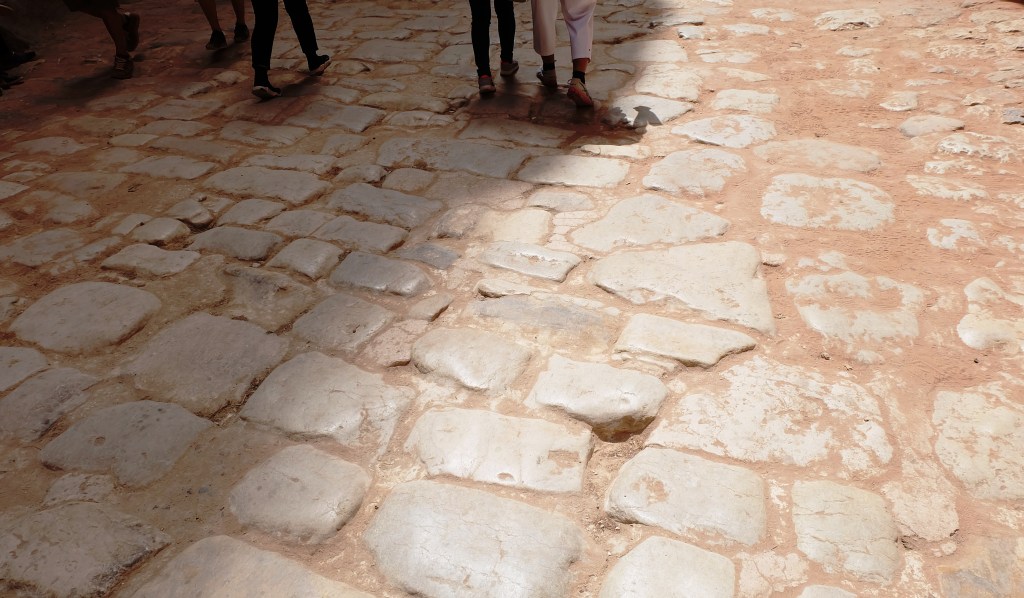
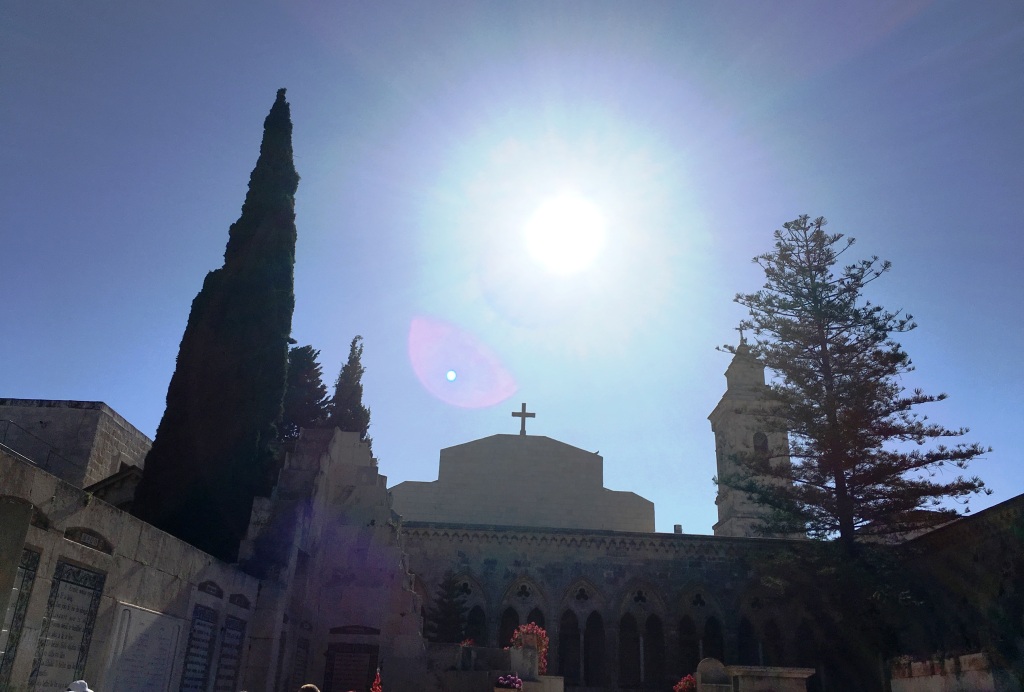
Photo by author at Petra, Jordan, 2019.
When Abraham was ninety-nine years old,
The Lord appeared to him and said:
"I am God the Almighty.
Walk in my presence and be blameless."
(Genesis 17:1)
What a beautiful call from you,
O God our Father:
to walk in your presence
and be blameless.
Our lives consist of so many walks
many in a hurry, some very slowly
and maybe the rest listlessly, aimlessly
refusing to move at all.
Teach us, O Lord,
to walk blamelessly
by walking in your ways
following the path of the narrow gate
learning to prostrate before you
like Abraham when filled with joy
or like the leper who approached Jesus
when deeply in pain and suffering.
When Jesus came down
from the mountain,
great crowds followed him.
And then a leper approached,
did him homage, and said,
"Lord, if you wish, you can make me clean."
He stretched out his hand,
touched him, and said,
"I will do it.  Be made clean."
His leprosy was cleansed immediately.
(Matthew 8:1-3)
We pray for those who have stopped
walking to you
walking with you, Lord:
let them rise again to walk
blamelessly in your sight.
Heal them and likewise
send them again to walk in your presence
and be agents of your healing.  Amen.
The Lord Is My Chef Breakfast Recipe for the Soul by Fr. Nicanor F. Lalog II
Thursday, Solemnity of the Birth of St. John the Baptist, 24 June 2021
Isaiah 49:1-6 ><}}}*> Acts 13:22-26 ><}}}*> Luke 1:57-66, 80
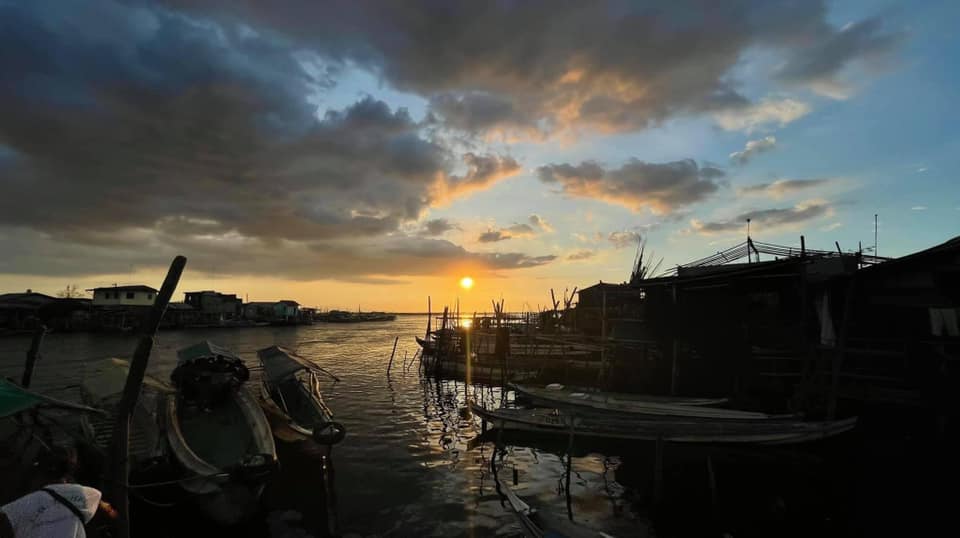
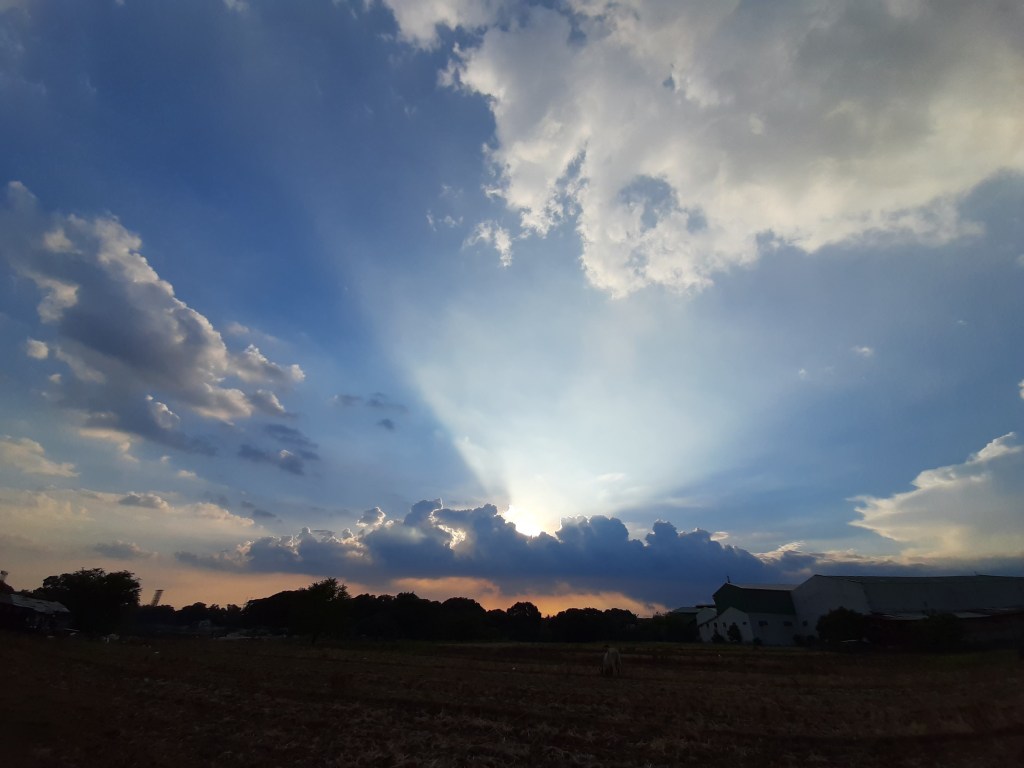
Photo by Fr. Pop Dela Cruz, Binuangan Is., Obando, Bulacan, May 2021.
Dearest God our Father:
Grant me the grace to be silent
so I can listen to your voice more,
of those around me and most especially
to that voice within me
that speaks freely and truly
of what is good in me like what
the psalmist sings today:
"I praise you for I am
wonderfully made."
On this Solemnity of the Nativity
of John the Baptist
whose name means
"God is gracious",
help me to remain and be still
in my own wilderness
trusting in your providence
never to voice any protest
but simply profess
my firm faith in you
as I silently await the Word
becoming flesh, dwelling in me
proclaiming his good news of
salvation especially to the
the voiceless many
as you have promised the prophet:
"He made of me a sharp-edged
sword and concealed me
in the shadow of his arm.
He made me a polished arrow,
in his quiver he hid me."
(Isaiah 49:2)
O God, like when John was born
people are wondering these days
what will we as a people be
in this year of the pandemic?
So many loud voices are heard
but none voiced out the pains
and concerns of the voiceless
left to suffer by themselves.
Let your voice come to me
that I may courageously speak
your words of sympathy and unity
comfort and encouragement
without focusing on me
for like John the Baptist
I am not worthy to unfasten
the sandals of my Lord, Jesus
who alone must increase
as I decrease.
Amen.
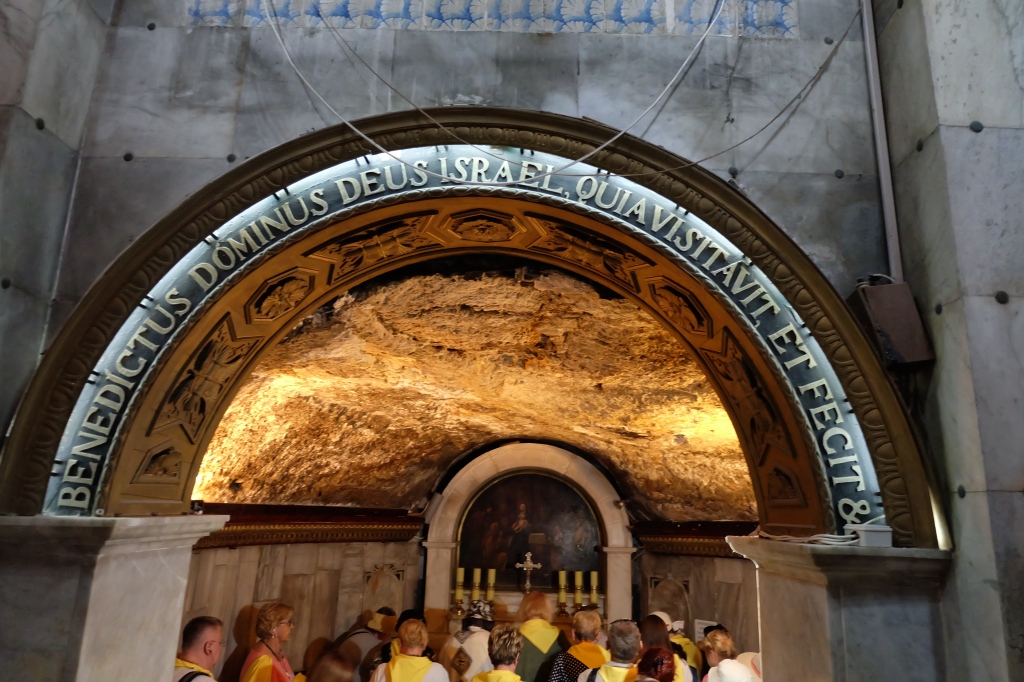
Photo by author, marker at the Church of St. John the Baptist, the Holy Land, 2019.
The Lord Is My Chef Breakfast Recipe for the Soul by Fr. Nicanor F. Lalog II
Thursday, Solemnity of the Birth of John the Baptist, 24 June 2021
Isaiah 49:1-6 ><}}}'> Acts 13:22-26 ><}}}'> Luke 1:57-66, 80
Photo by author, site where St. John the Baptist was born beside the Church in his honor in Judea, 2019.
Today’s celebration of the Solemnity of the Birth of St. John the Baptist reminds us of the very important grace and gift from God we take for granted and always abuse – our voice.
Also known as the “voice in the wilderness” who prepared the coming of Jesus Christ, St. John shows us even before his birth through his father Zechariah the proper use of this gift of voice from God.
Voice is power.
In the Book of Genesis, God created everything by simply saying “let there be…” and it comes into being. When Jesus came as the “the Word who became flesh”, he witnessed to us this immense power of the voice of God when he would simply speak to heal people, cast away evil spirits, and still the seas and quiet the storms.
Only us humans were gifted with this unique power of God to speak using the voice.
How sad that we have forgotten or have been totally unaware of the fact that we merely share in the power of God in speaking, in voicing out what is in our minds and in our hearts. Like freedom or the power to choose what is good, we have abused this power of the voice so evident in this digital age as we drown in a cacophony of voices from everybody wanting to be heard, wanting to rule.
And the tragedy is that
those with the loudest voice and
easy access to all kinds of media platforms
are also the ones in power who only voice
out their selfish interests like our politicians.
Photo by Ms. Ria De Vera, Bgy. Lalakhan, Santa Maria, Bulacan, June 2021.
And the tragedy is that those with the loudest voice and easy access to all kinds of media platforms are also the ones in power who only voice out their selfish interests like our politicians.
Have you noticed how most of the loud voices we hear these days come from those not involved at all in any kind of suffering? They are not only loud but also so quick to voice their views empty of any concern at all. Worst, many of these loud voices we hear come from people who have little or no concern at all for those truly in pain like the poor and marginalized who have remained voiceless in our society.
When they came on the eighth day to circumcise the child, they were going to call him Zechariah after his father; but his mother said in reply, “No. He will be called John.” So they made signs, asking his father what he wished him to be called. He asked for a tablet and wrote, “John is his name,” and all were amazed. Immediately his mouth was opened, his tongue freed, and he spoke blessing God.
Luke 1:59-60, 62-64
Silence is the voice of God.
At the eve of our celebration today, we have heard how the angel had made Zechariah deaf and mute after he doubted the good news announced to him of the coming birth of their son to be named as John.
Now after nine months of being silent, Zechariah recovered his voice and speech that he spoke blessing God.
Imagine the power and stature Zechariah must have commanded at that time: both he and his wife Elizabeth were from the priestly clans. They were like the royalty at that time, living in an affluent section of the country. Both were born into wealth and fame. And power.
Zechariah’s voice must be one of the most sought after in Judea with his wisdom and influence.
Suddenly gone when his very voice questioned the source of its power, God represented by Archangel Gabriel.
Photo by author, Church of St. John the Baptist, the Holy Land, 2019.
The experience of Zechariah teaches us of the value of silence that has become a very rare commodity these days.
Many of our misunderstandings are due to our lack of silence, of listening to what others are saying or telling us.
Contrary to what
we also believe,
 silence is not emptiness
but fullness:
Contrary to what we also believe, silence is not emptiness but fullness: it is different from being quiet when we do not simply speak but allow our minds to work on what we believe in or hold on to. Silence is trying to listen to every voice, especially the faintest ones that usually speak the truth. In the Bible, we find a common pattern in both the Old and New Testaments how God’s communication is preceded always with silence.
Zechariah was forced into silence to experience again its fullness, of being connected anew with God as it gave him opportunities to truly listen intently to God in prayers. That is why everyone was surprised not only when Zechariah confirmed the name of his son would be “John” but most of all when he spoke and his voice heard again by the people. According to Luke, Zechariah sang a blessing to God called the Benedictus.
Then fear came upon all their neighbors, and all these matters were discussed throughout the hill country of Judea. All who heard these things took them to heart, saying, “What, then, will this child be?” For surely the hand of the Lord was with him.
Luke 1:65-66
Becoming the voice of God like John the Baptist
See how Luke presented the scene in pure simplicity as if we were also there, everybody asking “what will this child be?” for surely the hand of the Lord was with him. The scene is packed with the power of God. No voices were heard except the few “pakialamera” or “mahadera” neighbors who wanted the child named Zechariah like his father.
Elizabeth was so cool but emphatic by declaring her son shall be named John. No debates nor arguments among the women who approached Zechariah – surely, not to ask him to voice his decision as he was deaf and mute at that time. Everybody was amazed when he asked for a tablet and wrote “John is his name”.
There was the deafening silence of God’s voice heard loud and clear, perhaps even for several days after the circumcision and naming of John.
“St. John Preaching In the Wilderness” by Anton Raphael Mengs (1728-1779), photo from commons.wikimedia.org
Such is the power of God, of his voice.
Always preceded by silence.
Never harsh nor imposing.
Soft but always felt, always consistent, very clear and simple.
Most of all, refreshing and blissful.
It is a voice kept in one’s heart, nurtured through time in prayer and simplicity of life until the listener becomes the speaker and carrier of the voice of God.
In our digital age where humans and machines speak with voices competing for our attention, we are reminded that the true power of the voice is not in its volume but in God himself who is also the message.
Like images, voices can also be enhanced with the help of modern technology and human ingenuity, especially by image makers and propagandists who are paid to advance one’s power and influence.
Let us be more discerning in listening to the many voices competing for our attention.
Let us begin first in that soft and feeble voice inside our hearts we disregard but consistently speaks to us daily. That voice could be God speaking to us.
Let us rediscover silence and the true power and beauty of the voice of God.
Recall how often in our lives and in human history, the most important voices ever heard, ever written come after long moments of silence, of reflections and listening to God and with others.
The child grew and became strong in spirit, and he was in the desert until the day of his manifestation to Israel.
Luke 1:80
Photo by Fr. Pop Dela Cruz, Binuangan Is., Obando, Bulacan, May 2021.
The Lord Is My Chef Breakfast Recipe for the Soul by Fr. Nicanor F. Lalog II
Monday, Memorial of St. Aloysius Gonzaga, SJ, 21 June 2021
Genesis 12:1-9   ><)))*> + <*(((><   Matthew 7:1-5
Photo by author, Pulilan, Bulacan 25 February 2020.
Sometimes I imagine dear God if ever the world would ever stop for a while, when everything and everyone freezes from whatever we are doing so that we can take a break from all that is going on in our lives, both good and bad.
I remember this silly thought as I prayed on your words today as we celebrate the Memorial of the Jesuit St. Aloysius Gonzaga, a very young and wealthy scion during the middle ages. In the first reading, you have called Abram, a very old man at 75 years of age and also very wealthy and prosperous.
I guess we will never stop, O God, because you keep on calling us to you, whether young or old.
And always wealthy.
More than the material wealth and possessions of Abram and St. Aloysius, you call each one of us to serve you because everyone is so blessed with something always to offer and give. Even give up and surrender to you.
You always see each one of us with so much love and trust, of being gifted with so much to offer and give.
Problem is we cannot see ourselves the way you see us.
Too often, we waste our energies and time stopping to look at others, to criticize others and find faults at everyone except us.
How ironic that you see only the good things in us whether young or old while we are busy finding faults and unpleasant things with others!
Help us through Jesus Christ your Son to “Stop judging, that we may not be judged. For as we judge, so shall we be judged, and measures with which we measure will be measured out to us” (cf. Mt.7:1-2).
Please, open our eyes dear God see ourselves the way you see us with love and appreciation for our many gifts and talents that are wasted as we find faults with others. Amen.
The Lord Is My Chef Sunday Music by Fr. Nick F. Lalog II, 20 June 2021
Photo by Ms. Anne Ramos, a rainbow appeared during our Blessed Sacrament procession at the start of the lockdown, 22 March 2020, in our former parish at Bagbabuin, Sta. Maria, Bulacan.
Movies are great sources of good music. We cite two movies today for our featured Sunday music in relation with our Gospel when Jesus pacified a violent storm while they were crossing the Lake of Galilee in the middle of the night (https://lordmychef.com/2021/06/19/jesus-amid-our-storms-in-life/).
From the 1939 classic film The Wizard of Oz sang by Ms. Judy Garland which also became her signature song, Over the Rainbow that was also featured by Hong Kong film director John Woo in the 1997 action movie Face/Off starring John Travolta and Nicolas Cage.
While praying over the gospel this past week, I remembered Woo explaining why he inserted the music Over the Rainbow in the violent gunfight scene of Face/Off between Travolta and Cage where Nicolas placed a headset on “his” son as they shoot out with the FBI:
“When I was young my life was very difficult — almost like a living hell. But when I heard Judy Garland sing this in The Wizard Of Oz, I suddenly felt as if I was on the other side of the rainbow, in heaven, in a place full of hope. When I used it in Face/Off, it was to say thanks for showing me that the world is still full of beauty.”
Woo is such a great director that aside from his beautiful choices of music for his movies, he always used symbolisms like white doves in trying to show the good side of life no matter how violent and bad is the scene or story.
And that is the meaning of our gospel this Sunday: there will always be a lot of darkness and storms in our lives that sometimes we feel and think God does not seem to care like when Jesus was sleeping soundly at the stern of their boat during a squall in the middle of the night as they cross the lake. His silence does not mean he does not care; moreover, he is silent because he had won over a long time ago at his Cross every evil and suffering in this life!
He was the first one to pass “over the rainbow” who now assures us of reaching the shores of safety and peace, joy and fulfillment with him and in him. Hence, this Sunday let us cultivate an intimacy in Christ to be reconciled with God our Father who alone is our surety in this life who had promised Noah with a sign of the rainbow as an assurance he shall never destroy earth.
In the movie Face/Off, Woo masterfully sequenced the song playing at the high point of the gunfight when Nicolas Cage’s “son” was caught in the cross fires:
 Somewhere over the rainbow way up high
There's a land that I heard of once in a lullaby
Somewhere over the rainbow skies are blue
And the dreams that you dare to dream really do come true

Someday I'll wish upon a star
And wake up where the clouds are far
Behind me
Where troubles melt like lemon drops
Away above the chimney tops
That's where you'll find me
Try watching Face/Off this Father’s Day and reflect on Judy’s music to find faith in God anew that after all these storms in life during the pandemic, there is a beautiful rainbow to delight us.
*We have no intentions of infringing the copyrights of the music except to share its beautiful message. Thank you.
The Lord Is My Chef Breakfast Recipe for the Soul by Fr. Nicanor F. Lalog II
Friday, Week XI, Year I in Ordinary Time, 18 June 2021
2 Corinthians 11:18, 21-30   ><)))'> + <'(((><   Matthew 6:19-23
Photo by author, December 2020.
Forgive us, O Lord, in making ministry a gimmickry, when we forget all about you and your sacrifice on the Cross; when all we see is technology and novelty, pretending to make you a reality amid the changing world when in fact it is us and not you whom we advertise and make known to everyone.
Forgive us, dear Jesus, when so many times we brag in shrouded manners our exploits and achievements, sacrifices and sufferings to proclaim your name without your Cross not realizing that any cross detached from you is all folly and plain publicity.
Teach us to be like St. Paul to boast more of our weaknesses than of our strength for it is only when we are weak that we are truly one with the rest of humanity – weak and sinful, struggling and striving, always at your mercy and forgiveness.
Who is weak, and I am not weak?
Who is led to sin, and I am not indignant?
If I must boast , I will boast of the things
that show my weakness.
(2 Corinthians 11:29-30)
Remind us always, Lord, before we could ever speak of what we have done and achieved, of what we are doing for you and your people, that we first examine what we treasure most in our hearts for it will always be what others experience and see in us.
No matter how lofty are our words nor our visions of you and of your Church, what we treasure most in our hearts always radiate in our lives, in our actions, in our very selves.
If we have not really done that much for you and for others, if we have not truly embraced you on the Cross with all the blood and pains as seen in our lives and relationships, then, nothing will suffice despite our many claims and monuments to our ministry because it is all gimmickry.
Jesus said to his disciples:
"but if your eye is bad,
your whole body will be in darkness.
And if the light in you is darkness,
how great will the darkness be."
(Matthew 6:23)
Lord Jesus Christ, you are our light. Please enlighten us today, restore our sight and vision to find and follow the real treasures and most precious things we all must have in this life — YOU. Amen.
Image from Pinterest, quotation by Josh at his blog “Project: Faith Journey” at wordpress.com, 15 October 2015.
The Lord Is My Chef Breakfast Recipe for the Soul by Fr. Nicanor F. Lalog II
Thursday, Week XI, Year I in Ordinary Time, 17 June 2021
2 Corinthians 11:1-11   ><)))*> + <*(((><   Matthew 6:7-15
Photo by author, Church of the Our Father outside Jerusalem, 2017.
Dear God: Every day we call on you as “Our Father” so many times without truly knowing the meaning of the supplication “your kingdom come” (Mt. 6:10) which is to submit and surrender ourselves to your reign or kingship in Christ Jesus.
More than being called the “Lord’s Prayer” being taught by your Son our Lord Jesus Christ, help us realize that the “Our Father” is also about our proper attitude in praying which is to submit ourselves to you our God and our Father.
What is the use of calling to you “Our Father” if we decide solely on our own without listening to your voice, to your will or if we choose only a few whom to respect and love, forgetting our being one family?
Help us, O God, to consciously pray and work with others to make this world more humane where we all strive despite our sins and weaknesses to establish peace and justice, love and truth, sharing and caring for one another especially the most needy.
Help us imitate St. Paul with his courage and determination as well as clarity of mind with a dash of some wit and humor in witnessing to the gospel we all preach. May our lives be a revelation of the death and resurrection of Jesus Christ we share in him in witnessing his gospel to everyone.
Your kingdom will only come, dear God, when we remain “sincere and committed to Jesus Christ (cf. 2 Cor. 11:3)” who is the center of our lives, our fulfillment, and our key to true happiness and joy not only in this life but hereafter. Amen.
Homily by Fr. Nicanor F. Lalog II
Baccalaureate Mass, Basic Education Department
Our Lady of Fatima University, 16 June 2021
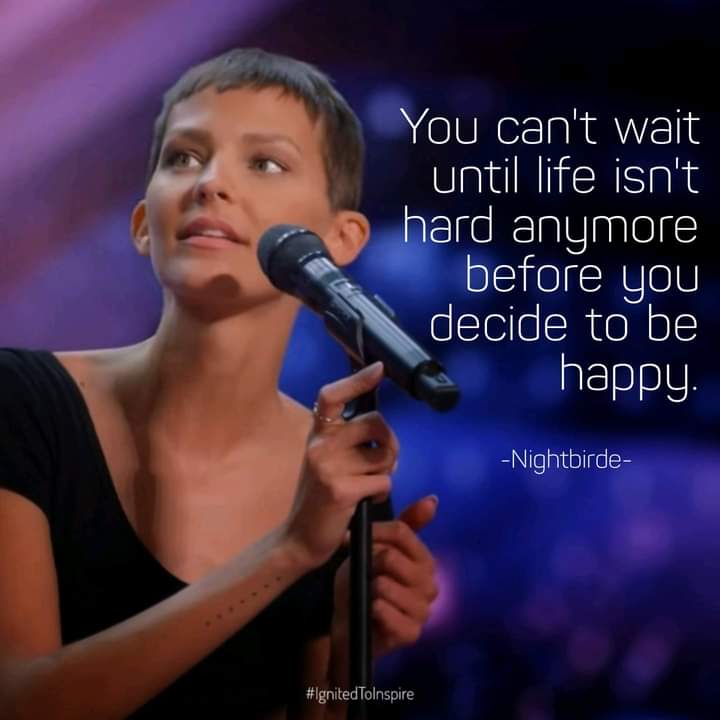
From IgnitedToInspire.com
Congratulations! Today, everyone deserves a warm round of applause, a pat on the shoulder and perhaps, a little treat after our Mass for making it through the Academic Year of the pandemic, 2020-2021.
Most likely while you were chilln’ after your final exams last Wednesday evening, you have seen and heard this great woman of America’s Got Talent, Nightbirde who mesmerized us not only with her voice but most of all with her infectious joy and presence on the stage.
Her words last week are the most quoted in social media even in our Masses last Sunday: “You can’t wait untillife isn’t hard anymore before you decide to be happy.”
She connected so well with us because there is a little Nightbirde in each one of us when we look back to this past academic year when the pandemic happened before we ended classes last year and did not have any Baccalaureate Mass in our University.
Despite the uncertainties and fears and apprehensions due to COVID-19 , we decided to be happy.
We did not wait “until life isn’t hard anymore” to go back to school despite the enormous challenges and adjustments we all have to go through: parents, teachers and faculty, University admin, and most especially you, our dear students.
And if there is one most important lesson we have learned in this past academic year of the pandemic, it is GOD.
Yes!
Like Nightbirde, we have realized how God never abandoned us, always with us, loving us, silently working for us even with just 2% chance of surviving cancer or COVID or passing an exam.
St. Paul said it so well in our first reading:
Moreover, God is able to make every grace abundant for you, so that in all things, always having all you need, you may have an abundance for every good work. You are being enriched in every way for all generosity, which through us produces thanksgiving to God.
2 Corinthians 9:8, 11
The Lord never failed in providing us with all that we need, even during this pandemic.
Let us be open to more of his grace by trusting him more, and sharing his blessings with others.
Dare to “rise to the top” amid the pandemic and other challenges in life!
We did not wait
"until life isn't hard anymore"
to go back to school
despite the enormous challenges
and adjustments we all have to go through:
parents, teachers and faculty,
University admin, and most especially you,
our dear students.
From Our Lady of Fatima University/FB.
God never abandoned us this year. We are still alive and we are now moving up, advancing in our pursuit for education. Some of us may have lost a loved one, others were left behind due to many reasons but we celebrate today our achievements made possible by God.
He is the most important lesson we have learned this year of COVID-19: only God suffices. Without God, we are nothing.
What would our lives be today if we all waited last year for the pandemic to be over to resume classes?
And the good news is, God is assuring us today in this Baccalaureate Mass that he shall be blessing you more this coming academic year 2021-2022.
There will surely be a lot of challenges awaiting us, even more difficult but rest assured that if you were able to complete your Prep or Kindergarten, Elementary or Junior High and Senior High stage, there is nothing you cannot do now!
Lahat kakayanin ninyo huwag lang kayong bibitiw sa Diyos!
God has beautiful plans for you despite this pandemic. Persevere and remain in him.
Study hard,
work harder,
pray hardest!
I have one assignment to give you my dear students as you go on your academic break this June: continue studying, continue praying.
Try to get a copy of a book called “Imitatio Christi” or the Imitation of Christ written around the years 1418-1427 by the German-Dutch monk named Thomas á Kempis.
Don’t worry… it is available in the internet and it is an excellent devotional book. You won’t regret reading it. In fact, next to the Bible, the Imitatio Christi is the other leading devotional book in Christianity.
His reflections are very timely and relevant especially in this time of COVID when he said that what matters most is that we love the Giver – God – and not the gift because God is the source of all good things in life.
A wise lover values not so much the gift of the lover, as the love of the giver. He esteems the affection above the gift, and values every gift far below the Beloved. A noble lover is not content with a gift, but desires Myself above all gifts.
Imitation of Christ, Book III, Part VI, “Of the proving of the true lover” by Thomas á Kempis (d. 1471)
Study hard,
work harder,
pray hardest!
From Pinterest.com
Do not forget amid the many gifts we have received this year of pandemic is the giver of these gifts, God.
When you have God, you have everything. And you can do everything.
Fall in love with God.
So many times in our lives especially when we are still young and strong, we forget God, wasting our lives and precious time with less important things.
We do not realize that God alone is the one whom we must always seek and have in life because he alone loves us truly to whom alone we must always turn to.
To fall in love with God is to cultivate a prayer life, to be a man or woman of prayer.
When you love somebody, you always talk to that person.
If you love God, then you will always pray.
God loves you very much. He believes in you. He knows what you need even before you ask him.
What we do not know is what God wants from us. That is why we have to pray in order to learn what are the plans of God for us this coming academic year 2021-2022.
“When you pray, do not be like the hypocrites, who love to stand and pray in the synagogues and on street corners so that others may see them. Amen, I say to you, they have received their reward. When you pray, go to your inner room, close the door, and pray to your Father in secret. Your Father who sees in secret will repay you.”
Matthew 6:5-6
God is the best and most loving teacher of all. His lessons are always practical and personal. That is the meaning of “entering your inner room” – go into your heart and there you shall meet God, always waiting for you, eager to listen to you and speak to you about his love and plans for you.
He only has one lesson plan: love, love, love.
See how during the pandemic even the most powerful nations were crippled by COVID-19. Even until now these vaccines we have are not an assurance of being safe from the virus. We do not even know its other side effects.
We still have to hurdle so many problems this year.
Problem is we refuse to see that this pandemic is also spiritual in nature, not just medical and social.
Let us learn our lesson very well – God.
And so, I ask you again, my dear students to work hard, study harder and pray hardest this coming Academic Year 2021-2022 to achieve your dreams and realize God’s great plans for you in the future, now. Amen.
God bless you all!
Photo by Mr. Red Santiago of his son praying in our former parish at Bagbaguin, Sta. Maria, Bulacan, 2019.
The Lord Is My Chef Breakfast Recipe for the Soul by Fr. Nicanor F. Lalog II
Monday, Week XI in Ordinary Time, Year I, 14 June 2021
2 Corinthians 6:1-10   ><)))*>  +  <*(((><   Matthew 5:38-42
Photo by author, May 2016.
Thank you very much, O God, for the daily gift of prayers, of being able to pray to you which is a pure grace from you. On our own we cannot pray because we do not have the courage and wisdom to speak to you, to listen to you. Most of all, we are afraid to enter into union with you especially with the example set to us by Jesus Christ your Son.
Give us the grace to be slowly true in our prayers, Lord, like letting go of revenge and vengeance.
Jesus said to his disciples:
"You have heard that it was said,
An eye for an eye and tooth for a tooth.
But I say to you, offer no resistance to one who is evil.
When someone strikes you on your right cheek,
turn the other one to him as well."
(Matthew 5:38-39)
What is most difficult in praying is imitating you, sweet Jesus, in devoting our lives to you and your gospel by forgetting ourselves, carrying our crosses and following you closely.
So many times, we receive the grace of God in vain, wasting these gifts because we are so afraid of giving ourselves totally to others like you Lord Jesus on the cross.
Teach us how to be a sign of contradiction, a paradox in ourselves like St. Paul who truly imitated you by first of all trying to reconcile with the Corinthians who have turned against him when he failed to keep his promise of visiting them. Like you Lord Jesus, St. Paul bore all the personal attacks against him by the Corinthians, choosing to be conciliatory and gentle in his attitude in addressing them.
We are treated as deceivers and yet are truthful;
as unrecognized and yet acknowledged;
so dying and behold we live;
as chastised and yet not put to death;
so sorrowful yet always rejoicing;
as poor yet enriching many;
as having nothing and yet possessing all things.
(2 Corinthians 6:8-10)
In the midst of pain and suffering, rejection and persecution, St. Paul found joy and peace in you, dear Jesus. He was so convinced of your love and presence even in the midst of his darkest moments in life. So unlike us who easily give up your cross, Lord, when we are criticized because the sad truth is we always seek recognition and praise for our works in you.
Help us to be like St. Paul in his unshakeable faith in you, so true in his prayers of becoming like you, a sign of contradiction to the world, a person of Christ-like paradoxes. Amen.
The Lord Is My Chef Sunday Recipe for the Soul by Fr. Nicanor F. Lalog II
Eleventh Sunday in Ordinary Time, Cycle B, 13 June 2021
Ezequiel 17:22-24 ><}}}'> 2 Corinthians 5:6-10 ><}}}'> Mark 4:26-34
SAN FRANCISCO, CALIFORNIA – JUNE 03: Yuka Saso of the Philippines hits an approach shot on the 17th hole fairway during the first round of the 76th U.S. Women’s Open Championship at The Olympic Club on June 03, 2021 in San Francisco, California. Sean M. Haffey/Getty Images/AFP (Photo by Sean M. Haffey / GETTY IMAGES NORTH AMERICA / Getty Images via AFP)
Two great women made me cry this week: our very own Yuka Saso who made history as the country’s first major golf tournament winner after she bagged with much finesse and style the 2021 Women’s Open title in San Francisco, California.
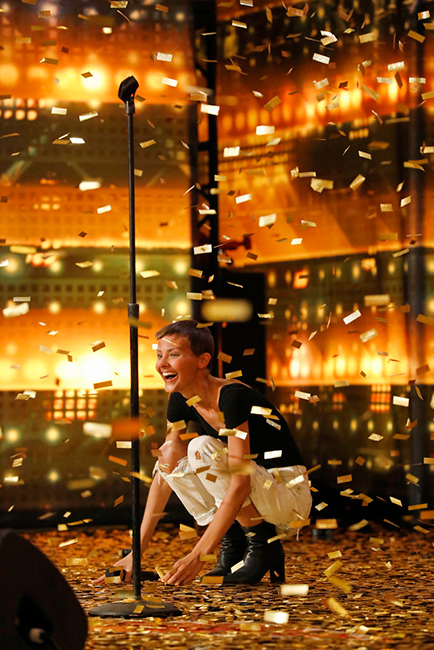
And second was Nightbirde, a cancer patient who mesmerized us a few nights ago with her talent – and joyful disposition as a cancer patient competing at “America’s Got Talent”.
What I like with both women is their authenticity – Yuka with her grit at a very young age pursuing her dream, Nightbirde with her radiance appreciating life despite the threats of cancer.
But most of all, both admitted how God has always been behind them, silently working in their lives, fulfilling their dreams!
It is so touching to hear stories of accomplished people like Yuka and Nightbirde who are very talented, so driven yet humbly recognizing God as the very reason for who they are and where they are now.
God at the center stage of life
Yuka and Nightbirde are two modern parables who show us how true are the teachings of Jesus this Sunday as we finally dive into the Ordinary Time with St. Mark as our guide.
After celebrating two major feasts of the Lord these past two consecutive Sundays, we find the mystery of Jesus slowly unfolding among the people who have started following him after hearing him speak and heal many of the sick.
At the same time, St. Mark is slowly introducing us at this part of his gospel the start of the “trial” of Jesus by his enemies who have began to look at him with suspicion and jealousy, accusing him of blasphemy and contempt for the Law.
Caught at the middle of the controversy are the crowds and his disciples – including us today – who have silently followed Jesus. In these coming Sundays, we shall see and hear more stories of the teachings and workings of Jesus, challenging us to take sides, to make a stand like Yuka and Nightbirde that “it is the Lord!” (Jn.21:7) who is at the center stage of our lives, silently working for our own good.
Jesus said to the crowds: “This is how it is with the kingdom of God; it is as if a man were to scatter seed on the land and would sleep and rise night and day and through it all the seed would sprout and grow, he knows not how. Of its own accord the land yields fruit, first the blade, then the ear, then the full in the ear. And when the grain is ripe, he wields the sickle at once, for the harvest has come.”
Mark 4:26-29
“The Sower” by Van Gogh from Wikipedia commons.org.
God is never absent nor distant from us in life.
He is always at the center stage of our lives
especially when we are going through tests,
just like during an exam in the classroom!
In the two parables that he tells us today, Jesus describes the little beginnings of the kingdom of God like the seed. And in the littleness of this seed is found also the silence of God in transforming us in the same manner seeds grow into plants and crops that bear fruit.
Let us focus on the first parable that is so close to the hearts of the plantitos and plantitas among us. See Jesus vividly telling us how in life God takes all the initiatives, all the “doing” in silence. God is never absent nor distant from us in life. He is always at the center stage of our lives especially when we are going through tests, just like during an exam in the classroom.
Remember how during exams when our classroom is most silent, everybody scratching his/her head, wracking our brains while hurdling the exams while our teachers quietly watch us? They do not give us the answers for the exam for it is part of our learning process but it is during that time when they work hardest, watching over us.
The same with God when we go through tests in life. He is always present and even closest with us as exemplified with Christ’s self-offering on the Cross. That is the meaning of the Solemnity of the Sacred Heart we celebrated Friday.
Of course, like that sower or farmer, we still have to do our very best, we have to work hard in cultivating the soil, watering the crops but aside from that, there is nothing else we can do but to patiently wait in silence, trusting in the good quality of seeds we have sown. We do not know how the seed we scattered would sprout and grow but deep inside us, we believe, we know of its good quality that soon enough, it would be harvest time when the grain is ripe.
We may not say it but unconsciously deep in our hearts we know, something good is going to happen for God does everything good. All the more because the seed he had sown in us is his Son, Jesus Christ, the Word who became flesh. How could things not turn out good if we have the bestest seed of all, Jesus Christ?!
We just have to believe and be convinced of his love for us.
Photo by author, Pulilan, Bulacan, 2020.
Hope. And be surprised!
Brothers and sisters: We are always courageous, although we know that while we are at home in the body we are away from the Lord, for we walk by faith, not by sight.
2 Corinthians 5:6
What a beautiful a reminder from the great Apostle, St. Paul who wrote this letter under severe personal tests and trials from the Corinthians who have resorted to some nasty talks against him instigated in part by some missionaries who sowed confusions about the gospel of Christ.
This is the most personal of all the letters by St. Paul as he bared his very soul after being hurt by the Corinthians who could only see the surface and external things of himself without knowing his great sufferings for them.
That is what we must all try as disciples of the Lord: like St. Paul, we have to believe first in Jesus in order to see him and his glory. We walk by faith, not by sight wherein we live in vibrant hope in God that while everything seems to be too dark and difficult to understand, he is doing something within us that would transform us into better persons after these trials.
Photo by Mr. Jim Marpa, 2018.
Like the power inside the seed being harnessed through time – nobody knows except God almighty what is happening inside. It just happens that one day, we are so amazed at how big and tall a tree has become considering it started from the minute piece of seed like what the Lord had promised Ezekiel in the first reading.
Thus says the Lord God: I, too, will take from the crest of the cedar, from its topmost branches tear off a tender shoot, and plant it on high and lofty mountain… And all the trees of the field shall know that I, the Lord, bring low the high tree, lift high the lowly tree, wither up the green tree, and make the withered tree bloom. As I, the Lord, have spoken, so will I do.
Ezekiel 17:22, 24
We are journeying in faith without seeing especially in this time of the pandemic. Our time is that of patience and courage. Most of all, of hope.
Pope Emeritus Benedict XVI said in Spe Salvi #27, “In this sense it is true that anyone who does not know God, even though he may entertain all kinds of hopes, is ultimately without hope, without the great hope that sustains the whole of life (cf. Eph 2:12). Man’s great, true hope which holds firm in spite of all disappointments can only be God—God who has loved us and who continues to love us “to the end,” until all “is accomplished” (cf. Jn 13:1 and 19:30).”
Sometimes, even if we try our very best, things do not turn out as we expected, exactly like what most farmers experience after sowing their seeds. When crops fail, they scatter seeds again the following season because they believe in being surprised by God, not by sheer luck.
They choose to believe, to have faith in God who is our present and our future in Jesus Christ who lives in us, whether in good times or in bad.
Going back to Nightbirde, recall how she entered the stage so cool and relaxed, smiling as she answered questions when she confidently declared being a cancer patient. When asked why all the smiles and joy radiating in her, she simply said, “You can’t wait until life isn’t hard anymore before you decide to be happy.”
Whoa!
And when she sang until Simon hit the golden buzzer… for a brief moment, I felt God passing by or even stopping by my computer screen, saying hello to me, reminding me about my many complaints in life until I saw Nightbirde. Indeed, the French poet Charles Péguy was right: hope is God’s favorite virtue because it always surprises him.
Like what Nightbirde and Yuka did to us last week.
Let God surprise you this week by doing what you like best. Do not worry. God will do the rest.