The joy of Lent

40 Shades of Lent by Fr. Nicanor F. Lalog II
Fourth Sunday in Lent-B (Laetare Sunday), 14 March 2021
2 Chronicles 36:14-16, 19-23 ><}}}*> Ephesians 2:4-10 ><}}}*> John 3:14-21
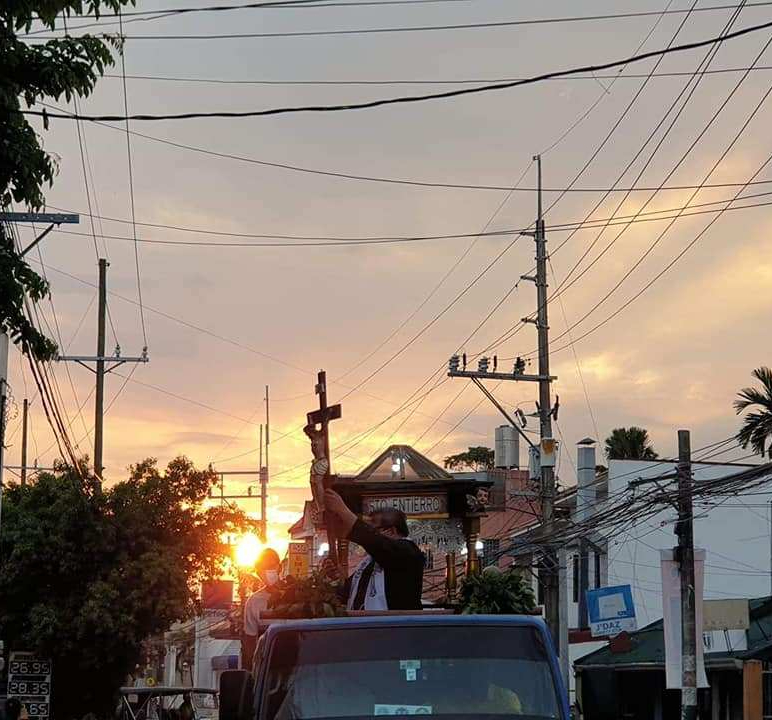
Photo by Dr. Mylene A. Santos, MD, in Candaba, Pampanga, February 2021

Today we burst in joyful shades of pink in our liturgy as we rejoice in this Fourth Sunday in Lent known as “Laetare Sunday” when our entrance antiphon calls us to “Rejoice, Jerusalem! Be glad for her, you who love her; rejoice with her…”

This early as we go halfway through in our journey to Easter, we are called to rejoice as we continue to experience God’s immense love for us in Jesus Christ seen in our readings and most especially, if we have truly taken into heart the spirit of Lent through prayer, fasting and abstinence, and alms-giving.

Jesus said to Nicodemus: “Just as Moses lifted up the serpent in the desert, so must the Son of Man be lifted up, so that everyone who believes in him may have eternal life. For God so loved the world he gave his only Son, so that everyone who believes in him might not perish but might have eternal life.”

John 3:14-16
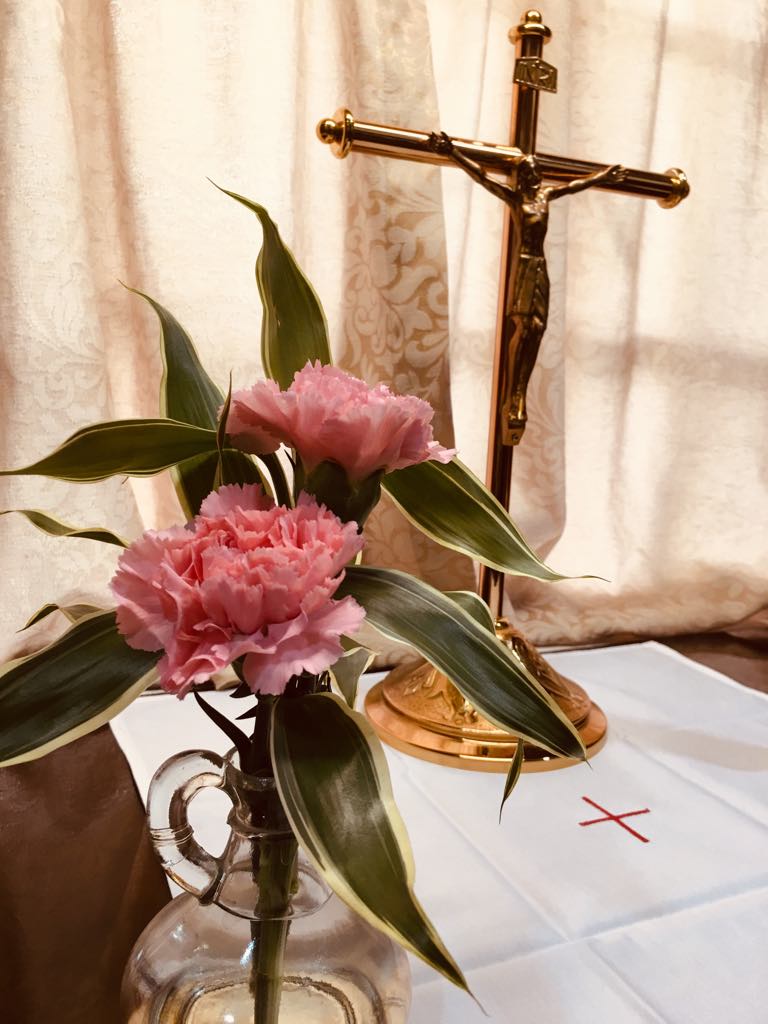
Photo by author, 2018.

Path to God opened for us in Christ crucified, our light.

As we have mentioned last week, the fourth gospel is also called “the book of signs” because John refers to the miracles and words of Jesus as “signs” that point to him as the Messiah or Christ, the Anointed One of God.

This Sunday we hear John introducing to us another sign and symbol he uses in his gospel for Jesus: his being LIGHT himself.

This we must first see in the context of his crucifixion which John refers to so many times in his gospel as Jesus being lifted up or raised up on the cross.

It is very meaningful for John because the Crucifixion is Christ’s greatest sign and revelation of his glory when he opened a path for us back to God in his Cross. It is in opening this path to God in his Cross that Jesus had also shone so brightly as our light along the way.


After cleansing the temple last week, John tells us how at the start of the following third chapter of his gospel that “There was a Pharisee named Nicodemus, a ruler of the Jews” who “came to Jesus at night” (Jn.3:1,2) to discuss things he must have heard and seen about Jesus.

Remember chronemics, the non-verbal communication expressed by time and space? Again we find this employed by John in our gospel scene this Sunday in Nicodemus meeting Jesus at night.

According to biblical scholars, Nicodemus came to see Jesus at night in order to hide in darkness for he was afraid of being publicly associated with Jesus considering his being member of the Sanhedrin, the highest governing body in Israel at that time.

Photo by author, November 2020.

Moreover, his coming at night to Jesus is also symbolic, suggesting that despite his expertise in the Mosaic Law, Nicodemus felt within him a sense of still living in darkness and ignorance. If you read this whole scene, you find many instances of darkness and ignorance in Nicodemus that at one point, there is a tinge of sarcasm from the Lord telling him, “You are a teacher of Israel and you do not understand this?” (Jn.3:10)

Eventually on Good Friday, Nicodemus would come out into the open to join another secret disciple of Jesus named Joseph of Arimathea when they asked Pilate for his body to be buried in a new tomb not far from the site of the crucifixion (Jn.19:38-42).

The fourth gospel teems with many teachings as well as scenes depicting Jesus as the light dispelling the many darkness that envelops the world beginning at its Prologue.

Only John has this scene of Jesus discussing with Nicodemus his coming from heaven to dispel the darkness in our lives.

For God did not send his Son into the world to condemn the world, but that the world might be saved through him. Whoever believes in him will not be condemned, but whoever does not believe has already been condemned, because he has not believed in the name of the only Son of God. And this is the verdict, that light came into the world, but people preferred darkness to light, because their works were evil. For everyone who does wicked things hates the light and does not come toward the light, so that his works might not be exposed. But whoever lives the truth comes to the light, so that his works may be clearly seen as done in God.”

John 3:17-21
Photo by author, Holy Family Chapel, Sacred Heart Center for Spirituality, Novaliches, QC, 2017.

Jesus enlightening us, uplifting us

This love of God for us through the coming of Jesus Christ is not only the joy of Lent but the very joy of our lives the Lord had expressed in two ways: in being our light in the many darkness of life as well as in uplifting us all from the quagmire of sins and evil.

But this joy in the Lord needs to be worked for; it does not come in handy as something given out freely in the sense that it calls us to do a Nicodemus too, of making efforts to come out from darkness, to follow the light of Jesus Christ that leads to the Cross.

And this is where it becomes more joyous, how Jesus enlightens us and lifts us up with him to the Father.

Let me explain it this way: when we talk of sin, we always find its logical connection with punishment. We see it everywhere and have always experienced it because rightly so, every sin is punished. Certainly, no one escapes punishment of sins in this life or life after. It is the law of karma that in every action, there is a corresponding reaction (excluded are other concepts like reincarnation we do not accept).

Photo by author, December 2020.

The problem arises in the question who punishes us for our sins?

Unfortunately, in any religion the finger always points at God which is very untrue and unfair!

God does not punish and would never do so because “God is love (1 Jn.4:16)”!

Those passages we find in the Old Testament of God “getting angry, punishing people” are literary devices used to convey to us deeper truths about God as a person relating with us like human. But notice too that the Sacred Scriptures itself declare in so many instances how God is “so gentle and slow to anger, full of mercy always foregoing his wrath” on the sinful.

Jesus clarified this in many instances, in words and in deeds, when he showed mercy and forgiveness to sinners like prostitutes and tax collectors who were then considered the most wretched and hopeless ones in the society. In the healing of the man born blind, Jesus clarified that sickness and disease are not a punishment from God (Jn.9:1-12).

Rest be assured in his words today to Nicodemus, “For God did not send his Son into the world to condemn the world, but that the world might be saved through him.

St. Paul attests to this truth found in his beautiful reflection in the second reading:

Brothers and sisters: God, who is rich in mercy, because of the great love he had for us, even when we were dead in our transgressions, brought us to life with Christ — by grace you have been saved — raised us up with him, and sealed us wit him in the heavens in Christ Jesus…

Ephesians 2:4-6

Such is the great love of God for us. When something bad happens to us due to our sins or somebody else’s sins, it is not from God. It is our self-indictment of refusing to change our sinful ways that we suffer the consequences of our evil deeds: “And this is the verdict, that light came into the world, but people preferred darkness to light, because their works were evil. For everyone who does wicked things hates the light and does not come toward the light, so that his works might not be exposed.

Photo by author, Lent 2019.

When we try to reflect deeper, we find that avoiding sins is the most practical thing we can always do in life but, unfortunately, something we refuse to do for so many reasons.

Why we prefer darkness than light is something we have always been struggling with when we know so well it is better to be out in the light.

If we reflect deeply, we realize that God has no need for us; he remains perfect even if we sin, if we do not obey him, if we abandon him. But God chose to love us, even begging us to remain good and holy so we can be fulfilled in this life.

Should something bad happens to us because of our sins or somebody else’s sins, the very good news is that God would always find ways to enlighten us to ensure it will turn out well for our own good, even if he has to use pagans and unbelievers or sinners to bring us back into light as experienced by his people with King Cyrus of Persia.


We all have a Nicodemus in us when we sometimes prefer darkness, of coming to Jesus at night because of fears of what others might say about us in following the path of the Lord, of being good, being just, being kind, and being holy.

Like Nicodemus, we try following and listening to Jesus from afar as we have been so used to staying and living in darkness when light sometimes hurt our eyes, making it difficult for us to really see and accept people and things because truth hurts.

This Sunday, let us examine the many darkness we still have within us. Like the author of the Book of Chronicles we heard in the first reading, let us try to see the religious significance of what is happening in our lives and nation to find where God is leading us.

Jesus had come to save us, not to judge us. Step out from your darkness within and let the light of Jesus enlighten and uplift you high like never before in rejoicing as you see the beauty of life in God its author. Amen. A blessed and joyful week to everyone!


Photo by author at Silang, Cavite, September 2020.

“Try Again” by Champaign (1983)

The Lord Is My Chef Sunday Music by Fr. Nick F. Lalog II, 07 March 2021
Photo from turbosquid.com.

The Season of Lent is like a refresh or reset button of the computer: it is a time when we “reboot” ourselves with prayers, fasting and abstinence, and alms giving to be connected anew with God and with one another. It gives us another chance to make things better in our lives marred by sins and many pains and hurts in the past.

And that is why for this Sunday we have chosen American R&B group Champaign’s 1983 single “Try Again” from their album Modern Heart. It peaked at number 23 on the Billboard Hot100 of that year.

I find the song very lenten in character. The music is sober but not bland. In fact, the cool instrumentation especially at the start kept ringing in my ears as I prayed over the readings this whole week, kind of convinced me of how truly sorry was Pauli Carman to his beloved in failing to be more loving, more intimate, and more personal to her.

I been starin’ at your photograph
Wondering where you’re at today
And I’ve been hanging by the telephone
Hopin’ that you’d call home and stay
You told me you needed
More walks, more talks
More feelin’ close to me
I want to be close to you
I didn’t know you needed
Some roses, some romance
A little candlelight and slow dance
That’s not how it’s been
But maybe we can try again
Try, try, maybe we can try again

Sometimes in life, we take people around us for granted, we always presume everything is given, everything is well and good, that our loved ones know or assured that we love them so much. Worst is how we sometimes forget that in our love for our family and friends, we have been so focused in our other pursuits purportedly for them that in the process we actually forget them. Things can never replace persons who need to be loved and cherished.

I always tell couples that after years of living together with the coming of kids and career and problems, always remember, first there was your wife or husband for you. No matter what happens, God first called you to each other. Continue the courtship, keep surprising each other with expressions of your love for each other. Watch movies, have romantic dinners together.

The same with us priests: before all the demands of the ministry and apostolate came, there was first Jesus Christ who had come to call us, loving us that every day we have to pray, make time for him.

Try Again exactly tells us what the readings this Sunday teach us: of how we must cleanse ourselves to find our first love again, the person dearest to us. And the good news from God is that we can always try again and make up for our past sins and shortcomings to him and to one another.

Refresh, reset or reboot your self this Lent by making time for your loved ones for intimate and personal moments.

Have a blessed and refreshing week ahead!

Music video by Champaign performing Try Again. (C) 1981 Sony Music Entertainment

Refreshing our faith in Lent

40 Shades of Lent by Fr. Nicanor F. Lalog II
Third Sunday of Lent in Cycle B, 07 March 2021
Exodus 20:1-17  ><}}}*>  1Corinthians 1:22-25  ><}}}*>  John 2:13-25
Parish Church of St. Joseph in Baras, Rizal.

One thing we notice in Lent is the “noble simplicity” of celebrations: no flowers at the altar, simple music without percussions, without Gloria no Alleluia meant to refocus our attention back to God in a more personal level.

That is why during Lent, our faith is refreshed or rebooted in order to “reset” it back to God himself than with rites and rituals and other formalisms that have made our relationships with him and with one another stagnant.

When faith and religion get fixated on formal codes of worship and belief, detached not only from God but even with people like those in the margins, then it had become an idolatry.

Since the Passover of the Jews was near, Jesus went up to Jerusalem. He found in the temple area those who sold oxen, sheep, and doves, as well as the money-changers seated there. He made a whip out of cords and drove them all out of the temple area, with the sheep and oxen, and spilled the coins of the money changers and overturned their tables, and to those who sold doves he said, “Take these out of here, and stop making my Father’s house a marketplace.” His disciples recalled the words of Scripture, “Zeal for your house will consume me.”

John 2:13-17
Photo from turbosquid.com.

Our personal, relating God

On this Third Sunday of Lent until its final Fifth week, we turn to the fourth Gospel of John to deepen our personal relationship with the Father in Christ when each gospel is compacted with signs and language rich in meanings to reignite our faith with “zeal” that “consume” us like Jesus.

Observe John’s formal introduction of this episode of cleansing of the temple by presenting to us its chronemics, the non-verbal communication of time and space to indicate the presence of God in Passover (time), Jerusalem, and temple (space/place). Keep in mind that the fourth gospel is called “the book of signs” because John would always use events, buildings and places, and people as signs pointing to Jesus as the Christ, the Son of God.

In this episode that immediately happens at the start of the Lord’s ministry as seen by John, something very wrong have happened with the very signs of God’s presence so revered by the people during their important feast of Passover right in their temple in Jerusalem: God had been eased out from the lives of the people and from their worship itself!

The gospels teem with many references at how the people at that time led by the temple officials and religious leaders have turned into worshipping rites and rituals than God himself, forgetting to serve the people by sticking to the letters than to the spirit of the Laws that Jesus always attacked.

It is similar to our own time where our faith and church worship have become empty of God and spirituality filled with human inanities led by some priests who tinker with liturgy, forgetting its noble simplicity, that less is always more. In our efforts to make God “present” with so many “shows” and gimmicks in the liturgy and church buildings, the more we have removed the Divine, unconsciously creating a cult around ourselves.

Notice some churches devoid of the holy with all the flat screens and tarpaulins all over. Worst is how priests have promoted this culture of shouting and clapping of hands during and after Mass as if God were deaf!

So many other things are sadly going in our celebrations where emotions are heightened without really stirring the hearts nor souls with God’s presence. Good liturgy flows from our personal and faithful relationship with God anchored in prayer life, not with shows and activities.

In the first reading, God reminds us in his Commandments that more than laws, these are meant to bring us into a relationship with him our God. See God speaking in the first person, addressing everyone with conversational personal pronouns, “I am the Lord your God” or “I am the Lord thy God”.

More than a mere body of commandments, the Decalogue are a covenant by God with people he had freed from slavery, pledging his unfailing fidelity to them who are expected to be wholeheartedly attached with him as their Lord and God. The Decalogue is first of all a call to intimacy with God expressed with our respect for one another.

This Lent, God invites us to renew our personal relationship with him in Jesus who had come to bring equilibrium in our lives through his Cross where our vertical relationship with the Father is intersected by our relationships with one another in Christ, through Christ, and with Christ. Without this, our faith or any religion will drift to extremes, either to joyless conformism as seen in fundamentalism and traditionalism or exaggerated expressionisms happening nowadays, disregarding the norms of liturgy and of sanity as well. In both instances, there is human manipulation strongly present that pretend to serve God but actually massage somebody’s ego, totally forgetting the people who suffer most.

Photo by author, 2019.

Jesus himself as the new temple

When Pope Emeritus Benedict XVI was newly elected in office, he wrote a bishop in Europe suffering with cancer. According to reports, the former Pope tried to uplift the spirits of the sick bishop by telling him that “Jesus saved the world not with activities but by suffering and dying on the cross.”

Beautiful words from one of the most spiritual and theological man of our time! Here lies too the fullness of our relationship with God expressed in our worship when our “zeal” for him is consumed in our oneness in Jesus Christ, our new temple.

At this the Jews answered and said to him, “What sign can you show us for doing this?” Jesus answered and said to them, “Destroy this temple and in three days I will raise it up.” The Jews said, “This temple has been under construction for forty-six years, and you will raise it up in three days?” But he was speaking about the temple of his body. Therefore when he was raised from the dead, his disciples remembered that he had said this, and they came to believe the Scripture and the word Jesus had spoken.

John 2:18-22

John now presents to us Jesus more than a prophet cleansing the temple with full authority, being the perfection of every worship that is “in Spirit and truth” (Jn.4:23) because as the Messiah of God offered on Good Friday which is also the feast of the Jewish Passover, his Body becomes the new temple.

Of course, sacred buildings are still important as well as rites and rituals but they are signs pointing to the realities of Jesus Christ, the Emmanuel or God-is-with-us truly felt in ourselves, in our lives when we have that oneness, that intimacy in him in our personal and communal prayers that flow down to our interpersonal relationships with others especially the poor and the suffering.

Photo by Pixabay on Pexels.com

Last October, I had the most severe test in life when my only brother was diagnosed with an ailment affecting his spine, becoming immobilized for three months. I took him to my parish so I can look after him. What was most difficult for me was seeing him suffer, writhing in pain even in the middle of the night, sometimes begging me to ask God to take him so his sufferings may finally end.

I thought already knew how to pray, that I was tough and strong especially in my faith but, like a child, I would always hide and cry to God for my only brother who in his entire life has always been sickly and afflicted with many illnesses.

One morning in our daily Mass, tears swelled in my eyes during consecration as I held the Body of Christ in my hands with my voice breaking as I said, THIS IS MY BODY WHICH WILL BE GIVEN UP FOR YOU.

How I wanted to stop the Mass at that moment to cry in joy as I felt Jesus so true, in his flesh and blood, truly alive and personal!
Until now I could not explain what or how I felt that I cried at that time except that the night before, I assisted my brother in bed and cleaned him up. It was very difficult and even messy but a great moment of God’s grace and mercy for me expressing my love for him through my brother. That is when I realized that to truly touch Jesus is first of all to touch him among our sick brothers and sisters; that there is an intimate connection between the real presence of Jesus in the Eucharist and everyone especially the sick and suffering. And, for us to truly receive the Body of Christ, to experience the Holy Communion in him, we must first have his eyes and heart and hands among those deprived around us (https://lordmychef.com/2020/10/28/the-body-of-christ/).

Photo by Ms. Ria De Vera, Good Friday 2020.

Brothers and sisters: Jews demand signs and Greeks look for wisdom, but we proclaim Christ crucified, a stumbling block to Jews and foolishness to Gentiles, but to those who are called, Jews and Greeks alike, Christ the power of God and the wisdom of God. For the foolishness of God is wiser than human wisdom, and the weakness of God is stronger than human strength.

1 Corinthians 1:22-25

Faith in God is not meant to be explained nor analyzed. Though we do not stop studying and learning our faith doctrines and teachings, we are reminded this third Sunday of Lent to keep our zeal for God burning. Let us pray to Jesus that like him, may our zeal for the Father consume us by seeing him in persons not on things that are often self-serving. Amen.

Have a blessed and refreshing Sunday in the Lord with your family and loved ones!

Photo by author, 2019.

Lent for dreamers

Quiet Storm by Fr. Nicanor F. Lalog II, 05 March 2021
*Homily as Chaplain of Our Lady of Fatima University (OLFU) and Fatima University Medical Center (FUMC) in Valenzuela.
Photo by Dr. Mylene A. Santos, MD, February 2021.

Contrary to a common belief by many, Lent is a season of joy because it is a preparation for Easter, the “mother of all feasts” in our Church.  Although this season calls for intense prayers, contrition of sin, fasting and abstinence, and alms-giving, Lent does not have to be sober nor somber. 

Jesus said to his disciples, “When you fast, do not look gloomy like the hypocrites.  They neglect their appearance, so that they may appear to others to be fasting.  But when you fast, anoint your head and wash your face…”

Matthew 6:16, 17

At the start of this season during Ash Wednesday, I have told you that life is a daily lent, a daily exodus from darkness into light, from sickness into health, from sin into grace and new life. 

During Lent, we are filled with joy as we await our little Easter celebrations in life when we finish all our papers or pass our exams, or achieve whatever goals we have set even in the midst of this pandemic. Lent is a joyful season because it is a celebration of our rising to new life in Jesus Christ.  It is therefore a time for us to dream again, to aspire for the best, to “Rise to the Top” as our motto says at Our Lady of Fatima University and Medical Center.

In our readings today are two great dreamers, Joseph the son of Jacob (aka, Israel) called “the Dreamer” and our Lord Jesus Christ, the one referred to as son of the vineyard owner in our gospel’s parable of the wicked tenants. 

How sad that in our time of social media that have saturated us with too much showbiz and entertainment, many people no longer dream big except to be rich and famous with a lot of money and many “followers”.

Photo by Dr. Mylene A. Santos, MD, February 2021.
Importance of dreaming to become better persons

Lent invites us to dream big again, dream things that really matter in life like being good and holy, being a better person or “Improving Man as Man” minus all the arte and kikay things and porma we are so used to these days.

Yesterday I went to the mall to get my pair of glasses.  I was so surprised to see great crowds seated in about six rows of chairs at the hall with a another row snaking through Watson’s while a guard directed the flow of human traffic with his megaphone.  When I inquired at my optical shop about the crowd, I was shocked to learn that it was all due to a sale of cosmmetics!

I am not judging nor demeaning those people lining up for a sale of cosmetics but, should we not examine our priorities again in this time of pandemic?

When I was still assigned in our diocesan school in Malolos, I used to require my students at elementary to start dreaming what they would want to be when they grow up even while still in grade one.  I tell them to start dreaming while young.  No wonder there are so many young people about to enter college still not certain what course to take or even what to do with his/her life.  

Do not be afraid to dream like Joseph and Jesus or Dr. Martin Luther King Jr with his famous “I have a dream” speech. 

Photo by author, 2020.

Dream big, it is free!  Do not be affected by those without dreams and plans in life.  Watch out for them who may be even those closest to you like family and friends like the brothers of Joseph who “hated him so much that they would not even greet him” (Gen.37:4) he spoke to them of his many dreams in life.

Danger of not having a dream

People without dreams are people without vision, people who cannot see beyond the present moment and the physical realities. 

Helen Keller said “The only thing worse than being blind is having sight but no vision” like the brothers of Joseph as well as the wicked tenants in the Lord’s parable who have no vision of things beyond this life. That is why they did not mind killing their own brother Joseph who was eventually sold or murdering the only son sent by the vineyard owner to collect his share of harvest. 

Here lies the evil of people without dreams in life:  they lack any concern at all to the value of person and of human life. 

People without vision, without plans in life, without dreams have no regard at all with others.  A dreamer is always one who thinks not only of the betterment of his life but also of others.  Dreamers are those who perfect themselves, who seek fulfillment in life, not just material things.  They think of how they can help others in need for they always seek the higher and deeper truths in life.  No wonder, dreamers are also merciful as we shall see how Joseph forgave his brothers for their grave sin against him.

Recently we have started our limited face-to-face classes in our College of Medicine because we are not contented waiting for things to happen, because we dream of something better even in the midst of a pandemic.  Dreamers make things happen, even against all odds like Joseph who never stopped dreaming in God after being sold to Egypt by his brothers.  The Dreamer eventually became the interpreter of the dream of the Pharaoh that led Egypt to adequately prepare itself for the great famine Joseph had predicted. It led to his rise to power and fame in Egypt that later became the fulfillment of his dream as a teenager when his brothers and father came to him to apologize and buy grains.

On Sunday, our graduates are taking the Physician Licensure Exam.  Let us pray for them to have the chance to fulfill their dreams of serving the people as doctors especially in this pandemic.  May they all pass the medical board exam with flying colors. 

It is not enough that we dream big for ourselves but we also share in others’ dreams because ultimately in the end, all our dreams lead us to God our fulfillment in life.  Amen.

Photo by Dr. Mylene A. Santos, MD, February 2021.

“All Right” by Christopher Cross (1983)

The Lord Is My Chef Sunday Music by Fr. Nick F. Lalog II, 28 February 2021

It’s a blessed last Sunday of February as we start to feel summer slowly coming with recent afternoon humidity. We hope everything is “All Right” as we chill with Christopher Cross this Second Sunday of Lent where Jesus invites us to join him in approaching his Father by “climbing mountains” in prayers and good works to be transformed and transfigured in his image and likeness.

I have initially chosen Marvin Gaye’s 1967 hit “Ain’t No Mountain High Enough” as our Sunday music for today but as I prayed more on the meaning of Jesus being transfigured on Mount Tabor witnessed by his three disciples, the more I heard Chris Cross singing at the background.

I know, know what’s on your mind
And I know it gets tough sometimes
But you can give it one more try to find a reason why
You should pick it up, ooh, try it again
‘Cause it’s all right, think we’re gonna make it
Think it might just work out this time
All right, think we’re gonna make it
Think it might work out fine this time
All right, think we’re gonna make it
Think it might just work out
‘Cause it’s not too late for that, too late for me

The beat and melody of this 1983 hit only Chris Cross can sing in his very characteristic “chillin'” voice and expression of simple lyrics expressing joy amid pain makes “All Right” so perfect with the meaning of Christ’s transfiguration that all right, we’re gonna make it to Easter…

Even if so many times God seems to contradict himself when testing our faith like with Abraham in the first reading and the three apostles in the gospel, we just have to be confident in God in prayers and faith as we hurdle every obstacle and trial in life that is like a mountain seemingly impossible to climb — if we rely only on ourselves. But, God is greater than our minds and our hearts, always working to surprise us with his tremendous blessings and grace that he gave us his only Son Jesus Christ to accompany us in climbing this mountain of life to be transfigured and transformed in him (https://lordmychef.com/2021/02/27/the-ups-and-downs-from-lent-to-easter/).

What I really love with Chris Cross since 1979 when he came out with his classic Sailing is his aura that is exuding with good vibes that I prayed hard for him when news came last summer he was infected with COVID-19. He looks so kind and so approachable, maybe so Jesus-like that one can imagine when he sings this song, it is like the Lord coming to us in this age telling us all is right:

Just when you feel helpless
Nothing left to say
Love will find us, past behind us
Then we’re on our way
Time and time again I see, people so unsure like me
We all know it gets hard sometimes
But you can give it one more try
Find another reason why you should pick it up
Ooh, why, you should kick it up, ooh, try it again
‘Cause it’s all right, think we’re gonna make it
Think it might just work out this time
It’s all right, think we’re gonna make it
Think it might work out fine this time
It’s all right, think we’re gonna make it
Think it might just work out this time
It’s all right, think we’re gonna make it
Think it might work out fine this time
It’s all right, think we’re gonna make it
Think it might just work out this time
It’s all right, think we’re gonna make it
Think it might work out fine this time
It’s all right, think we’re gonna make it
Think it might just work out this time

Have a blessed Sunday and week ahead. Alright!

From YouYube, copyright not mine. I love this live version with Michael McDonald in keyboards. Notice the feel good spirit of the performance by Christopher Cross and his band.

The ups and downs from Lent to Easter

40 Shades of Lent by Fr. Nicanor F. Lalog II
Second Sunday of Lent in Cycle B, 28 February 2021
Genesis 22:1-2, 9, 10-13, 15-18  +  Romans 8:31-34  +  Mark 9:2-10
Photo by author, the Sinai Mountain Range in Egypt, May 2019.

As we have been saying, life is a daily Lent: from the desert of our lives last Sunday, today we ascend a mountain with Jesus to be with God and be transformed, transfigured in him. Our efforts to become holy and better persons in itself is like going up a mountain symbolizing God as expressed in many instances in the Bible.

This is the reason that every year following the temptation of Jesus in the desert, the Second Sunday of Lent tells us the story of the transfiguration of Jesus at Mount Tabor to stress anew this lenten character of coming and meeting God in our selves and in our daily lives through many ups and downs in life like in climbing a mountain.

Our readings this Sunday give us some tips on how ascend the mountain of God with Jesus so we may be transformed and transfigured in him.


First important step is to leave everything behind, to travel light. The key to approach a mountain is to bring nothing except one’s self and other essentials only like faith in God. There are many detours with no permanent path going up the mountain like what Abraham realized when God asked him to offer his son Isaac.

Photo by author, Sonnen Berg Mountain View, Davao City, 2018.

Feel the drama of the scene when Isaac sensed something unusual while Abraham remained confident in God…

As the two walked on together, Isaac spoke to his father Abraham: “Father!” he said. “Yes, son,” he replied. Isaac continued, “Here are the fire and the wood, but where is the sheep for the holocaust?” “Son,” Abraham answered, “God himself will provide the sheep for the holocaust.” Then the two continued going forward.

When they came to the place of which God had told him, Abraham built an altar there and arranged the wood on it. Then he reached out and took his knife to slaughter his son. But the Lord’s messenger called to him from heaven, “Abraham, Abraham!” “Here I am!” he answered. “Do not lay your hand on the boy,” said the messenger. “I know now how devoted you are to God, since you did not withhold from me your own beloved son.” As Abraham looked about, he spied a ram caught by its horns in the thicket. So he went and took the ram and offered it up as a holocaust in place of his son.

Genesis 22:7-13

In the gospel, we find a similar situation after Peter had confessed at Caesarea Philippi that Jesus is the Messiah, thus expressing the faith of the Twelve in Christ while making a U-turn back to Jerusalem. It was at that time when Jesus made his first prediction of his coming Passion and Death that confused Peter.

As they travelled to Jerusalem, Jesus preached to the crowds and the Twelve the three conditions of discipleship: deny one’s self, take up his cross, and follow him. It was something Jesus would be teaching repeatedly until they reached Jerusalem to underscore the importance of that instruction from the voice during his transfiguration, “Listen to him”.

After six days Jesus took Peter, James, and John and led them up a high mountain apart by themselves. And he was transfigured before them, and his clothes became dazzling white, such as no fuller on earth could bleach them. Then a cloud came, casting shadow over them; then from the cloud came a voice, “This is my beloved Son. Listen to him.”

Mark 9:2-3, 7
Photo by Atty. Grace Polaris Rivas-Beron atop Mt. Sinai in Egypt, May 2019.

Observe my dear reader how Jesus separated the three disciples from the rest so as to be by themselves like Abraham in the first reading in order to be empty and obedient to God.

An obedient person is first of all a good listener, one who is willing to forget one’s self, to be empty and open to instructions from those above him. From the two Latin words “ob audire” that mean to listen attentively, obedient men and women from Abraham to Jesus Christ to Peter and all the saints were first of all attentive listeners to the leading of the Holy Spirit.

One cannot follow unless he/she first listens. That is why it is in obedience when our faith in God is tested, where we grow deeper in our faith in him too! Every act of obedience is an ascend to God our mountain because to obey the Lord is to trust him especially at times when God seems to contradict himself.

Imagine how painful it must have been for Abraham after waiting for so many years for the birth of his own son by his wife Sarah when God suddenly asked him to offer Isaac as a sacrifice!? Or with Peter, James, and John. After learning that Jesus is finally the awaited Messiah during their conversations at Caesarea Philippi, suddenly the Lord gave his first prediction of his passion and death, to be repeated after his transfiguration.

So many times God can be too much for us to understand that we just have to believe and trust him, to ride on or make sakay. Most of the time we find God so “malabo” or “bomalabs” —- so unclear but at the same time very clear of his great plans for us that we feel him deep inside us that we continue to push ourselves higher to him, believing and hoping he is up to something for us. And that is when he surprises us with the bestest things in life!


When we trust God, when we dare to walk the darkness ascending to the mountain with him with nothing else except our very selves and faith, that is when we are transformed and transfigured in Christ. That is when we are opened to new possibilities we have never imagined. That is when we become fruitful and fulfilled.

Photo by Ms. Jo Villafuerte, Atok, Benguet, September 2019.

As any mountaineer would tell, the best sights are seen from above, from the top when our horizons are widened as we journey to the summit, giving us new perspectives and views on everything, especially in our selves and life in general.

Even if we climb with somebody else like Abraham with Isaac or Peter with James and John, God touches us in the most personal and unique way.

See when Abraham was about to strike Isaac, an angel stopped him that he saw a ram caught by its horns in the thicket which he eventually offered as holocaust instead of his son. Peter hardly knew what to say as they were terrified when Jesus transfigured while conversing with Moses and Elijah until suddenly, they no longer saw anyone with them except Jesus.

Like Abraham and Peter and his companions, we have wondered many times what happened after feeling so lost and confused, when we felt “game over” but suddenly everything turns out perfectly well by the grace of God. We’re not only saved like Isaac but we also begin thinking deeper inside us of many things like the three disciples “questioning what rising from the dead meant” (Mk.9:10).

Go back to those moments of hardships and emptiness with nothing to hold on except God, when climbing up to him in faith was the only thing left to take when great things happen unexpectedly and joyously for us! How we wish to remain up there on cloud nine, in ecstasy, hoping those moments would never end, but….


The challenge of life and of Lent especially when seen in the light of our baptismal promises of being holy like God is not to remain on top of the mountain but to bring that mountain experience down into our daily living. It is an ongoing process of trusting, of being faithful to God especially in prayers, in ascending his mountain daily.

In this age of instants when everything has become so efficient and easy, more and more people are finding prayer and God in general as useless waste of time. We have reduced our lives and existence to mere activities for social media like Facebook, Instagram, and Tweeter flooding them with our photos and words empty of meaning. We have stopped living meaningfully as we have ceased probing deeper into life, exploring what’s inside ourselves who can truly lead us to fulfillment, Jesus Christ. How tragic that after quantifying everything in life to save so much precious time in doing so many things, we still lack quality time.

God is greater than our minds and our hearts (1John 3:30) that not everything can be measured in human success and failure. Sometimes, human success is failure with God while human failure can be success in God as we have seen in the experience of Abraham today.

In this time of Lent, we are encouraged to pray and sacrifice, to strive ascending the mountain of God to deepen our faith in him who has given us Jesus his Son to save us, to make us like him, divine and sublime.

Transfiguration is a process, a call to be faithful to God that to reach our glory, we have to go through a lot of pain and sufferings like the scandal of the cross of Jesus Christ. If we are faithful to God especially in our prayers, in our ascent to his mountain of purifications, we realize in the process we are not alone, that we have God by our side as St. Paul assures us in the second reading: “If God is for us, who can be against us?” (Rom.8:31)

This Sunday, let us be confident and trust in God that everything would be right. Amen.

Photo by author, sunset at Marcos Highway, 2019.

God’s encompassing love

The Lord Is My Chef Sunday Recipe for the Soul by Fr. Nicanor F. Lalog II
40 Shades of Lent, First Sunday, Year B, 21 February 2021
Genesis 9:8-15   +   1Peter 3:18-22   +   Mark 1:12-15
Photo by author, ancient fortress of Masada in Israel, 2017.

Lent may be the most sparse in outward signs and decorations like flowers in all liturgical seasons but it is the most dense in meaning and imageries. Although it is often seen as a drab with its motif of penitential violet and subdued music when both Gloria and Alleluia are omitted, Lent sparkles with profundity and depth leading to joy deep within if we truly dwell into its main message of God’s encompassing love for us.

Take our gospel this First Sunday of Lent this year taken from Mark. It is the shortest compared with Matthew and Luke who both give us details, but, Mark’s brevity is so precise and thought-provoking, too!

The Spirit drove Jesus out into the desert, and he remained in the desert for forty days, tempted by Satan. He was among wild beasts, and the angels ministered to him. After John had been arrested, Jesus came to Galilee proclaiming the gospel of God: “This is the time of fulfillment. The kingdom of God is at hand. Repent, and believe in the gospel.”

Mark 1:12-15
Photo by Dr. Mylene A. Santos, MD, 2020, Infanta, Quezon.

Life is a daily Lent.

Of all the seasons in our liturgical calendar, Lent is my favorite because for me, it captures best the reality of life that is at the same time so beautiful but in some aspects ugly, nice but painful. There is always that contrasts of light and darkness that indeed, life is Lent, a daily Exodus filled with trials and difficulties that lead to joy and fulfillment in God.

See how Mark shows this so well in his brief narration that begins after the scene of the baptism of Jesus by John at Jordan. Immediately after that, Mark tells us without fanfare, “The Spirit drove Jesus out into the desert, and he remained in the desert for forty days, tempted by Satan.”

Is it not this is how life really is?!

At once after praying, after celebrating the Mass that is when you get into a debate with your wife or husband, son or daughter or siblings. Sometimes it happens while you are still in the church you get into arguments about parking. Right after you have resolved to be a better person and turn away from sins and its occasions, that is when your friends would come and ask you to join their “gimmicks” or that is when your “ex” would come or text you, entice you to go out again.

Photo by author, Egypt, 2020.

The desert is the image of that place of so many battles in life, where we cried in pain, where we were rejected, where we were hurt. Our life is like the desert, so hot and humid at day, so cold and freezing at night. Worse of all, the desert is our life because that is where we fight Satan who always deceives us with his many temptations that eventually lead us to wrong decisions, hurting not only us but those dearest to us, dividing our families, separating us from one another that in the end, we feel trapped in a terrible mess.

But, it is not that all bad because Jesus joins us in our battles and struggles in this life, in this desert that we find ourselves in a similar situation, “He was among wild beasts, and the angels ministered to him.”

Yes, life is difficult but it is in those situations we find its meaning and beauty. Though there are so many trials and sufferings, God never leaves our side, sending us angels like family and friends, even strangers who come and stay with us in life, believing in us, helping us, and most of all, loving us — right in the desert.

Photo by author, an oasis in the Dead Sea area of Israel, 2017.

Like an oasis where life springs abundantly, Jesus joins us in our many struggles against Satan by giving us the strength and courage to remain faithful to God, to experience fulfillment and salvation by giving us little pockets of Easter in the midst of our daily lent.

See that “After John had been arrested, Jesus came to Galilee proclaiming the gospel of God. Amid the bad news of John’s arrest, Jesus began his ministry and mission of love and mercy for us all, It was in the middle of such disturbing situation that Jesus came boldly proclaiming, “This is the time of fulfillment. The kingdom of God is at hand. Repent, and believe in the gospel.”

The same is true with us today as we enter the first full year of the pandemic that had altered our way of life so drastically, causing us so much pains in the many losses we have suffered in life and properties, God comes closest to us in Jesus especially in the Mass (https://lordmychef.com/2021/01/23/from-fishermen-to-fishers-of-men/)!

Most of all, as we shall see in this Season of Lent, even in the midst of sins and evil, that is when God comes closest to us to experience him and his saving grace.

Beloved: Christ suffered for sins once, the righteous for the sake of the unrighteous, that he might lead you to God. Put to death in the flesh, he was brought to life in the Spirit. In it he also went to preach to the spirits in prison who had been disobedient while God patiently waited in the days of Noah… This prefigured baptism, which saves you now.

1Peter 3:18-21
From Google.

Baptism as the key to Lent.

The key to understanding the Season of Lent is to see it in the light of the Sacrament of Baptism. Originally as a preparation to the mother of all feasts in the Church we call Easter, Lent was the period when candidates (catechumens) for baptism were prepared. That explains why the Easter Vigil we celebrate is too long because it was only during that time when people were baptized especially when the Church came under persecution.

In Jesus Christ, we are washed clean of our sins, we are cleansed and purified to get by in this life in the desert as beloved children of God.

He knows so well our human situation, our living in the wilderness that Jesus had to leave Paradise for a while to be with us here on earth, going through all our human experiences except sin so we may return to the Father’s home in heaven. Remember how we mentioned Lent as a journey back into the Father’s home: Ash Wednesday is the porch and every Sunday is a room we enter until we reach the Father’s inner room on Easter to be one with him in Jesus.

Photo by author, Chapel of Holy Family, Sacred Heart Spirituality Center in Novaliches, QC, 2015.

In the first reading we have heard the story when God made a covenant with Noah and his children after the great flood which prefigured Baptism that cleansed the world of all the sins and evil. God had felt sad in creating the world when people turned away from him living in sins that he decided to destroy everything by sending a great flood. However, he found Noah as the only one along with his family still living uprightly. So, God asked Noah to build an ark where they stayed during the flood along with the different animals representative of every species. In effect, Noah prefigured the new Adam in Christ who came to be the new beginning of the human race, clean and without sin. After the flood, God sealed a covenant with Noah with the rainbow as its sign.

God added: “This is the sign that I am giving for all ages to come, of the covenant between me and you and every living creature with you: I set my bow in the clouds to serve as a sign of the covenant between me and the earth. When I bring clouds over the earth, and the bow appears in the clouds, I will recall the covenant I have made between me and you and all living beings, so that the waters shall never again become a flood to destroy all mortal beings.”

Genesis 9:12-15

As I was telling you at the start, Lent is so rich in meanings. When you look on the Crucifix and find those arms of Jesus outstretched when he died on Good Friday, that is the new rainbow of his covenant with us we celebrate daily in the Holy Eucharist.

Remember when you look at Jesus Christ crucified, he is the rainbow promised to Noah by God that he would never destroy all mortal beings again.

Photo by author, Chapel of Holy Family, Sacred Heart Spirituality Center in Novaliches, QC, 2015.

During the first Sunday of the COVID-19 lockdown that fell on the Fourth Sunday of Lent that was also my 55th birthday last year, we decided to carry around my previous parish the Blessed Sacrament so that the people may at least adore God after churches were ordered closed and public Masses suspended.

On the last leg of our route, it began to rain but I told our driver to go ahead with our “libot” until suddenly, as we turned to a long stretch of road in the middle of rice fields, there appeared over the horizon a rainbow! The sight made me cry as I felt God assuring me on my birthday that we can pull through this pandemic, that he is with us and would protect us, keep us safe.

And he kept his promise. Our parish had the lowest incidence of COVID-19 in the town of Santa Maria. From then on every Sunday afternoon, we would borrow the F-150 truck of our neighbor and I would carry the Blessed Sacrament around our parish, blessing the people who knelt at the side of the road. Eventually, it led us to innovations like “walk-thru” and “drive-thru” Holy Communion when I would announce the distribution of Holy Communion after our online Masses in front of our Parish Church and in some designated areas along the highway.

It was the most memorable Lent I ever had in my life when everything felt so real like Jesus in the desert being tempted. Yes, life is like in the desert where the devil and wild beasts attack us.

Have faith, be firm, and take courage in Jesus Christ for we are all covered and protected in his power and might, love and mercy. He is the Father’s best sign of his all-encompassing love for us sinners. Amen.

A blessed week to you!

Photo by author, 2019.

Email me at <lordmychef@gmail.com>.

A real Lent in a time not so real

40 Shades of Lent by Fr. Nicanor F. Lalog II
Ash Wednesday, 17 February 2021
Joel 2:12-18   >><)))*>  2Corinthians 5:20-6:2  >><)))*>  Matthew 6:1-6, 16-18
Photo by author, chapel at Franciscan Monastery at Mt. Nebo in Jordan overlooking the Promised Land or Holy Land, May 2019.

Today we begin our annual Lenten pilgrimage with Ash Wednesday in the very different situation and conditions of the COVID-19 pandemic now in its first full year. Although this may be the most unusual, both unreal and surreal Lent since the end of Second World War, this could also be our most real Lent so far.

Being real means getting into the very core of our very selves, focusing on the more essential that are invisible to the eyes. Since the popularity of social media and smart phones, life has become more of a big show than of living that we care more of lifestyles than life itself.

All three readings today invite us to get real, to confront our true selves, stop all pretensions by letting go of our many excuses and alibis. No more ifs and buts. Just our bare selves before God for tomorrow or later may be too late. St. Paul’s words perfectly express the challenge and beauty of Lent 2021:

Brothers and sisters: We are ambassadors for Christ, as if God were appealing through us. We implore you on behalf of Christ, be reconciled to God. Behold, now is a very acceptable time; behold, now is the day of salvation.

2 Corinthians 5:20, 6:2

Lent is a journey into inner self 
to reach out to God through others.

The forty days of Lent are a journey characterized by three important acts so central not only to Christianity but also to the other two great faiths of the world, Judaism and Islam. These are fasting, prayer and alms giving. Through these acts, we journey back into our very selves in order to reach out to God through others.

And we start by cleansing our very selves through the putting of dry ashes on the crown of our head instead of the more usual imposition on forehead to prevent the spread of COVID-19.

The use of ashes as an outward sign of our inner cleansing beautifully tells us of its being natural cleansing agents long before the invention of chemical solutions. As such, being closest to earth, ashes remind us so well of our mortality, “for dust thou art and unto dust shall you return”!

However, though we are all marked for death as the ashes signify, they are blessed at the start of today’s Mass to remind us too that we die in Jesus Christ because ultimately, we return to God who is our true origin and end.

Hence, the need to cleanse our very selves by emptying ourselves of all the dirt and filth of sin inside that have marred our image and likeness in God. More than the outward appearance of putting ashes on our heads to signify cleansing is its internal significance of cleansing within by self- emptying through fasting.

In fasting, we cleanse our inner selves by denying ourselves not only of food but also of the usual things that fill us especially in this age of affluence and consumerism. Not only of material things but anything that make us forget God and others, that make us forget that we are mere mortals, weak and imperfect.

By fasting, we empty ourselves of our pride to be filled with Christ’s humility, justice, and love so we realize the world does not revolve around us. That we do not need so many “likes” and “followers” like in social media that inflate our ego but still leave us empty and lost.

And now is the perfect time, as St. Paul reminds us.

When we look back in this past year, so many of our relatives and friends have died, some alone, due to COVID-19 and other illnesses. The pandemic had grimly reminded us of life’s fragility and the need to be more loving always because we’ll never know if we can still be with everyone.

Fasting reminds us who and what are most essential in this life like God, life, and loved ones. Not likes or followers, luxuries, money, fame, or food.

In Tagalog, the word for meat is “laman”; to fast and go without meat literally means “walang laman” which also means “empty”!

When we fast and become empty, then we create space for God and for others.

That is why it is easier to pray and be one with God in meditation and contemplation when our stomach and senses are empty because we become more sensitive to his presence in Jesus. Silence in itself is a kind of fasting, the very key to any form of prayer.

Who needs to look gloomy when fasting when we are filled with the most wonderful and essential in this life who is God as Jesus tells us in the gospel, “When you fast, do not look gloomy like the hypocrites” (Mt.6:16).

In the same manner, whatever we save in our fasting, whatever we deny ourselves, we give and share with others in alms giving. Try opening your Facebook. What fills up your page? Your selfies? Your me-time? Your work and errands? Whatever fills your FB page, most often it always gratifies you for better and for worse. And yes, of course, they all indicate how glamorous and fabulous is your life.

This Lent 2021, so many people have lost their jobs. So many are struggling to make ends meet. Others’ sufferings have become more unbearable not only with financial difficulties but simply due to difficult conditions traveling to undergo chemotherapy or dialysis.

Life has been so unreal, even surreal for all of us since last year. And God is the one most sad of all in what we have been going through in this pandemic. But he cannot do anything for us because we still rely so much with our very selves, with our science and technology that all feed on to our pride and selfishness. Every day we hear of news of all kinds of abuses and lack of kindness going on, even among states and governments in the allocation of vaccines.

The pandemic is not purely medical and biological in nature but something spiritual.

Now, more than ever, is the Prophet Joel’s call more true:

Even now, says the Lord, return to me with your whole heart, with fasting, and weeping, and mourning. Rend your hearts, not your garments, and return to the Lord, your God. For gracious and merciful is he, slow to anger, rich in kindness, and relenting in punishment.

Joel 2:12-13

If there is anyone who wishes this pandemic to end so we can see and be near with each other without any fear of getting sick, of dying, that must be God. Like St. Paul, let us implore everyone to be reconciled with God right in our hearts by taking our fasting, praying, and alms giving seriously. Amen.

To be loved is to be touched by God

The Lord Is My Chef Sunday Recipe for the Soul
Sixth Week in Ordinary Time, Year B, 14 February 2021
Leviticus 13:1-2, 44-46  >><)))*>  1 Corinthians 10:31-11:1  >><)))*>  Mark 1:40-45

The word “touch” is a very touchy one…

It can either be literal or figurative but can mean both at the same time like when we experience that proverbial “pat on the shoulder” – we feel it literally speaking but deeply within we feel so touched that we feel so good, we feel affirmed.

We say “we are touched” by words, by gestures and sights, by acts of kindness and love, by persons, by music, by poems, by so many things that touch both our senses and innermost being.

Touch can be fleeting, sometimes so brief but its impact can last a lifetime. Experts say that 30 seconds of touch is equivalent to more than 300 words of encouragement. That is why in our liturgy and sacraments, we employ the sense of touch extensively in imitation of Jesus in his many healings and interactions with everyone during his time.

And even up to our time, Jesus continues to touch us with his words, with his Body and Blood in the Holy Mass and through our family and friends, even strangers he sends us so we may experience his love through his healing touch, his merciful touch, his tender, loving touch.

Today we hear a very touching story on this Valentine’s day of how Jesus touched a leper and touched his life forever!

A leper came to Jesus and kneeling down begged him and said, “If you wish, you can make me clean.” Moved with pity, he stretched out his hand, touched him, and said to him, “I do will it. Be made clean.” The leprosy left him immediately, and he was made clean.

Mark 1:40-42
Photo by author, Lake of Galilee, May 2019.

Leprosy: a terrible disease, an image of sin

After healing Simon’s mother-in-law and those who were sick last Sunday, Mark told us how before dawn the following day Jesus went to a deserted place to pray then left Capernaum with his four disciples to preach and heal throughout the whole of Galilee.

As they were walking, a leper came to meet Jesus and begged him to be healed. This scene is very unusual for lepers were not supposed to get near anybody during that time. They have to warn people of their presence so they can be avoided lest others get infected.

But more than the fear of contagion, the first reading tells us why people were not supposed to interact with lepers because leprosy was seen so terrible as an image of sin that anyone afflicted must see the priest first, short of saying a leper was also a sinner. See how Moses described the wounds that evoked memories of those festering boils and lesions that afflicted the Egyptians and their cattle before the Exodus. Such was the gravity and seriousness of this sickness that those afflicted were totally separated from the rest of the populace, literally and figuratively speaking.

In this scene, we find not only a glimpse of another typical day in the life of Jesus but most of all, we see his very person filled with love and compassion for the least in the society like the leper. Here again is the Lord going to unknown territories to find and heal – to touch – the poorest of the poor.

And that is precisely the good news Mark is telling us this Sunday: Jesus wills our well-being, wants to touch us to be cleansed and healed from all our infirmities whether physical or spiritual or emotional.

Like the crowds following Jesus at that time, we also have to follow the Lord in his preaching to be healed from our sickness and be cleansed from sins. Anyone who believes in his power to heal like that leper must rely in his kindness and mercy because Jesus had removed all barriers that prevent us from meeting him, touching him.

See how Mark described Jesus being “moved with pity” which is more than an emotion or feeling but a stirring within called “miserecordia” in Latin and Spanish that means to move (miseor) the heart (cor) or do something with what he had seen and felt.

Do not be afraid or shy to come to Jesus; he is very approachable, no need for appointments like us humans as he welcomes us all, very open to us all, so willing to meet and be with us in our joys and sorrows, victories and defeats, triumphs and miseries.

Then, warning him sternly, he dismissed him at once. He said to him, “See that you tell no one anything, but go, show yourself to the priest and offer for your cleansing what Moses prescribed; that will be proof for them.”

Mark 1:43-44
Photo by Jenna Hamra on Pexels.com

Jesus is our Savior.

More than a healer, an exorcist, and a doer of miracles, Mark presents to us for the third consecutive Sunday the very person of Jesus Christ as our Savior. One thing we shall notice in Mark’s gospel is his extensive use of the so-called “Messianic secret” wherein he reports Jesus warning those he had healed and exorcised not to tell it to anyone, to keep it a secret lest people regard him as a miracle worker or provider of every human needs.

And that is because who Jesus Christ is really is — our Savior who gave himself up for us all to be healed by sin symbolized by leprosy. His touching and healing of that leper vividly shows us that this Jesus is the Christ who came to renew and bring us back to God as his beloved children. It is the most touching image of God becoming human like us, getting so close to us to touch us and be one with us so we can be cleansed from all dirt of sin and evil because that is how much he loves us.

To be touched by Jesus is to be loved by God. And anyone touched and loved by God becomes a brand new person who finds himself whole and one anew with others around him, sharing with them his newfound love and joy and meaning in life. That is the surest sign of being touched and being loved; hence, the command by Jesus to the leper to present himself to the priests to be reintegrated to the community and eventually commune again with others.

But the leper could not contain his joy that according to Mark, “The man went away and began to publicize the whole matter, spread the report abroad so that it was impossible for Jesus to enter a town openly, remaining outside in deserted places as people kept coming to him from everywhere” (Mk.1:45).

By his very life, the healed leper gave glory to God as admonished by Paul in our second reading today. For Paul, to glorify God in whatever we do is to imitate Jesus Christ (1Cor. 10:31) by dealing with or resolving conflicts and issues among us in the most personal manner instead of theoretical principles.

During that time, the early Christians in Corinth and elsewhere for that matter were confused if the consumption of animals offered by pagans to their idols and later sold in the market constituted their participation to idolatry.

Paul explained that idols are nothing and therefore, the sacrifice of animals in the sanctuaries does not give the meat sold in the markets any particular qualification. Those who can understand this can it eat without scruple but— if it can cause scandal among those weak in faith and understanding, they must renounce this freedom.

For Paul, morality and propriety must have their origin and motivation in God, not just any precepts or standards that sometimes difficult to accept. Again, here we have to consider sensitivity – the touchiness of certain acts and things so that when we give glory to God, even the weakest among us may be encouraged to do the same.

There is no “middle ground” as the wokes are implying these days in the US especially in that recent Super Bowl Jeep commercial with Bruce Springsteen, implying America can only be a ReUnited States through “compromises”.

Love is not like politics or diplomacy that seek detente among different parties of people as Jesus warned us to “Let your ‘yes’ be ‘yes’ and your ‘no’ be ‘no’. Anything apart from this is from the evil one” (Mt.5:37).

To love is to be touched by someone, especially by God. When we love, when we touch, there are no ifs nor buts, no middle grounds nor compromises because it is either you love or do not love. That is what Jesus showed us when he touched and healed the leper who came to him along the road.

That is also what Jesus showed us later by dying on the Cross for us so we may be cleansed from our sins and be new again so we can reach out to touch others with his immense love that is full of joy.

On this most joyous day of hearts we call Valentine’s, get real with our love by touching someone with the love of Jesus in the most concrete way of kindness and care, mercy and forgiveness. Not with flowers and chocolates that are very temporary. A blessed week to you!

Photo by author, 07 February 2021.

Everything begins in God

The Lord Is My Chef Sunday Recipe for the Soul
Fifth Week in Ordinary Time, Cycle B, 07 February 2021
Job 7:1-4, 6-7 >><}}}*> 1 Corinthians 9:16-19, 22-23 >><}}}*> Mark 1:29-39
Photo by author, January 2021.

Mark continues to show us a slice in the daily life and ministry of Jesus Christ. We have seen last week how everything began at the synagogue where Jesus preached and healed on a day of sabbath.

The Lord is clearly telling us that everything must begin and end in God. Always.

This Sunday we see a complete 24-hour look not only into the life and ministry of Jesus but most specially to his very person as the Christ, the Son of God as he continued his preaching while proclaiming his good news of salvation to everyone.

And to truly experience him and his gospel, we have to make that effort of meeting him.

On leaving the synagogue Jesus entered the house of Simon and Andrew with James and John. Simon’s mother-in-law lay sick with a fever. They immediately told him about her. He approached, grasped her hand, and helped her up. Then the fever left her and she waiting on them.

Mark 1:29-31

Day time with the Lord…

Photo by author, morning inside our parish church during last summer’s lockdown.

We all know by heart God’s third commandment to keep holy the sabbath day. This commandment was perfected in Jesus Christ when he rose again on Easter, the day after sabbath which is our Sunday celebration.

It is true that sabbath day is Saturday but when Jesus rose from the dead on the first day of the week, the early Christians who were all Jews shifted their day of worship to Sunday. Such shift was very remarkable, proving beyond doubt the truth of the Resurrection of Jesus for the Jewish followers of Christ to abandon their Saturday worship.

In Jesus Christ, we find sabbath not just a stop in work and everything but a return to God who is our life. Such is the centrality of God in our lives that sabbath is the day of the Lord because it is the only day without any other day at par with – walang katapat kasi walang katapat ang Diyos! See there are seven days in a week, an odd number because there is one day without any “partner day” like for example Monday-Tuesday, Wednesday-Thursday, Friday-Saturday.

Photo by author, parish altar one morning in November 2019.

Sabbath which is Sunday for us Christians is solely for the Lord!

The four disciples of Jesus must have known earlier of the fever of Simon’s mother-in-law; they must have been worried but they went along with Jesus to the synagogue to pray and worship God first, casting aside all their worries for they were with the Lord.

It was after coming from the synagogue, when Mark tells us how “they immediately told him about her” that they witnessed and experienced an outpouring of grace in their home and family.

That imagery of Jesus grasping the hand and raising her up is so rich in meaning that tells us how God helps those who help themselves.

Imagine how even if we do not pray daily nor celebrate Mass weekly yet God never fails to bless us every day. How much more if we come and meet him every Sunday!

Here we find how every true worship of God with the community extends to our families when we bring home Jesus if we are with him so we can immediately tell him our concerns in life. Jesus comes daily to us, always wanting to hold our hands and raise us up to be well and better than before like Simon’s mother-in-law but, are we willing to meet him especially in the Holy Eucharist?

In the first reading, we find Job crying to God, lamenting his many sufferings and the sad condition of life in general, something like what Qoheleth had written. It is not a cry of revolt by Job but more of a complaint coming from the heart of a faithful servant caught between despair and hope who finds life’s nothingness without God. Despite his losing all his children and workers in a day along with his properties not to mention his getting sick, Job never turned away from God and kept on calling to him in the silence of his heart from daytime to evening until the Lord heard him and blessed him fourfold.

When it was evening, after sunset, they brought to him all who were ill or possessed by demons. The whole town was gathered at the door… Rising very early before dawn, he left and went off to a deserted place, where he prayed. Simon those who were with him pursued him… He told them, “Let us go on to the nearby villages that I may preach there also. For this purpose have I come.” So he went into their synagogues, preaching and driving out demons throughout the whole of Galilee.

Mark 1:32-33, 35-36, 38-39

Remaining in the Lord even in darkness…

Photo by author of seminarians meditating in silence after their evening prayers, November 2020.

It was still Saturday but sabbath day had already ended at 5PM (having started at 5PM of Friday) that people have started to come to Jesus to seek his healing from their sickness and possessions by evil spirits.

Darkness did not stop Jesus from serving the people despite the difficulties of seeing them, of being so tired and hungry at night, even sleepy. Likewise, darkness did not prevent Jesus communing with the Father by rising before dawn to go to a deserted place to pray alone. What a very beautiful image of Jesus as our Good Shepherd lovingly serving the sick and the poor and as our Eternal Priest making time to pray, ensuring prayer as center not only of his ministry but of his life.

According to recent studies, Filipinos rank as the highest users in the world of social media for the sixth straight year in a row, spending an average of more than four hours and 15 minutes daily (https://www.rappler.com/technology/internet-culture/hootsuite-we-are-social-2021-philippines-top-social-media-internet-usage)

That is 28 hours a week, meaning we lose one whole day or 24 hours weekly just for Facebook, Instagram and other social media platforms! Not included are the hours spent watching television. How about time with God and with our loved ones?

Photo by Ms. Ria De Vera during our Christ the King procession, November 2020.

Please allow me now to be a little personal as this is also my last full week in this first parish I have served for nine years and seven months.

If there is one thing I have learned so well from here is the value and importance of less.

Since my ordination in 1998 until 2010, I have always been celebrating Masses in major parishes like the Malolos Cathedral, the Santissima Trinidad in Malolos (a pilgrimage parish), and the Parish and National Shrine of Our Lady of Fatima in Valenzuela. Every Mass, every sacrament there was really big time with large congregations coming.

Totally the opposite here in my first parish assignment under the beloved disciple of Jesus, St. John Evangelist. Small church building without a garage nor a patio in one small baranggay with about 12000 souls to care for.

Our Patron Saint, San Juan Apostol at Ebanghelista of Bagbaguin, Santa Maria, Bulacan.

My predecessors saw this as too small that they did not have daily Masses. But I felt in my prayers that is the only thing Jesus wanted me to do here: make him present in the daily Masses and other sacraments.

We started with just five people attending our daily Masses while Sundays were half-filled. Before COVID-19, we have increased attendees to our daily Masses to about 20 people and our Sunday celebrations have become almost seating capacity.

At first I felt sad and disappointed but the people here kept on telling me it is a miracle already that “so many people” were coming for the Masses. Slowly, I have come to accept our situation that that’s the way it is. And that is where I felt God blessing us so abundantly with our less!

Modesty aside, in the past nine years we have sent more children to receiving the Sacraments of Holy Communion and Confirmation (without any fees but with free snacks) since 1998 when this started as a quasi parish. We have almost baptized every adult person who have not yet received the sacrament too.

COVID-19 stopped everything, affecting our collections so bad but we just kept on serving and proclaiming Jesus with our daily Masses seen online, motorcade of the Blessed Sacrament every week, distribution of the Holy Communion every Sunday to those who attended our online Mass including through our innovative “drive-thru” Communion.

01 November 2020.

We never beg the people for donations but they all poured in, enabling us to continue helping the poor like helping them bury their dead, even renovate our church with the finest liturgical vessels and things!

One thing has become clear with me: always begin in God, keep him as our center in everything and all else follows.

Remember those days when you were centered in Christ; despite the problems and trials, we were never forsaken by the Lord. Even if we have lost some of our life’s battles, we have still emerged victorious because we have become stronger and fulfilled inside.

We all come and go, especially us priests but, our mission as disciples of Christ remains the same everywhere which is to make Jesus present, make God known to everyone like in the gospel today. This we can only accomplish when we remain one in him, totally free for him and free from other attachments to be free for all.

Like St. Paul, may we all strive especially us your priests to be “all things to all men” -omnia omnibus (1Cor.9:22) by being free to lovingly serve others especially the weak and the poor in Christ Jesus. Amen.

Photo by Mr. Red Santiago of his son praying in our parish, November 2019.