Quiet Storm by Fr. Nick F. Lalog II, 13 February 2020
Photo by author, Mt. St. Paul, Trinidad, Benguet, 04 February 2020.
At the Ascension of the Lord, St. Luke tells us something very unique and unusual: the disciples returned to Jerusalem filled with joy.
Unusual and unique because when someone leaves us, either permanently like death or temporarily due to change of residence or jobs, we always feel sad.
But not the Apostles of Jesus along with the other disciples including Mary who were filled joy!
And so are we today because when someone dies, the person or our beloved does not leave us entirely. Though we do not see and feel them physically anymore, we continue to experience them personally.
Sometimes, we even grow more personal that there are people we feel getting closer with them after they have died.
Photo by author, Mt. St. Paul, Trinidad, Benguet, 05 February 2020
As I have been telling you, 2020 for me is tough with so many deaths in our Parish, in my family, and among my friends. Since last week of Christmas until the other week, I have been praying and celebrating funeral Masses almost everywhere.
This week, funeral Masses continue while at the same time, I have started celebrating the 40th days of those relatives and friends who have died last month.
In 1995, my father’s younger sister was stricken with pancreatic cancer. Being the eldest at that time among his nine surviving siblings, another aunt called me to ask my dad’s decision regarding their sick sister, if she would still go through surgery and just go home to Los Banos and wait for the inevitable.
He simply told me, “tell your Tita to just bring home Tita Rose; she had suffered enough and had lived a full life.”
Photo by author, Los Banos, Laguna, 13 February 2020.
That is when I realized that coming to terms with death iscoming toterms with life, and vice versa.
I know it is easier to say but that is how life is: we are often afraid to die because we know we have not fulfilled something yet, a mission or a promise made.
People who enjoy life, people with a sense of contentment are always the ones without regrets, always fulfilled, and ready to go.
And always, they are the ones who truly love that is why they live fullest, Valentine’s day or not.
God bless you and keep loving!
Photo by author, Collegeville Subd., Los Banos, Laguna, 13 February 2020.
Quiet Storm by Fr. Nick F. Lalog II, 03 February 2020
Detail of the Presentation painting by Italian artist Andrea Mantegna (1431-1506) with Mary handing the Child Jesus to Simeon at the temple of Jerusalem (man at the middle Mary’s husband, Joseph).
As we come to close today’s Feast of the Presentation of the Lord, I wish to share with you a Quiet Storm brewing within me which I call “the Nunc Dimittis experience”.
Nunc dimittis is the Latin opening line of Simeon’s Canticle that says “Now you dismiss” when he was filled with joy by the Holy Spirit upon meeting our Lord and Savior on his presentation at the temple.
According to St. Luke’s account, God had promised Simeon that “he would not see death before he had seen the Christ of the Lord” (Lk. 2:26). Hence, the overflowing joy of Simeon when he finally met the Child Jesus at the temple 40 days after Christmas!
Part of St. Luke’s artistry in his Christmas story is to put songs on the lips of some of its important characters to express their profound joys in their unique experiences of the coming of Christ.
The Nunc Dimittis is the fourth canticle in the Lucan Christmas story: first is Mary’s Magnificat when she visited her cousin Elizabeth who was six months pregnant with St. John the Baptizer; second is the Benedictus by Zechariah when he regained his speech after naming his son John; and third is the Gloria sang by the angels when Christ was born in Bethlehem.
Of these four canticles recorded by St. Luke, Simeon’s Nunc Dimittis sounds the highest level of all, the fulfillment of time within each one of us when we personally recognize and meet Jesus the Christ our Savior like Simeon.
And so often, when we are overjoyed in experiencing Jesus Christ, that is also when we feel like saying “now I am ready to go, ready to die” exactly like Simeon because we have met the Lord.
That is why I call it “the Nunc Dimittis experience”: real joy can only come from that experience and intimacy with Jesus Christ, when we feel so close with him. It does not really matter whether we experience him here in this life or hereafter. What matters most is we feel so close with him, as if embracing him, here and now.
This may be a religious experience like after listening to a homily that really touched us, or after a good confession, or while attending a wonderful retreat or recollection. It may also happen when we feel so loved and accepted, when we are vindicated, or when assured of support and trust and confidence while going through difficult trials in life.
Our Nunc dimittis experience always comes at the end of each day, when we feel despite our failures and shortcomings, we are in God’s loving presence.
Simeon’s Canticle, our Night Prayer
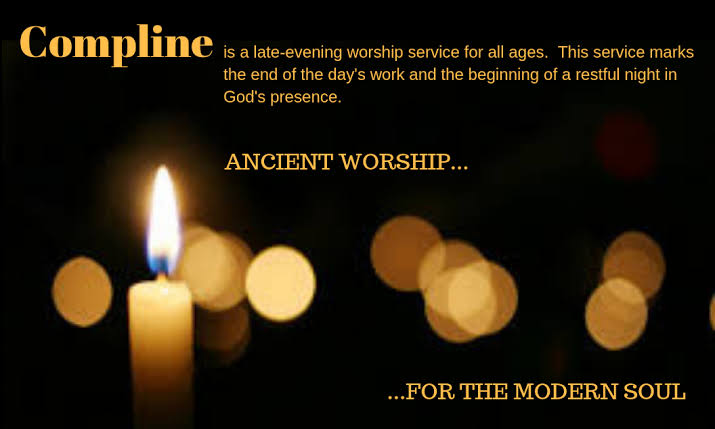
Since the early sixth century during the time of St. Benedict, the “Nunc Dimittis” has been sung in the monks’ night prayer or “compline” from the Latin completorium or completion of the working day. Eventually, it was adopted into the Liturgy of the Hours or the prayers of the Church usually recited by priests and religious. (St. John Paul II had suggested in his encyclical Novo Millennio Innuete after the Great Jubilee of 2000 that the lay faithful also pray the Liturgy of the Hours.)
After the praying of the psalms and meditation of the Sacred Scriptures, there is a Responsory that declares, “Into your hands, Lord, I commend my spirit.” Like Jesus before he died on the Cross, we offer to God our very selves. This is takes on a beautiful dimension especially if we have done a good examination of conscience at the start of the compline, before the psalms and readings.
Then, we recite the antiphon that introduces the Nunc dimittis: “Protect us, Lord, as we stay awake; watch over us as we sleep, that awake, we may keep watch with Christ, and asleep, rest in his peace.”
The antiphon in itself is already a prayer!
It is after the antiphon that we chant or recite Simeon’s Canticle:
Lord, now you let your servant go in peace; your word has been fulfilled: my own eyes have seen the salvation which you have prepared in the sight of every people: a light to reveal you to the nations and the glory of your people Israel.
From the Compline of the Breviary
The antiphon is repeated and immediately followed by the Closing Prayer.
The cross atop our parish church at night with the moon above taken with my iPhone camera, 02 February 2020.
Capping the compline is the blessing at the end that says: “May the all-powerful Lord grant us a restful night and a peaceful death. Amen.”
Usually, a hymn to Mary is sung, then all the lights are turned off and the great silence (magnum silencium) begins until the morning prayers or lauds (Latin for praise).
See how our night prayer or the compline is oriented towards meeting God, or to put it bluntly, towards death.
Yes, it is always easy to say we are ready to die. It is a lot whole different when we are already face to face with death itself.
But, when we come to think of it, we realize that indeed, in death, “there is nothing to fear but fear itself”.
When we die, everything happens so fast. We may not even feel anything at all. And unknown to us, every night when we go to sleep, we rehearse our death, so to speak!
And what a tremendous joy to keep in mind how every night, the Lord fills us with joy and faith within us even if we often forget him. Every night when we sleep, it is automatic within us to entrust everything to God “unconsciously” without even thinking we may never wake up!
It is a “Nunc Dimittis” experience too because most of us go to bed filled with joy, full of hope the following morning would be a better day than today. And that is Jesus still coming to us at the end of the day to assure us of his love and concern, never bothering us at all of this tremendous grace gratuitously given to us.
Next time you sleep, remember how blessed you are to have come to the end of another day, blessed and loved.
Pray, and start experiencing Jesus more from the beginning to the end of each day and forevermore. Amen.
The Lord Is My Chef Sunday Recipe for the Soul, Feast of the Presentation of the Lord, 02 February 2020
Malachi 3:1-4 ><)))*> Hebrews 2:14-18 ><)))*> Luke 2:22-40
Photo by author of Baby Jesus at the Bishop’s Chapel, Malolos Cathedral, 07 January 2020.
We take a break from our Ordinary Sunday to celebrate today the Feast of the Presentation of the Lord at the temple, 40 days after Christmas. It is a prolongation of the celebration of the Lord’s Nativity with a paschal undertone recognizing Christ as Light who had come to us to lead us back to the Father through his Passion, Death, and Resurrection.
This feast used to be known in the East as the Ypapante or the Encounter of Jesus by the two elderly people at the temple, Simeon and Anna. When it reached Europe, it came to be known as the “Purification of the Blessed Virgin Mary” based on St. Luke’s description, evolving into Candlemass or Candelaria when Pope Sergius I in Rome adopted in the eighth century the French tradition of procession of lighted candles at dawn before the Mass to signify Jesus as the light of the world who had come to bring us back to the Father expressed by Simeon in his canticle.
“Now, Master, you may let your servant go in peace, according to your word, for my eyes have seen your salvation, which you prepared in sight of all the peoples, a light for revelation to the Gentiles, and glory for your people Israel.”
Luke 2:29-32
Despite its evolution through the ages with its many names and practices, the Feast of the Presentation of the Lord is a good reminder to us in recognizing, meeting, and sharing Jesus Christ to everyone as the light of the world.
Photo by author of a view from the Temple of Jerusalem, May 2017.
Being devout leads us to recognize and meet Jesus
Only St. Luke reports the story of the Presentation of Jesus at the temple because he wanted to show his audience who were Gentiles or pagan converts that Jesus came not only for the Jews but for everyone.
This remains true to us especially in these modern times when people live in artificial lights and “Klieg lights” that put us on the centerstage only to leave us later groping in the dark, even blinded to false hopes of virtual realities.
St. Luke invites us today to emulate both Simeon and Anna in recognizing and meeting Jesus, the only Light of the world who dispels darkness within and around us.
Now there was a man in Jerusalem whose name was Simeon. This man was righteous and devout, awaiting the consolation of Israel, and the Holy Spirit was upon him. It had been revealed to him by the Holy Spirit that he should not see death before he head seen the Christ of the Lord. He came in the Spirit into the temple; and when the parents brought in the cild Jesus to perform the custom of the law in regard to him, he took him into his arms and blessed God.
Recall how during our Simbang Gabi that for the Jews, a “righteous” person is someone who is holy because he faithfully keeps the Laws of God like St. Joseph, the husband of Mary.
But more than being holy and just, St. Luke also described to us Simeon – as well as Anna implicitly – as “devout” Jews. It is a word rarely used in the Bible. In fact, St. Luke used it only four times: once here in this scene and thrice in the Acts of the Apostles.
In Acts 2:5, St. Luke called the Jews who came to Jerusalem for Pentecost as “devout” ones; then in 8:2, he said “devout men buried” the first martyr of the Church, St. Stephen; and finally in 22:12, he gave the distinction to Ananias as “a devout observer of the law” who came upon instructions from God to pray over and heal Saul who was blinded by Christ’s light on the way to Damascus.
In all four instances, St. Luke described people as “devout” including Simeon and Anna as those of “good heart, ready to believe, and then to act openly and with courage” (Timothy Clayton, Exploring Advent with Luke; page 125). Devout people or devoted persons are a notch higher than just being faithful because they do not merely wait but look forward to the fulfillment of what they believe.
Devoted people make things happen; they do not wait for things to unfold. And that is why they are always at the right place in the right time. Like Simeon and Anna, they give themselves to God wholly to stay attuned with the Holy Spirit and be ready to follow its promptings and leads.
Anna meeting Jesus from catholicfunfacts.com.
See the common trait of both Simeon and Anna as devout people — the presence of the Holy Spirit in them that amid the crowd in the temple on that day, they were able to spot the Child and Savior Jesus Christ being presented by his parents Mary and Joseph!
There was also a prophetess, Anna, the daughter of Phanuel, of the tribe of Asher. She was advanced in years, having lived seven years with her husband after her marriage, and then as a widow until she was eighty-four. She never left the temple, but worshipped night and day with fasting and prayer. And coming forward at that very time, she gave thanks to God and spoke about the child to all who were awaiting the redemption of Jerusalem.
Luke 2:36-38
Jesus comes to us everyday in various ways, in many occasions. He is always passing by, calling us. We have to be on guard in these moments so that we do not miss him. Like reporters following the news, we have to be focused or “tutok” and immersed or “babad” so that nothing or no one escapes us.
Three ways of being devout like Simeon and Anna
It is imperative that we have to be devout first with God so that we recognize and meet his Son Jesus Christ coming to us so we may eventually share him to enlighten everyone. Simeon and Anna show us three important things to keep for us to be devoted to God to encounter Jesus Christ.
First, we have to be faithful in our prayer life. There is no other way in meeting Christ except in having a life of prayer which is a discipline. It is something we do as a habit, every day, every night. Not just once a year like those going to Quiapo every January 9 or completing any novena and then the whole year does nothing.
Devotion is more than collecting images of Jesus, the Virgin Mary, and the saints, joining processions during fiesta or Holy Week, then nothing. Devotion is life, not a show.
Like Simeon and Anna, we have to grow intimately with the Lord by cultivating personal prayers and joining communal activities like the Sunday Mass so that we may know personally and vibrantly God who always leads us to various directions and mission. God is never static but dynamic, unlike us people who keep on insisting on some of our traditions and ways no longer applicable.
Notice how in the first reading the Prophet Malachi said the Lord will suddenly come in the temple, calling on people to always await him (Mal.3:1).
The Old Jerusalem from the inside of the Church of Dominus Flevit (The Lord Cried) at the Mount of Olives, Jerusalem. Photo by author, May 2017.
Second, we can only recognize, meet and share Jesus Christ as Light when we care, love, and respect others. See how Simeon spoke to Mary about his coming mission and its harsh realities. He recognized not only Jesus but also Mary and Joseph. Simeon’s speaking to Mary and Joseph means he recognized the important roles of the parents in being instrumental that he met the Lord.
Any devotion to God and his saints and the blessed Mother Mary without any concern for the people especially the poor and the needy is merely a show and a pageantry of clerical and liturgical excesses. It is triumphalism in its purest sense and hypocrisy at its worst.
We meet Jesus among other people not only within us. This is the gist of the author of the Letter to the Hebrews today when he claimed how Jesus suffered and endured sufferings and death to help those facing trials and tests in life.
Third, we can only recognize, meet, and share Jesus Christ as Light when there is joy in our hearts. And not just being joyful but overflowing with joy like Simeon and Anna that upon encountering the Child Jesus, the more they felt eager to share the good news with others. In fact, they were overjoyed that they even felt so ready to die.
Our parish church on a Sunday afternoon. Photo by Angelo Nicolas Carpio, 12 January 2020.
Fruit of devotion is finally embracing Jesus Christ
Every night before we priests and religious pray Simeon’s Canticle in our Compline (Night prayer), we recite a responsory that says, “Into your hands, Lord, I commend my spirit”. And after that, the antiphon: “Protect us, Lord, as we stay awake; watch over us as we sleep, that awake, we may keep watch with Christ, and asleep, rest in his peace.”
It is only then that we recite or chant Simeon’s Canticle or Nunc Dimittis. It is then followed by the final prayer closed with a blessing that says, “May the all-powerful Lord grant us a restful night and peaceful death. Amen.”
Without sounding morbid or anything, it is my most favorite prayer of all our prayers because it is filled with joy, filled with Jesus, filled with Light. At the end of the day, what a consolation to be filled with joy of Christ that you have had a glimpse of him that you rest in peace hoping to meet him again as well as share him with others too.
I think it is only when we are overflowing with joy that we realize its fullness is found only in Christ, whether in this life or in eternal life. Amen.
Third Sunday of Advent or Gaudete Sunday, 15 December 2019
Isaiah 35:1-6, 10 ><}}}*> James 5:7-10 ><}}}*> Matthew 11:2-11
Malolos Cathedral, 10 December 2019. Photo by author.
For most people, our title is something odd and weird, perhaps even an oxymoron, for how can waiting be joyful and patient?
Many people hate to wait. Waiting for them is a waste of time because they believe it is an activity that is empty, full of risks of leading to nothing and disappointments. That is why they make all kinds of excuses in having all the devices and gadgets they need to busy themselves with while they are – after all – still “waiting”!
This Season of Advent is the most opportune time to rediscover the beauty and joy of patient waiting, especially this Third Sunday known as “Gaudete Sunday” from the Latin gaudere, to rejoice.
Advent teaches us that waiting is both joyful and patient; that it is more than an activity but a being that is always indicative of having something leading to fullness!
Our Parish altar, Gaudete 2019.
Patience is waiting that leads to fulfillment.
Pink is our motif this Third Sunday of Advent to signify joy in waiting for the Lord’s Second Coming. Waiting is an experience in itself filled with joy – if we really know how to wait patiently.
Patience is from the Latin word patior, to suffer. Its Greek origin is hupomone that suggests continuance and submission that literally means “submissive waiting”.
Both in its Latin and Greek origins, patience is a condition or a being of willing to wait because it knows there is something coming. It is never empty: you patiently wait because you already have something, you are holding onto something already. We wait in line whether in the grocery or at the doctor’s clinic because we know we would be attended to later. We wait precisely because we have something – almost – but not yet.
In this sense, patient waiting is more than an activity but more of a being and a condition that leads us to trust and faith, then into hope, and eventually into fullness.
Impatient people cannot wait because they do not see beyond the present condition. Their perceptions are very limited that they have to satisfy their wants immediately, just like our culture of instants these days or the so-called IGG for “Instant Gratification Generation”.
The desert and the parched land will exult; the steppe will rejoice and bloom. They will bloom with abundant flowers, and rejoice with joyful song. Strengthen the hands that are feeble, make firm the knees that are weak, say to those whose hearts are frightened: Be strong, fear not! Here is your God, he comes with vindication; with divine recompense he comes to save you. Then will the eyes of the blind will be opened, the ears of the deaf be cleared; then will the lame leap like a stag, then the tongue of the dumb will sing
Isaiah 35:1-2, 3-6
An oasis in the Dead Sea desert, May 2017. Photo by author.
Intimacy: the joy of patient waiting
There are three key personalities in Advent: Isaiah, John the Baptist, and the Blessed Virgin Mary. Isaiah saw the coming of the Christ from a very distant past while John pointed everyone that the awaited one has already come. Mary, on the other hand, celebrated Advent because she brought forth Jesus in her womb.
Today we are joined by Isaiah and John the Baptist to complete our joy of patient waiting that Christ in fact is already with us though not yet…
In our first reading we have seen the imagery of the desert like last Sunday in John’s preaching. The desert evokes the feeling of nothingness and emptiness like waiting itself as most people think.
But, in the bible since the time of Abraham, the desert is the favorite place where God would always meet with people. It was always in the desert where the prophets and the people waited and experienced God.
Wild flowers in the desert of Jordan, May 2019.
So you see, my dear reader and follower, the desert is more than a place but also the intimacy of God with his people and later with his Son Jesus Christ who would always go to the desert or deserted place to pray like in the Transfiguration, or when he prayed and fasted for 40 days and nights before being tempted by the devil after his baptism by John at Jordan. It was also in the desert where Jesus did many of his memorable conversations that led to conversions like at Jacob’s well where he met a Samaritan woman one hot afternoon.
Examine your lives, dear reader and follower: it is always in the desert of our lives, in its bareness and desolation, when we are empty and thirsty when we truly experienced God closest.
Isaiah spoke of this prophecy when the Israelites were at their lowest point of misery and defeat as exiles in a pagan country with no freedom, no temple, even no God.
When we are full of material things, full of ourselves, when everything is going so perfectly well in life, that is when we are ironically shallow and superficial. What really deepened us in life are those desert moments of tribulations and trials because that is when we have found and rediscovered true intimacy – with God and with our loved ones!
Patient waiting is a desert full of joy because that is where we experience intimacy and fullness, the tension of the already here but not yet, not only with God but also with one another.
Here we find St. James imagery of the farmer as finest example of patient waiting, of trusting in God that what we have sown would grow and be fruitful. Despite our culture of instants, there are so many things that cannot be rushed, when we have to patiently wait in time like intimacy.
How do we recognize our true friends? They are the ones who always stand by our side especially when we our down and out, the ones who accompany us in our patient waiting when we are in the middle of a storm, or in the desert, desolate.
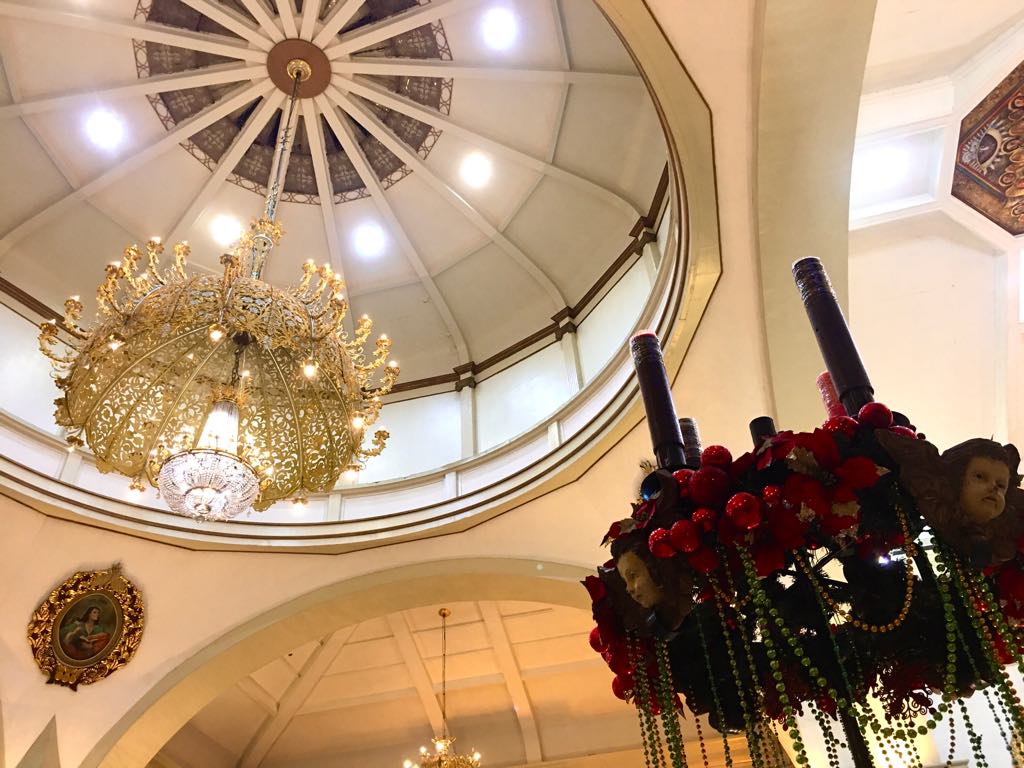
Malolos Cathedral Dome, December 2019. Photo by author.
Proceeding in joy in the presence of the Lord
One problem with waiting is when we are superseded by our so many expectations that may also be unrealistic. We hate waiting, we stop hoping because we feel disappointed and frustrated because we do not get what we really expect from our waiting.
The problem is with us, not with waiting itself. So often we await things instead of persons. To wait in joy with patience demands openness for the one who is coming not on what is coming.
True waiting is always about persons, not things. Waiting is beautiful and joyful because you are not alone in waiting, there is always another person waiting for you, waiting with you. And when we finally meet with the one we are waiting, then we have presence!
This is why the synonym for gift is also present, from presence.
Every waiting is directed to another person who also awaits the other person. When we focus our waiting on things than persons, then we miss everything in our waiting which is the presence of the other person.
This is the meaning of the response of Jesus to the emissaries of John.
Camp John Hay “Belen”, December 2017.
When John the Baptist heard in prison of the works of the Christ, he sent his disciples to Jesus with this question, “Are you the one who is to come, or should we look for another?” Jesus said to them in reply, “Go and tell John what you hear and see: the blind regain their sight, the lame walk, lepers are cleansed, the deaf hear, the dead are raised, and the poor have good news proclaimed to them.”
Matthew 11:2-5
Jesus was telling the emissaries of John that the one they have been waiting had come, already present among the people especially the sick and the poor. God had come in the midst of his people, healing them, consoling them, uplifting them.
This Third Sunday of Advent, Jesus is asking us like the crowds: what are we looking for, what are we waiting for? Set aside or totally forget all your expectations, open yourself, open your heart, open your eyes to see and experience the presence of the Christ who had come, who will come again, and always comes among us.
Indeed, we are so blessed because despite our being sinful, of being the least in the kingdom of heaven, we have Jesus coming to us day in, day out. Share his coming, share his healing, share his joy! Amen.
Isaiah 25:6-10 ><)))*> ><)))*> ><)))*> Matthew 15:29-37
The Manor House, Camp John Hay, Baguio City, 2017.
Praise and glory to you, O Lord Jesus Christ for coming to us, in fulfilling our lives, in making our joy complete. Unfortunately, no one seem to be waiting for you or worst, we live as if you have not come at all.
How sad, O Lord, that often even if we are so excited with Christmas, it does not necessarily mean we are excited of you as a person coming to us. Even if we love to sing and hear that carol “Joy to the World”, we are not really joyful because our hearts are far from you.
Forgive us, Jesus, in being focused with time and dates, than with your person and with your coming.
The more we get focused with dates and gifts and carols and other trimmings of Christmas, the less we think of you and of others too.
Open our hearts to receive you in us.
On that day it will be said: “Behold our God, to whom we looked to save us! This is the Lord for whom we looked; let us rejoice and be glad that he has saved us!” For the hand of the Lord will rest on this mountain.
Isaiah 25:9-10
Open our hearts to you, Jesus, that you are more than enough than anything we could wish for.
Make us desire more of you than of things so we may always have an abundance of you as our “bread” or everything in this life. Amen.
40 Shades of Lent
Saturday after Ash Wednesday, 08 March 2019
Isaiah 58:9-14///Luke 5:27-32
Our loving Father, we are now about to enter the first Sunday of Lent. We have been trying to be serious with this season with our prayers and fasting. But, let us not lose sight of the fact that Lent is a joyous season too as we wait for Easter!
There are times O Lord some of us feel like Levi, sitting alone at the customs post, surrounded with all the wealth and trappings of the world, longing for some meaning in life. Maybe like Levi in that little customs post, some of us feel trapped in our sinfulness with no help in sight.
But, then you came, O Lord Jesus, like a shaft of light amid the darkness, just passing by, saying “follow me” (Lk. 5:27) without even asking our sins or work or world. You asked us nothing but you know everything about us. And that is the mystery that caught us!
What a joy being called to follow you, despite our sinfulness. Remind us always of that joy of Lent that in the midst of our sinfulness and darkness, you still come to call us to follow you.
Help us, O Lord to “remove oppression from our midst, false accusation, and malicious speech… bestow bread to the hungry and satisfy the afflicted” (Is.58:9-10). Help us to sustain our efforts in following you in every direction by being good and just with one another. Amen.
The Calling of St. Matthew (Levi), a painting by Caravaggio which is one of the favorite masterpieces frequently visited by Pope Francis in Rome while still a student and Archbishop of Buenos Aires. Let us keep in mind that Lent, despite it penitential character, is a joyful season of Christ’s coming. Images from Google.
Christmas is undeniably the most joyous season of the whole year. And we all know the reason because it is the birth and coming of our Savior Jesus Christ. Unfortunately in practice, we always forget Jesus Christ and we get focused on the gifts and decorations that delight our senses but leave us empty within. When we forget Jesus Christ as the reason of the season, then we altogether forget the persons around us, forgetting that the greatest gift we can always receive is the gift of our personhood, the gift of another person we journey in life. One rejoices because of a person. Only persons can bring joy and only persons can rejoice.
You must have seen the Christmas short film of Ayala Malls’ “Wishing Tree” where a Lola and her apo celebrate the Simbang Gabi at Greenbelt. After Mass, the apo would hang his Christmas wish on the “wishing tree” aided by the security guard. The Lola eventually had Alzheimer’s, had to stay home while her apo went alone to Simbang Gabi. As usual, the apo who had grown up into a young man went to hang his Christmas wish but this time, instead of asking for toys, he simply wrote “Make Lola happy again.” The security guard saw his wish and had a brilliant idea of gathering from the mall’s CCTV records the joyful memories of the Lola and her apo at Greenbelt through the years. On Christmas Eve, the apo went to kiss and greet his sick Lola in her room where he found a Christmas card from Ayala malls. Inside was a USB with footages of their happy days together at Greenbelt that lit up Lola’s face with joy as if she had suddenly recovered her memories that she rested her head on her apo’s arm. How amazing that despite her dementia, Lola rejoiced again when she saw the gift of person in her apo, their gift of selves to each other that tells us only persons can bring joy to another person, not money or things or gadgets.
This third Sunday of Advent which we also call “Gaudete Sunday” or “Rejoice Sunday”, we level up our rejoicing because our joy is not only coming from another person but from the Second Person of the Holy Trinity, the Son of God Jesus Christ! Such was also the joy of Mary in singing her Magnificat upon experiencing the very person of God in herself and in Elizabeth, “My soul magnifies the Lord” (Lk.1:46). Every joy is magnified because of the person of Jesus Christ who revealed to us that our God is not merely an entity but a Person who relates with us and wants that relationship deepened as a true Father to us. Last week, we reflected how we must create a room or a space within us to let Christ come to us and possess us. Today, our readings remind us how God shows us Himself and His plans for us through other persons in Christ Jesus. See how the people were filled with joy upon listening to the preaching by John the Baptizer in the wilderness of Jordan. Everybody, including sinners like tax collectors and soldiers were asking him “what should we do?” because they felt the joy within of Christ’s coming. And the good news is that through John, the people of that time including us today found that God is not really asking so much from us: we simply have to live simple lives of sharing whatever we have, being fair and just with one another.
To everyone in the crowd, John said, “Whoever has two cloaks should share with the person who has none. And whoever has food should do likewise. Tax collectors should stop collecting more than what is prescribed while soldier should stop the practice of extortion, do not falsely accuse anyone, and be satisfied with their wages.” (Lk.3:11, 13, 14)
Let us rejoice because God is not asking great things from us to experience His coming in Jesus! We do not have to withdraw to the mountains and wilderness to find Jesus Christ. All He wants is our complete person with concrete acts of love and charity, mercy and kindness with every person around us who is our brother and sister in Him. All God wants is our complete person wherein we are faithful and true to Him through others in whatever state of life we are into. See how all the readings proclaimed during this Season of Advent teach us to realize that God has truly come among us in the person of Jesus Christ so that we can experience Him in our very personhood and among other persons, both in good times and in bad times, in joys and in tears. Together we all celebrate life’s ups and downs with God Himself in Jesus through the persons who heed His call to love and to serve. In becoming human like us, God the Son came to proclaim that the Kingdom of God is within us and that the Holy Spirit has been sent to support our relationships with other persons. It is always a struggle to be a good person most especially among relatives and friends who are supposed to be the first to love and understand us but turn out to do the opposite. So often, we forget the other person due to many fears within us like being unloved or rejected, going hungry or thirsty, of losing and getting lost. The prophet Zephaniah tells us in the first reading to cast away all fears and be not discouraged by failures and hurts in life; rejoice because you are so loved by the Lord! “The Lord, your God, is in your midst, a mighty savior; he will rejoice over you with gladness, and renew you in his love, he will sing joyfully because of you, as one sings at festival” (Zeph. 3:17). St. Paul reiterates this call for rejoicing, telling us “Your kindness should be known to all. The Lord is near. Have no anxiety at all, but in everything, by prayer and petition, with thanksgiving, make your requests known to God. Then the peace of God that surpasses all understanding will guard your hearts and minds in Christ Jesus” (Phil.4:5-7).
How sad, and how can we rejoice this Advent and Christmas in our country where Christmas is said to be the merriest and the longest when the president and his men especially in the police force rejoice in the death of drug dependents and criminals? We condemn every act of violence especially to innocent victims but executing their perpetrators, eliminating addicts and criminals will never solve the problem. How can we rejoice when very clearly justice favors the rich and powerful who can all go free or even be exempted from being arrested simply because of age? How can we rejoice when telling lies and peddling fake news are the norms of the administration, maligning people and institutions? The most tragic part of this attitudes of killing, telling lies and injustice in courts is the atmosphere they create among people to lose respect for another person, to fail to see the value of every person rooted in God. Anyone who rejoices in the death of another person, in fake news and lies can never have true joy because deep inside, they are the most insecured and fearful persons of all who are so afraid to love and to forgive, to accept the truth that they have lost their own value of being a person. They will never experience Christmas like Herod who ordered the murder of innocent children upon hearing the birth of another person truly greater than him, Jesus Christ.
This joy of Advent and Christmas in the coming of Jesus Christ is found in the humility of our all-powerful, ever-present, and all-knowing God who chose to be another person among us, so weak and so small even begging us to receive Him. Doubt no more, my dear reader that no matter what your sins are or your past may have been, whatever may be your state and condition in life today, God is here. Have a room in your heart for Him, welcome Him for He does have plans for you. He is also among other persons around you at this very moment, meet Him too among them. Rejoice and give the person you love with a big, warm hug to feel God’s intense presence on this Rejoice Sunday. AMEN. Fr.NicanorF.LalogII,Parokya ng San Juan Apostol at Ebanghelista, .Gov. F. Halili Ave., Bagbaguin, Sta. Maria, Bulacan.
*Photo is a painting on acrylic canvas by Bulakenyo artist Aris Bagtas, “Triangulo ng Liwanag” exhibited in Washington DC in 2013. Typical of paintings by Aris is the joy of the Filipino family where there is always the presence of love represented by his vibrant colors. According to Aris, the relationship among the father, mother and child is everyone’s “triangle of love” in this colorful life we have. Used with permission.
Heavenly Father, today I join St. Paul in the first reading in praying that our joy may be complete “by being of the same mind, with the same love, united in heart, thinking one thing.” Help me to “do nothing out of selfishness or vainglory; rather, humbly regard others as more important than me, as I look out not for my own interests but also for others.” (Phil. 2:2-4)
Most of the time, we cannot share with the “complete joy” your Son Jesus Christ promised us when He said He is the true vine and we are His branches (Jn. 15:11) because we keep on separating from Him. Worst of all, like in His parable today, we have created divisions among us when we chose to associate only with those who look like us, think like us, expecting like us for rewards, of being repaid for any good things we do unto them (Lk. 14:12).
Let me be the one to make that first move of completing our joy, and your joy too, O God, by reaching out in love to those in the margins like the poor and suffering, the sick and the dying, and those we see as different from us in so many other things whom we take for granted.
Let me bring joy to even just one of them, to let them feel we are one, hoping they can have a brighter Monday today. If I can brighten just one person today, then both of us would be completely joyful! The more joys are completed among persons, the world becomes brighter. And that is when our joy, your joy become truly complete for that is when we live as one in Jesus Christ. AMEN. Fr. Nicanor F. Lalog II, Parokya ng San Juan Apostol at Ebanghelista, Gov. F. Halili Ave., Bagbaguin, Sta. Maria, Bulacan 3022.
*Photo by Dra. Mai B. Dela Pena, Tokyo, Japan 2018. Used with permission.












 lordmychef.com