Wisdom 3:1-9 ><}}}*> Romans 5:5-11 ><}}}*> John 6:37-40
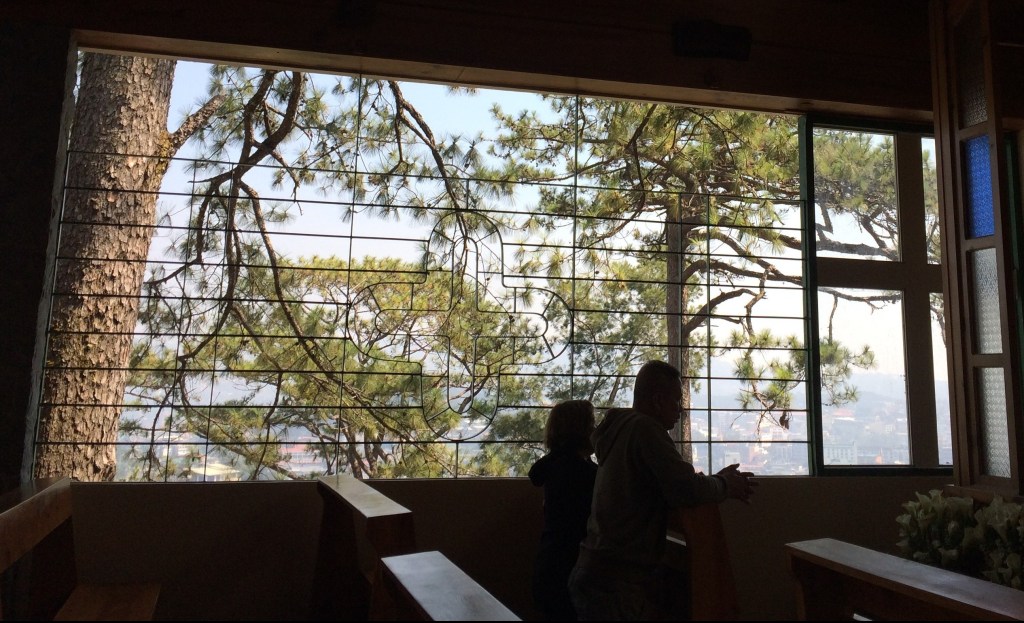
Dominican Hills, Baguio City, January 2019.
Praise and glory to you, our heavenly Father, for the gift of salvation you have given s through your Son Jesus Christ!
Today you give us this special day of remembering not only our dearly departed loved ones awaiting entrance into heaven but most of all, a day to remember our own salvation in Jesus Christ.
Forgive us, Lord, for being so desensitized by the world to our need for to be saved by you, to be reconciled with you. Many of us now take salvation for granted as something due to us, so confident that we would be saved on our own merits.
But God proves his love for us in that while we were still sinners Christ died for us. How much more then, since we are now justified by his blood, will we be saved through him from the wrath. Indeed, if while we were enemies, we were reconciled to God through death of his Son, how much more, once reconciled, will we be saved by his life. Not only that, but we also boast of God through our Lord Jesus Christ, through whom we have now received reconciliation.
Romans 5:8-11
Let us re-member you, Lord, or make you a part, a member of our lives today inasmuch as we re-member too our departed loved ones.
Salvation and reconciliation always come together: no man is an island, even in death.
No one lives alone. No one sins alone. No one dies alone. No one is saved alone.
That is why on this second day of November, we pray together in Jesus Christ, our only boast in life whose love purifies us here and in the afterlife, so that our departed dear ones may finally be with you in eternity. Amen.
Friday, Solemnity of All the Saints, 01 November 2019
Revelation 7:2-4. 9-14 ><}}}*> 1 John 3:1-3 ><}}}*> Matthew 5:1-12
“Mary with the Child and the Angels and the Saints” by Duccio Di Buoninsegna (d. 1319).
Glory and praise to you, O Lord our almighty and loving Father in heaven!
Thank you very much for this celebration of the Solemnity of All Saints — of those all ahead of us and have died now enjoying your company in heaven.
Whenever we think of holiness, we always think of men and women not committing sins, of moral exemplars.
Remind us always that holiness is being filled with you, O God, and that saints are givers of life.
“Blessed are the clean of heart, for they will see God.”
Matthew 5:8
Fill us with your Holy Spirit, Lord, cleanse us of our sins and evil desires and inclinations as we strive to bear all pains and sufferings to lead holy lives.
It is in purifying our hearts, our very selves, when we are able to truly offer our lives for the loving service of the poor and needy so that while still here on earth, we may already see your face, Lord, among the people we meet until that day we are one in you in eternity. Amen.
We have reflected last week that prayer is an expression of our faith by citing Dione Warwick’s 1967 hit, “I Say a Little Prayer”.
When there is faith expressed in prayer, there is also love.
And when there are faith, prayer and love, then we have a relationship like family and friends, and community.
Today in our gospel, Jesus tells us the right attitude we must have in maintaining our relationships, not only with him but also with others.
Jesus addressed this parable to those who were convinced of their own righteousness and despised everyone else. “Two people went up to the temple area to pray; one was a Pharisee and the other was a tax collector. The Pharisee took up his position and spoke this prayer to himself, ‘O God, thank that I am not like the rest of humanity – greedy, dishonest, adulterous – or even like this tax collector.’ But the tax collector stood off at a distance and would not even raise his eyes to heaven but beat his breast and prayed, ‘O God, be merciful to me, a sinner.’ I tell you, the latter went home justified, not the former.”
Luke 18:9-11, 13-14
From Dione Warwick’s 1967 “I Say a Little Prayer”, we move to the following year when Sylvia Robinson and Bert Keyes composed Love on a Two-Way Street recorded by The Moments as a filler for their 1968 album Not on the Outside, But the Inside, Strong!
It did not fare well in the charts and was released again as a single in 1970 when it spent five weeks at number one on Billboard’s Soul Singles chart. It become one of the greatest R&B song of that year that was later covered by other artists.
In 1981, 14-year-old Staci Lattisaw did a cover of the song that became so popular that others have thought it as her original.
But with all due respect to Staci, I have also always felt her version very cheesy that I prefer the originals singing it because they give more character and soul to the song.
I found love on a two way street and lost it on a lonely highway Love on a two way street and lost it on a lonely highway
There was no specific experience behind the composition of Love on a Two-Way Street except that it was just a product of a play on words and poetry by Robinson supported by Keyes’ music.
The moment we become convinced of our righteousness that we despise everyone else (cf. Lk.18:9), then we shut ourselves in and leave no space for others even God.
Love as a two-way street based on today’s parable by Jesus requires three attitudes so our relationships would mature and grow deeper: a sense of sinfulness, self-surrender, and self-offering.
No love and faith would ever grow on a lonely highway, with no one else to relate with. That’s when we stop communicating and relating until we break up with others and end up alone and isolated.
That is when we become a “lonely highway” with nobody else but I, me, and myself.
Go back to the two-way street of God and others.
Though crowded with some traffic jams, there is always a space for everyone.
The Lord Is My Chef Recipe for 40th Wedding Anniversary
Tony and Joyce Lopez, 20 October 2019
Presentation of Our Lord Parish, Filinvest 1, Batasan Hills, QC
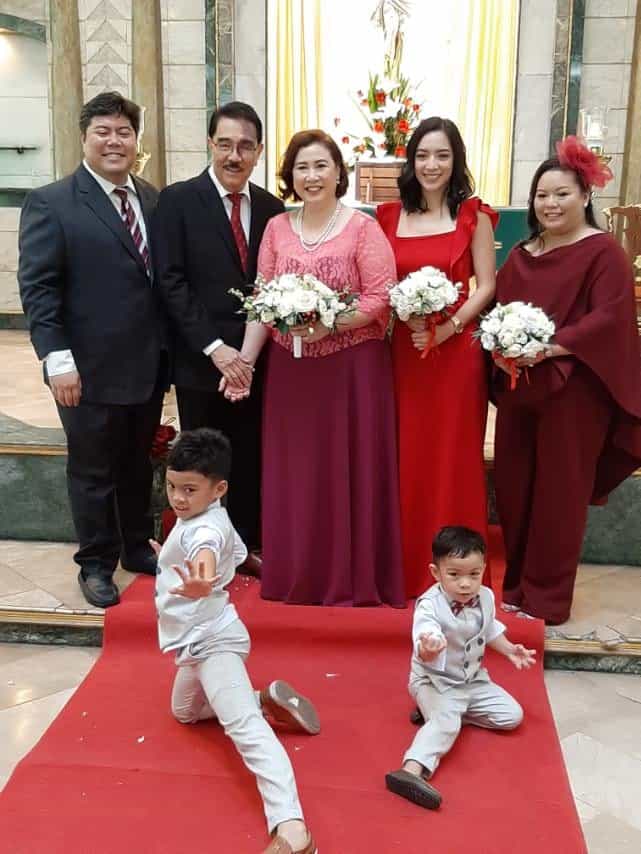
Tony and Joyce on their 40th Wedding Anniversary, 20 October 2019 at the Presentation of the Lord Parish, Filinvest I, QC joined by their son Atty. JA and wife Kathleen with two kids, and youngest daughter Rosella.
Every Sunday I write a blog connecting the gospel with a secular song.
As I prepared my homily for your anniversary, Joyce and Tony… “the moment I woke up and before your Mommy Fely put on her make-up, I said a little prayer for you.”
Joyce mom Fely Pollard with late husband Charles’ cousin, Beth Javier.
Of course that is not the theme song of Joyce and Tony. They haven’t met yet in 1967 when Dione Warwick recorded I Say a Little Prayer. But they were already married when it became one of the tracks in the movie “My Best Friend’s Wedding” starring Julia Roberts.
And since this is my “best cousin’s wedding anniversary” in this part of the city, I have thought of reflecting on married life as a form of prayer.
In our gospel we have heard Jesus Christ narrating the parable of the unjust judge and persistent widow to underscore “the necessity to pray always without becoming weary” (Lk. 18:1).
Prayer is an expression of faith.
When there is faith, there is also love.
And when there is prayer, faith, and love, what we have is a relationship, a community of believers who love each other.
People who love and believe with each other always talk and communicate. They make time to be with one another. And most often, that is what really matters with people who love and believe – simply to be together.
Even in silence.
Like prayer.
Joyce: “During our first few years as couple, I was the one always embracing Tony; but, later until now, it is Tony who often hugs and embraces me! Nabaligtad ang scenario.”
Prayer is more than asking things from God but most of all, prayer is a relationship with God expressed with others. That is the beauty of the Sacrament of Holy Matrimony: husband and wife are bound together in marriage to become signs of the saving presence of Jesus Christ.
Marriage as a sacrament means it is a prayer as well, a relationship of a man and woman with God as its source and foundation.
I am sure, Joyce and Tony along with all the other married couples here today will agree that married life requires a lot of prayers. In fact, married life is a prayer, a very difficult one that is much needed.
Like in that movie My Best Friend’s Wedding, there are real forces of evil that are trying to destroy couples. So many couples have already fallen, going their separate lives after several years of being together while on the other hand, more and more couples are refusing to get married at all due to this reality of breakups and separations.
And that is why we are celebrating today on this 40th anniversary of Joyce and Tony’s wedding! We are praying with them in expressing our faith and love for them in Christ Jesus. Prayers have kept them together, transforming them into better persons.
At the end of the parable of the persistent widow and unjust judge, Jesus posed a very crucial question for us, especially to every married couple here today: When the Son of Man comes again at the end of time, will he find faith on earth? (Lk.18:8)
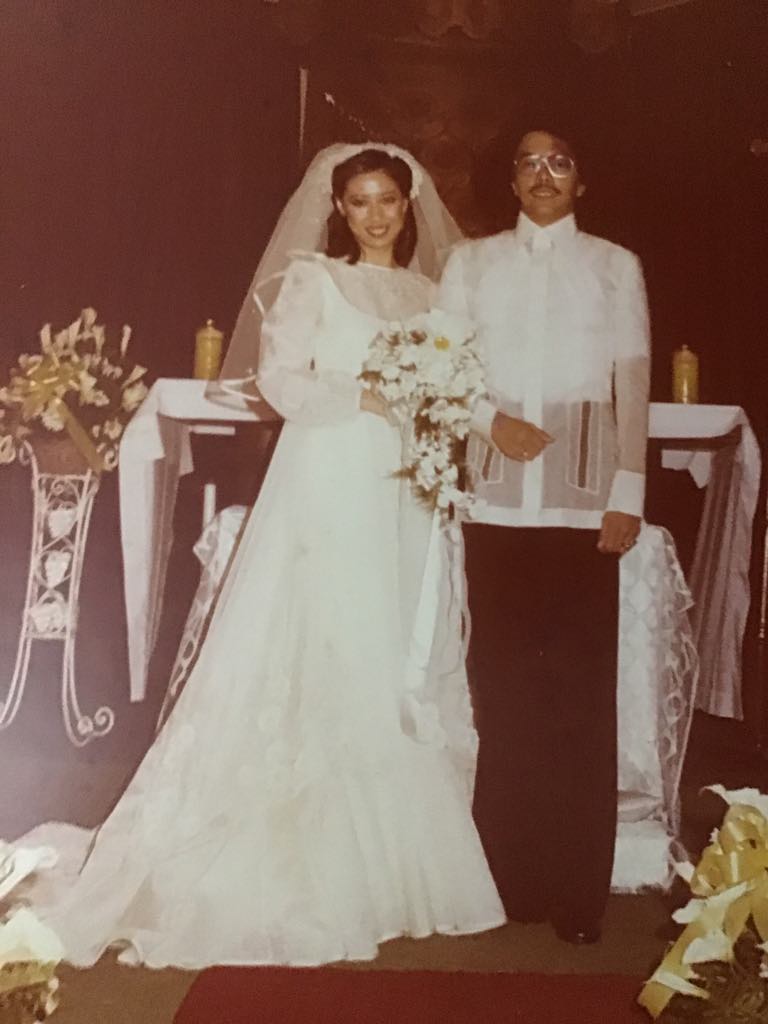
Tony and Joyce at Villa San Miguel, Mandaluyong 1979.
And what shall be our response?
“Yes, Lord, you shall find faith when you come again in Joyce and Tony!”
Like Moses in the first reading, they both prayed hard with arms outstretched on many occasions as they battled life’s many challenges and struggles.
“Yes, Lord, you shall find faith when you come again in Joyce and Tony” because they have both proclaimed your word with persistence, whether it is convenient or inconvenient like St. Paul in his second letter to Timothy. They have weathered so many storms in the past 40 years and your words, O Lord, have kept them together, sharing these with their children and with everyone in their life of fidelity and love.
“Yes, Lord, you shall find faith when you come again in Joyce and Tony” now before your altar to renew their vows to love and cherish each other for the rest of their lives!
“Yes, Lord, you shall find faith when you come again” among the many couples gathered here who have remained faithful to each other despite their many sins and failures, weaknesses and shortcomings.
Joyce and Tony, you are not only a prayer of faith but also a homily of the Holy Matrimony, showing us the light and power of Jesus Christ to transform people in prayer and bring them to fulfillment.
Prayer does not change things like typhoons and earthquakes. We cannot ask God in prayer to spare us from getting sick or be exempted from life’s many trials and sufferings. Prayer cannot stop those from happening.
What prayer does is change us, change our attitude so we may hurdle life’s many blows and obstacles. Especially with couples who always find God in their lives, in good times and in bad.
Prayers transform us into better persons as children of God, especially couples who eventually look like brothers and sisters after living together in faith, hope and love.
Tony and Joyce, I am sure everyone in our family and among your friends here can attest to the many good things that have transformed you in the past 40 years.
You have changed to become the best for each other.
In the bible, the number 40 means perfect.
May God continue to perfect you, Tony and Joyce.
Keep us too in your prayers as we pray for you. Amen.
It’s a lovely Sunday especially for all married couples.
I am officiating the 40th Wedding Anniversary later today of a dear cousin when I remembered the 1997 movie “My Best Friend’s Wedding” with one of its most romantic scene with the singing of I Say a Little Prayer.
Composed by Burt Bacharach and Hal David in 1966 for Dionne Warwick, the song is meant to convey the woman’s sentiment for her man serving at the Vietnam War. It was finally released in 1967 and became an instant hit not only in the US but around the world. Since then, I Say a Little Prayer has been covered so many times even by male vocalists and went back to the charts again in 1997 as one of the tracks in the romantic comedy that starred Julia Roberts.
Prayer is the expression of our faith that always presupposes the presence of love. If there is love, there must be a community, a relationship.
Like people who love each other, believing in each other, they always speak and communicate even in silence. What matters most is their being together, their being one in faith and in love.
Exactly like in prayer.
If we love God, then we must always speak to him and most of all, be one with him, like most people who truly love.
We have chosen that lovely scene from “My Best Friend’s Wedding” singing I Say a Little Prayer because it evokes a lot about prayer: faith and love and relationships.
Most of all, in that movie, the prayer was heard loud and clear for Julia’s best friend.
See the movie again and have those kilig moments back with your loved one 22 years ago.
The Lord Is My Chef Sunday Recipe, Week XXIX-C, 20 October 2019
Exodus 17:8-13 ><}}}*> 2 Timothy 3:14-4:2 ><}}}*> Luke 18:1-8
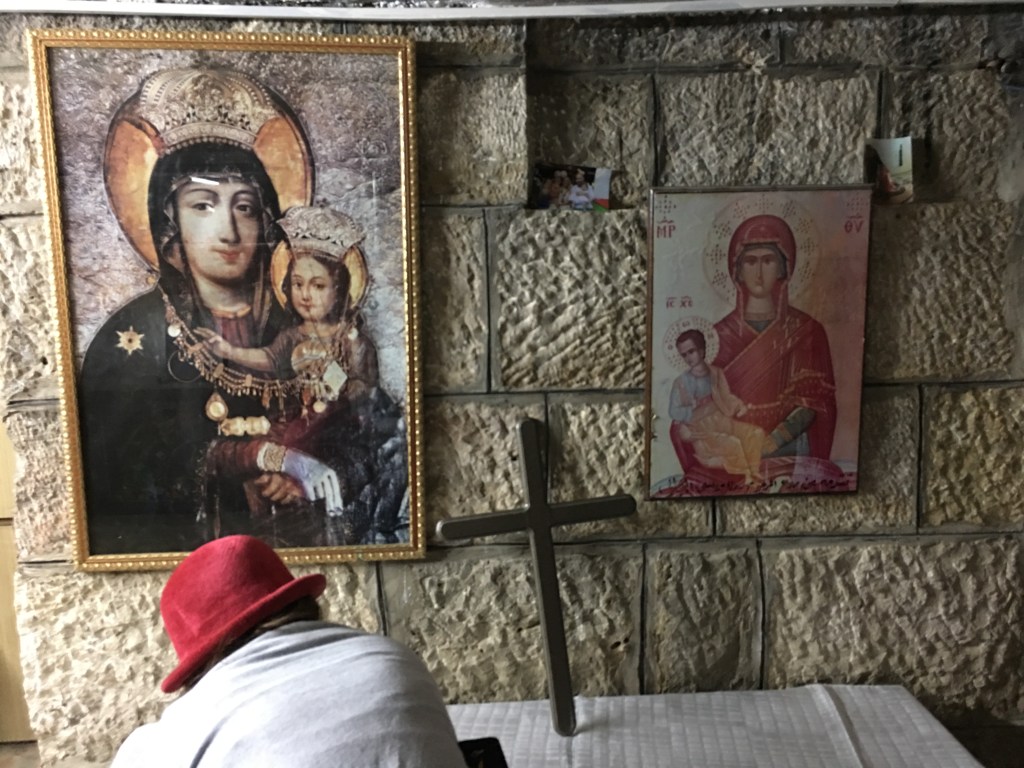
A pilgrim writing petitions inside a “cave” chapel of the Blessed Virgin Mary in St. George’s Church in Madaba, Jordan. May 2019.
We have seen these past two weeks the importance of faith in our lives. The other Sunday Jesus assured us that faith is a gift freely given to us by the Father that enables us to make it through this life’s many challenges. It is also faith that heals and saves us as seen in the healing of the ten lepers last Sunday.
For the next three Sundays beginning today, faith would still be the main theme of our gospel but, each week we are offered with its different aspects that enrich and fulfill our lives.
Today, Jesus shows us that where there is faith, there is always a relationship that springs forth nourished by prayer.
Jesus told them a parable about the necessity for them to pray always without becoming weary. He said, “There was a judge in a certain town who neither feared God nor respected any human being. And a widow in that town used to come to him and say, ‘Render a just decision for me against my adversary.’ For a long time the judge was unwilling, but eventually he thought, ‘While it is true that I neither fear God nor respect any human being, because this widow keeps bothering me I shall deliver a just decision for her lest she finally come and strike me.'”
Luke 18:1-5
Mirador, Baguio City, January 2019.
Everybody is saying we should pray. Especially us priests.
But rarely do we explain why we should pray. Worst of all, many among us teach the misconception that we have to pray so God would pour out his blessings upon us, the so-called “health and wealth” preaching to collect more donations!
Prayer is not merely for asking favors from God because he knows what we need and grants these even before we ask him or even without us asking him. Praying for special favors is the lowest form of prayer, the one at the bottom, if you remember our acronym “ACTS”: Adoration, Confession, Thanksgiving, and Supplication.
Prayer is primarily about relationships, of keeping our ties with God closer and personal. It is an expression of our faith in God, something innate within us that we must cultivate for it to blossom and bear much fruit for us.
Prayers do not change things and situations like typhoons and earthquakes.
Prayers change us – our person and attitudes in dealing with life’s blows. It makes us more humane, more kind, more like God to whom we cling to when we pray.
See how the widow pleaded to the heartless judge because she not only believed she deserved justice but she saw a glimmer of humanity in him that even for a small chance he would render her with a just decision because she’s a fellow human being.
And she succeeded in pursuing it!
The widow had such deep faith that the evil judge would recognize their “link” or relationship as humans.
This we find clearer in Jesus explaining the parable.
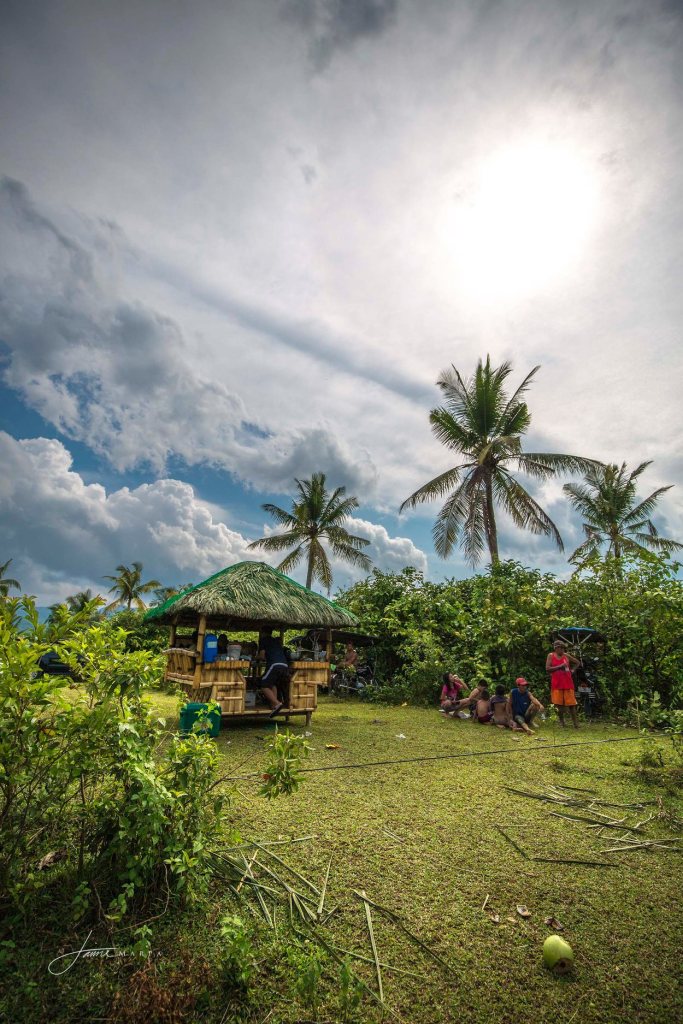
Photo by Mr. Jim Marpa at Palo, Leyte, September 2019.
The Lord said, “Pay attention to what the dishonest judge says. Will not God then secure the rights of his chosen ones who call out to him day and night? Will he be slow to answer them? I tell you, he will see to it that justice is done for them speedily. But when the Son of Man comes, will he find faith on earth?”
Luke 18:6-8
The title “Lord” is a post-Resurrection address given to Jesus Christ by the disciples when their faith had been deepened by the Holy Spirit. Here, Jesus is introducing something more profound about the necessity to pray always without becoming weary – we pray to be with God, to be one in him by being “justified” or being saved!
Here now is the deeper reason why we must pray always: to be one with God.
And from that comes the crux of the gospel today when the Lord asked, “will he find faith on earth when he comes?”
That question sheds light to the parable which is more than praying unceasingly to God for some favors but to deepen that faith and relationship with God who is our very life, our healing, and our salvation.
That question sheds light to the parable which is about the need to constantly reawaken that faith with prayers as expression of our deep love for Jesus Christ, himself the “word who became flesh” we must proclaim always until he comes again according to St. Paul in the second reading.
That question by Jesus challenges our faith to be like Moses and Joshua remaining focused with God in prayer as we battle life’s many trials and difficulties, challenges that sometimes force many of us to abandon him or change our religious affiliations as if there are different Gods!
Finally, that question probes our hearts not only for faith but also for love for God expressed in our prayers. Where there is faith, there is always relationship, and therefore, there is also love.
And here, we do not merely mean reciting prayers but having a “prayer life” – a communion and intimacy with the Lord cultivated in a disciplined life of prayer because people who truly love always talk and communicate with each other.
Most of all, people who love and have faith in each other always spend time together even in silence. Just like in prayer!
Handle life with prayer always. Have a blessed week ahead!
“Losing One’s Head and Self in Prayer”. Photo by Ms. JJ Jimeno of GMA-7 News at the Blessed Sacrament Chapel of the Holy Sacrifice Parish, UP Diliman, QC, June 2019.
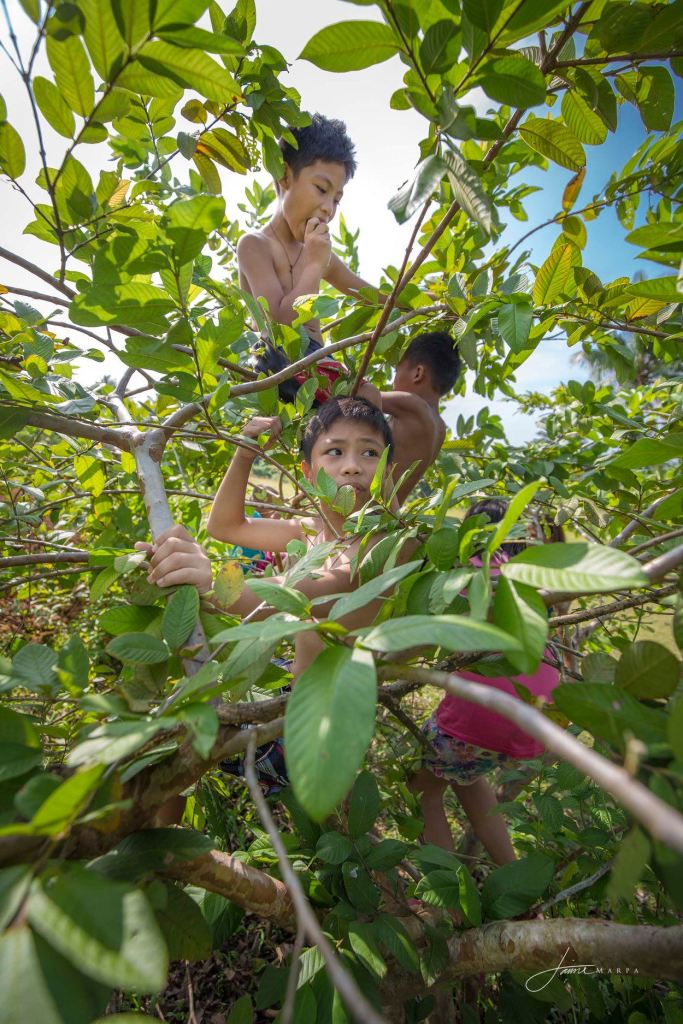
Photo by Mr. Jim Marpa at Otap, Carigara, Leyte. September 2019.
O dear God…
How could some people be like Jonah in our first reading today — prayerful and a man of God and yet be so mean not to see the value of every person?
Jonah was greatly displeased and became angry that God did not carry out the evil he threatened against Nineveh. The the Lord said to Jonah, “You are concerned over the plant which cost you no labor and which you did not raise; it came up in one night and in one night it perished. And should I not be concerned over Nineveh, the great city, in which there are more than a hundred and twenty thousand persons who cannot distinguish their right hand from their left, not to mention the many cattle?”
Jonah 4:1, 10-11
Forgive us, Lord, when things like money and gadgets, whims and desires blind our eyes not to see and recognize every person who must be loved and cherished.
Forgive us when there are times we forget all about respect, even civility especially when all we see are the sins and mistakes, weaknesses and shortcomings of people that make us speak ill them, judging them harshly with our words that we forget we never lose dignity and honor because we are all created in your image and likeness, Lord.
Please teach us, Jesus, like your disciples in the gospel today the right attitude of praying which is recognizing the value of every person so we can truly pray and say
“Father, hallowed be your name, your Kingdom come.”
Luke 11:2
It is only when we value persons more than anything else can we truly mean our prayers to you, O Lord and God. Amen.
Photo by Mr. Jim Marpa in Carigara, Leyte, September 2019.
Thank you very much, O Lord our God, for this wonderful Tuesday! Thank you for the changing of season with the coming of Amihan’s cool northeasterly winds replacing the warm and humid winds of Habagat.
Please do change also our perception of people around us, especially those we have boxed and stereotyped simply because they are not like us in beliefs, ways, and color.
Help us to believe in everyone’s ability to become better persons, receptive to your words and mercy like the people of Niniveh during the time of Jonas and of Mary, the sister of Martha whom Jesus visited in a village on his way to Jerusalem.
So often, we are like Jonas and Martha, so focused with our very selves that we are the only ones worthy of your love and mercy as if we have been endowed with special blessings and privileges from you.
How sad that we always feel so exclusive instead of being inclusive like you, sending rains to sinners and non-sinners alike.
May we let go of any hint of “self-entitlement” that have kept us apart from each other and worst of all, prevented us from truly being one in you whom we call “Our Father”. Amen.
Friday, Feast of St. Francis of Assisi, 04 October 2019
Baruch 1:15-22 ><)))*> 0 <*(((>< Luke 10:13-16
One of the scenes from Benozzo Gozzoli’s series of frescoes from the life of St. Francis (1450) that captures the saint’s “Sermon to the Birds” and the dedication of his basilica at Assisi. Photo from Google.
Praise and glory to you, Lord God our loving Father for this week about to close with the celebration of another great saint, Francis of Assisi.
Two things I wish to thank you in giving us St. Francis of Assisi.
First is his total dedication in listening to you alone.
St. Francis accomplished so much for you and had so much impact not only to the Church but for the whole world until now because he intently listened to your voice, to your calls, and to your instructions.
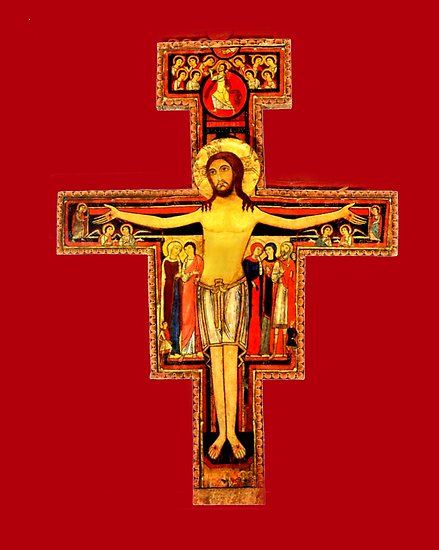
It does not really matter if he got your words literally or figuratively speaking like when he was praying inside San Damiano chapel and heard your voice saying, “Go, Francis, and repair my house, which you see, is falling into ruins.”
Or, when St. Francis finally found his vocation in life after listening to Matthew 10:9 in the Mass and felt you Jesus speaking directly to him to go preach the kingdom of God without extra clothes and money that right after that, he threw everything away to preach penance, brotherly love, and peace.
How ironic that in this world of modern means of communications, the more we have become fragmented than ever because we have lost the values of silence, prayer and listening to self, others, and you, O Lord.
Jesus said to them, “Whoever listens to you listens to me. Whoever rejects you rejects me. And whoever rejects me rejects the one who sent me.”
Luke 10:16
Teach us, dear Jesus to be poor and empty like St. Francis so we may always open our ears and our hearts to seek your voice, to listen to your words, and most of all, to follow your will.
From Be Like Francis at Facebook.
Second thing I am so grateful with you Lord in giving us St. Francis is his deep sense of gratitude to you that he was able to see our universal brotherhood in you God our Father.
Did he really preach to hundreds of birds and told them to be thankful to you dear God for their freedom and for your care to them? I believe it must be true because where there is gratitude, there comes peace and serenity that attract than dispel people and animals alike.
Teach us to be grateful with whatever we have, Lord because the moment we learn to thank you and anyone here on earth, then we we realize our being one. In his gratitude for your wonderful gifts to him, St. Francis not only embraced you Jesus on the Cross but also saw everyone as family with brother Sun and sister Moon, brother Wind and sister Water. And even cousin Death.
Again, O Lord, in this age of affluence, the more we feel empty and lacking as we tend to acquire more of material things. Teach us to repent for our sins like St. Francis and Baruch in the first reading, to acknowledge everything we have including our sins.
It is only in being thankful that we are able to realize who truly reigns in us like St. Francis. Amen.
They always reveal something about us. Medical doctors say our hands’ texture and color indicate our health condition. Psychics always read our palms to see our past, present and future. And every suitor always asks for the hand of his beloved for marriage.
In fact, it is always fascinating to observe the hands of a man courting a woman. See how he would always hide his hands inside his pockets or at his back as he puts his best foot forward to impress the lady he is courting. If he wins her heart, they get engaged and that is when they keep on holding each other’s hands until they get married.
There are a lot great beauty and profundity in our human hands that always come in handy for daily living!
“It is my wish, then, that in every place the men should pray, lifting up holy hands, without anger or argument.”
1 Timothy 2:8
I love St. Paul’s expression of men praying “lifting up holy hands” which is the sum or integration of prayer and action. Very picturesque, showing us how we must conduct ourselves with God and one another by living in peace and harmony as brothers and sisters in Jesus Christ. That is why today until next Sunday, our gospel from St. Luke would be challenging us on how authentic our life is as seen from last week’s parable when we experienced God as a loving Father embracing us despite our sins.
This Sunday, the Lord is asking us, “what’s in our hands”?
What are we holding on, literally and figuratively speaking?
Whatever our hands touch and hold are always linked with our whole selves. They cannot be separated from our body for our hands extend us to other people and even with things. Our hands reveal the balance or imbalance within us, the truth and lies we hold on deep inside us.
Photo by Jim Marpa in Carigara, September 2019.
“No servant can serve two masters. He will either hate one and love the other, or be devoted to one and despise the other. You cannot serve God and mammon.”
Luke 16:13
In our gospel today, Jesus is not asking us to “dirty our hands” with sin. What he wants us to realize from his parable is to be like the wise steward or “hired hand” who used all his resources and intelligence in securing a sound future by doing something finally good to those he had cheated.
Like that hired hand, what are the main concerns of our hands? Do we use our hands for good or for evil? Would we dare to use our hands extensively to achieve eternal life by entering through the “narrow door” Jesus told us last month by keeping our hands busy in doing good, serving the poor and needy?
Our hands are a blessing from God, including the fruits of its labor.
How unfortunate that like during the time of the prophet Amos whom we have heard in the first reading today, we use these very blessings from God to curse and trample others especially the poor and the weak. How ironic and sad that the very hands we use to care for others are the very same hands that beat and even kill others perfectly expressed in the term “blood in one’s hands”. Worst of all, the very hands that pray to God are the same hands that hurt others!
Betania Tagaytay, August 2017.
The late Jaime Cardinal Sin of Manila used to narrate a short story about the gracious hands of God. He said that most of the time, the hands of God caress us, pat our shoulders and even soothe us whenever we are in pain. But, sometimes, the hands of God tap us, even “spank” us when things do not seem to favor us. What matters most, according to Cardinal Sin, whether we are caressed or tapped, the same touches come from God’s loving and healing hands always filled with grace.
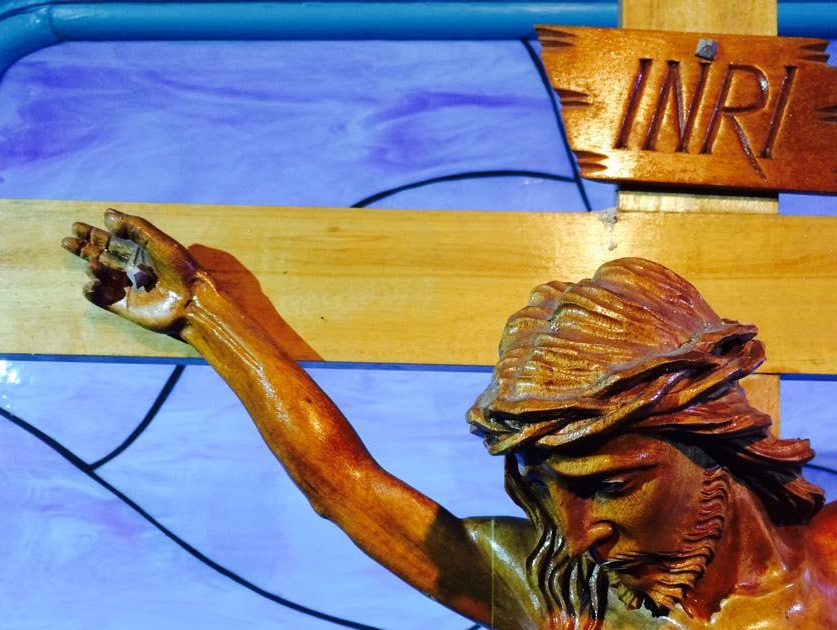
In the gospels, we find many instances of Jesus using his hands to raise the sick, to touch the eyes and mouth in restoring senses, and to bless, break and share bread with his friends and sinners alike. When he expressed his immense love for us and the Father, Jesus stretched out his arms and offered his hands on the cross on Good Friday.
Just imagine how with all our sins, God with a stroke of his hand can make us all vanish but chose not to do so and let our trespasses pass. Like the master in the parable we have heard, God is giving us all the opportunities to work with our hands in lovingly serving the people he has entrusted to us in our homes and offices, school and parish, and community.
But unlike that master who still fired his hired hand despite his resourcefulness, God is not judging us into doom. In is infinite love, God gave us Jesus Christ his Son to bring us back to him in eternal life. It is for this that we lift up our hands to him every day, especially in the Holy Mass we celebrate. The best prayer we can offer God is for these “blessed hands” to reach out to everyone in love and forgiveness, kindness and peace. Amen.











 lordmychef.com