Darkness in every beginning

The Lord Is My Chef Sunday Recipe for the Soul, Week IV-A, 26 January 2020

Isaiah 8:23-9:3 ><)))*> 1 Corinthians 1:10-13, 17 ><)))*> Matthew 4:12-23

Photo by author, July 2019, Tagaytay City.

In the beginning, when God created the heavens and the earth, the earth was a formless wasteland, and darkness covered the abyss, while a mighty wind swept over the waters.

Genesis 1:1-2

The Bible clearly tells us everything in the beginning was dark. And since then, almost everything has always begun in darkness, like human life itself, or every new day, even new year!

Some relatives and friends have been complaining to me how 2020 started off with a lot of darkness.

And I totally agree with them!

Since the Christmas Season until last Friday, I have been officiating funeral Masses for parishioners and friends as well as praying for some relatives and friends who have passed away this January abroad. Also included in this vast swathe of darkness are some relatives and friends diagnosed with serious illnesses like Alzheimer’s and cancer.

In the news we find so many darkness at the start of 2020 like fears of World War III when an Iranian military officer was killed in an American drone attack in Baghdad on January 03; the January 12 phreatic eruption of Taal Volcano now threatening a catastrophic eruption anytime; and, this fast-spreading new corona virus from China that is reportedly so deadly.

Everything is so dark at the start of 2020 and January is not even over yet!

Photo by Mr. Raffy Tima, GMA-7 News, 15 January 2020.

Darkness leads us into light

Even our readings today speak about darkness, especially the beginning of the public ministry of our Lord Jesus Christ after John the Baptizer was arrested.

When Jesus heard John had been arrested, he withdrew to Galilee. He left Nazareth and went to live in Capernaum by the sea, in the region of Zebulun and Napthali, that what had been said through Isaiah the prophet might be fulfilled.

Matthew 4:12-14

However, these same readings assure us that not all darkness are gloomy after all. In fact, it is in darkness where we see the light of the gospel shining brightly.

Sunrise at Lake Tiberias (aka, Galilee), May 2017. Photo by author.

Despite that dark note on the arrest of John the Baptizer, we actually have here the beginning of the good news of salvation with the start of the preaching and public ministry of Jesus Christ.

Darkness is always a prelude to light, like chaos is to order.

Sometimes, we need to experience some darkness for us to realize the need to be enlightened, to see more the beauty of light, to seek light – most especially of the love and mercy of God in Jesus Christ who had come to us on the darkest day of the year, December 25.

See how in our lives when bad things have to happen first before we can learn our lessons so well or find particular values we now treasure in life.

Sometimes, God allows us to be plunged into darkness to find him, to see him, to desire him and eventually have him.

First the Lord degraded the land of Zebulun and the land of Naphtali; but in the end he has glorified the seaward road, the land west of the Jordan, the District of the Gentiles. Anguish has taken wing, dispelled is darkness: for there is no gloom where but now there was distress. The people who walked in darkness have seen a great light; upon those who dwelt in the land of gloom a light has shone.

Isaiah 8:23-9:1

Jesus comes to us in darkness

Photo by Mr. Jim Marpa, Bohol Island, 2019.

Darkness in the bible signifies sin and evil, failures and disappointments, struggles and sufferings, and finally, sickness and death. No one is immuned from darkness.

But with the coming of Jesus Christ who conquered evil and sin, darkness has become a blessing, an invitation for us to find him, to listen to him, and to follow him.

Fram that time on, Jesus began to preach and say, “Repent, for the kingdom of heaven is at hand.” As he was walking by the Sea of Galilee, he saw two brothers, Simon who is called Peter, and his brother Andrew, casting a net into the sea; they were fishermen. He said to them, “Come after me, and I will make yo fishers of men.” At once they left their nets and followed him. He walked along from there and saw two other brothers, James, the son of Zebedee, and his brother John. They were in a boat, with their father Zebedee, mending their nets. He called them, and immediately they left their boat and their father and followed him.

Matthew 4:17-22

Jesus opted to start his public ministry and preaching in the “darkest region” of Israel at that time, among the peoples living in darkness of sins and lack of meaning and directions in life. He comes to us most of the time during our moments of darkness to enlighten us and give us direction.

That makes every darkness a blessing in itself for that is when Jesus – the Gospel himself – shines brightly.

Lake Tiberias at the back of the ruins of the Capernaum synagogue where Jesus preached. Photo by author, May 2019.

Let everything begin in the words of Jesus

Right away at the start of his preaching and ministry, people began following to listen to Jesus in Galilee, particularly at Capernaum where he used to preach in their synagogue near the shores of the Lake of Galilee (a.ka., Tiberias).

Everything began with the words of Jesus Christ: the sick were healed, those possessed by evil spirits were cleansed, sinners were forgiven, and those troubled found comfort in him.

Most of all, people found meaning in life as experienced by the first four disciples of Jesus, Simon and his brother Andrew, and the sons of Zebedee, James and John.

They were all rich and money was not a problem because they owned fishing boats that was very expensive at that time. Simon Peter is believed to be a very successful fisherman with many hired workers while the brothers James and John were beginning to learn the trade from their rich dad.

All four grew up together, worked together, most of all shared the same darkness in life, searching for meaning and direction in life that they have finally found in Jesus Christ while listening to his preaching. And that is why they immediately left everything and everyone behind after being called by Christ!

Very surprising was the attitude of Zebedee also who did not even bother to call or drag his sons back to their boat to help him because he must have felt and seen the bright sparks within his sons who have finally found meaning and direction in life through the preaching of Jesus Christ – “the Word who became flesh” – according to John who later wrote the fourth gospel account.
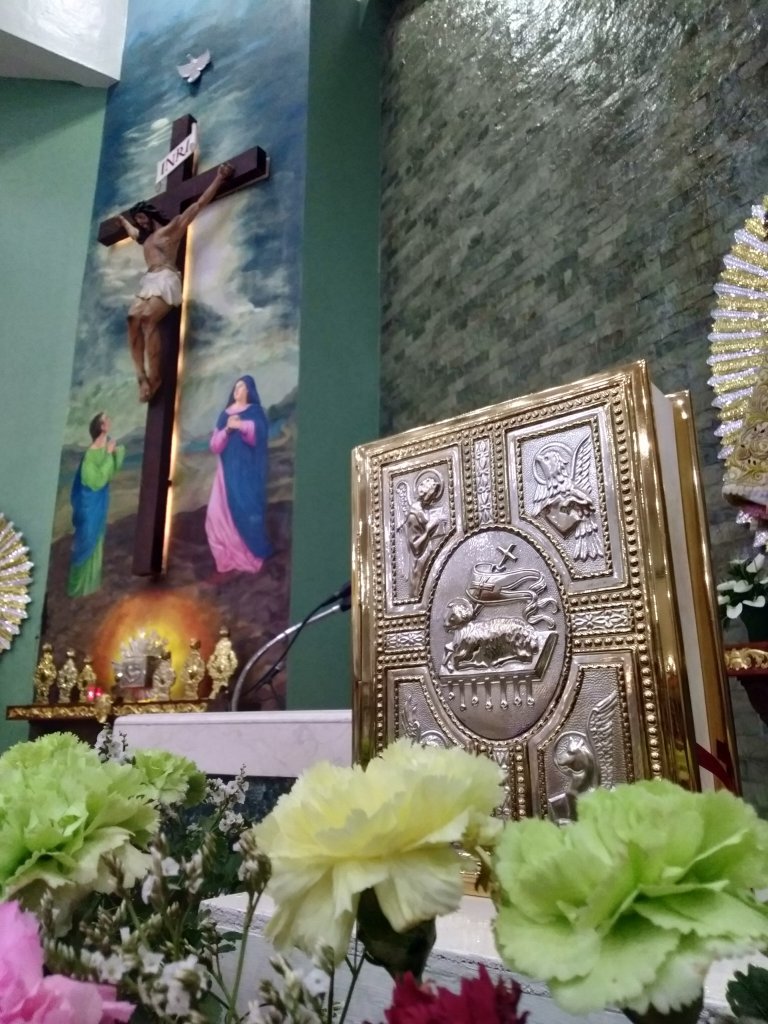
The Gospel Book (Evangelare) enthroned at our altar for the Bible Sunday celebration, 26 Jan. 2020. Photo by Angelo Nicolas Carpio.

Such is the power of the word of God who cleanses us of our sins, empties us of our pride and foolish self to be filled with the wisdom and light of Jesus Christ.

In a decree issued last week, Pope Francis has declared every third Sunday of Ordinary Time as “Bible Sunday” to emphasize the importance of praying the Sacred Scriptures, listening to God himself present in his words found in the Bible.

Even today, everything begins with the words of Jesus Christ: that is why it is the very first part of the Mass, equally important with the Eucharist.

We can never experience Jesus Christ in his Body and Blood at the Holy Eucharist or even among our brothers and sisters gathered in the celebration of the Holy Mass unless we first meet and experience him in his words.

Most of all, we can never experience him in person without praying the Sacred Scriptures because according to St. Jerome, “Ignorance of the scriptures is ignorance of Jesus Christ.”

Is there ay darkness in your life these days?

Try dusting off that bible you have kept in a little corner of your shelf — read it, study it, and pray it.

Be surprised in its powers for,

“Indeed, the word of God is living and effective, sharper than any two-edged sword, penetrating even between soul and spirit, joints and marrow, and able to discern reflections and thoughts of the heart”

Hebrews 4:12

A blessed Sunday to you!

Prayer against jealousy

The Lord Is My Chef Breakfast Recipe for the Soul

Thursday, Week 2, Year 2, 23 January 2020

1 Samuel 18:6-9; 19:1-7 ><)))*> ><)))*> ><)))*> Mark 3:7-12

Photo by Mr. Jim Marpa, Carigara, Leyte. 2019.

Praise and glory to you O God our loving Father in heaven!

Today, I just want to bask in your immense love for me, to let myself immerse in your love, in your grace, in your mercy.

Please, loving Father, let me be assured always of your love through your Son Jesus Christ.

As I prayed today’s readings, I realized that next to pride, the most sinister sin we have is jealousy that silently creeps into our being, making us forget your enormous love for each one of us. It is something we never outgrow that actually worsens as we age!

Saul was very angry and resentful of the song, for he thought: “They give David ten thousands, but only thousands to me. All that remains for him is the kingship.” And from that day on, Saul was jealous of David.

1 Samuel 18:8-9

Jealousy is more than an insecurity of being less worthy or fear that we are loved less.

At its worst, jealousy is something we have always “nurtured” within us, part of our lack of faith and belief that we are loved, that we are cared for.

That is why jealousy can easily arise within us because it is an enemy we “host” within us!

The Pharisees and the scribes were jealous of Jesus Christ because they have always lacked belief in themselves that is why they kept on quarreling among themselves, competing who would be most admired and accepted by the people.

But the people who came to follow Jesus, seeking healing from him, felt so assured of his love and mercy. No one among them was jealous of others being healed because they felt Jesus loved them all!

That is why I pray today, O Lord Jesus, to let me dispose of that inclination to be jealous always, of wrongly believing and fearing of being denied of your love that is boundless and immense for each one of us. Amen.

Rejoicing the presence of God

The Lord Is My Chef Breakfast Recipe for the Soul

Monday, Week 2, Year 2, 20 January 2020

1 Samuel 15:16-23 ><)))*> ><)))*> ><)))*> Mark 2:18-22

“Sleeping Sto.Niño” at our altar, 19 January 2020. Photo by author.

Praise and glory to you, O Lord Jesus Christ!

Let me rejoice this first day of work and school in your divine presence, O Lord. Let me celebrate your coming in my life! Let me live in your divine presence most especially when everybody feels and thinks you are not with us, that you do not care at all.

Forgive me, Lord, when I act like Saul in the first reading: obediently fulfilling your will and instructions and yet, insisting on my own ways as if you are not aware of what is in our minds and hearts.

Like Saul, I always confuse your will with my “good intentions”, with what I think as good and the best for you and for others when in fact, I am playing God, “presuming” you will approve and like whatever I deem best for you and others.

But Samuel said: “Does the Lord so delight in burnt offerings and sacrifices as in obedience to the command of the Lord? Obedience is better than sacrifice, and submission than the fat of rams. For a sin is like divination is rebellion, and presumption is the crime of idolatry.”

1 Samuel 15:22-23

Help me, sweet Jesus, to always “pour new wine into fresh wineskins”, to always see something new daily in you, to find you present among people and things I take for granted.

Refresh me, Jesus, in your presence! Amen.

Sunday flower arrangement, 19 January 2020.

First of all, be a child of God

The Lord Is My Chef Sunday Recipe for the Soul

Feast of Sto. Niño, 19 January 2020

Isaiah 9:1-6 ><)))*> Ephesians 1:3-6, 15-18 ><)))*> Matthew 18:1-5, 10

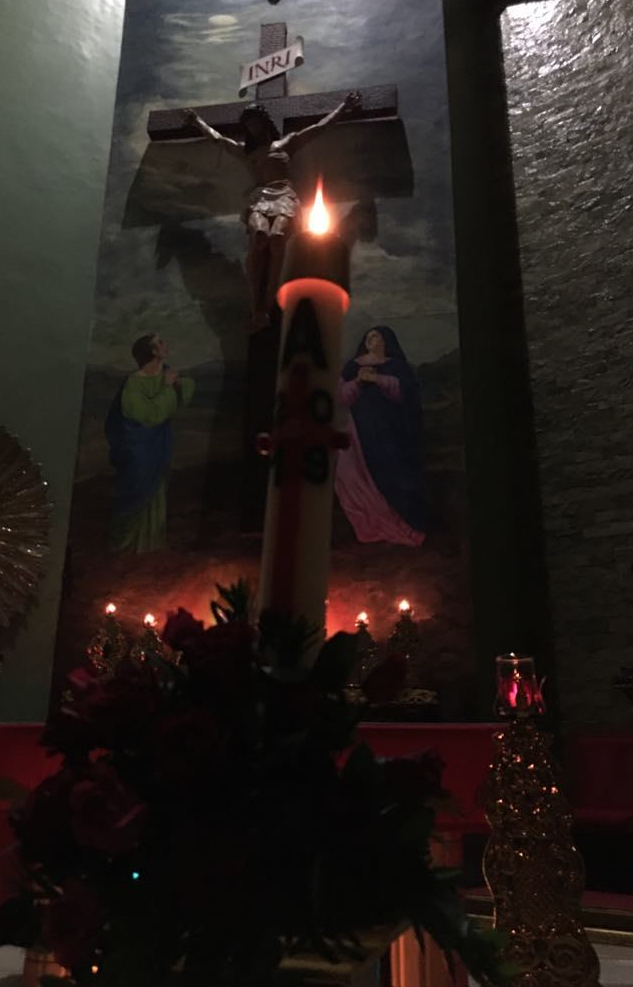
The Cross and the Bell of our parish church. Photo by Gelo N. Carpio, 12 January 2020.

Looming high always at the center of our Christian faith is the Cross of Jesus Christ. Whether inside or outside any church, there is always the Cross reminding us of our salvation in Jesus and of the path we have to follow as his disciples.

But, so often we forget that the first call of the Cross is for us to be a child of God above all in order to follow his Son our Lord in his Passion, Death, and Resurrection.

Here we find the full meaning of our celebration of the Feast of the Baptism of the Lord last Sunday, of how in our Baptism we have become the children of God in Jesus Christ who became like us so that we may become like him, blessed and divine as the eternal Son of the Father.

Such is the plan of God in the very beginning of his Creation.

Blessed be the God and Father of our Lord Jesus Christ, who has blessed us in Christ with every spiritual blessing in the heavens, as he chose us in him, before the foundation of the world, to be holy and without blemish before him. In love he destined us for adoption to himself through Jesus Christ, in accord with the favor of his will, for the praise of the glory of his grace that he granted us in the beloved.

Ephesians 1:3-6

It is only in our becoming first the sons and daughters of the Father in Jesus Christ that St. Paul declares how we are saved in this part of the second reading skipped by the liturgy today:

In him we have redemption by his blood, the forgiveness of transgressions, in accord with the riches of his grace that he lavished upon us.

Ephesians 1:7-8
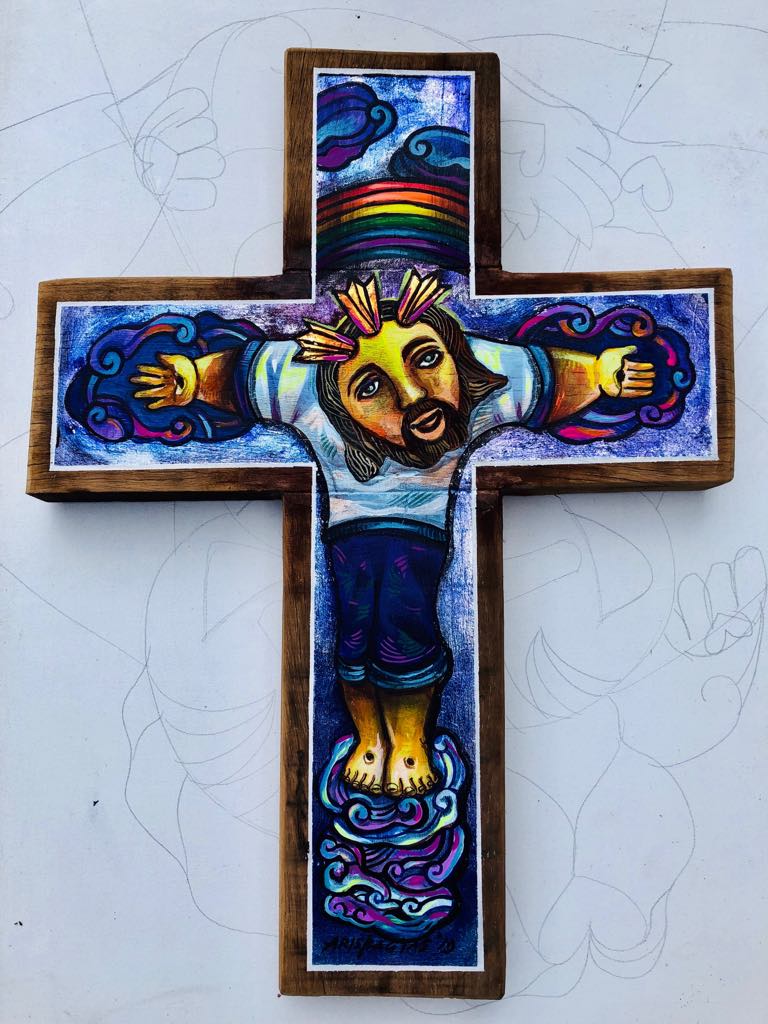
A painting of Sto. Niño devotees by Bulakenyo artist Aris Bagtas, 2018.

Work of Christmas continues

We are already into the second week of Ordinary Time in our liturgy but, we in the Philippines are still celebrating an “extension” of the Christmas Season this third Sunday of January for the Feast of the Sto. Niño, the Holy Child Jesus.

And, for a very good reason! to remind us the story of Christmas continues even after the Feast of the Lord’s Baptism or when all decors have been kept.

The work of Christmas, of sharing Jesus Christ in our loving service with others continues the whole year through. In fact, it is during the 34 weeks of Ordinary Time where we are most challenged to continue Christ’s work he started at Christmas when he became a child among us.

And there lies the very core of his teachings, of his message to us: our being like a child!

At that time the disciples approached Jesus and said, “Who is the greatest in the kingdom of heaven?” Jesus called a child over, placed it in their midst, and said, “Amen, I say to you, unless you turn and become like children, you will not enter the kingdom of heaven. Whoever humbles himself like this child is the greatest in the kingdom of heaven. And whoever receives one child such as this in my name receives me.”

Matthew 18:1-5

Jesus remained the Child of God until the end

If we examine everything in the Gospel, from the Incarnation and Nativity of Jesus, his hidden and public lives, his miracles and preaching, into his Passion, Death, and Resurrection, everything is anchored in Christ’s being like a child, the eternal Son of God.

When he was lost and found in the temple at the age of 12, right away he told his Mother his being the Son of God: “Why were you looking for me? Did you not know that I must be in my Father’s house?” (Lk.2:49)

Painting by Aris Bagtas, 2018.

At Last Supper, Jesus explained his being the Child of the Father: “The words that I speak to you I do not speak on my own. The Father who dwells in me is doing his works” (Jn.14:10).

His being one with the Father is due to his being the Eternal Son that reached its highest point of expression at the crucifixion where Jesus repeatedly called God his “Father”.

Here we find as in our gospel today the essential requirement of first becoming a child of God to make it into the kingdom of heaven. It is impossible to follow Jesus to his Cross when we remain adults who know everything!

This is the problem with the Traslacion that has become rowdy, even crazy over the years which is completely the opposite of the Pit Señor de Sto. Niño in Cebu that remains solemn and orderly despite its vast crowd of devotees.

See how in Quiapo the devotees “fight” and insist on their own ways of doing the procession, of how things are now turned upside down with the hijos lording over (pun intended) everything every January 9 with the gall to call Christ “Padre Nuestro Jesus de Nazareno”?

Everybody wants to fulfill one’s panata of jumping into the revered image of the Nazareno, in total disregard of others.

Where is the spirit of being a child, of being generous and kind with others?

What we have been seeing these past years in the Traslacion is more of machismo, of who is the greatest to be able to reach the Nazareno. And included among them are the growing members of media suddenly becoming devotees with the panata to anchor Traslacion!

Being a child is a call to daily conversion in Christ Jesus

Becoming like a child a daily call to conversion to Jesus, a going back to the story of Christmas, of being humble and small. I like that word used by Jesus today – turn – when he declared, “Amen, I say to you, unless you turn and become like children…”

To be able to carry our cross and follow Jesus, we have to turn first, that is, be transformed from world-wise, self-sufficient, all-knowing adults of the world into abiding children of the Father of Jesus Christ by the grace of the Holy Spirit.

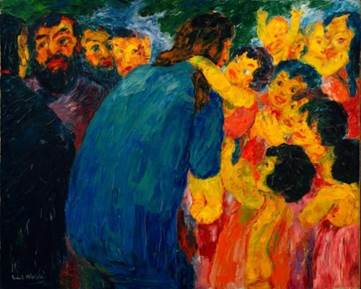
Children always have that glow within them that can disarm us of our insecurities and fears. Below is a painting by the Danish-German Modern Artist Emil Nolde (1867-1956) portrayed children with Christ in bright colors while the adults were all dark and gloomy.

“Christ Among Children” (1910) by Emil Nolde.

Being like a child is letting go of our fears and insecurities to entrust ourselves to God’s care and providence. And to others dependability and reliability too!

Maybe that is why as we get older, we mellow: we realize after all that we remain children of God and of somebody else in the end. There is always somebody out there who would look after us especially when we are already old and weak. There is always somebody whose heart would always be moved to come to our rescue or simply to warm our hearts or make us smile.

If each of us can become like a child daily, simply loving and trusting others, then we can bring light into this world deeply plunged in the darkness of sin and pride, of rat race without any winner, or arms race without any war at all.

If we can become like the child, we can become like Jesus Christ, the great light in the land of gloom bringing joy and great rejoicing (Is.9:1-2) with his life of love flowing from the great sacrifice at the Cross. Amen.

Love drives out fear

The Lord Is My Chef Breakfast Recipe for the Soul

Wednesday after Epiphany of the Lord, 08 January 2019

1 John 4:11-18 ><)))*> ><)))*> ><)))*> Mark 6:45-52

Flowers at our Altar, 05 January 2020. Photo by author.

We have come to know and to believe in the love God has for us. God is love, and whoever remains in love remains in God and God in him. In this is love brought to perfection among us, that we have confidence on the day of judgment because as he is, so are we in this world. There is no fear in love, but perfect love drives out fear because fear has to do with punishment, and so one who fears is not yet perfect in love.

1 John 4:16-18

How true are the words and reflection of your beloved disciple, Lord Jesus Christ! Indeed, when there is fear, that is when we refuse to love or at least fail to love.

When we are afraid of losing honor and losing possessions, when we are afraid of being disadvantaged and being out of the limelight, when we are afraid of being forgotten and unrecognized… those are the moments we fail to love because we cannot let go of our self, of our ego.

Teach us, Jesus, to take into our hearts your manifestations of your presence and power, of your love and concern for us so that our fears of being forsaken may be lessened.

Give us the grace to face our fears especially in moments of darkness and trials when we act like your disciples who cannot recognize your coming by walking on water at the middle of a storm at the sea.

Refresh our memories, Jesus, to recall those many moments you have come to our rescue to save us from so many problems and situations in the past so we may now completely trust you and give you our very selves in loving service.

Help us to let go and let God by dying to ourselves. Amen.

Jesus our light

The Lord Is My Chef Breakfast Recipe for the Soul

Monday after Epiphany, 06 January 2020

1 John 3:22-4:6 ><)))*> ><)))*> ><)))*> Matthew 4:12-17, 23-25

A blessed Monday morning, dear Lord Jesus Christ!

Thank you for the gift of this first day of work and school after a very long Christmas vacation – even if many of us did not spend time with you nor even remembered you on your birthday.

Bless us this first week of work and study in this new year of 2020.

Guide us in testing every spirit that try to lead us in the choices and decisions we make, the course of actions we take.

So many times, we have always been misled away from you, Lord, especially when we are lured into taking shortcuts in many aspects of life.

Most of all, very often we choose to be blind and deaf, speaking no more when the world denies your presence, your teachings, your truth. There are times we get carried away into believing that you have left us, that you are not involved in our affairs in the world.

This is how you can know the Spirit of God: every spirit that acknowledges Jesus Christ come in the flesh belongs to God, and every spirit that does not acknowledge Jesus does not belong to God. This is the spirit of the antichrist who, as you heard, is to come, but in fact is already in the world.

1 John 4:2-3

Let us always seek your light, Lord Jesus for you alone are the true light of the world.

Let us lead our lives in such a way that proves, that witnesses to your abiding love and presence among us especially in times of darkness.

Enlighten us Lord, our Light to be your light to guide others to you. Amen.

Keep Christmas Alive

The Lord Is My Chef Recipe for the Soul, 01 January 2020

Wednesday, Solemnity of the Blessed Virgin Mary, Mother of God

Numbers 6:22-27 ><}}}*> Galatians 4:4-7 ><}}}*> Luke 2:16-21

Photo by Rev. Fr. Gerry Pascual, Minor Basilica of the Immaculate Conception, Washington DC, 2017.

Today marks the octave or eighth day of Christmas when we celebrate the Solemnity of the Blessed Virgin Mary, Mother of God.

Octave means we extend the celebration of Christmas Day into eight days because one day – December 25 – is not enough to reflect on the meaning and mystery of the Incarnation of the Son of God.

The eighth day also signifies eternity which comes next after the seven days of the week.

Hence, whenever people greet me on this day with a “Happy New Year”, I just say “thank you” and then greet them too with “a blessed Christmas to you” or the usual “Merry Christmas”!

I am not disturbing your peace this Christmas and it is more than my being a “language nerd” – but, if you really want to appreciate more and experience the depth and the joy of Jesus Christ’s birth, stop that happy new year greeting.

The more proper and perfect greeting this January 2020 is still “blessed Christmas” or “Merry Christmas” because it is another year in the Lord Jesus Christ.

And here we find the very important and deeper meaning of Christmas: do not ever forget it is about Jesus Christ. Christmas is not about gifts and bonus, it is not about food and merry making, it is not about vacation and long weekends.

Christmas is all about Jesus Christ, the Son of God who became human like us in everything except sin in order to save us and bring us back to the Father in heaven. In his coming, it is not only us who were made holy but even our time that became “his story”.

Indeed, Jesus Christ is the reason of the Season. Let us maximize in greeting “Merry Christmas” and stop its abrupt ending with the coming of the new year that after all, is based on his birth that is why we call it “Anno Domini” (AD) or “year of the Lord”.

Nativity Scene at the National Shrine of the Minor Basilica of the Our Lady of Mt. Carmel, Quezon City. Photo by author, 30 December 2019.

Why stop greeting everyone with a happy new year

Keep greeting everyone with “a blessed Christmas” or a “Merry Christmas” until January 12, last day of our Christmas Season with the Baptism of the Lord.

In the Philippines, you may continue greeting people with Merry Christmas until January 19, Feast of the Sto. Nino which is an extension of the Christmas Season in our country granted by Rome.

Furthermore, for the lazy among you, you can have the excuse of not removing your Christmas decors until February 02, Feast of the Presentation at the Temple because chronologically, that is the precise moment when Christmas Season ends. That is why, the giant Christmas Tree at the Vatican’s St. Peter’s Square is traditionally removed only on this date.

Also, please stop announcing in churches about the Mass tonight and tomorrow as “New Year’s Mass” because there is no Mass for New Year.

Though our Sacramentary offers prayers for Mass at New Year, the same book stipulates that “this cannot be celebrated on January 1 because it is the Solemnity of the Blessed Virgin Mary, Mother of God.”

Basic reason why we should not be greeting one another with a happy new year on January 1st is the fact that we celebrated our New Year in the Church during the First Sunday of Advent, that Season of four Sundays when we prepare for Christmas.

Remember, Advent has two aspects: from First Sunday of Advent until December 16, our focus is on the Second Coming of Christ or Parousia at the end of time. Nobody knows when it will be, not even Jesus Christ except the Father in Heaven. Then, from December 17 to 24, we enter the second aspect of Advent which is the focus on the first coming of Jesus when he was born in Bethlehem more than 2000 years ago. All the readings on these days center on the events and stories leading to Christ’s birth.

So my dear reader and follower, we start each year in the Church preparing for the coming of the King of kings and we end the year with Solemnity of Christ the King.

To be exact, we start and end each year in Jesus Christ, not in numbers.

Every day of the year is a Christmas in essence, a coming of Jesus Christ.

And for us to continue this beautiful story of Christmas especially on these first 19 days of 2020, the Blessed Virgin Mary, the Mother of Jesus Christ who is true God and true Man, teaches us the way to keep this spirit of bringing the Savior into the world even beyond December 25 and January 1.

The shepherds went in haste to Bethlehem and found Mary and Joseph, and the infant lying in the manger. When they saw this, they made known the message that had been told them about this child. All who heard it were amazed by what had been told them by the shepherds. And Mary kept all these things, reflecting on them in her heart.

Luke 2:16-19
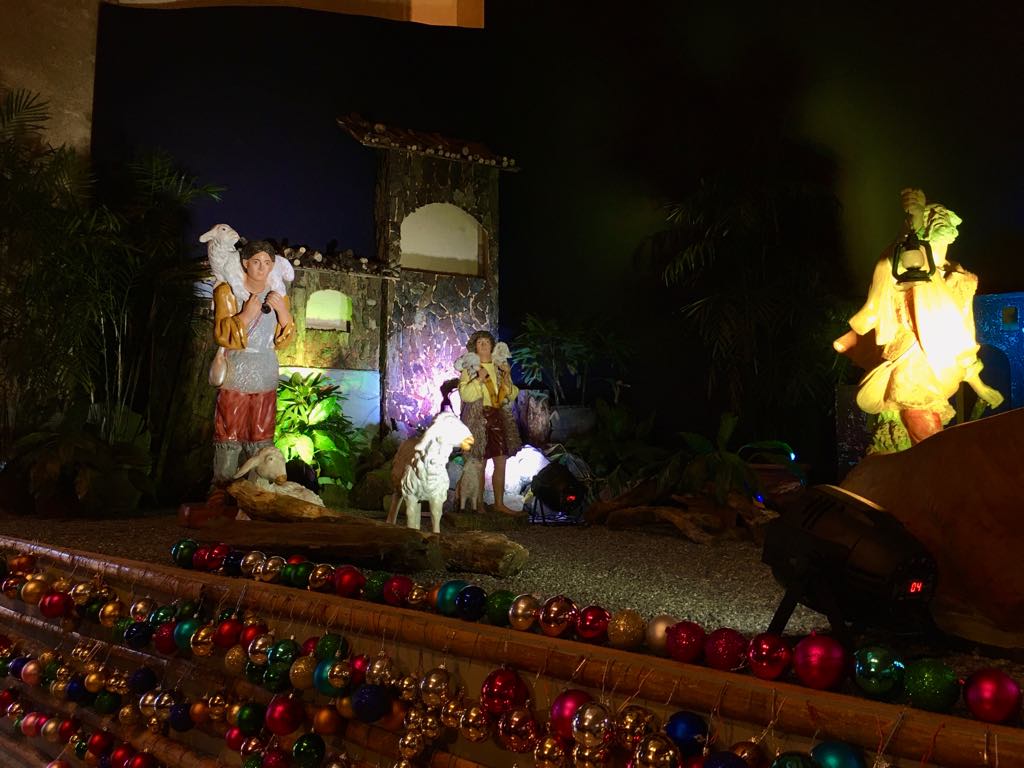
Shepherds approaching the Nativity Scene at the National Shrine of the Basilica of Mt. Carmel, Quezon City. Photo by author, 30 December 2019.

Mary to guide us through another year closer to Jesus

A natural reason we have for cutting short our greetings of Merry Christmas to one another is the very close proximity of December 25 with the New Year. Though the civil calendar also came from the Church, in a sense the start of the year has been made holy by its closeness with Christmas.

Rightly then, all the more we find the reason to keep on greeting Merry Christmas than happy new year!

Notice the sudden shift from the holy and transcendent so evident in just a span of one week that personally, I feel we have to promote all the more a stop in this greeting of happy new year at Christmas Season.

How easily we can forget the wonder and awe of Christ’s birth!

See how from our rich liturgical celebrations of Advent and Christmas then suddenly this last seven days of the year, we turn to pagan practices to usher in the new year?

Have we become like the shepherds who came to Jesus only at his brith and never to be mentioned again in the entire account of St. Luke?

What happened?

A shepherd near the Nativity Scene at the National Shrine and Basilica of Our Lady of Mat. Carmel in Quezon City. Photo by author, 30 December 2019.

Mary guides us to the true meaning of Christ’s birth and of the new year that closely comes after Christmas. See how St. Luke narrated the attitude and disposition of Mary, the Mother of Jesus Christ our Lord and God:

And Mary kept all these things, reflecting on them in her heart.

That’s the problem with our Christmas celebrations: after December 25, we go back to “normal lives” which is more of living without Jesus, of getting into the daily grind of life away from Jesus.

Like us, Mary did not know what was really ahead of her with the birth of Jesus: she had no idea about his being lost at the temple, of his being tempted by the devil, of his being rejected and killed by his own people despite his many healings and other miracles.

Mary simply believed in Jesus. And that is why she is blessed according to Elizabeth, because she believed the words spoken to her would be fulfilled.

Mary had nothing certain about her coming year, of her life except the name to be given to her Son, Jesus which means “God is my Savior”.

The same is true with us! We do not know if we will still be together until December or at least in January 2021. We do not know who would get married this year, who would be migrating to another country, who will hit it big time in business or whatever.

Stop consulting fortune tellers because they know nothing about the future! Only the Father of Jesus knows everything that is going to happen. And he had sent us his Son Jesus to make sure that through everything that is going to happen, none of us would ever be lost (Jn.6:39).

Like Mary, we have only one surety and security this 2020: Jesus Christ, our Lord and God living with us!

Let us focus this year in Jesus Christ and his words of salvation.

And that is the challenge of Christmas of the new year 2020: that every day, despite all the good news and bad news we hear and encounter in life, we make that conscious decision to trust in Jesus that good is coming to us for his name means God is my Savior.

Like Mary, let us lose ourselves every day in this wonderful moment of Christmas of looking at the child Jesus inviting us to be caught up in his joy of coming, to fear not of the new year ahead for he has come precisely to be one with us.

May we stay with him, keep his words in our hearts like Mary by reflecting on their meaning trusting and awaiting their fulfillment.

Let us not leave Jesus like the shepherds, though, they were the first to see the Lord at Christmas, they missed his full glory of resurrection because they never went back to him again.

Have a blessed and Merry Christmas!

From the inside of the Church of the Nativity in Bethlehem, the small doors that require pilgrims to humbly bow first to enter the church and find Jesus. Photo by author, May 2019.

Blessed be God forever!

The Lord Is My Chef Simbang Gabi Recipe, 24 December 2019

2 Samuel 7:1-5, 8-12, 14, 16 ><)))*> <*(((>< Luke 1:67-79

Marker on the Church where St. John the Baptist is believed to have been born in Ein Karem, Jerusalem. Photo by author, May 2019.

At last!

These are most likely the two words we must be saying today on this ninth day of our Simbang Gabi.

Finally, we have completed the nine day novena to the birth of our Savior Jesus Christ for tonight will be Christmas.

But, more than being the last day of our novena, today is also the beginning of better days ahead for us all starting with Christmas!

From this day on, let us imitate Zechariah in his new found faith, hope and love in God expressed in his song of praise and thanksgiving after recovering his sense of hearing and speaking after nine months of forced silence.

“Blessed be the Lord, the God of Israel, for he has come to his people and set them free. He has raised up for us a mighty Savior, born of the house of his servant David.”

Luke 1:68-69
Sunrise at the Lake of Galilee, the Holy Land. Photo by author, May 2019.

Three canticles of praise, three prayers of faith

Popularly known as the Benedictus from its Latin opening verse “Blessed be God”, this is the second of the three canticles St. Luke tells us Zechariah had sang after naming his son “John”.

The other two songs are the Magnificat by Mary during her Visitation of Elizabeth and the third is the Nunc Dimittis by Simeon upon seeing the child Jesus during his presentation at the Temple of Jerusalem.

These canticles or songs make up the beautiful Christmas story by St. Luke who put them onto the mouths of Mary, Zechariah, and Simeon to signify their being filled with the Holy Spirit in experiencing the coming of Jesus Christ: Mary sang “my soul proclaims the greatness of the Lord” during the Visitation in response to the praises by Elizabeth (Lk.1:46-55) while Simeon the prophet prayed to God to “let him go in peace” – to die – after seeing the coming of the Savior (Lk.2:29-32).

These eventually became part of the prayers of the Church (Liturgy of the Hours) we priests and religious are obliged to pray day in, day out:

  1. Benedictus in the morning to show how willing are we to face the new day by making our Savior Jesus Christ present in our lives like St. John the Baptizer, his precursor;
  2. Magnificat in the evening to praise and thank God in working his salvation in us through Jesus Christ;
  3. Nunc Dimittis at night before bedtime to signify our readiness to die and finally be one with God in Jesus Christ.

They are our “spiritual vitamins” that fill us with the Holy Spirit to strengthen and deepen our relationship with the Father in Jesus Christ which every Christian may pray too to experience and be one with God daily.

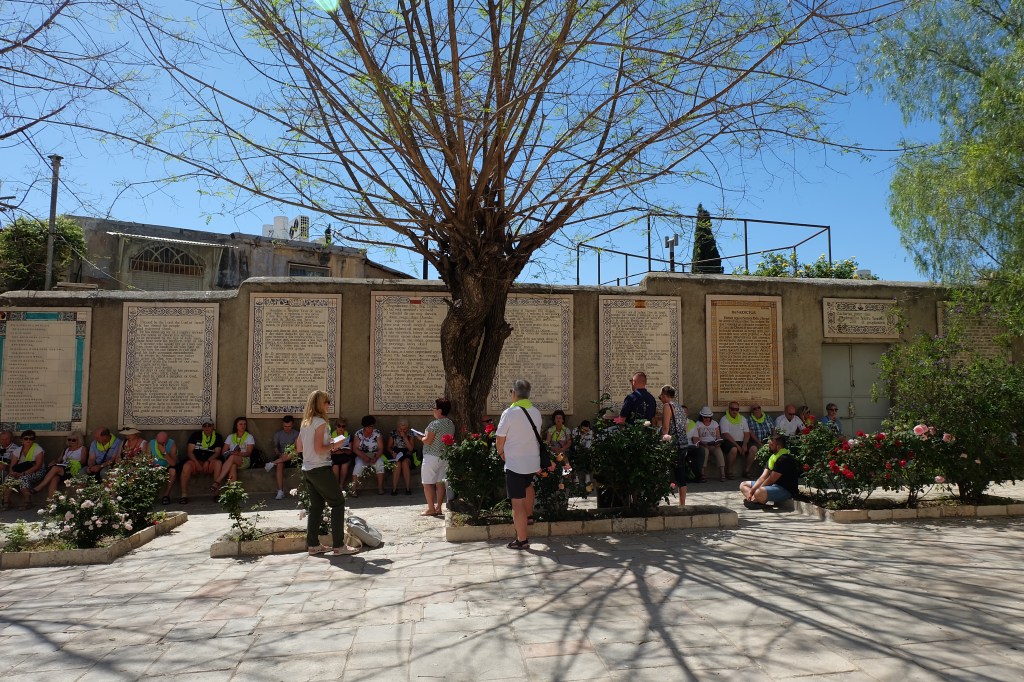
Pilgrims waiting outside the Church of St. John the Baptist in Ein Karem, Jerusalem. On the walls are the translation into different languages of the world, including Filipino, of Zechariah’s Benedictus. Photo by author, May 2019.

Why God is blessed according to Zechariah

The Benedictus signifies Zechariah’s coming to full circle after nine months of forced silence after doubting the angel’s message that he and Elizabeth would finally have a son.

Our sacristy, Advent 2019.

In singing the Benedictus, Zechariah did not only recover his power of speech but most of all showed the fruits of his nine months of silence and prayer preparing for the birth of his son John as well as, ultimately, for Christ’s coming (his song indicates it).

Finally, Zechariah has been healed of his pains and hurts that prevented him in experiencing God, in believing in his powers again, giving him more reasons to hope and be joyful.

This is the reason we also have the Advent Season when we try to dispose ourselves more to Christ’s coming to us not only at Christmas but everyday in our lives.

Zechariah mentions three powerful verbs why he praised God: for he has come to his people, set them free, and has raised up a mighty Savior.

God has come to us

Zechariah first experienced God coming to him when the angel announced to him John’s birth while incensing at the temple during the Day of Atonement. Unfortunately, he was “absent” at God’s “presence” that he questioned how Elizabeth would bear a child.

Everything now changes not only because he had seen his own son but he himself experienced God’s coming in his life.

Sometimes, our pains and hurts, frustrations and disappointments, defeats and failures blind us, numb us that we cannot see, we cannot experience God coming to us in every brand new day he gives us, through the people we meet with their smiles and greetings, with our family and friends who have have stayed with us in good times and bad.

Every morning we wake up to reminds us God has come to us. Rise and meet him in joy, entrust the new day to him, and ask for the grace to remain in him!

God has set us free

Every time God comes, there is always freedom – freedom from evil and sin, freedom from the past and all its pains and hurts, freedom from guilt feelings, freedom everything that prevents us from being truly free to be our own, good sel, to be free and faithful to love and forgive others too.

Carmelite Monastery, Guiguinto, Bulacan. Photo by author, November 2019.

Literally speaking, Zechariah felt free again to speak and express himself fully. But more than that is the experience to go and live fully in God.

We can never experience Christmas if we cannot assert this freedom Christ had won for us when he died on the Cross. Forget all those “hugot” lines and move forward with life.

The name of God is “I AM” because he is always in the PRESENT, never in the past nor in the future.

That is why each new day is a gift, a present from God who as set us free from yesterday’s mistakes and failures and sins.

Go and be free for God!

God has raised up for us a mighty Savior

Christmas is not a date but an event, a person we experience in Jesus Christ who is a dialogue himself according to Pope Emeritus Benedict XVI. Jesus is always communing with us, inviting us to be one in him in his love.

In his Benedictus, Zechariah is also professing the saving work of God in Jesus Christ who became human like us in everything except sin. God is so blessed because of his great love for us, he chose to enter, or intervene into human history to bring us into eternal life by faith in Christ Jesus.

To raise up is a strong term also indicating the Paschal mystery Christ will go through, the ultimate communion of God into our own lowliness of suffering and death to bring us into the glorious victory of his resurrection.

Every morning, every day we are reminded by Zechariah of the words of the angel Gabriel to Mary regarding the birth of John: nothing is impossible with God.

And Zechariah had experienced this first hand when his barren and old wife Elizabeth conceived their child John.

May we have a renewed faith, hope and love in God at the closing of our Simbang Gabi this year. Like David in the first reading, rest be assured of God’s plan for each of us. Let us be patient to wait and prepare always for his coming like Zechariah even in his old age. Amen.

Birthplace of St. John the Baptist at Ein Karen, Jerusalem. Photo by author, May 2019.

God is gracious

The Lord Is My Chef Simbang Gabi Recipe, 23 December 2019

Malachi 3:1-4, 23-24 ><)))*> ><)))*> ><)))*> Luke 1:57-66

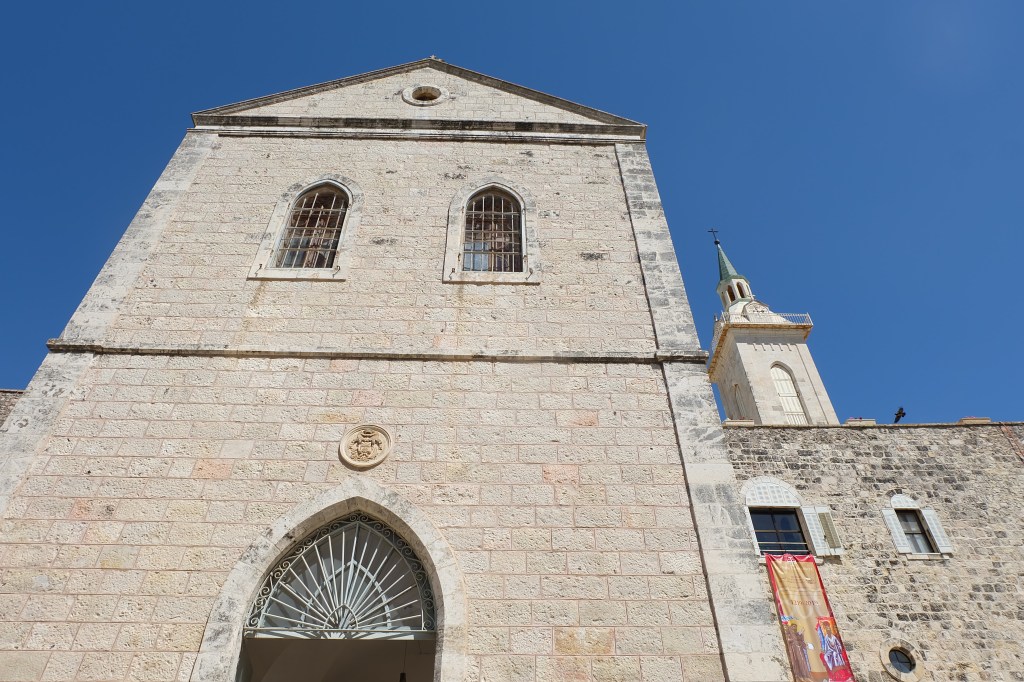
Facade of the Church of St. John the Baptist in Eim Karen where the precursor of the Lord was born. Not to be confused with Church of the Visitation at its other side in the same town. Photo by author, May 2019

Two days before Christmas, St. Luke brings us back to the continuation of his first story about Christmas: the birth of John the Baptizer.

When the time arrived for Elizabeth to have her child she gave birth to a son. Her neighbors and relatives heard that the Lord had shown his great mercy toward her, and they rejoiced with her. When they came on the eighth day to circumcise the child, they were going to call him Zechariah after his father, but his mother said in reply, “No. He will be called John.” But they answered her, “There is no one among your relatives who has this name.” So they made signs, asking his father what he wished him to be called. He asked for a tablet and wrote, “John is his name,” and all were amazed. Immediately his mouth was opened, his tongue freed, and he spoke blessing God.

Luke 1:57-64
Site where St. John the Baptist is believed to have been born. Photo by author, May 2019.

Where is God leading me?

Christmas is almost here. And it is not yet too late in these last two days of Advent that we try some “last ditch efforts” to spiritually prepare ourselves for this joyous season by asking just one question following the story of John’s birth:

“Where is God leading me?”

See the artistry of St. Luke, at how he began his Christmas story with the annunciation of the birth of John to his father Zechariah while incensing the Holy of Holies of the Temple in Jerusalem.

He doubted the good news and he was silenced by the angel until John was born.

Today, after three days, or nine months to be exact, St. Luke brings him back into the scene set free from his punishment. Zechariah was able to speak again when he concurred with his wife’s desire to name their child John by writing it on a tablet.

The name John in Hebrew is Jehohan which means “God is gracious” or “graciousness of God”.

Advent and Christmas are a story of how each one of us is a John, a graciousness of God, of us people so blessed by God to fulfill his promise of salvation in Jesus Christ.

But do we realize the many blessings we have from God?

The other night I saw an interesting post on Facebook from one of my former students in high school. It was from a woman sharing her experience while waiting in line at an ATM that has now gone viral.

She claimed that at first, she felt so bad at what was taking three people so long at the ATM to withdraw their cash. But when she got nearer, she overheard their conversations.

It turned out the three were given a bonus of Php 2000.00 each by their boss.

And they were extremely happy, so thankful, telling each other how they would prepare spaghetti and fruit salad on Christmas eve!

And the woman who posted the photo realized how those simple folks were so thankful for Php 2000.00 bonus when she and others like her who get more than that amount still complain?!

Very nice reflection!

Advent gives us four weeks to remember God’s graciousness to us this past year. The bountiful blessings we have had which we take for granted. Worst, we even complain with!

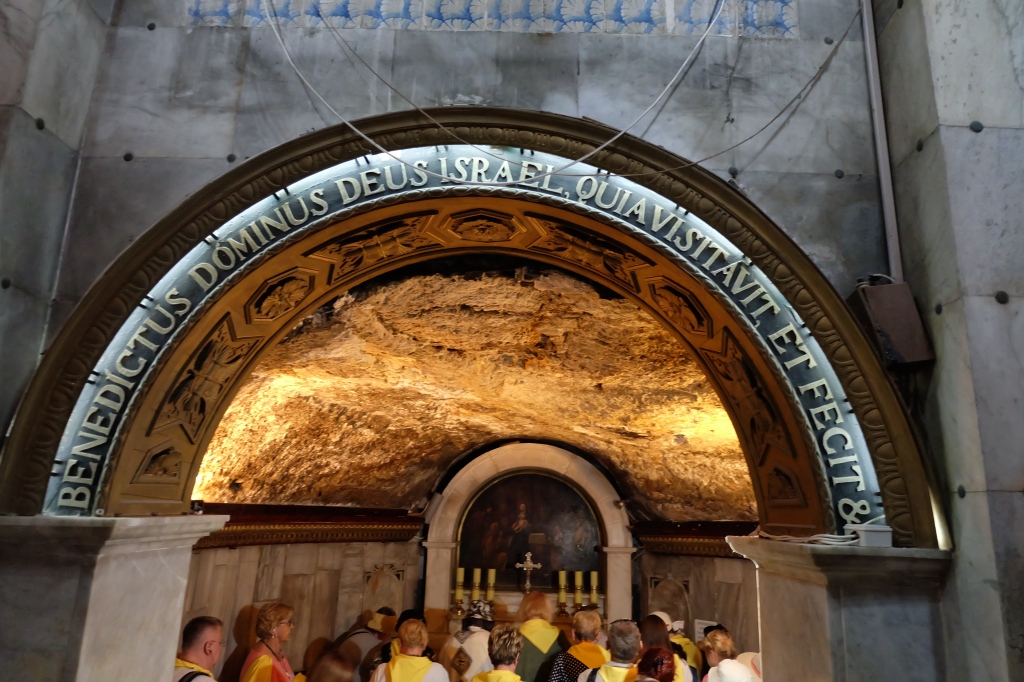
Altar of the Church of St. John the Baptist, Israel. When we came there last May, it was being closed for major restorations expected to last for years.

Whenever we see and count our blessings, do we ever thank God and ask him too where he is leading us to?

Zechariah was already old, had a great chance of incensing the Holy of Holies at their most important feast, doubted God’s grace but eventually still received it after nine months of silence.

By his action, Zechariah had shown how he had grown in faith during those nine months of “forced silence”, of how he had start to believe again in God, hope again, and practically live life anew!

Tremendous graces in just nine months being silent. Imagine that.

And we can have more grace today until tomorrow being silent, reflecting, praying as we count one by one the many blessings we have received this year.

Call it ageing gracefully, a grace in itself wherein as we grow old, we continue to find direction in life, we continue to find God leading us to him, for a specific mission to fulfill.

Dome of the Church of St. John the Baptist in Israel. Photo by author, May 2019.

Yesterday we have reflected that we are like St. Joseph entrusted with a special mission from God. That God “needs” us to bring Jesus, to care and protect Jesus here in the world. Each of us has a special part or role to play in God’s Divine plan in Jesus Christ.

Never lose hope in life. No matter what is our situation in life, God continues to work in us, working for us, inviting us to work with him.

It is interesting to know that the name Zechariah means “God remembers” while Elizabeth means “God has promised or vowed”.

If their names are brought together, we can see the complete picture why St. Luke started his Christmas story with Zechariah, Elizabeth, and John and not with Jospeh or Mary right away: they all mean “God is gracious because he remembers his promise always”!

May we always trust God and ask him where he is leading each of us this Christmas no matter what is our status in life. Amen.

Holy presence in hiddenness

The Lord Is My Chef Simbang Gabi Recipe, 19 December 2019

Judges 13:2-7, 24-25 ><)))*> ><)))*> ><)))*> Luke 1:15-25

The Walls of Jerusalem, May 2019. Photo by the author.

From St. Matthew, we now move to the Christmas story by St. Luke that starts in the temple of Jerusalem. And surprisingly, not precisely with Jesus or his parents.

In the days of Herod, King of Judea, there was a priest named Zechariah of the priestly division of Abijah; his wife was from the daughters of Aaron, and her name was Elizabeth. Both were righteous in the eyes of God, observing all the commandments and ordinances of the Lord blamelessly. But they had no child, because Elizabeth was barren and both were advanced in years. Once when he was serving as priest in his division’s turn before God, according to the practice of the priestly service, he was chosen by lot to enter the sanctuary of the Lord to burn incense. Then, when the whole assembly of the people was praying outside at the hour of the incense offering, the angel of the Lord appeared to him, standing at the right of the altar of incense.

Luke 1:5-11

We know what happened, of how Zechariah doubted the good news announced to him about the birth of his son John the Baptizer.

Many times in our lives, especially in this age of too much communications in the social media where everything is exposed, we hardly notice the best and nicest things in life happening in silence, mostly in hiddenness.

And the saddest part of this present reality is that it is God whom we miss in this “overexposures” we have in social media because he always comes to us hidden in the most ordinary and simple things in life.

Yesterday St. Joseph taught us the need to value silence and stillness in the Lord as an important lesson in facing life’s many adversarial situations.

Today we hear Zechariah forcibly silenced to experience the Lord’s power and grace, his very presence in fact.

An inside section of the remaining Walls of Jerusalem. Photo by author, May 2019.

God’s presence hidden in our time and space

Advent is the season that reminds us that God comes to us always hidden in our very time and space. Unless we know how to be silent and simple, we shall never experience the Divine presence that has covered the whole world ever since.

Of the four evangelists, St. Luke is the only one who claims to have “investigated everything accurately” about the life and teachings of Jesus Christ (Lk.1:3). That is why he has the most stories and details about Christmas.

For St. Luke, Christmas begins with the coming of St. John the Baptizer, Jesus Christ’s precursor. In a very unique manner, he tells us how God’s presence came through a husband and wife yearning so much to have a child of their own, Zechariah and Elizabeth, both belonging to the upper crust of the Jewish society having descended from the priestly families.

In fact, Zechariah was a priest who was so blessed that Day of Atonement known as the Yom Kippur of the Jews that happens around September 18-24. (That is how we come to celebrate Christmas on December 25: Elizabeth conceived John in September, giving birth to him in June 24; tomorrow, we shall hear in the Annunciation to Mary that Elizabeth was six months pregnant which falls on March 24. Simple math, we arrive at December 25 as Christ’s birthdate.)

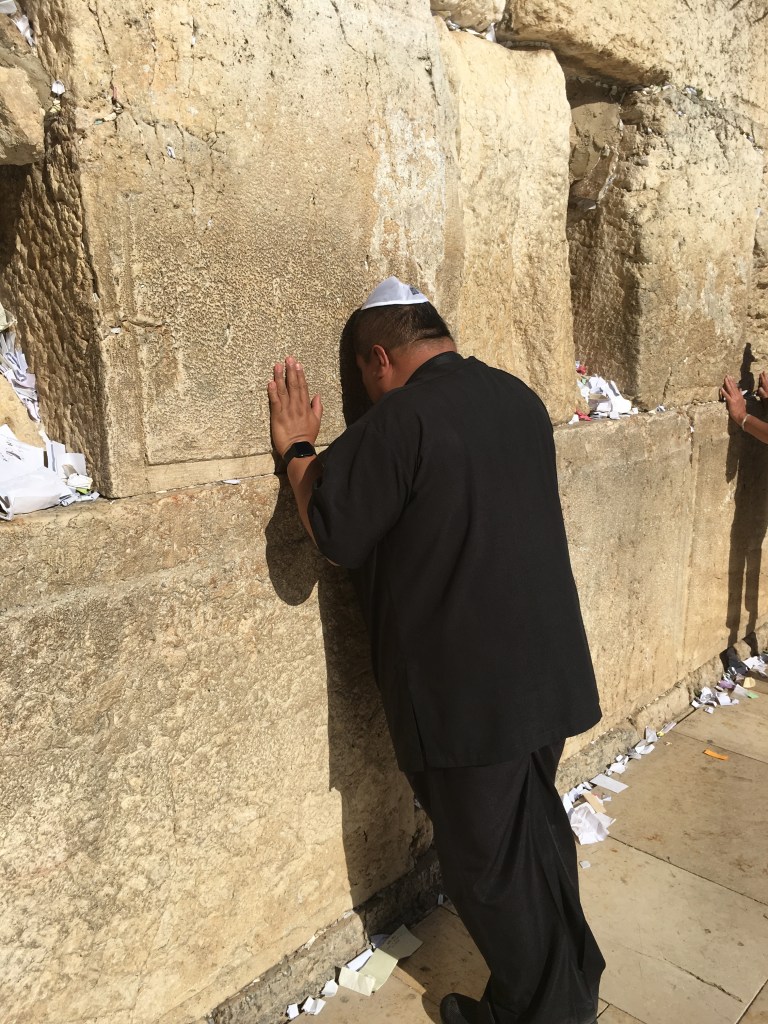
Praying at the Wall, May 2019.

During the Yom Kippur, priests drew lots on who would incense the Holy of Holies where the “Ark of the Covenant” was kept containing the stone tablets of God’s commandments given to Moses. It was the closest thing they have as signs of God’s presence among them. Hence, until now they venerate and pray at the “wailing Wall” of Jerusalem because that is supposed to be the only remaining structure of their temple destroyed in 70 AD closest to that part of the Holy of Holies.

It was so rare at that time to be assigned to incense the Holy of Holies because there were so many priests drawing lots and only one would be chosen for the rite that happens about twice daily for the whole week. It was a tremendous blessing indeed to be chosen to incense the Holy of Holies.

Here we find St. Luke setting the stage of his Christmas story to remind us all that God comes right into our time and space, in our history, in our here and now.

See his descriptions:

  1. It happened in a specific time during during “the days of Herod, King of Judea”, when Zechariah was “chosen by lot to enter the sanctuary of the Lord to burn incense” while people were outside praying and waiting.
  2. It happened in a specific place, the temple of Jerusalem.
  3. Most of all, it happened to real people, “Zechariah of the priestly division of Abijah; his wife Elizabeth was from the daughters of Aaron.”
A view from the Walls of Jerusalem of the Jewish section; dome is the Moslem section, Mount of Olives at the background. Photo by author, May 2017.

The Presence of God, the Absence of Man

When we are deeply hurt and disappointed, we are usually less rational. Worst, although we try to keep our faith alive, that is also when we doubt God, refusing to recognize his presence among us, and even right in us.

In this story of the annunciation of the birth of John the Baptizer, we find God giving Zechariah the tremendous grace to approach his Divine presence by having the rare opportunity to incense the Holy of Holies.

Most of all, at their most important feast when priests gather in the temple to pray for the people and for their personal intentions, God sent Zechariah the angel Gabriel to personally tell him his and Elizabeth’s prayers have been heard and granted!

But what happened? Zechariah doubted, even questioned God!

“How shall I know this? For I am an old man, and my wife is advanced in years.”

Luke 1:18

That’s the problem with us: God is always present but we are always absent that we never meet him. And every time he comes to visit us, we are so busy with so many other things.

If we cannot see and experience God in the most ordinary things and events in our lives, nothing would be enough to convince us of his love and mercy, of his presence and power.

That is why Zechariah was silenced by the angel, who, by the way, is already the presence of God yet Zechariah doubted.

This remaining week before Christmas, let us try to have some silence, or better, let us create a space for silence and solitude to experience God’s loving presence among us, in us.

It is only in silence where we can truly learn how to trust and be intimate with God and with our loved ones because it is only in silence where we can dare to open our selves to God and to others.

Let “the spirit of the Lord stir” you like Samson in the first reading (Jgs.13:25) this Christmas by creating silent moments with Jesus. Amen.