Romans 6:19-23 ><)))*> ><)))*> ><)))*> Luke 12:49-53
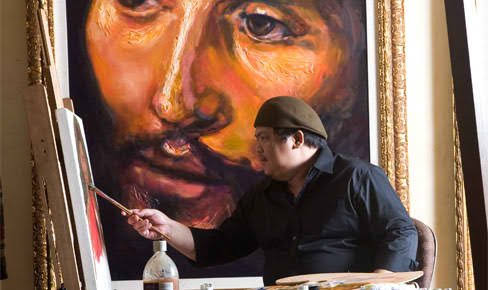
The late Joey Velasco at work. From Google.
As I prayed today’s gospel, Lord Jesus, I remembered the late painter Joey Velasco who is best known for his “Hapag ng Pag-Asa”.
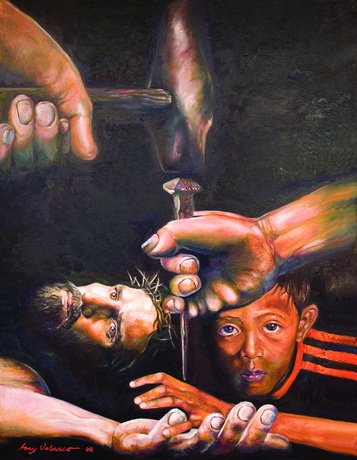
Joey portrayed you in a very unique way that is very disturbing, even harsh just like the way you spoke in today’s gospel.
Jesus said to his disciples: “I have come to set the earth on fire, and how I wish it were already blazing! There is a baptism with which I must be baptized, and how great is my anguish until it is accomplished! Do you think I have come to establish peace on the earth? No, I tell you, but rather division.”
Luke 12:49-51
Why did I feel that way, Lord?
It seems I have been so conditioned to your image of being “meek and humble”, so gentle like Isaiah’s Suffering Servant who bore all pains and insults.
But more than that imagery that we have nurtured of you like a “baby” within us, Joey’s paintings of you among the poor and suffering disturb us because we are so detached from you.
Yes, we are disturbed and even pained because we have refused to follow you closer among the poor and suffering.
So often, your words shock us and actually bring us back to life because we have actually been dead to sin and evil or the “wages of sin” according to St. Paul in our first reading today.
“That All May Be One” painting by Joey Velasco. Photo from Google.
We are disturbed because our silence in reaching out to the poor and oppressed is more harsh than your words.
Your words are “harsh” because they are so radical in the truest sense, from the Latin radix or roots – you are shaking us down into our inner core and being to set the earth out on fire with your love!
Your words disturb us because they call us to leave our comfort zones and sidewalks to follow you right onto the dirty road of pain and suffering with the poor.
Yes, you have come Jesus to bring divisions, but not out of our petty quarrels and whims and fanaticisms.
Let us be divided for what is true and good, for what is just and fair.
Let us be divided, Lord, by choosing your side, by standing by your side at the foot of cross with the wounded and unaccepted.
Open our hearts, O Jesus, to the truest sense and meaning of your words to reawaken in us your fire and spirit of loving service for the less fortunate. Amen.
Colossians 3:12-17 ><)))*> ><)))*> ><)))*> Luke 6:27-38
Sacred Heat Novitiate (Novaliches), July 2016.
It is only Thursday, Lord Jesus Christ, but suddenly your Most Sacred Heart came to mind, especially this beautiful hymn:
Heart of Jesus, meek and mild Hear, O hear, Thy feeble child, When the tempest’s most severe, Heart of Jesus, hear!
Sweetly we’ll rest on Thy Sacred Heart, Never from Thee, oh let us part, Hear then Thy loving children’s pray’r, O Heart of Jesus, Heart of Jesus, hear!
Everyday, Lord, we think of the clothes we would wear and too often, our choices seem endless, taking so much of our time so we would always look good to others.
Today, O Lord, I pray, you clothe me with your person: through your “compassion, kindness, humility, gentleness, and patience, may everything I do be done in your most holy name, O Jesus”, (Col. 3:12, 17).
From Google.
To be clothed in you, O Lord Jesus, means to see the good in others than to see myself as the only one good.
To be clothed in you, O Jesus, is to get into the very heart of your gospel message of “loving our enemies” (Lk.6:27). It is the most radical words in your preaching that seems so impossibly hard for us to follow – unless we are clothed in you, O Christ.
That is why it is very important for us to be clothed in you, Jesus, because loving our enemies is the clearest expression we are your disciples, that is, Christians in the truest sense.
Help us to take off our clothes of pride and selfishness, our clothes of greed and insecurities that make us want more than what we have and what we need, and thus lead to our making enemies because we try to possess and defend.
Instead, let us be clothed in you, Jesus, so that we become poor like you with nothing to keep except everything to give and share.
In that manner, we become open and hospitable instead of being hostile with others. Amen.
What a wonderful way to start the week of work and school with you, O Lord Jesus Christ dwelling in me! St. Paul perfectly said it in today’s first reading:
“God chose to make known the riches of the glory of this mystery among the Gentiles; it is Christ in you, the hope for glory.”
Colossians 1:27
Inspire me, Jesus, like St. Paul not to be disheartened by suffering, to be filled with passion in proclaiming your gospel not only in words but most of all in deeds. Take away all the hurts and pains, insecurities and doubts within me that prevent you from reigning in me.
Remind me, Jesus, that your gospel is not a philosophy nor a collection of doctrines or of ethics but your very person so that in preaching and witnessing your gospel, I may lead others to a personal encounter with you, O Lord.
Dwell in me, Jesus Christ, and let me do something good today like what you did to the man with a withered hand on a sabbath day. Amen.
Colossians 1:15-20 ><}}}*> ><}}}*> ><}}}*> Luke 5:33-39
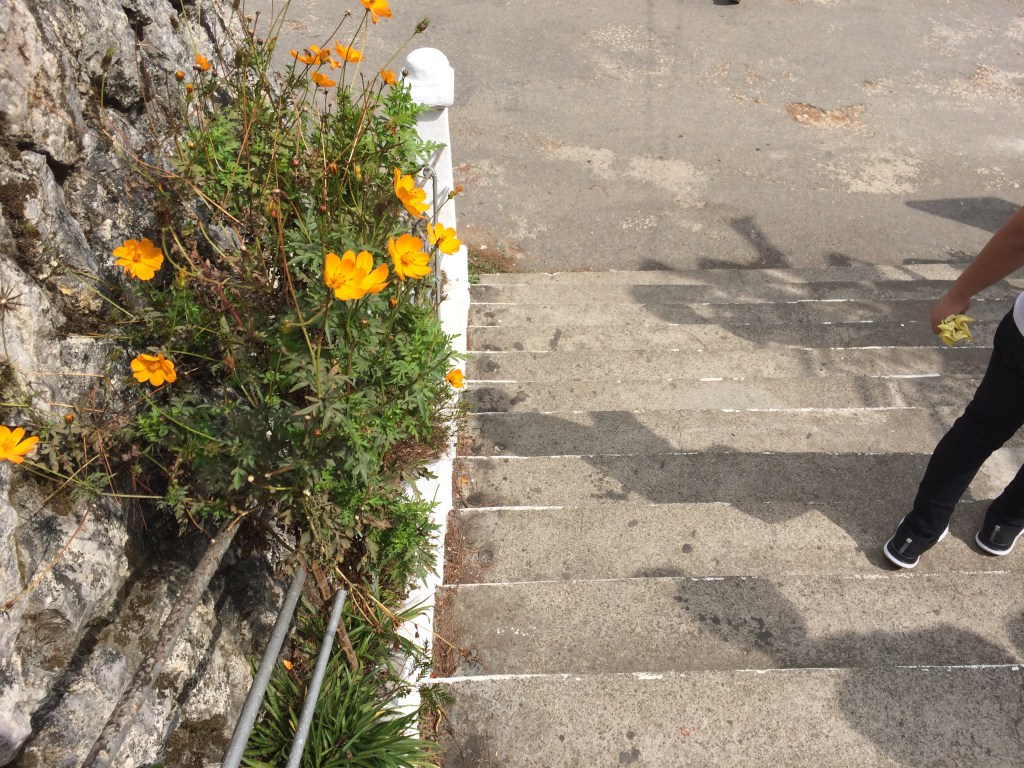
Photo by Ms. Jo Villafuerte, Atok, Benguet, 01 September 2019.
Brothers and sisters, Christ Jesus is the image of the invisible God, the firstborn of all creation. For in him were created all things in heaven and on earth, the visible and the invisible… all things were created through him and for him. He is before all things, and in him all things hold together. For in him all the fullness was pleased to dwell, and through him to reconcile all things for him, making peace by the Blood of his cross through him whether those on earth or those in heaven.
Colossians 1:15-16, 17, 19-20
What a lovely hymn in your honor, O Lord Jesus Christ! Truly in you we have experienced and proven indeed there is a God who loves us so much, and most of all, a personal God who relates with us, engages himself with us, one with us.
What a wonderful way to celebrate the first Friday of September 2019, a week of praying for important virtues we have forgotten in this modern world like the need to console those alone, to encourage so others may be whole again as a person, to be grateful for the person not the favor received, and to have knowledge to see God in everything by embracing the truths of faith.
In this age when God is just posited as a footnote in our daily lives, as a safety feature just in case things get off-hand or bad, you remind us to draw to you closer than ever in prayers, the Eucharist, and most of all, in fasting — something modern men and women frown upon and totally disregard.
Give us the grace O Lord Jesus to empty ourselves, to create a space within us for you to stay and dwell, and reign most of all.
We live today in the most trying times: everybody wants to be in control of everything, everybody wants to be heard and be seen alone as right with their twisted points of view about life and realities.
Bless us, Jesus, to find our way back to you, to be one with you again for you are the very reason why we are here. You are not just a person who had lived in the past we remember but the very reason of creation and redemption in whom the fullness of God is found. Amen.
The Lord Is My Chef Sunday Recipe Week XXI-C, 25 August 2019
Isaiah 66:18-21 ><)))*> Hebrews 12:5-7, 11-13 ><)))*> Luke 13:22-30
The small door leading to the Church of Nativity in Bethlehem, symbolic of the need to be lowly, to bow to meet our Lord Jesus Christ who became human like us to save us. Photo by author, May 2019.
The Lord concludes his series of “shock preaching” today with a big bang by dousing us with a big disappointment…
Someone asked him, “Lord, will only a few people be saved?” He answered them, “Strive to enter through the narrow gate, for many, I tell you, will attempt to enter but will not be strong enough. After the master of the house has arisen and locked the door, then will you stand outside knocking and saying, ‘Lord, open the door for us.’ He will say to you in reply, ‘I do not know where you are from.'”
Luke 13:23-25
It is very disappointing that after joining Jesus as he resolutely determined to journey to Jerusalem these past four Sundays in taking into our hearts his many earth-shaking lessons about the “end” only to find out that we could end up being locked out of the door to heaven. More shocking than the lessons last week is the disturbing revelation today that we have to be strong enough to enter through the narrow gate to eternal life.
How strong? We really do not know. But, we have learned from the Old Testament of the need to patiently obey and faithfully keep the commandments of God while the gospels remind us clearly to deny ourselves and carry our crosses even up to the point of dying with Christ.
Very difficult, huh…? And here’s more! Striving hard to enter the “banquet hall of heaven” is keeping in mind the important lessons we have heard these past three Sundays: life does not consist of possessions but of what matters to God (Lk.12:15,21; Aug. 04); that we must always gird our loins to be ready for death that comes like a thief at night (Lk.12:35,39; Aug.11); and, most of all, we have to go through our own passion and death like Jesus to be filled with the fire of the Holy Spirit to bring the peace of Christ into world (Lk.12:49-51; Aug. 18).
It is useless to count how many would be saved for there is enough room for us all in heaven. Through the Prophet Isaiah in the first reading, God wants us all to be with him in heaven despite his knowledge of our sins by sending us his Son Jesus Christ!
Thus says the Lord: I know their works and their thoughts, and I come to gather nations of every language; they shall come and see my glory.
Isaiah 66:18
The small door to the Church of the Nativity from the inside.
See again in our gospel today an apparent contradiction in the teachings of our Lord like last Sunday with his bringing of fire and division among us. When Jesus refused to give that man a definitive answer to his question “if only a few people would be saved”, the Lord in fact revealed something deeper than the initial disappointment we have felt about the gate of heaven being narrow that would be closed when the time comes. Again, he mentions the Eucharist, our Sunday Mass as the wonderful opportunity to be strengthened in order to get inside the heavenly banquet.
“And people will come from the east and the west and from the north and the south and will recline at table in the kingdom of God. For behold, some are last who will be first, and some are first who will be last.”
Luke 13:29-30
It is during the Sunday Mass when the Lord gathers us all together after a very difficult and disappointing week to refresh us, to strengthen us for another week of hurdling more problems, more trials in life. This is why before receiving him, we say, “Lord I am not worthy that you should enter under my roof, but only say the word and my soul shall be healed.” The Father gave us his Son Jesus Christ so we may have that strength needed to enter the narrow gate to heaven by doing more loving service to others, being kind and forgiving, being honest and generous. Yes, these are easier said than done but doable in Christ.
What is so surprising in our many experiences are the many times when in our many disappointments Jesus comes to guide us to new doors, new routes and new openings that mysteriously lead to new life for us!
Grotto of our Lady of Lourdes, Baguio City, January 2019.
Brothers and sisters: You have forgotten the exhortation addressed to you as children: “My son, do not disdain the discipline of the Lord or lose heart when reproved by him; for whom the Lord loves, he disciplines; he scourges every son he acknowledges.” Endure your trials as “discipline”; God treats you as sons. For what “son” is there whom his father does not discipline?
Hebrews 12:5-7
That is the mystery of God’s universal plan of salvation for us: the path may be filled with so many hardships and obstacles, the gate may be so narrow and difficult to pass through but he has made it possible for us to make it through by sending us Jesus Christ our Lord in leading this way to the heavenly Jerusalem. Authentic faith always involves pains and sufferings. When we embrace death like Jesus Christ, we also ensure life.
In every setback in life, we only have two choices always: either to be better or bitter. Choose to be better and that can only be through the narrow door of Jesus Christ by letting go of our anger and hatred, resentment and bitterness to give way to joy and peace, love and forgiveness. That is when God begins to surprise us!
Tam-Awan, Baguio, January 2019.
The author of Amazing Grace, John Newton was once challenged by a man after he had delivered a homily about heaven. Remember that Newton, as he claimed in Amazing Grace, was a “wretch” being a former slave trader after being a slave himself.
Newton was asked by a man to give something that would surprise him when he gets to heaven.
The former wretch replied that there would be three great wonders in heaven: first, he would see many people he never expected to be there; second, he would not find many church-goers he expected to see there; and third – which is the biggest surprise of all – is to find himself there in heaven when he knows very well his sinfulness.
Yes, my dear brothers and sisters, we are all sinners, now feeling disappointed with so many things in life. Just strive to be good and better persons as we celebrate every Sunday the Lord’s Supper and he will do the rest. And be ready to be surprised even before going to heaven! Amen.
Quiet Storm by Fr. Nicanor F. Lalog II, 07 June 2019
Statue of the Sacred Heart of Jesus at the Jesuits’ Sacred Heart Retreat House and Seminar Center, Novaliches, Quezon City. Photo by author, July 2018.
It is perhaps the most disarming question of all.
And too often, before answering the question, we try to brush it aside or even belittle it because we always feel the answer is very obvious and yet, it hits us so hard deep within that we could not answer it right away because it demands honesty and sincerity.
Do you love me?
Whether you are a priest or a religious or a layperson, much of the difficulty in answering this question lies on the fact that too often, it comes to us in those moments we have sinned to a loved one. When we were unfaithful and have not loved much as expected.
It was the context when Jesus asked Simon Peter three times “Do you love me?” after their breakfast at the shore of Lake Tiberias three weeks after Easter. Simon knew it so well that he felt sad after the third question of the Lord because it referred to his three denials of Jesus on Holy Thursday evening outside the residence of the chief priest. He must have heard the cock crowing again at that instance.
Church of Gallicantu (Rooster), the site where St. Peter denied the Lord thrice. Photo by author, April 2017.
I realized only last year as a guest spiritual director to our seminarians at the Theologate that our main problem as priests is when we get so focused with our vocation which is the priesthood, forgetting its very essence, Jesus Christ.
It is the Caller, not the call!
When we priests forget Jesus, even if we are so centered even obsessed with priesthood, problems arise. It is a misplaced priority. The call gets into our bloated egos that eventually deteriorate into careerism among us priests that we compete and complain a lot in our assignments. No more ministry because everything comes with a fee. Pains and sufferings have become costs of discipleship and not life.
Eventually, we end up being gods and kings, even larger than the Lord himself in our parishes or particular assignment. We become the standard of everything because we are all-knowing, so great at building churches and other structures, establishing every organization while consciously or unconsciously building cults around our very selves that in the process, we have evicted Jesus Christ completely from our hearts and the parish itself!
The same is true with couples. The husband and wife forget each other, getting focused more with married life and children until eventually, they just drifted apart, becoming strangers to each other and lose all love. This is most evident when couples enter into a sort of spiritual divorce, when they are “so far away” from each other though they still live together “for the sake of the children” or, as we always hear, “alang-alang sa mga bata.”
Love makes us see Jesus in himself and in others too.
In St. John’s account of the third appearance of the risen Lord to the seven apostles who have gone fishing at Lake Tiberias that Sunday morning, no one among them recognized him except the beloved disciple because he was the only one who remained loving Jesus.
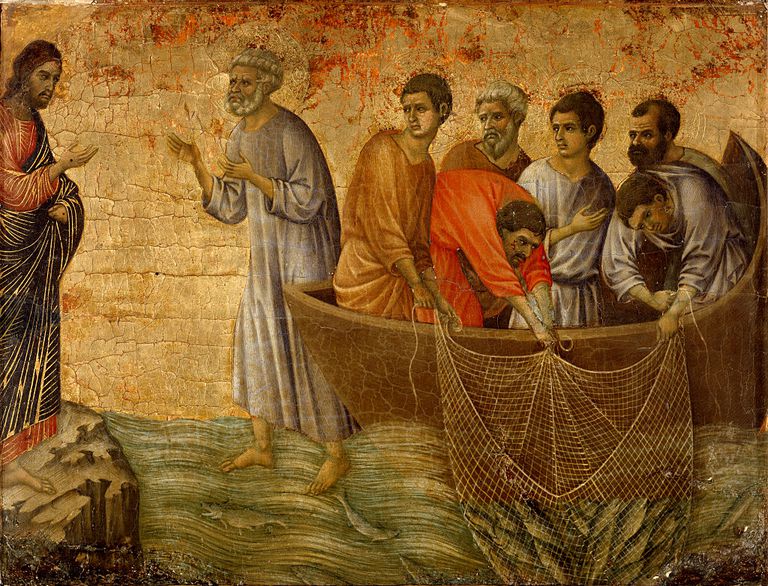
When it was already dawn, Jesus was standing on the shore; but the disciples did not realize that it was Jesus… who said to them, “Cast the net over the right side of the boat and you will find something.” So they cast it, and were not able to pull it in because of the number of fish. So the disciple whom Jesus loved said to Peter, “It is the Lord.”
John 21:4,6-7
Appearance of the Risen Lord at Lake Tiberias. From Google.
Pope Emeritus Benedict XVI recently answered some questions given to him for an interview before the Holy Week. When asked about the festering problem of sex scandal in the Church, he said that is a sign of how we priests have entirely forgotten Jesus Christ, especially to pray to him at the Blessed Sacrament.
That is very true. Jesus could no longer be seen among us, in our person, in our actions, in our way of living, and most especially in our churches that have become so empty of God and so filled of our selves.
We have forgotten the fact that before we were ordained priests, there was Jesus Christ first. We converse with him less in prayer because priesthood demands so much of our time and energy like a profession or a job. Slowly, Jesus is nowhere to be found in us and in our parishes. And that is when we also start to get lost as priests, eaten up by materialism and fame.
The same is true with couples who forget after several years of living together that before they were married, there was also Jesus Christ first in each other. When children start coming, more concerns are shifted on the couple’s career in order to earn more and live comfortably. Couples then forget each other, even their very selves who end up married with their jobs or profession. Eventually, they part ways because they could no longer see each other.
The difficulty in answering the question “do you love me?” is found in the way we do our work, when we just see tasks. No love, no person.
Whatever we do in life, we have to do it with more love because when we love, we remain attached with persons not with things. When we do thing with more love, we have direction because we think of persons, not just goals. When we do things with more love, we see persons because only another person can love, not things. See how Jesus told the crowd who have come with him to the wilderness to pray to the Master to send more laborers to work on the great harvest (Mt.9:38). He did not instruct them and us to pray for more money, more food and clothing because what we really need is love. Only people can love.
Jesus Christ did everything in love, filled with love. That is why he is so gentle and merciful with us sinners. In his love, he sees more the person being defaced by sins and evil, pains and sufferings. And that is why he died on the Cross, the ultimate expression of doing everything in love.
The next time you want to prove your love to anyone, do your work with love, no matter how imperfect your love is. Jesus will fill in the rest because you are so loved.
Live in the love of Christ.
If you have love in your heart, you have been blessed by God;
if you have been loved, you have been touched by God.
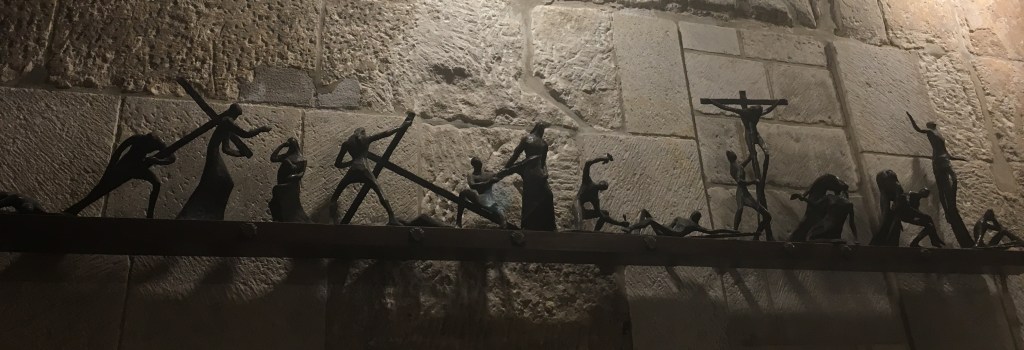
Stations of the Cross at the wall of the Catholic chapel inside the Church of the Holy Sepulchre in Jerusalem. Photo by author, 04 May 2019.
Praise and glory to you, O Lord Jesus Christ! Thank you for another week about to close with another one soon to start. Most of all, thank you, Jesus, for always standing by our side especially in our moments of crisis and darkness.
So many times we find ourselves like your Apostle Thomas the Twin in today’s gospel who ask you with so many questions that are often simple and even silly. But, you always answer them filled with profound truth.
Thomas said to him, “Master, we do not know where you are going; how can we know the way?” Jesus said to him, “I am the way and the truth and the life. No one comes to the Father except through me.”
John 14:5-6
O Lord, forgive us for being so slow sometimes like Thomas with our level of understanding your words and teachings, even your very self.
However, we pray also for the sincerity of Thomas in asking that question that now defines you as “the way, the truth, and the life.” In answering that question, you have assured us of never abandoning us, of always fulfilling your words and your plans for us that so often we could not see nor understand at the start.
Help us to be faithful to your words as Paul preached in the synagogue of Antioch in our first reading today. May we always trust your words, Jesus, by following your path of the Cross for you always fulfill them and crowned it with your glorious Resurrection. Amen.
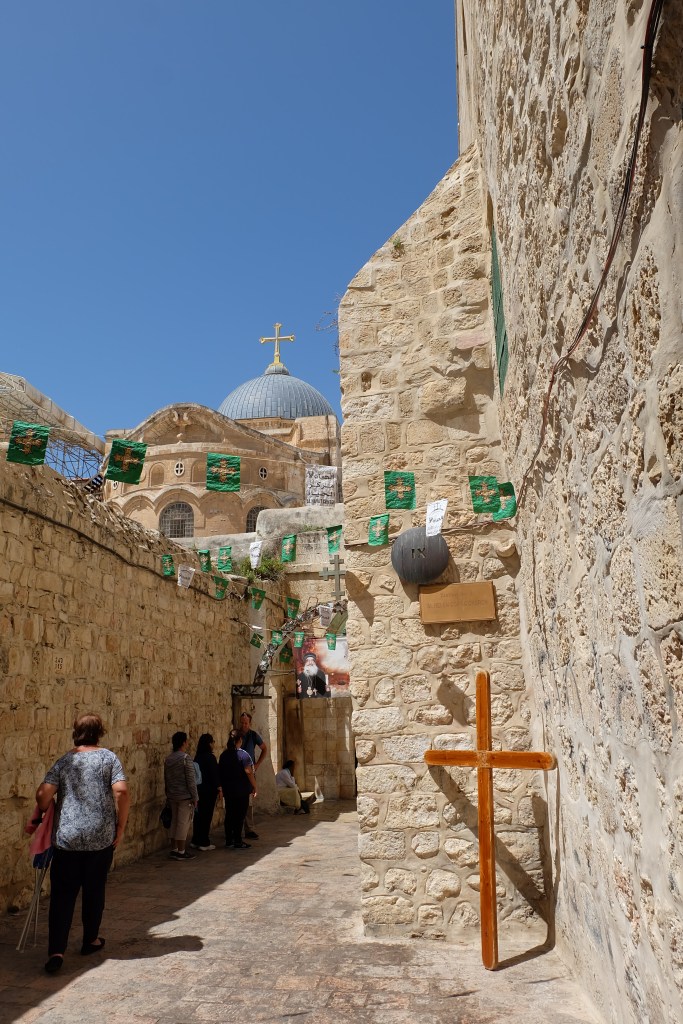
Ninth Station of the Cross before entering the Church of the Holy Sepulchre in Jerusalem. Photo by author April 2017.
The Lord Is My Chef Breakfast Recipe for the Soul, Easter Wk. III, Wednesday, 08 May 2019
Praise and thanksgiving to you, O Lord Jesus Christ as we enter the final stretch of our Holy Land pilgrimage today.
It is very different experience to be in the wilderness of the Sinai desert – so cold, so barren, most of all, so isolated.
Lord, we are tired and longing for home. Now we can imagine the extreme difficulties and hardships of your people in the desert.
But you are so loving and merciful, so generous that you gave them bread from heaven, manna.
Now we have you Jesus as our bread, our life.
Like your first followers who were scattered following Saul’s persecution of the Church, they still went preaching the word – YOU.
We pray for more strength and courage to remain faithful to you, Lord, when we go through our desert in life. Let us share you as our bread to nourish the weak, gladden those who are sad and tired so that we may all persevere to meet you like Moses in the burning bush. Amen.
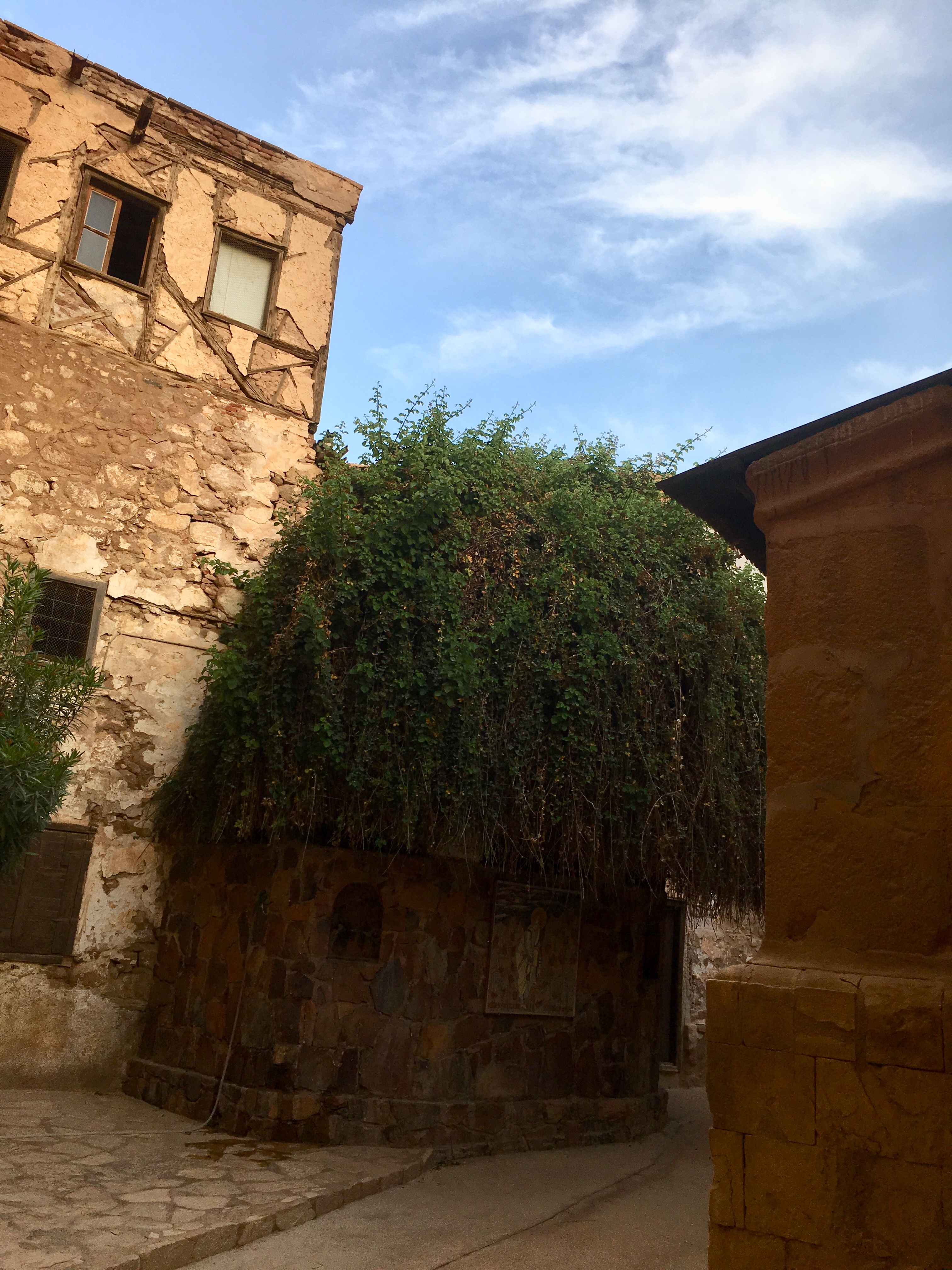
First photo is the Mt. Sinai mountain range at sunrise while the one above is the enclosed site of the burning bush Moses saw now under the care of Greek Orthodox monks at the St. Catherine Monastery.
While praying your words today O Lord Jesus Christ, I remembered your servant Pope Emeritus Benedict XVI who explained the great importance of professing “I believe in God”.
It is a fundamental affirmation, seemingly simple in its essence, but it opens on to the infinite world of the relationship with the Lord and with his mystery. Believing in God entails adherence to him, the acceptance of his word and joyful obedience to his revelation… The ability to say one believes in God is therefore both a gift — God reveals himself, he comes to meet us — and a commitment, it is divine grace and human responsibility in an experience of conversation with God who… speaks to us, so that, in faith and with faith, we are able to enter into communion with him.
General Audience, 23 January 2013
Since then until now, believing in you Jesus to have risen from the dead, to be from God the Father has always been a problem because we have always refused to accept your opening to us. We always want to manipulate everything, especially God.
The problem with believing is we have refused to live by God, always leaving him behind because we feel he is outdated, old-fashioned and too conservative for our modern thoughts and perceptions of how life should be lived.
The problem with believing God then and now is we have stopped recognizing God as the foundation of our lives that like the chief priests and elders in the Acts of the Apostles, we would rather be blind from the glaring truth of your loving presence before us. Like the Apostles too during Easter, we have refused to believe others in proclaiming your rising from the dead because of many reasons and one of these is the hardness of our hearts.
Lord Jesus Christ, take away our stony hearts and give us with a natural heart that beats with firm faith in you, fervent hope and unceasing charity and love. Amen.
Choir loft of Parish Church of the Holy Family in Taipeh. Photo by author, January 2019.
The Lord Is My Chef Breakfast Recipe for the Soul, Tuesday, Easter Octave, 23 April 2019
Acts 2:36-41///John 20:11-18
Photo from Google.
Now, when they heard this, they were cut to the heart, and they asked Peter and the other Apostles, “What are we to do, my brothers?”
Acts 2:37
What a powerful expression, O Lord Jesus Christ: “they were cut to the heart” upon hearing the preaching by St. Peter about you on Pentecost day, on how the people have killed you, on how they failed to recognize you as the Christ.
They were cut to the heart, they were so moved.
Yesterday O Lord, many of us were also cut to the heart with the powerful earthquake that rocked us hard late afternoon. Many prayed, many wondered what’s going to happen next. And many asked what are we to do?
Suddenly, people remembered you and called on you. That is always the case when calamities strike us, when problems arise in our families. We are cut to the heart. Our faith is awakened, we become conscious not only of you but of others we used to take for granted.
But there is something more wonderful in being cut to the heart, O Lord.
Mary Magdalene was also cut in the heart upon discovering your empty tomb that Easter morning. Give us that same grace of always seeking you, looking for you whenever we feel we have lost you.
So often, you come to us, calling us with our name but we never listen to you, always forgetting how much you love us, how much you have forgiven us with our many sins, how you have changed us.
Remind us like Mary not to touch you because from now on, we must relate with you in a higher level, that the most important thing to do is to proclaim to others most especially with our lives that we have seen you, that you are risen.
That is the most kindest and wonderful kind of cut of all, Jesus. Amen.
Jesus telling Mary Magdalene not to touch him in a painting at the Basilica of St. Francis of Assisi in Italy. Photo from Google.