What is in a name?

The Lord Is My Chef Simbang Gabi Recipe, 17 December 2019

Genesis 49:2.8-10 ><)))*> ><)))*> ><)))*> Matthew 1:1-17

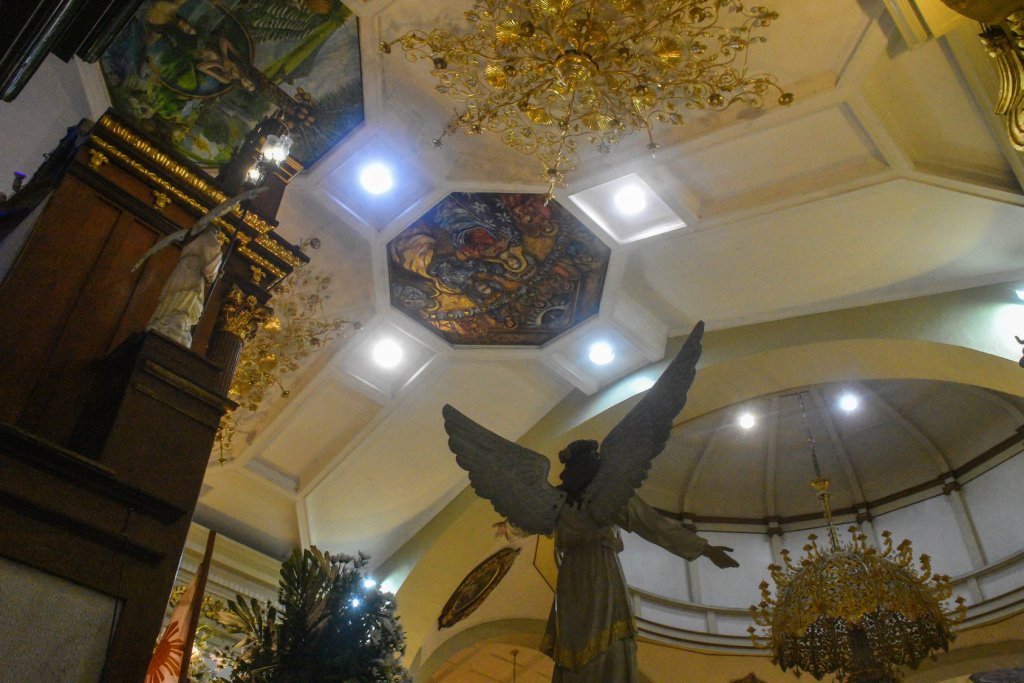
Parokya ng Banal na Mag-Anak, Violeta Village, Guiguinto, Bulacan. Photo by Arch. Philip Santiago.

Today we shift our focus in our Advent preparations to the first coming of Jesus Christ when he was born in Bethlehem more than 2000 years ago. Strictly speaking, the Christmas countdown officially starts only today especially with our very long but beautiful gospel from Matthew.

Maybe you are wondering what’s good with our gospel today when it is all about names that mostly sound very funny.

Importance of names: origin and mission

In ancient time, giving name to children was a very serious matter among peoples, especially the Jews.

For them, a name indicates two very important things about a person: one’s origin and mission in life, something parents of today have entirely forgotten, even ignorant because they are more concerned with fad and being unique in naming their children that always end up as a joke as it is always bizarre and weird.

And their poor kid suffers for the rest of his/her life like that man named “Fantastic”. All his life he felt so sad being called Fantastic that he told his wife when he dies, never put his name on his tombstone.

Eventually Mr. Fantastic died and the wife kept her promise not to put his name on his marker. But she felt the need to honor her beloved husband who was so good and honest that in lieu of his name, she asked a tribute written to honor him.

It said, “Here lies a very gentle and loving husband and father who never looked at other women except his wife.”

Every time passersby see and read that tribute, they would always exclaim “Fantastic!”

From Google.

Going back to the importance of giving names….

Corporations are more serious than parents in choosing names and trademarks to their products and services. Every trademark and brand always evokes deeper meanings than just being a product or entity that some of them have entered the vocabulary of many languages like Google, Xerox, and Frigidaire.

And the sad thing about this is how many babies are now being named to follow things and products than the other way around, giving more value to things than human beings!

The book of the genealogy of Jesus Christ, the son of David, the son of Abraham. Abraham became the father of Isaac, Isaac the father of Jacob, Jacob the father of Judah and his brothers.

Matthew 1:1-2
Detail of the ceiling of Parokya ng Banal na Mag-anak after the front or main door: the genealogy of Jesus Christ that starts with Abraham. Great concept by the Parish Priest, Fr. Ed Rodriguez. Photo by Arch. Philip Santiago.

Genealogy of Jesus as direction of Matthew’s Gospel

St. Matthew opens his gospel account with the genealogy of Jesus to settle right at the very start the question about the origin and mission of Jesus Christ.

Here we find the artistry and genius of St. Matthew, some 2000 years ahead of the late Stephen Covey’s third habit of highly effective people: “begin with an end in mind.”

By starting his genealogy with Abraham and David, St. Matthew gives us the whole gospel message in a glance because they are the two key figures in the beginning and realization of God’s promise to send Jesus Christ who would save us all.

Let us just focus on Abraham which means “he who is the father of many.”

It was to him that the story of God’s promise began after the dispersal of mankind following the collapse of the Tower of Babel.

From then on, Abraham points to what is ahead in God’s divine plan, not only for himself but also for the whole mankind for it is through him that blessings come to all. His journey from his birthplace of Ur into Canaan is symbolic of his journey from the present into the future, walking in faith following the Lord’s path and divine plan.

In Abraham we find God starting anew the history of mankind after the Fall that leads up to Jesus Christ who came to lead us all back into the Father.

With Abraham as the main header of Christ’s genealogy, we find not only the beginning but also the end of St. Matthew’s gospel which is the universality of God’s plan of salvation with Jesus telling his disciples to make disciples of all nations (Mt.28:19).

Detail of the ceiling near the sanctuary of Parokya ng Banal na Mag-Anak, the culmination of the genealogy of Jesus. Photo by Arch. Philip Santiago.

Imitating Abraham into our time

Last December 10 was a very important date for me and my parish: it was the ordination date of our first priest.

While waiting for the start of the Mass at the front door (which is actually the back of the Cathedral or any church), I just prayed in silence thinking about my role in the ordination of Fr. RA Valmadrid.

While I marveled at the beautiful renovations of our Cathedral, my sight was slowly moved towards the altar.

It was like an “Abraham experience” in Matthew’s genealogy for me: a wayfarer on a journey into the future, towards God, walking in faith.

In a quick glance, I kind of saw the future glory of every faithful coming to the altar to receive Jesus Christ in the sacraments especially the Holy Eucharist.

I just felt the beauty of entering the Cathedral, or any church which is more than stepping into a building but more of entering God himself, our point of origin and final destination.

Do we realize this tremendous blessing and grace of being baptized, of being a child of God, not only given with a name but most of all, of being counted into the family of God our Father?

In the first reading we have heard Jacob calling his 12 sons. What is so striking here is the blessing Jacob had bestowed upon Judah, instead of Joseph who was the best of all his sons, the holiest and most intelligent.

Like Abraham and Judah, or anyone in the genealogy of Jesus Christ, we can find our own selves too not as the vida or contravida but simply being called to be God’s instrument in fulfilling his plan in sending his Son Jesus Christ.

Truth is, God always comes in the most unexpected situations and peoples most of the time.

In Christ Jesus through our Baptism and faith, we find our genealogy – our origin and mission – as children of God.

If you want to get a feel of this reality, try reading aloud, very slowly, the genealogy of Jesus Christ. At the end, include your self, mention your name, your mother and father. Then close your eyes and let your life flash back in silence.

In the silence of your heart, do you find God coming more to you than you to God?

So amazing, is it not? We are all part of Christ’s genealogy. Let’s bring him forth into the world in our life of faithful witnessing like Abraham. Amen.

Malolos Cathedral. Photo by author.

Inclusive Christmas

The Lord Is My Chef Simbang Gabi Recipe, 16 December 2019

Isaiah 56:1-3. 6-8 ><)))*> ><)))*> ><)))*> John 5:33-36

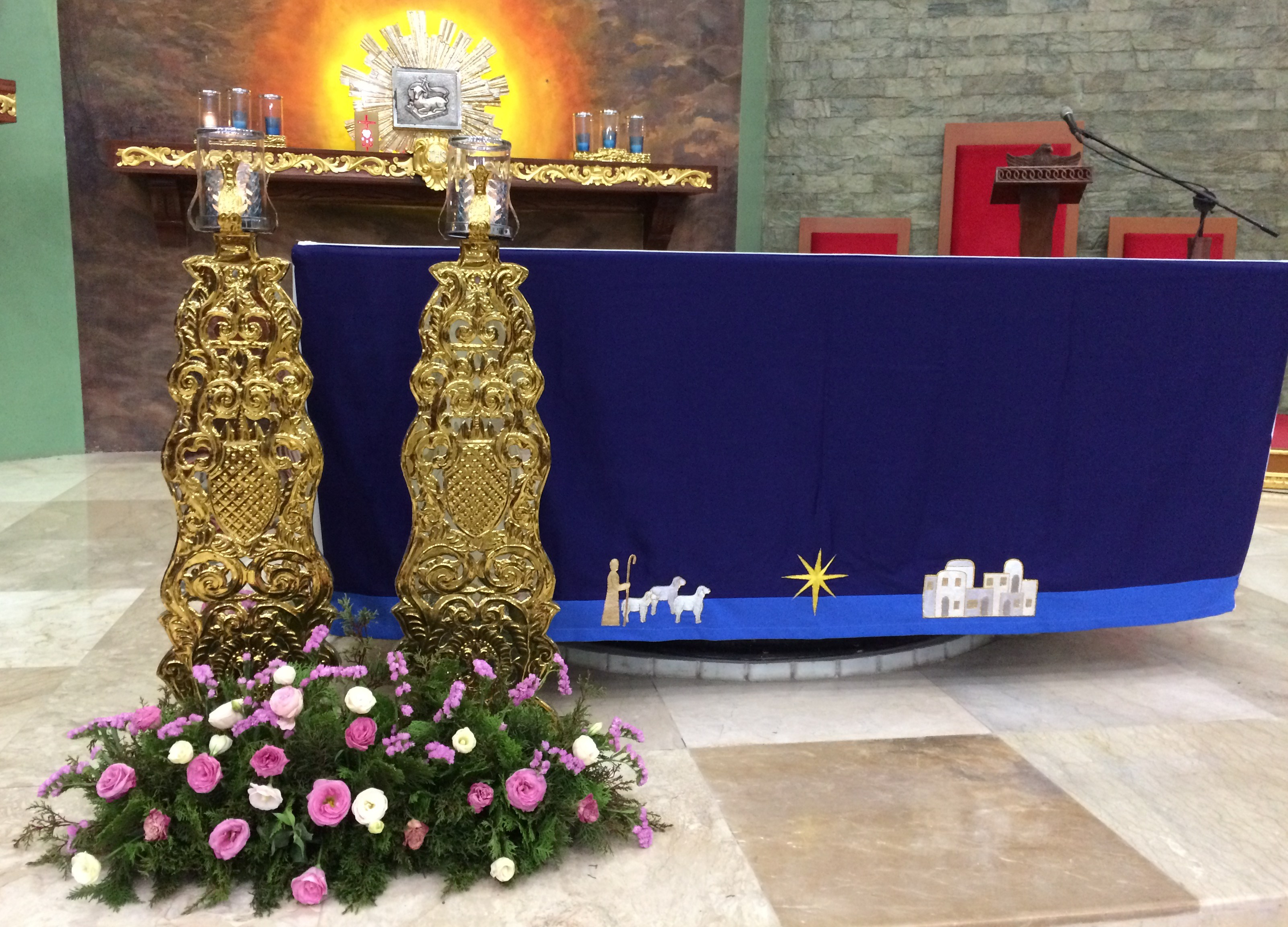
Our Parish Altar, Simbang Gabi 2018. Photo by author.

When we were still seminarians, our spiritual director became a victim of “hold-up” while walking home from an evening mass nearby. He is now a Trappist monk at Guimaras, a very kind and gentle priest we fondly call “Fr. Esteng”.

According to Fr. Esteng, everything happened so fast. But, after taking all his money, the suspect demanded Fr. Esteng’s big bag too, his “mass kit”. This time, Fr. Esteng refused to give into the demand of the hold-up man, insisting there’s nothing of value inside because they are things for celebrating the Mass of which no one would really buy.

To convince the hold-up man, Fr. Esteng got the “brilliant idea” of inviting the suspect to come with him to the seminary to get some food so he would no longer need more money.

Good that the hold up man did not accept the “invitation” of our good priest who got some “scolding” the following morning from his brother priests the following day after learning his brilliant idea, telling him to never to invite thieves into the seminary again!

“For my house shall be called a house of prayer for all peoples. Thus says the Lord God, who gathers the dispersed of Israel: Others will I gather to him besides those already gathered.”

Isaiah 56:7b-8

Inclusive God, exclusive people.

Praying at the Wall of Jerusalem Temple, 2017.

Welcome everyone!

It’s the start of our Simbang Gabi, our nine-day novena before the Lord’s birthday on Christmas.

God tells us in the first reading how he welcomes everyone into his house without any exceptions. That is how good and loving our God who is not contented in calling us all into his house but even sent us his only Son Jesus Christ to gather and lead us back to him.

Our God is very inclusive, always including everyone especially those rejected, those in the margins.

So unlike us people who are very exclusive and judgmental of others too.

We want everything exclusively ours. Just us. And when we meet strangers, those who do not look like us or do not speak and dress like us, we feel uncomfortable.

Worst is when we meet people of different faith and beliefs that we feel uneasy and even threatened simply because they are not like us!

It is good that for this final year before we celebrate our 500 years of Christianization, our bishops have dedicated 2020 to be the “Year of Ecumenism, Interreligious Dialogue, and Indigenous Peoples”.

This is to “celebrate human fraternity by promoting the culture of dialogue as a path of peace.” The Church wants to “work for unity and harmony while respecting diversity and to recognize peoples’ identities, spiritualities and ancestral domain.”

Logo for the Year of Ecumenism, Interreligious Dialogue, and Indigenous Peoples.

Jesus told the crowd, “But I have testimony greater than John’s. The works that the Father gave me to accomplish, these works that I perform testify on my behalf that the Father has sent me.”

John 5:36

See everyone and everything in Christ.

In our gospel today, Jesus was questioned by the Jews for healing a man sick for 38 years on a sabbath day at Bethesda.

Jesus was so different from them who have fallen into rituals and replaced God himself with their laws and traditions. They wanted Jesus stopped and even put to death simply because he did things so differently when, in fact, he was trying to bring back what was lost like the precedence of God and human life over laws and rituals.

Pope Francis reminds us that the Church exists to remind us that God loves and welcomes everyone. He is absolutely right that so often it happens right in our churches, in our celebrations we go on our own exclusivistic ways forgetting we are supposed to be a community.

On this first day of our Simbang Gabi, let us focus more on Jesus so we may find him among other people easily because when we are focused with our “work” and ministry, the more we see ourselves and forget Christ among the poor and marginalized.

Do we find Jesus when we serve and celebrate the liturgy or do we simply have ourselves?

Is it Jesus Christ whom we share with others in our dealings and service in the Church or our proud self?

Where is Jesus really in our lives today that we simply do things for the sake of doing it, because it is a tradition and not because of a personal conviction and relationship with him?

A blessed Monday to you!

Our sacristy, Advent 2018. Photo by author.

Advent is joyful, patient waiting

The Lord Is My Chef Sunday Recipe for the Soul

Third Sunday of Advent or Gaudete Sunday, 15 December 2019

Isaiah 35:1-6, 10 ><}}}*> James 5:7-10 ><}}}*> Matthew 11:2-11

Malolos Cathedral, 10 December 2019. Photo by author.

For most people, our title is something odd and weird, perhaps even an oxymoron, for how can waiting be joyful and patient?

Many people hate to wait. Waiting for them is a waste of time because they believe it is an activity that is empty, full of risks of leading to nothing and disappointments. That is why they make all kinds of excuses in having all the devices and gadgets they need to busy themselves with while they are – after all – still “waiting”!

This Season of Advent is the most opportune time to rediscover the beauty and joy of patient waiting, especially this Third Sunday known as “Gaudete Sunday” from the Latin gaudere, to rejoice.

Advent teaches us that waiting is both joyful and patient; that it is more than an activity but a being that is always indicative of having something leading to fullness!

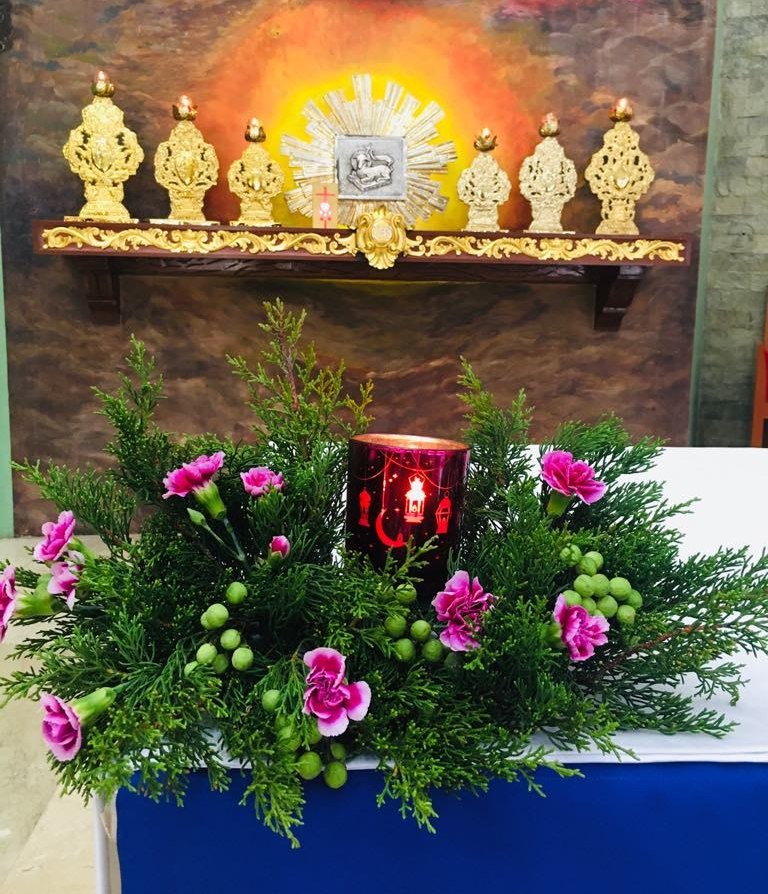
Our Parish altar, Gaudete 2019.

Patience is waiting that leads to fulfillment.

Pink is our motif this Third Sunday of Advent to signify joy in waiting for the Lord’s Second Coming. Waiting is an experience in itself filled with joy – if we really know how to wait patiently.

Patience is from the Latin word patior, to suffer. Its Greek origin is hupomone that suggests continuance and submission that literally means “submissive waiting”.

Both in its Latin and Greek origins, patience is a condition or a being of willing to wait because it knows there is something coming. It is never empty: you patiently wait because you already have something, you are holding onto something already. We wait in line whether in the grocery or at the doctor’s clinic because we know we would be attended to later. We wait precisely because we have something – almost – but not yet.

In this sense, patient waiting is more than an activity but more of a being and a condition that leads us to trust and faith, then into hope, and eventually into fullness.

Impatient people cannot wait because they do not see beyond the present condition. Their perceptions are very limited that they have to satisfy their wants immediately, just like our culture of instants these days or the so-called IGG for “Instant Gratification Generation”.

The desert and the parched land will exult; the steppe will rejoice and bloom. They will bloom with abundant flowers, and rejoice with joyful song. Strengthen the hands that are feeble, make firm the knees that are weak, say to those whose hearts are frightened: Be strong, fear not! Here is your God, he comes with vindication; with divine recompense he comes to save you. Then will the eyes of the blind will be opened, the ears of the deaf be cleared; then will the lame leap like a stag, then the tongue of the dumb will sing

Isaiah 35:1-2, 3-6
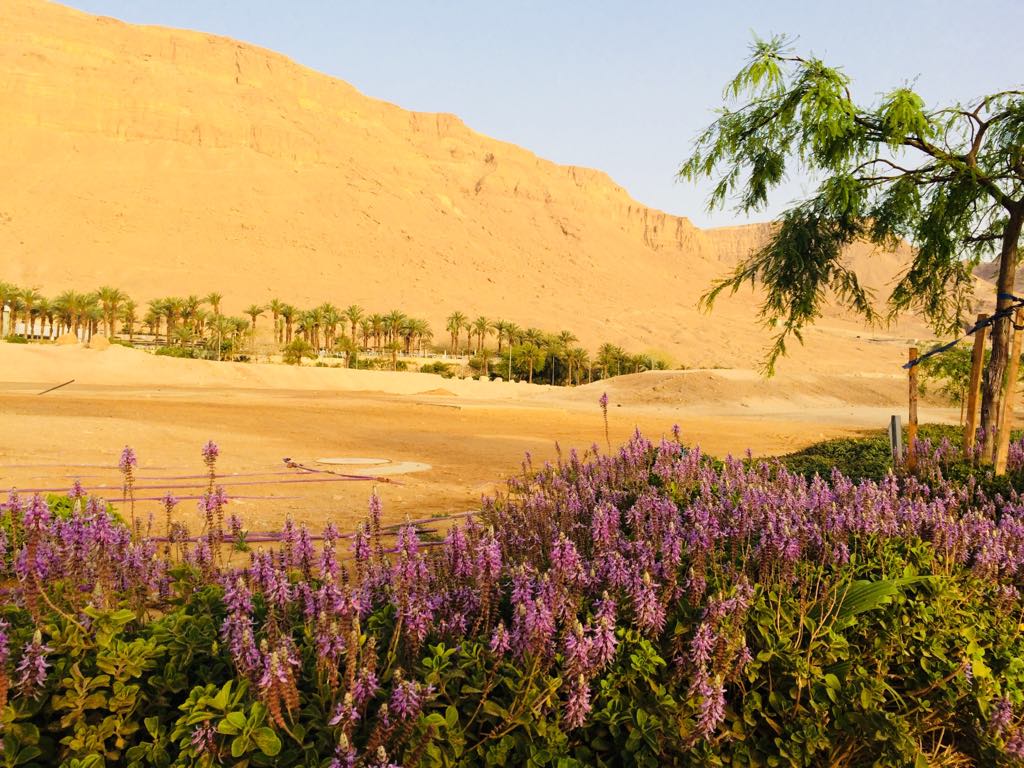
An oasis in the Dead Sea desert, May 2017. Photo by author.

Intimacy: the joy of patient waiting

There are three key personalities in Advent: Isaiah, John the Baptist, and the Blessed Virgin Mary. Isaiah saw the coming of the Christ from a very distant past while John pointed everyone that the awaited one has already come. Mary, on the other hand, celebrated Advent because she brought forth Jesus in her womb.

Today we are joined by Isaiah and John the Baptist to complete our joy of patient waiting that Christ in fact is already with us though not yet…

In our first reading we have seen the imagery of the desert like last Sunday in John’s preaching. The desert evokes the feeling of nothingness and emptiness like waiting itself as most people think.

But, in the bible since the time of Abraham, the desert is the favorite place where God would always meet with people. It was always in the desert where the prophets and the people waited and experienced God.

Wild flowers in the desert of Jordan, May 2019.

So you see, my dear reader and follower, the desert is more than a place but also the intimacy of God with his people and later with his Son Jesus Christ who would always go to the desert or deserted place to pray like in the Transfiguration, or when he prayed and fasted for 40 days and nights before being tempted by the devil after his baptism by John at Jordan. It was also in the desert where Jesus did many of his memorable conversations that led to conversions like at Jacob’s well where he met a Samaritan woman one hot afternoon.

Examine your lives, dear reader and follower: it is always in the desert of our lives, in its bareness and desolation, when we are empty and thirsty when we truly experienced God closest.

Isaiah spoke of this prophecy when the Israelites were at their lowest point of misery and defeat as exiles in a pagan country with no freedom, no temple, even no God.

When we are full of material things, full of ourselves, when everything is going so perfectly well in life, that is when we are ironically shallow and superficial. What really deepened us in life are those desert moments of tribulations and trials because that is when we have found and rediscovered true intimacy – with God and with our loved ones!

Patient waiting is a desert full of joy because that is where we experience intimacy and fullness, the tension of the already here but not yet, not only with God but also with one another.

Here we find St. James imagery of the farmer as finest example of patient waiting, of trusting in God that what we have sown would grow and be fruitful. Despite our culture of instants, there are so many things that cannot be rushed, when we have to patiently wait in time like intimacy.

How do we recognize our true friends? They are the ones who always stand by our side especially when we our down and out, the ones who accompany us in our patient waiting when we are in the middle of a storm, or in the desert, desolate.

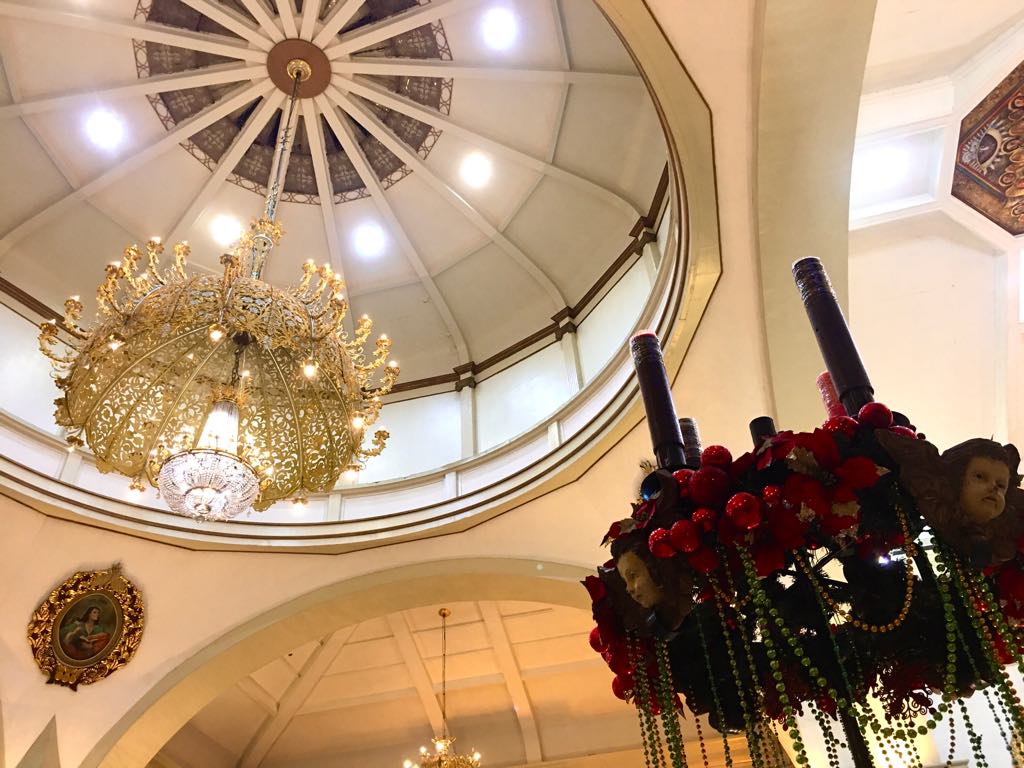
Malolos Cathedral Dome, December 2019. Photo by author.

Proceeding in joy in the presence of the Lord

One problem with waiting is when we are superseded by our so many expectations that may also be unrealistic. We hate waiting, we stop hoping because we feel disappointed and frustrated because we do not get what we really expect from our waiting.

The problem is with us, not with waiting itself. So often we await things instead of persons. To wait in joy with patience demands openness for the one who is coming not on what is coming.

True waiting is always about persons, not things. Waiting is beautiful and joyful because you are not alone in waiting, there is always another person waiting for you, waiting with you. And when we finally meet with the one we are waiting, then we have presence!

This is why the synonym for gift is also present, from presence.

Every waiting is directed to another person who also awaits the other person. When we focus our waiting on things than persons, then we miss everything in our waiting which is the presence of the other person.

This is the meaning of the response of Jesus to the emissaries of John.

Camp John Hay “Belen”, December 2017.

When John the Baptist heard in prison of the works of the Christ, he sent his disciples to Jesus with this question, “Are you the one who is to come, or should we look for another?” Jesus said to them in reply, “Go and tell John what you hear and see: the blind regain their sight, the lame walk, lepers are cleansed, the deaf hear, the dead are raised, and the poor have good news proclaimed to them.”

Matthew 11:2-5

Jesus was telling the emissaries of John that the one they have been waiting had come, already present among the people especially the sick and the poor. God had come in the midst of his people, healing them, consoling them, uplifting them.

This Third Sunday of Advent, Jesus is asking us like the crowds: what are we looking for, what are we waiting for? Set aside or totally forget all your expectations, open yourself, open your heart, open your eyes to see and experience the presence of the Christ who had come, who will come again, and always comes among us.

Indeed, we are so blessed because despite our being sinful, of being the least in the kingdom of heaven, we have Jesus coming to us day in, day out. Share his coming, share his healing, share his joy! Amen.

Advent is seeking, seeing Jesus

The Lord Is My Chef Breakfast Recipe for the Soul

Friday, Advent Week-II, Memorial of St. Lucy, 13 December 2019

Isaiah 48:17-19 ><)))*> ><)))*> ><)))*> Matthew 11:16-19

The eagle symbolizing our Parish Patron St. John Evangelist, Advent 2018.

Thank you very much Lord Jesus Christ for never giving up on us. You sound so exasperated in our gospel today at how so “slow” we have become in recognizing and believing you but you never lost your cool.

Please continue to open our minds and our hearts to realize you have come, you are coming and you are always with us.

Forgive us Lord when we are so concerned with the mundane things, the shallow concerns we are so preoccupied with forgetting the more crucial of recognizing your presence and your works among us.

Jesus said to the crowds: “To what shall I compare this generation? It is like children who sit in marketplaces and call to one another, ‘We played the flute for you, but you did not dance, we sang a dirge but you did not mourn.’ For John came neither eating nor drinking, and they said, ‘He is possessed by a demon.’ The Son of Man came eating and drinking and they said, ‘Look, he is a glutton and drunkard, a friend of tax collectors and sinners.’ But wisdom is vindicated by her works.

Matthew 11:16-19

Grant us Lord Jesus Christ the gifts of silence and wisdom, of “masticating” always your words so we can be properly guided in answering your call and mission.

Give us the grace to see things as they are, to set aside our many biases and visions of things to come so we can be contented with what we are having, of what God has provided us with.

Let us heed your words and work faithfully for their fulfillment in us and through us.

Thus says the Lord, your redeemer, the Holy One of Israel: I, the Lord, your God, teach you what is for your good, and lead you on the way you should go. If you hearken my to my commandments, your prosperity will be like a river, and your vindication like waves of the sea; your descendants would be like the sand, and those born of your stock like its grains, their name never cut off or blotted out from my presence.

Isaiah 48:17-19

Give us O Lord, the courage to be different, to make a difference for Jesus Christ by opening our eyes of faith so we may always seek you, see you, and follow you.

Saint Lucy, patroness of diseases of the eyes, heal our many blindness to be focused in Jesus alone. Amen.

Photo by Noelle Otto on Pexels.com

Advent calls us to believe again

The Lord Is My Chef Breakfast Recipe for the Soul

Thursday, Feast of Our Lady of Guadalupe, 12 December 2019

Zechariah 2:14-17 ><)))*> ><)))*> ><)))*> Luke 1:39-47

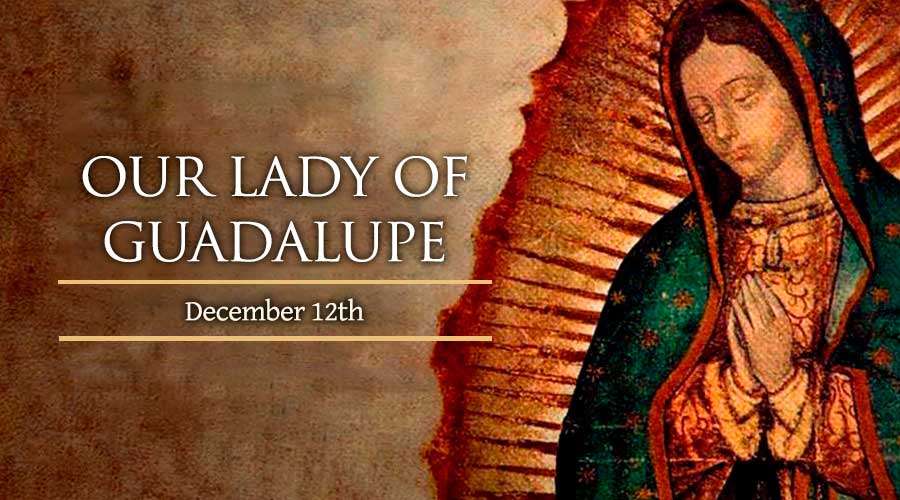
From Catholic News Agency

Praise and glory to you, O God our loving Father in heaven who has given us along with your Son Jesus Christ our Savior his beloved Mother the Blessed Virgin Mary.

Thank you in giving us Mother Mary as our guide in this Season of Advent, along with the Prophet Isaiah and St. John the Baptist.

And the most wonderful thing about Mary as our guide in Advent is the fact she lived Advent because she was the first to truly believe in Jesus!

Renew our faith in you, O God especially in this age when we tend to believe more to our selves, to science and technology.

Strengthen our faith also so that like Mary, we may be blessed as we believe your words O God will be fulfilled in us.

Detail of painting at the Basilica of St. Juan Diego receiving roses from the Blessed Virgin Mary.

“Blessed are you who believed that what was spoken to you by the Lord would be fulfilled.”

Luke 1:45

Let us firmly believe like Mary, your Mother, Lord Jesus!

Let us give you our daily “Amen” like Mary who gave her total self to your service, Lord.

Fill us with the Holy Spirit, Father, like Mary who has continued to share your Son Jesus Christ with others, not only to Elizabeth at that time but also to St. Juan Diego at Guadalupe, St. Bernadette at Lourdes, and to the children at Fatima. Amen.

The assurance of Advent

The Lord Is My Chef Breakfast Recipe for the Soul

Wednesday, Advent Week-II, 11 December 2019

Isaiah 40:25-31 ><)))*> ><)))*> ><)))*> Matthew 11:28-30

Eagle, the symbol of our Patron Saint, John the Evangelist, Advent 2018.

What makes Advent so wonderful, Lord, is the fervent hope your words instill in us to persevere in believing and serving you.

Though young men faint and grow weary, and youths stagger and fall, they that hope in the Lord will renew their strength, they will soar as with eagles’ wings; they will run and not grow weary, walk and not grow faint.

Isaiah 40:30-31

Teach us to trust you more, to always walk in firm faith in you because you always keep your promise.

Enlighten us, Lord, that you never promised to take away our cross; let us realize the great comfort you offer us in helping us carry our cross.

Enough to comfort us and assure us is your gentle mastery, Lord Jesus Christ.

“Come to me, all you who labor and are burdened, and I will give you rest. Take my yoke upon you and learn from me, for I am meek and humble of heart; and you will find rest yourselves. For my yoke is easy and my burden light.”

Matthew 11:28-30

Thank you, dear Jesus, for these kind words today, enough for us to forge on in life’s many trials.

We pray for those having some form of crisis in life today, enlighten their minds and their hearts in making the right choices in life. We pray for those who are very sick and those taking care of them in this most trying time of their life. We also pray especially those who lost a loved one, feeling guilty in the process. Please assure them Lord of your gentle presence, that they are cared for, and most of all, loved. Amen.

Advent 2019 in our Parish.

Believing like Mary

The Lord Is My Chef Breakfast Recipe for the Soul

Monday, Solemnity of the Immaculate Conception, 09 December 2019

Genesis 3:9-15, 20 ><}}}*> Ephesians 1:3-6, 11-12 ><}}}*> Luke 1:26-38

Every year, O Lord Jesus Christ, we celebrate on your birth month the Solemnity of the Immaculate Conception of your Most Blessed Mother Mary who was conceived without the stain of original sin.

Until now, many are still confused with this feast especially when our Gospel speaks about the annunciation of your birth, dear Jesus.

Nonetheless, it is the single most important part of your lives both that truly give us a valuable lesson about Mary’s blessedness – later to be expressed by Elizabeth at the visitation, “Blessed is she who believed that the words spoken to hear will be fulfilled”.

Her Immaculate Conception teaches us the importance of faith especially at this time when we face a great crisis in faith in the Church.

And so, we pray to you O Lord for the gift of faith like that of your Mother Mary, a faith that is deeply personal yet communal.

The first is subjective and the second is objective.

Mary said, “Behold, I am the handmaid of the Lord. May it be done to me according to your word.” Then the angel departed from her.

Luke 1:38
Malolos Cathedral, June 2019.

Unlike Eve in the first reading, Mary had always believed in God.

Her faith is a total entrusting of herself to God on a person-to-person relationship. It is subjective faith where emphasis is on believing itself than on what is believed.

However, Mary did not believe in a purely subjective manner as if God is a personal God detached from others and exclusively revealing only himself to her in secret.

Mary’s faith is also objective because when the angel explained everything to her, she believed the good news proclaimed to her is part of the bigger whole, of the coming new covenant, of the fulfillment of the promise of God made to Abraham and the fathers of Israel as she would later express in her Magnificat.

It is only in believing like Mary can we truly give ourselves to you, Jesus, to the Church so that what we believe may truly be fulfilled in us like Mary. Amen.

Malolos Cathedral, June 2019.

“The Dream” by Michael Franks (1993)

The Lord Is My Chef Sunday Music, 08 December 2019

Advent wreathe at the Malolos Cathedral, 04 December 2019.

Advent is the season of hope when we are encouraged to work on to fulfill God’s grand design for lasting peace here on earth. It is a time for us to dream with eyes wide open!

I had this dream
In which I swam with dolphins
In open sea a transparent blue
(Maybe you dreamt it too)
And on the earth
The trees grew heavy with blossoms
The rainforests had not died
And the Amazon shined like an emerald
Somewhere, somehow, some way
We must hold back the dawn
While there’s still time to try
Keep the faith, keep the dream alive

That is why we have chosen for this Second Sunday of Advent jazz master Michael Franks’ The Dream from his 1993 album “Dragonfly Summer”. It is a song very similar with Isaiah’s prophecy in the first reading of a “peaceable kingdom” where

“the wolf shall be a guest of the lamb, and the leopard shall lie down with the kid; the calf and the young lion shall browse together, with a little child to guide them.”

Isaiah 11:6

Considered as a leader of the “quiet storm” or “smooth jazz” movement, a genre of jazz music mixed with pop and rock tempo, Franks has collaborated with some of the great musicians of the world in the last 40 years with his compositions covered by many artists from the wide spectrum of the music world proving his genius and versatility.

For me, Franks is the Walter Becker/Donald Fagen of jazz, always precise and almost perfect in every piece of music that is intelligent and exquisite but never snobbish and definitely without pretensions. Like Steely Dan, his music is picturesquely evocative that one can feel and even see the timbre of every voice and instrument.

Gifted with a cool and sophisticated voice, Franks can sound playful like with “Eggplant” and “Popsicle Toes”, philosophical and dead serious with “Tiger in the Rain” and lovingly romantic with “Rainy Night in Tokyo” and “Lady Wants to Know”.

His music and lyrics are simple yet profound, always fresh and relaxing not only to ears but also to one’s soul that’s very inspiring.

Going back to our featured music on this second Sunday of Advent, Franks’ The Dream challenges us to test and keep our faith in order to work for a lasting peace here on earth.

I had this dream
That we were all one family
Which war and famine could not undo
(Maybe you dreamt it too)
Our family name
Was either Kindness or Compassion
We recognized each other
And we recognized the light inside us

Dream on in Christ, dream with Michael Franks!

Advent is for healing

The Lord Is My Chef Sunday Recipe for the Soul

Second Sunday of Advent-A, 08 December 2019

Isaiah 11:1-10 ><}}}*> Romans 15:4-9 ><}}}*> Matthew 3:1-12

Cathedral Basilica Minore of the Immaculate Conception, Malolos City, Advent 2019.

Advent is a season we are invited to look forward, to dream of the ideal, of the best things we wish we all have in this destructive world we live in.

It is the time for healing our wounds and brokenness as we look forward to the fulfillment of God’s promise of lasting peace brought by Jesus Christ’s coming more than 2000 years ago.

On that day, a shoot shall sprout from the stump of Jesse, and from his roots a bud shall blossom. The spirit of the Lord shall rest upon him… Not by appearance shall he judge, nor by hearsay shall he decide, but he shall judge the poor with justice, and decide aright for the land’s afflicted… Justice shall be the band around his waist, and faithfulness a belt upon his hips. Then the wolf shall be a guest of the lamb, and the leopard shall lie down with the kid; the calf and young lion shall browse together, with a little child to guide them. The cow and the bear shall be neighbors, together their young shall rest; the lion shall eat hay like ox. The baby shall play by the cobra’s den, and the child lay his hand on the adder’s lair. There shall be no harm or ruin on my holy mountain; for the earth shall be filled with knowledge of the Lord, as water covers the sea.

Isaiah 11:1-2, 3, 4, 5-9
“Peaceable Kingdom”, a painting based on Is.11:1-10 by American Edward Hicks, a Quaker pastor (1780-1849).

Jesus is coming again to heal our destructive world

Last November 28 we celebrated Red Wednesday to remember the more than 300 million Christians worldwide persecuted in various forms because of their faith in Jesus Christ. Many of them were tortured and/or murdered while others were denied of work, housing and liberty for carrying the cross and confessing their faith and love for Jesus Christ.

According to some reports, about 80% of wars and conflicts in the world today are due to religion. How tragic – and scandalous – that religion is tearing us apart than bringing us together as peoples believing in a God who is loving and merciful!

But despite all these destructions going on, Isaiah’s prophecy challenges us to keep our hopes alive for a better future, to look forward for the coming again of Jesus Christ, “the shoot that shall sprout from the stump of Jesse” to heal our destructive world.

Advent assures us that it is never too late for the Lord to make peace and justice spring forth in our dying world like a stump of tree.

Isaiah’s vision is an imagery of God’s test of faith to us all to make it Jesus Christ’s peace a reality in this fragmented world, calling us into conversion so that we shall be “filled with knowledge of the Lord, as water covers the sea.”

It is a call made louder and clearer by St. John the Baptist at the wilderness that still echoes to our own time today.

Healing our destructive world starts within me

Photo by Mr. Jim Marpa, September 2019.

When he saw many of the Pharisees and Sadducees coming to his baptism, he said to them, “You brood of vipers! Who warned you to flee from the coming wrath? Produce good fruit as evidence of your repentance… Even now the ax lies at the root of the trees. Therefore every tree that does not bear good fruit will be cut down and thrown into the fire.

Matthew 3:7-8,10

The season of Advent is not only inviting us to look forward for a new world order where there would be lasting peace and justice, when all our tears would be wiped out, with perfect joy replacing our pains and sufferings. Advent is calling on us to look forward in renewing our relationships with God and with one another by beginning within our own hearts.

And make no mistake that St. John’s preaching and call were not only meant for the Pharisees and Sadducees of his time but also to us all Christians of today to “produce good fruit of our repentance” because being sorry for our sins is just the first step to conversion.

Whenever there is true repentance in our hearts, there must also be a change in our very selves, in our living. And only then can we expect of a better and more beautiful world coming like Isaiah’s vision because from true repentance comes justice and mercy.

St. John was very clear: it is Jesus Christ who is coming whom we shall await and prepare to meet right in our hearts. He is coming not to destroy the world – and us – but to restore everything into life anew.

Skies over the desert of Sinai in Egypt, May 2019.

Meeting Christ in the desert

Sometimes we get discouraged by some people and many situations that throw us off-balanced, tempting us to abandon all our efforts to be healed of our wounds and brokenness, in striving to become better persons.

Like St. John the Baptist, we have our own desert of desolation and bareness that purifies us further in preparing the way of the Lord, in meeting the Lord to be healed.

It is in our own desert of desolation and bareness where we are healed as we learn to be empty of ourselves like St. John in order to conquer first our selfish desires with silence and prayer, not with activities as we are all bent in doing these days.

In our world saturated in media with cacophony of voices telling us to do everything to be rich and popular and famous, the more we become empty and lost, broken and wounded.

“St. John the Baptist Preaching in the Wilderness” by German painter Anton Raphael Mengs (1728-1779). From Google.

Like St. John the Baptist, we have to break free from the trappings of the world by retreating into our own desert right inside our hearts in order to listen more to the voice of the coming Christ we must proclaim fearlessly in words and in deeds.

St. Paul assures us that all that scripture foretold in the past has been fulfilled in Jesus Christ who is coming again at the end of time. Despite the many destructions in this world, despite the many setbacks we have in life, may we imitate St. John the Baptist in awaiting Christ in our own desert for he is most faithful in his promise and presence. Amen.

Advent is regaining our sight and vision

Quiet Storm by Fr. Nicanor F. Lalog II, 06 December 2019

Advent 2019, Parokya ng San Juan Apostol at Ebanghelista, Bagbaguin, Santa Maria, Bulacan.

Advent and Lent are two beautiful seasons in our Church calendar that prepare us for the great feasts of Christmas and Easter, respectively. Both have violet as motif though Advent is supposed to have a more bluish hue to distinguish it from Lent’s penitential character.

They both invite us to “look forward” into that future glory of Jesus Christ when he comes again at the end of time to establish “new heaven and new earth” where peace would finally reign, removing all sufferings and pains, wiping away all our tears to fill us with perfect joy.

On that day the deaf shall hear the words of a book; and out of gloom and darkness, the eyes of the blind shall see. The lowly will ever find joy in the Lord, and the poor rejoice in the Holy One of Israel.

Isaiah 29:18-19

Advent is renewed relationships

More than the promise of a new order of things in the Second Coming of Christ, Advent invites us also to look forward into renewed relationships with God through others.

Our Advent Candle 2019.

Jesus Christ comes first in our hearts, his new manger. Unfortunately, we seem to have forgotten Jesus, remembering only his birthday and its trimmings. Fanned by social media, people are going crazy as early as August with their own Christmas countdown with those memes of Jose Mari Chan poised to sing his popular “Christmas in Our hearts”, forgetting its beautiful message of opening our hearts to Jesus through one another.

How sad that more than ever, people are so excited with Christmas for the wrong reasons like gifts and money, parties and vacations but not Jesus himself.

Advent invites us to “actively wait” Christ’s coming by renewing our relationships with our family and friends in every here and now of our daily living.

As Jesus passed by, two blind men followed him, crying out, “Son of David, have pity on us!” When he entered the house, the blind men approached him and Jesus said to them, “Do you believe that I can do this?” “Yes, Lord,” they said to him. Then he touched their eyes… and their eyes were opened.

Matthew 9:27-29, 30

Need to remove our “blindness”

Advent is a season to remove our blindness to Jesus present in us and in every person we meet. Our gospel today tells us a short story of Christ’s healing of two blind men with a twist of humor.

According to St. Matthew, the two blind men kept following Jesus after teaching a crowd, begging him to restore their sight.

How they were able to follow Jesus, your guess is as wild as mine… but, most funny is how they followed Jesus home to finally heal them!

Go figure it out. How did it happen if both men were blind, following Jesus every step of the way into his home?

But they both teach us a valuable lesson not only for this Advent but for everyday living: of the need to remove our blindness so we may see Christ coming to us day in, day out.

How sad when most of us have eyes but cannot see or even refuse to see Jesus Christ coming to us personally and among other people especially our family and friends, among the ordinary and usual people we meet everyday in our lives.

Last Tuesday amid heavy rains and winds of Supertyphoon “Tisoy”, two elderly couples in the parish requested for the Sacrament of Anointing of the Sick.

After hearing their confessions, anointing them with Oil, and giving them the Holy Communion, I decided to stay longer when I found out they live by themselves despite having six children living in the vicinity with their many apos!

Making things worst for the couple are the two children living abroad: one in the States have totally cut ties with them without any communication in 15 years while the other living Down Under refusing to help them in their medical needs.

May the light of Christ heal us of our many blindness so we may see him among our families and friends.

The way we live and what we hope

I have been told the elderly couple I have visited were not really that “good parents” and neighbors as well. But, I explained to everyone after my visitation that is not important, nor the issue at hand.

What matters most is who would take care or look after these two elderly people, an arthritic father and a mother stricken with stroke? Must we allow ourselves to be blinded by past sins and hurts and pains that we fail to see Christ coming in the present?

Yes, this is easier said than done but, in this life, we only have two choices to make, either we become better or bitter. Make the right and better choice always!

Last Sunday I told my congregation that the way we live dictates our hope.

Photo by Jo Villafuerte at Atok, Benguet, 01 September 2019

Those who strive in life to do what is good, to become better in whatever form are those who truly hope. And truly love because they believe in the future, they look forward to something better if not in this life, maybe after.

But those who do nothing in this life, those who feel resigned, “enjoying” their miseries in life are the ones who do not hope. And surely do not love at all for they see only death and destruction, nothing to look forward to. They do not mind hurting even killing others because they believe there is no future at all.

Indeed, as TIME Magazine’s Lance Morrow wrote in 1991, the opposite of love is not really evil but hopelessness. Very true.

As we end this first week of Advent moving closer to Christmas, let us pray for the grace of Jesus Christ to heal us of our many blindness in life so we may see him anew in us and in others too. A blessed weekend to you!