Discipleship is facing death

The Lord Is My Chef Sunday Recipe, Wk. XIII-C, 30 June 2019
1 Kings 19:16, 19-21 >< )))*> Galatians 5:1, 13-18 >< )))*> Luke 9:51-62
Jerusalem as seen from the Mount of Olives with a Jewish cemetery at the foreground facing its eastern wall where the Messiah is believed would pass through when he comes. It is the very route Jesus had taken more than 2000 years ago on Palm Sunday before his Passion, Death and Resurrection. Photo by author, 04 May 2019.

After all the solemnities we have celebrated since the closing of Easter Season last Pentecost Sunday, we now get into the very heart of the Ordinary Time of our liturgy with St. Luke as our guide. Feel the sobriety and hint of solemnity at the start of the second part of his gospel we have heard today which is about discipleship and facing death like Jesus.

When the days for Jesus’ being taken up were fulfilled, he resolutely determined to journey to Jerusalem.

Luke 9:51

I love the way St. Luke wrote this part about Jesus “resolutely determined to journey to Jerusalem.” In some translations, they have retained its literal equivalent from the original Greek text that says “Jesus set his face to Jerusalem”. For Jesus, Jerusalem is where he fulfills his mission from the Father by dying on the Cross. So, if we are going to be more literal with this opening sentence by St. Luke, it would be “Jesus set his face to death.”

Photo by Pixabay on Pexels.com

A friend who had inspired me about blogging has been writing about death lately. Last June 10, 2019 he wrote:

No one wants to write about death. Or dying.

To many, it’s not only a morbid topic. It is a taboo to talk about it.

Of course we’d rather talk about the joie de vivre in our daily chronicles. It is, after all, what sparks joy.

Death is a stranger to this world. Until it comes knocking at your door.

https://relativejoyforyou.wordpress.com/2019/06/10/dear-death/?fbclid=IwAR2ryu6Kou_CIRYqTz193ZTkpdS5bSabCX9-7NuhDSHM3jYcrhjNY8rta6o

His words are very true.

In fact, I have been very hesitant to write about death as a topic for my homily this Sunday because Sundays are supposed to be joyful! And that is perhaps our problem with death: we always see it as something dark and negative. (Is it not?)

Today Jesus is teaching us to see death in his perspective as something beautiful and even glorious. St. Luke saw it and is now leading us in this new approach to death as he tells us the story when “Jesus resolutely determined to journey to Jerusalem.”

One thing that strikes me during sick visitations in my parish and in Metro Manila is how we see death as an escape or an ending. Patients and relatives alike always tell me to pray for death to end all sufferings and pains.

When “Jesus resolutely determined to journey to Jerusalem,” he was not sick, physically and emotionally. He was very well and able. When he was hanging on the Cross, he did not wish death to end his pains. On the contrary, he actually faced death head on. And this is one of the very important lessons Jesus had taught and shown us: facing death, even embracing death. Recall how during his Last Supper on Holy Thursday Jesus was never caught surprised by death. He was in total control of everything.

This is the reason why Jesus accomplished so much in just three years of his ministry because he was very aware of his coming death. In coming to terms with death, Jesus lived fully even if he died at 33 years old. The same is very true with some of our saints who have died young and have accomplished so much because they have all lived to the fullest that death did not surprise them at all in their works and mission.

The “sleeping Jesus” on a bench at the entrance to Capernaum. See the wounds on his feet, markings from his crucifixion. Photo by author, 02 May 2019.

One of the new attractions at Capernaum today when you come to visit the ruins of the synagogue Jesus used to visit there during his lifetime is a park where one finds his statue sleeping on a bench at the entrance across the Franciscans’ quarters. The statue is executed artistically and realistically that passersby would drop some coins for alms in a pot near the image! The sleeping Christ on a bench depicts exactly the second part of the gospel we have heard today: there is nothing certain in this life except Jesus Christ. The sooner we come to accept and embrace this reality vis-a-vis death, the better for us.

As they were proceeding on their journey someone said to him, “I will follow you wherever you go.” Jesus answered him, “Foxes have dens and birds of the sky have nest, but the Son of Man has nowhere to rest his head.”

Luke 9:57-58

Discipleship is coming to terms with death, accepting its reality so that we stop wasting our lives with bitterness and resentments to start living joyfully and meaningfully in Christ. I have heard countless of times how most patients including relatives and friends would bargain for more time, for more life because they felt they have not lived fully. As they come face to face with death during sickness or an accident, they beg even for a little time to live fully, proving that “in the end, it is not the years in your life that count but the life in your years.”

Facing death like Jesus Christ is having God as our top priority. Unlike the second and third people Jesus had invited to follow him and asked his permission “to first bury his dead father” and “to first say goodbye to his family.” Jesus is not teaching us to turn away from our family and loved ones; he wants us to always have God and eternal life as our top priorities in life. Like Elisha in the first reading who slaughtered his oxen and cooked them using the yoke and plow as firewood to show he was foregoing everything to follow Elijah as a prophet.

Every disciple is a nomad following Christ, a pilgrim and sojourner whose true home is in heaven with the Father; hence, the importance of thinking always of things of the above, of heaven and of eternal life. St. Ignatius of Loyola calls it the “principle and foundation” in life wherein we do the things that would lead us to salvation and avoid things that would bring us to eternal damnation.

Of course, such a vision about life is not only contrary to the values of the world but even a folly. See how the world tells us to “just do it” and to “obey your thirst” so that we can have easy and comfortable lives, enjoying everything to the fullest by ensuring our security with material wealth. On the other hand, discipleship in Christ as St. Paul reminds us in the second reading is allowing the Holy Spirit to direct our lives because it is the spiritual things that truly fulfill us. What a tragedy especially among affluent nations we hear reports of increasing number of people committing suicides, feeling empty and lost despite their material wealth?!

Jesus alone is our joy and security. In him, trials and sufferings become blessings because they make us stronger and better persons. Most of all, death is neither an end nor an escape in Jesus but a passage to life in the fullest. This is not a simplification of the complex reality of death but an assurance that Jesus had conquered it and had made it into a blessing that we can now discuss and reflect about it.

I know that speaking about death is easier said than done. It may even be Quixotic. But, death is a reality of life we have to face and deal with, even befriend little by little as we age. Reflecting about death is a kind of death itself and at the same time a grace from God who enabled us to face it even in our limited abilities. Let us put our complete faith in Christ, following him resolutely to Jerusalem as his disciples so that when death finally comes to us, we find Jesus by our side. A blessed week to you! Amen.
Peter and Paul, Mirrors of the Church

The Lord Is My Chef Breakfast Recipe for the Soul
Solemnity of St. Peter and St. Paul, 29 June 2019
Acts 12:1-11 >< )))*> 2 Timothy 4:6-8, 17-18 >< )))*> Matthew 16:13-19
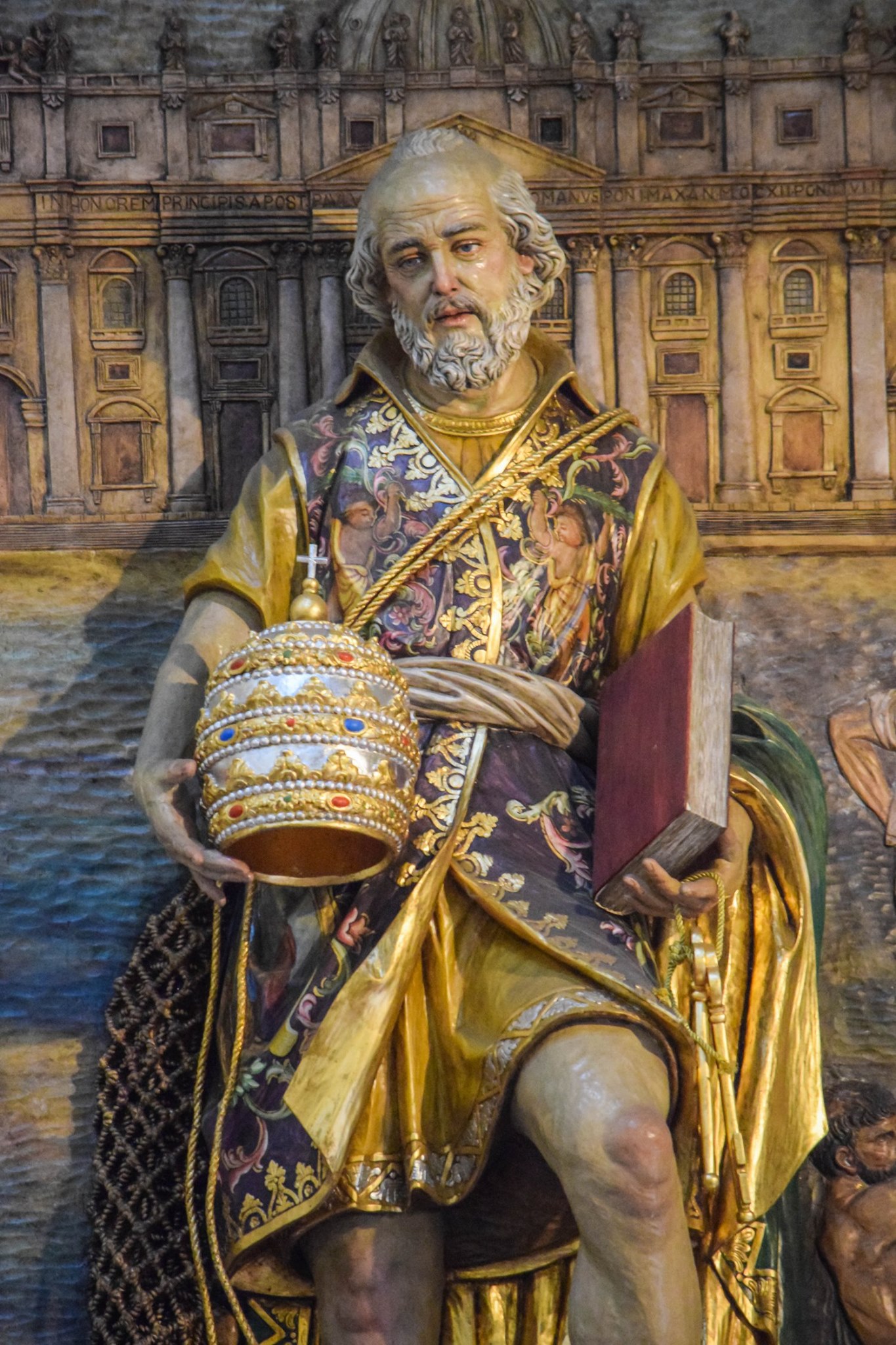
Statue of St. Peter at the left side of the entrance to the Minor Basilica of the Cathedral of the Immaculate Conception in Malolos City. Photo by Lorenzo Atienza, 12 June 2019.

Thank you, Lord Jesus, for this Solemnity of your two leading Apostles St. Peter and St. Paul. Thank you in giving us the opportunity to confront ourselves anew of this very ironic problem we have in your Church: the difficulty of doing your work with our fellow disciples.

You know it so well, Jesus, of how often we wish to be left on our own than work with others because we have totally forgotten we are your stewards. We have forgotten how our very selves are an offering to you.

“I, Paul, am already being poured out like a libation, and the time of my departure is at hand. I have completed well; I have finished the race; I have kept the faith.”

2 Timothy 4:6-7

Most of the time, we are so concerned with our titles and ministry, programs and achievements and so many other things forgetting the most essential, YOU, “the Christ, the Son of the living God” (Mt. 16:16).

Give us the grace of wisdom and humility, Jesus, to be in communion with your fellow workers in the vineyard as well as with the sheep of your flock, like St. Peter and St. Paul who both transcended their differences, focusing only on YOU as our bond communion.

Teach us to be like St. Peter that despite his many flaws like impetuous generosity to the point of presumptuousness with moments of being hesitant, we may have his kind of solid loyalty to you Jesus. Most of all, like St. Peter, let us not resist the Holy Spirit who upsets our convictions to lead us where we do not want to go with you and for you.

Teach us also to be like St. Paul who was so bold and daring, always asserting his backgrounds as a Roman citizen and a former Pharisee, always insisting his being your Apostle and yet very conscious of his being fragile like a pot of clay or earthen vessel of your grace. Like St. Paul, give us the courage to resolutely go outside our comfort zone to proclaim your gospel to the nations amid the pains of being torn by our own people at home.

Prevail upon us, Lord Jesus, your servants that we may give you our faith and love to be your witnesses and mirrors of your living Church. Amen.

St. Paul’s statue at the right side entrance to the Minor Basilica of the Cathedral of the Immaculate Conception in Malolos City. Photo by Lorenzo Atienza, 12 June 2019.

Kung ang isda ay nahuhuli sa bibig…

Lawiswis ng Salita ni P. Nicanor F. Lalog II, Ika-28 ng Hunyo 2019
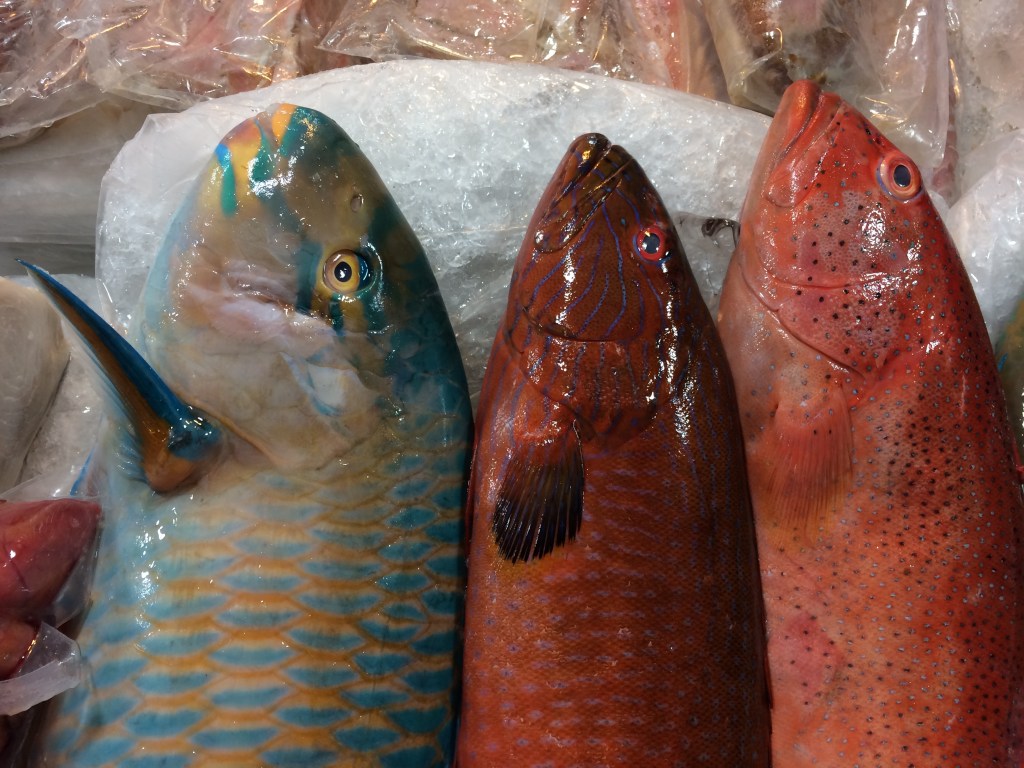
Mga pinagbibiling isda sa Dampa, Macapagal Blvd., Lungsod Pasay. Larawan kuha ng may akda ng tula, Nobyembre 2017.
Ang sabi ng mga matatanda
Sa bibig nahuhuli ang isda
Kaya sa bawat salita makikita
Pagkatao ng nagsasalita.
Karunungan at kamangmangan
Katapatan at kasinungalingan
Tiyak malalaman kapag napakinggan
Pinagsasasabi ng sino man.
Itong ating pamahalaan
Sadyang puro kabalastugan nalalaman
Walang pakialam sa kanyang mga mamamayan
Nalantad na katotohanan kamakailan.
Kuha ng may akda sa Dampa ng Macapagal Blvd., Nobyembre 2017.
Sadyang totoo itong ating kawikaan
Di lamang sa bibig nahuhuli ang isda
Kungdi yaong taong puro dada
Kadalasa'y siya ring kulang sa gawa.
Kung ang isda ay sa bibig nga nahuhuli
At sila'y makapagsasalita
Tiyak may katuturan at kahulugan
Kanilang mga pinag-uusapan.
Una nilang liliwanagin
Lalo ng mga galunggong at ayungin
Hindi sila gunggong tulad nating may nasyon
Sabihin sa payasong Senador mahilig magmarunong.
Marahil magsasalita rin mga isdang biya
Madalas nating minamaliit at sinasabing
Utak biya yaong mahihina gayong silang magagaling
Kaya lang sabihin pangungutya at panghihiya.
Mga isda sa Dampa sa Macapagal Blvd., Pasay, Nobyembre 2017.
Hindi ba ninyo pansin karangalan at kahihiyan
Mayroon itong mga isda kesa atin?
Masansang at malansang tingnan at pakinggan
Mga nasa Malakanyang sa mga salitang walang katuturan.
Huling huli na sa kanilang bibig
Kahit anong kabig, mga salita'y hindi kaibig-ibig
Sariling mamamayan at karagatan
Mga kayamanang dapat ingatan, kanilang pinababayaan.
Napaka saklap naman nitong kapalaran
Ng ating Inang Bayan: una'y salot ng tokhang
Nang tayo'y sukat na magising at maraming buhay inagaw sa atin
Pati ba naman karagatan at mga isda ay hindi na rin sa atin?

Sacred Heart of Jesus for a heartless world

The Lord Is My Chef Recipe for the Soul
Solemnity of the Most Sacred Heart of Jesus, 28 June 2019
Ezekiel 34:11-16 >< }}}*> Romans 5:5-11 >< }}}*> Luke 15:3-7
Sacred Heart of Jesus at the Jesuits’ Sacred Heart Retreat House and Seminar Center in Novaliches, Quezon City. Photo by author July 2018.

At a glance, the powers of darkness seem to rule the world.

Pains and sufferings are all around us as we see them in the news and, worst, experience them right in our homes and community!

The other Sunday evening, one of our parish lectors was hit by two riders driving under the influence of alcohol that severely damaged her face, particularly her right eye and front teeth. She did not see the motorcycle coming because the drunk riders were going so fast opposite the one way street.

The two riders have no driver’s license and both claim to have no money to pay for the medical expenses of our parish volunteer who comes from a very poor family.

I told her story to our Sunday congregation. Right after the Mass, two ladies came to me, handing me Php 25,000.00 in cash, pledging with more money for the medical and dental bills of our lector. Tears were rolling in my eyes as I thanked the two kind ladies who refused any recognition at all.

Yes, too often we are shocked at the evil going on in the world.

But, more surprising is the fact that it is always God who has the last laugh and final say in all these pain and sufferings around us.

There is always the more powerful Sacred Heart of Jesus offsetting our seemingly heartless world today.

Jesus the Good Shepherd with a lost sheep on his shoulder. A wood carving atop the cathedra of the Minor Basilica Cathedral of the Immaculate Conception in Malolos City. Photo by Lorenzo Atienza, 12 June 2019.

Jesus addressed this parable to the Pharisees and scribes: “What man among you having a hundred sheep and losing one of them would not leave the ninety-nine in the desert and go after the lost one until he finds it? And when he does find it, he sets it on his shoulders with great joy.”

Luke 15:3-5

I love that imagery of Jesus the Good Shepherd carrying on his shoulders the lost sheep. It is so powerful and evocative of God’s immense love for us sinners.

God fulfilled his promise to Ezekiel in the first reading that he would personally come to tend and look after us his sheep by sending us his Son Jesus Christ.

For his part, Jesus showed us in teaching this parable the solicitude of the Father in going beyond his words to the prophet of not just affectionately gathering and leading his sheep to green pastures but by communing with sinners of his time. What a wonderful way by Jesus showing us the pains God is willing to go to find one lost sheep.

From Google.

Jesus knows it so well how difficult and painful to get lost that he spent time with sinners, dining with them in many occasions. He knows the fearful thoughts running through us when we were wandering in darkness and sin that he never judges us nor condemns us like the woman caught committing adultery. Most of all, Jesus knows how difficult it would be for us who were lost to find our way back home, to go back to normal life of grace that he is willing to wait like with St. Paul and with St. Augustine.

Hence, when Jesus the Good shepherd finds the lost sheep, he sets it on his shoulders with great joy. Imagine also the spontaneous reflex to clutch to oneself whatever or whomever was lost and is found. That is how intense is the love of God through Jesus for every lost sheep when finally found. He is filled with joy that he carries the lost sheep on his shoulder to hurriedly bring it to safety and comfort, never to get lost again.

Moreover, here we find the great love of God for us who have gone stray in sin: he would patiently look for the lost sheep and likewise willing to patiently carry it on his shoulders so as not to make it suffer further in going back to the fold. Absolutely, no trace at all of any disgust in God in our going stray in sins!

From Google.

Eventually, Jesus proved this intense love of the Father to us in his dying on the Cross. He showed us how true love that comes from God and rooted in God is a love that is always meek and humble. A love that is unconditional, embracing both friends and foes. Yes, it is easier said than done but doable if we love in Christ Jesus.

From Google.

To love in Christ Jesus is to trust in God’s love. Without this trust in God’s love, we will always rely on our own self, prioritizing on our love of self than love of God and others. That is when darkness comes to rule over us, making us heartless too. Then, indeed, the world becomes evil because we have become its slave.

On this Solemnity of the Most Sacred Heart of Jesus when our nation is in so much darkness, Jesus is inviting us to make his love visible by trusting in his unfailing care as our Good Shepherd. When there is a major paradigm shift in the parable of Jesus wherein there are more lost sheep who are also self-righteous in knowing everything, calling those not on their side as stupid, we are more challenged today to witness Christ’s values of dignity of persons and peace. Let us pray for more patience with the appalling governance we now have courtesy of the majority of our people whom we have denied with God’s love and care for the longest time.

God our foundation

The Lord Is My Chef Breakfast Recipe for the Soul
Thursday, Week-XII, Year-I, 27 June 2019
Genesis 16:1-12, 15-16 >< }}}*> <*{{{ >< Matthew 7:21-29
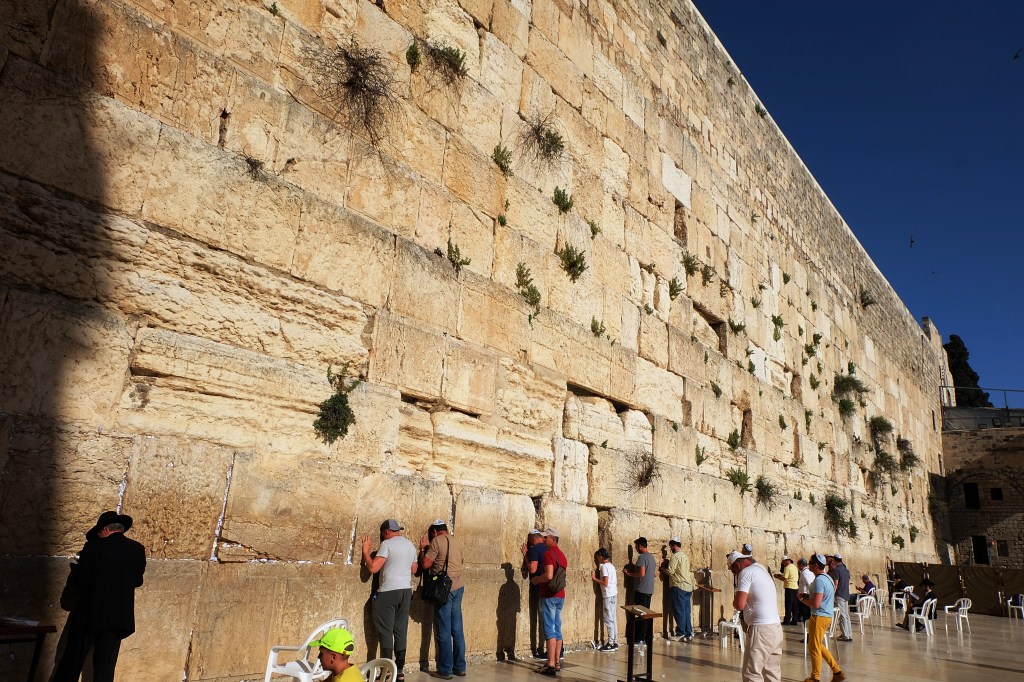
The massive Wailing Wall of Jerusalem reminds us of God as foundation of our lives: firm and unshakeable, always present with us. Photo by author, 04 May 2019.

It was raining so hard last night as I prayed to you, O God, about today’s gospel:

Jesus said to his disciples: “Everyone who listens to these words of mind and acts on them will be like a wise man who built his house on rock. The rain fell, the floods came, and the winds blew and buffeted the house. But it did not collapse; it had been set solidly on rock.”

Matthew 7:24-25

So often, O Lord, we dilly dally with our decisions, we can’t stand on our choices.

Like Sarai, the wife of Abram: in our first reading, she asked Abram to have a son with her servant Hagar so he could have an heir of his own.

You allowed it to bear fruit, Lord – so, that means, you went with their decision though you still have your own plans for Abram to become the father of nations.

And this is what I like with you, Lord our God: even if we make wrong decisions or forget all about it, you are always there ready to keep us whole and together. You did not forsake Hagar and her son Ishmael. In fact, you blessed them both!

O Lord, help us to always have you as our foundation in life so that even if we get lost, we could still find our way back to you.

Help us to have you as our foundation in life, Lord, so that even if our lives are like a piece of cloth shredded of its threads, there is always one, last, single thread where we could spin another cloth anew to be whole again.

Give us the grace, Jesus, to call you “Lord, Lord” with conviction so that no matter what happens with us, we remain grounded on you our foundation. Amen.

From Google.

Trusting God

The Lord Is My Chef Breakfast Recipe for the Soul
Wednesday, Week XII, Year I, 26 June 2019
Genesis 13:2, 5-18 >< )))*> >< )))*> Matthew 7:15-20
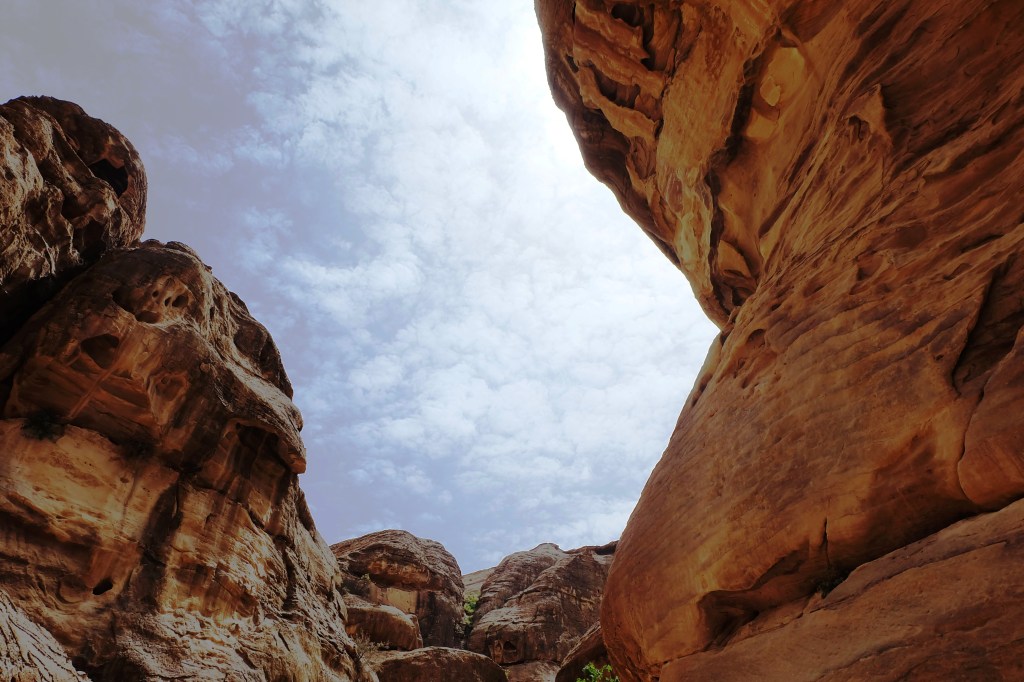
Petra in Jordan, 30 April 2019. Photo by author.

Almighty God, did you really appear to Abraham when you promised him to be the father of a great nation and made that covenant with him in the desert? What did he see in the desert that he put his faith in you so much, Lord?

The word of the Lord came to Abram in a vision…

Abram put his faith in the Lord, who credited it to him as an act of righteousness.

Genesis 15:1, 6

To have faith in you, O God, like Abraham is to see more what our eyes can perceive. To have faith in you, O God, like Abraham is to see and experience the fruits of believing in you. To have faith in you, O God, like Abraham is to see nothing at all except you.

When I think of your Holy Land, O Lord, there is really nothing much to see around but its vast wilderness. Most likely during the time of Abraham, it must have been more barren than today. It was in that nothingness that he saw your greatness, O God, that he put his faith in you.

How ironic that it is only when there is nothing left with us that we can truly see your great gifts for us, Lord: our being special, our being loved and cherished by you, our being simply ourselves that we are alive that truly make us have more faith in you than all the things you can shower upon us.

It is in our nothingness, in our simplicity that we become fully aware of your abundance blessings that we start to have faith in you.

Open our eyes of faith to always look for your fruits of love and kindness, mercy and forgiveness, life and fulfillment in us. Amen.

Choosing God

The Lord Is My Chef Breakfast Recipe for the Soul
Tuesday, Wk. XII, Yr.I, 25 June 2019
Genesis 13:2, 5-18 >< )))*> Matthew 7:6, 12-14
The picturesque Siq leading to Petra in Jordan. Photo by author 30 April 2019.

Every day, Lord God, you give us the wonderful gift of making choices, of deciding for ourselves to choose what is best for us. Unfortunately, we always forget the very essence of making every choice which is to always choose what is good, what is the best.

Very often, we make the wrong choices in life because we fail to consider in choosing you first, the highest good, the summum bonum.

Like Lot in the first reading, we are easily misled by beautiful sights, of abundance, of having everything as bases in choosing what is best for us.

We always forget that saying “not all that glitters is gold” as Lot would eventually found out later how sinful were the people living in those areas he had chosen where the cities of Sodom and Gomorrah thrived.

Teach us to be like Abraham, to always trust in your wisdom, in your plans, and in your providence.

Teach us to choose you first of all above all.

And choosing you, Lord, means choosing the path of sacrifice and of giving of self.

Jesus said to his disciples: “Enter through the narrow gate; for the gate is wide and the road broad that leads to destruction, and those who enter through it are many. How narrow the gate and constricted the road that leads to life. And those who find it are few.”

Matthew 7:13-14

Bless, O Lord, those who have to make important decisions today, those discerning your will. Enlighten their minds and their hearts to choose you only and to stand firm on that choice. Amen.

The narrow door leading to the Nativity Church in Bethlehem that reminds us of the need to be small, to be humble to truly meet Jesus Christ. Photo by author, 04 May 2019.

Where are you leading me, Lord?

The Lord Is My Chef Breakfast Recipe for the Soul
Solemnity of the Birth of John the Baptist, 24 June 2019
Isaiah 49:1-6 >< }}}*> Acts 13:22-26 >< }}}*> Luke 1:57-66, 80
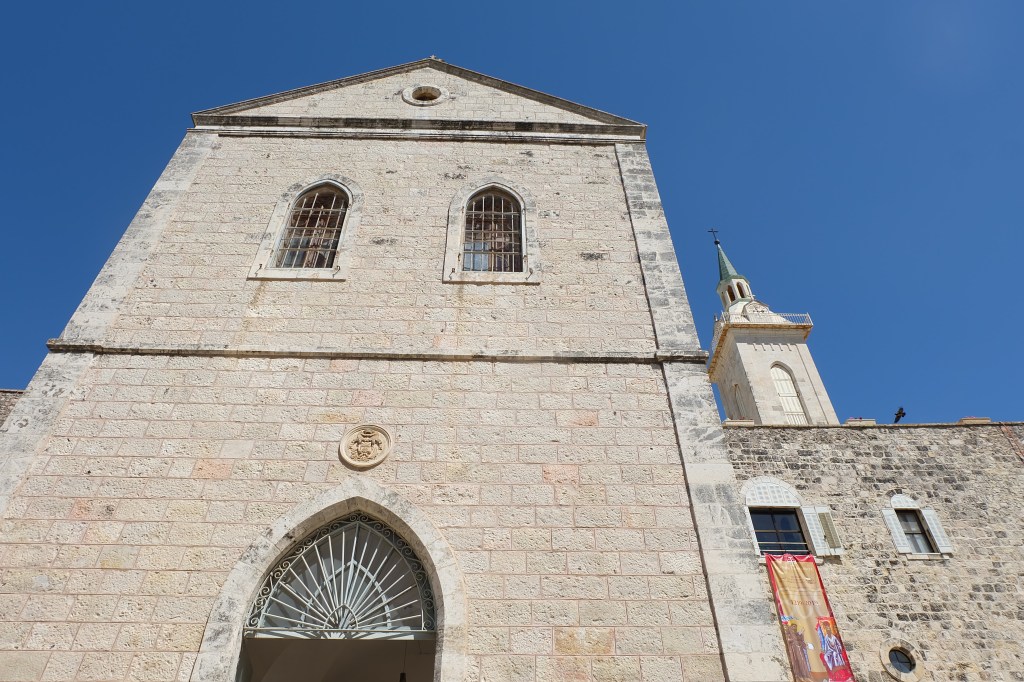
St. John the Baptist Church in Ein Karem, birthplace of St. John the Baptist. Photo by author, 05 May 2019.

Praise and glory to you, O God our almighty Father! Thank you very much for the gift of life, for the gift of being born into this world to see and experience your majesty. Indeed, it is always good to be alive, no matter what our condition or status in life may be.

Unfortunately, Lord, there are so many times in life that we fail to see life’s beauty because we have taken control over ourselves and everything, leaving no room for you to work in us, with us and through us. So many times, Lord, we wonder what we would be like what the neighbors and relatives of John the Baptist said when he was born.

All who heard this these things took them to heart, saying, “What, then, will this child be?” For surely the hand of the Lord was with him.

Luke 1:66

Perhaps, it will be best for us today to be silent as we celebrate John the Baptist’s birthday to let your hand be upon us too, O God, so we may ponder and pray where you are leading us.

It is the start of work and studies for another week. Some of us are getting tired of the routine, some of us could no longer find meaning and direction in life. And some of us are on the brink of giving up on our many plans and even with our very lives!

Let your hand be upon us, Lord, and lead us to your direction. Guide us with your Holy Spirit. Teach us to lay aside our plans and personal agenda to allow you to take us where you would want us to be. Give us the courage to take that plunge into the unknown, trusting you alone wherever you may be leading us.

So many times Lord, we are like John the Baptist’s father Zechariah who believe so much with ourselves that we forget to trust you.

And many times, too, we are like the relatives and neighbors of Elizabeth who always interfere with your plans, insisting on following traditions and patterns, preventing you from surprising us.

Keep us silent today, Lord, to hear you more, to follow you more wherever you are leading us. Amen.

Pilgrims outside the Church of St. John the Baptist in Ein Karem waiting for their turn to enter his birthplace. What a beautiful sight of people still patiently waiting for God to lead them closer to him.

“When The Morning Comes” by the Kalapana (1975)

The Lord Is My Chef Sunday Music, 23 June 2019
Sunrise at Lake Tiberias, the Holy Land, 02 May 2019. Photo by the author.

Our Sunday music on this Solemnity of the Body and Blood of Jesus Christ is an original composition by Daryl Hall of the dynamic duo “Hall and Oates” included in their “Abandoned Luncheonette” album released in 1973. Two years later, the upcoming rock group who called themselves “Kalapana” based in Hawaii did a cover of the Hall composition that became a hit that many thought it to be their original.

What I like with Kalapana is how they can make sad songs sound good like “When the Morning Comes” or their more popular hit “The Hurt”.

There is too much darkness in their songs, of disappointments but, the way they sang them you forget all their sad messages.

Went down town to see my little lady
She stood me up and I stood there waiting
It’ll be alright,
When the morning comes

Well now I’m up in the air with the rain in my hair
Got nowhere to go I can go anywhere
It’ll be alright
When the morning comes

I’m just passin’ and I’m not askin’ that you be anyone but you
When you come home, try to come home alone
It’s so much better with two

Well now I’m out in the cold and I’m growin’ old
Standing here waiting on you
It’ll be alright 
When the morning comes

Ooh ooh ooh ooh
When the morning comes
Ooh ooh ooh ooh
When the morning comes

There will always be darkness in our lives.

And that is why Jesus came, not really to remove darkness but, to accompany us so we can make it through the night until the morning comes.

But most of all, on this Solemnity of His Body and Blood, Jesus invites us to be his presence in the world plunged in darkness by always trying to see him in the face of everyone we meet.

As most people say, darkness ends and morning comes the moment we come to recognize the face of another person as our brother or sister.

Happy listening to everyone and enjoy your Sunday!

From “no body” to “some body”

The Lord Is My Chef Sunday Recipe for the Soul
Solemnity of the Body and Blood of Christ, 23 June 2019
Genesis 14:18-20 >< )))*> 1 Corinthians 11:23-26 >< )))*> Luke 9:11-17
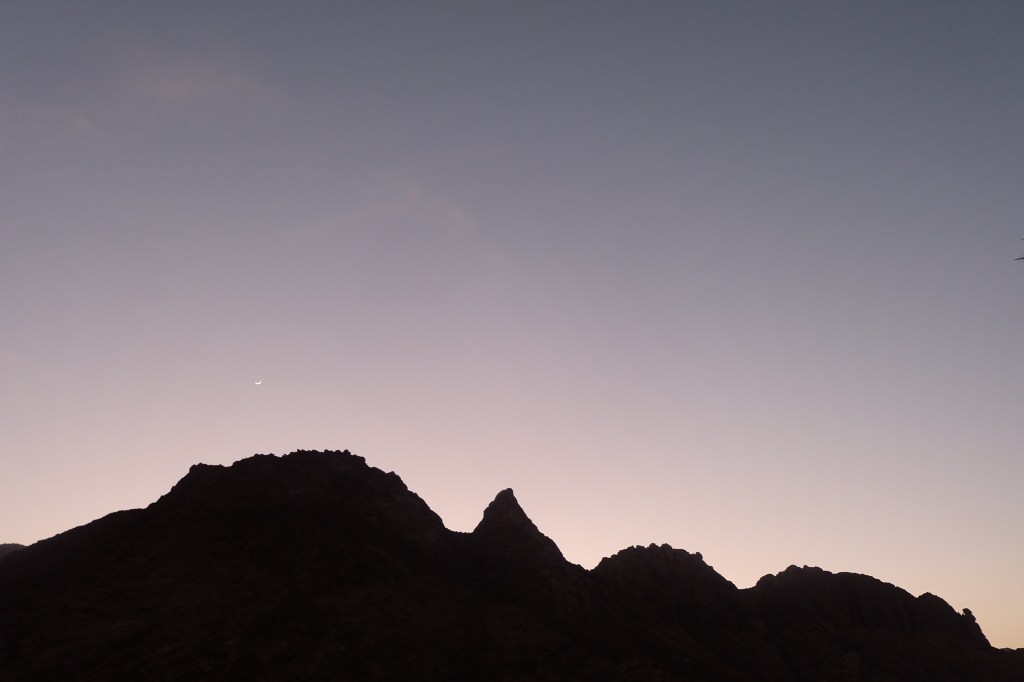
Darkness descending upon the Sinai mountain range at St. Catherine, Egypt, 07 May 2019. Photo by author.

We all fear darkness.

It is difficult to do things in darkness because our sight is always impaired. We cannot see things clearly, giving rise to many imaginations of evil lurking behind darkness.

Even in the bible, darkness means the presence of evil. And this is why the bible teems with many stories of God coming to his people in darkness. Most especially in the gospels where Jesus comes to comfort and console his disciples and the people in darkness.

But there is more sinister in darkness, a kind of darkness that envelops people and not just the world around us. It is a darkness that refuses to see the other person as a brother and a sister. This we see in our gospel on this Sunday Solemnity of the Body and Blood of Jesus Christ.

As the day was drawing to a close, the Twelve approached him and said, “Dismiss the crowd so that they can go to the surrounding villages and farms and find lodging and provisions; for we are in a deserted place here.” He said to them, “Give them some food yourselves.” They replied, “Five loaves and two fish are all we have, unless we ourselves go and buy food for all these people.”

Luke 9:12-13

It is a very classic situation we always find ourselves in when more than the darkness around us is the darkness within when we refuse to see the face of everyone as another person who needs to be cared for, who must be fed and kept warm. Most of all, assured as a brother and a sister, being our kin or one of us.

This is the tragedy that happened recently at the Recto Bank where 22 local fishermen were abandoned at sea when a Chinese fishing vessel rammed their boat while safely anchored in the dead of the night.

After several hours at sea, Vietnamese fishermen rescued the 22 Filipinos, gave them water, and fed them with rice and noodles. Despite their language barrier that was another kind of darkness, the Filipino and Vietnamese fishermen understood each other in hand gestures, repeating only three words they knew so well: “Philippines. Vietnam. Friends.”

But the scariest darkness that the 22 local fishermen went through did not happen at sea but at home under glaring lights of camera when government officials downplayed their harrowing experience, dismissing it as an ordinary maritime accident involving “ordinary folks” (i.e., fishermen) and worst of all, after barraging them with so many questions and insinuations sweetened with offers of cash and materials, they eventually succumbed to darkness that they retracted their earlier statements of the incident.

Photo from Yahoo News.

The Recto Bank incident showed us the blinding darkness we are into as a nation. It shows how as the only Christian nation in this part of the world we have been living in too much darkness within us, how we have long forgotten to see the other person as a brother or a sister, that we have stopped caring for one another despite our too many devotions and religiosity.

Like the Twelve, we always wanted to secure our own comfort when darkness comes that we keep on dismissing others away, unmindful of whatever would happen to them along the way. This we do in all sectors of society when we do not care for those next to us if there would still be enough funds or resources or infrastructures after us. This is most evident in our garbage disposal and lack of care for the environment when we think only of our own selves, regardless of the next generation.

And, so, here we are groping in darkness even in the Church when both the clergy and the laity have been blinded by edifice complex, erecting monuments for their own glory forgetting those in the margin. How can some of us in the Church hide in darkness with all kinds of abuses, sexual and financial exploitation of those entrusted to us?

Today in this Solemnity of the Body and Blood of Jesus Christ, we are invited to dispel the darkness within us by seeing again that everything we have is from God.

In the first reading we heard the mysterious person Melchizedek, king of Salem and priest of the Lord. He had blessed Abraham with bread and wine after he had won over four pagan kings. Unlike most victors in any war, Abraham refused to take all the possessions of the pagan kings he had defeated because it was very clear to him his victory was due to God’s intercession. He claimed nothing to himself and that is he gave a tenth of everything to Melchizedek who then blessed him. It is exactly what we do in every Sunday Mass when we celebrate each week with gratitude to all of God’s blessings we have received. Like Abraham, we share not only our selves but also our treasures to God through our Mass offerings.

This is what St. John Paul II called as the “cosmic character” of the Eucharist.

In his 2003 encyclical “Ecclesia de Eucharistia”, St. John Paul II described this cosmic character of the Eucharist as Christ’s saving presence in the community of the faithful everywhere (cf. Ecclesia de Eucharistia 8-9). This happens when we enter into this mystery of Christ in the Holy Communion of the Mass whereby after receiving his Body and Blood, we become his very presence in the world which St. Paul explained in our second reading today.

With this in mind now, we see the larger context of the instruction of Jesus to the Twelve in the wilderness at that time of darkness to “Give them some food yourselves” (Lk.9:13). During his last supper, Jesus took bread and said “This is my Body…this is my Blood.” You who receive me as your Teacher and Lord, see my Body in every-body. No one is a no-body.

Whenever there is a darkness within every person, there is surely a failure in recognizing this Body and Blood of Jesus. Recall how it was in the darkness of the night when Judas sold Jesus for 30 pieces of silver to the priests. It was also in the darkness of the night when he betrayed Jesus.

There was also Simon during the darkness of the night who denied Jesus thrice when he failed to see him as his Lord for fear of being arrested too.

Then there were the two disciples going back to Emmaus on the evening of Easter: they were both in the darkness of despair and loss after the Crucifixion of Jesus whom they did not recognize walking with them at sunset. And when they recognized him at the breaking of bread, despite the darkness around them, they hurriedly back to Jerusalem to inform the Apostles how they have met the Risen Lord!

The Solemnity of the Body and Blood of Christ today reminds us that despite the many darkness in the world today, even right in our very hearts, Jesus comes to dispel them so we can see more the beauty and wonder of life and every person around us.

Is there any darkness in you that needs to be dispelled by Christ’s Body and Blood? Are you ready to offer him that darkness in your heart to become his light in this dark world?

A blessed week to everyone!

Photo by Pixabay on Pexels.com