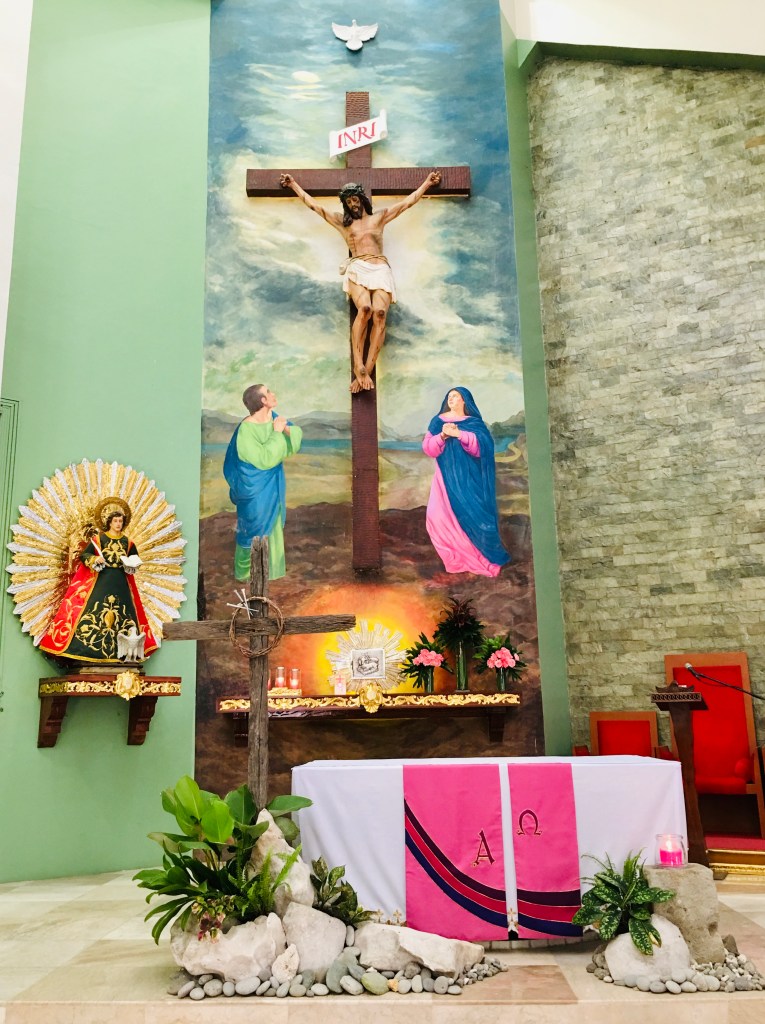
Easter is signs & Scripture together. Always.

The Lord Is My Chef Sunday Recipe for the Soul by Fr. Nicanor F. Lalog II
Easter Sunday of the Lord's Resurrection, 31 March 2024
Acts 10:34, 37-43 ><}}}}*> Colossians 3:1-4 ><}}}}*> John 20:1-9

A blessed happy Easter to everyone! The Lord is risen. Let us rejoice amid all the darkness and sufferings still hovering over our lives at this time as Easter gives meaning to these all, enabling us to experience God closest with us in Jesus Christ.

Let Christ’s assurance of deliverance, of salvation burst forth from your heart, from the depths of your soul that amid all these sufferings, we have already won in Jesus. It is in those darkness and emptiness where Jesus is found as the first disciples realized that first Easter morning.

On the first day of the week, Mary of Magdala came to the tomb early in the morning, while it was still dark, and saw the stone removed from the tomb. So she ran and went to Simon Peter and to the other disciple whom Jesus loved… When Simon Peter arrived after him, he went into the tomb and saw the burial cloths there… Then the other disciple also went in, the one who had arrived at the tomb first, and he saw and believed. For they did not yet understand the Scripture that he had to rise from the dead.

John 20:1-2, 6, 8-9
Jesus Christ resurrection. Christian Easter concept. Empty tomb of Jesus with light. Born to Die, Born to Rise. “He is not here he is risen”. Photo from iStock/GettyImages.

We can never experience the joy of Easter if we skip going through or deny the agonies and pains of Good Friday. See how in the glory of Christ’s Resurrection is found the empty tomb set in the darkness of dawn, evoking in us the realities of life.

The problem in our time is when people see life only as Easter without Good Friday like those who want to get rich by gambling without working hard or students who want to pass exams without studying. At the other extreme are those who see life only as all Good Friday without Easter, becoming indifferent to joy and life itself.

Absence of sufferings can happen only in heaven after we have died. In rising from the dead, Jesus enables us today to taste heaven, to have a glimpse of eternal bliss which Easter makes a reality within us. That is why all the 50 days of Easter beginning today until Pentecost Sunday are actually counted as one big day because we can never grasp the fullness of Christ’s Resurrection in just one day or one month. As we have reflected last Sunday, life is like the Palm Sunday in the Lord’s Passion, a daily movement from the Lord’s Passion, Death, and Resurrection.

Actually, every celebration we have in the Church, from Christmas to feasts of Mary and the saints are images of Easter, of Jesus Christ’s Resurrection, of His triumph and glory. This we find in that last line of our gospel account today:

Then the other disciple also went in, the one who had arrived at the tomb first, and he saw and believed. For they did not yet understand the Scripture that he had to rise from the dead.

John 20:8-9
Crucifixion and Resurrection. He is Risen. Empty tomb of Jesus with crosses in the background and cinematic lighting. From IStock/GettyImages.

Many times our life is an empty tomb with nothing inside except signs of Jesus. John used the word sign to refer to the Lord’s miracles, words and actions that point to Him as the Christ, the awaited Messiah. Hence, his gospel is also known as “the book of signs” with seven miracles and teachings by Jesus that signify Him as the Son of God.

Here at the last two chapters of his gospel we find John’s wisdom in using both explicitly and implicitly the word and concept of sign to point at Jesus as the Christ. The empty tomb itself is the sign pointing to Jesus who had risen; since He was not there, He must be somewhere alive! How do we prove it? Again with another signs, the burial cloths neatly folded inside the empty tomb that showed the body of Jesus was not stolen.

From wikipedia.commons, healing of a leper,

John have used this formula repeatedly in his gospel, slowly building up to prepare his readers for the great signs of Easter like the changing of water into wine at Cana, the many cures, the feeding of more than 5000 in the wilderness, the thrusting of lance into the Lord’s side while on the Cross from which flowed blood and water. All of these he consistently claimed as signs that he as “the other disciple” had seen or witnessed.

Whenever we prayerfully read and reflect John’s gospel, we too see and hear Jesus is the Christ in the signs he presents us until finally, we find Jesus present in the many experiences of our lives! John wants us to understand the interaction between signs and Scripture which Luke explained beautifully in the story of the road to Emmaus which is the gospel proclaimed on the evening of Easter Sunday.

For John and the evangelists which Vatican II stressed in Dei Verbum, the Scripture allows us to understand the signs that also lead to understanding the Scripture. If the Apostles have not learned from the Scriptures that Jesus must rise from the dead, the empty tomb would have remained a puzzle to them. Likewise, it was the sign of the empty tomb that led them to understanding fully the Scripture. And that has always been the case in our lives until now that is why it is so essential we cultivate a prayer life which is a relationship with God in Jesus not just a recitation of prayers or celebration of the Mass.

Easter invites us to enter into a relationship with God in Jesus, through Jesus and with Jesus through the many signs He joined us through our trials and tribulations in life so we can be one with Him in His Resurrection.

Detail of the Anastasis (Resurrection) fresco in the Church of the Holy Saviour in Chora, in Istanbul, Turkey. It depicts Jesus’ descent into limbo to liberate Adam and Eve and all the righteous who have been waiting for him there. Photo and caption from Salt and Light Catholic Media Foundation (slmedia.org).

How sad in this age when many people have stopped joining church celebrations and communal prayers when they choose to go on vacation during Christmas and Easter, totally unmindful of Jesus Christ’s outpouring of love for us.

How sad when many of us practically live in the media, so concerned with the palabas (the outside peripherals) than the inside, the more essential even in our spiritual celebrations.

How sad when people preferred to video the procession of the Blessed Sacrament on Holy Thursday than to kneel and pray in recognition of Christ’s real presence.

From shutterstock.com

How sad for those who skip Masses on Sundays but would devoutly join the Good Friday processions that have become more of fashion show and picnic when people are busy talking, texting, taking videos or pictures, eating and drinking than praying and meditating the various scenes of the Lord’s Passion and Death.

How sad for those who have made their carrozas a pompous spectacle and display of family wealth than catechism and devotion. One would seriously wonder where is the dolor of Viernes Dolores or the grief and sadness for the Lord’s passion, death and burial depicted by the Holy Week processions. Not to mention the kabaduyan and ka-ek-ekan by priests at the repositories of Holy Thursday that after Visita Iglesia you hardly hear people talking how they were edified at the solemnity of the church they visited; people now talk more after Visita Iglesia of how they were awed by the decors and effects of repositories, not of Christ’s real presence.

Worst, the most crazy and foolish of all is how most Catholics end their devotions at Good Friday without realizing the most important of all celebrations is Easter which is the Mother of all feasts in our Church, the very heart of our faith.

This Easter, let us salvage the remaining gifts and grace God pours upon us in Jesus through this Season by opening our hearts, our minds, our total selves to the Risen Lord we encounter in the Scripture and many signs in our lives. Amen. Have a blessed Easter!

Our hands & the hands of God

40 Shades of Lent by Fr. Nicanor F. Lalog II
Solemnity of the Palm Sunday of the Lord's Passion-B, 24 March 2024
Isaiah 50:4-7 ]]+[[ Philippians 2:6-11 ]]+[[ Mark 15:1-39
From influencemagazine.com

As you all know by now, I turned 59 years old last Friday, March 22. For the second consecutive year, I have moved my personal annual retreat to my birthday so I can pray more, thank God more for his gift of life to me. This is one of my realizations in turning 59 years old:

"The more we enter the heart of Jesus
where we find peace and fulfillment,
joy and security,
the more we also discover
the dark and ugly sides of life. 
Darkness, pains, sickness, failures,
and other forms of sufferings
come to the fore when we are
in God’s loving presence,
and vice versa."

The more we see and experience God’s beauty, we also see and experience Christ’s agony and passion within our very selves and among our brothers and sisters. These two faces of life ever present in our earthly journey are perfectly shown to us by today’s celebration called “the Solemnity of the Palm Sunday of the Lord’s Passion.”

What we have this Sunday is actually a twin-celebration.

Palm Sunday came from the liturgy of the early Christians living in Jerusalem in the fourth century who started the Holy Week tradition with a procession of palm branches that later spread to France and Germany where the blessing of palms was introduced. Later in Rome in the 12th century, the Pope began the tradition of commemorating the Lord’s Passion on this Sunday with a proclamation of that long gospel narrating Christ’s entry into Jerusalem leading to His Last Supper until His Crucifixion and Death. It was only in 1965 during Vatican II when these two celebrations were combined into what we now have as the Solemnity of the Palm Sunday of the Lord’s Passion. 

The merging of these two celebrations sums up the mystery we celebrate during Holy Week as well as the mystery of our everyday life wherein we have the glory of Palm Sunday in one hand and at the other hand, the darkness of our own passion as a sharing in the Pasch of the Lord. 

Photo by author, Chapel of St. Francis Xavier, Sacred Heart Novitiate, Novaliches, 20 March 2024.

I have intended a play in the word “hand” there as I prayed over our gospel this Sunday during my recent retreat. As directed by my Jesuit guide, I reflected on the four gospel accounts of the Lord’s Passion where I found the word “hand over” used so many times.

“To hand over” is the more literal translation of the Greek word paradidomi used by the evangelists in the “betrayal”of Jesus by Judas Iscariot. In Filipino, it is ipasa and ibigay that are more picturesque than ipagkanulo which is our equivalent of “to betray”.

Now, look at how our Filipino word ipasa takes on a deeper meaning when we reflect on how Jesus was “handed over” first by Judas Iscariot to the chief priests who then “handed him over” to Pilate who eventually “handed him over” into death by crucifixion. Pinagpasa-pasahan nila si Jesus! And that is how evil we are humans with God and with one another, using our very own hands, handing them over by manipulating them for our own selfish ends.

Then Judas Iscariot, one of the Twelve, went off to the chief priests to hand him over to them. When they heard him they were pleased and promised to pay him money. Then he looked for an opportunity to hand him over… He (Judas Iscariot) came and immediately went over to him and said, “Rabbi.” And he kissed him. At this they laid hands on him and arrested him.

Mark 14:10-11, 45-46

As soon as morning came, the chief priests with the elders and the scribes, that is, the whole Sanhedrin, held a council. They bound Jesus, led him away, and handed him over to Pilate… So Pilate, wishing to satisfy the crowd, released Barabbas to them, and after he had Jesus scourged, handed him over to be crucified.

Mark 15:1, 15
Photo by author, Chapel of St. Francis Xavier, Sacred Heart Novitiate, Novaliches, 20 March 2024.

This handing over of Jesus – pinagpasa-pasahan si Jesus in Filipino took its lowest point in Matthew’s account when Pilate “took water and washed his hands in the sight of the crowd” (Mt. 27:24) to claim innocence in the Lord’s death. That’s how dirty our hands as humans have become! How ironic and tragic that the more we wash our hands in repeatedly handing over our family and friends, colleagues and even country, the more our hands have become dirty.

This Sunday, Jesus is inviting us to examine our hands, to clean our hands so that they become His hands of loving service, mercy and forgiveness, kindness and understanding and care for each other and nature. Let us remember the lessons of COVID-19 four years ago today when we constantly washed and disinfected our hands to be more responsible with each other, with nature and with life. Our problems are often the results of things getting off hand, out of control or too much control as we manipulate everything even God, persons and nations through elections as well as habits and patterns for economic and social reasons

“Ecce Homo” painting by Vicente Juan Masip (1507-1579) from masterapollon.com

It is so different with the hands of God expressed so beautifully in our first reading from the Prophet Isaiah’s Song of the Suffering Servant who was fulfilled in Jesus Christ our Lord and Savior.

The Lord God has given me a well trained-tongue, that I might know how to speak to the weary a word that will rouse them… and I have not rebelled, have not turned back.

Isaiah 50:4, 5

Here is a beautiful picture of God in Jesus Christ whose hands we have tied so many times as we insisted on our own ways, in seeking instant gratifications, in manifesting power through sheer strength. Here lies the beauty of God’s hands in Jesus Christ so opposite with our manipulating and controlling hands because His is of submission. Or passion.

The word “passion” is from the Latin patior that means to suffer or to undergo. It is related with the words passivity and patience – exactly like patients who just lie and wait on their beds, waiting for the doctors and nurses, for them to be healed and get better.

Passion here connotes passivity in the positive sense when we strip ourselves naked before God in order to be open to new possibilities like Jesus Christ eloquently expressed by St. Paul in the second reading when He “emptied and humbled himself, becoming obedient to the point of death, even death on a cross” (Phil.2:7, 8). 

Photo by author, Chapel of the Holy Family, Sacred Heart Novitiate, Novaliches, June 2016.

In his Passion, Jesus taught us that true power is in weakness like him dying on the Cross. Now here we find something so interesting with the synoptics account of Christ’s death when “he breathed his last” (Mk. 15:37) leading to the faith of a Roman soldier, a pagan.

When the centurion who stood facing him saw how he breathed his last he said, “Truly this man was the Son of God!”

Mark 15:39

What was in Christ’s final breath that convinced the Roman centurion that Jesus was indeed the Son of God? The fourth gospel gives us the answer: When Jesus has taken the wine, he said, “It is finished.” And bowing his head, he handed over the spirit (Jn. 19:30).

Here again we find the words “handing over” but this time in the positive sense. Jesus never betrayed the Father nor anyone; he instead handed over Himself to God and to us. That is passion when we suffer passively in the positive sense because we love, we care, we understand.

For us to enter into the heart of Jesus this Holy Week, we have to enter into His passion too. That is to submit, to surrender all our powers to God through our parents and superiors by emptying ourselves of our pride to be filled with Christ’s humility, justice and love. Amen. A blessed Holy Week to everyone!

Photo by author, Chapel of the Holy Family, Sacred Heart Novitiate, Novaliches, June 2016.

Lent is believing to see Jesus

40 Shades of Lent by Fr. Nicanor F. Lalog II
Fifth Sunday in Lent-B, 17 March 2024
Jeremiah 31:31-34 + Hebrews 5:7-9 + John 12:20-33
From Google.com.

We now come to the penultimate Sunday of Lent before entering the Holy Week on Palm Sunday as we listened to the final installment of John’s narration of Jesus Christ’s final six days in Jerusalem before his Passion, Death, and Resurrection.

Our gospel today is actually set on Palm Sunday when Jesus triumphantly entered Jerusalem.

Some Greeks who had come up to worship at the Passover Feast came to Philip, who was from Bethsaida in Galilee, and asked him, “Sir, we would like to see Jesus.” Philip went and told Andrew; then Andrew and Philip went and told Jesus. Jesus answered them, “The hour has come for the Son of Man to be glorified. Amen, amen, I say to you, unless a grain of wheat falls to the ground and dies, it remains just a grain of wheat; but if it dies, it produces much fruit. Whoever loves his life loses it, and whoever hates his life in this world will preserve it for eternal life. Whoever serves me must follow me, and where I am, there also will my servant be. The Father will honor whoever serves me.

John 12:20-26
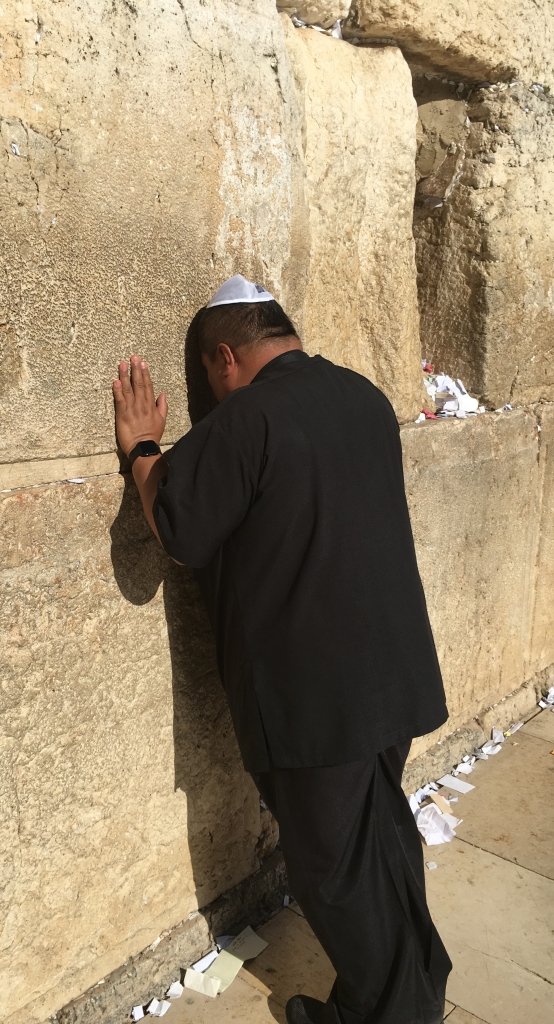
Praying at the wailing wall of Jerusalem, May 2019.

As we have been telling you, John’s gospel teems with many symbolisms and hidden meanings in the way he narrated events and scenes like when those Greeks asked Philip and Andrew to see Jesus.

If they simply wanted to catch a glimpse of Jesus, they could have easily satisfied themselves because Jesus never hid at that time. He had just entered Jerusalem, so warmly welcomed by the people, even by those Greeks perhaps. Most likely, they must have heard many things about Jesus that they wanted to go farther in requesting to see him. Hence, it was more than a request to have an audience with Jesus but something about their faith in him as they were pagans converted to Judaism.

We have to remember here that John used the verb “to see” to also mean “to believe” in his gospel account like when he narrated on Easter morning how Peter and the “other disciple” ran to the empty tomb “and he saw and believed” (Jn.20:8).

Keeping that detail on Easter morning at the empty tomb, we now understand why John never told us if Jesus met at all the Greeks requesting to see him because to see and believe Jesus is to accept and embrace wholly his Passion and Death on the Cross. This is why John jumped into Christ’s monologue upon being told by Philip and Andrew on the Greeks’ request.

Photo by author, 2018.

What a beauty we have here because we are those Greek converts too, constantly searching, seeking to go farther in our faith in Jesus despite our sins. As we get older and mature, we realize how our days are numbered, that we will definitely die someday and meet God.

Lately I have been thinking why do we really have to be happy on our birthday – much less why greet celebrators a happy birthday when in fact every birthday is a step closer to death, is it not? I am not being morbid but it is the truest matter of fact in life. Life is a lifelong process of preparation for death. What comes next when we age? Death.

However, our faith in Jesus tells us it is not simply death as an end but a blessed death that leads to fullness in life, literally and figuratively speaking.

That is where the beauty of Christ’s parable of the grain of wheat lies, “Amen, amen, I say to you, unless a grain of wheat falls to the ground and dies, it remains just a grain of wheat; but if it dies, it produces much fruit.”

We do not simply die in the end or even in the in-betweens of life through those failures and losses, defeats and wrong moves. We get better in life as we forge on.

It is the undeniable truth written in our hearts as God told Jeremiah in the first reading, that we are God’s, we solely belong to him no matter how hard we try to flee from him and disobey him in our sins, he would always find us even if we get lost. St. Augustine said it so well, “You have made us for yourself, O Lord, and our heart is restless until it rests in you.”

There is always that inner longing for God our Creator and End. That is why God sent us Jesus his Son as the author of the Letter to the Hebrews explained in the second reading so that through all our darkness and confusions, sufferings and trials, especially in those daily deaths that weaken us in our desire to search and follow him we may still find to have the strength and courage to forge on in wanting to see him by being with him where he is always – at the Cross.

Photo by author, 2018.

This is the grace of this fifth Sunday in Lent: we believe so we may see, we die in order to live. Both believing and dying in order to see and to live are grace from God freely given to us even if we are not worthy at all.

The world tells us always that to see is to believe but Christ tells us that first we must believe so that we would see; it is the same thing with living – die to one’s self in order to live fully because “whoever loves his life loses it.”

When we read or watch the news, many times we feel so exasperated and hopeless with the world. Imagine a resort right in a natural wonder there in the Chocolate Hills of Bohol? Or, land developers covering swamps without any considerations for others and the environment? Or, the mess and wastage happening in our offices, schools and homes? Do not forget us your priests living far from witnessing Christ in charity and service?

It’s a crazy world! And in all these abuses, the more we have become empty and lost that is why in the process, more and more of us never stop to believe and see, to hope and pray like those Greek converts seeking Jesus, for only in him we find rest and peace. Let us pray:

Lord Jesus Christ,
many times I really do not know
where I am going;
I cannot see
the road ahead of me
while many times
I wonder if I am really
following you and doing your will;
but at least, Jesus,
I am sure it is still you
whom I wish to see,
it is you I always desire
even if many times
it does not show
because this time
I am sure
you alone
is my God,
my life,
my fulfillment.
Therefore, like the psalmist,
"Create a clean heart for me,
O God, and a steadfast spirit
renew within me.
Cast me not out
from your presence,
and your Holy Spirit
take not from me"
(Psalm 51:12-13).
Amen.

Have a blessed week ahead, everyone!

From Google.com.

Nicodemus and James Taylor

Lord My Chef Sunday Music by Fr. Nicanor F. Lalog II, 10 March 2024
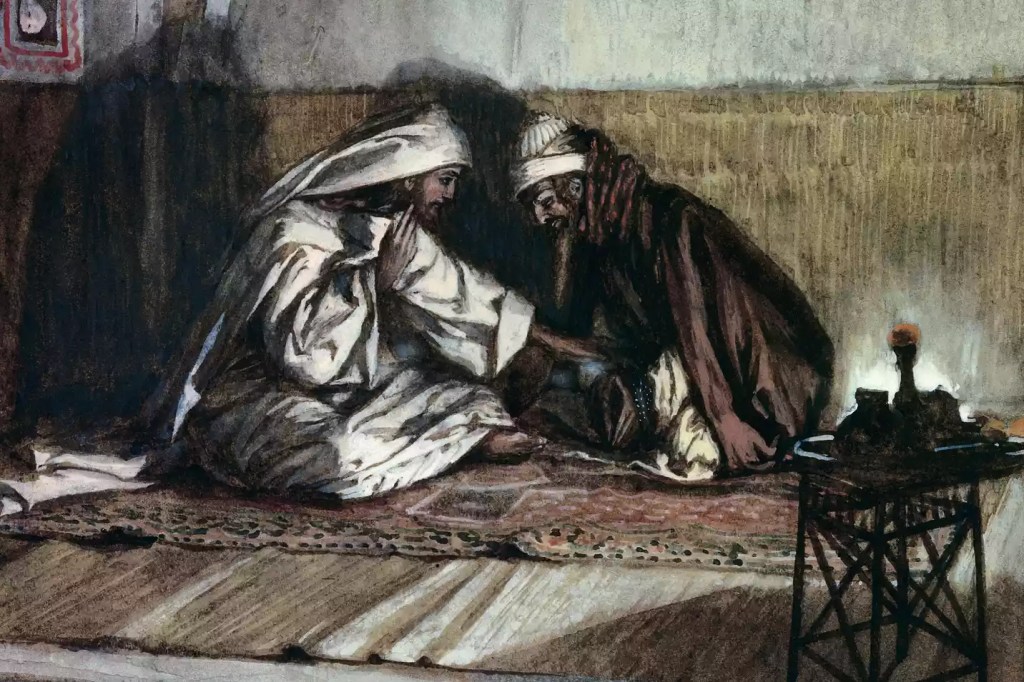
“Nicodemus and Jesus” painting by James Tissot (1836-1902) from SuperStock/GettyImages via learnreligions.com.

One of our favorite singer-songwriters James Taylor is coming next month for a one-night concert at the Mall of Asia Arena; hence, we are featuring two of his songs we find so related with the gospel message this fourth Sunday in Lent also known as Laetare or Rejoice Sunday.

But first, let us take a slight deviation from our usual manner of coming up with the music right away as we realized too the strong links between Nicodemus and James Taylor in their experiences.

Nicodemus belonged to the group of Pharisees, one of the enemies of Jesus at that time. But he admired and believed in Jesus that is why he chose to visit the Lord at night so that people would not notice. Eventually, Nicodemus became a disciple of Jesus after Good Friday after he and another Pharisee named Joseph of Arimathea took the body of Christ and buried him in a tomb (https://lordmychef.com/2024/03/09/lent-is-the-love-mercy-of-god-in-me/).

Nicodemus’ coming to see Jesus at night evoked his situation of being in the darkness of fears and confusions, trying to find directions in life which he found in Christ. It was similar with James Taylor’s plight he beautifully expressed in his 1970 hit Fire and Rain which is about the suicide of a childhood friend as well as his coping with his addiction and depression following his fame.

Just yesterday morning, they let me know you were gone.
Suzanne, the plans they made put an end to you.
I walked out this morning and I wrote down this song,
I just can’t remember who to send it to.
I’ve seen fire and I’ve seen rain. I’ve seen sunny days that I thought would never end.
I’ve seen lonely times when I could not find a friend, but I always thought that I’d see you again.

Won’t you look down upon me, Jesus, You’ve got to help me make a stand.
You’ve just got to see me through another day.
My body’s aching and my time is at hand and I won’t make it any other way.
Oh, I’ve seen fire and I’ve seen rain. I’ve seen sunny days that I thought would never end.
I’ve seen lonely times when I could not find a friend, but I always thought that I’d see you again.

Many times, we find ourselves in situations like Nicodemus when everything is all dark like the night, or James Taylor going through fire and rain.

Now look, Jesus is most present with us when we are in the darkest darkness of the night, right in the middle of a raging storm. Many times we could not see him because he hugs us, embraces us to shield us from more harms.

When Jesus told Nicodemus about his coming crucifixion – “when the Son of Man is raised up” – it was an assurance to us all too that Christ is with us in our worst situation because he suffered first for us on the Cross. I am so glad that JT mentioned Jesus in his song, pleading to the Lord to “look down upon me and help me make a stand.”

That is why we rejoice this Sunday: in the midst of our troubles and sufferings, there are bursts of joy and relief from Jesus within us dwelling in our hearts. And that is why, we find JT’s 1976 hit, Shower the People, so related too with our gospel this Sunday.

When Jesus told Nicodemus how “God so loved the world that he gave his only Son, so that everyone who believes in him might not perish but might have eternal life” (Jn.3:16), it was also a call for us all to be the love and mercy of Christ in the world.

Nicodemus eventually became a disciple of Jesus while JT is still very much around, having weathered so many fires and rains or storms in his life, both telling us how God finds ways to save us, even extricate us from our worst situation. Hence, the need for us to become the presence of Christ’s joy and mercy to people especially those closest to us so that they may realize and experience that God so loved the world because of the way we shower them with love through us.

You can play the game and you can act out the part,
even though you know it wasn’t written for you.
Tell me, how can you stand there with your broken heart ashamed of playing the fool?
One thing can lead to another; it doesn’t take any sacrifice.
Oh, father and mother, sister and brother, if it feels nice, don’t think twice,
just shower the people you love with love, show them the way that you feel.
Things are gonna work out fine if you only will do as I say, just
shower the people you love with love, show them the way you feel.
Things are gonna be much better if you only will.

Here is our doubleheader from the “Sweet Baby James”. Have a blessed, lovely week ahead!

*Both materials are not ours without any intentions at all of infringing its copyrights.

From YouTube.com
From YouTube.com.

Lent is the love & mercy of God in me

40 Shades of Lent by Fr. Nicanor F. Lalog II
Sunday Recipe for the Soul, Lent IV-B, 10 March 2024
2 Chronicles 36:14-16, 19-23 ><}}}}*> Ephesians 2:4-10 ><}}}}*> John 3:14-21
Photo of pink convolvulus from the Botanical Gardens of Jerusalem, flora.org.il.

Many times during prayer periods I banter with God especially when I feel overwhelmed by his kindness and love. Like last Thursday on my way to the adoration chapel when I passed by a row of banks.

As I knelt before the Blessed Sacrament to pray, I just felt like asking God: “BDO (Banco De Oro) ka ba, Lord? Kasi…you always find ways.”

That, for me, my dear friends is the meaning of this fourth Sunday in Lent – God never stops in finding ways to reach out to us, to be with us, to make us experience his love and mercy, kindness and forgiveness despite the hardness of our hearts.

Photo by author, 2019.

Our altars burst in shades of pink this Sunday called Laetare (Latin, rejoice) Sunday from the entrance antiphon that says, “Rejoice, Jerusalem, and all who love her. Be joyful, all who were in mourning; exult and be satisfied at her consoling breast.”

It is a misconception to see Lent as dull and drab due to its penitential nature; while there is the sober tone in our liturgy, let us keep in mind that it is also a season filled with joy and excitement for the coming Easter, the mother of all feasts in the Church.

And today we rightly rejoice because John reminds us in our gospel scene only him narrates – Nicodemus meeting with Jesus in the cover of the darkness of the night – of God’s immense love for us manifested in the dying of Jesus on the Cross.

Jesus said to Nicodemus: “Just as Moses lifted up the serpent in the desert, so must the Son of Man be lifted up, so that everyone who believes in him may have eternal life.” For God so loved the world that he gave his only Son, so that everyone who believes in him might not perish but might have eternal life.”

John 3:14-16
“Nicodemus and Jesus” painting by James Tissot (1836-1902) from SuperStock/GettyImages via learnreligions.com.

John saw a deeper meaning, of a sign pointing to Jesus as the Christ in this conversation with Nicodemus at night. Nicodemus was a Pharisee afraid to come out in the open to show his admiration and belief in Jesus. He eventually joined the disciples on Good Friday with another Pharisee, Joseph of Arimathea when they buried Jesus in a tomb.

See the deep perception of John in this recalling by Jesus to Nicodemus of the bronze serpent raised by Moses in the wilderness (see Num. 21:4-9) as a prefiguration of his own crucifixion.

In the gospel of John, the “lifting up” of the Son of Man refers to Jesus on the Cross. After that scene with the woman caught committing adultery, Jesus declared, “When you lift up the Son of Man, then you will realize that I AM…” (Jn.8:28). Then on Palm Sunday while in the temple area, Jesus told the crowd “‘And when I am lifted up from the earth, I will draw everyone to myself.’ He said this indicating the kind of death he would die” (Jn.12:32-33).

John’s gospel teems with other similar passages showing the inseparability of Christ’s Cross and glory. And so with our life, that is why in the middle of Lent, we rejoice this Sunday!

Photo by author in Petra, Jordan, May 2019.

Like last Sunday, here we find again early in the gospel of John how Jesus laid his vision-mission statement of coming to save us by dying on the Cross during his conversation with Nicodemus that night.

Jesus assured Nicodemus and us today that even while we are in the darkness of life’s many confusions and fears, problems and sufferings, we just have look up to him crucified lighting up our way to life and salvation. That night in their conversation, Jesus assured Nicodemus and us today that even in the worst situations in life when “darkness is our only light and hopelessness is our only hope” as T.S. Eliot wrote in his Four Quartets, God is in us, with us and for us in Christ. Just as when the world was covered in darkness on Good Friday when Jesus died on the Cross, it was the precise moment too of Christ’s glory when he conquered death and sin in obedience to the Father.

Yes, it is true these things are easier said than done but like Nicodemus, even in the darkness of the night we have to dare come close to Jesus, to speak to him and most of all, to hear and listen to him. As one poet had said, “only the brave who walk the darkness of the night shall see the brightness of the stars above.” Most of all, Jesus calls us today to be his love and mercy, his joy and light to the many other Nicodemus groping in the darkness of sin and evil.

In my three years as chaplain in a hospital, I have experienced personally and through others that truth so clear as crystal of God most closest with us in the worst days of our lives. Sometimes, we just sigh deeply as we feel him inside us, assuring us how everything is taken cared of, that everything would be fine.

Like the Israelites in the first reading, we too have to go through an “exile”, a kind of “punishment” not from God but as a result of own our sins and wrongdoing. Many times God let bad things happen to us because we insist on our ways; as God retreats to the back or sides of our lives, he never stops finding ways to save us, even “extricate” us from our imprisonment to sin and sufferings!

Indeed, as St. Paul had said in our second reading today, God is “rich in mercy, because of the great love he had for us” (Eph.2:4). Let us not waste that gift. Even though God forgives every sin no matter how bad it may be, do not forget some of our sins have irreversible consequences we shall face and suffer. Of course, God would still be there to help and guide us but, why wait for that to happen?

There lies the joy and grace – and challenge – of this fourth Sunday in Lent: even while we are in our worst situations in life, in our darkest nights, Jesus is always there for us, in fact, the first to have suffered and died for us so that with him on Easter, we may rise again to new life.

Be the sower of his love and mercy. Be his presence. Be another Nicodemus in the night leading others to the light of Jesus. Let us, therefore, rejoice in the Lord as we pray:

Praise and glory to you,
dearest Father
in giving us your Son
Jesus Christ our Lord,
our light,
our life,
our joy;
make us, O Lord,
your love and mercy
in this world
so everyone may experience
that indeed, God loves the world
that He gives us Jesus through me;
let your Holy Sprit enlighten
my mind and my heart
like Nicodemus
leading those in darkness
into the light of Christ.
Amen.

A joyful week to everyone!

From https://www.wildflowersprovence.fr/plant/convolvulus-lanuginosus/

“You’ve Lost That Lovin’ Feelin'” by The Righteous Brothers (1964)

The Lord Is My Chef Sunday Music by Fr. Nicanor F. Lalog II, 03 March 2024
Photo by author, Sacred Heart Novitiate, Novaliches, QC, 2018.

Our 40-day Lenten journey gets more intense this Sunday with the gospel scene where Jesus cleansed the Temple in Jerusalem to signify the need for us to recover our zeal for God who is also our first love (https://lordmychef.com/2024/03/02/lent-is-the-zeal-of-jesus/).

In a similar manner, we picked the intensely passionate 1964 hit You’ve Lost That Lovin’ Feelin’ by The Righteous Brothers matching today’s Sunday gospel as it tells us the similar teaching of Jesus Christ, of how we have lost our zeal for God and the need to bring it back for our own good.

Of course, You’ve Lost That Lovin’ Feelin’ is a love song with its usual sprinklings of sensuality but its sublimity and accuracy in describing the common experiences of love going bad have made it as the most-played song in American radio and television – perhaps even the world – in the 20th century. It is also the most successfully covered song by artists, including by our favorite Hall & Oates who must literally heed the song’s message after their falling apart as musicdom’s dynamic duo of all time.

Written by music producer Phil Spector with some help from Barry Mann and Cynthia Weil, You’ve Lost That Lovin’ Feelin’ as a ballad is soulfully penetrating with the contrasting vocal ranges of Bill Medley’s bass-baritone voice and Bobby Hatfield’s tenor that enabled them to create a distinctive sound as a duet.

This perfect blending of their voices is felt, not just heard in You’ve Lost That Lovin’ Feelin’ that is a kind of music that can disturb and awaken one’s callous conscience to put it in order. Or have it cleansed as Jesus did in the Temple when he drove out the oxen and sheep, overturned the tables of money changers and drove the doves away being sold.

Notable also is the song’s slow opening – and video – with Medley’s deep voice so hauntingly cool but not scary at all but simply disarming, making it perhaps the most coveted style in singing.

You never close your eyes anymore when I kiss your lips
And there’s no tenderness like before in your fingertips
You’re trying hard not to show it
But baby, baby I know it

You lost that lovin’ feelin’
Whoa, that lovin’ feelin’
You lost that lovin’ feelin’
Now it’s gone, gone, gone, whoa-oh

All in all, here is a most beautiful music, so universal as a language in its melody and lyrics that reminds us that love is not everything; love is more than a feeling but a decision we have to nurture and deepen in order to grow and mature. And bloom.

Most of all, to remain rooted in our first love of all, in God who gives us the zeal, the spark to keep it burning. Have lovin’ week ahead, everyone.

From YouTube.com

Lent is the zeal of Jesus

40 Shades of Lent by Fr. Nicanor F. Lalog II
Sunday Recipe for the Soul, Lent III-B, 03 March 2024
Exodus 20:1-17 ><}}}*> 1 Corinthians 1:22-25 ><}}}*> John 2:13-25
Photo by author, 2019,

It has been 19 days since we started this 40-day journey of Lent as an internal pilgrimage to God our first love. Since the first Sunday of Lent, Mark guided us to Jesus as we joined him in the desert of our poverty and sinfulness to the heights of his transfiguration through the many trials and sufferings we have gone through in life.

Beginning this third Sunday in Lent until the fifth Sunday, all our gospel readings are taken from John as we come closer with God who dwells right in our hearts, his temple within us. Keep in mind that our Lenten itinerary is actually symbolic and theological in nature than an actual road map to follow; hence, our shift to the fourth gospel that is so rich in its narration of the events leading to the Holy Week.

Since the Passover of the Jews was near, Jesus went up to Jerusalem. He found in the temple area those who sold oxen, sheep, and doves, as well the moneychangers seated there. He made a whip out of cords and drove them all out of the temple area, with the sheep and oxen, and spilled the coins of the moneychangers and overturned their tables, and to those who sold doves he said, “Take these out of here, and stop making my Father’s house a marketplace.” His disciples recalled the words of the Scripture, Zeal for your house will consume me.

John 2:13-17
Photo by author, Jerusalem, 2017.

In the Bible, the Temple is the sign of God’s presence. That is how central is the Temple of Jerusalem for the Jews even until now. And John deepens this sign of the Temple for us with his most unique narration of its cleansing by Jesus in preparation for its new meaning found in Christ when he died on the Cross.

Only John noted how the disciples recalled after Easter this episode of Jesus cleansing the Temple, linking it with that line from the Passion Psalm, “His disciples recalled the words of the Scripture, ‘Zeal for your house will consume me'”. Matthew, Mark, and Luke in their accounts identically quoted Jesus citing Isaiah 56:7 when he said, “My house shall be called a house of prayer but you have made it into a den of thieves” (Mt. 21:13; Mk. 11:17; Lk.19:46).

Here, John is reminding us – like when the Apostles remembered after Easter – that Jesus is the “just man”, the promised Messiah who not only prayed but embodied this psalm that led him to his Passion and Death on Good Friday.

Save me, God, for the waters have reached my neck. For your sake I bear insult, shame covers my face. Because zeal for your house consumes me, I am scorned by those who scorn you.

Psalm 69:2, 8, 10
Photo by author, Jerusalem, 2017.

That “zeal” of Jesus for the Temple and everything it stood for that consumed him was the zeal of his self-giving love on the Cross that we find in the following conversation he had with the Jews.

At this the Jews answered and said to him, “What sign can you show us for doing this?” Jesus answered and said to them, “Destroy this temple and in three days I will raise it up.” The Jews said, “This temple has been under construction for forty-six years, and you will raise it up in three days?” But he was speaking about the temple of his body. Therefore, when he was raised from the dead, his disciples remembered that he had said this, and they came to believe the Scripture and the word Jesus had spoken.

John 2:18-22

So beautiful! Everything now becomes so clear that Jesus is the new Temple; his cleansing of the temple in Jerusalem was a declaration of his “vision-mission” right at the start of his ministry in John’s gospel (experts say John’s narration of events in Christ’s life was more of theology than chronology).

At his Crucifixion, Jesus Christ had replaced the Temple worship with “worship in Spirit and truth” (Jn.4:23) as he had told the Samaritan woman at Jacob’s well (Third Sunday Lent-A). The synoptic gospels attest to this same view of John in their accounts that upon Christ’s death, “the veil of the sanctuary was torn from top to bottom” (Mt.27:51; Mk.15:38; Lk.23:45) that signaled the end of temple worship in Jesus Christ as the new Temple of God.

Therefore, this “zeal” of Jesus for the Temple symbolizing the Father is the same zeal every disciple must have for God, for others and his Church. It is the very same zeal laid out by God to Moses at Sinai in the Ten Commandments calling on everyone to be fair and just with each other regardless of age, color, sex, and belief. The first three commandments call us for a zeal in loving God above all expressed in the same zeal we must have in the remaining commandments for our neighbors.

Photo by author, temple of Jerusalem, 2017.

After the success of the movie The Ten Commandments in 1956, reporters asked its director Cecil B. DeMilled which of the Ten Commandments of God we often violate or disobey? DeMille said it is the first commandment because every time we commit a sin, that is when we have other gods besides our one, true God.

Very true!

This is the grace of this third Sunday in Lent as we continue this internal pilgrimage to God: that we also cleanse our hearts by examining our zeal for God and for others. The other word for “zeal” is “enthusiasm” which literally means in Greek as “to be filled with God” (from en theos). To be filled with God, to be with his zeal means to be empty of ourselves first by becoming like Jesus Christ. But, how can we proclaim Christ crucified as St. Paul asserted in the second reading when we are more concerned with money and trade, fame and prestige, especially in the Church? How can we proclaim Christ crucified when we avoid his Cross, always seeking shortcuts and instants in everything? How can we be more loving like Christ crucified when we do not have the zeal for others?

Let us pray.

Lord Jesus, 
"overturn" our many excuses
and alibis of being so concerned
with things of the world
pretending we do them in the name
of God and of our family and loved ones;
"overturn" our many justifications
for not going to Mass,
for not receiving the Sacraments,
for not making time
with our family and loved ones;
set us free, Jesus,
from our many addictions
that have cut off our ties
and relationships with You
and real persons
like our family and friends.
Fill us, Jesus, with your zeal
for the Father through the Church
and everyone we meet.
Amen.
From Google.

“Yesterday” by the Beatles (1965)

The Lord Is My Chef Sunday Music by Fr. Nicanor F. Lalog II, 25 February 2024
Photo from petalrepublic.com.

It is the last Sunday in February, the second in the Season of Lent and most likely, everybody is feeling like “suddenly” the month is over with everything happening so fast just like in the song Yesterday by the Beatles.

Released in 1965 from their album Help!, Yesterday was actually written by Paul McCartney after a dream while staying with his former girlfriend, Jane Asher. It is a sad love song that speaks, as usual, of break-up.

The lyrics and music are simple that McCartney had to research for sometime if he had copied its melody from an existing music at that time. But, its simplicity and eloquence caught so many generations then and now as the song speaks so well of everyone’s experience. Yesterday one of the most covered songs of all time, being interpreted by almost every artist in all continents over 2000 times since its release!

You may check our Sunday blog today on the correlation of Yesterday with the transfiguration of Jesus (https://lordmychef.com/2024/02/24/troubles-on-the-road-to-easter/).

What I wish to share with you this lovely Sunday is my realization that aside from old music getting better with age as it takes on a life of its own, there is also a simultaneous change and maturity among us listeners and fans of our favorite artists and bands of their music.

I practically grew up listening to the music of the Beatles, being born in 1965, the same year Yesterday was released. I have never understood all their songs but growing up at that time surrounded by their music, I have also fallen in love with the sound of Beatles like most of my generation.

And now, I just felt everything so “suddenly” too, of how fast time flies that indeed, “I’m not half the man I used to be”!

Yesterday all my trouble seemed so far away
Now it looks as though they're here to stay
Oh I believe in yesterday

Suddenly I'm not half the man I used to be
There's a shadow hanging over me
Oh yesterday came suddenly

It was that line that actually moved me to link Yesterday with the transfiguration of Jesus, “Suddenly I’m not half the man I used to be.”

The lesson is very simple but many times, it could take us a lifetime learning or realizing. Most of all, accepting and owning.

Like the road to Easter, our lives are always marked with so many light and darkness, failures and triumphs, tears and laughter, even little deaths. Jesus tells us in his transfiguration that the scandal of the Cross cannot be removed from the glory of his Resurrection. There can be no Easter Sunday without Good Friday.

The good news is that in every passages in life we go through, every difficulty we hurdle, every pain and sufferings we endure, we always emerge a different person after – not half the man I used to be.

Of course, it still depends on us if we become better or bitter with every pain we go through. But, like the song Yesterday that went through a long process of ups and downs even before being recorded and released, it had emerged a very great music, a classic in our own time.

How consoling to think that great men and women, like McCartney and all the other artists we look up to went through a lot of troubles in life and have emerged better and wiser as persons.

And that’s because Jesus Christ was there first to suffer and die for us so that when he rose again from the dead, we too shall rise with him. Have a blessed week ahead, folks!

From YouTube.com.

Troubles on the road to Easter

40 Shades of Lent by Fr. Nicanor F. Lalog II
Sunday Recipe for the Soul, Lent II-B, 25 February 2024
Genesis 22:1-2, 9, 10-13, 15-18 ><}}}}*> Romans 8:31-34 ><}}}}*> Mark 9:2-10
Photo by Ms. Analyn Dela Torre, 12 February 2024 in Bgy. Caypombo, Santa Maria, Bulacan.

While praying our gospel this Second Sunday in Lent, the song Yesterday by the Beatles kept playing at the back of my mind, especially the first two stanzas that say:

Yesterday all my troubles seemed so far away.
Now it looks as though they're here to stay.
Oh, I believe in yesterday.

Suddenly, I'm not half the man I used to be.
There's a shadow hanging over me.
Oh, yesterday came suddenly.

Written by Paul McCartney and recorded by the Beatles in 1965, Yesterday is a sad love song about break up that greatly changed the lost lover who was “Suddenly, I’m not half the man I used to be.”

Beautiful music, beautiful lyrics on this beautiful Sunday with another beautiful gospel as Mark leads us from the wilderness last week to Mount Tabor with Jesus Christ and his three disciples whose experiences were like the Beatles in Yesterday.

Jesus took Peter, James, and John and led them up a high mountain apart by themselves. And he was transfigured before them, and his clothes became dazzling white, such as no fuller on earth could bleach them.

Mark 9:2-3
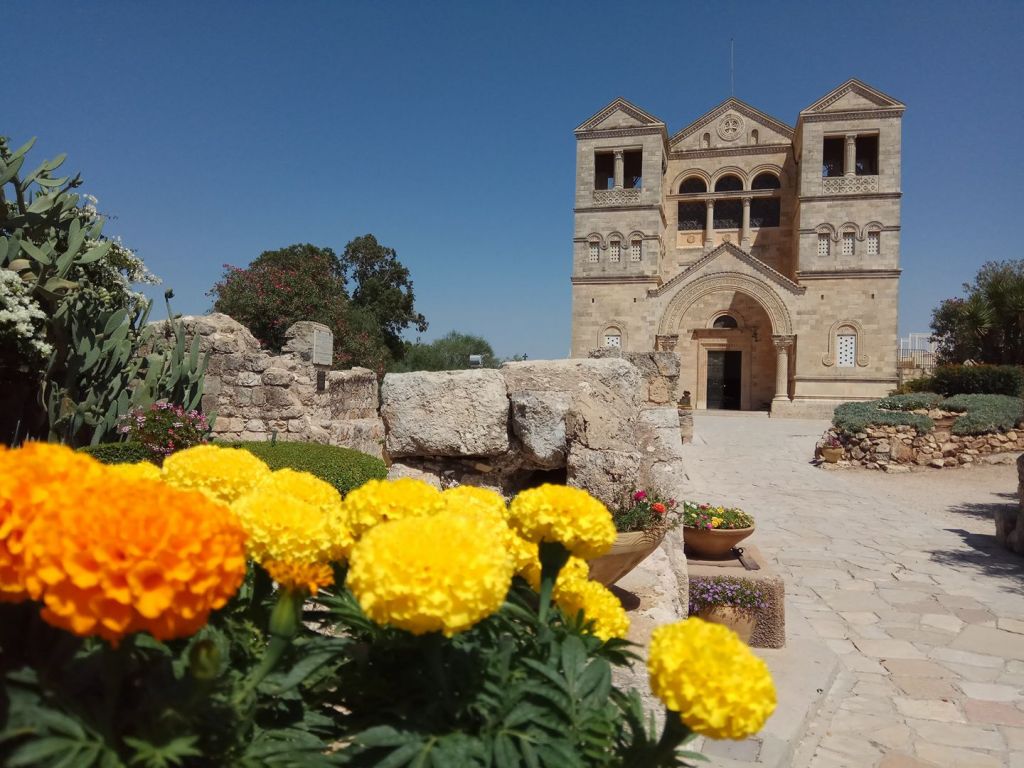
Basilica of the Transfiguration on Mt. Tabor, Israel from custodia.org.

See how the three apostles were overjoyed with the sight of Jesus transfigured, conversing with Moses and Elijah with Peter feeling so “high” that he offered to make three tents for them to remain there. It was the same experience of joy in the Beatles’ Yesterday when McCartney had that great feeling of being loved he thought would last forever.

But, both moments of joy were so brief with the transfiguration cut off immediately after Peter had spoken while McCartney felt his troubles came “suddenly”.

Like his account of Christ’s temptation last Sunday, Mark’s version of the transfiguration is so short unlike those by Matthew and Luke; however, Mark never lost attention to important details that showed the solemnity of the scene from start to finish despite a sudden shift in the mood as they went down the mountain.

As they were coming down from the mountain, he charged them not to relate what they had seen to anyone, except when the Son of Man had risen from the dead. So they kept the matter to themselves, questioning what rising from the dead meant.

Mark 9:9-10

For Mark, the transfiguration of Jesus led the disciples to deepen their faith in Jesus amid his growing mystery especially in the light of his oft-repeated Passion, Death and Resurrection, as if telling us of the many troubles ahead on the road to Easter.

Hence, it is no coincidence that like the transfiguration, Mark ended abruptly his gospel account when Mary Magdalene, Mary the mother of James and Salome saw an angel who spoke to them inside the empty tomb of Jesus very early on Easter: Then they went out and fled from the tomb, seized with trembling and bewilderment. They said nothing to anyone, for they were afraid (Mk. 16:8). Both in the transfiguration and in the Resurrection, the disciples were dared to reflect deeply on those events that later enabled them to make a firm response in their faith in Christ.

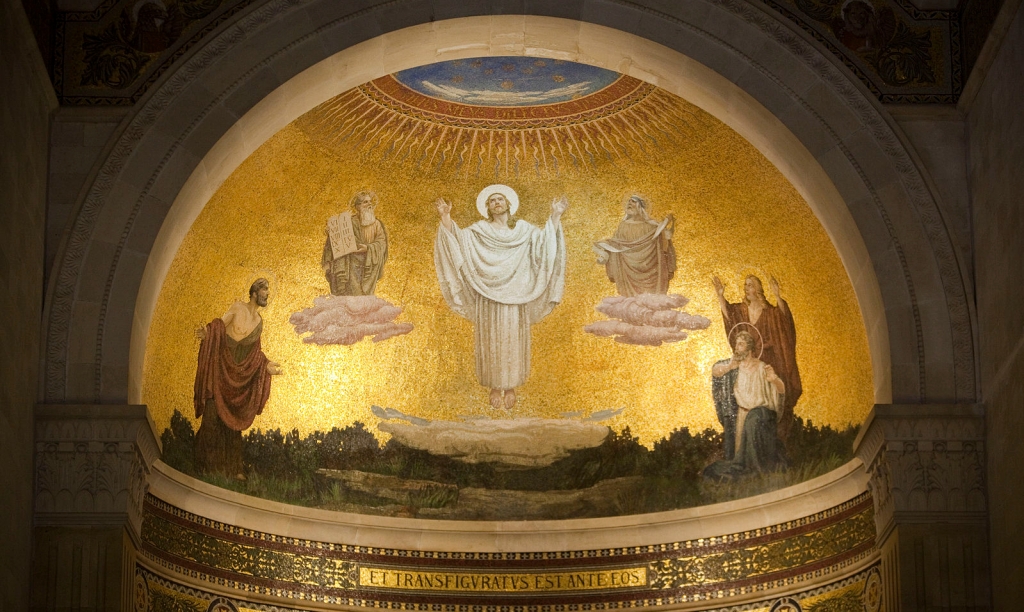
Mosaic inside the Basilica of the Transfiguration on Mt. Tabor, Israel from commons.wikimedia.org..

The same thing applies to us today. Many troubles lie ahead our lives, inviting us to follow Jesus more closely in prayers and reflections to find the meanings and lessons of life’s light and darkness, joy and sadness, triumph and defeat, even of death that keep on hovering above us, even enveloping us at times. We need to deepen our faith in God who had sent us his Son Jesus never stops doing to be our companion in this journey of life especially when we are passing through mountains and valleys, rivers and seas. In the song Yesterday, McCartney sang of our most common experience of having loved and lost yet taught us so much lessons in life. And music.

One thing was clear with the Apostles – and McCartney too – that even though troubles and problems were always with them along the way, they just lived through it and made the most out of them like the Church, including a classic love song!

How about us today, what is our faith response to the many darkness and light we have gone through in life’s journey?

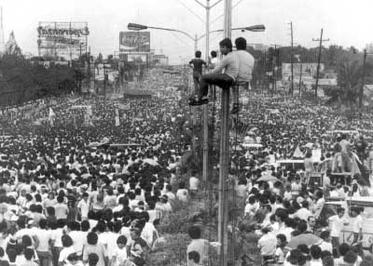
Photo by Roger Buendia/Presidential Museum and Library via esquiremag.ph.

It is always easy to blame others for our many woes in life as we fail to see our own moments of transfiguration. Jesus gifts us with a personal transfiguration event to make us better to be like him but, do we welcome or, run away from them?

Today is the 38th anniversary of the EDSA People Power Revolution when we must ask ourselves how we have personally responded to that great moment of grace from God, a transfiguration in itself, a pasch like the Lord’s. Have we truly valued EDSA 1986, until now?

How unfortunate that EDSA now stands for everything that is wrong with us, especially our wrong choices and wrong decisions in the past 38 years. EDSA invites us to examine our very selves as a Filipino and as a Christian, a disciple of Christ.

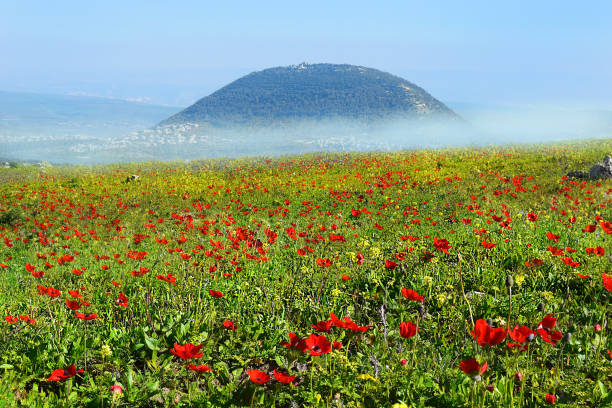
Photo from iStockphoto.com of Mount Tabor in Israel where Jesus is believed to have transfigured.

At his transfiguration, Jesus showed the inseparability of the mystery of the Cross and of his glory on Easter, the closeness of Mount Tabor with Golgotha. The mountain in the bible is always a coming to God, a communion in him.

Every nature lover knows very well the mountain is life itself, difficult to climb, easy to descend. Here now is the beautiful part of the gospel. And song Yesterday. Mountains surely change us but the choice is ours if we want to become better or bitter.

Set on what is believed to be Mount Tabor, the transfiguration was a passage, a foretaste of Christ’s pasch that not only brought him to his glory but transformed too the whole human race and the world itself. In the same manner, McCartney expressed poetically in Yesterday his transformation when “Suddenly, I’m not half the man I used to be.”

From en.wikipedia.org.

This is the good news of this Sunday: every mountain in life is a grace of transfiguration, of being better persons than before. We never come out – or down – the same persons every time we enter through whatever passages or climb any mountain in life. We are always changed, we always emerge different than who we were before after each passages we came through in life.

God gives us the grace and power to choose to be better and stronger, wiser and holier than bitter or resentful with every trials we hurdle in life. This was the experience of Abraham in the first reading when he completely trusted God who asked him to offer his son Isaac on a mountain. It was a very tough test for Abraham who waited in his old age to have a son only to be sacrificed later? But Abraham never doubted God that he still went up the mountain, and as he was about to sacrifice Isaac, an angel stopped him, telling him how God was so delighted with his faith and obedience that he was eventually blessed abundantly after.

Each of us is passing through different trials at this very moment. Many times we feel we suffer more than others, that our tests are tougher than the rest. It is useless and a waste of time to compare ourselves with others. One thing is clear: God does not stop doing something good for us in Jesus, ensuring we get better each day than yesterday. Let the words of St. Paul today assure us that “If God is for us, who can be against us? He who did not spare his own Son but handed him over for us all, how will he not give us everything else along with him? (Rom. 8:31-32)” Have a blessed week ahead, fellow traveler in Christ! Let us pray:

God our loving Father,
thank you for the gift of
this Season of Lent so we may
experience more your Son
Jesus Christ's coming to us
in this journey of life,
our companion amid the
darkness and light
and many troubles
including the little deaths
we experience in life;
give us the faith and trust
of Abraham to offer you those
dearest to us because
if ever you ask something from us,
it is to make more room in ourselves
for your abounding grace
and gifts of transformation
in Christ Jesus with Mary,
our Lady of Fatima.
Amen.
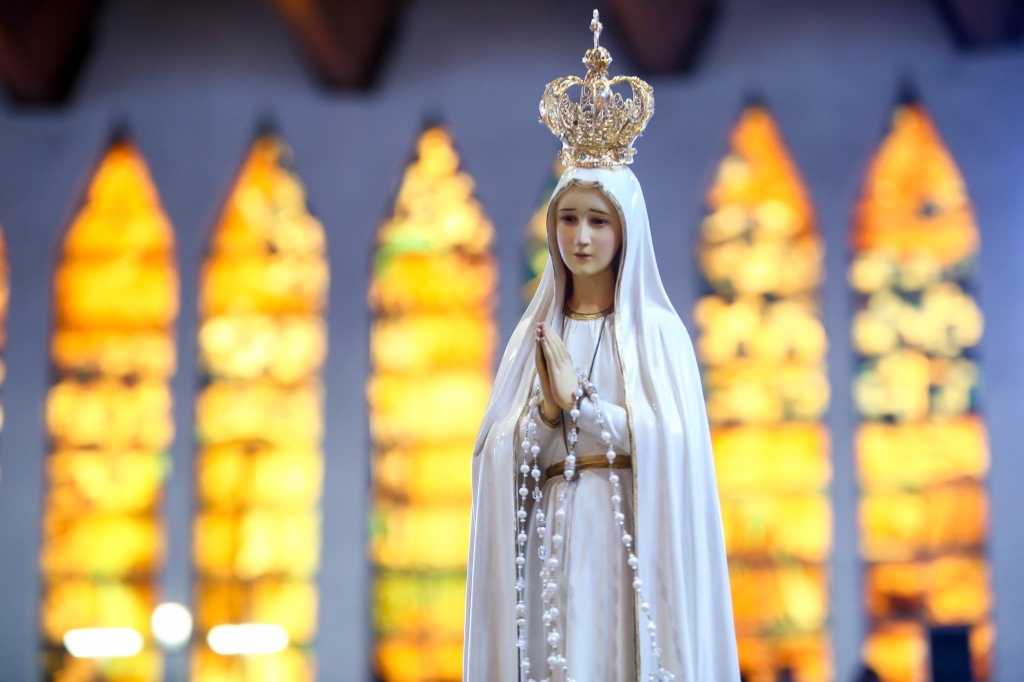
This Sunday, 25 February 2024, is also the Canonical Coronation of the National Pilgrim Image of Fatima here in Valenzuela City, the very image raised at EDSA in 1986. Photo from cbcp.net.

“A Horse With No Name” by America (1971)

The Lord Is My Chef Sunday Music by Fr. Nicanor F. Lalog II, 18 February 2024
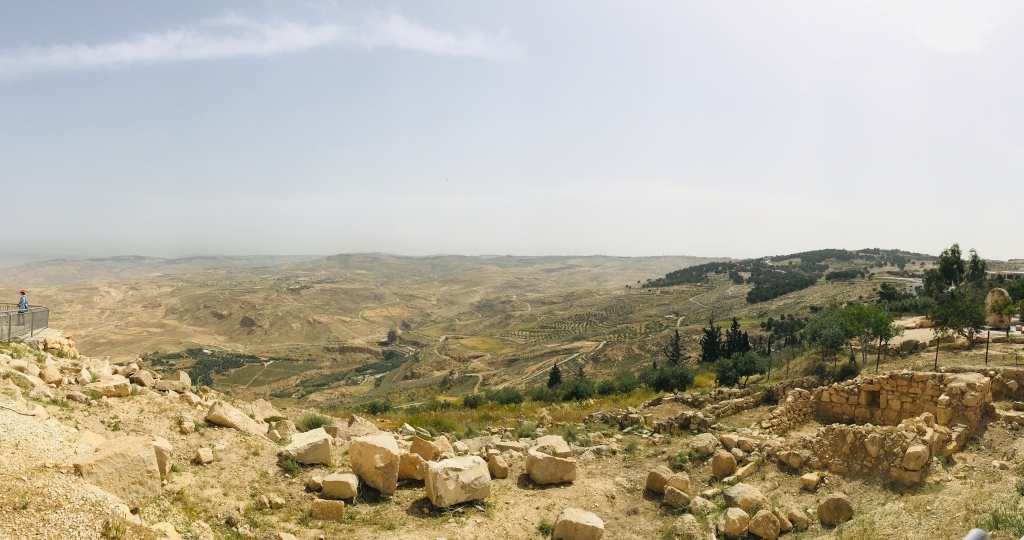
Photo by author, view of Israel from side of Jordan, May 2019.

It is the first week of Lent where the gospel is always about the temptation of Jesus by the devil in the desert. Naturally, the other thing that came to our mind while praying was the song A Horse With No Name by three young Americans who called themselves “America”.

It was still the great heydays of rock n’ roll and even though we were still too young at the time when this was playing on the airwaves, we just knew it was a great music especially when every grown up man was listening to it, humming it and even plucking its chords in their guitars. At that time, we just loved the melody and poetry of the lyrics, beginning with the unusual title A Horse With No Name with its very propitious guitars that kicked our imaginations of a far away journey in the desert.

On the first part of the journey
I was looking at all the life
There were plants and birds and rocks and things
There was sand and hills and rings
The first thing I met was a fly with a buzz
And the sky with no clouds
The heat was hot and the ground was dry
But the air was full of sound
I’ve been through the desert on a horse with no name
It felt good to be out of the rain
In the desert you can’t remember your name
‘Cause there ain’t no one for to give you no pain
La la la la la la…

The desert is more than a place in the Bible. It was more of a setting for meeting and experiencing God amid its dryness and wilderness. Every great prophet in the Old Testament went to the desert to pray and meet God; hence, in the New Testament, Jesus was shown as going first to the desert before launching his mission.

How ironic yet amazing that it is in the desert of our life’s poverty and limitations, sickness and weakness, dryness and weariness when we actually meet God, when we experience fulfillment and meaning in life (https://lordmychef.com/2024/02/17/lent-a-pilgrimage-to-god/). This biblical meaning of the desert was not far from the views of the song’s composer, Dewel Bunnell who explained later that A Horse With No Name was “a metaphor for a vehicle to get away from life’s confusion into a quiet, peaceful place” (from Wikipedia).

However, we remember too how when we were in high school (early 80’s) while listening to “American Top 40” on 99.5RT-FM when Casey Kasem claimed Bunnell saying that they were simply playing with words and chords when they came up with A Horse With No Name!

Whatever… but the music has become a classic because of its sincere message about life as a mystery not meant to be solved at all (because it is unsolvable!). For five decades since releasing A Horse With No Name, the trio of America had taught us how to deal with life’s mysteries by simply allowing ourselves to be wrapped by these mysteries, keeping our hearts and minds open in awaiting new revelations unfolding before us daily. Don’t forget too to have that sense of awe while being wrapped by life’s mysteries which is actually what Lent is asking us during this season as we return to God, our very root and grounding in order to find ourselves anew who are so lost in this world of so many disguises.

After nine days I let the horse run free
‘Cause the desert had turned to sea
There were plants and birds and rocks and things
There was sand and hills and rings
The ocean is a desert with its life underground
And a perfect disguise above
Under the cities lies a heart made of ground
But the humans will give no love

Here’s America with their first hit A Horse With No Name. Sing along, reflect and, pray. Have a blessed week ahead in this desert of life!

From YoutTube.com