On crying & giving permission to die

Quiet Storm by Fr. Nicanor F. Lalog II, 10 November 2023
Lady of Sorrows from a triptych by the Master of the Stauffenberg Altarpiece, Alsace c. 1455; photo from fraangelicoinstitute.com.

There’s a beautiful interplay between crying and living. And dying.

When we were growing up as kids, siesta was obligatory at home. It was a moral ought that my mom would tell us stories in bed to fall asleep, always holding a copy of the Reader’s Digest with its beautiful pictures and illustrations.

One siesta time, the image of a newborn baby being delivered caught my eyes from the copy of the Reader’s Digest my mom was holding. Then the next illustration struck me – I was about four or five years old – as it showed the doctor held the baby upside down, crying so hard after being spanked by the doctor! My mom explained to me that’s the way it is with babies when they are born: if they cry, that means they are alive but if they do not cry, the doctor had to spank the baby in order to cry and be alive.

That was my first lesson about life strongly etched in my mind. As I grew up and matured, especially after being ordained as priest, I realized deeper meanings from that simple explanation of my mom: crying is part of our lives. If we get hurt, if we suffer, if we cry, that means we are still alive.

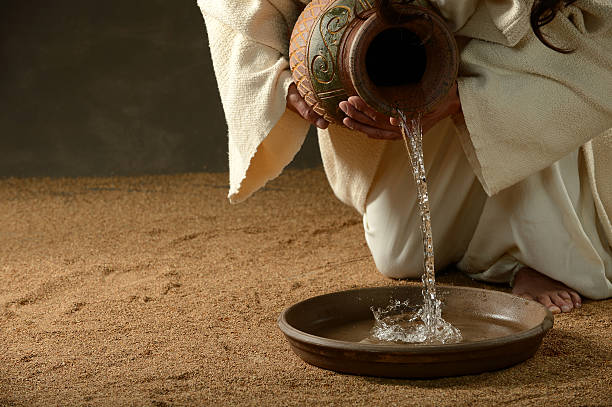
Photo by Daniel Reche on Pexels.com

Many times in life for us to live, we have to kick hard and cry so hard enough like newborn babies to breathe and be alive. It is in crying we realize so many things in life, about real friendships and relationships, about joy and sadness. There are times we cry not only when in pain and agony but even when we experience joy. In fact, our most profound experiences in life are best expressed with tears when we cry, best when in silence and alone.

Crying is life’s most wonderful and effective response to any experience in life so burdened by many things (see our previous blog, https://lordmychef.com/2021/11/23/on-shedding-tears-and-crying/).

But, death had also taught me something so amazing and lovely about crying. I consider it as the other side of crying. And of life.

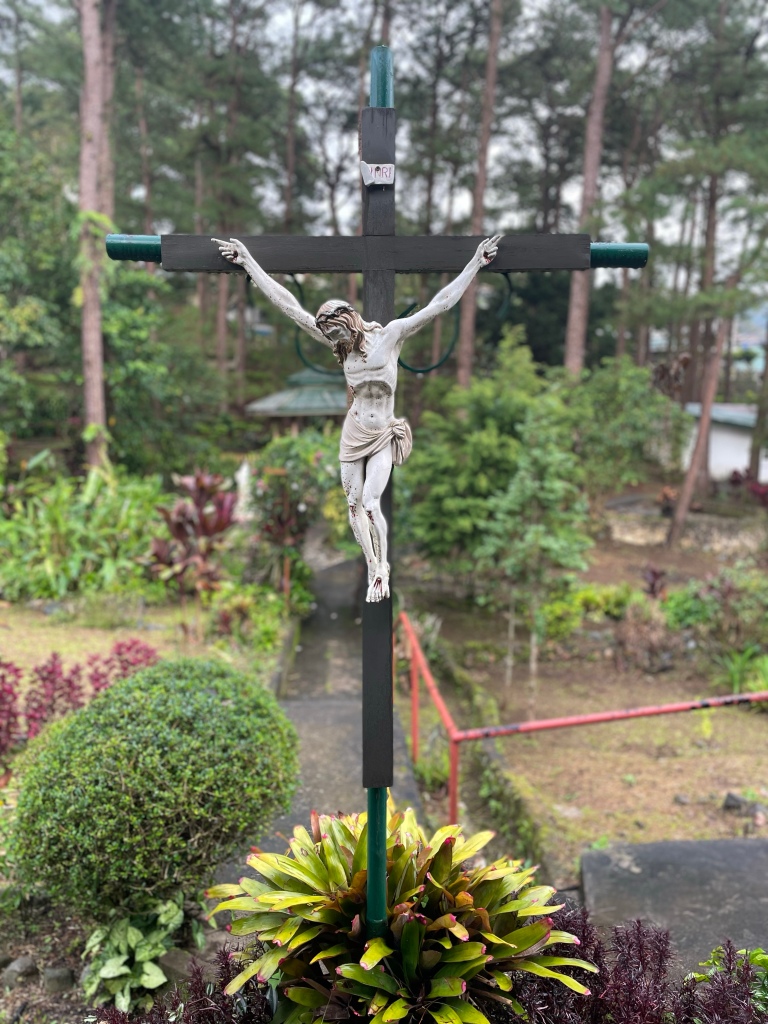
Photo by author, Baguio City, August 2023.

It happened when my best friend, Gil died in 2015. He asked me in February that year to pray for his long-delayed medical checkup; that same night, he called me again that his doctor had him confined for suspected cancer. After a series of tests, he had radiation then surgery after which followed his series of chemotherapy.

Gil cried a lot when diagnosed with cancer. He was angry and bitter with his sickness. And for a good reason because among us from high school seminary, he was the healthiest and most health conscious! I knew it because when news of that mad cow disease from Europe broke in early 2000, he stopped eating beef even burgers!

In mid September, her Ate Lily called me that doctors had told them Gil’s cancer cells were very aggressive and would have a short time to live. It was a Sunday and we his friends rushed to Makati Med that afternoon. I came to visit him for another three days before he died early Sunday morning, September 22, 2015.

It was during his final week in the hospital when he asked me for a “permission to die” (see our blog, https://lordmychef.com/2023/11/08/giving-permission-to-die/). Gil simply told me he was ready to go. His face was radiant and light, he was so at peace on his hospital bed as he gave me other final instructions for his kids and ex-wife.

I could not say anything except cried. And I cried so hard, especially as I anointed him with holy oil and prayed the commendation to the dying. It was from Gil that I realized the dying receive that special grace of knowing the end, possibly even of seeing heaven that is why they are always so composed like Jesus Christ on the Cross on Good Friday. I told him how I wish I could have that same courage in facing death when my time comes. He assured me God would give me that grace too.

From that experience, I realized when people get sick, they cry because that’s when death faced them. Who would not cry and be terrified? We their friends and family in turn, console them. The inverse happens when they approach death: they are so composed, we their family and friends are the ones crying. And the one dying are the ones consoling us! When they die, we cry. Why? Because we do not know what happens next, of what lies ahead when our loved ones are gone. Paano na tayong naiwan? That’s the saddest and scariest part of life when someone dear to us dies.

In 1999, St. John Paul II wrote a letter to his fellow elderly where he said that the grace of getting old is to be able to look back to the past with gratitude and to look forward to the future with joyful anticipation of eternity. That holy Pope must have been seeing heaven while still here on earth!

Photo by author, National Shrine of Our Lady of Fatima, 06 November 2023.

It is in death when we see its strange contrast with life, of how when we were born, we cried and kicked hard to be alive while those around us rejoiced with the gift of life; when we die, we do not cry because we are already joyful with the coming bliss while those around us are filled with grief and sadness, crying not only with our demise but because they do not know what lies ahead.

In both instances, we find the grace of God so pronounced, so present that indeed, St. Paul was absolutely right:

None of us lives for oneself, and no one dies for oneself. For if we live, we live for the Lord, and if we die, we die for the Lord; so then, whether we live or die, we are the Lord’s.

Romans 14:7-8

When we were growing up, there was a baby shampoo that advertised itself so mild that would not hurt your eyes, marketing itself with the words “No more tears”. It also played a commercial of a young boy going to shampoo his hair declaring, “a man should not cry” to bolster that old belief that crying is weakness.

At the sermon on the mount, Jesus taught us one of the beatitudes as “Blessed are they who mourn, for they will be comforted” (Mt. 5:4). I love using this gospel in funeral Masses. Where is the blessedness of mourning the death of a loved one? What is good with mourning, with crying?

Answer: love.

Blessed are those who mourn because they have love in their hearts. We cry at the death of a beloved because we love them. But, the greatest blessing we have when we mourn is from the love we have experienced from the one who had died. It is said that “if you have love in your heart, you have been blessed by God; if you have been loved, you have been touched by God.”

We are blessed when we mourn, when we cry at the death of a beloved because they loved us, they gave us a glimpse of God, they made us experience God’s love in their love! Is it not a tremendous blessing indeed?

We are so blessed these days that crying is no longer considered as a sign of weakness but actually of strength – the strength to live and the strength to forge on in life after the death of a beloved. Cheers to our tears that keep us alive! Have a wonderful weekend!

Photo by author, National Shrine of Our Lady of Fatima, Valenzuela City, 2021.

The ones we miss most

The Lord Is My Chef Daily Recipe for the Soul by Fr. Nicanor F. Lalog II
Friday, Memorial of St. Leo the Great, Pope & Doctor of the Church, 10 November 2023
Romans 15:14-21 ><]]]]’> + ><]]]]’> + ><]]]]’> Luke 16:1-8
Photo by author, San Juan, La Union, July 2023.
I just realized today,
God our Father,
how the word “miss”
has a variety of meanings:
as something we failed or
something or someone we remember
or, someone or something we
forget and neglected.
How sad that very often,
the people we miss -
those we forget,
even taken for granted
because they are common,
are those nearest to us like
family and friends,
those in our inner circles.

Thus I aspire to proclaim the Gospel not where Christ has already been named, so that I do not build on another’s foundation, but as it is written: Those who have never been told of him shall see, and those who have never heard of him shall understand.

Romans 15:20-21
Is it not so funny that the 
ones we meet inside the church
every day and every Sunday are
also the very ones who are
like us - evangelized or simply
know Jesus and his teachings;
but, where are the rest?
the unchurched?
the ones we say who must hear the
good news?
Lord Jesus Christ,
teach us to be wise like
that steward in your parable today:
to save face and himself, he went to
see his master’s debtors he himself
must have missed,
disregarded and never given any
importance at all because they
were common, below him in stature;
let us realize like that shrewd steward,
like St. Paul to look for those we
miss most because of proximity
and ordinariness; they could be our
family members who have stopped praying
or celebrating Mass
or those living closest to our church
or chapel and have lost interest in the
sacraments and liturgy
or former colleagues in the ministry
who have lapsed in their practice
of faith.
Let us go out today
to find them and make them
feel and experience they are
loved,
they are missed most
in Christ Jesus.
Amen.

Giving permission to die

Quiet Storm by Fr. Nicanor F. Lalog II, 08 November 2023
Photo by author, National Shrine of Our Lady of Fatima, Valenzuela City, 06 November 2023.

A very dear friend died last October 16 after more than three years of fighting cancer. She used to be one of our elementary teachers at the school I was first assigned after ordination. She later resigned to teach abroad but every year whenever she was home for summer vacation, she always invited me to join their mini-reunions of former co-teachers.

Everything changed in 2020 when she had to retire early to return home for her cancer treatment. We could not visit her during the pandemic lockdown, occasionally meeting her via zoom and video phone calls. When COVID subsided a little in late 2021 and early 2022, we finally met briefly. She seemed to be responding well to her chemotherapy except that she had lost hair that was natural. Last December, we were finally able to go out with other fellow co-teachers twice after Christmas and after New Year’s day last January. We were so glad she had regained weight and strength. And hair too!

Saw her again last June but in late August, she stopped answering our messages. It turned out that her cancer had metastasized to her lungs and liver. When I came to see her October 7, the first thing she told me was for me to “allow her to die”. According to her brothers and elder sister, she had also asked them for “permission to die” earlier that night because she said, she was already tired and was ready to go back to God.

Photo by author, National Shrine of Our Lady of Fatima, Valenzuela City, 06 November 2023.

It was not the first time somebody had asked me a “permission to die”, especially since I have become a hospital chaplain two years ago. But, I must confess, in all instances, there was always hesitancy on my part in giving “permission to die” especially when those dying are close to me like friends and relatives. In fact, the first person who asked me “permission to die” was my best friend from high school seminary. I just cried, said nothing when he calmly told me he was ready to go.

That scene remains vivid to my memory to this day, including the many lessons he had taught about life and dying.

By the way, let me put it clear that what we are referring here as giving “permission to die” is allowing death take its natural course, not mercy killing or euthanasia which is intrinsically evil we should never allow.

In my 25 years in the priesthood, two years as hospital chaplain since 2021, I have always felt the process of dying as a “grace-filled moment” too like in the birth of an infant or recovery of a sick person. Both the dying and their family and friends are blessed when death approaches or had come, like when Jesus visited Martha and Mary four days after the death of their brother Lazarus. That scene of Jesus speaking to Martha before bringing Lazarus back to life assures us of how God had turned death into a blessing in Christ: Jesus told her, “I am the resurrection and the life; whoever believes in me, even if he dies, will live, and everyone who lives and believes in me will never die. Do you believe this?” (Jn. 11:25-26)

Photo by author, National Shrine of Our Lady of Fatima, Valenzuela City, 06 November 2023.

If we believe Jesus and his words to Martha, we too shall find him coming to us when a beloved is dying, especially when they ask us that “permission to die” which is not actually a permission per se because only God decides when we are going to die.

When patients ask for “permission to die”, they are actually bidding us goodbye. Dying people always knew when they had to go because they have already accepted the reality. This is very noticeable at the serenity, even of joy, on their face. Despite their sickness, dying patients who have truly made peace with God and had given up everything to Him always have that grace of composure like Jesus when he died on the Cross, crying his same prayer, “Father, into your hands I commend my spirit” (Lk.23:46).

Photo by author, National Shrine of Our Lady of Fatima, Valenzuela City, September 2021.

Giving “permission to die” is a grace from God He gives to relatives and friends to accept and embrace that difficult reality.

“Permitting” our loved ones to die is to assure them of our love and forgiveness of their sins against us. It is our final act of love for them when we assist them to that great passageway onto eternity like when we would lead our guests out to the door to ensure them our separation is just temporary until we meet again soon.

Due to this great amount of love in our final goodbyes, some people sometimes “fake” their dying moments, creating a “drama” in asking “permission to die” when actually, they are not yet ready to die but merely demanding love and care from family and friends. One clear sign is they tend to be more cerebral than cordial, becoming bitter and angry than ever. Even amid sufferings, they think more of themselves than feel others around them. Like the boy who cried wolf, they have not yet really seen death approaching because most likely, they have not yet faced life and living truly. Coming to terms with death is coming to terms with life. When loved ones “fake” their dying, what they really seek is how to live fully and responsibly, to be their true self. But that’s a different topic…

Photo by author, Malagos Orchid Farm, Davao City, 2017.

Death is the most terrifying moment in life because we do not know what’s next, where we are going. That is why, when people truly mean that they have accepted death, that is also when they have accepted life in its fullness. They do not reason out. They just feel God and those around them. Most of all, they have peace within amid pains.

The same thing happens with us relatives and friends of the dying. We feel their sense of peace within, affecting us, infecting us. Hence, we get lost at how to express our giving them of that permission to die. Very often, we cry because our hearts overflow with love. When we feel their seeking of permission to die is genuine, our mouths and tongues are shut, incapable of expressing our love for them that is diverted into our eyes as tears, bursting forth like waters from a collapsed dam that cleanse also us of our fears and sadness at our impending loss.

Finally, giving permission to die to our beloved is an expression of our faith in God, affirming we all came from God and would someday go home to God in heaven. Thus, giving permission to die is actually to comfort – literally, “to give strength to” – the dying of their faith in God while facing their final tests and temptations in life, assuring them that soon, we shall join them in eternal joy.

Many times, our family and friends suffer so much before death because of our refusal to let them go too. We keep on holding them back that terrify them in making the great crossover. Giving them permission to die is easing and sharing their fears so they can finally let go and let God, that is, die – the meaning of the letter “d” that stands between the words “go” and “God”. According to the prayer by St. Francis of Assisi, it is in dying when we are born into eternal life. Amen.

*Aside from All Saints’ Day and All Souls Day, the whole month of November is a traditional time for visiting the graves of our loved ones. Go and offer them prayers, especially that “permission to die” if you are still holding them and have not yet let them go.

Photo by Pixabay on Pexels.com

“I-love-you” means “I-O-U”

The Lord Is My Chef Daily Recipe for the Soul by Fr. Nicanor F. Lalog II
Wednesday in the Thirty-first Week of Ordinary Time, Year I, 08 November 2023
Romans 13:8-10   ><}}}}*> + ><}}}}*> + ><}}}}*>   Luke 14:25-33
Photo by author, Sacred Heart Novitiate, Novaliches, QC, 20 March 2023.
How can I not resist
by simply being silent,
O God our Father,
with your beautiful words 
spoken today by the great
St. Paul?

Brothers and sisters: Owe nothing to anyone, except to love one another; for the one who loves another has fulfilled the law. Love does no evil to the neighbors; hence, love is the fulfillment of the law.

Romans 13:8, 10
But, what is really love,
according to St. Paul?
Since yesterday, 
he has been telling us
to love sincerely which is
to love like Jesus Christ 
who offered himself for us
on the Cross;
to love like Jesus as the 
fulfillment of the law is
to love without measure
because it is rooted in you,
dear God who is love yourself,
God who is both transcendent
and immanent!
In telling us to love one another,
Jesus clarified with his love that
you neither order nor command us to
love you, God, in the strict sense;
you ask us to love
because you love us,
because you are love, O God;
when we love, 
we fulfill your commandments,
enabling us to live in peace 
and harmony with one another
like in heaven;
"I-love-you" is the only "I-O-U",
the only debt never paid off
because the more we love,
the more we become like you
in Jesus Christ,
eternal and without end.
Amen.

Our worship, our life

The Lord Is My Chef Sunday Recipe for the Soul by Fr. Nicanor F. Lalog II
Sunday in the Thirty-first Week of Ordinary Time, Cycle A, 05 November 2023
Malachi 1:14-2:2, 8-10 ><}}}}*> 1 Thessalonians 2:7-9, 13 ><}}}}*> Matthew 23:1-12
Photo by author, Malagos Orchid Farm, Davao City, 2017.

More than 18 years ago when we were assigned to a parish in our concurrent positions as school administrators in Malolos, an older priest offered to help us think of “gimmicks” so people would come to our parish. He insisted how the Church must have “marketing strategies” to attract more people celebrate Mass especially on Sundays.

After that older priest had left, I told our Rector to dismiss everything he had heard. I explained to him we do not need any marketing strategies because we have the best to offer – God in Jesus Christ. I stressed to him that only two things are essential in the parish: good liturgy that flows to good service.

A few years later, I was assigned to a parish of my own and held on that conviction. Modesty aside, that parish entrusted to me grew and became so vibrant during my nine years of stay there. Even during the pandemic lockdown, we continued with our good liturgies on line and in the ground that enabled us to serve everyone, especially the poor regardless of their religion. We never asked donations but people volunteered to give cash and goods to sustain the parish and our outreach programs.

Photo by Ms. Ria De Vera, Christ the King procession in November 2020.

Our readings today are very timely as the Synod on Synodality concluded in Rome recently that sought new ways in getting everyone in the Church especially those in the margins may journey together in Christ, with Christ to God our Father.

Although we priests and bishops remain as the biggest problems in the Church since the beginning like the Pharisees and scribes during the time of Jesus, having a good and meaningful liturgy that is living and fruitful is everyone’s responsibility.

And now, O priests, this commandment is for you: If you do not listen, and if you do not lay it to heart, to give glory to my name, says the Lird of hosts, I will send a curse upon you and of your blessing I will make a curse. You have turned aside from the way, and have caused many to falter by your instruction; you have made void the covenant of Levi, says the Lord of hosts.

Malachi 2:1-2, 8

How appropriate were the words by Prophet Malachi spoken in 480 BC who invites us too today to examine the manner we celebrate the liturgy in our communities, the spirit and seriousness that animate us, the image of God our celebrations project.

Is God still among us in our liturgy that after every celebration, we find him in our midst?

Is there still a sense of awe and wonder, of mysterium fascinans or we – priests and people – have replaced God in our worship?

Malachi was right on target then and now in echoing God’s anger and frustrations at the sight of our degenerate and perverted worship where anything goes as if God does not see us. And worst, as if we could fool him when our hearts are divided and so far from him and from one another which Jesus tried fixing these past two Sundays.

Photo by Mr. Gelo Nicolas, Bagbaguin, Sta. Maria, Bulacan, February 2020.

Jesus had silenced his enemies today in our gospel, he took it to unleash to them – and us – powerful tirades against their hypocrisies (and ours too), of how far our hearts been from God and one another, lacking in love due to its being so divided.

What a way to conclude his teachings these past two Sundays after failed attempts by his enemies to trick him into saying things that could lead to his arrest and execution.

Jesus spoke to the crowds and to his disciples, saying, “The scribes and the Pharisees have taken their seat on the chair of Moses. Therefore, do and observe all things whatsoever they tell you, but do not follow their example. For they preach but they do not practice. They tie up heavy burdens hard to carry and lay them on people’s shoulders, but they will not lift a finger to move them. All their works are performed to be seen.

Matthew 23:1-5

These past two Sundays, Jesus stressed the need of purifying our hearts so that we may give to God what is due to him which is our total selves. To purify our hearts, to have a clean heart to see God as in his beatitudes we heard proclaimed on All Saints Day means to enter into a communion with Jesus Christ, the One with the purest and cleanest heart who truly loves God and all of us.

Photo by author, St. Scholastica Retreat House, Baguio City, August 2023.

Today Jesus is calling us to walk our talk, to mean what we believe and say, to be true as his disciples who choose to love and suffer for God, who finds value in God dwelling in our hearts not in things outside like names and ranks, titles and designations, clothes and other signs.

Today Jesus is calling us to live and relate honestly with others wherein our whole selves – words and actions, body and soul – are united by hearts inclined, resting in God.

Today Jesus is calling us to focus on him alone for he is our only true Teacher and Master who lovingly humbled himself as servant of all to lead us to God our one Father in heaven.

Of course, Jesus is not asking us to disregard nor dismiss all titles and designations that define our roles and functions not only in the liturgy but even in the family and society. When we learn to give what is due to Caesar and what is due to God, then we discover that our proper “seat” is in this life is in the place of a servant and that our true “place of honor” is at God’s kingdom where everyone is equal. When we have this clearly in our minds and in our hearts, then, our words and deeds are no longer in opposition like the Pharisees and scribes who did not practice what they preached because we have become witnesses to integrity of self as disciples of Christ.

Photo by author, Our Lady of Fatima University, Valenzuela, 13 September 2023.

Vatican II rightly and beautifully called the liturgy as “fons et culmen” – the fount from which all blessings of our faith flow and the apex or summit of our lives as Christians, as disciples of Christ.

How true is our worship of God?

St. Paul gave us a glimpse of their living worship in Thessalonica, picturesquely telling them how “they were gentle among you, as a nursing mother cares for her children. With such affection for you, we were determined to share with you not only the gospel of God, but our very selves as well, so dearly beloved had tou become to us” (1Thes. 2:7-8).

How I wish we priests could be so sincere like St. Paul to the people and most especially to our Lord! This Sunday, may our worship be our lives too in Jesus like the admonition of St. Augustine to his congregation when distributing the Holy Communion, “Become what you receive: the Body of Christ”. Amen. Have a blessed new week!

Praying to always “re-member”

The Lord Is My Chef Daily Recipe for the Soul by Fr. Nicanor F. Lalog II
Thursday, All Souls' Day, 02 November 2023
Wisdom 3:1-9 ><]]]]'> Romans 6:3-9 ><]]]]'> John 6:37-40
Photo by author, Jesuit Cemetery, Sacred Heart Novitiate, Novaliches, QC, 21 March 2023.
As we remember today
all our departed loved ones
awaiting entry into your holy presence
O God in heaven, 
we pray too that we may
always remember 
your call for us to be good,
for us to work for justice
and truth,
for us to always remember
there is death,
there is judgment.
We are beings of forgetfulness,
Lord, and what a wonderful gift you
have given us with "re-membereing" -
for making someone long gone
still a part, a "member again" 
of the present
when we who are living 
in the "here" and "now"
remember them in our
prayers and sacrifices,
most of all, in our good deeds
because love, after all,
can reach in the afterlife!
The best way to
remember is to live
in the present moment
in Christ Jesus 
who had assured us
of our salvation, that 
not one of us he would lose
but raise to life on the last
day (John 6:39);
while here on earth, 
may we start purifying ourselves
in your loving service, Lord,
to others, whether they are
in this life or in the afterlife 
inasmuch as our lives 
are connected with 
one another to eternity;
and so, we pray for them,
we hope for them,
because we love them
in YOU, Jesus,
with YOU, Jesus,
and through YOU, Jesus
as we hope it is never too late
nor is it in vain to touch
their hearts wherever
they may be.
Amen.

Choose love. Always.

The Lord Is My Chef Sunday Recipe for the Soul by Fr. Nicanor F. Lalog II
Sunday in the Thirtieth Week of Ordinary Time, Cycle A, 29 October 2023
Exodus 22:20-26 ><}}}}*> 1 Thessalonians 1:5-10 ><}}}}*> Matthew 22:34-40
Photo by Dra. Mai Dela Peña, Mt. Carmel, Israel, 2017.

The enemies of Jesus continued with their barrage of questions to trick him into saying something that could lead to his arrest and execution. After failing last Sunday, the Pharisees sent today an expert – a “scholar of the law” – to test him anew with the question:

“Teacher, which commandment in the law is the greatest?” He said to him, “You shall love the Lord, your God, with all your heart, with all your soul, and with all your mind. This is the greatest and the first commandment. The second is like it: You shall love your neighbor as yourself. The whole law and the prophets depend on these two commandments.”

Matthew 22:36-40

For the second straight Sunday, Jesus not only responded to his enemies’ malicious questions with brief and brilliant answers but also taught them, including us today, with important lessons on discipleship.

Once again, Jesus is inviting us to have a wholistic view of life centered on God by healing the divisions within our hearts that are reflected in our broken relationships as individuals and family, church and community, and nation. How often do we reveal that same division in our hearts whenever we ask that same question 2000 years ago by the Pharisee, “which of the commandment in the law is the greatest”?

Photo by author, view from temple of Jerusalem, May 2017.

After receiving the Ten Commandments from God through Moses at Mount Sinai, the Jews dissected them into 613 instructions with 248 of these as positive laws every individual “should do” and the other 365 as negative laws everyone “should not do”.

Naturally, it was very difficult – if not impossible – for them to remember and observe these 613 precepts to guide them in their daily living so that their rabbis devised ways in which the Law could be prioritized with some categorized as “important” or “heavy” that should be followed more than those considered as “less important” or “lighter” in gravity. For example, laws pertaining to persons like parents are more important than those concerning animals that included about bird’s nest (Dt. 22:6-7)! Problem with this was when they circumvented the Law to give priority to lesser things that disregard the more important ones as Jesus pointed out so often to their religious leaders who have emphasized the sabbath by neglecting the human person like the sick.

Photo by author, St. Anne’s Church, Jerusalem, Israel, May 2017.

Another solution they have devised was to establish summary statements of the Law that could help put it all in perspective like “whatever is hateful to you, don’t do it to others”. Again, like in categorizing the Law, putting them into perspectives eventually led to their lost of essence because in our human experience, when many factors are weighed into our daily life, the way we see things are often narrowed and dimmed; then we begin making excuses and alibis to be exempted from our religious instructions. That is why Jesus “leveled up” the people’s perspectives in their views of the Law by telling them to shift their sights to higher level not just its letters but its spirit and source – God himself like the love enemies and the beatitudes.

Here we find the beauty and nobility of Jesus Christ’s answer to the scholar’s question by leading us all into the very essence of the Law which is love who is God too! Eventually on the Cross on Good Friday just like during the sermon on the mount, Jesus would show to everyone he was not only the fulfillment of the Law but the Law himself when he gave himself in love – to God our Father and to us his brothers and sisters. Today he deepens his teaching last Sunday that inasmuch as we have to give to Caesar what is Caesar’s like paying of taxes, then, we have to give our total self, our whole heart to God because that is what is due to God, our Maker and Master. To give our hearts to God is to always choosing to love God and love others as one loves one’s self.

Photo by author, garden beside St. Anne’s Church in Jerusalem, Israel, May 2017.

The moment we start categorizing or putting God’s laws into perspectives, into our own points of view, then we deviate from God himself and his plans. When we divide, separate and split the laws of God to find which could best suit us, then it becomes a DIY (do-it-yourself) Christianity where we choose laws applicable to us and disregard the rest we find difficult, calling them as outdated and conservative like divorce, contraceptives, and abortion.

In summarizing the commandments into the law of love, Jesus is inviting us today to welcome him into our hearts to let him alone dwell and reign over us so that when we are confronted with any issue and dilemma or confusion in life, we resolve them in the light of Christ which is always love. Letting Jesus reign in our hearts is choosing to find him in the other person we must respect and love and care.

Photo by author at Via Dolorosa in Jerusalem, May 2017.

To choose Jesus and his love is to always choose the human person above material things and even with one’s self. And to choose Jesus and his love is choosing his Cross too because he said there is no greater love than to offer one’s self for another. The true sign that we have really loved is when we love somebody more than ourselves like Jesus!

It is difficult and even insane as St. Paul declared “we are fools for Christ” (1 Cor. 4;10) because anyone who loves like Jesus who loves God with one’s total self and loves others like one’s self is crazy in the world’s point of view and standard. It has always been the way of Christianity ever since, always suspected as a threat to the ways of the world because the ways of Christ and his disciples are opposite the ways of the world as St. Paul explained to the Thessalonians “who received the word in great affliction, with joy in the Holy Spirit” (1 Thes. 1:6).

When I was still a young priest giving Marriage Encounter weekends to couples, I used to ask them this question: when husband and wife have an LQ or “lover’s quarrel”, who should make the first move to say sorry and be reconciled?

Many couples laugh, saying it should be the man first while men claim it must be ladies first. Still others reason out it should be the one who had sinned.

My answer: whoever has more love to give must be the first to make the move to reconcile because whoever has more love should love more!

The more we love, the more we are able to love because love is infinite like God. It is the only thing that will remain in the end because God is love. His laws are his expressions and manifestations of his love expressed in his compassion being a personal God relating with us through men and women around us (first reading). His laws fulfilled as love in the person of Jesus Christ light and guide our path in life often darkened by sin and imperfections. Choose love always and you shall never get lost! Amen. Have a lovely long weekend!

Photo by author, Pater Noster Church, Jerusalem, the Holy Land, May 2019.

Our divided hearts, divided lives, divided world

The Lord Is My Chef Sunday Recipe for the Soul by Fr. Nicanor F. Lalog II
Twenty-Ninth Sunday in Ordinary Time, Cycle A, 22 October 2023
Isaiah 45:1, 4-6 ><}}}}*> 1 Thessalonians 1:1-5 ><}}}}*> Matthew 22:15-21
Photo by author, Jerusalem, May 2017.

We are now getting closer toward the end of our liturgical calendar with our gospel scenes of Jesus still at the temple area in Jerusalem where his enemies were growing more intense in banding together to trap him for his arrest and crucifixion.

Many times, that same die-hard religious conceptions of the Lord’s enemies continue to distort our way of Christian living today. First of these is the apparent division between the realms of the world or Caesar and of God and his kingdom.

The Pharisees went off and plotted how they might entrap Jesus in speech. They sent their disciples to him with the Herodians saying, “Tell us, then, what is your opinion: Is it lawful to pay the census tax to Caesar or not?” Knowing their malice, Jesus said, “Why are you testing me, you hypocrites? Show me the coin that pays the census tax.” Then they handed him the Roman coin. He said to them, “Whose image is this and whose inscription?” They replied, “Caesar’s.” At that he said to them, “Then repay to Caesar what belongs to Caesar and to God what belongs to God.”

Matthew 22:15-16, 17-21
Photo by Lauren DeCicca/Getty Images in Laoag City, 08 May 2022.

It’s election fever again in the country (does it ever end?) when talks on the separation of the Church and the state abound in every corner of campaigns and discussions. What is very funny is despite everyone’s insistence of such separation, candidates keep on going to every church and chapel of all faith to meet their religious leaders and followers who in turn endorse some of them!

Then and now, the division was more clearly in our hearts than in religion and political life. Despite everyone’s endless quoting of the Lord’s declaration to “repay to Caesar what belongs to Caesar and to God what belongs to God”, we remain more divided as a people and individuals right in our hearts where the first casualty is Jesus Christ. Then us and our loved ones.

The way of God as Jesus had shown and taught us is not found in opposing civil and religious or spiritual realms of life but in giving ourselves for the good of others in all areas of life, first to God and everything follows. Jesus Christ came to the word to heal our divided hearts, to make us whole again (and be holy) by showing us how we are all one in God, our origin and end. St. Francis of Assisi saw this unity of God’s creation and was so central in his life and teachings that he was able to literally live out the gospel values of both material and spiritual poverty.

Photo by author, Jerusalem, May 2017.

There are no divisions between the material world and the spiritual world because everything is created by God, came from God and will ultimately end in God. “Caesar” is everything of the world we so often give more emphasis in life, more attention and more focus. Primary is our own self as we consciously and unconsciously stamp with the image and inscription of “Caesar” as we try to hide and remove God’s image in us.

See how Jesus in many instances did not bother himself with our worldly affairs like being a judge to divide the share of inheritance of feuding brothers (Lk. 12:13-15) or of James and John asking him to have them seated at his sides when his glory comes (Mk. 10:35-45) because those things separate us from God and each other.

One tragedy of Christ’s time that continues today is when we the supposed religious leaders and guides are divided within each of us, so concerned with our own pride and other priorities in life like fame and wealth. Forgive us your priests and bishops whose lifestyle and way of relating to others betray like the Pharisees who and what is first in our lives.

Keep in mind how the Pharisees were not supposed to have anything that bears semblances of idolatry in the temple area like the Roman coin with image and inscription of the Caesar considered as god and emperor by the Romans. We priests and bishops still have that “Roman coin” today in the form of social media especially Facebook that show and prove more than ever how we are a church for the rich and not of the poor no matter what the gospel and documents say. What a scandal of our time to find priests and bishops shamelessly posted on social media always present, readily available especially for funeral Masses of the rich but never or so rare with the poor! These only prove to the people of the existence of the great divide among us Jesus had supposedly healed more than 2000 years when churchmen continue to play these days the very game of the Pharisees, scribes, chief priests and elders of Christ’s time.

Photo by author, Jerusalem, May 2017.

When we examine world history, it has actually felt easier for us to divide our lives into the material and spiritual realms by giving what is due and proper to each one. This has been the way of the world especially in the past 300 years at the start of the Industrial Revolution that resulted in so many inventions and scientific breakthroughs that have spawned various thoughts and philosophies.

On the outside or in the realm of Caesar, we seem to be better with more technologies and affluence but as persons, we have remained lost and more hurting inside that drive many into suicides and depression. How ironic when we are supposed to be better, crimes against human persons get worst these days with wars and atrocities still happening. Life may had drastically improved especially in the fields of medicine and communications but the gaps among us peoples have grown wider especially these last 20 years known as the “Fourth Industrial Revolution” characterized by digitization and robotics that include Artificial Intelligence or AI. Like in the parable of the wicked tenants, we have usurped everything from God, even our very lives and the world itself.

Of course, the obligations to Caesar and to God are radically different: to the state we pay taxes, but to God we give our undivided hearts, our total being. This is what Isaiah told us in the first reading that everything in history is directed by God for the good of his people. He is the God of history. Let no one mistake any god for God because “I am the Lord, there is no other” (Is.45:6).

When Jesus asked his enemies to show him the coin that pays the census taxes, he is also asking us this Sunday to bare our hearts before him to let him heal us of the divisions within that are reflected by the many wars and divisions in the world. The deepest divide within us in this time is when we live and act like the Pharisees and Herodians with insincere hearts living a big lie of living in “accordance with the truth” (Mt. 22:16).

Let me end this reflection with those beautiful words by St. Paul in our second reading today:

We give thanks to God always for all of you, remembering you in our prayers, unceasingly calling to mind your work of faith and labor of love and endurance in hope of our Lord Jesus Christ, before our God and Father, knowing, brothers and sisters oved by God, how you were chosen. For our gospel did not come to you in word alone, but also in power and in the Holy Spirit and with much conviction.

1 Thessalonians 1:2-5
Photo by author, Church of St. Anne in Jerusalem, May 2017.

So lovely! St. Paul is also talking to us today, assuring us how despite our many sins, of being slaves of Caesar and other gods like the Thessalonians who were pagans before, we too were willed by God to be called as his children in Jesus Christ.

We in the Church are a people despite our many flaws and imperfections especially us your priests were called out of sin and darkness to be God’s own people, beloved children. He has given us life in the Holy Spirit that when we look back in our lives, we are convinced in our hearts it was him who worked in us in the realm of material world. God has always been the “invisible hand” leading us when we felt so down and lost, defeated and almost dead. Here we are, still alive and forging on amid the many difficulties we encounter within and outside us.

When we cooperate with the grace of God and focus more on him than to the many Caesars, when we live in faith in Christ, laboring in his love for others, God becomes more present in our material world, enabling us to endure further life’s challenges in hopes that Jesus Christ will come again. Amen. Have a blessed week ahead.

Relationship is everything

The Lord Is My Chef Daily Recipe for the Soul by Fr. Nicanor F. Lalog II
Friday in the Twenty-Eighth Week of Ordinary Time, Year I, 20 October 2023
Romans 4:1-8   ><]]]]'> + ><]]]]'> + ><]]]]'>   Luke 12:1-7
Photo by author, Liputan Island, Meycauayan City, Bulacan, 31 December 2021.
Our loving God and Father,
help us learn St. Paul's beautiful
teaching today about your 
righteousness and our justification -
that, essentially, everything 
in this life is our relationship with you
and with one another.
You justified and redeemed us
in your Son Jesus whom you
sent to restore that relationship with you
broken by sin in Adam and Eve; 
to renew and make that relationship 
work, you made us new in Christ
to make us worthy before you
and with one another in your grace. 
How wonderful as St. Paul explained
that long before your Laws came,
that relationship has always been there
wondrously expressed most especially
by Abraham in his deep faith in you;
faith is a relationship which Abraham
proved thrice to you:
when he obeyed your command for him
to leave his family and city to go to
the land you would show him;
when he believed even in his old age
you would give him a son in his wife
Sarah to become the father of all nations;
and when Isaac was finally born 
as he grew up, Abraham willingly
gave him up to you when you asked
him to be offered.
In all three instances,
Abraham never sinned to you
because he upheld and
valued so much your relationship 
with him.
Help us, God,
to be like Abraham in
upholding and preserving
most dearly this relationship
with you and with one another
we keep and nurture in faith.

For what does the Scripture say? Abraham believed God, and it was credited to him as righteousness. A worker’s wage is credited not as a gift, but as something due. But when one does not work, yet believes in the one who justifies the ungodly, his faith is credited as righteousness.

Romans 4:3-5
Forgive us,
merciful Father, 
for being so proud,
always proving our worth
with all our works without
realizing that you have done
everything in our favor,
that there is nothing we can do
nor we may do for us to be saved
in ourselves, by ourselves
except to believe in you like
Abraham; let us not be hypocrites
like the Pharisees who do not
realize that everything is revealed
in you, including our thoughts;
let us remember that sin is
more than the evil acts we do
but most of all, our lack of faith
in you that we destroy 
our beautiful relationships with
you and with one another.
Amen.