Tuesday, St. Thomas Aquinas, Priest and Doctor of the Church, 28 January 2020
2 Samuel 6:12-15, 17-19 ><)))*> ><)))*> ><)))*> Mark 3:31-35
What else shall I say to you, O Lord our loving God? With this beautiful prayer by your “Angelic Doctor” St. Thomas Aquinas whose feast we celebrate today, we borrow not only his prayer but most of all, his attitude and disposition in seeking you always, serving you, loving you.
He had taught us that it is at the foot of the Cross of Jesus Christ where we can best learn about love, patience, humility, and obedience (Office of Readings).
Please us that desire always to seek you right there at the foot of your Son’s Cross, Lord.
Like King David, let us get near you O God represented at that time by the Ark of the Covenant but today in Jesus Christ, your Emmanuel present among us in the Holy Eucharist St. Thomas had loved so much with his hymns and prayers composed.
Like King David who danced before your Ark of the Covenant, may we give our selves totally at your service, Lord.
Help us do your will, Father, after praying at the foot of the Cross for that is when we truly become the “mother and brother and sister of Jesus” (Mk.3:35).Amen.
Photo by Mr. Jasper Dacutanan, 19 January 2020, our parish altar.
1 Samuel 18:6-9; 19:1-7 ><)))*> ><)))*> ><)))*> Mark 3:7-12
Photo by Mr. Jim Marpa, Carigara, Leyte. 2019.
Praise and glory to you O God our loving Father in heaven!
Today, I just want to bask in your immense love for me, to let myself immerse in your love, in your grace, in your mercy.
Please, loving Father, let me be assured always of your love through your Son Jesus Christ.
As I prayed today’s readings, I realized that next to pride, the most sinister sin we have is jealousy that silently creeps into our being, making us forget your enormous love for each one of us. It is something we never outgrow that actually worsens as we age!
Saul was very angry and resentful of the song, for he thought: “They give David ten thousands, but only thousands to me. All that remains for him is the kingship.” And from that day on, Saul was jealous of David.
1 Samuel 18:8-9
Jealousy is more than an insecurity of being less worthy or fear that we are loved less.
At its worst, jealousy is something we have always “nurtured” within us, part of our lack of faith and belief that we are loved, that we are cared for.
That is why jealousy can easily arise within us because it is an enemy we “host” within us!
The Pharisees and the scribes were jealous of Jesus Christ because they have always lacked belief in themselves that is why they kept on quarreling among themselves, competing who would be most admired and accepted by the people.
But the people who came to follow Jesus, seeking healing from him, felt so assured of his love and mercy. No one among them was jealous of others being healed because they felt Jesus loved them all!
That is why I pray today, O Lord Jesus, to let me dispose of that inclination to be jealous always, of wrongly believing and fearing of being denied of your love that is boundless and immense for each one of us. Amen.
Quiet Storm by Fr. Nick F. Lalog II, 15 January 2020
From The Times.
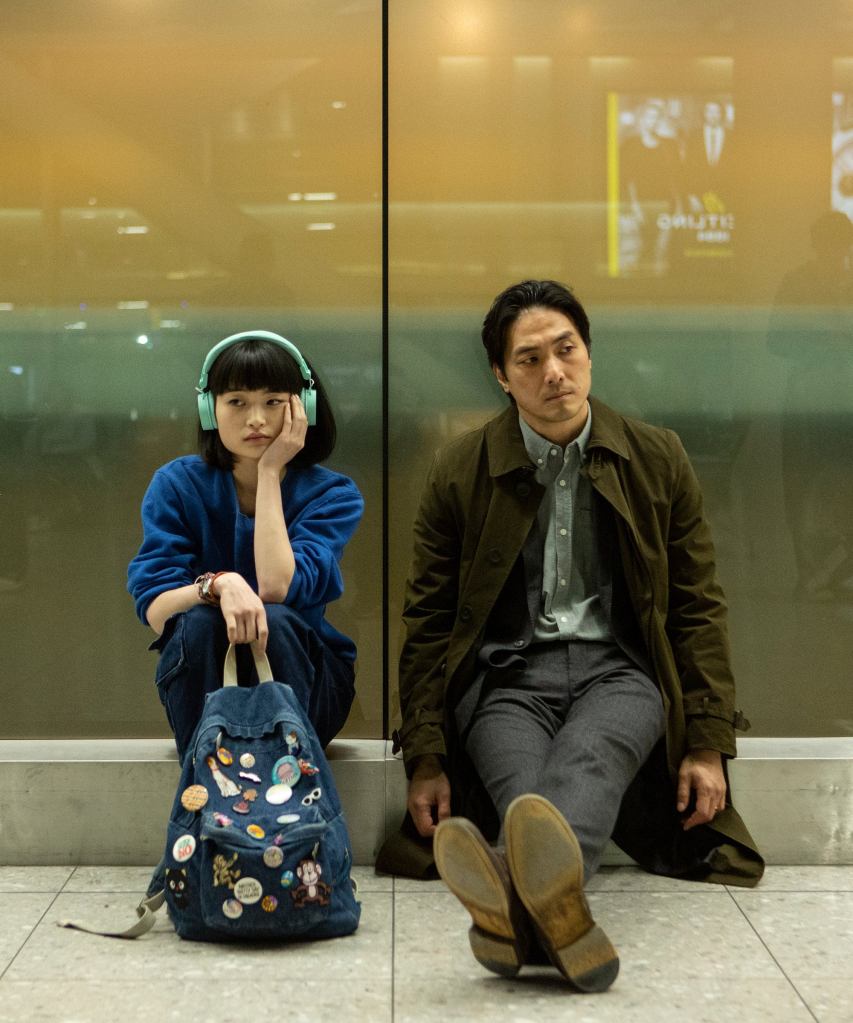
Now streaming at Netflix is this excellent original 2019 BBC production, Giri/Haji (Duty/Shame), a Japanese story of two brothers set almost entirely in London seemingly inspired by French existentialist writer Albert Camus with closing scenes set in Paris.
Midway through the series, one notices right away the complexities or, absurdities of life that one cannot simply categorize it between “duty and shame”, or good and evil, right and wrong, black and white.
It is a series that hits our innermost core when we find ourselves in those gray areas of confronting what we believe as right and just versus the value of every human person that Camus beautifully expressed in his 1947 novel “The Plague”:
“A loveless world is a dead world, and always there comes an hour when one is weary of prisons, of one’s work, and of devotion to duty; and all one craves for is a loved face, the warmth and wonder of a loving heart.”
Albert Camus, The Plague
Like most Netflix series, Giri/Haji is rated 18+ for its violence, language, substance, and nudity but everything is done beautifully and artistically.
It is a masterpiece that shows some common threads among us humans regardless of our color and culture, gender and age, belief and language. How the creators were able to perfectly blend these all with the excellent cinematography, music, and fine prints into uncluttered and pure simplicity of Japanese Zen principles are a work of art and film genius.
Simple plot but very personal and universal
The plot is simple: an elder, straight brother is a cop with a younger brother who is a Yakuza member hiding in London after being presumed dead when he got the daughter of his boss pregnant. He staged his revenge in London where he killed a Japanese executive with the knife of his former boss that had sparked a war among Yakuza families in Tokyo that was going out of control. Cop-brother comes to London to bring his gangster brother back to Japan to atone for his sins so that peace is restored among the Yakuzas.
Along the way, the two brothers’ stories converged with the stories of three other main characters that provided the many uneventful twists to be united by the element of deaths in various forms and circumstances.
From Google.
Giri/Haji honestly confronts our basic issues of love and acceptance so lacking or taken for granted in our own families that lead to a host of so many other problems and situations like drugs and other crimes, infidelity and promiscuity, as well as homosexuality and sexual orientations.
What is so unique with the series is how it was able to take these sensitive issues as subjects to be seen in relation with persons, not as objects to be studied or examined apart from anyone that it becomes more of an experience, not just an entertainment.
Giri/Haji is so personal, you can feel yourself “slashed” so you experience the subjects’ pains and hurts, longings and desires, dreams and aspirations.
Like the samurai blade that can cut through almost anything, the series hits you at almost every turn that you find yourself laughing and weeping without realizing that along with the characters, you have also laid your soul bare for serious self-confrontation and examination about your very self and the people around you in the relationships you keep as well as skipped or taken for granted.
Death and new life
There is no glorification of evil and immoralities but Giri/Haji invites us to see these as realities in our imperfect world that must be seen more with our hearts than with our minds and convictions. The series contrasts the Western frame of mind of morals as codes to be followed to the minutest details that slashes even persons into categories with the Oriental point of view of seeing morality in the totality of the person.
How it is resolved in the end is amazing!
And despite its genre being crime and violence, I would still say Giri/Haji is so lovely, even quaint and as Japanese as it can be especially with the depiction of changing of seasons that peaked at autumn.
Despite the dark and gloomy nature of the topics of death in all of its forms, there is the radiance of hope always that will lead to new life. The series teems with other symbolisms and signs including great music selections that add intensity to its drama and tragedy that make us hope the new season comes soonest.
For the meantime, listen to the beautiful music theme of the Giri/Haji by British singer Tom Odell.
Take my mind And take my pain Like an empty bottle takes the rain And heal, heal, heal, heal
And take my past And take my sense Like an empty sail takes the wind And heal, heal, heal, heal
Wednesday after Epiphany of the Lord, 08 January 2019
1 John 4:11-18 ><)))*> ><)))*> ><)))*> Mark 6:45-52
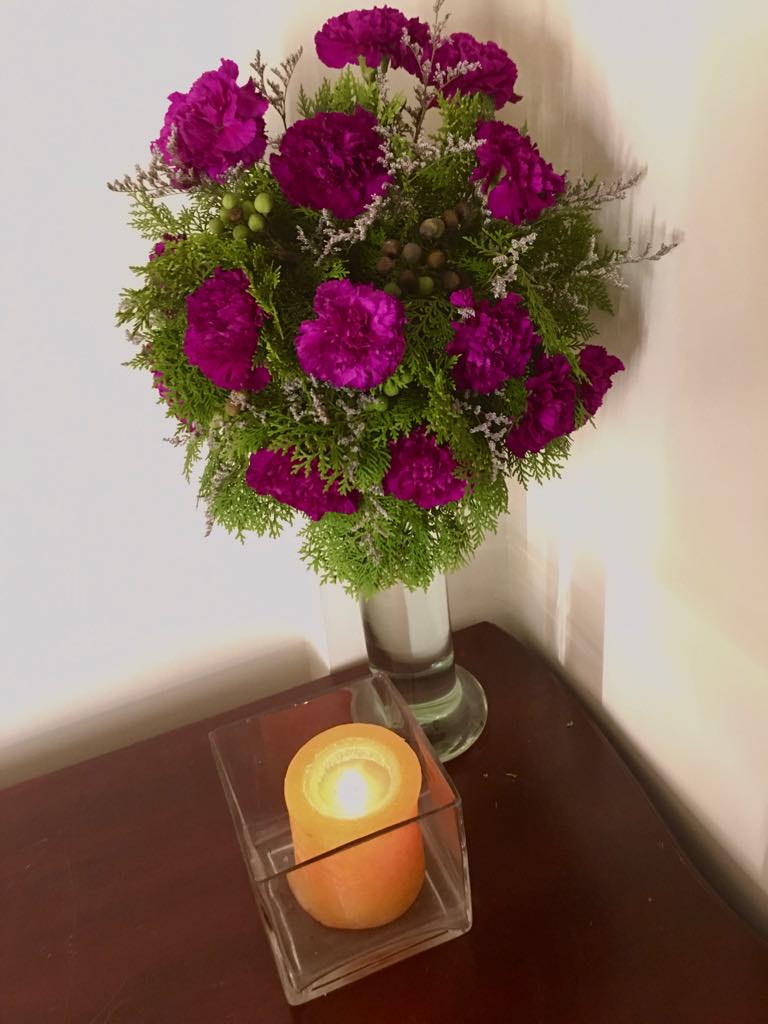
Flowers at our Altar, 05 January 2020. Photo by author.
We have come to know and to believe in the love God has for us. God is love, and whoever remains in love remains in God and God in him. In this is love brought to perfection among us, that we have confidence on the day of judgment because as he is, so are we in this world. There is no fear in love, but perfect love drives out fear because fear has to do with punishment, and so one who fears is not yet perfect in love.
1 John 4:16-18
How true are the words and reflection of your beloved disciple, Lord Jesus Christ! Indeed, when there is fear, that is when we refuse to love or at least fail to love.
When we are afraid of losing honor and losing possessions, when we are afraid of being disadvantaged and being out of the limelight, when we are afraid of being forgotten and unrecognized… those are the moments we fail to love because we cannot let go of our self, of our ego.
Teach us, Jesus, to take into our hearts your manifestations of your presence and power, of your love and concern for us so that our fears of being forsaken may be lessened.
Give us the grace to face our fears especially in moments of darkness and trials when we act like your disciples who cannot recognize your coming by walking on water at the middle of a storm at the sea.
Refresh our memories, Jesus, to recall those many moments you have come to our rescue to save us from so many problems and situations in the past so we may now completely trust you and give you our very selves in loving service.
Help us to let go and let God by dying to ourselves. Amen.
Tuesday After Epiphany of the Lord, 07 January 2020
1 John 4:7-10 ><)))*> ><)))*> ><)))*> Mark 6:34-44
Baby Jesus near our ambo, Christmas 2019. Photo by author.
Praise and thanksgiving to you, O Lord Jesus Christ in coming to us, in becoming human like us that we have experienced and realized deeply all about love.
Christmas itself can be spelled as L-O-V-E.
It is your birthday yet you were the one who gave us yourself as both “the gift and the giver” according to the great Karl Rahner, SJ. Most of all, even it is your birthday we celebrate, we are still the ones receiving gifts at Christmas!
In this is love: not that we have loved God, but that he loved us and sent us his son as expiation for our sins.
1 John 4:7-10
In our gospel today, Lord Jesus, you have shown us that your being “love” is your very person because love is being with others, a gift of presence, of staying and remaining with the people.
Love, dear Jesus, is exactly what you did in the feeding of the more than 5000 people in the wilderness when you blessed, broke and gave the little bread you have with the people.
At our sacristy, December 2019.
Love, dear Jesus, is exactly what you did in the feeding of the more than 5000 people in the wilderness when you divided the two pieces of fish to be shared with the crowd there in the wilderness.
And still, Lord Jesus, after feeding them, love is still being the one to pick up the pieces of leftovers to be kept by the 12 among themselves.
You are love, dearest Jesus because your very person is love, a giving of self to others.
Today’s gospel speaks about the end of time, the Second Coming of Jesus Christ when he predicted the fall of Jerusalem and destruction of its Temple in 70 A.D.
Every coming of Jesus Christ is a day of judgment and salvation, a call to love, love, and love.
When Jesus comes again at the end of time, he won’t be asking us how much money we have but how much do we share?
He won’t be asking us what car do we drive but how we move people with our kindness and warmth?
Jesus will not ask us those questions we are so preoccupied in this life but instead ask us the basic question we have always avoided answering, “how much do you love”?
Everything follows from that question because only those who truly love are the ones willing to suffer and sacrifice, even give life so others may live.
And that is why we have chosen this very poetic song, When It Was Done by the famed American composer Jimmy Webb in 1969 and first recorded by Winter Wanderley that same year.
There are other artists who have covered this beautiful song but Hugo Montenegro’s version is the best, giving it a more ethereal quality despite its poignant character.
It is a story of a man’s love presumably to a very lovely woman he never had the chance to express his feelings because she had been taken by somebody else.
If I could bind your mind to mine in time, to keep you from that world of his If I could change the strangers in your kind, then I’d know where your soul is Then I’d know what song I’d have to sing, to touch that chord within you Then I would weave such wondrous songs, and when it was done, I’d win you
If I could stand with the stars on either hand, and say girl this ain’t the answer If I had been where you’re going, but then I’ll never be no dancer If I was I’d know what step to take, and laugh at what had freed me And smash the great wall down girl, and when it was done, you’d need me
Too late… but the gentleman pins his hopes to the end of time when probably on judgment day he could have the chance to finally have that lovely woman.
If I can face the fate that waits to cast me into shambles And sit across the velvet boards from God then I would gamble And if I could, I’d know what chance to take and before the devil sold you I’d bet my soul against the stars, and when it as done, I’d hold you
Of course, it is all wishful thinking. And that is why – “when all was done” – there’s no more going back because it is judgement day. So let’s do whatever good we can in the here and now where Christ comes again.
Meanwhile, enjoy this lovely piece and shower your loved ones with all the love you now have.
Love can never be defined because it is a reality that cannot be restricted to certain parameters unlike other words or virtues or concepts for that matter.
The most we can do about love is describe it.
And, live it — as St. Paul has been telling us this week in our daily readings.
Let love be sincere; hate what is evil, hold on to what is good; love one another with mutual affection; anticipate one another in showing honor.
Romans 12:9-10
Photo by Ms. Jo Villafuerte, Atok, Benguet, 01 September 2019.
There lies the beauty of love, in being sincere, being true.
Not fake as we know and must have experienced somehow.
Sincere literally means “without plaster” that came from two Latin terms, sin for without and cerofor plaster.
In ancient Rome, good sculptures were highly prized, must be “sin cero” – no plaster and purely carved out from wood or stone. Like in the usual practice today, some sculptors “fake” their work with plasters (masilya) to cover uneven surface or disfigured portion that eventually wears out.
To love sincerely means loving like Jesus without strings attached, not expecting anything in return.
But, how can we love sincerely when others are so untrue with their love to us? How can we hate evil and hold on to what is good when people continue to hurt us, or oblivious to their wrongdoing and sins? Most of all, how can we anticipate one another with honor when nobody seems respectable at all these days?
It is always difficult to love because it is also difficult to be true when everything is artificial these days.
And that makes love beautiful not only because it is true but it is something we assert and insist despite the many evils around us.
Violets in our old sacristy, 2016.
Love becomes more beautiful when it is hurt and rejected, continuing to love, doing good and showing kindness even if others are not true because it is only then in pains and sufferings when more love is born and summoned from within us.
The more tears we shed, the more love flows to clean the mess.
Love never runs out, never dries up like a well or a river. It is the greatest virtue and gift we can have as St. Paul tells us in another letter because in the end, only love remains as it is from God who is Love himself.
When our love is true, no matter how untrue are the people around us, for as long as we love in Christ, the more we are able to love, the more love we have to share and give. The more we love, the more love we receive; withhold love, keep love to yourself, that is when you lose love.
Photo by Mr. Chester Ocampo, multi-media artist, and teacher (October 2019).
Brothers and sisters: owe nothing to anyone, except to love one another; for the one who loves another has fulfilled the law.
Romans 13:8
During his last supper, Jesus mentioned to his Apostles about his new commandment of loving each other as “I have loved you”.
Though other ancient sages have taught about love or similar attitudes especially in the East long before Jesus Christ’s coming, his commandment was new because it is a love rooted in God. More than a moral prescription or a code of conduct as seen in other religions and cultures, Christian love is so unique because it is rooted in God who is love himself.
Pope Emeritus Benedict XVI’s first encyclical issued on Christmas 2005.
Love is the only thing asked of us by God; hence, any failure to love is always a sin.
How sad that in this age of affluence and sophistication in terms of technology and knowledge, men and women are getting more isolated and alienated, giving rise to hosts of mental illnesses that lead into rising incidence of suicides worldwide.
One usual complaint of many people, young and old alike, is the lack of love. They always ask “where is the love?” even in the midst of every relationship that have become transactional in nature, forgetting the human face longing for affection, crying inside, alone.
Owe nothing to anyone except to love one another because it is love that defines us; without love, we are nothing.
To live is essentially to love.
If you have love in your heart, you have been blessed by God; If you have been loved, you have been touched by God.
Romans 13:8-10 ><)))*> ><)))*> ><)))*> Luke 14:25-33
Photo by Mr. Jim Marpa, market in Carigara, Leyte, September 2019.
Glory and praise to you, O God, for this Wednesday!
Your words through St. Paul today are very encouraging and reassuring as well.
Brothers and sisters: owe nothing to anyone, except to love one another; for the one who loves another has fulfilled the law.
Romans 13:8
How sad, O Lord, that these days, one of the cries and questions we either hear or ask is “where is the love?”.
Even in our personal relationships, we have forgotten love and kindness, mercy and forgiveness, always insisting on the letters of the laws disregarding the human face crying for help, crying in pain.
We have become so materialistic and legalistic, going into the details and other nitty-gritty in life forgetting the warmth of a human face, of a person.
It is love that defines who we are; without love, we are nothing!
Love speaks well of you, O Lord our God whom we believe in; without love, then, we have become monsters and Antichrists!
In the midst of our many transactions today, let us keep in mind to “owe nothing to anyone except to love one another”!
As I start this day, fill me with your Holy Spirit to cleanse and purify me with your breath, with your life, with your joy. Empty me of my pride, fears, insecurities and replace these with your humility, justice and love.
Help me renounce things that I am supposed to own yet possess me in reality so that only you, Jesus, always you, Jesus whom I shall only have and share. Amen.
The Lord Is My Chef Sunday Music, 03 November 2019
My cousin Joyce Pollard-Lopez with Tony during their honeymoon 40 years ago in Greece, still together and very much in love with each other!
It’s the end of a long weekend of bonding and prayers for the All Saints’ Day and All Souls’ Day that ushered in the penultimate month of every year that is November.
Let us not forget that on these days dedicated for our departed loved ones, we are also reminded to remember more of God and those people he sends us to experience his immense love for us.
They are the people who have profoundly changed us into who we are today, that made us live like we never existed before…
So you ask me what do I see When I look in your eyes I see things that have never existed before Shall I tell you all that I find In those beautiful eyes I can try But it never existed before
The silvery moon… a walk in the park The tunnel of love… a kiss in the dark The light of the stars… the clouds in the sky The fireworks on the fourth of july And you ask me what do I hear When you whisper my name Music plays that has never existed before
Oh, and I don’t know why But it’s there just the same And it’s plain that it never existed before The song of the rain the flowers in spring The wind in the willow trees murmuring The laughter that falls the children at play Like church bells that call all the people to pray So you ask me why do I glow Well, I think you should know I’m in love and I never existed before
Minnie Riperton co-wrote this song released in May 9, 1979 as part of her fifth and final album called Minnie.
Two months later, Minnie died of cancer at the age of 31.
Never Existed Before speaks so well of how Minnie had experienced the great love of her husband Richard Rudolph especially in her long struggle against cancer.
The song leaves no trace of her great sufferings as Minnie herself was filled with joy by actively working for her advocacies in cancer prevention and research.
Beautiful voice, beautiful woman, and beautiful song.
Just like Zacchaeus.
He only had one desire – to see Jesus who surprised him by coming into his house as a guest!
It is a story of faith, no matter how little it may be for as long as there is that desire for God.
Jesus comes first in our hearts, to those who truly seek him in their hearts.
And the mark of being saved and loved by Jesus is to be filled with joy like Zacchaeus who promised to change his life and even repay those he had cheated.
Truly, any encounter with the Lord Jesus Christ can change us deeply to live differently, like we never existed before.
We have reflected last week that prayer is an expression of our faith by citing Dione Warwick’s 1967 hit, “I Say a Little Prayer”.
When there is faith expressed in prayer, there is also love.
And when there are faith, prayer and love, then we have a relationship like family and friends, and community.
Today in our gospel, Jesus tells us the right attitude we must have in maintaining our relationships, not only with him but also with others.
Jesus addressed this parable to those who were convinced of their own righteousness and despised everyone else. “Two people went up to the temple area to pray; one was a Pharisee and the other was a tax collector. The Pharisee took up his position and spoke this prayer to himself, ‘O God, thank that I am not like the rest of humanity – greedy, dishonest, adulterous – or even like this tax collector.’ But the tax collector stood off at a distance and would not even raise his eyes to heaven but beat his breast and prayed, ‘O God, be merciful to me, a sinner.’ I tell you, the latter went home justified, not the former.”
Luke 18:9-11, 13-14
From Dione Warwick’s 1967 “I Say a Little Prayer”, we move to the following year when Sylvia Robinson and Bert Keyes composed Love on a Two-Way Street recorded by The Moments as a filler for their 1968 album Not on the Outside, But the Inside, Strong!
It did not fare well in the charts and was released again as a single in 1970 when it spent five weeks at number one on Billboard’s Soul Singles chart. It become one of the greatest R&B song of that year that was later covered by other artists.
In 1981, 14-year-old Staci Lattisaw did a cover of the song that became so popular that others have thought it as her original.
But with all due respect to Staci, I have also always felt her version very cheesy that I prefer the originals singing it because they give more character and soul to the song.
I found love on a two way street and lost it on a lonely highway Love on a two way street and lost it on a lonely highway
There was no specific experience behind the composition of Love on a Two-Way Street except that it was just a product of a play on words and poetry by Robinson supported by Keyes’ music.
The moment we become convinced of our righteousness that we despise everyone else (cf. Lk.18:9), then we shut ourselves in and leave no space for others even God.
Love as a two-way street based on today’s parable by Jesus requires three attitudes so our relationships would mature and grow deeper: a sense of sinfulness, self-surrender, and self-offering.
No love and faith would ever grow on a lonely highway, with no one else to relate with. That’s when we stop communicating and relating until we break up with others and end up alone and isolated.
That is when we become a “lonely highway” with nobody else but I, me, and myself.
Go back to the two-way street of God and others.
Though crowded with some traffic jams, there is always a space for everyone.