God among us in our family

The Lord Is My Chef Sunday Recipe for the Soul

Feast of the Holy Family, 29 December 2019

Sirach 3:2-7, 12-14 ><}}}*> Colossians 3:12-21 ><}}}*> Matthew 2:13-15, 19-23

One of the many bas reliefs at the Cavern Church complex in Cairo, Egypt where the Holy Family fled to escape Herod’s wrath when he ordered the murder of all male children below three years old after learning from the Magi the birth of the “new king of the Jews”.

Among the celebrations during this Christmas Season, the Feast of the Holy Family is something peculiar because it was not borne out of liturgical origins but more of the changing times in the past 126 years since it was first celebrated as a devotion.

In the beginning, it was designed to counteract the growing attacks against family life and morality of the rapidly changing times.

Since 1969 when Vatican II designated its feast to be celebrated within the Christmas octave, the feast of the Holy Family has proven to be a major contribution in helping us understand the mystery of the Lord’s nativity in our modern time.

When the magi had departed, behold, the angel of the Lord appeared to Joseph in a dream and said, “Rise, take the child and his mother, flee to Egypt, and stay there until I tell you. Herod is going to search for the child to destroy him.” Joseph rose and took the child and his mother by night and departed for Egypt. He stayed there until the death of Herod, so that what the Lord had said through the prophet might be fulfilled, out of Egypt I called my son.

Matthew 2:13-15
A diptych mosaic depicting the story of the flight to Egypt of the Holy Family on the walls of the Saint Virgin Mary’s Coptic Church in Cairo, Egypt beside the Cavern Church. It is one of the oldest churches in Egypt that dates back to the third century.

Christmas, a living story continuing in our family

The feast of the Holy Family reminds us that Christmas is a living story that continues to this day wherein God comes first in and through our family.

We go back to Matthew’s gospel to hear again the important role of Joseph not only in taking Mary as his wife in order to give name to Jesus but also to protect them from all harm.

We have seen during Christmas how Jesus had always been subjected to suffering right in his mother’s womb when Joseph and Mary have to travel from Nazareth to Bethlehem to comply with Augustus Caesar’s directive to all subjects of the empire to register.

Now, they have to travel outside Israel to flee to another country to escape the murderous plot of Herod against Baby Jesus.

We have heard again the continuation of Joseph’s mission revealed again to him by an angel in a dream. But, Matthew added something very interesting that is the key to understanding our gospel today and our feast of the Holy Family.

He (Joseph) stayed there until the death of Herod, so that what the Lord had said through the prophet might be fulfilled, out of Egypt I called my son.

Matthew 2:15
Entrance to the Cavern Church where the Holy Family lived for about three years while in Egypt before going back to Israel.

Remember Matthew’s audience and followers were Christians of Jewish origins.

The Holy Family’s flight to Egypt is very similar to the story of Jacob’s migration into that country during the great famine when one of his sons, Joseph the dreamer, became a governor there.

Many years later, the Egyptians would make them suffer that God sent them Moses to bring them back to the Promised Land through Exodus that has become the single most important date in their entire history. Also known as the “passover”, it was at that time when Israel passed over from slavery in Egypt into freedom in the Promised Land.

But, the result was not favorable because after settling back into the Promised Land, the people would repeatedly break God’s covenant by worshipping foreign gods and idols that eventually led to their Babylonian exile, not to mention the division of the kingdom into two after David’s death.

By citing a prophecy by Hosea, Matthew is now telling us how Jesus, the Son of God, is the new beginning of fidelity to the covenant. Like Moses, God took out Jesus from Egypt; but greater than Moses and unlike him, Jesus would never be unfaithful to the covenant.

As the new beginning not only for Israel but also for the whole world, Jesus in fact passed us over from sin to grace with his own passover or pasch – his Passion, Death and Resurrection.

Welcoming Jesus in our family through our love and care for each member

The family is the basic unit of every society. Destroy the family, we destroy the society. Eventually, we destroy our nation.

The same is true with us in the Church: the family is a domestic church. Jesus comes first in our family.

But how can he now come when our family is disintegrating, when it is right in the family where women and children are first abused?

How can Jesus come in our family when we have lost all senses of the holy, of God that we no longer pray and gather together in the Sunday Mass and other sacraments?

See how the giant flatscreen has become every family’s altar and deity, replacing the Christ the King or any other Poon in our homes. Malls have replaced our places of worship. Worst of all, the great feasts and seasons of Christmas and Easter have become so commercialized, reduced to become our modern excuses for much needed breaks and supposed family bonding in beaches and abroad.

The Holy Family’s flight to Egypt brought them closer with one another and most especially with God. Unfortunately, our own “flight to Egypt” has become our excuse to leave God behind and focus more with our own lives.

A portion of a larger mix of bronze reliefs on one of the doors of the Duomo Cathedral in Florence, Italy depicting the harsh conditions the Holy Family have to face in Egypt while escaping Herod. Photo by Ms. Janine Lloren, 2015.

A friend had shared this photo with me which she had taken while on a trip in Italy, home to thousands of our OFW’s who, like the Holy Family, have to leave our country to find life, to escape “death”.

Like Jesus, Mary, and Joseph, God “sends” us out to our own, different “flight to Egypt”, pulling us out from the comforts of our family and home, career and other comfort zones in order to gather ourselves so we can start anew in Christ to be more free to love and be faithful to him and our loved ones.

Many times in our lives, separations and other adversarial situations make us better persons, enabling us to be more fruitful in life than just having everything for granted and so easily.

The adversarial conditions the child Jesus have experienced very early on – from his birth to early childhood in Egypt – strike many similarities with our situations today.

It is hoped that with this Feast of the Holy Family, we may be reawakened again with our sense of mission in bringing Jesus Christ more present especially when life is threatened, when persons are denied of justice and freedom.

May the first and second readings remind us that every relationship we have here on earth, starting in our families must always be based on our relationship with God our Father. Amen.

What is in a name?

The Lord Is My Chef Simbang Gabi Recipe, 17 December 2019

Genesis 49:2.8-10 ><)))*> ><)))*> ><)))*> Matthew 1:1-17

Parokya ng Banal na Mag-Anak, Violeta Village, Guiguinto, Bulacan. Photo by Arch. Philip Santiago.

Today we shift our focus in our Advent preparations to the first coming of Jesus Christ when he was born in Bethlehem more than 2000 years ago. Strictly speaking, the Christmas countdown officially starts only today especially with our very long but beautiful gospel from Matthew.

Maybe you are wondering what’s good with our gospel today when it is all about names that mostly sound very funny.

Importance of names: origin and mission

In ancient time, giving name to children was a very serious matter among peoples, especially the Jews.

For them, a name indicates two very important things about a person: one’s origin and mission in life, something parents of today have entirely forgotten, even ignorant because they are more concerned with fad and being unique in naming their children that always end up as a joke as it is always bizarre and weird.

And their poor kid suffers for the rest of his/her life like that man named “Fantastic”. All his life he felt so sad being called Fantastic that he told his wife when he dies, never put his name on his tombstone.

Eventually Mr. Fantastic died and the wife kept her promise not to put his name on his marker. But she felt the need to honor her beloved husband who was so good and honest that in lieu of his name, she asked a tribute written to honor him.

It said, “Here lies a very gentle and loving husband and father who never looked at other women except his wife.”

Every time passersby see and read that tribute, they would always exclaim “Fantastic!”

From Google.

Going back to the importance of giving names….

Corporations are more serious than parents in choosing names and trademarks to their products and services. Every trademark and brand always evokes deeper meanings than just being a product or entity that some of them have entered the vocabulary of many languages like Google, Xerox, and Frigidaire.

And the sad thing about this is how many babies are now being named to follow things and products than the other way around, giving more value to things than human beings!

The book of the genealogy of Jesus Christ, the son of David, the son of Abraham. Abraham became the father of Isaac, Isaac the father of Jacob, Jacob the father of Judah and his brothers.

Matthew 1:1-2
Detail of the ceiling of Parokya ng Banal na Mag-anak after the front or main door: the genealogy of Jesus Christ that starts with Abraham. Great concept by the Parish Priest, Fr. Ed Rodriguez. Photo by Arch. Philip Santiago.

Genealogy of Jesus as direction of Matthew’s Gospel

St. Matthew opens his gospel account with the genealogy of Jesus to settle right at the very start the question about the origin and mission of Jesus Christ.

Here we find the artistry and genius of St. Matthew, some 2000 years ahead of the late Stephen Covey’s third habit of highly effective people: “begin with an end in mind.”

By starting his genealogy with Abraham and David, St. Matthew gives us the whole gospel message in a glance because they are the two key figures in the beginning and realization of God’s promise to send Jesus Christ who would save us all.

Let us just focus on Abraham which means “he who is the father of many.”

It was to him that the story of God’s promise began after the dispersal of mankind following the collapse of the Tower of Babel.

From then on, Abraham points to what is ahead in God’s divine plan, not only for himself but also for the whole mankind for it is through him that blessings come to all. His journey from his birthplace of Ur into Canaan is symbolic of his journey from the present into the future, walking in faith following the Lord’s path and divine plan.

In Abraham we find God starting anew the history of mankind after the Fall that leads up to Jesus Christ who came to lead us all back into the Father.

With Abraham as the main header of Christ’s genealogy, we find not only the beginning but also the end of St. Matthew’s gospel which is the universality of God’s plan of salvation with Jesus telling his disciples to make disciples of all nations (Mt.28:19).

Detail of the ceiling near the sanctuary of Parokya ng Banal na Mag-Anak, the culmination of the genealogy of Jesus. Photo by Arch. Philip Santiago.

Imitating Abraham into our time

Last December 10 was a very important date for me and my parish: it was the ordination date of our first priest.

While waiting for the start of the Mass at the front door (which is actually the back of the Cathedral or any church), I just prayed in silence thinking about my role in the ordination of Fr. RA Valmadrid.

While I marveled at the beautiful renovations of our Cathedral, my sight was slowly moved towards the altar.

It was like an “Abraham experience” in Matthew’s genealogy for me: a wayfarer on a journey into the future, towards God, walking in faith.

In a quick glance, I kind of saw the future glory of every faithful coming to the altar to receive Jesus Christ in the sacraments especially the Holy Eucharist.

I just felt the beauty of entering the Cathedral, or any church which is more than stepping into a building but more of entering God himself, our point of origin and final destination.

Do we realize this tremendous blessing and grace of being baptized, of being a child of God, not only given with a name but most of all, of being counted into the family of God our Father?

In the first reading we have heard Jacob calling his 12 sons. What is so striking here is the blessing Jacob had bestowed upon Judah, instead of Joseph who was the best of all his sons, the holiest and most intelligent.

Like Abraham and Judah, or anyone in the genealogy of Jesus Christ, we can find our own selves too not as the vida or contravida but simply being called to be God’s instrument in fulfilling his plan in sending his Son Jesus Christ.

Truth is, God always comes in the most unexpected situations and peoples most of the time.

In Christ Jesus through our Baptism and faith, we find our genealogy – our origin and mission – as children of God.

If you want to get a feel of this reality, try reading aloud, very slowly, the genealogy of Jesus Christ. At the end, include your self, mention your name, your mother and father. Then close your eyes and let your life flash back in silence.

In the silence of your heart, do you find God coming more to you than you to God?

So amazing, is it not? We are all part of Christ’s genealogy. Let’s bring him forth into the world in our life of faithful witnessing like Abraham. Amen.

Malolos Cathedral. Photo by author.

Going out of our families and friends

The Lord Is My Chef Breakfast Recipe for the Soul

Thursday, Memorial of the Presentation of Mary to the Temple, 21 November 2019

Zechariah 2:14-17 ><)))*> <*(((>< Matthew 12:46-50

Feast of the Presentation of Mary at the Temple originated from the Eastern Church where it is known as “The Introduction of the Theotokos (Mother of God) to the Temple”. Photo from Google.

Dearest Lord Jesus Christ:

As we celebrate the memorial of your Mother Mary’s presentation at the Temple, I am deeply struck by the gospel scene for this feast.

Someone told Jesus, “Your mother and your brothers are standing outside, asking to speak with you.” But he said in reply to the one who told him, “Who is my mother? Who are my brothers?” And stretching out his hand toward his disciples, he said, “Here are my mother and my brothers. For whoever does the will of my heavenly Father is my brother, and sister, and mother.”

Matthew 12:47-50

This is so striking to me, Lord because here you are asserting your authority outside your family circle. Here you are telling us of the need to eventually leave our family and friends in order to join you in your mission and journey.

It is very true that we find our first sense of belonging in our family and circle of friends but as we get older like you in Nazareth, our larger sense of belonging to God our Father can only happen when we break free from our family and friends.

Not because we do not love them but primarily because each of us has a calling and mission from you that must be followed and fulfilled. And to do so, we have to leave our family and friends in order to heed and follow your call, O Lord.

In this age of social media, there are some family and friends who get the wrong notion that belonging and possessing or ownership go together, that parents own their children, and friends own each other.

I pray for all parents to imitate St. Joachim and St. Anne who clearly knew they did not own Mary their daughter, that she is God’s that they have to offer her to him at the temple.

May we all grow into maturity that there comes a time when we have to leave our family and friends, even say “no” to them to be like you to freely say “yes” to the Father. Amen.

Betania Tagaytay, 2017.

Our Parents and Grandparents, God’s Presence

The Lord Is My Chef Breakfast Recipe for the Soul
Friday, Feast of St. Joachim and St. Anne, 26 July 2019
Song of Songs 44:1, 10-15 >< }}}*><*{{{ >< Matthew 13:16-17
Photo by Jim Marpa. September 2018.

On this feast of the parents of the Blessed Virgin Mary, St. Joachim and St. Anne, we praise and thank you almighty Father for the gift of our dear parents as well as grandparents.

In your Ten Commandments, immediately after the first three laws pertaining to you, you commanded us to “honor our father and mother” to stress that “charity begins at home”, that before we can love anybody else in this world, it must first be our parents and grandparents.

Before we can love any other person, we must first love our parents and grandparents for they are the signs of your presence with us, O God. From them we receive our first religious instructions, and most of all, we experience first from them your love and mercy.

Bless us, O Lord, to respect and love them, especially when they are old.

Give us strong hands and arms always ready to reach out to them when they could no longer move well. Let us return that favor this time for us children to help them walk.

Give us more patience and understanding with a lot of kindness when our parents become forgetful and sometimes childish in their ways. Let us be loving to them in their old age and senior moments in the same way they were so fond of us when we were kids and knew nothing at all.

Give us also, O Lord, the eyes to see those white hair and wrinkles they have, including those sickness they now bear were all partly because of us when they have to suffer so much, work so hard to give us a brighter today.

Remind us always, Lord, that of your Ten Commandments, the fourth is the only one with a promise, “Honor your father and your mother and I shall bless you in your old age.”

Remind us, Lord, that even if we are older and wiser, or even if we are already parents too, we always remain children of our parents.

Likewise, we pray for those parents who refuse to take on their roles as mother or father to their children, for those who refuse to be responsible enough to be truly parents teaching their children what is true and good and right.

We pray for all parents that they may all bring you forth, Lord Jesus Christ, onto the world through their children and grandchildren. Amen.

From Google.

“A House Is Not A Home” by Dionne Warwick (1964)

Lord My Chef Sunday Music, 21 July 2019
Old experiment from my room while assigned at the Fatima Shrine in Valenzuela City, June 2010-2011.

Our Sunday gospel today speaks about true hospitality that leads to an encounter of Jesus Christ in our home and family.

Burt Bacharach’s “A House Is Not A Home” composed in 1964 for a movie of the same title easily came as our choice for this Sunday’s music.

Problem was choosing which of the many versions to feature in our blog today.

Though the different versions do matter a lot with slight variations in the lyrics, we decided in favor of the original recording by Ms. Dionne Warwick in 1964 that was the B-side of her top 40 single “You’ll Never Get To Heaven (If You Break My Heart)”.

Despite her excellent voice (a favorite of Bacharach), Warwick’s “A House Is Not A Home” did not fare well in the US charts. However, since its release in 1964 it has become a classic for its lovely tune and truthful lyrics.

A chair is still a chair, even when there’s no one sittin’ there
But a chair is not a house and a house is not a home
When there’s no one there to hold you tight
And no one there you can kiss goodnight….
A room is a still a room, even when there’s nothin’ there but gloom
But a room is not a house and a house is not a home
When the two of us are far apart
And one of us has a broken heart

Hospitality is from the Latin hospes that means to welcome. From this root came also the word hospital.

The story of Martha and Mary reminds us of the need to first welcome our family members so Jesus could dwell in our home. And this calls for love and respect for one another, for kindness and care.

How sad that right in our own family we could feel unwelcomed, or even hostaged which is from another Latin word hostis that means enemy.

This Sunday, experience Jesus and his good news of salvation in your family by breaking those barriers that prevent you from welcoming one another.

Have a “home sweet home” in Christ Jesus with a lot of love and kindness to one another in the family. God bless everyone!

Coming together in the Lord

The Lord Is My Chef Breakfast Recipe for the Soul
Wednesday,Week XIV, Year I, 10 July 2019
Genesis 41:55-57; 42:5-7, 17-24 >< )))*> Matthew 10:1-7
Pyramids of Egypt. Photo by author, 09 May 2019.

Thank you very much, our loving Father, for making us all come together as family and friends, colleagues and acquaintances on many occasions you have planned in all eternity in your infinite wisdom.

Like the sons of Israel who have come to Egypt to buy food during a famine and the 12 Apostles summoned by your Son Jesus, our coming together for various reasons in different seasons were all caused by your divine will.

The sons of Israel did not know how their coming into Egypt would reunite them with their lost brother Joseph they have maltreated and sold a long time ago. The 12 Apostles never had an inkling at that time how they would be betrayed by one of their very own that they welcomed each other as disciples of Jesus.

In your time, God, you perfectly know when and where and how we would meet the many people we now have in our lives.

Give us the grace to always seek your holy will, your grand design and plan with the people who come to our lives. Let us take care of them as precious gifts of family and friends you give us, let us shower them with your love and attention while still around us. May we never take them for granted, value them always as they value us too as gifts coming from you.

Let us not take them into someone not meant to be in our lives.

We pray also for people without friends and family around them, for those in far and distant lands working away from their loved ones, for those languishing in jails especially the innocent one that they may soon be reunited with their family.

Most of all, our loving Father, may we always see your face on every person we shall meet this day. Amen.

With our fellow pilgrims at the Sphinx in Egypt, 09 May, 2019.

Our inner unity in Christ the Good Shepherd

The Lord Is My Chef Sunday Recipe, Easter Week IV, 12 May 2019
Acts 9:1-20///Revelations 7:9, 14-17///John 10:27-30
From Google.

There is something very unique among us that binds us Filipinos as one whenever we go abroad aside from being “maganda” as the people of Jordan, Israel and Egypt described us in a recent pilgrimage. Whenever we are in a foreign country, we Filipinos have that inner recognition that we are kababayan, something like what Jesus tells us in the gospel today.

“My sheep hear my voice; I know them, and they follow me. I give them eternal life, and they shall never perish. No one can take them out of my hand.”

John 10:27-28

This Sunday, we start a shift in our gospel readings: there would be no more stories of the appearances of Jesus after Easter until his Ascension with passages taken from St. John to deepen in us the meaning of Christ’s Resurrection.

Observe, my dear readers, the four verbs we have in our very short gospel today: hear my voice, know them, follow me, and give them eternal life. Right away we notice the inner recognition of Jesus Christ and his followers us, his sheep. See the flow of the first three verbs in our Lord’s declaration: my sheep hear my voice, I know them, and they follow me. It is quite odd in the sense that the sheep follow the voice because the shepherd knows them when it should be the other way around: my sheep know me, they hear my voice and they follow me.

Remember the inner recognition we talked about the other Sunday, that feeling of “a basta!” when deep inside us we are so certain of somebody or something? This is an example of that experience we have going abroad when we meet a kababayan: by just looking at each other, we already know we are Filipinos as if they first knew us, then we hear them, and follow them. It is something we also have deep within us with Jesus our Lord and God.

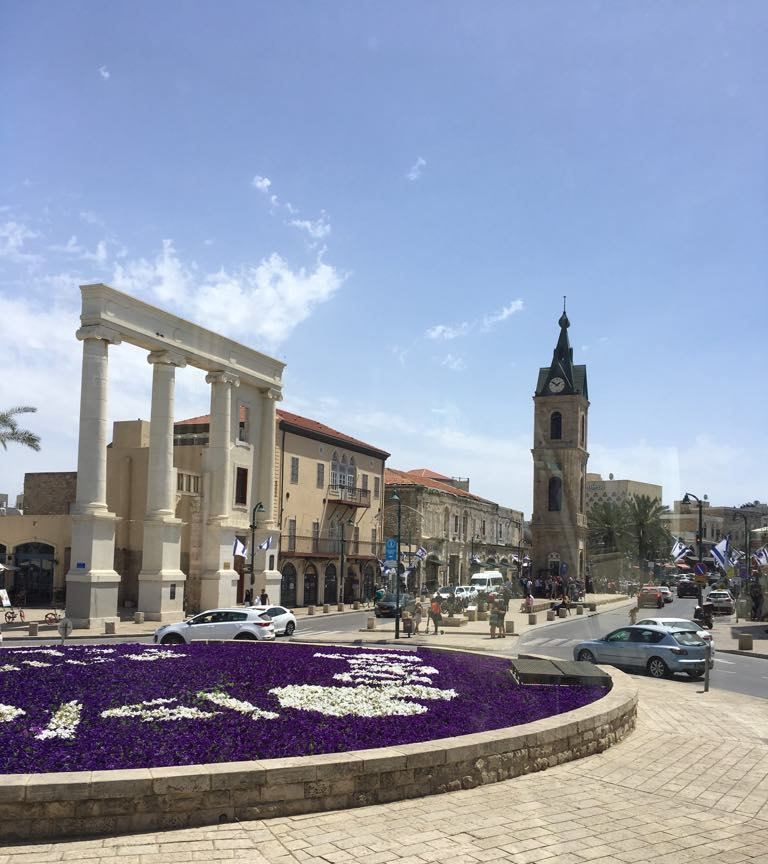
The lovely district of Jaffa Tel Aviv where you meet many Filipinos too. Photo by author, 03 May 2019.

These four verbs of hearing, knowing, following, and giving express relationship and ties that bind us together as a people and nation. To hear and to follow imply communion; anyone who hears and follows somebody recognizes the speaker’s authority and voice, entrusting one’s self to his or her guidance like in the family where we hear and follow our parents as we celebrate Mothers’ day today. Hearing and following lead to a kind of attachment as children to the parents or a disciple to a master. The parents, especially the mother knows her children very well that she always thinks the best for them, doing her best to give them a better and secured future. On our return flight yesterday from Bahrain, we chanced upon many Filipina OFW mothers returning home with their children – some are still infants, others are little children or young kids. They are the mothers who sacrifice so much so their children and family can have a better future.

Going back to Jesus Christ our Good Shepherd, we level up the meaning and application of those four verbs, especially the knowing and giving that pertain to Jesus Christ.

More than our communion and unity in Christ as his disciples, we ought to hear and follow him because only Jesus knows us so well. Only Jesus knows our deepest pains and hurts, our deepest longings and desires. Most of all, only Jesus loves us so much despite of his knowing of how sinful we are that he calls by name like Mary Magdalene on that Easter morning or Simon Peter at the shore of Lake Tiberias after asking him thrice if he loves him to assure his forgiveness of denying him thrice on Holy Thursday.

Most of all, we ought to hear and follow Jesus because only he can give us eternal life for he is life himself (Jn.11:25)! It was only Jesus who had walked with us in every valley of darkness, never abandoning us, and most of all, passed over through every pain and suffering, even death so that we may share in the glory of his new life. Only Jesus can bring back our shattered lives when we squander this gift of life like the prodigal son. It is only Jesus who would never judge us or put us into shame in our sinfulness to give us a chance to sin no more like the woman caught committing adultery. Only Jesus can promise us heaven because it is only him who had joined us in our sinfulness without committing sin by dying on the cross like Dimas the repentant thief.

These, my friends, are the inner unity that bind us together in Christ Jesus our Good Shepherd of which John the beloved was given a glimpse in the second reading. This also shows us how salvation for everyone, not only for Jews or any particular group, has always been in God’s plan from the beginning that he sent us his only Son Jesus Christ. May we all hear and follow his voice always, especially through our dear mothers. Amen.

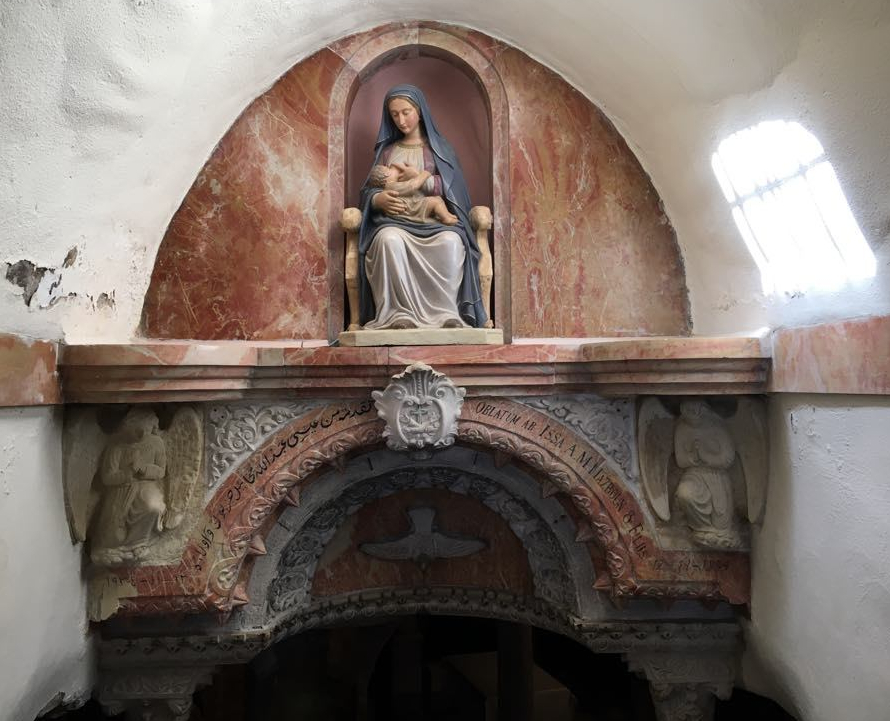
Entrance to the miraculous “Milk Grotto” chapel of the Franciscans beside the Church of the Nativity in Bethlehem. Photo by the author, 05 May 2019.

Meeting Christ, the Light of the Nations

presentationtemple
14 Giotto Presentation of Christ in the Temple 1310s Fresco North transept, Lower Church, San Francesco, Assisi….Web Gallery Of Art

The Lord Is My Chef Special Recipe, 02 February 2019
Feast of the Presentation of the Lord at the Temple
Malachi 3:1-4//Hebrews 2:14-18//Luke 2:22-40

            Here’s good news to those who have not yet removed their Christmas decors:  today’s Feast of the Presentation of the Lord is the actual end of Christmas Season when the Child Jesus was presented at the Temple in Jerusalem 40 days after Epiphany.  According to this tradition, it is also on this day when the Vatican removes its giant Christmas tree at the St. Peter’s Square.   And so, after this day and you still have your Christmas tree and other decors hanging, then you must be a certified slob or simply one who refuses to move on to meet Jesus Christ.

            Today’s feast has many names because it has many facets.  This was first celebrated in Jerusalem in the early year 300 as “the Feast of Presentation at the Temple” based on the Gospel account of St. Luke we have heard earlier.  The Syrians adopted the feast 300 years later, reaching the seat of the Eastern Church in Constantinople where it came to be known as “the Encounter” or Ypapante in Greek, emphasizing the “meeting” of the Savior and the two elderly people, Simeon and Ana.  At about that same time in Rome, Pope Sergius I adapted the same feast from Jerusalem with a procession of lighted candles to show Jesus as the “light for revelation” to Simeon and everyone.  When it reached France in the year 800, the French adapted it further with a new designation as “Feast of the Purification of the Blessed Virgin Mary” or“Chandeleur” which came to be known as “Candlemass” in English-speaking countries and “Candelaria” in Spain and her colonies like the Philippines.  Over a thousand years later in 1969 during the Vatican II reform of the liturgy, the Church decreed it to be known in its original name, Feast of the Presentation of the Lord.

            That’s the beauty of our Catholic faith when certain feasts evolved depending on the various emphases of the many periods in history yet remaining true to its very essence who is Jesus Christ our Savior and Son of God.  Anyone who truly meets or encounters Jesus is always enlightened by Him to meet Him among other peoples.  Recall how we started the celebration with the paschal candle also at the entry to our church.  It is the same paschal candle we have lighted and blessed during the Easter Vigil last year to symbolize the risen Christ lighting our path of salvation.  Today in our procession, the light of Candlemass announces that paschal candle:  inasmuch as we celebrate today the presentation of Jesus at the Temple by His parents, 33 years later or a little more than two months from now, Jesus would be back in Jerusalem to offer – or present – Himself to the Father in fulfilling His pasch or Passion, Death, and Resurrection.  This is the meaning of Simeon’s beautiful canticle we all sing at bedtime:  “Now, Master, you may let your servant go in peace, according to your word, for my eyes have seen your salvation, which you have prepared in sight of all peoples, a light for revelation to the Gentiles, and glory for your people Israel” (Lk. 2:29-32).

            Jesus is the light of the nations – lumen gentium – or light of men or peoples because He enables us to see the face of every human being as a brother and a sister in Him.  How sad that this human face has so often been disfigured, trying to hide or even remove the face of Christ in whose image we have all been created.  Imagine how Simeon and Anna were able to recognize Christ among the many infants being offered that day at the Temple in Jerusalem because both have always been opened with God.  We can never meet God unless we also meet others as brothers and sisters.  Remember during our Simbang Gabi how we reflected about true holiness through St. Joseph who always found God in everything so that upon learning Mary’s pregnancy, he decided to divorce her silently so as not to put her into shame.  But upon learning from an angel in a dream the circumstances about her pregnancy, St. Joseph took her as wife and Christmas happened with him standing as the Lord’s legal father.  When Joseph saw God in Mary, Jesus came; when he saw Jesus coming, Joseph accepted Mary.  That is the light of Candlemass when we are able to see God in each one’s face – most especially among our senior citizens.

            In a society where old age is seen like a disease with ads telling everyone to “arrest ageing”, giving so much premium on being young and looking young so glorified in media, we all fail to see the significance of this stage in life.  Worst, we abhor it, refusing to talk about it as if it is a curse.  Wrong!  Actually, most of the people God called for His mission in the Old Testament were mostly old people starting with Noah and Abraham as well as Moses who all performed great wonders for Him in their advanced ages!  Today’s gospel is no exception as it invites us to see Christ among our elderly brethren in the church and community, especially in the family whom we often take for granted.  See how St. Joseph and Mary shared Jesus with Simeon and Anna.  In 1999, St. John Paul wrote a letter to his fellow elders, saying that “The line separating life and death runs through our communities and moves inexorably nearer to each of us.  If life is a pilgrimage to towards our heavenly home, then old age is the most natural time to look towards the threshold of eternity (14).”

             Today’s Feast of the Presentation of the Lord at the Temple reveals to us the mystery of every encounter with God is often preceded with an encounter with another person, even strangers.  Every encounter with God is often verified by our encounter with others because through them, we experience that “invisible line” that seems to bind all of us as one big family.  And this is most true when we encounter the elderly people, especially those who have “aged gracefully” who often confirm with us the presence of God in our lives which they have already started to experience.  Every encounter with an elderly is an encounter with Jesus Christ because it is a prelude to our final encounter with Him in eternity.  And all these encounters are made possible by the grace and light only of Jesus Christ.  Remember:  the moment we are able to recognize the face of the person next to us as the face of a brother and sister in Jesus Christ, then we are sure that darkness has ended and day has begun.  Amen.  Fr. Nicanor F. Lalog II, Parokya ng San Juan Apostol at Ebanghelista, Gov. F. Halili Ave., Bagbaguin, Sta. Maria, Bulacan.

Photos from Google.

protectusolord

Living As God’s Children

49234257_542308659606249_5909495384316575744_n
The Lord Is My Chef Sunday Recipe, 20 January 2019
Feast of the Sto. Nino, Week II, Year C
Isaiah 9:1-6///Ephesians 1:3-6, 15-18///Luke 2:41-52

            Sometimes when we look at our religious celebrations we get the impression that we as a people seem to be very ritualistic and even fanatics.  But, on deeper examinations, we find in these feasts the expressions of our deep faith nurtured through our history and culture as a nation by God’s invisible hand.  A perfect example is today’s Feast of the Sto. Nino celebrated every third Sunday of January that is proper only to our country in recognition of the important role played by the image of the Child Jesus in our Christianization almost 500 years ago.  All the readings and prayers of today’s Mass are taken from Christmas Season even if we are already in the Second Sunday of Ordinary Time because the Sto. Nino is an extension of Christmas.  Recall also that two weeks ago right after the Epiphany of the Lord we have celebrated the Traslacion in Quiapo featuring the adult Jesus Christ carrying the Cross more known as the Black Nazarene.  They are the two most popular Christ devotions in our country that every region and province, town and barrio up to the smallest sitio has its own version of celebrating Traslacion and/or Sto. Nino.  In both devotions we find the finest examples of our vibrant faith in Jesus Christ who became like us in everything except sin in order to save us, heal us, and bring us closer with one another as one big family with God as our Father.  And in both devotions too, Christ calls us to continue living into our adulthood as God’s little children like Him the Sto. Nino and the Black Nazarene.

            After three days of searching, Mary and Joseph found the 12 year-old child Jesus at the Temple and he said to them, “Why were you looking for me?  Did you not know that I must be in my Father’s house?”  But they did not understand what he said to them.  He went down with them and came to Nazareth, and was obedient to them; and his mother kept all these things in her heart.  And Jesus advanced in wisdom and age and favor before God and man (Lk. 2:51-52). 

           From His childhood into His adulthood, Jesus remained a child of His heavenly Father and of His parents Mary and Joseph.  In this scene on His finding at the temple, we again see the centrality of Christ’s teaching of remaining like a child in order to belong to the kingdom of heaven.  And it was not only Him who showed it in this short account by St. Luke but also Mary and Joseph who “both did not understand” what Jesus had told them but still took care of Him very well as “He advanced in wisdom and age and favor before God and man.”  Here we find the importance of love in remaining children of God as shown by the deep love among the members of the Holy Family that is rooted in the Father’s love.  Notice how in this age of so much advancement in technologies that we have become more technical than personal, love has also suffered so greatly.  It is not only abused and misused but most of all, misunderstood.  Love has become a commodity that people think could be had simply and instantly like anything in a store or a vending machine, forgetting that love is more than a feeling but a decision we must keep.  Most of all, love is a choice we make by choosing what is most painful and most difficult because true love is found only on the Cross of Christ.

            This is what I am telling you at the beginning, the seemingly funny or weird flow of our celebrations after Christmas:  Traslacion and then Sto. Nino that are both anchored on love of God that did not merely happen in Christ’s birth and coming but most of all in His suffering and death on the Cross.  Love is often symbolized by the heart but its total meaning can only be found in the great sign of the Cross where we can find the perfect expression of Christian “childlikeness” and Christian maturity.  Recall how Jesus on the Cross remained a child of the Father to whom He entrusted His total self while at the same time remained faithful to His mission, resolutely going to Jerusalem to face His fate as a matured adult.  That is love when we can be tender and docile to our beloved and at the same time stand our ground to keep our promise, no matter what or how painful it could be.  It is a love until the end that is always willing to share and give, never thinking of anything in return.

              To be able to love like a child and remain loving as a matured adult like Jesus Christ, we need to always live in the present moment.  God revealed Himself to Moses as “I AM WHO AM” while in the gospels particularly in John’s, we find Jesus always declaring the great “I AM” as the Resurrection and life, the way, the truth and the life, as well as the good shepherd and the true vine.  God is love because He is always in the here and now, the present, not in the past and not in the future.  See how a child always has a time to take time as it comes, one day at a time, so calmly without advance planning and thinking or greedy hoarding of time.  Unlike us adults, we need planners and schedules to follow, finding or making time like a sausage to be sliced into portions to be eaten at a desired time.  Kids always live in the fullness of time like a cup of milk or water that has everything that for them, any time is a time to sleep, a time to eat, a time to play.  And that is why they love all the time!  We adults are so pressured and stressed that even in loving others and especially God, we always bargain with time as if it can be done.  We love to postpone time because we are not yet ready, even refusing to move on as we dwell with our painful past.  Remember the warning of Jesus that nobody knows the time when He shall come that we must always be on guard and ready for that time by always loving God and others all the time.  Recall our quotation last week that says, “For people who rush, time is fast; for people who wait, time is slow; but, for people who love, time is not.”  A child of God lives in the present because he knows, like Jesus Christ, every moment is the fullness of time we must receive with gratitude because in every present moment we have everything.  This is totally different from the young people’s concept of “YOLO” that is actually about living in the future now being advanced without realizing the beautiful present moment.

             To be a child of God like the Senor Sto. Nino is to walk in the “great light” of Christ, our “Wonder-counselor, God-hero, Father-forever, and Prince of Peace” (Is.9:1,5) who calls us to love every moment of our lives by living in the present.  May Jesus “enlighten the eyes of our hearts that we may know what is the hope that belongs to his call, what are the riches of glory in his inheritance among the holy ones” (Eph.1:18).  AMEN.  Fr. Nicanor F. Lalog II, Parokya ng San Juan Apostol at Ebanghelista, Gov. F. Halili Ave., Bagbaguin, Sta. Maria, Bulacan.

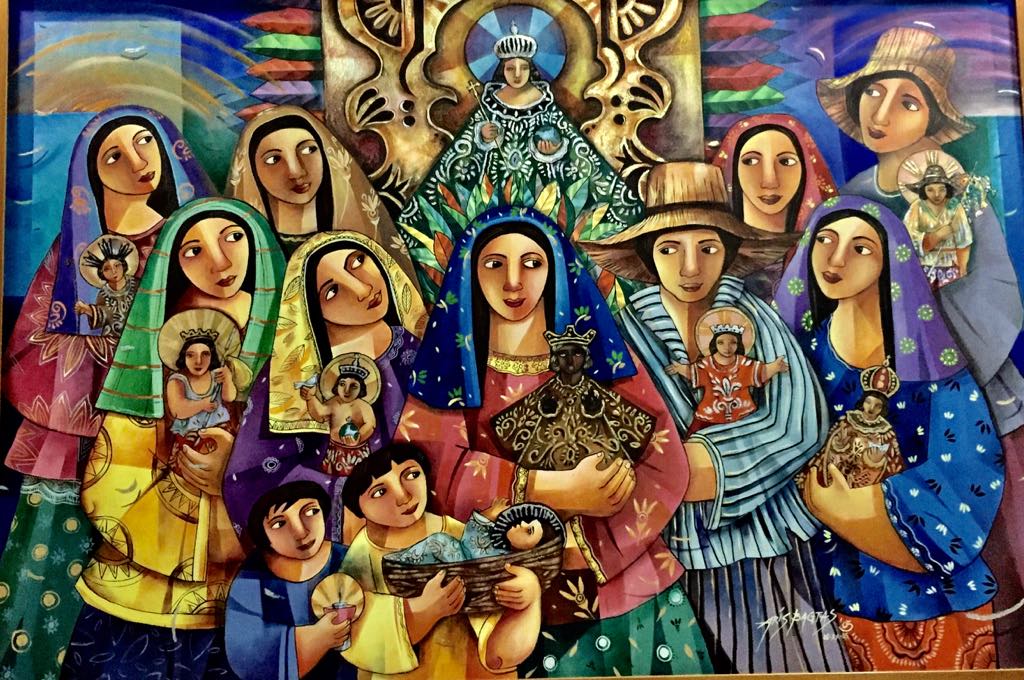
*Photo is a painting of Sto. Nino devotees by Bulakenyo artist Aris Bagtas.  Used with permission.

On Becoming Children of God

JimMarpa9m
The Lord Is My Chef Sunday Recipe
Feast of the Holy Family, 30 December 2018
1 Samuel 1:20-22, 24-28///1 John 3:1-2, 21-24///Luke 2:41-52

         Christmas reminds us that Jesus Christ comes through our family in the same manner He came through the husband and wife of Joseph and Mary.  It is right and fitting that within the octave or eight days of Christmas we also celebrate this Sunday the Feast of the Holy Family.  In this world of broken families, by choice or by circumstances, the gospel reminds us that a family is always made up of a father, mother and child:  When his parents saw him, they were astonished, and his mother said to him, “Son, why have you done this to us?  Your father and I have been looking for you with great anxiety” (Lk.2:48).  But more than our human families, Christmas reminds us most of all of our being a family of God with Him as our Father:  And he said to them, “Why were you looking for me?  Did you not know that I must be in my Father’s house?”  But they did not understand what he said to them.  He went down with them and came to Nazareth, and was obedient to them; and his mother kept all these things in her heart.  And Jesus advanced in wisdom and age and favor before God and man (Lk.2:49-52).

         The good news is that we all remain God’s children no matter how old we may be like Nat King Cole singing “to kids from one to ninety-two” which the beloved disciple reminds us in the second reading,  “Beloved:  See what love the Father has bestowed on us that we may be called the children of God.  Yes so we are.  The reason the world does not know us is that it did not know him” (1Jn.3:1).  It is becoming disheartening when people claim that Christmas is for kids because of the superficial things about the season like happiness over gifts.  We seem to have forgotten that Christmas came because of adults like Joseph and Mary, Zechariah and Elizabeth who remained children of God in being obedient to His holy will which is at the very core of experiencing Christ’s coming not only on Christmas Day when we remain like children. This Sunday we are invited to join Mary and Joseph in searching for the child Jesus whom we have often lost in our busy schedules, responsibilities and careers so we may also rediscover in the process our being children of the Father in heaven.

         See the beauty of the response of Jesus to His parents upon finding Him at the temple, “Why were you looking for me?  Did you not know that I must be in my Father’s house?” (Lk.2: 49).  Though Jesus Christ is truly human like us in everything except sin, growing up and maturing in all aspects, His divine Sonship has always been clear with Him even as a 12 year-old child.  His intimacy with the Father was never lost in His becoming human.  His being the Son of the Father in heaven is the very core of His mission that we always hear Him telling us in His preaching about His being one with the Father and most of all, of the need for us to become children to be included in His kingdom.  This He reveals to us in three ways through this only episode about His childhood as recorded by St. Luke.  First is His complete freedom as a person.

         Jesus has always been free from so many conventions and rules even laws that limit humans from being totally free for God as Father.  Remember how Joseph His legal father also showed that true holiness is abiding in the Laws of Moses based on love that he decided to leave Mary in silence after learning of her pregnancy.  But after hearing the angel’s explanation in a dream, Joseph freely decided on himself based on his love for God, for Mary and for Jesus to take her as his wife.  How funny that when we were growing up we kept on demanding for freedom from our parents thinking that being free is being able to do whatever pleases us.  Then we realize that true freedom is choosing what is good, what is true.  That true freedom leads us to be more loving and faithful.  Too often it seems that as the world gives so much emphasis on freedom, the fact remains that the more we try to be free, the more we become unfree, finding ourselves imprisoned and caught up in too much binds and traps that most of us would always go somewhere to be alone, to have “me time” because we are not free deep within as we have forgotten our basic identity as beloved children of God the Father.  Jesus was so free that He stayed behind at the Temple because deep within Him he was at home at His Father’s house.  And deep within Him He spoke freely of His Father that amazed the experts with Him at the Temple because they were constricted with many concepts and thoughts about God when Jesus was so free to share the love He has inside.

          And here lies the beauty of true freedom that leads to amazement and wonder, to being surprised by something bigger, greater, and so beautiful.  Poets claim that children are the closest to God and the spiritual realms because they always have the sense of wonder and awe.  Even Mary and Joseph must have been amazed at the response of the child Jesus, reminding them of the announcements made to them by the angel before His coming.  In this age of Netflix and daily video streaming of everything, we are being robbed of the simple and deep joy of being surprised unlike when we were younger that we have to wait for the next series of the Knight Rider or Dallas or ChiPS.  With these modern technologies, the more we have become not free at all as we just follow the flow of networks, tech giants, advertisers and markets.  We have been imprisoned by economics and profits along with gimmicks that we miss life in the process.  The finding of Jesus at the Temple reminds us that our God is a God of surprises, that when we are truly free for the Father in heaven, there is always awe and amazement with life.  We live and do not rush, enjoying time and every present moment in life, unafraid of what would happen next.  Then, we become grateful or thankful for everything we have, material and spiritual.

         Every Sunday as children of God we gather in the Holy Mass we call Eucharist, the Greek word for thanksgiving.  In the first reading we have heard Hannah offering her son Samuel to the temple as her thanksgiving for the gift of a child after God answered her prayers.  The gospels teem with so many occasions when Jesus would pray often to praise and thank God His Father, even in public.  His life is a thanksgiving in itself that He gave it entirely to the Father for us.  Though I am not a beauty pageant expert, I feel that Ms. Catriona Gray’s winning the Miss Universe title was largely because of her childlike traits of being free, amazing, and thankful.  Only a child-like attitude like hers can see the silver linings amid the children growing at the slums of Tondo and still be grateful.  It is exactly what Jesus had said that“unless you become like children, you shall never inherit the kingdom of heaven”  that she was eventually crowned as Miss Universe!

          To be a child is to owe one’s existence from another, from God and from parents and elders.  When we teach our children to always sayplease and thank you including po and opo, we are actually reminding them of that deep reality within each of us that we are here on earth because we were given as a gift.  We are not really teaching them something new but more of awakening in them something inherent that our existence is not of our own, our “I” or self not of our own making that we have to be thankful always to God and with our parents and with others.  This is something we adults always forget or even discard and abandon especially when we fill to have achieved so much in life.  We all remain children in our whole lives because are always in need of one another especially when we get older and eventually lose our memories and abilities to do things that rightly so, we get into a second childhood.  On this Feast of the Holy Family, let us be thankful for the gift of one another, especially of our family.  How lovely were those Christmas greetings on Facebook – “from our family to yours” – if each one remains a child of God, freely loving and surprising everyone of the reality of the God among us Jesus Christ, the Emmanuel. AMEN. Fr. Nicanor F. Lalog II, Parokya ng San Juan Apostol at Ebanghelista, Gov. F. Halili Ave., Bagbaguin, Sta. Maria, Bulacan

*Photo above by Jim Marpa.  Used with permission.  Below from Google.

findingjesus