“When It Was Done” by Hugo Montenegro (1970)

The Lord Is My Chef Sunday Music by Fr. Nick F. Lalog II, 10 April 2022
Photo by Arch. Philip Santiago, Lourdes, France, 2015.

All roads lead to churches today as we begin the holiest week of the year with the celebration of the Palm Sunday in the Lord’s Passion today reaching its highest point on Saturday evening with the Easter Vigil that leads to Easter Sunday, the mother of all feasts in the Catholic world.

Our celebration today is actually a combination of two practices in the earliest times of the Church that were only merged in 1963 during the reform of the liturgy at Vatican II: the procession and blessing of palms was the practice in Jerusalem as early as the 4th century while a hundred years later, the Pope in Rome ushered in the Holy Week with the proclamation of the passion narrative of Jesus Christ.

Hence, the long title of our celebration, Palm Sunday in the Lord’s Passion; however, it is not something we look back in the past but one that we make present in the here and now as we look forward in that future when we shall all be together celebrating eternal life in God’s presence in heaven.

That is the challenge of this Holy Week: how we can follow Jesus in his Passion and Death in order to be one with him in all eternity. Like the people in Jerusalem when he entered the city more than 2000 years ago, would we side with those who followed and believed him or be with those who mocked and jeered him? (https://lordmychef.com/2022/04/09/the-cross-our-door-to-heaven/)

That is the problem of the main character in the song When It Was Done which is a list of wishful thinkings of a man to a woman already in a relationship with another man. It seems the man was too slow or came late to do everything in order to win over the woman he loves and all he could do at the moment now is to wish of having her perhaps in the afterlife in the future.

If I could bind your mind to mine
In time I'd keep you from that world of his
If I could change the strangeness in your kind
Then I'd know where your soul is

Then I'd know what song I'd have to sing
To touch that chord within you
And I would weave such wonders
That when I was done I'd win you

If I could stand with the stars on either hand
And say, "This ain't the answer"
If I had been where you're goin'
But then I'll never be no dancer

And if I was I'd know what step to take
And laugh at what had freed me
And smash the great wall down, girl
When it was done you'd need me

If I could face the fait that waits to cast me
In the scramble
And sit across the velvet boards from God
Then I'd gamble

Then I'd know what chance I'd have to take
And before somebody sold you
I'd bet my soul against the stars
When it was done I'd hold you

Composed in 1969 by Jimmy Webb and originally recorded that same year by Walter Wanderly Set, it became popular in 1970 after Hugo Montenegro released his version. Montenegro was a former US Navy musician who pioneered research and recordings in electronic music. His biggest break came in 1966 when he covered Ennio Moricone’s theme for the Clint Eastwood starrer The Good, the Bad and the Ugly that paved his way into a long career in creating music for movies and television series.

When It Was Done is one of the 200 songs covered by Montenegro he had waxed with his cool arrangements using modern electronic instruments and technologies of his time that gave his music a different feel, like in this piece that is very soothing with a sense of sublimity.

It is a very lovely and feel good music that reminds us too to do every effort in the present moment to express our love for others like Jesus Christ who until the end never ceased from doing good for everyone. It is in being like Jesus that we can truly sing Monetenegro’s When It Was Done more convincingly and truly. Amen.

*We have no intentions of infringing into the copyrights of this music and its uploader except to share its beauty and listening pleasure.

From Youtube.

The Cross, our door to heaven

The Lord Is My Chef Sunday Recipe for the Soul by Fr. Nicanor F. Lalog II
Palm Sunday of the Passion of the Lord, 10 April 2022
Isaiah 50:4-7  +++  Philippians 2:6-11  +++  Luke 23:1-49
Photo by Mr. Chester Ocampo, ICS Chapel, 2016; sculpture by National Artist Ed Castrillo.

Officially we begin today the Holy Week leading to the Triduum of the Lord with Easter, the Mother of all feasts in the Church. Today we enter the “innermost room” of the house of God our Father after our 40 day journey in Lent.

We are actually celebrating today two distinct rites merged into one, the procession and blessing of palms to commemorate Jesus Christ’s entry into Jerusalem that led to his arrest and crucifixion on Good Friday which we heard in the gospel proclaimed earlier. As early in the fourth century, Christians in Jerusalem have been commemorating the Lord’s entry to Jerusalem from the city gate while a hundred years later, the Pope ushered in the Holy Week in Rome by proclaiming the long gospel we have heard of the Lord’s crucifixion and death. With the reforms of the liturgy in 1963 at Vatican II, these two celebrations were merged as one with the designation as “Palm Sunday in the Passion of the Lord”.

More than a going back to the past, our celebration today reminds us of the ever-newness of Christ’s saving work and love for us while at the same time assuring us of the future that would bring us into the fullness of life in him with the Father in heaven. This we find in the last three words recorded to us by Luke while Jesus was on the Cross.

Photo by author, Chapel of the Holy Family, Sacred Heart Spirituality Center, Novaliches, QC, 2016.

The mercy and forgiveness of God

Then Jesus said, “Father, forgive them, they know not what they do.”

Luke 23:34

Very consistent with his theme of the mercy and forgiveness of God to us as shown the other Sunday in the parable of the merciful father, a.k.a. the parable of the prodigal son, Luke presents to us again this most wondrous and touching trait of God in Christ even while crucified.

Again, only Luke has this detail of Jesus praying forgiveness for his enemies while being reviled and mocked by them on the cross.

It is another example of Luke’s artistry in presenting to us God’s mercy and forgiveness in Christ in a sort of play of words, “Father, forgive them, they know not what they do” as we confront our selves with the question, “what do we really know?”

What do we really know at all that we continue to crucify Jesus today, nailing him on the cross with our many sins as we pretend and assume to know so many things in life?

Until now, we still have wars raging in various parts of the world, and more than half of these conflicts according to studies are ironically due to our different religious beliefs! Until now debates continue as everyone would want to have the power to decide for themselves who shall live and who shall die, from abortions to artificial contraceptives to capital punishment. Until now we pretend to know the truth and yet the more we have shown our ignorance as our problems become more complex than ever leading to more deaths, more disillusions, more anxieties and more emptiness in life.

And right there on the cross, Jesus continues to pray to the Father to forgive us for we do not know what we are doing to pave the way for the conversion of more others like Paul who realized he “acted out of ignorance in my unbelief” (1 Tim. 1:13). In his other book the Acts of the Apostles, Luke tells us how Peter said in a speech to the people how they “acted out of ignorance in putting Jesus to death” (3:17). Here we find Luke driving at the basic truth how so often it is in our sinfulness and “ignorance” that eventually we come to “know” and realize God who is always ready with his unfailing mercy and forgiveness. The key is to emulate Dimas, the good thief crucified at the other side of Jesus on that Good Friday.

Photo by author, Chapel of the Holy Family, Sacred Heart Spirituality Center, Novaliches, QC, 2016.

The promise of Paradise

He replied to him, “Amen, I say to you, today you will be with me in Paradise.”

Luke 23:43

Imagine the evil that men do portrayed by Luke in Christ’s crucifixion, of the relentless insults and mockery by the people on the ground and even up there on the cross when one of those hanging reviled Jesus, saying, “Are you not the Christ? Save yourself and us”(Lk.23:39).

See how we are not contented and satisfied in putting others to shame but would even bury them deeply with insults as we say in Filipino, “baon na baon”. But, all is not lost as there is always a glimmer of hope. especially among the sinners and the ignorant who open themselves to god’s grace like Dimas who rebuked his fellow criminal, reminding him how they deserved the punishment but not Jesus “who has done nothing criminal” (Lk.23:41). It was at that instance when he snatched heaven by telling the Lord, “Jesus, remember me when you come into your kingdom” (Lk.23:42).

And we all know the response of Jesus, “Amen, I say to you, today you will be with me in Paradise.”

What a great God do we really have in Jesus Christ! Despite the pains and sufferings of being nailed on the cross, he not only begged the Father for our forgiveness because we do not know what we are doing but most of all, readily handed our salvation, promising Paradise to anyone who would humbly surrender one’s self to him like Dimas.

See that Jesus was very precise in assuring Dimas and us with Paradise – right at the very moment we are in him, with him on the Cross of pain and suffering, of truth and righteousness – not later when they die nor on Sunday when he rises from the dead but TODAY, right now!

The very moment we open ourselves to accept Jesus Christ our Savior, that is also precisely the very moment he is very present in us and among us. The other moment Luke used the word TODAY to indicate the very moment of here and now was at the birth of Jesus when the angels told the shepherds “For today in the city of David a savior has been born for you who is Messiah and Lord” (Lk.2:11).

What a beautiful reminder to us all of God present among us in every here and now, not yesterday nor tomorrow, but today for indeed our God is “I AM WHO AM”!

Anyone who is always one in Jesus, one with Jesus is assured of Paradise, in fact already entering Paradise, our end and ultimate destination in life. This leads us to the third important words of Jesus on the Cross according to Luke…

Photo by author, Chapel of the Holy Family, Sacred Heart Spirituality Center, Novaliches, QC, 2016.

Coming home to the Father

Jesus cried out in a loud voice, “Father, into your hands I commend my spirit”; and when he had said this he breathed his last.

Luke 23:46

All four evangelists attest in their respective gospel account that Jesus died on the cross at the ninth hour or about 3:00 PM. Most of all, they tell us that Jesus died while praying.

In Luke’s account, Jesus’ final prayer was from Psalm 31:6, “Into your hands I commend my spirit.” As we have mentioned in our previous reflections, Luke presents Jesus always at prayer like during the second Sunday of Lent during his transfiguration; only Luke tells us why Jesus went up that high mountain with his three Apostles in order to pray. Inasmuch as the transfiguration was a prayer moment, the crucifixion is the Lord’s prayer moment par excellence. Recall how we truly learn to “pray” when in deep pain and trials like before a surgery, when we no longer know how to pray or even have forgotten what is prayer all about except that we give ourselves entirely to God and to our doctors.

There on the Cross at his final moments, Jesus never ceased from doing good, always praying, always united and one in his Father in heaven. In commending his spirit into the Father’s hands, Jesus shows us exactly what discipleship is all about: everything we have, all we are are God’s. We have nothing to lay claim as ours in this life and that is the challenge to us daily: to live for God in Jesus through our loving service to others.

In this long passion narrative we heard today is the gospel, the very good news of our salvation as proclaimed by Paul in the second reading of how Jesus gave his total self in love to the Father for us all.

May we keep our eyes and our hearts open to Jesus, relying only in him like the Suffering Servant for he shall never put us to shame. We cannot experience the joy of his Resurrection unless we imitate Simon Cyrene, Dimas, John and the Blessed Virgin Mary in welcoming and following him in our daily life whether in the comforts of Jerusalem or the sorrows of Calvary for that is where we truly enter Paradise with Jesus, in Jesus. On the Cross. Amen.

The joy of meeting God

40 Shades of Lent by Fr. Nicanor F. Lalog II
Fifth Sunday in Lent-C, 03 April 2022
Isaiah 43:16-21 ><}}}*> Philippians 3:8-14 ><}}}*> John 8:1-11
Photo by Ms. Jo Villafuerte, Atok, Benguet, 20 February 2022.

From the joy of coming home to the Father last Sunday in the parable of the merciful father, we now celebrate the joy of meeting God in Jesus Christ in the story of the woman caught in adultery.

We are now into the final week of Lent, getting closer to the innermost room of the Father’s house but this time with John as our guide as we skip Luke’s gospel. The shift is hardly noticeable as the story of the woman caught in adultery seamlessly jibe with Luke’s parable last Sunday. The Pharisees and scribes are again present but this time more bold in their opposition to Jesus.

From pinterest.com.

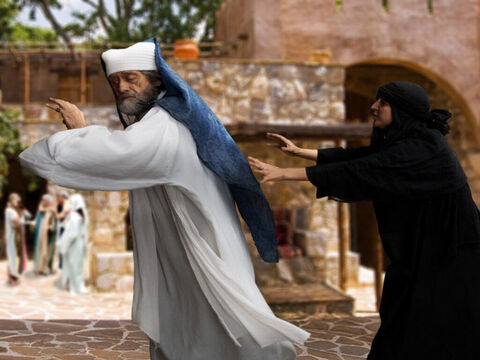
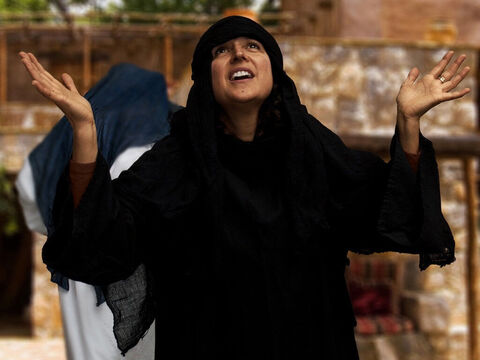
Then the scribes and the Pharisees brought a woman who had been caught in adultery and made her stand in the middle. They said to him, “Teacher, this woman was caught in the very act of committing adultery. Now in the the law, Moses commanded us to stone such women. So what do you say?” They said this to test him, so that they could have some charge to bring against him. Jesus bent down and began to write on the ground with his finger.

John 8:3-6

Only John records this story of the woman caught in adultery but one can clearly recognize its similar tone and perspective with the parable last Sunday that only Luke had, the parable of the merciful father, more known as parable of the prodigal son. Both stories tell us the gospel of God’s mercy proclaimed in words and in deeds by our Lord Jesus Christ.

But what makes this story of the woman caught in adultery a stand out is its simplicity amidst the profound texts by John often identified as the beloved disciple. He was able to compact in few words and simple gestures the many realities in life we forget and take for granted.

As I prayed over this scene, one word persisted in my reflections: kindness.

Photo by author, 2018, Davao City.
The kindness of God.

The word “kind” is from kin or kindred as in family or tribe. When we say a person is kind, we mean that person treats us as one of his family, of his same kind, that he deals with us like we are not “others” or iba as we say in Filipino (hindi ka naman iba).

How sad that at the start of this pandemic in 2020, that was when all news and stories spread of how we have become so unkind with each other especially the poor, the sick and the old, children and women treated unkindly like Mang Dodong of Caloocan.

How sad that in our country, it has become a sin, an error or a failure to be poor and disadvantaged that even the poor and disadvantaged look down at each other, too! There is always that feeling among us that we are different, that we are not of the same kind that it has become so difficult to find kindness among everybody. We have forgotten we are all human, imperfect and sinful but also beloved children of God.

This is what the Sunday gospel is telling us: the woman caught in adultery is not the only sinner in this scene. John described her as “caught in adultery”, not merely an “adulteress” to show that she was in fact caught into adultery. It is a serious sin but there’s more to be caught in that act than meets the eyes. Here, there is no mention about the woman’s “lover”.

Like in our gospel last Sunday, we have the Pharisees and scribes present again, forgetting their very roles in the story itself. Recall that Jesus told the parable of the merciful father for them last Sunday to remind them that they were both the prodigal son and elder son. And that included us today, of course. Today, they are back and we wonder what were the evidence they have against that woman. Where were they while the woman was committing the sin of adultery? Were they peeping toms? Or worst, have they had some trysts with her too in the past?

Both the woman caught in adultery and her accusers, the Pharisees and the scribes stand for us all – we are sinners. We have all sinned and how dare are we to act like the Pharisees and scribes pretending to be different from others, to be so clean and pure when deep inside us are also rotten with sins that could even be worst than the people we accuse.

This is the reason why Jesus bent twice to show everyone how God had chosen to go down to us, to be like us in everything except sin so we can see again everyone as our kin, our same kind as children of the Father.

But when they continued asking him, he straightened up and said to them, “Let the one among you who is without sin be the first to throw a stone at her.” Again he bent down and wrote on the ground. And in response, they went away one by one, beginning with the elders. So he was left alone with the woman before him.

John 8:7-9
Photo by news.ag.org, Jesus writing on the sand in the story of the woman caught in adultery.
Bending to washing of feet to dying on Cross.

In bending down twice, Jesus showed everyone – the accused and the accusers – the kindness of God, his being our kin, his being one of us even if he is Divine. To bend down is to go down, like Jesus coming down from heaven, being born as a child to show us that the path back to God is in being human which is underscored by Matthew in his genealogy of Jesus Christ at the start of his Gospel which is proclaimed every December 17 and December 24 Christmas Eve.

Here in this scene we are reminded by his bending as an imagery of the mystery of Incarnation just like his coming down to Jordan River at his baptism by John.

This bending of Jesus will happen again on Holy Thursday when he washed the feet of his apostles where he gave his commandment to love (hence, it is called as Maundy Thursday, from Latin mandatum for commandment). It will reach its highest point when he bent lowest on Good Friday by offering himself on the Cross for us all out of his immense love and mercy. And kindness.

That is the greatest expression of God’s love and mercy, in his kindness, in his becoming one of us in Jesus Christ who took upon himself our sins so we may be clean again and be able to rise and stand with dignity and honor as beloved children of the Father.

This is the fulfillment of Isaiah’s words in the first reading that God is doing something new for us.

Jesus is not telling us to stop fighting sin and evil, to cease from pursuing criminals and people who have committed crimes and grave sins against us and others. The fight goes on but should always be tempered with being humane.

Photo by Pixabay on Pexels.com

The beautiful story of how Jesus resolved the case against the woman caught committing adultery assures us of the endless mercies of God to us sinners, not a passport to sin. See how Jesus recognized the sinfulness of the woman when he told her, go and sin no more – the most humane reprimand perhaps in history.

It is only in our being kind like Jesus that we become truly human and humane.

According to John, the first to leave the site after Jesus challenged them to cast the first stone were the elders that may stand for having wisdom, not necessarily being aged. The first to leave the site were the wise, those who must have realized their own sinfulness and saw how gravely wrong they were in being so harsh with the woman.

Many times in life, it is difficult to be kind in this unkind world because we have stopped seeing our commonality, our shared humanity, our links with one another, our relationships. We have become so competitive that we always want to be distinct from everyone to the point that we have ceased becoming humans, playing gods most of the time.

Photo by Ms. Jo Villafuerte in Atok, Benguet, 2019.

The grace of this final week of Lent is the kindness of God that remains with everyone, even with the most harsh among us, the most sinful. Jesus is inviting us to bend down with him, see him even down below when we are in sins. He is not condemning us nor hurting us with words nor actions. Ever the most humble and gentle of all, our most kind Lord Jesus is telling us today to take up his yoke and learn from him, always kind with everyone.

And that begins with our very selves. Many times, we cannot be kind with others because in the first place we are so unkind with our very selves. We cannot see our true selves that we compete within ourselves, that we should be somebody else.

What a wonderful gift to be our true selves again and still loved by God.

Let us heed Paul’s call in the second reading: “forgetting what lies behind but straining forward to what lies ahead. I continue my pursuit toward the goal, the prize of God’s upward calling, in Christ Jesus” (Phil. 3:13-14).

Have a blessed week ahead, be kind to yourself first of all. Amen.

“Alfie” by Cilla Black (1966)

The Lord Is My Chef Sunday Music, 27 March 2022
Alfie, poster, Michael Caine, 1966. (Photo by LMPC via Getty Images)

Sorry for being out for a long time with our Sunday music collection we try to relate with the Sunday gospel. But on this Fourth Sunday of Lent, we can’t let it past without coming up with our choice that perfectly matches the parable of the prodigal son – “Alfie” from the 1966 classic film of the same title.

Written by the formidable tandem of Burt Bacharach and Hal David, “Alfie” is the main character played by Michael Caine in the film about a young man who played on so many women and almost everyone without any regard for persons and relationships. Alfie is practically like the prodigal son in today’s gospel who also in the end realized the mess and waste of life he had done to himself and others (https://lordmychef.com/2022/03/26/the-joy-of-coming-home-in-the-father/).

I never had the chance to watch the classic film except the 2004 version that starred Jude Law but the song remains so touching and meaningful then and now in our generation. It is also said to be the favorite of Bacharach among his many great songs composed with David.

Learned about the song through the music of Dionne Warwick who had interpreted most of the works of Bacharach and David; but, it was only now that I have learned the original version by Ms. Cilla Black that was released in 1966. Funny that when the movie was released in the US, the producers had the young Cher recorded it too which became the version heard in the film.

The song had been covered by so many other artists with the latest by a Japanese named Fuji Kaze but, regardless of the artist singing Alfie, it is one song everyone of us can claim as ours with its sincerity and truth that come from the heart of someone truly on a Lenten journey of coming home to self, others, and God.

What's it all about, Alfie?
Is it just for the moment we live?
What's it all about when you sort it out, Alfie?
Are we meant to take more than we give?
Or are we meant to be kind?

And if only fools are kind, Alfie
Then I guess it is wise to be cruel
And if life belongs only to the strong, Alfie
What will you lend on an old golden rule?

As sure as I believe there's a heaven above, Alfie
I know there's something much more
Something even non-believers can believe in

I believe in love, Alfie
Without true love we just exist, Alfie
Until you find the love you've missed, you're nothing, Alfie

When you walk let your heart lead the way
And you'll find love any day, Alfie
Alfie

*We have no intentions of infringing into the copyrights of this music and its uploader except to share its beauty and listening pleasure.

From YouTube.

The joy of coming home in the Father

40 Shades of Lent by Fr. Nicanor F. Lalog II
Fourth Sunday in Lent-C a.k.a. "Laetare Sunday", 27 March 2022
Joshua 5:9, 10-12 ><}}}*> 2 Corinthians 5:17-21 ><}}}*> Luke 15:1-3, 11-32
Photo by Dr. Mylene A. Santos, MD, in Lourdes, France, 20 March 2022.

Life is a daily Lent, a coming home to the Father. As I have been telling you, the 40-days of Lent is a journey back home to God in Jesus Christ with each Sunday like a door leading us closer to Him. We rejoice this Fourth Sunday – Laetare Sunday – as we near God’s inner room, knowing Him more than ever as we experience His immense love and mercy for us like a Father welcoming his children to “enter” and celebrate home in Him.

But, are we really in the journey?

Or, are we just like the two selfish, self-centered brothers in the parable who took their father for granted by pursuing for their own very selves?

Tax collectors and sinners were all drawing near to listen to Jesus, but the Pharisees and scribes began to complain, saying, “This man welcomes sinners and eats with them.” So to them Jesus addressed this parable: “A man had two sons…”

Luke 15:1, 3, 11
Photo by author, Laetare Sunday 2019 in my former parish.

Acting like the sons…

Once again, we hear another story from Luke that is uniquely his. It is more known as the parable of the prodigal son when in fact the center of the story is the loving and merciful father giving everything including his very self to his two sons.

There are two preceding parables before this third one, that of the lost sheep and of the lost coin that are in chapter 15 of Luke’s gospel. See how Jesus developed into a rising crescendo his series of parables starting with a lost sheep, a lost coin, and finally, lost sons. The common thread running through the three parables was the great joy of the shepherd, woman and father upon having their lost ones again. Clearly, God is the shepherd, the woman, and the father looking for the lost sheep, lost coin and lost sons. And here lies the very essence of the parables, especially in this third one about the loving and merciful father: “the Pharisees and scribes who began to complain why Jesus welcomes sinners and eats with them.”

We are those Pharisees and scribes who doubt and refuse to believe, even run away from our loving God in the belief there must be somebody else there who could love us truly by giving us what we need.

Photo by author, Laetare Sunday 2019 in my former parish.

Exactly like the younger son in the parable who sees God merely as a provider, an ATM or a Western Union counter who gives the cash we need to buy things we believe would complete us without realizing God is our life, our identity and root of being. This we find at what prompted the younger son to return home (return home, not come home which happens only when home is a person, not a place nor thing).

When he had freely spent everything, a severe famine struck that country, and he found himself in dire need. So he hired himself out to one of the local citizens who sent him to his farm to tend the swine. And he longed to eat his fill of the pods on which the swine fed, but nobody gave him any. Coming to his senses he thought, “How many of my father’s hired workers have more than enough food to eat, but here am I, dying from hunger. I shall get up and go to my father and I shall say to him, “Father, I have sinned against heaven and against you. I no longer deserve to be called your son; treat me as you would treat one of your hired workers.”

Luke 15:14-19

Sometimes we are like the younger son who returns home just to preserve one’s self – to have a roof and to have food so as not to starve, never go hungry. It is the first temptation of the devil, teasing Jesus and us to turn stones into bread because man lives to eat! That is why we keep on asserting our own power so we can do everything because we have forgotten our being-ness in God. We hate having nothing, being empty and would rather fill our bellies with whatever we can stuff our mouth with that in the process even swallow our pride and dignity to have, to possess everything, even everybody except God.

Photo by author, Laetare Sunday 2019.

On the other hand, we are like the Pharisees and scribes “complaining why Jesus welcomes sinners and eats with them” so personified by the elder son who refused to enter their house to join the celebrations at the return of his prodigal brother because his manipulative schemes have been unmasked. For him, serving his father was just a show because he was only an actor, everything was a movie or a teleserye playing one’s roles in exchange of a fee and fame.

He said to his father in reply, “Look all these years I served you and not once did I disobey your orders; yet you never gave me even a young goat to feast with my friends. But when your son returns who swallowed up your property with prostitutes, for him you slaughter the fattened calf.”

Luke 15:29-30

Again, we find here some semblance of the second and third temptations to Jesus and to us by the devil: worship him and you will be popular and powerful! We all want having the best for us to be the very best among our peers and neighbors. We are willing to buy time, even buy people just to be known and popular. We would not mind being patient over a long period of time believing in the end, we could end up having all.

When we think of our needs to be secured and safe, popular and powerful, the first that comes to our minds and consciousness are things that money can buy, food that fill stomach, and drinks that refresh the body. Like the two brothers, they were all concerned with material and physical, nothing spiritual nor emotional or even mental. A life without any depth like Alfie played by Michael Caine with music by Burt Bacharach asking, “What’s it all about, Alfie? Is it just for the moment we live?”

That’s the tragedy of our lives, of being like the Pharisees and scribes personified by the two brothers who were so lost in their own selves, refusing to see beyond to find others and God, now and eternity, earth and heaven.

Photo by author, view from the Old Jerusalem, May 2019.

…becoming like the Father

This is the grace of this fourth Sunday, its greatest joy and cause for celebration: our being home in God, being whole again in Him after realizing and accepting our broken and sinful selves.

Make no mistake that it was us who have found God; no, it is the other way around.

God is the Father always awaiting for us that He sent Jesus Christ to lead us home again in Him. In this parable, the late Fr. Henri Nouwen rightly said Jesus is the “prodigal son” who left heaven not out of rebellion but because of obedience and submission to lead us all back to the Father, the only One who loves us truly, our very “first love” for He is the one who loves us first and still loves us no matter what.

Stop seeking for the world’s basic staples of food and wealth, fame and power because the most basic truth in this life is we are loved by God who is love Himself because He is life. See Luke’s sense of humor: the prodigal son wanted only food and shelter but the father gave him back his status as son with the ring, fine clothes and slippers, and feast while the elder son was longing for a mere young goat without realizing it has long been his for everything the father has was his too! Like us in many occasions in life, we fail to see how much we already have in God that we turn away from Him to settle for lesser things.

See our foolishness in desiring the world when it has always been ours if we remain in God. That is why we need to celebrate because finally we have found what is truly basic and valuable, God who gave us his Son Jesus Christ so we can find our way back home to Him and learn what is most valuable in life.

In this parable, Jesus is asking us to “level up” our existence, to rise above our very selves and be who we really are as beloved children of the Father who is merciful and rich in kindness.

Like in the first reading, no more manna for we have entered the Promised Land where we can have real food and real drink – Jesus Christ who sustains us to eternal life. Let us keep in mind and heart Paul’s reminder and call in the second reading that “Whoever is in Christ is a new creation… so, let us be reconciled in God” (2 Cor. 5:17, 20). Only those who are reconciled in God in Jesus can experience true joy… so, stop complaining and whining of others getting close with God. Join us and celebrate! Amen.

Have a joyuful week ahead.

Repenting, remaining in God present in us, with us in Christ

40 Shades of Lent by Fr. Nicanor F. Lalog II
Third Sunday in Lent-C, 20 March 2022
Exodus 3:1-8, 13-15 ><}}}*> 1 Corinthians 10:1-6, 10-12 ><}}}*> Luke 13:1-9
Photo by author, July 2020 in Bagbaguin, Santa Maria, Bulacan.

As I have told you at the start of this 40-day journey, Lent is like a coming home to God with Ash Wednesday until Saturday after as the porch and each Sunday a door leading us into the inner rooms closer to God.

At each door these past two Sundays, we were opened to God’s majesty and wonder, love and mercy in Jesus Christ who had come to help us triumph over many temptations in life, to be transformed and transfigured in him.

With Luke as our guide this year, he had opened to us each Sunday a very unique door to experience God’s majesty and mystery, his love and mercy offered in Jesus Christ.

This becomes most pronounced this Third and Fourth Sundays when we find his gospel stories as exclusively his alone: Christ’s call to repentance following the news of Pilate’s massacre of 18 Galileans during a temple worship and the parable of the Merciful Father more known as parable of the Prodigal Son.

Some people told Jesus about the Galileans whose blood Pilate had mingled with the blood of their sacrifices. Jesus said to them in reply, “Do you think that because these Galileans suffered in this way they were greater sinners than all other Galileans? By no means! But I tell you, if you do not repent, you will all perish as they did! Or those eighteen people who were killed when the tower at Siloam fell on them – do you think they were more guilty than everyone else who lived in Jerusalem? By no means! But I tell you, if you do not repent, you will all perish as they did!”

Luke 13:1-5
Photo by author, parish Via Crucis, 11 March 2022.

Our “blaming game”

At first hearing, our gospel today sounds like a news broadcast of brutalities and mishaps, trials and sufferings happening almost daily around the world. So many times, they happen closest to us personally or within our own circles of family and friends.

Only Luke has this account of teaching by Jesus; nowhere would you find in the gospels any account of Pilate ordering this massacre of Galileans but the Jewish historian Josephus had recorded many instances of the Roman governor’s ruthless reign.

And here we find the artistry of Luke in inserting this scene in his gospel the Church has chosen as part of our Lenten itinerary. So often in life, we keep on blaming somebody else except our very selves for every negative things happening to us and around us, even considering it as “divine chastisements” or karma to those people we consider as evil.

It is true that evil begets evil, but the seeming dominion of sin and evil in the world is so wide for us to attribute blame only to certain persons as if others, including ourselves, had no part in it. It always takes two to tango!

Worst case of this “blaming game” of ours is to even link our sufferings and trials with God.

Nothing bad can ever come from God like disasters and catastrophes, sickness and turmoils because God is love. God offers only life, never death nor destruction for he does only what is good. It is very wrong to think at all that God has something to do with any of these problems happening in the world like the pandemic or in our personal lives.

Photo by author, Sinai Mountain Range in Egypt, May 2019.

This is the gist of the Lord’s response to the people bringing him the bad news of the 18 Galileans ordered massacred by Pilate, “Do you think that because these Galileans suffered in this way they were greater sinners than all other Galileans? By no means!”. God does not punish at all! Bad things happen because of sins and that is what we always have to look inside us, how have we contributed to the evil happening.

And to make it clearer that God has nothing to do whatsoever with all these bad things happening to us, Jesus added, “Or those eighteen people who were killed when the tower at Siloam fell on them – do you think they were more guilty than everyone else who lived in Jerusalem? By no means!”.

However, Jesus is not telling us to be resigned to the absurdities of the world and of humankind. We can all do something to greatly prevent and reduce all these misfortunes and sufferings around us and that is the way of repentance, of conversion – the very calls of the prophets in the Old Testament and by John the Baptist.

Now, Jesus our Savior, the Son of God, is voicing out this call of repentance with urgency and new authority not only because it is the only way back to God but precisely due to his very nature of being loving and patient, merciful and forgiving.

The kind of God we have, the only one there is

The grace of this third Sunday of Lent is the revelation of the kind of God we have, the only one there is: a very loving and patient, merciful and forgiving God who is also perfectly present among us in Jesus Christ.

Photo by author, site of the burning bush in Sinai now inside St. Catherine’s Monastery in Egypt.

In the first reading, we are told of that unforgettable scene of Moses at the burning bush where God revealed himself as “I AM WHO AM” – the One who is always present with us in the past, in the future, and most especially in every here and now, the present moment.

When we think of God, what comes to our mind, what do we say about him?

God told Moses “Thus you say to the Israelites: The Lord, the God of your fathers, the God of Abraham, the God of Isaac, the God of Jacob, has sent me to you” (Ex. 3:15) to remind them that this God has always been present with his people.

With Abraham, God first made the promise of being the father of all nations (last Sunday’s first reading), to Isaac he revealed himself in the stairway to heaven, and to Jacob that he would bring them to Egypt and liberate them after. Now in Moses, everything is coming into fulfillment of this great nation to be set free by God, a prefiguration Christ and his saving mission.

Throughout history, God never left his people, working great marvels in the past to deliver them from slavery, a passing over and exodus, assuring us of his presence and salvation in the future by remaining at our side.

History is cyclic, everything seems to be happening again but with an upward trajectory towards God; in every repetition of history, the question is where are we standing with God, are we still the same the first time we encountered him, descending to vice and sins or have we grown in virtues and holiness?

Salvation history and secular history continue to unfold for both are one in God; hence, we must not waste every moment to return to God, to repent and be converted. Beware of Paul’s warning, “Therefore, whoever thinks he is standing secure should take care not to fall” (1 Cor. 10:12)! Remember those Galileans massacred by Pilate or those 18 people at Siloam crushed to death by tower that had fallen – anything can happen with us, so be ready. Never leave God who is always with us, assuring us with salvation in Jesus.

Beginning this Sunday, continuing to next week with the parable of the prodigal son and finally on the fifth Sunday of Lent when we skip Luke’s gospel to borrow from John for the story of the woman caught in adultery, we are being immersed into the deeper mystery of this God we call Father made known to us by Jesus Christ through his own passion, death and resurrection.

The more we enter God’s mystery every Sunday of Lent, the more his “height, breath and depth” (Eph. 3:18) appear to us, making us realize he is real, very true like another person we can feel and hear, always with us, patiently waiting for us to bear fruit like the owner of the fig tree in the parable.

How have you experienced God’s presence this past week?

What else do we need to be convinced of his love and mercy that we still refuse to repent and be converted in Jesus Christ?

The time is now, not yesterday or tomorrow for God is I AM WHO AM, one who is in the present. Amen. Have a blessed week.

Thank you for the prayers; I am home trying to recuperate from my surgery.

Photo by author, inside St. Catherine Monastery with Mt. Sinai at the background in Egypt, May 2019.

Lent – when “staying” and “going” merge in Christ

40 Shades of Lent by Fr. Nicanor F. Lalog II
Second Sunday in Lent-C, 13 March 2022
Genesisn15:5-2, 17-18 ><}}}*> Philippinas 3:17-4:1 ><}}}*> Luke 9:28-36
Spring blooming of poppies in Galilee near the Nazareth, against the background biblical Mount Tabor, Israel, from iStockphoto.com.

From the desert where Jesus was tempted by the devil last Sunday, Luke now takes us on top of Mount Tabor for the Lord’s Transfiguration.

In the Bible, the mountain is like the desert that signifies a deeper reality and meaning. It is more than a place that shows communion and oneness with God, indicating an inner ascent within us to unite with God especially in this season of Lent.

And like in the temptation of Jesus in the desert last Sunday, it is very interesting how Luke tells us again two important details not mentioned by Mark and Matthew in their versions of the Lord’s Transfiguration:

Jesus took Peter, John, and James and went up the mountain to pray. While he was praying his face changed in appearance and his clothing became dazzling white. And behold, two men were conversing with him, Moses and Elijah, who appeared in glory and spoke of his exodus that he was going to accomplish in Jerusalem.

Luke 9:28-31

First, only Luke tells us the reason why Jesus went up the mountain which is to pray. Here we find that the transfiguration of Jesus is a prayer event. That is why we need to pray always because prayer transfigures us like Jesus Christ.

Second, as Jesus transfigured while praying, only Luke informs us the topic Moses and Elijah discussed with the Lord which is his coming “exodus” or passion, death, and resurrection on Good Friday. When we pray, the more we accept and embrace the Cross that truly transfigures us into becoming like Jesus Christ.

But the problem is, we always refuse and avoid prayer because it is always difficult to pray. Prayer is a discipline. Despite its being a grace from God to be able to pray which he freely gives to each one of us, it is gift that also requires from us total surrender and consistency.

Prayer does not necessarily change things like stop calamities or sickness; prayer primarily changes the person, enabling us to respond properly to problems, trials and sufferings that come to us; hence, prayer in itself is an exodus, a pasch that leads us to transfiguration.

Usually, when we pray we feel nothing is happening, that it is a “waste” of time, of being “idle” in one place that could have been used to other productive activities like fixing one’s problems. But it is in prayer when we first experience how “staying” and “going” merge to become one in Jesus Christ.

This we find in the only detail that Luke shared with Matthew and Mark when Peter woke up and saw Jesus transfigured, conversing with Moses and Elijah.

As they were about to part from him, Peter said to Jesus, “Master, it is good that we are here; let us make three tents, one for you, one for Moses, and one for Elijah.” But he did not know what he was saying.

Luke 9:33
Photo from commons.wikimedia.org, mosaic inside the Basilica of the Transfiguration on Mt. Tabor, Israel.

The Transfiguration, a preview of Christ’s glory via his pasch

Very often in life, we want every beautiful and good experience we have to be preserved, wishing they would never end, like Peter asking Jesus if they could just stay on top of the mountain to keep their “cloud nine” experience.

On the other hand, we are quick to beg Jesus to end soonest every pain and suffering, trials and difficulties we are going through in life that if possible, have them erased or deleted from our memories too!

For us, “staying” and “going” are opposites but Jesus is telling us in his transfiguration that these two come together.

In his transfiguration, Jesus is telling us that discipleship is both “staying” and “going” in him. It is only in Christ that we can “keep” the good time of being one with him while we “passover” from life’s many darkness, trials and sufferings by remaining one with him.

After assuring us last Sunday that we can overcome life’s many temptations through him, Jesus tells us today that our transfiguration and glory can only come through the Cross like him. Before Easter comes, there is Good Friday first.

At his transfiguration, Jesus showed us that his divinity belongs with the Cross and cannot be separated because that is his identity as the Suffering Messiah whose glory and pasch are always together. Hence, his transfiguration was the “preview” to his coming glory whereby he remained one in the Father in prayer expressed perfectly in his exodus on Good Friday which Moses and Elijah discussed with him on Mount Tabor.

Recall that his transfiguration occurred after he was recognized by Peter as the Christ while they were at Caesarea Philippi where Jesus also bared for the first time to the Twelve his coming passion, death and resurrection. It was also at that time when Jesus laid to the Twelve the very foundations of discipleship in him which is to forget one’s self, take up one’s cross daily, and follow him.

From Caesarea in Philippi, Jesus and the Twelve made a U-turn to go back to Jerusalem with a stop-over at Mount Tabor for his transfiguration where he reiterated his teachings about himself and his mission. See that during the transfiguration as Peter, James, and John watched in awe, they were frightened when a voice was heard from the cloud that declared “this is my chosen one; listen to him” (v.35).

And what do we hear from Jesus after his transfiguration? His two other predictions of his coming passion, death and resurrection plus his repeated calls to everyone to deny one’s self, to take up one’s cross daily and to come follow him!

It is interesting to note that while the fourth gospel does not have this story of the transfiguration, John rightly refers to the Crucifixion as the “exaltation” of Jesus Christ – his going down, his suffering and dying on the Cross is actually his rising to glory!

The same thing is true to us disciples of Jesus.

Photo from custodia.org, Basilica of the Transfiguration on Mt. Tabor, Israel.

Staying and going in Christ, with Christ

The grace of this second Sunday in Lent when we hear every year the story of Christ’s transfiguration is his assurance of his love for us by going through his exodus which is his self-offering on the Cross.

The question is not whether we should stay or go but are we willing to both stay and go in Jesus, with Jesus? Discipleship is remaining in Jesus, going with Jesus up to the Cross!

According to Luke, Peter, James, and John did not tell to anyone what they saw and heard on Mount Tabor. Like Mary, they kept everything in their hearts as they remained with Jesus, going with him in all his journeys especially at the Garden of Gethsemane before he was arrested, listening to his words and teachings, witnessing and experiencing his many healings and exorcisms including his passion and death from afar except for John.

They never fully understood everything they saw and heard from Jesus until the coming of the Holy Spirit on Pentecost day but, their “staying” and “going” with him transfigured them without realizing how the Lord was already transforming them inside.

The same thing happens to us when we “stay” and “remain” in Jesus through prayers and reflections of the Sacred Scriptures, through the Sacraments especially the Holy Eucharist every Sunday, through the guidance of other faithful disciples like our family and friends who witness Christ to us with their living examples. Akala natin wala namang nangyayari pero mayroon palagi dahil kasama natin ang Panginoon!

As we stay in the glorious presence of Jesus in prayers and penance, the more we go forward in our dying to self and rising to life in our loving service to everyone, in our kindness, in our patience and understanding, and in our mercy and forgiveness. When we offer ourselves wholly to Jesus, he does everything like what God did to the animals offered by Abraham in the first reading. Notice how Abraham on that night fell into a trance as if he could not believe what was happening while in the presence of the Lord. Palagi naman ganoon sa harap ng Diyos – nakakapangilabot, nakakatakot kasi totoong-totoo!

Lent is not just a preparation for Easter but also a journey for us all to purify and renew and rekindle our faith in Christ’s resurrection by remaining in him, ascending with him through mountains of sacrifices, and being tested in the desert of temptations.

These 40 days of Lent involve many stopovers where we are invited to examine our hearts, our inner selves to see who is inside us, of who are we dwelling with, of who we are going with. Let us heed Paul’s call in the second reading to “stand firm in the Lord” (Phil. 4:1) because our “citizenship is in heaven and Jesus will change our lowly body to conform with his glorified body” (Phil. 3:20, 21).

Let me end this reflection with a quote I got and memorized as a child waiting in our former family dentist, Dr. Eddie Calalec of Meycauayan, Bulacan:

Time is fast for those who rush;
Time is slow for those who waith;
Time is not for those who Love.

Have a blessed week and please say a prayer for me on Wednesday (March 16) when I go through a surgery. Thank you and God bless you!

Lent: a return to our first love

40 Shades of Lent by Fr. Nicanor F. Lalog II
First Sunday of Lent-C, 06 March 2022
Deuteronomy 26:4-10 ><}}}*> Romans 10:8-13 ><}}}*> Luke 4:1-13
Photo by author, view of Israel from Mount Nebo in Jordan, May 2019.

Pope Emeritus Benedict XVI used to say that the imagery of the desert during the season of Lent is an invitation for us to remember, to revisit and to return to our very “first love” of all – God.

Yes! God is our first love for he is the first to love us, always calling us to come to him to have more of his love. Pope Benedict wrote in his first encyclical in 2005, Deus Caritas Est, that “Love can be commanded (by God) because it has first been given by him”, and that “love grows through love”.

And that is why every first Sunday of Lent, we hear the story of the temptation of Jesus by the devil in the desert as he invites us to go back to our first love, God our Father, teaching us and giving us the grace to overcome temptations that have brought us apart from God and everyone.

Filled with the Holy Spirit, Jesus returned from the Jordan and was led by the Spirit into the desert for forty days, to be tempted by the devil. He ate nothing during those days, and when they were over he was hungry.

Luke 4:1-2
Photo by author, view of Israel from Mount Nebo in Jordan, May 2019.

Let your love flow.

Of the three evangelists who recorded the temptation of Jesus in the desert by the devil, only Luke gives us a more detailed and sober version that you could feel Christ’s docility to the Holy Spirit; Matthew and Mark were both abrupt, as if Jesus was hurriedly led by the Spirit into the desert after his baptism at Jordan.

Luke’s version gives us a sense of peace and tranquility in Jesus who obeyed the Holy Spirit spontaneously which he would always do throughout his ministry; this his disciples would imitate as we shall see in Luke’s second book, the Acts of the Apostles.

This short introduction by Luke to the temptation of the Lord in the desert teaches us the first step in every Lent and ultimately in life: our docility to the Holy Spirit like Jesus Christ.

Photo by author, Mount Nebo, Jordan, May 2019.

And there lies the problem with us as we refuse to love God, when we refuse to mature in love as we keep on looking even inventing our own loves that in the end leaves us empty and alienated.

In this age of too much gadgets and instants plus emphasis on freedom and independence, we have forgotten to be docile and submissive in the good sense as we keep on asserting our very selves, always trying to be in command of everything.

Experience tells us that the key to truly experiencing love – to love and be loved – is to let yourself be led by your beloved, by a loved one. To simply let your love flow.

The three pillars of Lent: prayer, fasting and alms-giving rest on our willingness to submit ourselves to God, to trust him and rely only in him.

To be filled with the Spirit is to be filled with love that we first search God to love him and have more of his love to share with others.

The three “faces” of power that ruin love

Too often, we resist God by subduing our inner call to love, preferring to control everything and everyone. We prefer power than love, thinking wrongly that we can force or impose love on others.

Remember the movie “Bruce Almighty” about 20 years ago?

The turning point of the movie happened when Jennifer Aniston left her boyfriend Jim Carrey who could not submit himself and follow his heart to propose to her; Jim could not understand why can’t just God played by Morgan Freeman impose love on his girlfriend Jennifer to save him all the efforts and time in proving his love and proposing to her. Freeman as God simply told Bruce he cannot force love because that’s the way it is, so free that is why love is so wonderful!

Love and power cannot go together. Love is ruined when power and control come in any relationship. Adam and Eve desired the powers of God that led them into sin and be banished from Paradise.

This we see in the three temptations of Jesus Christ by the devil which is centered on power; notice how Jesus resisted temptation by choosing the path of love of God which is the path of powerlessness.

Photo from commons.wikipedia.org, Basilica di San Marco, Venice, Italy.

The devil said to him, “If you are the Son of God, command this stone to become bread.” Jesus answered him, “It is written, One does not live by bread alone.”

Luke 4:3-4

The first temptation of power is the ability to do everything. Every suitor is guilty of this when he tries to do everything just to win the heart of the woman of his dreams which often ends sadly, even miserably or tragic.

Too often, we feel and believe that it is love when we try to do everything just for the beloved.

No! We are not God. We cannot do everything. Love is not about doing but being.

Jesus could have turned that stone into bread but he did not do it because it is not the proof of his being the Son of God. His docility to the Father, his fidelity to his words and will expressed by his self-sacrifice at the Cross proved that he is indeed the Christ.

At the same time, his love for people is not in doing everything, especially in giving us the quick-fixes to our many problems and sufferings. In the wilderness, Jesus fed more than 5000 people from just five loaves of bread and two pieces of fish after he had found the people ready to love, ready to accept him and one anther.

The problem with power to do everything is we cease from becoming a person who “feels” and experiences pain and hunger, sadness and failures that eventually make us stronger and deeper in love and convictions. When we keep on doing everything believing in our powers, then we get burned in the process, becoming resentful and bitter later after skipping the normal courses of life.

We are loved not by what we can do nor achieve but what we could become – a nicer, kinder, forgiving and understanding and loving person.


Then he took him up and showed him all the kingdoms of the world in a single instant. The devil said to him, “I shall give to you all this power and their glory; for it has been handed over to me, and I may give it to whomever I wish. All this will be yours, if you worship me.” Jesus said to him in reply, “It is written: You shall worship the Lord, your God, and him alone shall you serve.”

Luke 4: 5-8

The second temptation of power is to dominate others. If you cannot do everything, subjugate others who can do things for you. Entice them with everything and whatever you have; buy their souls like our politicians who shamelessly forget history and values of freedom and democracy for the sake of winning an office.

Photo by author, 2019.

Love begets love. Jesus had no need to be popular, to be viral and liked by everyone. He loves us so much and the love he offers us is a love that is willing to die in one’s self, a love that goes for the Cross because that is true love. Never convenient nor comforting. Love is always difficult because it is a decision we keep and stand for every day.

This is the gist of the first reading when Moses reminded the people to always remember and review their history to be aware of how God had never left them, loving them despite their sinfulness. Remembering keeps our love alive because it always reminds us of the persons behind every events in our lives, keeping us united to the person in love even up to the present moment. Recall those time you have “lover’s quarrel” or LQ: what is usually the first thing that comes to your mind? Is it not your love story, of how you met and dreamt together, of how you love each other?

Love is about persons, not about things like wealth and fame. The Beatles said it so well in the 60’s, All You Need is Love.


Then he led him to Jerusalem, made him stand on the parapet of the temple, and said to him, “If you are the Son of God, throw yourself down from here, for it is written: He will command his angels concerning you, to guard you, and : With their hands they will support you, lest you dash your foot against a stone.” Jesus said to him in reply, “It also says, You shall not put the Lord, your God, to the test.”

Luke 4:9-12

The third temptation of power is to manipulate, even God, the all-powerful. This is the most insidious temptation that hides its sinister plans in a lot of “loving” and “caring” facades of fakeries.

It is the worst of the three as it enters one’s psyche, the highest degree of brainwashing. See how the devil had chosen the site of the temple, citing the scriptures in tempting the Lord.

The devil does the same with us, especially those toxic people who would try to massage our egos, trying to win us over unto them only to manipulate us and when worst comes to worst, play victims to us.

Love is never manipulative; the more you love, the more you become free to be your true self, your better self. Love is always a desire to become like the one you love, a movement to becoming like the beloved, not imposing one’s self to another. Love is always an invitation to journey, to be a companion, to come and follow without hidden agendas and plans.

Love is self-emptying, of giving, of baring one’s self to another to share life, never to take advantage or pull-off a big gain or profit from another. That is why St. Paul reminds us in the second reading that God is never far from us for his word is “near you, in your mouth and in your heart” (Rom.10:8).

The grace of this First Sunday of Lent is Jesus taking the first step by coming to us out of his great love for us so that we can begin the journey back to the Father, our first love, helping us overcome the many temptations not to love. May we follow his path of powerlessness, of docility to the Holy Spirit to truly experience God’s abounding love for us. Amen.

A blessed week ahead to everyone.

Photo by Ms. Jo Villafuerte, 21 February 2022.

Taking Jesus to the heart

The Lord Is My Chef Sunday Recipe for the Soul by Fr. Nicanor F. Lalog II
Sunday Week VIII-C in Ordinary Time, 27 February 2022
Sirach 27:4-7 ><}}}}*> 1 Corinthians 15:54-58 ><}}}}*> Luke 6:39-45
Photo by author, 2016.

We enter the Season of Lent this week with Ash Wednesday as the Ordinary Time takes on a long break until June; hence, our gospel this Sunday is a fitting cap to the teachings of Jesus these past three weeks about discipleship.

After expounding on the need to love like God full of mercy even to enemies, Jesus now speaks in parables citing ordinary experiences in life to underscore “wholeness” in one’s self that is rooted in one’s heart where speech and being go together.

True discipleship in Christ is taking into heart his words by putting them into practice – of walking the talk – to bear fruits in our lives of holiness.

Jesus told his disciples a parable: “Can a blind person guide a blind person? Will not both fall into a pit? A good person out of the store of goodness in his heart produces good, but an evil person out of a store of evil produces evil; for from the fullness of the heart the mouth speaks.”

Luke 6:39, 45
Photo from news.abs-cbn.com, 2020.

Our heart, our center of being

People often make various gestures of the heart to convey the message of love especially when posing for pictures. But of all these gestures, nothing beats those two hands shaped like ears and put together to look like a heart.

It is the best sign of the heart, of two ear lobes joined together because a loving heart is one that listens, never judges just like what Jesus taught us last Sunday.

Most of all, one’s heart is always known by its words and actions wherein the actions speak louder than words! In this symbolism, we find the inner dynamics of speech and being perfectly together.

See in the three parables of Jesus in today’s continuation of his sermon on the plains, we find this primacy of listening to his words and putting them into practice: guides cannot guide others unless they have clear eyesight; the hypocrisy of seeing other’s faults unmindful of one’s own faults; and, how every tree is known by its fruit.

Jesus is calling us today to an “education of the heart” so that we may have open ears, open hearts, open minds, and open arms to be truly his disciples!

It is with the heart that one must listen to the Word to produce good and plentiful fruit, it is in the heart where every disciple of the Lord must meditate and treasure his Word like his Blessed Mother Mary “who kept all these things, reflecting on them in her heart” (Lk.2:19).

When the heart is cleansed of its impurities, it opens to God and to others, gets filled with the Holy Spirit to become like the Father who is merciful and loving as revealed by Jesus Christ.

Recall how in Genesis God created everything by simply speaking because his speech and being are one. In the prologue of the fourth gospel, we find how the Logos – the Word who is Jesus Christ became flesh to save us and make us experience God himself which he fully expressed while proclaiming the Book of Isaiah in the synagogue at Nazareth while launching his ministry (Third Sunday, 23 January 2022).

This Sunday we find everything coming to full circle, showing us the whole picture of Jesus and his mission, of his plans for us to be like the Father.

And here lies our problem so often when our words betray our true character, when our speech and being do not match, when what we say is far from what we live.

Image from Google.

Our sharing in the power of God to love

Of all that God has created, only humans were gifted with the ability to communicate intelligibly. Unlike the animals and other creatures, only us humans can speak to express what we feel, what we know, what we want.

Our ability to communicate is in fact a sharing in the power of God, a power to serve in love like Jesus, not power to dominate or lord it over upon others as the world sees and uses it.

This is why Ben Sirach reminds us in the first reading to hold our praises of any person, especially the eloquent speakers because words are empty unless supported by actions. One’s real worth is found in times of trials and tests like “what the potter molds in the furnace” (Sir. 27:5).

It is Jesus Christ himself, his very words who purify us his disciples to be able to preach his good news of salvation to others in words and in deeds without any duplicity and hypocrisy.

Photo by Ms. Jo Villafuerte, 21 February 2022.

The Lord is not asking us to stop criticizing nor be silent in the midst of so many injustices and evil around us. That remains an integral part of preaching the good news, of standing for what is true and just; however, Jesus is demanding us his disciples to always examine our very selves to see the kind of deeds that arise from our hearts.

Our actions, our very lives reveal the purity of our hearts, of our intentions and of our sentiments.

This is the reason why we priests and bishops are always doubted and even questioned by so many faithful whenever we denounce the many ills in the society, when we speak against social injustices, against corruption in government because our lives do not match our words. The worst and most painful part of it is when people see our “double-standard” with priests who lead lives so far from the Good Shepherd, that instead of taking care of the flock, there are some of us who take advantage of the poor sheep entrusted to us!

Today’s gospel challenges us, especially us your priests, if we lead a truly Christian life with preferential options for the poor?

Let us not be contented with outside appearances only, especially this coming Lenten Season. Take Jesus and his words into our hearts.

Discipleship is not about frequenting the church, reciting all the prayers, observing all the rites and rituals and devotions nor just denouncing the wrongs in the society nor fund-raising for so many projects for the benefit of the poor.

Discipleship is bringing to fruition all our prayers and faith expressions to loving service for one another. If not, we might just stay home so as to minimize the damages and hurts to the Body of Christ.

Let us continue to strive in purifying our hearts with the Word so that we may bear much fruits of good works in our lives, to “be firm, steadfast, always fully devoted to the work of the Lord, knowing that in the Lord your labor is not in vain” (1 Cor. 15:58). Amen.

Have a blessed week ahead!

Photo by Ms. Jo Villafuerte, 21 February 2022.

Discipleship is loving like God

The Lord Is My Chef Sunday Recipe for the Soul by Fr. Nicanor F. Lalog II
Sunday Week VII-C in Ordinary Time, 20 February 2022
1 Samuel 26:2, 7-9, 12-13, 22-23 ><}}}*> 1 Corinthians 15:45-49 ><}}}*> Luke 6:27-38
Photo by author, 15 February 2022.

Jesus continues with his sermon on the plains, going into the details of his main lesson, the Beatitudes which is about love. But not just love as we know and practice: twice Jesus tells us to “Love your enemies” (Lk.6:27, 35).

His instruction to “love your enemies” captures all the other moral injunctions in his lessons this Sunday meant to teach us to love like God as revealed by Jesus Christ. Recall how these past three Sundays we have been assured of the grace of God of the paradoxical happiness in life’s many contradictions we as disciples of Christ are invited to adopt by being poor, hungry, weeping and persecuted.

Jesus is teaching us his disciples to trust in him always, to look at everything in his perspective so that we may live and act like God our Father who loves everyone without measure. And to love without measure even one’s enemies begins in foregoing revenge as shown by David in the first reading.

In those day, Saul went down to the desert of Ziph with three thousand picked men of Israel, to search for David. So David and Abishai went among Saul’s soldiers by night and found Saul lying asleep within the barricade, with his spear thrust into the ground at his head and Abner and his men sleeping around him. Going across to an opposite slope, David stood on a remote hilltop at a great distance from Abner and the troops. He said: “Here is the king’s spear. Let an attendant come over to get it. The Lord will reward each man for his justice and faithfulness. Today, the Lord delivered you into my grasp, I would not harm the Lord’s anointed.”

1 Samuel 26:2, 7, 13, 22-23
Photo by author, Dead Sea desert, 2017.

Imitating Christ in his love

David is a type of Jesus Christ, a prefiguration of his coming, of someone who completely trusts in God and his words promised to him. If we read on further, this scene beautifully ends with Saul blessing David for sparing his life as they parted ways while David tells the king, “As I valued your life highly today, so may the Lord value my life highly and deliver me from all difficulties” (1 Sam. 26:24).

To avenge one’s self on an evil doer is a “fairly” spontaneous reaction, something so automatic with our human nature. But to renounce punishment, to not retaliate like the Bishop of Belgium who was recently attacked and mocked by half-naked women recently for his stand against homosexual lifestyles is something so different and unusual. That is why the Bible teems with so many stories of similar accounts how men of God patiently bore all humiliations and pains to educate and form our conscience, forego vengeance and retaliations by trusting in the Lord always who will render to each one his and her due.

One of the most unforgettable story in modern time of such trust in God is by St. John Paul II who went to forgive assassin Mehmet Agca a year after seriously shooting him at the Vatican Square in 1981. Pope emeritus Benedict XVI shows the same confidence in God as his Savior in his latest pronouncements following recent attacks by some people regarding his handling of a sexual abuse case in Germany, not to mention his old age and sickness.

Photo by author, Tagaytay City, 15 February 2022.

Love begins with respect, seeing the worth of a person

Jesus is not asking us to be passive nor resigned in the face of injustice and violence happening around us; very clear at the inauguration of his ministry in the synagogue at Nazareth how Jesus declared he had come to heal our sickness and liberate those oppressed.

In asking us to return good for evil, to love one’s enemies is above all to love like God like he had shown us in its highest expression at the Cross. It is not something reserved only for Jesus as the Son of God nor for the saints or holy men like St. John Paul II, Pope Emeritus Benedict XVI or that Bishop in Belgium.

God does not love only those who do good or finds worthy; God loves everyone because of our very existence.

This is what Jesus is telling us to always look at, to find and see in everyone. We are persons to be loved, not things and objects to be owned and possessed that when no longer useful nor “good” who can be simply dismissed or thrown away.

An important component of love is respect which literally means “to look again” from the Latin words “re” for again and “specere” to look or see. From specere came the words spectacle/s, spectator, and spectacular.

It is when we fail or refuse to look and see an individual as a person – somebody like us with feelings and dreams, someone who cannot be simply defined by history or background, color or creed but another being with life who is from God alone – that is when we sin, that is when we fight and quarrel, making enemies.

When there is no respect, when we refuse to look and see the other as another person with a face reminding us of our very selves and God as our common Source and End, that is when hate and revenge get out of bounds because we have judged the other as somebody not like us or less than us.

It is from respect for the other person where all other virtues like justice and kindness, love and forgiveness spring form because it puts us at the same level despite the wrongs done to us. Respect is recognizing and affirming the personhood of each one of us in God that must guide us in relating.

Now that COVID seems to be waning in the country, may we keep the lessons of the face mask and social distancing which is the value of every person, to always reach out to others, and most of all, to look into the eyes, to find and feel the warmth of every person’s face as image and likeness of God.

To love is to find Jesus in everyone

All the teachings and moral instructions in the Bible – from the prophets to Jesus Christ – are not only doctrines and precepts to be followed but actually the self-revelations of our personal God who relates with each of us in every person. This is why at the end of his teachings this Sunday, Jesus reminds us that the “measure with which you measure will in return be measured out to you” (Lk.6:38).

Let us not look beyond for any other basis for our love and respect. Jesus alone is the One why we love without measure, even our enemies because in him we find the new Adam, the spiritual One according to St. Paul presents in the second reading whom we find in everyone as well as in our very selves. Amen.

You are loved. Have a blessed week ahead.

Photo by Mr. Vincent Go, 2020, Mang Dodong of Caloocan City who was forcibly quarantined in Navotas for a month after being caught without an ID while buying some fish to peddle in his neighborhood while a police general got free of any punishments celebrating his birthday mañanita.