God raises the humble

The Lord Is My Chef Sunday Recipe Week XXII-C, 01 September 2019

Sirach 3:17-18, 20, 28-29 ><))*> Hebrews 12:18-19, 22-24 ><))*> Luke 14:1, 7-14

Photo from MSNBC via Google.

While praying over today’s gospel during the week, I came across this photo of Ms. Rosa Parks in my Facebook feed saying something like, “Rosa Parks made a stand for her rights by refusing to give up her seat in a bus 60 years ago.”

I love the caption and the play of words of the photo that convey the same message of our Sunday gospel: it is not where we seat but where we stand that matters most.

On a sabbath, Jesus went to dine at the home of one of the leading Pharisees, and the people there were observing him carefully. He told a parable to those who had been invited, noticing how they were choosing the places of honor at the table.

Luke 14:1, 7

For the next three Sundays beginning today while Jesus resolutely decided to journey to Jerusalem, he will be teaching us with some “table talks” as he spoke about the heavenly banquets as expressions of God’s vast ocean of mercy where everyone is welcomed. But, more than lessons on table manners and etiquette, Jesus is also teaching us of finding our own places in his kingdom here on earth where everybody is welcomed just like in heaven.

Key to appreciating our gospel today is found in the first reading:

My child, conduct your affairs with humility, and you will be loved more than a giver of gifts. Humble yourself the more, the greater you are, and you will find favor with God.

Sirach 3:17-18
From Google.

Remember that very central in the teaching of Jesus is the need to be like a child when he would always remind us that “unless you become like a child, you will never inherit the kingdom of heaven.” Being like a child is being humble and obedient, being open to learning new things that are all necessary in building relationships that lead to communion with God and with others. Heaven is the perfect communion of God and everyone but it has to start here on earth among us.

Jesus lived at a time when society and people were so fragmented, just like now. Everybody feels being entitled to heaven and on earth, to every position and honor everywhere even in the church.

While at a sabbath dinner hosted by a Pharisee, Jesus took the occasion to teach the people of the need to be humble to be accepted anywhere. According to St. Teresa of Avila, humility is walking in truth. Humility is being real!

“For everyone who exalts himself will be humbled, but the one who humbles himself will be exalted.”

Luke 14:11
Photo by Jim Marpa, 2018.

Jesus is telling us that for his grace and mercy to truly work on us, we have to be really who we are. In this age when life has been replaced with lifestyle and people have usurped the power and authority of God as well as the natural order of things, everybody feels entitled to everything insisting on their rights forgetting their responsibilities. Homosexuality is not a sin; what is sinful are homosexual acts. The challenge is for the person to accept his/her true self as a beloved child of God doing his/her best to be the bestest person. No need to alter one’s body nor be somebody else he/she is not. Homosexuality is not about insisting on something just for the sake of insisting or making a statement for one’s self regardless of others like in the use of toilets. We have a Tagalog expression that perfectly captures the Lord’s lesson, “lumagay ka sa dapat mong kalagyan”. Loosely translated, it means simply be where you are supposed to be.

Last Wednesday we celebrated the memorial of St. Augustine, one of the most famous and colorful saints of the Church. His life is a gospel in itself, showing us that nobody is too late to change and be a better person. Most of all, nothing is too late for God. Like St. Augustine, we must first accept who we are, be humble for our weaknesses for it is only when we accept that we start to grow and everything follows like acceptance by others. How can we expect others to accept us if we cannot accept first our very selves? This is the most beautiful mark of humility of children that make them so irresistible to adults: they have no guile, all-natural and no plasticity or synthetic fronts to be loved and appreciated.

More than table manners and etiquette, Jesus is teaching us that if we can be humble and accept who we are, we can definitely find our place in the kingdom of God, here on earth and in heaven. God loves us so much he has a plan for each on of us if we play our roles wholeheartedly. We will never experience his mercy and grace unless we become humble.

Photo by Reuters, 2018.

“Rather, when you hold a banquet, invite the poor, the crippled, the lame, the blind; blessed indeed will you be because of their inability to repay you. For you will be repaid at the resurrection of the righteous.”

Luke 14:13-14

To further ensure the lesson of his parable about each of us having a place in his kingdom here on earth, Jesus reminds us too while in the context of his sabbath dinner that for us to be able to establish a more humane society, we have to guard against stereotypes of peoples that we tend to box them into categories.

Jesus is asking us to radically change our prevailing social mores, suggesting a very different value-system in the here-and-now kingdom of God. Far from the cries of the communists for a classless society, Jesus tells us to see the value of every person rather than focusing on the few powerful, wealthy, and influential people we always deal with in exchange of so many favors.

It is a patronage system so prevalent everywhere especially in politics and in our social relationships like the compradazo system of getting ninong and ninang who are rich and famous to get influence and other perks and rewards. It is so unfortunate that some clergymen are so guilty of this that the Church’s credibility has eroded so much for the mistakes and sins of a few.

In this manner of patronage system, the poor and the weak are always left out to the margins, forgotten and even disregarded. What kind of Christianity do we have when we are so concerned with Christmas carols and counting the days before Christmas and be oblivious to the plight of the farmers and fishermen?

Lorenzo Atienza, June 2019.

What Jesus is telling us today is that those who have less in life should have more of God because, truly in the end, they are the ones who shall be exalted!

In these parable and admonition by Jesus, St. Luke our guide these Sundays is not only giving us an advice on how to prepare for the end times but also on how to live according to the Lord’s vision of a just and humane society in our imperfect world.

We in the Church play a very vital role in bringing about this change by witnessing the gospel that often brings about a reversal of fortunes in the end.

The author of the Letter to the Hebrews reminds us that the ultimate goal of our Christian life is communion with God made possible by Christ’s offering of himself on the Cross. Do our Sunday Mass celebrations and Parish set-ups witness to the gospel values of a just and a humane city of God here on earth?

A blessed Sunday to everyone! Amen.

Accepting and Owning

The Lord Is My Chef Breakfast Recipe for the Soul

Friday, Wk. XIX, Yr. I, 16 August 2019

Joshua 24:1-13 >< )))*> <*((( >< Matthew 19:3-12

Bangui, Ilocos Norte, 09 March 2009.

Dear God:

Do we really have a choice with you? Of course, you are not forcing us to choose you because you gave us freedom, your most wonderful gift expressing your love for us. You never impose yourself on us and, we are always free to choose you or not!

But, how can we not choose you, O God? You are the only good, the ultimate good. And you never fail to give us the best, nothing less.

Joshua addressed all the people: “Thus says the Lord, the God of Israel: I gave you a land which you had not tilled and cities which you had not built, to dwell in; you have eaten of vineyards and olive groves which you did not plant.”

Joshua 24:2, 13

Problem with us, Lord, is our failure to accept and own your gifts. We keep on looking for something else when you are giving us the very best. We always insist on what we want, on our choices we think to be good but not really good. But, because we are free, you allow us to disregard your gifts and choose something else – and still bless us!

And so we pray today that you teach us to both accept and own your gifts to us, Lord.

It is not enough that we accept gifts but we must also own them to be truly a blessing that can be shared and given to others.

Material and spiritual blessings, life lessons and life-blows, and all the other good gifts from you Lord are easy to accept but unless we own them too as ours, they get wasted.

Anything received but not owned becomes useless because it does not prosper nor grow nor mature and bear fruits. Be it our very selves, our country, our jobs, our family and friends. Everything, especially you, Lord, whom we always receive but never shared because we never truly have you in us. Let us own you, Lord! Amen.

Ang hindi ko gusto sa Agosto

Lawiswis ng Salita ni P. Nicanor F. Lalog II, Ika-13 ng Agosto 2019
Larawan mula sa GMA News.
Bata pa lamang ako
hindi ko na gusto ang buwan ng Agosto
bago pa mauso tawag nila dito
na buwan ng mga multo.
Nasa grade two ako 
nagtataka na ako
bakit tuwing Agosto
mabagal takbo ang panahon?
Ito ang bumaon sa murang isipan ko noon
kaya hanggang ngayon
hirap ako na umahon na tila baga
nilalamon at nilalason ng karanasan kahapon.
Nagkataon lang ba nitong ilang taon
bakit nagkagayon takbo ng buhay ko sa ngayon
tuwing Agosto nagkakapatong-patong
mga hindi mabubuting sitwasyon, lihis sa mga nilalayon?
Parang katulad ng lagay ng panahon
mapanglaw ang kalangitan
bumubuhos malakas na ulan
parang walang katapusan
katulad ng aking mga luha sa mga tao
na di ko malaman kung kaibigan.
Kung minsan maiisip ko 
hindi lang buwan ng multo ang Agosto
kungdi pati ng impakto at demonyo
dahil kung titingnan ko
ano ba ito, matapos lunurin tayo ng ulan
saka naman sisikat matinding init ng araw?!
Iyan daw ang dahilan kaya maraming
sakit sa katawan hanggang kasu-kasuan
lagay ng panahon hindi maintindihan
sala sa init, sala sa lamig
parang mga tao sa paligid
walang paninindigan, kay daling mang-iwan.
Bawat araw ng ating buhay
ay pagpapalang kaloob ng
Diyos nating mabuting-loob
ngunit kung minsa'y nakakasama ng loob
kapag tila lahat ay nakataob
at ika'y nakasubsob.
Aking lang inaasahan at pinanaligan
pagkatapos ng tag-ulan, doon mga dahon ay luntian
sa bawat unos na dumaraan, nasusubok katatagan ng halaman
mabalian man ng sanga o malagasan ng bunga
naiiiba na siya at lalong gumaganda
sapagka't sa bawat pagkakataon at panahon, Diyos ay naroon.
Larawan ay kuha ni G. Howie Severino ng GMA News sa Taal, Batangas, Nobyembre 2018.

Girding loins and guarding self

The Lord Is My Chef Sunday Recipe for the Soul, Wk. XIX-C, 11 August 2019
Wisdom 18:6-9 >< }}}*> Hebrews 11:1-2, 8-19 >< }}}*> Luke 12:32-48
From Google.

One of the series I am following at Netflix is “Money Heist”. It is very suspenseful because unlike other crime series, its plot is unpredictable and spiced with amusing conversations. Like one episode when the lead character called Professor repeatedly mentioned to the Police Inspector during their first date of how he is not a “Basic Instinct” material, referring to Michael Douglas who starred in the movie with Sharon Stone. I felt the line anachronistic because the Professor is so young in the series to make a point reference to the 1992 erotic thriller. But it was a very good line expressing fully what the scene was all about, of a man and a woman following their basic instinct in having sex without really knowing each other so well, especially the Inspector who is a battered wife newly divorced from her husband – also a police officer- and in a relationship with her sister!

Now you see what I have been telling you… but, what I really wish to share with you is an archaic term related with “basic instinct” that Jesus used in the gospel today:

Jesus said to his disciples: “Gird your loins and light your lamps and be like servants who await their master’s return from a wedding, ready to open immediately when he comes and knocks. Blessed are those servants whom the master finds vigilant on his arrival. Amen, I say to you, he will gird himself, have the servants recline at table, and proceed to wait on them.”

Luke 12:35-37
From Google.

Loins refer to that part of our body between the lowest ribs and hipbones, the pelvic area where the genitals are also located. It is believed to be the source of erotic or procreative powers we refer to as “basic instinct” or simply guts as in gut feeling.

During the time of our Lord, men wore long clothes and they have to “gird their loins” in order to move freely when walking and working. Eventually, men ceased wearing long clothes with no need to gird their loins but still have to tighten their pants, sometimes with a belt, to move freely as well. And even if there were no more loins to gird, the expression continued to be used to mean being on guard, being ready for any emergency and situation like a military attack.

This is the whole point of the Lord’s teaching this Sunday: we have to be on guard and ready always for his coming. In fact, anything can happen instantly that could also be life-changing. Girding one’s loins, being on guard and ready for the Lord’s coming requires active faith on our part, an inclination towards God already present in us.

There are actually three parables in our gospel this Sunday but we are given the option to use only the one we have heard which is the second set. In this parable, Jesus used the imagery of being on guard like the “faithful servants waiting for their master’s arrival from a wedding feast” to indicate his coming in the Eucharistic celebrations. Every Mass is our dress rehearsal for our entrance into heaven but we always take it for granted, finding all the reasons and excuses to skip especially the Sunday Mass.

Altar table of the Church of Dominus Flevit (the Lord Wept) with the old Jerusalem at the background. Photo by author, April 2017.

The Mass is our expression of our readiness to enter heaven as we joyfully proclaim after every consecration of the bread and wine that “Christ will come again.” But, even those who regularly come for the Sunday Mass do not take it seriously, not truly present with “full and conscious participation” enunciated by Vatican II 50 years ago.

Notice how in the third parable Jesus mentioned “faithful and prudent stewards” (Lk.12:42) to emphasize the need for servants and ministers at the altar to be more prepared than anyone else for his coming. So true! How can the people pay attention to the scriptures being proclaimed if the lector’s voice is very soft or incomprehensible? How can the congregation thank God for speaking to them anew if the lector’s face and disposition are so gloomy and even horrific?

And this refers more to the priest as presider of the Mass! Much is expected from us priests not only by the congregation but also by the Lord himself! How can the people feel Christ’s coming in every Mass when the priest himself does not meet the Lord, when he is not prepared physically, mentally, emotionally and spiritually? What a shame when people complain that they hardly feel the Divine in every Eucharistic celebration! Always we find two extremes in many parishes where at one end are lethargic priests lacking the energy to lead their people into heaven during the Mass while at the other side are the showbiz priests so in love with themselves, with their voice and showmanship that the Eucharist has become a variety show.

Jesus reminds us in all his parables this Sunday that we priests and ministers at his altar of the Sacrifice of the Mass are his servants waiting for him, our Lord. We are never the focus but Jesus Christ alone! Let us not steal that honor from him.

Pyramids of Egypt, May 2019.

Speaking of stealing, Jesus added towards the end of his second parable on the need to gird one’s loins for his coming because it is like the coming of the thief at night. We must always be prepared because nobody knows when the thief strikes. And we find elucidations of this from the first and second readings we have earlier heard that speak about disposition for God.

From the Book of Wisdom, we are reminded how the liberation of the Israelites – their Exodus from Egypt – happened in the darkness of the night. Every celebration of the Mass is an active waiting for the Lord’s coming that also calls for an active faith wherein we are disposed or inclined towards God already with us. Such was the attitude of the Israelites leading to their Exodus from Egypt when Moses told them of God’s plan that every day, they were raring to go.

In the Letter to the Hebrews, the author beautifully expressed that “Faith is the realization of what is hoped for and evidence of things not seen” (Heb.11:1). He gives us Abraham as the perfect example of a truly faithful one to the Lord, always ready for his coming. In three instances, the author of the Letter to the Hebrews showed how Abraham had the perfect disposition of actively waiting for God’s fulfillment of his promises to him: journeying from Ur to the Promised Land he did not know where; being the father of nations as numerous as the stars of the sky when he and Sarah were still childless at their age of 90; and, in obediently offering Isaac to God.

Girding our loins, being on guard also means having the discipline of waiting for God. It is not enough to wait; we need discipline, we need to follow certain things to stay focused. As we have mentioned earlier, the loins is the region of our basic instinct. So many opportunities have been missed by many men and women simply because of small mistakes, of being caught off-guard in simple instances when everything snaps in an instant when they followed the lower basic instinct, forgetting the higher ideals.

Abraham girded his loins so well that he never wavered in his faith in God until his promises were fulfilled because he always had that disposition for him. This Sunday, Jesus is reminding us to be patient in waiting for him, to have the discipline to stay focused with him and our dreams and aspirations in life for he will fulfill them in his time. It is very important that like Abraham and the faithful servants in his parable, we are always present when he comes to seize his blessings! A blessed week ahead with you! Amen.

Prayer, Exodus,Transfiguration

The Lord Is My Chef Breakfast Recipe for the Soul
Feast of the Transfiguration of the Lord, 06 August 2019
Daniel 7:9-10, 13-14 >< }}}*> 2 Peter 1:16-19 >< }}}*> Luke 9:28-36
Photo by Atty. Grace Polaris Rivas-Beron, top of Mt. Sinai, May 2019.

Lord Jesus Christ, two Sundays ago you have taught us how to pray, welcoming us into your inner self on having the right attitude in prayer, of being formed like you, obedient unto death to the will of the Father in heaven.

Today as we celebrate your feast of Transfiguration, once again through St. Luke, you welcome us into your prayer moment to be transformed like you on Mount Tabor.

Jesus took Peter, John, and James and went up the mountain to pray. While he was praying, his face changed in appearance and his clothing became dazzling white. And behold, two men were conversing with him, Moses and Elijah, who appeared in glory and spoke of his exodus that he was going to accomplish in Jerusalem.

Luke 9:28-31

Thank you for bringing us along like your three privileged apostles up on the mountain to pray. Thank you in enabling us to pray with you, in you, and like you. Indeed, every prayer is a moment of transfiguration and transformation.

Most of all, every prayer period is also an exodus, our passing over from darkness to light, from sinfulness to grace, from slavery to freedom.

On the evening of your Resurrection as St. Luke recorded, you walked with two disciples going home to Emmaus, explaining to them how the “Law and the Prophets” spoke about your own pasch or passover and exodus on the Cross.

There on top of the mountain during your transfiguration while you were praying, Moses and Elijah, representing the Law and the Prophets, came to discuss with you your own exodus of Passion, Death, and Resurrection.

When we are so hard pressed with our life, with our pains and hurts, when nobody seem to care, when everybody seem to forget us, join us in our mountain of prayerful transfiguration.

When we feel giving up, when things are breaking apart in our life whether at home or office or school, when we feel hopeless even in the Church, in our Parish and among our parishioners, when we see you dear Jesus “dead” on the Cross, let us hold on to that revelation on Mt. Tabor that you are “the chosen Son” of the Father so we may listen to you always to deny our selves, take up our crosses and follow you.

May we stop seeking some “cleverly devised myths” (1Pt.1:16) towards Transfiguration for there is no other way but through your Cross that makes us your indwelling and presence. Let your face shine on us today to bring more light and hope in this world darkened by sin. Amen.

Happy 13th Anniversary to our Parish of St. John Evangelist, 06 August 2019.

The power and grace from stretched hands

The Lord Is My Chef Breakfast Recipe for the Soul
Tuesday, Wk. XVI, Yr. I, 23 July 2019
Exodus 14:21-15:1 >< }}}*> >< }}}*> Matthew 12:46-50
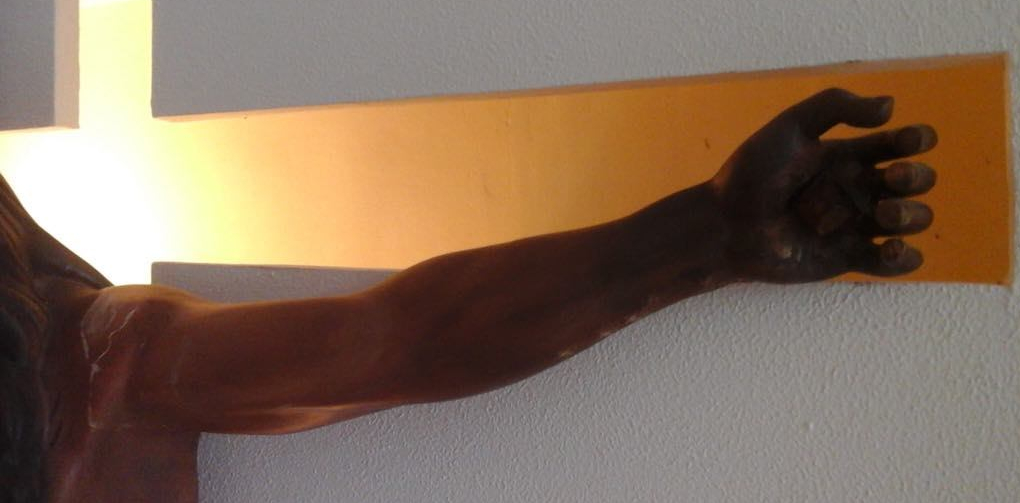
Holy Family Chapel, Sacred Heart Retreat and Spirituality Center, Novaliches, July 2017.

Thrice in our readings today, O loving Father, we heard “stretching of hands” to impart your power and grace. What a beautiful gesture so that today, we also stretch our hands in praising and thanking you God for all your love and kindness.

Stretching of hands is a gesture we usually do to you and others when we are pleading for something or when we express surrender or submission. We also stretch our hands over people and things to show our power or your power passing through us.

Moses stretched out his hand over the sea ,and the Lord swept the sea with a strong east wind throughout the night and so turned it into dry land…

Then the Lord told Moses, “Stretch out your hand over the sea, that the water may flow back to the Egyptians, upon their chariots and their charioteers.”

Exodus 14:21, 26

In our gospel, when your Son our Lord Jesus Christ identified his family, he used the same gesture to show his grace and blessing of making us his family, making us one in him and with him.

And stretching his hand toward his disciples, he said, “Here are my mother and my brothers. For whoever does the will of my heavenly Father is my brother, my sister, my mother.”

Matthew 12:49-50

Keep us always in the protection and care of your powerful and loving hands, Lord, that are always stretched upon the sick especially the bed-ridden and seriously ill, to those who have to work far from their loved ones, those who have to deal and handle with delicate matters and situations.

Continue also to stretch your hands upon us, Lord, to shower us with your blessings especially the fresh graduates, for the newly weds, for those working hard for their families, for those pursuing their stars and dreams with passion and determination, and for those getting tired and weak with their many burdens and load on their shoulders.

Help us also, Lord, to be like you on the Cross when you stretched your hands to express your deep love and mercy for each one of us. Give us that power and grace to stretch our hands in your name to be your instruments of change, healing and joy to everyone especially those in pain and sufferings. Amen.

Holy Family Chapel, Sacred Heart Retreat and Spirituality Center, Novaliches, July 2017.

When you feel like giving up…

The Lord Is My Chef Breakfast Recipe for the Soul
Thursday, Wk. XV, Yr. I, 18 July 2019
Exodus 3:13-20 >< )))*> <*((( >< Matthew 11:28-30
Taal Lake and Volcano from Tagaytay City. Photo by author, 03 July 2019.

Praise and glory to you, our loving Father for always remembering us, for always loving us. So many times, people doubt you. They feel you do not care at all, that you do not listen to their prayers, that you do not visit them anymore.

We pray today most especially for those losing hope and meaning in life amid their many pains and sufferings, those about to give up on their dreams due to many failures and disappointments, and those who refuse to believe and trust others anymore due to betrayals by family and friends.

Let us be your Moses today to announce to them that you are concerned with us, that you care for us.

“I am concerned about you and about the way you are being treated in Egypt; so I have decided to lead you up out of the misery of Egypt into a land flowing with milk and honey.”

Exodus 3:16-17

Open our hearts and our minds to realize this great truth of your concern for us that you have given us your Son Jesus Christ to help us in our burdens, calling us to receive him in the Holy Sacrifice of the Mass every day, especially on Sundays.

Our altar, 18 July 2019.

“Come to me, all you who labor and are burdened, and I will give you rest. Take my yoke upon you and learn from me, for I am meek and humble of heart; and you will find rest for yourselves. For my yoke is easy, and my burden is light.”

Matthew 11:28-30

Send us a new Moses, Lord, to lead us out of our modern Egypt today that enslave us, making life so difficult for your people especially those in the margins.

We have become a nation without any sense of sin anymore that we do not care at all with the many deaths going on around us. Our mouths have become so filthy with languages too vile as if you do not exist anymore. Nobody seem to care anymore, no one is concerned.

We pray for our leaders in government as well as in the Church who are like the Pharaoh who make it so hard for the people to go and come to you. Do wondrous deeds among us again, Lord, so we may remember anew that you keep your covenant forever. Amen.

When life gets harder…

The Lord Is My Chef Breakfast Recipe for the Soul
Monday, Wk. XV, Yr. I, 15 July 2019, Feast of St. Bonaventure
Exodus 1:8-14, 22 >< )))*> <*((( >< Matthew 10:34-11:1
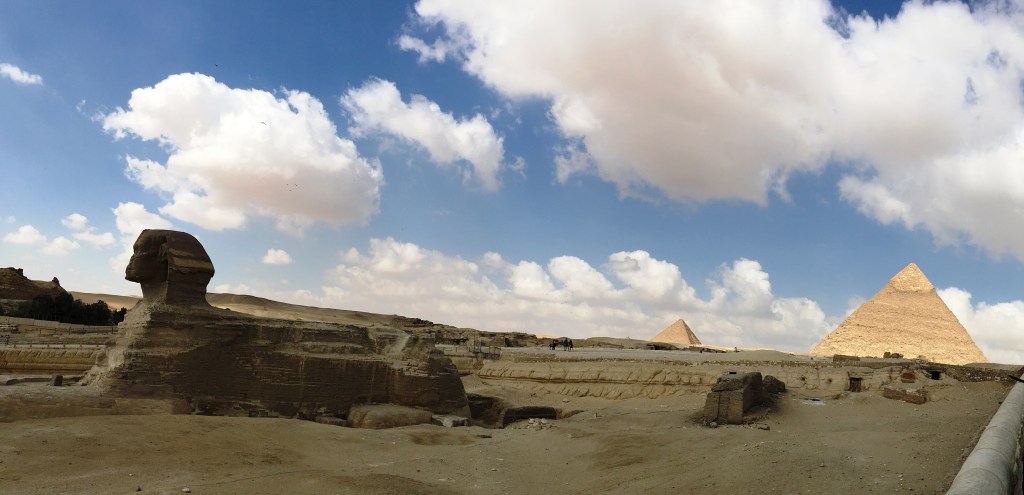
The Sphinx and Pyramids of Egypt. Photo by author, 09 May 2019.

It is that time of the year again, Lord, when life gets harder with the rains, with all the expenses piling up along with a hosts of so many other problems besetting us.

Others call these months of July until August as the “ghost months” when so many difficulties come along our way. But of course, we believe more in you.

Like in our Responsorial Psalm today, we sing “Our help is in the name of the Lord.”

Most of all, like the people of Israel living in Egypt long after Joseph had gone who were subjected to cruel slavery by the Pharaoh and his men, “the more they were oppressed, the more they multiplied and spread” (Ex.1:12).

Our almighty Father, keep us close to you through your Son Jesus Christ.

Let us rely more to you in him through the Holy Spirit when life gets harder for us.

May we learn more from him so we may follow him closer than ever especially during times of trials and difficulties.

Keep us faithful in Christ for “whoever finds his life will lose it, and whoever loses his life for my sake will find it” (Mt.10:39).

Amen.

The Good Samaritan, the X-Files and Stranger Things

The Lord Is My Chef Sunday Recipe for the Soul, Wk. XV-C, 14 July 2019
Deuteronomy 30:10-14 >< )))*> Colossians 1:15-20 >< )))*> Luke 10:25-37
From America Magazine via Google.

After teaching us about discipleship these past two Sundays, Jesus shifts his lessons to things “we must do” following a series of questions he encountered from people when he “resolutely determined to journey to Jerusalem” (Lk.9:51).

There was a scholar of the law who stood up to test Jesus and said, “Teacher, what must I do to inherit eternal life?” Jesus said to him, “What is written in the law? How do you read it?” He said in reply, You shall love the Lord, your God, with all your heart, with all your being, with all your strength, and with all your mind, and your neighbor as yourself. He replied to him, “You have answered correctly; do this and you will live.” But because he wished to justify himself, he said to Jesus, “And who is my neighbor?” Jesus replied, “A man fell victim to robbers as he went down from Jerusalem to Jericho.”

Luke 10:25-30

And thus Jesus answered the scholar of the law with the beautiful parable of the Good Samaritan that can only be found in St. Luke’s gospel. It has so endeared the world that hospitals and charities including laws and awards everywhere use the “Good Samaritan” title in recognition of the parable’s conviction that we are all neighbors.

Problem is, we have become so familiar with this parable that sometimes we think it teaches us nothing new. Like the Laws or the Ten Commandments, it has degenerated into becoming letters like a code imposed from the outside we simply follow. Moses tells us in the first reading how the Laws are “something very near to you, already in your mouths and in your hearts; you only have to carry it out” (Dt.30:14). Loving God and loving others is an interior and life principle innate within each of us.

This Sunday, Jesus is inviting us to set aside our thoughts about his parable of the Good Samaritan in order to see it in a deeper and personal perspective.

For most Christians especially Catholics, we always reach that stage in our lives when deep within us there is a longing for something deeper, for something more than what we have been used to. It is a very positive sign of spiritual growth. Like the scholar, we are no longer contented with the usual things we do like praying, Sunday Masses, and keeping the laws. At first we may not be able to verbalize or even identify what are the stirrings within us until we realize it is something more than this life we are having.

Like the scholar, we ask Jesus, “Teacher, what must I do to inherit eternal life?” (Lk.10:25). But, instead of probing deeper into our hearts, we tend to look outside for answers like the scholar asking, “who is my neighbor?”.

From Google.

Twenty years ago, the sci-fi series “The X-Files” was a hit worldwide with its tagline “the truth is out there” to refer to all kinds of conspiracy theories and paranormal activities by the US government. Of the same genre today is the Netflix series “Stranger Things” that also points us to something “out there” for answers to many mysteries happening to us.

The answer is never out there – it has always been inside us! Always.

From Google.

How strange that we keep on asking “who is my neighbor?”, searching for a theoretical definition of a neighbor we always think as somebody outside us. What we must be asking is, “am I a neighbor to others?”

Observe how Jesus narrated the parable where both the priest and the Levite “saw the victim and passed by the opposite side. But a Samaritan traveler who came upon him was moved with compassion at the sight. He approached the victim, poured oil and wine over his wounds and bandaged them. Then he lifted him up on his own animal, took him to an inn, and cared for him” (Lk.10:32-34).

That’s the strangest thing of all! Two Temple officials simply “saw” the victim and passed by while a Samaritan “saw” also but was moved with compassion. To be moved with compassion in Latin is misericordia, a “stirring or disturbing of the heart” which translates into mercy.

Here we find the Samaritan looking deep inside him that he saw in him the plight of the victim that he was moved with mercy to help him. And that is to be a neighbor, to treat somebody with mercy that transcends any color or creed or nationality. See the question of Jesus at the end of his parable, “Which of these three, in your opinion, was neighbor to the robbers’ victim?” The scholar answered, “The one who treated him with mercy” (Lk.10:36-37).

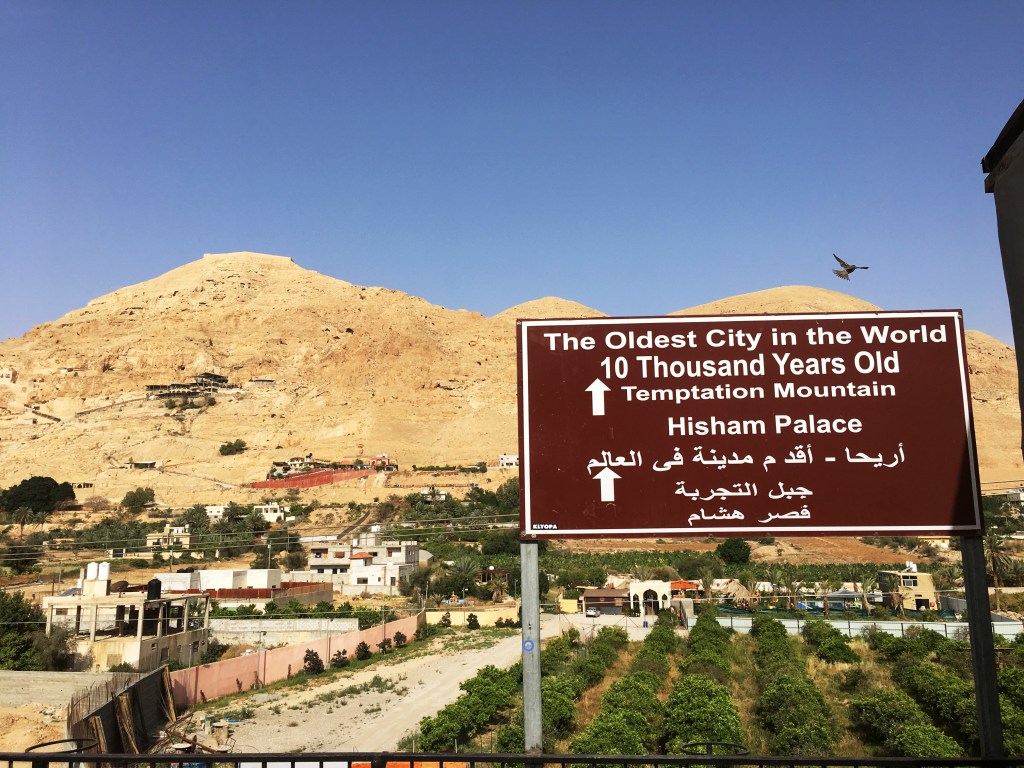
City of Jericho, the setting of the parable of the Good Samaritan. Photo by author, 06 May 2019.

My neighbor is the one with whom I identify with, with whom I am drawn near because of the mercy that moved me within to help in his or her sufferings. A neighbor is one who feels his or her own humanity that he or she is always moved with compassion with those who are in suffering and pain.

And the more we reflect on this parable, the more we see Jesus Christ is in fact the Good Samaritan himself. He is “the image of the invisible God, in him all things hold together” (Col. 1:15,17). It was Jesus who went down the road, becoming human like us in everything except sin, picking us up from our sinfulness and miseries, healing us of our wounds, and restoring us to life “through the blood of his cross” (Col. 1:20).

Let us heed his command this Sunday to “Go and do likewise” (Lk.10:37) as the Good Samaritan. Be a blessed neighbor to everyone! Amen.

Keep the fire burning

The Lord Is My Chef breakfast Recipe for the Soul
Thursday, Week XIII, Year I, 04 July 2019
Genesis 22:1-19 >< }}}*> >< }}}*> Matthew 9:1-8
Waiting for the Mass to start, ready to light the candles. Photo by Lorenzo Atienza, 12 June 2019.

Our loving Father, your words today are so picturesque that I feel so speechless before you with the meanings they convey.

In the first reading when you tested Abraham to offer to you his son Isaac, he at once obeyed you without any question at all so that the following morning, he left for Moriah with his son, two servants, and some wood for the burnt offering.

On the third day, Abraham got sight of the place from afar. Then he said to his servants, “Both of you stay here with the donkey, while the boy and I go on over yonder. We will worship and then come back to you.” Thereupon, Abraham took the wood for the burn offering and laid it on his son Isaac’s shoulders, while he himself carried the fire and the knife.

Genesis 22:4-6

I really wonder O Lord what was in the mind of Abraham? Did he ever doubt you or at least entertain some other thoughts about your mood, of why you made him wait for so long to have a son then suddenly you would ask for him to be offered?

How great indeed is Abraham’s faith in you, O God! He was so composed in speaking to his servants and most especially to his son Isaac on whose shoulders he laid the wood for burnt offering. Not a hint did Abraham spill of your actual command that could have made Isaac fled in fear!

But what I like most is when Abraham carried the fire and the knife. Beautiful images of faith in you God: Abraham kept the warmth and illumination of his faith within him symbolized by the fire he carried and his generosity in offering Isaac symbolized by his knife.

I love that scene, Lord as I ask myself if I could truly offer you like Abraham who or what is most dearest to me?

That scene in the wilderness is complemented by Matthew’s story in the gospel that shows us how Jesus, like Abraham, continued to travel and reach out to you his Father to bring your mercy upon your people.

Jesus entered a boat, made the crossing, and came into his own town. And there people brought to him a paralytic lying on a stretcher. When Jesus saw their faith, he said to the paralytic, “Courage, child, your sins are forgiven.”

Matthew 9:1-2

Jesus himself is the fire of love who purified our hearts, our desires and most especially, our evil thoughts like some of the scribes there who accused him of blasphemy.

So many times Lord Jesus, we cannot keep the fire of faith burning within us that we keep on harboring evil thoughts in our minds, casting doubts not only on you but most especially with those around us. Like Abraham, teach us to be silent in your love. And like Jesus, teach us how to enter into our brothers and sisters that we may spare them of our evil thoughts. Teach us to speak words of wisdom and power of God to heal those sick among us, most especially us with our many anxieties and mistrust of others.

Teach us to be pure like Abraham in our faith in you and most especially, in our trust in your great mercy. Like Jesus, teach us to keep on crossing the street, of reaching out to others especially those trying so hard to find you.

Let us keep the fire of your faith, hope, and love burning within us, sharing it with others to find the fulfillment of your promises to us all. Amen.