The Good Samaritan, the X-Files and Stranger Things

The Lord Is My Chef Sunday Recipe for the Soul, Wk. XV-C, 14 July 2019
Deuteronomy 30:10-14 >< )))*> Colossians 1:15-20 >< )))*> Luke 10:25-37
From America Magazine via Google.

After teaching us about discipleship these past two Sundays, Jesus shifts his lessons to things “we must do” following a series of questions he encountered from people when he “resolutely determined to journey to Jerusalem” (Lk.9:51).

There was a scholar of the law who stood up to test Jesus and said, “Teacher, what must I do to inherit eternal life?” Jesus said to him, “What is written in the law? How do you read it?” He said in reply, You shall love the Lord, your God, with all your heart, with all your being, with all your strength, and with all your mind, and your neighbor as yourself. He replied to him, “You have answered correctly; do this and you will live.” But because he wished to justify himself, he said to Jesus, “And who is my neighbor?” Jesus replied, “A man fell victim to robbers as he went down from Jerusalem to Jericho.”

Luke 10:25-30

And thus Jesus answered the scholar of the law with the beautiful parable of the Good Samaritan that can only be found in St. Luke’s gospel. It has so endeared the world that hospitals and charities including laws and awards everywhere use the “Good Samaritan” title in recognition of the parable’s conviction that we are all neighbors.

Problem is, we have become so familiar with this parable that sometimes we think it teaches us nothing new. Like the Laws or the Ten Commandments, it has degenerated into becoming letters like a code imposed from the outside we simply follow. Moses tells us in the first reading how the Laws are “something very near to you, already in your mouths and in your hearts; you only have to carry it out” (Dt.30:14). Loving God and loving others is an interior and life principle innate within each of us.

This Sunday, Jesus is inviting us to set aside our thoughts about his parable of the Good Samaritan in order to see it in a deeper and personal perspective.

For most Christians especially Catholics, we always reach that stage in our lives when deep within us there is a longing for something deeper, for something more than what we have been used to. It is a very positive sign of spiritual growth. Like the scholar, we are no longer contented with the usual things we do like praying, Sunday Masses, and keeping the laws. At first we may not be able to verbalize or even identify what are the stirrings within us until we realize it is something more than this life we are having.

Like the scholar, we ask Jesus, “Teacher, what must I do to inherit eternal life?” (Lk.10:25). But, instead of probing deeper into our hearts, we tend to look outside for answers like the scholar asking, “who is my neighbor?”.

From Google.

Twenty years ago, the sci-fi series “The X-Files” was a hit worldwide with its tagline “the truth is out there” to refer to all kinds of conspiracy theories and paranormal activities by the US government. Of the same genre today is the Netflix series “Stranger Things” that also points us to something “out there” for answers to many mysteries happening to us.

The answer is never out there – it has always been inside us! Always.

From Google.

How strange that we keep on asking “who is my neighbor?”, searching for a theoretical definition of a neighbor we always think as somebody outside us. What we must be asking is, “am I a neighbor to others?”

Observe how Jesus narrated the parable where both the priest and the Levite “saw the victim and passed by the opposite side. But a Samaritan traveler who came upon him was moved with compassion at the sight. He approached the victim, poured oil and wine over his wounds and bandaged them. Then he lifted him up on his own animal, took him to an inn, and cared for him” (Lk.10:32-34).

That’s the strangest thing of all! Two Temple officials simply “saw” the victim and passed by while a Samaritan “saw” also but was moved with compassion. To be moved with compassion in Latin is misericordia, a “stirring or disturbing of the heart” which translates into mercy.

Here we find the Samaritan looking deep inside him that he saw in him the plight of the victim that he was moved with mercy to help him. And that is to be a neighbor, to treat somebody with mercy that transcends any color or creed or nationality. See the question of Jesus at the end of his parable, “Which of these three, in your opinion, was neighbor to the robbers’ victim?” The scholar answered, “The one who treated him with mercy” (Lk.10:36-37).
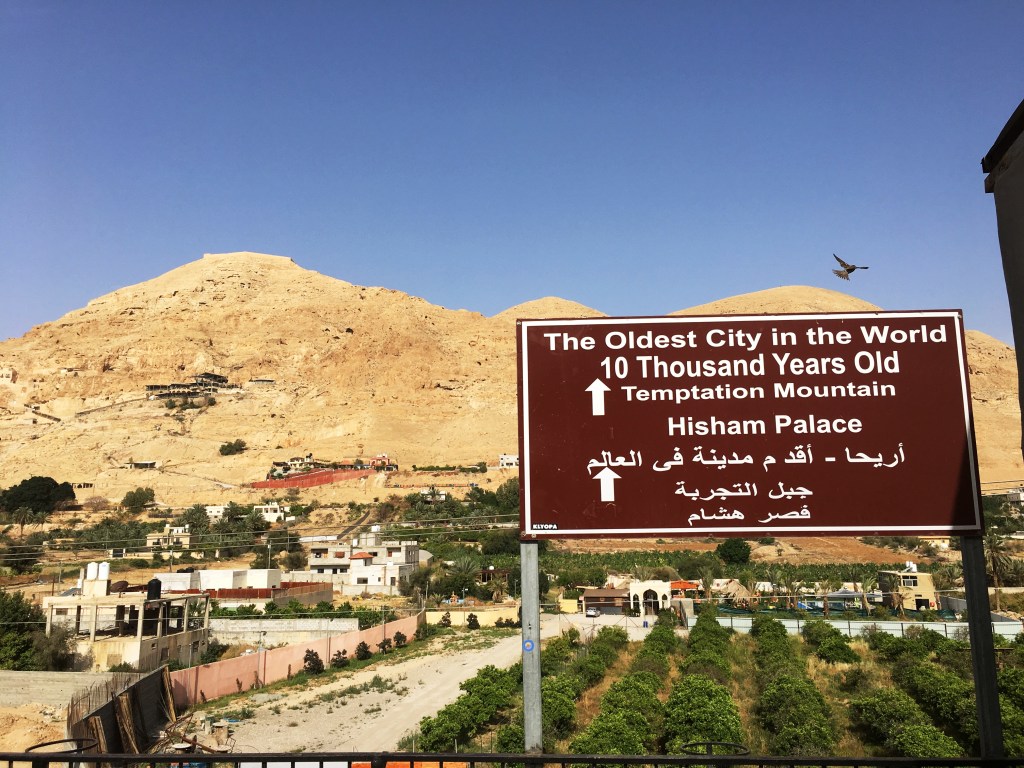
City of Jericho, the setting of the parable of the Good Samaritan. Photo by author, 06 May 2019.

My neighbor is the one with whom I identify with, with whom I am drawn near because of the mercy that moved me within to help in his or her sufferings. A neighbor is one who feels his or her own humanity that he or she is always moved with compassion with those who are in suffering and pain.

And the more we reflect on this parable, the more we see Jesus Christ is in fact the Good Samaritan himself. He is “the image of the invisible God, in him all things hold together” (Col. 1:15,17). It was Jesus who went down the road, becoming human like us in everything except sin, picking us up from our sinfulness and miseries, healing us of our wounds, and restoring us to life “through the blood of his cross” (Col. 1:20).

Let us heed his command this Sunday to “Go and do likewise” (Lk.10:37) as the Good Samaritan. Be a blessed neighbor to everyone! Amen.

Keep the fire burning

The Lord Is My Chef breakfast Recipe for the Soul
Thursday, Week XIII, Year I, 04 July 2019
Genesis 22:1-19 >< }}}*> >< }}}*> Matthew 9:1-8
Waiting for the Mass to start, ready to light the candles. Photo by Lorenzo Atienza, 12 June 2019.

Our loving Father, your words today are so picturesque that I feel so speechless before you with the meanings they convey.

In the first reading when you tested Abraham to offer to you his son Isaac, he at once obeyed you without any question at all so that the following morning, he left for Moriah with his son, two servants, and some wood for the burnt offering.

On the third day, Abraham got sight of the place from afar. Then he said to his servants, “Both of you stay here with the donkey, while the boy and I go on over yonder. We will worship and then come back to you.” Thereupon, Abraham took the wood for the burn offering and laid it on his son Isaac’s shoulders, while he himself carried the fire and the knife.

Genesis 22:4-6

I really wonder O Lord what was in the mind of Abraham? Did he ever doubt you or at least entertain some other thoughts about your mood, of why you made him wait for so long to have a son then suddenly you would ask for him to be offered?

How great indeed is Abraham’s faith in you, O God! He was so composed in speaking to his servants and most especially to his son Isaac on whose shoulders he laid the wood for burnt offering. Not a hint did Abraham spill of your actual command that could have made Isaac fled in fear!

But what I like most is when Abraham carried the fire and the knife. Beautiful images of faith in you God: Abraham kept the warmth and illumination of his faith within him symbolized by the fire he carried and his generosity in offering Isaac symbolized by his knife.

I love that scene, Lord as I ask myself if I could truly offer you like Abraham who or what is most dearest to me?

That scene in the wilderness is complemented by Matthew’s story in the gospel that shows us how Jesus, like Abraham, continued to travel and reach out to you his Father to bring your mercy upon your people.

Jesus entered a boat, made the crossing, and came into his own town. And there people brought to him a paralytic lying on a stretcher. When Jesus saw their faith, he said to the paralytic, “Courage, child, your sins are forgiven.”

Matthew 9:1-2

Jesus himself is the fire of love who purified our hearts, our desires and most especially, our evil thoughts like some of the scribes there who accused him of blasphemy.

So many times Lord Jesus, we cannot keep the fire of faith burning within us that we keep on harboring evil thoughts in our minds, casting doubts not only on you but most especially with those around us. Like Abraham, teach us to be silent in your love. And like Jesus, teach us how to enter into our brothers and sisters that we may spare them of our evil thoughts. Teach us to speak words of wisdom and power of God to heal those sick among us, most especially us with our many anxieties and mistrust of others.

Teach us to be pure like Abraham in our faith in you and most especially, in our trust in your great mercy. Like Jesus, teach us to keep on crossing the street, of reaching out to others especially those trying so hard to find you.

Let us keep the fire of your faith, hope, and love burning within us, sharing it with others to find the fulfillment of your promises to us all. Amen.

Choosing God

The Lord Is My Chef Breakfast Recipe for the Soul
Tuesday, Wk. XII, Yr.I, 25 June 2019
Genesis 13:2, 5-18 >< )))*> Matthew 7:6, 12-14
The picturesque Siq leading to Petra in Jordan. Photo by author 30 April 2019.

Every day, Lord God, you give us the wonderful gift of making choices, of deciding for ourselves to choose what is best for us. Unfortunately, we always forget the very essence of making every choice which is to always choose what is good, what is the best.

Very often, we make the wrong choices in life because we fail to consider in choosing you first, the highest good, the summum bonum.

Like Lot in the first reading, we are easily misled by beautiful sights, of abundance, of having everything as bases in choosing what is best for us.

We always forget that saying “not all that glitters is gold” as Lot would eventually found out later how sinful were the people living in those areas he had chosen where the cities of Sodom and Gomorrah thrived.

Teach us to be like Abraham, to always trust in your wisdom, in your plans, and in your providence.

Teach us to choose you first of all above all.

And choosing you, Lord, means choosing the path of sacrifice and of giving of self.

Jesus said to his disciples: “Enter through the narrow gate; for the gate is wide and the road broad that leads to destruction, and those who enter through it are many. How narrow the gate and constricted the road that leads to life. And those who find it are few.”

Matthew 7:13-14

Bless, O Lord, those who have to make important decisions today, those discerning your will. Enlighten their minds and their hearts to choose you only and to stand firm on that choice. Amen.

The narrow door leading to the Nativity Church in Bethlehem that reminds us of the need to be small, to be humble to truly meet Jesus Christ. Photo by author, 04 May 2019.

Losing our head in prayer

The Lord Is My Chef Breakfast Recipe for the Soul, Wednesday, Easter Wk. VI, 29 May 2019
Acts 17:15,22-18:1 >< }}}*> John 16:12-15 >< }}}*>

My dearest Lord Jesus: As I prayed last night, I cannot remove from my mind that beautiful sight of a man in a chapel, so absorbed in conversing with you, that he seemed to have lost his head in prayer.

Photo by JJ Jimeno of GMA News, UP Chapel, 27 May 2019.

Today our readings speak of the need to lose our selves in you.

St. Paul tried to win over the people of Athens at the Areopagus, proclaiming your Gospel without condemning or attacking their religion. He even cited their shrine “To An Unknown God” (Acts 17:23) as a step closer to discovering you and following you as the true God.

He never lost his cool even when people did not believe his teachings of your resurrection from the dead. He simply had himself lost to your will and left Athens to proceed to Corinth where you have prepared great things for his ministry.

Lord, so many times, we cannot let go of our heads, of our know-it-all-attitude in life that we cannot let go and let God.

Let us always remember your words during the Last Supper, “I have much more to tell you, but you cannot bear it now” (Jn.16:12).

Let us be patient, waiting for your Holy Spirit to come to us, to fill us with your wisdom, to remind us of your teachings and to guide us in doing your work.

Let us lose not only our heads but our very selves to you so we may do your work in the way you would want it be done. Amen.

Photo by the author, parish sacristy, 10 March 2019.
 Did our prayer touch you?
Share us your thoughts and prayers.
You are prayed for.
Follow our blog for you daily recipe for the soul.
God bless you!
fr nick

Things we quarrel

The Lord Is My Chef Breakfast Recipe for the Soul, Friday of Easter Wk. III, 10 May 2019

Our loving Father:

The city of Cairo reminds me of your story of creation – of how order comes out of chaos!

One of the things I have learned here in Cairo is to be more patient with our traffic situation in the Philippines.

Cairo is a bedlam where pedestrians and drivers alike seem to be blind, guided only with their horns. Yet nobody seems to quarrel because of the traffic.

Our readings today Lord teem with instances of quarreling. Saul in the first reading is on his way to Damascus to arrest Christ’s followers. It was a big quarrel! More so when you called Saul to spread the Way?! I could imagine the big quarrel with that but, nothing much as told by Luke except the issue of circumcision.

In the gospel, John tells us “The Jews quarreled among themselves” after Jesus declared his Flesh is true food and his Blood is true drink.

So often we quarrel among ourselves, but never with you.

We quarrel with others – not with you – because we can always insist with others what we want. The more others do not give in to our desires, the more we quarrel, the more we insist.

We do not quarrel with you because you do not “insist” on us. You always invite. And wait.

No insistence, no quarrel. Like here in Cairo. They just blow their horns but never their tops.

Teach us Lord to always give in to your will, to always step back and let you lead the way like Ananias who welcomed Saul. Most of all, Lord, let us not quarrel with anyone by learning to give way to others, even by deferring to them if what they insist are nothing at all but simply a power trip of our ego. Amen.

Traffic at Cairo; the peaceful Nile River. Photos by the author.

Going down with Jesus

The Lord Is My Chef Breakfast Recipe for the Soul, Thursday, Easter Wk. III, 09 May 2019

Dearest Jesus:

In today’s readings, I was struck by the verb “to go down”.

The first reading tells us how the Ethiopian eunuch “went down into the water” to be baptized by your Apostle Philip on the road from Jerusalem to Gaza (Acts 8:38).

In the gospel, you mentioned twice Lord that you are “the bread that comes down from heaven” (Jn.6:50-51).

It is something very opposite with our mindset today when we all want “to go up” and rise, to be on top, always the best, the most.

We believe more in ourselves than believing in you our Lord and our God.

Make us realize Lord Jesus that you chose to come down to show us the way up to you by always going down in humility and simplicity. Help us rediscover that beautiful reality of having someone and somethings above us always, that it is coming down, in being lowly in you Lord are we truly exalted. Amen.

Top photo chapel of the third station of the Cross at Via Dolorosa in Jerusalem (Jesus falls the first time); above is part of the Sinai Mountain range.

I forgive only when you remember

Quiet Storm by Fr. Nicanor F. Lalog II, 07 May 2019

We are now traveling to the Mt. Sinai area to cross into Egypt. As I have been telling you, this is my third time in the Holy Land and Yad Vashem, the Holocaust Memorial of Israel. I shall write later of my reflections but below is my email written the first time I came here:

23 June 2005
Shalom everyone!
Until now, I could still feel the impact Yad Vashem had on me.
 I would just like to add here a story shared with us by Ronnie before our tour….
 Accdg to Ronnie, he acted as a guide to a group of young Americans at the Yad Vashem last summer.  They met a Jewish woman who survived the holocaust after their tour and told them firsthand her own experience from the Auschwitz camp.
The young tourists were so touched with her story, of how she had lost her parents, siblings and friends.  As she wiped her tears, a young man asked the survivor:  have you forgiven the people who killed your family?
And Ronnie said, the woman replied this way: I could only forgive if you would always remember.
We were also so touched with the story and the woman’s declaration:  I could only forgive if you would always remember.

One of my favorite philosopher is Martin Heidegger, a German existentialist who, unfortunately, was blinded by Hitler’s rhetorics in the beginning but later denounced Nazism.
According to Heidegger, we are all “beings of forgetfullness”; he explained that this is the main reason why we always lead “inauthentic living.”
And that is true.  We always have to remember the past not to take tally of how we were hurt or maltreated by others; we remember the painful past so that we would not repeat it and do them again onto others.
It is so sad that in our lives, we keep on remembering how we got inflicted with wounds so that we could wound others; hence, what we have is a vicious circle of violence and retributions.
That I think is the essence of “learning from history”—-of not repeating the same mistakes over and over again.
This is often at the root of many of our problems in our dealings with other people:  parents, priests, teachers, supervisors or almost anyone who always remember the difficulties they have gone through when they were younger; we are sometimes guilty of harking at our painful past and get even with those presently under us.  And the pains and the hurts increase, forgetting the lessons that could have been learned.
Our country is in deep, deep, deep crises because we are mostly “beings of forgetfullness”—we have a poor sense of history, we can’t remember the lessons of the past because we did not learn at all or just maybe, preoccupied with getting even or vengeance.
Forgiving does not mean forgetting because that is impossible; God programmed us to always remember so that we could become more loving, more forgiving, more understanding, and more like Him in seeing what’s good in everyone.
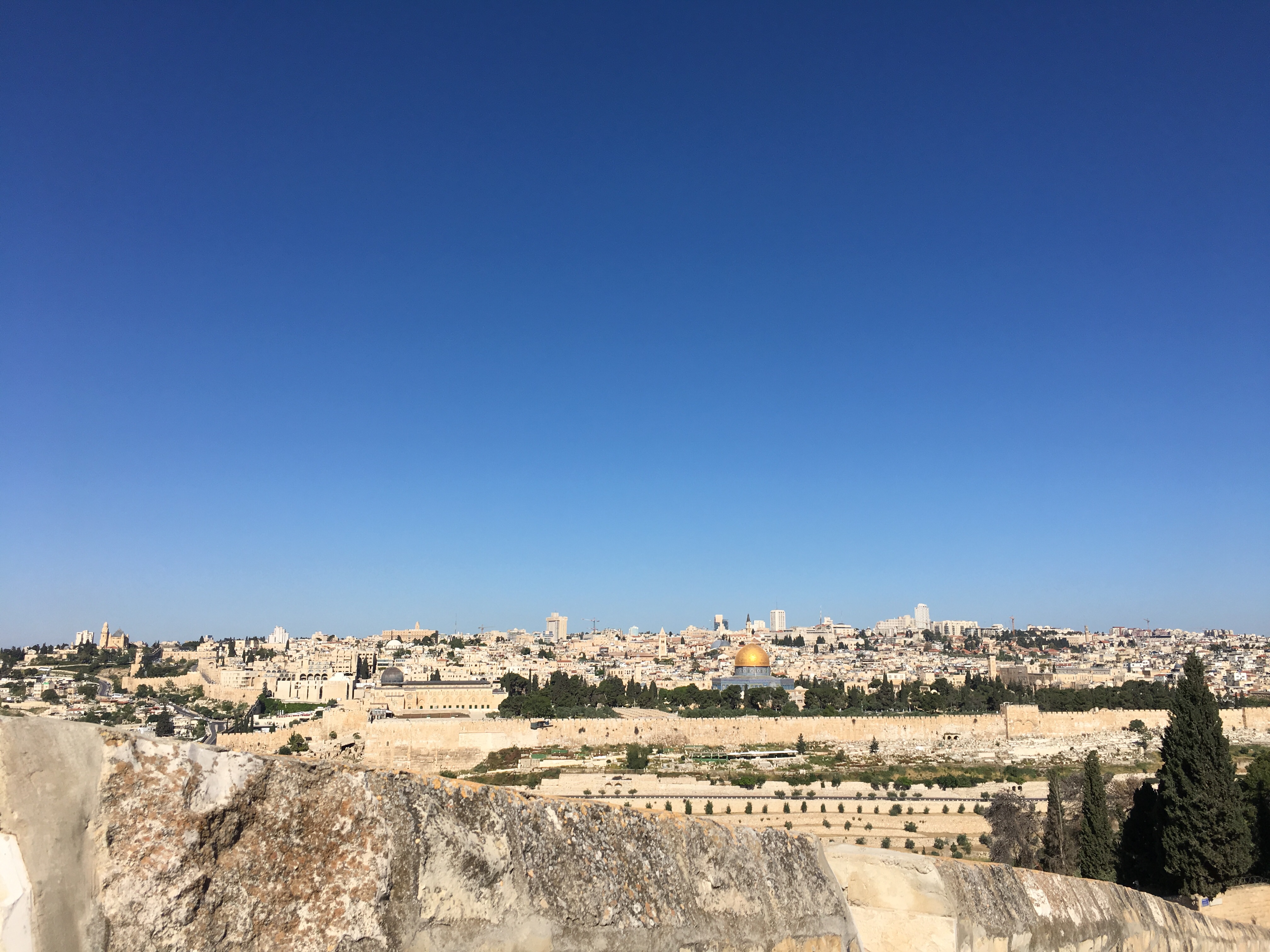
At the back of Yad Vashem is a breathtaking view of Jerusalem below.  After seeing and somehow experiencing the horrors of the Holocaust, I can’t help thinking how come God could accept and allow the Jews, Moslems, and Christians live together in His old city when we can’t even stand the sight or the smell of the person next to us because he is not of same color or creed with us?
God bless!
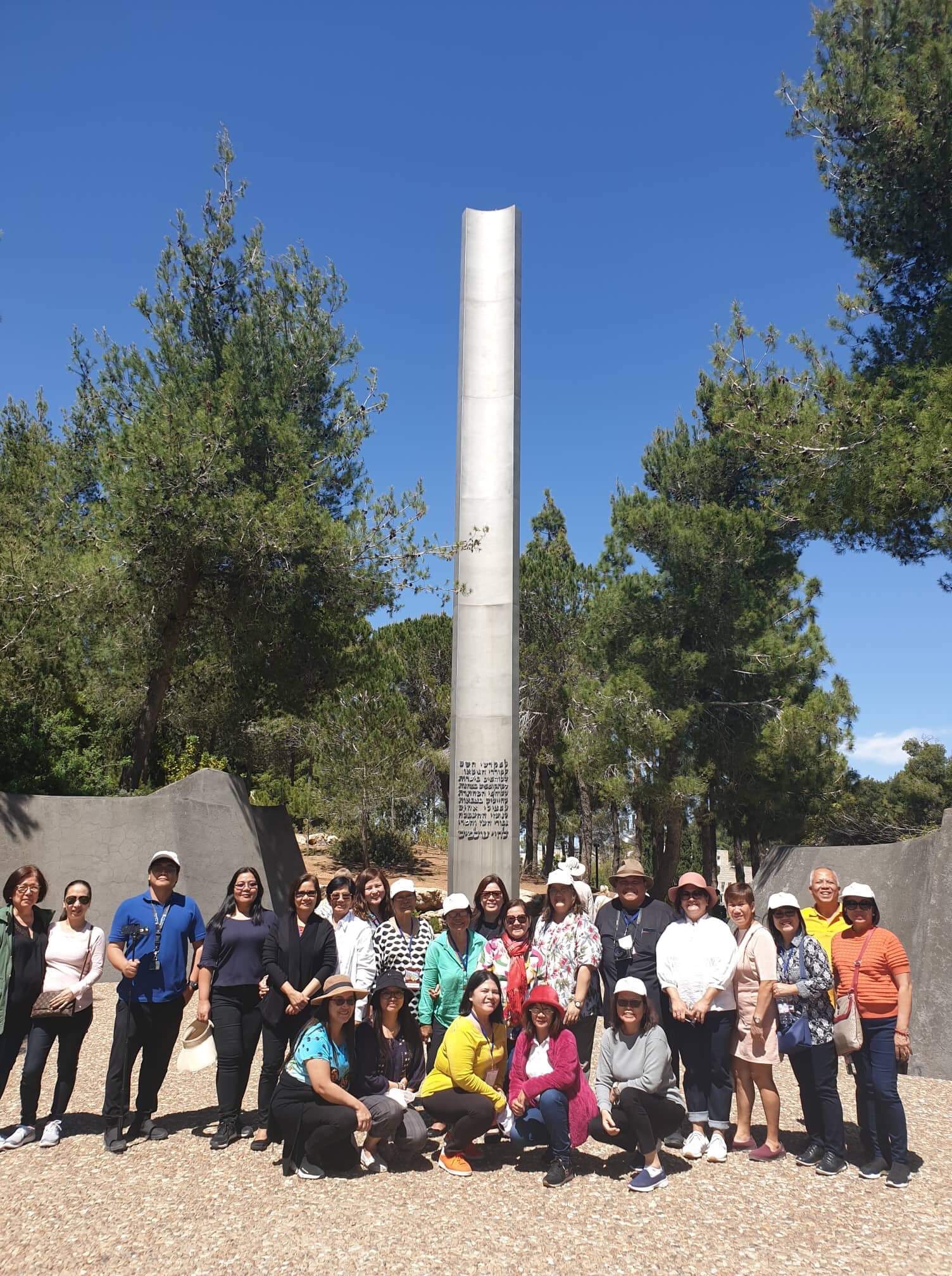
With my parishioners the other day at Yad Vashem. Many cried at the sights in the museum but we were all touched with the personal story and reflections of our guide, a 70 year old man we fondly call Lolo Mendy. Will write his stories later.
 

The problem of peace

The Lord Is My Chef Breakfast Recipe, Monday, Easter Wk. III, 06 May 2019

Praise and glory to you O Lord Jesus Christ!

Thank you for this gift of Monday. Thank you for bringing us here in your birthplace and place of death as well.

How ironic and tragic, Lord.

As we arrived here in Bethlehem, fighting erupted anew at Gaza Strip, with rocket attacks reportedly killing and injuring undetermined people yet.

Fightings continue to this very moment and thank you for being far from it.

Lord, it is the most baffling mystery in life: your land is the land where peace remains elusive. And maybe because our hearts have always been far from you.

Like the people who spread lies against Stephen and the people who came looking for you for more food.

We always have our hearts filled with our very selves but never with you.

Let us be your John the Baptist in this time, one who prepares your coming by preaching and living peace. Amen.

It is the Lord!

The Lord Is My Chef Sunday Recipe, Easter Week III-C, 05 May 2019

Of all the great things one can truly experience in a Holy Land pilgrimage, it is the gift of “internal recognition” of the Risen Jesus Christ that must be most touching, most wonderful because it always brings peace and joy within.

Like the beloved disciple in our gospel this Sunday, it is when we recognize Jesus internally that we “softly exclaim” deep within “It is the Lord!” (Jn.21:7).

It is the ordinary moment that happens so sudden during prayer, in the Mass, or simply being at a holy site or seeing a beautiful sight when tears suddenly roll in our eyes, something cold or warm envelops you, or your hair rising because you remember and feel the Lord coming to you. According to our guide here, the 153 large fish caught by the apostles in that third appearance of the Risen Lord at Tiberias is significant: 153 in the Hebrew alphabet means “I Am GOD.”

And that’s what we feel not only in a pilgrimage but in ordinary life when we remember God filling you like a net with large fish like in Tiberias. In an instant even very fleeting, we realize we have been so blessed even if we have sinned and failed to recognize Jesus by the shore.

Here at the Holy Land, whether it is your first or second or third pilgrimage, there is always something new to discover, to realize, to experience, and to see. It is like that experience at the shore of Tiberias when Jesus appeared for the third time to his apostles after Easter where he awaits you for breakfast, with “a charcoal fire with fish on it and bread” (Jn.21:9). Here it is beyond doubt our God is a God of surprises.

Yesterday we had our Mass at the Chapel of Flagellation at 130pm at the Via Dolorosa. Immediately after that, we had via crucis or station of the cross. By 330pm we were already inside the Holy Sepulchre Church climbing towards Golgotha, the Crucifixion site. Exactly while lining up, the church was closed and we were told there would be no veneration because the Patriarch was coming for incensing the whole church.

Everything stopped and I felt a bit sad for my group. But lo and behold! What a beautiful experience not only to witness an Orthodox ceremony! While resting outside the only Roman Catholic chapel, I asked the Franciscan if we can pray inside. He asked me to wait and after 20 minutes, he let us in. I celebrated Mass there in 2005 with 14 other priests and two bishops from the Philippines. I could not recall the name of the chapel so I asked the Franciscan. He told me it is the chapel of the Easter meeting of Jesus and his Mother – the Salubong or Encounter we celebrate early morning of Easter Sunday. It was a new discovery for me!

In the gospels, Jesus first met Mary Magdalene but according to St. Ignatius of Loyola in his Spiritual Exercises, it was Mary his mother whom the Risen Lord first met because she was the first to try believe Jesus is the Christ! Most of all, Mary is the first to truly love Jesus most. And that is why we have the Salubong.

Today in the gospel Jesus asked Simon thrice, “do you love me more than this?”

It is the same question Jesus is asking us this Sunday. We have to first love him in order to follow him. We have to first love him in order to meet and see him, even with our imperfect love like Simon Peter.

You are loved and you are prayed for always. Have a blessed Sunday and week ahead! Amen.

What is a pilgrim?

Quiet Storm by Fr. Nicanor F. Lalog II, 02 May 2011

As I was telling you since the eve of our departure Sunday… this is my third pilgrimage to the Holy Land, my first as a chaplain guiding 23 other pilgrims.

The word pilgrim entered the English language during the Holy Wars of 1100’s courtesy of the French Crusaders. But its root can be traced to the Latin noun “peregrinus”, the combination of the words “per” or through and “ager” for land. Literally speaking, a peregrinus or pilgrim is one who walks through the land. A pilgrim is a wayfarer as the Hebrews would claim that we have “no lasting city” on earth. We are merely passing through this earth on the way back home to God who is also our origin.

So, what is a pilgrim?

A pilgrim is a follower or a seeker of God. In our age when traveling is a way of life not only in one’s own country but to various parts of the world, a pilgrimage to a holy site is different from a tour primarily because of God himself.

In a pilgrimage, it is God who calls us to follow him or seek him in the Holy Land and other holy sites. It is God who gives us the strength – physically, emotionally, and spiritually – to follow or seek him in a holy site. It is God himself who plans our itinerary for any pilgrimage we undertake! Believe me, every sacred site has a calling and no matter how much you have heard about it that you want to visit but God has others plans for you, you’ll never make it.

It is not superstition. Just today we were prevented from going to Mt. Tabor which we failed to visit in 2017; first time I went there was in 2005. I just don’t know why Jesus is keeping me away from his mount of transfiguration. I just feel deep inside it is not meant for me again. In 2017 I came to visit anew the tomb of King David but it was only then I realized that above it is the Upper Room of Christ’s Last Supper.

Every pilgrimage is an invitation from God. Does he play favorite why not everyone is invited especially in this age of frequent traveling?

God is not playing favorite among us when it comes with pilgrimages. It is more about the question of who is truly serious in following or seeking him for a more intimate relationship through a Holy Land or holy site pilgrimage. And this is because a pilgrim goes through the land to meet himself first. Unless we have come to terms with our very selves, we shall never come to terms with life. Or death. And ultimately with God.

A pilgrim is a serious follower or seeker of God.

A pilgrim walks through the land in order to meet himself or herself. The time and distance or destination do not really matter that much. The goal of any pilgrim is to experience and find God by discovering himself or herself. From being a journey, life then becomes a pilgrimage because a pilgrim is someone who keeps on going through the land, going through all the pains and sufferings to find himself or herself more in order to be with God always.

Ultimately, a pilgrim is someone who willingly enters into a relationship with God to follow Him and be with Him in any direction to reach His home, our final destination which is heaven.

Listen. The Lord must be calling you too to be a pilgrim. Follow Him.

All photos by the author. From the top: Mt. Nebo monastery where God gave Moses the chance to see the Promised Land; statue of Jesus sleeping on a bench in Capernaum; travelling through the desert highway in Jordan; and, morning boat ride at the Lake of Galilee.