Pangungusap ng Puso

Lord My Chef Daily Recipe by Fr. Nicanor F. Lalog II
Sacred Heart Novena Day 2, 19 June 2025
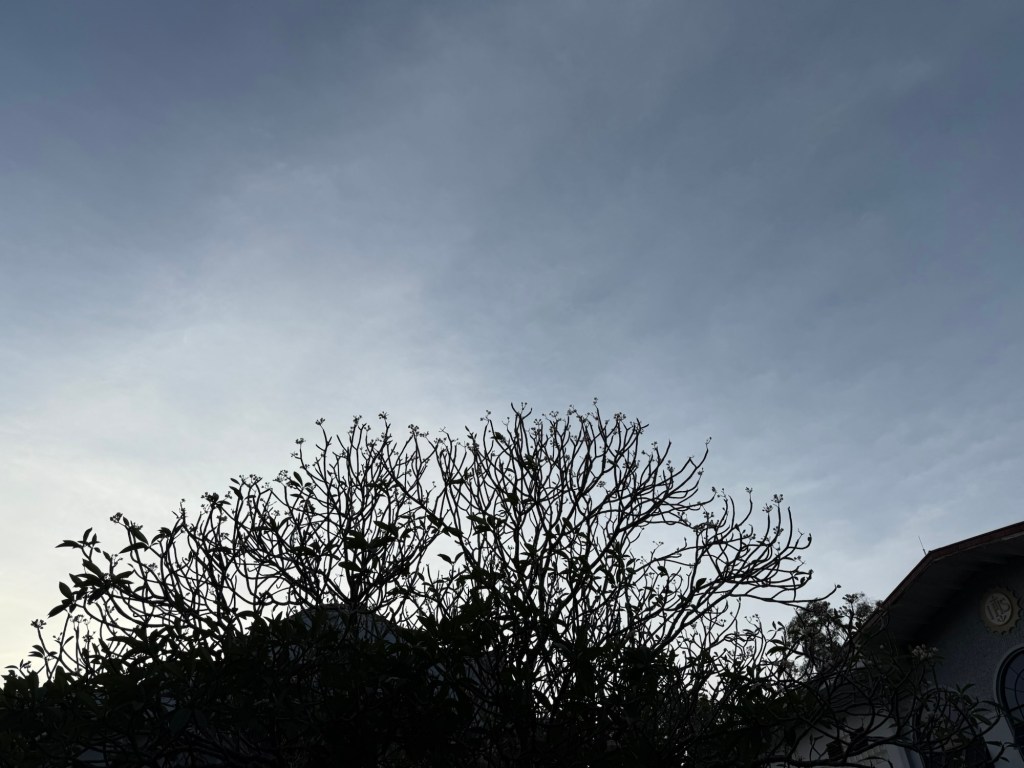
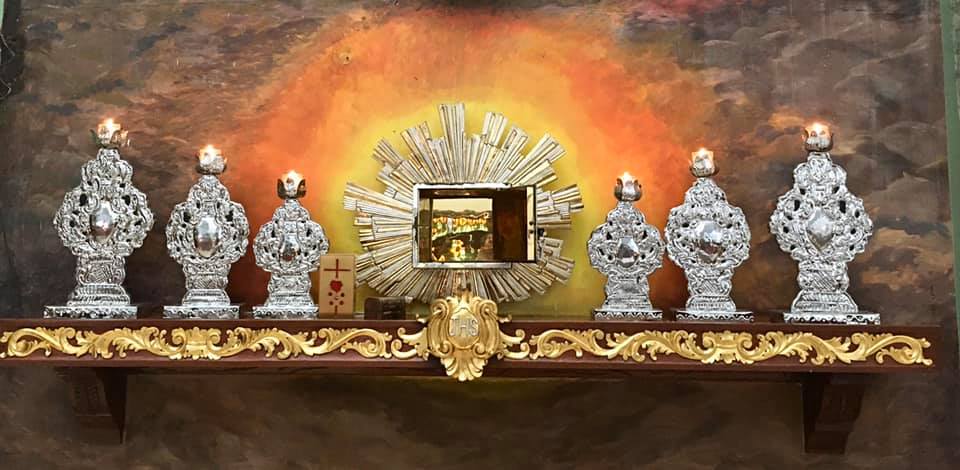
Detalye ng painting ng Sacred Heart of Jesus sa Visitation Monastery, Marclaz, France mula sa godongphoto / Shutterstock.

Nakatutuwa itong ating wika. Mabulaklak na kahit hindi ka isang makata minsa’y di sinasadya ika’y nakakatha ng kahit maigsing tula.

Madalas ating mabasa sa mga panitikan at mapakinggan saan man kuwentuhan na tila baga itong puso ay nagsasalita gayong wala naman itong bibig. Mismo ang Panginoong Jesus noon ay nagsabi na “ano man ang bukambibig, siyang laman ng dibdib” (Mt.12:34 at Lk.6:45) upang ipakita ang pagkakadugtong ng puso at bibig tulad ng kaisahan nito sa ating kamay batay sa pagninilay kahapon.

Samakatwid, nangungusap nga itong ating puso. At iyan ang ibig kong pagnilayan ngayong ikalawang araw ng ating pagsisiyam para sa Dakilang Kapistahan ng Kamahal-Mahalang Puso ni Jesus. Ito ang sinasaad sa ating napakinggan ngayong araw na bahagi ng pangangaral ni Jesus sa mga tao mula sa kanyang sermon sa bundok.

“Sa pananalangin ninyo’y huwag kayong gagamit ngn napakaraming salita, gaya ng ginagawa ng mga Hentil. Ang akala nila’y pakikinggan sila ng Diyos dahil sa dami ng kanilang salita. Huwag ninyo silang tutularan. Sapagkat alam na ng inyong Ama ang inyong kinakailangan bago pa man ninyo hingin sa kanya. Ganito kayo mananalangin: ‘Ama naming nasa langit, sambahin nawa ang pangalan mo'” (Mateo 6:7-9).

Photo by Designecologist on Pexels.com

Isa sa mga madalas na itanong sa akin ng mga mag-aaral dito sa Our Lady of Fatima University bilang kanilang chaplain ay alin daw ba ang dapat nilang pakinggan, sigaw ng puso o sigaw ng isipan?

Palagi kong tugon sa kanila ay ang pabirong paalala na unahin nilang pakinggan lagi ang sigaw ng kanilang mga magulang.

Pagkaraan ng ilang tawanan, saka ko binabalik sa kanila ang tanong sa ibang anyo naman: humihiyaw nga ba ang puso gayong ang pagtibok nito ay napakahina? Hindi kaya sa pakikipag-usap sa atin nitong ating puso, ang ibig nito ay taimtim na pakikinig dahil kung ito ay mangusap, madalas ay pabulong.

Larawan kuha ng may-akda, Atok, Benguet, 27 Disyembre 2024.

Mag-imagine tayo kunwari ay naroon tayo sa bundok sa sermon ni Jesus. Siguradong malakas ang tinig niya sa pangangaral ngunit sa aking pakiwari mayroong indayog ang kanyang pananalita na kung saan minsan-minsan marahil siya ay bumubulong katulad nitong sa pagtuturo niya kung paano tayo mananalangin. Mahigpit ang kanyang bilin na huwag tutularan mga Hentil na napakaraming sinasabi sa Diyos sa pakiwaring sila ay pakikinggan. Hindi natin kailangang maging maingay at daanin sa dami ng sinasabi ang Diyos bagkus higit na mainam ang pananahimik upang mapakinggan sinasabi sa atin ng Diyos. Sinabi na ni Jesus na alam ng Diyos ating pangangailangan bago pa man tayo dumulog sa kanya sa pagdarasal. Kaya tayo nagdarasal ay upang pakinggan kalooban ng Diyos.

Kaya gumagamit ng stethoscope mga duktor at nurse kasi nga mahina ang tinig ng puso natin. At yon ang unang kinakailangan sa pananalangin – katahimikan upang Diyos ay mapakinggan!

Kung ang puso man ay humihiyaw, marahil wala na tayong masyadong alitan at mga kaguluhan dahil tiyak ating maririnig at mapapakinggan bawat pintig ng puso na iisa ang sinasabi kungdi ang tayo ay magmahal nang tunay. Ito ang buod ng “Ama Namin” at lahat ng mga panalangin. Ang pag-ibig ng Diyos sa ating lahat na ating tinutugunan ng pagmamahal sa ating kapwa dito sa lupang ibabaw lalo na sa pagpapatawad sa kanilang pagkakasala sa atin.

Sa Kamahal-Mahalang Puso ni Jesus, doon ay malinaw na inihahayag ang dakilang pag-ibig ng Diyos sa ating lahat ngunit walang nakikinig dahil mas nahahalina ang marami sa malalakas at maiingay na tinig ng daigdig. Ito yung ikinalulungkot ni San Pablo sa mga taga-Corinto sa unang pagbasa ngayon dahil napakadali nilang nalinlang at napasunod sa mga kakaibang turo ng ibang nangangaral sa kanila. Katulad din natin ngayon na maraming nagpapaniwala at nahahalina sa mga kung anu-anong kaisipan ng mundo gaya ng new age at wokism at iba pang mga ideya na wala nang pakialam sa Diyos at moralidad gaya ng relativism na siyang sanhi ng paniniwala sa same sex marriage at abortion.

Larawan kuha ng may-akda sa Liputan, Meycauayan, Bulacan, 31 Disyembre 2022.

Imagine din natin na first time napakinggan ang panalanging “Ama Namin.” Malamang pabulong at marahang binigkas ni Jesus ang mga titik ng panalanging ito upang tumimo ng higit sa puso at kalooban ng mga tagapakinig.

Kakaibang kaisipan noon iyon sa mga Hudyo sapagkat ang Diyos sa pagkakaalam nila ay makapangyarihan at hindi maaabot doon sa langit. Ngunit kay Jesus, malapit ang Diyos tulad ng sino mang ama sa lupa. Isang personal at mapagmahal na parang tao ang Diyos na pinakilala ni Jesus sa kanila at maging sa atin ngayon kaya mas malamang ay malumanay na malumanay ang pagbigkas ni Jesus lalo ng “Ama naming nasa langit” dahil puno ng pagmamahal at pag-galang. Hindi ba noong una tayong ma-in love ay tahimik din tayo? Hindi natin pinagsasabi yung pers lab natin?

Ayon sa mga dalubhasa sa bibliya, mas mahaba ang tala ni San Mateo sa pagtuturo ni Jesus ng “Ama namin” kesa sa bersiyon ni San Lukas; layunin anila ni San Mateo na ituro ang ating disposisyon sa pananalangin habang si San Lukas naman ang tuon ay naroon sa laman ng ating dasal.

Sa madaling sabi, pagmamahal ang disposisyon nating dapat sa pananalangin di lamang ng “Ama namin” kungdi mismo sa ating pakikipag-ugnayan sa kapwa na siyang paghahayag ng ating ugnayan sa Diyos.

Ang Ama namin at lahat ng pananalangin ay paghahayag ng ugnayan kaya ang mga ito ay dinarama, nilalasap dahil ito ay isang karanasan na pinaninindigan at pinatutunayan sa mabubuting gawa.

Noong bata pa tayo at wala pang kamuwang-muwang sa mga kalokohan at kasamaan ng mundo, napakadali nating napapakinggan bulong ng puso na magmahal, makipag-bati, magsorry, magsabi ng please at thank you, at maging mabuting tao. Subalit sa ating pagtanda, atin nang tinuturuan ang puso natin ng sariling kagustuhan na dapat laging sundin at pakinggan. Magsinungaling kung kinakailangan.

Masaklap na bunga nito ang ating pagkakawatak-watak. Hindi maramdaman ang ating ugnayan dahil maraming ayaw nang magmahal, ayaw nang kilalanin bawat isa bilang kapatid at kapwa sa iisang Ama nating Diyos.

Ngayong ikalawang araw sa ating pagnonobena sa Sacred Heart, matuto tayong muli na manahimik at makinig sa tinig at pintig ng puso natin upang muli tayong makiniig sa Diyos na Ama natin. Kapag muli nating ninamnam ang katotohanang ito, mapagtatanto na rin natin ang ating kapatiran sa iisang Ama kay Kristong kapatid natin.

Sa ating panahong napaka-ingay at kay dami-daming nag-aagawan sa ating atensiyon upang pakinggan at sundin, marahil ay humihiyaw na nga itong puso natin ng pabulong dahil hirap na itong maiahon ang katotohanan ng pag-ibig na ating ibinaon. Pagmasdan paanong palaging kalakip ng debosyon sa Mahal na Puso ni Jesus ang pagtitika sa mga kasalanan at pagbabalik-loob sa Diyos at kapwa. Kasi nga, ang magkasala ay hayagang pagtanggi natin na magmahal. Iyon ang salita at pangungusap tuwina ng puso – magmahal, magmahal, at magmahal pa rin! Manalangin tayo:

O Jesus na mayroong
maamo at mapagkumbabang Puso,
Gawin Mong ang puso nami'y
matulad sa Puso Mo!
Amen.

Loving Jesus, following Jesus

Lord My Chef Daily Recipe for the Soul by Fr. Nicanor F. Lalog II
Friday in the Seventh Week of Easter, 06 June 2025
Acts 25:13-21 <*((((>< + ><))))*> John 21:15-19
Photo by author, Cabo Da Roca, Pundaquit, San Antonio, Zambales, 15 May 2025.
I love you, Lord
And I lift my voice
To worship you
Oh, my soul rejoice
Take joy my King
In what you hear
May it be a sweet, sweet sound
in your ear...
I just felt singing that lovely
song, Jesus as I prayed
on your words today;
felt so good,
so comforting,
especially if sang
at times like when everything
is flowing smoothly in life,
when obstacles are overcome,
when there is more joy than sadness,
more triumphs and success,
more healthy than sickly;
how easy it is to say
"I love you, Lord"
unless you Jesus asks us
"do you love me" thrice.

It is different when you
are the one asking the question,
Jesus because you know everything,
you know very well how imperfect
our love while at the same time you
know so well how we try hard
in loving you by forgetting
ourselves, following you and
carrying our Cross.
Give us the courage and
strength to say "I love you, Lord"
dear Jesus for it is only in first loving you
that we are able to follow you.
Amen.

Presence in Absence

Lord My Chef Sunday Recipe for the Soul by Fr. Nicanor F. Lalog II
Solemnity of the Ascension of the Lord, Cycle C, 01 June 2025
Acts 1:1-11 ><}}}}*> Hebrews 9:24-28;10:19-23 ><}}}}*> Luke 24:46-53
Photo by author, Atok, Benguet, 26 December 2025.

We all have experienced dreams so real where we met friends and relatives even strangers that we described as “totoong-totoo” that we woke up crying or simply joyful and feeling so light. The clothes even the scent and ambiance were so real that we tried going back to sleep to continue the dream!

This is what we call as the dynamic of “presence in absence” when loved ones long dead or gone or simply far from us we still feel near and close too. It is the same familiar kind of relationship that we have with God whom we feel also as too near yet so far like what Luke described to us in the Ascension of Jesus Christ:

As he blessed them he parted from them and was taken up to heaven. They did him homage and then returned to Jerusalem with great joy, and they were continually in the temple praising God (Luke 24:51-53).

Photo by Mr. Sean Pleta in Melbourne, March 2015.

When Luke said that Jesus “As he blessed them he parted from them and was taken up to heaven”, he was describing to us Christ’s new and higher kind of relationship with all his disciples that include us today.

Jesus did not merely enter a physical reality that the author of the Letter to the Hebrews tells us in the second reading; he actually entered into a new level of relationship with us and everyone. This “leveling up” in our relationships that no longer require physical presence is the dynamic of presence in absence. We don’t have to be physically present because there are deeper ties that bind us with God and with others, both the living and the dead.

Recall how since Easter we have been reflecting on this aspect of new level of relationship with Jesus who told Mary Magdalene at their first meeting to “touch me not” because of the need for a higher level of relating with him no longer bound by time and space. This Jesus showed when on the evening of Easter he entered the locked doors where the disciples were hiding. And Luke tells us that beautiful account of Jesus walking to Emmaus with two disciples who did not recognize him but upon reaching home after the breaking of bread, the two disciples recognized Jesus who immediately disappeared from their side. It was always a case of presence in absence!

Note also that in all appearances of Jesus after Easter to his disciples, there was always joy that continued even after his Ascension when “they returned to Jerusalem with great joy, and they were continually in the temple praising God.” Normally, there is sadness after every separation and goodbye. But not with the disciples of Jesus including us!

How can you explain that even if Jesus does not seem to answer our prayers, we just keep on praying to him? Why do we remain in Jesus despite his apparent absence? That’s because deep in our hearts we are certainly sure he is always with us, that he loves us so much, that eventually, he will answer our prayers though he does answer our prayers always but not in the way we wanted it to be.

That is why we need to make that effort to deepen and cultivate our relationship with Jesus to always see his presence in his absence like what the angel told the disciples in the first reading after his Ascension, “Men of Galilee, why are you standing there looking at the sky? This Jesus who has been taken up from you into heaven will return in the same way as you have seen him going into heaven” (Acts 1:11).

Do not look up or anywhere but look inside our hearts where Jesus dwells as he had told us last Sunday if we keep his words and love one another. We need to level up in our relationship with God through prayers and good works.

We need to see more with our heart than with our eyes because the deepest truths and realities in life are seen with the heart and soul. The ancient Persian sage and poet Rumi said it so beautifully, “Goodbyes are only for those who love with their eyes. Because for those who love with heart and soul, there is no such thing as separation.”

Since Easter, we have been reflecting on the profound difference of Christ’s Resurrection with his birth on Christmas filled with external signs and symbols. Easter is characterized by absence like darkness and emptiness where we find the presence of Jesus and his light.

This presence in absence is also the reality we have in those we refer to as “low-maintenance” friendships where we have some people who do not demand anything from us nor we demand much from them. We meet when time allows and chat once in a while yet we remain the bestest friends because of the love and respect we have for each other. Basta, alam na this!

That is also the reality of our relationship with God. Do we experience the same joys in his presence in absence? Are we at home with our relationship with Christ found in darkness and emptiness, present in his apparent absence? Let us pray:

Lord Jesus,
let us rise up in our
relationships with you with others;
let us be more loving and faithful,
kind and understanding,
fair and just
even without seeing you
and one another.
Amen.
Photo by author, Anvaya Cove and Resort, Morong, Bataan, 25 May 2023.

Living Inside Your Love (1976) by Earl Klugh

Lord My Chef Sunday Music by Fr. Nicanor F. Lalog II, 25 May 2025
Photo by author, Angels’ Hills Retreat and Spirituality Center, Tagaytay City, 18 April 2025.

We shift this Sunday into jazz with Earl Klugh’s sophisticated Living Inside Your Love to slow cool down our simmering summer and to feel more the meaning of the Mass readings today as we enter the penultimate week of Easter.

We were already in our early teens when we discovered Earl Klugh along with other jazz greats with the opening of the country’s first and only jazz radio station 101.9 WK-FM in the late 70’s. Maybe it was part of growing up when we experimented on a lot of things for more adventures that I found myself venturing into jazz from rock and pop music, switching from RJ to RT and then WK.

For me, Earl Klugh was the jazz version of rock’s Eric Clapton or Carlos Santana. Klugh has that certain touch or pluck in his guitar that can make you be in love, not necessarily be in love with anyone. It is a nakaka-in love ma-in love na feeling! That is why we remembered his Living Inside Your Love piece from his second studio album released in 1976 by the legendary Blue Note Records and Liberty Records produced by another jazz great, Dave Grusin.

Actually, we just realized today Living Inside sounds like a prelude to the turn of the century’s new age music where Klugh’s masterful playing of the guitar taking the centerstage of a great symphony backed up with cool vocals repeating just a few lines and stanzas of simple verses over and over that is similar with the vision of John in this Sunday’s second reading from the Book of Revelation when he saw and experienced the “new heaven, new earth” in the great luminous light of God who is himself the temple in the city (https://lordmychef.com/2025/05/24/easter-is-god-dwelling-in-us/). See how Klugh inserted the vocals into his great guitar music enhanced by a symphony like John’s vision of heaven:

Can't get over the feeling
Living inside your love
I never want to lose the feeling
Living inside your love

Baby, you made my life so free
Living inside your love
You're just where I want to be
Living inside your love

Baby, you made my life so free
Living inside your love
You're just where I want to be
Living inside your love

Very interesting with his wonderful guitar music, Klugh’s lyrics – though sparse and repetitive – were loaded in meaning. Consider the line “living inside your love” which is exactly what Jesus said at the Last Supper, “Whoever loves me will keep my word, and my Father will love him, and we will come to him and make our dwelling with him” (John 14:23).

“Living inside one’s love” is what we call as “Divine indwelling”, that is, our home is in God – and with any one we love!

Moreover, consider also Klugh’s first line in his next stanza, “Baby, you made my life so free/ Living inside your love/ You’re where I want to be/ Living inside your love.”

When we love, we enter a relationship that becomes our dwelling, our home where we become free – free to love more, free to be faithful. When we truly love like Christ, the more we find ourselves more free to love, more free in everything because being free is choosing always what is good. We believe that more than a stroke of genius, it was also a kind of divine inspiration about true love that made Klugh at put at the end of this 1976 classic the longer stanza that actually repeated inn order to stress the truth of his first two stanzas.

Can't get over the feeling
Living inside your love
I never want to lose the feeling
Living inside your love
Can't get over the feeling
Living inside your love
I never want to lose the feeling
Living inside your love
I can't get over the feeling
Living inside your love
I never want to lose the feeling
Living inside your love
I can't get over the feeling
Living inside your love

Here is Earl Klugh’s lovely Living Inside Your Love. Have a lovely Sunday and week ahead.

From YouTube.com

Friends in Christ

Lord My Chef Daily Recipe for the Soul by Fr. Nicanor F. Lalog II
Friday in the Fifth Week of Easter, 23 May 2025
Acts 15:22-31 <'[[[[>< + ><]]]]'> John 15:12-17
Photo by author, Sacred Heart Novitiate, Novaliches, QC, 20 March 2025.
Thank you, 
dear Jesus
in choosing me
and making me your friend;
let me be a friend to others too
like you.
You said it so well,
Lord, "You are my friends
if you do what I command you" -
which is to love!
Furthermore,
you told us, "I no longer
call you slaves, because a slave
does not know what his master
is doing" (John 15:14) but,
how sad that we do the opposite:
we do not truly love one another
like you, taking each one as a friend;
worst, we make others like slaves
especially if they are not like us
in color and status, belief and gender.
Teach us,
dear Jesus,
to imitate Judas called
Barsabbas and Silas along
with Paul and Barnabas sent
to the Christians in Antioch
to deliver the letter of the Apostles
and presbyters regarding the issues
of circumcision and other Jewish
practices some wanted the Gentile
converts to undertake;
how lovely that as the faith spread
far and wide reaching many people,
the Apostles and the presbyters
decided not to burden the brothers
with Jewish customs and practices;
here we find love in action,
friendship is in taking away
the burdens of others than
putting on heavier burdens on them;
most of all,
a true friend who loves like you
Jesus is one who encourages others
in your way.
Amen.
Photo by author, Sacred Heart Novitiate, Novaliches, QC, 20 March 2025.

Easter is Jesus inviting us to “break”…fast!

Lord My Chef Sunday Recipe by Fr. Nicanor F. Lalog II
Third Sunday in Easter, Cycle C, 04 May 2025
Acts 5:27-32, 40-41 ><}}}}*> Revelation 5:11-14 ><}}}}*> John 21:1-14
Photo by Valeria Boltneva on Pexels.com

Breakfast came from two words, break + fast when monks in the early days of Christianity used to “break” their “fast” the night before and that is why it is rightly considered as the most important meal of each day.

But the author of the fourth gospel found something deeper in the word “breakfast” that he mentioned it twice in our gospel today. It is another detail only him had noticed like in last Sunday’s “locked doors”. Everyday, Jesus invites us to “breakfast” with him to experience the joy of Easter.

Jesus said to them, “Come, have breakfast.” And none of the disciples dared to ask him, “Who are you?” because they realized it was the Lord. Jesus came over and took the bread and gave it to them, and in like manner the fish. This was now the third time Jesus was revealed to his disciples after being raised from the dead. When they had finished breakfast, Jesus said to Simon Peter, “Simon, son of John, do you love me more than these?’ He said to him, “Yes, Lord, you know that I love you.” Jesus said to him, “Feed my lambs” (John 21:12-15).

Painting by Frenchman James Jacques Tissot (1836-1902), “Jesus Eats Breakfast with Disciples” from http://www.jofullheart.com.

Many times we take breakfast for granted and most often, like me later in life do we realize its importance with the onset of many sickness and diseases. Remember that saying, “eat like king at breakfast, like an ordinary man at lunch and like a pauper or beggar at supper”? That’s very true because breakfast is supposed to give us the boost needed to make headway through the brand new day.

What a beautiful gesture by Jesus when he appeared the third time to his disciples early morning just in time for breakfast. Every day Jesus invites us to breakfast with him, to be filled with him spiritually through prayers and meditations, most especially the Holy Eucharist. That is why it is always best to pray and celebrate Mass first thing in the morning when Jesus fills our soul with his Spirit and then our body with his gifts of food at breakfast. Christ invites us to breakfast everyday before he “breaks” to us some important matters on our selves and relationships with him and with others.

Photo by author, Atok, Benguet, 27 December 2024.

It is the same idea behind “breakfast meetings” or even “luncheon meetings” where the hosts feed us with good food and drinks before baring to us their plans that need our participation. Remember that after the second appearance of Jesus to his disciples, nothing was clear yet to them except that he had risen. The disciples must still be feeling guilty with their actions and attitudes after the arrest and death of Jesus. They must be “nagkakahiyaan” – there was a strong presence of shame within each one on how they have abandoned Jesus after his arrest except the beloved disciple who stood at the Cross until the burial.

How lovely is the Lord’s gesture in appearing this time early in the morning to invite them to a breakfast including us today! Like every host, Jesus wants us to be relaxed and at home, comfortable and at ease with him, assuring us of his love and friendship despite our sins and shortcomings in the past. This is particularly evident with Peter and maybe Thomas who doubted the Lord’s resurrection last week and now back with the others fishing.

Jesus is very much aware of breakfast as a great mood-setter. On that day at the shore of Tiberias until today, Jesus starts each day with us with all his warmth and love, telling us it is a new day with new opportunities because tomorrow is gone so let us start anew. Sadly, many of us forget Jesus present with us every morning when we wake up. Like the disciples, we rarely recognize him as we first look for our cellphone upon waking up, counting the likes and reactions to our previous posts. Others refuse to rise and face the day while others feel grouchy raising hell every morning.

Open your eyes like the beloved disciple. When we see and think of Jesus first thing in the morning, then we see the abundant blessings around us like that great catch of fish by the disciples despite the empty night or day before. Every time we wake up despite the presence of our many problems still unsolved or unresolved, it is already a game won over that we are still alive! Rejoice in the gift of life. That is Easter happening daily. Give in to Jesus Christ’s invitation to breakfast by first communing in him in prayer and praise.

Painting by Frenchman James Jacques Tissot (1836-1902), “Jesus Appears to His Disciples At the Shore of Tiberias” from http://www.dominicanajournal.org.

Now we go deeper into the meaning of “breakfast” which is from the prefix break + fast, the breaking of the fast the night before. What are the other fastings we need to break everyday like the disciples?

There is a beautiful commercial of local medicines that says “huwag mahihiyang magtanong” (don’t be shy to ask). Today Jesus is telling us not to be ashamed to get near him, to speak to him, to be with him. It is a new day. Break all your “fasting” of getting close to him because you are too shy of your sins and failures. It is a new day. Recall those countless times in the past when you have disappointed Jesus and your loved ones a lot but he gave you a chance to rise again. Notice how the beloved disciple recognized Jesus when he recalled too their first meeting with the same situation, a fruitless night before followed by bountiful catch after Jesus instructed them to cast their nets into the deep!

How many times had Jesus given us with all the chances in life to be better, to start anew despite our sins and failures? Many times we cannot recognize Jesus despite his nearness with us like the disciples that morning at Tiberias because we box him as somebody like us who keeps tabs of our wrongdoings, that he might not like us anymore. Unlike us, Jesus is full of mercy with a very poor memory of our past sins and wrongdoings.

Painting by Frenchman James Jacques Tissot (1836-1902), from http://www.jofullheart.com.

Notice that after breakfast, Jesus called Peter by his original name “Simon, son of John”. This is remarkable because not only with Peter, Jesus sees each one of us in our true self as a beloved child of God, so loved, so precious. Like Peter, he invites us everyday to breakaway from our sins and biases against him for he truly loves us, always ready to forgive us and most of all, never changes his mind and heart in his plans for us.

It is only after we have expressed our love to him like Peter that Jesus invites us to more than a breakfast which is to come follow him!

Before we can follow Jesus, we must first love him by breaking away from sins and vices and everything evil. And that starts with having Jesus every morning for breakfast. That is what Luke is telling us in the first reading from the Acts of the Apostles, of how the disciples chose to follow Jesus than obey the Sanhedrin who wanted them to stop preaching about Jesus. Saying yes to Jesus Christ’s invitation to breakfast and to break away from sins and evil is the solid “Amen” of the elders saw by John in his vision of heaven in the second reading. Like them, let us pray:

Dearest Jesus,
thank you for the invitation
every morning,
first thing of each day
to be with you not only
to breakfast but to break
my series of sins and vices;
let me love you more
so I may follow you closely
everyday.
Amen.

Good Friday is thirsting for God

Good Friday Reflection by Fr. Nicanor F. Lalog II, 18 April 2025
Photo by author, Sacred Heart Novitiate, Novaliches, QC, 17 March 2025.

Twenty-seven years ago today, I was ordained as priest with my six other classmates at the Malolos Cathedral by Archbishop Rolando J. Tria-Tirona. I was 33 years old at that time (and less than 200 pounds in weight).

One thing prevailed in me on the eve of that most beautiful event in my life: Jesus Christ died on the Cross when he was 33 years old. Is my ordination my crucifixion too? Maybe. But due to the euphoria that followed after my ordination, I forgot all about it until I approached the age of 40 and my honeymoon stage in the priesthood waned with all the trials and difficulties – and crises – that followed.

It was at that time every year my birthdays and anniversaries came, I prayed only one thing from God – that I would have a more worry free year, that the following year would be a banner one for me. “Sana naman Lord ngayon ako naman ang panalo, ako naman ang bida, ayoko na sa ilalim ng gulong ng palad. Sana ako naman ang nasa itaas.”

God never heard my prayers. They never came. Actually, the opposite happened as I went through more trials, more difficulties, more pains and hurts that many nights in my prayers I felt like Jesus Christ crying on the Cross on that Good Friday, “I thirst” (John 19:28).

Photo by author, Sacred Heart Novitiate, Novaliches, QC, 17 March 2025.

Many times in life, our prayers to God are cries like that of Jesus on the Cross, “I thirst.”

Those are the times we thirst for love and kindness, for care and understanding, sometimes the most simplest recognition as a person or a brother/sister or a friend from our family and friends.

This is the second time Jesus felt thirsty in the fourth gospel. The first time was when he asked the Samaritan woman for water at Jacob’s well where in fact, it was Christ who gave her the “living water” – himself – in the wonderful conversation that followed.

See that in the fourth gospel, water is one of the significant signs used by the evangelist to portray Jesus Christ like in his first miracle at the wedding at Cana when he turned water into wine. In his conversation with Nicodemus one night, Jesus spoke of the power of water in cleansing us into a new person in Baptism.

The thirst of Jesus Christ on that Good Friday on the Cross is also our thirst for love, for kindness, for faith, for life and for one another. And here is the mystery and paradox: that thirst can only quenched by Christ if we too remain in him, with him on the Cross. That is why after he head died, blood and water flowed from his side pierced with a lance by a soldier. All throughout his life, especially while on the Cross, Jesus never ceased from being good, from doing good, from loving us all, giving us even at his death life and love.

After 27 years as a priest now on my senior year, I have realized this as the only thing I desire most in life – Christ, the only water who can quench all my thirst as a person, as a priest. Life is love which is following Jesus on the Cross. To thirst for love is to desire more the Cross which is to love more the one Crucified, Jesus Christ.

The joy and meaning, the peace and fulfillment we long for in life, we thirst for always are found in the Cross, not in material things nor in fame and glory as the soldiers had mistaken on the Good Friday. Unfortunately, many of us are exactly like those Roman soldiers who give money and material things to those crying “I thirst” to us.

Photo by author, Sacred Heart Novitiate, Novaliches, QC, 17 March 2025.

The Cross of Jesus Christ has always been described as a paradox. And that is really what the Cross is – a paradox and mystery of life at the same time.

When you are on the cross, like this sweltering summer, what is one thing you desire or cry for? Water, is it not?

It is during that time when we are on the Cross of intense pains and sufferings when we truly feel how valuable every drop of water is. It is when we are up against the wall when we realize the most important, the most essential in life like love found in persons who all enable us to feel God’s reality in his loving presence.

This Friday is called Good. The only Friday that is Good in the whole year because that is when we remember, when we make present again in our very lives our being one with Jesus at the Cross like the beloved disciple and his mother, the Blessed Virgin Mary when in our intense thirst, there we experienced the refreshing and life-giving living water Jesus Christ himself. This Good Friday as we reflect on the suffering and death of Jesus on the Cross, what is that one thing you also desire from God?

Photo by author, National Shrine of Our Lady of Fatima, Valenzuela City, Good Friday 2025.

We all thirst.

When we thirst, thank God because that means we desire him who is love himself. When we truly thirst like Jesus, that is when we too are on the Cross with him; then, you are at the right place at the right time because it is only on the cross can our thirst be truly quenched in Jesus. Let us follow him always in the Cross for that is what to be loving in the first place which is to be with the One who died on the Cross this Good Friday. Amen.

Our imperfect love: a Maundy Thursday reflection

Quiet Storm by Fr. Nicanor F. Lalog II, 17 April 2025
Photo by author, Sacred heart Novitiate, Novaliches, QC, 17 March 2025.

I have always loved Thursday since my first job in 1986 at GMA-7 News and Public Affairs. It was the day-off given to me by our office because I have to write news for our radio stations DZBB-AM and DWLS-FM even on Saturdays and cover news for television on Sundays.

After resigning from my job to enter the seminary in 1991 and got ordained as priest in 1998, I still chose Thursday as my day off from the ministry.

The reason for this is from a news I have found from the wires of United Press International during my GMA days that reported the findings by researchers in a US university that people are more kind on Thursday. According to the report which I used in our two radio stations, people are normally grouchy on Monday because of hangover from the weekend. They only start working on Tuesday, getting so tired on Wednesday, the two most toxic days in the week. Friday is TGIF when employees shelve their work in preparation for the weekend.

It is only on Thursday when people are most human and kind as they wanted to get everything done before TGIF. Hence, it is also the best day in the week to ask for a raise or to ask for favors from anyone. It is also on Thursdays when traffic is lighter because people are more relaxed, not so stressed out than the other days of weekday.

Photo from wikipediacommons.org of Christ’s washing of feet of Apostles at Monreale Cathedral in Palermo, Italy.

Perhaps it is no coincidence at all, in fact truly a part of the mystery of Jesus Christ’s Incarnation, i.e., his becoming human like us in everything except sin that he gave us his new commandment during their last supper also on a Thursday.

“I give you a new commandment: love one another. As I have loved you, so you also should love one another. This is how all will know that you are my disciples, if you have love for one another” (John 13:34-35).

This is the reason Holy Thursday is called Maundy Thursday from the Latin word mandatum or commandment when Jesus gave us his commandment of love.

Love is the only thing we all have to do in life. This love is expressed in our love for God through one another. That is why Jesus clarified that during his ministry: love of God is always expressed in our love for one another. Love as a commandment is like a face with two cheeks always together. Isang mukha, dalawang pisngi.

Every time we sin, it is not only a breaking of a law of God or human but most of all a refusal to love, a refusal to obey Christ’s commandment to love. Our Tagalog word for sin says it all: kasalanan from the root word sala which is “to miss” or “to fail”. Every sin – a kasalanan – is a failure, a missing (sala) of our one task which is to love. Every time we sin, we become less of a loving person.

It is indeed a very tall order from the Lord, to love like the way he loves us.

So when he had washed their feet and put his garments back on and reclined at table again, he said to them, “Do you realize what I have done for you? You call me ‘teacher’ and ‘master’, and rightly so, for indeed I am. If I, therefore, the master ands teacher, have washed your feet, you ought to wash one another’s feet. I have given you a model to follow, so that as I have done for you, you shouild also do” (John 13:12-15).

From gettyimages.com.

However, Jesus is not the stiff nor strict at all in demanding that we totally be like him right away in our love for one another. All he asks us is to try, to persevere in his love. He knows very well that our love is imperfect, that only him can love us perfectly.

Many times we complain (rightly so!) as we get hurt emotionally, physically and even spiritually from people we look up to like priests and teachers and to those supposed to love us most like parents and siblings and friends.

It is part of the mystery of life and of love specifically that the ones we love most are the ones we hurt most too and vice versa. That pain is from that love that ironically fails always. And that is because we are not God. Our love is always imperfect. We need to have some room within us for others’ sins and failures.

Photo by author, last supper scene of our youth’s senakulo, 15 April 2025.

We are all imperfect that is why our love is also imperfect. There are times we think the love we share or give is the very best but to our beloved, it could be misconstrued as not love at all like parents being too strict with their children. There are times when we think our beloved would love our gifts as expression of our love but unknown to us they were expecting something else.

Only God can love us perfectly. That is the love of Jesus Christ for us on the Cross so vividly portrayed in his last supper on Holy Thursday evening when he washed the feet of his disciples.

Jesus washed the disciples’ feet because he knew they would get dirty again. And that would need constant washing by those he would leave behind, including us. To wash another’s feet is the highest or deepest form and expression of love because it is an imitation of Jesus Christ.

Imagine how Jesus bowed down to each of the Twelve that Holy Thursday evening. Every day, Jesus does that to us too!

Normally, we look up to God in the heavens to pray, to beg his mercy, to ask for his favors, to praise and thank him. Jesus reversed this at his last supper: with him washing our feet, Jesus is the one looking up to us mere mortals and sinners?!

That is the love of Christ for us he proved the following Good Friday when he plunged himself to the lowest point of life, of dying on the Cross because of his immense love for each of us that led to his Resurrection at Easter.

Photo by author, Holy Thursday 2020.

At the start of the Mass of the Lord’s Supper this afternoon before sundown, the rubrics instructs that “the tabernacle should be entirely empty, but a sufficient amount of bread should be consecrated in this Mass for the Communion of the Clergy and the people on this and the following day.”

This is a beautiful reminder too for us as we come for the celebration of Jesus Christ’s supper and sacrifice, we too must empty ourselves of our pride, to accept our own imperfections in order to have some room for others also imperfect just like us. Let us empty ourselves of our sins for us to be filled with Christ’s love and mercy, kindness and forgiveness.

This Maundy Thursday, let us reflect on how deep is our love for Christ and for one another. Look at your feet and admit how difficult it is to even wash our own feet. Whose feet do not get dirty in this life’s journey? Everyone does. Let’s admit that and start helping each other in washing our feet. That is love. We do not stop loving because that is all we have to do in life and afterlife. Amen.

Lent is loving like God

40 Shades of Lent by Fr. Nicanor F. Lalog II
Third Week in Lent, Cycle C, 23 March 2025
Exodus 3:1-8, 13-15 + 1 Corinthians 10:1-6, 10-12 + Luke 13:1-9
Photo by author, Sacred Heart Novitiate, Novaliches, QC, 17 March 2025.

Thank you very much for all your birthday greetings yesterday, my 60th. Until now my heart overflows in joy from your expressions of love to me that confirmed God loves me so much in the most personal manner. Hence, my firm resolve in these senior years of my life to be able to love like God, to desire always the Cross for the love of our Crucified Lord Jesus Christ.

Yes, it is very ambitious, too idealistic but, that is God’s love for each one of us! Jesus became human like us so we may finally experience God’s immense love for each of us. And that is the invitation of Lent to us – that we go back to God, our very first love. Very often, we experience that very personal love of God for us in the desert of our lives when we are in darkness and emptiness like Moses in today’s first reading.

Moses was tending the flock of his father-in-law Jethro, the priest of Midian. Leading the flock across the desert, he came to Horeb, the mountain of God. There an angel of the Lord appeared to Moses in fire flaming out of a bush. As he looked on, he was surprised to see that the bush, though on fire, was not consumed (Exodus 13:1-2).

Photo by Walid Ahmad on Pexels.com

Fire is a very powerful sign not only in the Holy Bible but in every culture for the warmth it generates and the light it illuminates the surrounding. Fire signifies power because of its unique abilities to cleanse, purify and transform materials into something better. It is history’s most significant discovery of all time, facilitating our growth and development as peoples and nations with the advent of cooking that gave us food that delights and nourishes us.

That is the fiery love God has for each one of us we often find when we least expected like Moses in the first reading. Moses ended up in the wilderness tending sheep after fleeing from Egypt when he learned it was widely known that he had murdered an Egyptian maltreating a Hebrew slave.

What a beautiful image here of God’s love so fiery yet not burning us! In the burning bush, God revealed Himself as the omnipresent One always with us we are rarely aware of. There in the burning bush, God also reminded Moses and us today how this whole planet Earth is a sacred ground, His dwelling-place that we keep on desecrating with our sins.

And there lies the great paradox of our lives where God lighting us, straightening our crooked path to help us find our way back to Him, to life and to meaning. God is the fire burning the impurities in us without us knowing in many instances while He prevents us from being consumed like the burning bush. In fact, many times unknown to us, the fires of our failures and disappointments, pains and trials have actually brought out the best in us. Unconsciously to us, we are like the burning bush aflame with God’s fiery love that transforms us into better persons and more committed disciples of Christ.

Some people told Jesus about the Galileans whose blood Pilate had mingled with the blood of their sacrifices. Jesus said to them in reply, “Do you think that because those Galileans suffered in this way they were greater sinners than all the other Galileans? by no means! But I tell, if you do not repent, you will perish as they did! Or those eighteen people who were killed when the tower of Siloam fell on them – do you think they were more guilty than everyone else who lived in Jerusalem? By no means! But I tell you, if you do not repent, you will perish as they did!” (Luke 13:1-5)

How timely is our gospel today, reminding us to go deeper into our very selves, into those dark places in our hearts to realize too God’s message to us in the light of recent turn of events in the country.

What a mess we are now into that we easily blame on others except us. We have become so divided as a nation that we have refused to find the face of God, choosing to remain in the level of personalism and worst, of politics.

Sin is not just a turning away from God nor a breaking of any law but a complete refusal to love. When there is no love, there is no trust, there is no other person, there is no God. Just one’s self. Sin, therefore, is selfishness, the thinking more of one’s self, not of others.

That was the very sin of the people after the exodus when they refused to love one another, grumbling against Moses and even God most of the time. St. Paul has a grim reminder to each of us this Sunday as he recalled that desert experience of the Israelites when he wrote:

I do no want you to be unaware, brothers and sisters, that our ancestors were all under the cloud and all passed through the sea… Yet God was not pleased with most of them, for they were struck down in the desert. These things happened as examples for us, so that we might not desire evil things, as they did. Therefore, whoever thinks he is standing secure should take not to fall (1 Corinthians 10:1, 5-6, 12).

Five years ago I celebrated my birthday on a Sunday, the fifth in Lent just before Palm Sunday. That was very memorable to me because it was the first Sunday during the COVID lockdown when public Masses were prohibited.

That afternoon, I decided to go on a motorized procession of the Blessed Sacrament around my parish with a handful of our parish volunteers using a borrowed F-150 truck of a generous parishioner. Oh how the people knelt while lining up the main highway and inner streets as we passed by with the Blessed Sacrament.

Halfway through our libot, it started to rain but I instructed my companions to still go on even if it there would be a downpour. As we approached the last purok of our parish, I saw a rainbow. And cried as I felt God telling me at that moment like Noah after the floods that He would not forsake us in that time of COVID.

God kept that promise until I left Parokya ni San Juan Ebanghelista in Bagbaguin, Sta. Maria, Bulacan that was the least affected barangay by COVID in the whole town during my term.

Reflecting on that scene of Moses before the burning bush, I remembered that rainbow during my 55th birthday at the start of the COVID pandemic and lockdown. God often comes to us in many disguises, enlightening us to see the present situation we are into especially when it is all dark. It is the time we look inside our hearts to find God and experience His love; if we can’t find God or feel His love, let us be converted. Let us do penance as Jesus told the people in the gospel. Only with a contrite heart that one can truly find love again because being sorry for one’s sin is the beginning of loving.

That is the surest sign of God’s love for us – when everything especially us and our relationships become visibly clear , no matter how slowly it may be, one step at a time. The more we experience the love of God, the more we resolve to love; that is when this life and world become brighter. Let us love like God by returning to Him in His love. Amen. Have a blessed week ahead.

Lent is “full-throated”

40 Shades of Lent by Fr. Nicanor F. Lalog II
Friday after Ash Wednesday, 07 March 2025
Isaiah 58:1-9 + + + Matthew 9:14-15
Photo by author, Hidden Springs Valley Resort, Calauan, Laguna, 20 February 2025.
I love your words today,
Lord God our Father
through the Prophet Isaiah:

Thus says the Lord God: Cry out full-throated and unsparingly, lift up your voice like a trumpet blast; tell my people their wickedness, and the house of Jacob their sins (Isaiah 58:1-9).

So strong was the word
your great prophet had used,
"full-throated" which is
to express confidently,
with strong feeling
and without limit;
to shout our loudly
in no uncertain terms;
to mince no words,
to emphatically declare
what it really is.
Photo by author, Hidden Springs Valley Resort, Calauan, Laguna, 20 February 2025.
O God forgive us,
as a nation and as a church,
as a community of your disciples
for being so soft,
so disturbingly quiet
and selectively silent
in denouncing
injustice and abuses
happening not only around us
but even by those among us;
we have been so lax,
overly lenient,
always trying to please
everyone
that we have forgotten to stand
for you in Christ Jesus
that so many among us your
priests have abused your
worship,
your prayers,
your liturgy.
Teach us to be like your
tall trees,
so magnificently imposing
minus the pride and airs
many of us exude;
simply rooted and grounded
in you, O Lord,
firm and unshakeable,
truly a presence in
Christ.
Photo by author, Atok, Benguet, 27 December 2024.
Let us take the challenges
of the Prophet Isaiah
to see fasting not just
as refraining from food
and drink but about how
our behavior affect others;
let us empty ourselves first
of the bonds of wickedness
that bind us so that in our fasting
we set the oppressed free
by breaking every yoke (Is.58:6);
let us be one with the hungry
and homeless by realizing our
nakedness in you, that more
essential than food and things
are those of the Spirit to
experience you among the poor
like the hungry and the homeless (Is.58:7);
let us be your presence in this world
by shouting full-throated
not just with our voice
but most especially with our
actions and witnessing of your
justice and love.
Loving Father,
you have given us with so
much and we have given
so little
if not nothing at all;
teach us the essence
of fasting which is to give more
of ourselves with others
and to give more of you
and your love,
and kindness,
and mercy,
and joy and life.
Amen.