Immaculate Conception, Intimacy of God

Lord My Chef Daily Recipe for the Soul by Fr. Nicanor F. Lalog II
Monday, Solemnity of the Immaculate Conception, 08 December 2025
Genesis 3:9-15, 20 ><}}}}*> Ephesians 1:3-6, 11-12 ><}}}}*> Luke 1:26-38
“Cestello Annunciation” by Botticelli painted in 1490; from en.wikipedia.org.

We praise and thank God today on this Solemnity of the Immaculate Conception of Mary that formally kicked off the process of the fulfillment of his promised salvation in Jesus born by the Virgin Mother.

According to our official Church teaching called dogma, Mary was conceived by her mother St. Anne without any stain of original sin through the merits of Jesus Christ our Savior. Mary has to be pure and clean because she would bear the Son of God who is perfect and spotless.

God chose Mary to be the Mother of Jesus not because of her having any special traits but purely out of God’s goodness “who has blessed us in Christ with every spiritual blessing in the heavens” (Eph.1:3).

Hence, this feast reminds us too to imitate the Blessed Virgin in saying “yes” to God’s invitation to cooperate in his wonderful plans of bringing Jesus into this world so darkened by sin that has left us broken and fragmented from each other. Rejoice, therefore, because everyday, God sends us his angel to greet us with “Hail, full of grace! The Lord is with you” (Lk.1:26), inviting us into an intimacy with him like Mary.
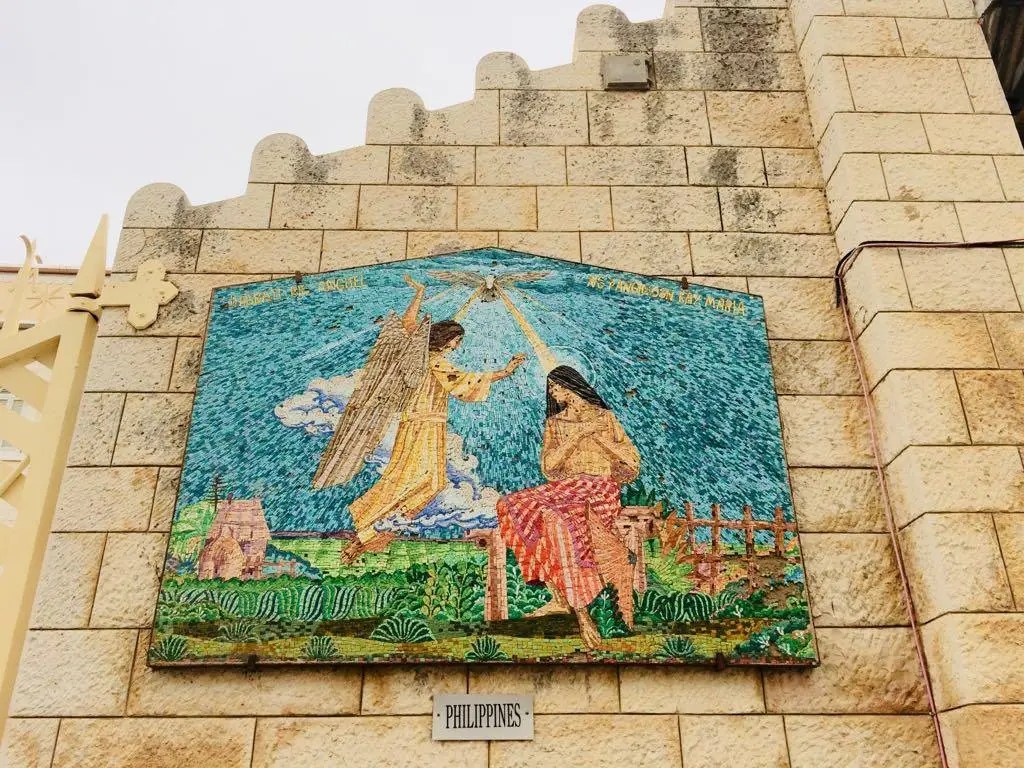
Photo by author, left side of the facade of the Basilica of the Annunciation in Nazareth, Holy Land, May 2019.

Intimacy is more than being close with another; it is an expression of love that is willing to sacrifice, to suffer and get hurt for the sake of the beloved.

God was the first to express his intimacy with us not just by expressing his immense love for us in words by the prophets in the Old Testament but by sending us his Son Jesus Christ who became human like us in everything except sin. Actually, God does not need to become human like us to save us but he chose to be one of us because he loves us so much. As an expression of his intimacy and solidarity with us, Jesus suffered and died on the Cross while going through every pain and hurt we go through in life like grief and sadness in losing a friend, betrayal by a friend, abandonment by friends, no to mention being terrified, going hungry and thirsty. Jesus became like us so that we may become like God – intimately loving him through others.

Actually, God does not need us but he chose to love us, to be with us, to be intimate with us because he loves us so much. God remains God even without us. When we do not pray, when we do not go to Mass on Sundays, when we are bad and not good, God is still God. It is us humans who are lessened when we turn away from from God.

That’s the intimacy of God with us.

How about us, are we willing to be intimate with God in Jesus Christ?

Sadly, many people “create” and “force” intimacy which is a grace, a gift of God freely given to everyone. Like friendship, we cannot force intimacy into someone not meant to be. And like friendship too, intimacy begins in Christ, blooms in Christ.
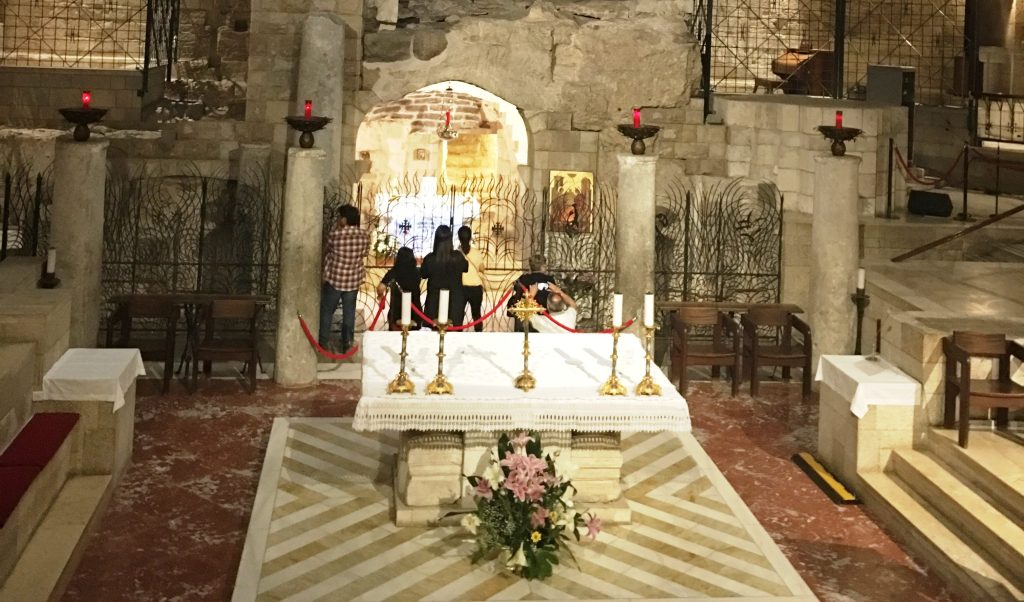
Photo by author, chapel beneath the Basilica of the Annunciation in Nazareth; see those pilgrims praying behind iron grills at the back of the sanctuary which is the site where the Angel announced to Mary the birth of Jesus Christ.

Underneath the Basilica of the Annunciation in Nazareth is a chapel near the very site where the angel is believed to have appeared to Mary to announce the coming of the Savior. At the back of the sanctuary of this chapel is that holy site of the Annunciation enclosed by iron grills with an altar table at the center with the declaration in Latin, Verbum Caro Hic Factum Est (The Word became flesh here).

Mary’s intimacy with God began long before the Annunciation to her by the Angel cultivated in her prayer life. Every time I pray this scene of the Annunciation, I always imagine Mary deeply absorbed in prayer. Most likely, she must be praying about her coming wedding to Joseph. Luke and Matthew were both consistent about their status as being “betrothed to each other” when God announced through the Angel the birth of the Christ.

Photo by author, close up of the Annunciation site beneath the Basilica of the Annunciation in Nazareth; written on the altar table that says in Latin, “The Word became flesh here.”

Imagine the excitement and joy of two faithful Jews getting married soon when suddenly the Angel appeared to them on separate occasions and diverse situations to announce God’s plan of sending his own Son Jesus Christ for the salvation of the world?

It must have been most painful to both Mary and Joseph but as being truly faithful and loving of God, they both agreed to the Divine plan! And that is the great sign of their immense love for God – eventually for each other. Moreover, in saying yes to God, both Mary and Joseph showed the kind of intimacy they have with the Divine.

Let us focus on the intimacy of Mary with God on this Solemnity of the Immaculate Conception found in our gospel account of the Annunciation.
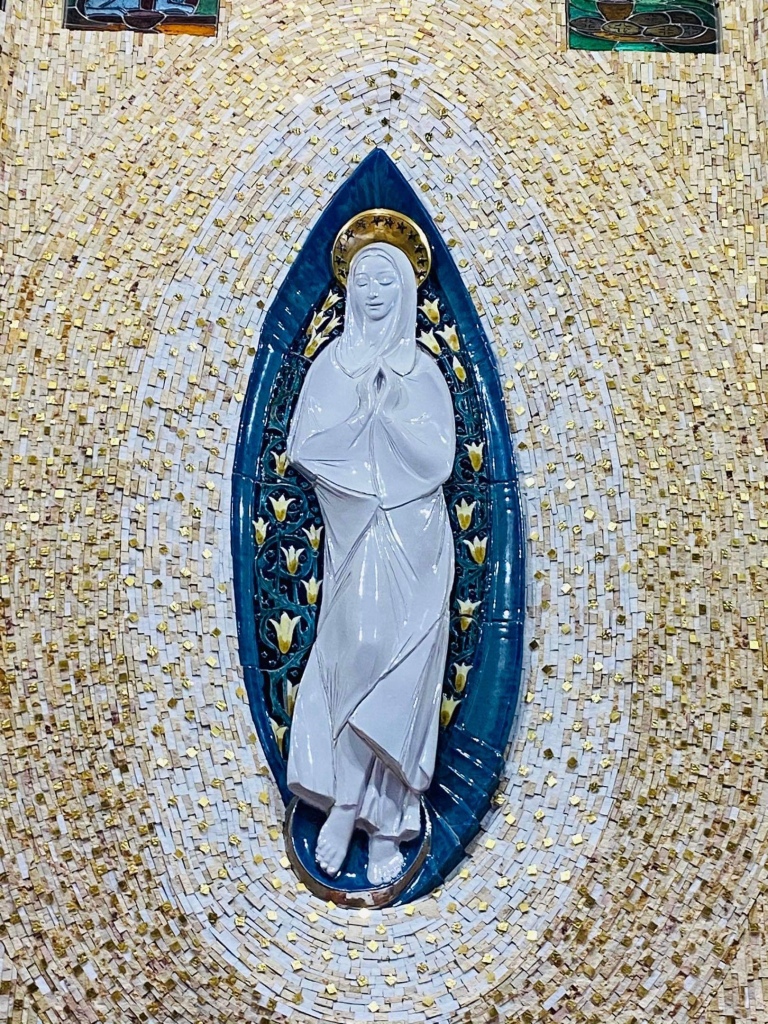
Photo by Rev. Fr. Gerry Pascual of Iba, Zambales at Santuario di Greccio, Rieti, Italy in 2019.

Then the angel said to her, “Do not be afraid, Mary, for you ahve found favor with God. Behold, you will conceive in your womb and bear a son, and you shall name him Jesus (Luke 1:30-31).

Notice that in many scenes and prayers about the Blessed Virgin Mary, we find the prominence of her “womb” like here in the Annunciation and when Elizabeth praised her during her Visitation as “blessed is the fruit of your womb” (Lk.1:42).

In Hebrew, the word for womb is “racham, rachamin” which is their word too for “mercy” because for them, God’s mercy comes from his innermost being. Hence, whenever the Jews speak of mercy of God, they point their fingers downward into the womb or uterus and moves it upward to the heart to indicate the flow of mercy of God from his innermost being expressed in love which is he’s very being and core.

This is the reason the Church Fathers translated mercy into “misericordia” from the Latin verb to move or to stir – “misereor” – and word for heart “cor” that literally means “to move or to stir one’s heart”. It is more than a feeling like compassion; mercy is deeper as it encompasses one’s being leading to intimacy that is a communion or oneness with others which is also intimacy.
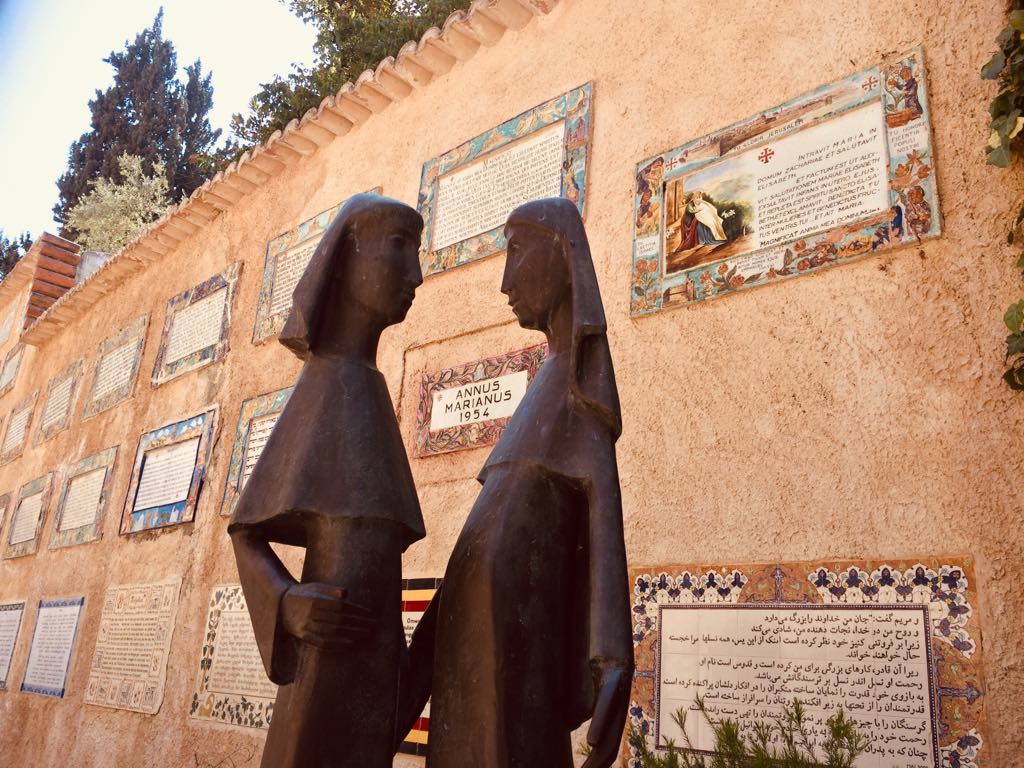
Photo by author, Church of the Visitation, Ein-Karem, Israel, May 2017.

Where there is love, there is always intimacy with the lover willing to bear all pains and hurts for the beloved. And vice versa. Like Jesus. Then Mary who was willing to sacrifice her wedding and marriage to Joseph by being the Mother of the Son of God.

But why? Because we have experienced too that true joy comes only when there is giving of self, when there is willingness to let go and suffer. At the Last Supper, Jesus described joy as like a mother in the pangs of childbirth when she goes through a lot of pains and worries and fears almost like dying but once the baby is delivered, joy happens because she had brought forth a new life into the world.

True joy is having the firm belief that no matter what happens even in the worst scenarios, God would never leave nor forsake us. Joy happens when we find new life, new directions because there is another person willing to remain with us, assuring us we are never alone. That again is intimacy when you feel not alone especially in the most trying times.

Without intimacy with God and another person, there can be no true joy because no one would dare to take risks in this life like mothers. This is what modern women are missing when they see childbearing more as a chore or a burden or a suffering they can always avoid than self-giving borne out of love which happens in the context of an intimacy. No wonder too that sex has been so trivialized, reduced to an activity and act instead of as a gift of self because there is no more responsibility and intimacy. We cannot have lasting and meaningful relationships without intimacy.

Photo by author, 2021.

On this Solemnity of the Immaculate Conception, we are reminded of God’s mercy and intimacy with us, of his loving relationship with us that continues in Christ Jesus with Mary.

Let us nurture this beautiful relationship with God that flows and bears fruit in our relationships with one another.

Like Mary, may we finally say yes to God into an intimate relationship with him through our selflessness. Like Mary, we are blessed and full of grace. The joy awaiting far outweighs the pains and sufferings we shall go through in our gift of self in our relationships. Have no fear for Jesus had suffered first before us so that we can love and be intimate like him. Amen. Have a blessed week.
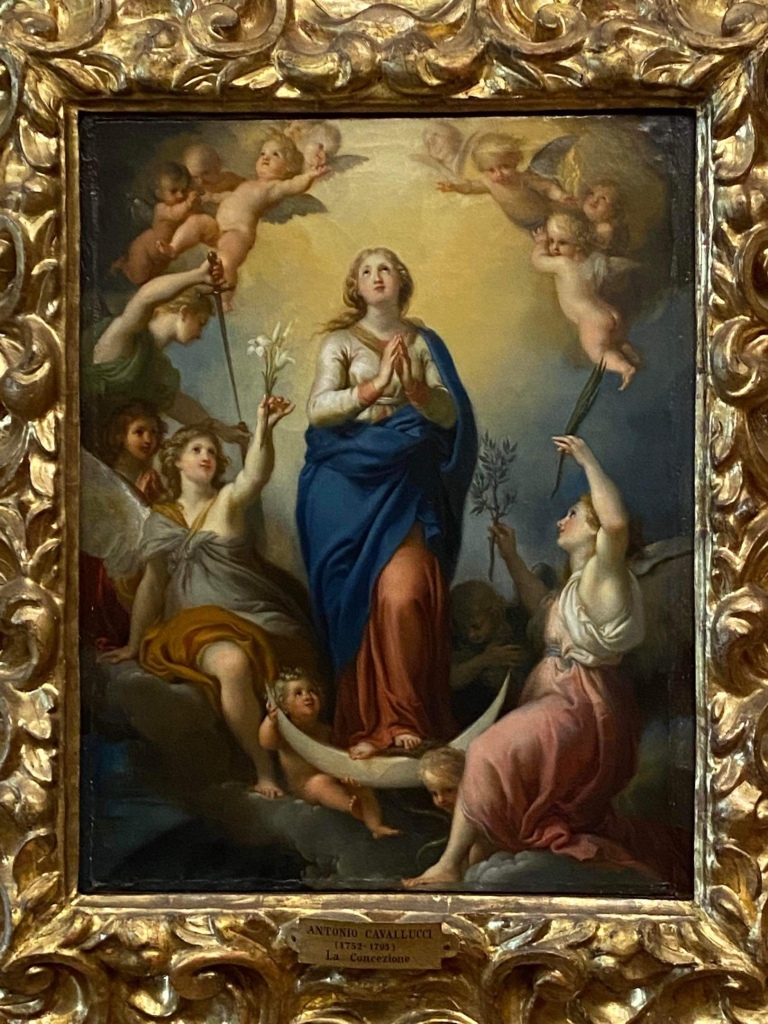
Immaculate Conception is God making room in us; do we make a room for God too?

The Lord Is My Chef Daily Recipe for the Soul by Fr. Nicanor F. Lalog II
Monday, Solemnity of the Immaculate Conception of Mary, 09 December 2024
Genesis 3:9-15, 20 ><}}}}*> Ephesians 1:3-6, 11-12 ><}}}}*> Luke 1:26-38
Photo by Rev. Fr. Gerry Pascual at Palazzo Borromeo, Isola Bella, Stresa, Italia 2019.

The Solemnity of the Immaculate Conception of the Blessed Virgin Mary is one of the most awaited feasts in our predominantly Catholic Christian country due to its timing that is so close to Christmas as well as our deep devotion to the Blessed Mother.

Yet, it is also the most problematic because every year, the biblical passage we hear in its celebration is the Annunciation of the Birth of Jesus Christ that is held on March 25 so that people often confuse the December 8 Solemnity as Mary’s Immaculate Conception of Jesus. Of course, there is no direct quotation in the bible of Mary’s Immaculate Conception for it is a fruit of long process of deliberations and reflections in the Church that was finally made official in 1854 as a Dogma.

For those still confused, today’s celebration is when Mary was immaculately conceived in St. Anne’s womb through the merits of Jesus in all eternity, being freed from any stain of original sin so that she may bear our Savior, the Son of God, all-perfect, into the world who is the Christ.

Photo by Rev. Fr. Gerry Pascual of Iba, Zambales at Santuario di Greccio, Rieti, Italy in 2019.

Mary was chosen by God to be His Son’s Mother not because of her having any special traits but purely out of God’s goodness. It is a beautiful story that continues to happen daily we hardly notice nor recognize when God intervenes into our time to bless us not because we deserve to be blessed but simply out of His immense love for us.

This is what we celebrate in the Immaculate Conception of the Blessed Virgin Mary: we have a very loving God making a room among us so we may dwell and live in His grace since the very beginning of time.

In the bible and in spirituality, the words room and dwelling actually refer to communion of man and God. In fact, the first letter of God’s name “Yahweh” is shaped like a door of a house in Hebrew writing. At the last supper, Jesus told the Twelve that in His Father’s house are many rooms where He shall go first to prepare one for us all. It is not a literal room but a relationship with God that begins here.

In Genesis, paradise as dwelling place of Adam and Eve was more of their oneness with God they have destroyed with sin.

God truly loves us, never gave up on us when He sent Jesus Christ to redeem us to take us back to Him by renewing that relationship with Him. It had always been part of the divine plan even before the fall of man as reflected by St. Paul in the second reading, “as he chose us in him, before the foundation of the world, to be holy and without blemish before him” (Eph. 1:4).

Every December 8 (or 9, like today when the solemnity falls on a Sunday), we hear Luke’s beautiful account of the annunciation of Christ’s birth because it also conveys to us the same message of the Immaculate Conception of Mary who made a room too for God in her self.

The angel Gabriel was sent from God to a town of Galilee called Nazareth, to a virgin betrothed to a man named Joseph, of the house of David, and the virgin’s name was Mary (Luke 1:26-27).

“Cestello Annunciation” by Botticelli painted in 1490; from en.wikipedia.org.

The scene preceding this is the annunciation of John’s birth to Zechariah during the Jewish major feast of Yom Kippur or Day of Atonement at the temple in Jerusalem. Observe Luke’s account and we see how God entered through human activities in that scene. Nakisabay, naki-ride on ang Diyos sa takbo ng panahon noon nang ibalita ang pagsilang ni Juan Bautista.

In the Annunciation of the birth of Jesus, it was different: it was God setting everything on His own as we feel from Luke’s solemn reportage. The five major “W’s” of news were there present, namely, who (Mary), what (birth of Jesus), where (Nazareth), when (sixth month of Elizabeth’s pregnancy) and why (Jesus to save the world).

With Mary in Nazareth, the major event was the Annunciation itself of Christ’s birth. It is the entrance of the eternal God into the temporal and finite time of man. That is why we pray the Angelus thrice a day, to sanctify our day as we remember that great event of God becoming human like us in Jesus. (Sadly, so few people pray the Angelus these days, giving more importance to social media, video games and noon time shows or news programs.)

Mary’s Immaculate Conception actually had its fullness in the Annunciation when Mary said yes to God by making a room for Jesus in herself and in her life that led to Christ’s birth and fulfillment of His mission of salvation for us. We see this also in Joseph as narrated by Matthew.

God made everything possible to restore this relationship through Mary who had to be immaculately conceived in order to be the room who would receive His Son Jesus Christ.

Photo by author, left side of the facade of the Basilica of the Annunciation in Nazareth, Holy Land, May 2019.

Nazareth is the only major place in the New Testament never mentioned in the Old Testament unlike Bethlehem, the birthplace of Jesus and actually His very root being from the lineage of King David was mentioned many times in the Old Testament.

Nazareth was Mary’s hometown, obscured and unknown like her. After returning from Egypt, the angel told Joseph to bring the Holy Family there to avoid Herod, son and namesake of his father who ordered the massacre of children in Bethlehem upon learning from the Magi the birth of the new king of Israel, Jesus Christ. Though officially from Bethlehem, Jesus grew up in Nazareth that is why the people refused to acknowledge Him as the Messiah who would come from Bethlehem.

Nazareth was so insignificant at that time that it was the butt of jokes in Israel. When one of the Lord’s early disciples Philip told Nathanael (Bartholomew) that they have found “the one about whom Moses wrote in the law” as the Messiah, Jesus of Nazareth, Nathanael replied, “Can anything good come from Nazareth?” (Jn.1:45-46). Jesus did not reprimand Nathanael for his comment because it was true, even praising him as a true Israelite without guile!

Photo by author, Nazareth Square, Holy Land, may 2019.

In the first reading, it was God who chose paradise as dwelling of Adam and Eve; in the New Testament, it was God anew who chose the obscured town of Nazareth as the room and dwelling of His Son Jesus Christ, so perfectly jibed with Mary also obscured, so young and perhaps no voice nor say in the Jewish society at that time.

That is how God works, always in silence, often choosing people and places so insignificant in human standards to eventually display His glory like in Mary.

Inasmuch as the Immaculate Conception is God making a room for us to dwell in Him in Mary, God needs also our cooperation and participation in the process. It is not a one-shot deal but an ongoing process, something that continues and most of all, we cultivate and nurture. It is a gift freely given by God, reminding us of our original state and being as clean and pure.

Like Mary, do we have a room for Jesus within us to come especially in this world so preoccupied with man’s pride and achievements? Let us reclaim our original status and pure and clean children of God in making a room for Him in our lives today. Amen.

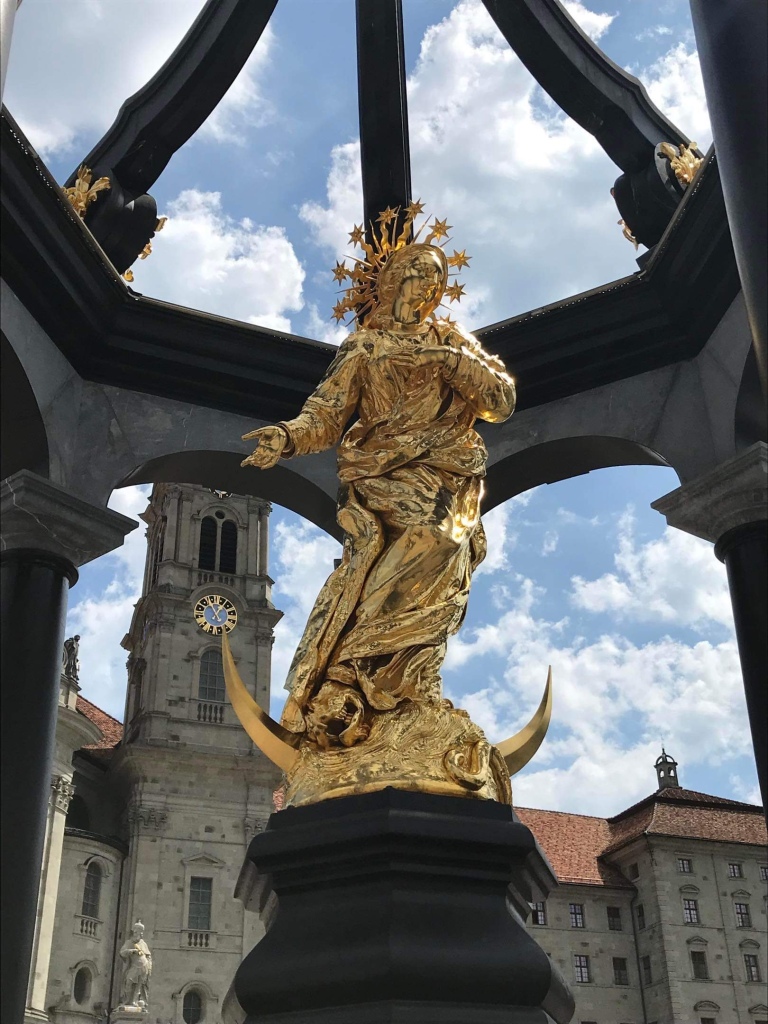
Photo by Fr. Gerry Pascual of Iba, Zambales at Einsiedeln Abbey, Einsiedeln, Switzerland, 2019.

The kindness of God

The Lord Is My Chef Daily Recipe for the Soul by Fr. Nicanor F. Lalog II
Friday, Solemnity of the Immaculate Conception, 08 December 2023
Genesis 3:9-15, 20 ><}}}*> Ephesians 1:3-6, 11-12 ><}}}*> Luke 1:26-38
Photo by Rev. Fr. Gerry Pascual of Iba, Zambales at Santuario di Greccio, Rieti, Italy in 2019.
God our loving Father,
we praise and thank you
on this Solemnity of the Immaculate Conception
for continuing to do your wondrous works
for our salvation, for our healing
for our good.
You are so kind to us, Father,
despite our sins and turning away from you,
you search us, you call us,
most of all, you still bless us
with your merciful presence in
Jesus Christ.
Teach us to be like Mary,
our Blessed Virgin Mother,
to be open always to your coming,
to your calls, to your grace;
teach us most of all to be
selfless, to be kind too
to your boundless kindness,
O God; many times, we are like
Adam and Eve with so many
alibis, always hiding from you,
evading you, not trusting you.
Teach us, O Lord, 
to imitate Mary to not seek
so many reasons and explanations,
to simply trust in you and say YES
to your will and plans always;
may we always keep in mind like Mary,
your sublime kindness O God
of always inviting us,
asking us,
never imposing on us
to freely choose him
and make Christmas possible
every day.
Amen.

Going back to our roots to make room for God

The Lord Is My Chef Daily Recipe for the Soul by Fr. Nicanor F. Lalog II
Friday, Solemnity of the Immaculate Conception, 08 December 2023
Genesis 3:9-15, 20 ><}}}*> Ephesians 1:3-6, 11-12 ><}}}*> Luke 1:26-38
Photo by Rev. Fr. Gerry Pascual of Iba, Zambales at Palazzo Borromeo, Isola Bella, Stresa, Italia 2019.

Until now, many Catholics still get wrong the meaning of the Immaculate Conception of Mary we celebrate today. Very often, they thought it is the Immaculate Conception of Jesus by Mary his Mother.

Wrong. The Immaculate Conception refers to St. Anne’s pregnancy of the Blessed Virgin Mary. According to Ineffabilis Deus issued by Pope Pius IX on December 8, 1854 establishing the dogma of the Immaculate Conception of Mary that had long been held as a tradition in the Church, the Blessed Virgin “in the first instance of her conception, by a singular privilege and grace granted by God, in view of the merits of Jesus Christ, the Savior of the human race, was preserved exempt from all stain of sin.”

Unlike everyone of us stained by original sin, Mary in all eternity was spared from any sin by God himself so that she would be pure and clean to conceive and bear, and eventually gave birth to the Son of God, our Lord Jesus Christ.

Count the months from December 8 to September 8 the birthday of Mary, you get exactly nine months and perhaps that gives you a clearer picture now of what the Immaculate Conception refers to. But, what should rely merit more of our attention in this great celebration happening also in this merry month of December is the great reality of how God works in wondrous and mysterious ways among us, asking for our cooperation for its realization.

Are we willing to be like the Blessed Virgin Mary to be God’s partner in bringing salvation in this world?

Photo by Fr. Gerry Pascual of Iba, Zambales at Einsiedeln Abbey, Einsiedeln, Switzerland, 2019.

Maybe one of the sources of confusion on the Immaculate Conception is the fact that it is not found in the Scriptures. See how our gospel today actually speaks of the annunciation of the birth of Jesus Christ; however, from this we can also glean Mary’s Immaculate Conception by being referred twice by Luke as a virgin.

The angel Gabriel was sent from God to a town of Galilee called Nazareth, to a virgin betrothed to man named Joseph, of the house of David, and the virgin’s name was Mary. And coming to her, he said, “Hail, full of grace! The Lord is with you.”

Luke 1:26-28

It is very interesting to keep in mind that the two dogmas about the Blessed Virgin Mary – the Immaculate Conception and the Assumption issued 100 years later – speak of our beginning and end. In the Immaculate Conception, we are reminded of our original status of being pure and sinless until the fall of Adam and Eve we have heard in the first reading. The Assumption on the other hand, tells us of our destiny in the future, of “the resurrection of body and life everlasting”.

Originally before our fall, we have always been clean and sinless. Like Mary in her Immaculate Conception. See how Luke was very specific in using twice the term virgin or parthenos in Greek because at that time like ours, not all maidens were virgin.

Photo by Rev. Fr. Gerry Pascual of Iba, Zambales at Santuario di Greccio, Rieti, Italy in 2019.

Virginity here does not only speak of the physical sense but also of the deeper spiritual meaning of being clean and open to receive, to accept God in our hearts, in our being. A virgin is someone who is pure and clean of heart like in the Beatitude taught by Jesus Christ at his sermon on the mount, “Blessed are the clean of heart for they shall see God” (Mt. 5:8).

How sad that in our highly competitive and materialistic world, the value of virginity is laughed at or even frowned upon like a handicap or a shortcoming, clear sign of how far we have veered away from God and his teachings. Worst, we have limited our views of virginity and purity to the physical level, forgetting to shift to higher level of understanding and appreciation.

To have a clean or pure heart is to be like Jesus Christ, wholly united and obedient to the Father. Jesus himself proclaimed that everything he had said and done were not his but of the Father. That is the purity of the heart of Jesus, deeply one in the Father that he was the first to see God.

And that is also the kind of person our Blessed Mother is, the model disciple of Jesus her Son for having a heart one with his that on her Assumption she truly became the first to see God too!

Recall also how at the wedding feast in Cana, Mary showed us the example of having a clean heart, of “doing whatever he tells you” which she later proved at the foot of the Cross by standing there with Jesus until his death. That is why according to the meditation of St. Ignatius of Loyola, the Risen Lord first appeared to his Mother, the Blessed Virgin Mary because she was the first to believe in him totally.

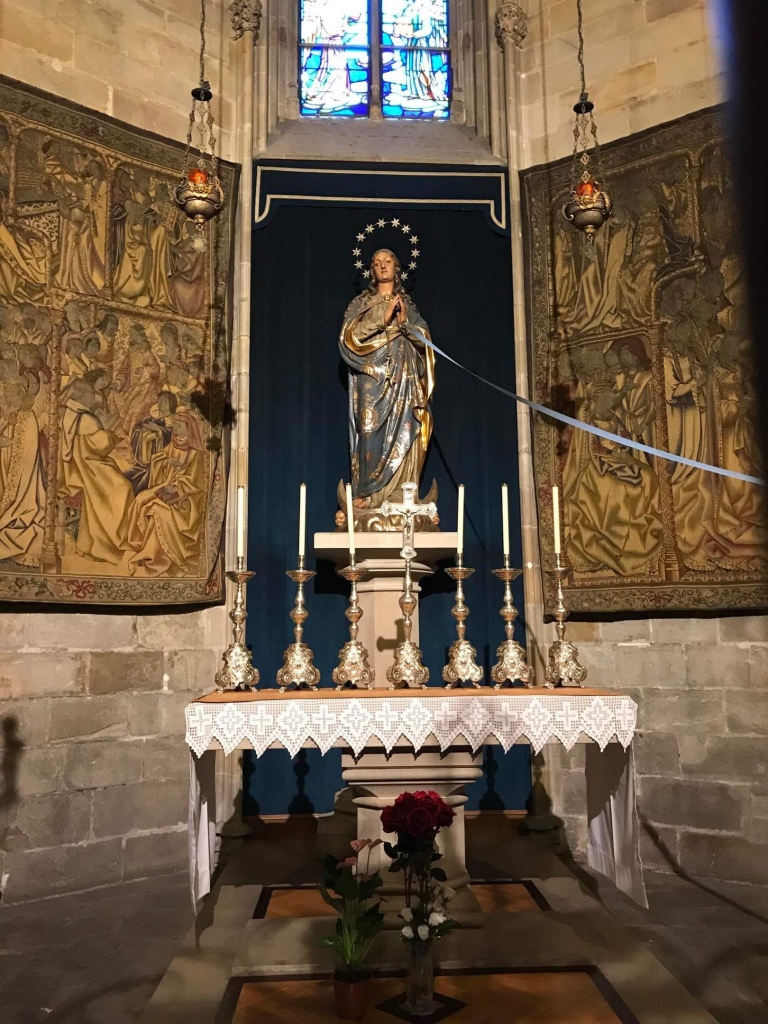
Photo by Fr. Gerry Pascual of Iba, Zambales at the Cathedral of Barcelona, Spain in 2019.

On this Solemnity of the Immaculate Conception of Mary, we are reminded that like her, we are all filled with grace from God in Jesus Christ. St. Paul beautifully expressed this in our second reading today.

Brothers and sisters: Blessed be the God and Father of our Lord Jesus Christ, who has blessed us in Christ with every spiritual blessing in the heavens, as he chose us in him, before the foundation of the world, to be holy and without blemish before him.

Ephesians 1:3-4

The grace of this Solemnity is the reality how God continues to work his wondrous deeds in this world among us, in us through his Son Jesus Christ. But, all his plans can only be realized when we his children are willing to cooperate with him, to be open like Mary to receive Jesus Christ.

Again, we do not have to take everything in the literal sense. God announces to us his coming every day not through the angel Gabriel but through those people around us, especially those we take for granted like the weak and marginalized, the children we do not take seriously because they are kids or the senior people especially the old and sick we find as burdensome.

Like Mary, we are all full of grace, the Lord is with us. Can we show him in our loving service to one another?

Let us pause on this day to go back to our roots in God, our origin and end in order to have that empty space for his Son Jesus Christ to come and work in us in healing us and our very sick world. Amen.

Joy & mercy in the gift of life

The Lord Is My Chef Daily Recipe for the Soul by Fr. Nicanor F. Lalog II
Thursday, Solemnity of the Immaculate Conception of Mary, 08 December 2022
Genesis 3:9-15, 20 ><}}}*> Ephesians 1:3-6, 11-12 ><}}}*> Luke 1:26-38
Photo by Rev. Fr. Gerry Pascual at Palazzo Borromeo, Isola Bella, Stresa, Italia 2019.

The angel Gabriel was sent from God to a town of Galilee called Nazareth, to a virgin betrothed to a man named Joseph, of the house of David, and the virgin’s name was Mary. And coming to her, he said, “Hail, full of grace! The Lord is with you.”

Luke 1:26-28
Praise and glory to you, God our Father
for the gift of life, for the gift of salvation
in Jesus Christ through Mary's Immaculate Conception!
Every joy in the gift of life,
in the gift of every person
is also a gift of your great mercy:
wherever there is life,
there is joy,
there is grace,
there is mercy.
How lovely to keep in mind
that "joy" in Hebrew is "raham, rahamin" -
the same word for "womb" that is why
in describing "joy" to his disciples on the night
before he was arrested, Jesus used the
image of a woman in the pangs of childbirth:
"When a woman is in labor,
she is in anguish because her hour 
has arrived; but when she has given birth
to a child, she no longer remembers the pain
because of her joy that a child has been
into the world" (John 16:21).
So many people are sick at this very moment,
some are awaiting death, some are alone;
many people are hungry, barely surviving
in life every day amid the world's waste
of food and water;
many children are dying too without even
seeing the light because they are seen as
burdens to one's dreams and goals,
thinking only of themselves,
of their rights,
of their body.
On this day as we celebrate
the beginning of the coming of Jesus to us
in the Immaculate Conception of his Mother,
remind us anew that every life is from you,
O God:  what must prevail is your will,
your beautiful plans, not ours;
teach us to trust you like Mary.
Loving Father, make our joy complete
in your Son Jesus Christ;
make us realize and experience
the many spiritual blessings you have
bestowed on us in Jesus Christ (Eph. 1:3);
let us take a rest today,
rest in the real sense like Sabbath
when we return to you in Paradise
obedient not like Adam and Eve; 
most of all, may we recall in the story of Dimas,
we enter Paradise on the Cross with Jesus when 
amid all pains and sufferings,
like the Blessed Mother Mary staying behind,
we may firmly say to you, 
"I am your servant, O Lord.
Be it done unto me
according to your word."
Amen.
Photo by author, 07 December 2022.