Advent is allowing God to overshadow us like Mary

Lord My Chef Simbang Gabi Recipe for the Soul by Fr. Nicanor F. Lalog II
Saturday, Simbang Gabi-V, 20 December 2025
Isaiah 7:10-14 <*((((>< + ><))))*> Luke 1:26-38

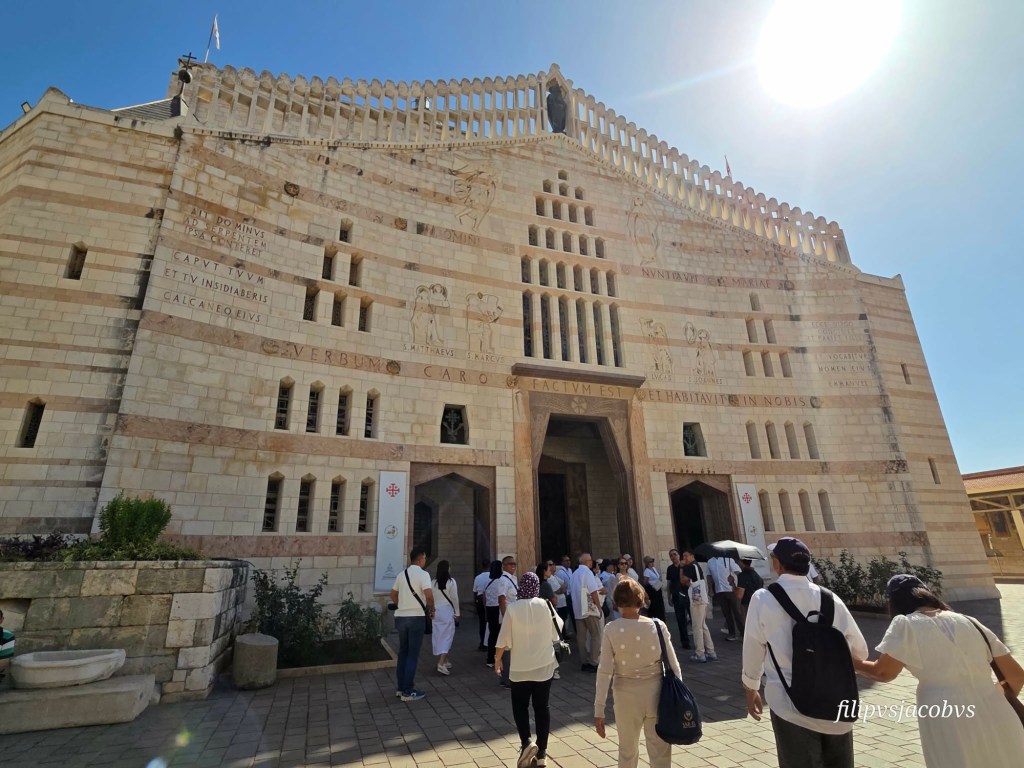
Basilica of the Annunciation in Nazareth, Israel; photo by Ar. Philip Santiago, October 2025.

On this fifth day of our Simbang Gabi we hear the second Christmas story by Luke, telling us how six months after announcing to Zechariah the coming of their son John, the angel Gabriel went to Nazareth to announce the birth of our Savior Jesus Christ to the Blessed Virgin Mary who was betrothed to St. Joseph.  Unlike Zechariah who doubted the angel’s message, Mary was more open with her response by asking how it would all take place.  

And the angel said to her in reply, “The Holy Spirit will come upon you, and the power of the Most High will overshadow you.  Therefore the child to be born will be called holy, the Son of God” (Luke 1:35).

We reflected the other day how Matthew ended his story of the genealogy of Jesus Christ with Mary to show her as the new beginning of everything in the world. Through Mary’s giving birth to Jesus, we now share with Him one common origin in faith who is God as our Father so that despite our many sins and failures, we are given with a fresh start, new opportunities in life daily. Luke bolsters this today with his account of the annunciation of the birth of Jesus to Mary. 

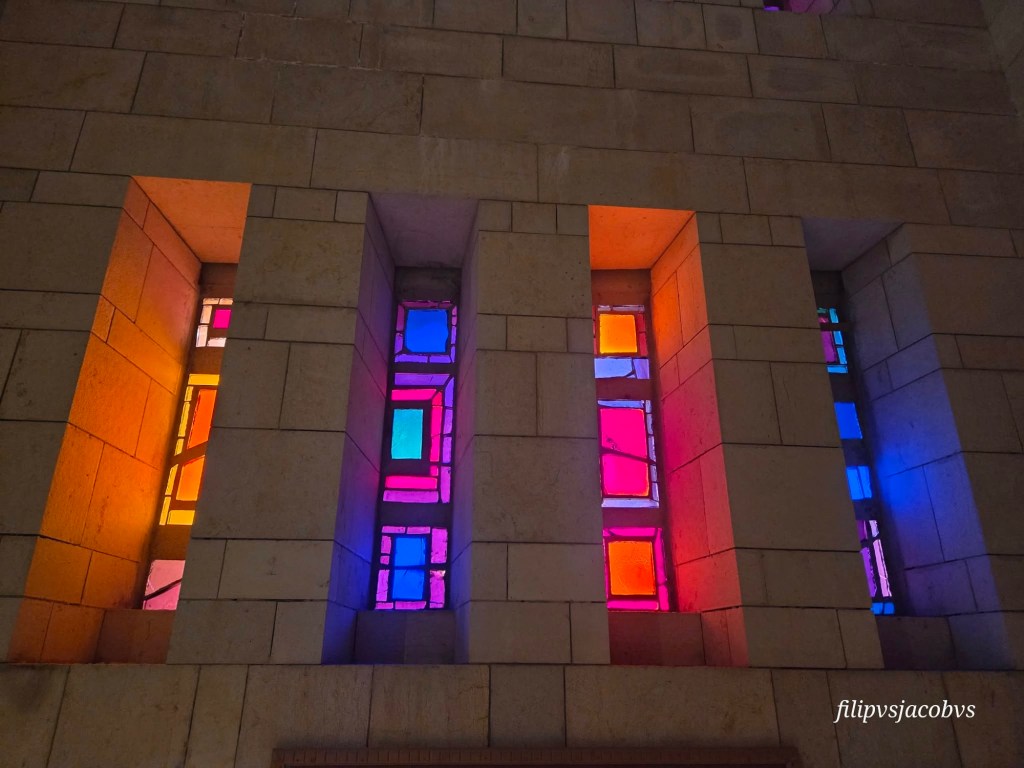
Photo by Ar. Philip Santiago, Annunciation Basilica in Nazareth, October 2025.

As a Jew, Mary must be totally aware of the words of the angel about herself being “overshadowed by the Most High” like in the Old Testament stories of God’s presence in the cloud during their journey in the wilderness after their exodus from Egypt.  Even Moses could not enter the tent when “the cloud covered it and the glory of the Lord filled the tabernacle” (Ex.40:34-38). 

To be filled and overshadowed by the presence of God is to be to be possessed by God and eventually to be transformed by God. 

Remember how in the movie “The Ten Commandments” when the face of Moses was transformed after meeting God. In the New Testament, the three synoptic gospels record a similar incident of God’s presence in a cloud hovering with Jesus during His transfiguration at Mount Tabor witnessed by Peter, James and John. The two great prophets of Israel were there, Elijah and Moses conversing with Jesus when a cloud overshadowed them with a voice declaring “this is my beloved Son, listen to Him.” Matthew, Mark and Luke tell us how the apostles were all terrified at the sight of the Transfiguration. 

And we can also surmise how terrifying it must be to experience God’s presence, to be filled with God.  But that is how grace works! 

Photo by Ar. Philip Santiago, Annunciation Basilica in Nazareth, October 2025.

At the start of our Simbang Gabi we have reflected how under the light of Christ we are able to see our sinfulness and weaknesses that sometimes we feel so sorry for ourselves but that is actually when grace works in us – the moment we change our sinful ways, then we grow!

When we see our limitations as humans yet still forge on in life to achieve greater things, to become better persons, that is God working in us. That is why Luke tells us today how the angel greeted Mary during the annunciation using the Greek words “kaire” which is to rejoice and “charis” or “karis” for grace:  “Hail (or rejoice), full of grace!  The Lord is with you” (Lk.1:28). 

This is actually unusual because Jews greet each other with “shalom” for peace; why did Luke use kaire? Because wherever and whenever there is grace, surely there is rejoicing like in our Third Sunday of Advent called Gaudete Sunday: we rejoice because the Lord who is pure grace is near!

The late American spiritual writer and monk Thomas Merton rightly said, “We live in a time of no room, which is the time of the end.  The time when everyone is obsessed with lack of time, lack of space, with saving time, conquering space… The primordial blessing, ‘increase and multiply’ has suddenly become a hemorrhage of terror… In the time of the end there is no longer room for the desire to go on living.  Why?  Because they are part of a proliferation of life that is not fully alive, it is programmed for death” (Raids on the Unspeakable, pp. 70-72).

Photo by Ar. Philip Santiago, Annunciation Basilica in Nazareth, October 2025.

Advent is the time to get real, to stop pretending. Advent is the time for us to finally admit our own limitations, to create a space in our hearts and in our lives to let God fill us, to let God possess us. 

Can we, like Mary allow God’s power “hover over us” to renew our lives in welcoming Jesus Christ? This was the problem of Isaiah with King Ahaz in the first reading who pretended to refusing God giving signs of his presence when actually he had already entered into alliances with other pagan kings in the region as the Babylonians were closing in them; that is why Isaiah uttered the prophecy to insist that God is our protector: “Listen, O house of David! Is it not enough for you to weary men, must you also weary my God? Therefore the Lord himself will give you this sign: the virgin shall be with child, and bear a son, and shall name him Emmanuel” (Is.7:13-14).

Let me end this reflection by inviting you dear friends to pray for Fr. Flavie Villanueva, an SVD priest so active in caring for the poor especially the orphans left by victims of tokhang. He was recently awarded the Ramon Magsaysay Award considered as Asia’s equivalent of Nobel Peace Prize for his works for the poor.

Yes, he had a very dark past, being a former drug dependent but God used that chapter in his life to make him turn around and become a missionary priest. Fr. Flavie had never hidden nor sanitized his dark past because it was during those years when he also found the light and grace of God’s love and mercy for him. Perhaps, he is most effective in his works among the poor and the addicts precisely because he used to be one of them! He is now under attack for his works by the dark elements of the past administration, the most decadent in our history.

From Facebook via Political Insight Today, 18 December 2025.

Fr. Flavie is no Virgin Mary but like her, he opened his heart to God who eventually overshadowed him with His powers to do all these great things for the poor who now feel Christ’s presence.

Recall now the many instances in our lives where we have learned our most important lessons in life and most surely, these were also the moments we have faced many hardships and sufferings but, instead of being down, these have inspired us and transformed us into better persons.

Let us imitate Mary in saying yes to God – “Behold I am the handmaid of the Lord.  May it be done to me according to your word!”  Let us open our hearts to God so the Holy Spirit may hover on us to fill us with Jesus Christ we can share with others broken like us. Amen. A blessed weekend everyone! 

Lent is asking God “how”?

40 Shades of Lent by Fr. Nicanor F. Lalog II
Solemnity of the Annunciation of the Lord, 25 March 2025
Isaiah 7:10-14;8:10 + Hebrews 10:4-10 + Luke 1:26-38
“Cestello Annunciation” by Botticelli painted in 1490; from en.wikipedia.org.
As we journey towards Easter,
we thank you dear God our Father
for the gift of this Solemnity of the
Annunciation of the birth of Jesus
to the Blessed Virgin Mary,
teaching us how the Christ
came into this world with the
Blessed Virgin Mary's attitude
and example worth emulating
as our companion in this Lenten journey
when she asked Archangel Gabriel,
"How can this be,
since I have no relations
with a man?"
(Luke 1:34).
Photo by author, Our Lady of the Poor, Sacred Heart Novitiate, Novaliches, QC, 17 March 2025.
Many times in life,
we live as if there is no God,
with us not only playing like you,
O God but actually acting truly
as God.
We live our lives according to
our own ways, to our own standards,
to our own thinking that most often
lead to more disasters,
more problems and worst,
broken self and broken relationships;
we feel we know better than you
than anyone.
Teach us, Jesus,
to be humble like your Mother,
the Blessed Virgin Mary:
in her asking
Archangel Gabriel
"How can this be",
she had already expressed her
acceptance of the Father's invitation
to be your Mother;
many times,
we refuse to even listen
to God’s plan for us as we
we rarely or have stopped
praying at all
so unlike Mary who must
have been at prayer
when Gabriel came.
In her asking "How
can this be?",
Mary was already setting aside
her own plans in life
to give way to God's plan;
in asking "How
can this be?", Mary showed us
the beauty of prayer
as a relationship where there
is true freedom and openness
to God in you, Jesus.
Forgive us Jesus
when we act like King Acaz
so hypocrite,
pretending not to test you
when in fact we have already
decided on our own
without considering you
at all.
.
How, O Lord,
can we truly change our ways
to follow God’s plans
and most unique ways
for nothing is impossible
in him?
Amen.
Photo by author, Our Lady of the Poor, Sacred Heart Novitiate, Novaliches, QC, 17 March 2025.

Advent as a dialogue leading to Christmas, the presence of God

The Lord Is My Chef Daily Recipe for the Soul by Fr. Nicanor F. Lalog II
Simbang Gabi-5 Homily, 20 December 2024
Isaiah 7:10-14 <*((((>< + ><))))*> Luke 1:26-38
Photo by Mr. Boy Cabrido, National Shrine of Our Lady of Mt. Carmel, QC, 16 December 2024.

Last Monday at the start of Simbang Gabi, one of our priests became viral when at the recessional of their Mass while the choir was joyfully singing “Pasko na! Pasko na!”, he sarcastically sang “Hindi pa! Hindi pa!”

Many people laughed at the viral video with some commenting that Father was right because it wasn’t Christmas yet while a liturgist advised choirs to check the many choices of Advent songs now available online. But, sad to say, the people missed the whole point of the incident.

What our brother-priest did was not funny at all in putting to shame his own choir members and most of all, in destroying the solemnity of the Mass.

And the problem was not really the choir at all but the priest himself. What the priest did at the end of the Mass was a self-indictment of his lack of formation for his choir members and of any dialogue at all.

Photo by author, Advent in previous parish, 2018.

Advent is a dialogue between God and humans that led to the presence of God among us in Jesus Christ on Christmas. It is a process that continues in our own time as we are all called to be open to God and with others for dialogue like Mary in the annunciation of Christ’s birth by Archangel Gabriel.

Dialogue is more than conversing to improve relationships among people in a community or organization but a way of being with others as opposed to a way of thinking through issues and problems only. Dialogue is being present with others, of giving one’s self to feel and listen and experience the other person.

Luke shows us in his second Christmas story today how this true meaning of dialogue between God and Mary happened.

In the sixth month, the angel Gabriel was sent from God to a town of Galilee called Nazareth, to a virgin betrothed to a man named Joseph, of the house of David, and the virgin’s name was Mary. And coming of her, he said, “Hail, full of grace! Then Lord is with you.” But she was greatloy troubled at what was said and pondered what sort of greeting this might be. Then the angel said to her, “Do not be afraid, Mary, for you have found favor with God… But Mary said to the angel, “How can this be, since I have no relations with a man?” And the angel said to her in reply, “The Holy spirit will come upon you, and the power of the Most High will overshadow you. Therefore the child to be born will be called holy, the Son of God. And behold, Elizabeth, your relative, has also conceived a son in her old age, and this is the sixth month for her who was called barren; for nothing will be impossible for God” (Luke 1:26-30, 34-37).

“Cestello Annunciation” by Botticelli painted in 1490; from en.wikipedia.org.

See the artistry and genius of Luke as a storyteller. Yesterday he presented to us the annunciation of the birth of John the Baptist to his father Zechariah while incensing the Holy of Holies in the temple of Jerusalem.

Notice the great differences in the flow of conversations and dialogue in the two annunciations narrated by Luke. Both Zechariah and Mary were troubled at the coming of the angel. And who would not be in a such unprecedented event? However, there is one minute detail we find in Luke’s narration of the two annunciations that reveal something so big and deep in meaning.

According to Luke, “Zechariah was troubled by what he saw, and fear came upon him” (Lk. 1:12) while Mary “was greatly troubled at what was said and pondered what sort of greeting this might be” (Lk. 1:29). Both were troubled which is normal but their reactions differed so great with Zechariah becoming proud while Mary was humbled.

I believe that it was more than their age and differences in social status that Zechariah was simply “troubled” while Mary was “greatly troubled” but it was largely due to their dispositions and openness to God.

Zechariah was proud of his stature and of his intelligence, trying to take hold and control of everything that is why he was seized with fear. When he told the angel, “How shall I know this? For I am an old man, and my wife is advanced in years” (Lk.1:18), Zechariah was troubled and fearful because he felt challenged as a priest much respected in the community, choosing to stand proud of his position and intelligence as if having a child is all an effort of man and woman alone! There was no dialogue as Zechariah was proud that is why he was made mute by the angel. He had forgotten all about God!

Photo by author, Basilica of the Annunciation, Nazareth, Israel, May 2019.

Compare Mary’s reaction to the annunciation, “But she was greatly troubled at what was said and pondered what sort of greeting this might be.”

Luke always portrayed Mary as the listener and doer of the word, the one who ponders at the words spoken to her not only by the angel here but later at the birth of Jesus those spoken by the shepherds, then by Simeon at the Presentation and by Jesus Himself at the wedding in Cana. Mary has always been open to dialogue, to feeling the other person conversing with her. She was not concerned only with the news and information but with the persons involved.

In that sense, there is her remarkable humility and great courage at the same time. True humility is not really about being submissive but most of all being filled with courage, not with fear. Mary as the very young virgin from a poor family in a town nobody gave importance stood fearless before the angel as she took hold of herself to ponder on the words spoken to her. Despite the very unprecedented moment with an angel, Mary had that inner engagement with the words she had just heard without any violent reactions.

Photo by author, December 2018.

Unlike Zechariah, Mary was the one actually in control of herself and of her emotions. The Jedi Master Yoda of Star Wars said it so well, “fear leads to anger, anger leads to destruction”. Zechariah was afraid of losing power and control but Mary was not bothered at all. In fact, she faced the challenge head on, reflecting deep in her what is this going on? Am I awake, is this a dream would most likely be the words playing in her mind and heart. Mary had presence as she tried to feel the angel and later God that no wonder, Jesus came to her womb and we have Christmas!

The humility and courage of Mary became more evident when she said to the angel, “How can this be, since I have no relations with a man?”

She was not afraid at all to be become the Mother of God! There was already her willingness to submit, as if telling the angel, “OK let’s do it but tell me how?” whereas Zechariah was argumentative, trying to escape responsibilities? Such was the attitude too of Ahaz in the first reading, denying he won’t test God when in fact he had already aligned with other kings in the region as he feared the invading enemies near his borders.

It was at this moment when the good news became most closest to us through Mary when the angel explained of the coming of the Holy Spirit, of how the power of God would overshadow her, assuring her that nothing is impossible with God.

How wonderful is this scene for us to emulate Mary so that we experience Christmas daily in our lives, not only of God coming but being present in us and among us. Can we dare to be open before God like Mary? Have a blessed Friday!

Photo by author, Fatima Avenue, Valenzuela City, December 2024.

God’s will be done.

The Lord Is My Chef Easter Recipe by Fr. NIcanor F. Lalog II
Monday, Solemnity of the Annunciation of the Lord, 08 April 2024
Isaiah 7:10-14, 8:10 ><}}}}*> Hebrews 10:4-10 ><}}}}*> Luke 1:26-38
Photo by author, Our Lady of the Poor, Sacred Heart Novitiate, Novaliches, QC, 20 March 2024.
You ended it, 
O blessed Mother with
"Behold, I am the handmaid
of the Lord.
May it be done to me
according to your word"
and it all set us to an
ever new beginning
happening daily
with your Son Jesus Christ's
coming!
God and man 
too far apart from each other
before because of the Fall
are now so close
and near with each other
when you,
O blessed Virgin,
said yes
to His Holy Will
so that the promise of old
is fulfilled.

Brothers and sisters: It is impossible that the blood of bulls and goats take away sins. For this reason, when Christ came into the world, he said… “behold, I come to do your will, O God.” By this “will,” we have been consecrated through the offering of the Body of Jesus Christ once for all.

Hebrews 10:4, 7, 10
Chapel of Della Strada, Sacred heart Novitiate.
Pray for us,
our Mother Mary
that like you
we may be open
always to God's will,
intently listening to His voice
and most of all
obeying His word
so that like you,
we may bring Jesus Christ
to this world,
be enfleshed
in us to become His presence.
Amen.

The Annunciation: the reality of God, the reality of our humanity

40 Shades of Lent by Fr. Nicanor F. Lalog II
Friday in the Solemnity of the Annunciation of the Lord, 25 March 2022
Isaiah 7:10-14, 8:10 ><}}}*> Hebrews 10:4-10 ><}}}*> Luke 1:26-38
Photo by author, chapel beneath the Basilica of the Annunciation, Nazareth, Israel, May 2019.

Beneath the huge and magnificent Basilica of the Annunciation in Nazareth is a beautiful chapel where one may find a small cave converted into another little chapel with iron grills to keep off people from approaching the brightly lit altar believed to be the site where the Archangel Gabriel announced the good news of Christ’s birth to Mary.

At the base of the altar are the words, Verbum caro hic factum est, “The Word was made flesh here.”

Borrowed from John’s gospel who declared Verbum caro factum est – The Word was made flesh – the one who have thought of adding the demonstrative pronoun here to declare it as the site of the Annunciation – Verbum caro hic factum est – was definitely divinely inspired to remind us that the reality of God is something deeply ingrained in our own realities of here and now, in our very selves.

Photo by author, site of the Annunciation, May 2019.

The angel Gabriel was sent from God to a town of Galilee called Nazareth, to a virgin betrothed to a man named Joseph, of the house of David, and the virgin’s name was Mary. And coming to her, he said, “Hail, full of grace! The Lord is with you.”

Luke 1:26-28

Only Luke has this account of the Annunciation of the birth of Jesus to Mary. And true to his prologue to his gospel of “investigating everything accurately anew” about the life and teachings of Jesus, Luke tells us how the Annunciation happened with all the details like the five w’s in a news report, the who-what-where-when-why as we have heard proclaimed today.

This is very important because it tells us the factuality of the great spiritual reality that changed world history and the whole humanity when God became human, when eternity entered the temporal.

It is a beautiful presentation of this great event so profound and so touching that continues to happen within each one of us every day of our lives, of God coming to us, filling us with his grace because each of us is a beloved, a highly favored one chosen to be the indwelling of his Son, Jesus Christ like Mary.

This is the grace of this solemnity we celebrate nine months before Christmas, that God comes to us in our very humanity, always inviting us like Mary to receive Jesus, to be the vessel and instrument in fulfilling God’s great plans. We are like Mary in everything except in her being immaculately conceived – we are all poor and lowly, mostly a nobody in the society, but so loved by God!

Photo by author, flowers outside the Basilica of the Annunciation, Nazareth 2019.

God comes to us precisely where we are, in our every here and now even when we are most lowly and down, when we are deep in sin and despair, in trials and sufferings, in pains and in hurts because like Mary, even before the angel came, God had already silently started working on many things to save us.

There is always God’s perfect timing when we would meet the right people who would guide and help us.

There is always an Elizabeth that God would point us to as a signpost and proof of his reality, of his wonderful plan starting to uncover right in our very lives if we would stop like Mary to listen further to his words.

Speaking of Elizabeth, recall in Luke’s account that the angel mentioned her to Mary to allay her of her fears upon receiving the good news of Christ’s coming.

So often when God comes to us, fear naturally follows. In the Bible, it is described as “reverential fear” which comes upon an experience of the Holy; it is a feeling of being so small before the almighty God (mysterium fascinans) yet deep in this fear is a joy within about to burst because of the great honor and privilege of being loved and recognized by God. There is that normal feeling of doubts of whether we can do God’s mission or not as well as the feeling of checking the reality if it is really happening at all! Once we have verified we are not dreaming, that indeed we are called by God despite our smallness, that is when we suddenly remember our fellow mortals doing the work of God.

Then the angel said to her, “Do not be afraid, Mary, for you have found favor with God… And behold, Elizabeth, your relative, has also conceived a son in her old age and this is the sixth month for her who was called barren; for nothing will be impossible for God.” Mary said, “Behold I am the handmaid of the Lord. May it be done to me according to your word.” Then the angel departed from her.

Luke 1:36-38
Photo by author, Basilica of the Annunciation, Nazareth, 2019.

By this “will,” we have been consecrated through the offering of the body of Jesus Christ once for all.

Hebrews 10:10

Last week I underwent a surgery. It was my first time to be hospitalized and to go under the knife. Though it was a very simple procedure, I was nervous. Very nervous in fact although I tried to keep my sense of humor especially with my doctors and nurses.

The experience had taught me so many valuable lessons that I am still “masticating” them, trying to find words on how to express those learnings and realizations.

One of those is the discovery of my humanity, of my mortality. I feel I have become more human with that experience when I finally accepted my body, when slowly I have learned to look closely at my body parts I took for granted even so ashamed to look at, with all the blood and abscess and wounds.

Hindi pala puwede na hindi tayo magkakasakit, na mahina tayo, at walang perpekto sa atin na hindi kakailanganin ang tulong ng iba.

As I learned to accept my mortal body, slowly it dawned upon me how it is the true path to letting go and let God with my spiritual and emotional woundedness for it is in our humanity when God’s reality is most felt, most true. It is only when we are faced with the real threat of “harm” or being hurt, of possibly being extinct and gone from this earth when we realize what is to be afraid and finally entrust our total self to God for whatever will happen next.

That is the gift of the Incarnation of Jesus Christ that formally began in the annunciation of his birth to Mary. It is in accepting our very humanity and mortality when God truly comes, when we become one in him through Jesus Christ on the Cross. Amen.

Advent is God’s transforming presence

The Lord Is My Chef Simbang Gabi Recipe for the Soul by Fr. Nicanor F. Lalog II
Monday, Simbang Gabi 5, 20 December 2021
Isaiah 7:10-14   ><)))*> + ><)))*> + ><)))*>   Luke 1:26-38
Photo by author, an altar near the Chapel at the site of the Annunciation below the Basilica of the Annunciation, Nazareth, Israel, 2019.

We are now at the final stretch of the week leading to Christmas as cash registers ring following the renewed economic activities with the lowering of COVID cases this month after a long lull since this pandemic began early last year.

Though the commercial hubbub is all around us, let us not forget that unlike the commercial green and red shades of Christmas, our Advent color is violet like Lent to signify the spirit of penance though in a more subdued manner. Amid our busy schedules, let us not forget that Advent is a preparation of our inner selves, of our interior disposition for a deeper meaning and nature of Christmas. With still a week to go, we are invited to empty our selves of sins, of pride and of other excess baggages so we can create a space for Christ’s coming right in our hearts, like our Blessed Virgin Mary.

In the sixth month, the angel Gabriel was sent from God to a town of Galilee called Nazareth, to a virgin betrothed to a man named Joseph, of the house of David, and the virgin’s name was Mary. And coming to her, he said, “Hail, full of grace! The Lord is with you.” She was greatly troubled at what was said and pondered what sort of greeting this might be.

Luke 1:26-29
Photo by author, site of the Annunciation beneath the Basilica of the Annunciation at Nazareth, Israel, 2019.

One of the most beautiful characteristic of Mary as a disciple is her openness to God. She always had that empty space in her solely for God, an inner disposition nurtured by her deep prayer life.

See the very solemn narration by Luke of the Annunciation, specifically mentioning to us the time, place, persons and circumstance involved in this “sacred moment” we have reflected yesterday. Mary must have been deeply in prayer when the angel came, a sign she was always attuned with God.

Notice that next to her surprise with the coming of the angel with the good news was her “pondering” what sort of greeting that might be. What an image of the Blessed Mother disposed to God’s calling and plans that immediately during her conversations with the angel, she was already reflecting on the meaning of the message. No hesitations or whatsoever. Just clarifications but willing to obey.

Luke tells us in other instances how Mary would “ponder” on words and events in her life like when the shepherds came to visit her newly-born child Jesus and after finding Jesus at the temple. Mary would always ponder the words and events that came her way, an indication of open acceptance, of a welcoming attitude to God’s works and wonder.

Photo by author outside Basilica of the Annunciation, Nazareth, 2019.

Her pondering on the words of the angel Gabriel was very significant; we can’t help compare her attitude to Zechariah who was made mute after questioning the angel’s announcement his wife Elizabeth would bear a child six months earlier.

There’s nothing wrong asking God and seeking clarifications with his plans for us but, never challenge and dare him like Zechariah who doubted the good news brought to him by the same angel Gabriel whose name means “the presence of God.”

But Mary said to the angel, “How can this be, since I have no relations with a man?” And the angel said said to her in reply, “The Holy Spirit will come upon you, and the power of the Most High will overshadow you. Therefore the child to be born will be called holy, the Son of God… for nothing will be impossible for God.”

Luke 1:34-35, 37

In asking the angel “How can this be”, we find in Mary an honest and sincere, an innocent question already inclined to accept and cooperate with the plan. In fact, Mary indicated no resistance at all to the plan to be the Mother of Jesus – she just wanted to know the “script” or her role in the Divine plan of the Incarnation.

It is here where we find the transforming presence of God coming upon her at that moment when the angel told her “The Holy Spirit will come upon you, and the power of the Most High will overshadow you”.

What a picturesque description that only an artist like Luke could express so vividly well.

The Holy Spirit will come upon you – God coming down to her, becoming present in her. And the power of the Most High will overshadow you – that is the clincher!

Look at the wonderful flow and unfolding of the Incarnation: a coming down, a descent of the Holy Spirit and an overshadowing of the power as some sort of being “possessed” by the Divine! Observe how Luke would repeat in his second book, the Acts of the Apostles the same sequence of coming down of the Holy Spirit and overshadowing of the Apostles with Mary!- at the Pentecost in Jerusalem. Their striking similarities remind us of the tremendous grace and power coming upon us when like Mary and later the Apostles we entrust our total self, including our future to God. It is only then when God’s transforming presence begins to work wondrously among us.

Photo by Ezra Acayan of Getty Images, February 2020 in Baclaran Church.

Too often, we feel uncomfortable and even not amenable to being overwhelmed by another. Our sense of independence is so strong, deeply ingrained in us even in childhood when we would always assert our very selves, insist on what we want that along the way, we also feel very suspicious of anyone trying to get too close, too soon with us.

It is funny that even with too much presence in social media like Facebook, we get that feeling of being violated or at least slighted by someone too close for comfort in posting and commenting on our walls.

At the Annunciation, we find Mary personally giving her yes to God, calling herself the handmaid of the Lord to let his will be done upon her. And the rest is history. That is why we have this joyous season of Christmas today when Mary allowed herself to be overwhelmed, transformed by Christ’s presence in her womb.

While we were so busy with our Simbang Gabi and Christmas preparations last week, another powerful typhoon battered the southern part of our country resulting in many losses of lives and properties. So typical of the stronger than usual typhoons hitting our country this past decade in this part of the year, it makes us wonder where is God amid all these things happening while we are in a pandemic.

Where is the transforming presence of God in this time of pandemic and calamities and inanities of so many gunning for the top positions of the land?

Photo by author, 2019.

We need not look far and beyond us. Like Mary, let us look into our hearts to see if there is room in my life for God. Recall in the Book of Genesis how out of chaos God’s transforming presence created everything good and, how in the darkness of Israel’s and mankind’s history came the Christ.

In this time of darkness and calamities, God is very much present among us, so raring to transform the world and our lives to something better. But, is there anyone among us willing to be like Mary telling God, “I am the servant of the Lord; may it be done to me according to your word”?

To transform this world into a better one, let us first be transformed in Jesus Christ. With Mary. Amen.

Have a blessed Monday!

Praying for our relationships and the ties that bind us

40 Shades of Lent by Fr. Nicanor F. Lalog II
Solemnity of the Annunciation of the Lord, 25 March 2021
Isaiah 7:10-14, 8:10  +  Hebrews 10:4-10  +  Luke 1:26-38
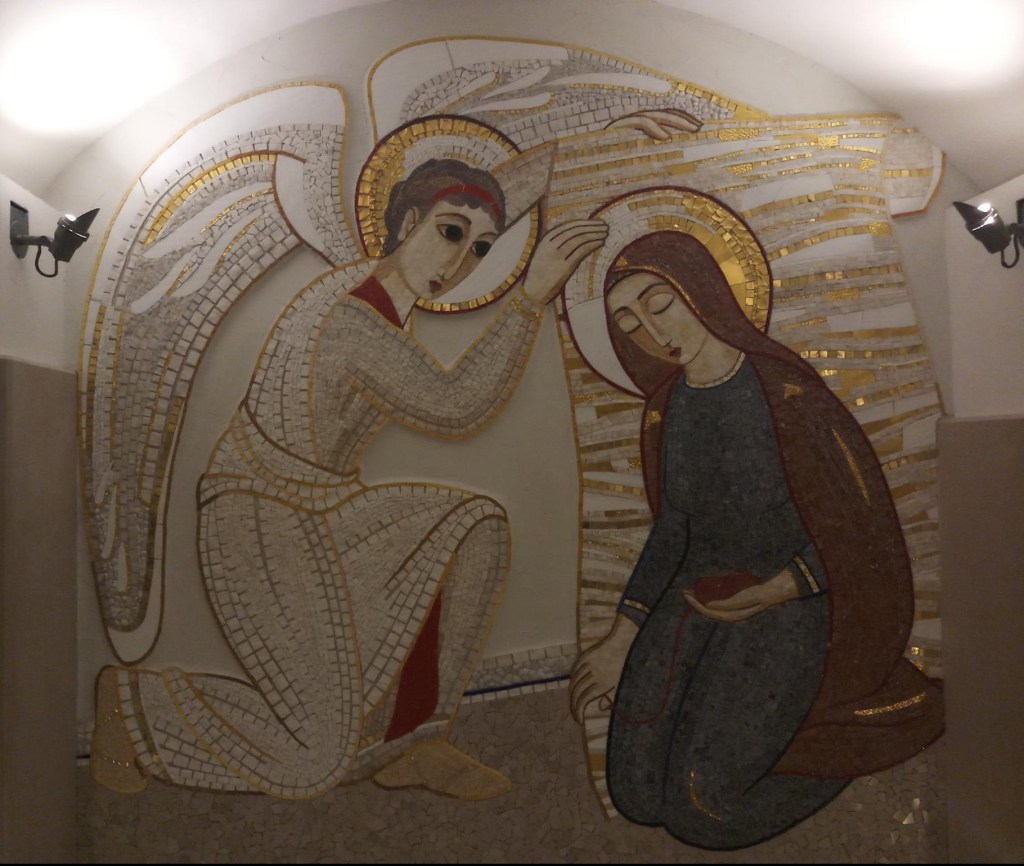
Photo by Arch. Philip Santiago of a mosaic of the Annunciation at the Shrine of St. Padre Pio at Rotondo, Italy, 2018.

Praise and glory to you, O God our Father on this Solemnity of the Annunciation of the birth of our Savior Jesus Christ! Thank you very much in fulfilling your promise, in sending us the perfect offering we can have to be one with you again.

Brothers and sisters: It is impossible that the blood of bulls and goats take away sins. For this reason, When Christ came into the world, he said, “Sacrifice and offering you did not desire, but a body you prepared for me; in holocausts and sin offerings you took no delight. Then I said, ‘As is written of me in the scroll, Behold, I come to do your will, O God.’” By this “will,” we have been consecrated through the offering of the body of Jesus Christ once for all.

Hebrews 10:4-7, 10

In his becoming human like us, your Son Jesus Christ taught us the value and beauty of obedience to you, O God, even unto death on the cross to restore our relationships with you and with one another destroyed by sin.

Teach us, O God, as we celebrate the Annunciation of the Lord, that more than the many things we expect in this life like our plans and dreams are the relationships and ties that bind us together as family and friends, as a nation and your people.

Give us the grace to offer our very selves, to let go of our many plans and agenda in life like the Blessed Virgin Mary as well as her most chaste husband St. Joseph to always say “yes” to your words, to your calls and invitations.

Mary said, “Behold, I am the handmaid of the Lord. May it be done to me according to your word.” Then the angel departed from her.

Luke 1:38

May we be like Mary giving flesh to your Word Jesus Christ, bringing his peace and mercy to this world so wounded by our many divisions and self-interests even in the midst of a pandemic. Amen.

Photo by author, site of the Annunciation, Basilica of the Annunciation at Nazareth, Israel, 2019.

Our body like the Body of Christ

40 Shades of Lent by Fr. Nicanor F. Lalog II
Solemnity of the Annunciation of the Lord, 25 March 2021
Isaiah 7:10-14, 8:10  +  Hebrews 10:4-10  +  Luke 1:26-38
Photo by author, Basilica of the Annunciation, Nazareth, Israel, 2017.

Last Monday I celebrated my 56th birthday in quarantine after having a close contact with a person with COVID-19. The health officers were both smiling in disbelief as they took my swab test that morning after finding out after my interview it was indeed my birthday.

Between that morning and its eve – in fact since Saturday when I went on quarantine – I felt like in another scene of the Annunciation as I awaited the “good news” with my whole world standing still in animated suspension.

Earlier that morning, I celebrated Mass in my room when I looked back to my birthday last year. It was a Sunday, the first week of the lockdown when public Masses were suspended. After celebrating the Mass alone in our Parish church, I borrowed a truck and mounted the Blessed Sacrament at the back and went around our parish that afternoon to bless the people who knelt on the road with some were crying.

This year, I felt the Lord wanted me to celebrate my birthday in quarantine to be alone with him again to realize the rich meaning of this Solemnity in relation with our lives, especially with me as his priest.

Photo by Ms. Ria de Vera, 2020.

Brothers and sisters: It is impossible that the blood of bulls and goats take away sins. For this reason, When Christ came into the world, he said, “Sacrifice and offering you did not desire, but a body you prepared for me; in holocausts and sin offerings you took no delight. Then I said, ‘As is written of me in the scroll, Behold, I come to do your will, O God.'” By this “will,” we have been consecrated through the offering of the body of Jesus Christ once for all.

Hebrews 10:4-7, 10

The mystery of Christ’s coming

Notice that in Mass today at the proclamation of the Creed, we are asked to genuflect at the words “conceived by the Holy Spirit, born of the Virgin Mary” to remind us that the Incarnation of the Son of God is the fundamental mystery of our faith which the Church has always proclaimed since the beginning.

This is the gist of our short but rich reflections by the author of the Letter to the Hebrews of how Jesus truly became human born by the Blessed Virgin Mary in the power of the Holy Spirit without losing any of his divinity in the process in order to save us and make us new again before God our Father.

In his reflection, the author of the Letter mentions how the Old Testament worship was more symbolic and a preparation to the perfect offering made by Jesus on the cross.

Photo by author, Basilica of the Annunciation, Nazareth, 2019.

In the Old Testament, priests offered animals for atonement of sins with the blood symbolizing life. They offered three animals: first for their sins so they may be cleaned before God in making the sacrifices for the people for whom the second animal stood for. The third animal was usually a goat to cover all the other sins of the world from which we got “scapegoat” as term for one who takes all the blame.

Jesus Christ came to perfect the temple worship in his very body when he told the Pharisees and scribes after cleansing the temple, “Destroy this temple and in a three days I will raise again” (Jn.2:19).

By dying on the cross, Jesus fulfilled his words to the Samaritan woman at Jacob’s well that someday, people would no longer worship in just one place because through his “hour” of glory – his crucifixion – people will be able to “truly worship the Father in Spirit and truth” (Jn.4:23).

On the cross, Jesus made himself the perfect sacrifice to God by atoning for our sins. The word atonement was coined by a Protestant translator of the bible to convey the idea of salvation as being one again with the Father, or “at-one-ment”.

Following the reflection by the author of the Letter to the Hebrews, we find that the very coming of Christ announced by the angel to Mary was in fact directed toward this paschal sacrifice of Jesus.

In the gospel today we have seen the angel telling Mary to name her child “Jesus” that means “God is my savior”. The angel was more explicit in the Annunciation to Joseph who was instructed, “you are to name him Jesus, because he will save his people from their sins” (Mt.1:21).

It was from this celebration of the Annunciation of Christ’s birth that we have the tradition of praying the Angelus every 6am, 12noon and 6pm to make our day holy, reminding us of this great mystery of the Incarnation of Jesus who became both “the gift and the giver” when he offered himself on the cross for us which we remember and make present in every celebration of the Mass.

Photo by author, chapel at the site of annunciation, Basilica of the Annunciation, Nazareth, 2019.

The life of obedience in Christ

From that beautiful story of the Annunciation of Lord we find how in the coming of Jesus Christ from the very start – from heaven to its coming on earth to Mary’s virginal conception at Nazareth – the mystery of his Incarnation has always been characterized by obedience.

In being obedient to the Father, Jesus consecrated us through him in offering his body once and for all that opened for us an avenue to a life of holiness through obedience to God. And the first to have this distinction is his Mother, the Blessed Virgin Mary.

Mary said, “Behold, I am the handmaid of the Lord. May it be done to me according to your word.” Then the angel departed from her.

Luke 1:38

Next to Mary is her husband, St. Joseph whose Solemnity we celebrated last week. His “yes” to following the angel’s instruction upon waking up from his dream echoed the Blessed Mother’s obedience to God’s plan and will for everyone through Jesus Christ.

Here we find Mary and Joseph, two righteous people who allowed themselves to be instruments in the fulfillment of the divine plan in Jesus Christ, relying more in the power of God, believing in his words spoken by the angel to them.

Photo by author, Basilica of the Annunciation, Nazareth, 2019.

On this Solemnity of the Annunciation of the Lord, we are challenged and invited to be open and obedient to God, to his words we hear proclaimed in the celebration of the Mass and in our personal prayers.

Jesus is the word who became flesh and dwelled among us, present among us because of the obedience and faith of Mary and Joseph.

It is always very tempting to be like King Ahaz in the first reading, when we rely more in ourselves, in our wisdom and intelligence, expertise and experience that we sometimes feel it no longer needed to bother God at all for directions especially with “earthly” things and concerns like the economy or defense of the country.

Or, pandemic.

This is the saddest part with COVID-19: a year after it started and wreaked havoc on this planet, we still continue to consider it as a medical and social issue, refusing to see its spiritual meaning.

This pandemic is an annunciation moment when God is telling us something very important for our salvation like with Mary over 2000 years ago.

God has been sending us messengers since the start of this crisis to welcome his Word, Jesus Christ so that he can work in us to bring us back to the Father and with one another through our loving service especially with the weak and most needy.

It is easy for God to send us solutions right away to end this pandemic. In fact, he had blessed us with at least six vaccines that took only a year to develop unlike the normal course of 3-5 years.

But vaccines will not entirely solve and end this pandemic. This we can see right in our country where spas and gyms and malls are seen as more essential than religious gatherings. Its worst part is how we have modern King Ahaz so confident with themselves in addressing the issues from the pandemic. Incidentally, the main sin and mistake by King Ahaz during the time of Isaiah was his aligning himself with the superpower Assyria that eventually conquered Israel – something so similar with our dealings and reliance with China, the origin of this virus and pandemic!

How sad at how this government pinned all its hopes last year in the discovery of vaccines without working hard in other aspects of mitigating the effects of the pandemic when now that there are vaccines available, it is still at a loss in making any progress in the vaccination program especially with those most vulnerable like the medical frontliners who are doing a life of offering like Jesus Christ.


Early this year, we had our major revamp in our parish assignments in almost nine years. It was an Annunciation event for us priests as it directed us to new challenges in the ministry to continue proclaiming the mystery of Incarnation.

I was assigned as chaplain of Our Lady of Fatima University (OLFU) and Fatima University and Medical Center (FUMC). At first, I was afraid like Mary in going to a new ministry at the forefront of facing the pandemic. But like Mary, I gave my fiat to God, joyfully coming to my assignment with so many plans and dreams.

And just when I was starting to heat up in my ministry, I was suddenly sent on a quarantine. That was when I realized the meaning of this Annunciation of the Lord to me: becoming like the Body of Christ to be offered too for many.

As I heard news of more people including friends and relatives getting COVID-19, I promised God in my prayers during my “quarantined” birthday that whatever may be the result of my swab test, I will still serve him with same enthusiasm in my previous assignments.

Like the Blessed Virgin Mary, may we say yes to God everyday, relying more than ever in our relationships with him and with others in Christ than in the hopes of things getting better; should things get worst like Jesus dying on the Cross, like Mary, may we hold only on God’s loving mercy and presence in this world marred by sin. And pandemic. Amen.

Photo by author, Basilica of the Annunciation, Nazareth, 2019.