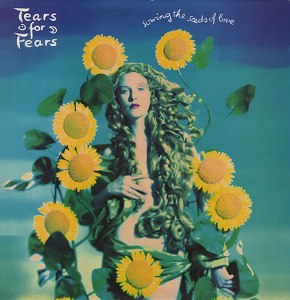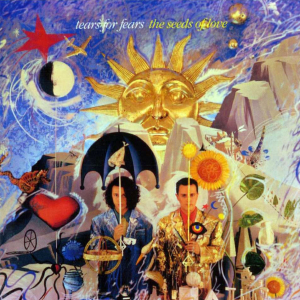
“Sowing the Seeds of Love” (1989) by Tears for Fears

Lord My Chef Sunday Music by Fr. Nicanor F. Lalog II, 12 July 2026
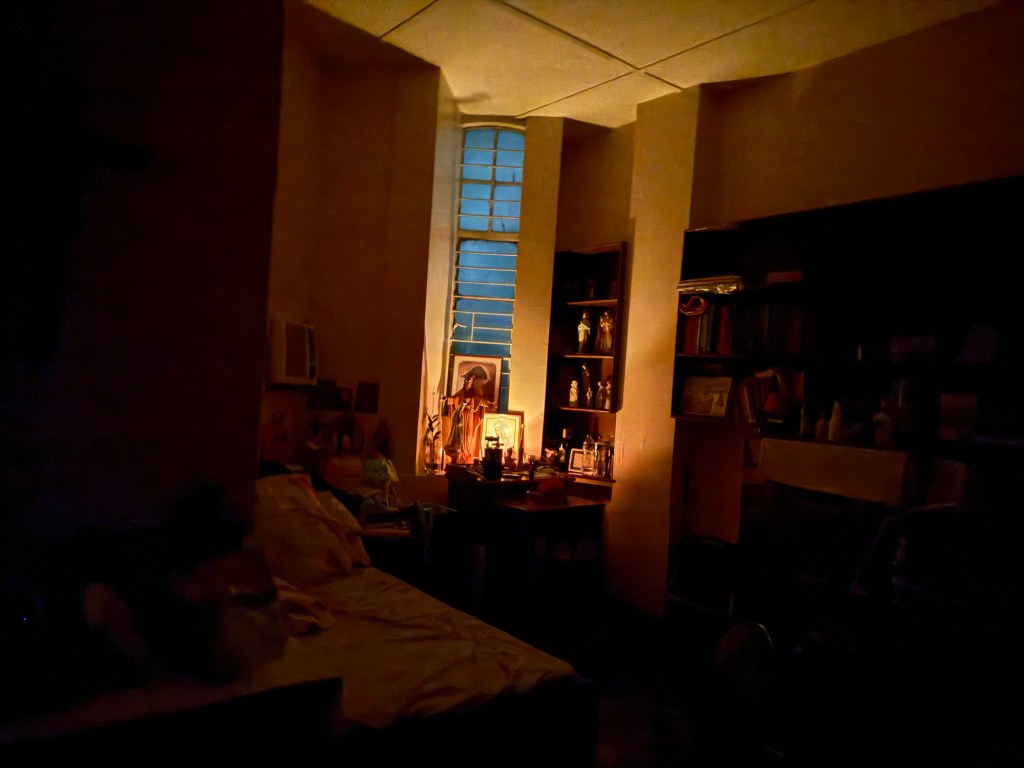
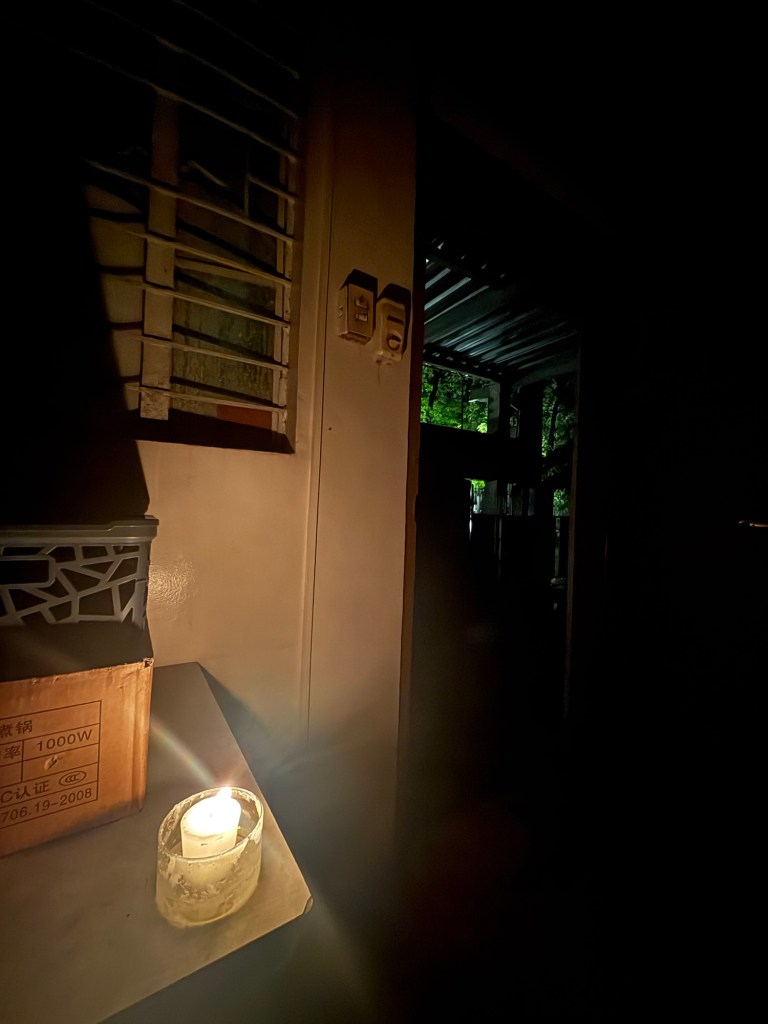
Photo by Dra. Eunice A. Vergara, MD, in Victoria, Laguna 19 October 2021.

It’s a gloomy, cold “bed weather” following the exit yesterday of typhoon Inday that had spawned these rains flooding us in various parts of Metro Manila this Sunday. Gone were the days when rains meant farmers going out to their fields during this rainy season to plant and tend their crops. What we now have are commuters stranded everywhere!

How sad that our farmers are dwindling in number with their fields converted into malls and subdivisions, a very clear sign of how we have really missed the very parable of life of God’s superabundance amid our interconnectedness as persons with the environment that Matthew presents us in this Sunday’s gospel (https://lordmychef.com/2026/07/11/our-interconnectedness-in-gods-abundance-the-parable-of-life/).

And that is why we also remember the British duo Curt Smith and Roland Orzabal more known as Tears for Fears with their 1989 hit Sowing the Seeds of Love from their third studio album “The Seeds of Love” as the perfect match to this Sunday’s gospel.

Orzabal reportedly got the inspiration in writing Sowing the Seeds of Love while listening to a radio program about British folk song collector Cecil Sharp who had heard a gardener named Mr. John England singing a traditional English song called “The Seeds of Love” that eventually sparked an English folk song revival. Orzabal mentioned him – “Mister England” – in the ninth stanza “sowing the seeds of love”.

According to Orzabal, Sowing the Seeds of Love is their “most overtly political song” ever recorded. It came out two years after Margaret Thatcher had won in 1987 her third consecutive term in office as Britain’s Prime Minister, referring to her in the third stanza as the “Politician granny with your high ideals, have you no idea how the majority feels?”

Coincidentally in the same third stanza, Orzabal took a dig with his fellow musician Paul Weller with the line “Kick out the style, bring back the jam” as he felt Weller had abandoned his working class political outlook after leaving The Jam in October 1982 to form the The Style Council.

Actually, Sowing the Seeds of Love is “the gospel according to Tears for Fears”, just like their two other songs from that album “The Seeds of Love” – Woman in Chains and Advice for the Young at Heart we hope to feature someday in relation with our Sunday gospel reflections.

Sowing the Seeds of Love is an invitation like the Lord’s Parable of the Sower for us to open ourselves like the fertile ground to receive the “seed” – the Word – proclaimed daily in every Mass celebrated worldwide.

The “seeds of love” Jesus the Sower sowed in the parable are all good – fecund – and most of all, efficacious. Because it is from God, it surely bears fruit always if nurtured and cultivated well. If ever the seeds do not grow and not yield fruits, the problem is with the receiver, with the person who receives or rejects these seeds of love.

How amazing that Tears for Fears follow this line of thought even without mentioning (understandably) the name God in their song, inviting us to “open ourselves” to the seeds of love so that these may germinate and grow, eventually yield a harvest of peace, love and harmony among peoples in the world today.

But opening ourselves to the seeds of love does not merely mean receiving these idly; opening to the seeds of love calls for a lot of self-discipline and hard-work like forgetting one’s self by “Swallowing your pride” and ending “need and politics of greed with love” – exactly like what Jesus taught us these past weeks about discipleship, of forgetting one’s self to carry one’s own cross. Hence, we find too the song Sowing the Seeds of Love not only a gospel but also a parable in itself that mentions a lot of ordinary things we take for granted yet teach us a lot about the meaning of life.

Feel the pain, talk about it
If you're a worried man, then shout about it
Open hearts, feel about it
Open minds, think about it
Everyone, read about it
Everyone, scream about it
Everyone
Everyone, yeah, yeah
Everyone read about it, read about it
Everyone
Read it in the books, in the crannies and the nooks, there are books to read for us

Sowing the seeds of love
We're sowing the seeds
Sowing the seeds
Sowing the seeds of love
We're sowing the seeds
Sowing the seeds of love
Mr. England sowing the seeds of love

Time to eat all your words
Swallow your pride
Open your eyes
Time to eat all your words
Swallow your pride
Open your eyes

High time we made a stand
Time to eat all your words
And shook up the views of the common man
Swallow your pride
And the love train rides from coast to coast
Open your eyes
Every minute of every hour
I love a sunflower
Open your eyes
And I believe in love power
Open your eyes
Love power
Love power
Open your eyes

Sowing the seeds of love, seeds of love
Sowing the seeds
Sowing the seeds of love, the seeds of love
Sowing the seeds
Sowing the seeds
Sowing the seeds of love, seeds of love
Sowing the seeds of love, sowing the seeds
Sowing the seeds

An end to need
And the politics of greed
With love

Let’s get real this week, start working, sowing the seeds of love to experience Christ’s peace and loving presence among us. Amen. A blessed lovely week ahead of everyone!

From Youtube.com

“He Ain’t Heavy, He’s My Brother” (1969) by The Hollies

Lord My Chef Sunday Music by Fr. Nicanor F. Lalog II, 05 July 2026
Fourteenth Sunday in Ordinary Time, Cycle A
Photo by Ms. Marivic Tribiana on Facebook, 17 April 2020 following fire in Tondo,Manila.

Our gospel this Sunday is short but one of the most loved words by our Lord Jesus Christ often quoted even in some popular songs and music: “Come to me, all you who labor and are burdened, and I will give you rest. Take my yoke upon you and learn from me, for I am meek and humble of heart; and you will find rest for your selves. For my yoke is easy, and my burden is light” (Matthew 11:28-30).

Everyday Jesus calls us to come to him, to learn from him, to experience lightness in life not heaviness of compulsion and duty as most people would think of his demands. However, it is not a kind of R&R we all aspire every weekend at the beach or a mountain resort. Christ calls us today to come to him and learn from him on how to have a steady, realistic, day-to-day approach to life lived in his company, lived in love for one another as brother and sister (https://lordmychef.com/2026/07/04/learning-from-jesus-2/).

And that is why we remembered and chose this beautiful song from 1969 by The Hollies, “He Ain’t Heavy, He’s My Brother.”

...The road is long
With many a winding turn
That leads us to who knows where, who knows where
But I'm strong
Strong enough to carry him
He ain't heavy, he's my brother

… So on we go
His welfare is of my concern
No burden is he to bear
We'll get there

… For I know
He would not encumber me
He ain't heavy, he's my brother

Most captivating with this song is its opening music of a harmonica that stirs ones soul superbly balanced with a bass guitar that perfectly filled the rhythm and melody until Allan Clarke burst with the opening lines that give you a picture right away of the song meaning – love for one another as brothers and sisters.

Composed by Bobby Scott and Bob Russell who was then dying of lymphoma cancer, the song was recorder earlier by another American artist; The Hollies’ guitarist Tony Hicks heard it while searching for songs to record for their group. Hicks found the demo tape of Scott and Russell too slow, asked permission to make it a little upbeat by adding an orchestra with the young Elton John playing the piano. It became an instant hit both in Britain and the US, spawning other versions until now.

More than its beautiful music and lyrics, the ballad is so appealing because of its message of love. It is interesting to know that the phrase “he ain’t heavy, he is my brother” is the motto of the Boys Town children’s home founded in 1917 by Fr. Edward Flanagan in Omaha, Nebraska. The following year, Fr. Flanagan saw a boy carrying up a set of stairs another resident stricken with polio, wearing braces; Fr. Flanagan asked the boy if it was heavy and was told, “he ain’t heavy, Father; he is my brother.” The phrase got stuck and became the motto of Boys Town that inspired this beautiful song. (Pope Leo XIV recently declared Fr. Flanagan “Venerable” as his cause for beatification moves closer to realization.)

In today’s gospel, this is precisely the yoke Jesus is telling us that is his, light and easy: love. Everything becomes light when seen and done in love, with love. Without love, everything becomes heavy due to sadness; hence, the need for more love as the last three stanzas tell us with the long road ahead filled with more pains and sufferings.

… If I'm laden at all
I'm laden with sadness
That everyone's heart
Isn't filled with the gladness
Of love for one another
… It's a long, long road
From which there is no return
While we're on the way to there
Why not share?

… And the load
Doesn't weigh me down at all
He ain't heavy, he's my brother

… He's my brother
He ain't heavy, he's my brother

Amen. May you have a lighter week in Christ this week with this music.

From YouTube.com.

“Huwag Kang Matakot” by Eraserheads (1999)

Lord My Chef Sunday Music by Fr. Nicanor F. Lalog II, 21 June 2026
Photo by author, St. Michael Retreat House, Antipolo City, 16 June 2026.

A blessed happy Father’s Day to all the dads this third Sunday of June, the 12th in Ordinary Time of the Church calendar when we heard Jesus telling us in the gospel today to “fear no one” for he is our strength in this journey in life (https://lordmychef.com/2026/06/20/brave-and-gracious-like-alex-eala/).

At the end of our Masses this Sunday before blessing the fathers present, we reminded them of this call by Jesus to fear no one especially their wife – huwag matakot – to tell them they are not doing the laundry today because it is a Father’s Day. Assure them you will do it tomorrow…

But kidding aside, it is only now that I am 61 years old, a senior citizen, that I have truly realized and felt how difficult it must be in being a dad or an “unwed” Father like me, a priest.

My father died on my mom’s 61st birthday, 17 June 2000; it was the eve of Father’s Day making it so painful especially for mommy died in 2024.

Every morning whenever I face the mirror preparing for a Mass or a class and I see my wrinkles and white hair so similar with my dad’s, I do not just remember him: very often I reflect and imagine those many sacrifices he had for us, for me in all those years until he died suddenly of a heart attack on mom’s birthday in year 2000. I try hard imagining the many moments he had spent praying, thinking about his next moves to keep us safe and secured and comfortable.

It is only now that he is gone that I have felt his great love for us all, silently carrying all that tremendous weight of fatherhood on his shoulders, without ever complaining to us about life’s difficulties nor spoke of his problems and difficulties he was going through all those years.

Every dad is like Jesus Christ not just telling but assuring his family to have no fear, to be not afraid because he had everything covered.

Like Ely Buendia of Eraserheads when he wrote “Huwag Kang Matakot” in 1999 at the birth of his son Eon.

Huwag kang matakot
'Di mo ba alam, nandito lang ako
Sa iyong tabi?
'Di kita pababayaan kailanman

At kung ikaw ay mahulog sa bangin
Ay sasaluhin kita

Huwag kang matakot na matulog mag-isa
Kasama mo naman ako
Huwag kang matakot na umibig at lumuha
Kasama mo naman ako

Huwag kang matakot (huwag kang matakot), ah-ah-ah-ah
Huwag kang matakot
Dahil ang buhay mo'y walang katapusan
Makapangyarihan ang pag-ibig
Na hawak mo sa 'yong kamay

Buendia narrates the typical joyful tasks of every father to his child in always being present especially in difficult situations starting with sleeping alone as a child, falling and later getting hurt in the game of love. And life.

Very amusing too are the lines of how a father would always be present, loving and supporting his child even if it is foolish:

Huwag kang matakot na magmukhang tanga
Kasama mo naman ako
Huwag kang matakot sa hindi mo pa makita
Kasama mo naman ako
Huwag kang matakot (huwag kang matakot), ah-ah-ah-ah

Fatherhood is about facing all fears because of love. And that is why Jesus taught us to call God “Father” because like every dad, God gives us life, protects this gift of life and if ever we lost it to sin and mistakes, he restores this life so we live anew. Blessed happy Father’s Day again!

From YouTube.com. This is the best link we can find with clear sound.

“Somebody”, “People Are People” (1984) by Depeche Mode

Lord My Chef Sunday Music by Fr. Nicanor F. Lalog II, 14 June 2026
Photo by author, Atok, Benguet, 27 December 2024.

We just felt ourself in the ’80s with two of Depeche Mode’s 1984 hits, “Somebody” and “People Are People” while preparing our homily last week based on this Sunday’s gospel where Jesus was “was moved with pity” upon seeing the crowd “troubled and abandoned like a sheep without a shepherd”, telling his disciples that “The harvest is abundant but the laborers are few; so ask the master of the harvest to send our laborers for his harvest” (Matthew 9:36-38).

My dear friends, we are both the “abundant harvest” and the “laborers” referred by Christ: what we need in this world are people who care and understand others, people who are kind and understanding, most of all loving like him our Good Shepherd. See how Jesus asked us to pray for more laborers, not for more money or food or medicines. Not even gadgets and material things. What we need are persons willing to journey with us in this life, to accompany us especially when days are dark and stormy (https://lordmychef.com/2026/06/13/we-are-the-lords-harvest-and-laborers-too/).

First we remembered was Depeche Mode’s “Somebody” with its unique intro where you hear something that sounds like a heartbeat amid some noise of people or crowd until the vocals come in with that pulsating sound going on until the end. The mood is very intense and deeply intimate, composed and recorded by Martin Gore said to have gone naked in the studio recording of the song “to achieve a more intimate ambience.”

[Verse 1]
I want somebody to share, share the rest of my life
Share my innermost thoughts, know my intimate details
Someone who'll stand by my side and give me support
And in return, she'll get my support
She will listen to me when I want to speak
About the world we live in and life in general
Though my views may be wrong, they may even be perverted
She'll hear me out and won't easily be converted
To my way of thinking, in fact, she'll often disagree
But at the end of it all, she will understand me

Setting aside its romantic meaning, we find “Somebody” speaking to us the very thoughts of Jesus in praying for “laborers” not things to address the needs of people feeling troubled and abandoned. When people are down and lost in life, feeling troubled and abandoned, where do we focus more, to their woes and problems or their very person?

Try thinking of the people you consider as “heaven sent” who helped you in your darkest moments: they are that “somebody” like you who shared your brokenness and most of all brought out your giftedness as a person. Think of that “somebody” who have seen your being an “abundant harvest”, affirming your uniqueness and sharing in your imperfections.

From YouTube.com

As we tried to feel this lovely ballad, we could also feel inside the intensity of Depeche Mode’s other 1984 hit released from the same album with “Somebody” called “People Are People”.

Also written by Gore, “People Are People” is Depeche Mode’s greatest hit showcasing their genre as electronic synth-pop band.

Typical of most British bands of the 1980’s, Depeche Mode shared in this song their call for equality among peoples, directly opposing racism and discrimination, war and violence. Its music video features scenes from a battleship firing its cannons indicating their opposition to war and violence.

People are people, so why should it be?
You and I should get along so awfully
People are people, so why should it be?
You and I should get along so awfully

So, we're different colors and we're different creeds
And different people have different needs
It's obvious you hate me, though, I've done nothing wrong
I've never even met you, so what could I have done?

I can't understand
What makes a man
Hate another man
Help me understand

Both songs by Depeche Mode, “Somebody” and “People Are People” remind us of the value of every person as God’s abundant harvest, each one of us a gift to be cherished and valued always. Likewise, both songs imply our being brothers and sisters entrusted to each one for God’s greater glory, not ours. Amen. Happy listening.

From Youtube.com

Living Inside Your Love (1976) by Earl Klugh

Lord My Chef Sunday Music by Fr. Nicanor F. Lalog II, 25 May 2025
Photo by author, Angels’ Hills Retreat and Spirituality Center, Tagaytay City, 18 April 2025.

We shift this Sunday into jazz with Earl Klugh’s sophisticated Living Inside Your Love to slow cool down our simmering summer and to feel more the meaning of the Mass readings today as we enter the penultimate week of Easter.

We were already in our early teens when we discovered Earl Klugh along with other jazz greats with the opening of the country’s first and only jazz radio station 101.9 WK-FM in the late 70’s. Maybe it was part of growing up when we experimented on a lot of things for more adventures that I found myself venturing into jazz from rock and pop music, switching from RJ to RT and then WK.

For me, Earl Klugh was the jazz version of rock’s Eric Clapton or Carlos Santana. Klugh has that certain touch or pluck in his guitar that can make you be in love, not necessarily be in love with anyone. It is a nakaka-in love ma-in love na feeling! That is why we remembered his Living Inside Your Love piece from his second studio album released in 1976 by the legendary Blue Note Records and Liberty Records produced by another jazz great, Dave Grusin.

Actually, we just realized today Living Inside sounds like a prelude to the turn of the century’s new age music where Klugh’s masterful playing of the guitar taking the centerstage of a great symphony backed up with cool vocals repeating just a few lines and stanzas of simple verses over and over that is similar with the vision of John in this Sunday’s second reading from the Book of Revelation when he saw and experienced the “new heaven, new earth” in the great luminous light of God who is himself the temple in the city (https://lordmychef.com/2025/05/24/easter-is-god-dwelling-in-us/). See how Klugh inserted the vocals into his great guitar music enhanced by a symphony like John’s vision of heaven:

Can't get over the feeling
Living inside your love
I never want to lose the feeling
Living inside your love

Baby, you made my life so free
Living inside your love
You're just where I want to be
Living inside your love

Baby, you made my life so free
Living inside your love
You're just where I want to be
Living inside your love

Very interesting with his wonderful guitar music, Klugh’s lyrics – though sparse and repetitive – were loaded in meaning. Consider the line “living inside your love” which is exactly what Jesus said at the Last Supper, “Whoever loves me will keep my word, and my Father will love him, and we will come to him and make our dwelling with him” (John 14:23).

“Living inside one’s love” is what we call as “Divine indwelling”, that is, our home is in God – and with any one we love!

Moreover, consider also Klugh’s first line in his next stanza, “Baby, you made my life so free/ Living inside your love/ You’re where I want to be/ Living inside your love.”

When we love, we enter a relationship that becomes our dwelling, our home where we become free – free to love more, free to be faithful. When we truly love like Christ, the more we find ourselves more free to love, more free in everything because being free is choosing always what is good. We believe that more than a stroke of genius, it was also a kind of divine inspiration about true love that made Klugh at put at the end of this 1976 classic the longer stanza that actually repeated inn order to stress the truth of his first two stanzas.

Can't get over the feeling
Living inside your love
I never want to lose the feeling
Living inside your love
Can't get over the feeling
Living inside your love
I never want to lose the feeling
Living inside your love
I can't get over the feeling
Living inside your love
I never want to lose the feeling
Living inside your love
I can't get over the feeling
Living inside your love

Here is Earl Klugh’s lovely Living Inside Your Love. Have a lovely Sunday and week ahead.

From YouTube.com

If You Don’t Know Me By Now (1989) cover by Simply Red

Lord My Chef Sunday Music, Fr. Nicanor F. Lalog II, 11 May 2025
Photo by author, Hidden Valley Spring Resort, Calauan, Laguna, February 2025.

It is the Good Shepherd Sunday and also the eve of local elections in our country. Clearly God is speaking to us today of the need to vote wisely by choosing candidates who can be like good shepherds who will lead our nation to greener pastures.

What a tragedy that despite our being a predominantly Christian nation not only in Asia but in the whole world, we have continued to lag in growth and development because we have consistently put into office corrupt and inept officials.

That is why this Sunday we have chosen Simply Red’s 1989 cover of Harold Melvin & the Blue Notes’ original hit in 1972, If You Don’t Know Me by Now. It is a love song of a man’s lament of how his beloved has failed to “know” him so well that they quarrel so often.

Sing the song everybody, c'mon
If you don't know me by now (Moldova!)
You will never never never know me, ooh

Now all the things that we've been through
You should understand me like I understand you
Now girl I know the difference between right and wrong
I ain't gonna do nothing to upset our happy home

Oh, don't get so excited
When I come home a little late at night
You know, we only act like children
When we argue, fuss and fight

Are we not like that in the Philippines? We cannot move forward as we keep on quarreling because we put the wrong people in government. We never think of the greater majority and of the future generations. Worst, we refuse to accept what we know! We know the candidate as corrupt and shallow yet many still vote for them. We know that the candidates are just popular as actors and actresses without any background at all in governance yet many still elect them into office doing nothing except to entertain.

In a deeper sense, it is in knowing that we are able to love most like Jesus Christ in today’s gospel when he declared “My sheep hear my voice. I know them, and they follow me. I give them eternal life, and they shall never perish” (Jn.10:27-28). For the Jews, knowing another person is more of the heart than of the mind; knowing another person is having a relationship not just being aware of one’s name and address.

Knowing and loving work hand in hand: only Jesus can love us immensely despite his knowing of our flaws and weaknesses and sins. Though it is difficult for us humans to imitate, the most we can do is first of all within ourselves to have that self-knowledge that leads us to accept who we really are to become a better person. Anyone who truly loves God and the country will always choose the best candidate for any office after an effort of knowing everything about them. To hear and follow the Good Shepherd means we choose the best, we reject the worst who are often the most sinful.

Candidates who truly love the country, on the other hand, will never pursue an office if they know in themselves they are not capable of the job ahead. It is something they must learn to accept despite their popularity or desire to be in any position.

Like what the song says, nobody’s perfect but if we work hard to know the other person including ourselves, things can get better for more understanding and acceptance. And love.

We all got our own funny moods
I've got mine, I'll bet you woman, you got yours too
You better trust in me, like I trust in you
As long as we'll be together, it should be so easy to do

Just get yourself together
Or we might as well say goodbye
What good is a love affair
When you can't see eye to eye? Oh
If you don't know me by now (if you don't know me, baby)
You will never, never, never know me (no you won't) ooh
No you won't, no you won't, no you won't
If you don't know me by now (twenty long years, we've been together)
You will never, never, never know me ooh (oh)
If you don't know me by now
You will never, never, never know me (no you won't) ooh

We love the original but we find Simply Red Mick Hucknall’s version so moving, especially the live one from Sydney Opera House in 2010. Enjoy.

From Youtube.com

*Please, know your candidates tomorrow and vote wisely. Together let us build a better tomorrow for all of us despite our flaws and weaknesses.

“Pick Up the Pieces” by Average White Band (1974)

Lord My Chef Sunday Music by Fr. Nicanor F. Lalog II, 20 April 2025
Photo by author, Atok, Benguet 27 December 2024.

Blessed happy Easter everyone!

We have long been planning to have this instrumental piece in our featured music every Sunday but it was only now we have realized this is most perfect during Easter when Jesus Christ in his Resurrection is telling us to “pick up the pieces” of life amid its many darkness and emptiness.

That is the grace and surprise of Easter: in Christ’s dying and rising to life, death has become a blessing to us all as we have come to share in his glorious resurrection too.

Despite that feeling of emptiness within and in our homes, of the irrevocable reality they are gone forever never to join us in our meals and bonding like Christmas, of never hearing their voices again nor be able to hug and embrace them can be shattering, the angel’s reminder to Mary Magdalene and companion women at the empty tomb echoes in our hearts too: “Why do you seek the living one among the dead? He is not here, but he has been raised. Remember what he said to you while he was still in Galilee, that the Son of Man must be handed over to sinners and be crucified, and rise on the third day.” And they remembered his words (Luke 24:5-8). https://lordmychef.com/2025/04/20/easter-is-god-surprising-us/

Released in 1974 in the UK by a group of Scotsmen musicians who called themselves as Average White Band or AWB, “Pick Up the Pieces” did not perform well in the charts until it was released later in October that same year in the US where it stayed on the top singles in February 1975. According to the late Molly Duncan who was the band’s saxophonist, he had disagreed in releasing the song that had no lyrics only other than the shout “pick up the pieces.”

Moreover, the title spoke so well of their situation at that time when they were hardly noticed in the music scene, not making any money at all until it was released in the US where radio stations took notice of its funky beat’s good vibes. The single eventually became AWB’s turning point that is why the more we find it so appropriately Easter in nature.

We have been aware of the music itself in the 1970’s but it was only in 2010 when we found out its artists –AWB – after Daryl Hall guested AWB bassist-guitarist and co-founder Alan Gorrie in his internet show Live From Daryl’s House. It was a superb performance as usual by Daryl Hall and his musicians but of course, we always prefer the original. Here is AWB with their classic “Pick Up the Pieces” which we believe Jesus would also approve as part of his Easter soundtrack. Amen.

From YouTube.com.

“My Ever ChangingMoods” (1984) by the Style Council

Lord My Chef Sunday Music by Fr. Nicanor F. Lalog II, 13 April 2025
Photo by author, Sacred Heart Novitiate, Novaliches, QC, 17 March 2025.

Today we begin the Holy Week with the celebration of Palm Sunday in the Lord’s Passion.

See how since the entry of Jesus to Jerusalem more than 2000 years ago, nothing much have really changed among us – we are still the same fickle-minded people who would sing “Hosanna in the highest” and later shout “crucify him! crucify him!”.

Everybody wants to become better, each one wishing for so many things without really realizing the good things we are hoping for are all right in front us if we could just open our eyes or listen more or perhaps have a change of heart to realize everyday is a Palm Sunday too for us when God comes right into us to fulfill us.

However, many times whether in our wishful thinking or future-looking and planning, it is highly probable that what we long for is already present to us.

As we begin the Holy Week with the celebration of Palm Sunday in the Lord’s Passion, we are reminded by the liturgy with its long readings how so often in life, we just need to see with different eyes, hear with different ears, expect with different hearts to find fulfillment, peace and joy.

The sad truth is that many times, we really do not know what we want and most of all, we also do not know what we are doing because we are so far from Jesus Christ. https://lordmychef.com/2025/04/12/when-we-do-not-know-what-we-are-doing/

The night before I wrote my homily yesterday, I was posting some reels in my Instagram account when one of the music I used was the Style Council’s 1984 hit “My Ever Changing Moods”. Composed by the group founder Paul Weller who shot to fame in the 1970’s as lead singer and guitarist of the British rock band The Jam, “My Ever Changing Moods” is the Style Council’s fifth single.

Aside from Weller’s superb vocals, “My Ever Changing Moods” is so remarkable in what shall we describe as “subtle intensity” – ang tindi ng dating as we say. Despite the message conveyed by its title, the song is heavy in meanings that can stir one’s soul with its light and easy poetry yet so penetrating. That is why we right away felt its direct link with Palm Sunday.

Daylight turns to moonlight and I'm at my best
Praising the way it all works, and gazing upon the rest, yeah
The cool before the warm, the calm after the storm

I wish to stay forever, letting this be my food
Oh, but I'm caught up in a whirlwind
And my ever changing moods, yeah

Many times in life, we forget that reality of how everything is like the weather that shifts and changes in a rhythmic pattern, “Daylight turns to moonlight…the cool before the warm, the calm after the storm.” The key is openness to these changes happening in us and around us.

Though Weller and critics claim of the song’s political undertones, we see something deeper, something spiritual that we find it so appropriate in this time as we enter the holiest days of the year. Notice these final four stanzas how they convey love and order, something so similar to Jesus Christ’s first words when crucified more than 2000 years ago, “Father, forgive them for they know not what they do” (Lk.23:24).

Teardrops turn to children who've never had the time
To commit the sins they pay for through another's evil mind
The love after the hate, the love we leave too late

I wish we'd wake up one day, an' everyone feel moved
Oh, but we're caught up in the dailies
And an ever changing mood, yeah

Evil turns to statues and masses form a line
But I know which way I'd run to, if the choice was mine
The past is knowledge, the present our mistake
And the future we always leave too late

I wish we'd come to our senses and see there is no truth
In those who promote the confusion
For this ever changing mood, yeah
Photo by author, Sacred Heart Novitiate, Novaliches, QC, 17 March 2025.

What do we really know at all that we continue to crucify Jesus today, nailing him on the cross with our many sins as we pretend and assume to know so many things in life?

To know in the Jewish mind is to have a relationship, an activity more of the heart than of the mind. To know is to love, to care. Therefore, when Jesus prayed to the Father to forgive them for they know not what they do is to forgive them because they refuse to love which is what sin is all about. And that is what we still do not know until now – to love, to care for one another that we keep on crucifying Jesus Christ.

Until now, we pretend to know a lot that some nations resort to wars while some blind followers insist on what they know as right while evading the truth with their fake news being spread to cover crimes and atrocities. Until now we pretend to know what we are doing that everyday everywhere is a road rage happening often costing lives senselessly because many insist on their rights. And the confusions and quarrels and deaths continue because we do not know what we are doing. Like Paul Weller, we pray to Jesus that we’d come to our senses and see there is no truth// In those who promote the confusion// For this ever changing mood, yeah.

For this piece, we chose the slow version on piano of Style Council’s “My Ever Changing Moods” to be more attuned with Palm Sunday; you may check their original music video which is equally excellent.

From YouTube.com

“I Don’t Know How to Love Him” (1971) by Yvonne Elliman

Lord My Chef Sunday Music by Fr. Nicanor F. Lalog II, 06 April 2025

This is the second time we have featured Ms. Yvonne Elliman’s I Don’t Know How to Love Him in our Sunday Music at this time of the year when the Sunday gospel is about the woman caught committing adultery.

Every time that story comes up, my mind automatically links it with this song sang by Ms. Elliman in both the Broadway and movie versions of the rock-opera Jesus Christ, Superstar where she played the role as Mary Magdalene who was believed for a long time as the woman caught committing adultery. Modern biblical scholarships have long debunked that belief but that song by Andrew Lloyd Weber and Tim Rice plus Elliman’s amazing interpretation has given us with so many perspectives about the gospel itself.

One thing we realized this year is how we – like the woman caught committing adultery meet Jesus Christ face-to-face to experience his immense love and mercy and forgiveness.

We encounter Jesus when we disarm ourselves of our false securities and pretenses, masks and camouflages that all cover our sins. It is when we come face-to-face with our sinful self when we eventually meet Jesus face-to-face too because that is when we surrender in silence like the woman caught in adultery and the mob to some degree because all the charges against us are true.

See also that it is only the fourth gospel that Jesus is portrayed “bending” low – first here before the woman caught committing adultery and secondly at the washing of the feet of his Apostles at their Last Supper. How lovely is that sight to behold, dear friends! Imagine God bending before us, giving us like the sinful woman and the mob that space for us to confront our true self, to realize and accept the whole realities we are all interconnected in love.

Only the woman remained – like the eleven Apostles at the Last Supper – because she was the only one willing to change, probably sorrowful and contrite for her sins. Contrary to our fears, Jesus has only love and mercy, kindness and forgiveness to anyone contrite and sorrowful of one’s sin that so unlike with the people’s wrath and anger, judgment and condemnation. St. Augustine perfectly described that moment in today’s gospel, Relicti sunt duo; misera et miserecordia (Two were left; misery and mercy). https://lordmychef.com/2025/04/05/lent-is-encountering-jesus/

Now, look at the first two stanzas of I Don’t Know How to Love Him:

I don't know how to love him
What to do, how to move him
I've been changed, yes really changed
In these past few days
When I've seen myself
I seem like someone else

I don't know how to take this
I don't see why he moves me
He's a man
He's just a man
And I've had so many
Men before
In very many ways
He's just one more

See the conversion and transformation of the woman caught in adultery expressed by Ms. Elliman in the song: I’ve been changed, yes really changed/ In these past few days/ When I’ve seen myself/ I seem like someone else. It is one of the great ironies in life: when we are most vulnerable and weakest, that is when we are also most truest to our self, that is when we truly grow and mature in life!

And this was all possible because of the gift of love and mercy of Jesus Christ, of encountering the Lord and Savior Himself in our own brokenness which the song and the singer captured so perfectly, He’s just a man/ And I’ve had so many men before/ In very many ways/ He’s just one more.

How amazing that the lyrics and the rendition blended perfectly, making us realize how Jesus is just like any other man but not just another additional man; Jesus is MORE than any one because He is the only who truly loves us most, offering us forgiveness once we strip ourselves naked before Him of all our sins and pride and pretensions. God’s love in Jesus Christ is beyond imagining. This we have seen in the parable of the prodigal son and now in the story of the woman caught committing adultery. Do not let your past sins prevent you from meeting Jesus face-to-face to finally experience that inner peace and joy you have been missing and searching for so long.

We are now in the final Sunday in Lent, next week is Palm Sunday, the start of the Holy Week. We can never experience the joy of Easter unless we join Christ’s Passion of emptying ourselves of sins and pride to be filled with His humility, justice and love.

Here is the lovely Ms. Elliman with her superb singing of I Don’t Know How to Love Him, hoping this helps you prepare in this final week of Lent.

From YouTube.com.

“The Closer I Get to You” by Roberta Flack (1977)

The Lord Is My Chef Sunday Music by Fr. Nicanor F. Lalog II, 21 July 2024
Photo by Dra. Mylene A. Santos, MD, Infanta, Quezon, 2020.

We’re back on this lazy but blessed Sunday when our gospel is about rest, “Jesus said to his apostles, ‘Come away by yourselves to a deserted place and rest a while'” (Mk. 6:31).

Rest is first of all going back to God in Jesus Christ who sends us to work, on a mission; rest is being filled with God or “breathed on” by God as we say in Filipino mag-pa-hinga (https://lordmychef.com/2024/07/20/rest-is-to-be-close-with-jesus-close-with-others/).

And we thank God for the gift of music that is the easiest, most affordable and most rewarding manner of rest for us next to prayer and the Mass. Most of all, see that every song, every musical piece is always about love who is God Himself!

For this Sunday, we go back to 1977 with Roberta Flack’s romantic ballad The Closer I Get to You that is more than a song of love but a story of love in itself.

According to Ms. Flack, it was her manager David Franklin’s idea that she record a duet of that song with her college friend Donny Hathaway who was then suffering with clinical depression. Both have worked together earlier in several duets. As a way of helping her friend get over his depression, the song was re-written while Ms. Flack had to make a lot of sacrifices in recording and shuttling between New York City and Chicago where Hathaway was confined to a hospital and had refused to travel.

Hathaway never recovered from his depression and eventually died a few years after the release of their duet in 1978 that became an instant hit, earning praises and had them nominated for Grammy the following year.

Ms. Flack said in an interview that their duet would always be her dedication to Hathaway as she donated all the money earned from that song to Hathaway’s widow and two children.

As we have mentioned in our homily today, rest is getting closer with God and the closer we get to Him, the closer we get with others. That is why Jesus was moved with pity to the vast crowds who have followed them to a deserted place to rest: His oneness with the Father moved Him closer to people especially the poor and the suffering. And that is why we find The Closer I Get to You perfect with our gospel this Sunday: the more we get closer with Jesus, the more we get closer with our family and friends and those in need.

The closer I get to you
The more you make me see
By giving me all you've got
Your love has captured me

I love that first stanza of The Closer I Get to You; it says the very essence of the song which is a gospel in itself. It reminds us of St. John’s first letter when he wrote, “No one has ever seen God. Yet, if we love one another, God remains in us, and his love is brought to perfection in us” (1Jn.4:12).

The more we get closer with anyone, the more we love, because the more our eyes are opened to see others to love. And God becomes more present among us!

It’s a Sunday, go celebrate the Mass and enjoy some beautiful music to remind us of God’s presence among us. Here now is The Close I Get To You…

From YouTube.com