The Lord Is My Chef Sunday Music, 16 February 2020
From Google.
I have always been a big fan of Rod Stewart since my elementary days when his 1977 hit “You’re In My Heart” was released. Since then I have followed his career, saving on my baon to buy some of his records and cassette tapes that some of my relatives doubted if I would ever become a priest with my kind of music!
But, when I entered the high school seminary in 1979 and heard our rector and spiritual director playing Rod Stewart’s music, that’s when I realized I could still become a priest with my kind of music.
And so, I finally became a priest in 1998 after leaving the seminary in 1982 – not because of rock music – that 21 years after, here still rockin’, now blogging to relate secular music with our Sunday gospel.
Pilgrims entering the Church of the Beatitudes with a painting of the Jesus giving his Sermon on the Mount. Photo by author, May 2019, the Holy Land.
This Sunday, Jesus continues his Sermon on the Mount, inviting us to look deeper into our hearts to see how much love and respect we have there for God and for others.
He cites four grave sins – murder, adultery, divorce, and lies – that all begin in our hearts.
Like what Jesus would later tell us, it is not what enters us that defile us but what comes from our hearts.
All troubles and sins outside like the wars and famines, the corruption and injustices that happen begin right inside our hearts.
And that is why we have chosen Rod Stewart’s classic “You’re In My Heart” that speaks of the great love – perhaps a crush or first love to a high school classmate.
Rod Stewart wrote this song and the lyrics are not only poetic but also playfully true that we can all identify with it, especially us men who have gone through the same feelings and experiences when we think of girls and sports at the same time while always lagging in our academics (LOL).
It is something like what our teachers used to tell us in elementary and high school: “boys will always be boys but girls turn into ladies and then into women”.
Have a heart, bask in the feeling of loving, and mature in our love in Christ!
You’re in my heart, you’re in my soul You’ll be my breath should I grow old You are my lover, you’re my best friend You’re in my soul
My love for you is immeasurable My respect for you immense You’re ageless, timeless, lace and fineness You’re beauty and elegance
You’re a rhapsody, a comedy You’re a symphony and a play You’re every love song ever written But honey, what do you see in me?
You’re in my heart, you’re in my soul You’ll be my breath should I grow old You are my lover, you’re my best friend You’re in my soul
You’re an essay in glamor Please pardon the grammar But you’re every schoolboy’s dream You’re Celtic, United, but baby I’ve decided You’re the best team I’ve ever seen
The Lord Is My Chef Sunday Music, 02 February 2020
Photo by Mr. Jim Marpa, Bohol, 2019.
Welcome, followers and readers to this Sunday edition of our The Lord Is My Chef Sunday Music as we feature a double-header from singer-composer Todd Rundgren: his first solid hit “I Saw the Light” and “Hello It’s Me” that are both from his 1972 album Something/Anything?
We are featuring two songs today because both are related with our celebration of the Feast of the Presentation of the Lord which falls on February second.
And besides, Todd’s music has always been my favorite while growing up in the 1970’s.
First, we choose I Saw the Light because it is very close to our liturgical feast today also known as Candlemass or Candelaria with Jesus Christ being the Light of the world. St. Luke tells us when Joseph and Mary brought the child Jesus to the temple in Jerusalem 40 days after Christmas, an old man of God named Simeon carried him in his arms and sang:
“Now, Master, you may let your servant go in peace, according to your word, for my eyes have seen your salvation, which you prepared in sight of all the peoples, a light for revelation to the Gentiles, and glory of your people Israel.”
Luke 2:29-32
Jesus is the Light of the world, the only one who can dispel all darkness in our lives.
In I Saw the Light, Todd tells us the story of a young man probably groping in some darkness in his relationship – actually a fling according to the song – with a girl and he does not know if that is really love.
Though we had our fling I just never would suspect a thing ‘Til that little bell began to ring in my head In my head But I tried to run, though I knew it wouldn’t help me none ‘Cause I couldn’t ever love no one, or so I said But my feelings for you were just something I never knew ‘Til I saw the light in your eyes
But I love you best It’s not something that I say in jest ‘Cause you’re different, girl, from all the rest In my eyes And I ran out before but I won’t do it anymore Can’t you see the light in my eyes
Meanwhile, in our second song Hello It’s Me, we find another man so in love with a woman who is also into some darkness.
Like in I Saw the Light, there is no recognition and hence, no meeting here in Hello It’s Me.
Hello, it’s me I’ve thought about us for a long, long time Maybe I think too much but something’s wrong There’s something here that doesn’t last too long Maybe I shouldn’t think of you as mine Seeing you, or seeing anything as much as I do you I take for granted that you’re always there I take for granted that you just don’t care Sometimes I can’t help seeing all the way through It’s important to me That you know you are free ‘Cause I never want to make you change for me
Both songs show us the important lesson taught to us by the Feast of the Presentation of the Lord: like anyone else, Jesus also comes but we on our part have to cultivate a relationship with him in order to always recognize him and eventually meet him to be one with him.
Just like the people we love.
Have a wonderful Sunday of prayer, food and drinks, and good music.
Today we are celebrating an extension of Christmas Season with the Feast of the Sto. Niño that falls every third Sunday of January.
It is a special indult granted by Rome to the Philippines in recognition of the crucial role of the image of the Child Jesus we fondly call Sto. Niño given by Magellan to Queen Juana of Cebu almost 500 years ago when the Spaniards came to our shores to colonize and Christianize us as well.
The Sto. Niño is the second most popular Catholic devotion in our predominantly Christian nation, next to the Black Nazarene of Quiapo which we celebrated two weeks ago.
“Sleeping Sto. Niño” at our altar, 19 January 2020 photo by Jasper Dacutanan.
But a lot often, people forget the deeper meaning within the Sto. Niño that the path leading to becoming true disciples of Jesus, of following him to the Cross starts in becoming like a child, “Amen, I say to you, unless you turn and become like children, you will not enter the kingdom of heaven” (Mt.18:3).
We will never be able to carry our cross and follow Jesus in selfless service and love to others unless we set aside our attitudes of being adults who know everything, insist on everything.
And that is why for this Sunday we have chosen the late Michael Jackson hit from his 1987 “Bad” album, Man in the Mirror.
It is one of the two songs in the album Michael Jackson did not write. It was written by Siedah Garrett and Glen Ballard who eventually both carved names for themselves in the music scene composing for other artists later.
According to stories, Michael and his producer Quincy Jones have asked their pool of composers to come up with a song that would serve as “an anthem” for the Bad album that would “spread some sunshine on the world”.
Michael liked the song right away and even after he had died, the song has become a classic with its timeless message that if you want to change the world, change yourself first.
And we say that looking on the man or woman on the mirror is the first step in becoming like a child as Jesus would want us all to do to enter the kingdom of heaven.
A blessed Sunday to you, dear reader and follower!
Quiet Storm by Fr. Nick F. Lalog II, 15 January 2020
From The Times.
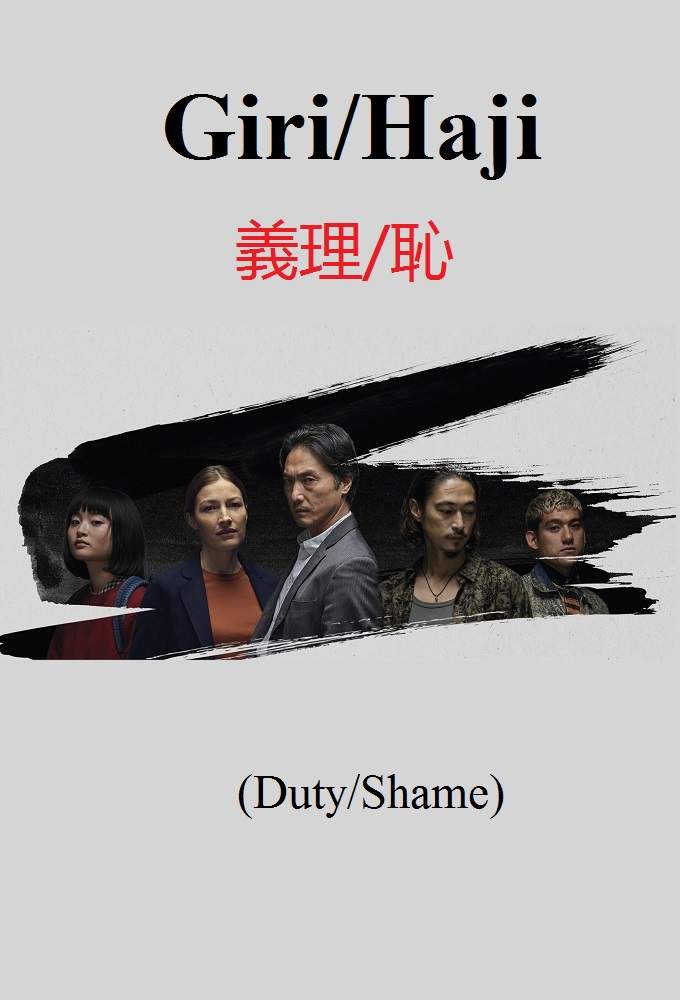
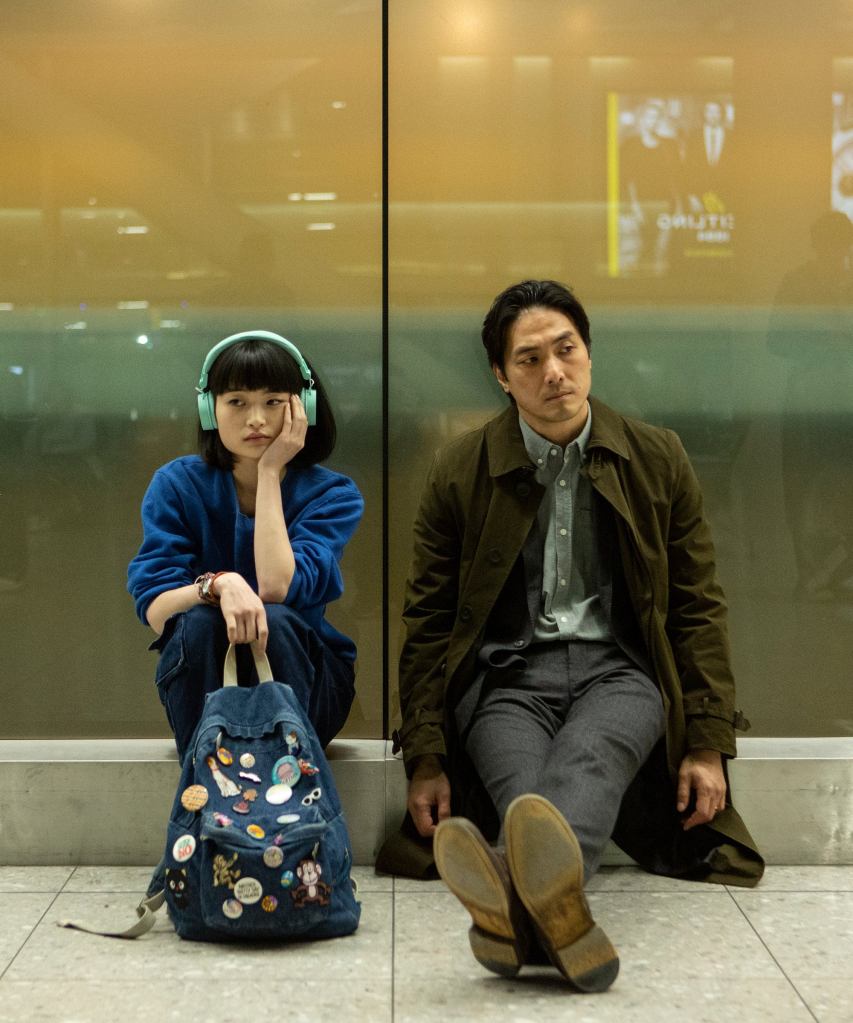
Now streaming at Netflix is this excellent original 2019 BBC production, Giri/Haji (Duty/Shame), a Japanese story of two brothers set almost entirely in London seemingly inspired by French existentialist writer Albert Camus with closing scenes set in Paris.
Midway through the series, one notices right away the complexities or, absurdities of life that one cannot simply categorize it between “duty and shame”, or good and evil, right and wrong, black and white.
It is a series that hits our innermost core when we find ourselves in those gray areas of confronting what we believe as right and just versus the value of every human person that Camus beautifully expressed in his 1947 novel “The Plague”:
“A loveless world is a dead world, and always there comes an hour when one is weary of prisons, of one’s work, and of devotion to duty; and all one craves for is a loved face, the warmth and wonder of a loving heart.”
Albert Camus, The Plague
Like most Netflix series, Giri/Haji is rated 18+ for its violence, language, substance, and nudity but everything is done beautifully and artistically.
It is a masterpiece that shows some common threads among us humans regardless of our color and culture, gender and age, belief and language. How the creators were able to perfectly blend these all with the excellent cinematography, music, and fine prints into uncluttered and pure simplicity of Japanese Zen principles are a work of art and film genius.
Simple plot but very personal and universal
The plot is simple: an elder, straight brother is a cop with a younger brother who is a Yakuza member hiding in London after being presumed dead when he got the daughter of his boss pregnant. He staged his revenge in London where he killed a Japanese executive with the knife of his former boss that had sparked a war among Yakuza families in Tokyo that was going out of control. Cop-brother comes to London to bring his gangster brother back to Japan to atone for his sins so that peace is restored among the Yakuzas.
Along the way, the two brothers’ stories converged with the stories of three other main characters that provided the many uneventful twists to be united by the element of deaths in various forms and circumstances.
From Google.
Giri/Haji honestly confronts our basic issues of love and acceptance so lacking or taken for granted in our own families that lead to a host of so many other problems and situations like drugs and other crimes, infidelity and promiscuity, as well as homosexuality and sexual orientations.
What is so unique with the series is how it was able to take these sensitive issues as subjects to be seen in relation with persons, not as objects to be studied or examined apart from anyone that it becomes more of an experience, not just an entertainment.
Giri/Haji is so personal, you can feel yourself “slashed” so you experience the subjects’ pains and hurts, longings and desires, dreams and aspirations.
Like the samurai blade that can cut through almost anything, the series hits you at almost every turn that you find yourself laughing and weeping without realizing that along with the characters, you have also laid your soul bare for serious self-confrontation and examination about your very self and the people around you in the relationships you keep as well as skipped or taken for granted.
Death and new life
There is no glorification of evil and immoralities but Giri/Haji invites us to see these as realities in our imperfect world that must be seen more with our hearts than with our minds and convictions. The series contrasts the Western frame of mind of morals as codes to be followed to the minutest details that slashes even persons into categories with the Oriental point of view of seeing morality in the totality of the person.
How it is resolved in the end is amazing!
And despite its genre being crime and violence, I would still say Giri/Haji is so lovely, even quaint and as Japanese as it can be especially with the depiction of changing of seasons that peaked at autumn.
Despite the dark and gloomy nature of the topics of death in all of its forms, there is the radiance of hope always that will lead to new life. The series teems with other symbolisms and signs including great music selections that add intensity to its drama and tragedy that make us hope the new season comes soonest.
For the meantime, listen to the beautiful music theme of the Giri/Haji by British singer Tom Odell.
Take my mind And take my pain Like an empty bottle takes the rain And heal, heal, heal, heal
And take my past And take my sense Like an empty sail takes the wind And heal, heal, heal, heal
Quiet Storm by Fr. Nick F. Lalog II, 13 January 2020
Photo by my high school seminary friend, Mr. Chester Ocampo, taken at the UST Senior High where he teaches art (2019).
Life goes on, long after the thrill of living is gone..
John Mellencamp, “Jack & Diane” (1982)
Maybe this is part of getting old, of maturing. Of learning to grapple with life’s mortal realities and still be excited with living. It is a grace that is both fulfilling but also deeply moving and often, chilling.
An uncle and a friend have commented to me in our recent chats how 2020 had come in hard and difficult with so many sickness and deaths in the family.
Some relatives have to fly to Singapore on New Year’s Day to support a cousin whose husband had an office accident that left him in comatose for five days following a brain surgery. He eventually died and had to be cremated a few days later.
December 11 I had to drive to Manila to visit and anoint the father of my best friend from high school seminary who arrived December 2 from the States, fell ill December 4, and had to spen Christmas and New year in the hospital.
Less than 24 hours after being discharged January 3, he died the following morning after talking with my friend based in Chicago, three days short before eldest daughter arrived to accompany him and wife back to New Jersey this week.
Meanwhile last January 2, I had to rush again this time to Quezon City for the wake of our high school seminary classmate Rommel who had died of multiple complications morning of December 31.
He is the third to “rest in peace” in our batch of 18 men who graduated the minor seminary in 1982. We last saw him in our reunion, September 9, 1990 (9-9-90).
Suddenly, I felt myself in some kind of a time warp when everything seemed to be not too long ago, as if we have just graduated recently, or that my dad and their dads have just passed away one after the other these past months.
Death can sometimes be magical when life is lived in love
I realized that when we have so much love for everyone like relatives and friends, including parishioners in the last eight years, time stands still after their deaths. You do not count the days and weeks and months and years you were together and when they have all gone.
They all seem to be still present because you are focused on how those departed have enriched your very life, your very person no matter how fleeting or long ago you were together.
Death can sometimes be magical, most of all grace-filled, when our lives are lived in love.
Life goes on, long after the thrill of living is gone…
John Mellencamp, “Jack & Diane” (1982)
Photo by author, our sacristy 2019.
Memories and knowledge fade, but love remains
Finally I had the chance to visit my mom – for Christmas! – evening of January 6. It was so good that just before leaving, a cousin arrived with his family to visit also my mother who is the younger sister of his mother, my Tita Celia.
It was only at that evening we have finally confirmed that Tita Celia has Alzheimer’s, the reason why her ways and attitudes have been noticeably erratic in 2019 as she was slowly losing grip of her senses.
And now, it is almost all gone according to my cousin whose sadness I strongly felt as he narrated to me the deterioration of his mother, of forgetting and losing so many things, of not recognizing familiar people like relatives and friends.
That same night, we also learned from him how our moms’ younger brother seem to be having signs of the onset of Alzheimer’s disease that are very similar with Tita Celia.
Again, I found myself in a “time warp” while they were happily conversing I was silently trying to recall the last time I have seen my mother’s siblings now afflicted with Alzheimer’s disease, wondering if they will still recognize me if I visit them later.
Moreover, I also realized how afraid I am with the prospects of getting sick in old age than of dying, sooner or later!
In fact, I was so scared that I had a nightmare that same night: in my dream I found myself lost, apparently with Alzheimer’s as I was searching for my parish rectory, looking for my bedroom, asking people about my parish staff, crying like a child.
What a relief when I woke up Tuesday morning that it was just a dream, that I was in fact in my bed, inside my room, in my parish rectory, so alive and still whole!
It seems it is easier to think and accept of one’s death than of getting sick and incapacitated later in old age. It is something we have to slowly come to terms with while still younger and stronger, and perhaps wiser.
How?
As I recalled our conversations with my cousin Louie that Monday night at home, I was amazed at his great love for his mother, Tita Celia. I remembered how he would always have pasalubong for his mother even upon coming home from school!
Maybe that is why even she had forgotten most of us her relatives, she always remembers Louie her son because he is the one who has truly loved her next to the late Tito Memo, her husband. The same is true with others taking care of their old parents afflicted with Alzheimer’s: they are recognized and remembered because they love.
Our memories and knowledge may be erased but the love we have in our hearts, the love we have experienced always remain even if everything has failed in life. That is why St. Paul declared that “love is the greatest of all gifts of God”.
Life goes on, long after the thrill of living is gone…
John Mellencamp, “Jack & Diane” (1982)
With my former students at the Cubao Cathedral after the wedding of their classmate. I felt so proud, and old, that afternoon seeing them all with their career and family, of how they have maintained their friendships all these years like brothers, of they love one another. Photo by Peter dela Cruz, one in blue.
To live is to love
December 2019 and January 2020 are perhaps my most “marrying months” in my 21 years of priesthood.
Aside from the weddings of friends and students I have officiated these past two months, three more are coming next month of February.
Again, as I saw friends and especially former students getting married, I could not believe at how fast time had passed.
Should I really be surprised when I find out my former students already in their early 30’s, some with families of their own and children whom they instruct to kiss my hand, calling me Lolo Fr. Nick?
It was a very “existential” experience that they are already old, and most of all, I am really that old after all!
Maybe that is what my married friends are telling me of the joy of fatherhood, of having your kids getting married, of having grandchildren, of the inner satisfaction that you have brought life to fruition.
That you have truly loved and now being loved.
It is perhaps the joy of getting old, of maturing, of dying or even forgetting everything when afflicted later with Alzheimer’s that you start to fade from the scene and hand over the stage to the next generation, thinking that life will still go on after us because you have loved much.
What really matters in the end is how we have lived and loved the people around us, of how we have enriched each other’s lives so that as the young ones discover life’s meaning in love, we who are older find life’s fulfillment still in the love from the relationships we keep.
Here’s a hill-billy rock music about love to drive your Monday’s blues away.
“Bridge Over Troubled Water” is a song by American music duo Simon & Garfunkel released in January 1970, 50 years ago today as a follow up single to their other hit classic “The Boxer”.
The following year 1971, it won five awards at the 13th Annual Grammy Awards including Record of the Year and Song of the Year.
Ranked number 48 in Rolling Stones’ 500 Greatest Songs of All Time, Bridge Over Troubled Water became Simon & Garfunkel’s biggest hit single, considered as their signature song covered by more than 50 artists making it also as the most performed songs of the 20th century.
No wonder with its beautiful poetry composed by Paul Simon set in a soothing melody with a touch of gospel music that continues to touch so many lives to this day.
And that is why we have chosen it to be our Sunday Music to accompany our reflections on today’s Feast of the Baptism of Jesus Christ that closes the Christmas Season.
From Google.
When Jesus became human being born as a child in Bethlehem more than 2000 years ago, he became our Bridge both par excellence and non pareil.
In coming down to us, he became one of us truly human in everything except sin so that we can become like him who is divine and holy. In his Passion, Death, and Resurrection we have partaken through the Sacrament of Baptism, we have all become sons and daughters of the Father in heaven through him in the Holy Spirit.
Hence, every morning that we wake up, whether we are filled with joy and anticipation or saddled with pains and anxieties for the new day due to past failures, Jesus joins us in all of our dealings and tasks of each brand new day.
When you’re weary, feeling small When tears are in your eyes, I’ll dry them all (all) I’m on your side, oh, when times get rough And friends just can’t be found Like a bridge over troubled water I will lay me down Like a bridge over troubled water I will lay me down
When you’re down and out When you’re on the street When evening falls so hard I will comfort you (ooo) I’ll take your part, oh, when darkness comes And pain is all around Like a bridge over troubled water I will lay me down Like a bridge over troubled water I will lay me down
From Google.
No matter what you are going through today, as you strive to be good, to be loving and caring with others even if they do not reciprocate all your love and concern, when your loved ones are oblivious to your sacrifices for them, keep doing good for the Father is so well pleased with you like Jesus Christ, our Bridge over troubled water.
And welcome to our first Sunday Music this 2020 as we celebrate the Epiphany of the Lord Jesus Christ, the third major celebration of Christmastime after the Nativity of the Lord (December 25) and Mary Mother of God (January 01).
From the Greek word epiphanes meaning manifestation, today’s celebration reminds us of God’s great love for everyone. Jesus came for us all, to give us life and fulfillment.
Jesus is the true and only star “wise men” always seek.
Our Sunday Music featured today is from U2’s “Joshua Tree” album released in 1987 and inspired by gospel music.
However, lead singer Bono admits it is not about faith but rather more about doubts.
I have climbed the highest mountains I have run through the fields Only to be with you Only to be with you
I have run I have crawled I have scaled these city walls These city walls Only to be with you
But I still haven’t found What I’m looking for But I still haven’t found What I’m looking for
We are all looking or searching for something deeper, more profound, larger and bigger than ourselves and whatever we have. It is a given, a grace in everyone.
When we were younger, we search for more ordinary and mundane things like fame and wealth. But as we mature in life, we start looking for deeper and bigger realities of life like meaning, peace and serenity, joy and fulfillment.
Whatever it may be, it is always God, our semper major (always greater), the ultimate in everything.
St. Augustine perfectly expressed it in his Confessiones, “You have made us for yourself, O Lord, and our heart is restless until it rests in you.”
U2’s hit “I Still Haven’t Found What I’m Looking For” was like an anthem for us young college graduates of the mid-80’s, searching for meaning in life. The music video is very interesting as it was set in Las Vegas to remind us that whatever we are truly searching in life can never be found in money and material things.
Though the song speaks of God in the line “kingdom come”, in the end, it is not really us who find God – it is the other way around: it is always God who finds us! After all, this life we live here on earth is planned and designed in heaven.
God always tries to invite us to follow his ways, to find him so he can direct us to our fulfillment, for us to find whatever we are looking for.
Here are three lessons we can learn from the magi who eventually found what they were looking for, “the newborn king of the Jews”, Jesus Christ:
First is to welcome darkness and troubles in life. Discontentment and problems are always a prelude to spiritual growth. When the magi arrived in Jerusalem searching for the child Jesus, King Herod and the whole city were deeply troubled; but, it led to their knowing where Jesus was born! Like in the story of creation found in Genesis, out of chaos comes order. We learn and find more lessons in life in adversarial situations than in our comfort zones.
Second is to always pray the Sacred Scriptures. Herod consulted the chief priests and scribes of Jerusalem to ask them what the prophets have told about where the Messiah would be born. Ironically, they found the answer in Prophet Malachi’s book which is Bethlehem yet, they never followed it! Prayer opens us to be humble to learn the lessons of the darkness and troubles happening in us.
Third lesson from the magi is: what are you willing to give up and offer to find whatever you are looking for? There are no shortcuts in life and definitely, no one is born entitled in this world. We have to earn and work for everything because essentially, that is the path that Jesus is telling us in life: whoever loses his life shall gain it and whoever keeps his life will lose it.
The Lord Is My Chef Sunday Music, 08 December 2019
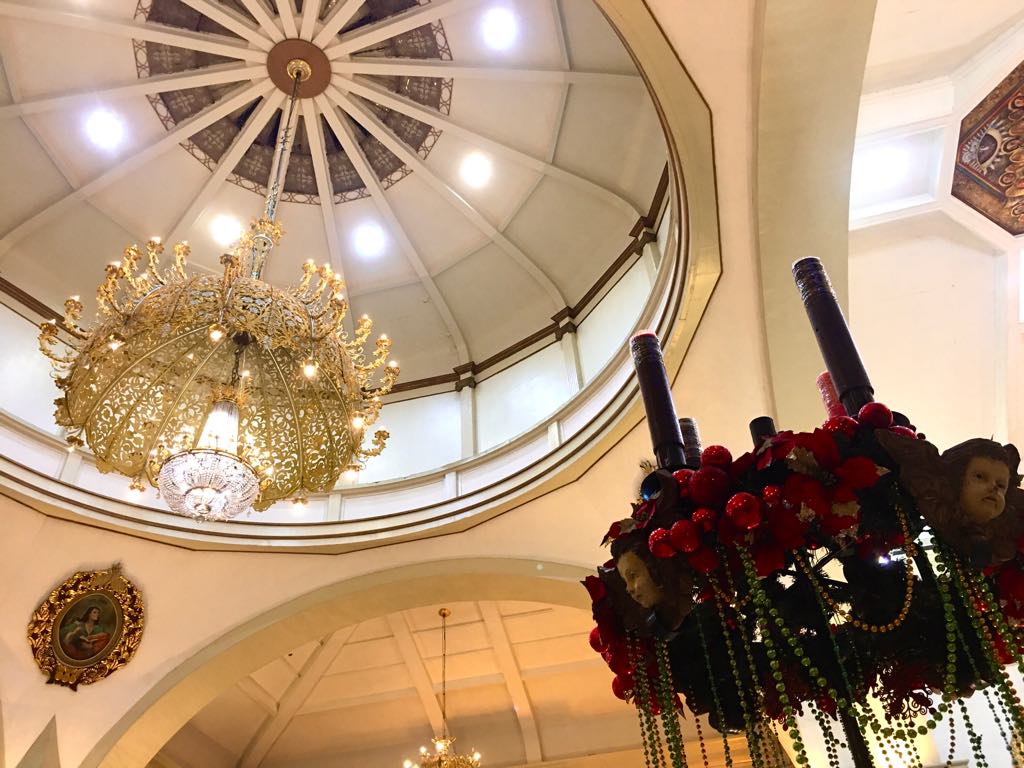
Advent wreathe at the Malolos Cathedral, 04 December 2019.
Advent is the season of hope when we are encouraged to work on to fulfill God’s grand design for lasting peace here on earth. It is a time for us to dream with eyes wide open!
I had this dream In which I swam with dolphins In open sea a transparent blue (Maybe you dreamt it too) And on the earth The trees grew heavy with blossoms The rainforests had not died And the Amazon shined like an emerald
Somewhere, somehow, some way We must hold back the dawn While there’s still time to try Keep the faith, keep the dream alive
That is why we have chosen for this Second Sunday of Advent jazz master Michael Franks’ The Dream from his 1993 album “Dragonfly Summer”. It is a song very similar with Isaiah’s prophecy in the first reading of a “peaceable kingdom” where
“the wolf shall be a guest of the lamb, and the leopard shall lie down with the kid; the calf and the young lion shall browse together, with a little child to guide them.”
Isaiah 11:6
Considered as a leader of the “quiet storm” or “smooth jazz” movement, a genre of jazz music mixed with pop and rock tempo, Franks has collaborated with some of the great musicians of the world in the last 40 years with his compositions covered by many artists from the wide spectrum of the music world proving his genius and versatility.
For me, Franks is the Walter Becker/Donald Fagen of jazz, always precise and almost perfect in every piece of music that is intelligent and exquisite but never snobbish and definitely without pretensions. Like Steely Dan, his music is picturesquely evocative that one can feel and even see the timbre of every voice and instrument.
Gifted with a cool and sophisticated voice, Franks can sound playful like with “Eggplant” and “Popsicle Toes”, philosophical and dead serious with “Tiger in the Rain” and lovingly romantic with “Rainy Night in Tokyo” and “Lady Wants to Know”.
His music and lyrics are simple yet profound, always fresh and relaxing not only to ears but also to one’s soul that’s very inspiring.
Going back to our featured music on this second Sunday of Advent, Franks’ The Dream challenges us to test and keep our faith in order to work for a lasting peace here on earth.
I had this dream That we were all one family Which war and famine could not undo (Maybe you dreamt it too) Our family name Was either Kindness or Compassion We recognized each other And we recognized the light inside us
The Lord Is My Chef Sunday Music, 01 December 2019
Photo by Mr. Jim Marpa, 2018.
A blessed Sunday to you my dear follower and reader!
It’s the first day of December, the final month of the year but at the same time the start of a new year in our Church calendar with the Season of Advent, the four Sundays before Christmas.
From the Latin adventus that means coming, Advent has a two-fold character on the two comings of Jesus Christ: beginning today until December 16, all readings and prayers are focused on his Second Coming; from December 17 to the 24th, we shift our sights to the first Christmas when Christ was born in Bethlehem 2000 years ago.
Jesus said to his disciples: “As it was in the days of Noah, so it will be at the coming of the Son of Man. In those days before the flood, they were eating and drinking, marrying and giving in marriage, up to the day that Noah entered the ark. They did not know until the flood came and carried them all away. So will it be also at the coming of the Son of Man.”
Matthew 24:37-39
Nobody knows when Jesus Christ is coming again but he assures us that it will be sudden and unexpected like in the days of Noah. It is useless to know exactly when it would be because it may be any time. According to St. Bernard of Clairvaux, between the two comings of Christ is his third coming – that is, in every moment of our lives.
Contrary to common beliefs, the Second Coming of Christ at the end of time known as parousia will not necessarily be catastrophic. It all depends to our attitude: if we are negligent of our Christian duties to love and serve those in need, then we end in disaster like what Jesus tells us in the gospel today.
Jesus is coming again not to destroy the world but to bring it to perfection, into new heaven and new earth. What he is asking us is to be like him, Christ-like, to be his presence by allowing us to let his light shine through our words and deeds.
Here to inspire us to glimpse Christ’s coming to our daily lives is Johnny Nash in his 1972 hit “I Can See Clearly Now”.
Composed and produced by Nash himself, I Can See Clearly Now evokes a very Advent spirit of active waiting and vigilance. Its musical arrangement laced with reggae influences from Nash’s earlier collaborations with Bob Marley gives the song with some touch of solemnity that makes it so perfect for this First Sunday of Advent.
Happy listening and may the song open your eyes too to Jesus Christ’s love for you!
Today’s gospel speaks about the end of time, the Second Coming of Jesus Christ when he predicted the fall of Jerusalem and destruction of its Temple in 70 A.D.
Every coming of Jesus Christ is a day of judgment and salvation, a call to love, love, and love.
When Jesus comes again at the end of time, he won’t be asking us how much money we have but how much do we share?
He won’t be asking us what car do we drive but how we move people with our kindness and warmth?
Jesus will not ask us those questions we are so preoccupied in this life but instead ask us the basic question we have always avoided answering, “how much do you love”?
Everything follows from that question because only those who truly love are the ones willing to suffer and sacrifice, even give life so others may live.
And that is why we have chosen this very poetic song, When It Was Done by the famed American composer Jimmy Webb in 1969 and first recorded by Winter Wanderley that same year.
There are other artists who have covered this beautiful song but Hugo Montenegro’s version is the best, giving it a more ethereal quality despite its poignant character.
It is a story of a man’s love presumably to a very lovely woman he never had the chance to express his feelings because she had been taken by somebody else.
If I could bind your mind to mine in time, to keep you from that world of his If I could change the strangers in your kind, then I’d know where your soul is Then I’d know what song I’d have to sing, to touch that chord within you Then I would weave such wondrous songs, and when it was done, I’d win you
If I could stand with the stars on either hand, and say girl this ain’t the answer If I had been where you’re going, but then I’ll never be no dancer If I was I’d know what step to take, and laugh at what had freed me And smash the great wall down girl, and when it was done, you’d need me
Too late… but the gentleman pins his hopes to the end of time when probably on judgment day he could have the chance to finally have that lovely woman.
If I can face the fate that waits to cast me into shambles And sit across the velvet boards from God then I would gamble And if I could, I’d know what chance to take and before the devil sold you I’d bet my soul against the stars, and when it as done, I’d hold you
Of course, it is all wishful thinking. And that is why – “when all was done” – there’s no more going back because it is judgement day. So let’s do whatever good we can in the here and now where Christ comes again.
Meanwhile, enjoy this lovely piece and shower your loved ones with all the love you now have.
















 lordmychef.com