The debt that is never paid off

The Lord Is My Chef sunday Recipe for the Soul by Fr. Nicanor F. Lalog II
Sunday in the Twenty-third Week of Ordinary Time, Cycle A, 10 September 2023
Ezekiel 33:7-9 ><))))*> Romans 13:8-10 ><))))*> Matthew 18:15-20

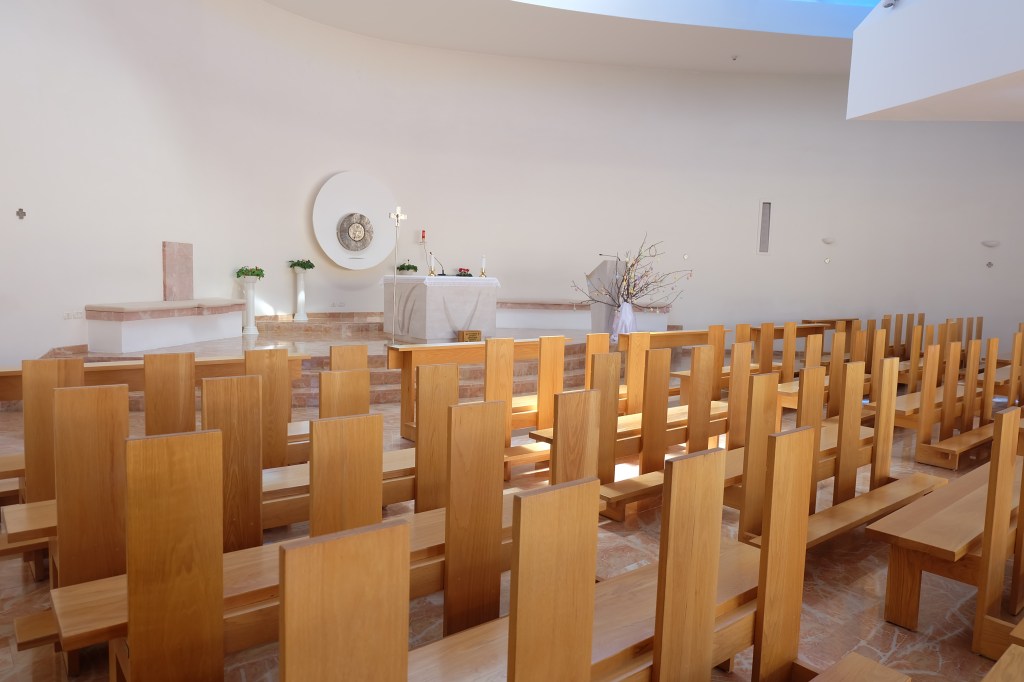
Photo by author, St. Scholastica Convent, Baguio City, 23 August 2023.

Our gospel this Sunday is very difficult but also one of the simplest and fundamental teachings by Jesus Christ: fraternal correction for more harmonious relationships.

That is very difficult because we have all experienced how when we heard of somebody going wayward in life, of living in a life of sin, our immediate reaction is to talk about them, engage in gossips without any intentions at all to correct them. Sad to say, we even distance ourselves from them – exactly the opposite of what Jesus is teaching us today:

Jesus said to his disciples: “If your brother sins against you, go and tell him his fault between you and him alone. If he listens to you, you have won over your brother. If he does not listen, take one or two other along with you, so that every fact may be established on the testimony of two or three witnesses. If he refuses to listen to them, tell the church. If he refuses to listen to the church, then treat him as you would a Gentile or a tax collector.”

Matthew 18:15-17

Photo by author, St. Scholastica Convent, Baguio City, 23 August 2023.

Jesus is now heading to Jerusalem to fulfill his mission. Along the way, he taught his disciples important lessons about the Church he had just “established” upon Peter, the Rock, while at Caesarea Philippi three weeks ago.

In these next three Sundays, Jesus tackles three delicate issues we continue to face even in our modern time like fraternal correction, forgiving, and work. These are delicate topics because they are all expressions of mutual love for one another.

Very often, we commit the sin of omission in the realms of these three, particularly of fraternal correction as we tend to detach ourselves from others especially if they are committing sin. By distancing from them, we unconsciously allow them to sin. In the movie The Good Nurse based on that true story of a nurse in the US who killed so many patients for some years by transferring to different hospitals, the good nurse asked him why he did it? The serial killer nurse said, “nobody told me to stop doing it.”

The dark side of the sin of omission lies in that tendency within us to not care at all especially with those who prefer to separate from us and lead their lives in the way they wanted. There is that tendency within us to be like Cain even if we are not guilty of any sin or may even be the offended party, saying, “am I my brother’s keeper?” Most sad are our Filipino expressions when somebody sins, “Bahal ka na sa buhay mo…pinili mo iyan, pagdusahan mo.”

Photo by author, Camp John Hay, 12 July 2023.

Fraternal correction is the antidote to sins of omission because it is about keeping our relationships intact as family, friends, brothers and sisters in Christ.

Jesus becomes truly present in the world among us when we live in harmony because “where two or three are gathered together in my name, there am I in the midst of them” (Mt. 18:20).

As early as the Old Testament, God had already insisted on this moral precept as his children that we look after one another like a guard or sentinel in the positive sense as he told the Prophet Ezekiel in the first reading. At that time, the enemies of Judah were closely approaching their borders that they designated watchmen as their first line of defense. Failure by these watchmen to warn the people – as it turned out later – could spell disaster for the kingdom.

The same thing is true with us. We are all interrelated with each other. One rotten tomato can spoil the whole batch. We cannot choose to be indifferent or just be mere bystanders amid the evil and sins happening around us perpetrated by those closest to us. But we must do it all in the spirit of love, not because we are better or holier.

Brothers and sisters: Owe nothing to anyone, except to love one another; for the one who loves another has fulfilled the law. Love does no evil to the neighbor; hence, love is the fulfillment of the law.

Romans 13:8, 10

Photo by author, Sacred Heart Novitiate, Novaliches, QC, 22 March 2023.

Fraternal correction is an expression of our mutual love for one another, the exact opposite of sin of omission. St. Paul offers us a lot today about this love that builds our family and community still from his letter to the Romans.

Let us start with St. Paul’s conclusion that love is the fulfillment of the law which we often hear and even proclaim to others. Main question that arises from this is the nature of this love. For St. Paul, love is the self-sacrificing love that Jesus showed us when he offered himself for us on the cross. Recall last Sunday St. Paul reminded us to offer your bodies as a living sacrifice (Rom. 12:1) like Jesus. In that same chapter, St. Paul spoke about not retaliating or seeking vengeance, an echoing of the Lord’s instruction on love when asked by a scholar of the law which is the greatest of the commandments (Mt.22:37-40).

Here we find, love for St. Paul is the imitation of Jesus Christ, a love that can never be measured at all and even be demanded and decreed! The love of Jesus Christ is so new as he mentioned at his last supper (Jn. 13:34) because it is a love rooted in God, a love that elevates us or as young people say “levels up” every disciple into the mystical plane.

Prior to his telling us today “to owe nothing to anyone, except to love one another”, St. Paul was expounding at the beginning of Romans 13 the theme of obedience to authority, a sort of social responsibilities, of things like justice (vv.1-7). While justice demands we pay off our debts and other dues to one another, to the state and public officials, it is a totally different scenario when it comes to love.
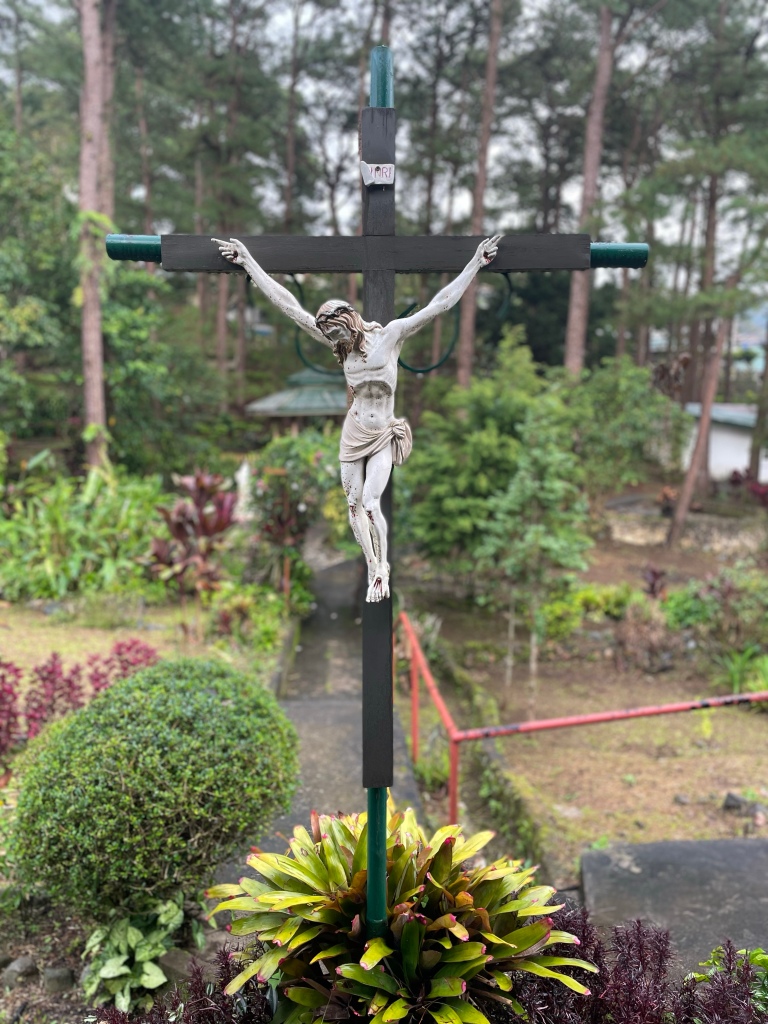
Photo by author, St. Scholastica Convent, Baguio City, 23 August 2023.

Love is not a possession that anyone can receive or give in an exactly measured quantity. St. Mother Teresa said that the measure of love is when you love immeasurably. There is no such thing as a kilo of love. It is either you love or do not love! And when that happens, when we do not love, then we sin. That sin can only be repaired and corrected by love. Sin is when we lack love; to overcome sin, pour in more love.

In all his writings, St. Paul always had love as the basis of his teachings so that without sounding as imposing, he could persuade us to live deeply moral lives as expression of that love in Christ which he eloquently expressed in his ode to love in 1 Corinthians 13. One of the earliest Latin phrases I have learned as a child was from my elementary school days at St. Paul College Bocaue (Bulacan). Our school motto is “Caritas Christi urget nos” – The love of Christ impels us (to love more) – from 2 Corinthians 5:14.

When we examine our true love experiences that are not selfish but other centered, we realize that love is a debt we can never pay off because love is a gift from God. This gift of his love makes us those who receive it in a filial, loving relationship with him our Father. Most of all, we realize we too can love like Jesus Christ!

God does not “order” nor “command” us in the strict sense to love him. He asks for our love because he loves us, because he is love. When we love, we fulfill the commandments of God. We live in peace and harmony with one another like in heaven. That is why it is only love that will remain in heaven where there will be no more fraternal corrections. Most of all, never be paid off as a debt because love is all that shall remain to become our very person in Christ. Amen. It is a Sunday. If you love, celebrate Mass in your parish. Have a blessed, loving week!

Photo by author, La Trinidad, Benguet, 12 July 2023.

Presence and Love of Christ

The Lord Is My Chef Sunday Recipe for the Soul by Fr. Nicanor F. Lalog II
Week XXIII, Cycle A in Ordinary Time, 06 September 2020
Ezekiel 33:7-9 /// Romans 13:8-10 /// Matthew 18:15-20
Photo by Mr. Gelo N. Carpio, January 2020.

For the next three Sundays beginning today, our liturgy directs our gaze to the nature of the Church as the mystical Body of Jesus Christ. For today we hear from Matthew how we as a church or a community of believers are signs of the presence and love of Jesus Christ.

Recall how two weeks ago at Caesarea Philippi Jesus called Simon as “Peter” (“Rock”) to head his “church”, giving him the keys to the kingdom of heaven that whatever he binds on earth shall be bound in heaven and whatever he looses on earth shall be loosed in heaven (Mt.16:17-19).

Matthew is the only evangelist so particular in using the term “church” that he devoted chapter 18 of his gospel on its nature, collecting and giving some of the Lord’s teachings about community life to his own group of disciples or early church.

And off he went to start with the most important part of community life:

Jesus said to his disciples: “If your brother sins against you, go and tell him his fault between you and him alone. If he listens to you, you have won over your brother. If he does not listen, take one or two others along with you… If he refuses to listen to them, tell the church. If he refuses to listen even to the church, then treat him as you would a Gentile or a tax collector… Again, amen, I say to you, if two of you agree on earth about anything for which they are to pray, it shall be granted them by my heavenly Father. For where two or three are gathered together in my name, there am I in the midst of them.”

Matthew 18:15-16, 17, 19-20
Photo by author, dome of the Malolos Cathedral, 2019.

Presence of Jesus in the love and unity of community

In a very short teaching taking a step by step method, Jesus tells us today how our mutual love shall always take precedence above all in our community life as his disciples and sign of presence.

Though we do not find in our gospel this Sunday the word “love”, it is clearly the Lord’s lesson for today: it is mutual love for one another that must guide everyone specially in the delicate matter of fraternal correction when one is going wayward in his/her path of life.

This explains why Jesus spelled out step by step how we correct others primarily because we love, not because we are better than them or that we have such authority or task and duty. Paul beautifully says it in our second reading:

Brothers and sisters: Owe nothing to anyone, except to love one another; for the one who loves another has fulfilled the law. Love does no evil to the neighbor; hence, love is the fulfillment of the law.

Romans 13:8, 10

But of course, we need to clarify that all these lessons of love from the Lord and Paul are based on the love of Jesus Christ who clearly mandated us during his last supper how we must love:

I give you a new commandment: love one another. As I have loved you, so you should love one another. This is how all will know that you are my disciples, if you have love for one another.

John 13:34-35

What makes this loving one another a “new commandment” is loving like Jesus Christ, unlike the pagans in ancient times that are still imitated to this day even by many among us who are also Christians. So often we find specially in media how love is portrayed as mere feelings like physical attraction that always leads up to sex, devoid of any sanctity and inner beauty at all.

St. Augustine called it “disordered love” when we become self-centered and selfish, directing our love solely to attaining what pleases us that we use persons and love things like money.

Love is not just a feeling but a decision, a choice we make and affirm every day specially when times are very rough and tough for us like when we are not loved in return.

Most of all, love is when we find somebody else we can love more than ourselves (Thomas Merton). This is the kind of love that Jesus and Paul as well as all the other saints speak of: the self-sacrificing love Christ showed us when he offered himself on the cross for the forgiveness of our sins.

Photo by author, Chapel of the Monastery of the Sisters of Perpetual Adoration of the Blessed Sacrament at the Milk Grotto in Bethlehem where the Holy Family hid before fleeing to Egypt to escape Herod’s order to massacre the Holy Innocents, May 2019.

Love of Jesus builds, not destroys

Applying the law of love to our community is the most severe test of our being disciples of Jesus when we are challenged to be sincere in our love by hating what is evil and holding on to what is good like blessing those who persecute us, foregoing vengeance against those who have wronged us along with other expressions of mutual love in our community that Paul tells us in Romans 12:9-21.

In teaching us mutual love for one another in a step by step manner, it may seem to be a duty that one must follow in the church. It may even sound as contradictory that Jesus seems to be commanding us to strictly follow his law of command because no law can ever impose love.

However, when we try to reflect the ending of his teachings today – “For where two or three are gathered together in my name, there am I in the midst of them” – we find Jesus not ordering us to love but asking us our love because he loves us. He comes to us, grants our prayers because he loves us; therefore, when we love, when we gather as his disciples, we become his presence. And that is when our prayers are most effective because Jesus is in our midst!

Jesus and his love always build people and community; without him and his love, all we have is destruction and divisions. Hence, love is the only debt we owe to anyone. Love as a debt and “duty” is never paid back because the more we love, the more we have love, the more we are indebted to Jesus. It is the only debt that is never burdensome; in fact, the opposite happens when we refuse to love – we are burdened, life becomes heavy and so difficult.

This is what Ezekiel is telling us in the first reading: we are a “watchman”, a brother’s keeper of everyone. St. Pope Gregory the Great wrote a beautiful homily on being a watchman:

Note that a man whom the Lord sends forth as a preacher is called a watchman. A watchman always stands on a height so that he can see from afar what is coming. Anyone appointed to be a watchman for the people must stand on a height for all his life to help them by his foresight.

Office of Readings, Memorial of St. Pope Gregory the Great, 03 September
Photo by author, sunset inside our parish, 25 August 2020.

In the Church, those designated as watchman of the flock of Jesus is the Bishop or episkopos in Greek that means watcher or overseer. It is the bishop’s duty to always be above others in the loving service of the Church that sometimes out of love for Christ, he has to discipline those going astray as instructed in our gospel today, “If he refuses to listen even to the church, then treat him as you would a Gentile or a tax collector”, that is, excommunication or suspensions and other measures not meant to punish but to convert and correct the sinner.

Next Sunday, Matthew deepens our lesson on mutual love when he presents us the teachings of Jesus on how often we must forgive our brother or sister who repeatedly sins against us.

See my dear reader, how after presenting to us who is Jesus Christ last month, in how much he loves us and seeks us, these following Sundays we are challenged by the Lord to be like him – loving and merciful – to truly keep our relationship with him.

It is the first Sunday of September, the -ber months that tell us Christmas is around the corner. But, it seems we are still in a long haul in this pandemic. Having a vaccine will not totally eradicate COVID-19 nor guarantee us this won’t happen again in the future because the disease that is truly plaguing us until now is our refusal to love and live as brothers and sisters in Christ. Let us give it a try. Slowly. Jesus is not rushing us. All he is asking us is be open to his words expressed earlier in our responsorial psalm: “If today you hear his voice, harden not your hearts.”

Have a heart and have a blessed, lovely week, everyone!