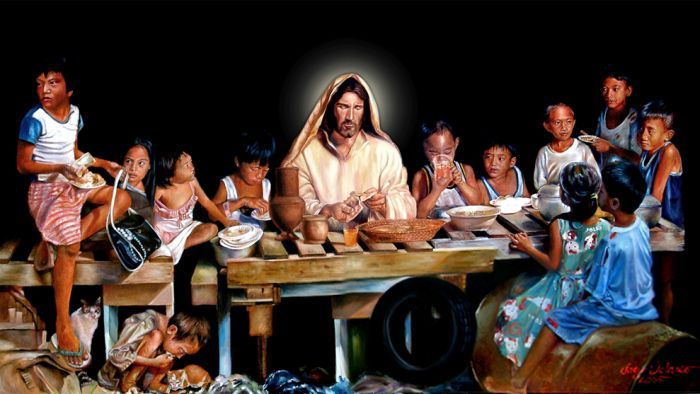
Call of the COVID-19 quarantine: a return to our contemplative spirit

Quiet Storm by Fr. Nicanor F. Lalog II, 29 April 2020

Photo by author, 2010.

This is again for my brother priests and fellow workers in Church communication: our extended “enhanced community quarantine” is a call for us to rediscover the contemplative spirit so essential in our communication apostolate. It is best that before we go in front of the camera, before we post anything at all, or even before we go out doing our social action, let us first have Jesus Christ in us.

After all, it is always Jesus and only Jesus we bring as priests in everything we say and do. Jesus is our life as priests and without him, our works mean nothing. Worst, it may be happening that it is not Jesus whom we are following when we fail to spend time with him in serious prayers that unknown to us, we are already replacing him by creating our own ministry apart from him.

Incidentally, we are celebrating today the Memorial of St. Catherine of Siena who is considered as one of the patron saints for those working in telecommunications and TV stations.

In one of her numerous “ecstatic” visions, it is said that when she was so sick in her room, she begged the Lord to give her a glimpse of the celebration of the Mass in their chapel. The Lord heard her prayer and thus, she became the first person in history to have celebrated Mass by “remote telecast”!

From Google.

Faith and technology

We have mentioned in our previous reflection that we now live our faith in a mass-mediated culture. Media is all around us. And there is always that intense temptation by the devil to put us on TV and the internet to be popular.

So, how do we interact with technology on a daily basis?

What are we posting on Facebook? Are we like the rest who are also hooked into TikTok with all the inanities that go with it?

How much time do we spend for social media and Netflix these days?

And how many hours do we spend before the Blessed Sacrament, excluding our Liturgy of the Hours and praying of the Holy Rosary?

From Google.

We are familiar with Marshall McLuhan’s dictum “the medium is the message”.

This we have seen in the past very evident in our ministry when some priests have transformed the South American telenovelas and later Koreanovelas into a gospel too that people felt like listening to reviews during the homily. And it had given some people the idea that every homily of the priest must say something about television shows! In fact, about three years ago, some priests have to be reminded by the CBCP during the Simbang Gabi to focus only on the Word of God and not on TV shows and jokes to get the attention of their congregation during Mass.

But let us not forget that later in his life, McLuhan added to his dictum that “the medium is the massage” to warn us that sooner or later, we can be eaten up by media that everything is reduced into a show – or a palabas in Filipino that means outward.

That is what a show is, a palabas which is empty or walang laman.

And shallow, mababaw.

That is the sorry state of our many social communication efforts in the Church when we have Masses that have become like entertainment shows, priests becoming entertainers, church buildings and decors that look like videoke bars evoking none of the sacred, and tarps and posters that are all hype without any evangelical meaning.

Observe also how our presentations and shows in our Catholic schools and parish halls have become mere repetitions of what are on television that have left many of us now stuck in Emmaus who could no longer find the way back to Jerusalem, even to Jesus because all we see are the fun and excitement, the glitz and the glamor of media.

And of our massaged ego.

Road to Emmaus from clarusonline.it

Keeping technology in its place in the Church

We are not saying modern communications is evil; the Church has always been clear that these modern means of communications are in fact a gift from God. Vatican II asserts that it is Church’s “birthright” to use and own these modern means of communication for evangelization (Inter Mirifica, 3)

Our challenge in the Church is to keep these modern technologies in its proper place.

A technological culture is not the most hospitable environment for religious belief, but neither is it necessarily hostile. If we are to find a way of expressing our faith in this technological culture and of speaking to and with the people formed by this culture we need to take time to consider how we, as individuals and as a faith community, interact with technology on a daily basis.

James Mcdonnell, Communicating the Gospel in a Technological Age: Rediscovering the Contemplative Spirit (1989)

In a story posted by the CBCP News two days ago, it reported the experience of Filipino priest Fr. Jun Villanueva who contracted the dreaded COVID-19 disease in New York City last March shortly after he had arrived to study there.

Assigned in a parish in the heart of the Big Apple, Fr. Villanueva tells how he spent his days of being “alone literally and emotionally” as “moments with God”. But, his turning point came after recovering from the corona virus when he began celebrating Mass alone:

“I really cried when I first celebrated Mass without churchgoers. There’s no one in the Church except Jesus,” he recalled. “Then I realized that the Mass is not a show but our union with Jesus, whether there are people or none,” he said. “I started to look at the situation from that perspective”.

Fr. Jun Villanueva, CBCP News, 27 April 2020

That is the first step needed to put technology in its proper place in the Church: that we bring back Jesus Christ whom we have banished in the name of our ministry and vocation. The more we think of putting so much “art” and other things to “enhance” our liturgies, then we banish Jesus Christ.

This is the other pandemic we have refused to stop in the Church: triumphalism, the overdoing of things for God that in the process we actually put more of ourselves in the ministry and liturgy than of the Holy.

Is there anyone or anything greater than the Lord?

Remember St. Theresa of Avila: Solo dios basta!

And, like our saints who guide us closer to God, the only way to have Jesus and bring him back in our lives and ministry, in the church as institution and building is through the contemplative spirit of the priests.

It is a good thing that the catch call these days is that the “return to normal” is actually a “return to basics” like washing of hands, covering of mouths when sneezing, and most of all, a return to God.
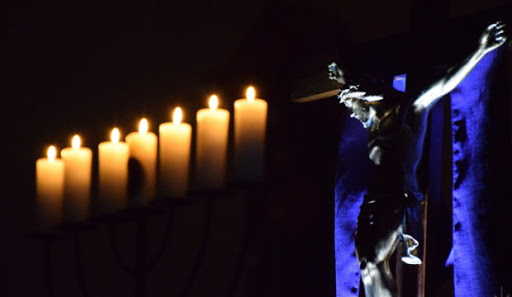
From Google.

The spirits of modernity characterized by constant changes and technological efficiency do not jibe so well with the demands of the Gospel of Jesus Christ who have always reminded us of guarding against the temptations of the material world.

Jesus tells us to practice poverty but the world tells us to be wealthy.

Jesus asks us to forget ourselves and follow him but the world tells us to be popular and follow the limelight.

Jesus tells us to go down and be humble but the world tells us to rise up and go higher!

The other day, Jesus reminded us in the gospel:

“Do not work for food that perishes but for the food that endures eternal life, which the Son of Man will give you. For on him the Father, God, has set his seal.”

John 6:27

Most of the time in the Church and in our lives as priests, we have to be “inefficient” like “waste time” doing nothing in front of the Blessed Sacrament; have less of everything like food, money and clothing; be silent to listen more than to speak and talk more.

The contemplative spirit is about poverty and going down while the world tells us to be wealthy and to rise and go upwards.

The contemplative spirit is to be silent and trusting always in the Lord rather than relying on our own powers and abilities.

Here is James McDonnell again on the need to rediscover the contemplative spirit in communicating the gospel in this modern time.

“The contemplative spirit is an attitude of mind and heart that enables us to focus on the essential, important things. It refuses to be hurried or rushed into premature rejection or acceptance of technology. If we Christians allow it to inform our use of communication technologies we shall learn to be realistic, but always hopeful, able to love and reverence our culture even as we strive, with God’s help, to transform it.”

Communicating the Gospel in a Technological Age: Rediscovering the Contemplative Spirit (1989)

Take heart, my dear brother priests: we are representatives of Jesus Christ, our Eternal Priest. We are not entertainers and pleasers of anyone but of God alone. We do not need followers and likers. And we have so many other things to do than TikTok and Facebook or Instagram.

Let us go back to Nazareth to be silent and hidden so we can return to Jerusalem to await for further instructions from the Lord. Amen.
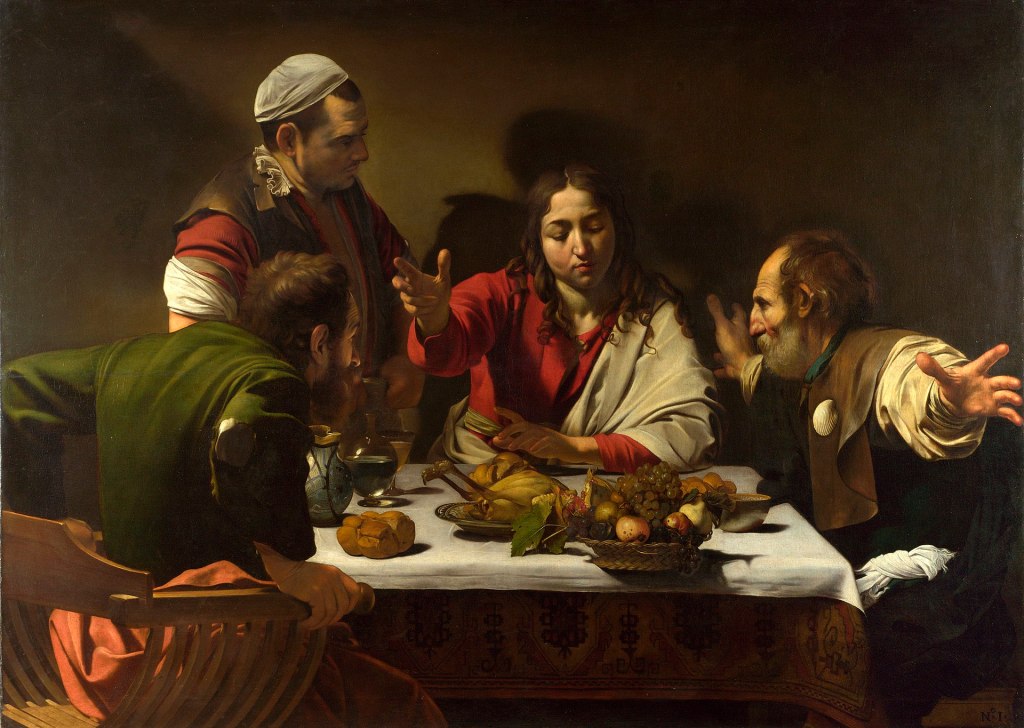

“Supper at Emmaus” by Caravaggio. From Google.

Some lessons from Emmaus

Quiet Storm by Fr. Nicanor F. Lalog II, 26 April 2020

This is for my brother priests and fellow communicators in the church who might be failing to recognize Jesus Christ along the way and sadly, stuck at Emmaus.

That very day, the first day of the week, two of Jesus’ disciples were going to a village seven miles from Jerusalem called Emmaus, and they were conversing about all the tings that had occurred. And it happened that while they were conversing and debating, Jesus himself drew near and walked with them, but their eyes were prevented from recognizing him.

Luke 24:13-16

We live our faith today in a mass-mediated culture.

Media is all around us.

Vatican II tells us that these modern means of communications are gifts from God that are “necessary for the formation of Christians and for pastoral activity” (Inter Mirifica, 3).

Communication is a sharing in the power of God who created everything by just saying “Let there be…”. When this power to communicate is mishandled and eventually abused, sooner or later, it can blind us and prevent us from recognizing Jesus in our midst.

And sadly, it is already happening.

Even before the start of the enhanced community quarantine, many of us were already using the various platforms of social media proclaiming the good news of Jesus Christ.

But, are our hearts still burning deep inside in him and for him?

Is Jesus still the One we are proclaiming, or are we now trying to be like the so-called “influencers” of the secular world that we are more preoccupied and focused with gimmicks and antics, shows and bravaduras for the sake of followers and likes?

Are our hearts still burning with the Sacred Scriptures or the words of the world that we have made our ambos and altars like studios and stage complete with all the props to tickle the bones of people than build up their faith and experience Jesus?

On the road to Emmaus, after Cleopas had expressed their feelings and thoughts to Jesus, he and his companion fell silent and simply listened to Jesus explaining the Sacred Scriptures. No need to shout or mimic voices.

No need to keep on clapping hands like in a circus or even dance like Salome who later asked for the head of St. John the Baptist.

It is sad that on the road to Emmaus, it has become our monologue, our show that Jesus can no longer speak.

Remember that “in the beginning was the word, and the word became flesh”: God’s communication is always preceded by silence.

Even in the road to Emmaus, there was total silence when Jesus spoke that the two disciples were silent that they felt their hearts burning.

As they approached the village to which they were going, he gave the impression that he was going on farther. But they urged him, “Stay with us, for it is nearly evening and the day is almost over.” So he went to stay with them. And it happened that, while he was with them at table, he took bread, said the blessing, broke it, and gave it to them. With that their eyes were opened and they recognized him, but he vanished from their sight. Then they said to each other, “Were not our hearts burning within us while he spoke to us on the way and opened the Scriptures to us?” So they set out at once and returned to Jerusalem where they found gathered together the eleven and those with them…

Luke 24:28-33

The Mass and our Priesthood are both a mystery so unique especially for us. It is something beyond explanation without much physical descriptions but more of inner recognition.

Exactly like Easter: the moment we recognize Jesus in the Scriptures and in the Eucharist, he vanishes because he is more than enough than anybody or anything else in the Mass and in our ministry in general.

Even in our very own lives!

St. Mother Teresa asked us priests long ago to “always give (them) Jesus, only Jesus”. And that will always be valid until the end of time when Jesus comes again.

And here lies the great lesson for us from Emmaus: the more we try harder, insisting on giving “physical appearances” of Jesus in our celebrations with our showbiz kind of preaching complete with a song and dance number to the excessive use of modern means of communications like slide presentations during homilies to our “creative liturgies” that are very distracting to other trappings of overdoing everything called “triumphalism” — that is when we BANISH Jesus from the scene.

In Emmaus, Jesus vanished when the disciples’ eyes were opened.

In some Masses today, unfortunately, Jesus is banished and many eyes are not only left closed but sadly, even blinded.

“Supper at Emmaus” by Caravaggio.

We are priests called to preside the celebration of the Eucharist in persona Christi.

We priests do not own the Mass and we cannot insist on whatever we want to do, even if it is very pleasing and delighting to the senses of the people.

Do away wit all those “styles” and gimmicks.

Jesus saved us not with activities; Jesus saved us by dying on the Cross.

If all we are concerned with is to “feel good”, to tickle our bones and senses, our eyes – and those of the people we serve and bring closer to God would never be opened to recognize Jesus Christ.

Our Masses and other celebrations need only Jesus, always Jesus.

There is no need to put our pictures in every tarpaulin or announcement. Rest assured that every disciple of Jesus is always good-looking and handsome. Believe. And stop bragging it.

Let us have him always and let others recognize him from within. If there is no inner recognition of Jesus, maybe we have never met him at all. Neither in Emmaus nor in Jerusalem nor in our selves.

A blessed week ahead of you, my brother priests and fellow communicators of Christ, in Christ.

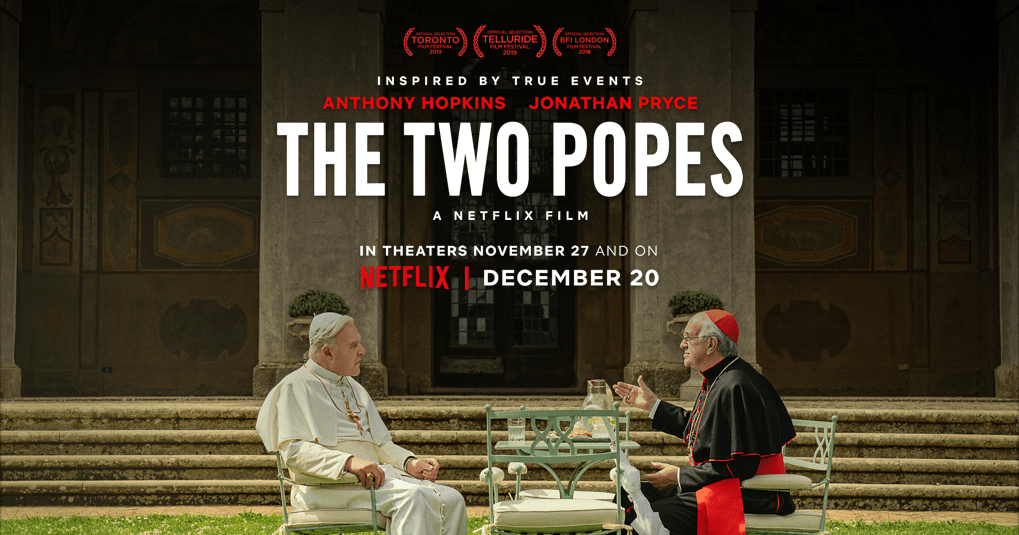
“The (unCatholic and unChristian) Two Popes”

Quiet Storm by Fr. Nicanor F. Lalog II, 23 December 2019

From Netflix.

As early as Friday night after my second Simbang Gabi Mass at 8:30, I have been wanting to react on social media against Netflix’s “The Two Popes”.

But I tried to control my self because I have only seen its first 30 minutes – and besides, it is a fiction story. So, in the spirit of fairness, I tried to finish the movie in three installments until Saturday afternoon before making any comments.

And I felt sad in having seen it at all.

“The Two Popes” is not entertaining. It is misleading without any strong elements to build on our faith and appreciate our religion. At its worst, despite its claim of being inspired by true events, the movie is unCatholic and unChristian.

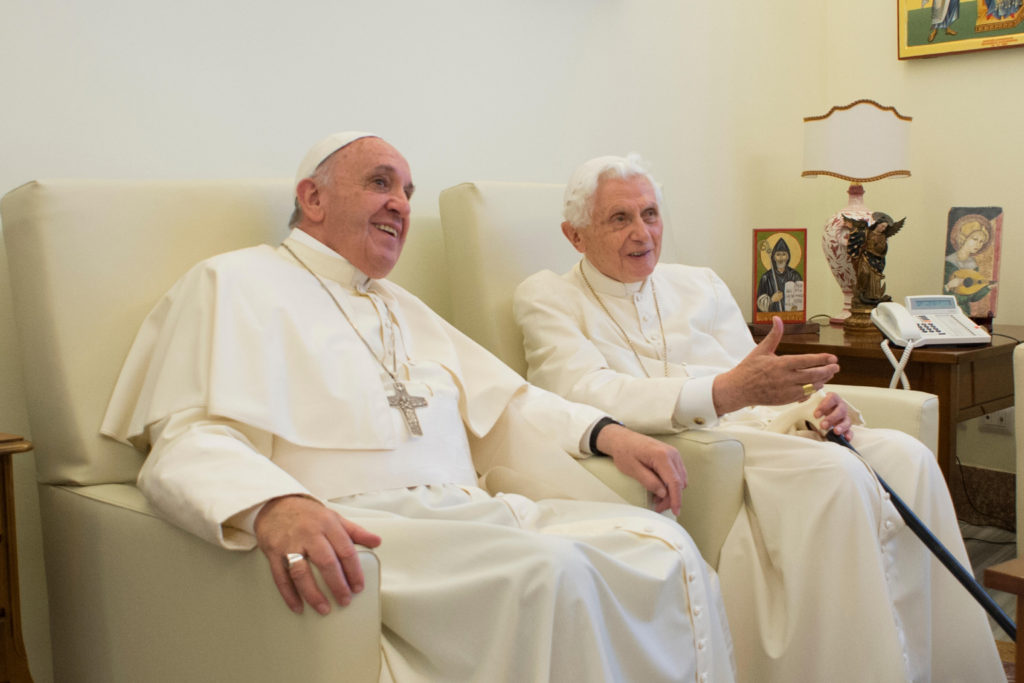
From Google.

UnCatholic and UnChristian

Movies about religions and religious figures and personalities are always controversial by nature. But for as long as they follow the paths of honesty, sincerity, and truth, these movies eventually emerge as true expressions of art that can truly deepen one’s faith.

But “The Two Popes” at its opening scene is already disturbing and objectionable when it portrayed the Cardinals at the 2005 conclave as having animosity and rivalry among themselves in electing Pope Emeritus Benedict XVI.

Yes, we priests including bishops and Cardinals are all humans like anybody else but no one among us would ever dare to aspire for the papacy. While it is true there are some priests who are into “careerism” in the diocesan level, everything changes starting with the episcopacy or the office of the bishop.

In fact, part of the problem why we have so many vacant dioceses in the country and the whole world is that many priests refuse to accept their appointment as bishops because of many fears that are so real that come with the immense responsibilities of the position. According to the Vatican, three out of every ten priests offered to become bishops decline the offer personally made by the Pope through his Papal Nuncio in every country.

How much more with the Papacy?!

In the movie, Pope Benedict toured Cardinal Bergoglio inside the Sistine Chapel and showed him the “crying room” where the newly elected Pope may stay and cry – yes – before finally accepting his election as Pope.

That alone is true but not the movie portrayal during the conclave that claim Cardinals aspiring to become the Pope. It is something preposterous and totally untrue.

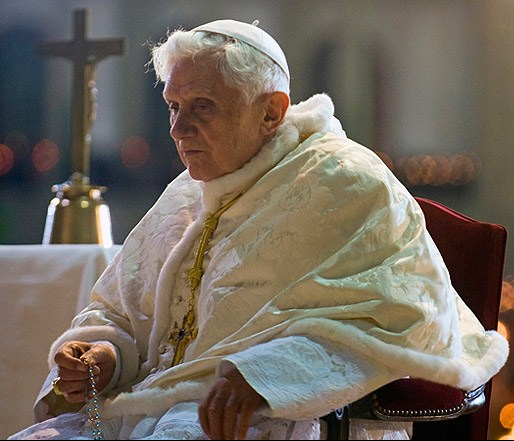
Catholic World Report

What is very disturbing in “The Two Popes” is how it presented Cardinal Ratzinger and Cardinal Bergoglio like “lowlife” lawmakers of congress gunning for the top post for prestige and power with their respective bloc members going around in hushed conversations with matching dagger looks at each other.

This is the movie’s weakest point: rather than being seen as something about deepening our faith in God and the institutional Church or any established religion for that matter, it played on “politics” in the guise of showing the flaws and frailties of two popes competing for position and fame.

You might say “it is just a movie” but, not everyone can rightly see whatever good intentions – if it really has – that the movie is trying to present.

Instead of enlightening the viewers in their faith to the Church in general, there was something sinister in the way it presented almost everyone except Cardinal Bergoglio.

Behind the movie’s beautiful cinematography and studio sets are “subliminal messages” as if inciting viewers to dismiss the Catholic Church and other religions because they are all the same – run by egoistic, power hungry people enjoying so many luxuries in life that the common masses could not even imagine to exist.

We priests are sinners and though there are some of us who have sold Jesus like Judas Iscariot for the price of wealth and fame, there are much too many who still work in silence and hiddenness and holiness bringing Christ to the people.

The Catholic Church has continued to exist since Christ’s ascension because the good shepherds like Jesus have always far outnumbered the rotten ones. Hence, those scenes repeated twice or thrice of Pope Benedict worried with his “popularity” are outrageously absurd!

The Catholiy abc Sun.

Bias against Pope Emeritus Benedict XVI

The movie is supposed to show us how two great men of God, of divergent backgrounds and worlds apart, resolved their many conflicts within themselves and with others regarding their faith and ministry and mission in leading the Catholic Church.

Both actors, especially Anthony Hopkins did superb jobs in playing their roles.

The movie tried to show the triumph of the Divine in mysterious ways we can never explain nor understand using men of limitations and weaknesses.

What makes “The Two Popes” so unkind and unchristian is the fact that it is more about Pope Francis as the vida and Pope Emeritus Benedict XVI as contravida. It could have been better if the producers just centered on the present Holy Father as basis of their film and called it “The Pope”. Period.

How can it be a film about faith and religion when the plot itself is unfair and grossly biased against the supposed co-star who is also a Pope?

The movie is also unfair to Pope Francis who would surely never allow himself to be praised and exalted at the expense of the Pope Emeritus or any other person, whether in real life or fiction.

This for me is the most unkindest cut of all in this Netflix movie that fans the many wrong impressions fed on by media against Cardinal Josef Ratzinger since his being the Prefect of Sacred Congregation of Doctrine and Faith during the time of St. John Paul II.

Throughout the film, it is very evident at how the Pope Emeritus is put on the bad light as if he never cared at all about actual situations in the Church and in the world, from the sex scandals to issues on celibacy among other things because he is so absorbed in his intellectual pursuits in the world of books and the academe.

We are of Christ

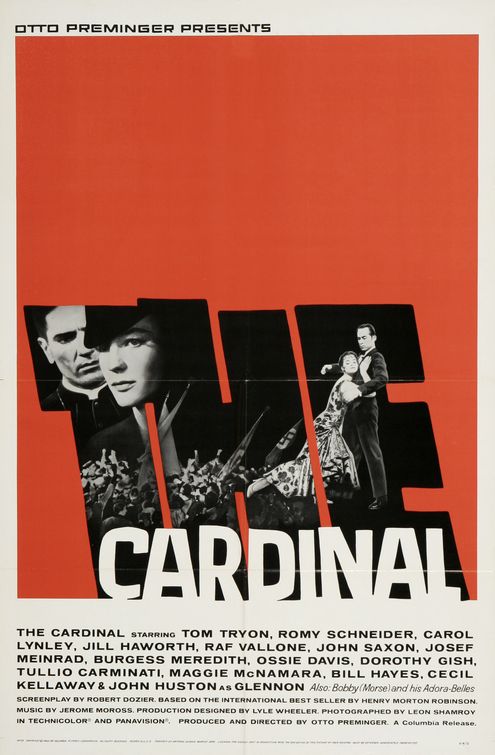
In 1963, the American film “The Cardinal” was released, earning six Academy Awards and very positive reviews for excellently portraying Catholic religion amid issues of interfaith marriage, sex outside marriage, abortion, racism, and dictatorships set during the Second World War.

It was also inspired by true events based on the life of the late Cardinal Francis Spellman of New York.

Its music theme has become a classic piece too that we have all learned by heart while still in high school seminary.

I can still remember the film that showed in a very positive light the main character with all his flaws and shortcomings as a person, as a priest. No need to put other characters down just to underscore his goodness.

The film had a Vatican liaison officer in the person of the young German priest Fr. Dr. Josef Ratzinger who, after that movie, would be attending Vatican II as a periter or consultant to join the efforts in reforming the Church and make it more responsive to modern time.

Yes, the very same Pope Emeritus Benedict XVI portrayed in the Netflix movie as “ignorant” of the Beatles and of tango and of many other things of the modern world.

Netflix

“The Two Popes” ended positively with the “unlikely friendships” of Pope Benedict and Cardinal Bergoglio but still with its askewed presentation of the two holy men, of the people in Vatican, and of the Church’s members and leaders.

So unlike the classic “The Cardinal”, “The Two Popes” missed the essence of the papacy and of the Church as an institution and a body of believers – that Christianity is not about categories or labels as conservatives, progressives, or liberals: it is about our being of Jesus Christ alone.

It is deceivingly appealing to the senses but nothing really so profound about faith and Jesus Christ and his Church. With hindsight, though, after seeing the movie, the more I have come to love and admire Pope Emeritus Benedict XVI for his love and faith in Jesus and the Church.

And Jesus told his disciples… “Blessed are you when they insult you and persecute you and utter every kind of evil against you falsely because of me” (Mt.5:11).

Have a blessed Christmas!

Who is my Neighbor.com?

Quiet Storm by Fr. Nicanor F. Lalog II, 15 July 2019
Photo by John Bonding, Architecture&Design Magazine, 25 May 2019 via Facebook.

This is not another homily about yesterday’s Parable of the Good Samaritan. I am very sure you have heard so much about it. In fact, you must have memorized that parable, too. And most likely, you also believe there is nothing else new in that parable. Its conviction remains true that we are all neighbors, that the question we must be asking is not “who is my neighbor” but, “do I act as a neighbor to others”?

However, in this complicated age of tweets and hashtags when everything is shortened, either abbreviated or initialized, the question “who is my neighbor” has become very legitimate again these days when technology has taken the center stage of our lives and relationships.

Two months ago I officiated the wedding of a friend’s youngest brother who sent me a gist of their “love story” that I may incorporate in my homily. Fact is, I have already worked out the outline of my homily for his wedding except that I really had a hard time deciphering the meaning of the three letters he had mentioned about their love story: “LDR”.

After several minutes, I finally got what he meant with those letters that stand for “Long Distance Relationship”.

Okay, I admit being too old for those kind of talkies with so many abbreviations that litter Facebook posts from “OMG” to “ootd” with a host of other letter combinations that I really do not understand at all even when given with their meanings.

This sudden surge in usage of so many abbreviations and initials is spawned by modern technologies in communication that still continue to evolve. Truly, the medium is the message. When we were growing up in the 70’s and 80’s, typewriters reigned supreme. We knew only two important abbreviations that time, “cc” for “carbon copy” and “asap” for “as soon as possible”.

With the demise of Messrs. Remington and Underwood following the rise of PC’s and Macs along with smartphones that all use the venerable “qwerty” board of old, we are now deluged with all of these initials and abbreviations. At least, those hardly used signs on the typewriter keys like @, #, and _ finally came more alive in this age of dot.coms.

There is nothing wrong with these developments but when these abbreviations and initials as well as signs and symbols are applied onto humans, problems begin to happen. This is when people are “materialized” while things are “personalized”. See how the benighted souls on television, from program hosts and celebrities to journalists using the Filipino personal pronoun “siya” for he/she/his/her when speaking of food and typhoons like “masarap siya” (he/she is delicious) or “siya ay magbubuhos ng ulan” (he/she will pour rains). How insanely they use the Filipino demonstrative pronoun “ito” or this for persons like “ito ang nanay ko” (this is my mother instead of she is my mother) or “ito ang mahal ko” (this is my beloved instead of he/she is my beloved)!

You see how we have now come to regard persons as things and things as persons?

And worst, we now see persons as food to be eaten and consumed when good looking men and women are described as “yummy” and “delicious”. It is utilitarianism at its worst when people are seen like food as if they are good only when “fresh, hot and tasty” but when already old and sickly, they are regarded like leftovers kept on the fridge, even discarded. In the same manner, see how in our country we take people like ice cream with those belonging to the “AB” crowd or the rich and famous as “flavor of the month” or “all-time favorite” while those from the lower segment of the society, the “CDE” or “chineleas-duster-estero” crowd as “dirty ice cream” or sorbetes.

From Google.

Here lies the legitimacy of the question who is my neighbor? — when we not only shorten words for the sake of convenience and do the same to persons, shortchanging them with the respect and dignity we all deserve.

A friend and fellow blogger recently wrote a piece about the growing number of young people who are so inconsiderate in using specific lanes and counters reserved for seniors and PWD’s in malls and stores. Even in churches, there are also inconsiderate, and hypocrite or unChristian, able-bodied people occupying pews reserved for seniors and PWD’s, claiming they will just leave and move when they arrive?! How I really feel like adding to our notes that “This pew is reserved for seniors and PWD’s. And morons too.”

How ironic that in this age when almost everyone is supposed to be tech savvy, being able to read every sign and logo yet refuse to respect give way to our seniors and PWD’s. Here is a classic case of us having smartphones but not so smart people, guided missiles and misguided children. They are like the Levite and the priest in the parable of the Good Samaritan who simply “saw” the victim lying on the road, failing to see him as another person in need. Unlike the Samaritan who saw the victim and was moved with compassion to help him.

From Google.

The question “who is my neighbor” becomes more legitimate and pressing when we in the Church, in our own homes and family are overtaken by things of the world, from money and gadgets to fame and convenience that we not only forget one another but ultimately Jesus Christ our Lord and Master.

When we are more concerned with raising funds or earning money for more buildings, more gadgets, for more privileges and convenience, becoming vain even if beyond our means or not in our calling and state of life, that is when people start asking again “who is my neighbor” because nobody seem to care anymore. No one is with compassion and mercy anymore that everybody seem to have become robots and sadly, inhuman when all we see are things than persons.

The Church since Vatican II has always seen these modern means of communications as gifts from God meant to be used for the the “advancement and unity” of man (Communio et Progressio). Let us put technology and things at their proper place. And that is always at the service of mankind and glory of God.

Colors and shades of life

Quiet Storm by Fr. Nicanor F. Lalog II, 03 April 2019

From Google.

A follower is protesting the title of my Lenten blogs called “40 Shades of Lent”. She, or he, wrote us that “Our Roman Catholic Church is pure and sacred to be associated with a title of a pornographic movie.”  Our follower also suggested to us to “Please inform your Bishop and Priests before posting these titles on social media.”

Our follower is absolutely right that the title of my lenten reflections is indeed from E.L. James’ novel published in 2011 and later adapted into a movie in 2015. I have never read it nor seen any of its movie adaptations that were both a hit and a trending topic in 2016. At that time, I thought of having a series of reflections for Lent distinct from my regular Sunday homilies I have called “The Lord Is My Chef Sunday Recipe” since 2006. I thought that if everybody was talking about “50 Shades of Grey”, why not ride on the strong recall of the brand by having my “40 Shades of Lent” where people can find the many colors and meanings of our sacred season?! After all, Lent’s motif of the color violet comes in many shades and hues, too!

That’s it, pancit! In no way does the title “40 Shades of Lent” becomes erotic or, as our follower described, pornographic simply because of its similarity with the book or movie title “50 Shades of Grey”. But her, or his, contention has opened for us a springboard for discussion regarding the way we deal with modern media if you can bear with me.

From Google.

We live in a “mass-mediated culture” where every baby is now born with a mouse. If Jesus were with us today, maybe He would have directed us priests to “feed my geeks” instead of telling us to “feed my sheep”. Since the time of the great St. John Paul II to Pope Francis today, the Holy Fathers have all recognized this reality, asking us to find ways in proclaiming the Gospel among the young people without losing our Christian identity.

“The question confronting the Church today is not any longer whether the man in the street can grasp a religious message, but how to employ the communications media so as to let him have the full impact of the gospel message.”

St. Pope John Paul II , “Religion in the Mass Media” (Message, 1989 World Communication Day

The need for an equilibrium in our approach with media.

The two most media savvy Popes, St. John Paul II and Pope Francis have both noted in their speeches that young people today practically live in the world of media; hence, the need to reach out to them. Problem with us in the Church, both among the clergy and the laity, is when we respond in both extremes when some end up succumbing to the world of media while there are those at the other end rejecting it altogether or in some forms. What we need is some degree of equilibrium wherein we try to keep technology and media in their proper places. See the many instances when priests embrace media and technology so much that churches lose the sense of sacred with giant video screens all over with a barrage of tarpaulins in all sizes that make one wonder if it is a house of worship or videoke bar. On the other hand, there are those who reject media and technology, stepping back in history like in a parish in Poland recently where priests and the faithful burned some books including the Harry Potter series they deemed as sacrilegious and have evil forces.

It is difficult to achieve such equilibrium or balance in our dealing and use of modern media in the ministry for as long as we remain in our Pharisaical stage, of associating almost everything in the world and of the world as evil and sinful especially books and music. The gospel accounts teem with many instances when the Pharisees and scribes questioned Jesus eating and drinking with tax collectors and known sinners of His time. How sad that until now we still don’t get what He had said during that time.

Nothing that enters one from outside can defile that person; but the things that come out from within are what defile.

Mark 7:15
From Google.

Equilibrium is first achieved in the constant examination of our hearts so we can respond properly to the spirit of modernity not easily reconcilable with the demands of the Gospel of Jesus Christ. Attaining that equilibrium calls for a return to the contemplative spirit where we try to maintain our spirit of silence and prayer amid the constant changes in thoughts and beliefs including values often due to the growing efficiency of technology. Let me share with you the very words of a communication expert to conclude this piece that I hope may enlighten us to see the various shades of colors, including shadows and lights that surround us in this modern world today.

The contemplative spirit is not easily acquired, but without it people find it hard to discern the valuable from the worthless, or the enduring from the transitory. Contemplation puts us in touch with reality in a world in which a host of communication technologies work to sustain a multitude of illusions and images: a media world. The contemplative spirit helps us to see and hear beyond and through the sights and sounds we take for granted. The contemplative spirit is an attitude of mind and heart that enables us to focus on the essential, important things. It refuses to be hurried into premature rejection or acceptance of technology. If we Christians allow it to inform our use of communication technologies we shall learn to be realistic, but always hopeful, able to love and reverence our culture even as we strive, with God’s help, to transform it.

James McDonnell, “Communicating the Gospel in a Technological Age: Rediscovering the Contemplative Spirit”.
Sacred Heart Novitiate, Novaliches. Photo by author, July 2018.

Friends always talk straight from their hearts

The Lord Is My Chef Quiet Storm, 01 March 2019

I have been dreaming of former classmates lately. Last Tuesday night I dreamt of a classmate in high school seminary now a priest but have not seen in months. Later that day I met another classmate, told him of my dream, and inquired about him. Unfortunately, he has not seen him too for so long though he presumed he must be doing well in the ministry.

Thursday morning upon waking up, I was thinking hard for the possible meaning of another dream I had the night before about my two seatmates in elementary school. Two dreams in a row about three good, old friends very much still alive but have not seen for so long. And how ironic that until now, I have not reached out to them personally or through the many social media platforms available except for a Facebook post that Thursday morning for a possible explanation about my two dreams!

That is the great irony – or, tragedy of our time when we have all modern means of communications that include extensive road networks and yet we could not even get in touch with those people dear to us. See the simplicity of Jesus Christ in calling us his friends: on the night he was betrayed during supper, he told his disciples, “You are my friends if you do what I command you (i.e., love one another). I have called you friends, because I have told you everything I have heard from my Father” (Jn.15:14,15).

Jesus does not need to dial numbers, text SMS, compose emails, or send invitations in Facebook to become friends with us. Jesus simply reveals to us in the most personal manner everything the Father wants to tell us and right away, we are already friends! Of course, it would be difficult to enumerate everything that the Father had told Jesus to relay to us but the greatest of these is the fact that God loves us very, very much. Period.

That is the greatest thing Jesus had achieved in his coming to us by bringing God closest to us by speaking straight to us by himself of his love, his mercy, his forgiveness, and his plans for us. That is one of the great joys of friendship when we talk straight, speak our hearts out freely to our friends without any fears of being rejected or misunderstood. There is always that sense of respect for the other person as a subject to be loved and cherished, not an object to be possessed and used like tools and gadgets.

In our mass-mediated culture, expressing our true feelings to our friends have become more complicated as we become less personal in our relationships. How I hate it when some people would always invite me for breakfast or lunch in some expensive restaurants or hotels only to ask some special favors after the meal that I feel like throwing out the food I have ingested! It is not social grace to treat people to fine dining or gift them with expensive or special things only to ask for some favors in the end. That is corruption or bribery. Simply put, it is lack of respect especially if done by people we regard as friends.

Going back to that Last Supper scene with Jesus Christ when he called us his friends, notice the word “friend”: there is only one letter that makes the difference to make it mean exactly the opposite, “fiend”. It is the letter “r” that stands for respect, from two Latin terms that literally mean “to look again”. To respect is to look again at another human as a person with equal dignity as yourself. Respect is the starting point of love that cannot exist in any situation where there is inequality or feelings of superiority over another person.

Our words coming from our hearts are some of the most wonderful things that create true and lasting friendships. The rest are the actions expressed when these words run out.

“Hapag ng Pag-Asa” by the late Joey Velasco.  From Google.