“Guilty, your Honor!”

Lord My Chef Sunday Recipe for Soul by Fr. Nicanor F. Lalog II
Twenty-Ninth Sunday in Ordinary Time, Cycle A, 18 October 2026
Isaiah 45:1, 4-6 ><}}}}*> 1 Thessalonians 1:1-5 ><}}}}*> Matthew 22:15-21
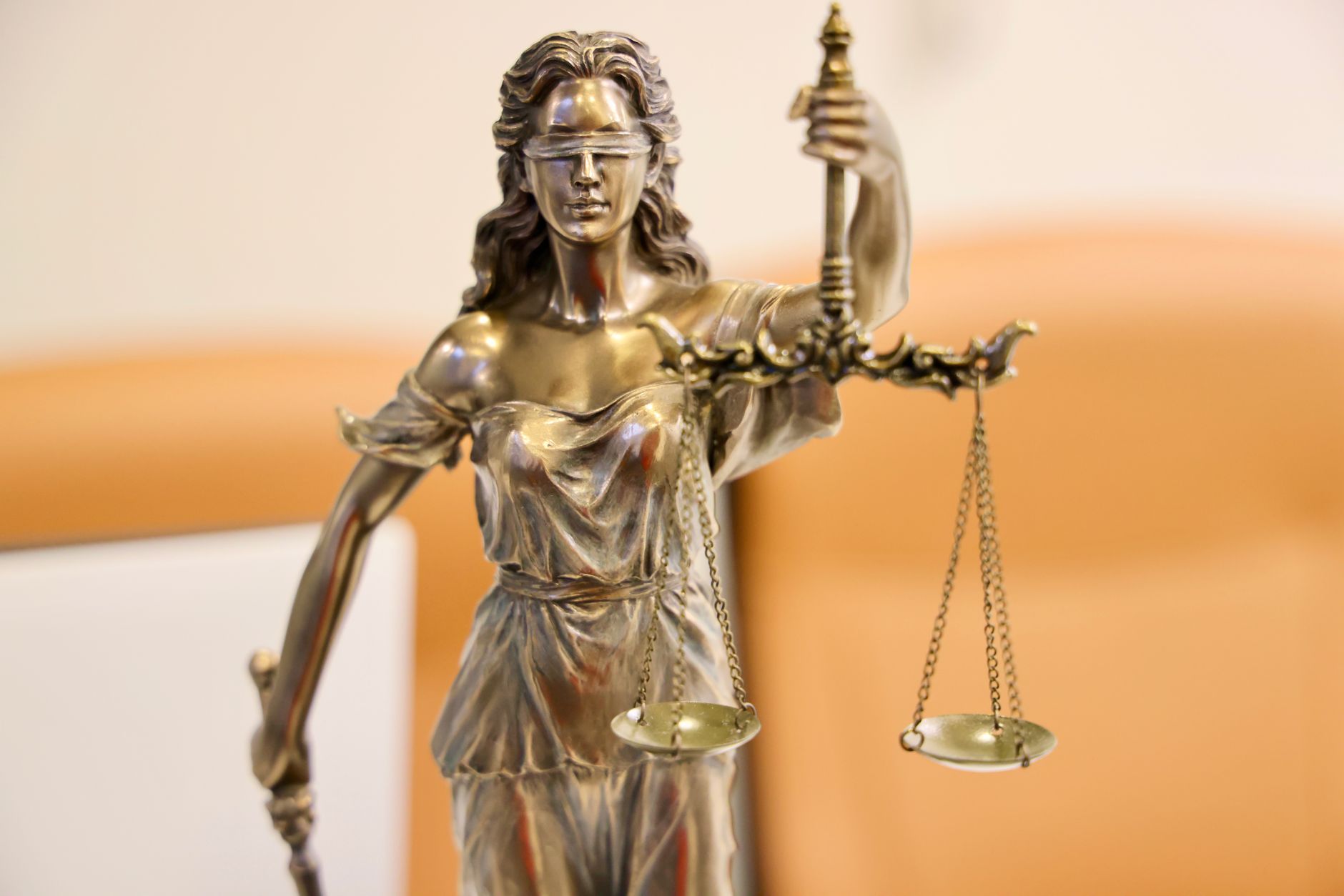
Photo by dp singh Bhullar on Pexels.com

Ever since, I have never been fascinated with court scenes except with those television series like LA Law, the Lincoln Lawyer and Law & Order that was actually more of police stories. Hence, I have never followed up the Impeachment trial of the Vice President except read reports or watch reels of what transpired in each day because I simply don’t have the patience. Imagine the comedies happening daily courtesy of the defense team.

However, while praying over our gospel this Sunday, it looked like a sort of trial scene in court for me where Jesus seems to be on trial by his enemies. Beginning this Sunday until next, Christ’s enemies would take turns in entrapping Jesus with questions hoping to find grounds for his arrest.

The Pharisees went off and plotted how they might entrap Jesus in speech. They sent their disciples to him, with the Herodians, saying, “Teacher, we know that you are a truthful man and that you teach the way of God in accordance with the truth. And you are not concerned with anyone’s opinion, for you do not regard a person’s status. Tell us, then, what is your opinion: Is it lawful to pay the census tax to Caesar or not?” Knowing their malice, Jesus said, “Why are you testing me, you hypocrites? Show me the coin that pays the census tax.” Then they handed him the Roman coin. He said to them, “Whose image is this and whose inscription?” They replied, “Caesar’s .” At that he said to them, “Then repay to Caesar what belongs to Caesar and to God what belongs to God” (Matthew 22:15-21).
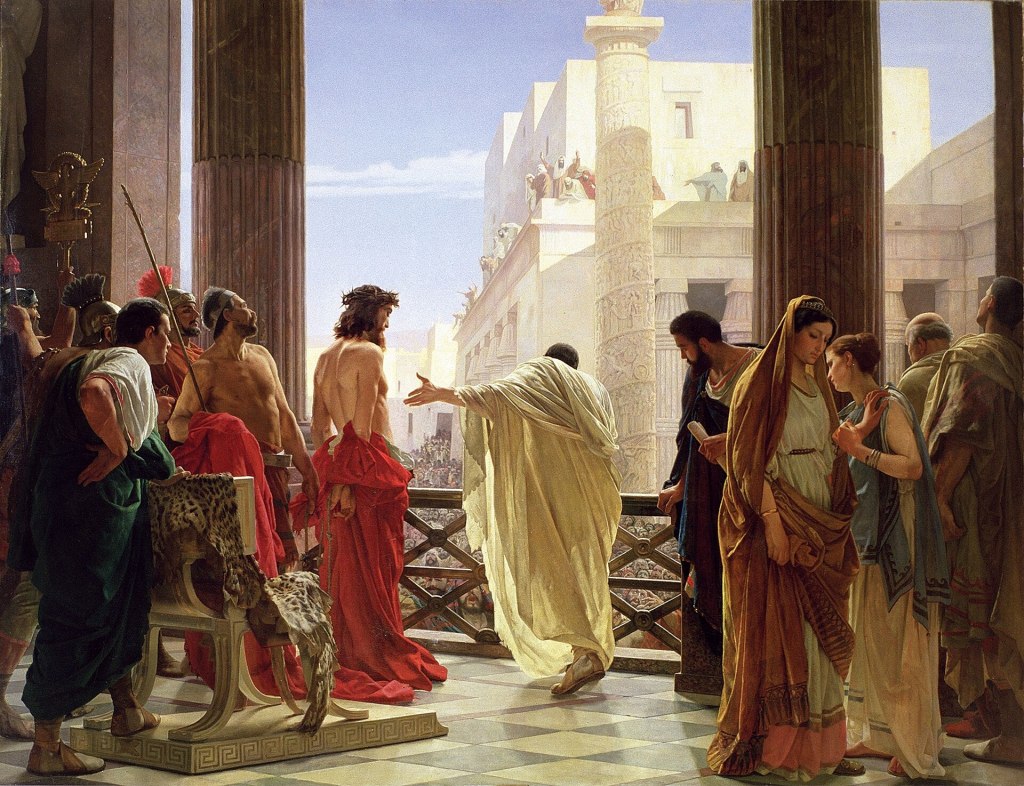
“Ecce Homo” by Swiss-Italian painter Antonio Ciseri (ca.1860-1880), from wikimediacommons.org

The scene is actually a prelude to Jesus Christ’s trial before Pontius Pilate after his enemies eventually made up charges against him.

Reflecting on the trial of Jesus by Pontius Pilate, St. John Paul II wrote that until now we put God on trial, accusing him of so many crimes and negligence in the world. And the most ironic part of it is that the more we accuse God of “crimes”, the more we incriminate ourselves actually into the very crimes we accuse him. Every trial, every testing of God is a self-indictment of our very selves.

Self-incrimination is the act of making a statement, providing testimony, or sharing information that exposes one’s self to criminal liability or possible criminal prosecution. Self-indictment is a slight variation of self-incrimination or to describe an action, statement, or work that acts as a severe, self-generated criticism or condemnation of oneself (from wikipedia).

See how the bitter enemies, Pharisees and Herodians joined forces against Jesus: the Pharisees were against the Roman occupiers while the Herodians were pro-Romans. They are a perfect example of “the enemy of my enemy is my friend.” Though they hated each other, they hated Jesus even more, foolishly deciding to set aside their differences momentarily to settle a score against Jesus.

But Jesus smelled their rancid odor right away, asking them of their motive, calling them hypocrites!

But their hypocrisy lies not only in their joining forces against Jesus but most of all in knowing how Jesus is so fair and just, “teaching the way of God in accordance with the truth”, then, why did they not finally accept him as the Christ and followed him? After all their praises, they have the gall to test him?

It was a hypocrisy to the highest degree actually. That is why we always have to beware of people who lavish us with praises with their lips smooth as butter but sharp as dagger.

The Pharisees and all enemies of Jesus have seen how he loved the poor and the sick, the marginalized, the women especially the widows, the children, the sinners and even them despite their being self-righteous. Jesus never drove them away nor rejected their invitations to dinner. Yet, they still refused to believe in Jesus and they wanted to test him.

It is the same tactic we have against one another, against Jesus. We go into secret alliances with our “enemies” against a common enemy without realizing it is in itself a self-indictment of our own sinfulness. It is one reason why I have strongly opposed priests and church organizations aligning with some groups like the so-called progressives, leftists or left-leaning who are mostly wokes: many times we may share a common stand against certain issues like capital punishment but what about their hard-core stance on divorce, contraceptives and abortion, gender-redefinition and same-sex marriage?

How much do we really believe in God? Then why do we have to “sleep with the enemies” like the rich and powerful politicians for donations and favors?
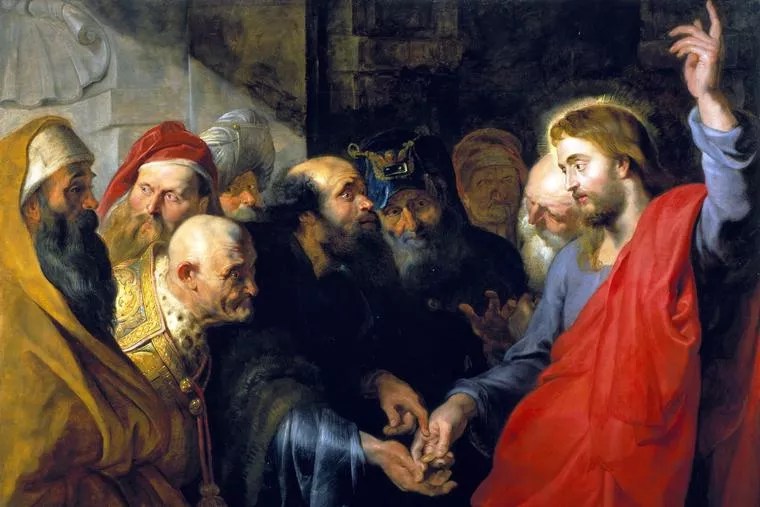
Flemish painter Peter Paul Ruben’s “The Tribute Money” (ca. 1612) from commonswikimedia.org.

Inasmuch as we view this as a sort of a court trial scene with the Pharisees and Herodians on the offensive, Jesus is not on the defensive mode here because he has nothing to defend in the first place. In fact, his enemies have conceded earlier on the good character of Jesus which we have just mentioned earlier.

Reminiscent of the tempting by the devil in the wilderness and later his trials with the Sanhedrin then with Pilate, here we find Jesus always with the “upper hand”, never swayed for he is sure and certain of himself. Plaudits and flatteries can never deviate Jesus from the truth that he is the Christ, the Son of God. And this is what he is telling us here: believe in yourself. Stand with your conviction in Christ always. Do not be bothered or affected by what others say.

This we shall see at how Jesus addressed his enemies with their entrapment by asking for a Roman coin. It was the strongest case of his enemies’ self-incrimination, of hypocrisy: they really have no plans of knowing whether it was lawful to pay the census tax to Caesar or not because in giving Jesus the Roman coin, they have betrayed themselves as in fact paying the tax to Rome after all, even the Pharisees who were anti-Rome.

Most of all, they were not supposed to bring into the temple area idolatrous objects, images of other gods, exactly what a Roman coin was with the image and inscription of the Roman emperor who believed in himself as a god. It was the height of their stupidity to bring out that Roman coin, their clear self-indictment. Though they professed faith in God as Jews, they still followed the false gods of Rome like its emperor.
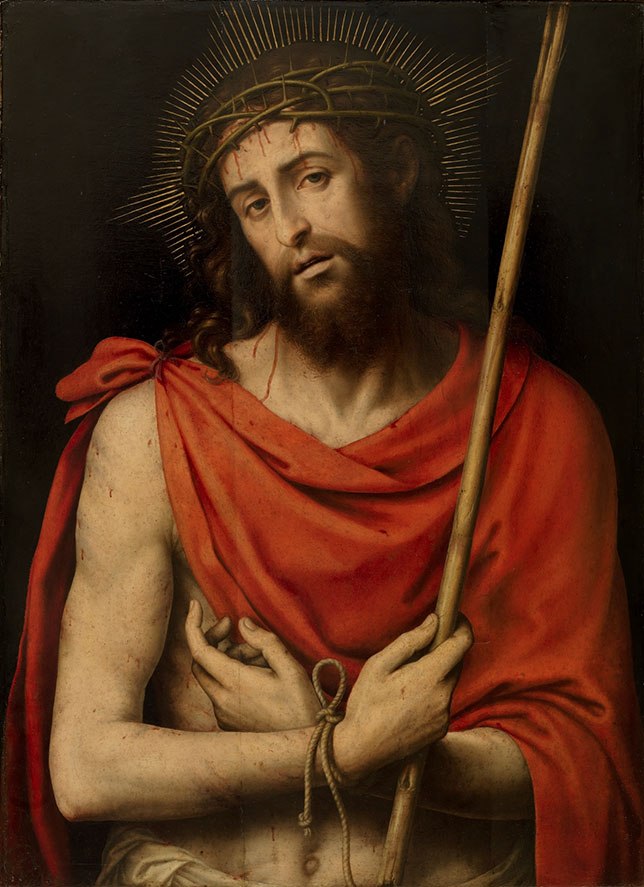
“Ecce Homo” painting by Spanish painter Juan de Juanes (ca.1570), from commons.wikimedia.org

Every day, this happens among us, always complaining, always ranting to God, even sometimes testing him like the Pharisees and the Herodians; but, if we search our hearts, if check on what we have, who we follow, we too are guilty like the enemies of Jesus having aligned with the new gods of today like cellphone and other gadgets, wealth and fame.

How unfortunate many these days live in social media where what is most accepted even glorified and followed is whatever that is shallow and superficial, rude and obscene, stupid and idiotic.

Jesus tells us this Sunday to look beyond what we see on things to find God who is the source of our very life, of every blessings we enjoy. Let us hold on to that assurance by St. Paul in the second reading that we were chosen by God in Christ Jesus to receive all his abundant blessings in life. Hold on to Jesus. Look beyond and find the face of Jesus in everything and everyone like the Persian emperor Cyrus in the first reading used by God as instrument in setting free the Jewish exiles in Babylon. Amen. Have a blessed week ahead!

Sweetest, most precious word of all

Lord My Chef Daily Recipe for Soul by Fr. Nicanor F. Lalog II
Saturday, Twentieth Week in Ordinary Time
Memorial of Queenship of Mary, 22 August 2026
Isaia 9:1-6 ><}}}}*> + ><}}}}*> + ><}}}}*> Luke 1:26-30
Photo by author, St. Paul Spiritual & Renewal Center, Bgy. Tanyawak, Alfonso, Cavite, 18 August 2026.

YES.

Perhaps the most sweetest word we all wish to hear but also the most difficult word for us to say. We want others saying “yes” to our requests and questions but we are so afraid, so hesitant telling it to others. Very often, we hide our “yes” in cloudy expressions like maybe, will try, or simply not say it all.

Especially with God.

Every love story of husband and wife, lovers as well as vocation story of any priest and religious all started with that simple word and answer “yes”.

Ang matamis na “oo” na inaasam ng binata sa kanyang dilag.

And of course, our “yes, Lord”….. “opo, Panginoon, susunod ako”!

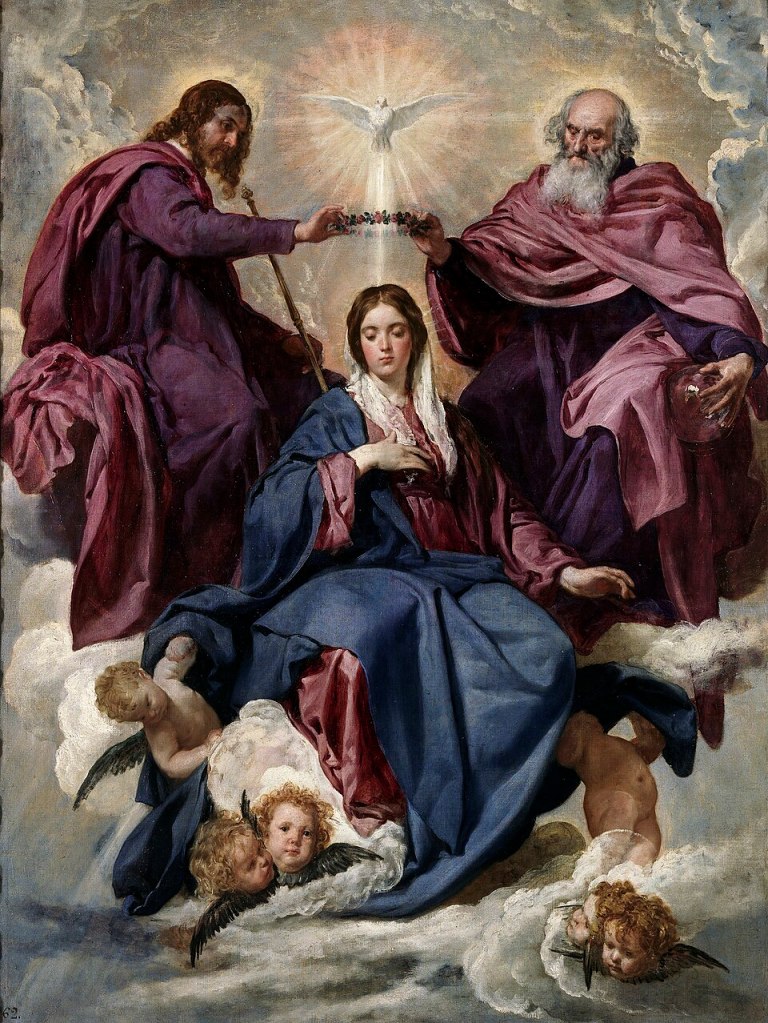
“Coronation of the Virgin” by Spanish artist Diego Velasquez (1635-1636); from en.eikipedia.org.

We celebrate today the Memorial of Queenship of Mary, a week after the Solemnity of her Assumption into heaven. She too said that most precious sweet word of “yes” to God when she was asked by the angel to become the Mother of the Savior, Jesus Christ.

Mary said, “Behold, I am the handmaid of the Lord. May it be done to me according to your word.” Then the angel departed from her (Luke 1:38).

How amazing that such a very simple word of three letters – YES – could be so powerful enough to change one’s life. Even the world and its history.

And how could such a very short word be so difficult to say, too?!

With every yes in life we hear, it becomes so sweet because we are affirmed. We feel valuable and precious when people say “yes” to us.

However, we are very cautious in saying “yes” to others, especially to God and in the name or presence of God because when we say that “yes”, it becomes our very life.

Every “yes” becomes a commitment, a vow, a promise to keep.

Photo by author, St. Paul Spiritual & Renewal Center, Bgy. Tanyawak, Alfonso, Cavite, 18 August 2026.

Not only for us priests and religious but everybody, especially husband and wife saying yes on their wedding day; doctors, lawyers and other professionals saying yes to uphold life, justice and freedom; and, children saying yes to obey their parents and teachers.

Everyone has to say a yes in different ways every day everywhere in many occasions and situations. Many times it looks so simple, sometimes it could mean life and death.

Every yes is precious and sweet because it is the beginning of love. And more love, no matter what.

That is why we need to affirm and stand with that yes day in, day out in our lives.

Like Mary, her “yes” to God did not happen just once but everyday in her life, reaching its highest point at the Cross when her Son Jesus Christ died. She must have had the most painful yet bittersweet yes too when she held Christ’s lifeless Body immortalized in Michaelangelo’s La Pieta.

But it was Mary’s yes that brought us Christmas and Easter, leading to Pentecost in the birth of our Church, and led her to heaven. That is why, we celebrate her Queenship today, a week after her Assumption. Let us pray to keep our “yes” to God true and faithful always.

O most Blessed Virgin Mary,
our Mother and Queen,
help us say "yes" like you
to God every day in our lives;
pray for us to remain faithful
and true to our "yes" to him
through our loved ones,
through his flock,
his people entrusted to us;
pray for us,
Mary our Queen
to keep our "yes" to God
simple like yours,
trusting him always
when our "yes"
leads us to Jesus on the Cross
and eventually into his very
presence in heaven with you.
Amen.
Mary sits enthroned in heaven on the right hand of Jesus Christ, who crowns her as “Queen of Heaven” in this 13th century apse mosaic in the Santa Maria Maggiore, Rome; photo from littleflowermemphis.org

Easter is “moving” in Christ

Lord My Chef Daily Recipe for the Soul by Fr. Nicanor F. Lalog II
Tuesday in the Fourth Week of Easter, 28 April 2026
Acts 11:19-26 ><]]]]'> + ><]]]]'> + ><]]]]'> John 10:22-30
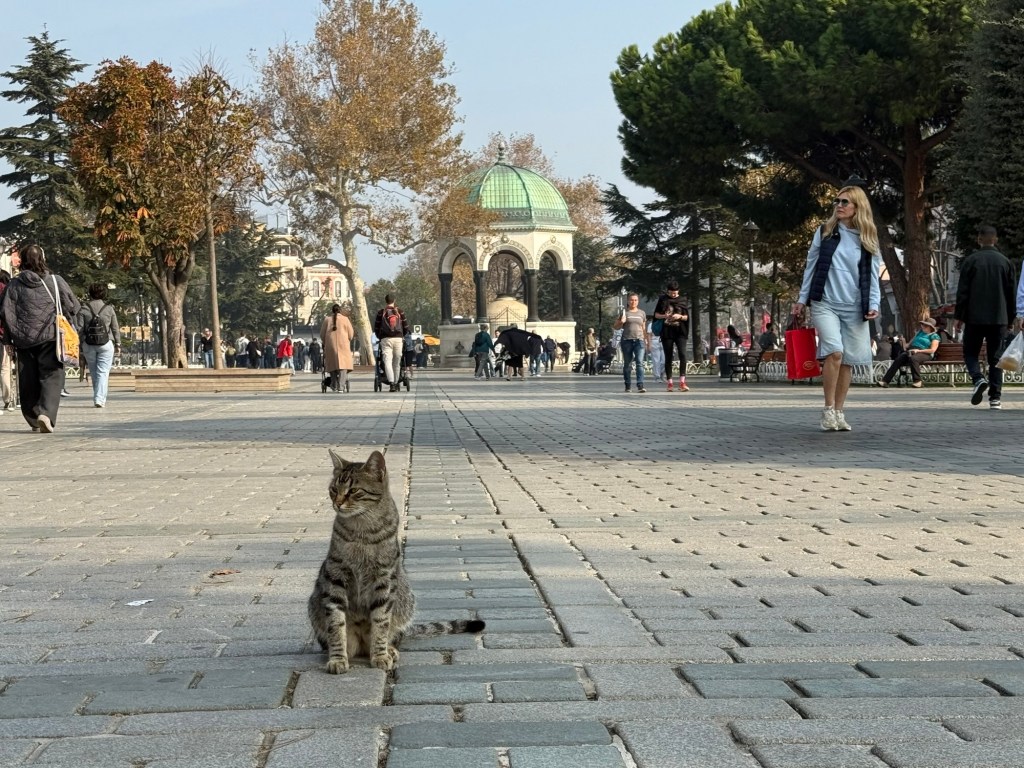
Photo by author, Fatih Square, Istanbul, Turkiye, November 2025.
Easter is about movements:
of moving in Jesus,
moving with Jesus,
moving to Jesus.

Those who had been scattered by the persecution that arose because of Stephen went as far as Phoenicia, Cyprus, and Antioch, preaching the word to no one but Jews. There were some Cypriots and Cyrenians among them, however, who came to Antioch and began to speak to the Greeks as well, proclaiming the Lord Jesus. The hand of the Lord was with them and great number who believed turned to the Lord (Acts 11:19-21).

How lovely,
dear Jesus to hear
that despite the fears
due to the martyrdom
of Stephen in Jerusalem,
your disciples moved north
to Antioch now part of Turkiye
not to hide but to proclaim
your good news!

Strengthen my faith
in you, Jesus that when
things get tough,
when the Gospel is
challenged and dismissed,
let me move boldly in upholding
your message of truth
of a loving God we call Father
calling us to a life of
holiness and freedom
from sin and evil.
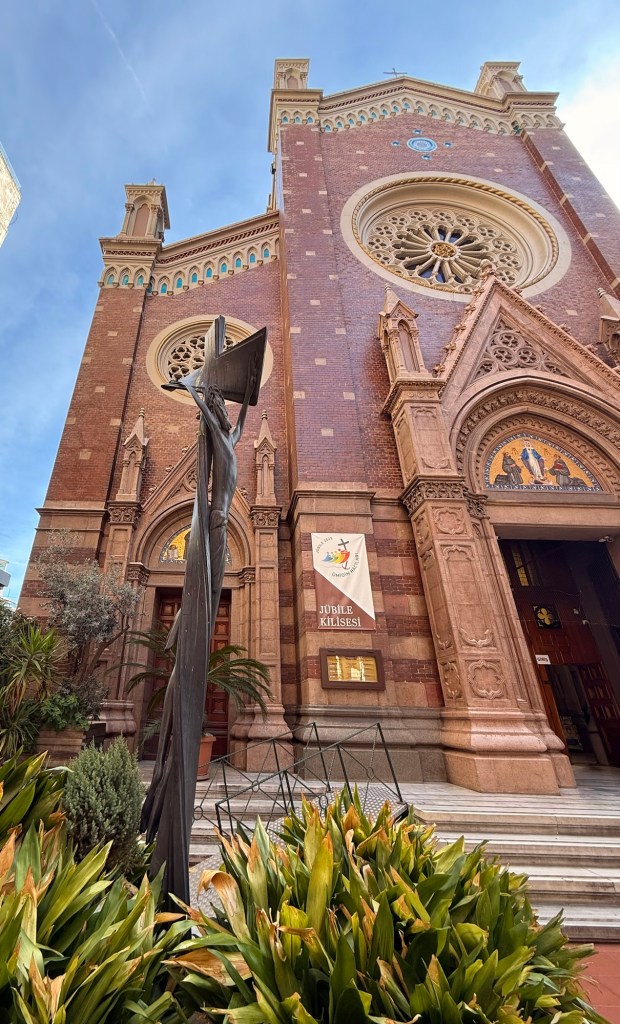
Photo by author, St. Anthony de Padua Church, Taksim Square, Istanbul, Turkiye, November 2025.
Let me move
in your Spirit, dear Jesus
like Barnabas
filled with joy
not suspicion,
encouraging others
to remain faithful
in your teachings;
most of all,
let me move in compassion
and brotherly love
like Barnabas to search
for those shy and ashamed
of their sinful past like
Saul who later came to be known
as Paul;
may our movements be
more of gathering
than scattering
to unite and bring together
other believers
as one body,
one community
witnessing your gospel
that others may know us
your disciples,
Christians
like in Antioch.
In this world
with so many voices
shouting and screaming
for our attention
to be famous,
to be rich,
to be powerful,
teach us to be silent
to distinguish your
voice and call,
Lord Jesus,
our Good Shepherd
whom we must follow
in poverty,
simplicity,
and humility.
Amen.
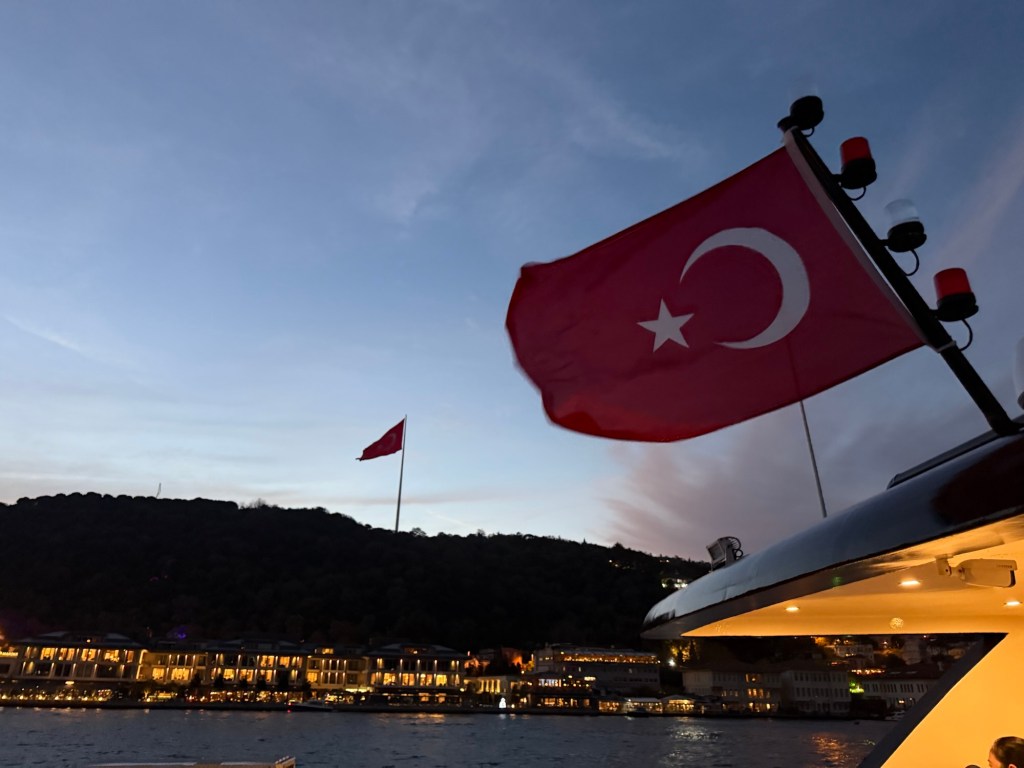
Photo by author, Bosphorus River cruise, Istanbul, Turkiye, November 2025.

Jesus our Light

Lord My Chef Sunday Recipe by Fr. Nicanor F. Lalog II
Third Sunday in Ordinary Time, Cycle A, 25 January 2026
Isaiah 8:23-9:3 ><}}}}*> 1 Corinthians 1:10-13.17 ><}}}}*> Matthew 4:12-23
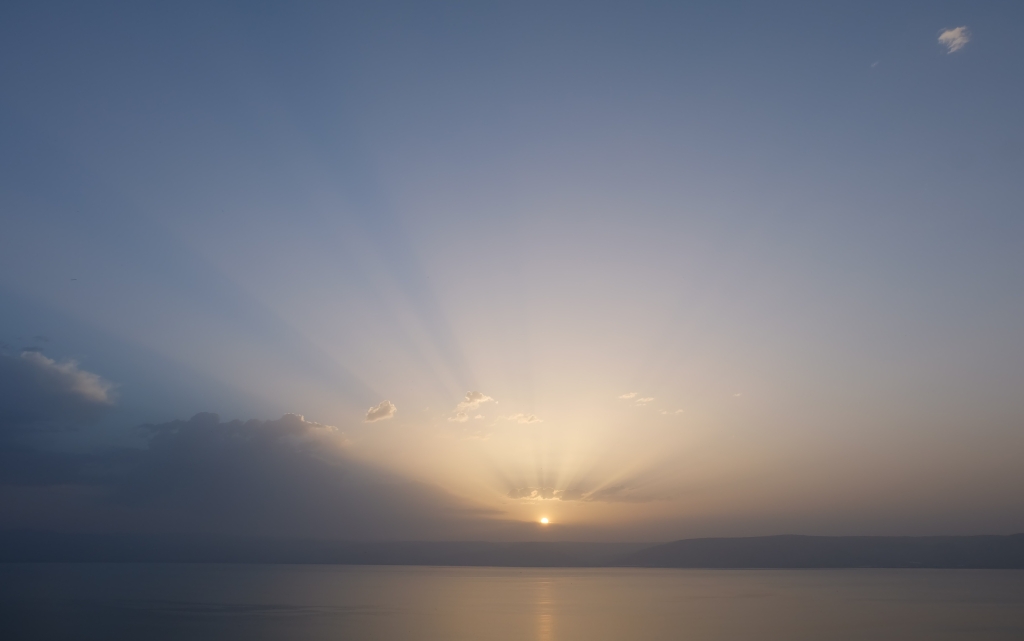
Photo by author, sunrise at the Lake of Galilee, the Holy Land, May 2019.

More than a month ago at the Midnight Mass of Christmas we have heard this Sunday’s first reading, that beautiful prophecy by Isaiah fulfilled in Jesus Christ’s coming.

First the Lord degraded the land of Zebulun and the land of Naphtali; but in the end he has glorified the seaward road, the land west of Jordan, the district of the Gentiles. Anguish has taken wing, dispelled is darkness: for there is no gloom where but now there was distress. The people who walked in darkness have seen a great light; upon those who dwelt in the land of gloom a light has shone (Isaiah 8:23-9:1).

When Jesus heard that John had been arrested, he withdrew to Galilee. He left Nazareth and went to live in Capernaum by the sea, in the region of Zebulun and Naphtali, that what had been said through Isaiah the prophet might be fulfilled… (Matthew 4:12-14).

As we move forward into Ordinary Time, we hear anew one of the most beautiful promises in the Old Testament of how the coming of the Christ is the “breaking of dawn of salvation” as Zechariah sang in his Benedictus after naming his son “John” when light bursts forth to dispel the darkness that had enveloped us for a long time.

Photo by author, sunrise at the Lake of Galilee, the Holy Land, May 2017.

Notice that it is those who live and walk in darkness literally and figuratively speaking are always the first to come forward into the light like the people in Galilee at that time, especially the towns of Zebulun and Naphtali who were actually names of Jacob’s two other sons. Their tribes settled in that area of Galilee that was at the border with other pagan countries always subjected to wars and conflicts with foreigners. Their lands were literally in the dark, never at peace as if forsaken.

Here lies the good news of this Sunday: after hearing the news of John’s arrest, Jesus launched his public ministry. Notice how plain and simple was Matthew’s narration, “When Jesus heard that John had been arrested” – it was another period of darkness for the people with rampant violence and injustice. However, it was not totally dark at all: see how Jesus withdrew to Galilee; Christ’s “withdrawing” to Galilee was not something negative but actually more of a positive development. Jesus chose to begin his ministry in that forsaken province of Galilee to show his love and concern for the people long forgotten. Remember how at that time that Jerusalem was the center of everything, something like an “imperial Manila” we call these days.

Here we find again that imagery of Jesus like in his birth that happened during the darkest night of the year that 30 years later, he chose to go to the darkest region of Israel to bring light of salvation to everyone. Jesus comes to us most in moment of darkness in our lives! When we are troubled by sins and problems, never lose that spark within for Christ had come, is coming and continues to come to us! Matthew mentioned this prophecy of Isaiah of the great light shining in the land of gloom not really for his readers then and now to remember what God had done in the past but to make us all aware always that God continues to send us his Son Jesus in these dark moments of our lives. In telling us how Jesus began his ministry by withdrawing to Galilee in the land of Zebulun and Naphtali, Matthew wants us to be aware of what God has done for us, of giving us Jesus, the true Light of the world right into the many darkness we are going through in life today.

More than the news overseas that we have heard like wars and the breaking apart of world peace and order with America suddenly flexing its muscles to remind everyone they are still great and powerful or the very frustrating corrupt lawmakers of the country, we are all in some form of being in the midst of darkness in our personal lives too like a sick loved one or a problematic brother or sister.

Photo by author, San Juan, La Union, 08 January 2026.

God has delivered us from slaveries of sin and selfishness in Christ’s coming and presence among us. Surely there would always be darkness and shadows in our lives this 2026 but Jesus is telling us today in his withdrawing to Galilee after hearing John’s arrest that we need to get out of our own darkness! There is no more darkness in Christ’s coming; it is us who have darkened our lives with our selfish interests like the quarrels and animosities against one another that St. Paul warned against in the second reading.

Every time we destroy our unity, our oneness, we plunge ourselves into darkness. Whenever we refuse to bow down, when we refuse to give way, when we refuse to forgive even forgo or let go of others inanities, we go back to darkness. Inasmuch as Jesus Christ is the great light who shone on the many darkness of our lives, he is calling us like the first four disciples to bring his light to others.

Was it really that easy for the brothers Simon and Andrew, especially brothers James and John to immediately leave behind their livelihood and father so easily for Jesus? Not really. Matthew need not go into details about their call and conversion because most likely, they went through the same stages we have gone through or going through right now as we pray and reflect about our life direction. Like us today, Simon and Andrew, James and John experienced burn out, searching for meaning in life that after listening to the words of Jesus, they felt and saw him as the light enlightening everything for them. They saw in Jesus their lives and very person getting clearer that they decided to follow him and become fishers of men.

How far are we willing to repent and be converted in the light of Christ to start anew living in the land of loving God, self, and others?

Photo by author, Bolinao, Pangasinan, 19 April 2022.

I have always loved sunrise. Though sunsets are more colorful and dramatic like a spectacular show called palabas in Filipino, sunrise is different: it is more of paloob, an inside movement that is subtle yet intense when light steals into shadows as the sun is gradually breaking open the darkness to reveal what is unseen.

That is why our Filipino term for sunrise is more evocative of its deeper meaning as pagbubukang liwayway which literally means breaking of dawn. Every morning person (madrugeño in Spanish) knows so well those feelings of being up before sunrise, of exactly catching the breaking of dawn that is always joyful and liberating with a certain kind of lightness and relief from deep within because another day is given us.

Maybe it is a carry over with my having worked for three years in the graveyard shift covering the police beat while still working at GMA News in the late 1980’s. But more recently, I feel that imagery of coming forward into the light resonates most after a good confession when we deeply realize God’s immense love, that God is not that really angry at all with us because of our sins, that there is a bright light to always look forward in this life amid all the darkness and shadows enveloping us.

Today is the National Bible Sunday. It is when we prayerfully read the Sacred Scriptures everyday that we see the light of Christ in our selves, in our lives. The more we pray the Scriptures, the more we are enlightened, the more we are filled with the light of Christ that enables us to see too his light on the face of those we meet daily. Let us step out of our darkness in life this Sunday and everyday to henceforth experience and share Christ. Amen. Have a blessed, enlightening week ahead!

Darkness in every beginning

The Lord Is My Chef Sunday Recipe for the Soul, Week IV-A, 26 January 2020

Isaiah 8:23-9:3 ><)))*> 1 Corinthians 1:10-13, 17 ><)))*> Matthew 4:12-23

Photo by author, July 2019, Tagaytay City.

In the beginning, when God created the heavens and the earth, the earth was a formless wasteland, and darkness covered the abyss, while a mighty wind swept over the waters.

Genesis 1:1-2

The Bible clearly tells us everything in the beginning was dark. And since then, almost everything has always begun in darkness, like human life itself, or every new day, even new year!

Some relatives and friends have been complaining to me how 2020 started off with a lot of darkness.

And I totally agree with them!

Since the Christmas Season until last Friday, I have been officiating funeral Masses for parishioners and friends as well as praying for some relatives and friends who have passed away this January abroad. Also included in this vast swathe of darkness are some relatives and friends diagnosed with serious illnesses like Alzheimer’s and cancer.

In the news we find so many darkness at the start of 2020 like fears of World War III when an Iranian military officer was killed in an American drone attack in Baghdad on January 03; the January 12 phreatic eruption of Taal Volcano now threatening a catastrophic eruption anytime; and, this fast-spreading new corona virus from China that is reportedly so deadly.

Everything is so dark at the start of 2020 and January is not even over yet!

Photo by Mr. Raffy Tima, GMA-7 News, 15 January 2020.

Darkness leads us into light

Even our readings today speak about darkness, especially the beginning of the public ministry of our Lord Jesus Christ after John the Baptizer was arrested.

When Jesus heard John had been arrested, he withdrew to Galilee. He left Nazareth and went to live in Capernaum by the sea, in the region of Zebulun and Napthali, that what had been said through Isaiah the prophet might be fulfilled.

Matthew 4:12-14

However, these same readings assure us that not all darkness are gloomy after all. In fact, it is in darkness where we see the light of the gospel shining brightly.

Sunrise at Lake Tiberias (aka, Galilee), May 2017. Photo by author.

Despite that dark note on the arrest of John the Baptizer, we actually have here the beginning of the good news of salvation with the start of the preaching and public ministry of Jesus Christ.

Darkness is always a prelude to light, like chaos is to order.

Sometimes, we need to experience some darkness for us to realize the need to be enlightened, to see more the beauty of light, to seek light – most especially of the love and mercy of God in Jesus Christ who had come to us on the darkest day of the year, December 25.

See how in our lives when bad things have to happen first before we can learn our lessons so well or find particular values we now treasure in life.

Sometimes, God allows us to be plunged into darkness to find him, to see him, to desire him and eventually have him.

First the Lord degraded the land of Zebulun and the land of Naphtali; but in the end he has glorified the seaward road, the land west of the Jordan, the District of the Gentiles. Anguish has taken wing, dispelled is darkness: for there is no gloom where but now there was distress. The people who walked in darkness have seen a great light; upon those who dwelt in the land of gloom a light has shone.

Isaiah 8:23-9:1

Jesus comes to us in darkness

Photo by Mr. Jim Marpa, Bohol Island, 2019.

Darkness in the bible signifies sin and evil, failures and disappointments, struggles and sufferings, and finally, sickness and death. No one is immuned from darkness.

But with the coming of Jesus Christ who conquered evil and sin, darkness has become a blessing, an invitation for us to find him, to listen to him, and to follow him.

Fram that time on, Jesus began to preach and say, “Repent, for the kingdom of heaven is at hand.” As he was walking by the Sea of Galilee, he saw two brothers, Simon who is called Peter, and his brother Andrew, casting a net into the sea; they were fishermen. He said to them, “Come after me, and I will make yo fishers of men.” At once they left their nets and followed him. He walked along from there and saw two other brothers, James, the son of Zebedee, and his brother John. They were in a boat, with their father Zebedee, mending their nets. He called them, and immediately they left their boat and their father and followed him.

Matthew 4:17-22

Jesus opted to start his public ministry and preaching in the “darkest region” of Israel at that time, among the peoples living in darkness of sins and lack of meaning and directions in life. He comes to us most of the time during our moments of darkness to enlighten us and give us direction.

That makes every darkness a blessing in itself for that is when Jesus – the Gospel himself – shines brightly.

Lake Tiberias at the back of the ruins of the Capernaum synagogue where Jesus preached. Photo by author, May 2019.

Let everything begin in the words of Jesus

Right away at the start of his preaching and ministry, people began following to listen to Jesus in Galilee, particularly at Capernaum where he used to preach in their synagogue near the shores of the Lake of Galilee (a.ka., Tiberias).

Everything began with the words of Jesus Christ: the sick were healed, those possessed by evil spirits were cleansed, sinners were forgiven, and those troubled found comfort in him.

Most of all, people found meaning in life as experienced by the first four disciples of Jesus, Simon and his brother Andrew, and the sons of Zebedee, James and John.

They were all rich and money was not a problem because they owned fishing boats that was very expensive at that time. Simon Peter is believed to be a very successful fisherman with many hired workers while the brothers James and John were beginning to learn the trade from their rich dad.

All four grew up together, worked together, most of all shared the same darkness in life, searching for meaning and direction in life that they have finally found in Jesus Christ while listening to his preaching. And that is why they immediately left everything and everyone behind after being called by Christ!

Very surprising was the attitude of Zebedee also who did not even bother to call or drag his sons back to their boat to help him because he must have felt and seen the bright sparks within his sons who have finally found meaning and direction in life through the preaching of Jesus Christ – “the Word who became flesh” – according to John who later wrote the fourth gospel account.

The Gospel Book (Evangelare) enthroned at our altar for the Bible Sunday celebration, 26 Jan. 2020. Photo by Angelo Nicolas Carpio.

Such is the power of the word of God who cleanses us of our sins, empties us of our pride and foolish self to be filled with the wisdom and light of Jesus Christ.

In a decree issued last week, Pope Francis has declared every third Sunday of Ordinary Time as “Bible Sunday” to emphasize the importance of praying the Sacred Scriptures, listening to God himself present in his words found in the Bible.

Even today, everything begins with the words of Jesus Christ: that is why it is the very first part of the Mass, equally important with the Eucharist.

We can never experience Jesus Christ in his Body and Blood at the Holy Eucharist or even among our brothers and sisters gathered in the celebration of the Holy Mass unless we first meet and experience him in his words.

Most of all, we can never experience him in person without praying the Sacred Scriptures because according to St. Jerome, “Ignorance of the scriptures is ignorance of Jesus Christ.”

Is there ay darkness in your life these days?

Try dusting off that bible you have kept in a little corner of your shelf — read it, study it, and pray it.

Be surprised in its powers for,

“Indeed, the word of God is living and effective, sharper than any two-edged sword, penetrating even between soul and spirit, joints and marrow, and able to discern reflections and thoughts of the heart”

Hebrews 4:12

A blessed Sunday to you!