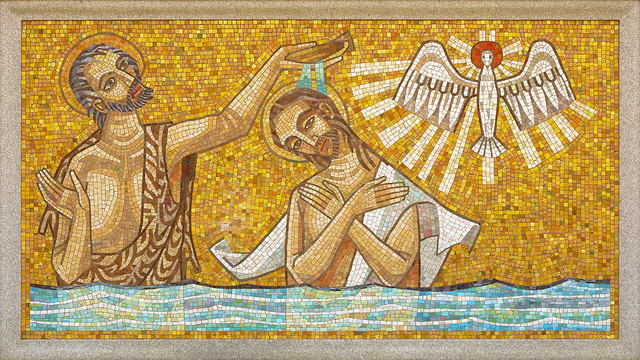
Advent is God Leading Us to New Directions in Life

48396795_474653906393673_4933836951066247168_n
The Lord Is My Chef Simbang Gabi Recipe-9
24 December 2018
2 Samuel 7:1-5, 8-12, 14, 16///Luke 1:67-79

            Finally!  It is the word of the day.

            Finally we have completed the nine-day novena of Christmas but that is not the true joy of our annual Simbang Gabi tradition.  What is most essential is in these nine days of rising early for the novena, we have rediscovered Jesus Christ in ourselves and among others while at the same time recommitted ourselves to Him again as our only fulfillment in life.  I hope that in the past nine days we have rediscovered and even brought back somehow to our lives our sense of the sacred that is now fast fading out in our very consumerist society.  Through the many religious symbolisms found in our liturgies and readings these Advent season, it is hoped that we have rediscovered God – as well as our sense of the sacred – who is the most meaningful and essential in life.  

            Finally today also, we find the only male character in St. Luke’s story of the coming of Christmas regaining his stature after being on the distaff side, Zechariah.  After disbelieving the good news of (finally) having a son through the angel Gabriel’s annunciation at the Temple when he was forced into silence by becoming mute and deaf, Zechariah was finally able to speak again after declaring his son shall be named John.  And his very first words after being silent for nine months were praises to God the Almighty like Mary during the Visitation.  Called theBenedictus, Zechariah affirmed and confirmed in himself first the reality and truth of God being present in our lives amid the many twists and turns in life, narrating His reality and fidelity to His promises from the time of the Patriarchs and the Prophets of Israel down to the birth of John who would prepare the Christ.  In effect, Zechariah had finally come into a full circle in singing the Benedictus:  like his wife Elizabeth and son still in her womb John, St. Luke tells us how Zechariah was also filled with the Holy Spirit at that instance on the naming of John when he prophesied, “Blessed be the Lord, the God of Israel” (Lk.1:68).

          Zechariah shows today the fruits of his “forced silence” that had deepened his priesthood that is very evident in the opening line of Benedictus, giving glory to God for His fidelity and mighty acts to save Israel.  It is very similar with some of the popular parts of the psalms that every Jew prays.  There are three important reasons that Zechariah tells us why God is blessed:  “for he has come to his people and set them free,  he has raised up for us a mighty Savior, born of the house of his servant David” (Lk.1:68-69).  What is amazing in the Benedictus is that the verbs are in the past tense, of the works of God being done in the past like visiting His people, setting them free or redeeming them by sending Jesus Christ.  Like the Magnificat, it is a looking back and a looking forward to more great things God has in store for us.  Zechariah is reminding how God has never stopped working wonders for us, speaking and acting through prophets so many years ago even before the coming of Christ who is the fulfillment of all His promises.

           We have mentioned how we priests and other religious and consecrated persons sing the Magnificat every evening; the Benedictus, on the other hand, is sung every morning prayers called lauds.  As we face a new day, like Zechariah at the birth of his son John, we look back and remember so that in the process we renew our faith and trust in God who never stops in working for our good.  We praise God and put our trust and confidence in Him for every new day, hoping He would continue to visit us, redeem us, and raise us up from the many challenges we are going to face. But most of all, we are reminded too by Zechariah at this time, on the eve of Christmas, to ponder in our hearts where the Lord is leading us to?  Zechariah had seen the hand of God in Israel’s history, in his own life, and could see it also present in the coming life of his son John.  It is very clear that God is our leader in life, the invisible hand who directs us.  When we come to think of it, Zechariah’s forced silence was a way for him to rediscover again his sense of God and his sense of the sacred.  So many times for us, including us priests that although we keep our prayers and devotions, they are devoid of God.  One of the things this generation is fast losing is that sense of the sacred when everything is not taken for granted and trivialized.  How I hate before the Metro Film Festival during Christmas when we as the only Christian nation in this part of the world celebrates the merriest and longest Christmas are feasting on movies about evil and horror movies.  At least these past few years, there have been marked improvements in our film industry with great movies coming out.  Last year I was able to see the adaptation of Nick Joaquin’s “Portrait of the Filipino as Artist” that was magnificent in its interpretation of the play.
 
          On these remaining hours of the day before Christmas, imitate Zechariah to get some silent moments with our self and with God to reflect on where is the Lord leading us to this Christmas?  What direction in life is He asking us to follow?  In the first reading we have heard God asking David to stop his plans of building a temple for Him.  There was nothing wrong with building a temple but it was not the plan of God for David but for his son Solomon.  The same thing with us:  no matter how good our plans are for God and for others, it is the direction God has for us?  We can never prepare the way of the Lord unless we first sub it to His plan and follow His directions.  A blessed Christmas to you! AMEN. Fr. Nicanor F. Lalog II, Parokya ng San Juan Apostol at Ebanghelista, Gov. F. Halili Ave., Bagbaguin, Sta. Maria, Bulacan.
*Photo by author, altar linen of our Parish Church.  May we follow God’s directions for our lives.

Advent is God’s Tenderness and Sweetness

49116908_550946642036661_8965409051152220160_n
The Lord Is My Chef Simbang Gabi Recipe-8
Fourth Sunday of Advent, 23 December 2018
Micah 5:1-4///Hebrews 10:5-10///Luke 1:39-45

            Christmas is a story of love, about the meeting of lovers with God as the Great Lover who gave us His only Son because of His immense love for us.  Unfortunately, this love of Christmas is often presented in the cheesy songs as romantic love like in “Pasko na Sinta Ko”and “Last Christmas”.  The word “lovers” may be too serious as a term for us to relate this with today’s gospel the Visitation of Mary to her cousin Elizabeth; but, the truth is, both women were so in love with God who clearly loved them so much with children in their womb bound to change the course of human history forever.  They in turn, were also filled with love for each other as expression of their love for God.  And when there is love, there is always tenderness and sweetness that all happen in the context of a visitation that we first try to reflect upon.

             Visit and visitation may seem to be one and the same in the sense that both have a common Latin root word, the verb to see, “vidi, videre” from which came the word video.  But, a visit is more casual and informal without intimacy because it is just “a passing by” or merely to see.  It is more concerned with the place or the location and site and not the person to be visited.   We say it clearly in Filipino as in “napadaan lang” when it just so happened you were passing by a place and even without any intentions, you tried seeing someone there.  On the other hand, visitation is more commonly used in church language like when a bishop or priests come to see the parishioners in remote places.  This is the reason a chapel is more known as a visita in our country because that is where priests visit and check on the well-being of people living in areas very far from the parish usually at the town proper.  Aside from being the venue for the celebration of Masses, the visita serves as classroom for catechism classes and other religious even social gatherings in a particular place.  Thus, visitation connotes a deeper sense in meaning because there is an expression care and concern among people, a kind of love shared by the visitator/visitor and the one visited like Mary and Elizabeth.  Visitation is more of entering into someone’s life or personhood as reported by St. Luke on Mary’s visitation to Elizabeth where Mary “entered the house of Zechariah and greeted Elizabeth” (Lk.1:40),  implying communion or the sharing of a common experience.  In this case, the two women shared the great experience of being blessed with the presence of God in their wombs!

          Visitation, therefore, is a sharing or oneness in the joys and pains of those dear to us.  The word becomes more meaningful when we try to examine its Filipino equivalent which is “pagdalaw” from the root word “dala” that can be something you bring or a verb to bring.  When we come for a visitation, we dala or bring something like food or any gift.  But most of all we bring our very selves like a gift of presence wherein we share our total selves with our time and talents, joys and sadness, and everything to those being visited.  And that is what Mary did exactly in her visitation of Elizabeth where she brought with her the Lord Jesus Christ in her womb, becoming the first monstrance of the Lord as well as His first tabernacle.  We are invited to become like Mary in the visitation of others to bring Christmas and Jesus Himself to others by allowing our very body to be the “bringer” or “taga-dala” of Christ.  The Lord Himself is the highest good we can bring as pasalubong in ever visitation we make.  And if we can only be like Mary in our visitations and dealings with one another sharing Jesus Christ, then we also bring with us God’s tenderness and sweetness to others.  In a world that admires toughness and roughness, qualities like tenderness and sweetness are so rare to find these days.  How sad, even tragic is the viral video of bullying at the Junior High School of the Ateneo last week that has spawned other forms of bullying with everybody lynching on the bully, making all kinds of jokes out of the incident while forgetting the bigger bullies we have in the halls of power these days.  See that the two most popular presidents ever elected won the hearts of many voters because of their macho image of astig or sanggano, relishing their pugnacious character and behavior with matching cuss words and street talk, exactly the bullies we often condemn?!

             Back to our topic…tenderness and sweetness in Filipino are often translated in just one word which is “malambing” from “lambing” that has no direct English translation except that it connotes a loving affection; but, both terms are more than just affections but stirrings from the heart that move us into action.  Tenderness is very much like gentleness; the former is more focused while the latter is very general attitude.  Tenderness is more than being soft and gentle but an awareness of the other person’s weaknesses, needs and vulnerabilities.  A tender person is one who tries not to add more insult to one’s injuries or rub salt onto one’s wounds so to speak.  A tender person is one who tries to soothe and calm a hurting person, trying to heal his/her wounds like God often portrayed in many instances in the bible in lovingly dealing with sinners filled with mercy.  Like God, a person filled with tenderness is one who comes to comfort and heal the sick and those taking on a lot of beatings in life.  When Jesus Christ came, He also personified this tenderness of God like when He is moved with pity and compassion for the sick, the widows, the women and the children and the voiceless in the society.  Tenderness is coming to heal the wounds of those wounded and hurt, trying to “lullaby” the restless and sleepless.  Mary visited Elizabeth because she also knew the many wounds of her cousin who for a long time bore no child, living in “disgrace before others” as she had claimed (Lk.1:25).

            Sweetness always goes with tenderness.  It is the essence of God who is love.  Anyone who loves is always sweet that always comes naturally from within, bringing out good vibes.  It is never artificial like Splenda, always flowing freely and naturally that leaves a good taste and feeling to anyone.  In the Hail Holy Queen, Mary is portrayed as “O clement, O sweet Virgin Mary” to show her sweetness as a mother.  According to the late Fr. Henri Nouwen in his book “The Return of the Prodigal Son”, we are all invited to be like God in having both the qualities of a father and mother in Him.  Basing his reflections on the painting by Rembrandt of the said parable, God has a father’s hand that is supportive, empowering and encouraging and a mother’s hand that is consoling, caressing, and comforting.  There are no pretensions and pompousness in being sweet, never needs much effort to exert in showing it for it comes out naturally and instantly.

            Tenderness and sweetness are the most God-like qualities we all have but have buried deep into our innermost selves, refusing them to come out because of our refusal to love for fears of getting hurt and left behind or, even lost.  When Mary heard about Elizabeth’s condition, she simply followed her human and motherly instincts that are in fact so Godly – she went in haste to visit her.  Tenderness and sweetness are the twin gifts of Christmas to humanity when God almighty became little and vulnerable like us so we can be great and powerful like Him in being able to love.  Let me end this long reflection with a quotation from the classic novel “The Plague” by Albert Camus:  “A loveless world is a dead world, and always there comes an hour when one is weary of prisons, of one’s work, and of devotion to duty, and all one craves for is a loved face, the warmth and wonder of a loving heart.”  Let that love in you come out this Christmas and hereafter, simply be human like the child Jesus and be surprised at its tremendous power to change the world like God Almighty.  AMEN. Fr. Nicanor F. Lalog II, Parokya ng San Juan Apostol at Ebanghelista, Gov. F. Halili Ave., Bagbaguin, Sta. Maria, Bulacan.

*Photo by the author, our Nativity scene at the side of the church with the manger still empty.  Be the Child Jesus Christ, be tender and sweet to someone going through hard times in life, to someone suffering in silence.  Let them feel Christ, let them be touched by God with your concrete love of tenderness and sweetness.

Advent is Looking Back – and Forward – to God’s Goodness

48393157_735339493505987_5673987050278223872_n (1)
The Lord Is My Chef Simbang Gabi Recipe-7
22 December 2018
1Samuel 1:24-28///Luke 1:46-56

          Mary’s prominence lies not only in giving birth to Jesus Christ but more of her being His perfect disciple, the first Christian, the first receiver and doer of the Word who became flesh in her womb.  After sharing Christ with Elizabeth in the Visitation, Mary now sings the Magnificat like the song of Hannah in the first reading when she was gifted by God with the child Samuel despite her barrenness.  It is very amazing that the Blessed Virgin Mary is the only person who has appeared most – five times – as a cover of the TIME Magazine.  Likewise, her Magnificat is said to be the only poem that has been set to music more than any other in the whole history.  Almost every great musician has worked on Mary’s canticle like Bach, Mozart, Vivaldi and Rachmaninoff while for over a thousand years it had been sung or recited in the evening in monasteries around the world following St. Benedict’s rule in the sixth century. The Magnificat is a song of praise and thanksgiving to God, Mary’s own experience of God not only in her own life but also in her cousin Elizabeth who was barren and old yet conceived a child to become the Lord’s precursor, John the Baptizer.  At the Visitation, Elizabeth praised Mary but when it was Mary’s turn to speak, she praised God instead of Elizabeth contrary to common gesture of returning her favour because it was very clear with her that every gift is from God, and the greatest gift we can all have from God is His Son Jesus Christ whose birthday we celebrate on Tuesday.

            What is so remarkable with the Magnificat is its Advent flavor:  it is not only a praise and thanksgiving to God for all the wondrous things He had done to Mary and to us all but also a song of looking forward to more blessings to come from Him!  That is what Advent is all about, a looking back to the first Christmas and a joyful waiting for the Second Coming of Jesus Christ!  This is very evident in her opening lines, “My soul proclaims the greatness of the Lord; my spirit rejoices in God my savior.  For he has looked upon his lowly servant.  From this day all generations will call me blessed:  the Almighty has done great things for me, and holy is his Name” (Lk.1:46-49).  It is definitely a fruit of her prayer or gestational silence we mentioned the other day like what Elizabeth did.  Mary took into her inmost being the message of the angel to rejoice as a highly favored one of God, acknowledging the work of grace in her despite her stature in life.  Again we find here some strong Jewish flavors of which Mary must be aware of like the expression “the Almighty has done great things for me” which has strong roots in the Old Testament experience of the Israelites and their prophets when God saved them from Egypt and so many trials.  Think of the great things God has done to you also and rejoice!  Look back to the past 12 months and here we are, still together although some badly beaten with some even bruised in life but like Mary and Elizabeth meeting together, there are so many reasons for us to celebrate and thank the Almighty for the great things He had done to us.  And the most wonderful blessing next to God is the gift of family and friends around us, like the two cousins, a beautiful imagery of two pregnant women rejoicing together, celebrating life as they looked back in their personal lives and in their nation’s history the many good things God had done to them since the time of Abraham.

           The Magnificat shows us too that most of the things Mary mentioned have not happened yet:  “He has mercy on those who fear him in every generation.  He has shown the strength of his arm, and has scattered the proud in their conceit.  He has cast down the mighty from their thrones and has lifted up the lowly.  He has filled the hungry with good things and the rich he has sent away empty.  He has come to the help of servant Israel for he has remembered his promise of mercy, the promise he made to our fathers, to Abraham and his children forever” (Lk.1:50-57).  These are a mixture of images from the Old Testament about the things God had done to Israel and to the two cousins but at the same time mention other things that would happen only upon the completion of Christ’s mission.  This is to show us that Mary’s Magnificat is also about the perfect presence of God in Jesus Christ in our lives who is the “same yesterday, today and forever” (Heb. 13:8).

             Last year I was privileged to join my former colleagues at GMA-7 News as their chaplain on a pilgrimage to the Holy Land – all for free with everything in first class!  On our flight back to Manila, we met some OFW’s and one of them was so ecstatic in meeting Ms. Jessica Soho, making a commotion like crazy at the Ben Gurion Airport which is noted for its strict security measures.  A female security officer caught our attention and held us for a while as she checked our papers and passports.  Making things worse, the crazy OFW kept telling the officer to let us go because Ms. Jessica is a celebrity in our country.  That got the Israeli’s blood boiled and turned her attention to me, the only man in our group, asking me to go with her to their office.  That was when the three women of GMA News stood for me – our SVP Ms. Marissa Flores, Ms. Jessica Soho, and newly retired VP Ms. Kelly Vergel de Dios – telling the airport official that I am their friend, a friend for over 30 years, explaining how I used to work with them until I resigned and became a priest.  I felt my world stopping momentarily like in a dream sequence:  everything happened so fast!  There was the possible delay and a lot of interviews but I also felt God’s strong arm holding me, also tenderly caressing me with His mercy when I heard the three veterans of news defending me.  It was the final blessing I got from God during that pilgrimage when the three women of GMA-7 News were like Mary and Elizabeth reminding me how God had worked in our lives all these years.  It was like a Magnificat moment for me that until now I can recall the sweet smile that incident had left me.  Try praying the Magnificatstarting tonight as you thank God for the many wondrous things He had done to you despite the many trials you have also gone.  Thank God for the faithful and wonderful friends who have visited you to see His plans for you and most of all, be open for more blessings to come from Him this Christmas.  Let us pray for the many great women who have changed our lives, the Marys and Elizabeths who visited us and brought us closer to Jesus Christ.  AMEN. Fr.NicanorF.LalogII,Parokya ng San Juan Apostol at Ebanghelista, Gov. F. Halili Ave., Bagbaguin, Sta. Maria, Bulacan

*Photos by the author:  above are the bronze statues of Mary and Elizabeth at the Church of the Visitation; below, our group photo during our Holy Land Pilgrimage last April 2017.

48398771_2164177240301796_9078224252741615616_n

Christmas Is a Story of Encounters

48374193_267175410627592_1319653152944816128_n
The Lord Is My Chef Simbang Gabi Recipe-6
21 December 2018
Zephaniah 3:14-18///Luke 1:39-45
          Every Monday morning I try to visit the sick members of my parish and most often, a lot of comedies happen in these visitations like last week when I asked children directions to Mang Eusebio.  After kissing my hand, the kids willingly accompanied me to Mang Eusebio when one of them asked me why I was going to visit the old man.  I told him I am going to bless Mang Eusebio and that is when he faced me, full of wonder and asked, “bakit po, may masamang espiritu po ba sa kanila?” (why, are there bad spirits in their house?).  I just laughed and told them there are no ghosts at Mang Eusebio’s home and I will just visit to pray for him.  With that, they left me and as I stood at the front gate ofMang Eusebio’s home, I felt like Max von Sydow who played the role of Jesuit exorcist Fr. Merrin at the poster of the 1973 movie “The Exorcist.”

           Christmas is a story of encounters among God and persons.  So far since Tuesday we have heard stories of encounters by Joseph, Zechariah and Mary with an angel.  Today, we hear the beautiful encounter between two women so blessed by God, two mothers whose sons would usher in a new beginning of life on earth.

           Mary set out in those days and travelled to the hill country in haste to a town of Judah, where she entered the house of Zechariah and greeted Elizabeth.  When Elizabeth heard Mary’s greeting, the infant leaped in her womb, and Elizabeth, filled with the Holy Spirit, cried out in a loud voice and said, “Most blessed are you among women, and blessed is the fruit of your womb.  And how does this happen to me that the mother of my Lord should come to me?” (Lk.1:39-43)

            We have met Elizabeth briefly in Wednesday in the story of the annunciation to Zechariah of the birth of John the Baptizer.  We have reflected that she was in a better position than her husband in receiving the good news of her pregnancy when “she went into seclusion for five months”, a kind of self-imposed “gestational silence” to ponder and pray upon God’s answer to their prayer for a child.  Finally, Elizabeth spoke today upon hearing the greeting of the Blessed Mother Mary.  And her response to her cousin’s greeting is so wonderful, if we must say, so pregnant with meanings that surely resulted from her gestational silence:  “Most blessed are you among women, and blessed is the fruit of your womb.  And how does this happen to me that the mother of my Lord should come to me?”  Here is Elizabeth, the old and barren wife of Zechariah who must have been so used to being sad and sorry for her plight of being childless, even ashamed.  Now, she is filled with joy, so amazed to feel and experience God in her life.  First with the baby in her womb and with Mary visiting her, with the Son of God in the womb of her visitor!  It was too much for Elizabeth to contain that she burst into joy filled with the Holy Spirit.  She must have been the older version of Miss Universe Catriona Gray filled with enthusiasm, moving in graceful slow motion!  She could not believe how her life had changed so much and now, here she is being visited by Mary, the mother of the Christ.

           It always happens with us too when we experience great privilege and honor be given us by others, most especially by God.  Like Elizabeth, we have that sense of awe and wonder to ask “who am I” to be accorded with such great honor.  Many times we have found ourselves asking God, “why me, Lord?”  We always believe there is somebody better and smarter than us, one who is more capable than us that we always wonder if God really has a plan for us.  It is always good to maintain such a sense of humility before God and others like Elizabeth, but sometimes, it can happen that after seeing clearly our role in the plan of God, we back out or worst, we pretend to be doing our part.  This is what the Orthodox Christian theologian Olivier-Maurice Clement, a friend of St. John Paul II who warned about “sleepwalking existence” wherein we pretend to be real disciples of Christ when we are just dreaming.
       Advent is the time for us to wake up from our sleepwalking existence, to face the discomforting realities of being disciples of Jesus Christ.  In this time when it has become a national past time to bash us priests, may we see it also as a time to examine how true are we priests to our calling.  It is the time also to be more open to hear the cries of the people, to listen to their views and perception that we are more aligned with the rich and powerful, if our claims to being a “Church of the poor” is just a mere poster and slogan or a reality.  This is the time for us priests to wake up from our sleepwalking existence and get real with our vocation as shepherds like Christ who was maligned and accused with so many falsehoods.  Advent is the time for us all to accept the real hard stuff of Jesus Christ like witnessing to His love and mercy among the poor and the disadvantaged, of bringing Him to those forgotten by their families and the society like Mary visiting Elizabeth.  And yes, like Elizabeth, let us doubt no more that despite our nothingness, we are worthy before God that He has plans for us in bringing Christ Jesus in this world. AMEN. Fr. Nicanor F. LalogII, Parokya ng San Juan Apostol at Ebanghelista, Gov. F. Halili Ave., Bagbaguin, Sta. Maria, Bulacan.
*Photo by the author, Church of the Visitation, Holy Land, 19 April 2017.

Mary Is the True Miss Universe

SnGiovanniRotondo
The Lord Is My Chef Simbang Gabi Recipe-5
20 December 2018
Isaiah 7:10-14///Luke 1:26-38

            Allow me to join the jubilation over our very own Ms. Catriona Gray’s winning of the Miss Universe 2018 title last Monday in Thailand.  As usual, I did not see it but cannot resist checking the news as everybody talked about her beauty and grace, and most especially her intelligence.  Though I have not seen the other candidates and their performances, I am very convinced she rightly deserves the title especially with her answer to the final question given her.  One quality I like most with Ms. Gray is her being filled with enthusiasm that was very evident with the way she projected herself, exuding with good vibes and life.  Enthusiasm is from two Greek words “en theos” that mean to be filled with God – like the Blessed Virgin Mary who is “full of grace and the Lord is with her” (Lk.1:28).

            On this fifth day of our Simbang Gabi we hear the second story by St. Luke of how the first Christmas happened.  He tells us how six months after announcing to Zechariah the coming of their son John, the angel Gabriel went to Nazareth to announce the good news of the birth of our Savior Jesus Christ to the Blessed Virgin Mary who was betrothed to St. Joseph.  Unlike Zechariah who doubted the angel’s message, Mary was more open with her response by asking how it would all take place.  And the angel said to her in reply, “The Holy Spirit will come upon you, and the power of the Most High will overshadow you.  Therefore the child to be born will be called holy, the Son of God” (Lk.1:35).

            Last Monday we have reflected how St. Matthew ended his story of the genealogy of Jesus Christ with Mary to show her as the new beginning of everything in the world.  Through Mary’s giving birth to Jesus, we now share with Him one common origin in faith who is God as our Father so that despite our many sins and failures, we are given with a fresh start, new opportunities in life daily.  St. Luke bolsters this today with his account of the annunciation of the birth of Jesus to Mary.  As a Jew, Mary must be totally aware of the words of the angel about herself being “overshadowed by the Most High” like in the Old Testament stories of God’s presence in the cloud during their journey in the wilderness after their exodus from Egypt.  Even Moses could not enter the tent when “the cloud covered it and the glory of the Lord filled the tabernacle” (Ex.40:34-38).  To be filled and overshadowed by the presence of God is to be to be possessed by God and eventually to be transformed by God.  Remember how in the movie “The Ten Commandments” when the face of Moses was transformed after meeting God.  The three synoptic gospels record a similar incident of God’s presence in a cloud hovering with Jesus during His transfiguration at Mount Tabor witnessed by Peter, James and John.  The two great prophets of Israel were there, Elijah and Moses conversing with Jesus when a cloud overshadowed them with a voice declaring “this is my beloved Son, listen to Him.”

          Matthew, Mark and Luke tell us how the apostles were all terrified at the sight of the Transfiguration.  And we can also surmise how terrifying it must be to experience God’s presence, to be filled with God.  But that is how grace works!  After seeing our own limitations and yet we are still able to forge on, to achieve greater things, it is God working in us.  This is the reason that St. Luke tells us how the angel greeted Mary during the annunciation using the Greek words “kaire” which is to rejoice and “charis” or “karis” for grace:  “Hail (or rejoice), full of grace!  The Lord is with you” (Lk.1:28).  Wherever and whenever there is grace, surely there is rejoicing. We rejoice in the winning of Ms. Catriona Gray as Miss Universe because it is indeed a grace she had received as an individual and for us as a nation plagued with so much sufferings and miseries.  The late American spiritual writer and monk Thomas Merton rightly said, “We live in a time of no room, which is the time of the end.  The time when everyone is obsessed with lack of time, lack of space, with saving time, conquering space… The primordial blessing, ‘increase and multiply’ has suddenly become a hemorrhage of terror… In the time of the end there is no longer room for the desire to go on living.  Why?  Because they are part of a proliferation of life that is not fully alive, it is programmed for death” (Raids on the Unspeakable, pp. 70-72).

         Advent is the time to get real, to stop pretending.  Advent is the time for us to finally admit our own limitations, to create a space in our hearts and in our lives to let God fill us, to let God possess us.  Like Mary, can we allow God’s power to hover over us and do the same to renew our lives in welcoming Jesus Christ?  Like the question posed to Ms. Gray, think of the many instances in your life where you have learned your most important lessons in life and most surely like her, these were also the moments we have faced or seen many hardships and sufferings yet, instead of being down, they have inspired us, they have transformed us into better persons.  It is here where I admired most Ms. Gray when she said how the slums of Tondo made her look among the poor children for beauty, to see the silver linings, and still be grateful.  What a beautiful soul indeed – something like our Blessed Virgin Mary who told the angel, “Behold I am the handmaid of the Lord.  May it be done to me according to your word.”  Let us now open our hearts to God so the Holy Spirit may hover us, fill us with Jesus Christ.  AMEN.  Fr.NicanorF.LalogII,Parokya ng San Juan Apostol at Ebanghelista, .Gov. F. Halili Ave., Bagbaguin, Sta. Maria, Bulacan

*Photo by my former student at ICSB, Arch. Philip Santiago, mosaic of the Annunciation to Mary at the San Giovanni Rotondo Church, Italy, October 2018.  Used with permission.

Christ Comes in Silence

MaiAthens
The Lord Is My Chef Simbang Gabi Recipe-4
19 December 2018
Judges 13:2-7, 24-25///Luke 1:5-25

            Going to funeral wakes can sometimes be humorous especially when people ask me all kinds of questions that sometimes I wonder if I look like the Google page.  One of the FAQ’s I always get is what is the most difficult part in the life of us priests?  Many would always burst into laughter when I tell them that it is when our back gets itchy and we have no one to scratch it, telling them about the saying “ang hapdi matitiis pero ang kati ay hindi” (pains are bearable but not itch).  This is very true that is why I keep three back scratchers made of wooden carved arm with a hand from Baguio in my room, one in the TV area, the second at my study desk and another at my bedside.  But lately I have found another big problem of living alone as a priest when I never knew I had no voice until I celebrate the Mass in the morning!  And how would I know that I do not have voice when I have nobody to talk to in my room or rectory when I wake up early morning except God who is always in silence?  Sometimes it could be embarrassing and even funny but overall, it is no big deal with me.  In fact, being silently alone in my parish is the most wonderful blessing I cherish so much in my priesthood.

            But going back to our voice, it is one of our most valued possessions as priests or even of anyone.  No wonder, the word “voice” itself connotes power in our language usage for to lose one’s voice is also to lose power and ability to lead.  Without the voice, anyone’s ability to communicate is drastically impaired as you could no longer communicate effectively to express your thoughts and your feelings, you could no longer give advice and counsel to others on many things or teach anyone.  In short, to lose one’s voice means never to be heard again.  Today in our gospel we heard the first story by Luke about Christmas, the annunciation of the birth of John the Baptizer to his father Zechariah while he was serving as a priest at the Jerusalem Temple during its most important feast.  An angel appeared to him to announce how God have heard his prayer and of his wife Elizabeth for a child but instead of being filled with joy with the good news from heaven, Zechariah doubted God.

            Then Zechariah said to the angel, “How shall I know this?  For I am an old man, and my wife is advanced in years.”  And the angel said to him in reply, “I am Gabriel, who stands before God.  I was sent to speak to you and to announce to you this good news.  But now you will be speechless and unable to talk until the day these things take place, because you did not believe my words, which will be fulfilled at their proper time.” (Lk.1:18-20)

            One of the rare commodities in the world today is perhaps silence.  Everybody is talking, even cars and elevators and other machines.  When we examine the bible and even our lives, we see that every communication by God is always preceded by silence.  Before God created everything, Genesis tells us that there was silence first.  The beloved disciple John opens his gospel by saying “In the beginning was the word” to show everything with God was in silence.  Jesus Himself was born in the silence of the night at Bethlehem while the gospel accounts tell us nothing much about His childhood except when He was lost and found three days later at the Temple of Jerusalem.  After that finding at the Temple, what we have are the hidden years of Christ when nothing is heard about Him or from Him for 30 years.  And during His brief ministry of about three years, Jesus used to withdraw to the mountains or wilderness to pray in silence.  Such is the importance of silence not only for our spiritual growth and maturity in Christ but according to experts, also for our total well being as persons.

           In starting his Christmas story with Zechariah being forced by the angel to go into silence, Luke is teaching us the essential value of silence in preparing for Christmas.  Luke described Zechariah and his wife Elizabeth coming from families of priests who must be used to speaking, to giving talks, explaining things to many people.  It seems that with his advanced age, Zechariah must be of a significant stature among his peers.  But now, he had been forced into silence by God so that he may have more time to examine things going on inside and in his life, more time for reflection and even for renewal.  His wife Elizabeth appears to be more properly disposed in receiving the good news about the birth of John with her attitude of silence when she went into seclusion for five months saying, “So has the Lord done for me at a time when he has seen fit to take away my disgrace before others” (Lk.1:24-25).  Similarly like her in the Old Testament was the wife of Manoah who remained silent when a man of God told her she would bear a son to be called Samson, “I did not ask him where he came from” (Jgs.3: 6).

             Advent is the presence of God but sometimes when we are overburdened with so many things like anxieties and problems in life, frustrations and disappointments, sickness and death in the family, we become unaware of His divine presence even if we continue to pray and do our religious duties and devotions.  Too often we lack the conscious awareness of God in our lives that we take Him for granted, considering Him more as a given than a presence and a reality.  Like Zechariah who happens to be a priest who must be more attuned and rooted in God, we hardly notice His coming or even doubt Him and His powers.  God is never put off by our questions but what “irritates” Him is when we question Him, when we doubt Him, when we ask about His character.  That is a lack of faith in Him, a lack of trust, and lack of personal relationship and constant dialogue with Him like what St. Joseph had in our reflections yesterday.  Remember, St. Joseph is the most silent person in the Bible.

          Like the stories of pregnancies we have been hearing these past days, Advent is a call for us to moments of “gestational silence” that is deeper than losing one’s voice or being quiet.  Gestational silence, or pregnant silence if you wish which is what gestation is all about, is withdrawing into ourselves not to escape but to finally face and listen more intently to the rumblings and sounds within us and around us, to listen more intently to God who is our only true voice in life.  Like Zechariah in the gospel today, we could be so tired already of doing everything, banging our heads on the wall to solve everything, to answer everything.  Let us force ourselves in these remaining days before Christmas to go into gestational silence to open ourselves to God speaking to us anew with His other other possibilities and new perspectives for us.  After all, it is only God who is our only true voice in this life in Christ. AMEN. Fr.NicanorF.LalogII,Parokya ng San Juan Apostol at Ebanghelista, .Gov. F. Halili Ave., Bagbaguin, Sta. Maria, Bulacan.

*Photo by Dra. Mai B. Dela Pena, sunset in Athens, Greece, 2016.  Used with permission.

Holiness and Sinfulness

stjosephchurch
The Lord Is My Chef Simbang Gabi Recipe-3
18 December 2018
Jeremiah 23:5-8///Matthew 1:18-25

             One of my unforgettable experiences in my parish is when a husband and wife quarreled during the baptism of their child.  When I asked the father the name to be given to their son right before baptism, he gave another name and instantly, his wife hit him with her elbow and snapped, “who’s that baby again!?”

             In the rites of baptism, it is the father who is asked by the minister on the name to be given to the child.  It is the father who gives the name because he is the origin of life, the giver of life; hence, every child uses the father’s family name to show his paternity.  This is in essence the reason God asked Joseph “to be not afraid to take Mary as his wife” so he would be the legal father of Jesus Christ.  Though it is very clear in the account of Matthew yesterday and today that Jesus is truly the Son of God and not of any human, the evangelist shows us how through Joseph, Jesus belongs by law – legally – to the house of David as fulfillment of God’s promise.  At the same time, in giving name to Jesus, Joseph proves more than ever his holiness which is the meaning of his description as a “righteous” or “just” man.  This is how the birth of Jesus Christ came about.  When his mother Mary was betrothed to Joseph, but before they lived together, she was found with child through the Holy Spirit.  Joseph her husband, since he was a righteous man, yet unwilling to expose her to shame, decided to divorce her quietly (Mt.1:18-19).

             Holiness for the Jews or being righteous and just is primarily obedience to the Laws of God handed down through Moses.  However, during the time of Christ this perception became so limited to mere obedience to the letters of the law that even Jesus later on would try to correct.  His legal father, St. Joseph, in fact would exactly do that when he showed that holiness is a constant dialogue with God when one is nourished by His words like a tree planted near the streams of water, bearing fruits of love for God and for others.  This imagery is found in the Book of Psalms that says men who are just and righteous are those who “delight in the law of the Lord, like a tree planted near streams of water, that yields its fruit in season; its leaves never wither; whatever they do prospers” (Ps.1:2-3).  When St. Joseph decided to quietly divorce Mary after learning about her pregnancy, it was the height of his love for her as he was very willing to walk away and let her marry whoever fathered that child in her womb than subject her to public shame and humiliation as their laws prescribed.  In that aspect alone, we find St. Joseph very holy indeed!  But it did not stop there:  after being informed by the angel in a dream of the divine nature of Mary’s pregnancy, St. Joseph proved anew his holiness with his deep love for God by eventually taking Mary as his wife that paved the way for the first Christmas we now celebrate.  St. Joseph’s holiness shone brightly in this aspect when his love for Mary was never diminished but even deepened when his love for God moved him to take “his wife home.”  Here are the fine prints of St. Joseph’s holiness that in his love for God, he had to take Mary as his wife and in doing that, he eventually brought forth in a sense the birth of Jesus Christ.  Every time we love God, it always leads us to love others too.  It is when we live in love that Jesus Christ truly comes into our lives and Christmas happens always.

             But there is something bigger and better, lovelier and holier to unfold in St. Joseph’s role as legal father of Jesus Christ.  Notice how Matthew repeated the verb “to name” twice:  “She will bear a son and you are to name him Jesus, because he will save his people from their sins (Mt.1:21)” and “When Joseph awoke, he did as the angel had commanded him and took his wife into his home.  He had no relations with her until she bore a son, and named him Jesus (Mt.1:24-25).”   Giving of names in general connotes authority.  In Genesis, God gave man the authority to give names to the animals He had created.  Parents give names to their children as a sign of their authority.  Bullies in classrooms and anywhere always try to assert their authority by giving funny names to their victims while lovers always have unique names given to their beloved as terms of endearment.  In this respect, St. Joseph did not merely give up that authority of giving name but must have also realized within him the awesome reality of things about to unfold in the birth of Mary’s child who “will save his people from their sins” (Mt.1:21).

             Three weeks ago I read in the news how a popular American airlines apologized to a mother when their ground crew at the boarding gate laughed and insulted her daughter named “Abcde” which is pronounced as Ab-city.  I have baptized a baby in my parish with a similar name, “Wxyz”.  The parents never complained or filed charges against me when I questioned them for their choice of name for their son, warning them of negative repercussions in the future.  Giving of names is a very serious duty among the Jews (and it should be for everyone!) because a name always indicates the person’s mission.  In giving the child of Mary the name “Jesus” that means “God is my salvation”, St. Joseph must have realized not only the mission of Christ but most of all fully accepted it as one that the world needs so badly.  Recall that during the ministry of Jesus, religious leaders of His time always questioned His forgiving of sins because only God can forgive sins.  Problem with them like the Pharisees and the scribes, they have refused to recognize Jesus as the Christ, the Son of God sent to forgive sins.  Right from the start during his dream, St. Joseph was already aware of the mission of Jesus Christ which is to forgive sins.  And his obedience to the instruction of giving the name “Jesus” is indicative of his holiness because the first step to being holy is to admit our sinfulness, our need for forgiveness by God.  This is the problem of the world today, the lack of sense of sinfulness among most of us even among us priests as shown by the sex scandals.  The mark of true holiness is the humility to admit and accept one’s sinfulness and need for forgiveness.  When Pope Francis was interviewed for the first time for a magazine, he was asked how he would describe himself and his quick answer was, “I am a sinner.”
       Sin is a turning away from God, the absence and failure to love.  It is the opposite of holiness which is being filled with God.  Unless we realize that our sinfulness is the first and most important thing needed to be fixed within us, we will never move forward, we will never grow, and we will never experience Christ’s coming.  This is the very reason Christ was born, to forgive our sins so that we may return and go back to God who is our fundamental relationship in life.  No healing, no life in general will ever come and prosper when this relationship with God is out of order because of sins.  St. Joseph is a righteous or just man, a holy man, because in recognizing the need for the forgiveness of our sins, he cooperated with God in His plans by naming the child of Mary as “Jesus” and that is why we now celebrate Christmas.  God bless you!  AMEN. Fr.NicanorF.LalogII,Parokya ng San Juan Apostol at Ebanghelista, .Gov. F. Halili Ave., Bagbaguin, Sta. Maria, Bulacan.
*Photo by author, Church of St. Joseph at Nazareth, the Holy Land, April 2017.

Our Origin and Mission in Jesus Christ

48184542_1236165199867720_9017446140471148544_n
The Lord Is My Chef Simbang Gabi Recipe-2
17 December 2018
Genesis 49:2, 8-10///Matthew 1:1-17

            Surely today after our Simbang Gabi, all attention would be on the Miss Universe Beauty Pageant with everybody rooting for our bet, memorizing the names and answers of almost every candidate from all over the world.  I have never seen any episode of Miss Universe or any beauty pageant in my entire life but from what I have read and heard, our intense interests with beauty contests is our way of coping with the harsh realities in our nation of crooks and corrupt officials that we try to identify with the beautiful and glamorous.  As you examine every candidate later on TV, try remembering our reflection on this second Simbang Gabi which is also about names and origins and mission.

            Today we begin the second phase of Advent when our liturgy shifts its focus to the first coming of Jesus more than 2000 years ago in Bethlehem.  The Church’s official countdown for Christmas Day actually starts today December 17 until the 24th when all our readings look back to the events leading to Christ’s birth.  Every year on this date we hear the beginning of the gospel of Matthew about the genealogy of Jesus Christ where we are presented with names of our Lord’s ancestors that mostly sound funny and even weird.  Yesterday we have reflected that the joy of Advent and Christmas is the Person of Jesus Christ found among every person.  Today, we deepen this reflection on the Person of Jesus Christ through His genealogy that reveals to us His origin and mission which we also share with Him.

            It is interesting to recall that when Jesus faced Pilate during His trial, the Roman governor asked Him “Where are you from?” (cf. Jn.18:38).  It was also the same question that all four evangelists tried to answer later in writing their respective gospel account of the Christ.  For Matthew and John, it is the most essential question needed to be answered right away that they both opened their gospel accounts by presenting the origins of Jesus Christ.  We shall reflect on John’s version about the origins of Jesus on Christmas; today we focus on Matthew’s genealogy which is very Jewish in flavor and context considering his own background and audience made up largely of Jewish converts to Christianity.  Right away, Matthew traced the genealogy of Jesus to the two prominent figures of Israel by solemnly declaring at the beginning of his gospel, “The book of the genealogy of Jesus Christ, the son of David, the son of Abraham” (Mt.1:1).

           For Matthew, the story of the promise of God begins with Abraham who was called to journey from his homeland to the Promised Land.  More than a journey into another land, it was also a journey into the future by Abraham when all nations who would come from him shall come together to be blessed by the Lord.  Every Jew is aware of this promise by God to Abraham and Matthew is now reminding them how everything was fulfilled in the birth of Jesus as the Christ.  Pope Emeritus Benedict XVI explains in “Jesus of Nazareth, the Infancy Narratives”that “From the beginning of the genealogy, then, the focus is already on the end of the Gospel, when the risen Lord says to his disciples:  ‘Make disciples of all nations’ (Mt.28:19).  In the particular history revealed by the genealogy, this movement toward the whole is present from the beginning; the universality of Jesus’ mission is already contained within his origin” (page 5).

            Next to Abraham, Matthew structured much of the history of his genealogy around the figure of David, the greatest king of Israel to whom the promise of eternal kingdom had been given by God.  Fully aware of the significance of symbolisms in number among his people, Matthew structured the genealogy of Jesus into three sets of fourteen generations considering that the Hebrew letters of the name David add up to fourteen also:  “Thus the total number of generations from Abraham to David is fourteen generations; from David to the Babylonian exile, fourteen generations; from the Babylonian exile to the Christ, fourteen generations” (Mt.1:17).  Again, we listen to Pope Emeritus Benedict XVI,“this threefold division by Matthew shows that the genealogy of Jesus is in fact the Gospel of Christ the King wherein we can find the whole history looking onto Him whose throne is to endure forever (ibid., page 6).”   Here we find anew the fulfillment in Jesus of God’s promise to Abraham and to David.

            The third and surprising element in Matthew’s genealogy of Jesus is the inclusion of five women that is very novel at that time considering it was a male dominated world.  See that Matthew traced more of the male line of the Lord’s genealogy; he must be up to something in mentioning the five women as roots also of Jesus: Tamar, Rahab, Ruth, Bathsheeba the wife of Uriah, and then Mary His mother.  The first four women were considered sinners and right away we can see how Matthew had indicated in the genealogy the mission of Jesus as Savior of the world when He took upon Himself the sins of the four women including those of the world.  It was not chauvinism on the part of Matthew but simply employing a technique prevalent at that time; but, here he also presents to us another reality of aside from being sinners, all four women before Mary were also foreigners or gentiles who were looked down upon by the Jews at that time.  Through them, Christ’s mission to the Gentiles is also made manifest in His genealogy, proof that indeed the genealogy of Jesus is the whole Gospel in itself!

           But the biggest surprise of Matthew after putting four sinful, gentile women in the genealogy of Jesus is his manner of ending it with another woman though this time a Jewish one, Mary.  Note like in a song all throughout the genealogy, we find the pattern of father and son like in “Abraham was the father of Jacob” to indicate human paternity among the ancestors of Jesus.  Note how Matthew would devise a twist near the end by telling us “Jacob (was) the father of Joseph, the husband of Mary.  Of her was born Jesus who is called the Christ” (Mt.1:16).  The evangelist is very clear here with the Divine origin of Jesus Christ who did not come from Joseph or any human father.  Right after the genealogy, Matthew would narrate the circumstances surrounding the birth of Jesus Christ, stressing the fact that He was conceived in the womb of Mary by the Holy Spirit.  Very clear Matthew has no plans of minimizing the role of Joseph in Christ’s birth; on the contrary, the evangelist extolled Joseph’s role at the genealogy and following story of the Nativity that as the legal father of Jesus, Joseph makes Jesus legally from the Davidic line of succession as fulfillment of the promise to David by God.  Such is the mystery of the person of Jesus Christ that although His origins can be traced to humans, beginning with Abraham and David, He also came from above with God truly His Father which we profess in faith that He is true God and true Man.  In Jesus Christ through Mary, “human existence starts afresh so that we can now claim that our true genealogy is in our faith in Jesus who gives us our origin and mission from God (ibid.).”

           One of my spiritual fathers who has a tremendous impact in my life was the late American Jesuit Fr. Arthur Shea.  He was my spiritual director during our Ignatian 30-day retreat in Cebu more than 20 years ago.  His favorite expression was “man is a mystery.”  Indeed, every person is a mystery for we never know exactly everything about him or her, someone we must always respect because no matter what, he or she is a child of God above us.  The genealogy of Jesus Christ challenges us today to rise and hold on to that honor of being a beloved child of God that despite our sinful past, many weaknesses and failures, we can always start afresh like Mary putting an end to the cycle of sins and evil.  The genealogy of Jesus Christ reminds us that life is more about direction than destination.  Like Abraham, we are all wayfarers treading the path of Jesus who is the way, the truth and life with no clear indications of places to go except of directions to the future to be like Him.  Like David, God would always find a way to change our courses in life so we can follow His direction despite our grave sins.  Let us pray with Mary that we may let God set the direction of our lives so that we may bring Christ back into this world that has veered away from Him.AMEN.Fr.NicanorF.LalogII,Parokya ng San Juan Apostol at Ebanghelista, .Gov. F. Halili Ave., Bagbaguin, Sta. Maria, Bulacan.

*Photo is another painting on acrylic (48×96) by Bulakenyo artist Aris Bagtas called “Luklukan ng Karunungan” (Seat of Wisdom) displayed at the second floor of the Library of the Immaculate Conception Major Seminary at Guiguinto, Bulacan.  A lively and beautiful rendition by Aris of Mary teaching her Son Jesus Christ while at the background is Joseph looking at them.  Used with permission.

Advent Is The Joy of Persons

48363133_2022338281220522_1767266466916204544_n
The Lord Is My Chef Simbang Gabi Recipe-1
Advent-3, Year C, 16 December 2018
Zephaniah 3:14-18//Philippians 4:4-7//Luke 3:10-18

          Christmas is undeniably the most joyous season of the whole year.  And we all know the reason because it is the birth and coming of our Savior Jesus Christ.  Unfortunately in practice, we always forget Jesus Christ and we get focused on the gifts and decorations that delight our senses but leave us empty within.  When we forget Jesus Christ as the reason of the season, then we altogether forget the persons around us, forgetting that the greatest gift we can always receive is the gift of our personhood, the gift of another person we journey in life.  One rejoices because of a person.  Only persons can bring joy and only persons can rejoice.

          You must have seen the Christmas short film of Ayala Malls’ “Wishing Tree” where a Lola and her apo celebrate the Simbang Gabi at Greenbelt.  After Mass, the apo would hang his Christmas wish on the “wishing tree” aided by the security guard.  The Lola eventually had Alzheimer’s, had to stay home while her apo went alone to Simbang Gabi.  As usual, the apo who had grown up into a young man went to hang his Christmas wish but this time, instead of asking for toys, he simply wrote “Make Lola happy again.”  The security guard saw his wish and had a brilliant idea of gathering from the mall’s CCTV records the joyful memories of the Lola and her apo at Greenbelt through the years.  On Christmas Eve, the apo went to kiss and greet his sick Lola in her room where he found a Christmas card from Ayala malls.  Inside was a USB with footages of their happy days together at Greenbelt that lit up Lola’s face with joy as if she had suddenly recovered her memories that she rested her head on her apo’s arm.  How amazing that despite her dementia, Lola rejoiced again when she saw the gift of person in her apo, their gift of selves to each other that tells us only persons can bring joy to another person, not money or things or gadgets.

         This third Sunday of Advent which we also call “Gaudete Sunday” or “Rejoice Sunday”, we level up our rejoicing because our joy is not only coming from another person but from the Second Person of the Holy Trinity, the Son of God Jesus Christ!  Such was also the joy of Mary in singing her Magnificat upon experiencing the very person of  God in herself and in Elizabeth, “My soul magnifies the Lord” (Lk.1:46).  Every joy is magnified because of the person of Jesus Christ who revealed to us that our God is not merely an entity but a Person who relates with us and wants that relationship deepened as a true Father to us.  Last week, we reflected how we must create a room or a space within us to let Christ come to us and possess us.  Today, our readings remind us how God shows us Himself and His plans for us through other persons in Christ Jesus.  See how the people were filled with joy upon listening to the preaching by John the Baptizer in the wilderness of Jordan.  Everybody, including sinners like tax collectors and soldiers were asking him “what should we do?” because they felt the joy within of Christ’s coming.  And the good news is that through John, the people of that time including us today found that God is not really asking so much from us:  we simply have to live simple lives of sharing whatever we have, being fair and just with one another.

         To everyone in the crowd, John said, “Whoever has two cloaks should share with the person who has none.  And whoever has food should do likewise.  Tax collectors should stop collecting more than what is prescribed while soldier should stop the practice of extortion, do not falsely accuse anyone, and be satisfied with their wages.” (Lk.3:11, 13, 14)

          Let us rejoice because God is not asking great things from us to experience His coming in Jesus!  We do not have to withdraw to the mountains and wilderness to find Jesus Christ.  All He wants is our complete person with concrete acts of love and charity, mercy and kindness with every person around us who is our brother and sister in Him.  All God wants is our complete person wherein we are faithful and true to Him through others in whatever state of life we are into.  See how all the readings proclaimed during this Season of Advent teach us to realize that God has truly come among us in the person of Jesus Christ so that we can experience Him in our very personhood and among other persons, both in good times and in bad times, in joys and in tears.  Together we all celebrate life’s ups and downs with God Himself in Jesus through the persons who heed His call to love and to serve.  In becoming human like us, God the Son came to proclaim that the Kingdom of God is within us and that the Holy Spirit has been sent to support our relationships with other persons.  It is always a struggle to be a good person most especially among relatives and friends who are supposed to be the first to love and understand us but turn out to do the opposite.  So often, we forget the other person due to many fears within us like being unloved or rejected, going hungry or thirsty, of losing and getting lost.  The prophet Zephaniah tells us in the first reading to cast away all fears and be not discouraged by failures and hurts in life; rejoice because you are so loved by the Lord!  “The Lord, your God, is in your midst, a mighty savior; he will rejoice over you with gladness, and renew you in his love, he will sing joyfully because of you, as one sings at festival” (Zeph. 3:17).  St. Paul reiterates this call for rejoicing, telling us “Your kindness should be known to all.  The Lord is near.  Have no anxiety at all, but in everything, by prayer and petition, with thanksgiving, make your requests known to God.  Then the peace of God that surpasses all understanding will guard your hearts and minds in Christ Jesus” (Phil.4:5-7). 

         How sad, and how can we rejoice this Advent and Christmas in our country where Christmas is said to be the merriest and the longest when the president and his men especially in the police force rejoice in the death of drug dependents and criminals?  We condemn every act of violence especially to innocent victims but executing their perpetrators, eliminating addicts and criminals will never solve the problem.  How can we rejoice when very clearly justice favors the rich and powerful who can all go free or even be exempted from being arrested simply because of age?  How can we rejoice when telling lies and peddling fake news are the norms of the administration, maligning people and institutions?  The most tragic part of this attitudes of killing, telling lies and injustice in courts is the atmosphere they create among people to lose respect for another person, to fail to see the value of every person rooted in God.  Anyone who rejoices in the death of another person, in fake news and lies can never have true joy because deep inside, they are the most insecured and fearful persons of all who are so afraid to love and to forgive, to accept the truth that they have lost their own value of being a person.  They will never experience Christmas like Herod who ordered the murder of innocent children upon hearing the birth of another person truly greater than him, Jesus Christ.

         This joy of Advent and Christmas in the coming of Jesus Christ is found in the humility of our all-powerful, ever-present, and all-knowing God who chose to be another person among us, so weak and so small even begging us to receive Him.  Doubt no more, my dear reader that no matter what your sins are or your past may have been, whatever may be your state and condition in life today, God is here.  Have a room in your heart for Him, welcome Him for He does have plans for you.  He is also among other persons around you at this very moment, meet Him too among them.  Rejoice and give the person you love with a big, warm hug to feel God’s intense presence on this Rejoice Sunday. AMEN. Fr.NicanorF.LalogII,Parokya ng San Juan Apostol at Ebanghelista, .Gov. F. Halili Ave., Bagbaguin, Sta. Maria, Bulacan.

*Photo is a painting on acrylic canvas by Bulakenyo artist Aris Bagtas, “Triangulo ng Liwanag” exhibited in Washington DC in 2013.  Typical of paintings by Aris is the joy of the Filipino family where there is always the presence of love represented by his vibrant colors.  According to Aris, the relationship among the father, mother and child is everyone’s “triangle of love” in this colorful life we have.  Used with permission.

Advent is Walking and Dancing with God

quote-the-soul-that-walks-in-love-neither-tires-others-nor-grows-tired-john-of-the-cross-84-42-30
The Lord Is My Chef Breakfast Recipe-Prayer
Friday, 14 December 2018, Advent Week 2
Isaiah 48:17-19///Matthew 11:16-19

            Thank you once again, loving Father, for the gift of another great saint for today who was a great mystic who guided us in so many ways of knowing you, seeing you clearly, and following you closely.  What I like most with St. John of the Cross is your gift for him to perfectly blend poetry and prayer to express your highest truths:  “El alma que anda en amor, ni cansa ni se cansa.”  So beautiful!  “The soul that walks in love, neither tires nor is tired.”

             Let us walk in the love of your Son Jesus Christ to learn to follow “the way we should go” (Is. 48:17) so that like in today’s responsorial psalm, “we may have the light of life always.”

             Most of all, as we learn to walk your path O Lord, let us rise to join your dance as you complained in today’s gospel, “We played the flute for you, but you did not dance” (Mt.11:17).   Let us leave the sides to get in the middle of the floor and of the road, to walk and dance with you, celebrating life with your GUIDANCE, that is, God, U and I, DANCE for life.  AMEN.Fr. Nicanor F. Lalog II,Parokya ng San Juan Apostol at Ebanghelista, Gov. F. Halili Ave., Bagbaguin, Sta. Maria,Bulacan 3022.

Photos from Google.  I have included the poster of one of my all time favorite movies that expresses my prayer today.

ScentOfAWoman2