Replacing the traitorous Iscariots

The Lord Is My chef Breakfast Recipe for the Soul
Tuesday, Easter Week IV, 14 May 2019, Feast of St. Matthias the Apostle
Acts 1:15-17, 20-26///John 15:9-17
From Google.

Today we are celebrating O Lord Jesus Christ the feast of St. Matthias, the one chosen by your eleven Apostles to replace your betrayer Judas Iscariot. We do not know so much about him except that he was also a witness to all your “earthly events remaining faithful to you until the end” (Acts 1:21-22).

However, from his unique role of replacing Judas Iscariot to complete your 12 Apostles after Easter, St. Matthias teaches us today that we never run out of good men and women in the Church as well as in the society who can always replace the many traitors among us.

There will always be many Judas Iscariots everywhere who betray you, O Lord, and us with their selfishness.

Teach us, Jesus, to truly love you in the most concrete manner like St. Matthias who counterbalanced the traitorous Judas Iscariot found among many of us. Teach us to discern your will in finding the Matthias among us who will continue your work to offset the many evils done by your betrayers in the Church, in the society and in the family.

Forgive us, O Lord, that despite the chance to choose more St. Matthias among us in our recent elections, it seems many of us still prefer to bring back or keep the many Judas Iscariots.

Help us to be your witnesses in this world now plunged into so much darkness where lies and superficiality have become a way of life. Amen.

Icon of the election of St. Matthias. From Google.

Lent and our dreams that link us with God and one another

40 Shades of Lent, Tuesday, 19 March 2019
Solemnity of St. Joseph, Spouse of Mary
2 Samuel 7:4-5, 12-14, 16//Romans 4:13, 16-18, 22//Matthew 1:16, 18-24
The original site of the workplace of St. Joseph found at the basement of the church in his honor in Nazareth. Photo by the author, April 2017.

How was your sleep last night? And what did you dream about?

Too often, our dreams make our sleep more wonderful and meaningful no matter what we have dreamt. Our dreams are the means in uncovering the impulses and feelings suppressed in our waking state that reveal our unconscious state. And the kind of dreams we experience depend on the kind of waking stage we have. Some say that disturbing, recurring dreams reveal some problems within while wholesome dreams generally indicate everything is most likely going fine with your life. This we find very true in our celebration of the Solemnity of St. Joseph, Husband of Mary.

St. Joseph is the most silent person in the bible without any words uttered ascribed to him. In his silence, he was so filled with God and that is why he is considered holy or “just” and “righteous” according to Matthew. Most of all, St. Joseph has the most enviable distinction of always sleeping soundly while in the midst of serious problems with great dreams where angels delivered him with messages from God – not once or twice but thrice!

Contrary to common beliefs, St. Joseph was able to sleep soundly in the midst of great problem after learning Mary was pregnant with a child because right away, he faced and confronted it with a decision. Being a just or holy man, he had decided to silently divorce Mary so as not to subject her to public humiliation. It must have been a very difficult choice for St. Joseph to make because he loved Mary so much which was also an expression of his great love for God. The love of God was the sole basis of his decision that put him into peaceful sleep.

Such was his intention when, behold, the angel of the Lord appeared to him in a dream and said, “Joseph, son of David, do not be afraid to take Mary your wife into your home. For it is through the Holy Spirit that this child has been conceived in her. She will bear a son and you are to name him Jesus, because he will save his people from their sins.” When Joseph awoke, he did as the angel of the Lord had commanded him and took his wife into his home.

Matthew 1:20-21, 24

For St. Joseph to dream of receiving messages from God like in our gospel today shows his deep and profound disposition for God and His will. He made the right decision of silently leaving Mary behind to go on with her pregnancy because he loved her so much. When the angel revealed to him the reason behind Mary’s virginal conception through the Holy Spirit, his decision was perfected as he found himself an essential link, a connector, in the the plan of God! Being from the lineage of King David, he saw the important connection with him to marry the Blessed Virgin Mary so that her Son Jesus Christ would thus become the fulfillment of God’s promise through the Prophet Nathan.

“When your time comes and you rest with your ancestors, I will raise up your heir after you, sprung from your loins, and I will make his kingdom firm… Your house and your kingdom shall endure forever before me; your throne shall stand firm forever.”

2 Samuel 7:12, 16

So often, the very reason why we cannot sleep when we are beset with a problem is our failure or refusal to make a decision. It is not the problem that keeps us awake but our inaction and indecision. St. Joseph shows us the healthy link and connection of one’s self with God and with reality, with the present and the future. Just like the other great patriarchs in the Old Testament that included Abraham (second reading) and Jacob, they all received messages from God in a dream along with Peter in the Acts of the Apostles where they saw the interconnection of everything and especially of one’s self in God. Break away from this connection, sin and disorder happen.

Likewise, we also see how in the development of devotions to St. Joseph through history where he has always been linked or connected with the Blessed Virgin Mary. Compared with Marian devotions and other saints, veneration of St. Joseph started very late in the Church. One is the obvious reason that Mary is the Mother of God. The earliest record celebrating this March 19 feast of St. Joseph as Husband of Mary dates back to the year 800 that also indicates how devotion to him has always been linked with the veneration of the the Blessed Virgin. Devotions to St. Joseph spread later in the 12th century when the crusaders built a church in his honor in Nazareth when the Christians soon realized the many links and connections in our lives that our Lord’s foster father pointed us to. In 1621, Pope Gregory XV made this feast an obligatory and 270 years later, Pope Pius IX named St. Joseph patron of the Universal Church. Devotion to St. Joseph gained a big push in 1962 when Pope St. John XXIII introduced his name into the Roman canon which Pope Francis emulated, making it to be officially followed in every Mass after he assumed the papacy in March 13, 2013.

This unique role of St. Joseph being the link with Christ’s Davidic ancestry as well as direct correlation and connection of his love for God and for Mary and eventually, for us all in naming her Son Jesus that means “God saves”, perfectly jibe with the motif of Lent we celebrate this month of March: our interconnectedness with God and with one another in Jesus Christ our Savior. St. Joseph teaches us the basic truth about holiness which literally means being “whole” where there is a direct link or connection with our waking stage and inner self expressed in our dreams during deep sleep.

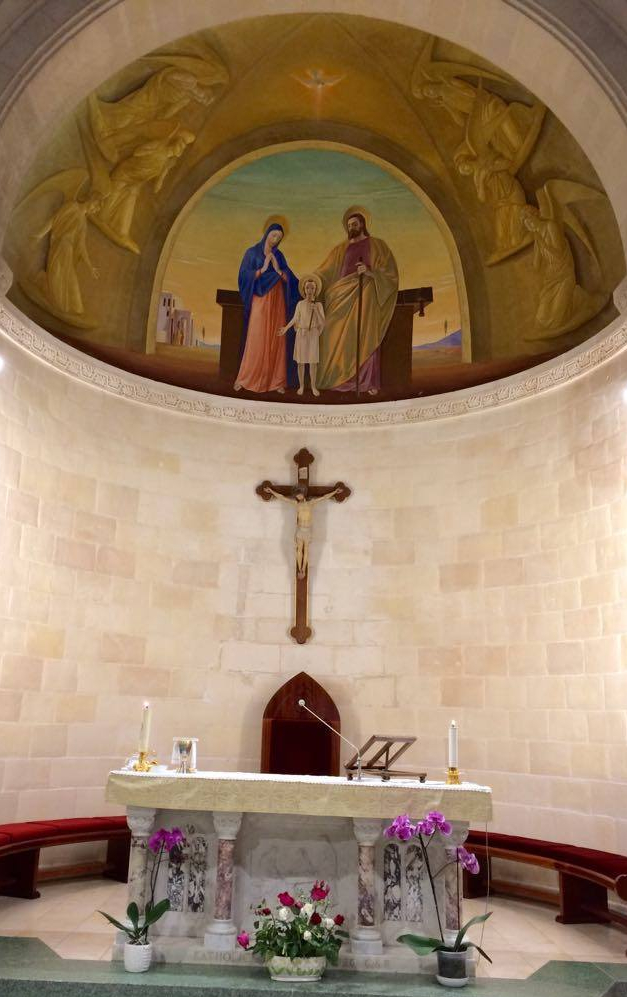
Main altar of the Church of St. Joseph in Nazareth originally built by the Crusaders in the 12th century above the site believed to be the home of the Holy Family. Photo by the author, April 2017.

Lastly, St. Joseph teaches us today in his dreams and decisions, in his life of silence and holiness what most people say about two kinds of dreamers: those who dream with eyes shut and those who dream with eyes wide opened. Those who dream with closed eyes are those who merely daydream and live in fantasies; those who dream with eyes wide opened are the visionaries, those who work to fulfill their dreams to make it a reality. St. Joseph belonged to that kind of dreamer, a visionary of God who strove hard with patience, protecting Mary and the child Jesus so that God’s plan of salvation is fulfilled. Amen.

Our Seat, Our Stand?

SOD-0222-ChairofSaintPeter-790x480
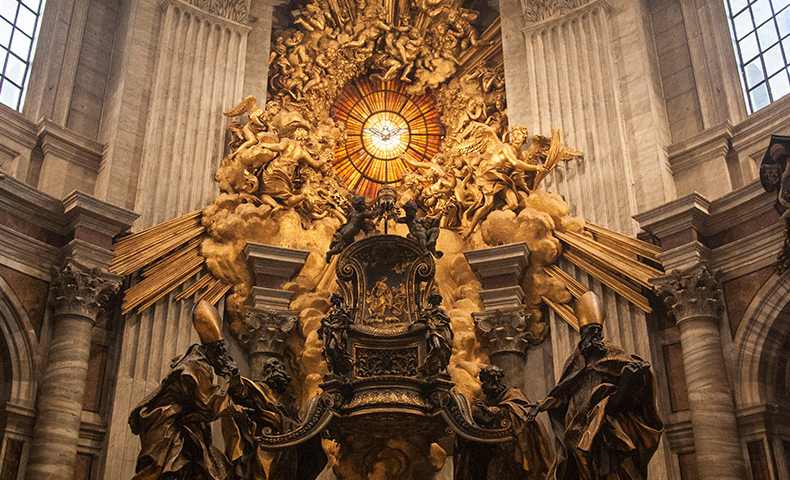
The Chair of St. Peter at the high altar of the Basilica of St. Peter at the Vatican flanked below by the two teachers of the East, St. John Chrysostom and St. Athanasius with the two Latin Fathers of the Church St. Ambrose and St. Augustine.  All four saints showed us how love stands on faith; that,  without both love and faith, everything falls apart in the Church.  Photo from Bing.

The Lord Is My Chef Breakfast Recipe for the Soul
Friday, Feast of the Chair of St. Peter, 22 February 2019
1Peter 5:1-4///Matthew 16:13-19

             Glory and praise to you, O Lord Jesus Christ as we celebrate today a most unique feast, the Chair of St. Peter!

             It is so unique O Lord especially in this age when the world is so concerned with seating arrangement whether at home, in school, in offices, in buses… everywhere seats matter these days because every seat is about position, rank, power and convenience.

             And we have forgotten that more important than our seating position is where we stand.

             On this Feast of the Chair of St. Peter, remind us Lord especially your priests of that beautiful example you have shown at the Last Supper when you left your seat to wash the feet of the Apostles.

             How sad and shameful, O Lord, when we your priests fail to realize that the throne of the Eucharist is not a seat of power or prestige but a seat of loving service to everyone.

             So true were the words of St. Ignatius of Antioch in his Letter to the Romans in the year 110 that the Primacy of Rome is the Primacy of Love because primacy in faith is always primacy in love, two things we can never separate.

             May we your priests heed the call of St. Peter, the designated “owner” of that Chair, that we “Tend the flock of God in your midst, overseeing not by constraint but willingly, as God would have it, not for  shameful profit but eagerly.  Do not lord it over those assigned to you, but be examples to the flock” (1Pt.5:2-3).  Amen.  Fr. Nicanor F. Lalog II, Parokya ng San Juan Apostol at Ebanghelista, Gov. F. Halili Ave., Bagbaguin, Sta. Maria, Bulacan. 

When Listening Is Most Important

stjosephinebakhita
The Lord Is My Chef Breakfast Recipe for the Soul
Friday, 08 February 2019, Week IV, Year I
Hebrews 13:1-8///Mark 6:14-29

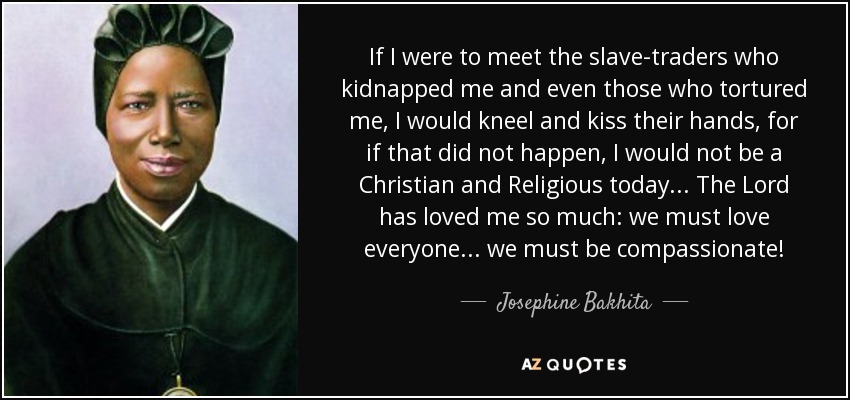
            Today O Lord we thank you for one of the most unique saints of modern time, St. Josephine Bakhita who had taught us the importance of when and how to listen.  Her life proved that indeed, “Jesus Christ is the same yesterday, today, and forever” (Heb.13:8) for you never abandoned her, always speaking to her on many occasions through the many people and events of her life. 

            Teach us to emulate St. Josephine Bakhita who chose to listen to your voice within her, in her conscience to do what is good, to desire only your will.  Despite the many sufferings she had endured as a child sold to slavery from Africa that she had forgotten her name, she chose to listen to her conscience that had remained pure and clean.

              So unlike Herod who loved listening to the preaching of John the Baptist though he would always be perplexed because he refused to accept them.  Most of all, Herod preferred to listen to the words of the people around him, especially the daughter of Herodias than listen to his conscience that led to John’s beheading.

          O Lord Jesus, so many times I confuse your words with the words of the world.  Grant me a clear conscience that I may always pursue your holiness.  Amen.  Fr. Nicanor F. Lalog II, Parokya ng San Juan Apostol at Ebanghelista, Gov. F. Halili Ave., Bagbaguin, Sta. Maria, Bulacan. 


The Sword of St. Paul

stpaulsword
The Lord Is My Chef Breakfast Recipe for the Soul
Friday, 25 January 2019, Feast of the Conversion of St. Paul
Acts 22:3-16///Mark 16:15-18

            Today we thank you O Lord for your gift of St. Paul whom you converted from being a persecutor of the early Christians to becoming your “Thirteenth Apostle” who stands at equal footing with St. Peter in the growth of your Church.

            What made him truly great and effective as an apostle, O Jesus, is not his brilliant rhetoric and sophisticated strategies but his willingness to suffer so much for you and your gospel.  He had shown us the essence of discipleship which is to live one’s life completely in you alone – “I have been crucified with Christ; yet I live, no longer I, but Christ lives in me; insofar as I now live in the flesh, I live by faith in the Son of God who has loved me and given himself up for me” (Gal. 2:20).

            St. Paul was able to accomplish this by showing us true conversion that we always misunderstand as something like changing into another person completely like turning around a shirt, from being proud and violent to becoming meek, or from being so shy to becoming daring or being impulsive to almost timid.  While his letters teem with so many gems in teaching us how he was converted into loving you until the end, his imposing images with his sword remain his most beautiful symbol of conversion.

            All his life as his images rightly portray him everywhere, he had kept that sword:  when still called Saul, he had that sword to express his zeal and fire for the Law that he persecuted Christians; but on the way to Damascus, you called him and after a period of prayers and studies, he picked up again his sword to preach your gospel with the same fire and zeal that eventually in the end, he willingly accepted death by the sword in your name.  From the sword that inflicted pain on others, it became a sword that slew his defects until later at the end of his life in Rome, it caused his martyrdom.

           Help me Lord to keep my sword – my weaknesses and shortcomings – not for their own sake but because that’s me, that’s my personality.  Help me to change my ways not my heart by using this same sword to slay the defects within me without extinguishing that fire for you and your gospel.  Let these defects I have remind me always like St. Paul that “whatever gains I had, these I have come to consider a loss because of Christ… everything as a loss because of the supreme good of knowing Christ Jesus my Lord” (Phil 3:7-8).  Let me fight, O Lord, for your gospel, for your Spirit as I fight pride and other sins within me.   Amen.  Fr. Nicanor F. Lalog II, Parokya ng San Juan Apostol at Ebanghelista, Gov. F. Halili Ave., Bagbaguin, Sta. Maria, Bulacan.

*Photo from Google, statue of St. Paul in front of the Major Basilica of St. Paul Outside-the- Walls, Rome.

The Presence of Jesus

st.francisdesales2
The Lord Is My Chef Breakfast Recipe for the Soul
Thursday, 24 January 2019, Week II, Year I
Hebrews 7:25-8:6///Mark 3:7-12 

           Sometimes Lord I envy your apostles, the people who have lived during your time and have actually met you, heard you, and most of all touched you.

           Of course it is a useless and even a non-sense wishful thinking or daydreaming because as the author of the Letter to the Hebrews explains to us today, you have not really left us.  In your great sacrifice on the Cross as our High Priest, you have become present with us always.
            “The main point of what has been said is this:  we have such a high priest, who has taken his seat at the right hand of the throne of the Majesty in heaven, a minister of the sanctuary and of the true tabernacle that the Lord, not man, set up” (Heb.8:1-2).
 
             And that is the challenge for us today:  rather than imagining we were present during your time, what we must always think and reflect upon is making you present today, like your disciples who looked for boats where you preached and healed people.  Now more than ever as you sit at the right hand of the Father, every moment is your presence of love and mercy, healing and growing.
              Make us realize O Lord Jesus that you are communication yourself, your giving of self in love on the Cross is the most perfect communication of all.  More than an expression of your thoughts and feelings for us, Lord, your crucifixion became the most profound level of your communication, actualizing your love and mercy for us even today.
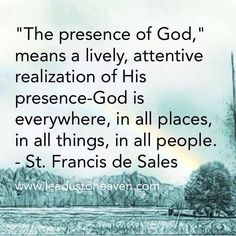
             Help us communicate your love and mercy to others not only in words but most of all in deeds.  Give us the same grace you have given St. Francis de Sales in ensuring our every communication make you present.  Amen.  Fr. Nicanor F. Lalog II, Parokya ng San Juan Apostol at Ebanghelista, Gov. F. Halili Ave., Bagbaguin, Sta. Maria, Bulacan.
Quotes from Google.
quote-have-patience-with-all-things-but-first-with-yourself-never-confuse-your-mistakes-with-saint-francis-de-sales-84-98-98

Refresh Us, O God

domhill3 baguio2019
The Lord Is My Chef Breakfast Recipe for the Soul
Monday, 21 January 2019, Week II, Year I
Hebrews 5:1-9///Mark 2:18-22

            Loving Father, lately I was again hurting deep inside, feeling alone and forgotten, even taken for granted but, after praying and remembering the immense love of your Son Jesus for me, for us all, I felt so consoled because I am no longer alone.  I felt relieved and lighter at how your Son Jesus who is sinless bore all our sins by suffering and dying on the Cross to renew forever our relationship with you, opening for us a fount of constant joy and comfort within us.

             “In the days when he was in the Flesh, he offered prayers and supplications with loud cries and tears to the one who was able to save him from death, and he was heard because of his reverence.  Son though he was, he learned obedience from what he suffered; and when he was made perfect, he became the source of eternal salvation for all who obey him” (Heb.5:7-8).

            Remind us always to remember this great truth, of how you have made Christ your Son as our sole mediator, designating Him our eternal High Priest who offered for us the most perfect sacrifice for our salvation.  Make us your new piece of cloth, your new wineskin so others may experience your refreshing presence in the world today where many of us have become technical rather than personal, hiding in traditions and rituals long renewed in Jesus Christ, always asking “Why do the disciples of John and the disciples of the Pharisees fast, but your disciples do not fast?” (Mk.2:18).

              Give us the courage O Lord like St. Agnes to be firm in our faith, vibrant in our hope in your presence among us in Christ.  Refresh us in your abiding love so we may be renewed as a people, as disciples.  Amen. Fr. Nicanor F. Lalog II, Parokya ng San Juan Apostol at Ebanghelista, Gov. F. Halili Ave., Bagbaguin, Sta. Maria, Bulacan.

Photo above by the author, Dominican Hill, Baguio City, 18 January 2019.

St. Agnes image from Google.

6419be70a1916a6ae565d49240962744--girl-scouts-martyr

Christmas is Reclaiming Our Being Children

Quiet Storm by Fr. Nicanor F. Lalog II, 28 December 2018

            Christmas is always regarded as for children, of being like children.  What a joy to always remember that God the Almighty chose to become human like us – who likes to always pretend being like Him and powerful – that the path to true greatness and power is in becoming small like an infant, being like a child.  The late Cardinal Hans Urs von Balthasar claims in his last book shortly before he died in 1988 that the central mystery of Christianity is our “transformation from world-wise, self-sufficient ‘adults’ into abiding children of the Father of Jesus by the grace of the Holy Spirit.  All else in the Gospel, from the Incarnation of the Lord to His hidden and public lives, His miracles and preaching, His Passion, Death and Resurrection has been for this, of becoming like a child” (Unless You Become Like This Child, Ignatius Press, 1991).

             This probably explains why we adults as we mature and age, we mellow:  we realize that we cannot simply control everything.  That it is always best to act than to react in almost every situation in life.  The gospel tells us today how King Herod reacted furiously after realizing the Magis have tricked him that he ordered the murder of every male child in Bethlehem below the age of two for fears of the “newborn king of Israel.”  Herod lived in constant fears of being deposed in power that he also had three of his sons as well as some of his ten wives killed after suspecting them of trying to overthrow him.  It is crazy but very true!  We may not be like Herod with the way we react and deal with our many fears but have the same effects: death of friendships, death of love, death of everything, the end of life and adventure.

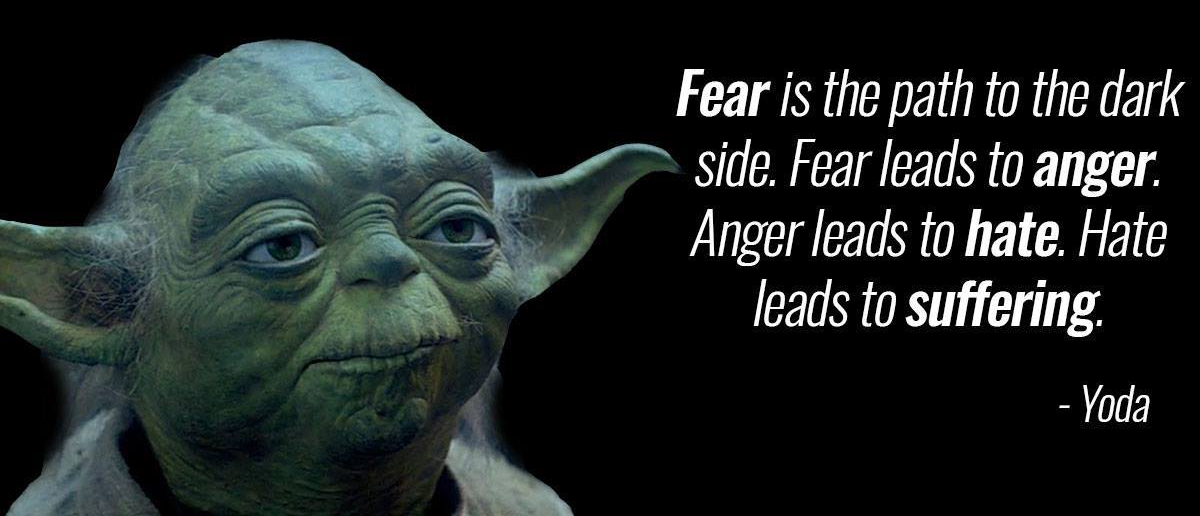
             Fear is not totally negative; it has its good effects that have actually led mankind to every great progress in life like the discovery of new lands and territories, new medicines, new inventions and other things.  Fear becomes a liability when it prevents us to trust more like little children.  Kids and young people are often “positively” fearless because they trust so much that nobody would hurt them or that nobody would forsake them.  As we age, our fears increase because our trust decreases:  we fear so many things because we are afraid of losing the little we have, we are afraid of getting hurt, we are afraid of starting all over again.  That’s the irony of life:  we start fearing almost nothing that we grow so fast but as we age, we begin to fear everything that we stop growing and stop living.  Christmas is a beautiful reminder to be children again like God the Son Jesus Christ who entrusted Himself to us, to care Him, to love Him, to protect Him, to keep Him.  Let us reclaim that childhood again by casting away our fears so we can truly love faithfully and freely!

yoda-quote-path-to-the-darkside

Holiness and Sinfulness

stjosephchurch
The Lord Is My Chef Simbang Gabi Recipe-3
18 December 2018
Jeremiah 23:5-8///Matthew 1:18-25

             One of my unforgettable experiences in my parish is when a husband and wife quarreled during the baptism of their child.  When I asked the father the name to be given to their son right before baptism, he gave another name and instantly, his wife hit him with her elbow and snapped, “who’s that baby again!?”

             In the rites of baptism, it is the father who is asked by the minister on the name to be given to the child.  It is the father who gives the name because he is the origin of life, the giver of life; hence, every child uses the father’s family name to show his paternity.  This is in essence the reason God asked Joseph “to be not afraid to take Mary as his wife” so he would be the legal father of Jesus Christ.  Though it is very clear in the account of Matthew yesterday and today that Jesus is truly the Son of God and not of any human, the evangelist shows us how through Joseph, Jesus belongs by law – legally – to the house of David as fulfillment of God’s promise.  At the same time, in giving name to Jesus, Joseph proves more than ever his holiness which is the meaning of his description as a “righteous” or “just” man.  This is how the birth of Jesus Christ came about.  When his mother Mary was betrothed to Joseph, but before they lived together, she was found with child through the Holy Spirit.  Joseph her husband, since he was a righteous man, yet unwilling to expose her to shame, decided to divorce her quietly (Mt.1:18-19).

             Holiness for the Jews or being righteous and just is primarily obedience to the Laws of God handed down through Moses.  However, during the time of Christ this perception became so limited to mere obedience to the letters of the law that even Jesus later on would try to correct.  His legal father, St. Joseph, in fact would exactly do that when he showed that holiness is a constant dialogue with God when one is nourished by His words like a tree planted near the streams of water, bearing fruits of love for God and for others.  This imagery is found in the Book of Psalms that says men who are just and righteous are those who “delight in the law of the Lord, like a tree planted near streams of water, that yields its fruit in season; its leaves never wither; whatever they do prospers” (Ps.1:2-3).  When St. Joseph decided to quietly divorce Mary after learning about her pregnancy, it was the height of his love for her as he was very willing to walk away and let her marry whoever fathered that child in her womb than subject her to public shame and humiliation as their laws prescribed.  In that aspect alone, we find St. Joseph very holy indeed!  But it did not stop there:  after being informed by the angel in a dream of the divine nature of Mary’s pregnancy, St. Joseph proved anew his holiness with his deep love for God by eventually taking Mary as his wife that paved the way for the first Christmas we now celebrate.  St. Joseph’s holiness shone brightly in this aspect when his love for Mary was never diminished but even deepened when his love for God moved him to take “his wife home.”  Here are the fine prints of St. Joseph’s holiness that in his love for God, he had to take Mary as his wife and in doing that, he eventually brought forth in a sense the birth of Jesus Christ.  Every time we love God, it always leads us to love others too.  It is when we live in love that Jesus Christ truly comes into our lives and Christmas happens always.

             But there is something bigger and better, lovelier and holier to unfold in St. Joseph’s role as legal father of Jesus Christ.  Notice how Matthew repeated the verb “to name” twice:  “She will bear a son and you are to name him Jesus, because he will save his people from their sins (Mt.1:21)” and “When Joseph awoke, he did as the angel had commanded him and took his wife into his home.  He had no relations with her until she bore a son, and named him Jesus (Mt.1:24-25).”   Giving of names in general connotes authority.  In Genesis, God gave man the authority to give names to the animals He had created.  Parents give names to their children as a sign of their authority.  Bullies in classrooms and anywhere always try to assert their authority by giving funny names to their victims while lovers always have unique names given to their beloved as terms of endearment.  In this respect, St. Joseph did not merely give up that authority of giving name but must have also realized within him the awesome reality of things about to unfold in the birth of Mary’s child who “will save his people from their sins” (Mt.1:21).

             Three weeks ago I read in the news how a popular American airlines apologized to a mother when their ground crew at the boarding gate laughed and insulted her daughter named “Abcde” which is pronounced as Ab-city.  I have baptized a baby in my parish with a similar name, “Wxyz”.  The parents never complained or filed charges against me when I questioned them for their choice of name for their son, warning them of negative repercussions in the future.  Giving of names is a very serious duty among the Jews (and it should be for everyone!) because a name always indicates the person’s mission.  In giving the child of Mary the name “Jesus” that means “God is my salvation”, St. Joseph must have realized not only the mission of Christ but most of all fully accepted it as one that the world needs so badly.  Recall that during the ministry of Jesus, religious leaders of His time always questioned His forgiving of sins because only God can forgive sins.  Problem with them like the Pharisees and the scribes, they have refused to recognize Jesus as the Christ, the Son of God sent to forgive sins.  Right from the start during his dream, St. Joseph was already aware of the mission of Jesus Christ which is to forgive sins.  And his obedience to the instruction of giving the name “Jesus” is indicative of his holiness because the first step to being holy is to admit our sinfulness, our need for forgiveness by God.  This is the problem of the world today, the lack of sense of sinfulness among most of us even among us priests as shown by the sex scandals.  The mark of true holiness is the humility to admit and accept one’s sinfulness and need for forgiveness.  When Pope Francis was interviewed for the first time for a magazine, he was asked how he would describe himself and his quick answer was, “I am a sinner.”
       Sin is a turning away from God, the absence and failure to love.  It is the opposite of holiness which is being filled with God.  Unless we realize that our sinfulness is the first and most important thing needed to be fixed within us, we will never move forward, we will never grow, and we will never experience Christ’s coming.  This is the very reason Christ was born, to forgive our sins so that we may return and go back to God who is our fundamental relationship in life.  No healing, no life in general will ever come and prosper when this relationship with God is out of order because of sins.  St. Joseph is a righteous or just man, a holy man, because in recognizing the need for the forgiveness of our sins, he cooperated with God in His plans by naming the child of Mary as “Jesus” and that is why we now celebrate Christmas.  God bless you!  AMEN. Fr.NicanorF.LalogII,Parokya ng San Juan Apostol at Ebanghelista, .Gov. F. Halili Ave., Bagbaguin, Sta. Maria, Bulacan.
*Photo by author, Church of St. Joseph at Nazareth, the Holy Land, April 2017.
Advent is Walking and Dancing with God

quote-the-soul-that-walks-in-love-neither-tires-others-nor-grows-tired-john-of-the-cross-84-42-30
The Lord Is My Chef Breakfast Recipe-Prayer
Friday, 14 December 2018, Advent Week 2
Isaiah 48:17-19///Matthew 11:16-19

            Thank you once again, loving Father, for the gift of another great saint for today who was a great mystic who guided us in so many ways of knowing you, seeing you clearly, and following you closely.  What I like most with St. John of the Cross is your gift for him to perfectly blend poetry and prayer to express your highest truths:  “El alma que anda en amor, ni cansa ni se cansa.”  So beautiful!  “The soul that walks in love, neither tires nor is tired.”

             Let us walk in the love of your Son Jesus Christ to learn to follow “the way we should go” (Is. 48:17) so that like in today’s responsorial psalm, “we may have the light of life always.”

             Most of all, as we learn to walk your path O Lord, let us rise to join your dance as you complained in today’s gospel, “We played the flute for you, but you did not dance” (Mt.11:17).   Let us leave the sides to get in the middle of the floor and of the road, to walk and dance with you, celebrating life with your GUIDANCE, that is, God, U and I, DANCE for life.  AMEN.Fr. Nicanor F. Lalog II,Parokya ng San Juan Apostol at Ebanghelista, Gov. F. Halili Ave., Bagbaguin, Sta. Maria,Bulacan 3022.

Photos from Google.  I have included the poster of one of my all time favorite movies that expresses my prayer today.

ScentOfAWoman2