Our eyes that see God in others

The Lord Is My Chef Sunday Recipe XXVI-C, 29 September 2019

Amos 6:1.4-7 ><)))*> 1 Timothy 6:11-16 . ><)))*> Luke 16:19-31

Photo by Mr. Jim Marpa, 2018.

Last Sunday we focused on our hands that we use to pray and serve in reflecting the parable of the wise steward. Today, let us “look” into our eyes that see God in others as we reflect on another parable only St. Luke has, the rich man and Lazarus.

Eyes are the “windows of one’s soul”.

Eyes reveal what is inside us: how we look and move our eyes, the sparkle or dullness in our eyes indicate the kind of person within. Eyes never lie for they reveal if we are telling the truth or not. Most of all, eyes do not only direct us to sights outside but even visions to beyond what we can see.

This is very clear in the parable of the rich man and Lazarus, inviting us to take a deeper look into ourselves, on others, and with the things we possess like money and wealth.

Jesus said to the Pharisees: “There was a rich man who dressed in purple garments and fine linen and dined sumptuously each day. And lying at his door was a poor man named Lazarus, covered with sores, who would gladly have eaten his fill of scraps that fell from the rich man’s table. Dogs even used to come and lick his sores. When the poor man died, he was carried away by angels to the bosom of Abraham. The rich man also died and was buried, and from the netherworld, where he was in torment, he raised his eyes and saw Abraham far off and Lazarus at his side.”

Luke 16:19-23
Photo by Mr. Jim Marpa, September 2019.

For the third consecutive Sunday, we again heard another well-known parable proper to St. Luke like the prodigal son two weeks ago and the wise steward last Sunday. Today’s parable of the rich man and Lazarus follows the same thread of last week’s wise steward which is about the thorny issue of money. But again, there is something deeper than that which is the call for daily conversion by always looking beyond what we can see.

In this parable, Jesus never said the rich man was bad that is why he went to hell or the “netherworld”. Neither did he also claim that the poor man was holy that led him into the “bosom of Abraham” which is heaven. Jesus only described their daily life: the rich man lived in affluence with fine clothings and sumptuous meals while the poor was very destitute feeding on scraps falling from the former’s table as dogs licked the sores that covered his body.

The only critical clues Jesus gives us are the name of the poor man – Lazarus – which means “God has rescued” or El’azar in Hebrew and the final scene in the afterlife.

Let it be clear that the issue here is how people, rich and poor alike, can be blinded by money and wealth that they fail or even refuse to see God and others as brothers and sisters that lead them into evil and sins.

Abraham replied (to the rich man), “My child, remember that you received what was good during your lifetime while Lazarus likewise received what was bad; but now he is comforted here, whereas you are tormented. Moreover, between us and you a great chasm is established to prevent anyone from crossing who might wish to go from our side to yours or from your side to ours.”

Luke16:25-26

Photo by Noelle Otto on Pexels.com

The sad reality is that this parable continues to happen in our days when so many of us are oblivious of the poverty and miseries afflicting many of the poor among us.

We are that rich man who has no name but have eyes that refuse to see and recognize Jesus in everyone especially the poor and suffering. How tragic in this age of social media where everything and everyone is exposed and seen, we have become blind to the plight of those around us. No need to look far but right in our own family when members are on their own without bothering to know how everyone is doing in life.

In my 21 years of priesthood, I have realized that most often, the people who truly suffer are often the Lazarus among us who prefer to be silent, to bear all their pains trusting only in God who would vindicate and raise them in the end. The Lazarus are the poor not just in material wealth but “poor in spirit for theirs is the kingdom of heaven” (Mt. 5:3) who completely trust in God.

Reading further that version of the Beatitudes of St. Matthew, we find Jesus saying

Blessed are the clean of heart, for they will see God.

Matthew 5:8
Photo by Pixabay on Pexels.com

The clean of heart are the Lazarus, the poor who try to find God in this life even amid the many sufferings. Our minds and intellect, including our eyes can never see God. As the Little Prince would say, “what is essential is invisible to the eye; it is only with the heart that one can truly see”. Very true!

A clean heart is a loving heart. When we speak of the heart, we also mean person for the heart embodies the whole person. Therefore, a loving heart is the Lazarus, the one who tries to see God, the one who envisions the end that he is willing to sacrifice, to forgive and to welcome the lost.

Lazarus the poor beggar went to heaven because he has a clean heart unlike the rich man who refused to see beyond himself and his affluence. They are the ones being reprimanded in the first reading by the Prophet Amos, the “complacent” people who may have also included the priestly class of Israel unmindful of the real situation of the people because they have been insulated from realities by the perks and good life of wealth and power (Amos 6:1).

Most people have eyes that have sights but only a few have a vision in life. People with a vision in life are the ones who can see beyond the ordinary, they are the dreamers who dream with eyes wide open working hard to make their dreams happen in reality.

Lazarus is a visionary and a dreamer who saw beyond the door of the rich man, beyond his hunger and sickness the glory of God in eternal life. The rich man on the other hand only had sights for what is “here and now”; and, that is what he is so afraid of with his five brothers still alive who have no vision of the afterlife, no vision of God among others in the present life like him.

My dear friends, Jesus is inviting us today while there is still time to go back to the path of conversion, to see beyond ordinary things and see the more essential, the more lasting things that according to St. Paul in the second reading prepare us for eternal life like “righteousness, devotion, faith, love, patience, and gentleness” (1Tim. 6:11).

Let us listen to the words of God found in the Sacred Scriptures that Abraham referred to in the parable as “Moses and the prophets” (Lk.16:29).

Most of all, let us listen to Jesus Christ, the only one who had risen from the dead (cf. Lk. 16:31) who enables us to see him on the face of everyone we meet, giving us a vision of heaven by helping us in fulfilling our mission as his disciples in proclaiming the coming of the kingdom of God. Amen.

A prayer to be grateful

The Lord Is My Chef Breakfast Recipe for the Soul

Wednesday, Week XXII, Year I, 04 September 2019

Colossians 1:1-8 ><)))*> ><)))*> ><)))*> Luke 4:38-44

Photo by Ms. Jo Villafuerte, Atok, Benguet, 01 September 2019.

Heavenly Father, I always thank you in my prayers. Early in life, I have been told to always say “thank you” and I have diligently kept that, always thanking people especially you for your goodness to me.

But, now I wonder if I have been “thanking” so much without being truly grateful?

There are “thank you’s” that come from lips and there are “thank you’s” that come from the heart which is what gratitude is all about. So often, I say “thank you” out of habit without really looking into the heart, the goodness of the one doing or giving me a favor. Too often, I thank for the thing or favor, not the person.

“We always give thanks to God, the Father of our Lord Jesus Christ, when we pray for you, for we have heard of your faith in Christ Jess and the love that you have for all the holy ones because of the hope reserved for you in heaven.”

Colossians 1:3-5

How lovely it is to dwell on St. Paul’s expression of his gratitude, his thanksgiving that is clearly directed to persons – including you, O God!

Like the people of Capernaum where you have healed Simon’s mother-in-law and others, they saw your person to thank that they begged you to stay in their town.

Remind me always, Lord, that whenever I say “thank you”, I may first try to feel the heart and experience the goodness of the person doing me good for a grateful heart always sees the loving face. Amen.

Prayer to encourage

The Lord Is My Chef Breakfast Recipe for the Soul

Tuesday, Memorial of St. Gregory the Great, 03 September 2019

1 Thessalonians 5:1-6, 9-11 ><)))*> ><)))*> Luke 4:31-37

Photo by Jo Villafuerte, Atok, Benguet, 31 August 2019.

“For God did not destine us for wrath, but to gain salvation through our Lord Jesus Christ, who died for us, so that whether we are awake or asleep we may live together with him. Therefore, encourage one another and build one another up, as indeed you do.”

1 Thessalonians 5:9-11

Dearest God our Father: Yesterday your words moved me to pray for consolation, to accompany those “alone”. Today, your words call me to “encourage one another and build up one another.”

How beautiful and wonderful indeed are your words, so powerful and fulfilling, indicating your very presence!

In this highly competitive world, it is not enough that we encourage people but also to build them up. From the Latin words “en” and “cor”, literally meaning to hearten or strengthen the heart, there are times that encouragement without community can be misleading and even destructive too.

Encouragement is going within every person, right into one’s heart like in your Son’s exorcism of a man possessed by “unclean demon” who “left the man without harming him” (Lk.4:35). From the heart, true encouragement moves outward to touch others’ hearts to form a community. Every time you heal the sick, Lord, people are moved to build up their families and community.

Encouragement is not pushing people to do and achieve things. Encouragement is bringing others closer to you through Jesus Christ our Lord. It is actually Jesus Christ who encourages for it is him alone who touches hearts and moves them to build up a person, families, and communities.

Like your servant St. Gregory the Great he encouraged not only Christians but also pagans to work for unity and to pursue so many efforts that built up not only persons and families, nations and tribes, monasteries and churches but most of all, an entire civilization now slowly turning away from you.

Fill us with more courage and wisdom, holiness and patience in encouraging one another to build up communities as we await for your joyful coming again. Amen.

The grudges that fester within us

The Lord Is My Chef Breakfast Recipe for the Soul

Thursday, Passion of John the Baptist, 29 August 2019

Jeremiah 1:17-19 ><}}}*> ><}}}*> ><}}}*> Mark 6:17-29

Photo by Pixabay on Pexels.com

Today, O Lord, I pray for my hardening heart. I have a festering anger deep in my heart against some people who have hurt me. And I am harboring a grudge against them like Herodias, the mistress of Herod.

Herodias harbored a grudge against John the Baptist and wanted to kill him but was unable to do so. She had an opportunity one day when Herod, on his birthday, gave a banquet for is courtiers, his military officers, and the leading men of Galilee. Herodias’s own daughter came in and performed a dance that delighted Herod and his guests. The king said to the girl, “Ask of me whatever you wish and I will grant it to you.” So she went out and said to her mother, “What shall I ask for?” She replied, “The head of John the Baptist.”

Mark 6:19, 21-22, 24

What is so shameful, O Lord, like Herodias, I want to have the heads of those people. I want to get even with the pains they have inflicted against me. I want revenge.

But more shameful, Lord Jesus, is, unlike Herodias, I have not done anything wrong against these people. And no amount of pain can justify my grudge, my anger, my hatred against them.

This is what makes it more painful with me: the festering anger in my heart is slowly poisoning my soul, my very being.

Teach me, Jesus, to bear all pains like John the Baptist, suffering for you, suffering with you.

Give me the courage and strength to “gird my loin” as you told the Prophet Jeremiah so I may be able to control myself and be on guard against becoming like Herodias or, worst, Herod, who beheaded John in prison.

Let me rise above my instincts and feelings to be not like the evil doers and fake people who fight and malign me because you have assured me that they will never prevail over me, that you will deliver me for you are always with me. Amen.

“The Severed Head of John the Baptist”, a sculpture by the French artist Auguste Rodin in 1875. This is probably a representation of a guillotined criminal’s head during that time. From Google.

Our foolish hearts

The Lord Is My Chef Breakfast Recipe for the Soul

Monday, Week XX, Year I, 19 August 2019

Judges 2:11-19 ><)))*> ><)))*> ><)))*> Matthew 19:16-22

Grotto at Baguio (Mirador Hill), February 2019.

Whenever the Lord raised up judges for them, he would be with the judge and save them from the power of their enemies as long as the judge lived; it was thus the Lord took pity on their distressful cries of affliction under their oppressors. But when the judge died, they would relapse and do worse than their ancestors, following other gods in service and worship, relinquishing none of their evil practices or stubborn conduct.

Judges 2:11-19

Sometimes I wonder why, O God, you did not just fix our hearts on you so we would remain in you?

Like the experiences of your people during the time of judges in Israel, our lives have become like one big vicious circle too difficult to break but so easy to predict: we turn away from you, our lives go wayward, we repent, you forgive us, then we go back to you, we are blessed and then, after some period of peace and prosperity, we again turn away from you, our lives go wayward and the cycle continues.

What a foolish heart we have, O Lord.

But, you are so filled with love and mercy for us, believing in us always for the ability to change and remain in you despite our weaknesses.

Thank you for never completely abandoning us, for always having that gaze filled with love like Jesus looking onto that young man in the gospel who walked away sad because he could not completely commit himself to serving you and loving you with all his heart.

Keep us faithful to you, enlighten our minds and our hearts to trust only in you even if the journey is full of dangers and difficulties.

We pray in a special way for our brothers and sisters suffering with various forms of cancer. May the prayers of St. Ezequiel Moreno grant them healing. Amen.

From Google.

Decluttering our inner self

The Lord Is My Chef Breakfast Recipe for the Soul
Monday, Week XIX, Year I, 12 August 2019
Deuteronomy 10:12-22 >< }}}*> < *{{{>< Matthew 17:22-27
From Google.

Moses said to the people: “Circumcise your hearts, therefore, and be no longer stiff-necked.”

Deuteronomy 10:16

Your words, O Lord, today are so shocking. Even funny. And difficult to relate with.

But that is exactly what we need to hear and learn these days: your words that shake and jolt our inner selves that cleanse and lead us to a more genuine and intimate relationship with you.

Like those Israelites wandering at the desert, rebelling against you, we have become stiff-necked. We have refused to look up to you as well as look inside our hearts to see you and follow you.

Help us to circumcise our hearts – not physically but spiritually – like what Marie Kondo has been advocating of decluttering our spaces to experience inner joy. So often we refuse to admit how our outer selves and homes look like indicate our inner selves.

It is you, Lord Jesus, who probes our hearts and guide us like Marie Kondo, step by step, to declutter our hearts.

May your light enable us to see and remove the many stacks of materialism, compartments of insecurities, and drawers of pretensions and other lies that clutter our inner selves, our hearts that keep us away from you and from others.

Like what you did today in the gospel when you taught Peter a beautiful lesson of being nice among our enemies and detractors who try to destroy us always, may we look more often inside our hearts to see YOU as the most essential in life than simply following the ways of the world.

May the example of St. Jane Frances Chantal whose feast we celebrate today, help us to keep that inner glow of your love within us when facing difficult situations in life like problems with in-laws and being widowed.

Fill us with the same charity you have given her in helping the poor as well as the forgotten people of the society.

We pray through her intercession for parents and children separated from one another due to many reasons, either by choice or circumstances.

Bless also the members of the congregation she had founded, the Sisters of Visitation that they may continue her wonderful works of charity among the poor. Amen.

Sacred Heart of Jesus for a heartless world

The Lord Is My Chef Recipe for the Soul
Solemnity of the Most Sacred Heart of Jesus, 28 June 2019
Ezekiel 34:11-16 >< }}}*> Romans 5:5-11 >< }}}*> Luke 15:3-7
Sacred Heart of Jesus at the Jesuits’ Sacred Heart Retreat House and Seminar Center in Novaliches, Quezon City. Photo by author July 2018.

At a glance, the powers of darkness seem to rule the world.

Pains and sufferings are all around us as we see them in the news and, worst, experience them right in our homes and community!

The other Sunday evening, one of our parish lectors was hit by two riders driving under the influence of alcohol that severely damaged her face, particularly her right eye and front teeth. She did not see the motorcycle coming because the drunk riders were going so fast opposite the one way street.

The two riders have no driver’s license and both claim to have no money to pay for the medical expenses of our parish volunteer who comes from a very poor family.

I told her story to our Sunday congregation. Right after the Mass, two ladies came to me, handing me Php 25,000.00 in cash, pledging with more money for the medical and dental bills of our lector. Tears were rolling in my eyes as I thanked the two kind ladies who refused any recognition at all.

Yes, too often we are shocked at the evil going on in the world.

But, more surprising is the fact that it is always God who has the last laugh and final say in all these pain and sufferings around us.

There is always the more powerful Sacred Heart of Jesus offsetting our seemingly heartless world today.

Jesus the Good Shepherd with a lost sheep on his shoulder. A wood carving atop the cathedra of the Minor Basilica Cathedral of the Immaculate Conception in Malolos City. Photo by Lorenzo Atienza, 12 June 2019.

Jesus addressed this parable to the Pharisees and scribes: “What man among you having a hundred sheep and losing one of them would not leave the ninety-nine in the desert and go after the lost one until he finds it? And when he does find it, he sets it on his shoulders with great joy.”

Luke 15:3-5

I love that imagery of Jesus the Good Shepherd carrying on his shoulders the lost sheep. It is so powerful and evocative of God’s immense love for us sinners.

God fulfilled his promise to Ezekiel in the first reading that he would personally come to tend and look after us his sheep by sending us his Son Jesus Christ.

For his part, Jesus showed us in teaching this parable the solicitude of the Father in going beyond his words to the prophet of not just affectionately gathering and leading his sheep to green pastures but by communing with sinners of his time. What a wonderful way by Jesus showing us the pains God is willing to go to find one lost sheep.

From Google.

Jesus knows it so well how difficult and painful to get lost that he spent time with sinners, dining with them in many occasions. He knows the fearful thoughts running through us when we were wandering in darkness and sin that he never judges us nor condemns us like the woman caught committing adultery. Most of all, Jesus knows how difficult it would be for us who were lost to find our way back home, to go back to normal life of grace that he is willing to wait like with St. Paul and with St. Augustine.

Hence, when Jesus the Good shepherd finds the lost sheep, he sets it on his shoulders with great joy. Imagine also the spontaneous reflex to clutch to oneself whatever or whomever was lost and is found. That is how intense is the love of God through Jesus for every lost sheep when finally found. He is filled with joy that he carries the lost sheep on his shoulder to hurriedly bring it to safety and comfort, never to get lost again.

Moreover, here we find the great love of God for us who have gone stray in sin: he would patiently look for the lost sheep and likewise willing to patiently carry it on his shoulders so as not to make it suffer further in going back to the fold. Absolutely, no trace at all of any disgust in God in our going stray in sins!

From Google.

Eventually, Jesus proved this intense love of the Father to us in his dying on the Cross. He showed us how true love that comes from God and rooted in God is a love that is always meek and humble. A love that is unconditional, embracing both friends and foes. Yes, it is easier said than done but doable if we love in Christ Jesus.

From Google.

To love in Christ Jesus is to trust in God’s love. Without this trust in God’s love, we will always rely on our own self, prioritizing on our love of self than love of God and others. That is when darkness comes to rule over us, making us heartless too. Then, indeed, the world becomes evil because we have become its slave.

On this Solemnity of the Most Sacred Heart of Jesus when our nation is in so much darkness, Jesus is inviting us to make his love visible by trusting in his unfailing care as our Good Shepherd. When there is a major paradigm shift in the parable of Jesus wherein there are more lost sheep who are also self-righteous in knowing everything, calling those not on their side as stupid, we are more challenged today to witness Christ’s values of dignity of persons and peace. Let us pray for more patience with the appalling governance we now have courtesy of the majority of our people whom we have denied with God’s love and care for the longest time.

Easter: Faith from “a basta!” experience

The Lord Is My Chef Sunday Recipe for the Soul
Easter Week II, Year C, 28 April 2019
Acts 5:12-16///Revelation 1:9-11, 12-13, 17-19///John 20:19-31
From Google.

We Filipinos have an expression that best captures the faith of Easter experience, something very close with the universal expression “aha!”. It is what I call as the “a basta!” experience.

From the Spanish word “basta” which means “enough” like what St. Teresa of Avila said in her poem, “Solo Dios basta” (Only God is enough/suffices), our “a basta!” expression is often used to insist on something to be accepted as true. Its closest English equivalent is “that’s it” to show that the issue at hand is settled because I have confessed it so.

On this octave of Easter which means eternity (because there are only seven days in a week but if you count the days since Easter, this Sunday is the eighth, an octave), the beloved disciple reminds us that Jesus said other things not recorded in his book; and most likely, he had had other appearances too not recorded simply because they are impossible to do. According to John, these were all written so we may all believe Jesus is the Christ and have eternal life in him. Moreover, there is no need for him to go into so many details about the appearances of Jesus after his Resurrection because what really matters most is the intensity of his presence. It is from that intensity of his presence we derive that “a basta!” experience of him. To be open to accept such intense moments of Christ’s presence leads us to deeper faith in him and eventually, to a relationship with him and in a community.

Thomas meets the Risen Jesus. From Google.

Now a week later his disciples were again inside and Thomas was with them. Jesus came, although the doors were locked, and stood in their midst and said, “Peace be with you.” Then he said to Thomas, “Put your finger here and see my hands, and bring your hand and put it into my side, and do not be unbelieving, but believe.” Thomas answered and said to him, “My Lord and my God!”

John 20:26-

“Do not be unbelieving, but believe.”

Last Sunday we have reflected how the Easter stories are always set in darkness like in the early morning, at sunset, and in the evening: the joy of Easter always comes bursting in the darkness of our lives, when we are down and suffering, sick or feeling lost, and fearful. It is during those dark moments of our lives when Jesus silently comes to us even in locked doors and windows. Problem is the moment Jesus comes to us, that is when we doubt him like Thomas! We could not believe Jesus is really alive though deep inside us, we do believe if only there could be be something within us that could give that final big push for us to say “a basta!”.

A week after his first appearance to his disciples at night, Jesus appeared anew today despite locked doors, darkness, and shadows of doubts within Thomas. When Jesus told him to “do not be unbelieving, but believe” , the Lord was not reproaching him but actually exhorting him to believe. And that is likewise addressed to us today: believe!

To believe is first to accept the gift of faith from God who opens himself to us, inviting us to a relationship with him. To believe in God is to meet him who always comes to meet us, to be with us. To believe in God is most of all to enter into a relationship with him so that that more we believe, the more we “see” him, the more we experience him. Most of the time we learn and get so many proofs of the existence of Jesus Christ in our prayers, studies, and experiences. Through time, we also grow in our personal conviction and acknowledgment of the Risen Lord, surpassing all proofs and logic until eventually even if we can enumerate our many reasons for believing, in the end, we admit that not even one of them is the very reason for our faith in Jesus Christ. And that is when we give that burst of “a basta!” – – – Jesus is alive! Then we learn to confess like Thomas, “My Lord and my God.”

From Google.

The Resurrection of Jesus is both historical and beyond history that made so much impact in human life, affecting us in the most personal manner. Sometimes we really wonder like the Apostle Jude Thaddeus who asked the Lord during the Last Supper why he would only manifest to them and not to everyone (Jn.14:22) so as to cast out all doubts and set the record straight that there is God indeed. When we examine our life journey, we find there is really no need for Jesus to appear at all for everyone to believe his existence, that he had risen from the dead, that there is God.

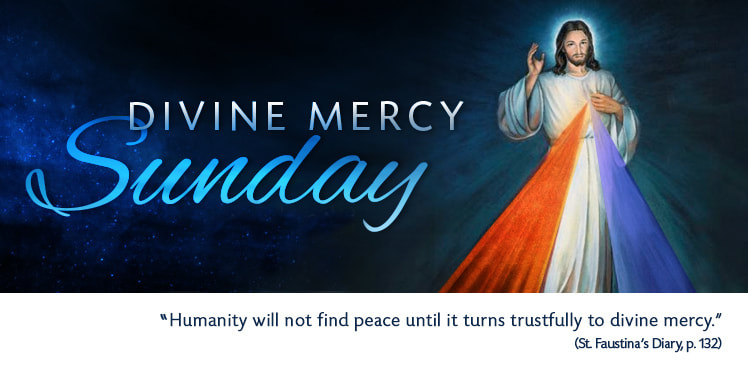
The Easter stories show us how God works silently in our midst, always slowly and surely, gradually through history and in our personal life. It is not really his appearances that matter but the intensity of his presence felt only in silence when we learn to trust more and believe more. How wonderful that on this eight day of Easter we also celebrate Divine Mercy Sunday that invites us to trust more than ever Jesus Christ our salvation. May we entrust ourselves to Jesus anew like Thomas, touching his wounds, confessing “My Lord and my God” or “Jesus, King of Mercy, I trust in You.” Amen.

From Google.

Slow of heart

The Lord Is My Chef Breakfast Recipe, Wednesday, Easter Octave, 24 April 2019
Acts 3:1-10///Luke 24:13-35
Road to Emmaus. From Google.

How interesting is Easter becoming, O Lord! Yesterday, Peter’s listeners were “cut to the heart” upon hearing your good news of salvation. Today, as you walked along with two disciples going to Emmaus feeling so sad with your death and news of missing body, you expressed great surprise at their being “slow of heart to believe”.

And he said to them, “Oh, how foolish you are! How slow of heart to believe all that the prophets spoke! Was it not necessary that the Christ should suffer these things and enter into his glory?” Then beginning with Moses and all the prophets, he interpreted to them what referred to him in all the Scriptures.

Luke 24:25-27

So many times Lord, we are slow of heart to believe because we refuse to see the bigger picture in life when setbacks and failures can be staging points for greater growth and maturity. We choose to be mediocre and be contented with whatever is before us, refusing to strive and rise.

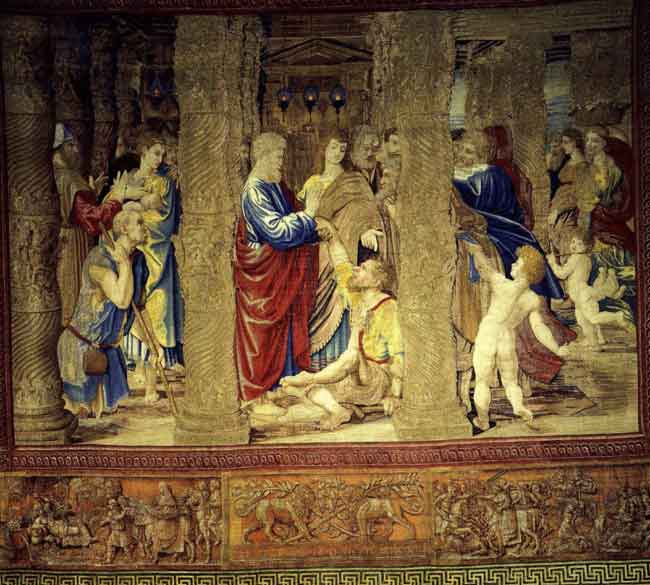
So many times Lord, we feel like that man crippled from birth at the Beautiful Gate of the temple contented in begging alms without realizing that negative things in our lives can enable us to receive the gift of life.

Like that crippled man from birth at the Beautiful Gate, let us seize every moment of meeting you, having you in our lives. Amen.

Healing of a Lame by Peter and John on a tapestry by Raphael at the Sistine Chapel in the Vatican. Photo from Google.

Forgiving from the heart

40 Shades of Lent, Tuesday, Week III, 26 March 2019
Daniel 3:25, 34-43///Matthew 18:21-35

Praise and glory to you, O Lord Jesus Christ!

Here we are now O Lord being confronted by this topic of sin and forgiveness. Every day we pray the “Our Father” and you know very well how mechanical it had become for us asking God “to forgive us our sins as we forgive those who sinned against us.”

Like Peter, we often feel at a loss at how to forgive those who have hurt us. No… not just hurt or wronged us but, hurt or wronged us so deeply.

The pain is so deep in our hearts, Jesus. And that is why you want us all to forgive from our hearts, not from our lips or from our minds but from our hearts where the pains hurt us most.

We really do not know how. Your parable seems inadequate though you make an absolutely valid point of forgiving others because we have been forgiven too.

Like Daniel your prophet in the Old Testament, we beg you to “Deliver us by your wonders” – surprise us O Lord with your gentle mercy, with your kindness that like you we may be moved to forgiving those who have terribly wronged us. Amen.

From Google.